


25 Small Balcony Decor Ideas for Summer 2026 Stylish Outdoor Inspiration
There is something quietly satisfying about coming home on a warm summer evening, sliding open the balcony door, and stepping into a space that instantly encourages you to slow down. Even the Small Balcony Decor can feel surprisingly generous when every chair, planter, lantern, and textile has been chosen with purpose. It is a reminder that great outdoor living is not measured in square metres but in the quality of the experience those few precious metres create.
Yet compact balconies are often the most overlooked areas of a home. Too frequently, they become little more than storage for folded furniture, forgotten pots, or household overflow. With thoughtful planning, however, that same space can evolve into a peaceful breakfast nook, a leafy urban garden, a quiet reading corner, or an inviting retreat for long conversations beneath the evening sky.
In my experience designing residential homes, the most memorable outdoor spaces have rarely been the largest. Some of the balconies I return to most often in conversation were barely large enough for two chairs and a small table, yet they felt richer, calmer, and more welcoming than terraces many times their size. The difference was never the footprint. It was the careful balance of proportion, layered textures, comfortable seating, resilient materials, and an understanding of how people naturally use a space throughout the day.
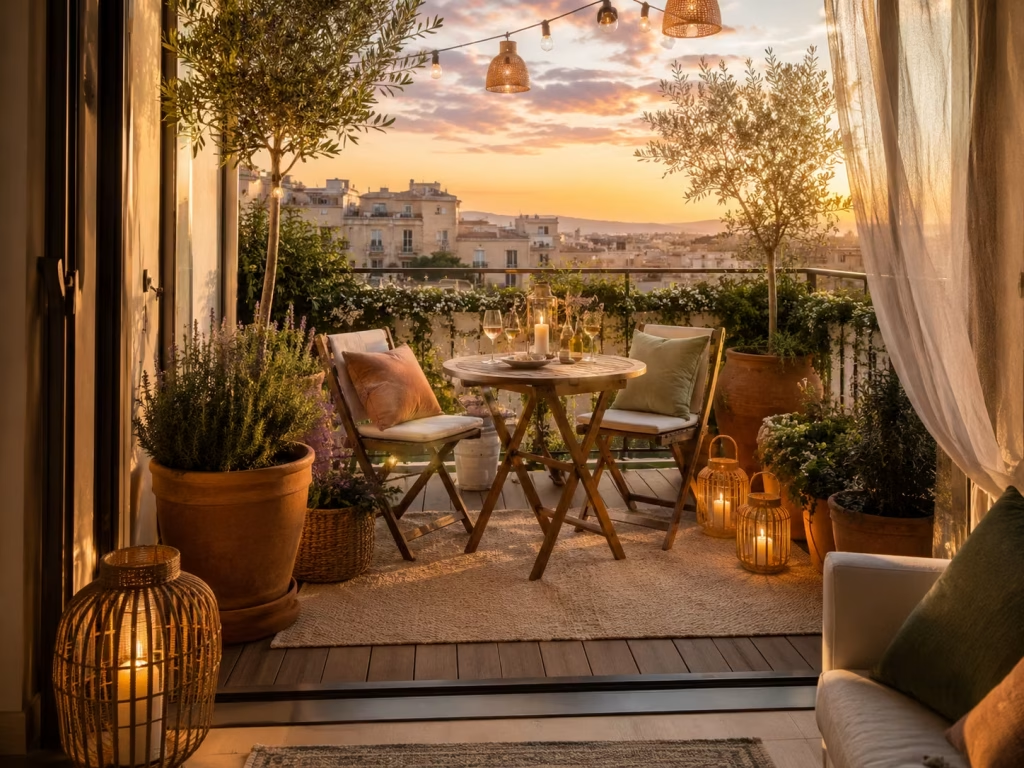
The 25 ideas that follow are built around that philosophy. Rather than chasing short-lived trends, they focus on timeless design principles and practical inspiration that can help transform even the most compact balcony into a stylish summer escape you’ll genuinely look forward to using every day.
Create a Boutique Café Corner with a Bistro Set
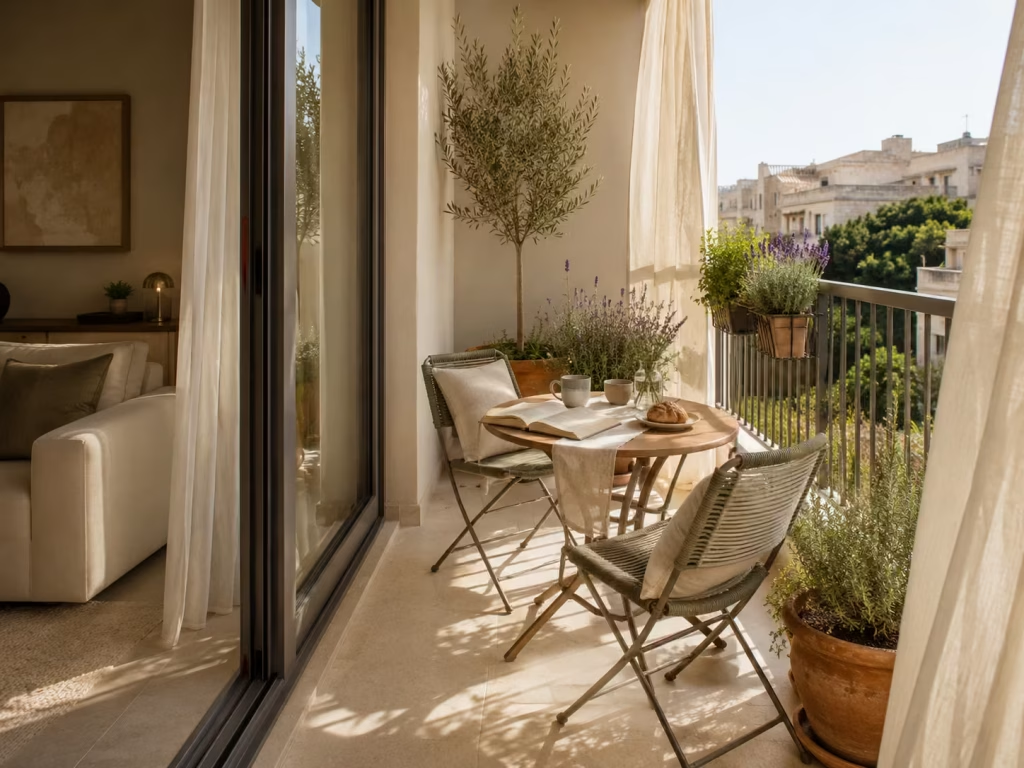
I’d naturally approach the smallest balcony as though I were designing the most intimate room in the home. A boutique café corner does far more than provide somewhere to sit. It creates a daily ritual, whether that means lingering over a weekend breakfast, enjoying an afternoon coffee between meetings, or watching the neighbourhood gradually settle as the evening light softens. When every square centimetre counts, this simple arrangement can become the heart of the balcony rather than just another piece of furniture.
Choose a Bistro Set That Matches the Balcony’s Scale
The biggest mistake I encounter is selecting furniture that overwhelms the available space. A balcony should never feel as though it has been furnished first and lived in second. The goal is to preserve breathing room so the eye can travel comfortably across the space instead of stopping at bulky furniture.
For most compact balconies, a round table measuring 60 to 70 cm (24 to 28 inches) comfortably accommodates two people without dominating the floor. If your balcony measures approximately 1.2 to 1.8 metres deep (4 to 6 feet), this size leaves enough circulation to move naturally around the furniture without constantly shifting chairs.
Round tabletops also soften the geometry of narrow balconies. Without sharp corners interrupting movement, the space feels more relaxed and visually open, proving that sometimes less really is more.
Consider Folding Furniture for Everyday Flexibility
One feature I repeatedly recommend during apartment renovations is folding furniture. While it may sound like a practical compromise, today’s designs are remarkably refined, often crafted from powder-coated aluminium, sustainably sourced teak, or slim steel frames that rival permanent outdoor furniture in both appearance and comfort.
A folding chair allows the balcony to adapt throughout the day. You might enjoy breakfast outside in the morning, fold the seating away to tend container plants during the afternoon, then reopen the space for evening drinks with a friend. That flexibility ensures the balcony works around your lifestyle rather than asking you to work around it.
For renters especially, folding furniture offers another welcome advantage. It can move effortlessly between homes without requiring alterations to the property.
Leave Enough Space to Move Comfortably
Good balcony design is not about filling every empty corner. In fact, resisting that temptation often produces the most inviting result. Think of circulation as an invisible pathway that quietly shapes how comfortable a space feels.
I generally aim to maintain at least 60 cm (24 inches) of clear walking space behind occupied chairs whenever possible. On narrower balconies where every centimetre matters, 45 cm (18 inches) can still provide workable access without making movement feel awkward.
This clearance becomes especially important when carrying drinks, watering plants, or simply stepping outside with a book in hand. If moving around the balcony feels effortless, you’ll naturally use it more often.
Select Materials That Stand Up to Summer Conditions
Outdoor furniture earns its place through durability as much as appearance. Summer sun, occasional rain, humidity, and airborne dust all test materials over time.
From my own renovation projects, these materials consistently perform well:
- Teak develops an elegant silver-grey patina if left untreated while remaining exceptionally durable.
- Powder-coated aluminium stays lightweight, resists corrosion, and requires very little maintenance.
- Galvanised steel offers excellent structural strength with a clean contemporary profile.
- Synthetic woven rope introduces softness and texture while tolerating changing weather remarkably well.
Pair these with removable outdoor cushions covered in UV-resistant performance fabrics, and the seating remains comfortable throughout the season without becoming a maintenance burden.
Make the Most of Morning Sunlight
If your balcony enjoys eastern or southeastern exposure, a café corner can become one of the most enjoyable places in your home before the day gathers pace. Position the table where the early light reaches naturally while keeping seating slightly sheltered from stronger midday sun.
I often layer the setting with a compact planter of fragrant herbs, a ceramic coffee cup, and a linen table runner that catches the morning breeze. These seemingly modest additions appeal to the senses without introducing clutter, creating an atmosphere that feels calm rather than carefully staged.
If the balcony receives intense sunshine later in the day, consider adding a slim outdoor umbrella or a light fabric shade sail. It softens glare while preserving the openness that makes smaller balconies feel inviting.
Why This Idea Works So Well
A thoughtfully scaled café corner demonstrates that outdoor luxury is not reserved for sprawling terraces. By choosing proportionate furniture, durable materials, and a layout that respects movement, even the smallest balcony can become an extension of daily life rather than an overlooked afterthought. It is the sort of space that quietly earns its keep, encouraging you to slow down, savour simple moments, and discover that the best things often come in small packages.
Pros
- Creates a dedicated outdoor dining and coffee space.
- Ideal for compact apartments and urban balconies.
- Folding furniture provides excellent flexibility.
- Relatively affordable compared with larger outdoor seating arrangements.
- Easy to refresh seasonally with cushions, planters, and table décor.
Cons
- Usually accommodates only one or two people comfortably.
- Lower-quality furniture may deteriorate quickly under strong UV exposure.
- Limited table surface for entertaining or working outdoors.
- Requires careful sizing to avoid making the balcony feel overcrowded.
Layer Outdoor Rugs to Add Warmth Underfoot
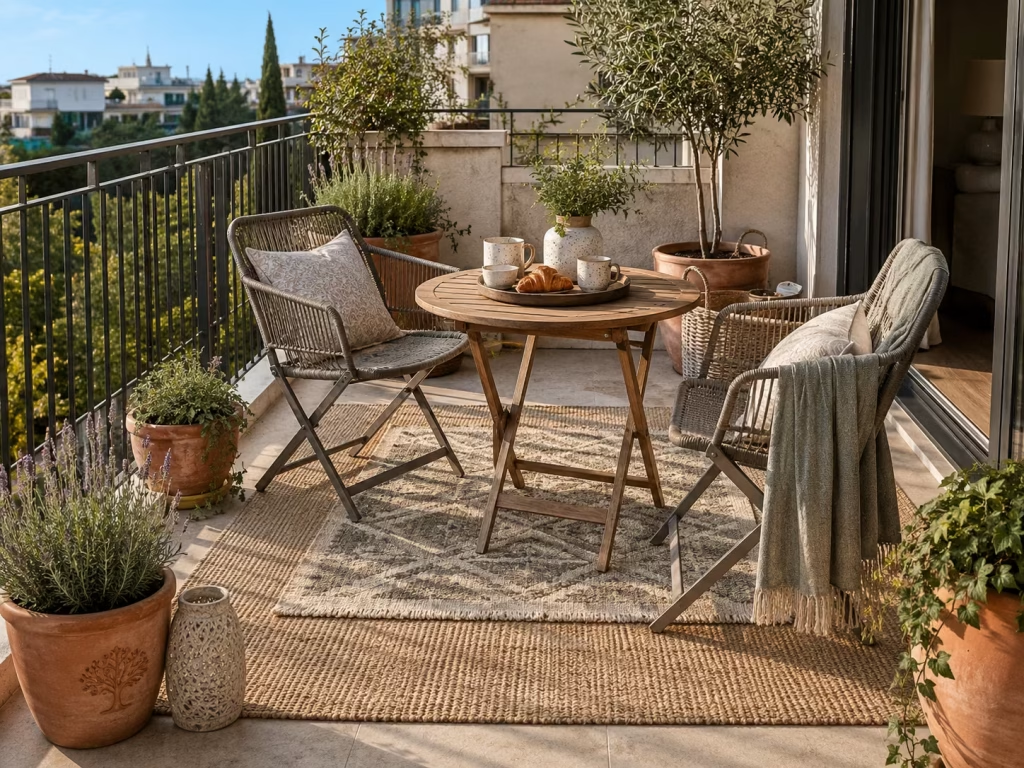
A balcony without a rug can sometimes feel a little unfinished, rather like a beautifully furnished living room missing the one element that quietly ties everything together. Hard flooring, whether it is concrete, composite decking, or porcelain tile, often reflects heat and sound, making even a thoughtfully decorated balcony feel slightly cold or disconnected. Introducing layered outdoor rugs changes that perception almost instantly. The space feels softer, more welcoming, and noticeably more intentional without adding unnecessary furniture.
One lesson I have taken from residential terrace projects over the years is that people often underestimate what they feel beneath their feet. Texture has a remarkable way of shaping comfort long before anyone notices the furniture or planting. The moment someone steps onto a woven rug instead of bare concrete, the balcony begins to feel less like an exterior platform and more like an outdoor room.
Build Visual Depth by Combining Textures
Layering works because it introduces dimension instead of relying on colour alone. Rather than choosing one oversized rug and hoping it transforms the space, consider combining two complementary textures that create subtle contrast.
For example, a larger flat-woven rug can establish the foundation, while a smaller patterned rug placed beneath the bistro table or lounge chair defines a particular activity zone. This layered composition naturally guides the eye around the balcony, making the layout feel richer without becoming visually busy.
I often pair materials that contrast gently rather than dramatically. Some combinations that consistently work well include:
- Flat-weave recycled polypropylene with a woven jute-look rug
- Soft geometric patterns layered over neutral textured weaves
- Fine basket-weave designs combined with striped outdoor runners
- Warm natural tones balanced with subtle charcoal accents
The objective is not to create obvious contrast but to build quiet complexity. Like peeling back the layers of a well-designed interior, every texture contributes something different while supporting the overall composition.
Understand the Difference Between Natural Fibres and Modern Alternatives
Natural materials have undeniable charm, but outdoor conditions rarely treat them kindly over an entire summer. Choosing the right rug means balancing beauty with durability.
Natural fibre rugs such as jute, sisal, and seagrass introduce wonderful texture and earthy character. On covered balconies protected from rain, they can perform beautifully while reinforcing a relaxed, organic aesthetic.
However, if your balcony is exposed to frequent moisture or strong sunlight, modern recycled materials often prove to be the wiser investment. From my own experience specifying finishes for apartment balconies, recycled polypropylene has become one of the most dependable choices because it offers several practical advantages:
- Resists fading under prolonged UV exposure
- Dries quickly after rainfall
- Helps prevent mould and mildew
- Cleans easily with water and mild soap
- Maintains colour throughout the season
- Feels surprisingly soft underfoot compared with older synthetic options
Today’s recycled outdoor rugs also contribute to more sustainable manufacturing, allowing homeowners to reduce environmental impact without compromising appearance or longevity.
Choose Colours That Expand the Space Rather Than Shrink It
Colour quietly influences how spacious a balcony feels. While bold patterns certainly have their place, they can sometimes dominate compact outdoor areas if used without restraint. For smaller balconies, I usually recommend beginning with a calm foundation inspired by natural landscapes.
Consider shades such as:
- Warm sand
- Soft ivory
- Stone grey
- Sage green
- Muted terracotta
- Weathered taupe
- Pale olive
These colours reflect summer light beautifully while creating harmony with timber, greenery, ceramics, and woven furniture. If you would like to introduce stronger colour, allow accessories such as cushions, lanterns, or planters to carry those accents instead of asking the rug to do all the heavy lifting.
This layered approach keeps the balcony feeling open while still giving it plenty of personality.
Use Rugs to Anchor Furniture and Define Individual Zones
One of the most effective design techniques, especially on compact balconies, is using rugs to establish invisible boundaries. They help furniture feel connected rather than scattered across the floor.
I often see balconies where chairs, tables, and planters appear to float independently, creating visual clutter despite there being very few objects. A carefully positioned rug solves this almost immediately.
For a typical café corner, a rug measuring approximately 120 × 180 cm (4 × 6 feet) comfortably accommodates a small bistro table and two chairs while framing the seating arrangement. Larger balconies may benefit from a 160 × 230 cm (5 ft 3 in × 7 ft 7 in) rug, allowing additional seating or planters to sit comfortably within the same visual zone.
Whenever possible, position at least the front legs of the furniture on the rug. This simple technique creates cohesion, making the arrangement appear thoughtfully composed rather than randomly assembled.
Add Seasonal Layers Without Creating Clutter
One advantage of outdoor rugs is how easily they evolve throughout the summer. As temperatures shift, the balcony can be refreshed with only a few subtle additions. A lightweight woven throw draped over a chair, textured outdoor cushions, ceramic lanterns, or a handcrafted basket filled with potted herbs all build upon the rug’s foundation without overwhelming the limited space.
This gradual layering mirrors the way beautifully designed homes evolve over time. Instead of changing everything at once, each thoughtful addition strengthens the overall atmosphere while preserving a sense of calm.
A Professional Observation Worth Considering
One renovation project still stands out in my memory because the homeowners were convinced they needed larger furniture to make their narrow balcony feel complete. Rather than increasing the furniture size, I introduced two layered outdoor rugs in complementary neutral tones and subtly repositioned the seating within their boundaries.
The transformation surprised everyone involved. The balcony immediately felt warmer, more organised, and significantly more spacious, despite its footprint remaining exactly the same. It was a perfect reminder that thoughtful layering often delivers greater impact than simply adding more pieces. Sometimes the smallest changes quietly steal the show.
Pros
- Softens hard balcony flooring and improves everyday comfort.
- Adds texture, warmth, and visual depth without taking up extra floor space.
- Helps define seating and dining areas in compact layouts.
- Reduces the echo often created by concrete or tiled balconies.
- Easy to refresh seasonally by changing cushions and accessories rather than replacing furniture.
Cons
- Natural fibre rugs require protection from prolonged moisture.
- Lower-quality synthetic rugs may fade or curl after extended sun exposure.
- Light-coloured rugs need more frequent cleaning in dusty environments.
- Layering too many bold patterns can make a small balcony feel visually crowded if not balanced carefully.
Build a Vertical Garden That Doesn’t Steal Floor Space
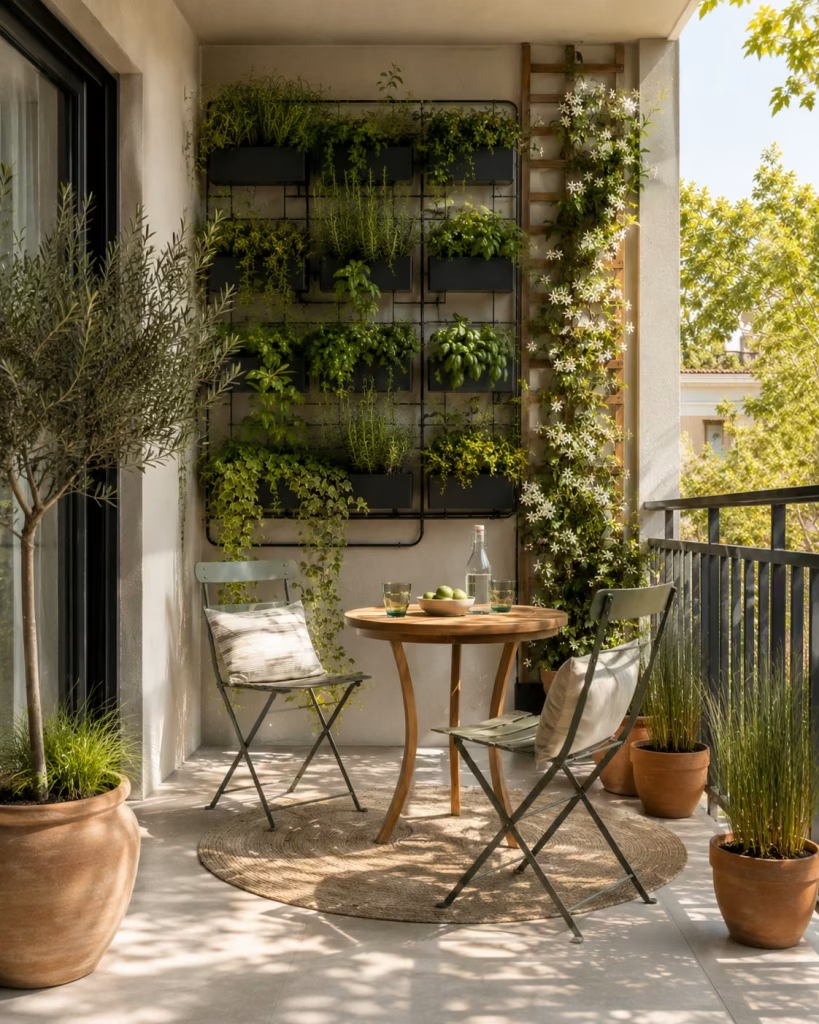
One of the biggest misconceptions about small balconies is that adding more plants inevitably means sacrificing precious floor space. In reality, the opposite is often true. Some of the most inviting balconies I have designed relied less on rows of oversized pots and more on carefully planned vertical planting that transformed plain walls into living backdrops. By encouraging greenery to grow upward rather than outward, the balcony retains its openness while feeling far more immersive.
Vertical gardens do more than satisfy a love of plants. They soften hard architectural lines, filter distracting views, introduce welcome shade, and create a stronger connection with nature, particularly in dense urban settings where greenery can feel few and far between. It is a classic example of working smarter, not harder. Instead of allowing every pot to compete for limited floor space, the walls begin carrying part of the visual story.
Transform Empty Walls into Living Features
Blank balcony walls often represent untapped potential. Rather than treating them as barriers, consider them an opportunity to introduce texture, colour, and seasonal interest without affecting circulation.
Wall-mounted planters, modular planting systems, hanging pockets, and slim shelving can all create an attractive green display while keeping the floor remarkably clear.
From my experience, the most successful arrangements avoid rigid symmetry. Nature rarely grows in perfectly straight lines, and balconies tend to feel more relaxed when plants vary in height, foliage size, and growth habit. Allow trailing species to soften the edges while upright plants introduce rhythm and structure. This gentle variation keeps the composition visually engaging from every angle.
If your balcony measures around 1.5 metres wide (5 feet), dedicating just one wall to planting is often enough to establish a lush focal point without making the space feel enclosed.
Introduce Climbing Plants for Natural Privacy
When privacy is limited, many homeowners instinctively install bulky screens that block both views and natural light. Climbing plants offer a more elegant alternative by creating a living veil that changes beautifully throughout the seasons.
A slim trellis fixed securely against the wall or railing provides support for species that gradually weave their way upward, adding movement and softness without creating visual heaviness. Depending on your local climate, excellent choices include:
- Star jasmine for fragrant summer flowers
- Clematis for colourful seasonal blooms
- Climbing roses where sunlight is abundant
- Passionflower for striking architectural interest
- Ivy for consistent evergreen coverage
- Sweet peas for vibrant seasonal colour and fragrance
Over time, these living screens become richer and more characterful, proving that patience often bears fruit when designing outdoor spaces.
Grow Herbs That Look Beautiful and Earn Their Place
The most rewarding balcony gardens combine beauty with everyday usefulness. Herbs achieve exactly that, offering fragrance, texture, and practical value in equal measure.
Imagine stepping outside while preparing dinner to gather fresh basil, rosemary, thyme, or mint only a few steps from the kitchen. These small daily rituals quietly enrich everyday life and encourage greater use of the balcony throughout the season. I frequently recommend arranging herbs according to their growing habits.
For example:
- Basil performs well in warm, sheltered locations.
- Rosemary enjoys full sun and excellent drainage.
- Mint should remain in its own container to prevent spreading.
- Thyme thrives in drier conditions with minimal maintenance.
- Chives introduce upright structure and delicate flowers.
- Oregano fills gaps with attractive trailing growth.
A vertical herb wall positioned near the balcony entrance also releases subtle fragrance whenever you brush past the foliage, creating a sensory experience that artificial décor simply cannot replicate.
Plan Irrigation Before the Plants Arrive
Even the healthiest planting scheme will struggle if watering becomes inconvenient. One detail that often separates thriving balcony gardens from neglected ones is an irrigation strategy established before the first planter is installed.
For compact balconies, a simple drip irrigation system connected to a timer can reduce maintenance considerably while ensuring consistent moisture during periods of hot weather.
If an automated system is not practical, grouping plants with similar watering requirements together makes routine care much easier. Herbs that prefer drier soil should not share containers with moisture-loving foliage plants, as their needs differ significantly.
I also encourage clients to choose self-watering planters wherever possible. During particularly warm summer weeks, they provide valuable peace of mind, especially for those who travel frequently or spend long hours away from home.
Think Carefully About Structural Weight
It is easy to become carried away when imagining a lush green wall, but every balcony has structural limits that deserve careful consideration. Wet soil, ceramic pots, irrigation reservoirs, and mature plants collectively weigh far more than many homeowners realise.
As a general guide, lightweight materials such as recycled composite, fibreglass, resin, or high-quality recycled plastic reduce unnecessary structural load while still offering attractive finishes.
Where possible:
- Position heavier planters close to structural walls rather than along unsupported balcony edges.
- Distribute weight evenly instead of concentrating large containers in one area.
- Choose lightweight growing media specifically formulated for container gardening.
- Secure wall-mounted systems according to the building’s construction requirements.
If you live in an apartment building and plan a substantial installation, consulting the building management or a structural professional before proceeding is always worthwhile. A little foresight can prevent costly problems later.
Design with Layers Rather Than Quantity
Many people assume that creating a lush balcony means buying as many plants as possible. In practice, thoughtful layering almost always achieves a stronger result than sheer volume. I prefer working with three distinct planting levels:
- Tall structural plants that establish height and rhythm.
- Mid-height foliage that creates fullness and texture.
- Cascading plants that soften shelves, planters, and balcony edges.
This layered composition naturally draws the eye upward, making the balcony appear taller while preserving valuable floor space. It also mirrors the way planting develops in nature, creating an atmosphere that feels relaxed rather than carefully manufactured.
A Lesson from One Memorable Balcony Project
One apartment balcony I redesigned measured just under 4 square metres (43 square feet). Initially, the owners had placed nearly a dozen pots across the floor, leaving only a narrow path to walk through. Although the planting was healthy, the balcony felt crowded and surprisingly smaller than its actual dimensions.
Instead of reducing the number of plants, I relocated most of them onto a modular vertical system mounted against a single wall. A climbing jasmine was trained onto a slim trellis, herbs filled the middle sections, and trailing ivy spilled gently over the upper planters. The transformation was remarkable. The floor suddenly felt open, the seating became more inviting, and the entire balcony gained depth and character without increasing its footprint. It was proof that sometimes the best solution is simply to look up rather than out.
Pros
- Maximises greenery without sacrificing valuable floor space.
- Creates a stronger connection with nature in urban environments.
- Improves privacy while maintaining airflow and natural light.
- Allows herbs, flowers, and foliage to be organised efficiently.
- Adds texture, colour, and seasonal interest throughout the year.
- Makes compact balconies feel taller and more immersive.
Cons
- Requires regular watering and occasional pruning.
- Wall-mounted systems must be installed securely.
- Mature plants can become heavier over time.
- Poor plant selection may lead to overcrowding or uneven growth.
- Irrigation planning is essential for maintaining healthy planting during hot summer weather.
Introduce Soft Ambient Lighting for Long Summer Evenings
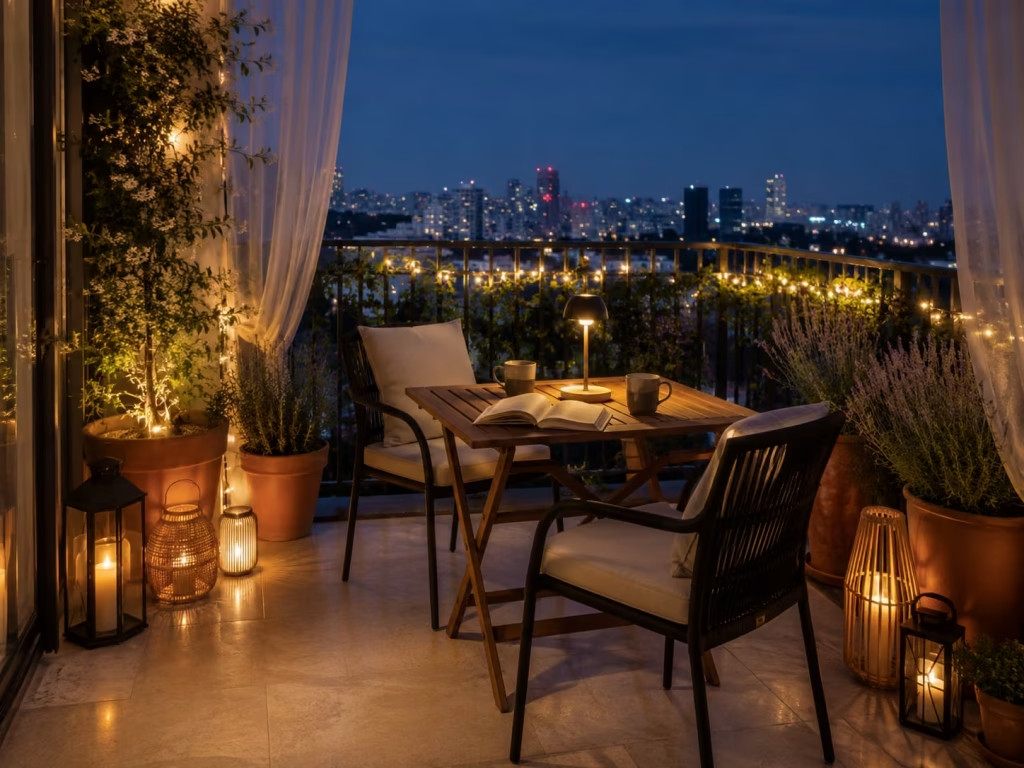
A beautifully designed balcony should not lose its charm the moment the sun slips below the horizon. In many ways, evening is when an outdoor space reveals its true personality. As daylight fades, carefully planned lighting has the power to transform an ordinary balcony into a peaceful retreat where conversations linger, books become difficult to put down, and even a simple cup of tea feels like a small luxury. It is often said that good lighting is the jewellery of a room, and the same holds true outdoors. The right glow does not shout for attention. Instead, it quietly sets the mood and allows every carefully chosen detail to shine.
One mistake I frequently notice is relying on a single bright wall light or overhead fixture. While it may illuminate the space, it rarely creates atmosphere. Strong lighting flattens textures, casts harsh shadows, and can make a compact balcony feel more like a service area than a relaxing destination. Soft, layered illumination works far more effectively because it gently reveals materials, planting, and architectural details without overwhelming the senses.
Use Lanterns to Create Warm Pools of Light
Lanterns remain one of the simplest yet most effective ways to introduce warmth and character to a small balcony. Unlike fixed lighting, they offer flexibility, allowing you to change the atmosphere whenever the occasion calls for it.
I often recommend grouping lanterns in varying heights rather than placing identical pieces around the balcony. This creates a more natural rhythm that feels collected over time instead of purchased as a matching set.
For example, a taller lantern placed beside a lounge chair can anchor a reading corner, while two smaller lanterns near a planter or café table soften the surrounding area with gentle illumination. Materials that age gracefully outdoors include:
- Powder-coated metal
- Teak with glass panels
- Woven rattan with protective liners
- Weather-resistant ceramic
- Frosted glass for diffused light
Where possible, choose warm white LED candles instead of cool white alternatives. A colour temperature between 2200K and 2700K closely resembles candlelight, creating an inviting atmosphere that feels calm rather than clinical.
Embrace Rechargeable Lamps for Flexible Lighting
One of the most practical additions to modern balconies is the rechargeable outdoor lamp. Unlike hardwired fixtures, these portable lights allow you to adapt the space with ease, whether you are hosting friends, enjoying dinner for two, or simply unwinding after a busy day.
In recent residential projects, I have increasingly specified rechargeable lamps because they solve several common challenges without requiring electrical work. They can easily be:
- Moved from a dining table to a reading chair.
- Placed beside planters to highlight greenery.
- Used indoors during colder months.
- Recharged without replacing batteries.
- Rearranged whenever the balcony layout changes.
A compact lamp standing approximately 25 to 35 cm (10 to 14 inches) high usually provides enough illumination for a small table while maintaining comfortable sightlines across the balcony. This flexibility means the lighting evolves with your lifestyle instead of remaining fixed in one position.
Add String Lighting Without Overwhelming the Space
String lights have become almost synonymous with summer evenings, yet they are often installed without much thought. When used sparingly and positioned carefully, they create an effortless sense of warmth. When overused, however, they can quickly resemble festive decorations that compete with the architecture rather than complement it.
I usually encourage homeowners to think of string lighting as a subtle frame rather than the main attraction. Excellent placement options include:
- Along the inside of balcony railings.
- Woven gently through climbing plants.
- Suspended overhead on tension wires where permitted.
- Around a slim privacy screen.
- Behind tall planters to create a soft halo effect.
Choose bulbs with a warm colour temperature and maintain consistent spacing between each light. This restraint allows the balcony to feel elegant throughout the season instead of looking temporary.
For balconies measuring 2 to 3 metres (6.5 to 10 feet) in length, a single strand is often sufficient. More lighting does not necessarily create a better atmosphere. Quite often, it is the quieter compositions that leave the strongest impression.
Layer Different Light Sources for Depth and Comfort
The most memorable lighting schemes rarely rely on one source alone. Instead, they combine several gentle layers that work together to create visual depth while supporting different activities.
I approach balcony lighting in much the same way I would design an interior living room, giving each light a distinct purpose rather than expecting one fixture to accomplish everything. A balanced arrangement might include:
Ambient lighting
Provides the overall glow through lanterns, string lights, or wall-mounted fixtures.
Task lighting
Supports practical activities such as reading, dining, or preparing drinks with rechargeable table lamps or adjustable wall lights.
Accent lighting
Highlights attractive features including textured walls, statement planters, ornamental grasses, or climbing plants.
This layered strategy creates subtle variation throughout the balcony. Instead of every corner appearing equally bright, the eye naturally moves between illuminated focal points, making the space feel deeper and considerably more sophisticated.
Think Beyond Brightness and Focus on Atmosphere
Lighting should support the way you experience the balcony rather than simply making it visible. One element people often overlook is reflection. Soft light bouncing gently from pale walls, natural timber, woven furniture, or textured stone introduces a quiet richness that harsh lighting simply cannot achieve.
In one apartment renovation, we deliberately reduced the overall brightness by replacing powerful wall-mounted fixtures with several smaller light sources positioned throughout the balcony. The clients initially worried the space might feel too dim. The opposite happened. The balcony became noticeably more relaxing, conversations naturally lasted longer, and the planting appeared fuller because gentle shadows added depth instead of obscuring detail.
It was a valuable reminder that lighting is not about chasing brightness. It is about creating an environment where people instinctively want to stay.
Consider Energy Efficiency and Weather Resistance
Outdoor lighting should perform reliably throughout the season with minimal maintenance. When selecting fixtures, I recommend prioritising:
- IP44 or higher weather-resistant ratings for exposed balconies.
- Rechargeable LED technology for lower energy consumption.
- Solar-powered lanterns where sunlight exposure is sufficient.
- UV-resistant finishes that retain their appearance over time.
- Replaceable LED components where available to extend product lifespan.
These choices not only reduce ongoing maintenance but also ensure the balcony continues looking refined year after year.
A Professional Observation from the Field
One compact city balcony I redesigned measured only 2.4 × 1.5 metres (8 × 5 feet), yet it became one of the homeowners’ favourite spaces after sunset. We resisted the temptation to install a bright overhead fixture. Instead, a single strand of warm string lights traced the railing, two lanterns framed the seating area, and a rechargeable table lamp provided focused light for evening meals.
Nothing about the scheme was extravagant, yet every evening the balcony seemed to take on a different character. The textured planters caught soft highlights, climbing jasmine cast delicate shadows against the wall, and the entire setting invited people to linger just a little longer. Sometimes, the difference between an ordinary balcony and one that feels truly memorable is not found in expensive furniture but in lighting that quietly works its magic.
Pros
- Extends the usability of the balcony well into the evening.
- Creates a welcoming atmosphere for relaxing and entertaining.
- Highlights plants, textures, and architectural features.
- Rechargeable lighting offers flexibility without complex installation.
- Energy-efficient LED options reduce long-term running costs.
- Layered lighting makes even compact balconies feel deeper and more luxurious.
Cons
- Poorly positioned lights can create glare instead of ambience.
- Lower-quality fixtures may fade or fail after prolonged outdoor exposure.
- Solar lighting depends on sufficient daytime sunlight.
- Too many decorative lights can make a small balcony feel visually cluttered.
- Rechargeable lamps require periodic charging to maintain consistent performance.
Replace Heavy Furniture with Airy Open-Frame Pieces
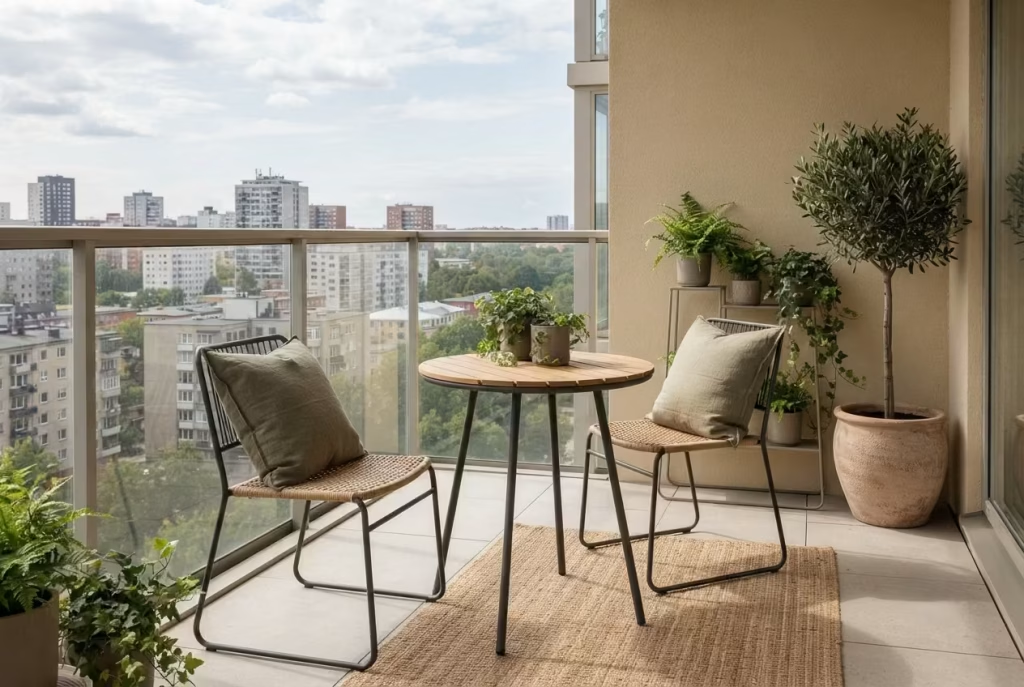
When decorating a compact balcony, the furniture you choose shapes the space just as much as the décor surrounding it. Many homeowners focus on measurements alone, believing that if a chair physically fits, it must be the right choice. In reality, furniture influences how spacious a balcony feels, and that perception often matters more than the tape measure. A bulky chair with thick arms and enclosed sides can make a balcony appear crowded even when there is plenty of room to move. By contrast, furniture with slender profiles and open frames allows light and views to pass through, creating an effortless sense of openness.
I have seen this transformation unfold on numerous residential projects. Clients often expect a dramatic redesign involving new flooring or structural changes, yet simply replacing oversized furniture with lighter, more refined pieces can completely alter the atmosphere. It is a reminder that good design is not always about adding more. Sometimes it is about knowing what to take away.
Understand Why Visual Weight Matters More Than Physical Size
Visual weight is one of the most overlooked principles in outdoor design. It describes how heavy or dominant an object appears, regardless of its actual dimensions or mass.
Imagine two chairs with almost identical measurements. One has broad solid sides, thick cushions, and chunky timber legs. The other features slim metal framing with woven seating that allows daylight to filter through. Although both occupy similar floor space, the second chair feels noticeably lighter because your eye can continue beyond it.
This subtle distinction has a remarkable effect on compact balconies. Furniture with lower visual weight helps to:
- Preserve uninterrupted sightlines.
- Reflect more natural light.
- Reduce the feeling of overcrowding.
- Make narrow balconies appear wider.
- Allow surrounding plants and materials to become part of the overall composition.
The result is a balcony that feels calm and breathable rather than packed from edge to edge.
Choose Aluminium for Everyday Practicality
If I were selecting furniture for a busy apartment balcony that experiences regular exposure to sunshine and rain, powder-coated aluminium would almost always appear near the top of my shortlist.
Its greatest strength lies in the balance between durability and lightness. Aluminium furniture is easy to reposition when entertaining, cleaning, or simply following the shifting sunlight throughout the day. Additional benefits include:
- Excellent resistance to corrosion.
- Minimal maintenance requirements.
- Lightweight construction for easy handling.
- Contemporary appearance suited to a wide range of architectural styles.
- Long service life in coastal and humid environments.
For balconies exposed to frequent wind, pairing lightweight aluminium furniture with discreet floor protectors or weighted cushions can help maintain stability without compromising flexibility.
Introduce Teak for Timeless Warmth and Character
While aluminium brings modern practicality, teak contributes something entirely different. It introduces warmth, depth, and natural texture that softens the harder materials commonly found on apartment balconies.
One aspect I particularly appreciate about teak is how gracefully it matures. Left untreated, the timber gradually develops a refined silver-grey patina that blends beautifully with greenery, stone, and neutral textiles. Those who prefer its original honey tones can maintain the finish with occasional teak oil, although allowing it to weather naturally often results in a richer, more understated appearance. For smaller balconies, look for teak furniture with:
- Slim legs instead of boxed bases.
- Open slatted backs.
- Folding mechanisms where possible.
- Narrow armrests.
- Compact proportions that encourage comfortable circulation.
These thoughtful details preserve the timber’s warmth without introducing unnecessary visual bulk.
Consider Powder-Coated Steel for Refined Structure
Powder-coated steel offers another excellent solution, particularly if you appreciate clean architectural lines. It delivers exceptional strength while allowing manufacturers to create remarkably slim frames that remain stable over many years.
Unlike untreated steel, high-quality powder-coated finishes provide effective protection against moisture and corrosion, making them suitable for outdoor use when properly maintained.
I often recommend steel furniture in contemporary settings where balconies feature concrete, porcelain tiles, or minimalist façades. The crisp profiles complement modern architecture while allowing softer materials such as linen cushions, woven baskets, and lush planting to introduce warmth and balance.
Dark charcoal, soft white, muted olive, and warm sand finishes all integrate beautifully into summer colour palettes without dominating the overall design.
Keep Maintenance Simple So the Balcony Gets Used More Often
Beautiful outdoor furniture quickly loses its appeal if maintaining it becomes a constant chore. One principle I have learned through years of residential design is that simplicity encourages consistency. The easier it is to care for the space, the more likely homeowners are to enjoy it regularly.
Fortunately, open-frame furniture naturally requires less effort to maintain because there are fewer enclosed surfaces where leaves, dust, or standing water can collect. As part of a simple seasonal routine, I recommend:
- Wiping frames every few weeks with mild soap and water.
- Removing pollen and dust before they become ingrained.
- Washing removable cushion covers at the end of the season.
- Inspecting protective feet to prevent scratching balcony flooring.
- Applying teak protector only if you wish to retain the timber’s original colour.
This modest level of care allows quality furniture to retain its appearance for many years without demanding significant time or expense.
Balance Comfort with Visual Openness
Lightweight furniture should never come at the expense of comfort. A beautifully proportioned chair that feels uncomfortable after twenty minutes is unlikely to encourage regular use.
When selecting seating, pay close attention to ergonomic support, seat depth, and cushion quality. As a general guide:
- Seat height should range between 43 and 46 cm (17 to 18 inches).
- Comfortable seat depth typically falls between 45 and 50 cm (18 to 20 inches).
- Leave at least 60 cm (24 inches) of circulation space around frequently used furniture whenever possible.
Adding weather-resistant cushions in linen-inspired fabrics or textured woven materials introduces softness without increasing visual heaviness. This balance between comfort and openness is often what separates a pleasant balcony from one people genuinely look forward to using every day.
A Real Project That Changed My Perspective
One project involved a city apartment with a balcony measuring just 2.8 × 1.7 metres (9 ft 2 in × 5 ft 7 in). The owners had invested in a luxurious outdoor sofa with thick timber arms and oversized cushions. Individually, every piece looked beautiful. Together, they overwhelmed the space, leaving only a narrow route to reach the railing.
Rather than replacing everything with smaller furniture, I selected open-frame powder-coated aluminium chairs paired with a slim teak café table. The floor area remained almost identical, yet the balcony immediately felt brighter and noticeably larger because daylight flowed freely through the furniture instead of being blocked by it. Even the surrounding plants appeared healthier and more prominent simply because the layout breathed more naturally.
That experience reinforced an important lesson I still carry into every outdoor project. The most successful furniture is not always the piece that commands attention. More often than not, it quietly supports the space around it, allowing the balcony itself to become the star of the show.
Pros
- Makes compact balconies feel noticeably larger without altering the footprint.
- Preserves natural light and open sightlines.
- Easier to move, clean, and rearrange.
- Works beautifully with modern, coastal, Scandinavian, and Mediterranean design styles.
- High-quality aluminium, teak, and powder-coated steel provide excellent long-term durability.
- Creates a lighter, more elegant outdoor atmosphere.
Cons
- Premium materials often come with a higher initial investment.
- Lightweight furniture may require securing in particularly windy locations.
- Teak develops a natural patina unless maintained regularly.
- Lower-quality metal frames may lose their protective finish over time.
- Open-frame seating typically benefits from cushions for extended comfort.
Add Built-In Style with Bench Seating
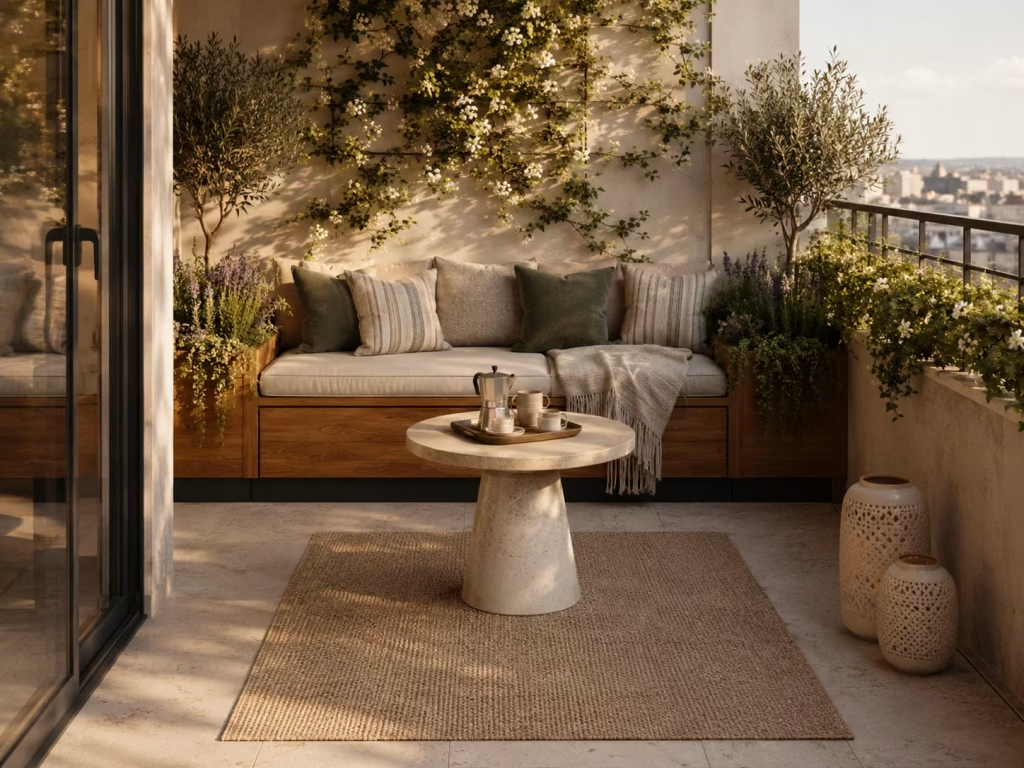
If there is one feature that consistently transforms a compact balcony from a place you occasionally visit into one you genuinely live in, it is built-in bench seating. Unlike individual chairs that can leave awkward gaps or make a narrow layout feel fragmented, a bench becomes part of the architecture itself. It creates a sense of permanence, encourages relaxation, and makes every square centimetre work a little harder. In a small outdoor space, that kind of efficiency is worth its weight in gold.
I have recommended built-in benches for balconies of every shape, from narrow apartment terraces to compact townhouse loggias, and the result is almost always the same. The balcony feels calmer, more organised, and surprisingly larger. Instead of filling the floor with separate pieces that compete for attention, the seating blends seamlessly into the surroundings, allowing the eye to move freely across the space.
The beauty of a built-in bench lies in its ability to wear many hats. It provides comfortable seating, discreet storage, and a strong visual anchor, all while maintaining a clean, uncluttered appearance.
Turn Hidden Storage into Everyday Convenience
Outdoor living becomes far more enjoyable when everything has a designated place. Without practical storage, balconies quickly collect cushions, gardening tools, watering cans, lanterns, children’s toys, or outdoor throws, making even the most thoughtfully designed space feel untidy.
This is where built-in seating quietly earns its keep. By incorporating lift-up lids, front-access drawers, or concealed compartments beneath the seat, the bench becomes valuable storage without occupying additional floor space.
Items that work particularly well inside bench storage include:
- Outdoor cushions and seat pads
- Folded throws for cooler evenings
- Small gardening tools
- Plant fertilisers and watering accessories
- Table linens
- Portable speakers
- Rechargeable lamps and charging cables
- Outdoor games or books
One project that still comes to mind involved a family whose balcony constantly felt cluttered because everyday essentials had nowhere to go. Rather than adding extra cabinets, we designed a bench with concealed storage beneath the seating. Overnight, the balcony felt twice as organised, and more importantly, the family began using it every evening because preparing the space became effortless.
Invest in Custom Cushions for Lasting Comfort
A beautifully crafted bench deserves cushions that are equally considered. While ready-made outdoor cushions can work, custom-made seat pads almost always produce a more refined result because they fit the exact dimensions of the bench without awkward gaps or overhangs.
Comfort matters just as much as appearance. After all, a balcony should invite you to stay a little longer, whether you are enjoying your morning coffee or watching the last light fade across the skyline. For lasting comfort, I generally recommend:
- Cushion thickness between 7 and 10 cm (3 to 4 inches).
- High-density outdoor foam that retains its shape.
- Removable, washable covers for easy maintenance.
- UV-resistant performance fabrics that resist fading.
- Neutral base colours paired with seasonal accent cushions.
Layering cushions of different sizes introduces softness while preventing the bench from feeling overly structured. Linen-look fabrics, textured weaves, and subtle stripes work particularly well because they add visual interest without overwhelming a compact setting.
Make Every Square Centimetre Count
Few furniture solutions use space as intelligently as a built-in bench. Freestanding seating often leaves unusable gaps behind chairs or between furniture pieces. A bench, by contrast, sits neatly against a wall or railing, freeing the centre of the balcony for circulation. This simple adjustment can completely change how spacious the balcony feels.
Rather than walking around several individual chairs, movement becomes fluid and uninterrupted. The remaining floor area can accommodate planters, a slim coffee table, or simply provide breathing room that allows the balcony to feel open instead of overcrowded.
I often describe this approach as letting the architecture do the heavy lifting. The seating works with the structure rather than competing against it, resulting in a layout that feels balanced and intentional.
Get the Measurements Right from the Beginning
Even the most attractive bench will disappoint if its proportions are uncomfortable. Good ergonomics are essential because outdoor seating should support long conversations, leisurely meals, and quiet afternoons without becoming tiring. Through years of residential design, these dimensions have consistently delivered comfortable results:
- Seat height: 43 to 46 cm (17 to 18 inches).
- Seat depth: 45 to 55 cm (18 to 22 inches).
- Backrest height: 35 to 45 cm (14 to 18 inches) above the seat.
- Cushion thickness: 7 to 10 cm (3 to 4 inches).
- Comfortable clearance in front of the bench: 75 to 90 cm (30 to 36 inches) whenever possible.
These proportions strike a balance between comfort and efficient use of space, allowing the balcony to function naturally without feeling cramped.
Blend the Bench with the Balcony’s Design Language
A built-in bench should feel as though it has always belonged there rather than appearing as an afterthought. Selecting materials that echo the surrounding architecture creates visual harmony and helps the balcony feel larger. Some combinations I regularly recommend include:
- Teak seating paired with black powder-coated steel frames for contemporary homes.
- Painted timber benches finished in warm white or soft sage for cottage-inspired balconies.
- Composite decking wrapped around the bench to create a seamless architectural look.
- Natural stone or porcelain bench surrounds complemented by timber seating surfaces for modern urban apartments.
Adding integrated planters at either end of the bench also softens the structure while introducing greenery at eye level. The seating and planting begin to work together, creating a balanced composition that feels curated rather than crowded.
Think Beyond Seating Alone
One of the greatest strengths of a built-in bench is its versatility. Depending on how you style it, the same piece can support different activities throughout the day.
During the morning, it becomes a peaceful breakfast spot filled with natural light. By afternoon, it serves as a comfortable reading nook beneath the shade of climbing plants. In the evening, it transforms into relaxed seating for guests gathered around a compact table illuminated by lanterns and soft lighting.
This adaptability is what makes built-in seating such a worthwhile investment. Rather than serving one purpose, it evolves alongside your daily routine, quietly supporting every moment without asking for attention.
A Lesson from One Remarkable Balcony Renovation
A few years ago, I worked on an apartment balcony measuring just 3 × 1.6 metres (10 × 5 ft 3 in). The homeowners believed they needed a larger balcony to entertain comfortably because their existing furniture occupied nearly every available inch.
Instead of expanding the space, which was impossible, we replaced three separate chairs and a storage cabinet with a custom bench running along the rear wall. Beneath the seat, concealed compartments stored cushions, gardening equipment, and outdoor accessories. Above it, climbing jasmine softened the brick wall, while custom cushions introduced texture in muted sand and olive tones.
The footprint of the balcony never changed, yet the transformation was remarkable. The centre of the space opened up, circulation improved dramatically, and there was suddenly room for a small dining table that had previously seemed impossible to fit. That project reinforced something I often remind clients: thoughtful design is rarely about having more space. It is about making the space you already have work beautifully.
Pros
- Maximises seating without occupying unnecessary floor space.
- Provides valuable hidden storage for everyday outdoor essentials.
- Creates a clean, integrated architectural appearance.
- Improves circulation on narrow balconies.
- Custom cushions enhance both comfort and visual appeal.
- Can significantly increase the functionality of compact outdoor spaces.
Cons
- Custom-built benches require a higher initial investment than freestanding furniture.
- Permanent installation offers less flexibility if the layout needs to change.
- Timber benches require periodic maintenance to preserve their appearance.
- Storage compartments should be ventilated to prevent moisture build-up.
- Professional installation is often recommended to ensure structural stability and long-term durability.
You May also Like: 25 Kids Room Renovation Ideas That Are Trending Like Crazy Right Now
Bring Mediterranean Character Through Terracotta and Olive Trees
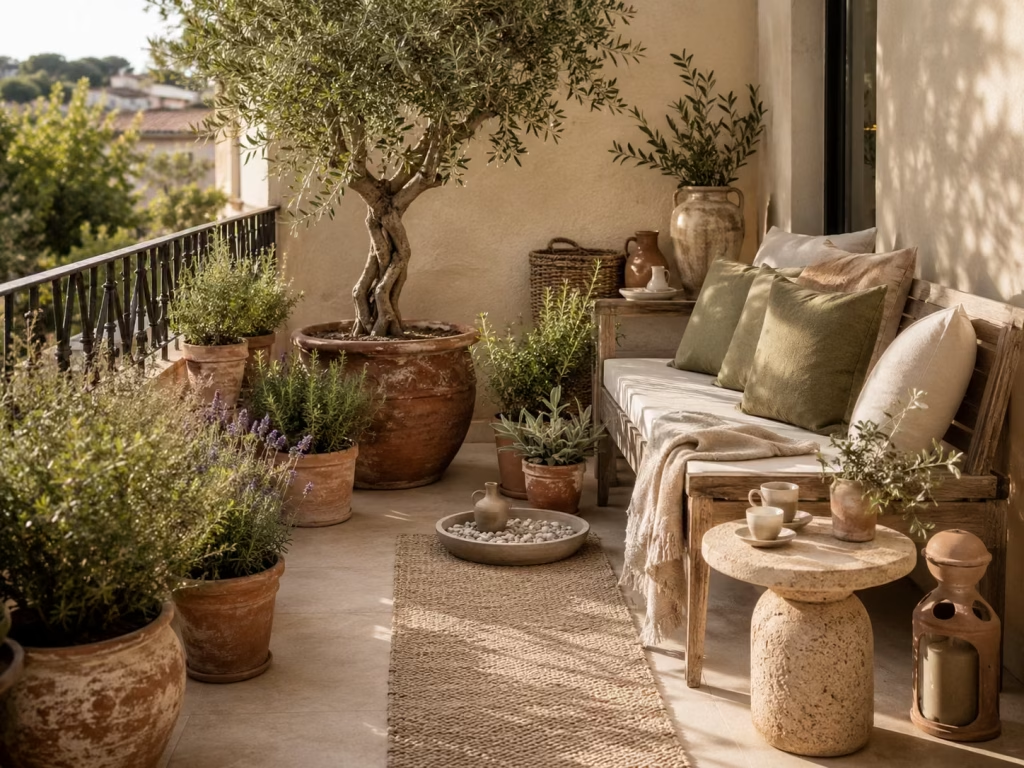
Few design styles capture the relaxed spirit of summer quite like the Mediterranean aesthetic. It has an effortless quality that never feels forced or overly polished. Sun-warmed terracotta, weathered timber, silvery olive foliage, and natural stone all work together to create an atmosphere that feels as though it has evolved over time rather than being assembled in a single shopping trip. Even on the smallest balcony, these elements can transport you far beyond the city skyline, proving that thoughtful material choices often carry more impact than elaborate decoration.
One reason this style has endured for generations is its authenticity. Traditional Mediterranean homes were shaped by climate, practicality, and local materials, not passing trends. Every surface was chosen because it could withstand intense sunshine, every plant had a purpose, and every outdoor corner invited people to gather, slow down, and enjoy the rhythm of daily life. Bringing those same principles into a compact balcony creates a space that feels timeless instead of seasonal.
In my experience, homeowners often assume Mediterranean design requires a sprawling terrace overlooking the sea. That simply is not true. Some of the most convincing interpretations I have worked on occupied balconies smaller than 4 square metres (43 square feet). By carefully selecting a handful of honest materials and allowing them room to breathe, the atmosphere felt remarkably authentic without becoming theatrical.
Choose Plants That Thrive in Your Local Climate
An attractive balcony garden should be enjoyable to maintain, not a constant source of frustration. Before choosing olive trees or Mediterranean planting, take a moment to consider how closely your local climate reflects the warm, dry conditions these species naturally prefer.
Olive trees perform best where they receive:
- At least 6 to 8 hours of direct sunlight each day.
- Excellent air circulation.
- Well-drained soil.
- Moderate watering rather than consistently damp conditions.
- Protection from prolonged freezing temperatures.
If you live in a cooler region, do not abandon the Mediterranean look altogether. Instead, treat olive trees as seasonal container plants that can be moved to sheltered locations during colder months, or substitute them with varieties that create a similar visual effect. Excellent alternatives include:
- Lavender
- Rosemary
- Bay laurel
- Myrtle
- Dwarf cypress
- Santolina
- Sage
- Thyme
Together, these plants introduce the fragrance, colour, and relaxed planting style associated with southern Europe while adapting more comfortably to a wider range of climates.
Select Terracotta Pots That Age Beautifully
Terracotta remains one of the defining materials of Mediterranean design because it grows more characterful with time. Unlike glossy planters that often look identical year after year, unglazed terracotta develops subtle variations in colour, mineral deposits, and surface texture that tell the story of changing seasons.
I usually recommend choosing fewer, larger pots instead of filling the balcony with numerous small containers. Larger planters establish stronger visual anchors while allowing plants to develop healthier root systems. As a practical guide:
- A young olive tree benefits from a container measuring at least 45 to 60 cm (18 to 24 inches) in diameter.
- Herbs such as rosemary and lavender thrive in pots around 30 to 40 cm (12 to 16 inches) wide.
- Smaller accent plants can be grouped in containers between 20 and 25 cm (8 to 10 inches) across.
When arranging pots, vary both height and width to create a more natural composition. Raising one planter on a simple stone plinth or timber stand introduces gentle variation that keeps the display visually engaging without feeling contrived.
If weight is a concern, particularly on apartment balconies, modern fibreglass planters finished to resemble aged terracotta provide an excellent alternative. They offer the same earthy appearance while significantly reducing structural load.
Layer Natural Textures to Create Depth
Mediterranean spaces feel welcoming because they celebrate texture rather than relying on bold colour. Every material contributes something slightly different, allowing the overall composition to feel rich without becoming visually busy. Think of the balcony as a collection of complementary layers.
You might combine:
- Terracotta planters with weathered teak furniture.
- Woven baskets beside natural linen cushions.
- Limestone or porcelain tiles with gravel-filled decorative trays.
- Olive trees surrounded by trailing thyme and rosemary.
- Soft cotton throws draped over simple timber seating.
These combinations encourage the eye to wander naturally across the balcony, discovering subtle contrasts along the way. It is rather like listening to a piece of music where every instrument plays its own quiet role. None dominates, yet together they create something memorable.
One detail I often introduce is a handcrafted ceramic jug filled with freshly cut olive branches or dried grasses. It costs very little, yet it reinforces the relaxed Mediterranean atmosphere while adding seasonal flexibility.
Let Colour Take Its Cue from the Landscape
Rather than relying on vibrant accents, Mediterranean balconies tend to draw inspiration from nature itself. Consider building your palette around:
- Sun-baked terracotta
- Warm sand
- Chalky white
- Olive green
- Limestone beige
- Soft taupe
- Dusty blue
- Aged bronze
These muted shades reflect natural light beautifully, making compact balconies feel brighter without appearing stark. Accessories in these colours also blend effortlessly with planting, allowing greenery to remain the focal point instead of competing for attention.
Use Olive Trees as Living Sculptures
Olive trees offer more than foliage. Their twisted trunks, silvery leaves, and elegant branching structure introduce year-round architectural interest, even when few other plants are flowering. On smaller balconies, one well-positioned olive tree often has greater impact than several unrelated plants competing for space.
I generally recommend placing the tree where it becomes a focal point without interrupting circulation. Corners often work particularly well because they frame the seating area while preserving the openness of the central floor.
Underplanting the container with trailing thyme or creeping oregano softens the base naturally, making the arrangement feel established rather than newly planted.
A Project That Captured the Spirit of Southern Europe
One apartment balcony I redesigned overlooked a busy city street, hardly the setting one might associate with the Mediterranean. The owners dreamed of creating a holiday atmosphere without overcrowding their limited outdoor space.
Instead of introducing numerous decorative accessories, we focused on a restrained palette. A mature olive tree occupied one corner in a large terracotta planter, while rosemary and lavender filled two matching pots near a slim teak bench. Linen cushions in warm sand tones softened the seating, and a pair of woven lanterns added gentle texture.
The transformation had little to do with expensive furnishings and everything to do with thoughtful restraint. Visitors often commented that stepping onto the balcony felt like escaping to a quiet courtyard somewhere along the Italian or Greek coastline. That project reminded me that successful Mediterranean design is not about copying a destination. It is about capturing the atmosphere that makes those places feel so unforgettable.
Pros
- Creates a timeless summer aesthetic that rarely goes out of style.
- Olive trees provide year-round structure and elegant architectural interest.
- Terracotta introduces warmth, texture, and natural character.
- Fragrant herbs add beauty while serving practical culinary purposes.
- Natural materials age gracefully and develop additional charm over time.
- Works beautifully with both traditional and contemporary architecture.
Cons
- Olive trees require plenty of sunlight to thrive.
- Large terracotta pots can become heavy once filled with soil.
- Unglazed terracotta may crack in regions with severe winter frost if left unprotected.
- Some Mediterranean plants need shelter during prolonged cold weather.
- Achieving the look successfully depends on restraint rather than filling every available space with decorative elements.
Define the Balcony with Outdoor Curtains
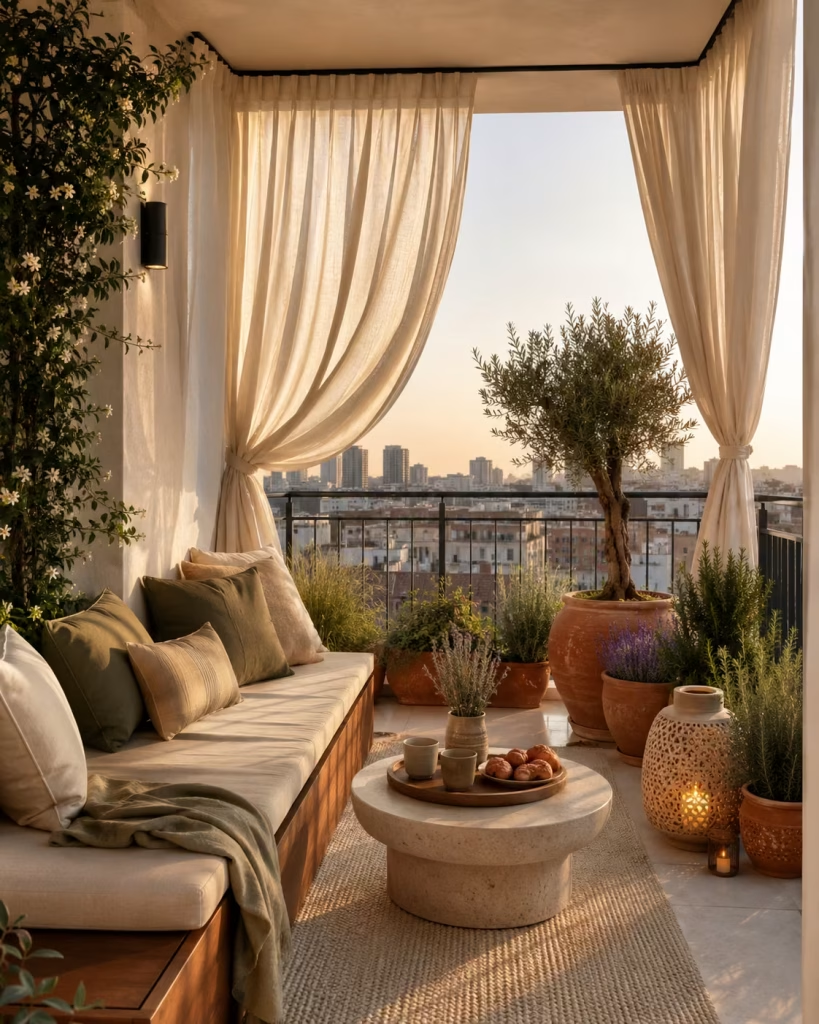
Some balcony upgrades attract attention the moment they are installed, while others work quietly in the background, subtly changing the way a space feels. Outdoor curtains belong firmly in the second category. They do not add extra square footage or introduce expensive finishes, yet they have an extraordinary ability to soften hard architectural lines, improve comfort, and create a welcome sense of enclosure. It is a subtle shift, but one that can completely transform how you experience your outdoor space.
Many apartment balconies feel exposed because they sit between neighbouring properties, overlooking busy streets or facing directly towards other buildings. Even when the furniture and planting are beautifully arranged, that lack of privacy can discourage people from spending time outdoors. Carefully positioned curtains help create a gentle visual boundary without making the balcony feel boxed in. Rather than closing the space off, they frame it, much like elegant drapery enhances a well-designed interior.
I have used outdoor curtains on balconies overlooking bustling city centres, quiet suburban gardens, and coastal apartments. Although every project differed, the outcome was remarkably consistent. The balcony immediately felt calmer, more intimate, and noticeably more inviting. It became a destination rather than simply an extension of the living room.
Create Privacy Without Losing the Sense of Openness
Privacy is often one of the first concerns homeowners mention when redesigning a balcony. Many instinctively turn to solid panels or tall screens, believing they are the only solution. While those options certainly have their place, they can also block natural light, interrupt airflow, and make compact spaces feel confined.
Outdoor curtains offer a more flexible approach. They allow you to:
- Screen neighbouring windows when needed.
- Create a secluded reading or dining corner.
- Adjust visibility throughout the day.
- Maintain a softer, lighter appearance.
- Preserve views whenever privacy is less important.
One of the aspects I appreciate most is that curtains respond to changing circumstances. During a quiet morning coffee, they can remain open to maximise light and views. Later in the evening, they can be partially drawn to create a more intimate atmosphere for entertaining or relaxing.
This adaptability means the balcony evolves with your routine rather than remaining fixed in one configuration.
Introduce Comfortable Shade During Hot Summer Days
Strong summer sunshine can quickly turn an attractive balcony into a space that feels uncomfortable by midday. Outdoor curtains provide an elegant way to soften direct sunlight while maintaining a bright, airy atmosphere.
Rather than completely blocking daylight, light-coloured fabrics gently filter the sun, reducing glare and helping surrounding surfaces remain cooler. If your balcony faces:
- East, curtains can soften bright morning light.
- South, they provide valuable protection during the hottest hours of the day.
- West, they reduce the intensity of low afternoon and evening sun, making outdoor dining considerably more comfortable.
In several apartment renovations, simply adding soft linen-look curtains reduced the need for bulky umbrellas while allowing homeowners to enjoy their balconies throughout much longer portions of the day.
Allow the Breeze to Become Part of the Experience
One of the greatest pleasures of spending time outdoors is feeling a gentle summer breeze. Curtains should never fight against that natural movement. Instead, they should complement it.
Watching lightweight fabric sway softly in the wind introduces a quiet sense of relaxation that rigid privacy screens simply cannot replicate. It is a small detail, yet it adds life and movement to the balcony, making the entire setting feel more connected to its surroundings. Of course, windy locations require thoughtful planning. I generally recommend:
- Installing discreet tiebacks for stronger breezes.
- Selecting rust-resistant curtain tracks or rods.
- Using weighted hems to minimise excessive movement.
- Leaving adequate clearance so fabric does not catch on furniture or planting.
These practical details ensure the curtains remain elegant even when weather conditions become less predictable.
Select Fabrics That Balance Beauty with Durability
Outdoor fabrics have improved dramatically in recent years. Today’s performance textiles offer the softness of indoor drapery while standing up to changing weather conditions with impressive resilience. When choosing curtains, I typically recommend fabrics that combine visual appeal with practical performance. Look for materials that are:
- UV resistant to minimise fading.
- Water repellent for occasional summer showers.
- Quick drying.
- Resistant to mould and mildew.
- Easy to remove and wash.
- Soft enough to drape naturally rather than appearing stiff.
Solution-dyed acrylic fabrics are particularly reliable because their colour runs through the fibres rather than sitting on the surface. This helps them retain their appearance after prolonged exposure to sunlight.
For homeowners seeking a more relaxed aesthetic, textured polyester blends with a linen appearance offer an excellent balance between practicality and understated elegance.
Use Curtains to Frame Rather Than Hide the View
One common mistake is treating curtains as walls. Doing so can unintentionally make a compact balcony feel much smaller than it really is. Instead, think of them as architectural framing devices.
Mount the curtain track close to the ceiling wherever possible. This draws the eye upward, creating the impression of greater height. When the curtains are open, stack them neatly to either side so they frame the view rather than obstructing it.
On balconies measuring around 2 to 3 metres (6.5 to 10 feet) wide, installing curtains only along one or two exposed sides usually provides sufficient privacy while preserving openness.
This careful balance allows the architecture, planting, and surrounding views to remain part of the overall composition.
Build a Layered Outdoor Retreat
Outdoor curtains become even more effective when combined with other soft materials. I often pair them with:
- Woven outdoor rugs.
- Linen-look cushions.
- Natural timber furniture.
- Tall ornamental grasses.
- Lanterns with warm ambient lighting.
- Ceramic planters filled with fragrant herbs.
Each layer contributes to a feeling of comfort without overwhelming the limited space. Together, they create an outdoor room that feels complete while still maintaining a strong connection with the surrounding environment.
A Balcony Transformation That Changed Everyday Living
One project involved a fifth-floor apartment where the owners rarely used their balcony despite investing in quality furniture. The reason became obvious during my first visit. The balcony faced several neighbouring apartments, leaving them feeling constantly overlooked.
Rather than recommending expensive structural changes, we installed full-height outdoor curtains in a warm ivory performance fabric along one side of the balcony. We paired them with slim black curtain rods, teak seating, and a collection of olive and lavender planters.
The difference extended far beyond appearance. Within weeks, the homeowners told me they had started eating breakfast outside almost every morning and regularly invited friends over for evening drinks. Nothing about the balcony had grown larger, yet it felt infinitely more comfortable because it finally offered the privacy people naturally seek when spending time outdoors.
That experience reinforced something I have seen time and again. Good design does not always involve dramatic transformations. Sometimes, the smallest interventions quietly unlock the full potential of a space.
Pros
- Creates privacy without completely enclosing the balcony.
- Softens harsh sunlight and reduces glare.
- Adds movement, texture, and a resort-inspired atmosphere.
- Helps define the balcony as a true outdoor room.
- Flexible enough to open or close depending on the time of day.
- Available in a wide range of weather-resistant fabrics and colours.
Cons
- Fabrics require occasional cleaning to remove dust and pollen.
- Very windy balconies may need weighted hems or secure tiebacks.
- Lower-quality textiles can fade after prolonged UV exposure.
- Installation requires sturdy curtain tracks or rods designed for outdoor conditions.
- Moisture may shorten the lifespan of fabrics that are not specifically manufactured for exterior use.
Introduce Coastal Colours for an Airy Summer Feel
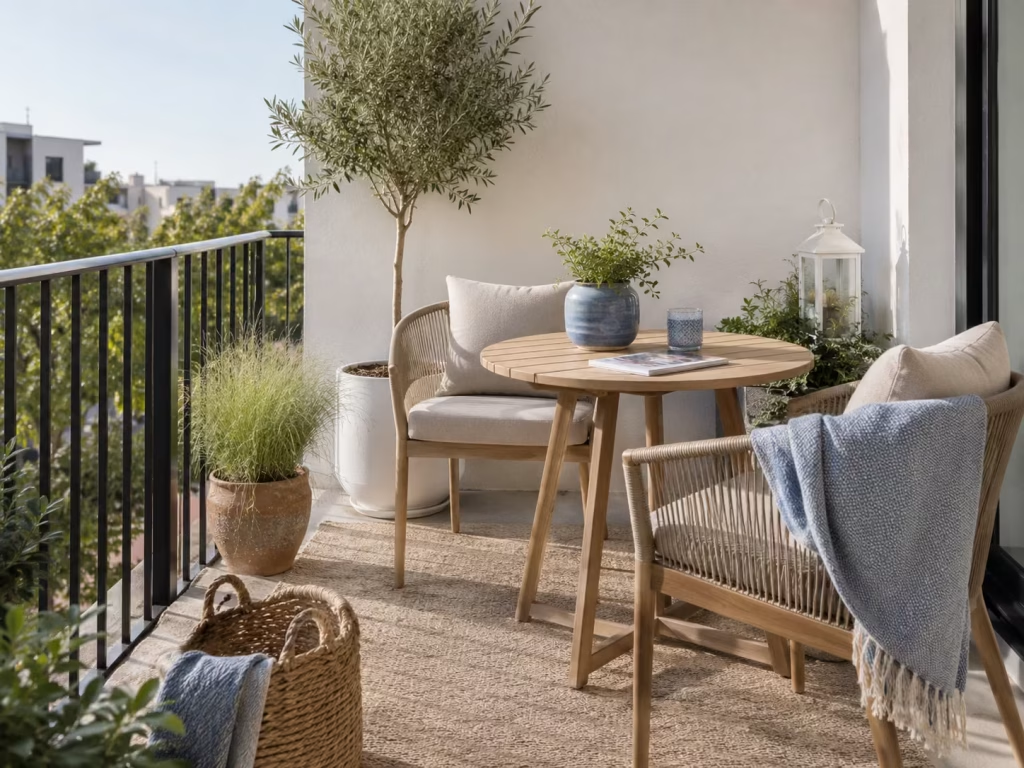
There is a reason coastal homes continue to captivate homeowners year after year. Their appeal has very little to do with being close to the sea and everything to do with how they make people feel. Soft blues echo open skies, sandy neutrals reflect sunlit beaches, crisp whites brighten every corner, and weathered timber introduces warmth that keeps the palette from feeling sterile. Together, these colours create an atmosphere that feels fresh, unhurried, and wonderfully easy to live with.
The beauty of a coastal-inspired balcony is that it does not rely on themed decorations or obvious nautical references. You will not find anchors, seashell motifs, or bright striped accessories doing the heavy lifting. Instead, the effect comes from subtle colour relationships and honest materials that quietly capture the relaxed rhythm of summer. Like a gentle sea breeze on a warm afternoon, the design feels effortless rather than overworked.
In my experience, colour is often the fastest way to transform a compact balcony without replacing every piece of furniture. I have worked with clients who assumed they needed expensive renovations, yet a carefully refined palette changed the mood entirely. Once harsh contrasts disappeared and softer tones took their place, the balcony immediately felt brighter, calmer, and noticeably more spacious.
Build the Palette Around Soft, Layered Blues
Blue has long been associated with coastal interiors, but the secret lies in choosing the right shades. Deep navy certainly has its place, yet on a small balcony it can feel visually heavy if used too generously. Softer blues reflect more natural light and create a stronger sense of openness.
Rather than relying on a single shade, layer several complementary tones inspired by the changing colours of the sea and sky.
Consider incorporating:
- Pale sky blue cushions.
- Misty blue ceramic planters.
- Slate blue outdoor throws.
- Muted denim fabrics.
- Dusty aqua accessories.
- Grey-blue lanterns.
This gradual transition between shades creates depth without overwhelming the eye. It also allows greenery to remain vibrant, as foliage naturally contrasts beautifully against cooler blue tones.
I often remind homeowners that blue works best as a supporting character rather than the star of the show. Used thoughtfully, it introduces freshness while allowing the overall design to remain balanced.
Use Sand-Coloured Neutrals as the Foundation
Every successful coastal palette begins with a calm base. Sand-inspired neutrals provide that foundation, softening stronger colours while reflecting sunlight beautifully throughout the day.
These warm, earthy shades prevent the balcony from feeling cold or overly polished. Excellent foundation colours include:
- Warm beige.
- Limestone.
- Oatmeal.
- Soft taupe.
- Driftwood.
- Warm ivory.
- Pale clay.
I frequently specify these tones for larger pieces such as outdoor rugs, seat cushions, benches, or planters. Once the foundation feels settled, smaller decorative accents can introduce additional personality without disrupting the overall harmony.
There is something quietly reassuring about these colours. They create a sense of stability that allows brighter summer flowers and lush planting to take centre stage.
Brighten the Balcony with Crisp White Accents
White has an extraordinary ability to amplify natural light, particularly on compact balconies where every reflection counts. Used with care, it helps blur the boundary between indoor and outdoor living while making surrounding colours appear richer and more vibrant.
The key is to avoid relying on brilliant, clinical whites. Instead, choose softer variations that carry a touch of warmth. Some favourites include:
- Chalk white.
- Linen white.
- Soft ivory.
- Bone.
- Warm cream.
These gentler shades pair beautifully with timber furniture and woven textures, creating a balcony that feels welcoming rather than stark.
White also works exceptionally well for lightweight curtains, ceramic pots, outdoor tableware, and painted metal furniture because it subtly reflects daylight throughout the entire space.
Introduce Natural Timber to Add Warmth and Authenticity
Without natural materials, even the most carefully selected colour palette can feel flat. Timber introduces texture, warmth, and visual depth that soft furnishings alone cannot achieve.
One of the reasons coastal homes feel so inviting is their celebration of weathered, tactile materials. Timber softens cooler blues and crisp whites, grounding the entire composition in nature. Materials I regularly recommend include:
- Teak.
- Acacia.
- White oak.
- Eucalyptus.
- Thermally modified ash.
Rather than aiming for highly polished finishes, look for timber that reveals its grain and natural imperfections. Those subtle details tell a richer story, allowing the balcony to develop character as the seasons pass.
On smaller balconies, even modest additions such as a timber side table, folding chair, planter stand, or serving tray can introduce enough warmth to balance the entire palette.
Let Texture Carry Equal Importance to Colour
One lesson I have learned through years of residential projects is that colour rarely works in isolation. Texture often has just as much influence on how a space is perceived.
Imagine two balconies painted in identical colours. One features glossy plastic furniture and synthetic fabrics, while the other combines woven cushions, weathered timber, ceramic planters, linen-look textiles, and handcrafted baskets. Although the colour palette remains unchanged, the second balcony immediately feels richer and far more inviting.
That layered approach creates visual interest without introducing unnecessary clutter. Some combinations I particularly enjoy include:
- Woven outdoor rugs beneath timber furniture.
- Rope dining chairs paired with linen-look cushions.
- White ceramic planters beside aged terracotta pots.
- Driftwood accessories mixed with woven baskets.
- Glass lanterns reflecting the evening light.
These layers invite people to slow down and notice the details, giving the balcony a sense of depth that photographs rarely capture.
Style with Restraint to Preserve the Coastal Spirit
One of the easiest ways to lose the relaxed elegance of coastal design is by adding too many decorative accessories. It is tempting to continue filling empty corners, but restraint is often what gives a balcony its quiet confidence.
When styling, I usually ask one simple question: does this item contribute to comfort, beauty, or function? If the answer is no, it probably does not need to be there.
A thoughtfully chosen olive tree, a pair of textured lanterns, a woven rug, and a collection of soft blue cushions often achieve far more than dozens of decorative ornaments competing for attention.
This measured approach also allows the changing light, gentle movement of plants, and surrounding views to become part of the design itself.
A Balcony That Captured the Feeling of a Seaside Escape
One apartment I redesigned overlooked a busy urban crossroads, hardly the first place you would associate with coastal living. The owners dreamed of creating a peaceful retreat without resorting to obvious beach-themed décor.
We replaced dark charcoal cushions with warm sand fabrics, introduced weathered teak furniture, painted existing metal planters in a soft chalk white, and added accents in muted sky blue. A woven rug anchored the seating area, while an olive tree and ornamental grasses brought movement and texture.
The remarkable part was not that the balcony suddenly resembled a beach house. It did not. Instead, it captured the feeling people associate with coastal living: calm mornings, open skies, gentle light, and a slower pace of life. Visitors often commented that the space felt noticeably cooler and more spacious, even during the height of summer.
That project served as another reminder that colour has an extraordinary influence on emotion. When thoughtfully layered, it can completely reshape how a space is experienced without changing its footprint.
Pros
- Makes compact balconies feel brighter and more spacious.
- Creates a timeless summer atmosphere that remains stylish year after year.
- Soft, natural colours pair easily with greenery and seasonal flowers.
- Timber introduces warmth that balances cooler coastal shades.
- Works beautifully with modern, Scandinavian, Mediterranean, and contemporary homes.
- Easy to refresh seasonally by changing textiles and accessories rather than replacing furniture.
Cons
- White fabrics and accessories require more frequent cleaning.
- Lower-quality timber may weather unevenly if left unprotected.
- Overusing blue can make the palette feel predictable or overly themed.
- Pale textiles may show dust and pollen more readily during summer.
- The design relies on thoughtful colour balance, so adding too many contrasting accents can disrupt its calm, cohesive appearance.
Style a Compact Reading Retreat
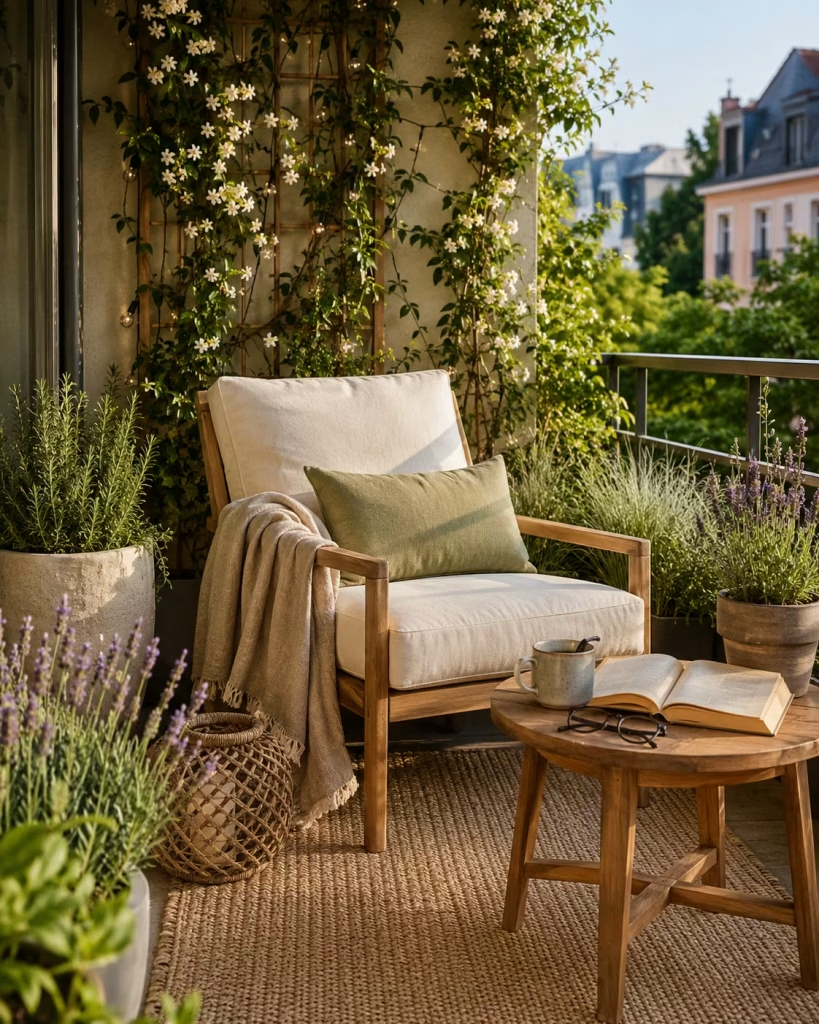
There is something deeply comforting about having a quiet corner where the pace of the day naturally begins to slow. On a summer balcony, that corner does not need sweeping views or generous proportions to feel special. It simply needs to be thoughtfully arranged. A compact reading retreat offers far more than a place to finish a novel. It becomes a personal sanctuary where morning coffee lasts a little longer, afternoon sunlight filters gently through surrounding plants, and the noise of everyday life gradually fades into the background.
In many of the homes I have designed, homeowners initially imagined their balcony as an entertaining space. Yet after living with it for a few months, they often discovered that its greatest value came from quieter moments spent alone. A comfortable chair, good lighting, and a peaceful atmosphere encouraged them to step outside even if they only had twenty minutes to spare. Those small daily rituals quickly became some of their favourite parts of the day.
The beauty of a reading retreat lies in its simplicity. Rather than filling every available corner, it focuses on creating one exceptionally comfortable destination. As the saying goes, quality over quantity rarely goes out of style, and nowhere is that more evident than on a compact balcony.
Choose a Lounge Chair That Encourages You to Stay
The chair will always be the heart of your reading retreat. A beautiful design means very little if you find yourself shifting position after only a few pages. Comfort should come first, followed closely by proportion.
One mistake I regularly encounter is choosing oversized lounge chairs designed for expansive terraces. While they may look luxurious in a showroom, they can dominate a small balcony, leaving little room for movement or additional furnishings.
Instead, look for chairs that balance generous comfort with a lighter visual presence. Features worth prioritising include:
- Slim open-frame construction that allows light to pass through.
- Ergonomically angled backrests for extended reading sessions.
- Comfortable armrests to support books or tablets.
- Deep but supportive cushions made from weather-resistant foam.
- Breathable woven materials that remain comfortable during warmer weather.
For most compact balconies, a chair measuring approximately 70 to 80 cm (28 to 31 inches) wide offers an ideal balance between comfort and space efficiency. Allow at least 60 cm (24 inches) of clear circulation around the chair so the balcony continues to feel open rather than crowded.
Materials such as teak, powder-coated aluminium, woven rope, and synthetic rattan work particularly well because they combine durability with a relaxed, residential character.
Layer Lighting That Supports Every Chapter
Reading outdoors is one of summer’s simple pleasures, but the experience quickly loses its appeal if the lighting is poorly planned. Natural daylight will do much of the work during the morning and afternoon, yet as evening approaches, softer illumination becomes essential. Rather than relying on one bright fixture, create a layered arrangement that gently supports the space.
I often combine:
- A rechargeable table lamp beside the chair.
- A woven lantern placed on the floor for ambient glow.
- Warm string lights woven through nearby planting.
- Soft wall lighting to illuminate surrounding textures.
Aim for warm white lighting between 2200K and 2700K, which creates a relaxed atmosphere while remaining comfortable for reading. One detail I particularly enjoy is positioning a lamp slightly behind the chair rather than directly in front. This reduces glare while allowing the pages to remain evenly lit, making longer reading sessions noticeably more comfortable.
Add a Side Table That Works Hard Without Taking Over
Few things interrupt a peaceful reading session more quickly than having nowhere to place your book, glasses, or cup of coffee. A thoughtfully chosen side table quietly solves this problem while contributing to the overall composition.
Because balcony space is limited, compact designs often prove the most practical. Some excellent options include:
- Round pedestal tables.
- Slim C-shaped tables that slide beneath the chair.
- Folding timber tables.
- Lightweight aluminium nesting tables.
- Small ceramic stools that double as occasional tables.
A table measuring 35 to 45 cm (14 to 18 inches) in diameter generally provides enough surface area for everyday essentials without overwhelming the seating arrangement.
Whenever possible, choose materials that complement the rest of the balcony. Natural timber introduces warmth, while powder-coated metal creates a cleaner contemporary appearance.
Introduce Textiles That Invite You to Linger
Even during the height of summer, comfort comes from thoughtful layering. Textiles soften outdoor furniture, improve usability, and add a welcoming sense of warmth that encourages you to settle in rather than simply pass through. I often think of textiles as the finishing touch that turns a chair into a destination. Consider including:
- UV-resistant outdoor cushions with textured woven fabrics.
- A lightweight cotton or linen throw for cooler evenings.
- A flat-woven outdoor rug beneath the seating area.
- Small lumbar cushions for additional back support.
- Weather-resistant pouffes that can serve as footrests or extra seating.
Choose colours inspired by nature, such as soft sage, warm sand, muted blue, oatmeal, or terracotta. These shades work beautifully with greenery while creating a calm atmosphere that supports rather than distracts from the reading experience.
Layering different textures also introduces subtle visual depth. Woven fabrics, natural fibres, timber, and ceramic accessories each contribute their own quiet character, creating a setting that feels lived in instead of carefully staged.
Surround Yourself with Gentle Sensory Details
A memorable reading retreat engages more than just the eyes. Small sensory details help create an atmosphere that encourages relaxation almost without you noticing. Some of my favourite additions include:
- Lavender or rosemary planters that release fragrance in the afternoon sun.
- Climbing jasmine that perfumes the evening air.
- Ornamental grasses that sway gently in the breeze.
- A ceramic mug that keeps your favourite drink within easy reach.
- Soft wind chimes positioned discreetly where they produce only the lightest sound.
These subtle elements create an immersive environment that supports moments of quiet reflection without competing for attention.
Design Around Your Daily Routine
One aspect often overlooked is how the balcony will actually be used throughout the day. If you enjoy reading before work, position the chair where it catches gentle morning sunlight. If your favourite time is after dinner, orient the seating to capture evening shade while taking advantage of ambient lighting.
Understanding the movement of sunlight across the balcony helps determine where furniture should be placed. For example:
- East-facing balconies are ideal for peaceful breakfasts and early reading.
- South-facing balconies benefit from lightweight curtains or shade during midday.
- West-facing balconies create wonderful sunset reading spaces once the strongest afternoon heat begins to soften.
Designing around these natural rhythms ensures the balcony feels comfortable from dawn until dusk.
A Reading Corner That Became the Favourite Room of the Home
A few summers ago, I worked with a couple living in a city apartment whose balcony measured just 2.5 × 1.6 metres (8 ft 2 in × 5 ft 3 in). They originally planned to install a dining set, believing that entertaining should be the balcony’s primary purpose.
After discussing how they actually spent their evenings, we took a different direction. We placed a single teak lounge chair in one corner, added a compact round side table, layered a woven outdoor rug beneath the seating, and introduced warm lantern lighting with fragrant lavender planted nearby.
Several months later, they told me the balcony had quietly become the most used space in their home. One partner read there every morning before work, while the other ended each evening with a book and a cup of tea as the city lights gradually appeared beyond the railing. That experience reinforced something I have witnessed time and again. The most successful outdoor spaces are rarely those designed for special occasions alone. They are the ones that enrich ordinary days, turning everyday routines into moments people genuinely look forward to.
Pros
- Creates a peaceful retreat for reading, relaxation, and quiet reflection.
- Requires very little space compared with larger seating arrangements.
- Encourages more frequent use of the balcony throughout the day.
- Easy to personalise with cushions, lighting, and planting.
- Works equally well on apartment, townhouse, and condominium balconies.
- Can evolve seasonally with simple updates to textiles and accessories.
Cons
- Generally accommodates only one person comfortably.
- A high-quality lounge chair may represent a larger initial investment.
- Cushions and throws require indoor storage during prolonged bad weather.
- Reading comfort depends on careful placement relative to sunlight and shade.
- Poor lighting can limit usability during evening hours if not planned properly.
Mix Natural Materials for Timeless Character
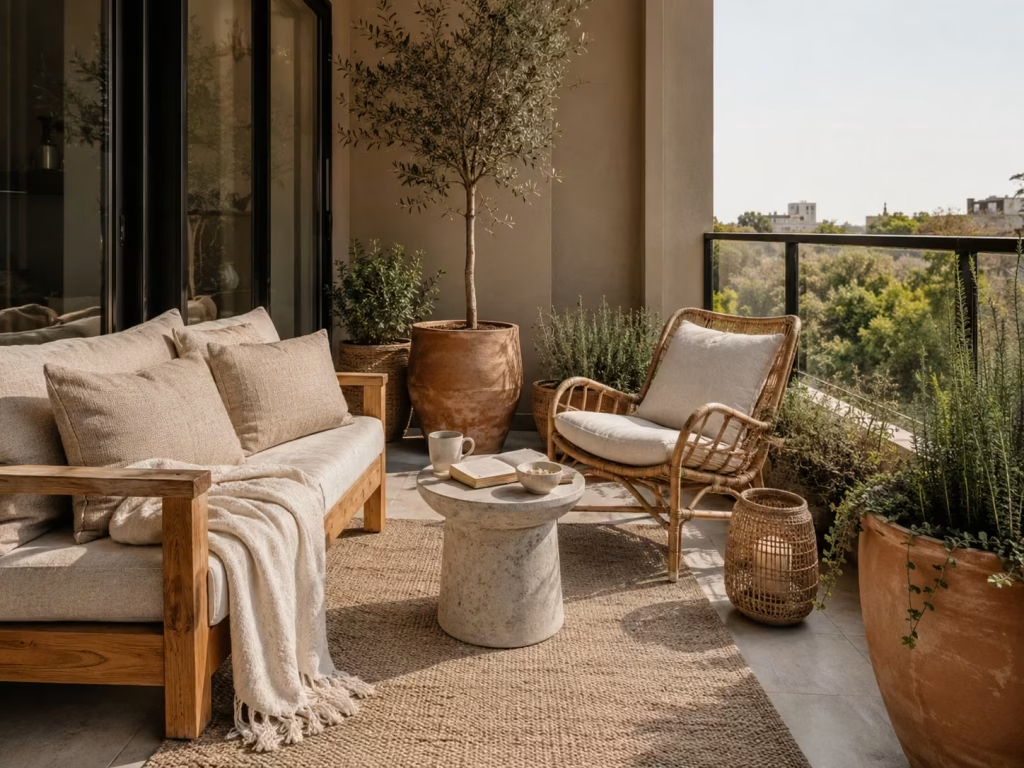
A balcony gains real depth when it feels collected rather than assembled. Natural materials have a way of giving a small outdoor space that quality almost immediately. Timber softens hard edges, linen brings a relaxed elegance, stone adds quiet permanence, rattan introduces texture, and woven accents tie the whole composition together like a well-chosen final note. In combination, these materials create a space that feels grounded, welcoming, and far more enduring than anything overly polished or trend-driven.
I have found over and over again that the balconies people return to most often are not the ones packed with decorative objects. They are the ones with a handful of honest materials doing the heavy lifting. There is a certain old-school truth in that. When the palette is stripped back and the materials are allowed to speak, the space stops shouting for attention and starts holding it. That is where the magic tends to happen.
Let Timber Set the Tone
Timber brings warmth that very few other materials can match. Even on a compact balcony, a timber side table, bench, plant stand, or café chair can instantly soften a hard architectural shell. It creates a sense of touch and tactility that makes the space feel more like an outdoor room and less like a leftover strip of floor.
For summer balconies, I often prefer timber finishes that feel natural rather than overly glossy. Teak, oak-toned hardwoods, acacia, or weathered-look finishes work especially well because they sit comfortably alongside planting, neutral textiles, and pale paving. If the timber is allowed to age gracefully, it often develops even more character over time, which is half the charm.
From a practical standpoint, timber also helps bridge the gap between indoors and outdoors. If the living room opens directly onto the balcony, repeating timber tones from one space to the next can make the transition feel seamless. That sense of continuity is worth its weight in gold on a small balcony, where every visual cue matters.
Use Linen to Soften the Entire Composition
Linen has a relaxed confidence that suits summer living beautifully. It never feels too precious, yet it has enough texture and movement to stop a balcony from looking flat. Whether used in cushions, throws, or curtain panels, linen introduces an ease that immediately lowers the tone in the best possible way.
On balconies, I tend to use linen-inspired fabrics rather than delicate indoor versions, since performance matters as much as appearance. A good outdoor textile with a linen look gives you the softness of the original without the worry of weather damage. The effect is still wonderfully understated. You get that slightly lived-in texture, a little rumple, a little movement in the breeze, and the whole space begins to feel more human.
Colour choice matters here too. Soft oat, sand, faded olive, pale blue, and chalk white all work exceptionally well because they allow the material itself to take centre stage. Linen does not need to be dressed up. In fact, it usually looks best when it is left to do its own quiet work.
Bring in Stone for Stability and Weight
Stone has a completely different role in the mix. Where timber and linen create softness, stone provides grounding. It gives the balcony visual weight and a sense of permanence, which is especially useful in lightweight urban settings where everything can otherwise feel a little temporary.
A stone side table, a travertine tray, a ceramic planter with a stone-like finish, or even a few well-placed decorative objects can make a compact balcony feel more settled. The key is moderation. Too much stone can become visually heavy, but a measured amount adds exactly the kind of balance a small outdoor space needs.
I often use stone in details rather than large-scale pieces. A limestone planter beside a timber chair, a smooth stone bowl holding keys or fruit, or a small pedestal table can make a balcony feel composed without overwhelming it. That contrast between cool mineral surfaces and warm natural fibres is what gives the space its quiet sophistication.
Introduce Rattan for Texture and Ease
Rattan has a way of bringing instant softness to a balcony. It feels relaxed, slightly informal, and full of texture, which makes it ideal for summer styling. Woven furniture or accessories help break up the harder lines of railings, walls, and paving, creating a more layered and welcoming look.
When used well, rattan can stop a small balcony from feeling too rigid. A rattan armchair, basket, lantern, or planter cover introduces a handcrafted quality that feels warm and approachable. It also works beautifully with the more refined materials in the scheme, which is where the balance really begins to sing.
I tend to favour rattan in small doses rather than using it everywhere at once. A little goes a long way. One woven chair with a linen cushion, for example, can do more for atmosphere than several matching accessories placed without much thought. The goal is to create rhythm, not repetition.
Layer Woven Accents to Pull Everything Together
Woven accents are often the quiet heroes of balcony design. They may not be the first thing people notice, but they are usually the pieces that make the composition feel finished. Woven trays, baskets, lampshades, rugs, and pouffes introduce a tactile quality that keeps the setting from feeling overly hard or overdesigned.
What I like about woven elements is the way they absorb and reflect light differently throughout the day. In the morning, they look fresh and airy. By late afternoon, they take on a richer, softer character. As evening settles in, they help the whole balcony feel cocooned without becoming enclosed. That subtle shift is what makes them so effective.
A few woven pieces, placed with restraint, can quietly stitch the design together. They work especially well when they echo the same undertones as timber, linen, and stone. Once that happens, the balcony begins to feel like one complete story rather than a collection of separate ideas.
Balance Is What Gives the Design Longevity
The real strength of natural materials lies not just in how they look, but in how well they sit together over time. Timber becomes more characterful, linen softens the atmosphere, stone anchors the arrangement, rattan brings ease, and woven accents keep the whole scene from feeling too rigid. None of these materials tries to steal the spotlight. Together, they create a layered setting that ages gracefully and feels relevant long after trendier choices have faded.
I often tell clients that natural materials do not need to be perfect to be beautiful. In fact, a little variation in tone, grain, texture, or weave often gives the space more soul. That is what makes this approach so appealing. It feels lived in from the start, but never careless.
A Practical Observation from Real Projects
One balcony I redesigned for a townhouse had all the ingredients for a lovely space, but it felt strangely unfinished. The homeowners had chosen bright, matching accessories that looked attractive in isolation but sat awkwardly together. Once I replaced the harder finishes with timber seating, linen cushions, a stone-topped side table, and a couple of woven baskets, the whole atmosphere changed. The balcony stopped looking staged and started feeling calm. It was not a dramatic transformation in terms of footprint, but it was a world apart in terms of mood.
That is the beauty of natural materials. They do not need to announce themselves. They simply settle into a space and let everything else breathe.
Pros
- Creates a timeless look that does not rely on short-lived trends.
- Adds warmth, texture, and depth to compact balconies.
- Helps hard architectural elements feel softer and more welcoming.
- Works beautifully across coastal, Mediterranean, rustic, and modern styles.
- Ages gracefully when quality materials are chosen well.
- Makes the balcony feel more lived in and emotionally inviting.
Cons
- Natural materials can require more care than synthetic alternatives.
- Lower-quality timber, rattan, or linen-look fabrics may weather poorly.
- Stone and ceramic pieces can add weight to small balconies.
- Too many natural textures at once can feel busy if not balanced carefully.
- Some materials, especially linen and untreated rattan, may need protection from prolonged exposure to sun or moisture.
Install Decorative Privacy Screens That Feel Architectural
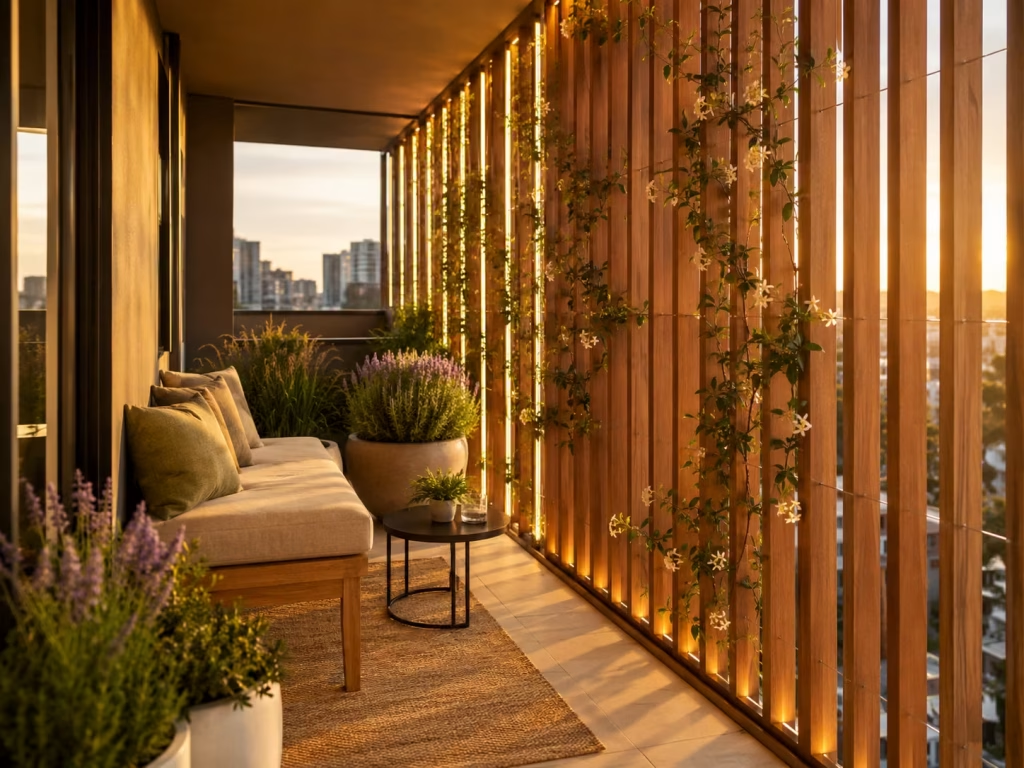
Privacy is one of the greatest luxuries a balcony can offer, especially in apartment buildings where neighbouring windows, nearby terraces, and busy streets often leave outdoor spaces feeling more exposed than relaxing. Yet creating privacy does not mean building a solid barrier that blocks every view and every ray of sunlight. The most successful solutions strike a careful balance. They create a sense of shelter while still allowing the balcony to breathe.
This is where decorative privacy screens truly come into their own. Rather than functioning as simple dividers, they become architectural features that shape the entire character of the balcony. They introduce rhythm, texture, and depth while framing views, filtering light, and giving the space a stronger sense of identity. A thoughtfully designed screen can completely change how an outdoor area feels without adding a single extra square metre.
In my experience, balconies often become underused not because they lack furniture or planting, but because homeowners never feel completely comfortable spending time there. Once a well-designed privacy screen is introduced, everything changes. People naturally begin using the space more often because they feel sheltered without feeling isolated. It is a subtle psychological shift, yet one that makes an enormous difference to everyday living.
Use Timber Battens to Introduce Warmth and Rhythm
Timber battens remain one of my favourite privacy solutions because they combine practicality with timeless design. Their clean vertical lines draw the eye upward, making compact balconies appear taller while introducing natural warmth that softens concrete, glass, and steel.
Unlike solid fencing, battens allow light and airflow to pass through the gaps, creating privacy without making the balcony feel enclosed. This openness is particularly valuable on smaller balconies where every visual connection helps maintain a feeling of spaciousness.
For residential projects, I often recommend battens measuring approximately 40 to 50 mm (1½ to 2 inches) wide with gaps of 20 to 30 mm (¾ to 1¼ inches) between each board. This proportion offers an effective balance between screening and openness. Excellent timber species include:
- Western Red Cedar
- Thermally modified ash
- Accoya
- Teak
- Durable hardwoods suitable for exterior use
If regular timber maintenance is a concern, wood-effect aluminium battens provide a convincing alternative while requiring significantly less upkeep.
Introduce Laser-Cut Panels as Functional Art
Privacy screens do not always need to disappear into the background. Laser-cut metal panels can become striking design features that introduce pattern, texture, and visual interest throughout the day.
One of the qualities I appreciate most about these panels is how they interact with changing sunlight. As the sun moves across the sky, intricate shadows dance across flooring, walls, and planting, giving the balcony an ever-changing character that evolves naturally from morning through evening. Popular pattern styles include:
- Organic botanical motifs
- Geometric contemporary designs
- Moroccan-inspired latticework
- Abstract linear compositions
- Minimal architectural patterns
Powder-coated aluminium panels are particularly well suited to balconies because they combine excellent corrosion resistance with relatively low weight.
When choosing a design, I generally encourage restraint. Simpler patterns often remain visually appealing for much longer than highly intricate motifs, particularly in compact outdoor spaces where excessive detail can quickly feel overwhelming.
Create a Living Privacy Screen with Greenery
There is something wonderfully calming about replacing hard boundaries with living plants. Green screening softens architecture while introducing movement, fragrance, seasonal variation, and valuable habitat for pollinators.
Rather than separating you from the outdoors, planting creates a gentler transition between your balcony and the surrounding environment. Several planting strategies work especially well:
- Tall ornamental grasses in slim planters
- Climbing jasmine trained onto stainless steel cables
- Evergreen ivy where appropriate
- Bamboo varieties suitable for containers
- Trellised clematis
- Vertical herb gardens combining beauty and practicality
I often combine timber screens with carefully selected planting rather than relying entirely on one solution. The timber establishes structure while the greenery gradually softens the overall composition as it matures.
One memorable project involved alternating narrow timber battens with climbing star jasmine. By the second summer, the plants had woven naturally between the battens, creating filtered privacy that changed beautifully with the seasons. The owners described it as feeling like their own hidden garden despite living several storeys above a busy city street.
Consider Sun Orientation Before Installation
Privacy should never come at the expense of natural light. Before installing any screen, spend several days observing how sunlight moves across the balcony at different times. This simple exercise often prevents costly mistakes.
If your balcony faces east, positioning screens along the side rather than across the front allows gentle morning sunlight to continue reaching the seating area. South-facing balconies benefit from screens that filter the strongest midday sunshine without creating excessive shade during cooler mornings and evenings.
For west-facing balconies, decorative screens can soften harsh late afternoon sunlight while still allowing the warm glow of sunset to illuminate the space. North-facing balconies often receive softer, indirect light, making lighter-coloured screens with wider openings a sensible choice to maximise brightness.
Understanding these natural patterns allows the screen to work with the environment rather than against it.
Combine Privacy with Practical Function
One advantage of architectural screening is its ability to perform multiple roles at once. Depending on the design, a screen can also support:
- Wall-mounted planters.
- Outdoor shelving.
- Climbing plants.
- Integrated lighting.
- Hanging lanterns.
- Fold-down tables.
- Decorative artwork.
This layered functionality is particularly valuable on compact balconies where every feature should contribute more than one purpose whenever possible. I have found that multifunctional elements almost always create better long-term living spaces because they reduce clutter while increasing everyday usability.
Think About Proportion, Not Just Coverage
Many homeowners assume maximum privacy requires maximum coverage. In practice, partial screening often produces a much more satisfying result.
Leaving sections open preserves valuable sightlines and maintains a stronger connection with the surrounding landscape. The eye naturally fills in the gaps, allowing the balcony to feel larger while still offering sufficient privacy for daily activities.
As a general guide, screening 50 to 70 percent of an exposed side often provides excellent privacy without sacrificing openness. This balance keeps the balcony feeling bright, airy, and visually connected to the outdoors. Like framing a beautiful photograph, the goal is not to hide the view but to present it more thoughtfully.
A Project That Redefined a Balcony Without Expanding It
One apartment renovation still stands out because the homeowners were convinced their balcony felt too exposed to ever become comfortable. The space overlooked neighbouring buildings on two sides, leaving them reluctant to spend more than a few minutes outside.
Rather than installing solid partitions, we designed a custom screen using vertical cedar battens combined with powder-coated steel framing. Climbing jasmine and evergreen star jasmine gradually softened the structure, while integrated LED lighting highlighted the battens after sunset.
The transformation had nothing to do with increasing the balcony’s size. Instead, it reshaped the way the space was experienced. The filtered light, gentle shadows, and growing greenery created an atmosphere that felt private without feeling enclosed. Within months, what had once been the least-used part of the apartment had become the setting for weekend breakfasts, evening conversations, and quiet moments with a good book.
That project reinforced something I have learned repeatedly over the years. Great privacy is rarely about building walls. More often, it is about creating thoughtful layers that make people feel protected while allowing the outdoors to remain an essential part of the experience.
Pros
- Increases privacy while maintaining airflow and natural light.
- Adds architectural interest and visual depth.
- Can double as support for climbing plants and outdoor accessories.
- Helps define the balcony as a cohesive outdoor room.
- Available in a wide range of materials and contemporary designs.
- Improves comfort without making compact balconies feel enclosed.
Cons
- Custom architectural screens may involve a higher upfront investment.
- Timber requires periodic maintenance to preserve its appearance.
- Laser-cut panels should be selected carefully to avoid visually overpowering small spaces.
- Living screens need regular pruning and seasonal care.
- Poor placement may reduce desirable sunlight if orientation is not considered during the design stage.
You May also Like: 25 Bathroom Mirror Ideas That Balance Design, Light, and Everyday Use
Create a Balcony Garden Filled with Summer Fragrance
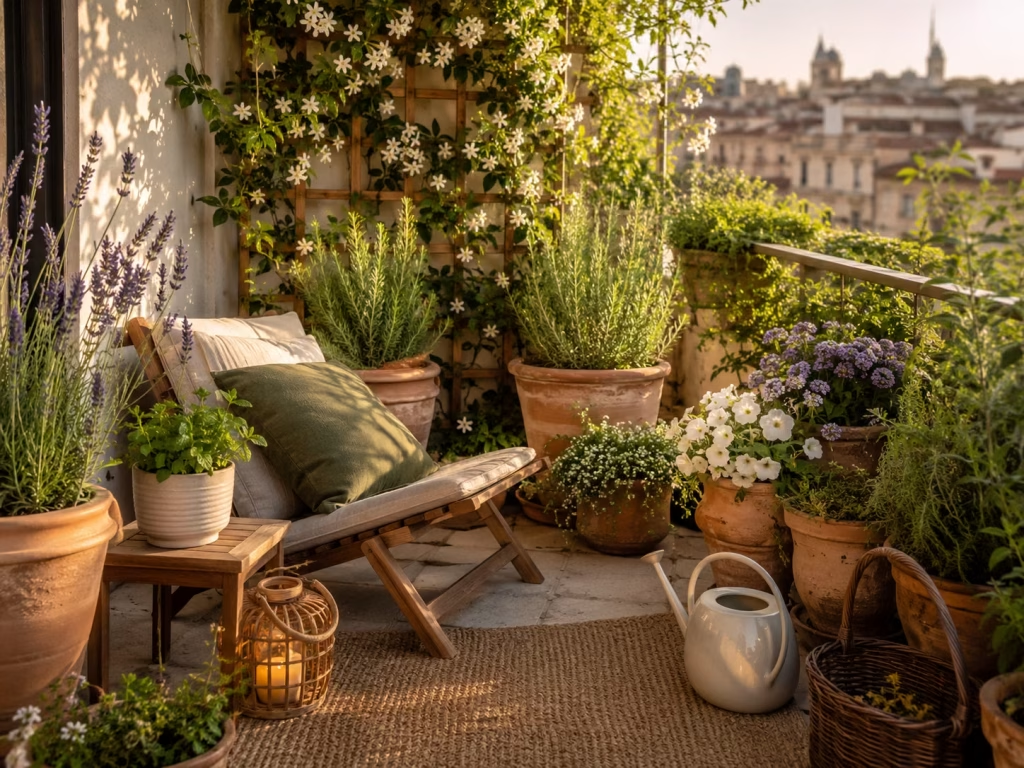
The most memorable balconies are not always the ones with the grandest furniture or the largest collection of plants. More often than not, they are remembered because of how they make you feel the moment you step outside. Fragrance has an extraordinary ability to shape that experience. A gentle breeze carrying the scent of lavender, freshly crushed rosemary, or blooming jasmine can transport you somewhere entirely different, turning an ordinary apartment balcony into a peaceful escape that feels far removed from the rhythm of the city.
Unlike colour or texture, fragrance cannot be photographed, yet it is often the detail that lingers in people’s memories long after they leave. It creates atmosphere in a way few other design elements can. In fact, I often encourage clients to think beyond what they can see and begin designing for the senses. Once scent becomes part of the conversation, the balcony evolves into something much richer than a visually attractive space. It becomes a place that invites you to slow down, breathe deeply, and appreciate the quieter moments that summer naturally brings.
One project still stands out in my mind because the homeowners insisted they wanted “more flowers.” What they really wanted, although they did not realise it at first, was a balcony that felt alive. Instead of filling every container with colourful annuals, we focused on fragrant planting. The first evening after everything had settled, a soft breeze carried the perfume of jasmine across the seating area. That single sensory detail changed the entire mood of the balcony. Sometimes, the smallest touches leave the deepest impression.
Let Lavender Create a Calm, Sun-Drenched Atmosphere
Few plants capture the spirit of summer as effortlessly as lavender. With its silvery foliage and delicate purple flowers, it introduces both colour and fragrance while asking for remarkably little in return.
Lavender thrives in sunny positions with well-drained soil, making it an excellent choice for balconies that receive generous daylight. For healthy growth, provide:
- At least 6 to 8 hours of direct sunlight each day.
- Pots measuring 30 to 40 cm (12 to 16 inches) wide.
- Free-draining compost with added grit or coarse sand.
- Moderate watering, allowing the soil to dry slightly between watering sessions.
Beyond its visual appeal, lavender releases a soothing aroma whenever the breeze brushes past its flowers. Positioning it near seating areas allows its fragrance to become part of everyday moments, whether you are enjoying breakfast, reading a book, or relaxing after work.
As an added benefit, lavender attracts bees and butterflies while helping to discourage mosquitoes in many climates, making it both beautiful and practical.
Fill Evening Air with the Sweet Fragrance of Jasmine
If there is one plant capable of transforming a summer balcony after sunset, it is jasmine. During the day, its glossy green leaves provide attractive structure. As evening arrives, however, its delicate white flowers begin releasing one of the most recognisable fragrances in the garden.
Star jasmine is particularly well suited to balconies because it climbs gracefully without becoming excessively vigorous. Trained along a trellis or decorative screen, it creates a living backdrop that combines privacy with seasonal beauty. Allow approximately:
- 180 to 240 cm (6 to 8 feet) of vertical growing space.
- Strong support such as stainless steel wires or timber trellises.
- Consistent watering during establishment.
- Light pruning after flowering to maintain shape.
Positioning jasmine close to seating transforms ordinary evenings into something rather special. As the scent drifts gently through the balcony, the entire atmosphere becomes softer and more relaxed.
Grow Rosemary That Delivers Beauty and Everyday Use
Rosemary earns its place on almost every summer balcony because it combines ornamental value with genuine practicality. Its evergreen foliage provides year-round structure, while its woody stems release an unmistakable fragrance whenever brushed by hand.
Unlike many flowering plants that fade once the season changes, rosemary continues contributing texture and colour throughout the year. It performs best with:
- Full sunlight.
- Excellent drainage.
- Containers measuring at least 30 cm (12 inches) in diameter.
- Occasional trimming to encourage compact growth.
One habit I have developed over the years is positioning rosemary near the balcony entrance. Every time someone walks past, the foliage releases its fresh, herbaceous scent, quietly welcoming visitors before they even sit down.
Of course, rosemary also finds its way into countless summer meals. Stepping outside to gather fresh herbs moments before cooking creates one of those simple pleasures that never loses its appeal.
Add Mint for Freshness and Cooling Aroma
Mint brings an entirely different personality to the balcony. While lavender and jasmine create gentle floral notes, mint introduces an invigorating freshness that feels wonderfully cooling on warm afternoons. Its bright green foliage also provides valuable contrast against silver-leaved Mediterranean plants.
One important consideration is containment. Mint spreads enthusiastically and can quickly dominate neighbouring plants if allowed to grow unrestricted. To keep it under control:
- Always grow mint in its own pot.
- Choose containers around 25 to 30 cm (10 to 12 inches) wide.
- Keep the soil consistently moist.
- Harvest regularly to encourage fresh growth.
Beyond its fragrance, mint proves remarkably versatile. Fresh leaves can be added to iced drinks, salads, desserts, or herbal teas, giving the balcony an everyday usefulness that extends well beyond decoration.
Layer Seasonal Blooms for Continuous Colour and Scent
A fragrant balcony feels most rewarding when something is always flowering. Rather than relying on a single species, combine plants with overlapping blooming periods to ensure continuous interest throughout the summer. Some excellent companions include:
- Sweet alyssum for delicate honey-like fragrance.
- Dianthus with spicy clove-scented flowers.
- Petunias that bloom generously through the season.
- Heliotrope with rich vanilla notes.
- Geraniums for long-lasting colour and aromatic foliage.
- Nicotiana, whose evening fragrance becomes stronger after sunset.
The secret lies in layering heights and flowering times. Taller plants establish structure, medium-height herbs create fullness, and trailing flowers soften the edges of containers. This staggered arrangement not only looks more natural but also ensures the balcony never feels static as the season unfolds.
Design the Garden Around Everyday Movement
Fragrance becomes most noticeable when planting is positioned where people naturally pass. Rather than grouping every container in one corner, distribute aromatic plants along the pathways you use most often.
For example:
- Lavender beside a lounge chair.
- Mint near the café table.
- Rosemary close to the entrance.
- Jasmine climbing behind the seating area.
- Seasonal flowers surrounding the edges of the balcony.
As you move through the space, each plant reveals itself at a slightly different moment, creating a layered sensory experience that unfolds naturally instead of all at once.
Think Beyond Flowers and Design for the Senses
The most memorable balcony gardens appeal to every sense, not just sight. Imagine sitting outside on a warm evening with a gentle breeze carrying jasmine through the air. Lavender sways quietly beside the chair while rosemary releases its earthy fragrance each time you reach for your drink. Bees drift lazily between blossoms, ornamental grasses rustle softly, and lantern light catches the edges of silvery foliage.
None of these elements competes for attention. Together, they create an atmosphere that encourages you to slow down and simply enjoy where you are. That is what truly distinguishes a thoughtfully designed balcony garden. It is not simply beautiful to look at. It becomes a place you experience with every breath.
A Project That Became More Memorable with Every Season
One apartment balcony I redesigned measured just 3.2 × 1.8 metres (10 ft 6 in × 6 feet), yet it remains one of my favourite projects because of how it engaged the senses. Rather than filling the space with ornamental plants alone, we built the planting scheme around fragrance.
Lavender framed the seating area, rosemary bordered the entrance, mint occupied a glazed ceramic pot beside the café table, and star jasmine climbed a timber trellis behind the bench. Seasonal flowers filled the remaining containers, ensuring there was always something blooming from late spring through early autumn.
Several months after completion, the homeowners told me they had developed a new evening ritual. Almost every night, they stepped outside with a cup of tea simply to enjoy the scent drifting through the balcony after sunset. That conversation reminded me why sensory design matters so much. Beautiful spaces are quickly admired, but spaces that engage the senses tend to stay with us long after we leave them.
Pros
- Creates a relaxing atmosphere through natural fragrance.
- Encourages pollinators such as bees and butterflies.
- Many fragrant plants are also useful for cooking and herbal drinks.
- Adds seasonal colour, texture, and movement.
- Makes even the smallest balcony feel immersive and connected to nature.
- Continues evolving throughout the summer as different plants come into bloom.
Cons
- Fragrant plants require regular watering during prolonged hot weather.
- Some species need pruning to maintain healthy growth.
- Mint should always be grown separately to prevent spreading.
- Flowering periods vary, requiring thoughtful plant selection for continuous interest.
- Strongly scented plants may not suit everyone, particularly those sensitive to certain fragrances.
Introduce Sculptural Planters as Statement Pieces
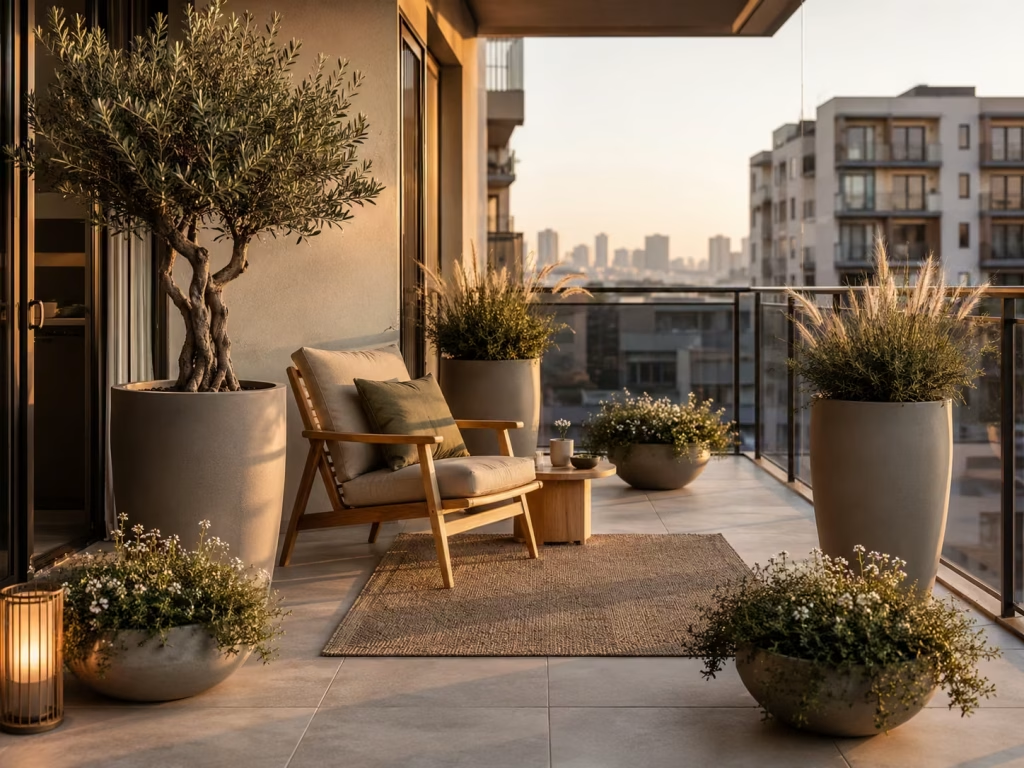
When people think about balcony design, furniture usually steals the spotlight. Yet some of the most memorable outdoor spaces I have designed owe their character to something much simpler: beautifully chosen planters. More than containers for plants, sculptural planters function like pieces of outdoor art. They introduce form, balance, and personality while giving greenery the presence it deserves.
On a compact balcony, every object should justify the space it occupies. A thoughtfully selected planter does exactly that. It supports healthy plant growth, contributes architectural interest, and helps establish a clear visual hierarchy. Rather than scattering dozens of small pots across the floor, a few sculptural planters create stronger focal points, making the balcony feel carefully curated instead of crowded.
I often compare planters to punctuation in a well-written sentence. They provide pauses, emphasis, and rhythm. Without them, even beautiful planting can feel random. With them, the entire composition begins to make sense.
Choose Shapes That Complement the Architecture
The silhouette of a planter influences how spacious a balcony feels just as much as its colour or material. Shape determines where the eye travels and how furniture, planting, and surrounding architecture relate to one another.
Different forms create different moods:
- Tall cylindrical planters introduce elegance and height.
- Rounded bowl planters soften angular balconies.
- Square planters reinforce clean contemporary lines.
- Tapered vessels feel refined and visually lighter.
- Low, wide containers anchor seating arrangements.
- Organic hand-formed shapes add a more relaxed, artisanal character.
Rather than selecting identical pots throughout, combine two or three complementary forms that share similar materials or colours. This creates variety without visual confusion.
One principle I follow on almost every project is repetition with subtle variation. Similar shapes create consistency, while slight differences prevent the arrangement from feeling overly predictable.
Use Height to Create Layers and Perspective
Height is one of the most overlooked design tools on small balconies. When every planter sits at exactly the same level, the composition can appear flat and uninspiring. Introducing different heights immediately creates movement and encourages the eye to explore the space.
I often build planting displays using three visual levels:
- Low containers between 25 and 35 cm (10 to 14 inches) high for trailing plants.
- Medium planters around 45 to 60 cm (18 to 24 inches) for shrubs and herbs.
- Tall statement vessels between 70 and 90 cm (28 to 36 inches) for olive trees, ornamental grasses, or small architectural trees.
This layered arrangement creates depth without adding unnecessary clutter.
A tall planter positioned beside a lounge chair naturally frames the seating area, while lower containers soften the base and connect the display to the surrounding floor. The eye moves comfortably from one level to the next, making the balcony feel more expansive than its actual footprint.
Select Materials That Age with Grace
Material choice influences far more than appearance. It determines how the planter weathers, how much maintenance it requires, and how successfully it complements the surrounding architecture. Some of my preferred options include:
Terracotta
Offers warmth, natural texture, and timeless Mediterranean character. Its weathered finish becomes even more attractive over time.
Fibre clay
Provides the appearance of stone while remaining considerably lighter, making it ideal for apartment balconies where structural weight matters.
Glass fibre reinforced concrete
Delivers crisp architectural lines with excellent durability and lower weight than traditional concrete.
Powder-coated metal
Works particularly well in contemporary settings, introducing clean silhouettes and long-lasting finishes.
Natural stone
Creates undeniable presence and permanence, although weight should always be checked before installation. Whenever possible, I recommend limiting the number of different materials. Two complementary finishes usually produce a far more sophisticated result than introducing five or six unrelated textures.
Establish Visual Rhythm Across the Balcony
Great balcony design feels balanced because the eye moves naturally through the space. Sculptural planters help create this rhythm by acting as visual markers rather than isolated decorative objects.
Imagine walking through a beautifully designed garden. Your attention gently shifts from one focal point to another. The same principle applies on a compact balcony. Instead of placing every planter against one wall, distribute them thoughtfully throughout the space.
For example:
- Position one tall statement planter beside the entrance.
- Frame the seating area with medium-height containers.
- Introduce smaller trailing planters near floor level.
- Repeat similar shapes at opposite ends of the balcony to establish harmony.
This arrangement creates a subtle visual conversation between each element, allowing the balcony to feel intentional rather than accidental. Like stepping stones across a stream, each planter quietly guides your attention toward the next.
Think of Planters as Outdoor Sculpture
One lesson I have learned over years of residential design is that plants naturally change with the seasons. Leaves emerge, flowers bloom, and branches mature. Sculptural planters provide consistency throughout those seasonal shifts.
Even during winter, when planting may become quieter, a beautifully proportioned planter continues contributing shape, texture, and architectural interest.
For this reason, I often encourage homeowners to invest in fewer but higher-quality planters. Well-crafted containers remain relevant for decades, adapting to changing planting schemes without ever looking dated.
A timeless planter should be beautiful even when empty.
Match Plant Scale to Container Size
Choosing an impressive planter only works if the planting feels proportionate. As a practical guide:
- Olive trees typically require containers measuring at least 45 to 60 cm (18 to 24 inches) in diameter.
- Ornamental grasses thrive in pots around 35 to 45 cm (14 to 18 inches) wide.
- Herbs perform well in containers measuring 25 to 35 cm (10 to 14 inches).
- Trailing annuals can soften larger planters by cascading naturally over the edges.
Avoid placing tiny plants inside oversized vessels without underplanting. The imbalance can make the arrangement feel unfinished. Instead, combine upright planting with trailing varieties to create fullness from top to bottom.
Create Impact Through Restraint
One of the most common mistakes I encounter is treating every planter as a statement piece. When everything competes for attention, nothing truly stands out.
I usually recommend selecting one or two sculptural focal points and allowing the remaining containers to play supporting roles. For balconies measuring around 4 to 6 square metres (43 to 65 square feet), a balanced arrangement might include:
- One large architectural planter.
- Two medium complementary containers.
- Three or four smaller accent pots.
This hierarchy creates visual order while preserving valuable open space. As the old saying goes, less is often more. Nowhere does that feel truer than on a compact balcony.
A Project That Found Beauty Through Simplicity
One urban apartment I redesigned had nearly twenty mismatched plastic pots scattered around the perimeter. Although the owners loved gardening, the balcony felt chaotic and considerably smaller than it actually was.
Rather than adding more plants, we reduced the collection to six carefully selected sculptural planters in warm fibre clay. A mature olive tree became the centrepiece, surrounded by ornamental grasses, rosemary, trailing thyme, and seasonal white flowers.
Nothing about the planting became more elaborate. In fact, there were fewer containers than before. Yet the balcony immediately felt calmer, more spacious, and infinitely more refined because every planter contributed to the overall composition instead of competing with it.
That renovation reinforced something I often tell clients. Beautiful balconies are not defined by how much they contain. They succeed because every single element has been chosen with purpo
Use Mirrors Carefully to Reflect Light and Greenery
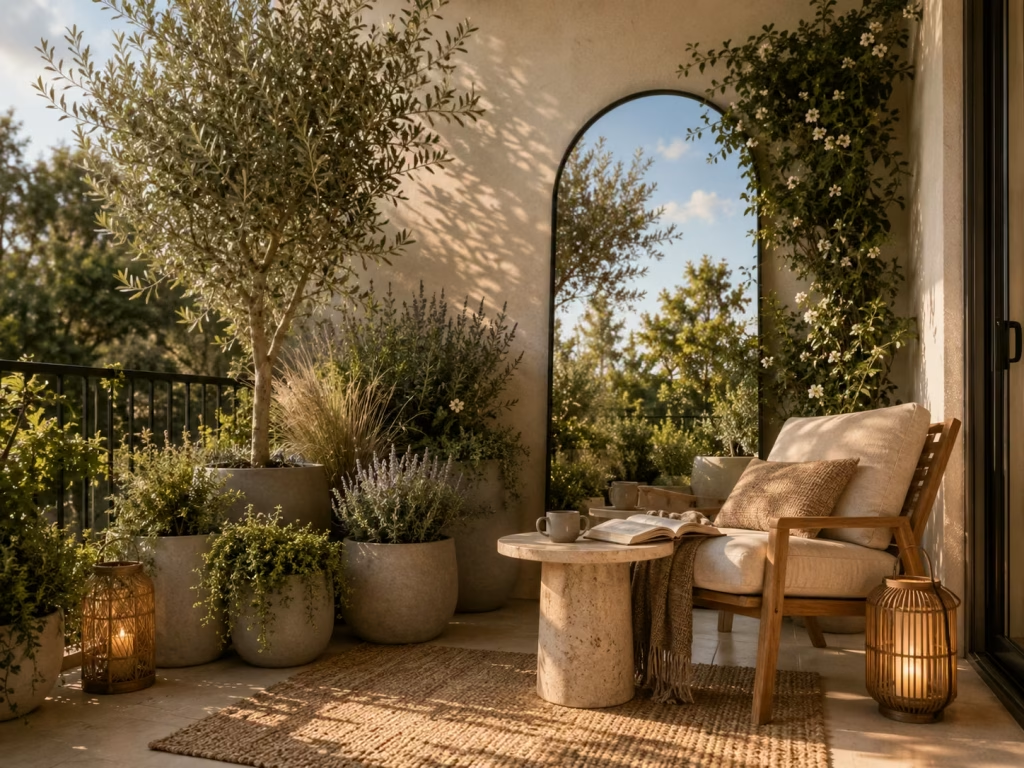
A mirror is one of the few design elements capable of changing how a balcony feels without changing its physical dimensions. Used thoughtfully, it can brighten shaded corners, visually extend boundaries, and multiply the beauty of surrounding planting. Used carelessly, however, it can create uncomfortable glare, reflect unattractive views, or make a compact balcony feel visually confusing. The difference lies entirely in placement and proportion.
Unlike indoor rooms where mirrors are often installed simply to make a space appear larger, outdoor mirrors should be approached with a more architectural mindset. Their purpose is not to create an illusion for its own sake. Instead, they should capture the best qualities of the balcony, whether that is morning sunlight filtering through olive branches, a collection of textured planters, or the soft glow of lanterns after sunset.
Over the years, I have discovered that mirrors work best when people almost forget they are there. Rather than demanding attention, they quietly amplify everything else. They become part of the backdrop, allowing light, planting, and changing skies to take centre stage.
Position Mirrors to Capture Beautiful Views, Not Empty Walls
The first question I ask before placing a mirror is simple: What will it reflect? A mirror can only enhance what already exists. If it reflects an air-conditioning unit, neighbouring brick wall, or storage boxes, it merely doubles the visual clutter. On the other hand, reflecting lush planting, decorative lighting, or an open sky instantly enriches the atmosphere.
Some of the most effective locations include:
- Behind a cluster of sculptural planters.
- Adjacent to climbing jasmine or ivy.
- Opposite a vertical garden.
- Near a seating area to reflect lantern light.
- Along a side wall that captures views of surrounding trees or sunsets.
I often encourage homeowners to stand in different positions around the balcony before installing anything permanently. Simply holding a mirror in place for a few moments reveals exactly what it will capture throughout the day.
That small exercise often makes the difference between a feature that feels magical and one that feels misplaced.
Increase Natural Light Without Creating Harsh Glare
Compact balconies, particularly those surrounded by neighbouring buildings, frequently suffer from limited daylight. A carefully positioned mirror can bounce available light deeper into the space, making the balcony feel noticeably brighter and more welcoming.
The goal is not to reflect direct sunlight into your eyes. Instead, think about redirecting softer ambient light toward darker areas.
For example:
- Reflect morning light into shaded seating corners.
- Bounce daylight towards darker side walls.
- Brighten planting tucked beneath shelves or trellises.
- Enhance the glow from warm evening lanterns.
One project involved a north-facing apartment balcony that rarely received direct sunshine. Rather than introducing brighter colours, we installed a tall mirror opposite a collection of pale stone planters. The reflected light subtly illuminated the entire seating area, creating a noticeably lighter atmosphere without any electrical lighting during the daytime.
Sometimes the smallest adjustments produce the biggest rewards.
Prioritise Safety When Choosing Outdoor Mirrors
Unlike mirrors used indoors, exterior mirrors must withstand changing weather conditions while remaining secure throughout the year. Whenever specifying mirrors for balconies, I generally recommend:
- Tempered safety glass for increased durability.
- Acrylic outdoor mirrors where weight is a concern.
- Rust-resistant aluminium or stainless-steel frames.
- Weatherproof backing materials.
- Secure mechanical fixings rather than adhesive alone.
If your balcony experiences strong winds, avoid leaning large mirrors casually against walls. Permanent installation provides greater safety and significantly extends the lifespan of the mirror itself.
Weight should also be considered carefully, especially on upper-level apartment balconies. Lightweight acrylic mirrors often provide an excellent alternative where structural loading is a concern.
Consider Reflection Angles Throughout the Day
One of the biggest mistakes I see is positioning mirrors without considering how sunlight changes over time. A mirror that looks perfect at midday may create uncomfortable glare during the late afternoon when the sun sits lower in the sky. Likewise, reflections that seem attractive from indoors may not work as well once you step outside.
Before final installation, observe the balcony during several different times:
- Early morning.
- Midday.
- Late afternoon.
- Sunset.
- Evening with outdoor lighting switched on.
This allows you to understand how reflections evolve naturally. Ideally, mirrors should highlight soft natural light rather than reflecting intense direct sunlight. Gentle reflections create atmosphere, whereas bright glare quickly becomes distracting.
Select Frames That Complement the Overall Design
The frame surrounding a mirror plays an equally important role. Rather than treating it as an afterthought, choose a finish that strengthens the balcony’s overall design language.
Some combinations I regularly recommend include:
- Slim black metal frames for contemporary balconies.
- Weathered timber frames for rustic and coastal settings.
- Soft bronze finishes for Mediterranean-inspired spaces.
- Frameless mirrors where minimalism is the primary goal.
- Arched mirrors to soften highly angular architecture.
An arched mirror positioned behind planting often introduces a subtle architectural feature that feels almost like an additional window opening onto another garden. This illusion works particularly well on enclosed apartment balconies where neighbouring walls would otherwise dominate the view.
Reflect Greenery to Multiply the Garden
One of my favourite applications is using mirrors to double the visual impact of planting. A single olive tree reflected in a carefully positioned mirror suddenly appears as part of a much larger garden. Climbing jasmine gains additional depth, while layered planters seem to continue beyond the physical boundary of the balcony.
This technique works especially well when the reflection remains partially obscured by foliage. Rather than revealing the entire mirror immediately, leaves and branches soften its edges, making the illusion feel more natural.
Like looking through an old garden gate into another courtyard, the reflection hints at something beyond the obvious.
Use Restraint to Preserve Authenticity
Because mirrors can be visually powerful, restraint becomes essential. In most residential balconies measuring 3 to 6 square metres (32 to 65 square feet), a single well-positioned mirror often creates a stronger effect than multiple reflective surfaces.
I generally favour mirrors measuring approximately:
- 60 × 90 cm (24 × 36 inches) for accent walls.
- 75 × 120 cm (30 × 48 inches) where additional height is desired.
- Tall narrow mirrors around 45 × 150 cm (18 × 60 inches) for particularly compact balconies.
These sizes provide meaningful visual impact without overwhelming surrounding planting or furniture. As with many aspects of good design, the goal is enhancement rather than distraction.
A Small Mirror That Completely Changed the Space
One apartment renovation remains particularly memorable because of how modest the intervention was. The balcony overlooked a neighbouring brick wall that absorbed much of the available daylight. The owners assumed they needed lighter furniture and additional lighting to brighten the space.
Instead, we installed a tall arched mirror behind a grouping of olive trees, lavender, and ornamental grasses. Throughout the day, the mirror reflected greenery rather than masonry, while gently redirecting available daylight towards the seating area.
The transformation was remarkably subtle, yet unmistakable. The balcony felt brighter, deeper, and considerably more inviting without adding any extra furniture or decorative accessories.
That project reinforced a lesson I have learned many times throughout my career. Great design rarely depends on adding more. Quite often, it comes from helping people see what is already there in an entirely new light.
Pros
- Makes compact balconies feel brighter and visually larger.
- Reflects greenery, creating greater depth and richness.
- Enhances both natural daylight and evening ambient lighting.
- Introduces architectural character without occupying valuable floor space.
- Works beautifully with vertical gardens and layered planting.
- Provides significant visual impact with relatively little intervention.
Cons
- Poor placement can create distracting glare or reflect unattractive views.
- Outdoor mirrors require periodic cleaning to maintain clear reflections.
- Glass mirrors are heavier and require secure installation.
- Acrylic mirrors are lighter but may scratch more easily over time.
- Excessive use of mirrors can make a small balcony feel visually busy rather than calm.
Add a Compact Outdoor Bar for Entertaining
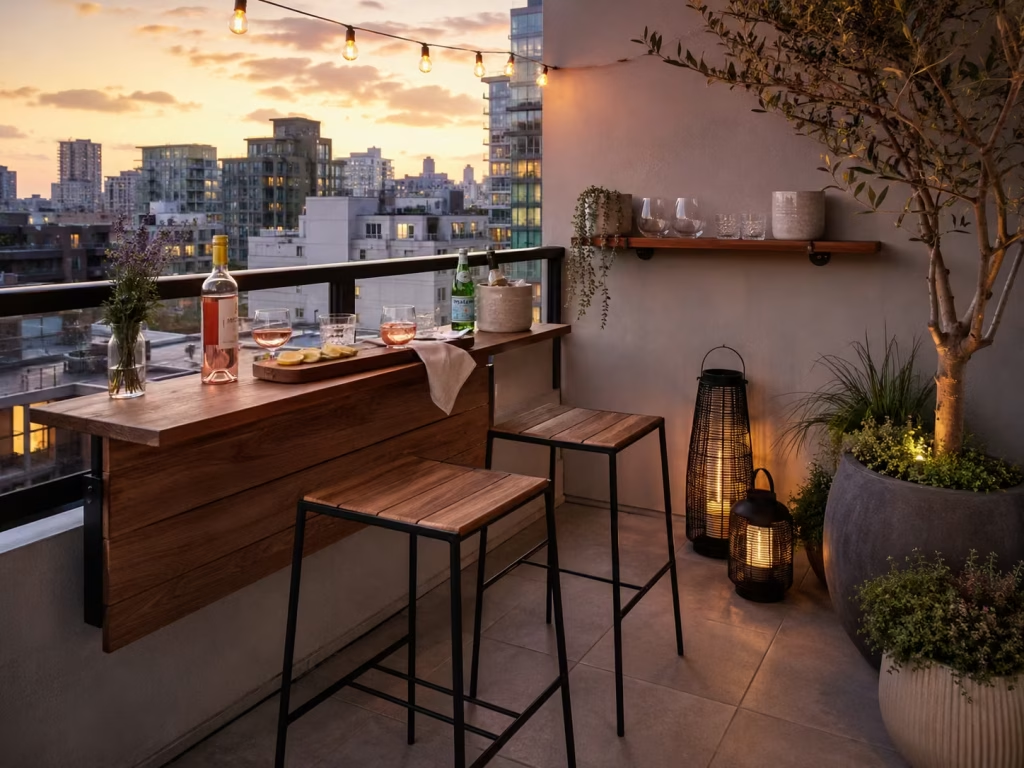
A small balcony can become far more than a place to sit. With the right thinking, it can turn into a social corner that feels polished, relaxed, and ready for company at a moment’s notice. A compact outdoor bar does exactly that. It gives the balcony a sense of purpose, creates a natural gathering point, and makes entertaining feel effortless rather than improvised. In a tight space, that kind of clarity is worth its weight in gold.
What makes a balcony bar so effective is not extravagance, but efficiency. It works hard without looking busy. A slim counter, a couple of well-chosen stools, and a little storage can transform the mood of the entire space. Suddenly, the balcony is no longer just an afterthought at the edge of the apartment. It becomes the place where drinks are poured, conversations stretch out, and summer evenings seem to linger just a little longer than expected.
Make the Most of Fold-Down Counters
Fold-down counters are one of the smartest solutions for small balconies because they deliver function without demanding permanent floor space. When open, they provide a useful surface for serving drinks, preparing small plates, or resting glassware. When closed, they disappear neatly back into the architecture, allowing the balcony to return to its open, breathable feel.
I often recommend fold-down designs for balconies that need to serve multiple roles throughout the day. A counter that folds away gives you flexibility, which is invaluable in compact outdoor spaces where every centimetre counts. It also keeps the layout from feeling overcommitted. One moment the balcony is a quiet reading spot, and the next it becomes a sociable evening setting with very little effort.
For comfortable use, a counter height of around 90 to 105 cm (35 to 41 inches) generally works well for drinks service. A depth of 30 to 40 cm (12 to 16 inches) is often enough for glasses, bottles, and a small tray without protruding too far into circulation space. That modest footprint keeps the balcony feeling light on its feet rather than weighed down.
Build in Storage So Everything Has a Place
A bar area quickly loses its charm if bottles, napkins, mixers, and accessories end up scattered across the balcony. Storage is what keeps the setup feeling graceful rather than makeshift. Even a small amount of concealed storage can make all the difference. In built-in designs, I like to incorporate:
- A closed cupboard for bottles and bar tools.
- Open shelving for decorative glassware or serving pieces.
- Pull-out trays for small accessories.
- A hidden compartment for cushions or table linens.
- Slim drawers for bottle openers, coasters, and cocktail napkins.
The aim is to keep everything close at hand while avoiding visual clutter. In my experience, people use outdoor spaces far more often when setup and tidying are easy. If entertaining feels like too much faff, the balcony stops earning its keep. Smart storage quietly removes that friction.
Choose Glassware That Balances Beauty and Practicality
Glassware is one of those details that can elevate a balcony bar from functional to memorable. It does not need to be elaborate. In fact, the most successful schemes usually rely on a small, well-edited collection rather than a crowded display.
Outdoor entertaining calls for pieces that look elegant but remain practical enough for regular use. Consider keeping a compact set of:
- Tumblers for water, juice, or simple cocktails.
- Stemless wine glasses for stability outdoors.
- Small ceramic or metal tumblers for more relaxed gatherings.
- A serving tray that can carry everything in one trip.
If the balcony is exposed to wind or has limited storage, I often suggest mixing a few genuine glass pieces with tougher alternatives such as acrylic or polycarbonate. That approach keeps the mood refined while reducing the risk of breakage. It is a sensible middle ground, and sometimes that is where the smartest design lives.
Display only the essentials. A few carefully chosen pieces on an open shelf or tray feel considered. Too many, and the space starts to look like a temporary drinks cabinet rather than a properly designed outdoor retreat.
Design the Bar Around the Way You Actually Host
A good balcony bar should reflect how people really entertain, not how a magazine spread imagines they might. Some households want a quiet perch for two glasses of wine at sunset. Others need a place to serve snacks during a summer gathering. The best layout supports both without becoming overcomplicated.
If you mostly host casually, keep the bar compact and flexible. A narrow counter with two stools may be all you need. If you enjoy welcoming guests more often, consider adding a second surface nearby for serving food or placing drinks while people move around. The most successful entertaining spaces often follow a simple rhythm:
- A clear surface for preparation.
- A comfortable perch for guests.
- A place to store the essentials.
- Soft lighting to set the tone after dark.
Once those pieces are in place, the balcony begins to feel like it knows what it is for. That sense of ease is what keeps people returning to it.
Add Small Details That Make the Space Feel Generous
A compact bar does not need to be flashy to feel special. In fact, the quiet details often leave the strongest impression. A small vase with herbs, a linen napkin stack, a bowl of citrus, or a pair of lanterns can turn the whole setting into something far more inviting.
I also like to introduce materials that catch the light softly in the evening, such as timber, brushed metal, stone, or textured ceramics. These finishes keep the bar from feeling overly sharp or utilitarian. They give it a bit of soul, which is what makes entertaining feel warm rather than mechanical.
A Balcony That Became the Heart of the Home
One of the most satisfying balcony projects I worked on involved a narrow apartment terrace that had never been used properly. The owners thought it was too small for socialising, so it mainly collected unused chairs and a couple of plant pots. We replaced that setup with a slim fold-down bar, concealed storage beneath, two stackable stools, and a narrow shelf for glassware and drinks.
The transformation was immediate. The balcony did not become larger, but it became far more useful. On summer evenings, it turned into the couple’s favourite place for a pre-dinner drink or a quick catch-up with friends. Sometimes the best spaces are not the ones with the most room, but the ones that make everyday life feel a touch more pleasurable.
Pros
- Creates a dedicated entertaining zone without taking over the balcony.
- Fold-down counters preserve flexibility in small spaces.
- Storage keeps the area tidy and easy to use.
- Encourages more frequent use of the balcony in summer evenings.
- Can be styled to suit casual or more polished entertaining.
- Adds value through both function and atmosphere.
Cons
- Requires careful planning so the bar does not crowd circulation.
- Outdoor storage must be protected from moisture and temperature changes.
- Glassware can be risky in windy or heavily used spaces.
- Built-in joinery may need professional installation.
- If overstyled, the bar can make a small balcony feel busy rather than refined.
Incorporate Shade with a Stylish Cantilever Umbrella or Sail
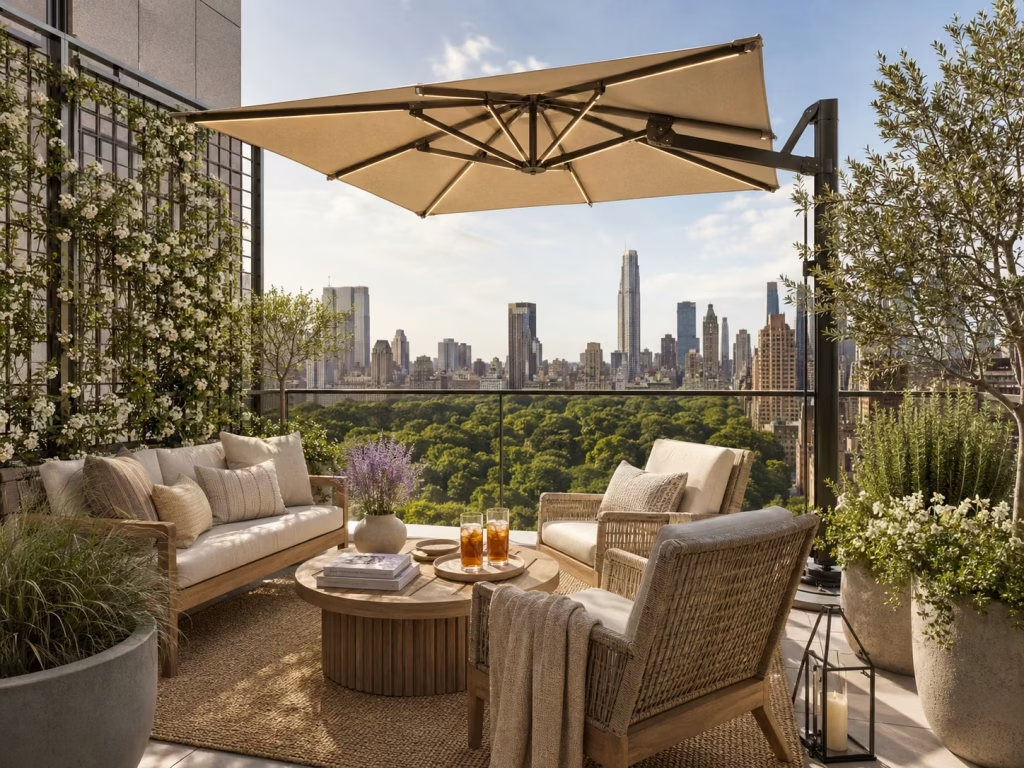
The most inviting summer balconies are not necessarily those that receive the most sunshine. They are the ones that remain comfortable long after the midday heat arrives. While natural light is one of a balcony’s greatest assets, too much direct sun can quickly make the space feel unwelcoming, causing furniture to overheat, fabrics to fade, and plants to struggle. Thoughtfully designed shade changes that equation entirely.
A well-positioned cantilever umbrella or shade sail does far more than block sunlight. It creates a cooler microclimate, softens harsh glare, protects furnishings, and gives the balcony a stronger architectural presence. Like the canopy of a mature tree, it introduces a feeling of shelter that encourages people to stay outside longer, whether they are enjoying breakfast, reading a book, or gathering with friends on a warm evening.
One thing I have learned after designing countless outdoor spaces is that comfort almost always determines whether a balcony becomes part of daily life. Beautiful furniture means very little if people retreat indoors after twenty minutes because the heat becomes unbearable. Shade is not simply an accessory. It is an investment in how the space will actually be used.
Choose a Cantilever Umbrella That Maximises Usable Space
Traditional centre-pole umbrellas often consume valuable floor area because the support sits directly beneath the table. On compact balconies, every centimetre matters, which is why cantilever umbrellas usually provide a more practical solution.
Their side-mounted support keeps the central area clear, allowing furniture to be arranged more naturally beneath the canopy. For most balconies, I recommend canopies measuring approximately:
- 2.0 × 2.0 metres (6.5 × 6.5 feet) for compact seating areas.
- 2.5 × 2.5 metres (8 × 8 feet) where additional coverage is needed.
- Slim rectangular designs for long, narrow balconies.
Many high-quality models also rotate or tilt, allowing the shade to follow the movement of the sun throughout the day. This flexibility dramatically improves comfort without requiring the furniture to be rearranged every few hours.
Neutral canopy colours such as sand, warm white, taupe, or soft grey blend beautifully with most balcony styles while reflecting more heat than darker fabrics.
Understand Why UV Protection Matters
Shade should not simply make the balcony feel cooler. It should also provide meaningful protection from harmful ultraviolet radiation. When selecting an umbrella or sail, look for fabrics offering:
- UPF 50+ protection whenever possible.
- UV-resistant fibres to reduce fading.
- Colourfast performance textiles.
- Water-resistant finishes for occasional summer showers.
- Mould and mildew resistance.
These features benefit not only the people using the balcony but also the surrounding furnishings.
Cushions, rugs, timber furniture, and decorative fabrics all last significantly longer when protected from prolonged direct sunlight. In many projects, introducing effective shade has extended the lifespan of outdoor furnishings by several years. That makes shade one of the most practical long-term investments you can make.
Prioritise Wind Safety from the Beginning
Wind behaves very differently several storeys above ground than it does at garden level. Even a gentle breeze at street level can become surprisingly strong on apartment balconies. For this reason, wind safety should always influence your choice of shade system. When specifying cantilever umbrellas, I typically recommend:
- Heavy weighted bases suited to the umbrella size.
- Powder-coated aluminium frames for strength without excessive weight.
- Fibreglass ribs that flex rather than snap.
- Secure locking mechanisms.
- Closing the umbrella whenever it is not in use or strong winds are forecast.
If your balcony regularly experiences high winds, a professionally tensioned shade sail often provides a more stable solution than a freestanding umbrella. Regardless of the system chosen, never underestimate local wind conditions. Good design should always balance aesthetics with safety.
Position Shade According to the Sun’s Movement
One of the most common mistakes I encounter is installing shade based solely on where furniture happens to be placed. Instead, begin by observing how sunlight travels across the balcony throughout the day.
For example:
East-facing balconies
Morning sunshine is often welcome, so adjustable shade that can be retracted later in the day usually works best.
South-facing balconies
These receive the strongest midday sun and benefit from larger canopies or carefully positioned sails that provide extended protection.
West-facing balconies
Late afternoon sunlight can become particularly intense during summer. Tilting a cantilever umbrella toward the setting sun greatly improves evening comfort.
North-facing balconies
Shade requirements are generally lighter, allowing smaller umbrellas or partial sails to provide sufficient coverage while preserving valuable daylight. Designing around the sun rather than simply the furniture results in a balcony that feels comfortable from breakfast through sunset.
Consider Shade Sails for a Contemporary Architectural Look
Where permanent installation is possible, shade sails offer an elegant alternative to umbrellas. Their clean geometric forms introduce strong architectural character while maintaining an open, airy atmosphere.
I particularly like using triangular or rectangular sails because they:
- Occupy no valuable floor space.
- Create striking shadow patterns.
- Complement contemporary architecture.
- Allow rainwater to drain effectively when installed with correct tension.
- Blend beautifully with timber battens and climbing planting.
Choosing high-quality HDPE (high-density polyethylene) fabric allows airflow to pass through while blocking a significant percentage of UV radiation. This ventilation helps the balcony remain cooler than solid waterproof canopies.
Coordinate Shade with the Overall Design
Shade structures should feel like an intentional part of the balcony rather than an afterthought. I often coordinate umbrella fabrics with:
- Outdoor cushions.
- Planter colours.
- Timber furniture.
- Outdoor rugs.
- Curtain fabrics.
- Architectural finishes.
Repeating similar tones creates visual harmony, allowing the shade structure to become part of the overall composition instead of dominating it.
Slim aluminium frames in black, charcoal, white, or bronze generally provide the most timeless appearance while complementing a wide range of design styles.
A Balcony That Became Comfortable All Day Long
One apartment project involved a beautiful west-facing balcony overlooking a park. The homeowners loved the view but avoided using the space after mid-afternoon because the intense summer sun made it almost unbearable.
Rather than replacing the furniture, we introduced a rotating cantilever umbrella finished in a warm linen-coloured fabric with UPF 50+ protection. The canopy could be adjusted throughout the afternoon to follow the lowering sun, while integrated LED lighting beneath the ribs extended usability well into the evening.
The transformation was remarkable. Instead of retreating indoors after lunch, the family began spending entire evenings outside. Dinner, reading, conversation, and quiet relaxation all became part of their daily routine because the balcony remained comfortable long after temperatures peaked.
That project reinforced something I often tell clients. Outdoor spaces should respond to nature rather than fight against it. Good shade does exactly that. It works with the sun, allowing you to enjoy every hour of summer rather than hiding from it.
Pros
- Creates a cooler, more comfortable outdoor environment.
- Protects occupants from harmful UV exposure.
- Helps preserve furniture, cushions, and outdoor textiles.
- Extends the amount of time the balcony can be used during summer.
- Cantilever umbrellas maximise usable floor space.
- Shade sails add strong contemporary architectural character.
Cons
- Cantilever umbrellas require substantial weighted bases.
- Strong winds may require umbrellas to be closed frequently.
- Permanent shade sail installation often requires professional fitting.
- Lower-quality fabrics can fade after prolonged UV exposure.
- Incorrect positioning may block desirable natural light or surrounding views.
Choose Modular Furniture That Evolves With Your Needs
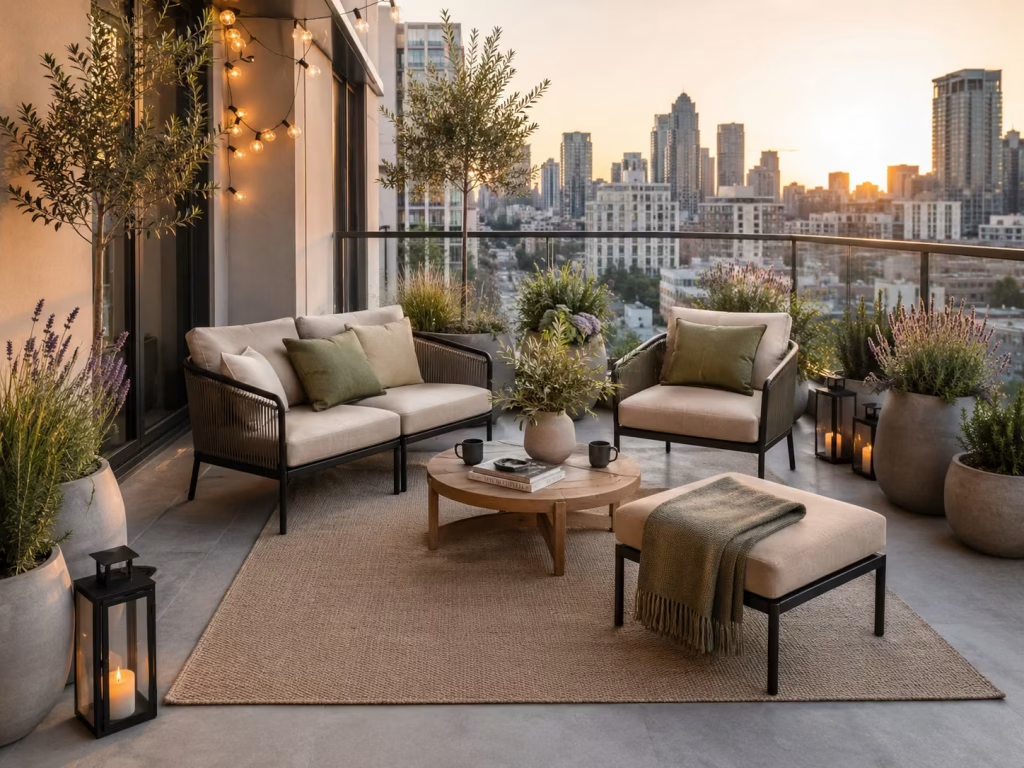
The most successful small balconies are rarely filled with furniture that serves only one purpose. Instead, they are built around pieces that can adapt as everyday life changes. That flexibility becomes especially valuable in apartment living, where a single outdoor space may function as a breakfast nook in the morning, a remote workspace in the afternoon, and a comfortable entertaining area by evening.
Modular furniture embraces this way of living. Rather than locking the balcony into one permanent arrangement, it gives you the freedom to reshape the space whenever your needs change. A seating unit can separate into individual chairs when guests arrive. A compact coffee table can move aside to create extra circulation. An ottoman can become additional seating, a footrest, or even a side table with the addition of a tray.
In my experience, this adaptability is what separates balconies that remain useful for years from those that quickly feel restrictive. Good design should never force you to live around your furniture. Your furniture should quietly adapt to the way you live.
Prioritise Flexibility Over Fixed Layouts
A balcony should never feel locked into a single arrangement. Life changes from one day to the next, and outdoor spaces should be able to keep pace.
Instead of buying a complete matching furniture set, think in terms of individual modules that work well independently and together. This allows the layout to respond naturally to different activities without making the space feel cluttered. Some of the most practical modular pieces include:
- Individual lounge chairs that combine to form a small sofa.
- Stackable stools that double as occasional tables.
- Modular corner seating that separates into individual seats.
- Storage ottomans that provide both seating and concealed storage.
- Lightweight coffee tables that can be moved effortlessly.
I often encourage homeowners to ask themselves a simple question before choosing any piece of furniture: Can this serve more than one purpose? If the answer is yes, it is usually a strong candidate for a compact balcony. That mindset keeps the space efficient without sacrificing comfort.
Rearrange the Layout to Suit Different Occasions
One of the greatest advantages of modular furniture is how easily it allows the balcony to change throughout the day. Imagine a typical summer weekend.In the morning, two lounge chairs face the sunrise for coffee and breakfast. By lunchtime, those same chairs move slightly apart to create more circulation while someone tends the planters.
Later that evening, the seating shifts again to encourage conversation around a portable side table illuminated by lanterns. Nothing new has been added. The furniture has simply adapted to the moment.
This ability to rearrange prevents the balcony from feeling static. It also encourages homeowners to use the outdoor space more frequently because the layout never feels like a compromise.
For comfortable circulation, I generally recommend maintaining at least 75 cm (30 inches) of clear walking space wherever possible. Lightweight aluminium frames or modular woven seating make these adjustments quick and effortless.
Choose Pieces Designed for Apartment Living
Apartment balconies often present unique challenges. Access is usually through narrow doorways, lifts may be limited in size, and weight restrictions sometimes influence what can safely be installed.
Modular furniture addresses many of these issues because individual components are typically easier to transport, assemble, and reposition than one large piece. When selecting furniture for apartment balconies, look for:
- Lightweight aluminium or powder-coated steel frames.
- Weather-resistant performance fabrics.
- Compact modules that fit through standard apartment doors.
- Furniture with removable cushions for easier seasonal storage.
- Stackable or nesting elements that minimise storage requirements.
Another practical advantage is future flexibility. If you move to another apartment with a different balcony shape, modular furniture often adapts far more successfully than fixed seating arrangements. That long-term versatility makes it a worthwhile investment rather than a purchase tied to one specific home.
Select Durable Materials That Handle Everyday Use
Because modular furniture is designed to move frequently, durability becomes particularly important. I generally recommend materials that balance strength with manageable weight. Excellent choices include:
- Powder-coated aluminium for corrosion resistance and portability.
- Teak accents that introduce warmth while ageing gracefully.
- All-weather woven rope that remains comfortable in changing temperatures.
- UV-resistant outdoor upholstery that resists fading.
- Quick-drying foam cushions that recover rapidly after summer showers.
These materials ensure the furniture continues performing well despite regular rearrangement and outdoor exposure. The easier furniture is to move, the more likely homeowners are to take advantage of its flexibility.
Keep the Layout Open and Balanced
One mistake I occasionally encounter is filling the balcony with too many modular pieces simply because they are available. Flexibility works best when there is still enough open floor area for comfortable movement.
For compact balconies measuring approximately 3 to 5 square metres (32 to 54 square feet), I often recommend limiting the seating to:
- Two modular lounge chairs.
- One compact coffee table or movable side table.
- One multifunctional ottoman.
This restrained arrangement allows the furniture to shift naturally without creating congestion. Like pieces on a chessboard, every element should have room to move. Once movement becomes restricted, flexibility begins to lose its value.
Design for the Way You Live, Not the Way You Imagine Living
One lesson I have learned through years of residential projects is that the best furniture layouts reflect everyday routines rather than occasional events. If you usually enjoy quiet evenings with one other person, prioritise comfortable seating over large dining arrangements.
If you often work outdoors, choose movable tables that support both laptops and casual dining. If entertaining happens only occasionally, modular seating allows the balcony to expand temporarily without permanently sacrificing valuable space. Design that grows alongside changing habits always outperforms design based on unrealistic expectations.
A Balcony That Adapted to Every Season
A recent apartment project perfectly illustrated the value of modular furniture. The homeowners initially believed they needed a built-in seating arrangement to maximise their narrow balcony. After discussing how they actually used the space, we selected a modular outdoor collection consisting of two lightweight lounge modules, a movable ottoman, and a compact table.
During the week, the layout functioned as a peaceful reading corner overlooking the garden. At weekends, the modules separated to create seating for visiting friends. When the homeowners wanted extra room for container gardening in spring, the furniture moved aside in minutes without disrupting the overall balance.
Nothing about the balcony remained fixed, yet everything continued to feel intentional. That experience reinforced one of the guiding principles I rely on in every small-space project. The most successful balconies are not the ones designed for a single perfect photograph. They are the ones that quietly evolve alongside the people who use them every day.
Pros
- Adapts easily to changing daily activities.
- Allows quick rearrangement for entertaining or relaxation.
- Particularly well suited to compact apartment balconies.
- Individual modules are easier to transport and replace.
- Multifunctional pieces maximise limited floor space.
- Provides long-term flexibility if you move home or redesign the balcony.
Cons
- High-quality modular furniture can involve a larger initial investment.
- Lightweight pieces may require securing during strong winds.
- Multiple modules need thoughtful planning to avoid visual clutter.
- Cushions still require seasonal storage and regular maintenance.
- Frequent rearrangement may be inconvenient if the furniture is heavier than expected.
You May also Like: 25 Indoor–Outdoor Living Room Ideas That Redefine Modern Living
Frame Views Instead of Blocking Them
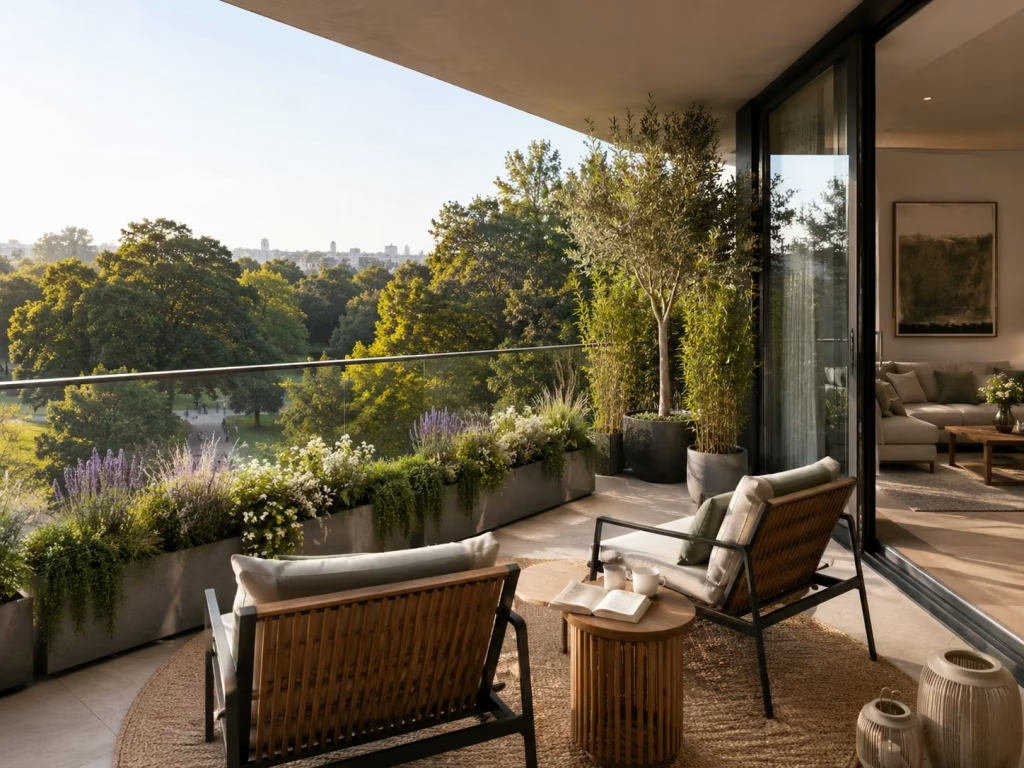
One of the greatest advantages of having a balcony is the opportunity to connect with the world beyond your home. Whether the outlook captures mature trees, a distant skyline, neighbouring rooftops, or even a quiet residential street, that view becomes part of the overall design. It is tempting to fill a small balcony with tall furniture, oversized planters, and decorative features, but doing so often creates an unintended consequence. Instead of feeling open and connected, the space begins to feel boxed in.
The most successful balcony designs celebrate the view rather than compete with it. Much like a well-composed photograph, the surrounding landscape should be framed thoughtfully instead of hidden. Every design decision, from planting to furniture placement, should gently guide your eyes outward. When the view remains uninterrupted, even the smallest balcony feels more generous because the visual boundary extends far beyond the physical railing.
Throughout my career, I have found that homeowners often focus on what they can place inside a balcony while overlooking what lies beyond it. In reality, the scenery outside the balcony is one of the most valuable design elements available, and unlike furniture or accessories, it comes at no additional cost.
Use Low Planting to Preserve Sightlines
Plants bring life, colour, and seasonal character to any balcony, but their height deserves careful consideration. Positioning tall shrubs directly in front of the railing can unintentionally block the very outlook that makes the outdoor space enjoyable.
Instead, build your planting scheme in layers, allowing the eye to travel comfortably beyond the balcony. For balconies with attractive views, I often recommend:
- Low flowering perennials near the railing.
- Compact herbs such as thyme, oregano, and chives.
- Trailing plants that soften the edge without rising above it.
- Small ornamental grasses with gentle movement.
- Seasonal flowers that remain below seated eye level.
Containers measuring approximately 25 to 35 cm (10 to 14 inches) high generally provide enough depth for healthy planting while maintaining clear views across the balcony.
If additional height is desired, position taller specimens along the side walls or corners rather than directly in front of the seating area. This creates natural framing while keeping the central outlook unobstructed.
Arrange Furniture Around the View
Furniture should encourage people to enjoy the scenery instead of turning their backs on it. One of the simplest yet most effective improvements I make during balcony redesigns is reorientating seating towards the strongest view. Surprisingly often, existing furniture layouts ignore the landscape entirely.
Consider arranging:
- Lounge chairs facing the horizon rather than the apartment wall.
- Bistro seating angled toward sunrise or sunset.
- Benches positioned along side walls to maximise outward views.
- Side tables placed beside seating instead of directly ahead.
For comfortable circulation, maintain at least 75 cm (30 inches) of clear walking space behind seating where possible. This arrangement creates a natural flow through the balcony while allowing the surrounding landscape to remain the focal point.
Like sitting beside a campfire, people instinctively orient themselves towards what draws their attention. On a balcony, that focal point should often be the view.
Maintain a Sense of Visual Openness
Small balconies benefit enormously from visual breathing room. Even when the available floor area is limited, uninterrupted sightlines can make the space feel significantly larger. Visual openness comes from thoughtful restraint rather than minimalism for its own sake.
Several design principles consistently help preserve this feeling:
- Avoid placing tall storage units near the railing.
- Choose furniture with open frames instead of bulky solid sides.
- Leave portions of the railing visible.
- Group decorative accessories rather than scattering them throughout the balcony.
- Limit oversized statement pieces that interrupt long sightlines.
Open-frame furniture made from powder-coated aluminium or slender teak profiles allows light to pass through, reducing visual weight while maintaining functionality. The eye naturally moves beyond these lighter forms instead of stopping abruptly.
Balance Privacy Without Losing the View
Many apartment balconies require some degree of privacy, but complete enclosure often comes at the expense of openness. Rather than blocking every angle, consider selective screening.
For example:
- Position taller planters only where neighbouring windows overlook the balcony.
- Use climbing plants along side walls instead of across the front.
- Install slatted timber screens that filter views rather than completely closing them.
- Keep the section facing the best outlook as open as possible.
This approach protects privacy where it matters while preserving the strongest visual connection with the surrounding landscape. Good design is rarely about choosing one priority over another. More often, it is about finding the balance where both can exist comfortably together.
Allow the Landscape to Become Part of the Interior
One of my favourite outcomes in residential design is when indoor and outdoor spaces begin to feel visually connected. If the balcony frames attractive planting, distant trees, or an interesting skyline, those views become part of the apartment itself. Looking through the doors from inside, the eye continues naturally towards the landscape instead of stopping at the railing.
This layered perspective makes both the balcony and the adjoining room feel larger. Simple choices such as keeping furniture low, selecting transparent glass railings where possible, and avoiding visual clutter all strengthen this relationship.
It is remarkable how often the perception of space depends more on uninterrupted views than on actual square metres.
Design Around the Best Feature You Already Own
Every balcony has something worth celebrating. Perhaps it is the evening sunset. Perhaps it is a mature tree that changes with the seasons. Perhaps it is the distant glow of city lights after dark. Rather than trying to compete with these natural assets, allow your design to quietly support them. When the surrounding landscape becomes the star of the composition, every other design decision feels more purposeful.
A Project That Changed Simply by Looking Outward
I once redesigned a narrow apartment balcony overlooking a small public park. The owners had filled the front edge with tall bamboo, believing it created a stronger sense of privacy. While it certainly screened neighbouring buildings, it also blocked the mature trees that made the apartment so appealing in the first place.
Instead of removing the greenery altogether, we relocated the bamboo to one side, introduced lower lavender and trailing rosemary along the railing, and turned the seating towards the park.
The balcony itself did not become any larger. Nothing structural changed. Yet the experience of using it was transformed completely. Sitting outside suddenly felt connected to the changing seasons rather than isolated from them. The owners later admitted they spent far more time outdoors simply because they had rediscovered the view they already owned.
That project reminded me that good design is sometimes less about adding new features and more about revealing the qualities that were there all along.
Pros
- Makes compact balconies feel noticeably larger.
- Preserves valuable natural views and daylight.
- Creates a stronger connection between indoor and outdoor spaces.
- Encourages more relaxing seating arrangements.
- Allows planting to complement rather than dominate the design.
- Improves the overall sense of openness without reducing functionality.
Cons
- Requires careful planning when privacy is also a priority.
- Low planting may provide less screening from neighbouring properties.
- Furniture layouts may be influenced by the direction of the best view.
- Seasonal changes can affect the appearance of surrounding landscapes.
- Some balconies may have limited views, requiring other design features to become the focal point.
Introduce Seasonal Summer Textiles
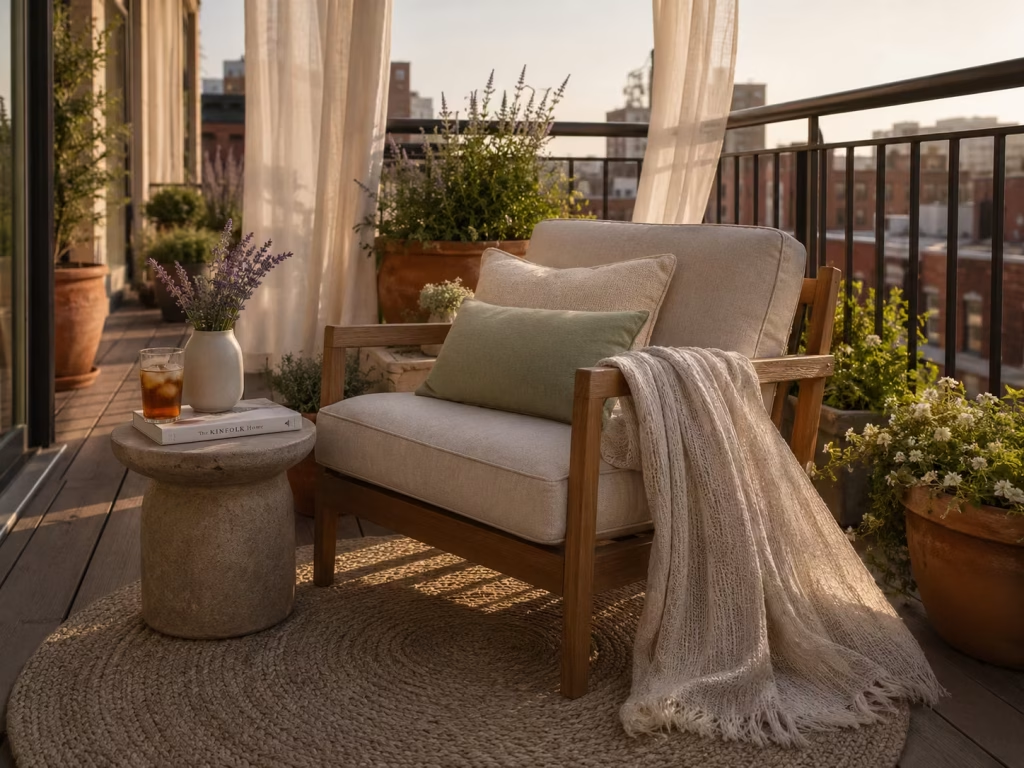
The difference between a balcony that looks attractive and one that genuinely invites you to stay often comes down to textiles. Hard materials such as timber, stone, metal, and concrete provide structure, but fabrics bring warmth, softness, and personality. They soften sharp edges, encourage relaxation, and make even the smallest outdoor space feel lived in rather than merely styled.
One of the reasons I enjoy working with seasonal textiles is that they offer remarkable flexibility. Unlike permanent materials, fabrics can evolve throughout the year, allowing the balcony to reflect changing seasons without requiring expensive renovations. During summer, lighter textures, breathable weaves, and sun-washed colours instantly create an atmosphere that feels brighter, cooler, and more relaxed.
Over the years, I have found that homeowners often underestimate how much comfort influences daily habits. A chair becomes far more inviting when it has a supportive cushion. An evening outdoors lasts much longer when a lightweight throw is close at hand as temperatures begin to fall. These small additions quietly encourage people to spend more time outside, proving that comfort is never simply an afterthought. It is part of the design itself.
Layer Outdoor Cushions for Comfort and Visual Depth
Outdoor cushions do far more than soften seating. They introduce colour, texture, and dimension while making furniture noticeably more comfortable for everyday use. Rather than filling every chair with oversized cushions, focus on thoughtful layering. A combination such as this works beautifully:
- One supportive seat cushion.
- One medium back cushion.
- One smaller accent cushion with subtle texture.
This arrangement creates comfort without overwhelming compact furniture. For café chairs, cushions measuring approximately 40 × 40 cm (16 × 16 inches) generally provide excellent support, while lounge seating often accommodates cushions between 45 and 50 cm (18 to 20 inches) square.
I usually recommend mixing different textures rather than relying on bold patterns alone. A woven cushion beside a smooth linen-look fabric creates quiet contrast that feels sophisticated instead of overly decorative. Like seasoning a favourite recipe, the right balance is far more satisfying than excess.
Keep Lightweight Throws Close for Cooler Evenings
Summer days may be warm, but evenings often become surprisingly cool, particularly on elevated balconies where breezes are stronger. A lightweight outdoor throw allows the balcony to remain comfortable well after sunset without introducing bulky storage or heavy blankets.
Excellent materials include:
- Performance cotton blends.
- Acrylic outdoor knits.
- Soft recycled woven fabrics.
- Lightweight wool blends for cooler climates.
Folded neatly over a bench or draped casually across a lounge chair, a throw also introduces another layer of visual softness.
I often encourage clients to think of throws as invitations rather than accessories. Their simple presence subtly encourages people to stay outside a little longer, whether enjoying a quiet conversation or watching the last light disappear beyond the horizon.
Invest in High-Quality Performance Fabrics
Outdoor textiles face challenges that interior fabrics rarely encounter. Strong sunlight, changing temperatures, humidity, unexpected rain, and frequent use all place considerable demands on the material. For this reason, performance fabrics are almost always worth the investment.
When selecting cushions or upholstery, I typically look for:
- UV-resistant fibres that minimise fading.
- Water-repellent finishes.
- Quick-drying foam inserts.
- Mould and mildew resistance.
- Colourfast fabrics designed for outdoor exposure.
- Removable covers for easy cleaning.
High-performance textiles maintain their appearance for significantly longer, reducing replacement costs while keeping the balcony looking fresh throughout the season.
Although premium fabrics may cost more initially, they often prove more economical over time because they withstand years of regular outdoor use.
Create Interest Through Thoughtful Colour Layering
Colour layering gives seasonal textiles their personality. Rather than introducing numerous unrelated shades, I prefer building a calm palette inspired by natural summer landscapes. Some combinations that consistently work well include:
Coastal palette
Soft white, sandy beige, faded blue, and natural linen.
Mediterranean palette
Terracotta, olive green, warm cream, and muted clay.
Contemporary palette
Stone grey, charcoal, warm taupe, and soft ivory.
Botanical palette
Sage green, muted eucalyptus, oatmeal, and gentle floral accents. Within each palette, varying the tone rather than introducing dramatic contrasts creates a far more timeless result. For example, combining several shades of blue alongside warm neutrals feels considerably richer than relying on one bright accent colour alone. This subtle layering allows the balcony to feel collected over time rather than decorated all at once.
Balance Texture to Create a Richer Experience
Texture often contributes more to comfort than colour itself. A balcony filled entirely with smooth surfaces can feel surprisingly flat, even when the colour palette is attractive. Introducing contrasting textures creates a more engaging sensory experience.
I often combine:
- Woven cushions.
- Linen-look upholstery.
- Braided outdoor rugs.
- Soft knitted throws.
- Textured ceramic accessories.
Together, these layers catch natural light differently throughout the day, adding depth without increasing visual clutter. This richness is particularly valuable on compact balconies where every detail carries greater importance.
Refresh the Balcony Without Major Renovation
One of the greatest strengths of seasonal textiles is how easily they can transform an outdoor space. Replacing cushion covers, introducing a new throw, or adjusting the colour palette each summer provides the balcony with a fresh identity without replacing furniture or altering the overall layout.
This flexibility allows homeowners to respond to changing tastes while preserving the investment made in higher-quality outdoor furniture. Small seasonal updates often have a surprisingly large emotional impact. Returning home to refreshed fabrics each summer makes the balcony feel renewed, even when very little has actually changed. Sometimes the smallest changes breathe the freshest life into familiar spaces.
A Project That Became More Comfortable Than Expected
One apartment balcony I redesigned already had excellent furniture, attractive planting, and carefully planned lighting. On paper, everything looked complete. Yet the homeowners admitted they rarely spent long outside.
Rather than replacing major elements, we focused entirely on textiles. Deep seat cushions upholstered in UV-resistant performance fabric replaced thinner pads, lightweight woven throws were added for evening comfort, and a restrained palette of soft linen, sage, and sandy neutrals introduced greater warmth throughout the seating area.
The transformation was immediate. The balcony looked more inviting, but more importantly, it felt more inviting. The owners later told me they had developed a new habit of enjoying coffee outdoors each morning and lingering long after dinner because the space simply felt more comfortable.
That project reinforced a principle I return to repeatedly. Beautiful design captures attention. Comfortable design quietly earns a permanent place in everyday life.
Pros
- Significantly improves outdoor comfort.
- Introduces seasonal colour without permanent changes.
- Softens hard architectural materials.
- Performance fabrics offer excellent durability and weather resistance.
- Easy to refresh each summer with new cushion covers or throws.
- Creates a welcoming atmosphere that encourages longer outdoor use.
Cons
- Outdoor textiles still require occasional cleaning.
- Cushions should be stored during prolonged heavy rain or winter months.
- Lower-quality fabrics may fade after extended UV exposure.
- Too many colours or patterns can overwhelm compact balconies.
- Premium performance textiles generally involve a higher initial investment but offer better long-term value.
Create a Sunset Dining Nook
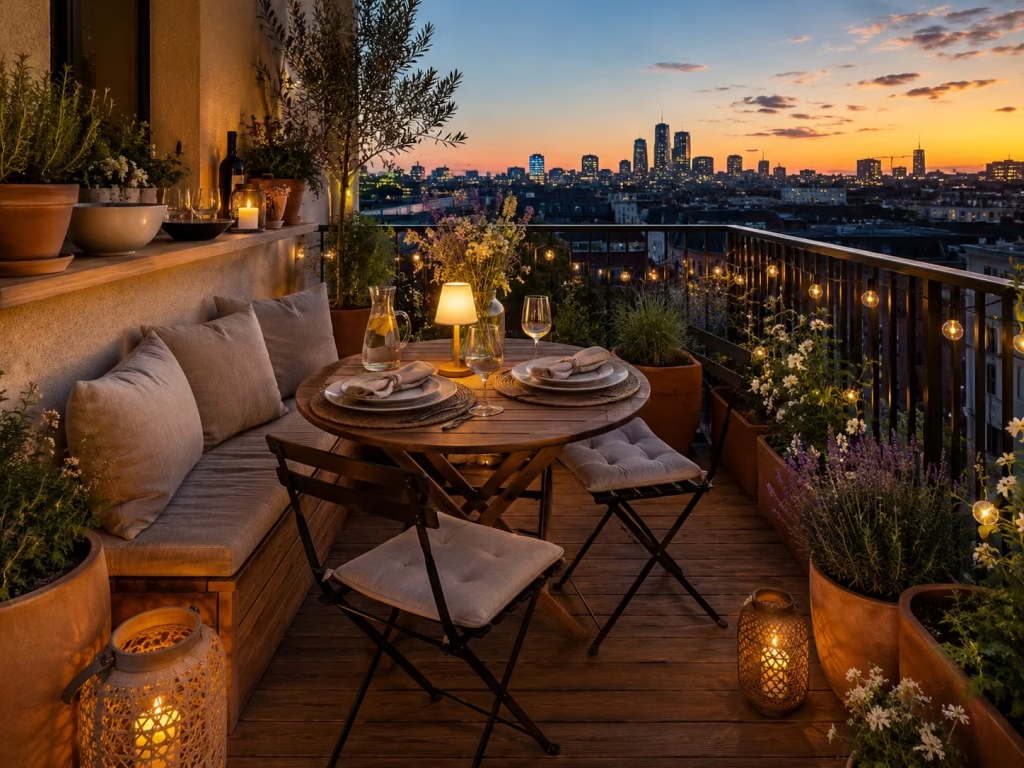
There is something quietly magical about sharing a meal outdoors as the day’s final light settles across the sky. Even the simplest dinner somehow feels more memorable when accompanied by a gentle breeze, the scent of summer planting, and the changing colours of sunset. A compact balcony may never accommodate a large dining table, yet it can easily become an intimate setting where everyday meals feel like small occasions worth slowing down for.
A successful sunset dining nook is not measured by the number of seats it offers but by how comfortably it supports conversation and relaxation. Every element should work together with purpose. Comfortable seating, practical serving space, and carefully layered lighting create an environment where people naturally linger instead of clearing the table the moment the meal is finished.
Over the years, I have noticed that homeowners often reserve their balconies for occasional gatherings while overlooking their greatest potential. Some of the most rewarding outdoor spaces are designed for ordinary evenings rather than special events. A thoughtfully planned dining nook turns weeknight dinners into moments people genuinely look forward to.
Use Lighting to Extend Evenings Naturally
As daylight begins to fade, lighting gradually takes over the role of shaping the atmosphere. Bright overhead fixtures rarely suit compact balconies because they flatten the space and interrupt the calm mood that sunset naturally creates. Instead, layer softer light sources that complement the changing sky. Some of my preferred combinations include:
- Rechargeable table lamps for gentle task lighting.
- Lanterns placed near the floor to create warmth.
- Warm white string lights woven along railings or screens.
- Small wall-mounted sconces where permanent installation is possible.
- Battery-operated candles for additional ambience.
Aim for a warm colour temperature of approximately 2700K, which closely resembles the softness of candlelight and creates a relaxed dining environment.
Rather than illuminating every corner equally, allow gentle pools of light to guide attention towards the table. The result feels more intimate and considerably more inviting.
Include Just Enough Serving Space
A dining area functions far more smoothly when there is a dedicated place for serving food and drinks. Without it, plates quickly end up balancing on laps or competing for space with dishes already on the table. Fortunately, even the smallest balconies can accommodate a practical serving solution. Consider incorporating:
- A slim console table positioned against the wall.
- A fold-down serving shelf.
- A narrow bar trolley with lockable wheels.
- A compact side table beside the dining area.
A serving surface measuring approximately 30 to 40 cm (12 to 16 inches) deep usually provides sufficient space for drinks, serving bowls, or a small dessert tray without restricting movement.
Keeping this area separate from the dining table allows meals to unfold more naturally and prevents the tabletop from feeling overcrowded.
Select Compact Seating That Encourages Conversation
Choosing appropriately scaled seating is essential on a small balcony. Oversized dining chairs may appear comfortable, but they often consume valuable circulation space and make the area feel cramped. Instead, look for furniture that combines comfort with visual lightness. Excellent options include:
- Folding timber café chairs.
- Slim powder-coated aluminium dining chairs.
- Built-in bench seating paired with individual chairs.
- Lightweight woven chairs with open frames.
Allow approximately 60 cm (24 inches) of table width per person for comfortable dining, while maintaining around 75 cm (30 inches) of clear circulation behind occupied chairs whenever space allows.
I particularly enjoy combining a built-in bench on one side with movable chairs opposite. This arrangement maximises seating capacity while preserving an open, uncluttered appearance.
Good conversation begins with comfortable seating, and comfortable seating always starts with thoughtful proportions.
Design the Space Around Relaxed Entertaining
Entertaining on a balcony should feel easy rather than overly formal. The best dining nooks encourage spontaneous gatherings where friends can settle in without the host constantly moving back and forth indoors. Small details make a noticeable difference.
Keep essentials within easy reach:
- Linen napkins stored in a nearby basket.
- A tray for carrying drinks.
- Compact serving boards.
- Fresh herbs picked directly from nearby planters.
- A lightweight outdoor blanket for cooler evenings.
These thoughtful additions help meals flow naturally while allowing the host to remain part of the conversation. One principle I return to repeatedly is reducing unnecessary movement. When everything needed for dinner is close at hand, hosting becomes more relaxed for everyone involved.
Position the Dining Area to Capture the Evening Light
If your balcony enjoys western or south-western exposure, consider orientating the table towards the sunset rather than simply placing it wherever space appears available. Watching daylight gradually soften while sharing a meal adds a quality that no decorative accessory can replicate.
Where possible:
- Face seating towards the best evening view.
- Keep taller planters to the sides rather than directly ahead.
- Position lanterns where they complement rather than overpower the natural light.
- Allow sunset to remain the focal point.
Even balconies without dramatic views benefit from this approach. The changing sky itself becomes part of the dining experience. Like gathering around a fireplace during winter, people naturally gravitate towards light. During summer, the setting sun performs that role beautifully.
Keep the Setting Simple and Seasonal
A sunset dining nook rarely needs elaborate decoration. In fact, restraint often creates the strongest impression. A few carefully selected elements are usually enough:
- A linen table runner.
- Fresh seasonal flowers.
- Ceramic serving bowls.
- Woven placemats.
- Simple glassware.
- Small potted herbs that double as table decoration.
These details introduce warmth and personality without overwhelming the limited space. Seasonal styling also allows the balcony to evolve naturally throughout the year while maintaining the same furniture arrangement.
A Balcony That Turned Everyday Dinners into a Daily Ritual
One apartment balcony I redesigned measured just 3.5 × 1.6 metres (11 ft 6 in × 5 ft 3 in), yet it became one of the homeowners’ favourite places in the entire property. Instead of trying to squeeze in a full dining set, we installed a slim built-in bench, two lightweight folding chairs, and a compact round table positioned to capture the evening sky.
A narrow serving shelf behind the bench kept drinks and dishes close at hand, while rechargeable lanterns created soft pools of light once the sun had disappeared. Several months later, the owners told me they had almost stopped eating dinner indoors during summer. What began as a design project gradually became part of their daily routine.
That experience reinforced something I have witnessed throughout my career. The most successful outdoor dining spaces are not defined by size or luxury. They succeed because they encourage people to pause, share good food, and savour moments that might otherwise pass unnoticed.
Pros
- Creates a dedicated outdoor dining experience in a compact footprint.
- Encourages more frequent use of the balcony during summer evenings.
- Layered lighting extends usability after sunset.
- Compact seating preserves valuable circulation space.
- Separate serving areas improve functionality while entertaining.
- Turns everyday meals into memorable outdoor experiences.
Cons
- Space usually limits dining to two or four people.
- Furniture must be carefully proportioned to avoid overcrowding.
- Outdoor meals remain dependent on weather conditions.
- Serving surfaces require thoughtful planning on narrow balconies.
- Cushions and textiles may need storing after use to prolong their lifespan.
Add Water-Inspired Elements for a Cooling Atmosphere
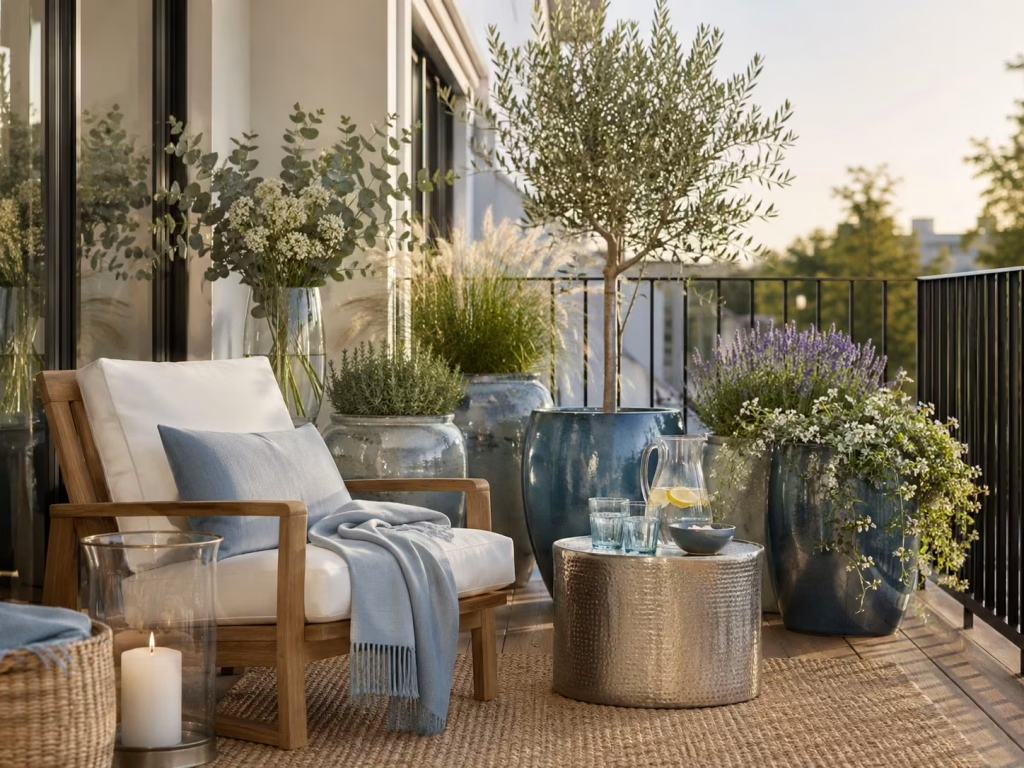
A balcony does not need a fountain or a shoreline view to feel refreshing. Sometimes the feeling of coolness comes from visual cues alone. Water-inspired design works in that quiet, persuasive way. Reflective surfaces, blue ceramics, glass details, and a sensory approach to styling can make a compact balcony feel lighter, calmer, and more restful, even on a hot summer afternoon.
This kind of styling is especially effective in small spaces because it creates a sense of openness without adding clutter. The palette tends to feel fresh rather than heavy, and the materials catch daylight in a way that keeps the balcony from feeling static. I have often found that when a space feels visually cool, people instinctively spend longer there. The atmosphere does half the work for you.
Use Reflective Finishes to Echo Light and Movement
Reflective finishes introduce a subtle sense of shimmer that immediately changes how a balcony feels. They do not have to be glossy or dramatic. In fact, the best results usually come from restrained surfaces that catch light softly rather than throwing it back in a harsh way.
A brushed metal tray, a glazed planter, a pale stone bowl with a slight sheen, or a softly polished table surface can all help create that effect. The goal is to suggest the movement of water, not imitate it literally.
On smaller balconies, reflective accents work best when used sparingly. A few well-placed pieces can brighten shaded corners and make the space feel more spacious, while too many shiny surfaces can quickly become distracting. Like a glint of sunlight on a still pool, the effect should feel calm and fleeting, not overpowering.
Bring in Blue Ceramics for Colour and Calm
Blue is one of the most reliable colours for creating a cooling atmosphere. It naturally recalls sky, sea, and shade, which makes it a strong choice for summer balcony styling. Blue ceramics, in particular, add character because they combine colour with texture and a hand-crafted feel.
I often recommend using blue in planters, vases, small side tables, or decorative bowls rather than letting it dominate the whole palette. Deep indigo, soft azure, muted denim, and pale sea glass tones each bring a different mood. When layered carefully, they create quiet depth without making the balcony feel busy.
Blue ceramics also pair beautifully with greenery, timber, and white textiles. That balance gives the balcony a relaxed, coastal quality that feels easy to live with. It is one of those combinations that never tries too hard, yet always seems to land well.
Introduce Glass Accessories to Lighten the Space
Glass is a powerful material in small balcony design because it adds visual lightness. Unlike heavier decorative pieces, glass accessories do not interrupt sightlines, so the space continues to feel open and breathable.
A simple glass lantern, a vase filled with cut stems, or a set of coloured tumblers on a serving tray can all contribute to the overall mood. Clear or lightly tinted glass works especially well because it reflects changing light throughout the day without becoming visually dominant.
In summer, glass has the advantage of feeling cool and crisp. It catches morning light beautifully and takes on a softer character in the evening as lanterns and sunset reflections begin to play across the surface. That shifting quality gives the balcony a sense of movement, even when nothing else is changing.
Let Sensory Design Shape the Atmosphere
A balcony feels most complete when it engages more than the eye. Water-inspired design works particularly well because it suggests calm through a combination of colour, texture, light, and mood.
You can build that feeling through a few simple choices:
- Soft blue and pale green tones
- Smooth glazed ceramics mixed with textured fabrics
- Light-catching glass placed near seating
- Gentle planting that moves in the breeze
- Quiet, uncluttered arrangements that leave breathing room
The idea is to create a space that feels as though it has a little more air around it. When surfaces are calm and materials are chosen with restraint, the balcony begins to feel almost meditative. It becomes the kind of place where you naturally slow your pace without meaning to.
I have seen this happen in many residential projects. A balcony that once felt hot, hard, and overly exposed can become surprisingly inviting once its styling begins to hint at coolness and stillness. It is not about adding more. It is about choosing elements that work together to settle the mood.
Keep the Look Quietly Refined
The strongest water-inspired balconies rarely rely on obvious nautical motifs. Instead, they borrow from the feeling of water itself. Think of reflected light on a shaded surface, the softness of ceramic glaze, or the clarity of a glass vessel holding a few seasonal stems. Those details create a far more elegant result than themed decoration ever could.
When handled with restraint, this approach adds freshness without tipping into cliché. The balcony feels cooler, calmer, and a little more restorative, which is exactly what summer outdoor living should offer.
Pros
- Creates a fresh, cooling visual effect on warm days.
- Works well in compact balconies because the palette feels light.
- Reflective finishes help brighten shaded corners.
- Blue ceramics and glass accessories add calm without clutter.
- Easy to refresh seasonally with a few simple changes.
Cons
- Too many reflective surfaces can create glare.
- Glass accessories need careful placement in windy spaces.
- Blue can feel overly themed if used without balance.
- Glossy finishes may show dust or water spots more easily.
- The look depends on restraint, so over-accessorising can weaken the effect.
Embrace Biophilic Design with Layered Greenery
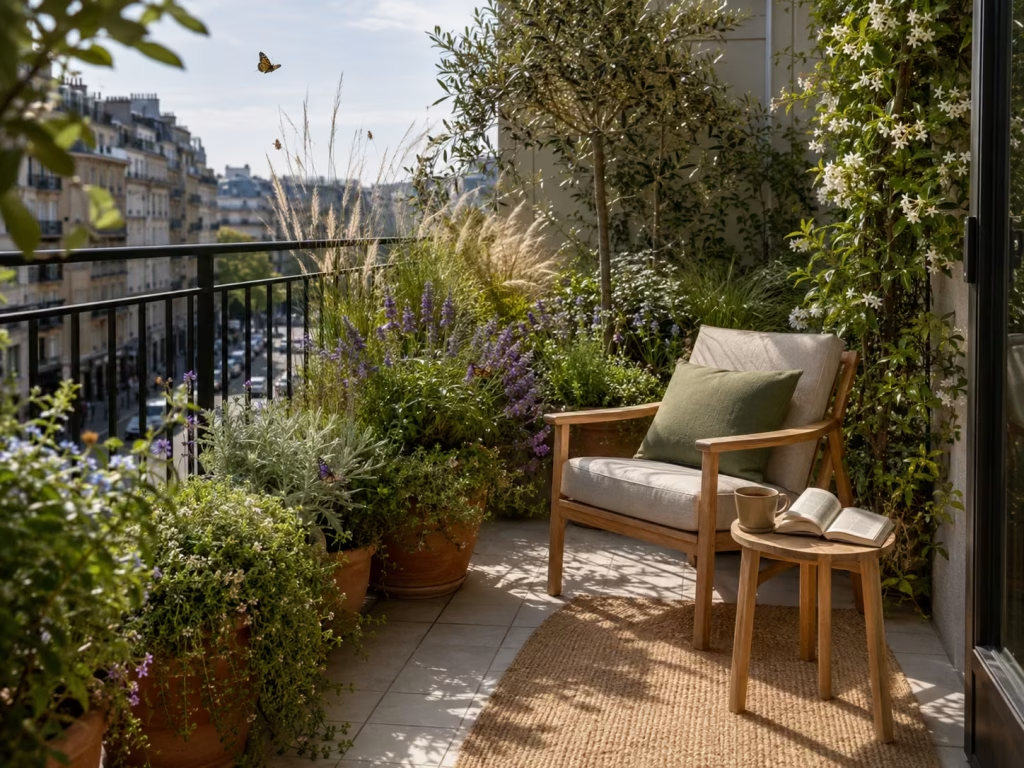
A balcony feels fundamentally different when greenery becomes more than decoration. Instead of treating plants as accessories placed around the edges, biophilic design weaves nature into the entire experience of the space. It encourages a stronger relationship between people and the natural world through carefully layered planting, varied textures, and living ecosystems that continue to evolve with the seasons.
This approach is particularly valuable on compact balconies, where every design decision has a greater influence on how the space feels. Even a modest collection of thoughtfully selected plants can soften hard architectural lines, improve the sense of privacy, introduce movement, and create a calmer atmosphere. The result is not simply a balcony that looks greener. It becomes a place that feels healthier, quieter, and far more restorative.
Throughout my years working on residential projects, I have noticed that homeowners often begin by asking for “more plants.” What they truly want, however, is a stronger emotional connection to the outdoors. Biophilic design achieves exactly that. It transforms the balcony into a living environment where every season introduces new colours, textures, fragrances, and moments worth noticing.
Layer Plant Heights to Create Depth and Natural Balance
Nature rarely grows in perfectly level rows, and balconies feel far more authentic when planting follows the same principle. Rather than positioning every container at the same height, build the planting scheme in distinct layers that gradually guide the eye through the space.
A balanced arrangement might include:
- Low-growing herbs and trailing plants near the floor.
- Medium-height flowering perennials around seating.
- Upright ornamental grasses for movement.
- Taller shrubs or small trees placed in corners.
- Vertical climbers extending towards walls or trellises.
For example:
- Ground-level planting between 20 and 30 cm (8 to 12 inches) high.
- Mid-level containers around 45 to 70 cm (18 to 28 inches).
- Architectural plants reaching 120 to 180 cm (4 to 6 feet) where ceiling height allows.
This gradual transition creates a richer sense of depth without overwhelming the available space. One lesson I often share with clients is that the eye enjoys discovering layers. When every plant sits at exactly the same level, the composition quickly loses its sense of movement.
Combine Different Textures for a Richer Landscape
Colour naturally attracts attention, but texture is what gives planting long-lasting interest. A balcony that relies entirely on one leaf shape or one plant type can appear surprisingly flat, even during peak summer.
Instead, combine contrasting foliage such as:
- Fine ornamental grasses.
- Broad-leaf tropical plants.
- Silvery Mediterranean herbs.
- Glossy evergreen shrubs.
- Soft trailing vines.
- Fern-like foliage where conditions allow.
These variations catch changing sunlight throughout the day, creating subtle shifts in shadow, depth, and movement.
I particularly enjoy pairing upright architectural plants with softer cascading species because the contrast makes both feel more expressive.Like a beautifully woven fabric, the richness comes from the interaction between different textures rather than any single element alone.
Encourage Biodiversity with Thoughtful Plant Selection
A thriving balcony benefits not only the people who use it but also the surrounding environment. By selecting a variety of flowering plants, herbs, and pollinator-friendly species, even the smallest outdoor space can contribute to local biodiversity.
Excellent choices include:
- Lavender for bees and butterflies.
- Salvia with long flowering periods.
- Echinacea where larger containers are available.
- Thyme and oregano for pollinating insects.
- Jasmine for fragrance and climbing structure.
- Native flowering species suited to your local climate.
Including several plants that flower at different times extends food sources for pollinators throughout the growing season while ensuring the balcony remains visually interesting for longer.
Watching bees drift gently between blossoms or butterflies pause briefly among flowering herbs brings a quiet sense of life that no decorative object can replicate.
Design for Everyday Wellness
Biophilic design extends well beyond aesthetics. It influences how people feel while spending time outdoors.
Research consistently suggests that regular contact with greenery can help reduce stress, encourage relaxation, and improve overall wellbeing. While a balcony cannot replace a woodland walk, it can certainly provide a valuable daily connection with nature.
Several simple design decisions strengthen this experience:
- Position seating within easy reach of planting.
- Allow fragrant herbs to border circulation routes.
- Choose plants that move naturally in the breeze.
- Include seasonal flowering species to encourage year-round change.
- Avoid overcrowding so each plant has room to thrive.
One of my favourite aspects of designing balconies is watching homeowners gradually develop new routines. Morning coffee becomes more enjoyable surrounded by greenery. Reading outdoors feels calmer beneath gently moving foliage. Even five quiet minutes after work can become noticeably more restorative.
That transformation rarely happens because of expensive furniture. More often, it grows naturally from a stronger relationship with living plants.
Let the Balcony Evolve Through the Seasons
One of the greatest strengths of layered greenery is that it never remains exactly the same. Spring introduces fresh shoots. Summer brings flowers and lush foliage. Autumn adds warm tones and seed heads. Winter reveals elegant branches and evergreen structure.
Rather than expecting the balcony to look identical every month, embrace these gradual changes. Seasonal evolution gives outdoor spaces authenticity and ensures they continue rewarding careful observation throughout the year.
Some of the most memorable gardens are those that quietly surprise their owners with something new each season.
A Living Balcony That Changed Everyday Habits
One apartment project involved a balcony measuring just 4 × 2 metres (13 × 6½ feet) overlooking a busy urban street. The homeowners initially imagined adding only a few decorative pots.
Instead, we created a layered planting scheme with ornamental grasses forming the backdrop, lavender and salvias providing seasonal colour, trailing thyme softening the planter edges, and star jasmine climbing a slim timber trellis. Several native flowering species were introduced specifically to attract pollinators.
Within months, the balcony had become noticeably more vibrant. Bees visited regularly, butterflies appeared throughout summer, and the planting changed subtly each week as new flowers emerged.
The homeowners later admitted they now spent almost every evening outdoors, not because the furniture had changed, but because the balcony itself felt alive.
That experience reinforced one of the principles I value most. Good design creates beautiful spaces. Living design creates meaningful ones.
Pros
- Strengthens the connection between home and nature.
- Creates greater visual depth through layered planting.
- Supports bees, butterflies, and other beneficial pollinators.
- Improves privacy while maintaining a natural appearance.
- Encourages relaxation and everyday wellbeing.
- Evolves beautifully as the seasons change.
Cons
- Requires regular watering and seasonal maintenance.
- Different plant species have varying sunlight and moisture needs.
- Larger planting schemes require careful consideration of balcony weight limits.
- Dense greenery may require occasional pruning to maintain balance.
- Plant health depends on selecting species suited to the balcony’s climate and orientation.
Curate Decorative Accessories with Restraint
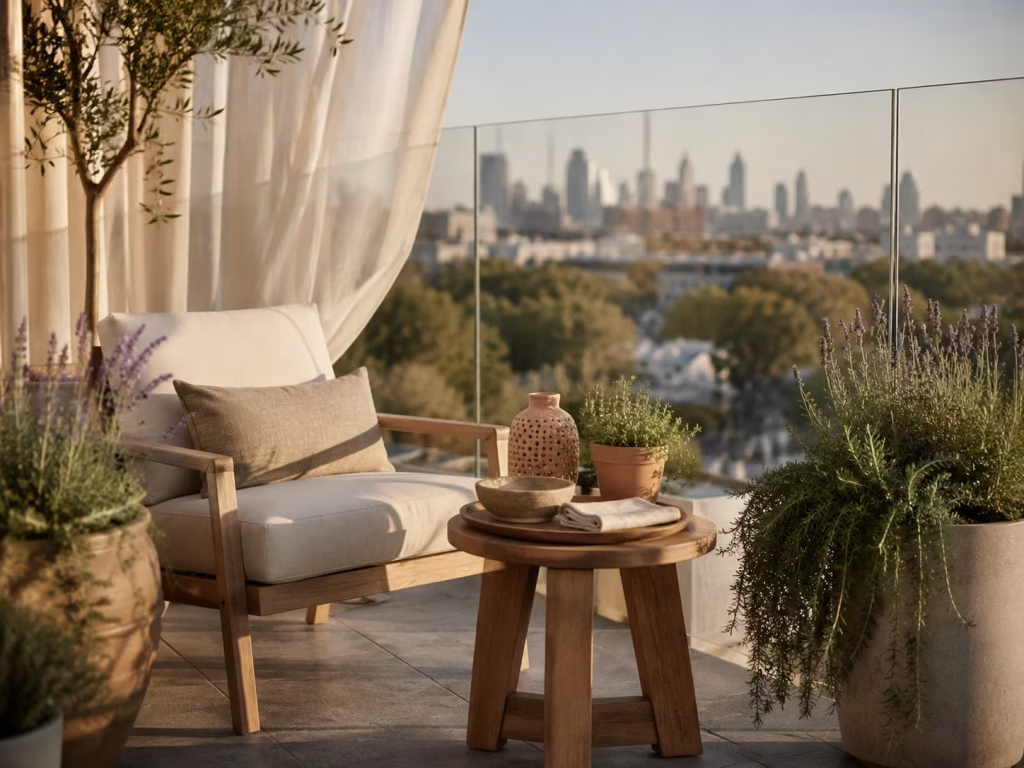
The final layer of a beautifully designed balcony is rarely the furniture or planting. More often, it is the carefully chosen accessories that give the space its personality. A handcrafted lantern, a textured ceramic bowl, a woven basket, or a simple candle holder can introduce warmth and character that make the balcony feel uniquely yours. Yet these finishing touches require a careful hand. On a compact balcony, it is remarkably easy to cross the line between thoughtfully styled and visually crowded.
One principle has guided almost every outdoor project I have completed. Accessories should support the overall design, not compete for attention. The most memorable balconies are not filled with decorative objects from corner to corner. Instead, every item feels intentional, as though it has quietly earned its place over time.
I often remind homeowners that beautiful styling is not about displaying everything you love at once. It is about knowing what to leave out. Sometimes, less really does say more, particularly when space is limited.
Create Styling Balance Through Thoughtful Composition
A balanced arrangement feels calm because the eye can move comfortably across the space without constantly stopping at competing focal points.
Rather than scattering decorative items across every available surface, group them into small collections with a clear relationship to one another. For example, a simple combination might include:
- A ceramic lantern.
- A small potted herb.
- A textured tray.
- A candle holder.
Together, these pieces create one cohesive vignette instead of four unrelated objects. When styling shelves or side tables, I often rely on the principle of visual hierarchy. Allow one object to become the focal point while supporting pieces remain quieter in scale. Varying height also creates greater interest.
A taller lantern beside a lower ceramic bowl and a compact planter naturally guides the eye through the arrangement without making it feel forced. Like a well-composed photograph, balance comes from proportion rather than quantity.
Avoid Clutter by Giving Every Piece a Purpose
Clutter rarely appears all at once. It usually builds slowly as small decorative purchases accumulate over time. On compact balconies, every additional object occupies not only physical space but also visual space. Too many accessories can make the balcony feel smaller, busier, and surprisingly less comfortable.
Before introducing a decorative item, I encourage homeowners to ask one simple question.
Does this improve the experience of using the balcony, or is it simply filling an empty space?
The best accessories often perform more than one role. Examples include:
- Lanterns that provide evening lighting.
- Decorative baskets that conceal gardening supplies.
- Trays used for serving drinks.
- Ceramic pots that display seasonal herbs.
- Sculptural stools that double as side tables.
When objects contribute both beauty and function, the balcony feels carefully considered rather than overstyled. Every item should have a reason to be there.
Refresh the Balcony Through Seasonal Rotation
One of the easiest ways to keep a balcony feeling fresh is by rotating accessories throughout the year instead of continually adding new ones. This approach prevents decorative collections from becoming overcrowded while allowing the space to reflect the changing seasons naturally.
For summer, I often introduce:
- Linen table runners.
- Woven lanterns.
- Blue or sandy-toned ceramics.
- Fresh flowers.
- Lightweight outdoor candles.
As autumn arrives, those pieces might give way to:
- Richer ceramic tones.
- Textured woven baskets.
- Warm candlelight.
- Dried grasses.
- Heavier outdoor throws.
Because only a handful of accessories are displayed at any one time, each piece receives the attention it deserves. Seasonal rotation also helps preserve decorative items by reducing prolonged exposure to sunlight and changing weather conditions.
Instead of continually buying more, you simply rediscover pieces you already own.
Let Natural Materials Become the Decoration
Accessories do not always need bold colours or intricate patterns to make an impact. Some of the most elegant balconies rely almost entirely on natural materials. Consider introducing elements such as:
- Handwoven baskets.
- Stone bowls.
- Terracotta vessels.
- Timber trays.
- Linen napkins.
- Ceramic planters with subtle glazing.
These materials develop character gradually and sit comfortably alongside planting, outdoor furniture, and architectural finishes. Their understated appearance also allows seasonal flowers and surrounding greenery to remain the visual focus. When every object competes for attention, nothing truly stands out.
Leave Space for the Balcony to Breathe
One of the most overlooked aspects of styling is empty space. Not every shelf needs decoration. Not every table requires an arrangement. Not every corner needs filling.
Those quieter areas provide visual breathing room, allowing the carefully selected accessories to feel more important. I often compare this to pauses in music. Silence between notes gives the melody its rhythm. Likewise, open space between decorative objects allows the overall composition to feel calm and effortless.
On compact balconies especially, restraint often creates a stronger impression than abundance.
A Balcony That Felt Better After Removing Accessories
I once worked with homeowners who had gradually filled their apartment balcony with decorative pieces collected over several years. Lanterns, sculptures, candles, planters, ornaments, and small tables occupied nearly every available surface.
Interestingly, the balcony contained many beautiful objects. The problem was that they were all trying to speak at the same time.
Instead of purchasing anything new, we simply edited the collection. Roughly half the accessories were removed and stored for future seasonal use. The remaining pieces were grouped into smaller compositions, leaving generous open areas around the seating and planting.
The transformation was immediate. The balcony suddenly felt larger, calmer, and considerably more sophisticated. Individual accessories became easier to appreciate because they were no longer competing with dozens of neighbouring objects.
That project reinforced one of the most valuable lessons I have learned as a designer. Editing is often just as important as decorating. Knowing what to remove is every bit as valuable as knowing what to add.
Pros
- Creates a refined, thoughtfully curated appearance.
- Prevents compact balconies from feeling visually crowded.
- Seasonal rotation keeps the space feeling fresh throughout the year.
- Multifunctional accessories improve both beauty and practicality.
- Highlights the quality of individual decorative pieces rather than overwhelming the space.
- Encourages a timeless style that is easy to update without major expense.
Cons
- Requires discipline to avoid collecting too many decorative items.
- Seasonal accessories need suitable indoor storage.
- Minimal styling can feel incomplete if balance is not carefully considered.
- Outdoor accessories still require occasional cleaning and maintenance.
- Lower-quality decorative pieces may fade or deteriorate after prolonged weather exposure.
You May also Like: 25 Japandi Balcony Design: Calm Minimalism and Cozy Natural Textures
Design the Balcony as an Extension of the Interior
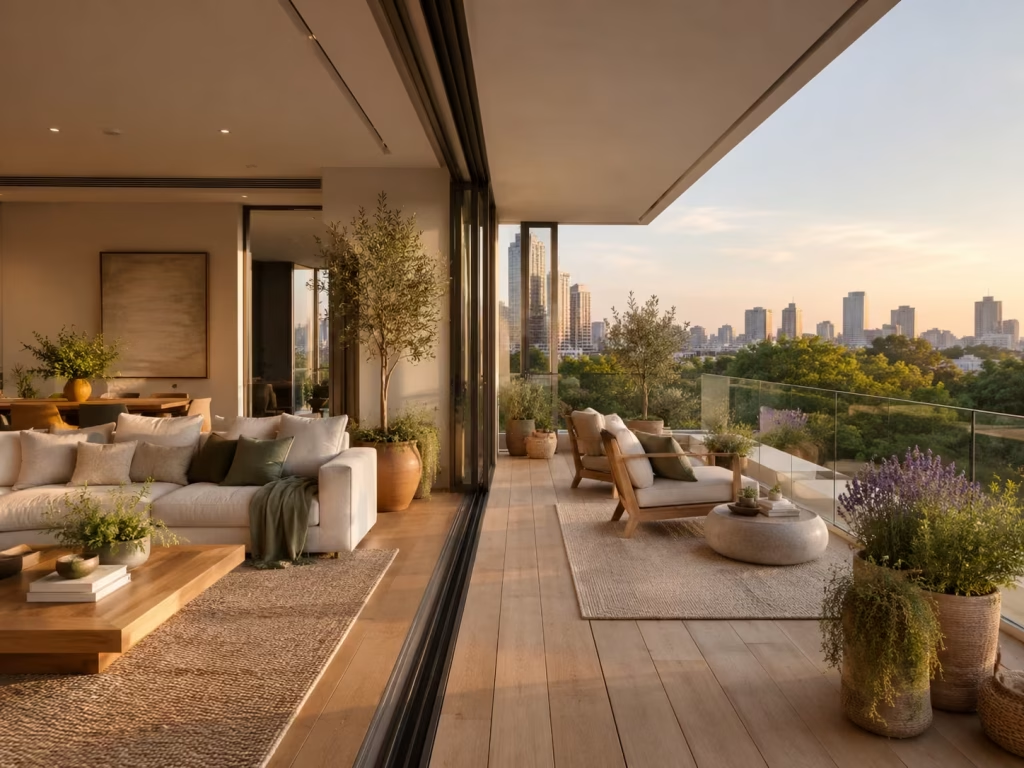
The most memorable balconies never feel like isolated outdoor platforms attached to a home. Instead, they read as natural continuations of the rooms behind them. When the transition between inside and outside is thoughtfully designed, even a modest balcony begins to feel like an additional living area rather than a separate destination. The boundaries soften, the available space seems to expand, and everyday life flows more naturally from one setting to the next.
This principle has become increasingly important in modern homes where every square metre carries real value. Rather than treating the balcony as an occasional retreat used only during perfect weather, I encourage homeowners to think of it as another room with a different ceiling. The sky replaces plaster, fresh air replaces conditioned air, and planting replaces artwork, yet the design language should remain familiar.
Throughout my residential projects, I have found that this simple shift in perspective often changes how people use their homes. When the balcony feels connected to the interior instead of detached from it, stepping outside becomes second nature. Morning coffee drifts outdoors, afternoon reading moves into fresh air, and evening conversations continue long after dinner without anyone feeling as though they have left the comfort of home.
Maintain a Consistent Colour Palette
Colour is one of the most effective tools for creating visual continuity. When the tones used indoors continue naturally onto the balcony, the eye reads both spaces as one larger environment. That does not mean every colour must match perfectly. Instead, allow the same family of tones to appear throughout both areas.
For example:
- Warm whites paired with natural oak and soft linen.
- Sandy neutrals complemented by olive green planting.
- Charcoal accents balanced with pale stone and timber.
- Muted blues combined with woven natural textures.
Repeating these colours across cushions, planters, outdoor rugs, ceramics, and furniture creates subtle connections without feeling repetitive. I often tell clients that colour should feel like a conversation moving from one room to another. It should continue naturally rather than beginning all over again.
This approach is particularly valuable on compact balconies because uninterrupted colour schemes reduce visual fragmentation and make the entire home feel more spacious.
Create Seamless Flooring Transitions
Few design elements influence the perception of space as much as flooring. When indoor and outdoor surfaces complement one another, the balcony immediately feels more integrated with the adjoining room.
Complete material continuity is not always practical because outdoor surfaces must withstand changing weather conditions. However, selecting finishes with similar colours, textures, or proportions creates an equally convincing result.
Some effective combinations include:
- Interior oak flooring paired with outdoor composite decking in a similar tone.
- Stone-effect porcelain tiles continuing from kitchen to balcony.
- Large-format outdoor porcelain that echoes interior flooring.
- Timber decking aligned with indoor floorboards.
Where possible, laying boards or tiles in the same direction strengthens the visual connection by encouraging the eye to travel uninterrupted from inside to outside. If the threshold between the two spaces is kept as low and unobtrusive as building regulations allow, the transition feels even more natural. Like a well-written story, the movement between rooms should feel effortless rather than abrupt.
Strengthen the Indoor-Outdoor Flow
A balcony becomes far more useful when it functions as part of everyday routines instead of remaining reserved for occasional use. Creating strong indoor-outdoor flow begins with keeping circulation simple and uncluttered. Several practical principles consistently improve movement:
- Leave clear access from the doors to the seating area.
- Avoid placing large planters immediately beside the entrance.
- Position furniture so movement feels intuitive.
- Keep frequently used accessories within easy reach.
- Ensure doors can open fully without obstruction.
Maintaining at least 75 to 90 cm (30 to 36 inches) of comfortable circulation space wherever possible helps both areas feel connected. I also like to repeat similar furniture arrangements indoors and outdoors. If the living room encourages relaxed conversation through paired seating, echoing that layout on the balcony creates an immediate sense of familiarity.
As a result, moving outside feels less like changing environments and more like continuing the same experience in fresh air.
Use Cohesive Styling to Connect Both Spaces
Styling should reinforce the architectural relationship between the interior and the balcony. Rather than introducing an entirely different decorating theme outdoors, carry selected materials, textures, and accessories across both areas. For example, consider repeating:
- Linen textiles inside and weather-resistant linen-look fabrics outside.
- Woven baskets paired with outdoor woven planters.
- Similar ceramic finishes on both sides of the doors.
- Matching timber tones across furniture.
- Consistent black, bronze, or brushed metal accents.
Artwork may remain indoors, but outdoor planting can provide an equally expressive focal point that complements the interior palette. This repetition creates subtle rhythm throughout the home without making either space feel overly coordinated. The strongest interiors rarely rely on exact matching. Instead, they build quiet relationships between materials that gradually reveal themselves over time.
Think Beyond the Balcony Itself
One lesson I have learned through years of designing homes is that a balcony should never be considered in isolation. Stand inside the adjoining room and look towards the balcony.
Ask yourself:
- Does the view feel calm and inviting?
- Do the colours connect naturally?
- Are the furniture proportions balanced?
- Does the planting complement the interior rather than compete with it?
Remember that the balcony becomes part of the interior every time the doors are open and even when they are closed. It functions as a living backdrop that influences the atmosphere of the room throughout the year. Designing with this perspective almost always produces a more harmonious result.
A Balcony That Made the Living Room Feel Larger
One of my favourite apartment projects involved a relatively narrow balcony measuring just 4.2 × 1.8 metres (13 ft 9 in × 5 ft 11 in). Although the outdoor space itself was modest, it sat directly beside a bright living room with large sliding glass doors.
Instead of treating the balcony as a separate project, we approached both spaces as one continuous environment. Warm oak flooring indoors was paired with composite decking in a closely matched tone. The same palette of soft linen, olive green, and textured stone appeared in both areas, while woven accessories and timber furniture quietly echoed one another across the threshold. When the doors were opened, the distinction between interior and exterior almost disappeared.
Months later, the homeowners shared something that perfectly captured the success of the design. They said the apartment no longer felt as though it ended at the glass doors. It felt as though the living room simply continued beneath the open sky.
That is ultimately the goal of thoughtful balcony design. It is not about creating a beautiful outdoor corner in isolation. It is about allowing the entire home to feel larger, calmer, and more connected through carefully considered design decisions
Pros
- Makes compact homes feel noticeably larger.
- Creates a stronger visual connection between indoor and outdoor spaces.
- Encourages more frequent everyday use of the balcony.
- Produces a timeless, cohesive design throughout the home.
- Improves the overall sense of flow and spatial continuity.
- Adds long-term value by treating the balcony as functional living space.
Cons
- Requires careful planning to coordinate materials and colours.
- Outdoor flooring must remain suitable for local weather conditions.
- Matching high-quality finishes across both spaces can increase project costs.
- Cohesive styling requires restraint to avoid an overly uniform appearance.
- Threshold details may be influenced by building regulations and drainage requirements.
Before You Begin: Design Principles That Make Small Balconies Feel Bigger
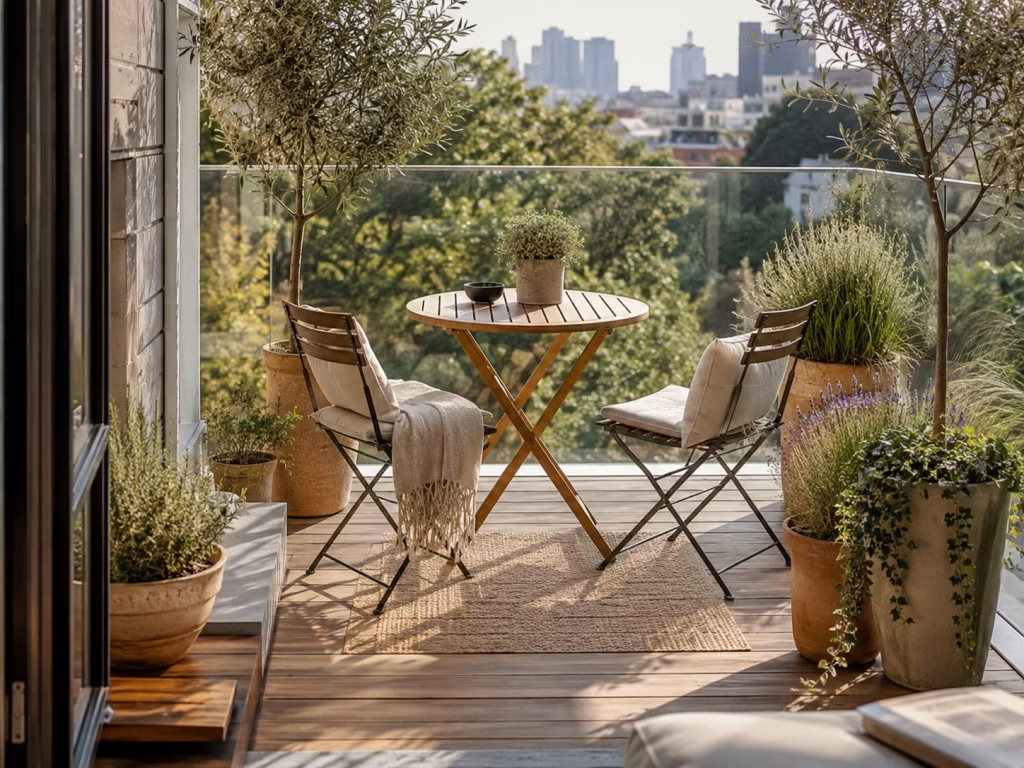
Before choosing furniture, planting schemes, or decorative accessories, it is worth stepping back to consider how a small balcony should actually function. Many homeowners believe that making a compact outdoor space feel larger depends on buying smaller furniture or adding clever storage. While those choices certainly help, they rarely solve the underlying issue on their own.
The balconies that leave a lasting impression are designed around a few timeless principles rather than a long shopping list. They feel open because every element has a purpose. They feel comfortable because movement has been carefully considered. They feel inviting because materials respond beautifully to changing summer conditions instead of fighting against them.
Over the years, I have worked on balconies measuring less than 3 square metres (32 square feet) that felt remarkably spacious, while others twice the size still appeared cramped. The difference almost always came down to planning rather than square footage. Once these design foundations are in place, every decorating decision becomes easier, and every piece you introduce contributes to a more harmonious outdoor retreat.
Think in Functional Zones Rather Than Square Metres
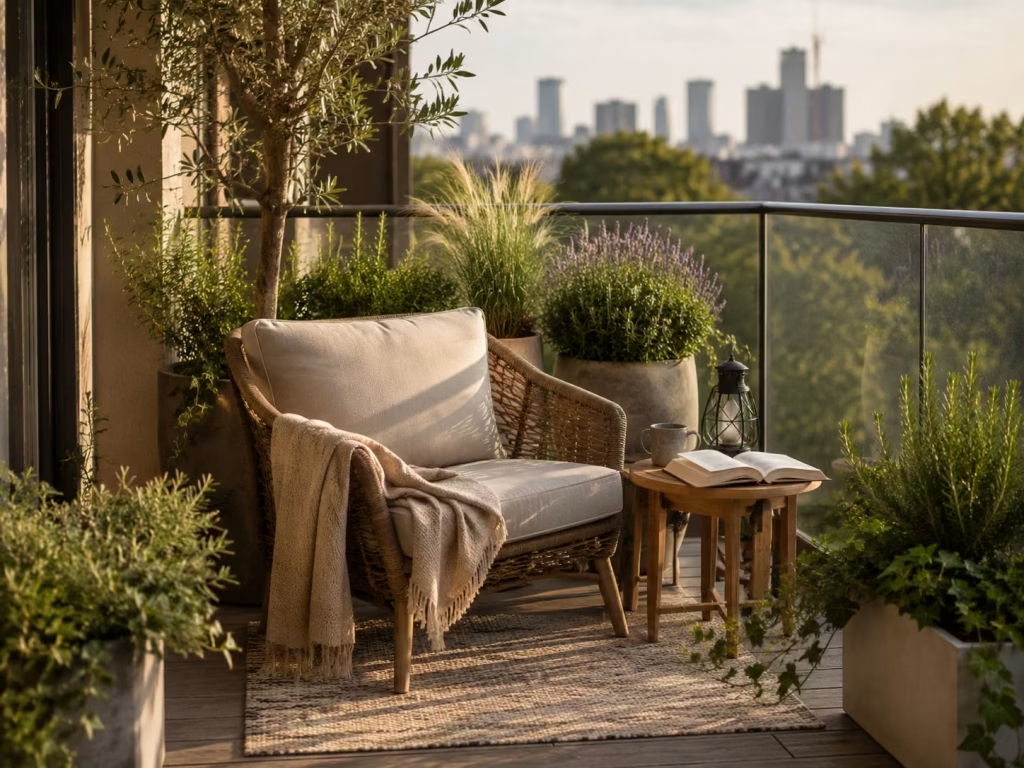
One of the biggest misconceptions about compact balconies is that they are simply too small to do very much. In reality, the problem is rarely the size itself. More often, it is the absence of a clear purpose.
Instead of viewing the balcony as one single area, divide it mentally into functional zones based on how you actually intend to use it. Even the smallest outdoor spaces can comfortably support one or two carefully planned activities.
Ask yourself simple questions such as:
- Will this primarily be a place to enjoy morning coffee?
- Do you want somewhere to read during the evening?
- Will you occasionally entertain friends?
- Is gardening your highest priority?
Once the main purpose becomes clear, every design decision begins to fall naturally into place.
For example:
- A reading balcony benefits from a comfortable lounge chair, layered lighting, and a small side table.
- A dining balcony prioritises compact seating and serving space.
- A garden-focused balcony allocates more room for planting while keeping furniture light and movable.
Avoid trying to make one tiny balcony perform five different roles simultaneously. As the saying goes, if you chase two rabbits, you catch neither. Giving the space a clear identity almost always produces a calmer and more satisfying result.
Prioritise Comfort Before Decoration
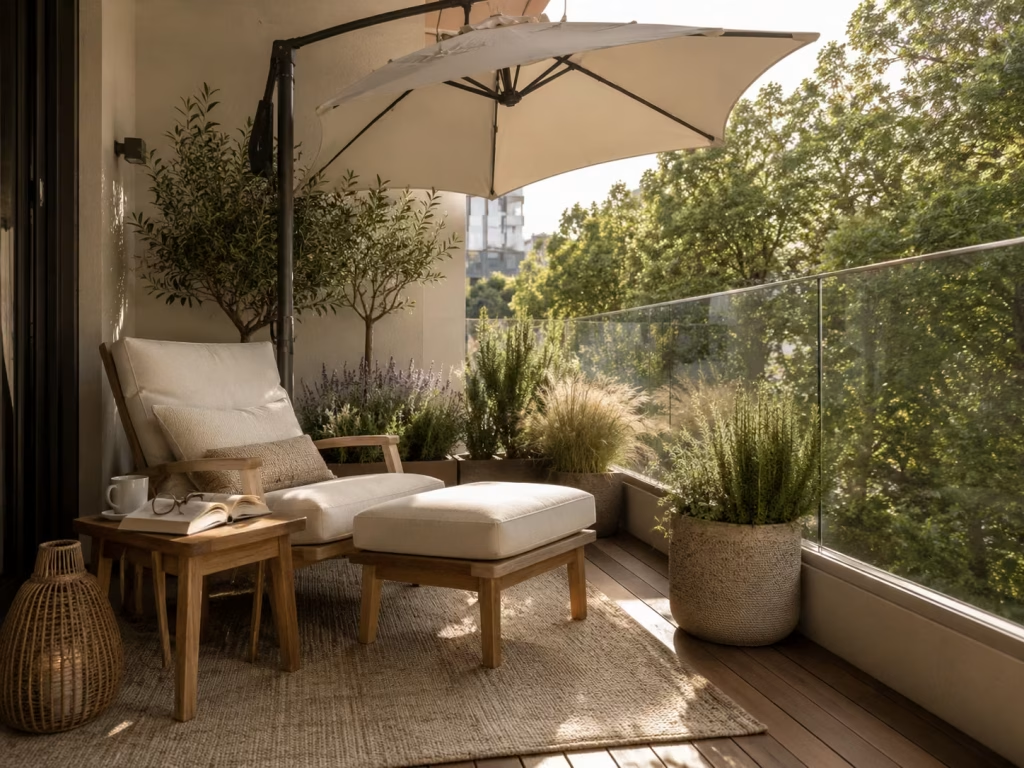
Beautiful styling may capture attention for a moment, but comfort is what keeps people returning day after day.
I often see balconies filled with decorative accessories while overlooking the features that genuinely improve everyday use. Attractive lanterns, colourful cushions, and sculptural planters certainly have their place, but they should never come before comfortable seating, practical circulation, or protection from the weather. Start by asking whether the balcony encourages you to spend time outdoors.
Consider:
- Is the seating supportive enough for an hour rather than ten minutes?
- Can you comfortably place a drink or book nearby?
- Is there enough shade during hot afternoons?
- Does the furniture allow people to move around easily?
Maintain approximately 75 to 90 cm (30 to 36 inches) of clear circulation wherever possible so movement feels effortless instead of awkward.
In many of my residential projects, improving comfort alone has dramatically increased how often homeowners use their balconies. Once the fundamentals are right, decorative layers become far more meaningful because they enhance an already successful space instead of compensating for an uncomfortable one.
Choose Materials That Improve With Summer Weather
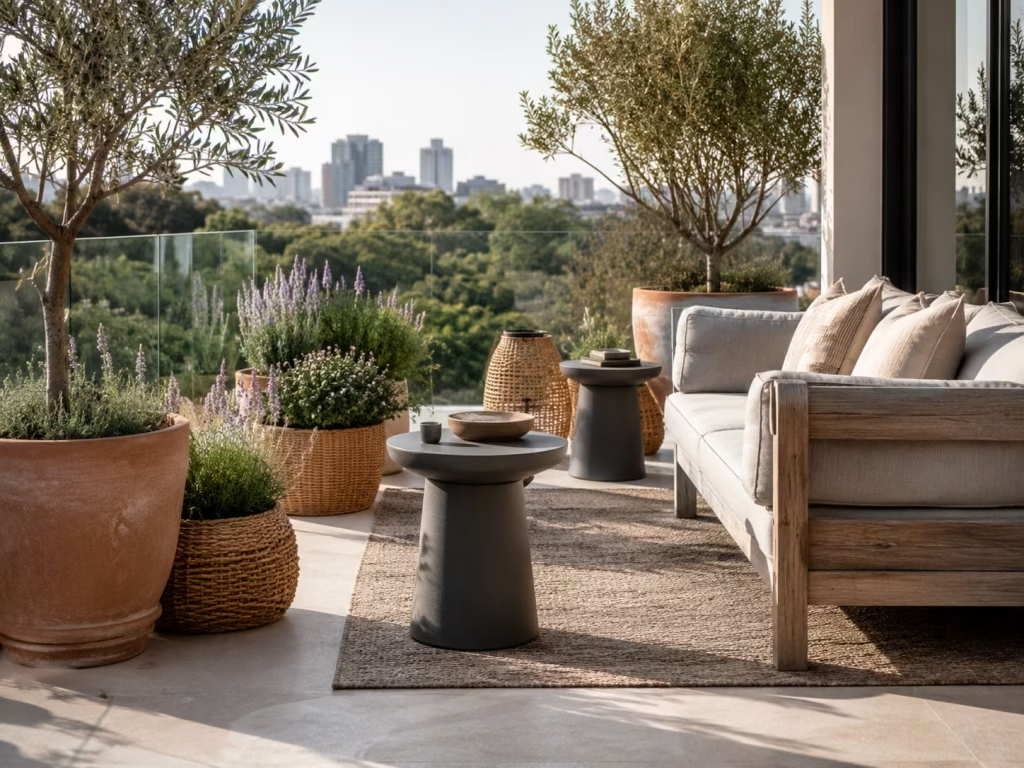
Outdoor materials should not simply survive the season. They should become more beautiful as summer unfolds. Sunlight, changing temperatures, occasional rain, and daily use all influence how materials perform over time. Choosing finishes that age gracefully ensures the balcony continues looking inviting long after the initial installation.
Some of my preferred materials include:
- Teak, which gradually develops a beautiful silvery patina.
- Powder-coated aluminium that resists corrosion with minimal maintenance.
- Porcelain paving that tolerates heat and moisture exceptionally well.
- Outdoor performance fabrics that resist fading and dry quickly.
- Terracotta planters that develop subtle character as they weather naturally.
Natural materials often improve through gentle ageing rather than deteriorating. At the same time, avoid finishes that demand constant maintenance or become uncomfortable during warm weather. Dark metal furniture exposed to direct afternoon sun, for example, may become surprisingly hot, while low-quality plastics often fade after prolonged UV exposure.
Selecting durable materials from the outset allows the balcony to mature gracefully instead of requiring continual replacement.
Balance Shade, Light and Airflow
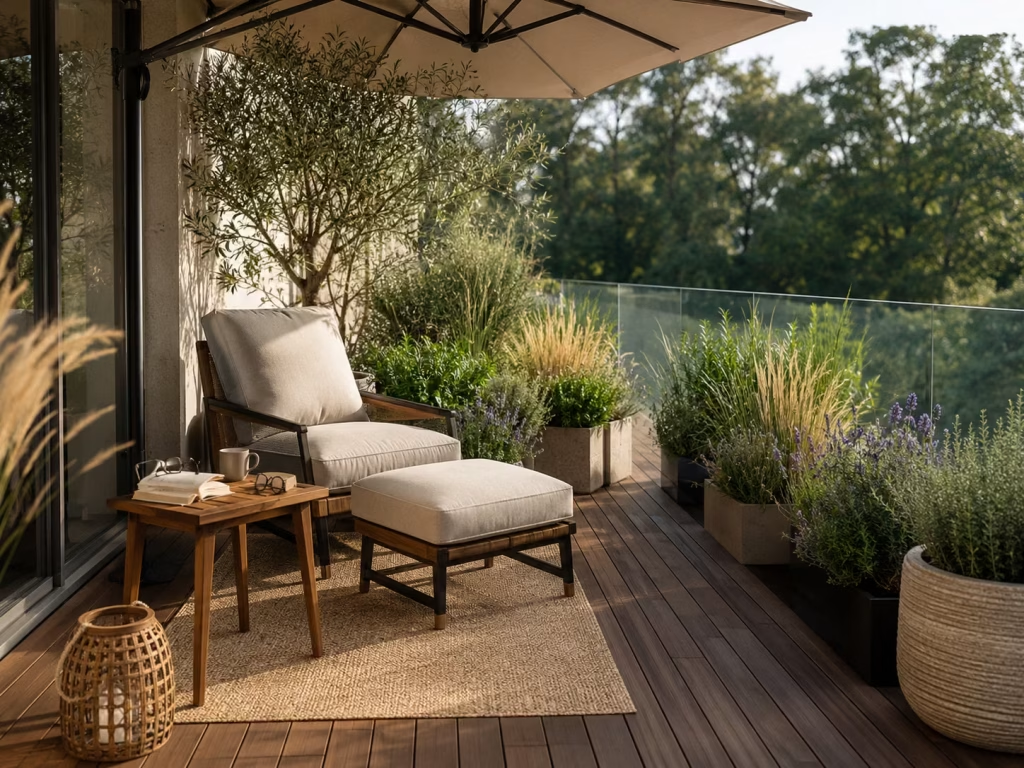
Many homeowners focus almost entirely on furniture while forgetting that climate ultimately determines how comfortable a balcony feels. A successful outdoor space carefully balances three essential elements:
- Shade that protects from intense sunlight.
- Natural light that keeps the balcony bright and welcoming.
- Airflow that prevents the space from becoming hot and stagnant.
These qualities should work together rather than compete with one another. For example, a cantilever umbrella may provide welcome afternoon shade while still allowing cooling breezes to pass beneath the canopy. Lightweight outdoor curtains can soften harsh sunlight without completely blocking ventilation. Layered evening lighting extends usability without overwhelming the peaceful atmosphere created by dusk.
Before purchasing anything, spend several days observing how sunlight and wind behave throughout the day.
Notice:
- Which areas receive morning sunshine.
- Where afternoon heat becomes strongest.
- How breezes move through the balcony.
- Which corners remain naturally sheltered.
Design that responds to these conditions will always outperform design that ignores them. Working with nature instead of against it often feels like taking the wind out of the problem’s sails.
Work With the Architecture Instead of Fighting It
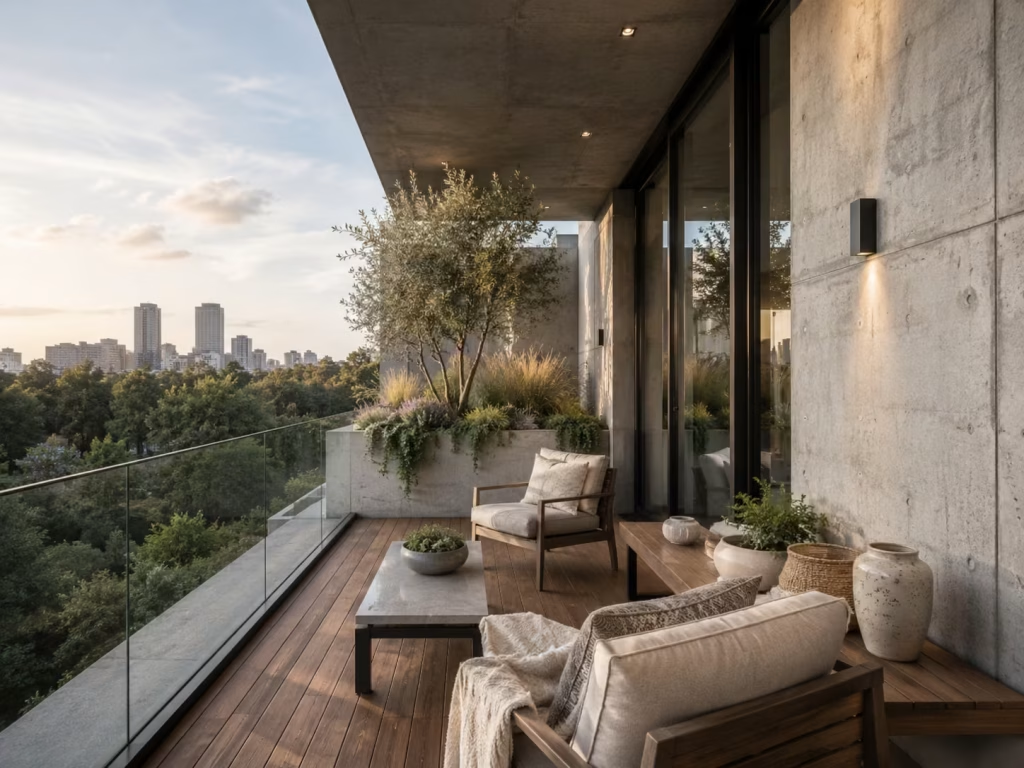
Every balcony has architectural characteristics that deserve to influence the design. Rather than trying to disguise narrow proportions, awkward corners, or structural columns, allow them to guide the overall layout.
For instance:
- Long balconies often suit linear furniture arrangements.
- Corner balconies naturally accommodate built-in seating.
- Deep balconies may comfortably support distinct functional zones.
- Recessed balconies usually provide opportunities for integrated lighting and storage.
Likewise, pay attention to existing architectural materials. Concrete, brick, timber, steel, and glass each suggest different design directions. Echoing these materials through furniture and accessories creates a stronger sense of continuity than introducing completely unrelated finishes.
Some of the most elegant balconies I have designed relied less on adding new elements and more on highlighting the strengths already present within the architecture. Good design rarely wins by overpowering the building. It succeeds by working alongside it.
The Biggest Mistakes Homeowners Make on Small Balconies
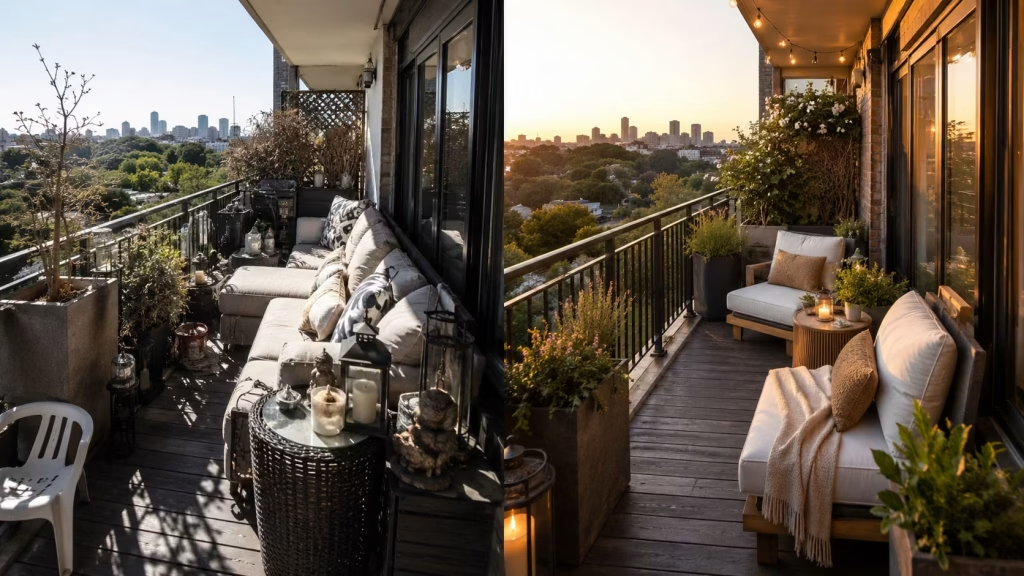
After designing outdoor spaces for many years, I have noticed that the same mistakes appear repeatedly, regardless of location or budget. Fortunately, they are usually easy to avoid once recognised.
The most common include:
- Buying oversized furniture before measuring the balcony.
- Filling every corner with decorative accessories.
- Blocking valuable views with tall planting.
- Ignoring circulation between furniture pieces.
- Choosing materials that deteriorate quickly in direct sunlight.
- Forgetting the importance of evening lighting.
- Prioritising appearance while overlooking comfort.
- Trying to copy large garden layouts on a compact balcony.
One project stands out in particular. A homeowner had purchased an expensive outdoor sofa after seeing it styled in a showroom. Although the furniture looked beautiful, it occupied almost the entire balcony, leaving barely enough room to walk around it. We replaced it with two lighter modular chairs, introduced layered planting, and created a much clearer circulation path. The balcony immediately felt larger despite containing nearly the same amount of furniture.
That experience reinforced something I have learned repeatedly throughout my career. Small balconies rarely become successful because more has been added. They succeed because every decision has been made with greater intention.
Once these design principles become the foundation of your project, decorating becomes far more rewarding. Instead of searching for ways to make a small balcony appear larger, you begin creating a space that genuinely lives larger every single day.
Material Guide: What Performs Best on a Summer Balcony?
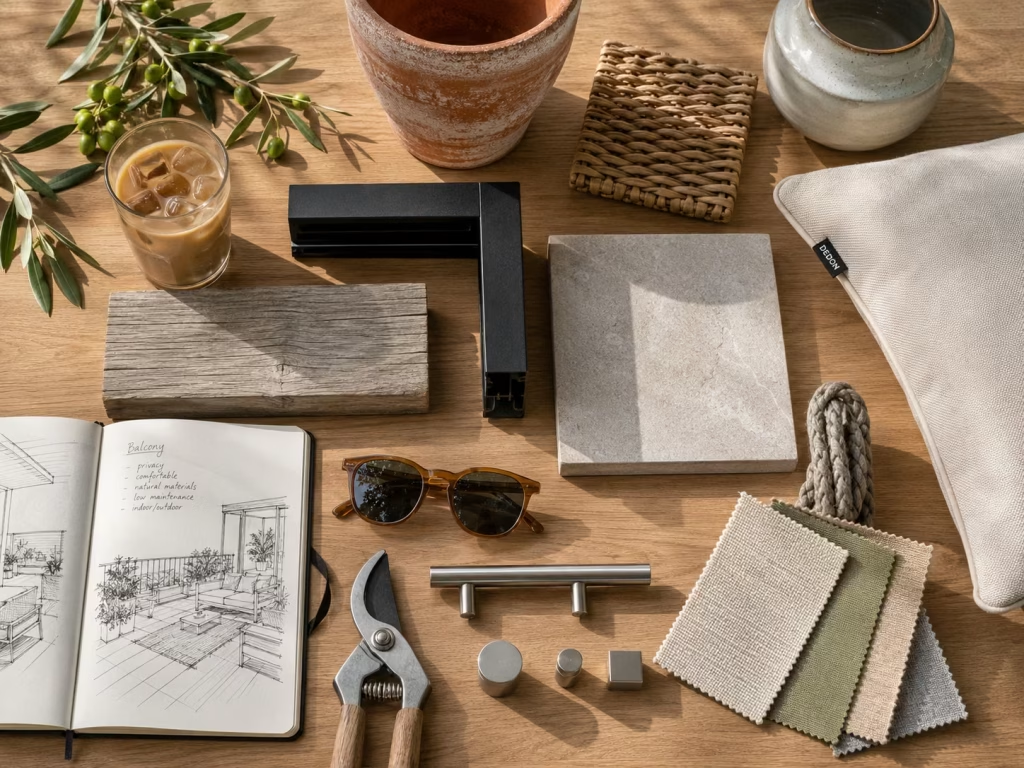
A beautiful balcony is only as successful as the materials behind it. Summer brings long hours of sunshine, rising temperatures, occasional rain showers, changing humidity, and constant outdoor use. While colour palettes and styling trends may evolve from year to year, the materials you choose determine whether your balcony continues looking inviting after one season or remains beautiful for many summers to come.
One of the biggest mistakes I see is homeowners selecting outdoor products based almost entirely on appearance. A chair may look elegant in a showroom, yet warp after months of direct sunlight. Decorative planters might suit the colour scheme perfectly but begin fading before the end of summer. Outdoor fabrics can appear luxurious until the first unexpected shower leaves them damp for days.
Over the years, I have learned that high-quality outdoor spaces are built from materials that become trusted companions rather than constant maintenance projects. They should age gracefully, withstand changing weather, and reward regular use. When every material earns its place, the balcony begins to feel less like a seasonal display and more like a genuine extension of the home.
The following guide focuses on the materials I consistently recommend because they balance beauty, durability, and long-term performance in real residential projects.
Teak vs Acacia
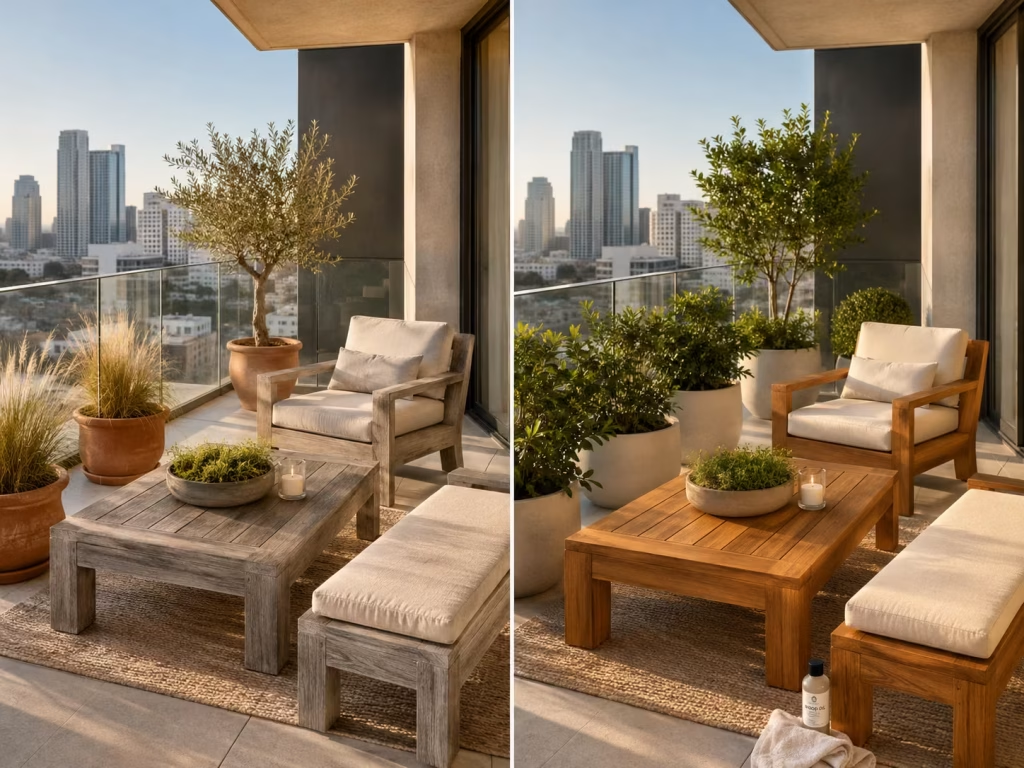
Timber immediately introduces warmth that metal and synthetic materials often struggle to replicate. It softens modern architecture, complements planting beautifully, and develops character through everyday use. Among the many hardwoods available for outdoor furniture, teak and acacia remain two of the most popular choices. Although they share certain qualities, their long-term performance differs considerably.
Teak: A Long-Term Investment
Teak has earned its reputation over decades of outdoor use. Its naturally high oil content protects the timber from moisture, insects, and seasonal weather changes without requiring constant treatment.
As teak ages, its rich golden-brown colour gradually transforms into an elegant silvery-grey patina. Many homeowners consider this weathered appearance one of its greatest strengths because it reflects years of outdoor living rather than deterioration.
I often recommend teak for balconies exposed to full summer sun because it remains remarkably stable despite repeated heating and cooling cycles. Typical advantages include:
- Exceptional durability.
- Excellent moisture resistance.
- Minimal risk of warping or cracking.
- Long lifespan with relatively low maintenance.
- Timeless appearance that suits both traditional and contemporary homes.
Quality teak furniture frequently lasts twenty years or more when properly maintained, making its higher purchase price easier to justify over time.
Acacia: Excellent Value with Extra Care
Acacia offers many of the visual qualities people appreciate in teak while remaining considerably more affordable.
Its warm grain and rich colouring create a welcoming atmosphere, particularly on contemporary apartment balconies. However, acacia generally requires more regular maintenance. To preserve its appearance, I recommend:
- Applying protective oil once or twice each year.
- Cleaning regularly to remove dirt and pollen.
- Avoiding prolonged standing water.
- Using furniture covers during extended periods of harsh weather.
Without routine care, acacia may gradually fade, dry out, or develop surface cracking more quickly than teak. For homeowners seeking a balance between budget and appearance, acacia remains an excellent option, provided ongoing maintenance becomes part of the routine.
My Recommendation
If the balcony receives strong afternoon sun or is intended as a long-term investment, I generally favour teak because of its exceptional longevity. If the project budget is tighter but regular maintenance is not a concern, acacia provides impressive value while still delivering natural warmth. Like buying a quality pair of leather boots, investing a little more upfront often pays dividends over many years of use.
Powder-Coated Aluminium
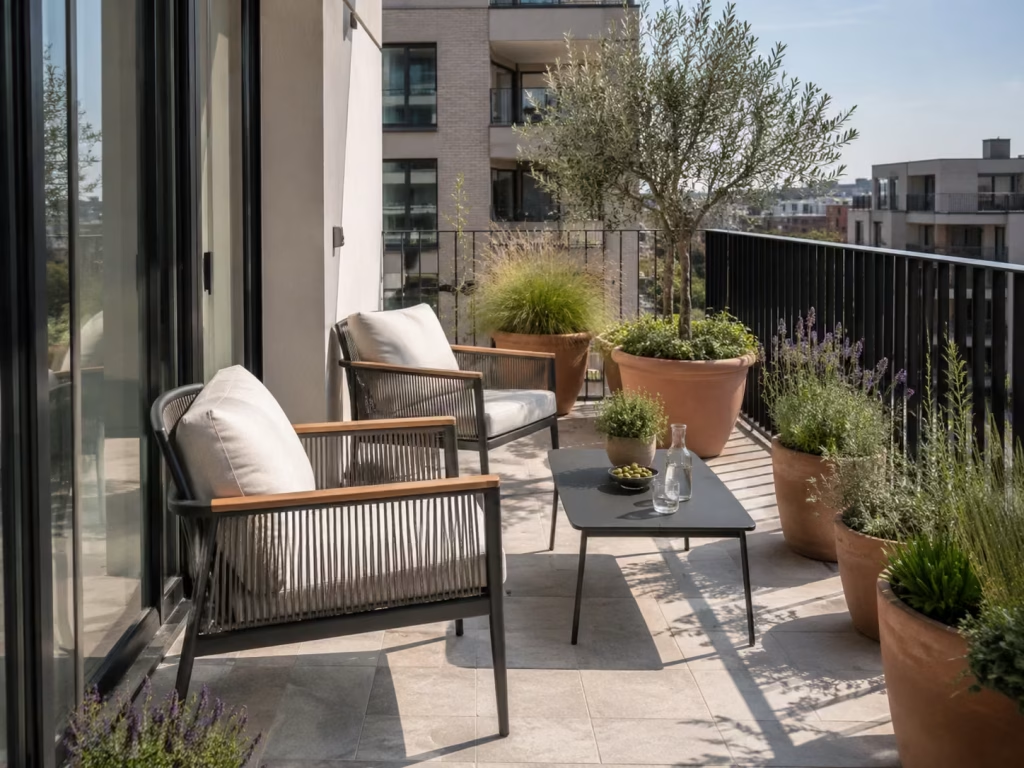
When clients ask me which metal performs most consistently on apartment balconies, powder-coated aluminium almost always tops the list. Unlike untreated steel, aluminium naturally resists corrosion. The powder-coated finish adds another protective layer that shields the surface from moisture, ultraviolet light, scratches, and everyday wear.
Because the material is lightweight, it is particularly well suited to balconies where furniture occasionally needs repositioning. Some of its greatest strengths include:
- Excellent rust resistance.
- Easy to move when rearranging layouts.
- Minimal maintenance requirements.
- Suitable for coastal and humid environments.
- Modern, slim profiles that reduce visual weight.
I frequently pair aluminium frames with teak armrests or woven rope detailing because the combination introduces warmth without sacrificing durability. Neutral finishes such as charcoal, black, warm white, and bronze also remain timeless regardless of changing outdoor design trends.
For balconies measuring 3 to 5 square metres (32 to 54 square feet), lightweight aluminium furniture often makes the space feel noticeably more open than heavier alternatives. The only minor drawback is that aluminium can become warm in direct afternoon sunlight. Performance cushions or timber accents usually solve this comfortably.
Outdoor Fabrics Worth Investing In
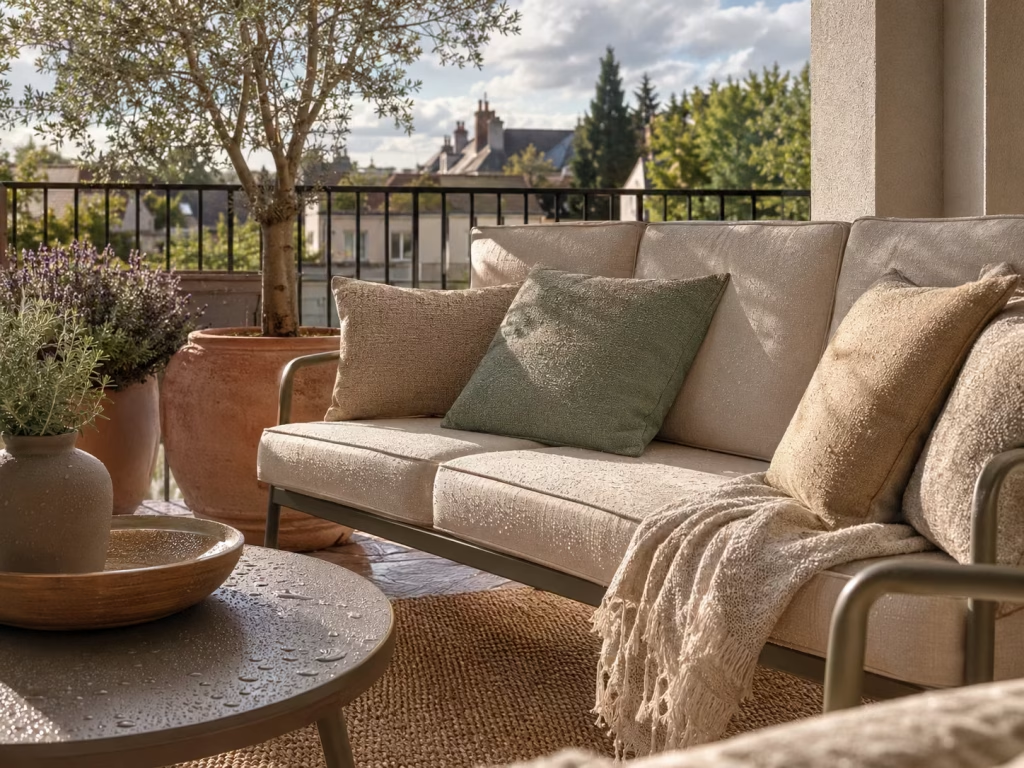
Outdoor textiles often receive less attention than furniture, yet they have an enormous influence on both comfort and longevity. Lower-quality fabrics may fade within a single season, retain moisture after rain, or become brittle following prolonged UV exposure.
Premium performance fabrics, on the other hand, continue looking fresh despite regular outdoor use. When specifying outdoor upholstery, I typically look for:
- UV-resistant fibres.
- Solution-dyed acrylic fabrics.
- Water-repellent finishes.
- Quick-drying foam cushions.
- Mould and mildew resistance.
- Removable washable covers.
These features dramatically reduce maintenance while extending the usable life of cushions and soft furnishings. From a design perspective, performance fabrics now offer remarkable variety. Textures closely resemble woven linen, cotton, or soft upholstery while delivering significantly greater durability outdoors.
I have worked on projects where premium cushions remained in excellent condition after several summers, while inexpensive alternatives required replacement after only one season. In outdoor design, buying well once is often less expensive than buying twice.
UV-Resistant Planters
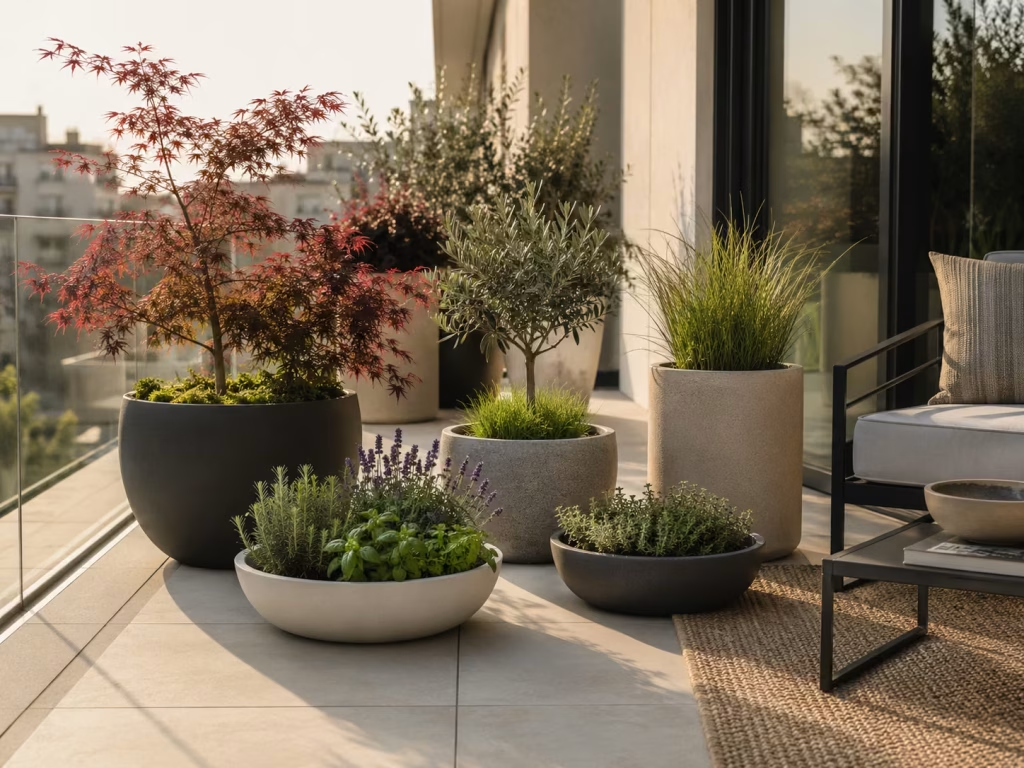
Plants may naturally attract the eye, but their containers quietly shape the overall character of the balcony. Poor-quality planters often become faded, brittle, or cracked after repeated exposure to strong summer sunshine. Instead, choose materials specifically designed for outdoor use. Excellent options include:
- Fibrestone.
- Glass fibre reinforced concrete.
- High-quality resin composites.
- UV-stabilised polyethylene.
- Frost-resistant ceramic where climate permits.
These materials remain stable despite changing temperatures while preserving both colour and structural integrity. Container size also deserves careful consideration. For healthy root development, I generally recommend:
- Herbs: 20 to 30 cm (8 to 12 inches) deep.
- Medium shrubs: 40 to 50 cm (16 to 20 inches).
- Small ornamental trees: 60 cm (24 inches) or deeper.
Larger containers also retain moisture more effectively during hot weather, reducing watering frequency throughout the summer. Choosing durable planters means your investment grows more attractive as planting matures rather than needing replacement every few seasons.
Natural Stone and Porcelain Flooring
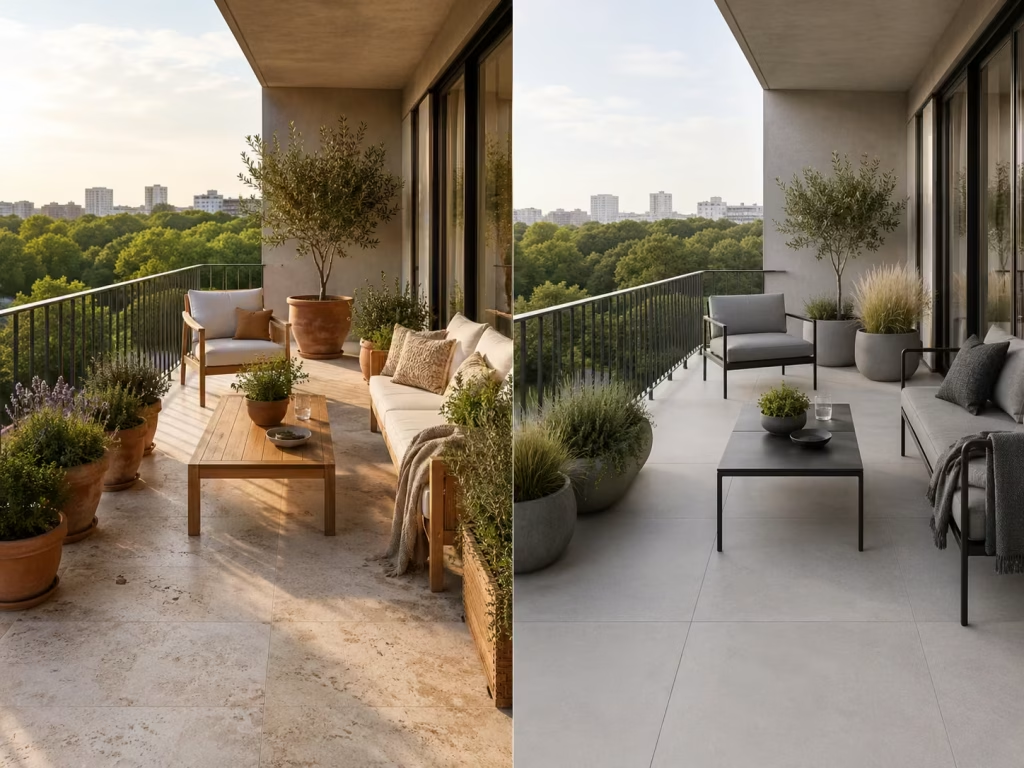
Flooring establishes the foundation for the entire balcony. It influences comfort, maintenance requirements, visual continuity, and even the perceived size of the outdoor space.
Natural Stone
Natural stone introduces richness that develops beautifully over time. Popular choices include:
- Limestone.
- Sandstone.
- Slate.
- Granite.
- Travertine.
Each possesses unique texture and colour variation, giving the balcony an authentic appearance that manufactured materials rarely replicate.
Stone also remains pleasantly cool underfoot during warm weather, making it particularly enjoyable in summer. However, natural stone generally requires periodic sealing and slightly more maintenance than porcelain.
Outdoor Porcelain
Porcelain has become one of my preferred recommendations for contemporary balconies because it combines outstanding durability with remarkably low maintenance. High-quality porcelain offers:
- UV resistance.
- Stain resistance.
- Minimal water absorption.
- Excellent slip resistance.
- Consistent colouring.
- Outstanding durability.
Many collections realistically imitate limestone, timber, concrete, or slate while providing easier long-term care. Large-format porcelain tiles measuring approximately 60 × 60 cm (24 × 24 inches) or 60 × 90 cm (24 × 36 inches) also reduce grout lines, helping compact balconies appear more spacious.
Both materials perform exceptionally well, but the choice often depends on whether homeowners prioritise natural ageing or simplified maintenance.
Weather-Resistant Decorative Accessories
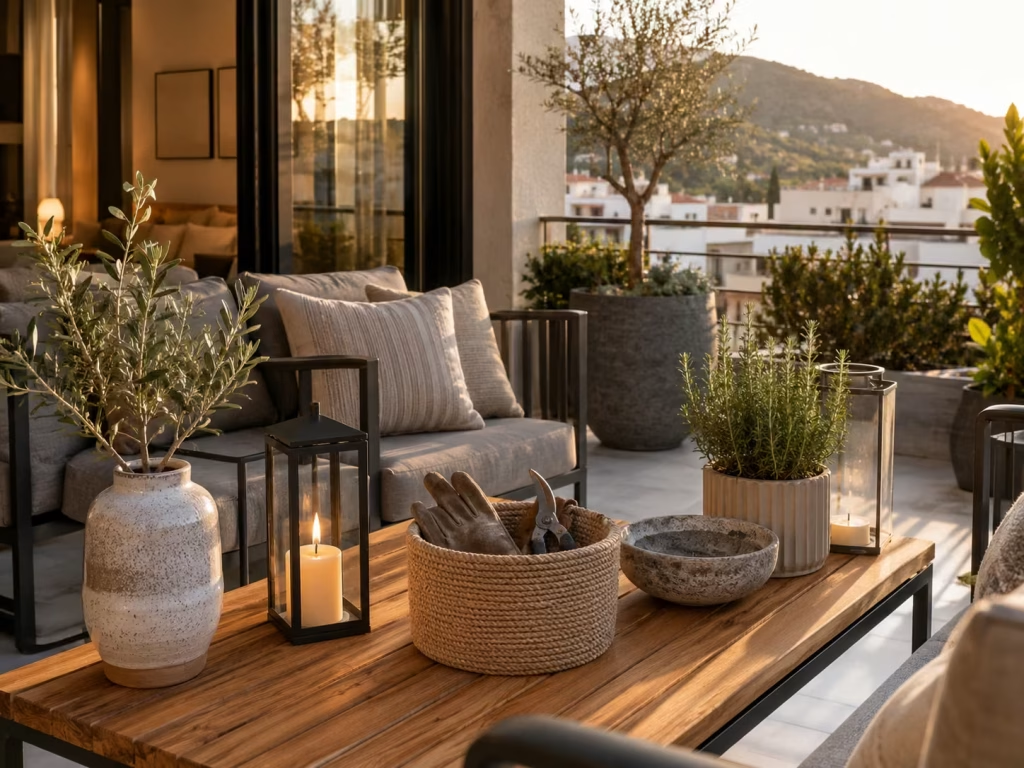
Decorative accessories provide the final layer of personality, but they should never become the weakest link in an outdoor scheme. Accessories exposed to sunlight, moisture, dust, and changing temperatures require materials capable of handling outdoor conditions. I consistently recommend:
- Powder-coated metal lanterns.
- Glazed ceramic vases.
- Woven synthetic baskets.
- Outdoor-rated candles and holders.
- Tempered glass lanterns.
- Stone or concrete decorative bowls.
- Outdoor mirrors specifically designed for exterior use.
Whenever possible, choose accessories that combine beauty with function. For example:
- Lanterns that provide evening illumination.
- Decorative trays for serving drinks.
- Storage baskets that organise gardening tools.
- Ceramic vessels that double as herb planters.
Multifunctional pieces reduce clutter while increasing practicality, which is especially valuable on compact balconies.
One project I completed several years ago perfectly demonstrated this principle. Rather than filling a narrow balcony with numerous decorative ornaments, we selected only a handful of weather-resistant accessories made from ceramic, powder-coated aluminium, and woven synthetic fibre. Years later, those same pieces continue looking almost identical despite constant outdoor exposure.
That project reminded me of something I return to time and again. Great balcony design is rarely about chasing seasonal trends. It is about choosing materials that quietly improve everyday life, continue performing year after year, and grow more beautiful through regular use.
Summer Colour Palettes That Make Small Balconies Feel Larger
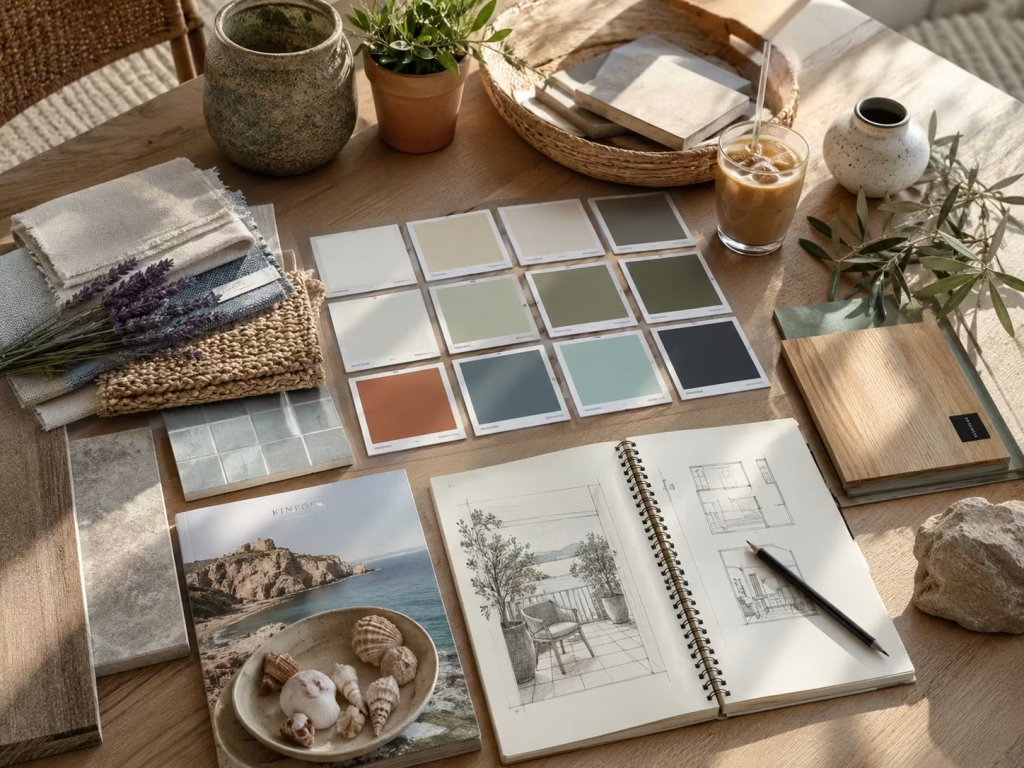
Colour is often the first thing people think about when refreshing a balcony for summer, yet it is also one of the most misunderstood design tools. Many homeowners focus on choosing fashionable shades without considering how colour changes the perception of space, light, and proportion. On a compact balcony, the right palette can make boundaries feel softer, encourage natural light to travel further, and create an atmosphere that feels noticeably more open. A poor colour scheme, on the other hand, can make the same space appear enclosed long before a single piece of furniture is added.
What I enjoy most about designing small balconies is seeing how subtle shifts in colour completely transform the experience of using them. I have worked on balconies where nothing changed except the palette, yet the finished result felt brighter, calmer, and considerably larger. Colour quietly influences how materials interact, how planting stands out, and even how comfortable a space feels during the hottest days of summer.
Rather than chasing seasonal trends that quickly lose their appeal, I encourage homeowners to build their palette around timeless combinations inspired by nature. Coastal landscapes, Mediterranean villages, limestone cliffs, olive groves, and weathered timber have refined these colours over centuries. They continue to work because they feel authentic rather than manufactured.
The following palettes consistently perform well in residential projects because they create visual continuity, complement natural light, and remain elegant long after the latest decorating trend has faded.
Soft Mediterranean Neutrals
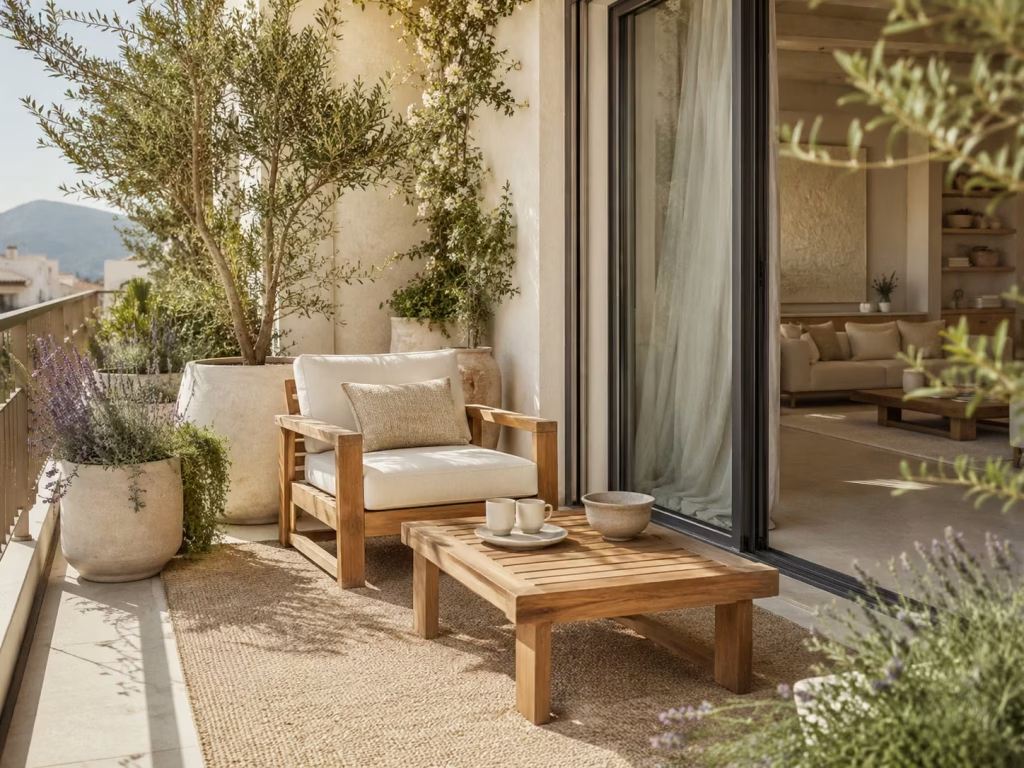
There is a reason Mediterranean homes have remained admired for generations. Their colours are shaped by climate, sunlight, and natural materials instead of passing fashion. Warm whites, creamy limestone, soft taupe, muted clay, and gentle ivory create an effortless calm that immediately makes a balcony feel brighter and more spacious.
These colours reflect sunlight instead of absorbing it, helping compact outdoor areas remain visually light even during intense summer afternoons. They also allow surrounding greenery to become more vibrant, creating contrast without introducing unnecessary visual noise.
I often combine:
- Warm white outdoor cushions.
- Limestone-toned porcelain flooring.
- Natural oak or teak furniture.
- Light beige performance fabrics.
- Soft cream ceramics.
The result feels relaxed, welcoming, and quietly sophisticated. Like a linen shirt that never falls out of favour, Mediterranean neutrals possess a timeless quality that improves with age rather than feeling dated after a few seasons.
Coastal Blue and White
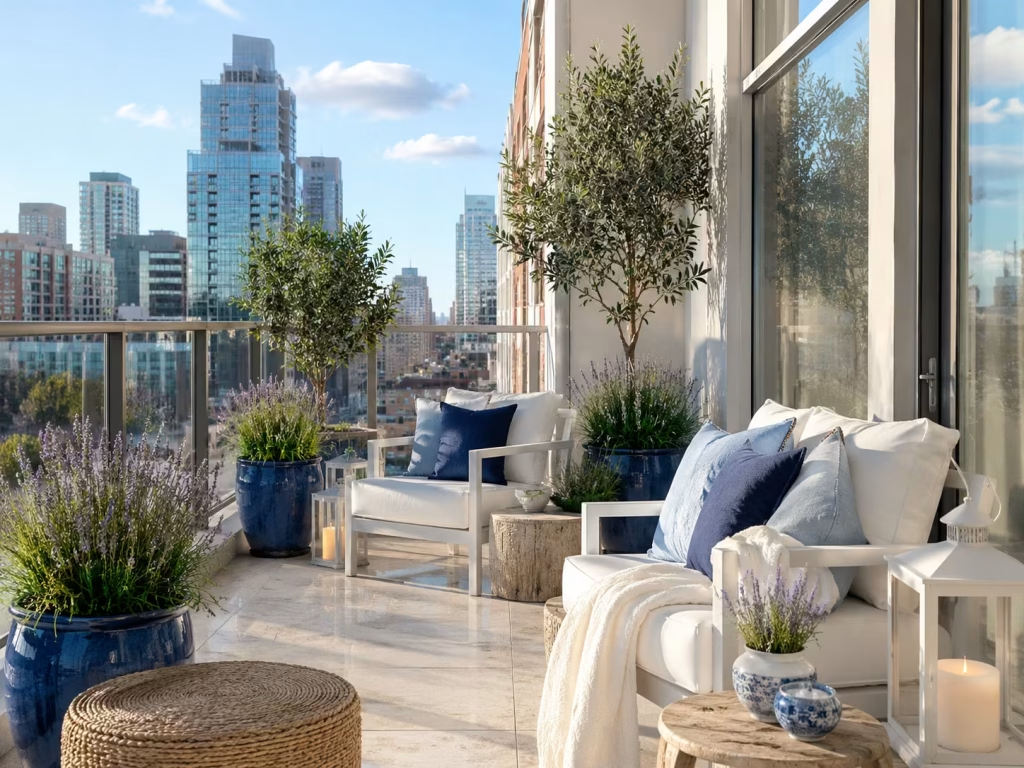
Few colour combinations capture the spirit of summer quite like blue and white. Inspired by sea, sky, and fresh coastal air, this pairing naturally introduces brightness while maintaining a crisp, uncluttered appearance.
The secret lies in balance. Rather than relying on bold navy everywhere, layer several shades of blue against soft white backgrounds.
Consider combining:
- White outdoor upholstery.
- Pale sky-blue cushions.
- Deep navy accent pillows.
- Blue glazed ceramic planters.
- White lanterns.
- Driftwood or pale timber furniture.
This layered approach creates depth while preserving visual openness One apartment balcony I redesigned overlooked a busy city street rather than the coast, yet the introduction of coastal colours completely changed its atmosphere. Homeowners later told me the balcony felt like a small holiday retreat tucked above the city, despite the surrounding urban skyline remaining exactly the same.
That is the quiet power of colour. It changes how a place feels long before it changes how it looks.
Botanical Greens
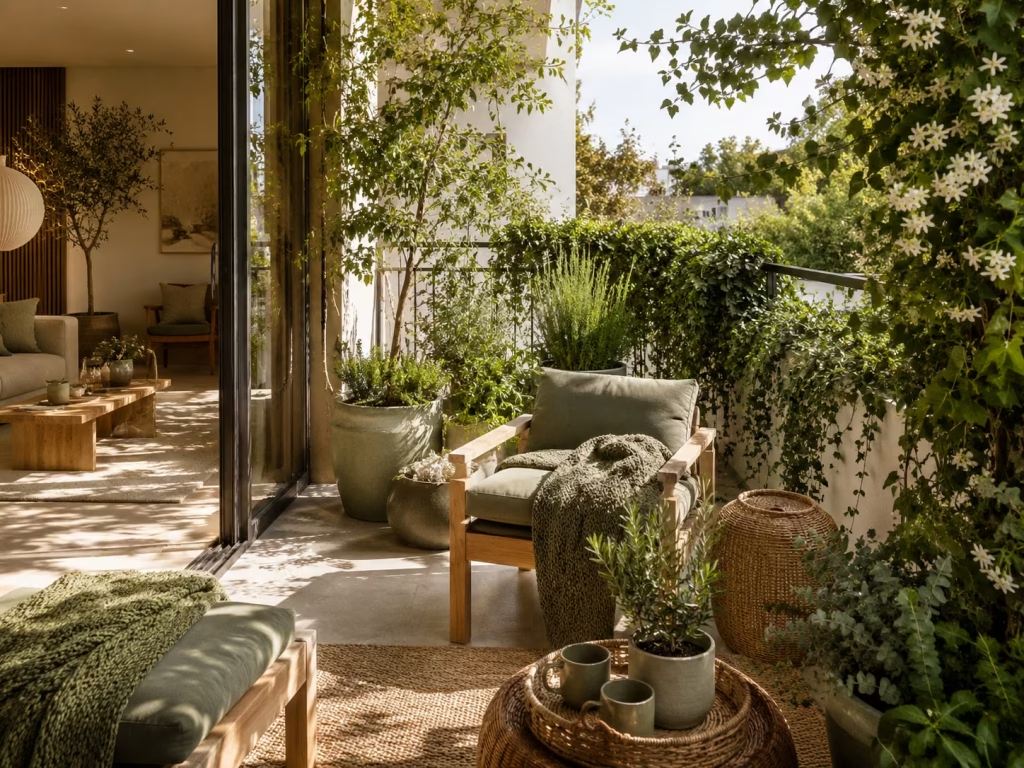
Green may already exist in surrounding planting, but repeating it throughout the balcony strengthens the connection between architecture and nature.Botanical greens feel particularly effective because they blur the distinction between furniture, planting, and landscape. Instead of creating sharp contrasts, they encourage everything to work together as one composition.
I often layer several shades rather than relying on a single tone. For example:
- Olive green cushions.
- Deep forest accessories.
- Soft moss-coloured throws.
- Sage planters.
- Fresh herbs and leafy foliage.
Combining different greens introduces remarkable depth without making the balcony appear busy. Natural timber and woven textures further soften the palette, allowing the planting to remain the visual centrepiece.
Green also has an unusually calming psychological effect. Spending time surrounded by layered botanical tones often feels restorative, making the balcony somewhere people naturally choose to linger.
Earthy Terracotta
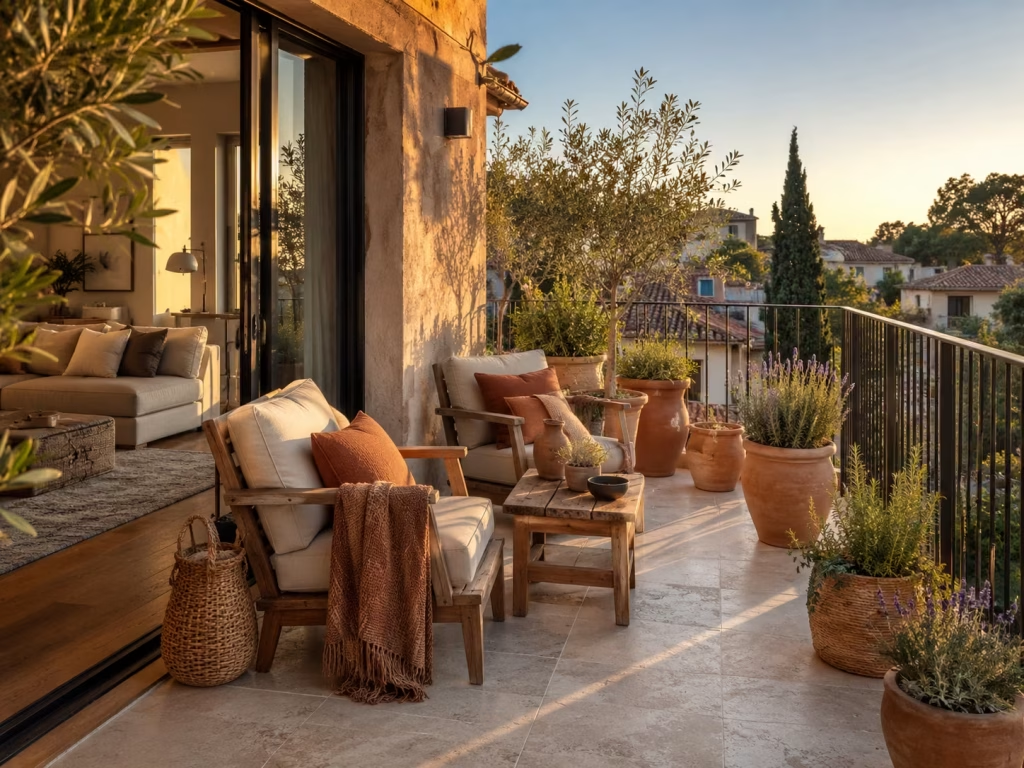
Terracotta brings warmth that feels grounded and authentic. Inspired by sun-baked clay, Mediterranean courtyards, and traditional garden pottery, it introduces richness without overwhelming compact outdoor spaces.
Unlike brighter orange tones, earthy terracotta sits comfortably alongside natural materials. It pairs beautifully with:
- Olive trees.
- Lavender.
- Limestone paving.
- Cream textiles.
- Timber furniture.
- Woven baskets.
These combinations create a layered, sun-warmed appearance that feels established rather than newly decorated. I frequently use terracotta as an accent instead of the dominant colour. A collection of handcrafted pots, a rust-toned outdoor cushion, or a clay-coloured throw often provides enough warmth to transform the atmosphere.
As the old saying goes, good things come to those who wait. Terracotta follows the same principle. It develops even greater character as natural weathering gently softens its finish over time.
Warm Contemporary Beige
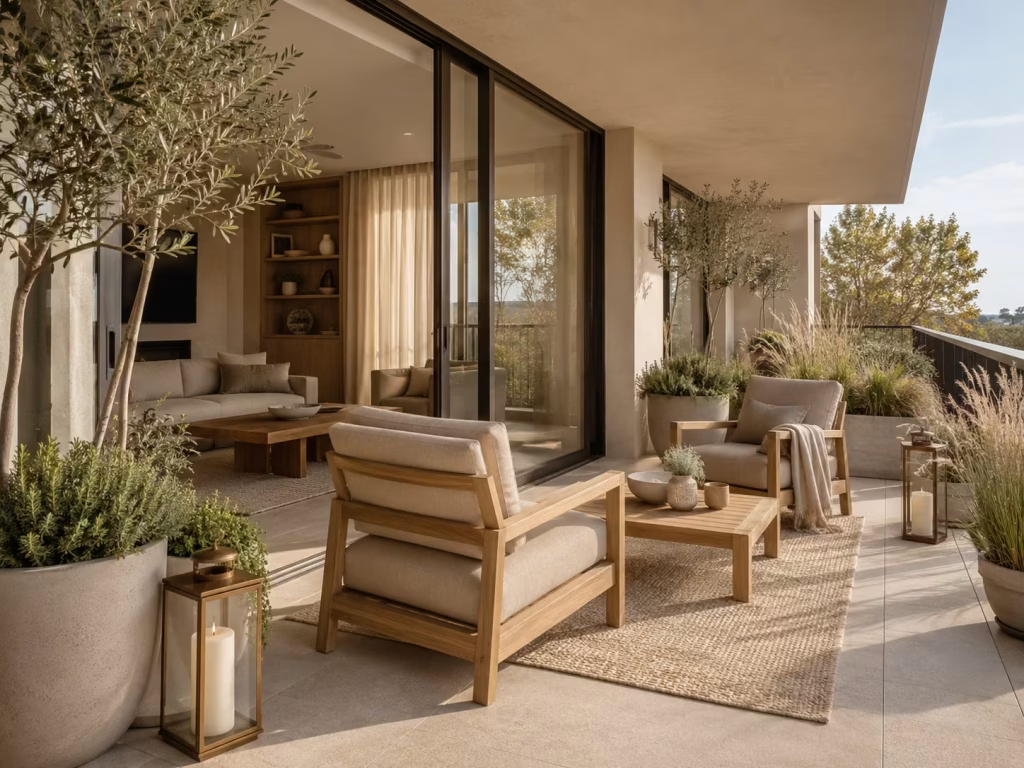
Modern balconies often benefit from a restrained palette that feels clean without appearing cold. Warm contemporary beige achieves this balance beautifully. Unlike cooler greys, which can sometimes feel flat outdoors, warm beige reflects sunlight with a gentle softness that suits summer particularly well.
Successful combinations include:
- Mushroom-toned seating.
- Warm beige outdoor rugs.
- Light oak furniture.
- Brushed bronze lighting.
- Pale stone accessories.
Because these colours remain understated, architectural details and surrounding planting become more prominent.
I have used this palette extensively in contemporary apartments where homeowners wanted a minimalist appearance that still felt comfortable enough for everyday living. The result consistently feels polished yet approachable, proving that simplicity and warmth can comfortably coexist.
Olive and Sand
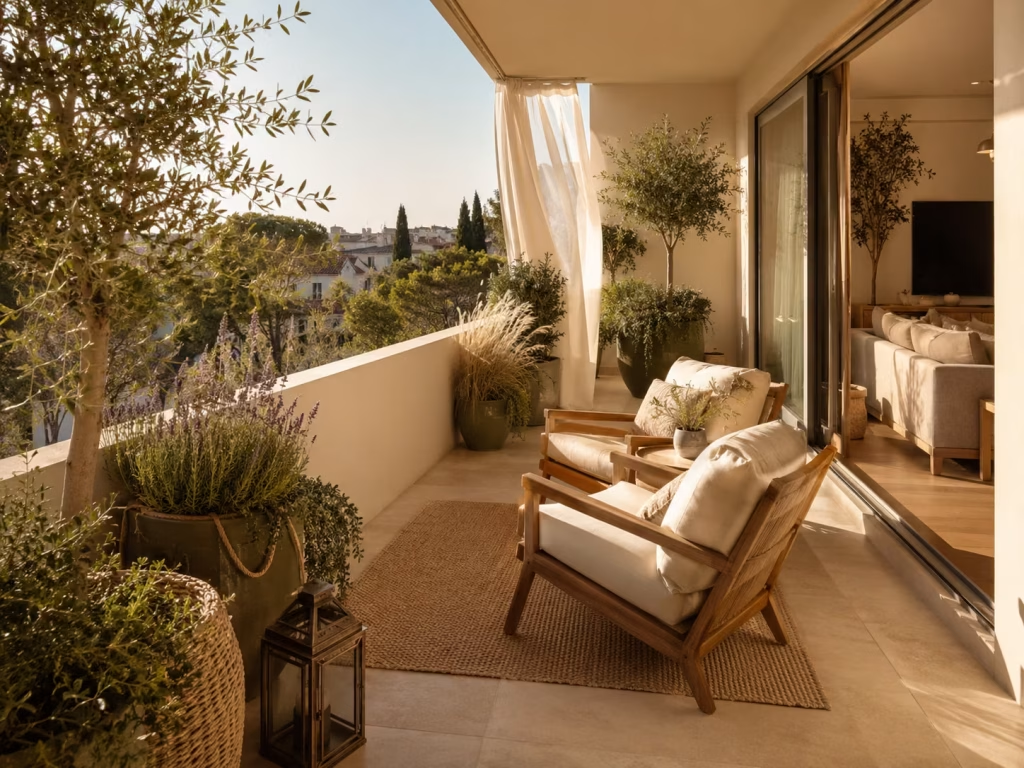
Few combinations express relaxed outdoor living quite as naturally as olive and sand. Inspired by dry landscapes, coastal dunes, and mature olive groves, this pairing creates a grounded atmosphere that feels perfectly suited to long summer afternoons.
Sand-coloured textiles brighten the space while olive introduces depth and subtle richness. Some of my favourite pairings include:
- Sand-coloured cushions.
- Olive green planters.
- Teak dining furniture.
- Woven baskets.
- Bronze lanterns.
- Soft cream outdoor curtains.
The palette works particularly well where balconies receive abundant sunshine because neither colour feels harsh under bright natural light.
Instead, both gradually change character throughout the day as sunlight shifts, creating a balcony that never feels visually static. One homeowner described this palette as feeling “comfortably lived in from the very first day,” which perfectly captures its enduring appeal.
Sage and Limestone
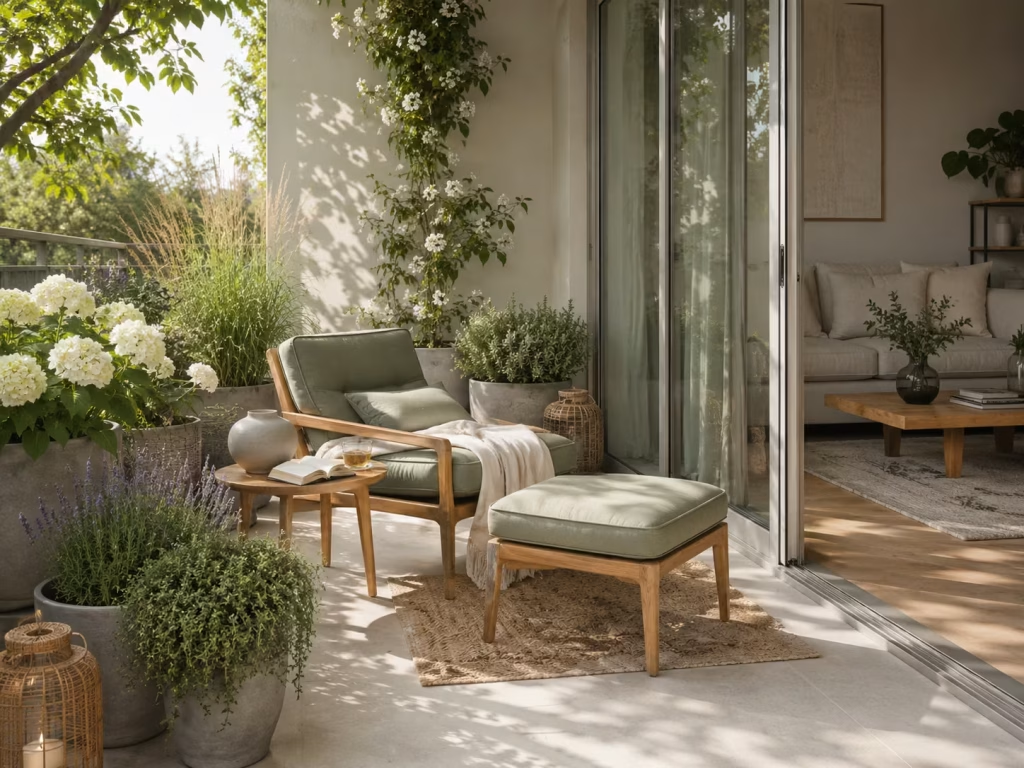
Sage and limestone form one of the most understated yet sophisticated combinations available for compact balconies.
Sage introduces gentle colour without dominating the design, while limestone contributes brightness through subtle variation rather than stark contrast. Together they produce a calming atmosphere that feels refined without becoming overly formal. This palette works especially well with:
- Limestone-effect porcelain flooring.
- Sage outdoor upholstery.
- Light timber furniture.
- White flowering plants.
- Soft grey ceramics.
- Woven natural fibre accessories.
Because both colours possess muted undertones, they create remarkable harmony with surrounding planting. I particularly enjoy using this palette for balconies designed as reading retreats or quiet relaxation spaces because it never demands attention. Instead, it quietly supports the experience of being outdoors.
Like a gentle summer breeze passing through an open window, the colours feel calm, effortless, and beautifully balanced.
Choosing the Right Palette for Your Balcony
While each of these colour palettes offers its own distinct personality, the most successful choice depends on the balcony itself. Consider several practical factors before making final decisions:
- The amount of natural sunlight throughout the day.
- Existing architectural materials.
- Interior colour scheme visible through the doors.
- Local climate.
- The mood you hope to create.
North-facing balconies often benefit from warmer neutrals that compensate for cooler light, while south-facing spaces comfortably support cooler blues, greens, and limestone tones without appearing cold.
I also recommend limiting the primary palette to three dominant colours, allowing planting to provide additional variation naturally. Too many competing shades can quickly fragment a compact space and reduce the feeling of openness.
One lesson has remained constant throughout my career. Beautiful balconies are rarely remembered because they contain bold colours. They stay with people because every shade feels connected to the next, creating an atmosphere that is calm, cohesive, and unmistakably welcoming.
When colour is chosen with intention, the balcony no longer feels like a small outdoor corner. It becomes a seamless extension of summer living, where light, materials, and nature quietly work together to make every square metre feel larger than it truly is.
Styling Mistakes That Can Make a Small Balcony Feel Smaller
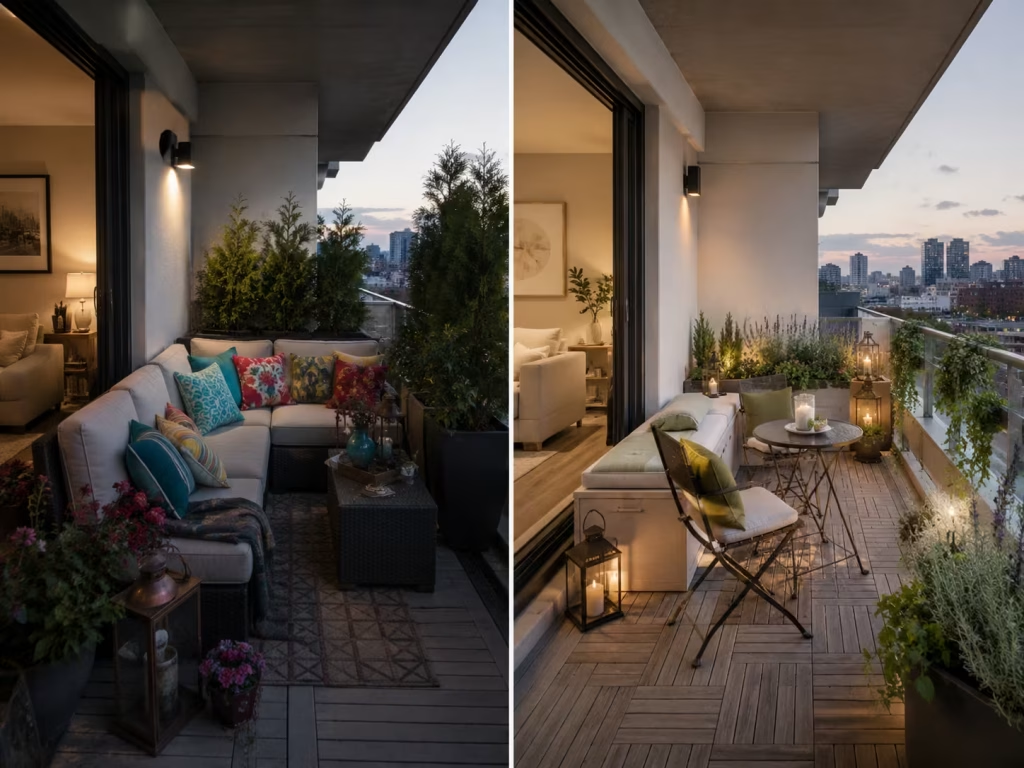
Designing a small balcony is often an exercise in restraint rather than excess. Every chair, planter, textile, and decorative object has a greater impact because there is simply less room for mistakes to hide. While many homeowners focus on finding clever ways to make a compact balcony feel larger, the truth is that avoiding a handful of common design errors can be even more effective than adding expensive furniture or decorative features.
I have walked onto balconies measuring just 3 square metres (32 square feet) that felt unexpectedly spacious, while others twice the size felt cramped and uncomfortable. The difference rarely came down to budget. It was almost always the result of planning. A well-designed balcony creates breathing room, guides movement naturally, and allows every element to contribute to the overall atmosphere. Poor design, on the other hand, asks too much from too little space.
The encouraging news is that these mistakes are entirely avoidable. Once you recognise them, every future decorating decision becomes more intentional, allowing the balcony to support everyday living rather than simply displaying attractive objects.
Oversized Furniture
Furniture should always respond to the proportions of the balcony instead of dominating them. One of the most common mistakes I encounter is choosing outdoor furniture because it looked impressive in a showroom or online photograph without considering how it will perform in a much smaller setting. A generously proportioned sofa may appear luxurious, but if it occupies most of the available floor area, the balcony immediately loses its sense of openness.
I recommend measuring the space before looking at furniture rather than the other way around. As a practical guide:
- Maintain 75 to 90 cm (30 to 36 inches) of comfortable circulation wherever possible.
- Select tables that leave room for chairs to move freely.
- Choose open-frame furniture that allows light to pass through.
- Prioritise pieces with slim legs instead of heavy enclosed bases.
Lightweight folding chairs, compact bistro sets, modular seating, and built-in benches often outperform oversized outdoor sofas because they support everyday use without overwhelming the balcony.
One apartment owner proudly purchased a large sectional after falling in love with it in a furniture gallery. Once installed, there was barely enough room to open the balcony door completely. Replacing it with two elegant lounge chairs instantly restored balance, proving that proportion often creates a greater feeling of luxury than sheer size.
Sometimes the smartest decision is not adding more comfort, but allowing the existing comfort enough room to breathe.
Too Many Colours
Summer naturally invites colourful styling, yet too many competing colours quickly fragment a compact balcony. Bright cushions, patterned rugs, colourful ceramics, flowering plants, and decorative accessories can all look attractive individually. Combined without restraint, however, they create visual noise that makes the balcony appear smaller than it really is.
I generally recommend building the design around:
- One dominant neutral.
- One supporting colour.
- One accent shade.
Planting then introduces additional natural variation without overwhelming the overall composition. For example:
- Warm beige with olive green and terracotta.
- Soft white with coastal blue and natural timber.
- Limestone with sage green and charcoal accents.
Restricting the palette creates continuity that allows the eye to travel comfortably across the space. Like a well-composed orchestra, every colour has its role. When every instrument tries to play the melody at once, harmony quickly disappears.
Ignoring Circulation
A balcony should invite movement, not force people to navigate around obstacles. Poor circulation often develops gradually. A planter is added beside the entrance, a side table appears next to a chair, another decorative pot fills an empty corner, and before long every journey across the balcony feels like negotiating an obstacle course. Clear movement should always remain one of the highest priorities.
Ask yourself:
- Can the balcony door open fully?
- Is every seat easy to reach?
- Can someone carry a tray without squeezing between furniture?
- Is there room to pull out chairs comfortably?
Maintaining consistent circulation makes the entire space feel calmer and considerably larger. One design principle I frequently return to is that empty space is not wasted space. It is what allows every other element to function properly.
Good design is often measured by how effortlessly people move through it.
Poor Lighting
Many balconies receive careful attention during daylight hours yet become almost unusable after sunset because lighting has been overlooked.
A single bright wall light rarely creates the atmosphere people associate with comfortable summer evenings. Instead, it often produces harsh shadows while leaving seating areas surprisingly uninviting. Layered lighting transforms the experience completely. I recommend combining:
- Rechargeable table lamps.
- Lanterns positioned near the floor.
- Warm white string lights.
- Small wall sconces where possible.
- Battery-operated candles for gentle ambience.
Aim for warm lighting around 2700K, which creates a softer, more welcoming atmosphere than cooler white light. Lighting should encourage people to remain outdoors after dusk rather than signalling that the day is over.
One family told me they barely used their balcony after sunset until we introduced layered lighting. Several months later, it had quietly become their favourite place for evening conversations.
Sometimes the atmosphere changes not because the furniture has improved, but because the light finally knows where to fall.
Excessive Accessories
Decorative accessories give balconies personality, but too many quickly create clutter. It is easy to collect lanterns, sculptures, baskets, candles, and ornaments over time until every available surface becomes occupied. The result is rarely elegant. Instead of appreciating individual pieces, the eye struggles to find a place to rest. Whenever I style compact balconies, I follow one simple rule. Every accessory should contribute either:
- Beauty.
- Function.
- Or ideally, both.
A lantern that provides evening lighting, a woven basket that stores throws, or a ceramic bowl that doubles as a planter all earn their place far more successfully than purely decorative clutter.
Editing accessories often produces a stronger result than buying new ones. Like trimming a well-established garden, removing carefully chosen elements frequently reveals more beauty than adding further decoration.
Weak Focal Points
Every successful balcony benefits from a clear visual anchor. Without one, attention drifts randomly between unrelated furniture, planting, and accessories, making the design feel unsettled. A focal point does not need to be dramatic.
It could be:
- A sculptural olive tree.
- A beautifully styled café table.
- An architectural privacy screen.
- A collection of terracotta planters.
- A comfortable reading chair.
- A statement lantern.
Once the primary feature has been established, surrounding elements should quietly support it rather than competing for equal attention. I often compare this to reading a well-written novel. Every chapter supports the central story instead of introducing a completely different narrative. The same principle applies to design.
Inadequate Storage
Even beautifully styled balconies quickly lose their appeal when everyday items have nowhere to live. Gardening tools, outdoor cushions, watering cans, blankets, and serving accessories all require thoughtful storage if the space is to remain organised. Fortunately, storage can be integrated without sacrificing aesthetics.
Excellent options include:
- Built-in bench seating with concealed compartments.
- Weather-resistant storage boxes.
- Slim outdoor cabinets.
- Multifunctional side tables.
- Decorative baskets with fitted lids.
Keeping practical items out of sight allows the balcony to remain visually calm while ensuring everything needed for outdoor living remains close at hand. I have found that homeowners use balconies more frequently when setup takes only a few moments. Convenience quietly shapes everyday habits.
Blocking Natural Views
The greatest decorative feature on many balconies already exists before any furniture arrives. It is the view. Whether overlooking gardens, rooftops, distant trees, or simply an open sky, preserving sightlines should remain one of the highest priorities. Unfortunately, tall planters, oversized furniture, bulky storage units, and heavy screens often interrupt these valuable connections.
Instead:
- Position taller planting towards corners.
- Keep seating oriented towards the best outlook.
- Choose open-frame furniture where possible.
- Allow lower planting to soften railings without obscuring views.
- Use transparent or lightweight materials that preserve visual openness.
One balcony overlooking a mature park initially felt surprisingly enclosed because large storage cabinets blocked almost half the outlook. Reorganising the layout and replacing several oversized planters with layered low planting completely transformed the atmosphere.
Nothing new had been added. The view had simply been allowed to become part of the design once again. Like opening the curtains on a beautiful morning, protecting natural views instantly expands both the balcony and the experience of living within it.
Small Choices Create the Biggest Difference
Most compact balconies do not feel small because they lack space. They feel small because too many design decisions compete with one another.
Oversized furniture interrupts movement. Competing colours create visual confusion. Decorative clutter overwhelms limited surfaces. Weak lighting shortens the time people spend outdoors, while blocked views make the balcony feel enclosed. Avoiding these mistakes does far more than improve appearance. It changes how the balcony functions every single day.
Throughout my career, the most successful outdoor spaces have rarely been those with the highest budgets or the largest footprints. They are the ones where every decision supports comfort, proportion, and simplicity. When nothing feels out of place, even the smallest balcony can feel remarkably generous, inviting you to settle in, slow down, and enjoy every moment summer has to offer.
How a Well-Designed Balcony Evolves Throughout the Summer
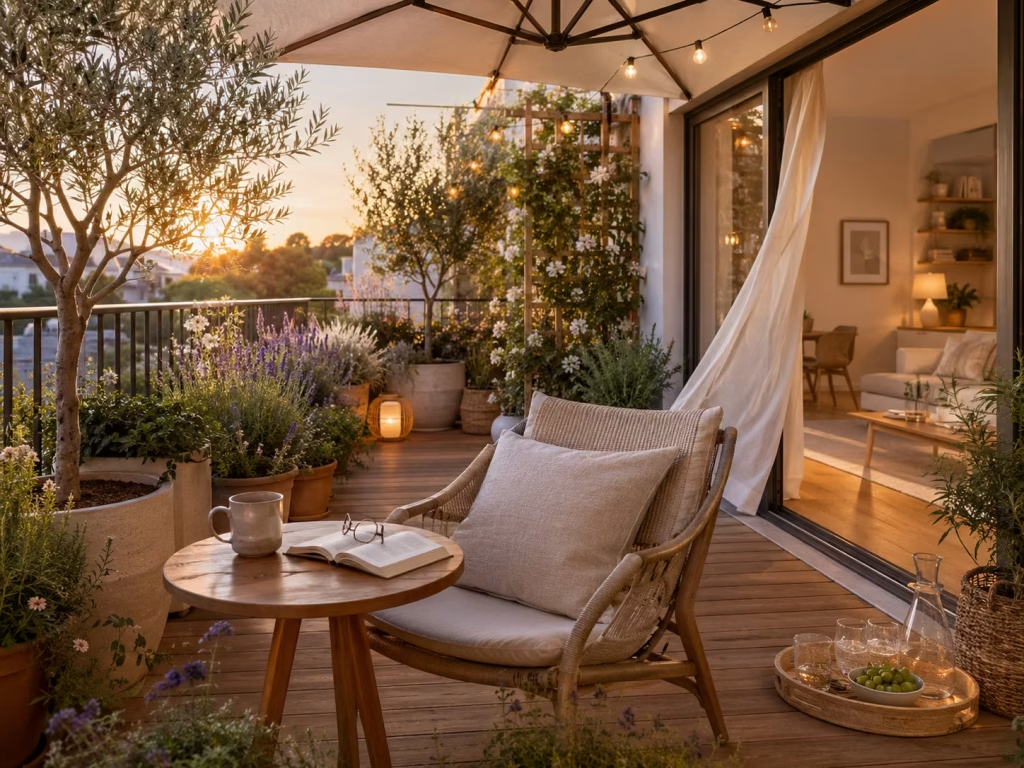
A truly successful balcony never feels frozen in one perfect moment. It shifts with the light, the temperature, and the rhythm of everyday life. In early summer, it may feel fresh and newly inviting. By midsummer, it becomes a more settled, much-loved part of the home. Later, as the season begins to soften, the same space takes on a quieter, more reflective character. That evolution is part of its charm.
I have always found that the best outdoor spaces are the ones that adapt rather than remain static. They do not depend on one ideal arrangement or a single decorative moment. Instead, they respond to how people actually live, which is why they tend to become more valuable as the summer unfolds. A balcony that supports morning coffee, offers relief from afternoon heat, welcomes evening guests, and changes gently with the planting will always feel richer than one designed only for display.
Morning Coffee Rituals
Morning is often when a balcony feels at its most peaceful. The light is softer, the air is cooler, and the space has not yet been claimed by the activity of the day. A well-designed balcony should make this moment feel effortless.
A small café table, a comfortable chair, and a clear surface for a mug or book are often enough. What matters most is the sense of ease. If reaching the balcony feels simple and the seating is comfortable, the space naturally becomes part of the morning routine rather than an occasional indulgence.
In many homes, this is where the balcony proves its worth. It offers a few quiet minutes before work, school runs, or the general rush begins. That short pause can change the tone of the entire day. It is a reminder that good design is not only about appearance. It is about creating habits that feel grounding and enjoyable.
Afternoon Shade
By the middle of the day, the balcony often reveals whether it has been designed with comfort in mind. Without shade, even the most beautiful space can become difficult to use. Heat builds, cushions grow too warm, and people retreat indoors far sooner than they would like.
A balcony that evolves well through summer needs relief from the strongest sun. Shade can come from a cantilever umbrella, a sail, outdoor curtains, or even the natural cover of planting and screening. What matters is not only protection from direct sunlight, but also how the shaded area feels once the heat rises.
I have found that the most effective afternoon balconies are the ones that remain calm rather than exposed. They offer cool corners, soft light, and enough airflow to stay pleasant without becoming stuffy. That balance keeps the space usable through the hotter part of the day and gives it a second life after the morning has passed.
Evening Entertaining
As summer evenings arrive, the balcony changes character once again. The mood becomes softer, the light more flattering, and the space naturally lends itself to conversation. A balcony that has been carefully designed will feel at its best at this hour because its materials, lighting, and layout all begin to work together.
This is when layered lighting matters most. A few lanterns, a table lamp, or a string of warm lights can transform the atmosphere entirely. Seating also becomes more important here. Chairs need to be comfortable enough to encourage lingering, and any serving surface should be close enough to make drinks or snacks easy to manage.
Evening entertaining on a balcony should never feel forced. It should feel relaxed, slightly informal, and easy to enjoy. The best spaces create that sense of understated hospitality where guests settle in naturally, without the need for anything elaborate. A good balcony does not just host the evening. It helps define it.
Seasonal Plant Growth
One of the most rewarding parts of summer balcony design is watching the planting mature. What begins as a carefully arranged collection of pots in early season gradually becomes fuller, softer, and more expressive as the weeks go by.
Climbing plants lengthen, herbs become denser, flowering varieties open and close, and ornamental grasses begin to move more visibly in the breeze. This natural growth gives the balcony a living quality that static décor can never achieve. It also means the space improves over time rather than simply being maintained.
I often think of planting as one of the few design elements that rewards patience so generously. A balcony that feels slightly sparse in June may feel beautifully settled by August. That quiet transformation is one of the reasons many homeowners grow so attached to their outdoor spaces. They are not just looking at a finished design. They are watching it mature.
Adapting the Space for Different Occasions
The strongest balconies are rarely rigid. They can shift from breakfast corner to reading retreat, from plant-filled refuge to entertaining space, often with only a few small adjustments. This flexibility is what gives them real staying power.
A movable stool may become a side table one day and extra seating the next. Cushions can be rearranged to suit the weather. A folding chair can be tucked away when more floor space is needed. Even planting can be repositioned slightly to accommodate changing light or a new use for the space.
This adaptability matters because summer life is never entirely predictable. One day the balcony may be used quietly in the morning. The next it may need to host friends in the evening. A well-designed space handles both with ease. It feels prepared without feeling overworked, which is exactly the kind of quiet efficiency that makes a balcony genuinely useful.
Why the Best Outdoor Spaces Improve With Everyday Living
The balconies people love most are rarely the ones that look perfect on day one. They are the ones that become better through repeated use. A chair settles into the right position. A plant grows into its container. The lighting becomes familiar. The layout begins to reflect real habits rather than imagined ones.
That is what gives a summer balcony its depth. It stops being a decorated corner and starts becoming part of the home’s daily rhythm. Morning coffee, afternoon shade, evening conversation, and seasonal change all leave their mark in ways that make the space feel more personal and more complete.
In my experience, this is the real test of good outdoor design. If a balcony improves with everyday living, it has done its job properly. It is not just beautiful to look at. It is easy to return to, and that is what makes it memorable long after summer has passed.
Conclusion: Small Spaces, Lasting Summer Memories
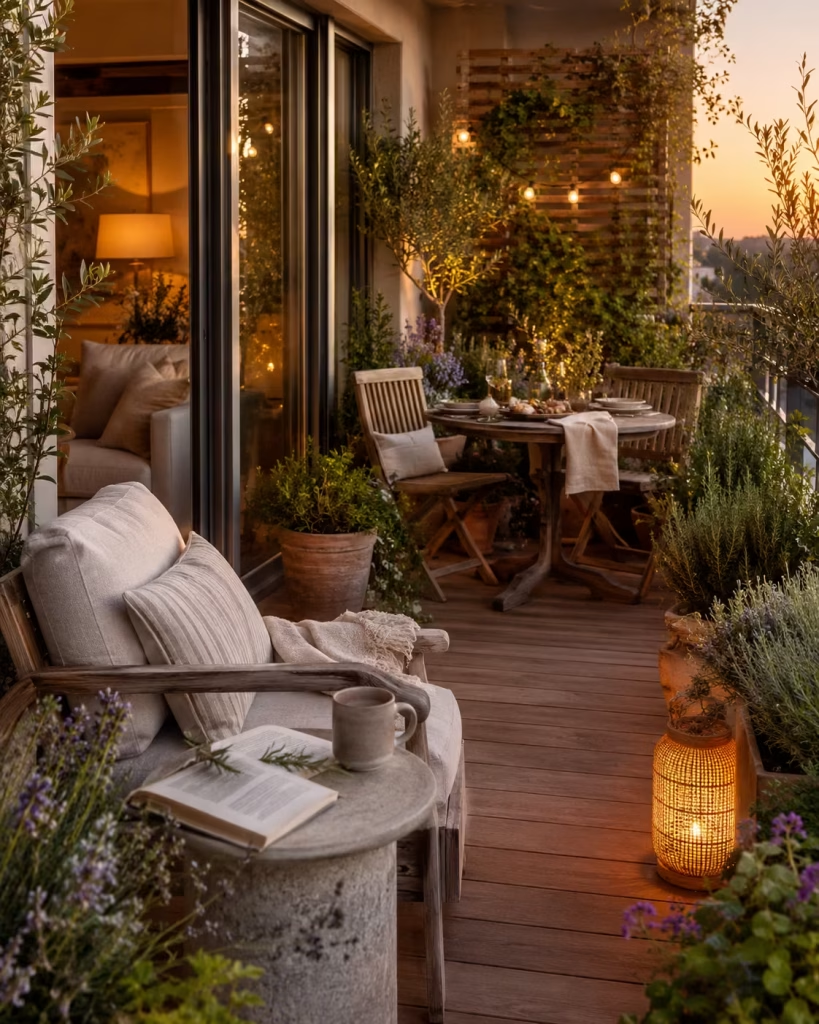
The most inspiring balconies are rarely the largest, the most expensive, or the ones filled with the latest outdoor trends. They are the spaces that quietly become woven into everyday life. Long after the excitement of buying new furniture or refreshing the décor has faded, these balconies continue to earn their place through the simple moments they make possible. They welcome the first cup of coffee at sunrise, provide a peaceful corner for an afternoon pause, encourage conversations that stretch into the evening, and offer a gentle escape when the pace of life begins to feel overwhelming.
Throughout this guide, one principle has remained at the heart of every idea. Exceptional balcony design is never about filling every available inch or chasing whatever happens to be fashionable this season. Instead, it grows from thoughtful proportion, carefully chosen materials, comfortable layouts, and purposeful layering that allows every element to contribute something meaningful. When each chair, planter, lantern, and textile has a clear role, even the most compact balcony begins to feel composed, generous, and remarkably inviting.
Over the years, I have worked on balconies that measured less than 3 square metres (32 square feet), yet they consistently became the homeowners’ favourite part of the property. The reason had very little to do with budget or luxury. It came down to intention. A well-positioned chair that captured the morning light, planting that softened the surrounding architecture, layered lighting that extended evenings outdoors, and durable materials that improved with every passing season all worked together to create an environment people genuinely wanted to use.
What has always fascinated me is how these spaces quietly evolve. Timber develops a softer patina under the summer sun. Climbing plants gradually cover a trellis that once looked bare. Lavender grows fuller, herbs become ready for everyday cooking, and outdoor cushions slowly mould themselves to familiar routines. Like a favourite book that reveals something new with every reading, a thoughtfully designed balcony becomes richer through repeated use. It tells the story of the people who live there, not through grand gestures, but through small daily rituals that slowly shape the space into something deeply personal.
Perhaps the greatest lesson I have learned as a designer is that outdoor living is measured very differently from indoor square footage. A balcony is not successful because it accommodates the largest dining table or the greatest number of decorative accessories. It succeeds because it encourages people to slow their pace, step outside more often, and appreciate moments that might otherwise slip by unnoticed. The laughter shared over an evening meal, the peaceful silence before the neighbourhood wakes, the comforting scent of rosemary drifting through warm air, or the final golden light settling across an outdoor rug all become part of the home’s character.
As the old saying goes, good things come in small packages, and nowhere is that truer than a thoughtfully designed balcony. Limited dimensions often encourage better decisions because every centimetre has to justify its place. The result is a space that feels intentional rather than crowded, balanced rather than overdesigned, and welcoming instead of overwhelming.
If there is one idea worth carrying into your own project, it is this. Design your balcony for the life you hope to live, not simply for the photographs you hope to take. Choose materials that grow more beautiful with time, colours that feel calm rather than temporary, furniture that invites lingering instead of simply filling space, and planting that changes gently with the seasons. Allow comfort to guide every decision and let restraint become one of your greatest design tools.
In the end, the most memorable balconies are not remembered for how many square metres they occupied. They are remembered for how they made people feel. They become the backdrop to quiet mornings, slow summer afternoons, intimate conversations, family celebrations, and countless ordinary moments that gradually become cherished memories. That is the true measure of exceptional outdoor design. It is never defined by size. It is defined by the life that unfolds within it, season after season, summer after summer.
Frequently Asked Questions
How do I decorate a very small balcony without making it feel cramped?
Start with one clear purpose, then build around it with restraint. A compact balcony feels calmer when you limit the furniture to the essentials, choose open-frame pieces, and leave enough circulation to move comfortably. Low planting, a light colour palette, and one or two well-chosen accessories usually create a stronger result than trying to fill every corner. In a small space, breathing room is part of the design, not leftover space.
What colours work best for a small balcony in summer?
Soft neutrals, coastal blues, sage greens, warm beige, terracotta, and limestone tones all work beautifully in summer because they reflect light and feel naturally relaxed. These colours help a balcony feel brighter and more open while still giving it personality. If you want the space to feel larger, keep the main palette calm and let planting provide the richer accents.
Which outdoor furniture is best for compact balconies?
Lightweight furniture with a slim profile usually works best. Foldable bistro sets, modular seating, compact benches, and open-frame chairs are all strong choices because they preserve floor space and feel visually lighter. Materials such as powder-coated aluminium, teak, and weather-resistant woven details perform well and bring a more refined finish. The best furniture for a small balcony is comfortable enough to use often, but never so bulky that it takes over the space.
How can I make my balcony feel more private without blocking light?
Use partial screening rather than solid barriers wherever possible. Timber battens, climbing plants, outdoor curtains, and decorative screens with open patterns all provide privacy while still letting light and air pass through. Layering planting with a screen often gives the most natural result. It softens the balcony beautifully, much like a quiet frame around a good view.
What plants thrive on a sunny summer balcony?
Lavender, rosemary, jasmine, olive trees, sage, thyme, mint, and ornamental grasses are all excellent choices for sunny conditions. They cope well with summer light, add texture and fragrance, and suit compact outdoor spaces particularly well. The key is choosing plants that match the balcony’s exposure and remembering that container size, drainage, and watering habits matter just as much as the plant itself.
How do I create a luxury look on a budget?
Focus on scale, materials, and editing. A balcony can feel far more expensive when the layout is balanced, the colours are restrained, and the materials are chosen well. A single quality chair, a simple rug, a few terracotta or ceramic planters, and layered lighting often achieve more than a balcony filled with inexpensive decorative pieces. Luxury usually comes from confidence and restraint, not from quantity.
What flooring options are best for apartment balconies?
Outdoor porcelain and natural stone are both excellent, depending on the look and maintenance level you want. Porcelain is highly durable, low maintenance, and ideal for clean modern schemes. Natural stone has a richer, more organic character and ages beautifully, though it may need more care. Both can make a balcony feel more complete when chosen in tones that connect well with the interior.
How can I make my balcony usable from morning until evening?
Think in layers. Morning comfort comes from good seating and a clear place for coffee. Afternoon usability depends on shade and airflow. Evening comfort relies on soft lighting and seating that encourages lingering. If the balcony also has a small serving area, a throw for cooler nights, and a layout that feels easy to move through, it will naturally support the whole day rather than only one moment of it.
What are the biggest decorating mistakes to avoid on a small balcony?
The most common mistakes are oversized furniture, too many colours, cluttered accessories, poor lighting, and blocking the view with tall objects or planting. Another frequent error is treating the balcony as a storage zone instead of a living space. The strongest small balconies feel deliberate. Every item earns its place, and nothing fights for attention.
How do I make my balcony feel like an extension of my living room?
Use a consistent colour palette, repeat a few materials indoors and outdoors, and keep the transition between the two spaces visually calm. Similar flooring tones, matching textiles, and cohesive styling help the balcony feel like part of the same home rather than a separate afterthought. When the balcony reflects the atmosphere of the living room, it feels easier to step outside and use it every day.