




25 Cozy Fall Home Office Ideas to Create a Warm, Productive Workspace
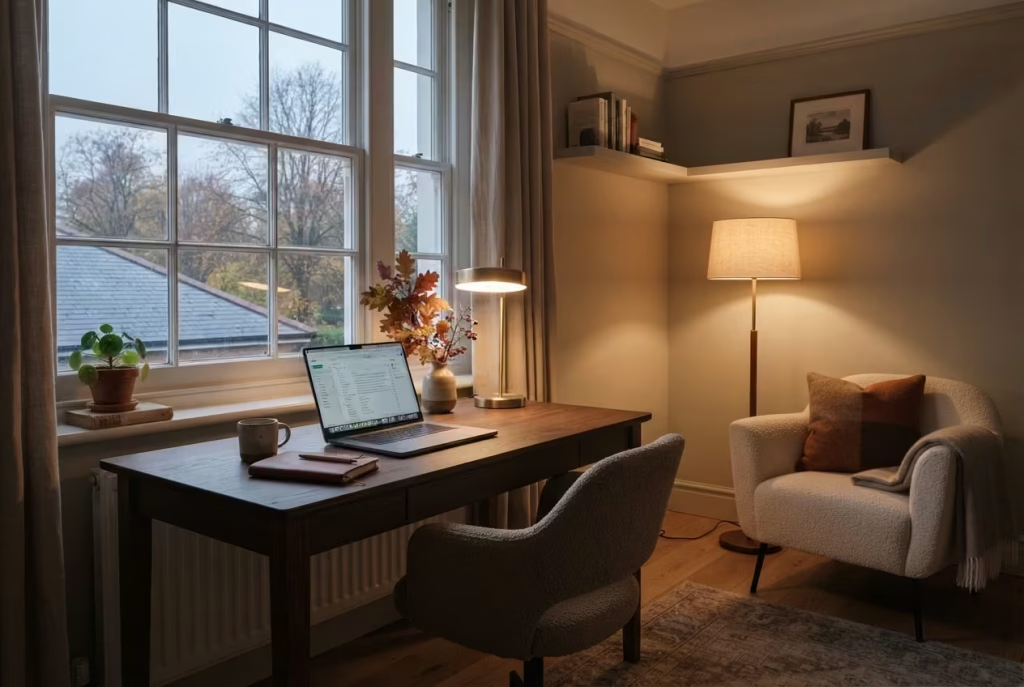
There’s a particular kind of gloom that settles over a Fall Home Office once the clocks creep backwards and the light starts leaking out of the afternoon. One minute you’re logging off at half past five in broad daylight, the next you’re squinting at a screen with the desk lamp doing all the heavy lifting on its own. It’s not just in your head, either.
The average worker spends around seven hours a day looking at a screen, and once natural daylight starts thinning out around that same window, mood, alertness, and energy all tend to dip in step with it.
This isn’t another list of orange candles and knitted throws thrown together for the sake of it. Every idea below has been chosen because it earns its keep twice over: it makes the room feel like somewhere you’d actually choose to sit, and it does something measurable for how you work once you’re in the chair.
Where the research backs it up, you’ll see the actual numbers rather than a vague nod to “studies show.” Where safety matters, and with candles, heaters, and trailing cables it very much does, you’ll get a straight answer rather than a footnote buried at the bottom.
Consider this your room-by-room, zone-by-zone game plan for turning a workspace that currently feels like an afterthought into one that pulls its weight through the darker months.
Why Cosy Actually Helps You Work Better, Not Just Look Good
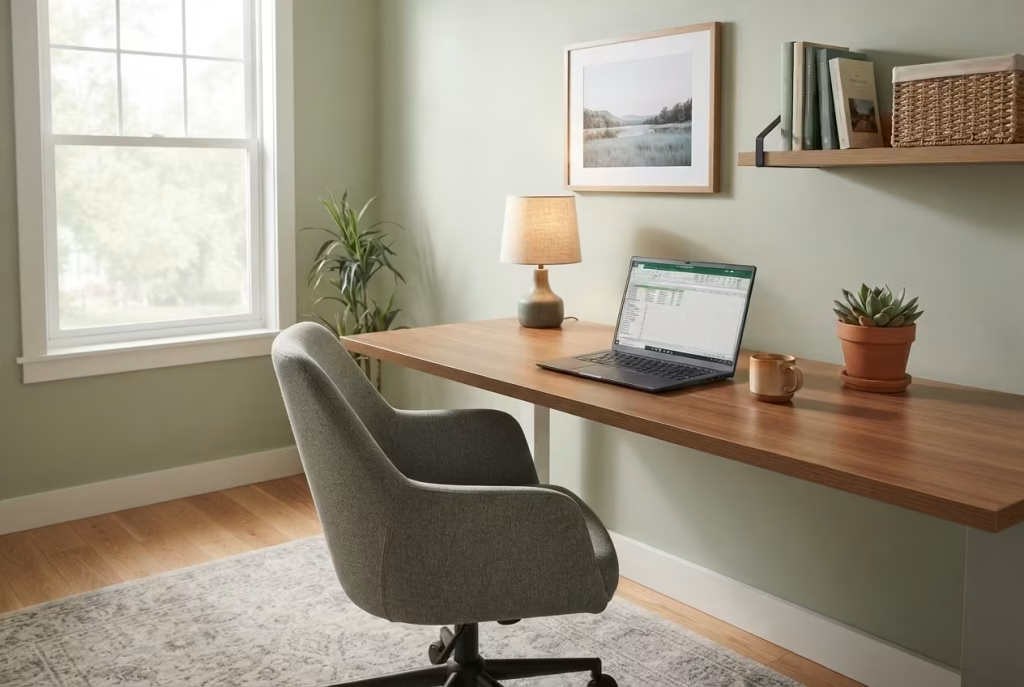
Before diving into the ideas themselves, it’s worth addressing the elephant in the room: isn’t “cosy” just a nice-to-have that has nothing to do with getting your inbox down to zero? As it happens, the opposite is true, and the evidence for it is fairly substantial.
A global study by Human Spaces surveyed 7,600 workers across 16 countries and found that offices with natural elements woven through them, think plants, natural light, and organic textures, were linked to 6% higher productivity, 15% higher creativity, and 15% higher wellbeing among the people using them.
Separately, field experiments at the University of Exeter found that simply adding plants to a previously bare workspace lifted productivity by around 15%. Even more strikingly, when people were given genuine control over how their own space looked, rather than having it dictated for them, productivity rose by 38% and creativity climbed by 45%.
That last figure is worth sitting with for a moment: the single biggest lever in that entire study wasn’t the plants or the lighting, it was autonomy over the decision-making itself, which is exactly what you’re exercising every time you choose a specific idea from this list rather than following a generic template.
There’s a neuroscience explanation for why clutter and a lack of personality drag on performance, and it’s not vague pop psychology. Researchers at the Princeton University Neuroscience Institute used functional MRI to show that multiple competing stimuli in your visual field, tangled cables, loose paper, a scatter of odds and ends, mutually suppress each other’s neural representation in the visual cortex.
In plain terms: your brain has a limited processing budget, and a cluttered desk spends a chunk of it before you’ve even opened your first document. A stark, under-lit room with a bare desk and a hard floor asks something of your senses before you’ve even sat down. A space with the right lighting, some texture underfoot, and a plant or a photograph in your eyeline removes that tax and lets you get on with things.
The trick, and this is where a fair few “cosy office” guides come unstuck, is not tipping too far the other way. Dim, amber-only lighting and a room stuffed with soft textiles can just as easily send you towards the sofa for a nap as towards a productive afternoon. The ideas below are built with that balance firmly in mind: warmth without drowsiness, personality without visual noise.
Zone One Lighting That Works With the Season, Not Against It
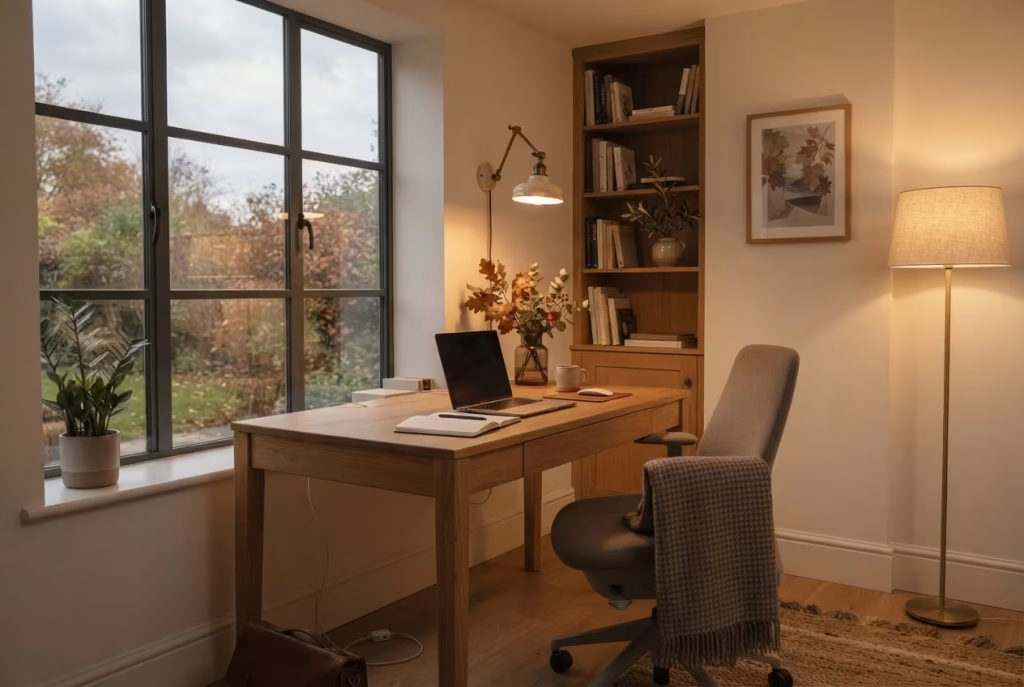
Autumn’s biggest challenge for a home worker isn’t the temperature, it’s the light, or rather the steady disappearance of it. Get this zone right and everything else in the list becomes noticeably easier to enjoy.
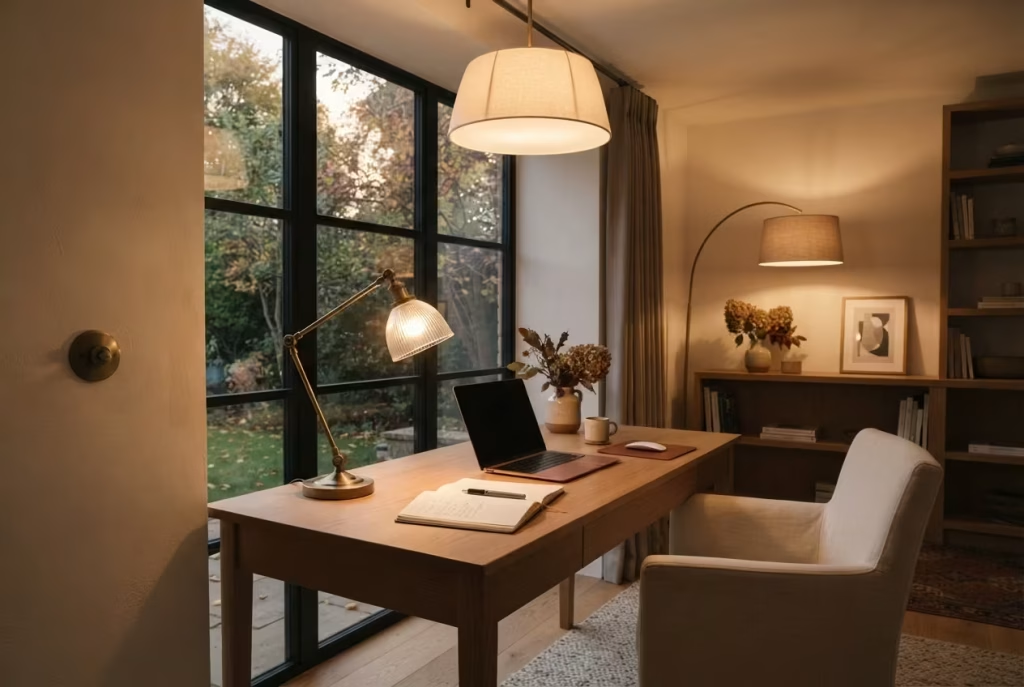
1. Layer your lighting instead of relying on one overhead bulb. A single ceiling light doing all the work is one of the most common and most overlooked mistakes in home offices, cosy or otherwise. Interior designers consistently flag harsh, unshaded overhead lighting used in isolation as a genuine barrier to a workspace feeling good to be in, precisely because it casts flat light with no depth, no warmth, and nowhere for shadow to soften a room. Aim for at least three light sources working together: an overhead or ceiling fixture for general brightness, a desk lamp for close task work, and a floor or table lamp positioned purely for ambience. Dimmer switches or smart bulbs let you shift the balance depending on the time of day, brighter for a 9am video call, softer for a 4pm wind-down.
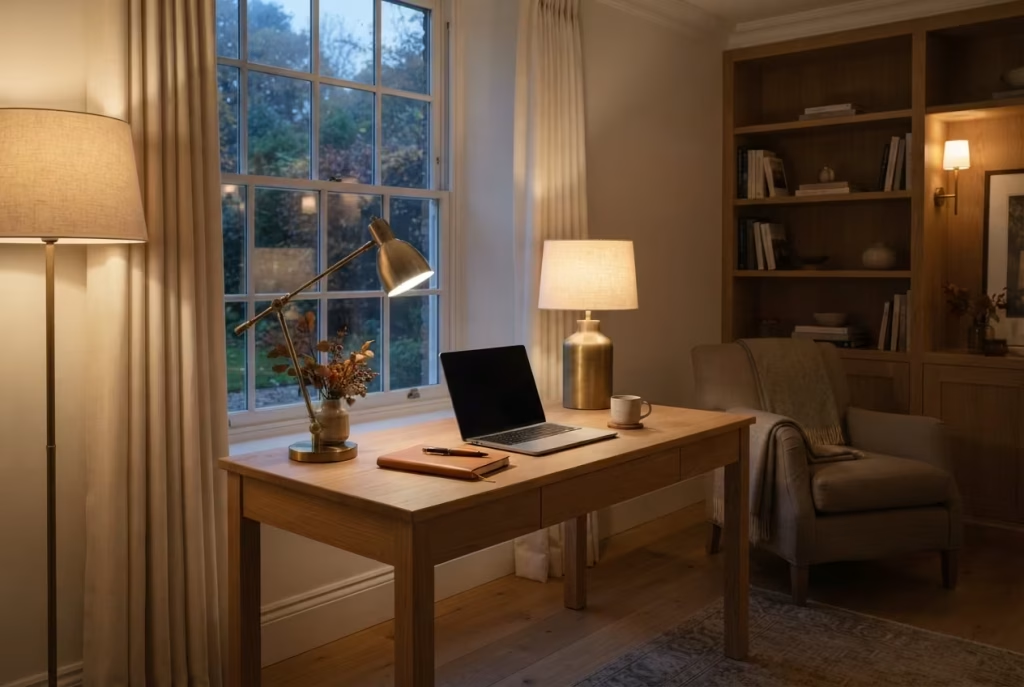
2. Choose warm-toned bulbs for your ambient lighting. Colour temperature is measured in kelvins, and anything below 3300K is technically classed as “warm light,” the soft, slightly amber glow that mimics candlelight or early evening sun rather than a hospital corridor. This is the range that makes a room feel settled and human rather than clinical and exposed. Save the cooler, bluer light, 4000K and upwards, for your actual task lamp, where crispness genuinely helps with reading small text or fine detail, and let the rest of the room sit in that warmer, gentler range.
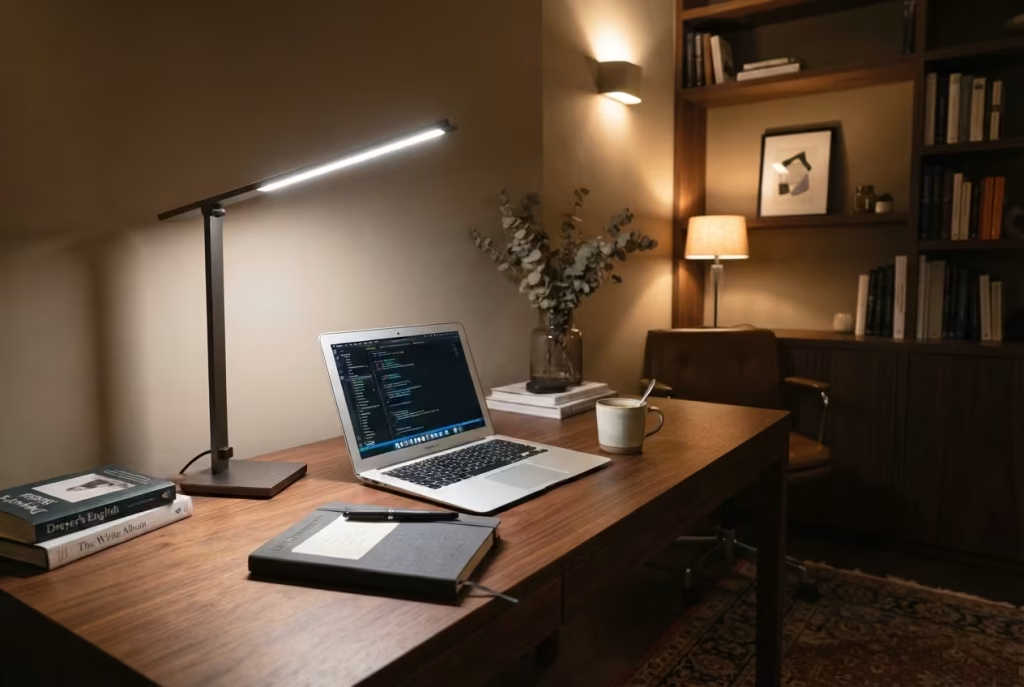
3. Bring in a genuine daylight-simulating lamp if your desk doesn’t sit near a window. For anyone working in a room with limited natural light, this isn’t a gimmick so much as a targeted fix for a well-documented problem. Reduced exposure to natural light through the darker months is consistently linked to lower mood, flatter energy, and a harder time concentrating in the early afternoon, precisely when most of us hit our post-lunch slump. A lamp that mimics daylight-spectrum light, positioned near your desk for the first hour or two of your working day, can genuinely take the edge off that dip, and the effect tends to compound the earlier in the day you use it.
You May also Like: 21 Cottage Office Design Ideas to Create a Cozy and Productive Workspace
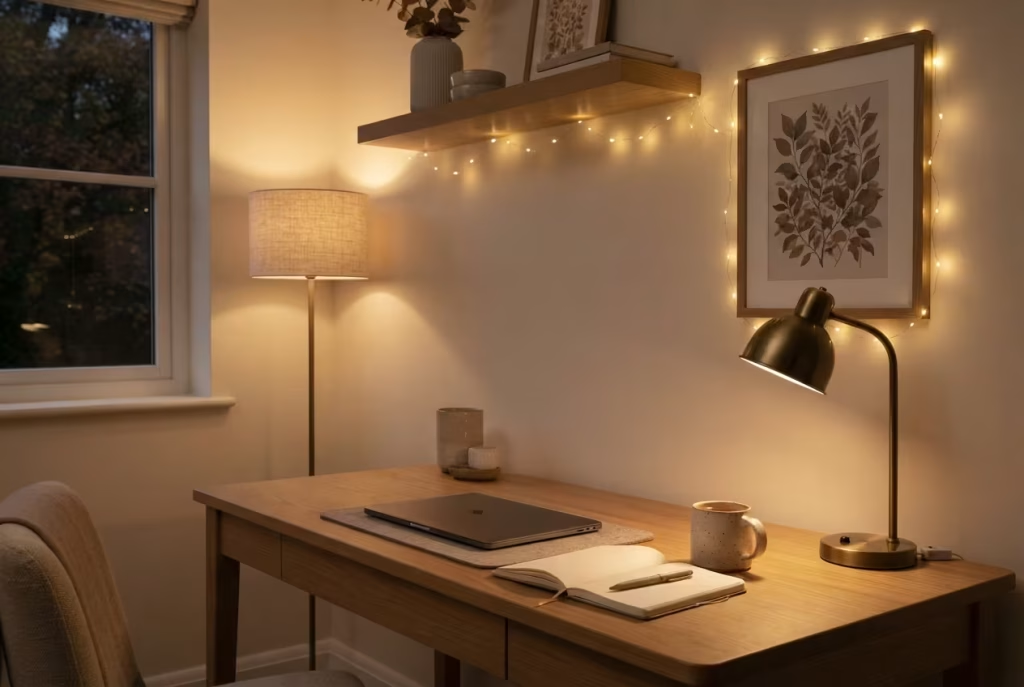
4. String lights aren’t just for Christmas. A warm-white string of fairy lights along a shelf, around a window frame, or looped through a piece of wall art gives a room a gentle, flickering quality that a single lamp simply can’t replicate on its own. Battery-powered versions with a built-in timer mean you’re not hunting for a spare socket, and running costs are next to nothing, a set left on for a few hours a day costs pennies a month in electricity.
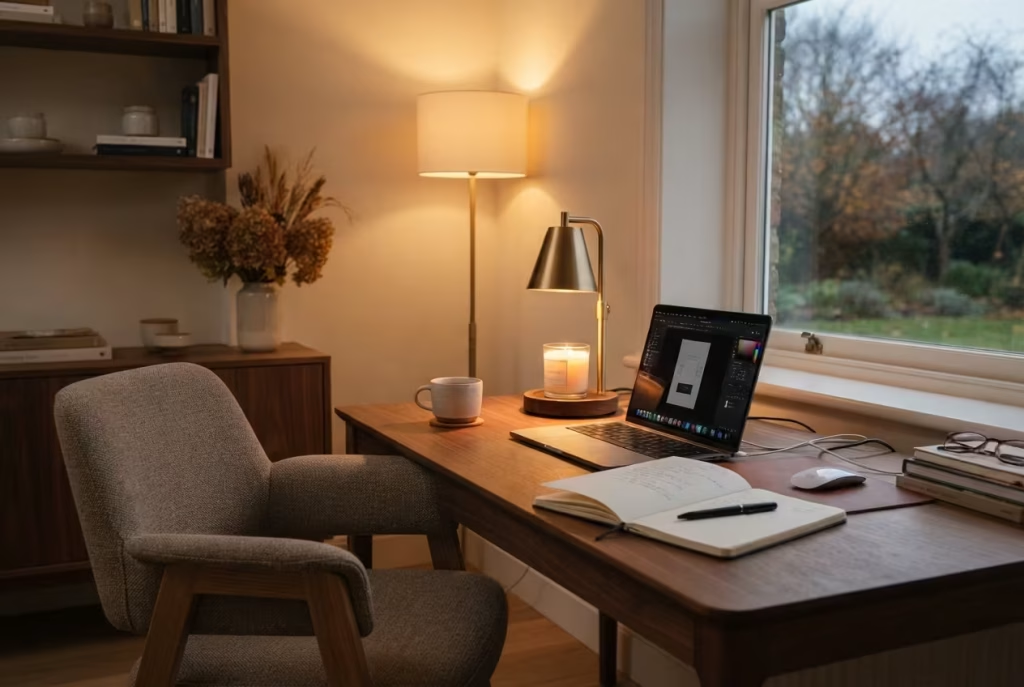
5. Add a flameless candle warmer lamp for a glow without an open flame. Candle warmer lamps melt wax gently from above using heat rather than burning a wick, which gives you the soft light and scent of a real candle with none of the fire risk that comes with an actual flame. They’re a genuinely smart middle ground for a desk that’s already crowded with paper and cables, and the safety numbers behind that choice are worth knowing properly, which is exactly what the table further down covers.
Zone Two: The Desk Itself, Where Texture Does the Talking
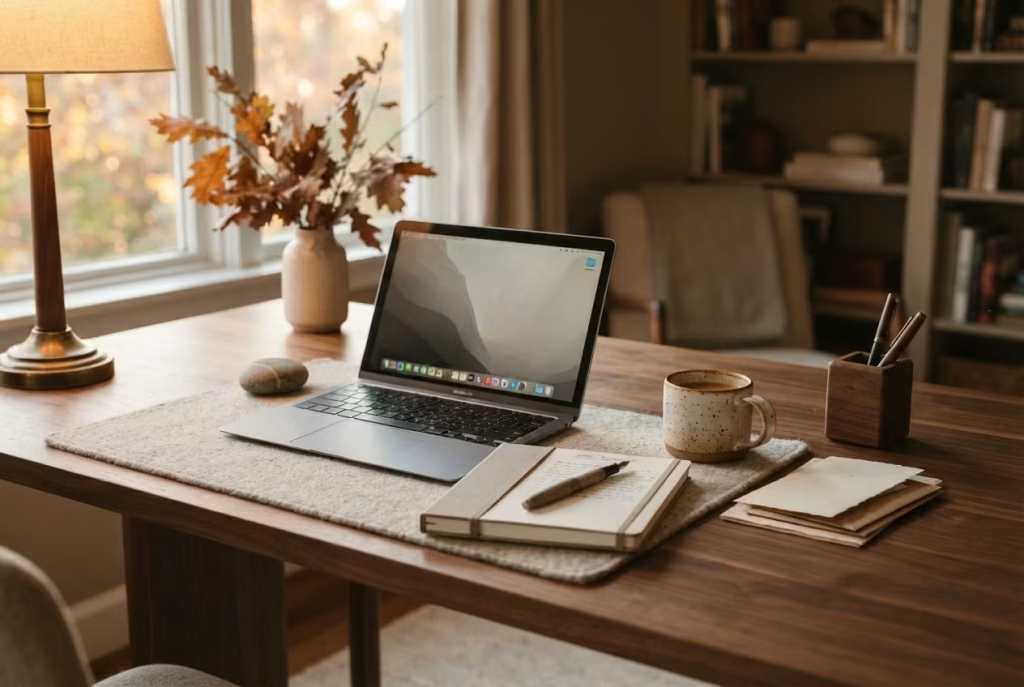
Your desk surface is the one part of the room you’ll be looking at for hours on end, so it’s worth thinking about beyond simply “tidy.”
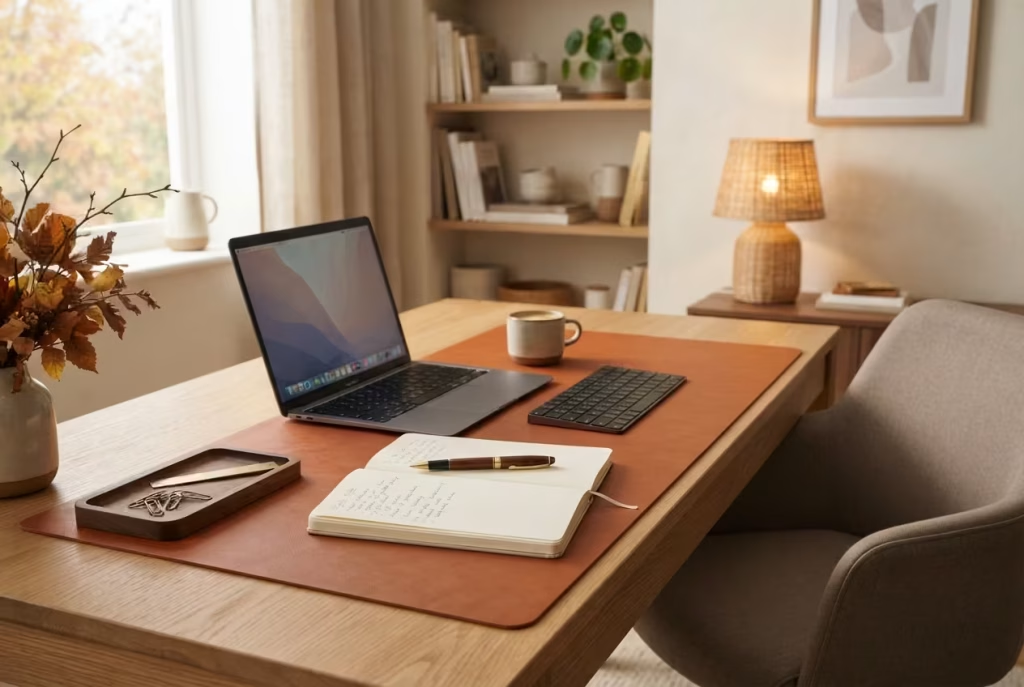
6. Swap your plain desk mat for one in a warm, autumnal tone. A burnt orange, rust, or mustard desk pad does two jobs at once: it protects the surface underneath and introduces colour exactly where your eye lands most often. Colour psychology research consistently shows that warm hues like orange and rust are associated with enthusiasm, creativity, and increased alertness, largely because they sit closer to the wavelengths our brains have long associated with sunlight and activity rather than rest. Because a desk mat occupies the most-viewed real estate in the entire room, it’s one of the lowest-effort, highest-impact swaps on this whole list.
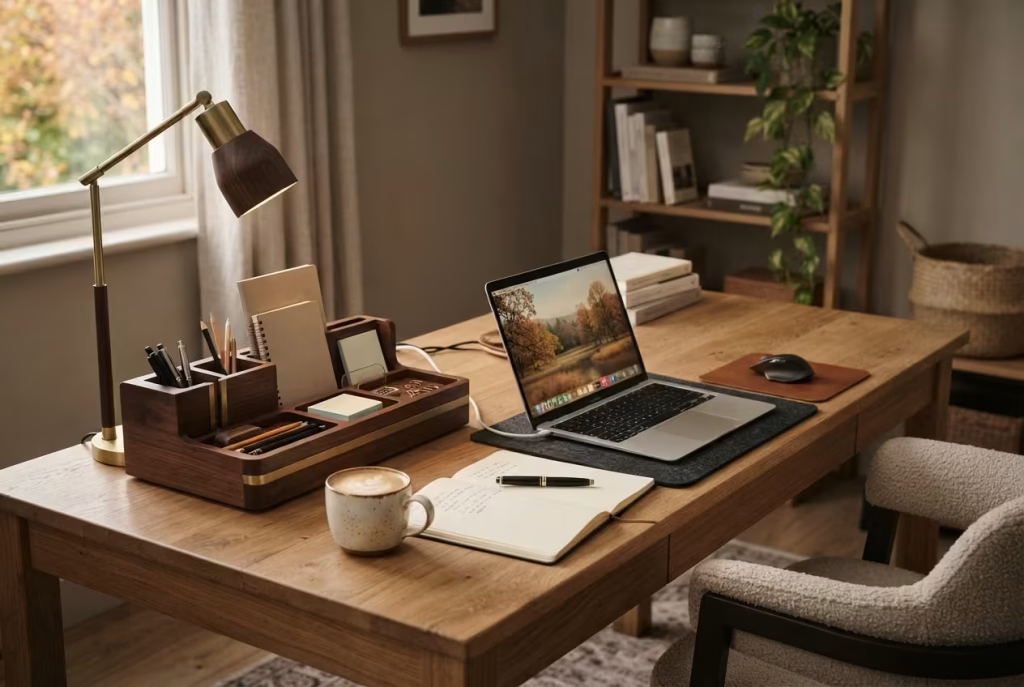
7. Bring in a proper desk organiser, not just a spare pen pot. This is where the Princeton clutter research becomes directly actionable. Loose papers, tangled cables, and a scatter of odds and ends create genuine competition for your visual attention at a neural level, not just a vague sense of untidiness. That mental “traffic jam,” to borrow the phrase researchers studying this exact effect have used, doesn’t just slow you down, it quietly raises stress levels without you necessarily noticing why you feel frazzled by 3pm. A dark wood or matte metal organiser in an autumnal finish keeps pens, notebooks, and sticky notes contained while still looking deliberately styled rather than merely tidied away in a hurry.
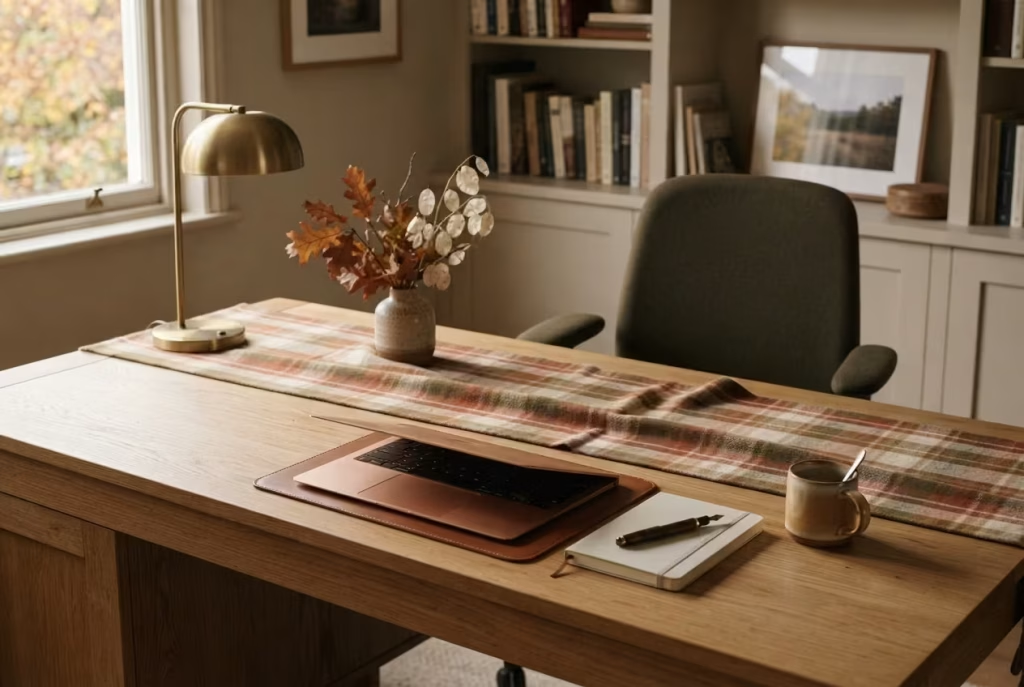
8. Use a fabric desk runner or scarf for a layer of softness. A narrow strip of plaid flannel, burlap, or a leaf-print fabric laid across the back of your desk adds texture without eating into your actual working surface. It’s the same principle as a table runner, borrowed for a workspace, and it’s a five-minute change that noticeably softens how the desk reads from across the room.
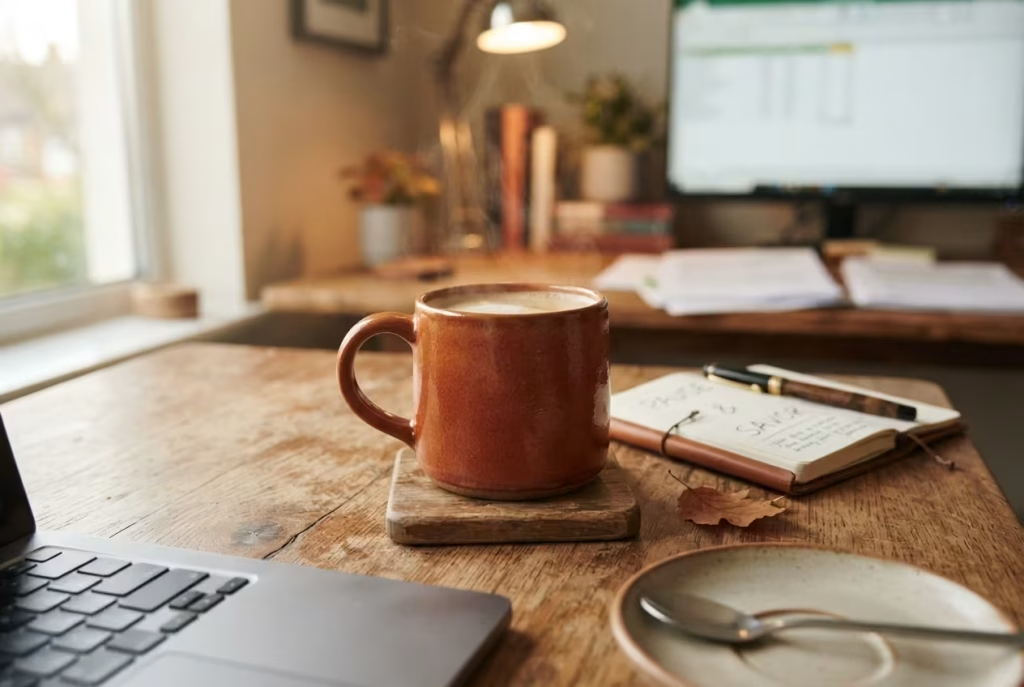
9. Invest in a proper seasonal mug you actually want to use. This sounds almost too simple to earn its place on a list backed by neuroscience research, but there’s genuine substance to it. Having a mug you like the look and feel of, sat within arm’s reach, turns a routine coffee or tea break into a small, deliberate pause rather than something you do entirely on autopilot while still staring at your screen. Pumpkin-shaped, plaid-patterned, or simply a rich rust glaze; the specific design matters less than the fact that you chose it with intention rather than grabbing whatever was nearest the cupboard.
You May also Like: 25 Barndominium Office Ideas That Blend Rustic Charm with Modern Productivity
Zone Three: Seating and Comfort, Because You’re Not Going Anywhere
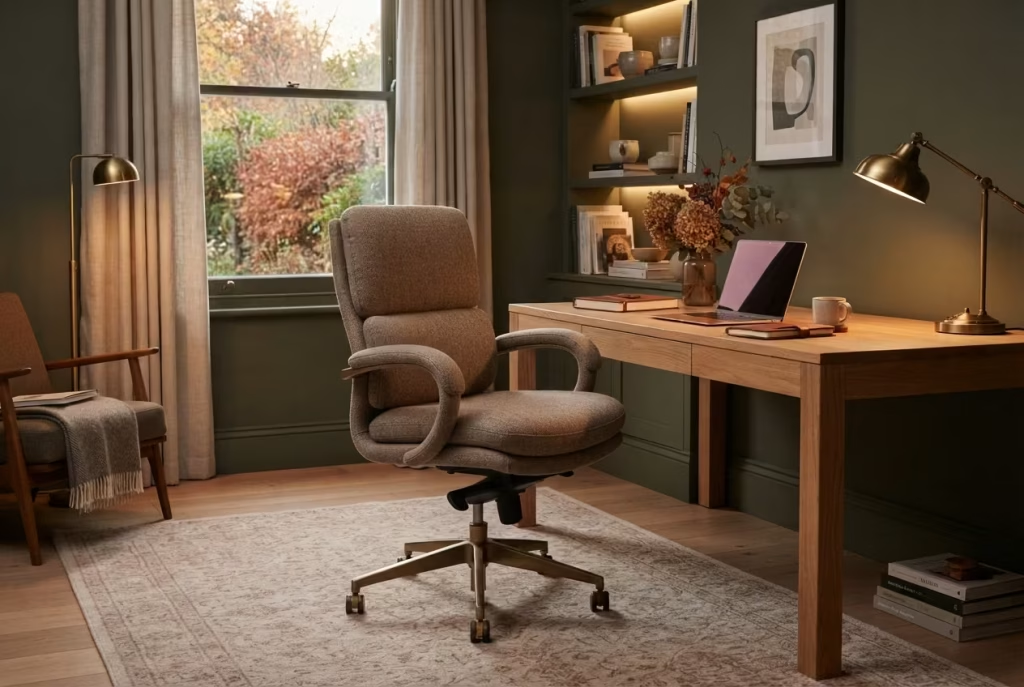
You’ll spend more hours in your office chair than in most other seats in the house, so this zone deserves proper attention rather than an afterthought bolted onto the end of a shopping list.
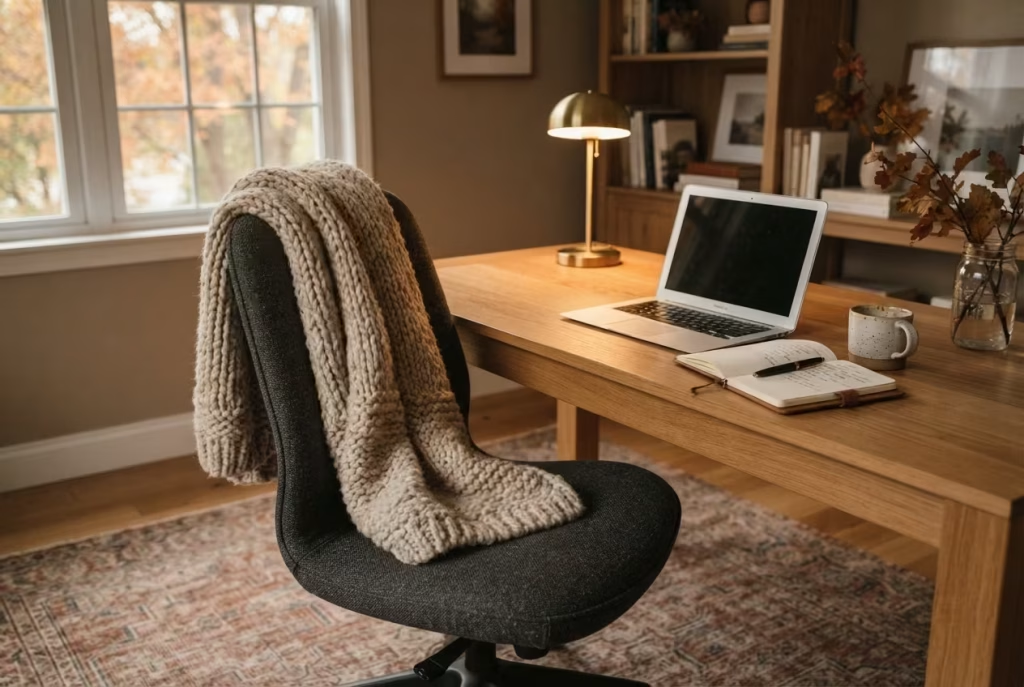
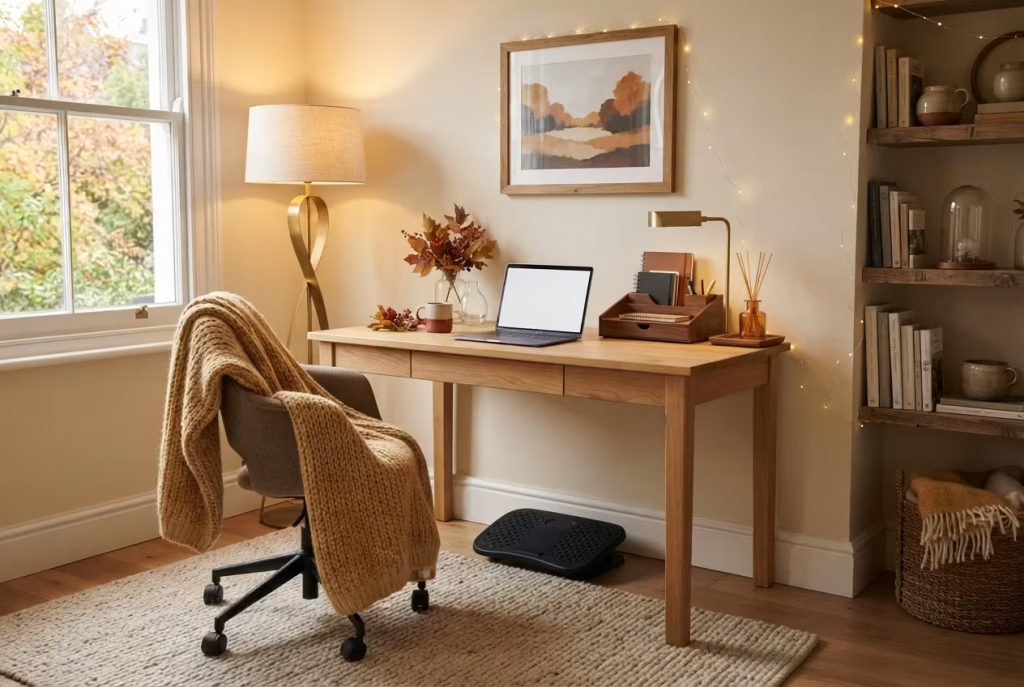
10. Drape a chunky knit throw over the back of your chair. Nothing signals “settle in” quite like a heavyweight knit blanket within reach. Beyond the obvious comfort factor, richer, heavier textures like boucle, wool, and chunky knits are specifically recommended by accessories buyers and interior designers as the autumn swap for lighter linen and cotton, because they add both visual and physical warmth without requiring you to replace a single piece of furniture.
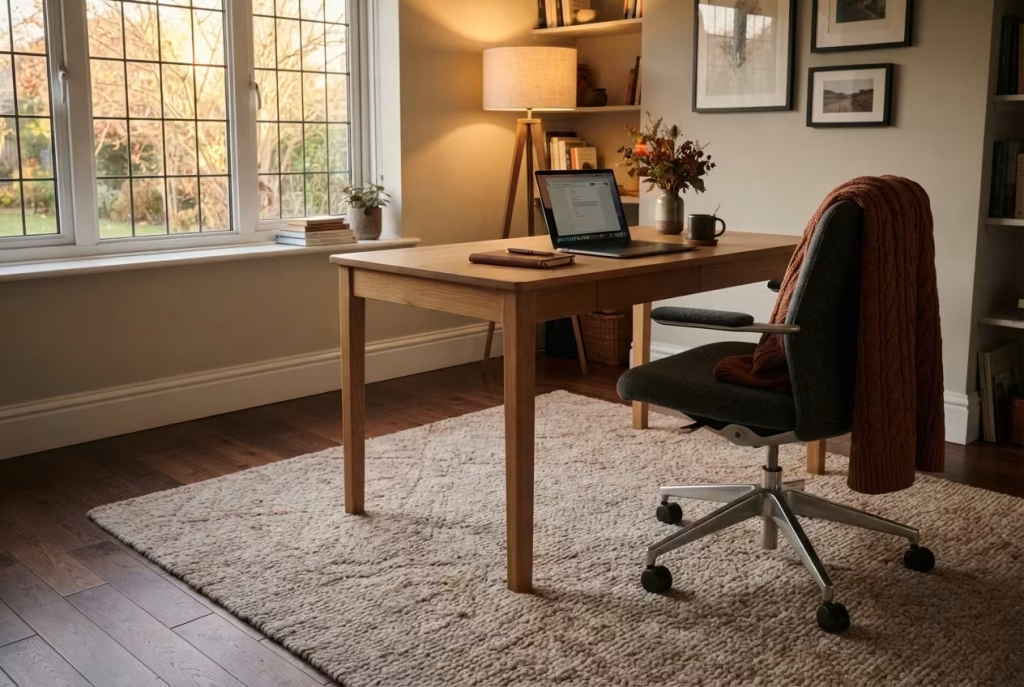
11. Add a rug or a chair mat if your floor is hard underfoot. Cold floors are one of the most consistently reported complaints from people working at home once autumn properly sets in, and it’s a fix that most cosy-office guides skip entirely in favour of something more photogenic. A soft rug beneath your desk, or a woven chair mat if you need something firmer for your chair to roll across, puts a genuine layer of insulation between your feet and a cold hardwood or tiled floor. It’s a small change on paper, but it’s the difference between wriggling your toes for warmth every ten minutes and forgetting about your feet altogether by mid-morning.
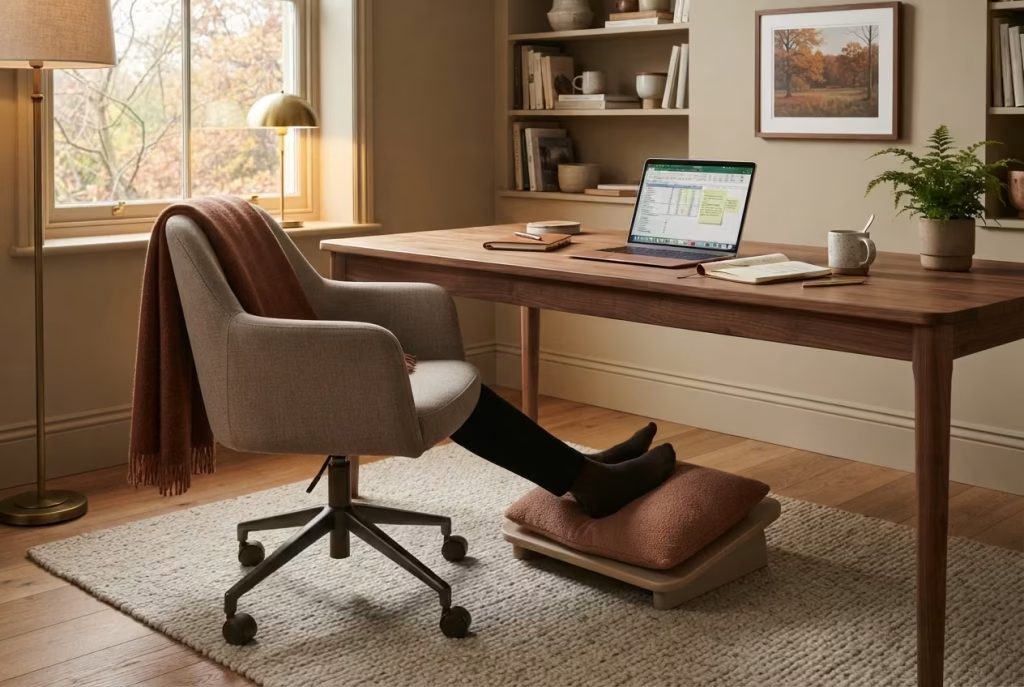
12. Bring in a footrest for proper ergonomic support. Not every desk and chair combination sits at quite the right height for every body, and a footrest solves that mismatch while doubling as a comfort upgrade at the same time. Ergonomics research consistently links poor lower-body support during long seated periods to increased fatigue and restlessness, both of which chip away at sustained focus over the course of a working day. Pair it with a cushion in a seasonal tone for a bit of visual continuity with the rest of the room.
Zone Four: Scent and Atmosphere, Handled Properly
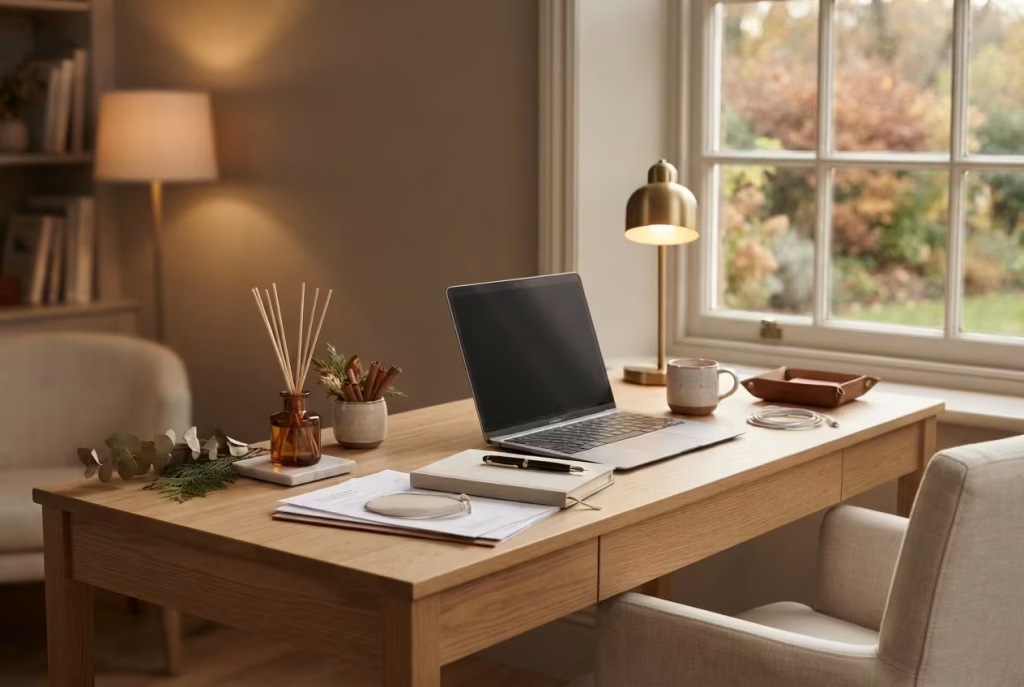
Scent is one of the fastest routes to a feeling that exists, which makes it powerful and, if you’re not careful with how you use it, genuinely risky in a room full of paper and electronics.
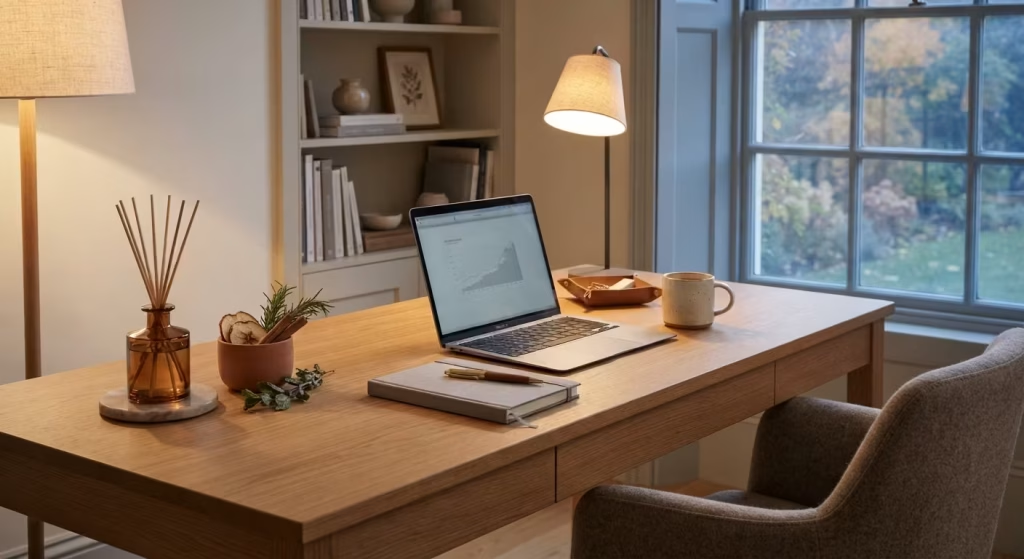
13. Choose your scent with intention, not just because it smells vaguely like autumn. Pumpkin spice, apple cider, and warm vanilla are the classic autumnal trio, and there’s a real physiological reason behind their staying power beyond clever marketing. Scent has a more direct route to the brain’s emotional and memory centres than any other sense, which is why the right fragrance can shift your mood almost instantly and why a specific smell can transport you back to a moment you’d otherwise forgotten entirely. If you want something with more of a focus-sharpening edge rather than a purely cosy one, scents like rosemary or peppermint are commonly used as alerting fragrances and are worth trying alongside your usual autumn favourites, particularly for the parts of the day that demand sharper concentration.
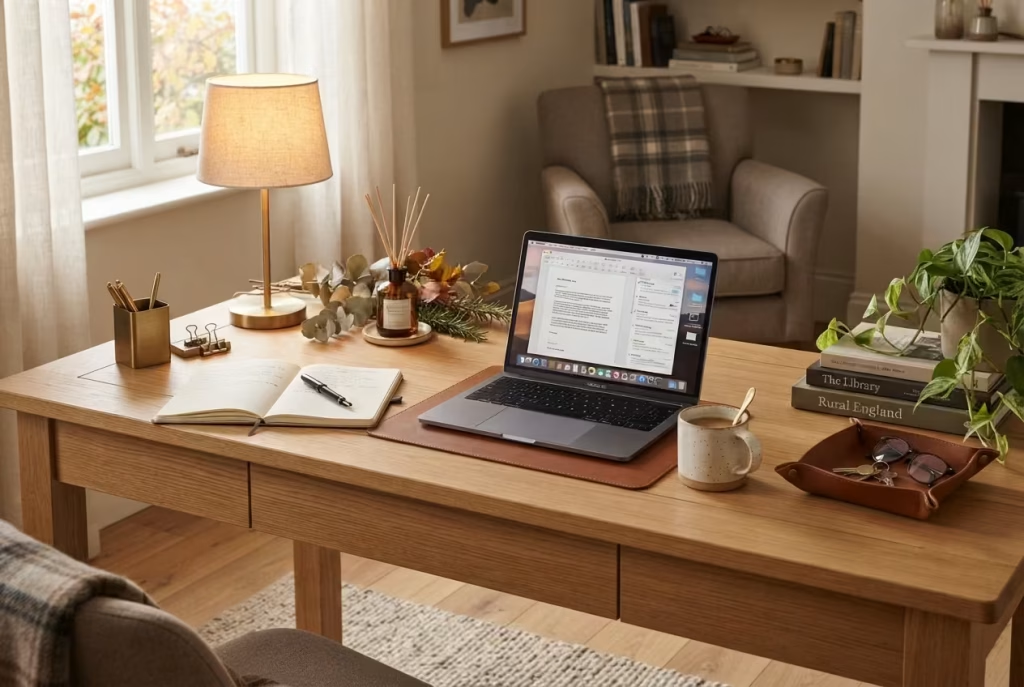
14. Reach for a reed diffuser over an open flame where you can. A reed diffuser gives you a steady, low-level scent throughout the day without anything burning at all, which makes it the sensible default for a desk that’s rarely more than an arm’s length from a stack of paper or a laptop charger. It also solves a practical problem candles don’t: consistency. A diffuser releases scent at a steady rate all day rather than the stronger initial burst and gradual fade of a burning candle.
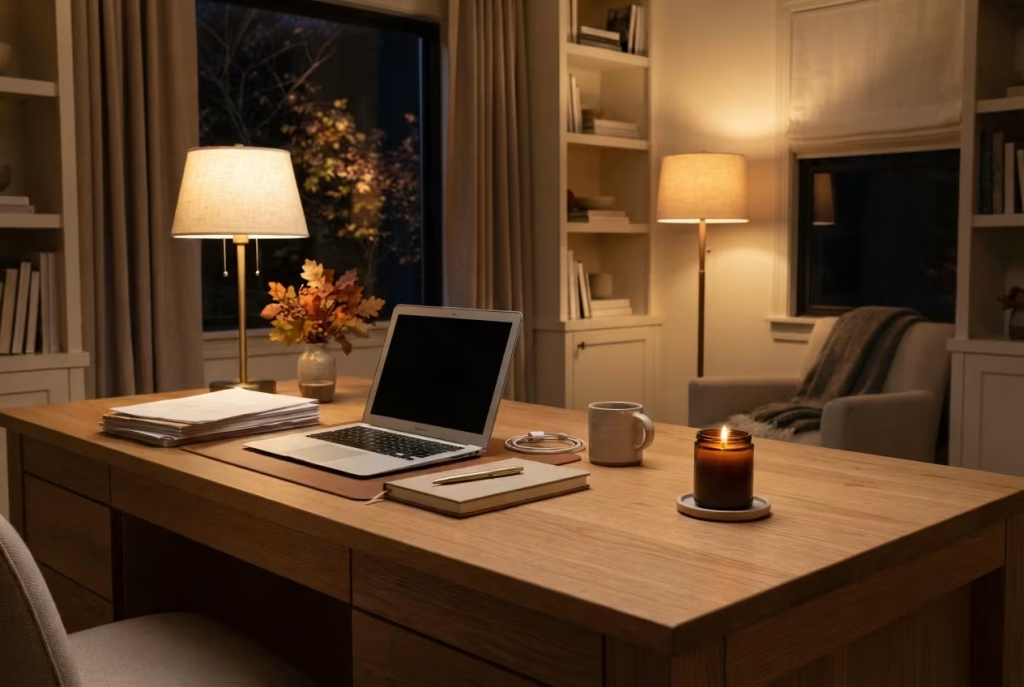
15. If you do use candles, follow the placement rules properly. This is worth taking seriously rather than skimming past for the sake of finishing the list. According to the National Fire Protection Association, 55% of home candle fires start because the candle was placed too close to something combustible, papers and curtains among the most common culprits, and 32% happen because the candle was left unattended or the person burning it fell asleep nearby. A desk covered in paperwork, notebooks, and cables is precisely the kind of environment where that risk multiplies rather than diminishes. If a candle is non-negotiable for you, the safety table below sets out exactly what to do before you strike the match.
You May also Like: 25 Boho Office Ideas to Inspire a Creative Workspace
Fall Office Safety at a Glance
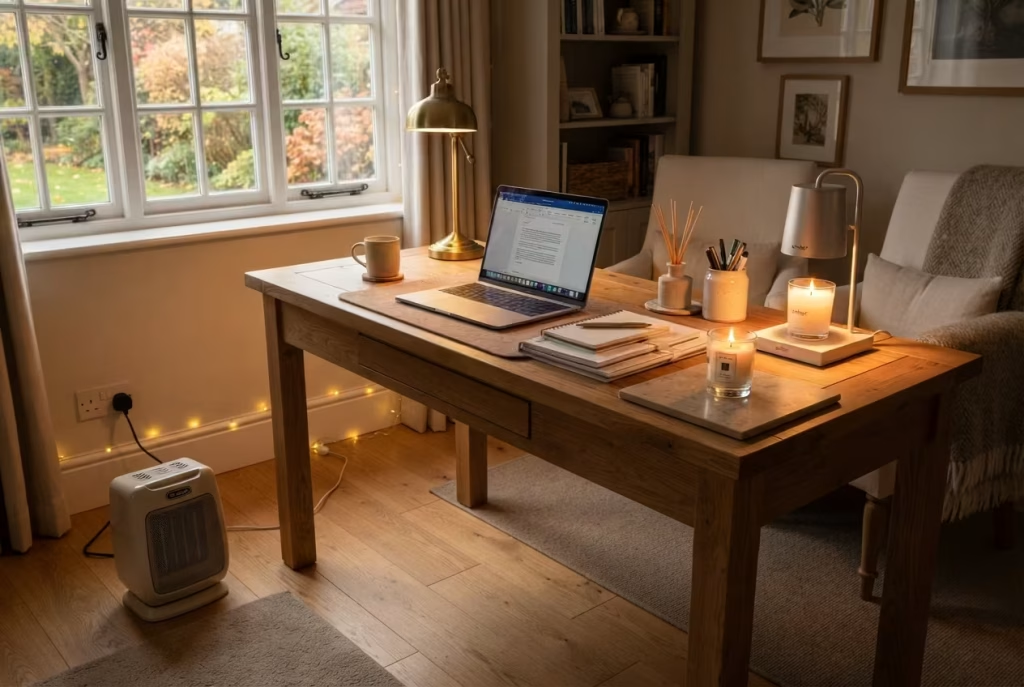
| Item | Real Risk | Simple Fix |
| Open-flame candles | 55% of home candle fires start from being too close to combustible material like paper and curtains | Keep at least 30cm clear on all sides, never place on top of papers, extinguish before leaving the room |
| Space heaters | Responsible for 43% of home heating fires and 85% of home heating fire deaths (NFPA data) | Plug directly into the wall, never an extension cord, keep 1 metre of clearance from paper, curtains and furniture, place on the floor and switch off when you leave the desk |
| Candle warmer lamps | Low fire risk since there’s no open flame, but still generates real heat | Keep away from stacked paper and don’t leave running unattended overnight |
| Reed diffusers | Minimal risk, though oil can mark wood surfaces over time | Sit on a small tray or coaster to protect your desk finish |
| Trailing fairy light or lamp cables | Trip hazard and cable-fray risk when tucked under rugs | Route along skirting boards or use cable clips rather than running under a rug |
You May also Like: 25 Cozy Fall Staircase Decor Ideas for a Warm and Welcoming Home
Zone Five: Plants and Nature, Bringing the Outdoors In
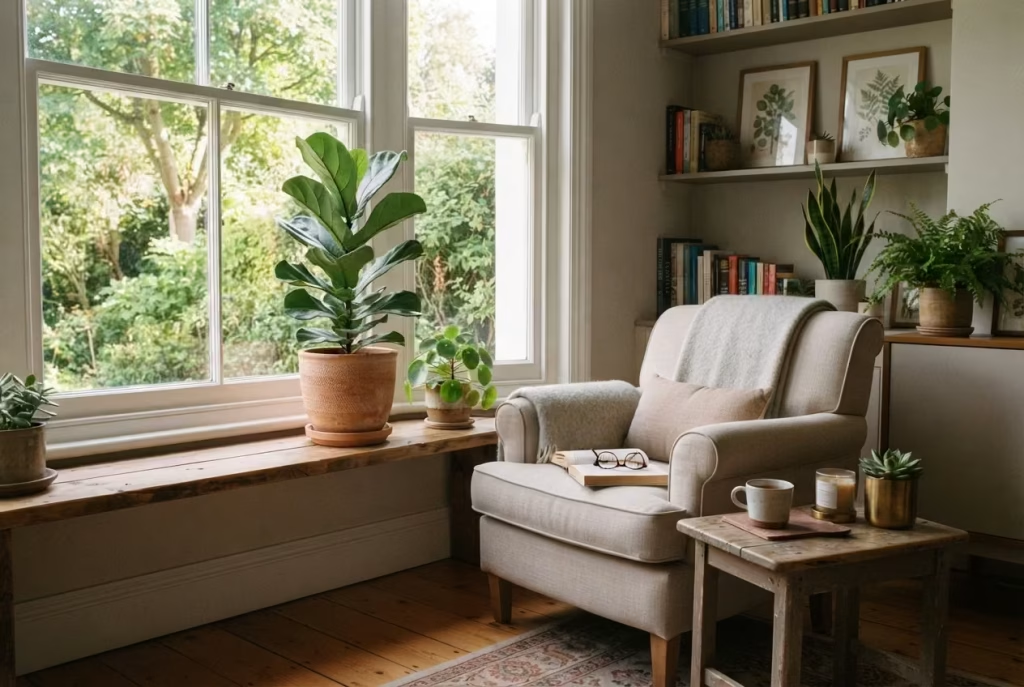
You don’t need a greenhouse’s worth of foliage to feel the benefit here, just one or two well-chosen plants positioned where you’ll actually notice them throughout the day.
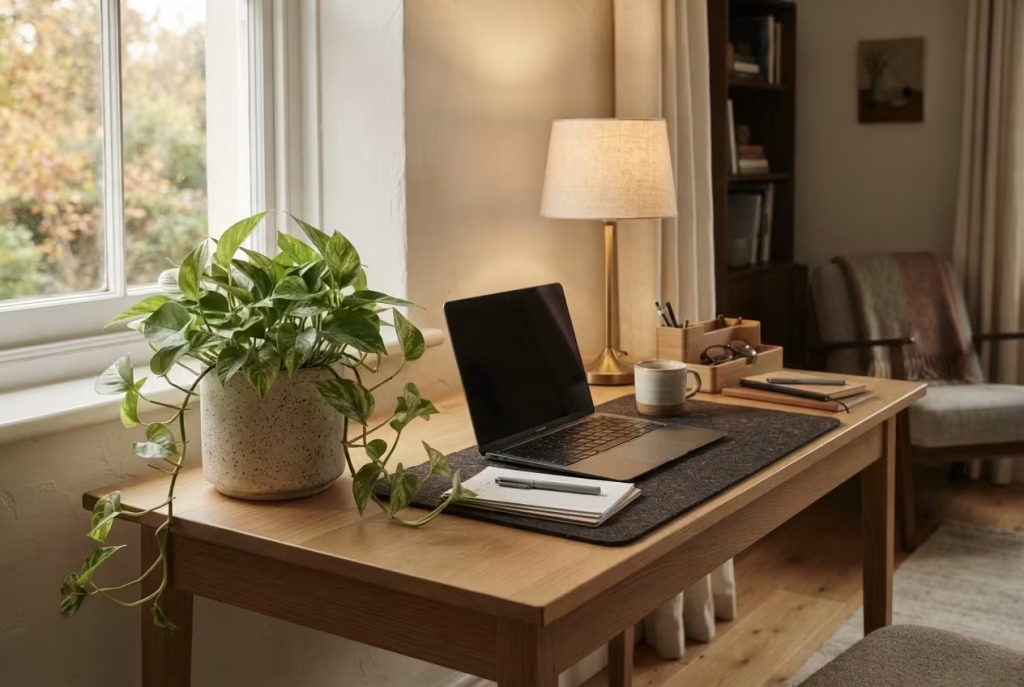
16. Add at least one proper houseplant, not a faux one, if the light allows it. The data on this is genuinely striking and worth quoting properly rather than paraphrasing away. A 2010 study from the University of Technology Sydney found that adding plants to an office environment reduced measured anxiety by 37% and depression by 58% among the people working there, figures that are considerably higher than most people would guess before hearing them. Combined with the productivity gains mentioned earlier, a plant isn’t decoration so much as a quiet, ongoing improvement to how you feel while you work, every single day it sits on your desk. Snake plants and pothos are famously forgiving of low light and inconsistent watering, which makes them the sensible choice for anyone who knows their own track record with houseplants isn’t spotless.
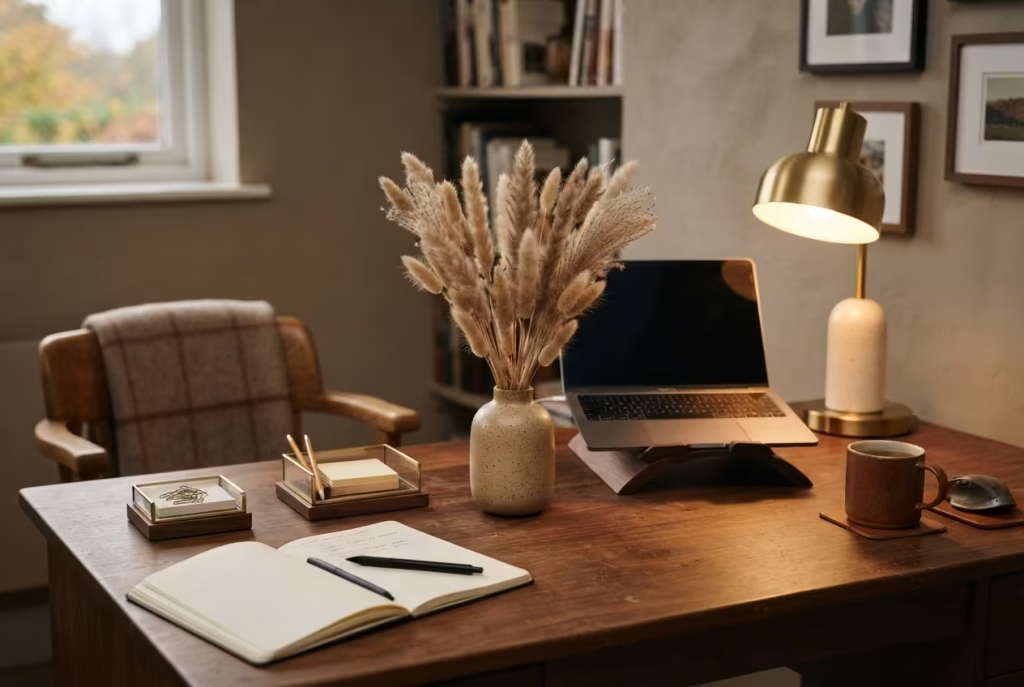
17. Bring in dried or faux autumn foliage where fresh plants won’t survive. Not every desk gets enough light to keep something alive, and that’s genuinely fine rather than a compromise to feel guilty about. A small vase of dried pampas grass, faux maple leaves, or a bundle of preserved eucalyptus gives you the same visual softening without any watering schedule to remember or forget. It’s a legitimate middle ground rather than a lesser option.
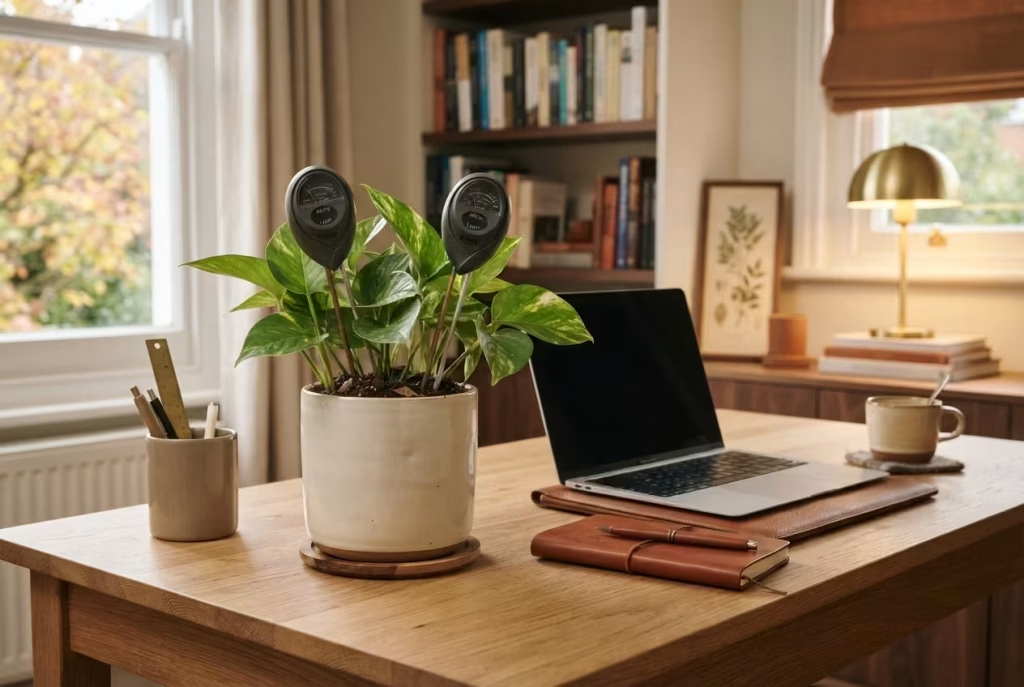
18. Use a moisture meter if you’re prone to over or under-watering. A simple three-in-one soil tester, checking moisture, light, and pH in one go, takes the guesswork out of plant care entirely. It’s a small, inexpensive tool that breaks the common cycle of drowning a plant one week and forgetting about it the next, which is often the exact pattern that ends up killing an otherwise low-maintenance plant.
Zone Six: Walls, Personal Touches, and the Things That Make It Yours
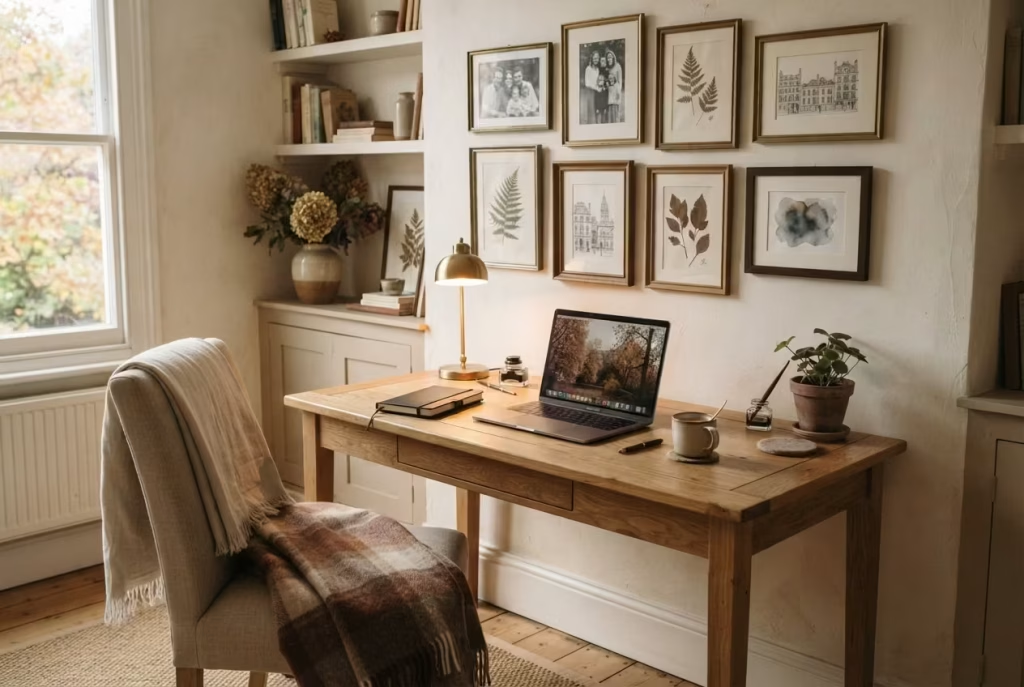
This is the zone where a workspace stops looking like a hotel room and starts looking like somewhere a specific person, you, actually works.
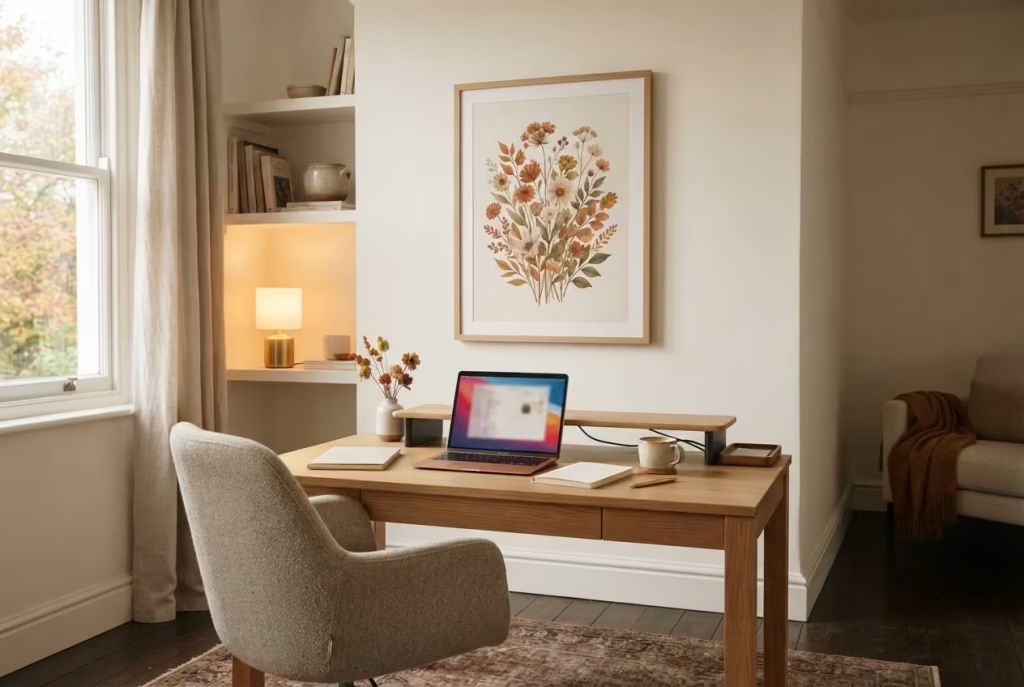
19. Hang autumn-toned wall art within your eyeline, not just anywhere convenient. The key detail here is placement rather than subject matter. The American Optometric Association’s well-known 20-20-20 rule recommends looking at something roughly 20 feet away for 20 seconds every 20 minutes to genuinely rest the eyes from screen strain, and a piece of art positioned at that kind of distance from your desk gives you a natural, built-in prompt to actually do it rather than relying on willpower or an app reminder. A warm floral print, a moody forest scene, or an abstract piece in burnt orange and cream all work equally well; what matters most is that it sits somewhere you’ll genuinely glance during the natural pauses in your day.
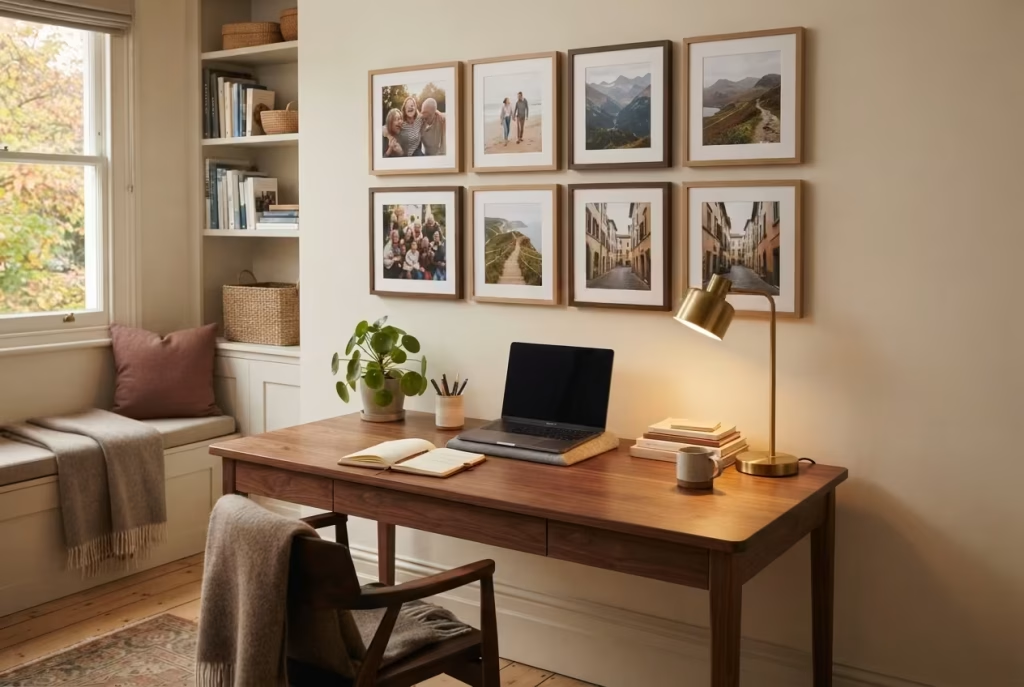
20. Display photographs of people and places you love. There’s real psychological grounding in this one beyond simple sentimentality. Being able to glance up and see faces you care about acts as a quiet, recurring reminder of why the work matters in the first place, particularly on the kind of grinding, unglamorous days that every job has its fair share of. A uniform set of frames keeps the display looking intentional and considered rather than haphazard and thrown together.
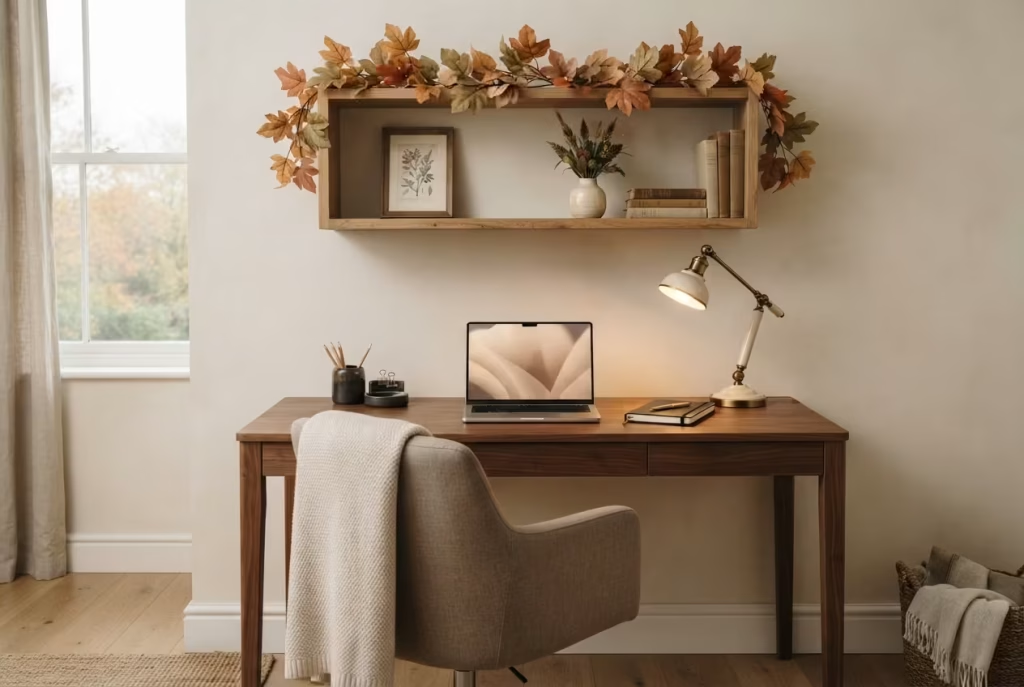
21. Try a leaf or pumpkin garland along an open shelf. If your office has shelving above the desk, a simple garland of faux autumn leaves or a scattering of small pumpkins along it introduces the season without cluttering your actual working surface, keeping the desk itself clear enough to still benefit from the clutter research covered earlier.
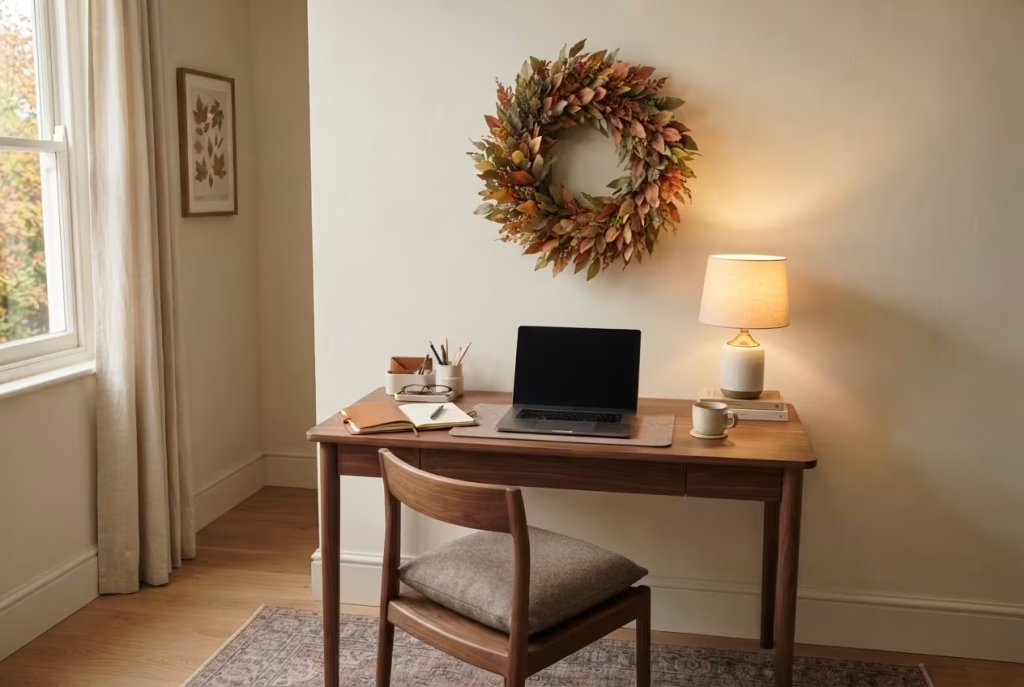
22. Add a wreath, even indoors. Wreaths aren’t strictly a front-door decoration. Hung on an interior wall, leaned against a shelf, or propped in an empty corner, a fall leaf wreath brings texture and colour into a room without taking up any floor or desk space at all, which matters considerably more in a smaller office than it does in a spacious living room.
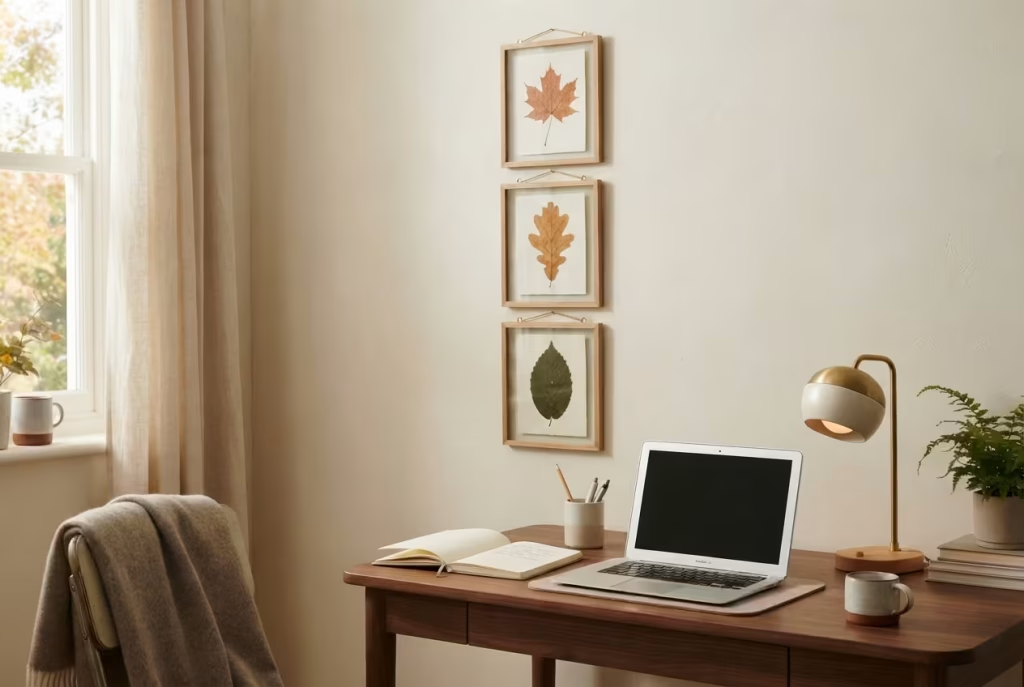
23. Frame a few pressed leaves for something genuinely low-cost. Press a handful of colourful leaves between the pages of a heavy book for several days, then frame them behind simple glass. It costs almost nothing, looks considerably more expensive than it is, and gives you a piece of decor that’s entirely your own rather than something pulled off a shelf identical to a thousand others.
Zone Seven: Small, Awkward, or Windowless Offices
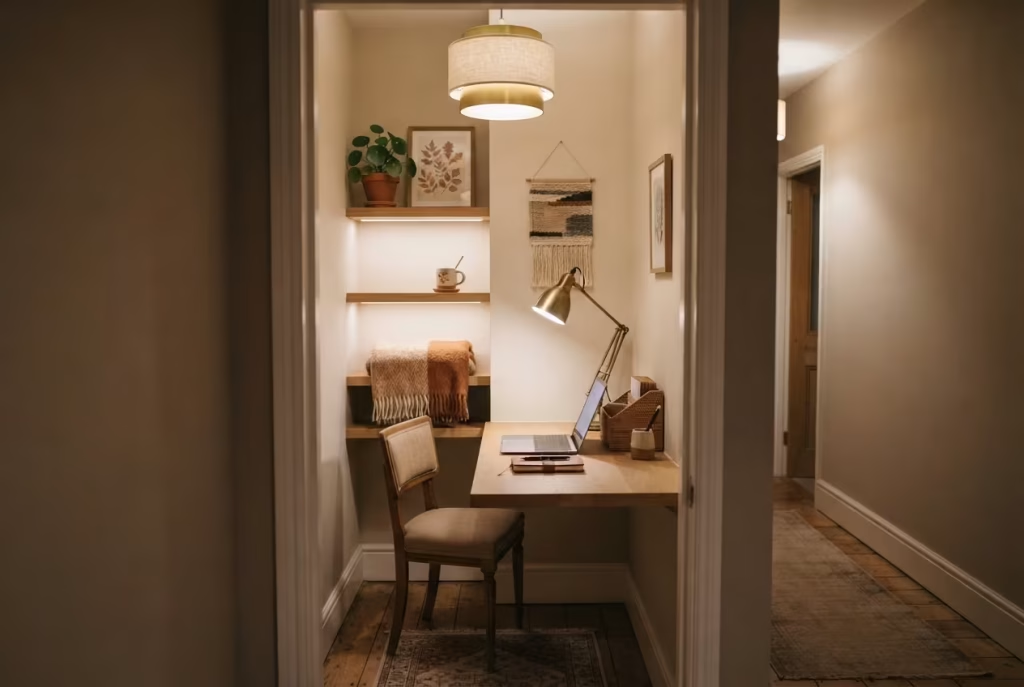
If your working space is a converted cupboard, a corner of the landing, or a nook with no natural light at all, the rules shift slightly, but cosy is still entirely achievable, and arguably matters even more here.
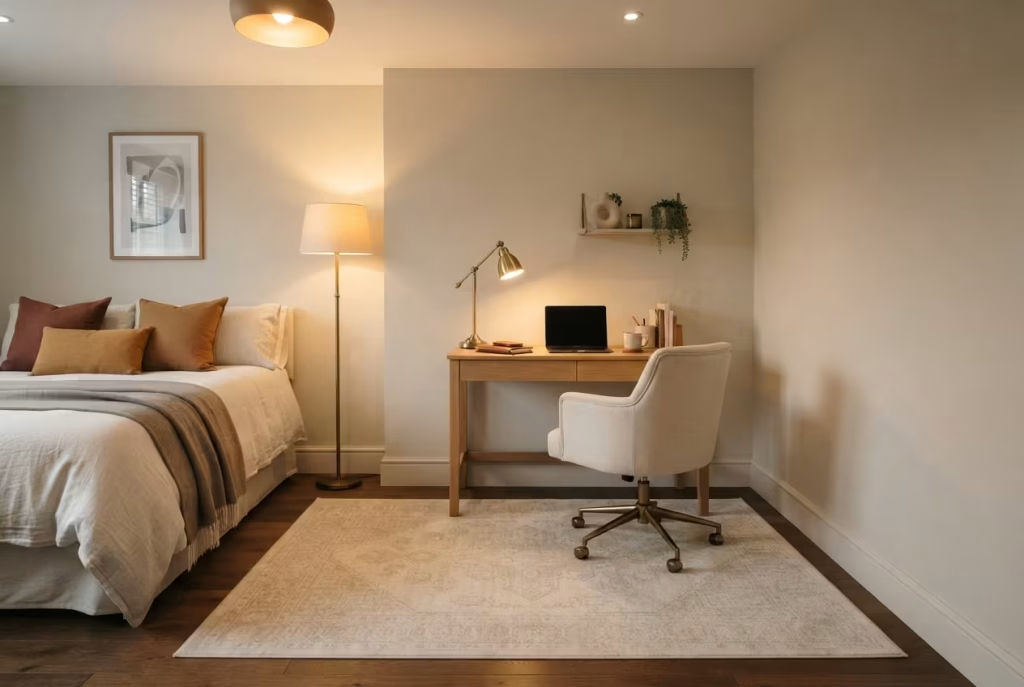
24. Use a light-coloured, patterned rug to bounce light around the room. In a windowless room, every surface is doing double duty as either a light source or a light absorber, whether you’ve consciously thought about it that way or not. A pale, patterned rug reflects what artificial light you do have back into the room rather than swallowing it into a dark floor, and it simultaneously defines the “office” section of a shared space, which matters considerably when your desk shares a room with a guest bed or a treadmill rather than occupying its own dedicated floor.
25. Layer a warm dimmable lamp with a small faux plant for instant life. In a nook with no window to speak of, a single well-chosen lamp with a warm, linen-covered shade does more work than any amount of styling elsewhere in the room combined. Pair it with one small plant, faux if the light genuinely won’t support a real one, and the space stops feeling like a leftover corner nobody wanted and starts feeling like somewhere you deliberately chose to work.
Cost Tiers: What This Actually Costs to Pull Off
Not every idea on this list needs the same budget, and it’s worth knowing where your money goes furthest before you start ordering anything at all.
| Tier | What You Get | Typical Spend |
| Budget (under £20 per item) | Desk mat, fairy lights, seasonal mug, dried foliage bundle, pressed leaf frame | £5-£20 |
| Mid-range (£20-£60 per item) | Chunky throw blanket, reed diffuser set, wall art print, footrest, desk organiser | £20-£60 |
| Splurge (£60+) | Genuine wool rug, daylight lamp, statement floor lamp, framed gallery wall set | £60-£150+ |
A genuinely effective refresh doesn’t require maxing out every tier at once. Picking one or two ideas from each zone, rather than attempting all twenty-five in a single weekend, tends to produce a room that feels considered rather than showroom-staged overnight.
Bringing It All Together
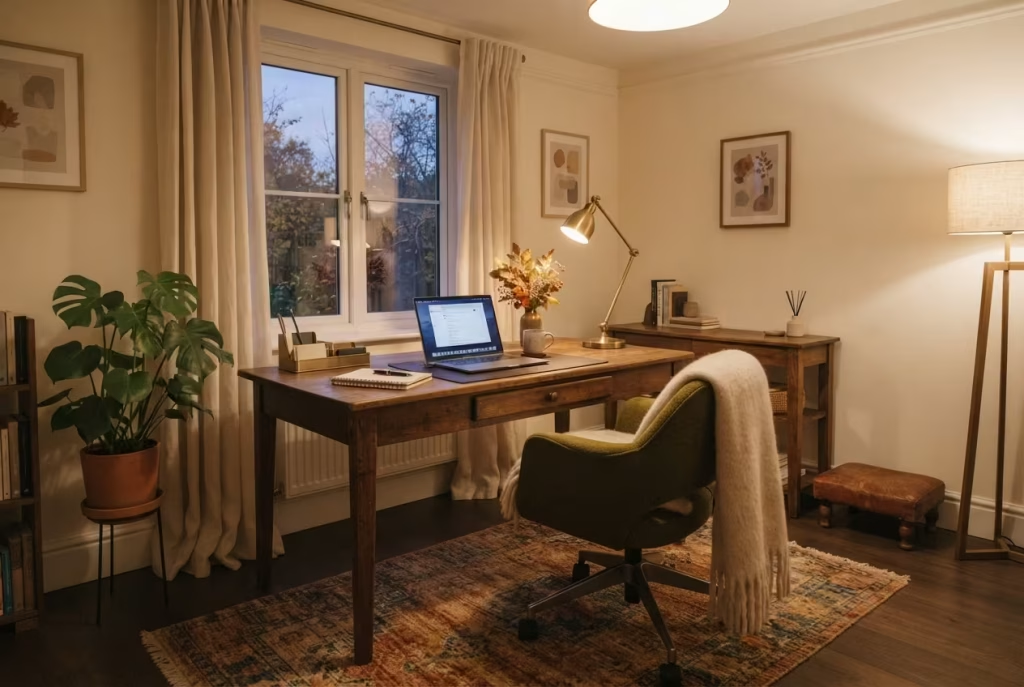
The common thread running through every idea here is that cosy and productive were never actually at odds with each other, they’ve just rarely been treated as a package deal in the way they deserve. Warm lighting done properly sharpens focus rather than dulling it. A plant does more than sit prettily in the corner, it measurably lifts the mood of the person sat beside it, by a margin most people would never guess without seeing the research. Even something as small as a footrest or a chair mat closes the gap between a room you merely tolerate and one you’re genuinely glad to sit down in each morning.
Start with lighting, since it does the most heavy lifting of any single change on this list, then work outward from there, one zone at a time. By the time the clocks change again in spring, you’ll have built a space that carried you through the darkest months rather than one you simply endured until the days grew longer again.
Frequently Asked Questions
Does cosy decor actually help with focus and productivity, or is it just nice to look at?
It genuinely does, and the numbers behind it are more substantial than most people expect. Research from Human Spaces found offices with natural, considered elements linked to 6% higher productivity and 15% higher creativity, while University of Exeter studies found productivity rose by around 15% simply by adding plants to a previously bare space, and by 38% when people had genuine control over their own space design. Separately, Princeton University Neuroscience Institute research shows that visual clutter genuinely competes for your brain’s limited attention capacity at a neural level.
How do I make a small or windowless home office feel cosy for fall?
Lean on light-coloured, patterned rugs to bounce artificial light around the room, use a warm dimmable lamp as your main light source rather than relying on an overhead fixture, and add one plant, real or faux, to stop the space feeling sterile. Removable wallpaper with depth, such as a forest scene or a subtle pattern, can also create the illusion of a view where there genuinely isn’t one.
Is it safe to use candles or a space heater near my desk?
Both carry real risk if placed carelessly. The NFPA reports that 55% of home candle fires start because the candle was too close to combustible material, and space heaters account for 43% of home heating fires and 85% of related deaths. Keep candles at least 30cm from paper and fabric, and keep a full metre of clearance around any space heater, which should always be plugged directly into a wall socket rather than an extension lead.
What’s the best type of lighting for a fall home office, warm or daylight?
Both, layered together rather than chosen exclusively. Warm light (below 3300K) suits ambient lamps and creates that settled, autumnal feel, while a cooler daylight-spectrum lamp near your desk helps combat the mood dip that comes with reduced natural light through the darker months, particularly if used earlier in the day.
How do I stop a cosy office from making me feel sleepy or unfocused?
Avoid relying solely on dim, warm lighting throughout the whole room. Keep at least one brighter, cooler task light directly over your working area, and reserve the warmer, softer lighting for the edges of the room rather than your immediate desk space, where alertness matters most.
What scents work best for a fall workspace, cosy or focus-boosting?
Pumpkin spice, apple cider, and warm vanilla are the classic cosy choices and work well for general ambience, largely because scent has such a direct route to the brain’s emotional centres. If you want something with more of a focus edge for demanding tasks, rosemary and peppermint are commonly used as alerting scents and pair well alongside your usual autumn fragrance.
How much does a full fall office refresh actually cost?
It scales with how far you take it. Budget swaps like a desk mat, fairy lights, and dried foliage can be done for under £20 each. Mid-range additions like a proper throw blanket, a reed diffuser set, or a footrest tend to run £20 to £60. A genuine splurge, such as a good wool rug or a proper daylight lamp, can run £60 to £150 or more.
Do houseplants really make a measurable difference in a home office?
Yes, and the numbers are more significant than you might expect. A University of Technology Sydney study found indoor plants reduced measured anxiety by 37% and depression by 58% among office workers, alongside the productivity gains mentioned above from the Human Spaces and University of Exeter research.
How do I stop my home office feeling cold once the weather turns?
Address the floor first, since cold feet are one of the most commonly reported complaints from home workers in autumn. A rug or a woven chair mat adds real insulation underfoot. If you’re using a space heater to top up the warmth, follow the safety guidance above rather than treating it as a set-and-forget appliance you switch on and ignore.
Can I decorate for fall without the room looking cluttered or distracting?
Choose a handful of ideas from different zones rather than layering everything at once. A desk mat, one piece of wall art, a throw, and a single plant will read as considered and deliberate, whereas piling pumpkins, garlands, and multiple scents into one small room tends to tip into visual noise rather than genuine warmth, undoing much of the focus benefit the research points to in the first place.
What’s the easiest, lowest-cost way to start if I only have fifteen minutes and £20?
Swap in a warm-toned desk mat and add a string of battery-powered fairy lights somewhere within your eyeline. Both take minutes to set up, cost well under £20 combined, and change the feel of the desk more noticeably than almost anything else on this list.