




25 Cozy Fall Staircase Decor Ideas for a Warm and Welcoming Home
The nights are drawing in, the leaves are turning the colour of conkers and toffee apples, and somewhere between the last barbecue of summer and the first proper frost, most of us start thinking about how to make the house feel like a home again. Curiously, the staircase gets left out of that thinking more often than not. It is the one fixture nearly everyone in the house passes a dozen times a day, and yet it tends to sit there bare as a Sunday roast without the trimmings whilst the mantelpiece and front door get all the seasonal love.
That is rather a shame, because a Fall Staircase dressed for autumn does more heavy lifting than almost anywhere else in the house. It is usually the first thing a visitor sees through the hallway, it runs the full height of the building, and it costs surprisingly little to transform given how much visual impact it hands back in return.
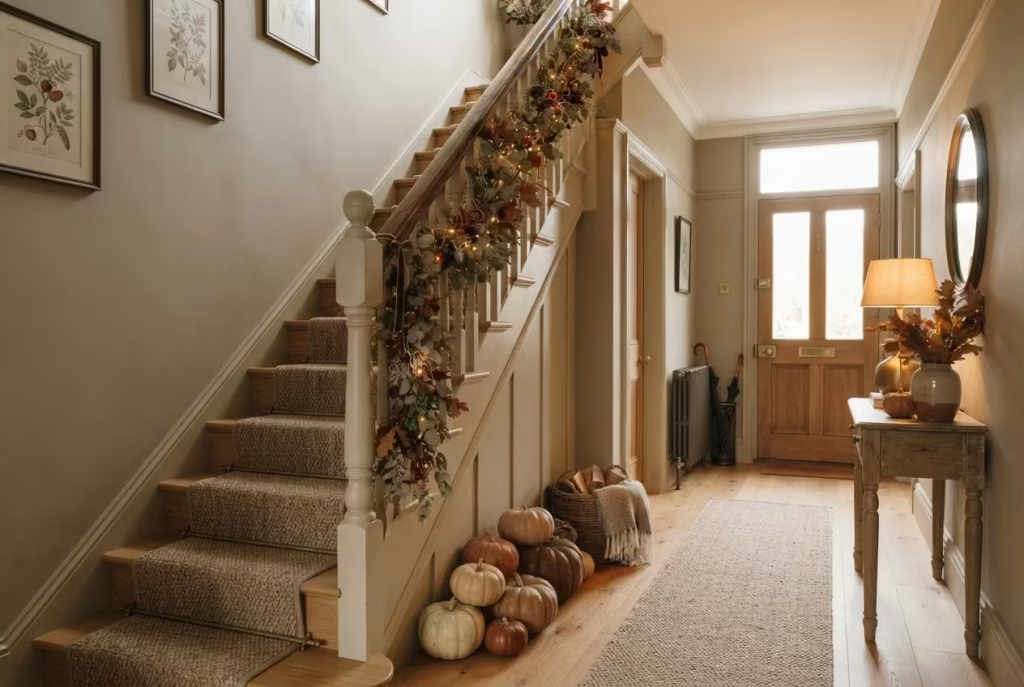
Quick answer, for anyone in a hurry: the fastest way to dress a staircase for autumn is to commit to one area rather than spreading yourself thin across all of them. A garland along the banister, a run of pumpkins down one side of the treads, or a scattering of lanterns will each carry the whole staircase on its own merits. Try to do all three at once and you risk tipping a considered display into clutter.
Below are twenty-five ideas, organised by area of the staircase, a proper materials list, honest figures on cost, a safety section built on actual UK regulations rather than vague warnings, and answers to the questions people genuinely type into Google when they are standing at the bottom of the stairs wondering where on earth to begin.
At a Glance for Fall Staircase
| Fact | Figure |
| UK domestic handrail height (Building Regulations, Approved Document K) | 900mm to 1000mm |
| Maximum gap a banister may leave before it fails Building Regs | No gap should let a 100mm sphere pass through |
| How long fresh garland typically lasts indoors before shedding | About a fortnight |
| Share of UK house fires caused by candles | Roughly 3% |
| Share of UK home fire injuries caused by candles | Roughly 6% |
| Rise in candle fires between November and January (London Fire Brigade) | Close to a third higher than the rest of the year |
Dressing the Banister: Railing and Garland Ideas
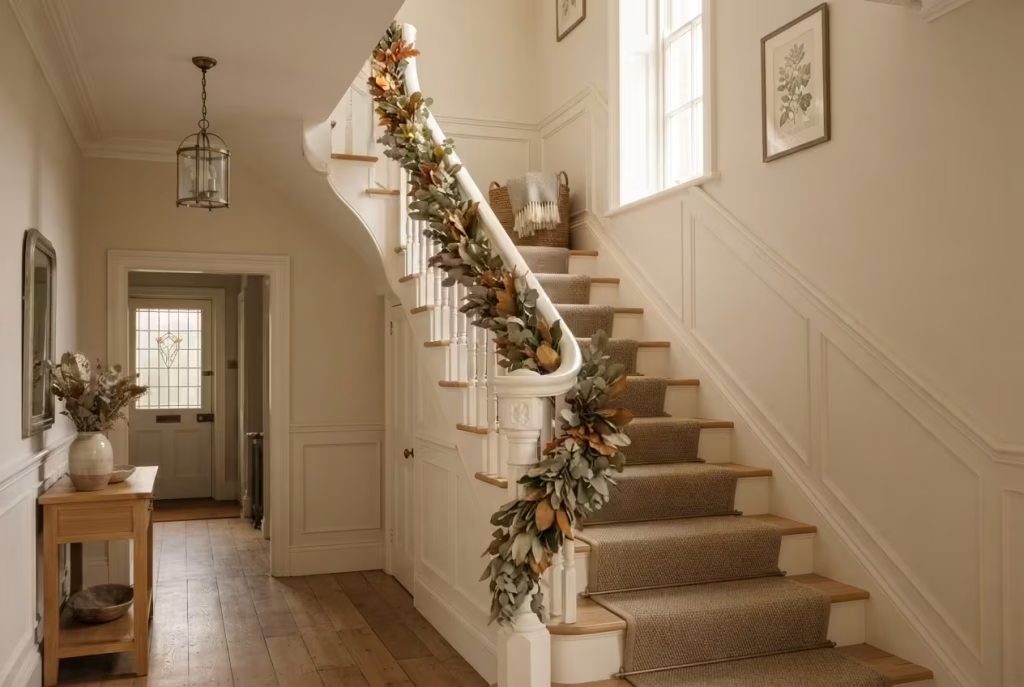
1. A Dried Eucalyptus and Magnolia Garland
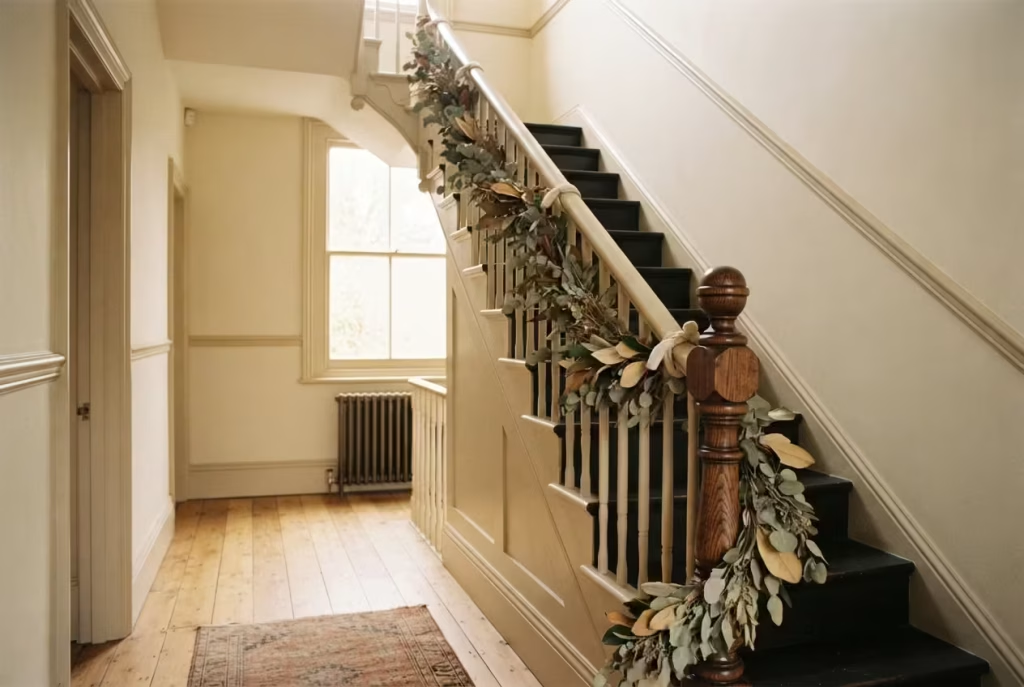
Fresh garland has one flaw nobody mentions in the glossy photographs: cut greenery typically lasts about a fortnight indoors before it starts shedding leaves down every tread. Dried eucalyptus and magnolia sidestep that entirely, holding their shape and colour for the whole season without a single leaf dropped underfoot. Secure it every couple of feet with padded garland ties rather than bare wire, which can mark a painted or varnished rail after weeks of tugging and adjusting. If the banister ends in a newel post, loop a rubber band around the garland’s cut end and hook it over the post cap; it holds firm without a scrap of tape, and it comes away cleanly when the season ends. One more thing worth knowing: a narrow Victorian staircase wants a slim, restrained garland, while a wide Georgian or new-build flight can carry something properly lush without ever looking overdone.
2. Cedar Garland Threaded With Fairy Lights
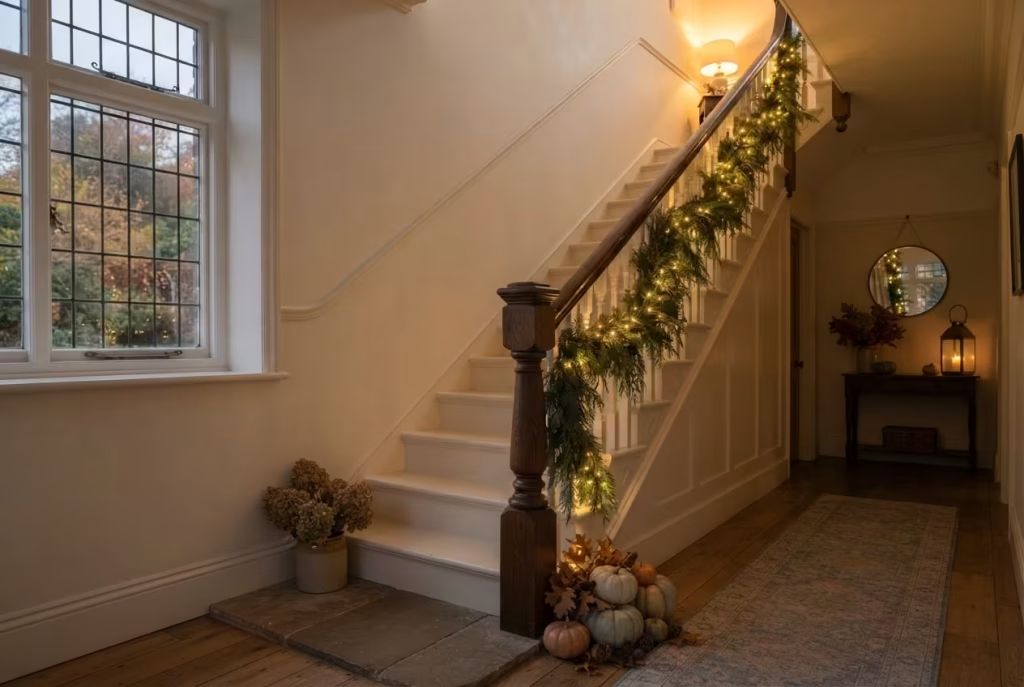
There is something about the smell of cedar drifting through a hallway that does half the decorating for you before a single pumpkin goes down. Weave warm white micro lights through the greenery and the banister glows rather than simply sits there once dusk falls. Go cordless. A mains lead trailing across a step is asking for trouble, quite literally, and a battery pack tucked behind the bottom newel post does the job just as well without a cable in sight. Set a timer so the lights come on of their own accord; it is a small touch, but it is the sort that makes a house feel looked after even when nobody’s home to flick the switch.
3. Wheat Sheaves Tied Along the Rail
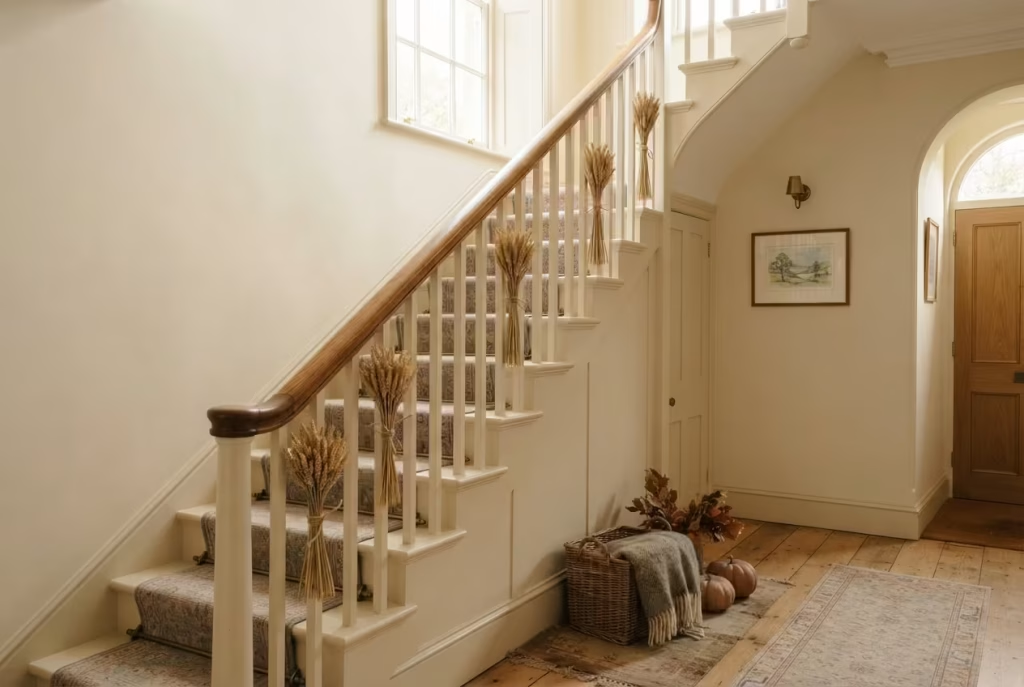
Small bundles of dried wheat, tied on with jute string every third or fourth spindle, bring genuine harvest character without costing anywhere near what a full garland does. The trick is restraint: leave bare wood showing between each bundle, because that gap is precisely what stops the whole thing looking like a hay bale exploded on the landing.
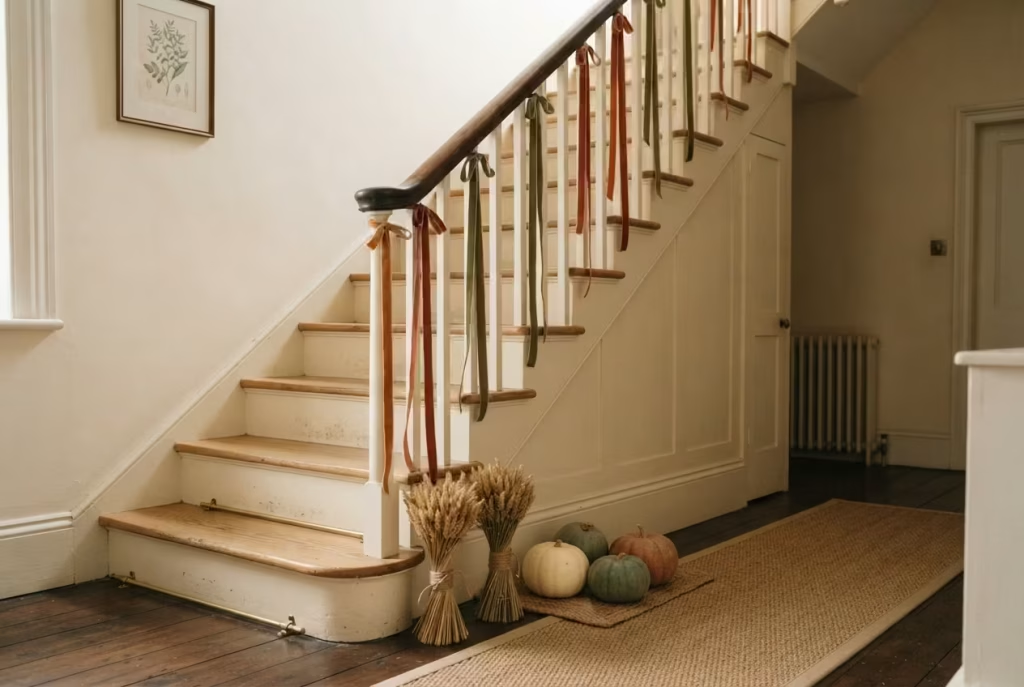
4. Velvet Ribbon on Every Third Spindle
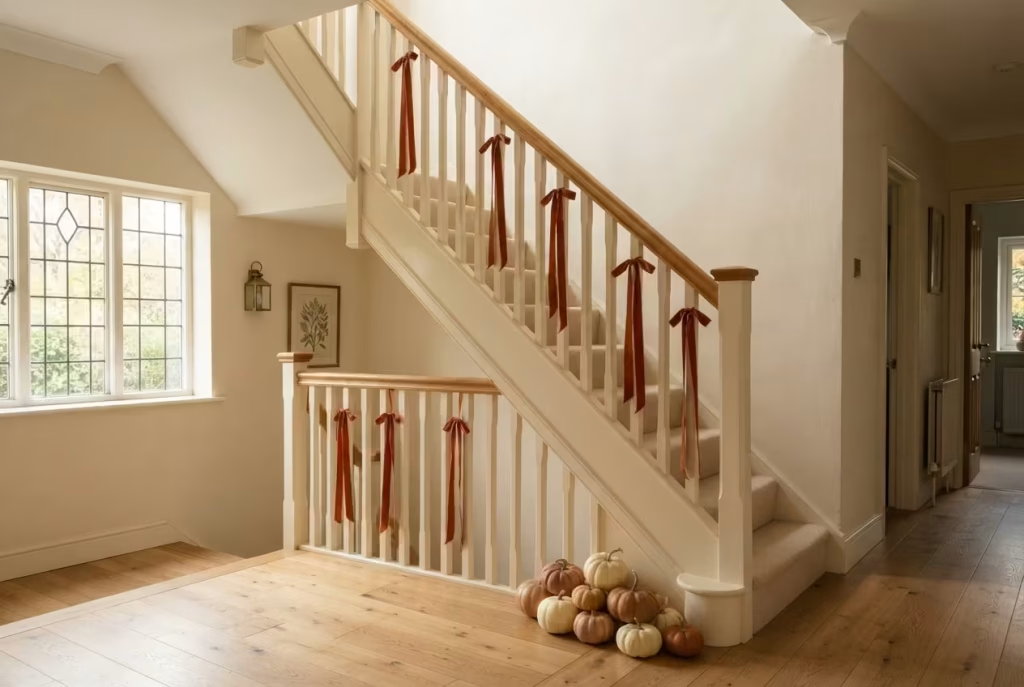
If the budget for this project could be measured in loose change, start here. Olive, rust or burnt-orange velvet ribbon, tied loosely on every third spindle with tails left long enough to sway when the door opens, is arguably the best value idea on this whole list. It costs next to nothing, takes an afternoon, and reads as deliberate rather than cheap, which is not something you can say for every budget decorating trick going.
5. Cornstalk Bundles Wrapped in Hessian
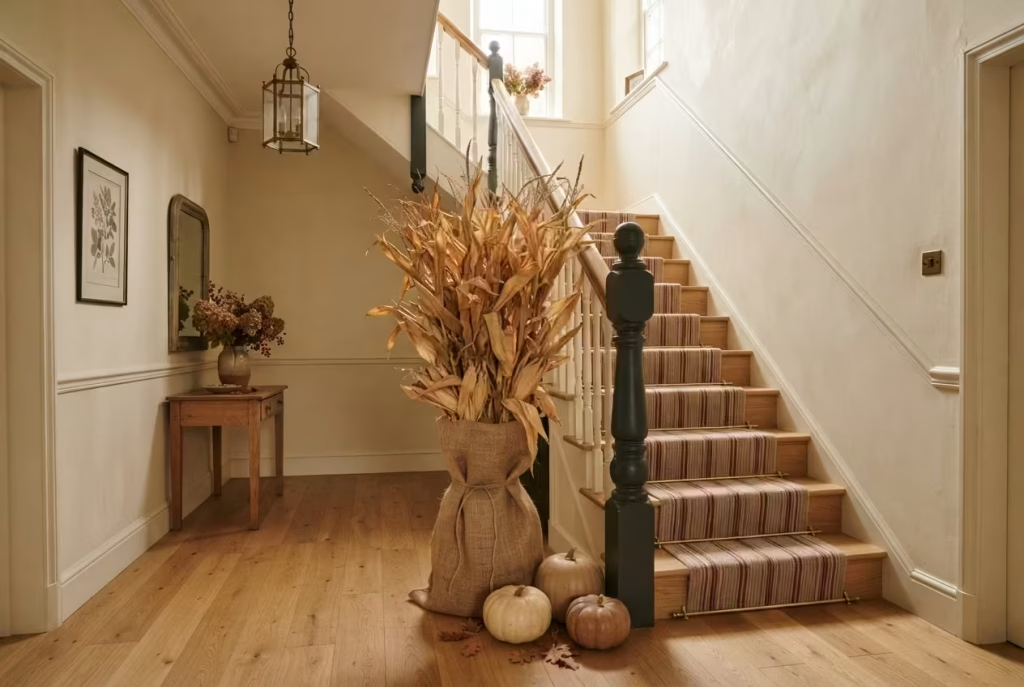
Height is the one thing most staircase displays lack, and a bundle of cornstalks propped against the bottom newel post solves that in one move. Wrap the base in hessian or burlap, trim the stalks so they clear the treads by a good few inches, and anchor them to the bottom post only. Cornstalks are heavier than they look, and nobody wants one toppling into the hallway at seven in the morning.
6. An Oak Leaf and Pinecone Swag at the Newel Post
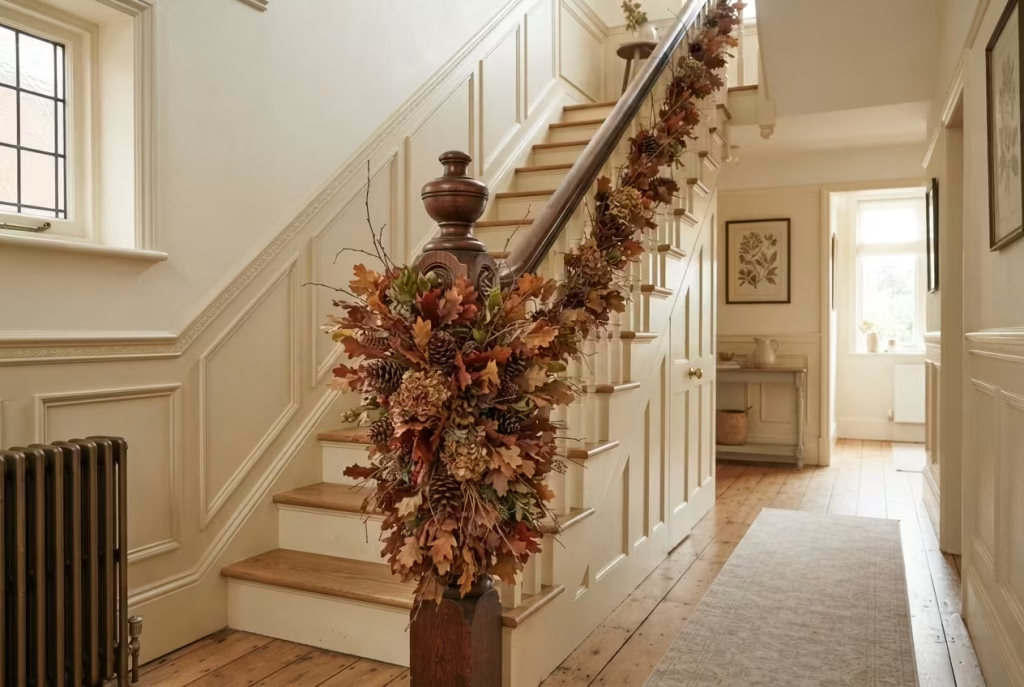
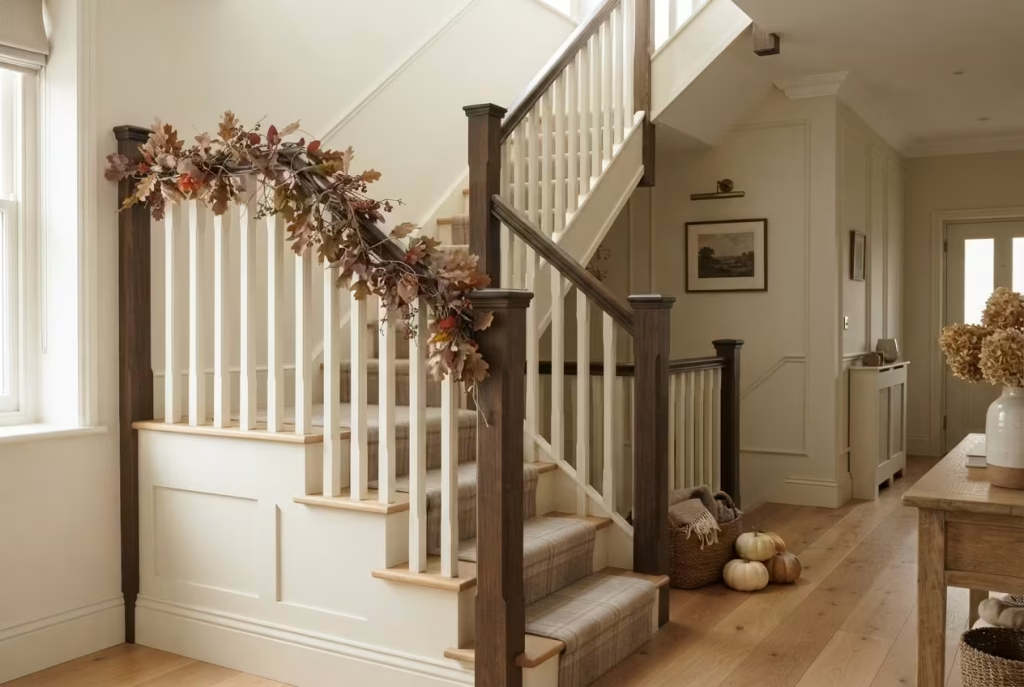
The newel post is the full stop at the end of the sentence your banister has been making, and it deserves rather more attention than it usually gets. Build the swag here noticeably fuller than the garland running the rest of the way up; that extra density tells the eye this is where it all begins, rather than simply another stretch of the same thing. Wire each pinecone on individually instead of tucking it in loosely. Approved Document K, the UK regulation covering staircases, states that no gap in a banister should let a 100mm sphere pass through, which is worth remembering if there are small children or a cat around who treats loose pinecones as toys.
Down Each Step: Pumpkin, Gourd and Plant Displays
7. A Cascading Run of Pumpkins Down One Side
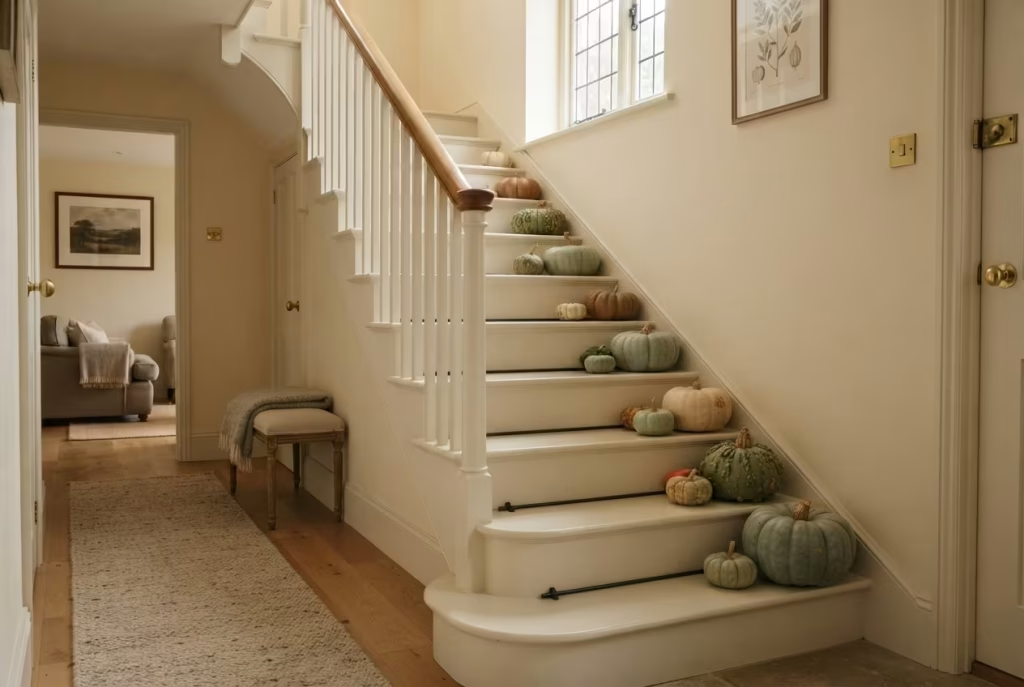
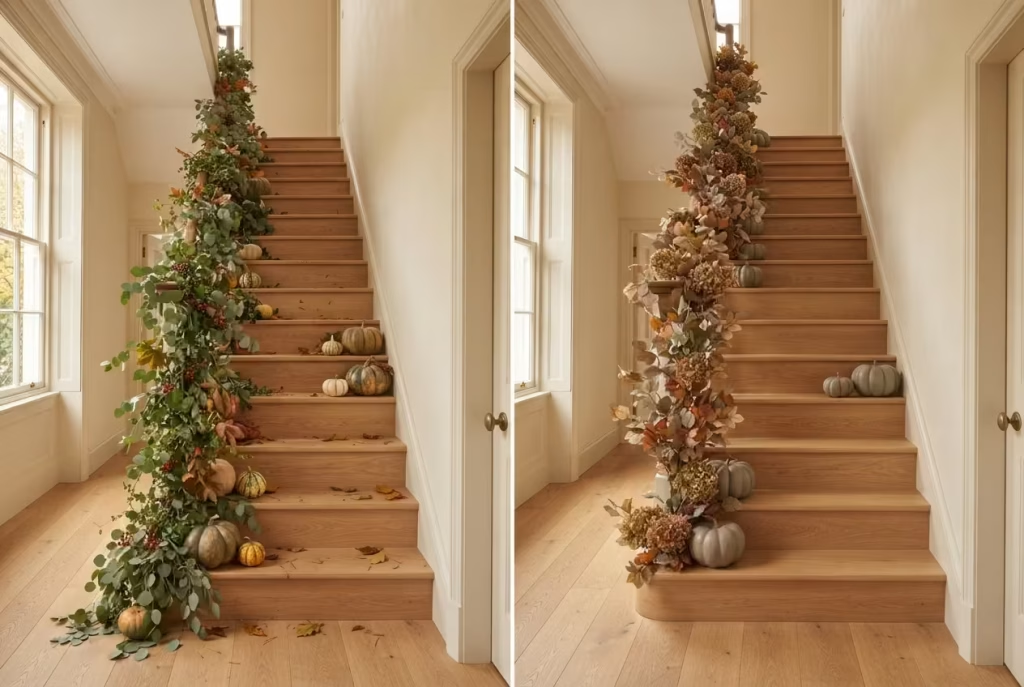
Line pumpkins up in decreasing size along the outer edge of the treads and you create a sort of staircase within the staircase, drawing the eye from bottom to top. Keep every single one to the same side; the walking path down the middle needs to stay completely clear, however tempting it is to spread them across the full width. Mix your varieties rather than matching them. A blue-grey Jarrahdale beside a warty green Turk’s Turban does more for the display than a dozen identical orange ones ever could.
8. White Ghost Pumpkins With Trailing Bittersweet
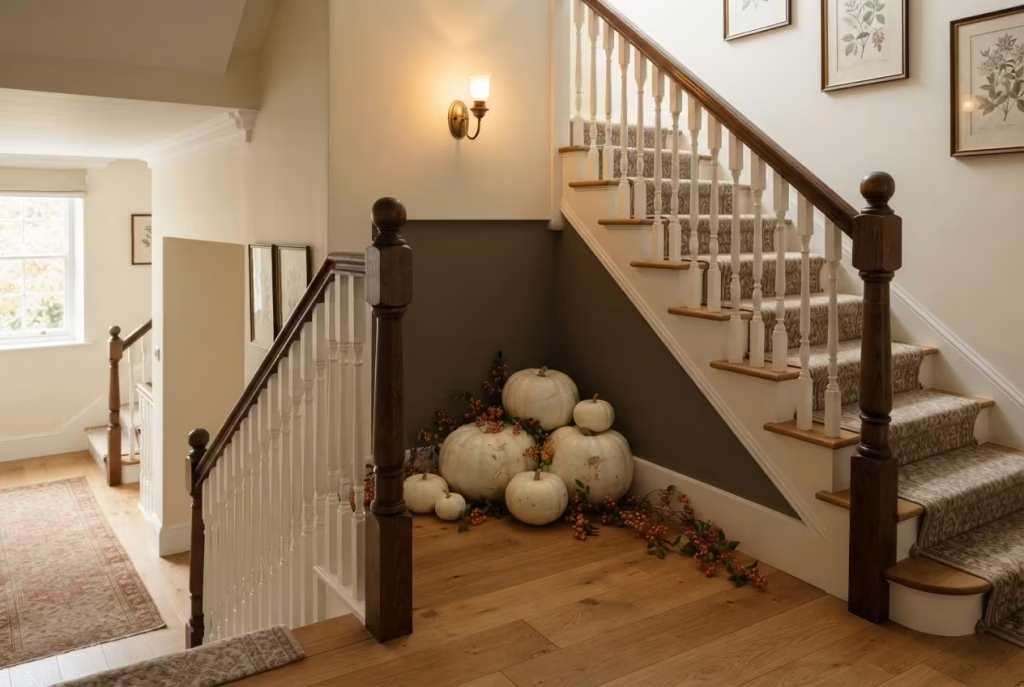
Staircases have a habit of shadowing themselves at the turn, and pale pumpkins are the fix. Cluster three or five ghost-white pumpkins at that half-landing, thread orange bittersweet berries between them, and the darkest part of the flight suddenly becomes the brightest. Odd numbers, always; even groupings have an uncanny knack of looking accidental rather than arranged.
9. A Monochrome Cream and Sand Pumpkin Cluster
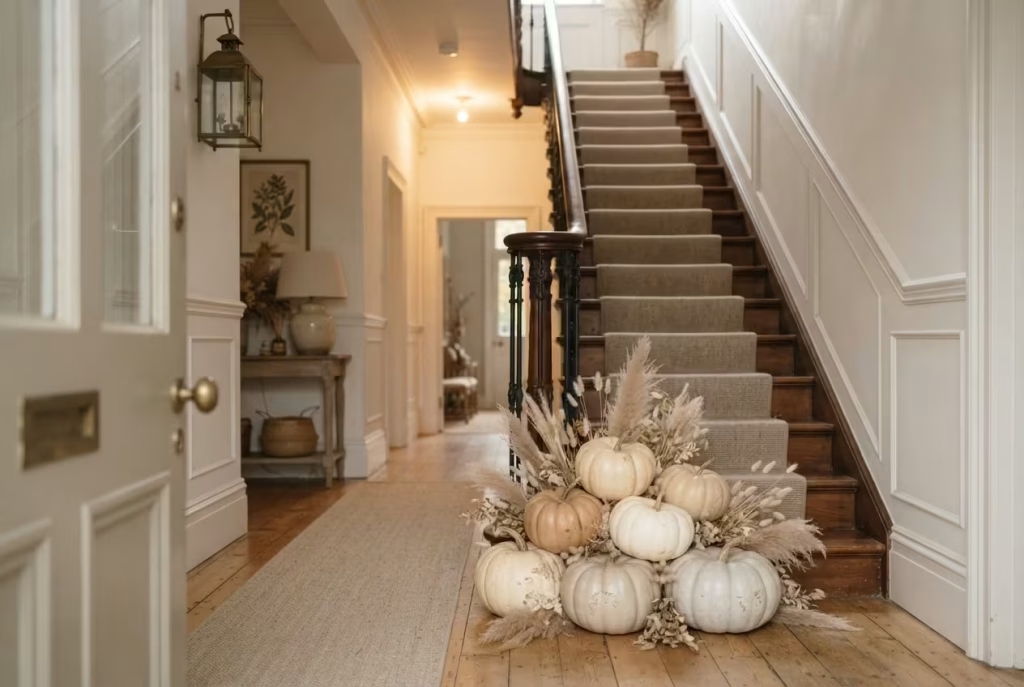
Not everyone wants the full bonfire palette, and there’s no shame in that. A grouping of cream, sand and pale grey pumpkins with dried pampas or bunny tail grass leans on shape and texture instead of colour, and it tends to suit period homes and pared-back interiors equally well. Place the cluster at the very foot of the stairs, since that’s the first thing anyone sees on the way in through the front door.
10. Mini Gourds on Faux Fur Squares
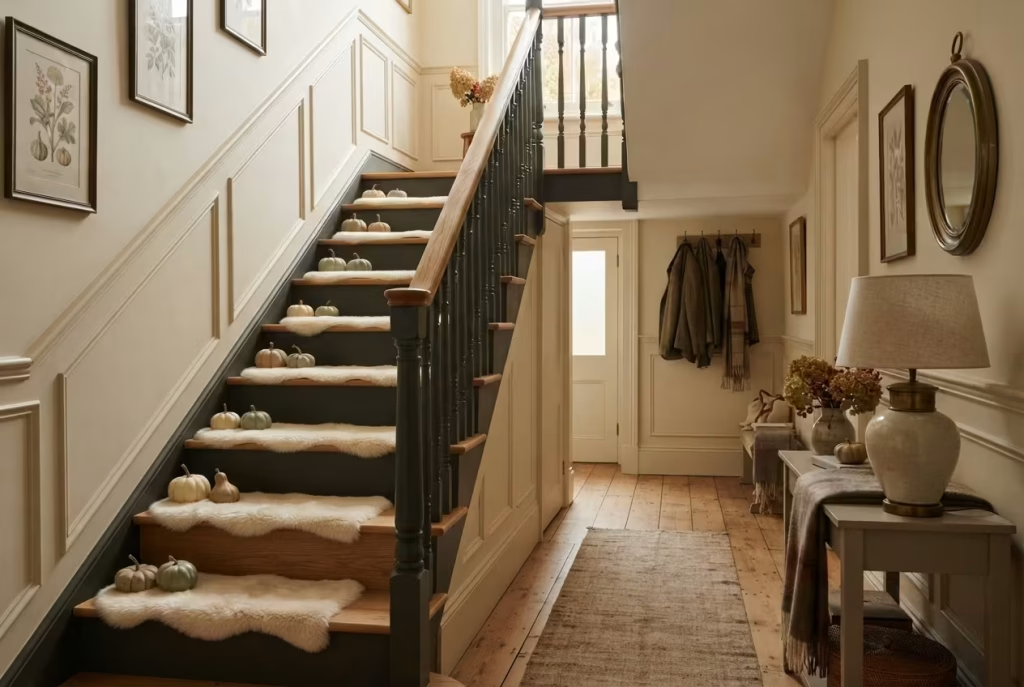
A small square of faux fur laid on alternating treads, topped with two or three mini gourds, brings a softness that hard wood and stone staircases usually lack entirely. Keep it to the outer edge of each step, well away from where feet actually land, and you get all the texture with none of the hazard.
11. Potted Mums Marching Up the Tread Edge
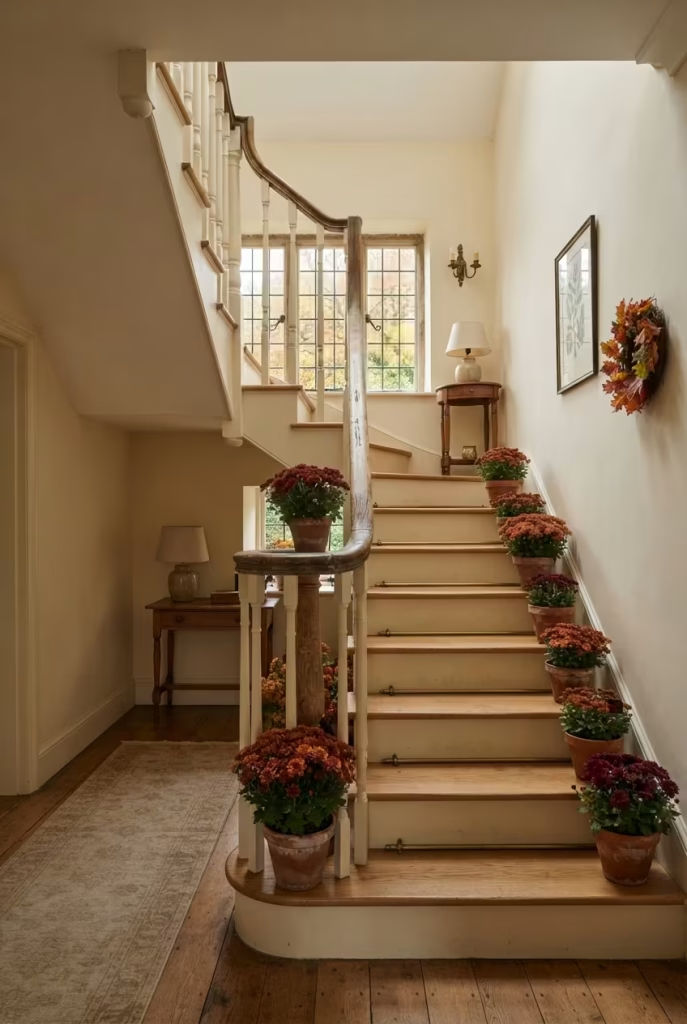
Living colour does something faux decor can’t quite manage, and rust or burgundy chrysanthemums in terracotta pots, placed at the outer edge of ascending steps, deliver exactly that. Match the pot size to the depth of the tread so nothing overhangs the nosing, and remember these need watering; a wilted mum halfway up the stairs rather undoes the whole effort.
You May also Like: Fall Apartment Decor Ideas: 15 Cozy Ways to Make Your Apartment Feel Like Autumn
Lanterns, Candles and the Business of Getting the Light Right
12. A Row of Brass Lanterns
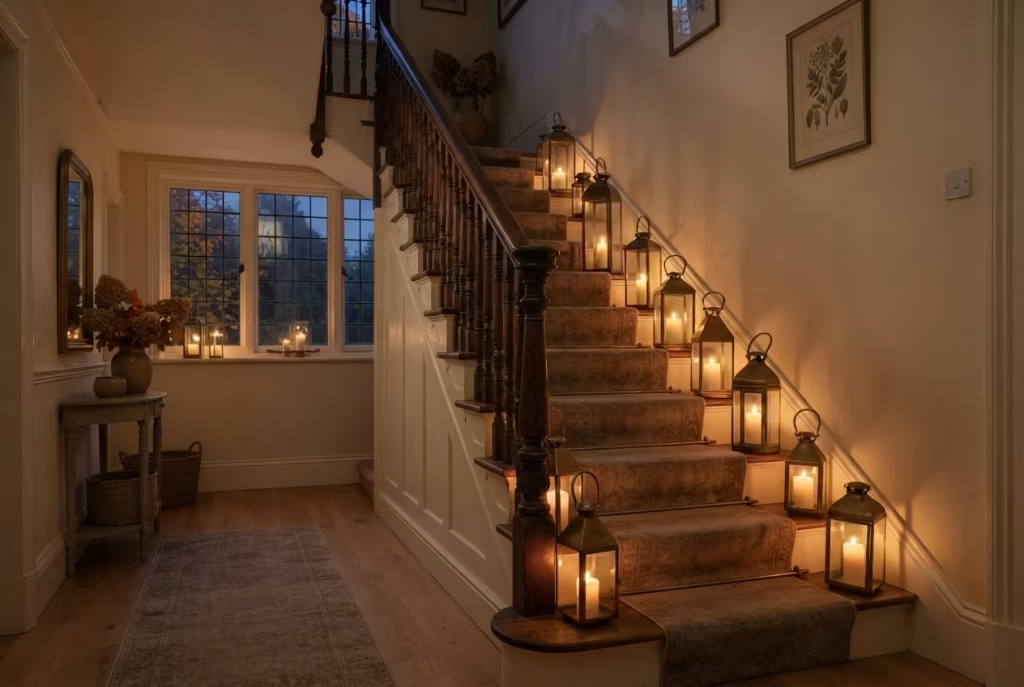
Mismatched brass lanterns holding pillar candles, arranged up one side of the staircase, turn an ordinary trip to bed into something considerably more atmospheric once the sun’s gone down. Vary the heights properly, short beside tall beside medium, because a uniform row of identical lanterns reads as stock rather than styled.
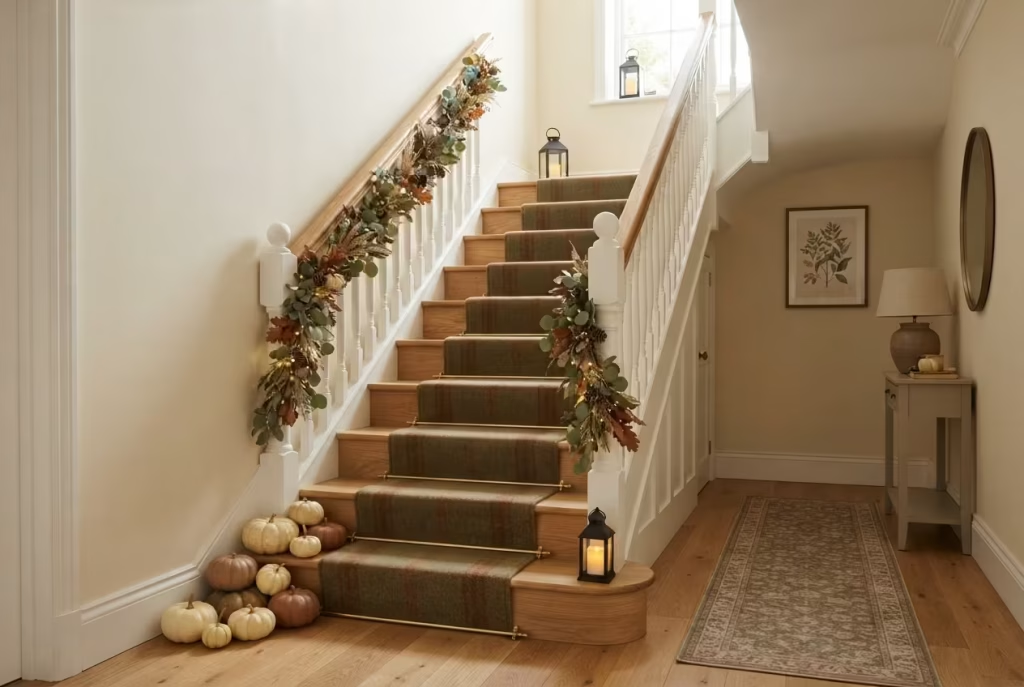
13. Matte Black Lanterns With Flameless Candles
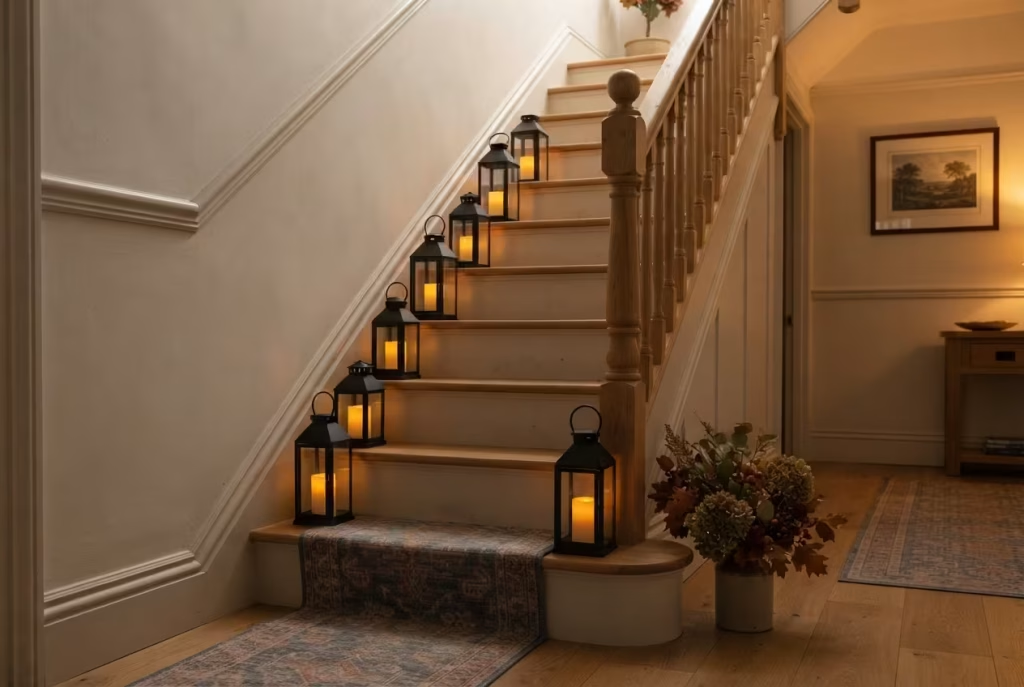
Swap brass for matte black and the whole look sharpens noticeably, especially against pale walls where the silhouette does most of the work. Use flameless LED candles here without exception. Real flame at ankle height, on a surface people climb in the dark, half asleep, in socks, is not a risk worth taking for the sake of authenticity.
14. Flameless Tapers in Glass Hurricanes
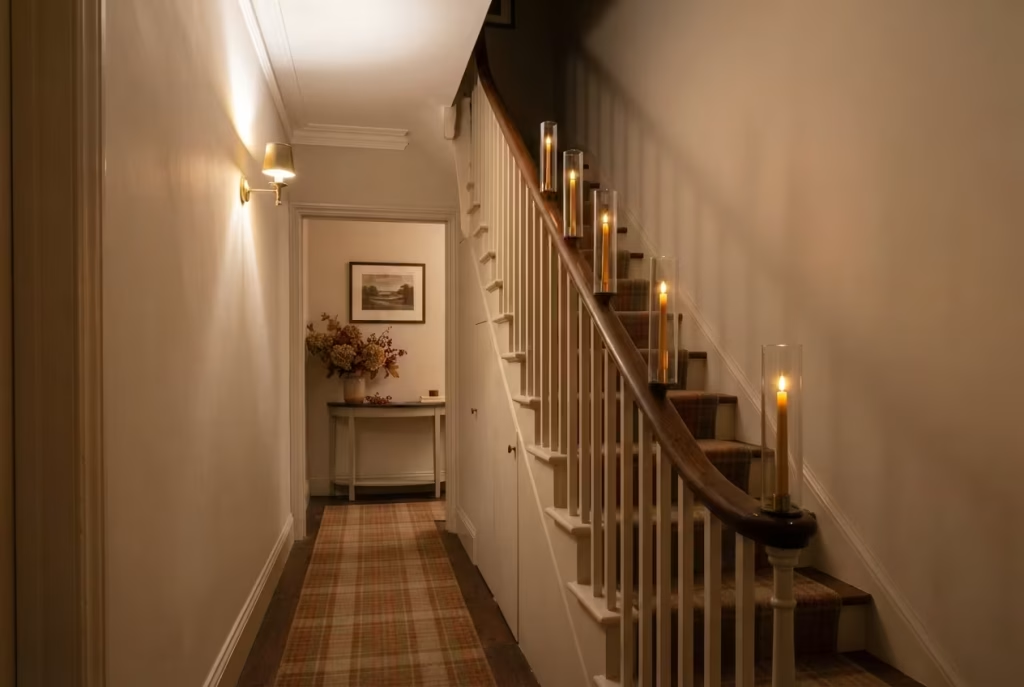
On a narrower staircase where a lantern won’t fit on the tread at all, tall glass hurricanes holding flameless tapers can sit on the rail itself, spaced every few spindles. This gives the height of a candle without needing floor space you don’t have, which matters a good deal in a typical British terrace hallway.
The Landing and the Foot of the Stairs
15. Tall Amber Glass Jugs With Pampas Grass
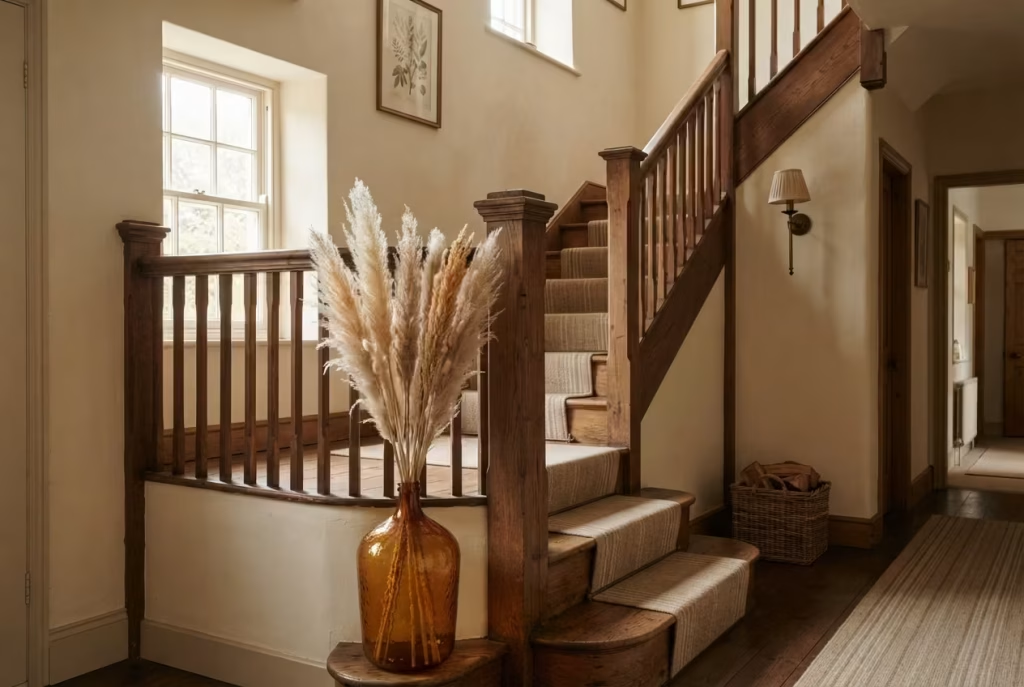
Landings are the awkward middle child of staircase design, usually ignored and rarely decorated, and a tall amber glass jug filled with pampas plumes fixes that in one straightforward move. The glass catches even the weakest autumn light, and because dried pampas needs nothing beyond an occasional dust, it still looks presentable in December when your enthusiasm for fresh flowers has understandably waned.
16. Copper Pails of Dried Hydrangea
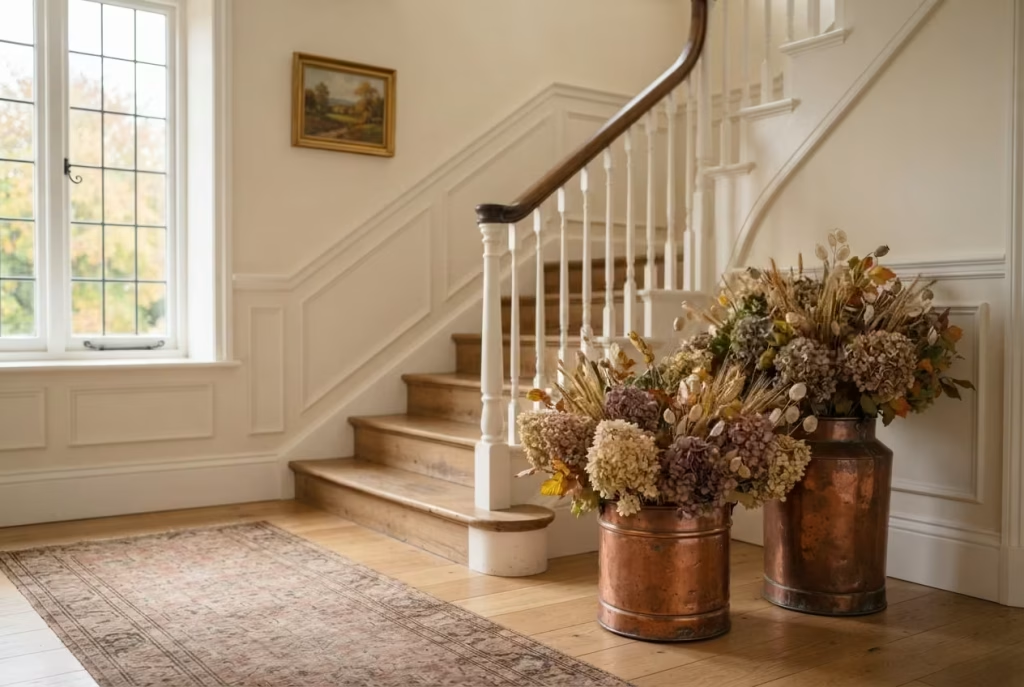
Two copper pails, filled with dried hydrangea, wheat and a scattering of seed pods, set at slightly different heights on the landing, give the eye somewhere to travel rather than settling flat. Copper only improves with age, so this is one decoration that gets better looking the longer it’s owned.
17. A Basket of Blankets at the Foot of the Stairs
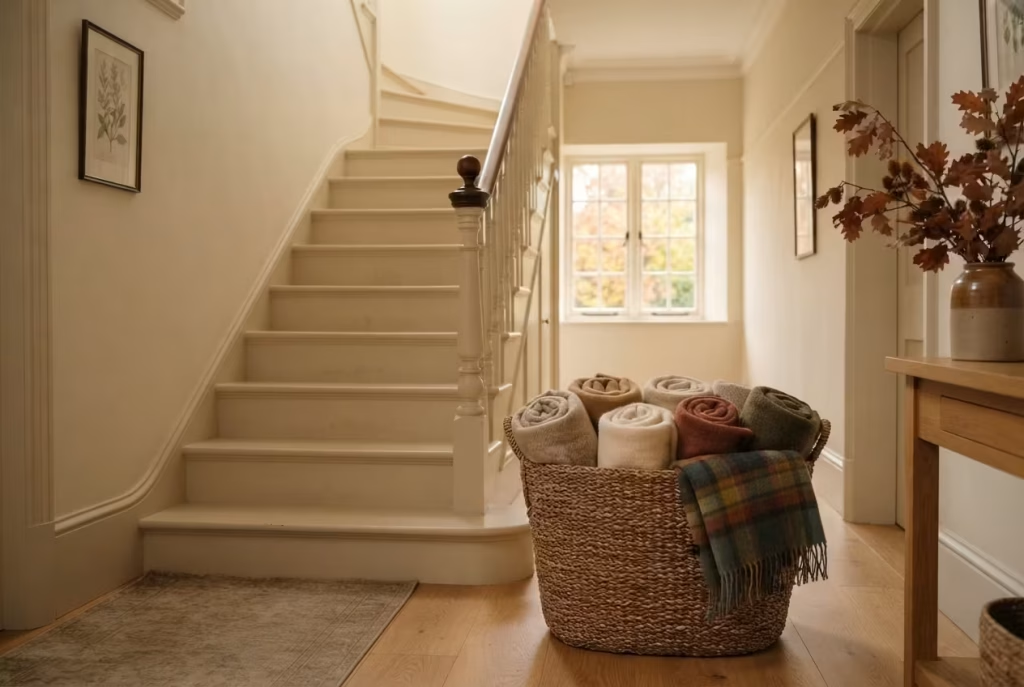
Here’s an idea that earns its keep rather than simply sitting there looking pretty. A generous woven basket at the bottom of the stairs, stacked with rolled wool blankets and a plaid throw, gets used on the cold evenings when someone’s heading up to bed and fancies an extra layer. It’s decor and function in the same breath, which is not something you can say for a great deal of what’s on this list.
18. A Galvanised Bucket of Birch Logs
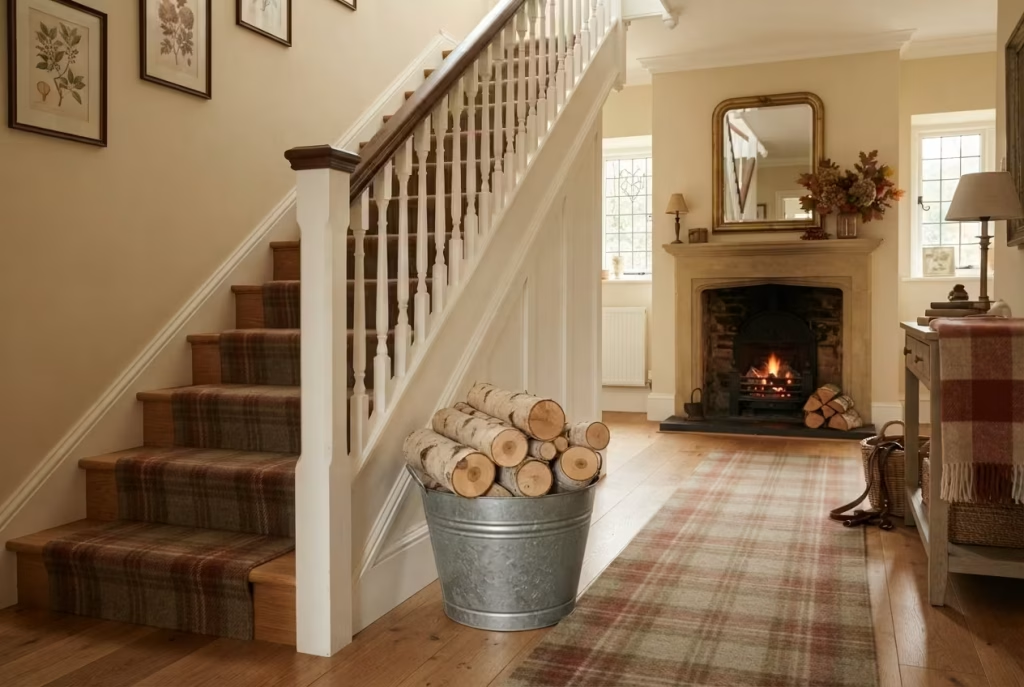
Pale birch bark against dark galvanised metal is a contrast that photographs beautifully and, more usefully, earns its place properly if there’s a fireplace nearby to burn the logs in eventually. Stand them cut-end up so the rings show. Think twice about this one without a fire to feed them into; logs with nowhere to go tend to become clutter rather than decor.
Underfoot: Runners and Textiles
19. A Jute Runner in Terracotta Tones
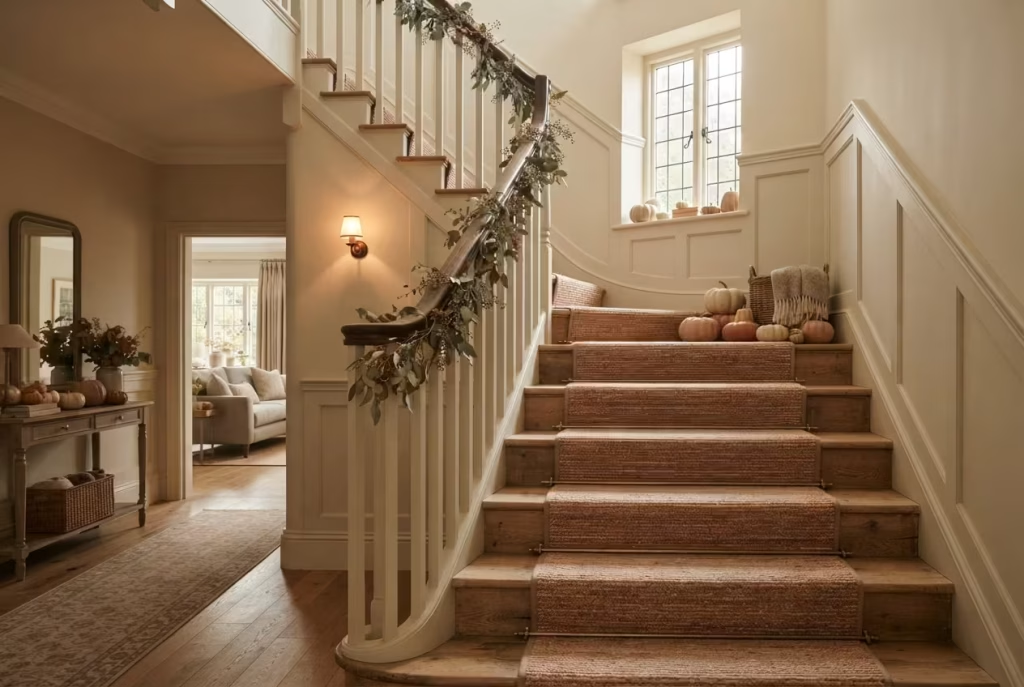
Bare wooden treads look handsome in photographs and rather less forgiving underfoot at half past six on a dark morning. A woven jute runner in muted terracotta warms the whole staircase, dampens the sound of footsteps, and works as a neutral base layer under nearly every other idea here: garland, pumpkins, lanterns, the lot.
20. A Plaid Runner Secured With Brass Stair Rods
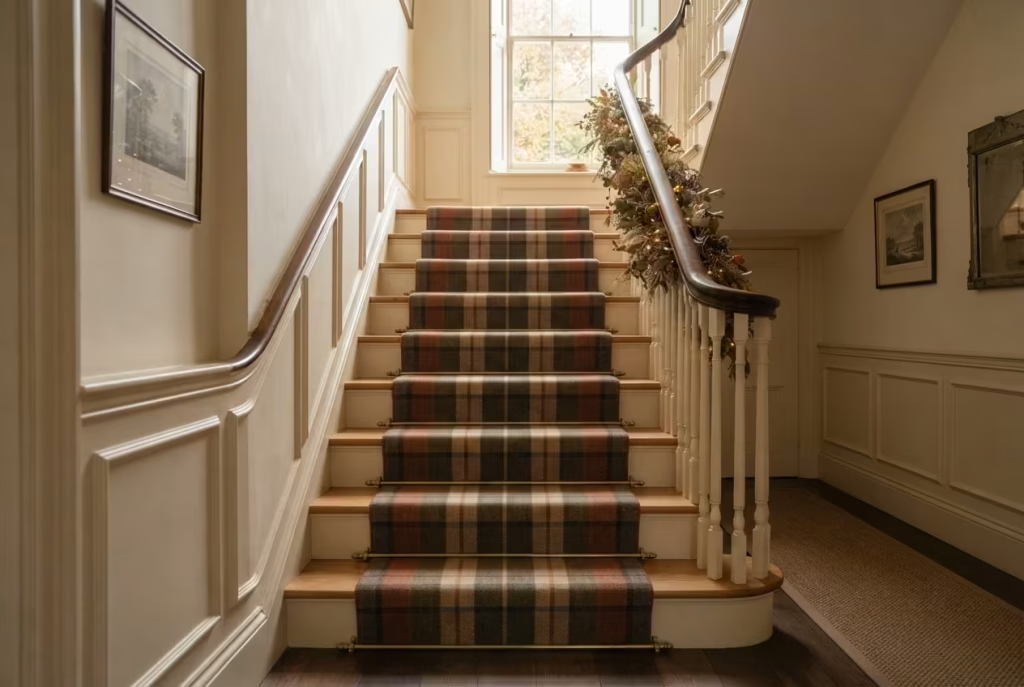
For a more tailored, traditional finish than jute allows, a plaid runner held down with brass stair rods at every riser does the job with real conviction. It costs more than most ideas on this list, admittedly, but it’s also the only one that doubles as a genuine slip-safety upgrade rather than pure decoration, so the extra spend has something practical behind it.
You May also Like: 25 Cozy Fall Home Office Ideas to Create a Warm, Productive Workspace
The Wall Beside the Stairs
21. A Gallery Wall of Autumn Botanical Prints
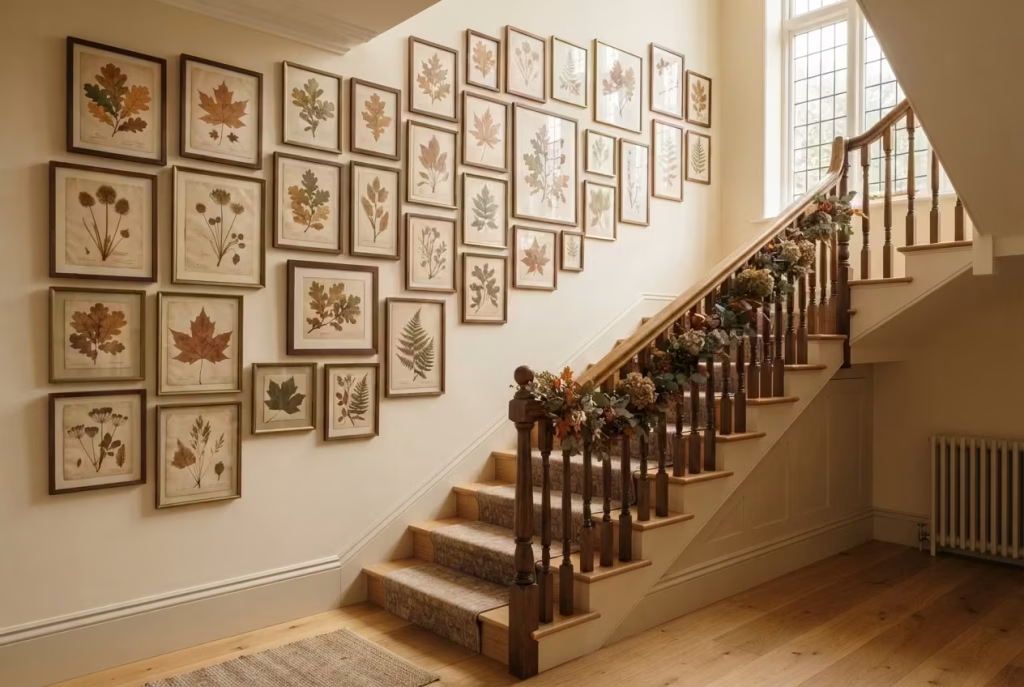
The wall running alongside a staircase is prime real estate that most households never touch, which seems a missed opportunity given how much of it there usually is. Vintage-style botanical prints, hung in warm wood or brass frames and following the diagonal line of the stairs, look intentional rather than accidental, provided the gaps between frames stay consistent throughout. Measure twice before reaching for a hammer; uneven spacing is the one detail that gives a gallery wall away as rushed.
22. Small Wreaths Hung at Intervals
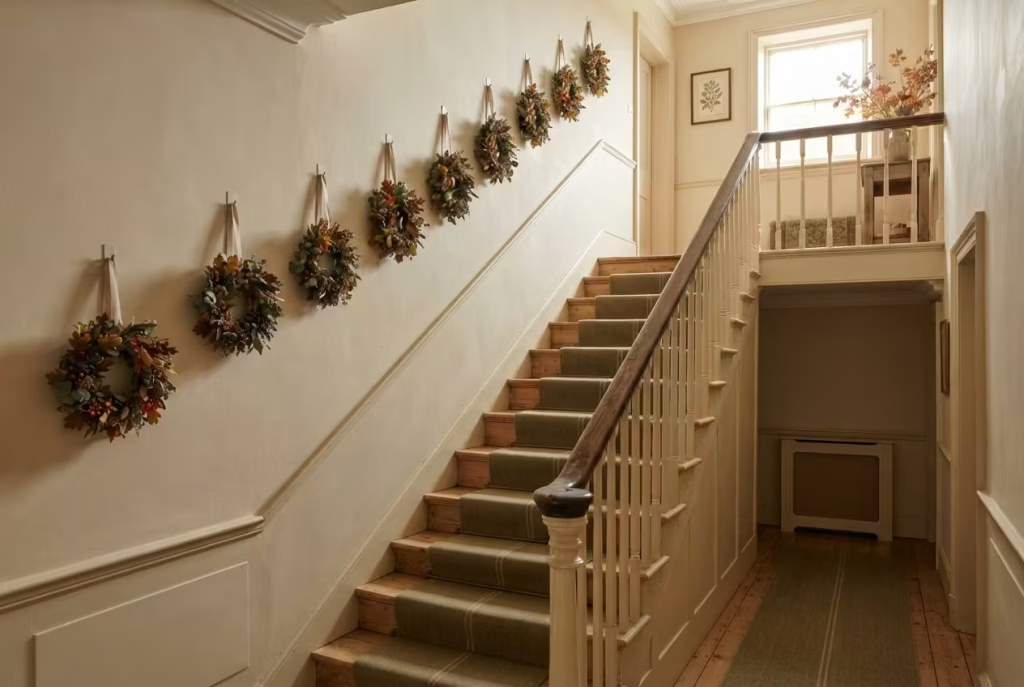
If the banister itself needs to stay bare, perhaps because it’s a period feature best left untouched, small wreaths of preserved leaves and berries hung on the adjacent wall at even intervals give the same rhythm without touching the rail at all. Removable adhesive hooks mean no fixings, no filler, and no awkward conversation with the landlord come moving-out day.
For Staircases That Don’t Play by the Usual Rules
23. Modern or Floating Staircases Without a Banister
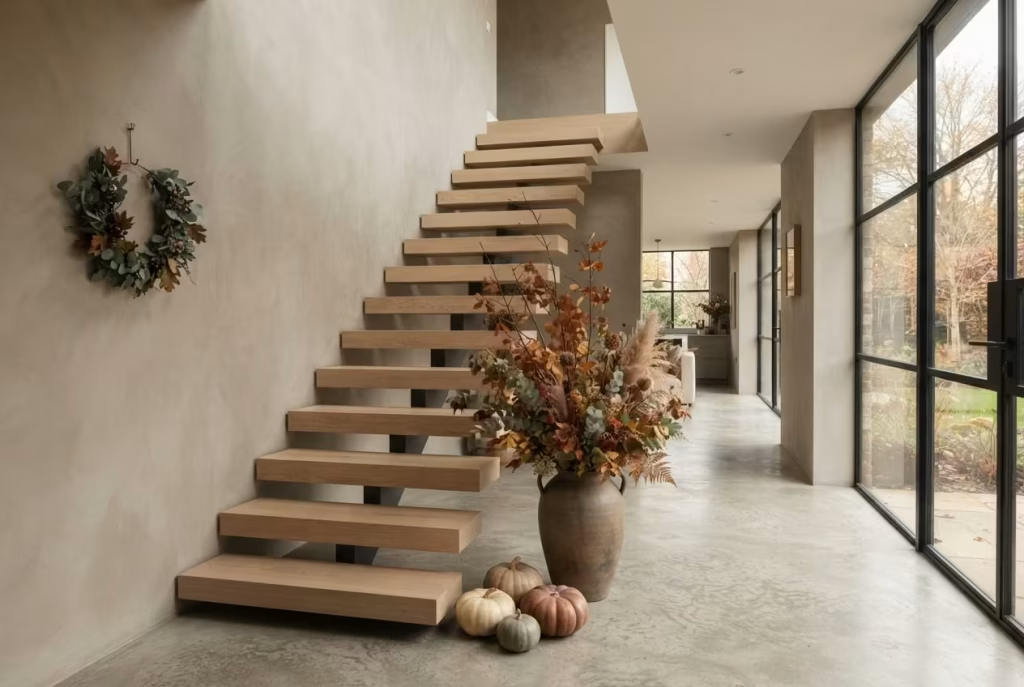
Plenty of newer builds and loft conversions have done away with the traditional banister entirely, and no amount of garland fixes a rail that simply isn’t there. Put the effort into the base and the landing instead: a tall floral vessel, a cluster of pumpkins, or a lantern grouping at the foot of the stairs does the heavy lifting, while a single garland strand or wreath mounted on the adjacent wall with removable hooks adds a vertical note without needing anything physical to hang from.
24. Spiral Staircases
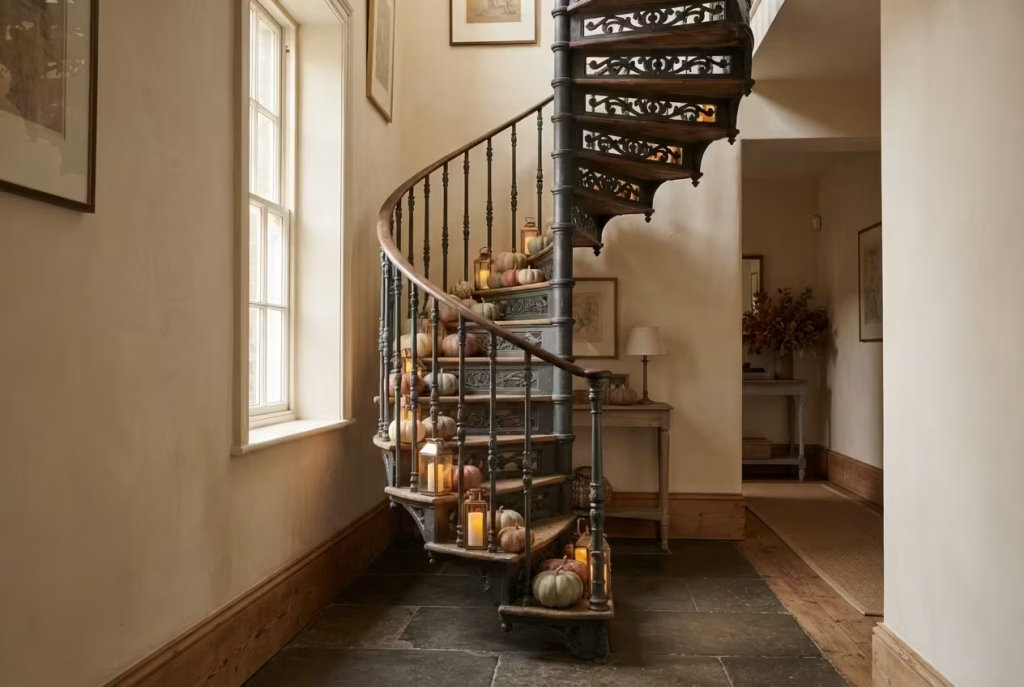
A spiral staircase behaves like a single vertical column rather than a horizontal run, so decorating it the way you’d treat a straight flight tends to look muddled fast. Stack pumpkins or small lanterns in a single ascending line up the inner rail instead of spreading decor across each tread, since most spirals are too narrow to hold much besides a foot as it is.
25. Outdoor and Front Door Staircases
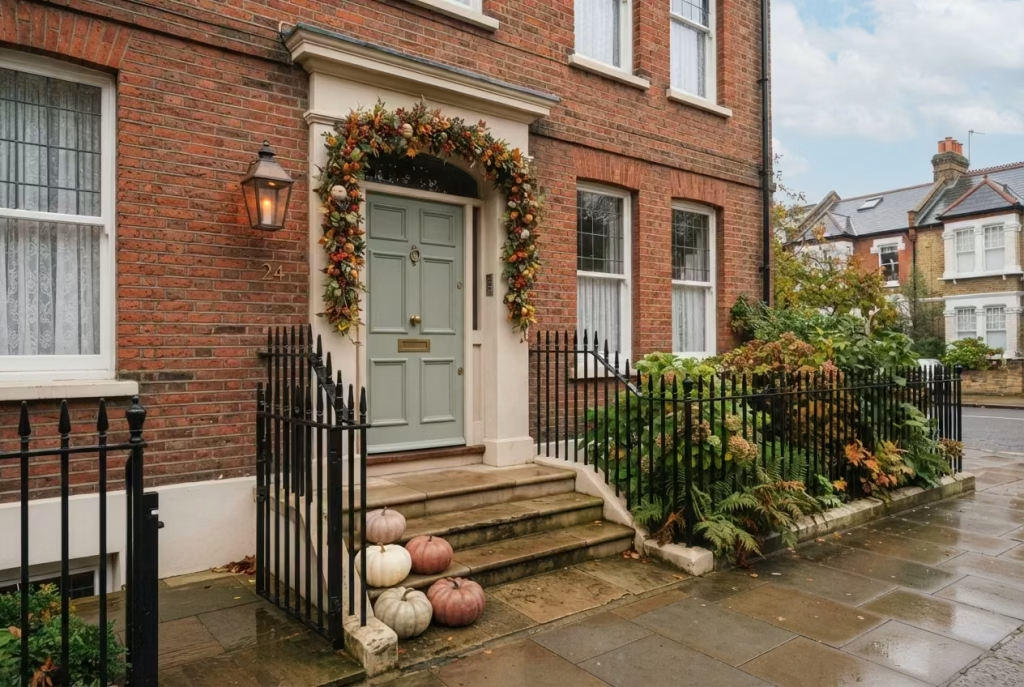
British weather has strong opinions about anything left outside for more than a fortnight, so anything fresh, dried, or fabric based needs swapping for weatherproof faux versions once it’s headed for external steps. Anchor everything with real intent; wind, not footfall, is the genuine hazard outdoors, and a loose garland flapping about in a September gale looks a good deal less charming than it did in the shop. Concentrate the effort on the bottom step and the door post, since that’s the section actually visible from the pavement.
What You’ll Actually Need
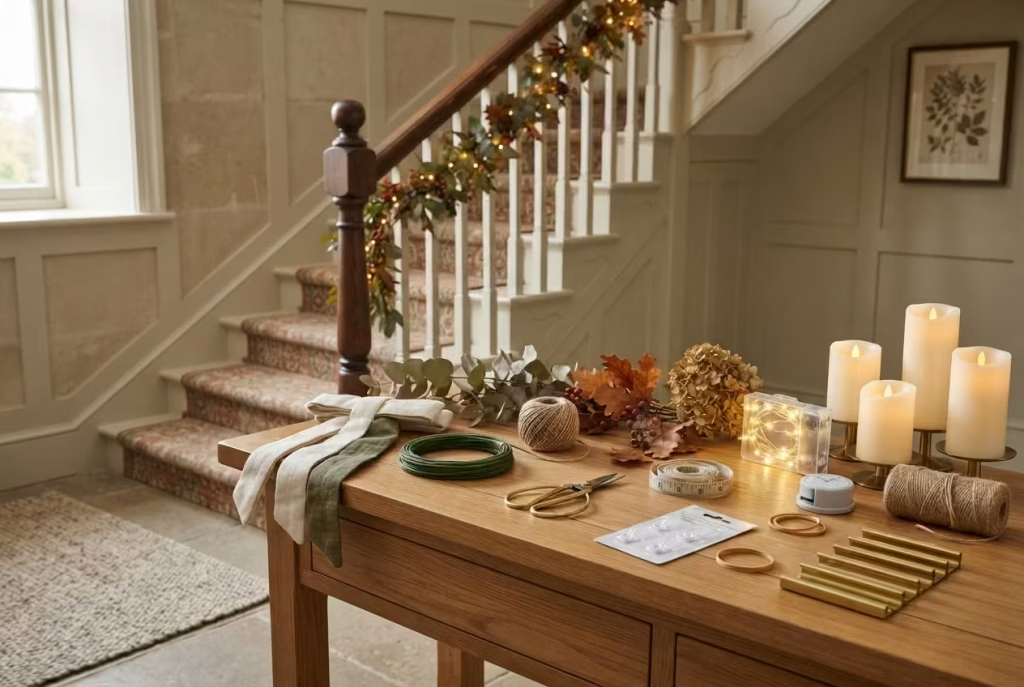
- Padded garland ties or felt-wrapped floral wire, to spare the banister finish
- Jute or garden string
- Battery-powered fairy lights with a built-in timer
- Floral shears
- Flameless LED candles (skip real flame near the stairs, full stop)
- Removable adhesive hooks, for walls and banister-free staircases
- A tape measure
- Non-slip runner grippers, if a runner’s going down
- A rubber band or two, for the newel post trick mentioned above
Faux or Fresh? A Straight Comparison
| Factor | Fresh Materials | Faux or Dried Materials |
| Indoor lifespan | About a fortnight before shedding | The full season, and reusable for years |
| Cost over time | Bought fresh each year | Higher upfront, cheaper in the long run |
| Mess on the stairs | Leaves and needles underfoot | Next to none |
| Best suited to | A single event or weekend | The whole autumn stretch |
| Scent | Genuine, and hard to beat | None, unless scented separately |
What It’ll Cost You
| Budget | What You Can Realistically Do |
| Under £30 | Ribbon on the spindles, a wheat bundle or two, a small pumpkin cluster from the greengrocer |
| £30 to £90 | A full dried garland, fairy lights, one or two lanterns with flameless candles |
| £90 and up | A proper stair runner, several lanterns, potted mums, a landing display in glass or copper |
None of this needs to cost the earth. The ribbon idea at number four looks nearly as thought-through as anything at the top end of this table, and that’s rather the point: good staircase decor comes down to restraint and placement far more than it does to spend.
Safety, and a Word From the Building Regulations
A staircase is, without much competition, the worst place in a house for anything to go wrong underfoot, so a handful of rules matter here more than they do anywhere else in the home.
- Keep tread decorations, pumpkins, gourds, fur squares, to one side only; the walking path down the centre needs to stay entirely clear
- Choose flameless LED candles for anything near the stairs; real flame at ankle height, combined with people using the stairs in low light, is a combination not worth the risk
- Wire or glue loose items such as pinecones onto garland rather than resting them, so nothing works loose and rolls underfoot
- Secure any runner properly with grippers or stair rods; a loose runner on stairs is a slip waiting to happen, however good it looks
- Decorate below the handrail or on the balusters rather than wrapping the top of the rail itself; bury the rail under garland and nobody can actually grip it for support
- Go cordless wherever lighting’s involved; a cable crossing a tread is a trip hazard no matter how neatly it’s taped down
There’s also the small matter of what UK law says about staircases directly. Approved Document K of the Building Regulations requires a domestic handrail to sit between 900mm and 1000mm above the pitch line of the stairs, and specifies that no gap in the banister should allow a 100mm sphere to pass through. Neither figure is decorating advice as such, but both are worth knowing before threading anything bulky between the spindles or building a display that narrows the usable width of the rail.
Candles deserve a mention of their own. UK fire services put candles behind roughly 3% of all house fires each year and around 6% of home fire injuries, and London Fire Brigade’s own figures show candle fires climbing by close to a third between November and January, precisely the stretch when most of us are lighting more of them. None of that means giving up candles altogether; it means reaching for the flameless kind on the stairs specifically, and saving the real ones for a surface that isn’t also a fall risk.
The Last Word
Pick one area of the staircase and commit to it properly, rather than spreading a little decoration across the banister, the treads and the landing all at once. A full garland, a run of pumpkins, or a string of lanterns can each carry an entire staircase on their own, and layering all three together tends to tip a considered display into clutter rather quickly.
Everything else here is texture. Dried stems, warm metal and natural fibre will see a staircase through comfortably from the first week of September right up to the point the Christmas boxes come down from the loft, and not one of the twenty-five ideas above needs replacing halfway through. That, in the end, is rather the whole point: a home that feels lived in doesn’t need reinventing every fortnight. It just needs dressing properly once, and left to get on with it.
Frequently Asked Questions
How do you decorate a staircase for autumn?
Start with the banister; a garland delivers the biggest visual change for the least effort of anything on this list. Add pumpkins or lanterns to one side of the treads, then finish at the newel post with a swag noticeably fuller than the rest of the garland. Keep everything to one side of the steps and the staircase stays perfectly walkable throughout.
How do you attach garland to a banister without scratching it?
Padded garland ties, felt-wrapped wire, or ordinary zip ties looped around the rail every two feet or so do the job without marking a painted or varnished finish, which bare wire can leave behind after a full season of tugging and adjusting. For the ends, loop a rubber band around the garland and hook it over the newel post cap; it holds without any adhesive and comes away cleanly once the season’s done.
Should I use fresh or faux garland on the stairs?
Faux, on balance, particularly if it’s staying up for more than a week or two. Fresh greenery typically lasts about a fortnight indoors before it starts dropping needles or leaves onto the treads, which turns into mess and, on a staircase specifically, a genuine slip hazard. Faux holds its shape for the whole season and comes out of the loft again next year without complaint.
Is it safe to decorate a staircase at all?
Yes, provided decor stays to one side of each tread and never narrows the walking path. Use flameless candles rather than real ones, secure any runner properly, and make sure nothing loose, pinecones especially, can work its way underfoot. UK building regulations also require handrails to sit between 900mm and 1000mm high with no gap wide enough for a 100mm sphere, worth bearing in mind before hanging anything bulky between the spindles.
How much garland do I actually need?
Measure the banister’s length, then buy roughly one and a half times that figure. The extra allows for a natural dip between each fixing point; garland cut to the exact length of the rail ends up stretched taut and looks stiff rather than relaxed, which rather defeats the point of the exercise.
When should a staircase go up for autumn?
Early to mid-September suits most households, since it carries the decor through Halloween and into late November before winter decorations take over. Faux pieces can go up earlier still; fresh pumpkins and real foliage are better held back until closer to October so they don’t spoil before the season’s properly begun.
What colours suit an autumn staircase?
Burnt orange, deep rust and warm brown are the obvious choices and rarely go wrong, though a neutral palette of cream, sand and natural wood tones reads more contemporary and tends to suit a wider range of interiors. Pick one direction and repeat it across banister, treads and landing rather than mixing both; a staircase trying to do two palettes at once ends up doing neither convincingly.
Can I decorate a staircase that doesn’t have a banister?
Yes; put the emphasis on the base and the landing instead of the rail. A pumpkin cluster or tall floral vessel at the foot of the stairs, combined with a single wall-mounted garland strand or wreath on removable hooks, gives a banister-free or floating staircase the same seasonal presence without needing anything to physically hang from.
How do I decorate an outdoor staircase for autumn?
Swap anything fresh, dried, or fabric based for weatherproof faux versions, since real materials rarely survive proper British weather for long. Anchor every piece against wind rather than simply balancing it in place, and concentrate the effort on the bottom step and the entry post, since that’s the section actually visible from the street.