



31 Beautiful Coastal Bathroom Ideas to Inspire Your Next Remodel
There’s a particular kind of bathroom that makes you linger a little longer than strictly necessary. Not because the taps are fancy or the tile cost a fortune, but because the whole room seems to exhale. Light bounces where it should, the materials feel honest under bare feet, and nothing shouts for attention. That, in a nutshell, is coastal style, and it’s proved remarkably stubborn about staying fashionable long after most bathroom trends have had their fifteen minutes and quietly bowed out.
Part of the staying power comes down to geography, or rather the lack of it mattering. You needn’t live within earshot of the gulls to pull this off. A converted terrace in Leeds, a new-build ensuite in Surrey, a tired 1980s family bathroom in need of rescuing, all of them can borrow the coast’s particular trick of turning a functional room into something closer to a retreat. This guide sets out 31 proper, usable ideas for doing exactly that, backed up with real costs, the mistakes homeowners most commonly come to regret, and a straight-talking FAQ built from the questions people are genuinely typing into search bars before they so much as ring a tiler.
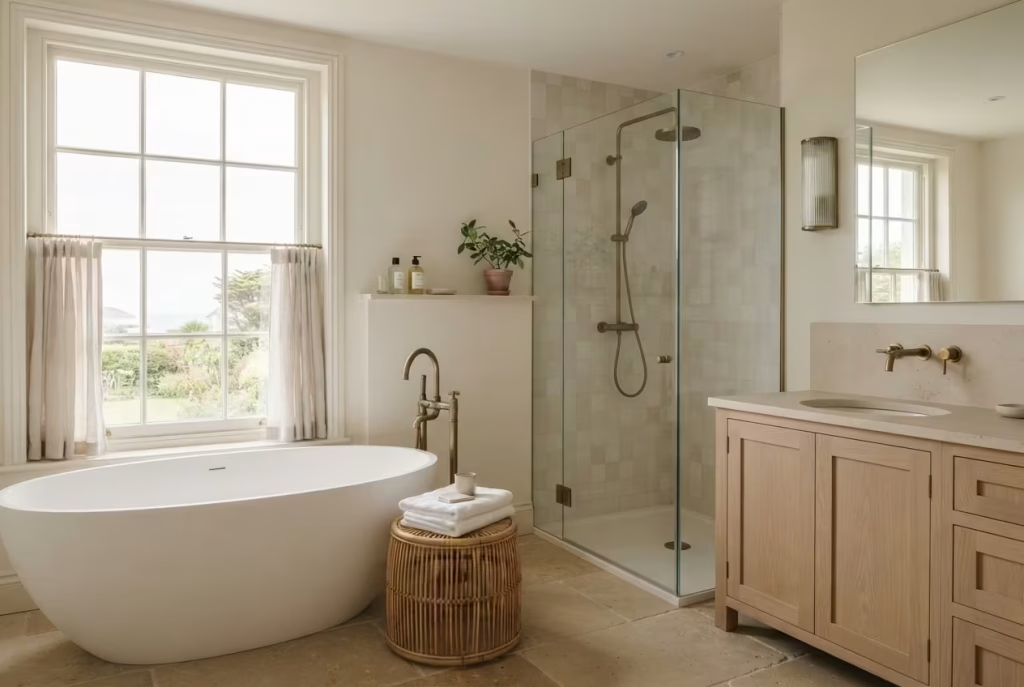
In short, before we get going: a coastal bathroom rests on three pillars, generous light, natural materials such as timber, rattan and honest stone, and a fair bit of restraint. Budget wise, you’re looking at anywhere from a few hundred pounds for a cosmetic lift to upwards of £30,000 for a full structural renovation with a freestanding tub and walk-in shower. Everything in between is thoroughly achievable, and that’s really what this piece is for.
What Genuinely Makes a Bathroom Coastal?
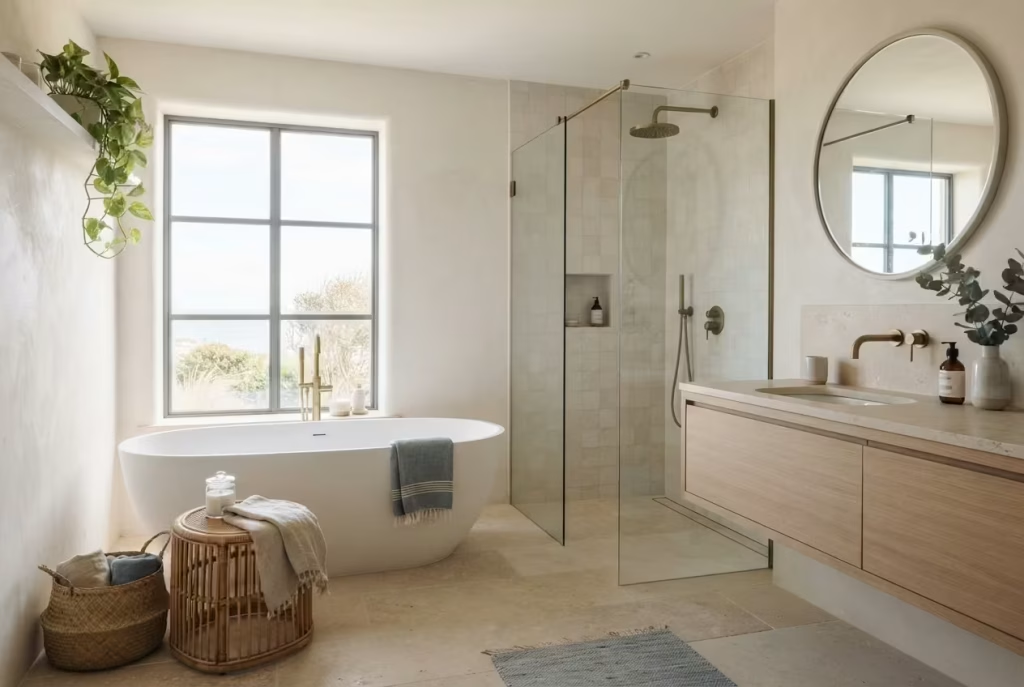
Ask ten different designers what coastal style actually means and you’ll likely get ten slightly different answers, though most will circle back to the same three ingredients eventually. It’s worth settling this properly before you start collecting Pinterest boards, because a surprising number of so-called coastal bathrooms miss the mark entirely, usually by confusing the theme of the seaside with the feeling of it.
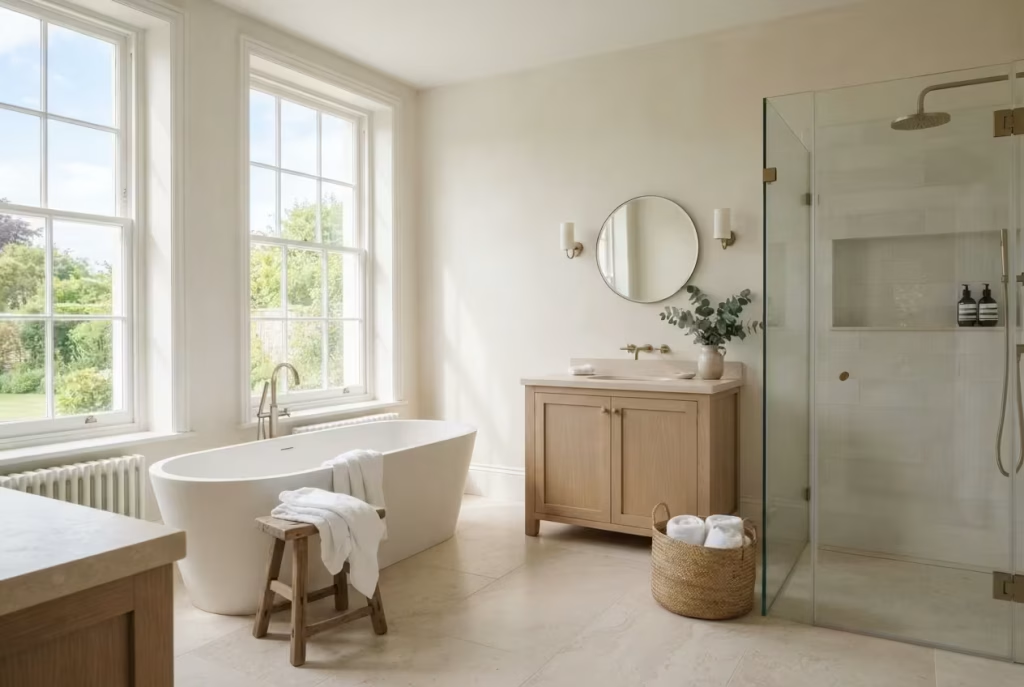
Light comes first, and it isn’t negotiable. Coastal rooms lean pale, not because white is trendy but because a light, reflective backdrop is what makes everything else in the room feel effortless rather than staged.
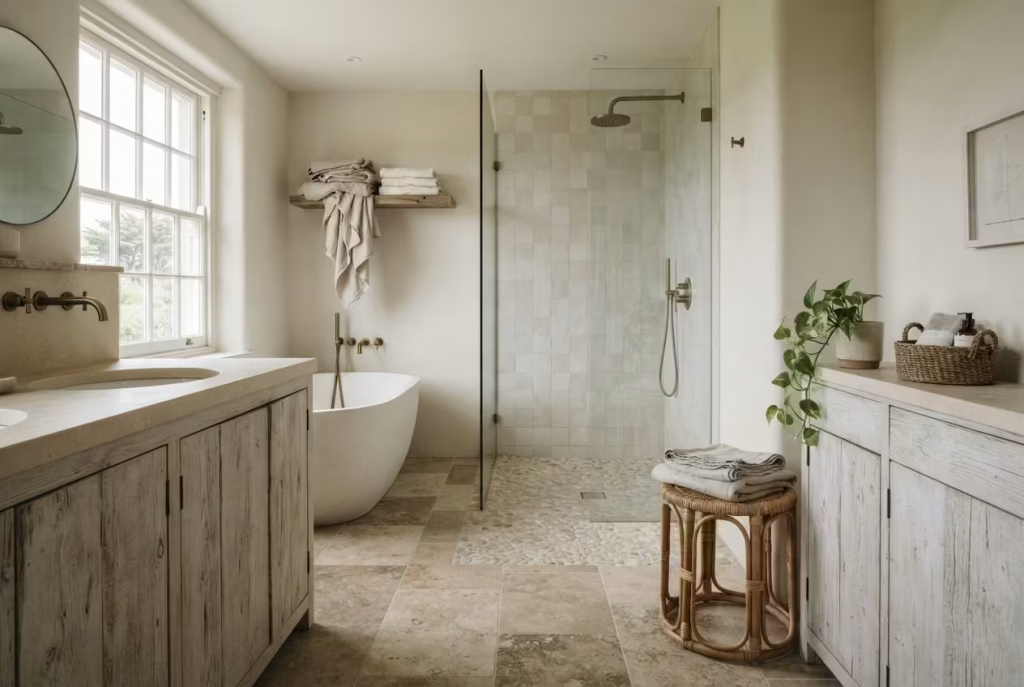
Texture does the next heaviest lifting. Think whitewashed timber that’s seen a bit of weather, woven rattan with all its natural imperfections, pebble underfoot, matte stone rather than anything mirror-polished. These materials are slightly imperfect by nature, and that’s precisely the point. Perfection reads as showroom. Texture reads as lived-in.
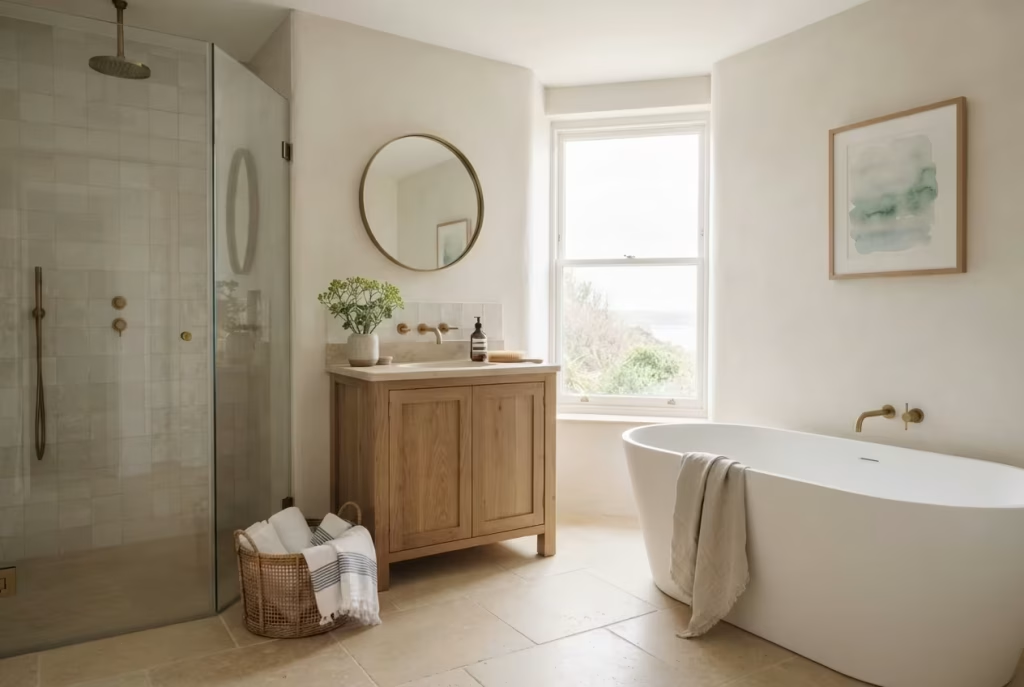
Restraint is where most people come unstuck, if we’re honest. A bathroom festooned with shells, anchors and a framed swordfish above the loo isn’t coastal, it’s a theme park gift shop with plumbing. The trick, and it really is a trick worth learning, is to nod towards the sea through colour and material rather than spelling it out in decor. Get that balance right and the room will read as coastal even without a single nautical prop in sight.
Quick Fact Box: Coastal Style at a Glance
| Element | What to lean into | What to steer well clear of |
| Colour | Soft white, sand, sea glass green, powder blue | Bright primary colours, heavy pattern clashes |
| Materials | Timber, rattan, linen, honest stone, brushed brass | High-gloss laminate, plastic accessories |
| Decor | Abstract seascapes, driftwood, woven textiles | Anchors, shell collections, mounted fish |
| Mood | Breezy, uncluttered, sun-bleached | Busy, themed, overly matched |
Coastal, Hamptons or Nautical Which One Are You Actually After?
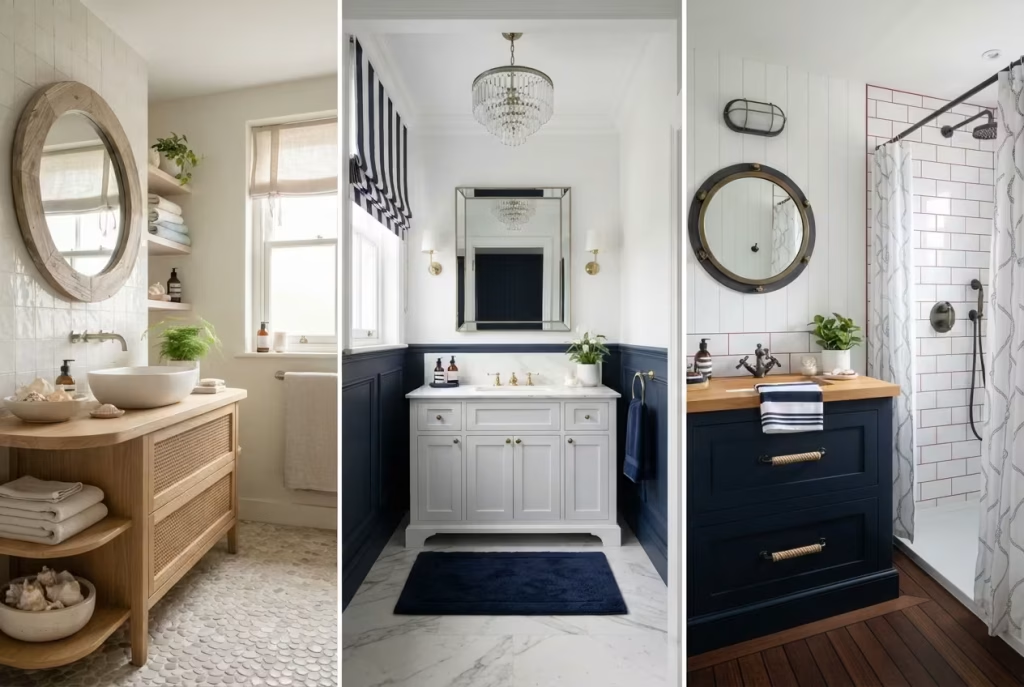
These three styles get bundled together constantly, and while there’s overlap, they’re not interchangeable, whatever the estate agent brochures might suggest.
| Style | Colour palette | Signature materials | The overall vibe |
| Coastal | White, sand, soft blue, sea glass green | Rattan, driftwood, pebble, linen | Relaxed, breezy, thoroughly lived-in |
| Hamptons | Crisp white and navy, occasional black | Panelling, marble, polished brass | Refined, tailored, a touch more formal |
| Nautical | Bold navy, red, white | Rope, stripes, ship-style hardware | Playful, graphic, unapologetically statement-led |
If you’re after a bathroom that feels like a lazy Sunday morning by the sea rather than the interior of a private yacht club, coastal is your lane. Onward, then, to the ideas themselves.
Colour and Palette Ideas 1 to 5
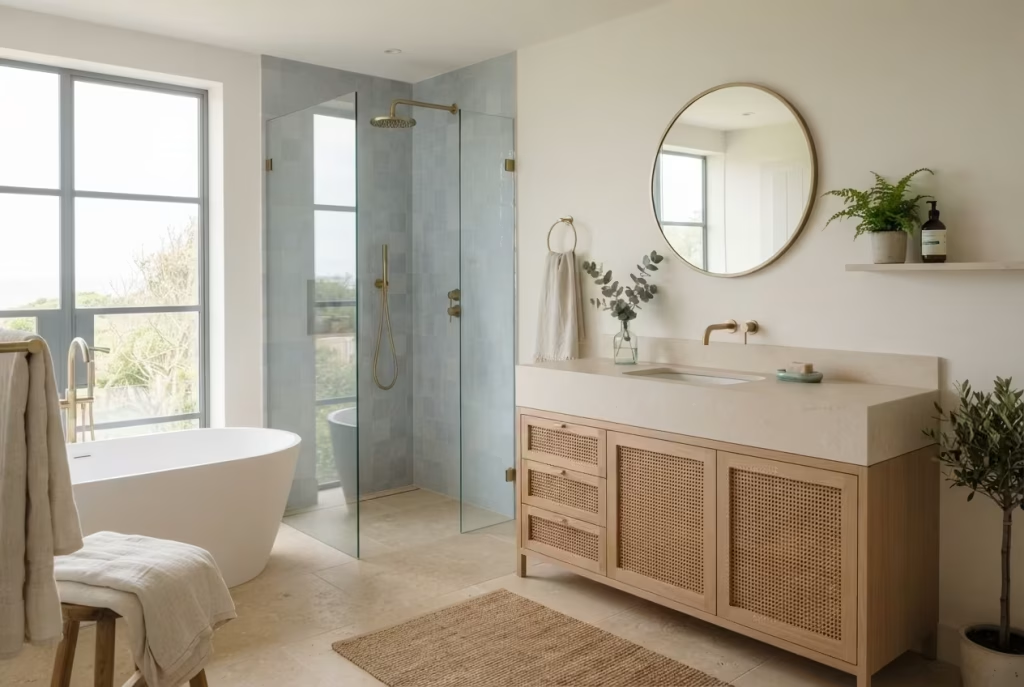
Getting your palette right is genuinely half the job, and rushing this stage is where a lot of coastal bathrooms lose their way before they’ve so much as been tiled.
1. Start with a driftwood-pale foundation
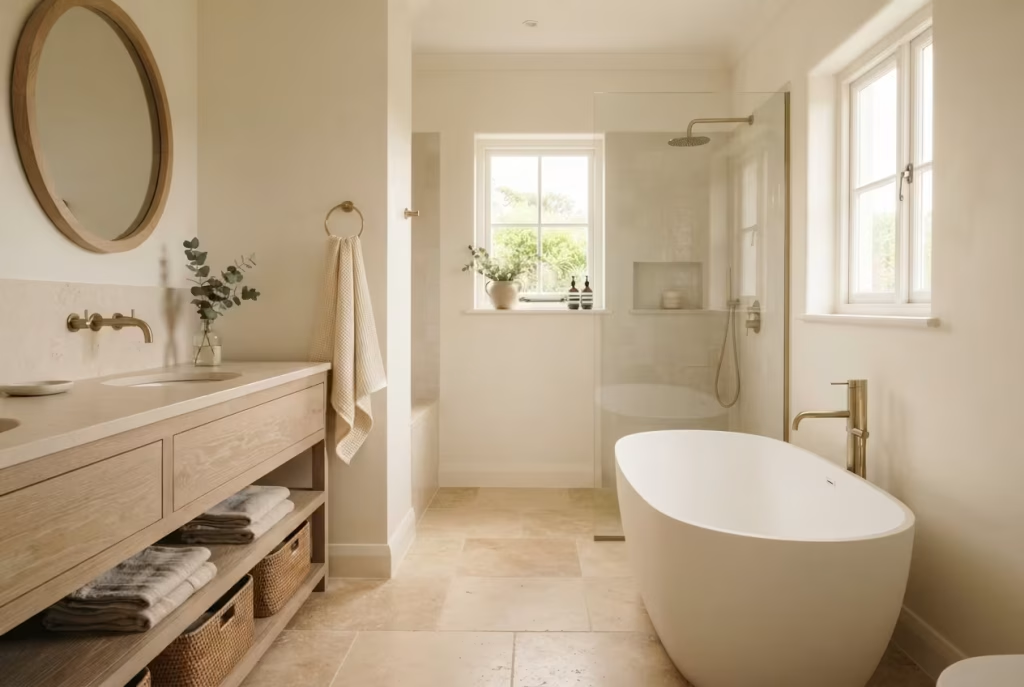
Before a single swatch of blue crosses your mind, settle your neutrals. A base built from soft white, warm sand or dove grey is what allows every other coastal touch to actually sing, rather than compete for attention. Choose a wall colour with a whisper of warmth in it, since a stark, blue-based white can read cold and clinical under artificial light, no matter how “clean” it looks in a paint tin. Let your flooring lean sandy rather than icy grey, and resist the urge to go full white-on-white throughout, or you risk a slightly sterile, hospital-adjacent finish that’s about as far from breezy as it gets.
- Aim for warm whites with an undertone of cream, not blue
- Test paint on the actual wall, at different times of day, before committing
- Keep flooring a shade warmer than your walls to avoid a flat, one-note look
Try this if: your bathroom gets limited natural light and desperately needs help feeling brighter
You May also Like: Mid-Century Modern Bathroom Ideas: 26 Ways to Create a Timeless, Stylish Space
2. Bring in proper sea blue, not just any blue that happens to be nearby
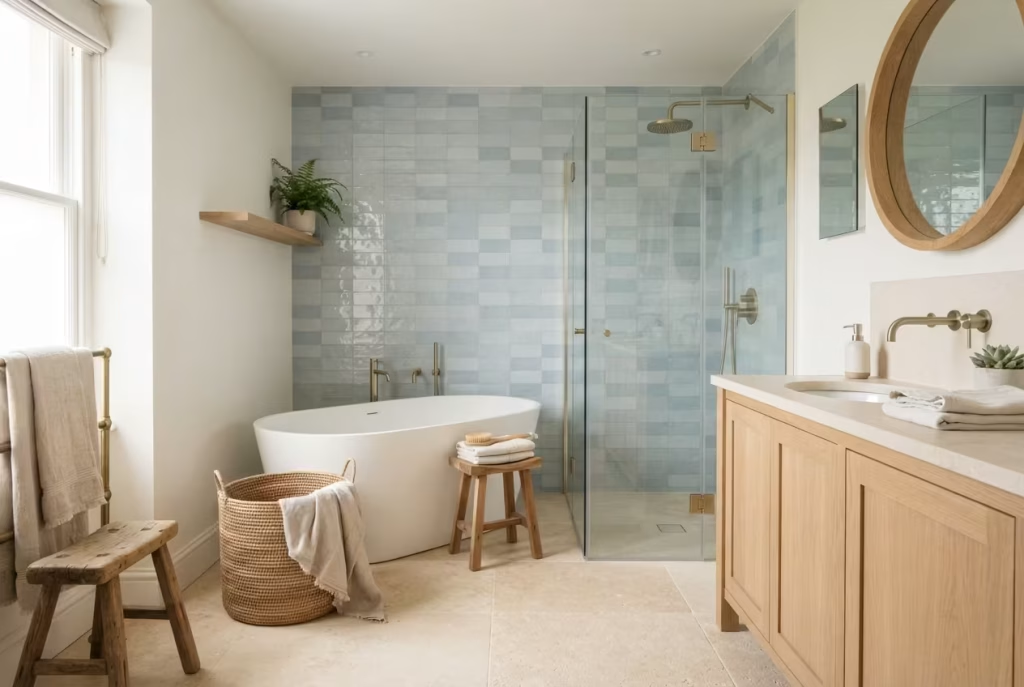
Blue and coastal style go together like fish and chips, and for good reason, but not all blues pull their weight equally. Duck egg and soft powder blue read as gentle, breathable and thoroughly beachy. Cobalt and true navy, by contrast, tip the balance towards nautical rather than coastal, a subtle but noticeable difference once you see it. If you fancy a proper statement, paint a single vanity unit or a lone feature wall in a deep, confident sea blue, then leave the rest of the room pale as a foil. One bold colour moment reads as intentional. Four competing ones reads as indecisive.
Try this if: you want colour in the room but aren’t quite ready to commit wholesale.
3. Try seafoam green for something a shade more unexpected
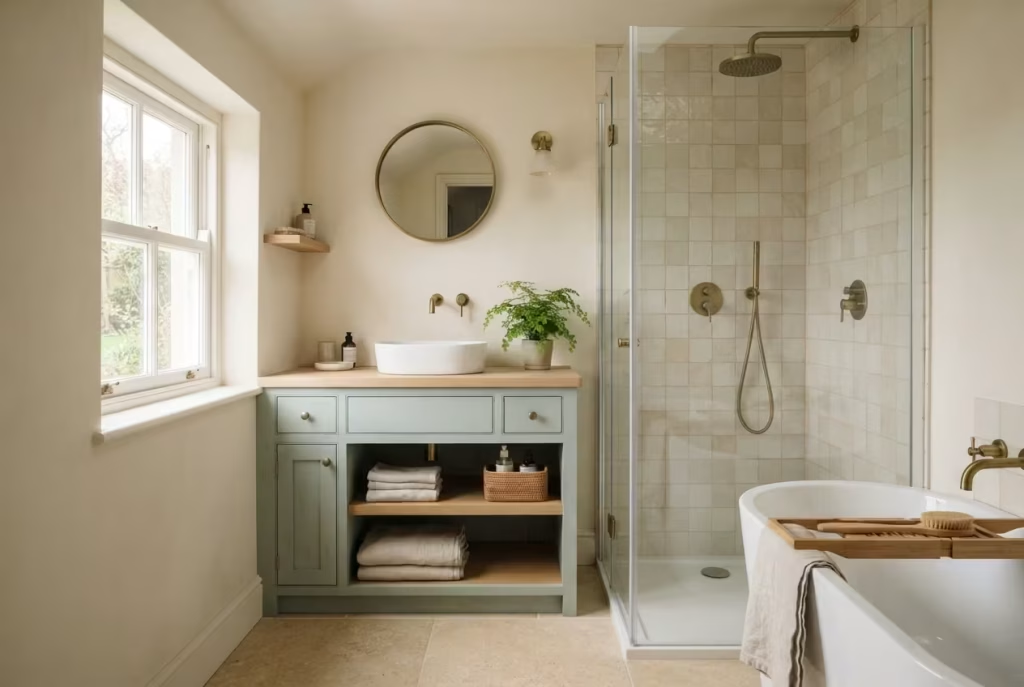
Seafoam occupies that lovely, slightly undefined territory between blue and grey, and it happens to be one of the most forgiving colours you could pick for a bathroom, full stop. Use it on cabinetry, in your grout lines, or simply through accessories if you’re renting or hesitant to commit long-term, and pair it generously with warm timber tones to stop the whole scheme drifting too cool. It’s particularly flattering in a small bathroom, where a full wall of solid blue can start to feel heavy and enclosing, whereas seafoam keeps proceedings noticeably lighter on its feet.
Try this if: you like the idea of coastal colour but want to sidestep the obvious choice.
4. Layer in navy and white stripes for genuine personality
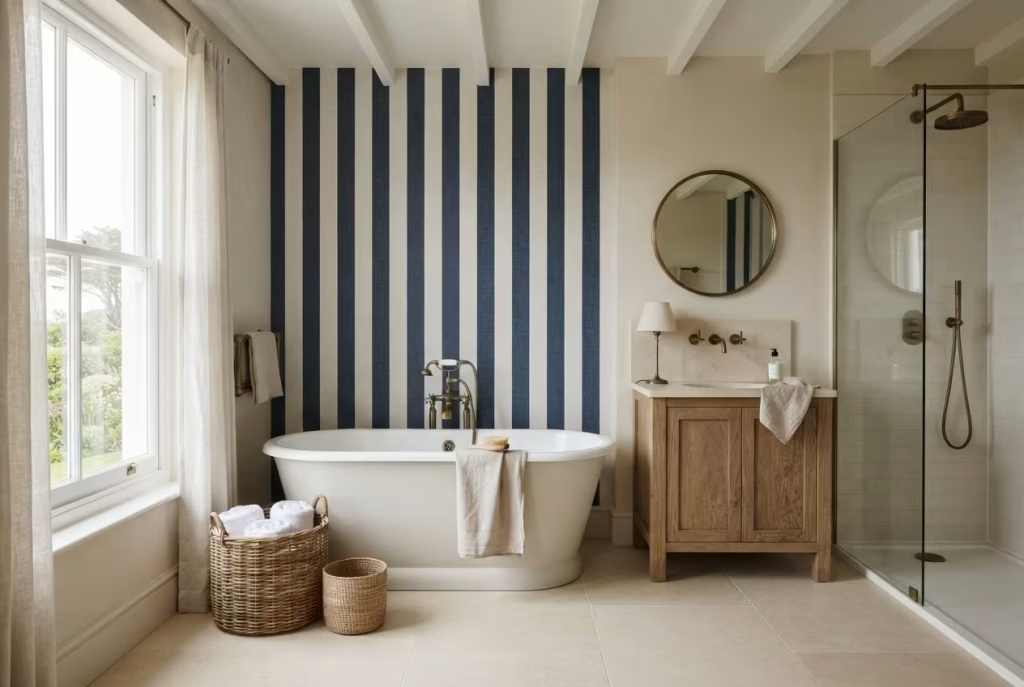
Cabana stripes have earned their keep in coastal design fair and square, and they’re a wonderfully low-risk way to introduce pattern without veering into fussy territory. Use them on wallpaper, a roman blind, or paint them directly onto a feature wall behind the bath for a look with real conviction. The trick, and it’s a simple one, is proportion. Keep the rest of the room deliberately plain so the stripe carries the visual weight, rather than duking it out with a busy floor tile for your attention.
Try this if: your current bathroom feels a touch flat and could do with a jolt of character.
5. Lean on neutrals for a scheme that stands the test of time
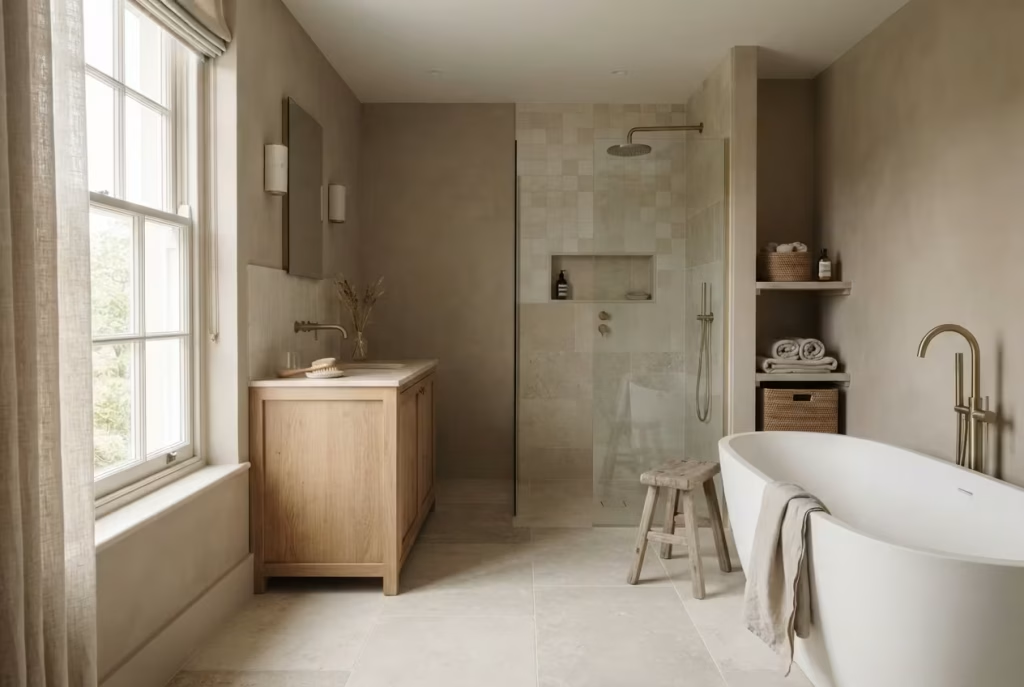
Not every coastal bathroom needs to shout blue at the top of its lungs. Warm greys, soft taupe and gentle brown, sometimes described as a “northeastern coastal” palette, give you that airy, weathered, salt-in-the-air feeling without leaning on colour at all. It’s a genuinely versatile route to take if you’re planning to sell within the next few years and want broad appeal, and crucially, it ages a great deal better than a fashionable colour that’s likely to feel dated by the time the next trend cycle rolls round.
Try this if: you want coastal style with real staying power, not a look destined for a repaint in three years.
Tiles, Flooring and Surfaces Ideas 6 to 11
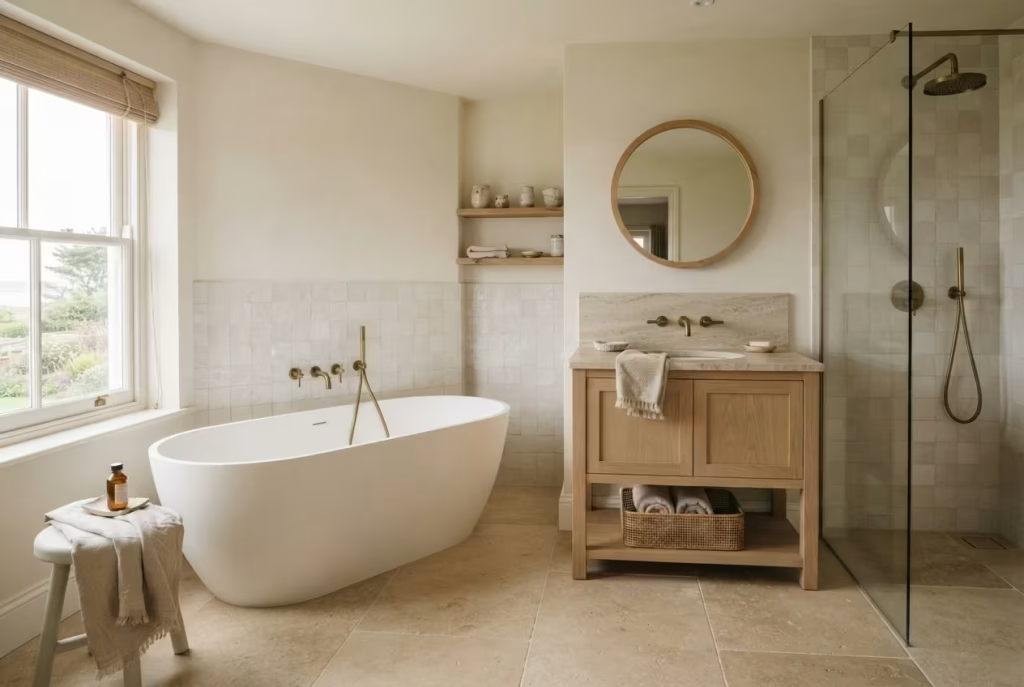
Tile is where the biggest budget decisions get made, and it’s also where most of the genuine regret creeps in further down the line, so this section carries a bit more weight than the others.
6. Choose glazed subway tile for texture that never really dates
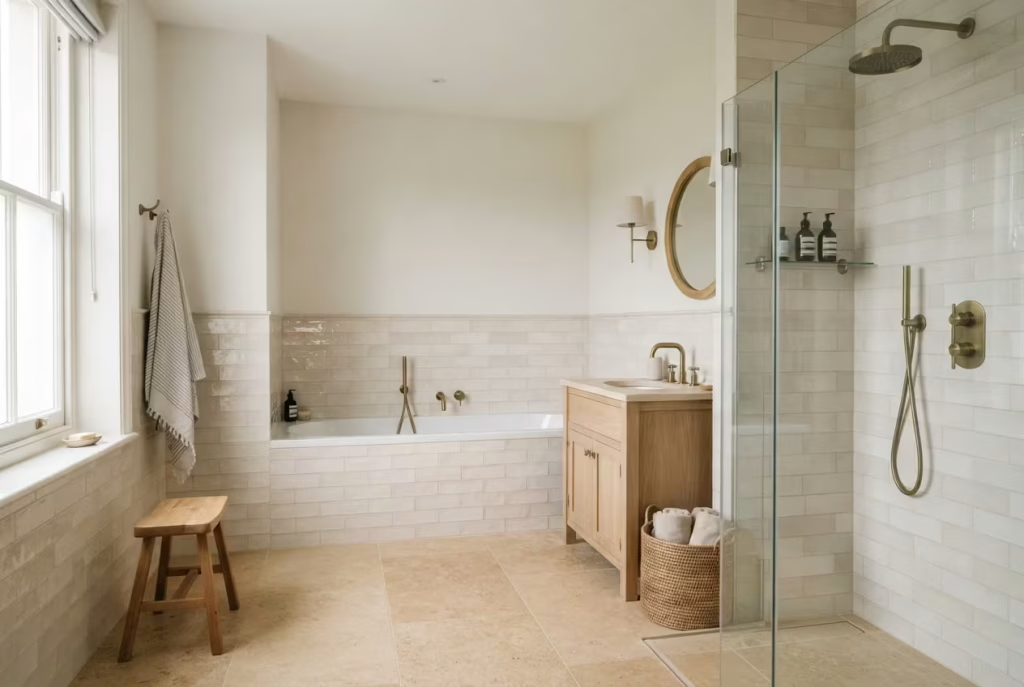
Subway tile has earned its reputation the hard way, through decades of simply working, in nearly every coastal scheme going, from a tiny cloakroom to a full family bathroom. Look for a slightly glazed, reflective finish rather than a flat matte one, since the sheen catches light in a way that genuinely flatters a pale, coastal palette. Lay it horizontally for the classic look, or turn it on its side in a herringbone pattern if you fancy something with a touch more movement and a slightly more contemporary edge. Whichever way you go, it remains one tile choice you’re highly unlikely to regret five years down the line, which is more than can be said for some of the bolder options currently doing the rounds on Pinterest.
Quick fact: subway tile has featured in coastal and Hamptons bathroom design consistently for well over a decade, making it one of the few genuinely trend-proof choices on this whole list.
Try this if: you want a safe, resale-friendly choice that still looks properly intentional.
7. Go for large-format porcelain over trend-chasing marble
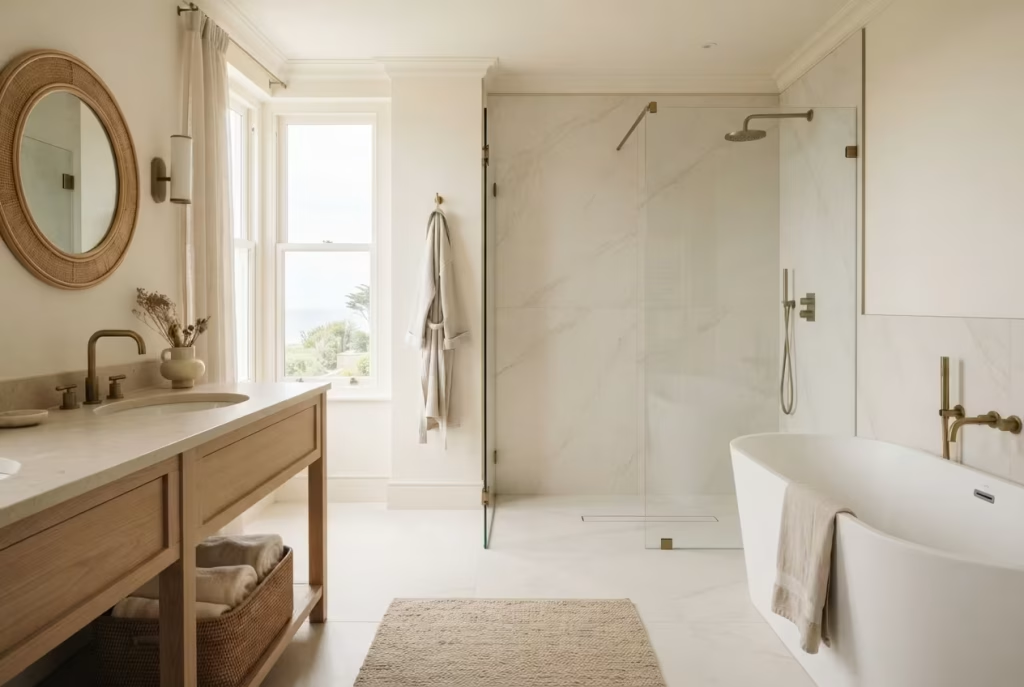
Marble looks utterly stunning on an inspiration board, no argument there, but it’s worth reading the room, quite literally, before you commit real money to it. Porous by nature, prone to etching from ordinary bathroom products, and genuinely pricey to lay properly, natural marble ranks among the most commonly regretted bathroom choices once homeowners go digging through renovation forums after the fact. A large-format porcelain tile with a soft marble-effect vein running through it gives you a strikingly similar look for a fraction of the ongoing maintenance headache, and it holds up a great deal better in a genuinely wet, high-use room.
- Porcelain resists staining and etching far better than natural stone
- Large-format tiles mean fewer grout lines, which reads as cleaner and calmer
- You’ll typically pay less per square metre than for genuine marble, and considerably less in labour
Try this if: you love the marble aesthetic but not the ongoing upkeep that comes attached to it.
8. Bring in fish-scale or scalloped tiling for movement
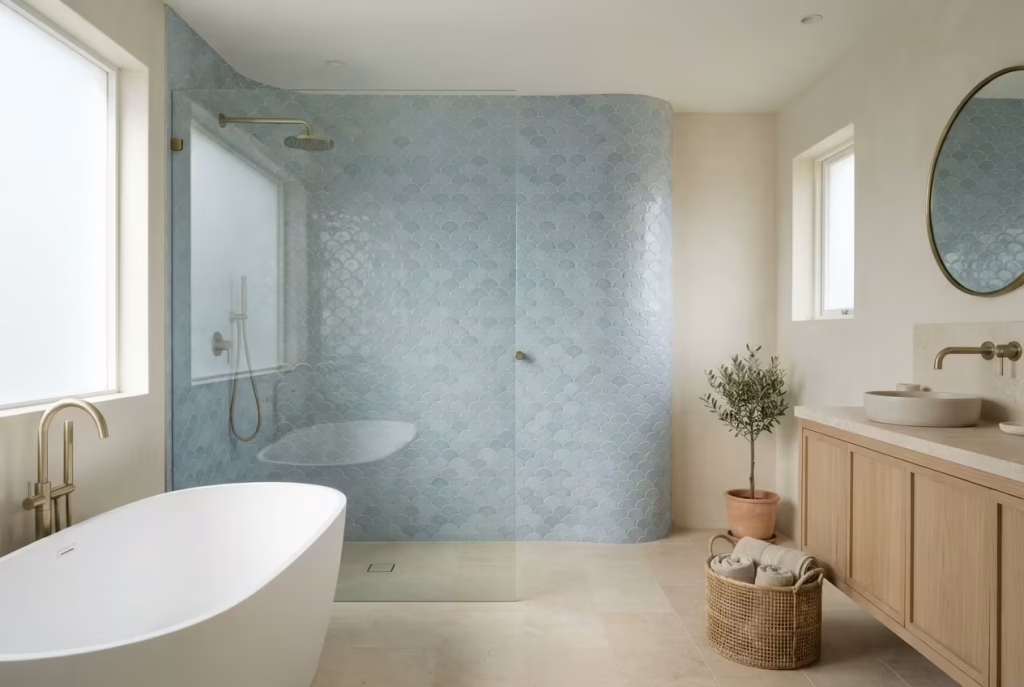
Scallop and fish-scale tiles are having a proper moment, and it isn’t hard to see why once you clock one in person. They add genuine movement and a hint of playfulness to a wall without ever shouting “seaside theme” the way a literal shell motif might. Use them on a shower wall, or as a feature strip behind an open vanity, and choose a muted tone, soft blue or a sandy neutral, so the shape itself does the talking rather than the colour drowning it out.
Try this if: your shower wall is crying out to be the room’s obvious focal point.
9. Try pebble flooring in the wet zone specifically
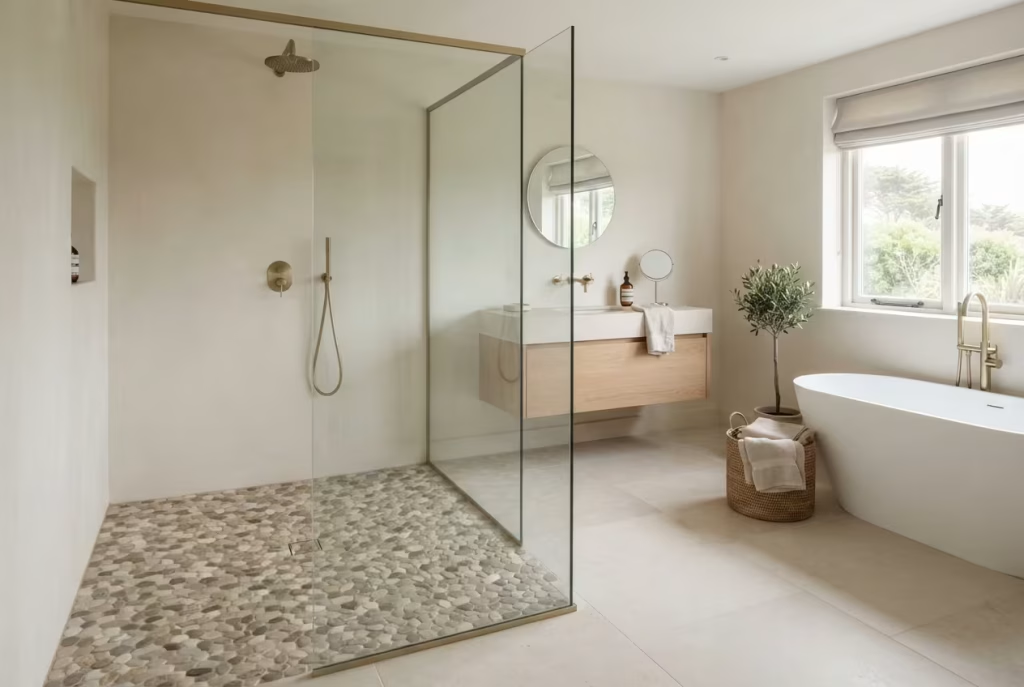
There’s something genuinely lovely, almost meditative, about pebble tile underfoot, a small daily reminder of the shoreline even if the actual sea is three counties away. Beyond the purely tactile appeal, pebble flooring offers a useful slip-resistance benefit in a wet zone, which is no small thing when you’re stepping out of a shower with soap still on your feet. Seal it properly from the outset and stick to neutral, weathered tones so it complements your wall tile rather than fighting it for attention.
Try this if: you want a genuinely sensory, borderline spa-like touch underfoot.
10. Choose a floor tile that mimics ocean movement
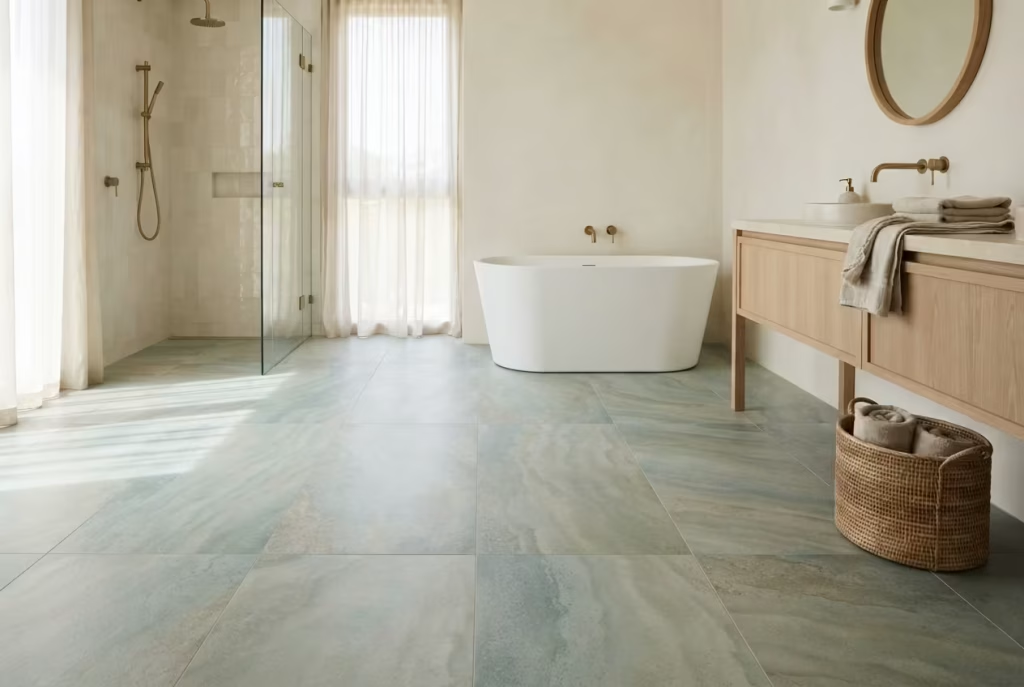
A tile with soft, rippling colour variation, greens and blues shifting subtly across a large-format floor, can act as a feature entirely in its own right, which frees your walls to stay simple and let the floor do the heavy lifting. It’s a particularly effective move in an ensuite, where the floor is genuinely visible day to day rather than obscured behind a bath panel or a bulky vanity unit.
Try this if: your bathroom layout gives you an uninterrupted, unobstructed view of the floor.
11. Sidestep the tile colours designers say people always regret
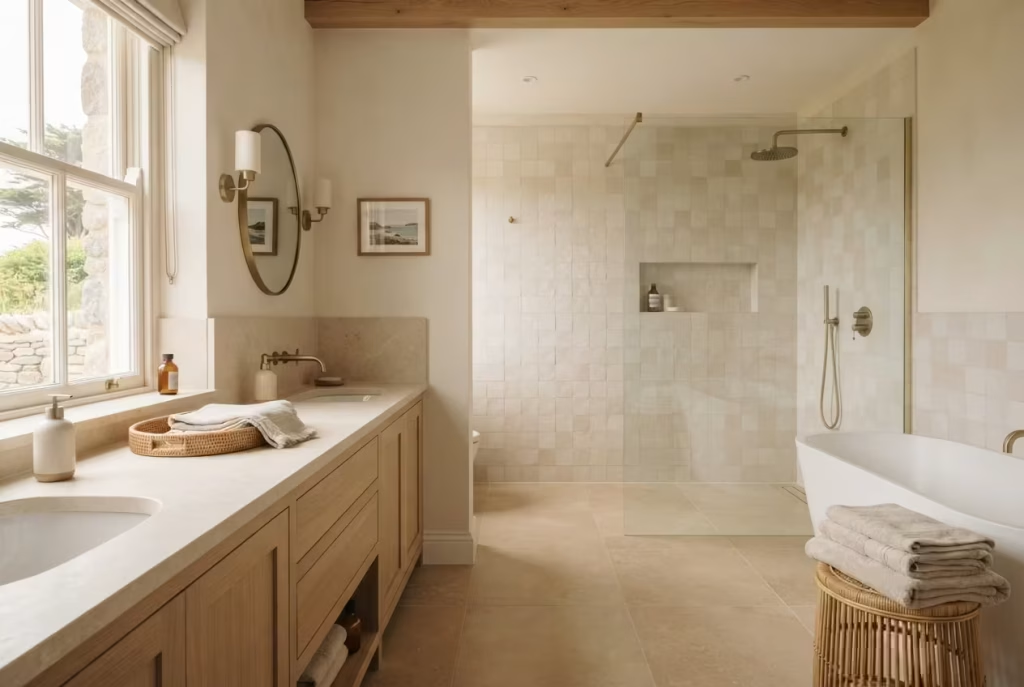
Worth stating plainly here, since it’s the sort of thing nobody tells you until it’s too late and the grout’s already gone in. Stark, cold white can look sterile once it’s grouted, lived with and, inevitably, stained. Dark tile shows hard water spots relentlessly if you’re in a hard water area, which covers a fair swathe of the UK. Heavily veined or richly coloured stone across an entire wall can make a genuinely small bathroom feel closed in rather than luxurious, the exact opposite of what you were presumably going for. Treat bold, dramatic stone as an accent, perhaps a vanity top or a single feature panel, rather than tiling the whole room in it and hoping for the best.
Try this if: you’re about to sign off on tile and want one last sanity check before the order goes in.
Fixtures, Fittings and Finishing Touches Ideas 12 to 17
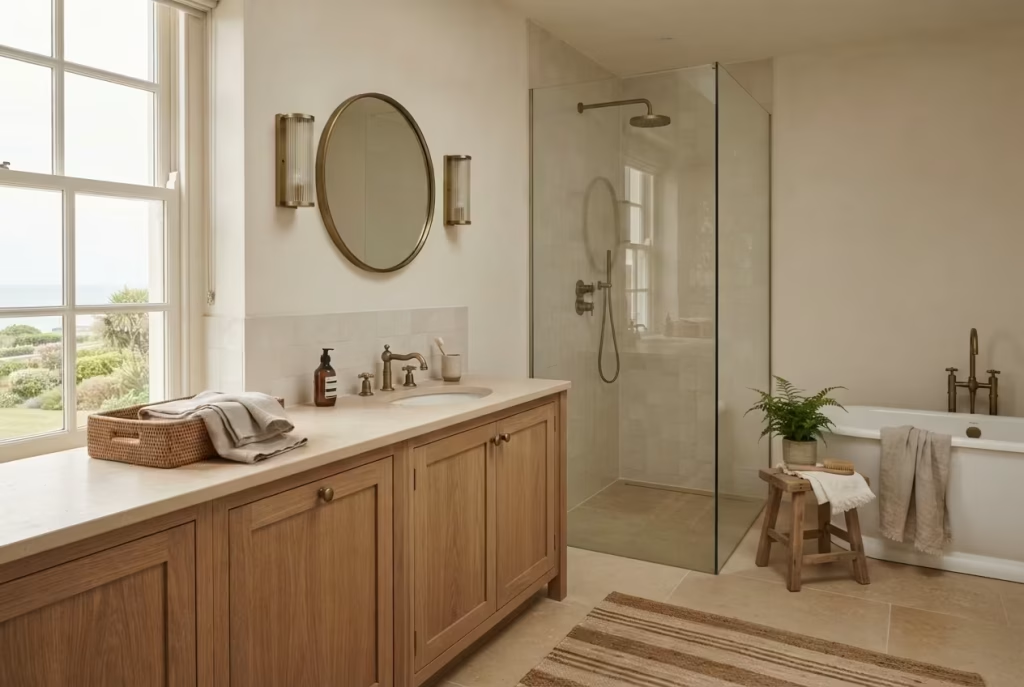
Small hardware decisions carry outsized weight in a coastal bathroom. Get the metals and the vanity right and half your styling work is already done for you.
12. Swap in brass taps for genuine warmth
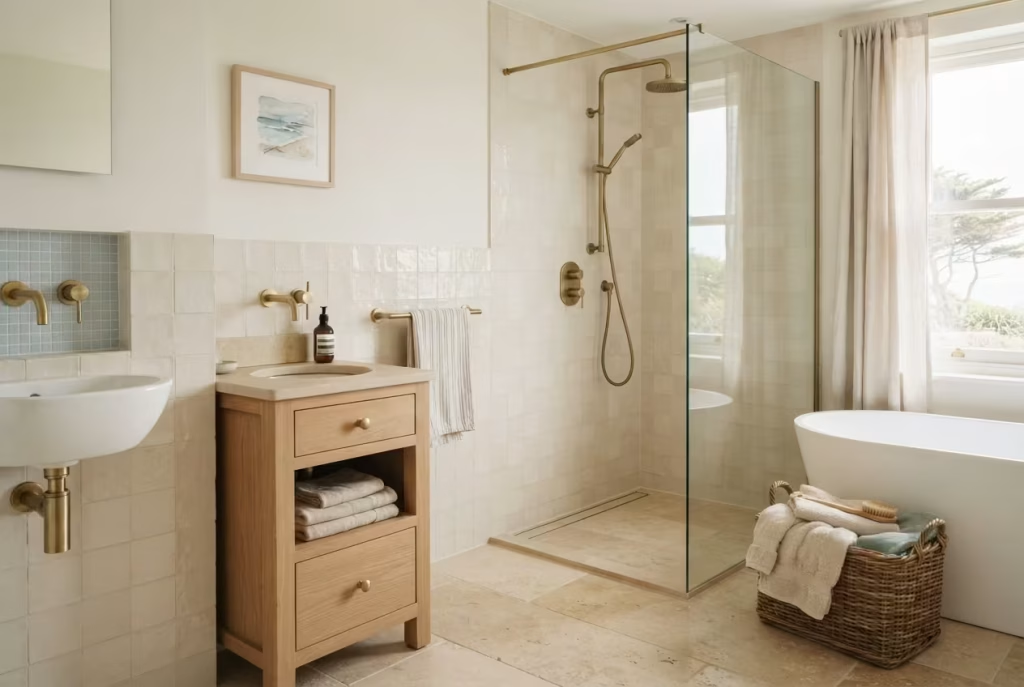
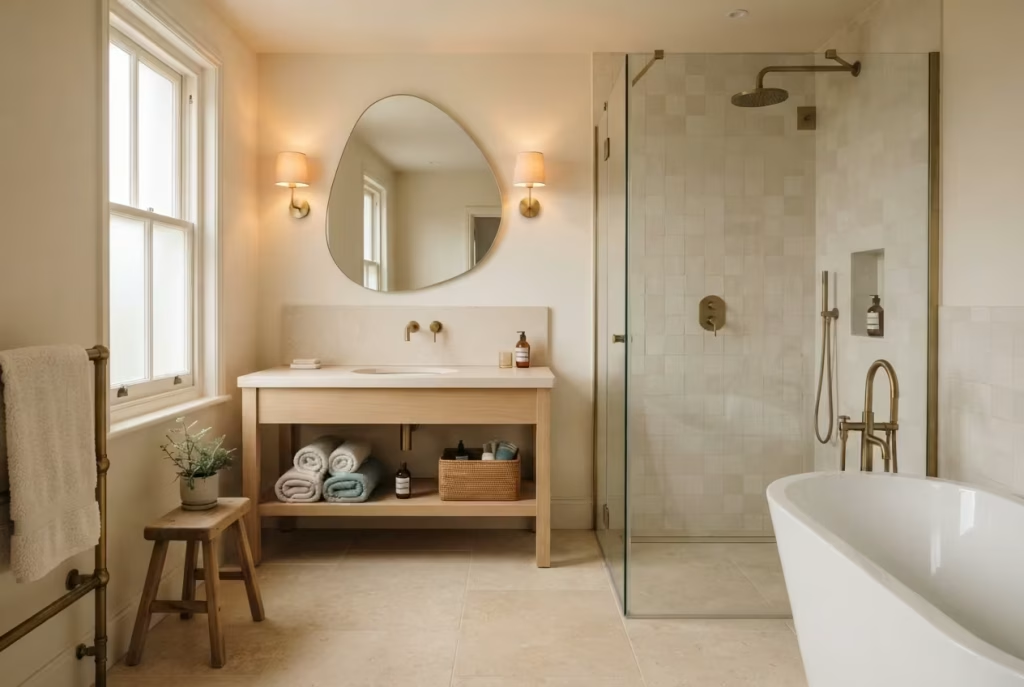
Brass has quietly become the metal of choice for coastal bathrooms, and it makes a fair bit of sense once you think it through: it adds warmth against all that cool blue and white, without ever feeling cold underfoot or under the hand the way chrome sometimes can. Go brushed or unlacquered rather than a high-shine polished brass if you’d like it to develop a gentle, genuinely lived-in patina over time, rather than staying showroom-fresh (and looking rather sorry for itself) forever.
Try this if: your current chrome fittings feel a touch clinical or dated.
13. Try matte black for a shot of contrast
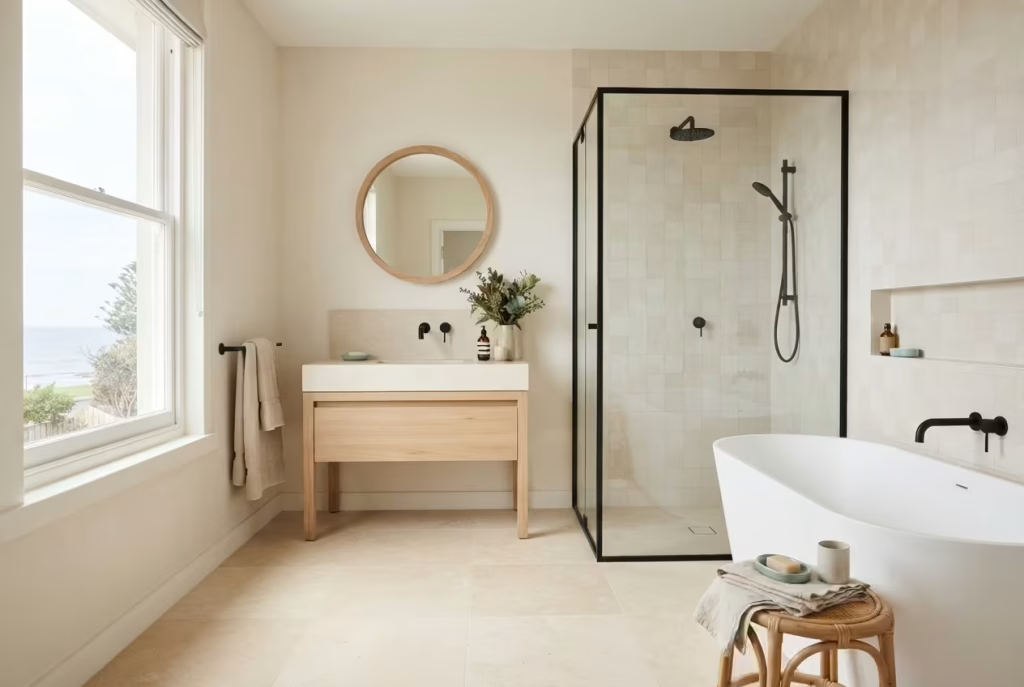
If brass feels a shade too soft for your taste, matte black fittings do the opposite job rather brilliantly: they ground a pale, airy scheme and stop it drifting into blandness, which is a genuine risk once you’ve committed to an all-white base. Keep black to the taps, the shower frame, perhaps the towel rail, and let the rest of the room stay light throughout. Used sparingly, it reads as confident and considered. Used absolutely everywhere, it starts to swallow the room whole and undo all that hard-won brightness.
Try this if: you’re after coastal style with a slightly more contemporary, urban edge.
14. Choose a fluted or scalloped vanity front
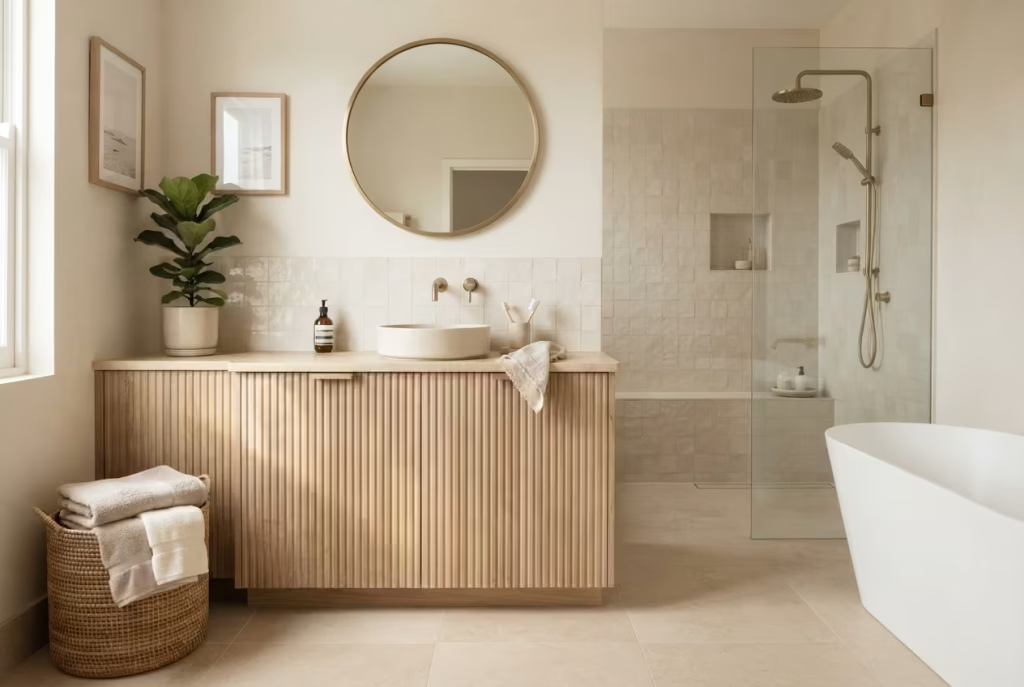
Fluted detailing has crept out of the kitchen and firmly into the bathroom over the last couple of years, and it’s a genuinely lovely way to add texture to cabinetry without reaching for either colour or busy pattern. It catches light beautifully, particularly in a pale timber or soft blue finish, and pairs naturally with brass hardware for a combination that feels considered rather than accidental.
Try this if: your vanity is currently the flattest, least interesting surface in the whole room.
You May also Like: 36 Bungalow Bathroom Ideas: Stylish, Cozy & Relaxed Designs for Your Home
15. Fit a freestanding tub near the window
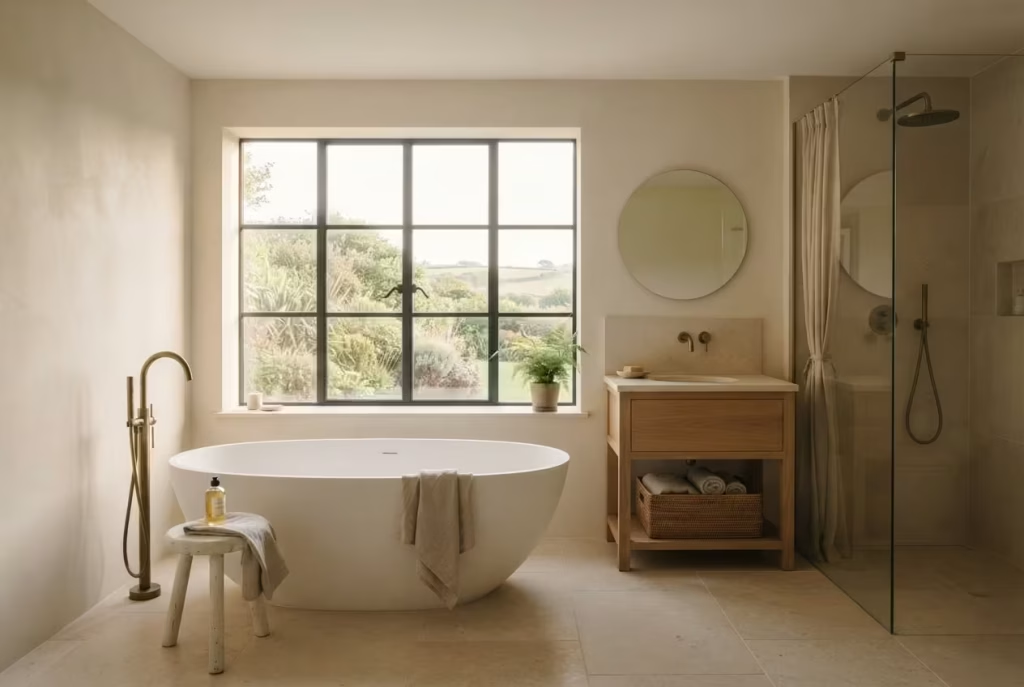
There’s a reason nearly every glossy coastal bathroom feature you’ve ever scrolled past includes a freestanding tub parked squarely in front of a window. It’s a proper statement piece, full stop, and positioning it to catch the light, or if you’re genuinely fortunate, an actual view, turns bath time into something closer to a retreat than a chore you’re squeezing in before bed. Even without sea views on offer, morning light pooling across a freestanding tub does considerably more for the mood of a room than most accessories ever could manage.
Try this if: your bathroom has a decent-sized window currently going to waste.
16. Opt for a frameless glass shower enclosure
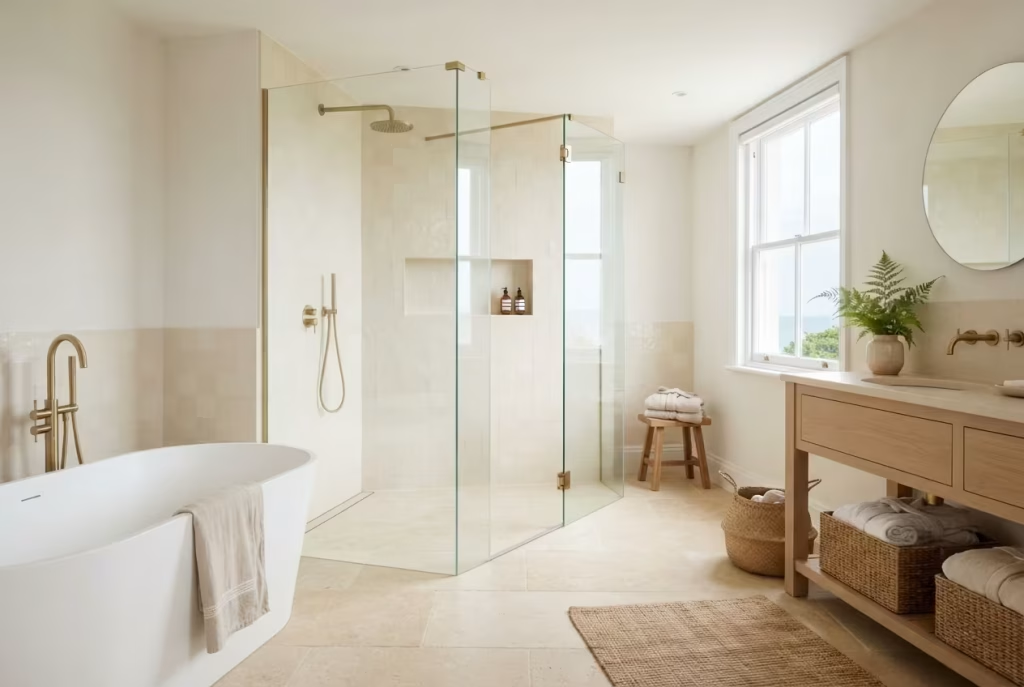
Where a boxy, heavily framed shower screen can visually chop a small room clean in half, a frameless glass enclosure keeps sightlines properly open and lets your tile-work do the talking uninterrupted, exactly as it should. It’s a comparatively small change that makes a genuinely outsized difference to how spacious a room feels day to day, and it pairs especially nicely with reflective brass or chrome fittings elsewhere in the room.
Try this if: your current shower screen feels like it’s boxing the whole room in.
17. Fit open shelving instead of bulky closed cabinets
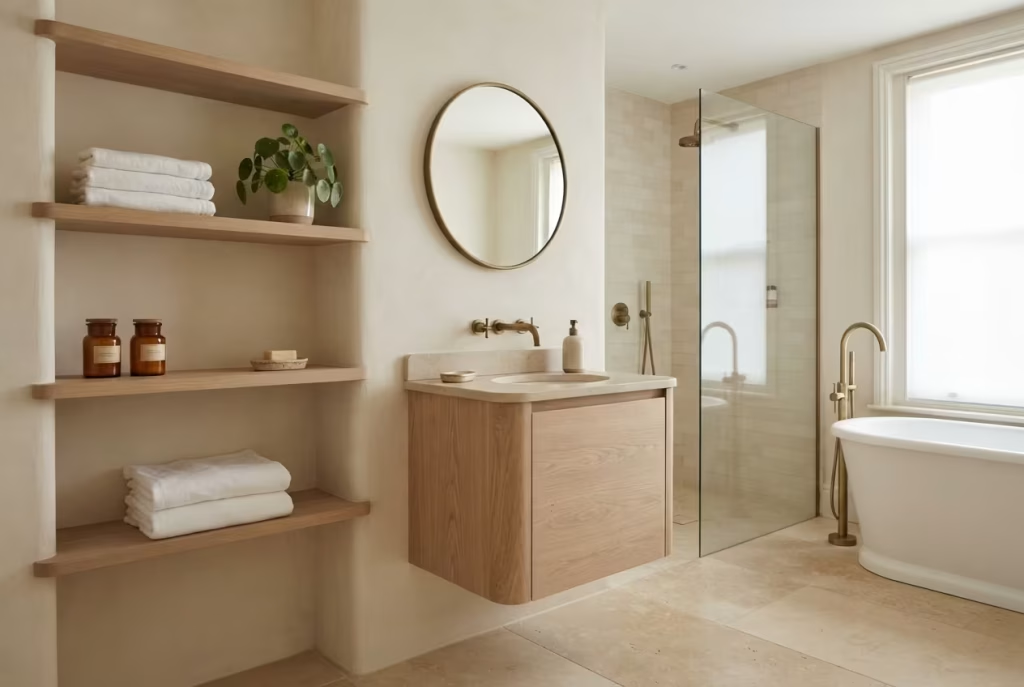
Solid, fully enclosed cabinetry certainly has its place, but open shelving, whether that’s honest timber, floating acrylic, or a simple bracket-and-plank arrangement, keeps a coastal bathroom feeling properly breezy rather than boxed in and heavy. Style it with genuine restraint: rolled towels, a single plant, a jar or two at most. Overfill it, and you’ll lose the airy effect you were chasing from the outset, replacing calm with clutter.
Try this if: you want storage that quietly doubles as styling, rather than fighting against it.
Texture and Natural Materials: Ideas 18 to 23
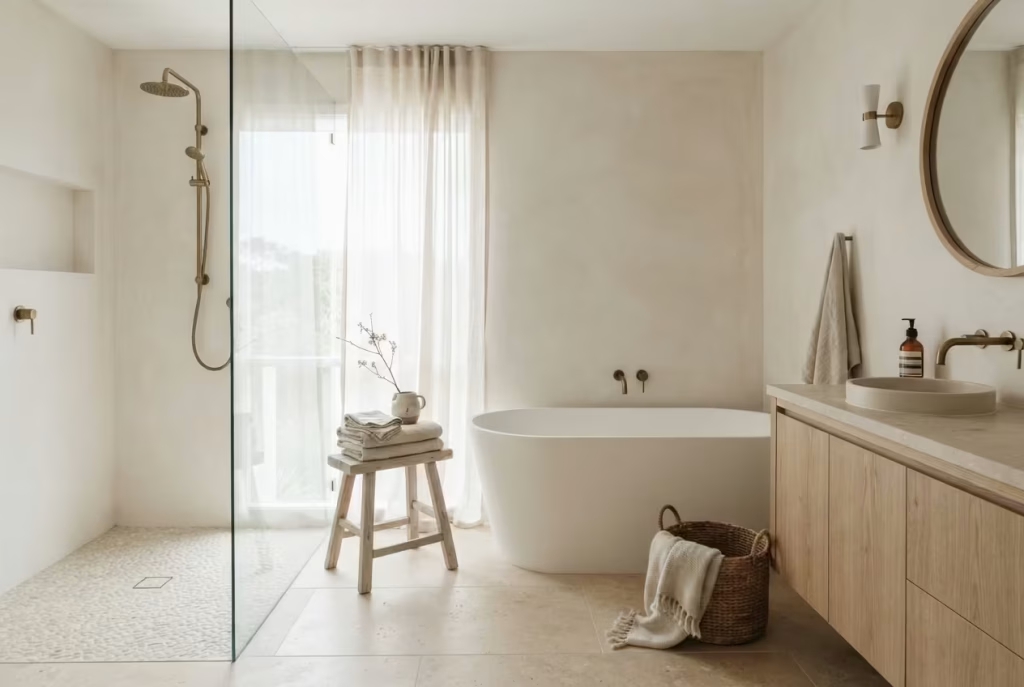
If colour sets the mood, texture is what makes a coastal bathroom feel genuinely three-dimensional rather than flat and one-note.
18. Bring in rattan and woven accents throughout
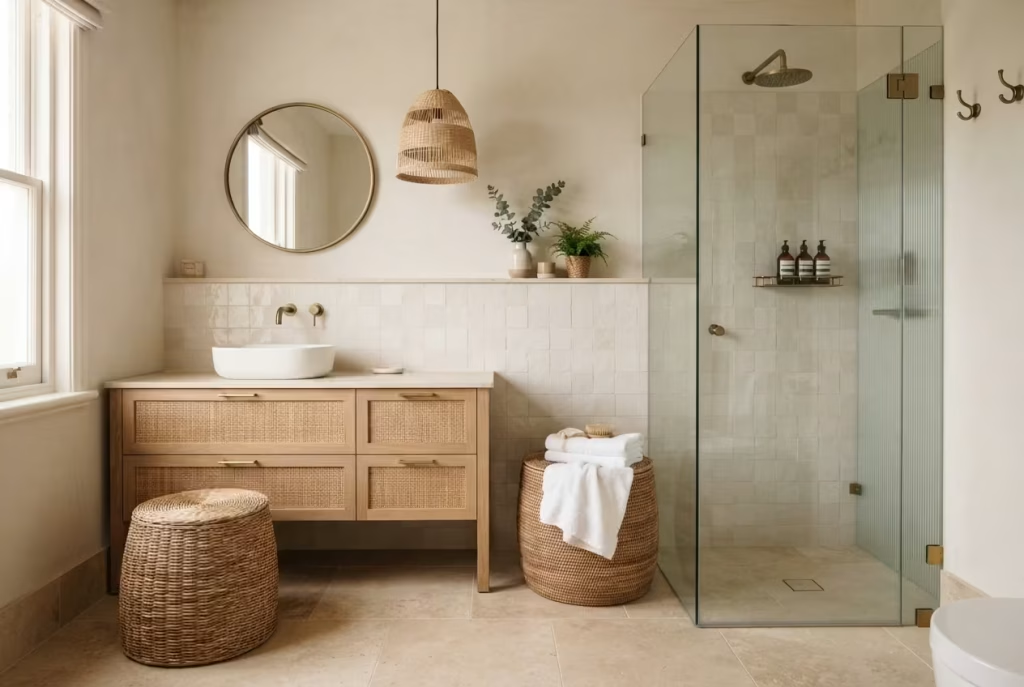
Rattan does more for a coastal bathroom than almost any other single material you could name. It softens all that cool tile and crisp white paint, and it ties the room visually to the sort of natural materials you’d genuinely find washed up along a shoreline. Use it for a vanity stool, a pendant light, or a storage basket, and mix it with a touch of glass or acrylic if you’d like the scheme to feel current rather than tipping over into overtly rustic territory.
Try this if: your bathroom currently feels a bit sterile or showroom-flat, lacking any real warmth.
19. Choose seagrass or rattan storage baskets
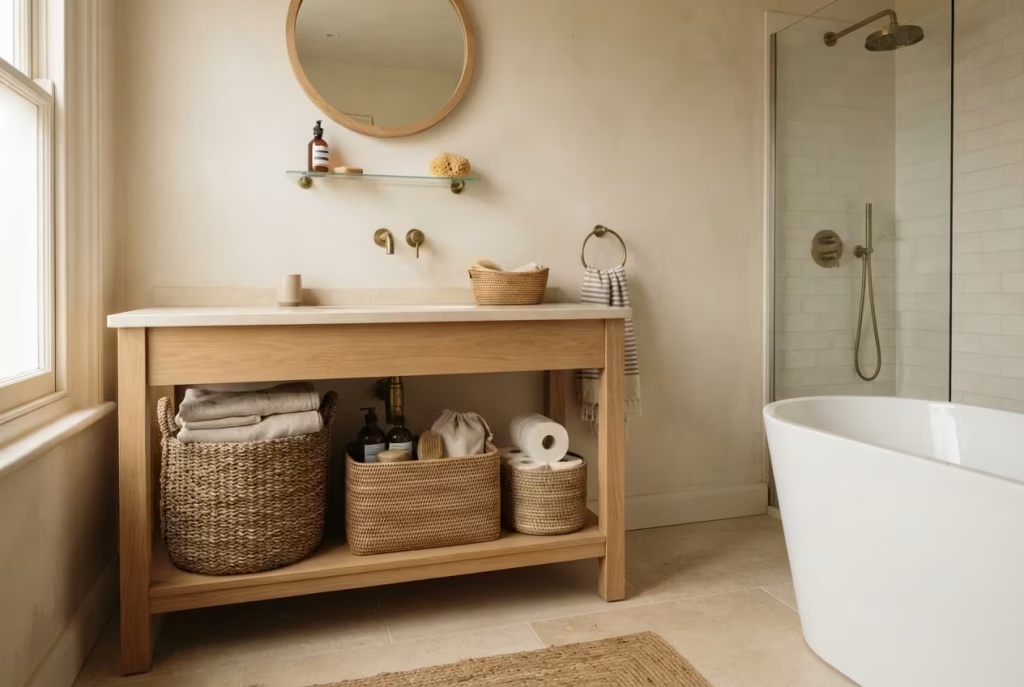
Beyond pure decoration, woven baskets earn their keep as proper, functional storage, spare loo roll, spare towels, the endless clutter of toiletries, all tucked away without resorting to plastic tubs. Use a mix of sizes and stack them where possible, and you’ll land a layered, collected-over-time look rather than a matching three-piece set fresh out of a catalogue, which reads considerably more genuine.
Try this if: your current bathroom storage looks distinctly like an afterthought.
You May also Like: 16 Sage Green Bathroom Ideas for a Serene and Stylish Space You’ll Love
20. Add a driftwood or timber towel rail
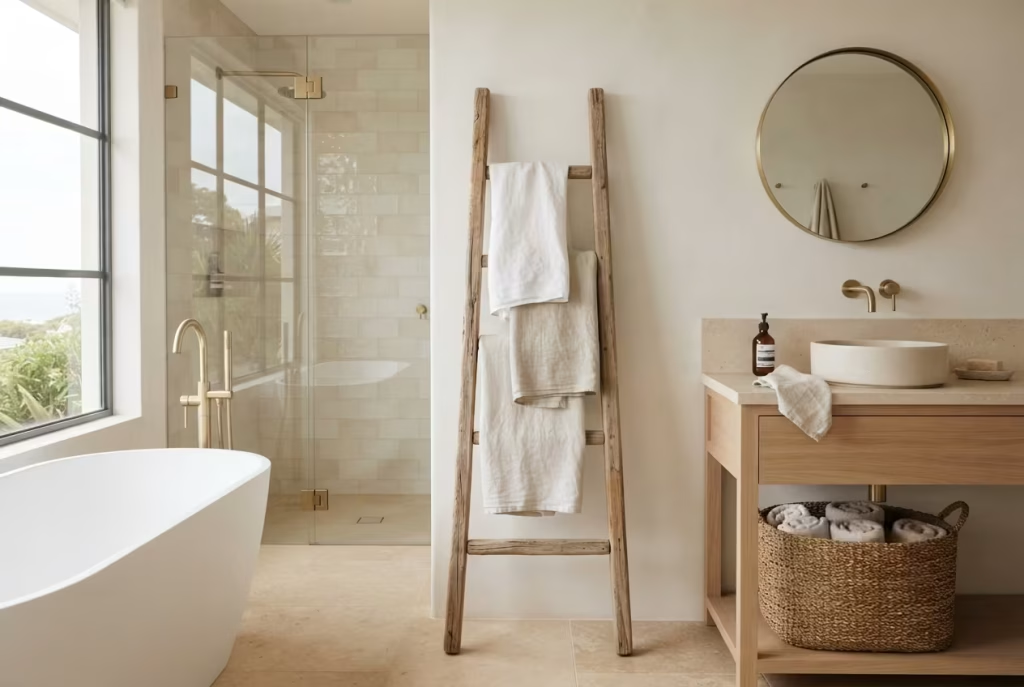
A weathered timber towel ladder, or better still a genuine piece of driftwood repurposed as a rail, brings authentic texture that no manufactured accessory can quite replicate, however hard the high street tries. It works particularly well against crisp white walls, where its natural imperfections read as intentional character rather than clutter or neglect.
Try this if: your bathroom accessories currently all match one another a little too neatly for comfort.
21. Dress windows in linen or bamboo blinds
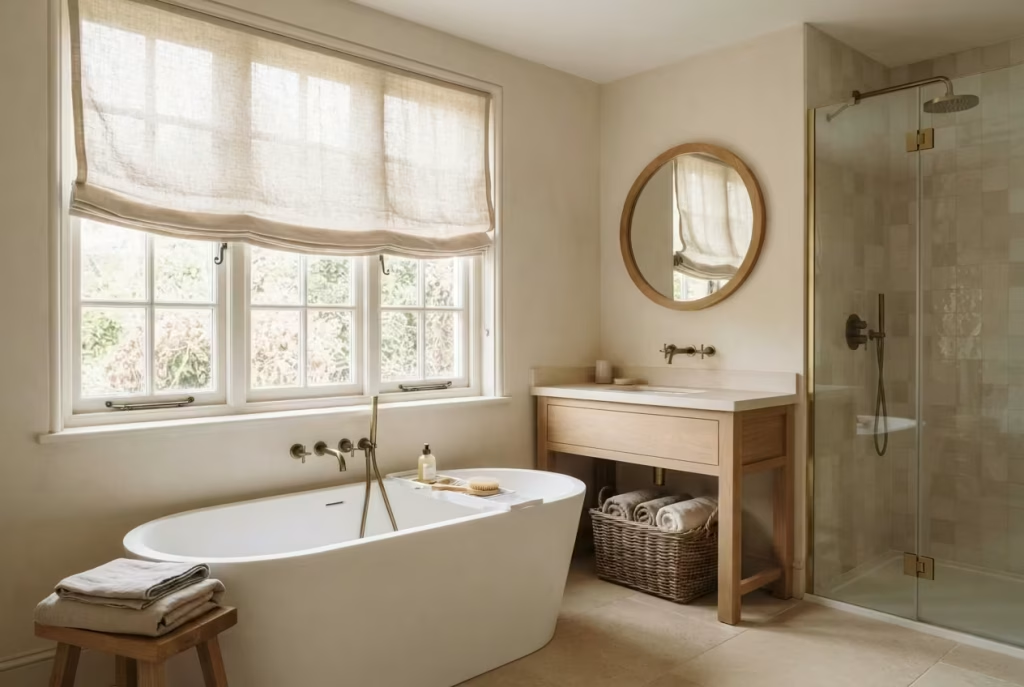
Heavy, formal curtains have properly no place in a genuine coastal scheme, whatever the department store might try to sell you. Light linen roman blinds, or a simple bamboo shade, diffuse sunlight gently while maintaining privacy, and their soft drape adds movement to a room that can otherwise feel a touch static and stiff. Coordinate the fabric loosely with your towels or rug rather than matching it exactly, since a slightly imperfect pairing genuinely feels more relaxed than a colour-matched set fresh out of the same collection.
Try this if: you’re currently relying on a plain roller blind and the room’s crying out for more warmth.
22. Pick linen or cotton towels in sand and soft blue
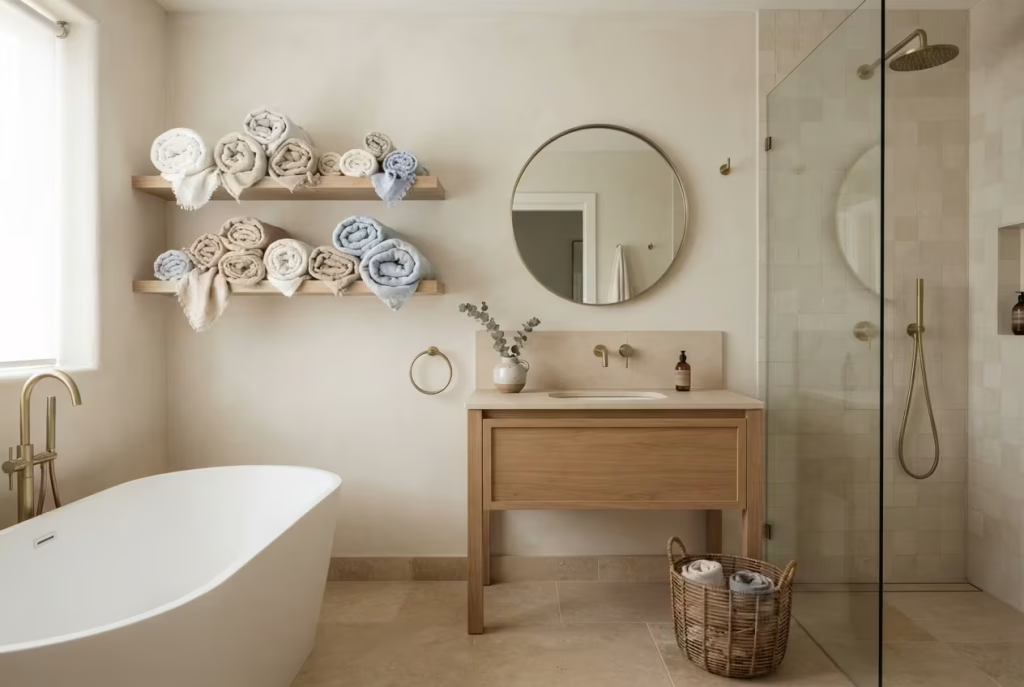
It sounds almost too simple a suggestion to warrant its own entry, but towels genuinely earn their place on this list. Swap out synthetic, brightly patterned sets for linen or good-quality cotton in warm white, sand or soft grey-blue, and the whole room instantly reads more considered, more finished, more deliberate. Roll rather than fold them on open shelving for that effortless, just-back-from-holiday look that photographs so well and, more usefully, feels good in daily life too.
Try this if: you’re not quite ready for a full renovation but want an instant, low-effort refresh.
23. Hang wallpaper with a subtle marine motif
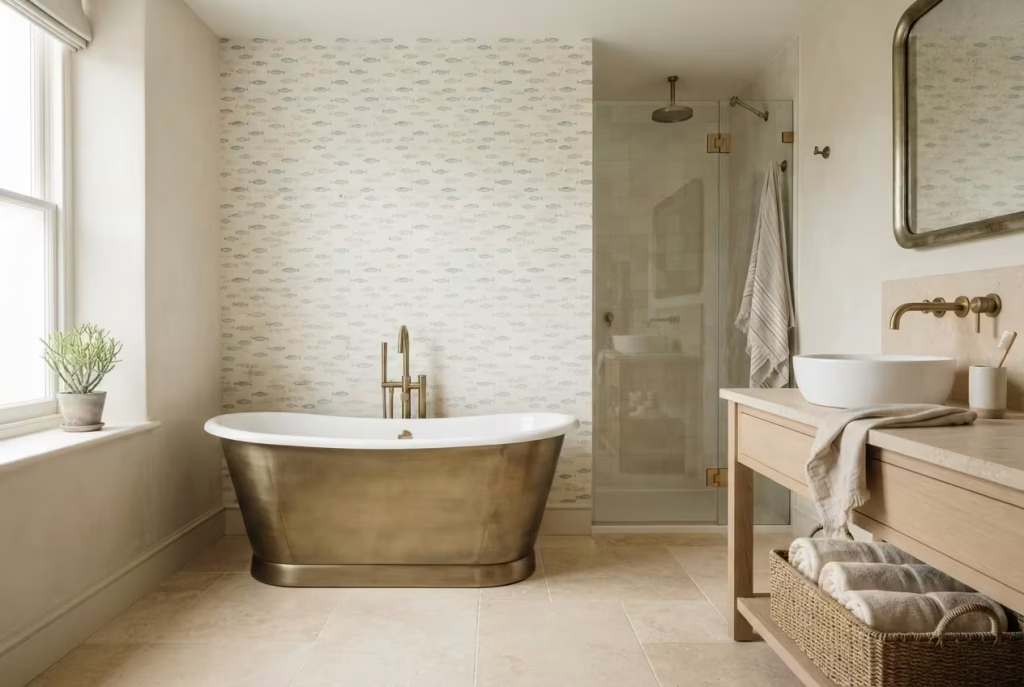
Done well, marine-print wallpaper, think fish, waves or sea birds rendered with restraint, adds real personality without veering off into theme-park territory. The trick lies in scale and colour restraint: a smaller, more muted print reads as sophisticated and considered, while a large, brightly coloured one can tip a small powder room into pastiche fairly swiftly. Reserve it for a single wall or a compact cloakroom rather than wrapping an entire family bathroom in it, where the effect can quickly become overwhelming.
Try this if: you want pattern in the room but remain nervous about overdoing it.
Lighting, Mirrors and Layout: Ideas 24 to 27
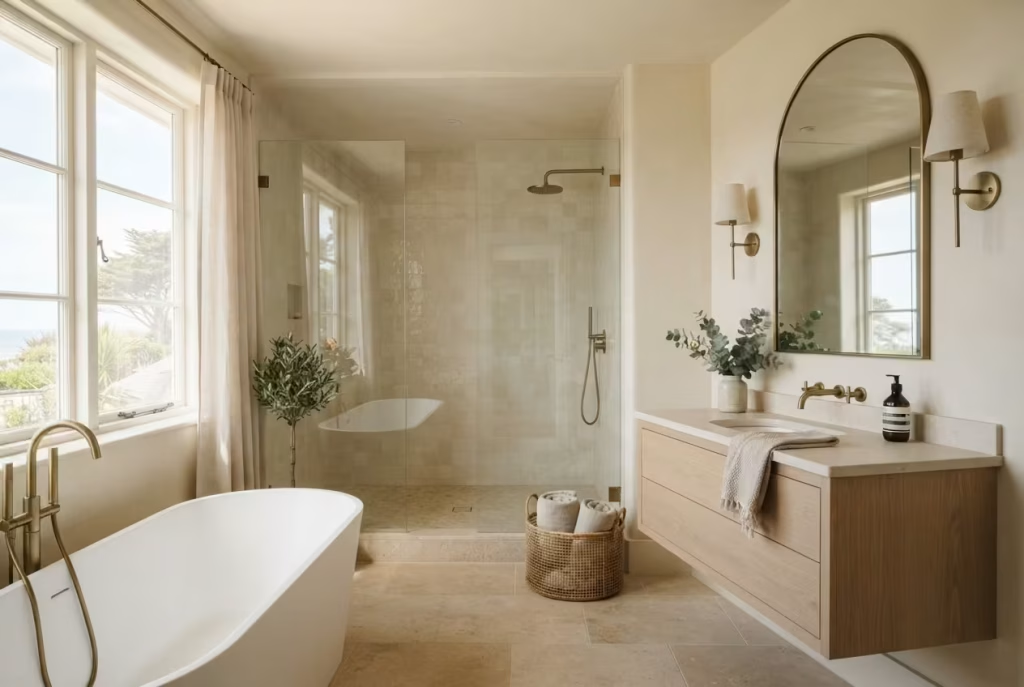
Light and layout rarely get the credit they deserve, yet they arguably do more heavy lifting than colour or tile ever could.
24. Choose a rope-framed or organic-shaped mirror
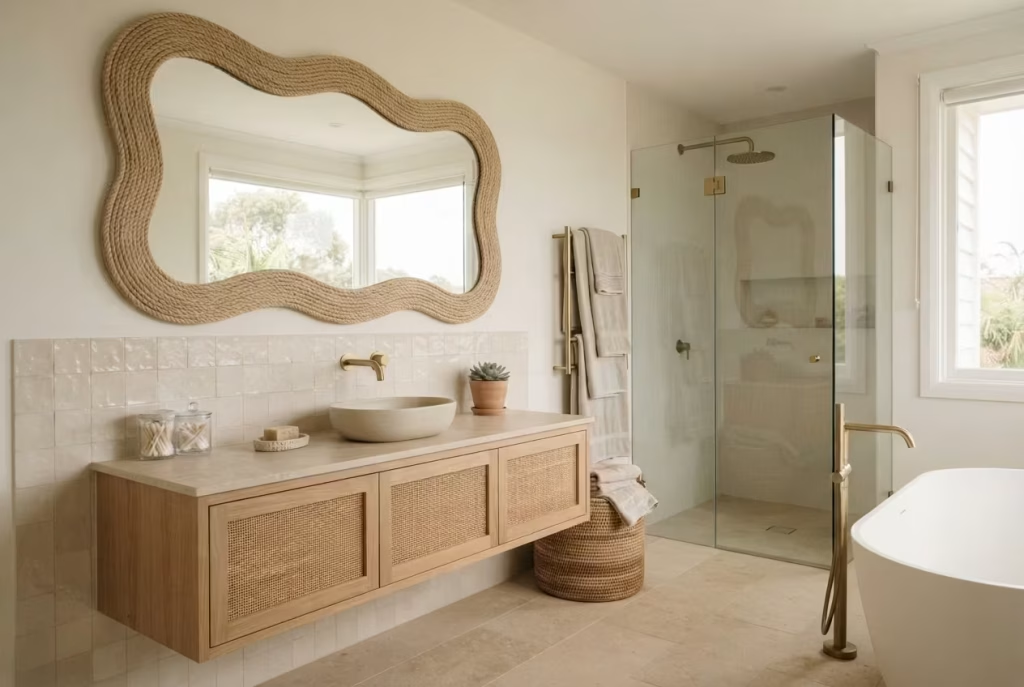
Mirrors pull double duty in a coastal bathroom: they bounce light generously around the room, and they act as one of the easiest style statements going, requiring no plumber whatsoever. A rounded or organic, wave-edged shape softens all those straight tile lines running elsewhere in the room, while a rope or rattan frame adds texture without adding a single extra colour to juggle. If your bathroom leans dark, a larger mirror hung opposite a window can make a genuinely surprising difference to how bright the whole space feels, almost out of proportion to how small a change it is.
Try this if: your current mirror is a plain, entirely forgettable builder-grade rectangle.
25. Maximise every last scrap of natural light
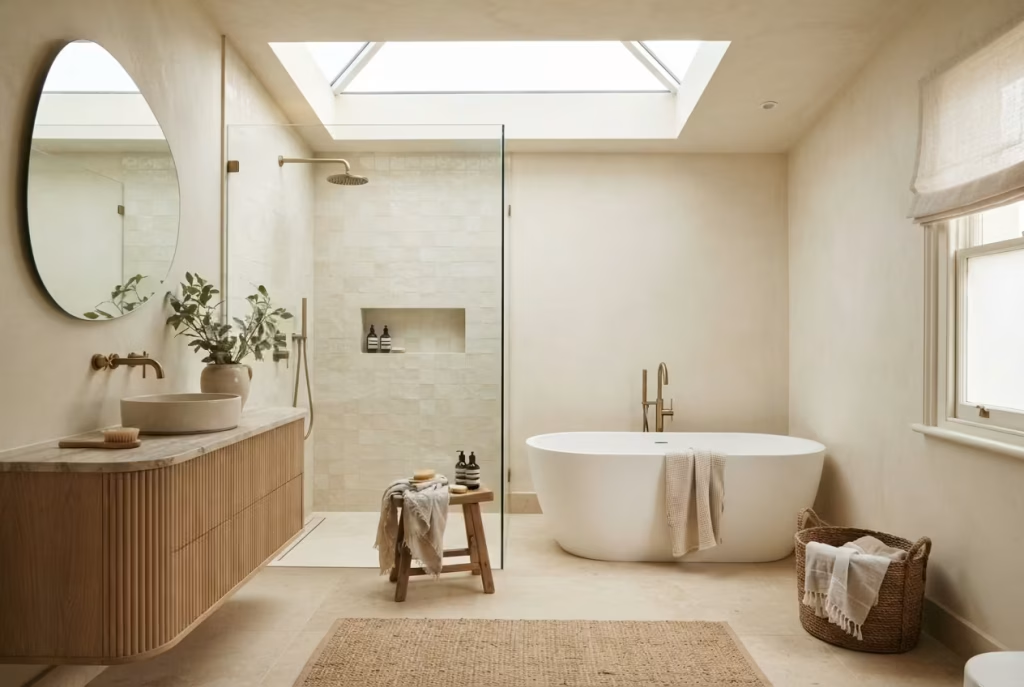
Light is, without much argument, the single most important ingredient in coastal style, full stop, end of discussion. If your bathroom has windows, don’t smother them in heavy dressing that blocks half the available light. If you’re planning structural changes as part of a fuller renovation, a skylight above the shower or bath ranks among the better investments you can make, capable of transforming even a small, previously windowless bathroom into something genuinely bright and welcoming. Where the light itself is out of your control, mirrors and pale, gently reflective surfaces become your next best friend.
Try this if: your bathroom currently relies entirely on artificial light to function.
26. Use simple, natural lighting fixtures
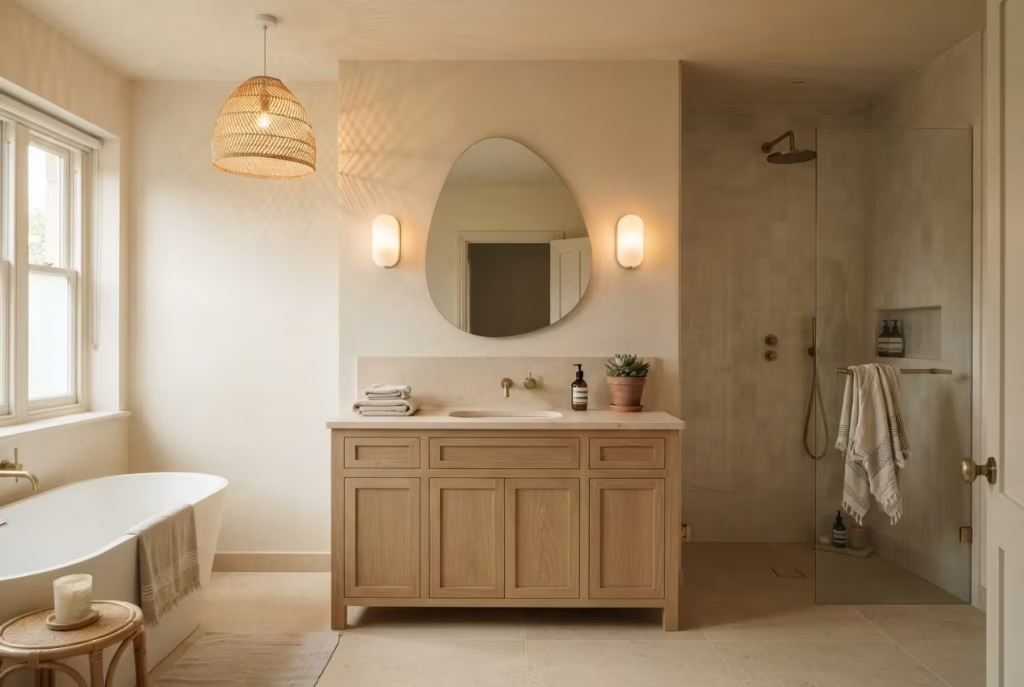
Skip anything overly ornate or heavy on crystal detailing. A woven rattan pendant, a frosted glass sconce, or a simple brushed metal fitting all deliver soft, genuinely flattering light that suits the relaxed mood you’re aiming for throughout. Position task lighting either side of the mirror rather than solely above it, which avoids the harsh, distinctly unflattering shadow that overhead-only lighting tends to cast across your face at the worst possible moments.
Try this if: your bathroom currently relies on a single, unforgiving central spotlight.
27. Consider your layout before you so much as think about colour
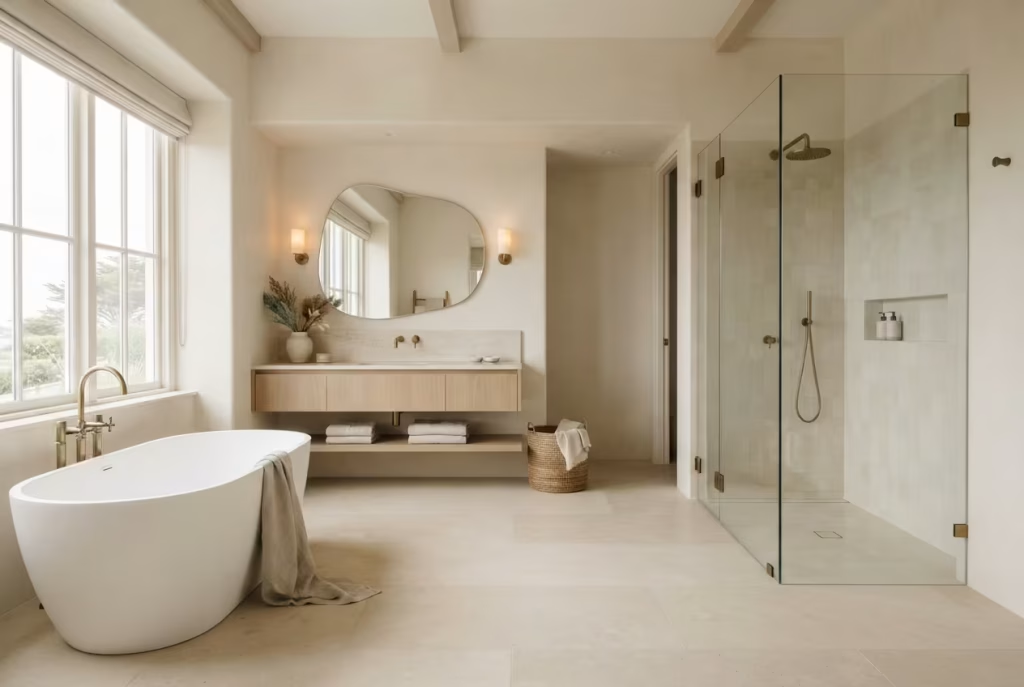
It’s tempting to start with paint charts and tile samples, but layout genuinely comes first, whatever the design magazines might suggest with their glossy finished shots. A freestanding tub needs the right spot to breathe properly. A vanity needs to sit somewhere the natural light can actually reach it. If you’re undertaking a fuller renovation, removing an unnecessary wall or opening up a boxy, cramped layout does more for that airy, coastal feeling than any tile choice ever could on its own. Get the bones right first, and the styling that follows becomes considerably easier, almost as if it falls into place on its own.
Try this if: structural changes are already on the table as part of your renovation plans.
The Finishing Touches: Ideas 28 to 31
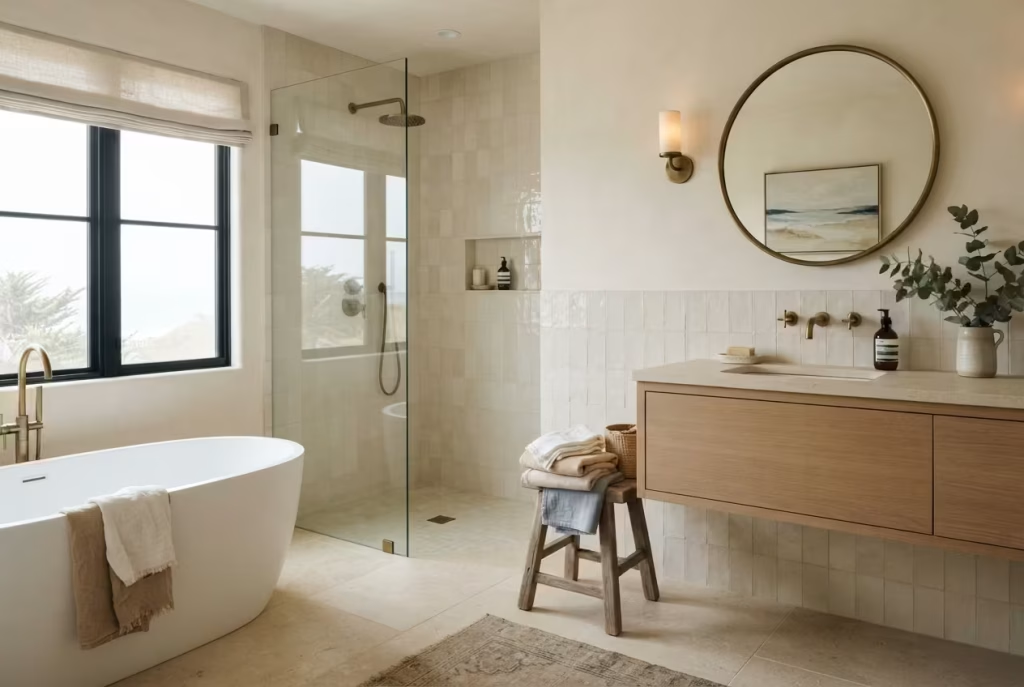
The last handful of ideas cost the least and, rather deceptively, matter the most. This is where a bathroom stops looking merely finished and starts to properly feel it.
28. Add a jute or cotton runner rug
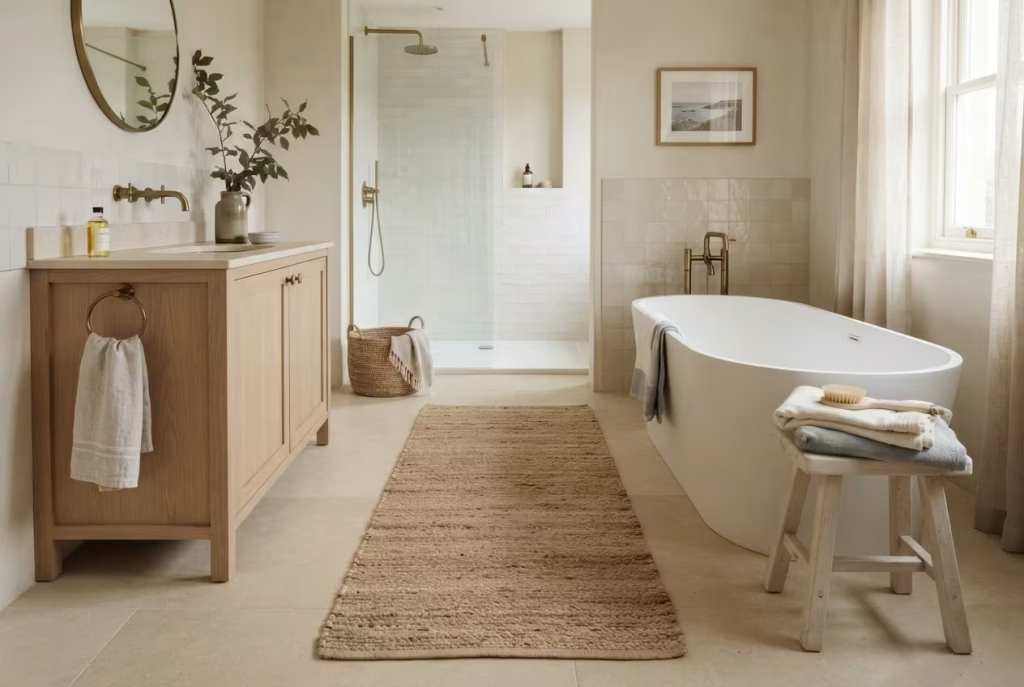
A textured rug underfoot, rather than the standard synthetic bath mat most of us default to, brings genuine warmth and a properly tactile, holiday-house feel that’s hard to fake any other way. Natural fibres such as jute or cotton wear well in a humid environment, and they tie together your other natural materials, timber, rattan, linen, without introducing yet another colour for you to juggle and coordinate.
Try this if: your bathroom floor currently feels cold, bare and a touch unwelcoming underfoot.
29. Choose understated artwork over literal beach props
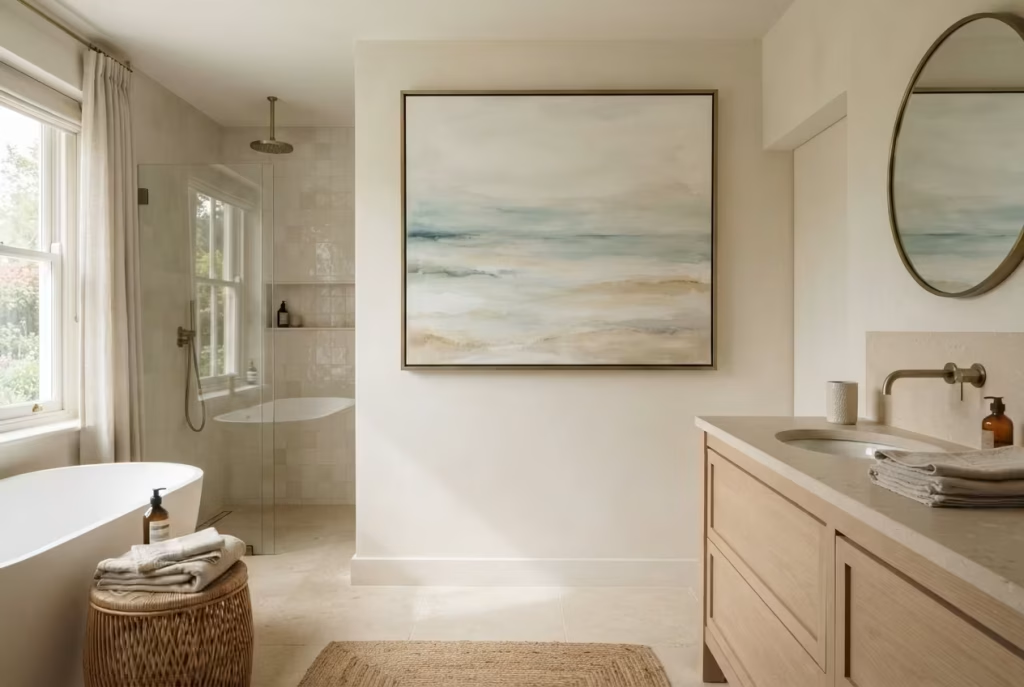
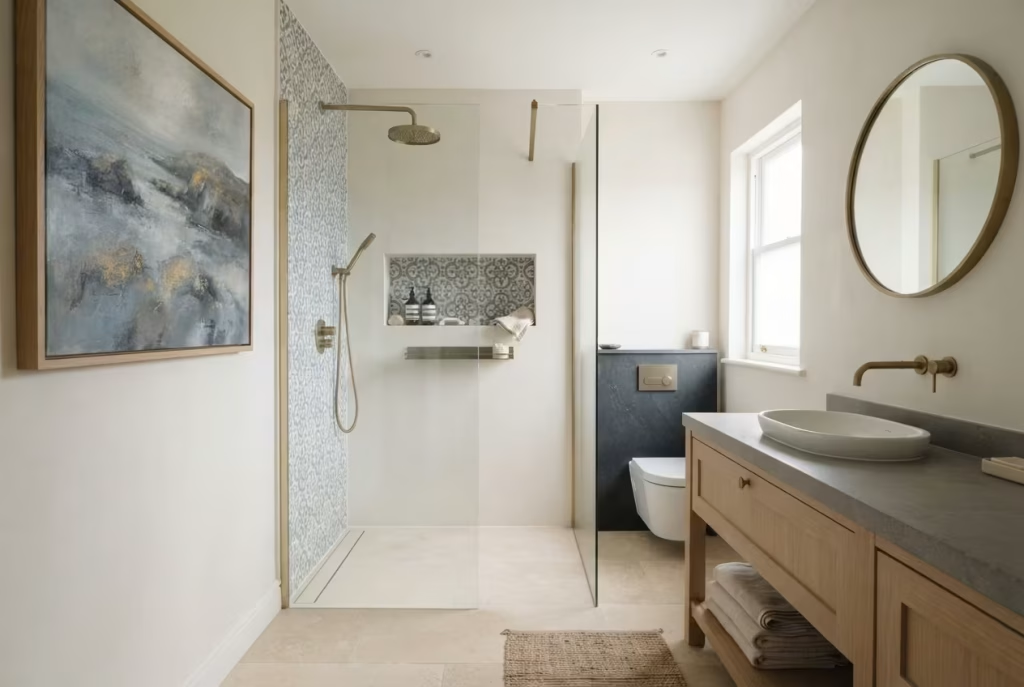
This is precisely where a lot of well-intentioned coastal bathrooms come unstuck, and it’s worth saying plainly rather than dancing round it. A framed anchor print or a shelf lined with collected shells rarely reads as designer, it reads as themed, and themed dates faster than almost anything else on this list. Choose instead an abstract seascape, a soft watercolour, or a simple black-and-white coastal photograph. It nods towards the theme without spelling it out in block capitals, and it’s a scheme you’ll genuinely still be happy with in a decade, not merely for one summer.
Try this if: you already own coastal decor you’re quietly no longer sure still works.
30. Add candlelight and a properly considered scent
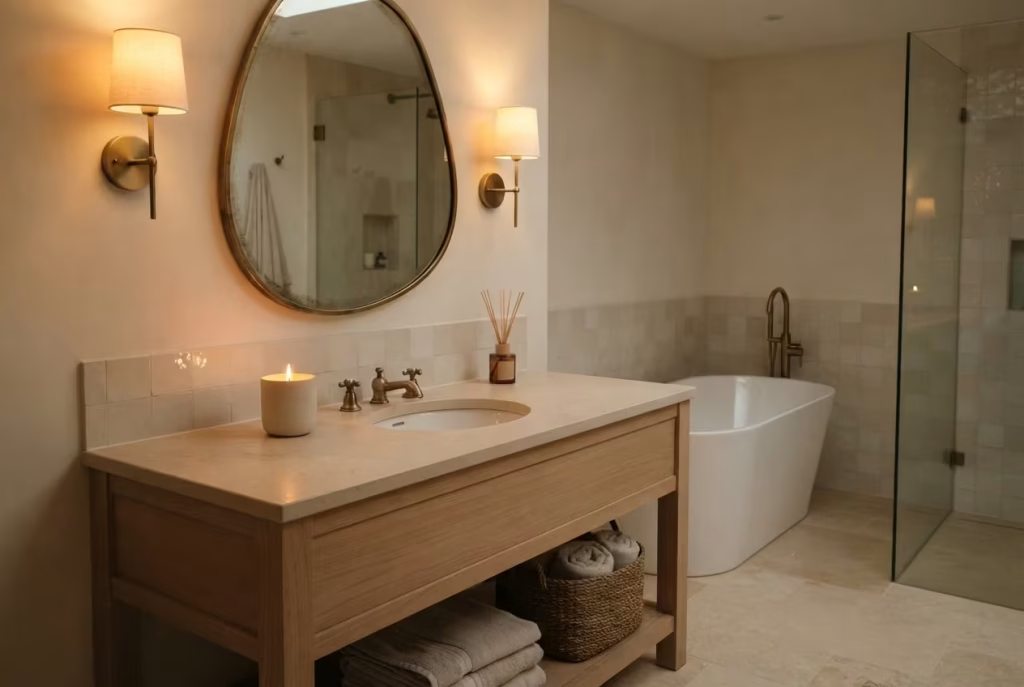
Call it the finishing five per cent, but it genuinely matters more than its size suggests. A candle or reed diffuser in sea salt, driftwood, or something softly herbal ties the whole sensory experience together in a way visuals alone simply cannot manage on their own. Place it near a mirror so the light bounces generously and the glow does double duty, working twice as hard for half the effort.
Try this if: your bathroom looks entirely finished on paper but somehow doesn’t quite feel finished in practice.
31. Keep the whole room properly clutter-free
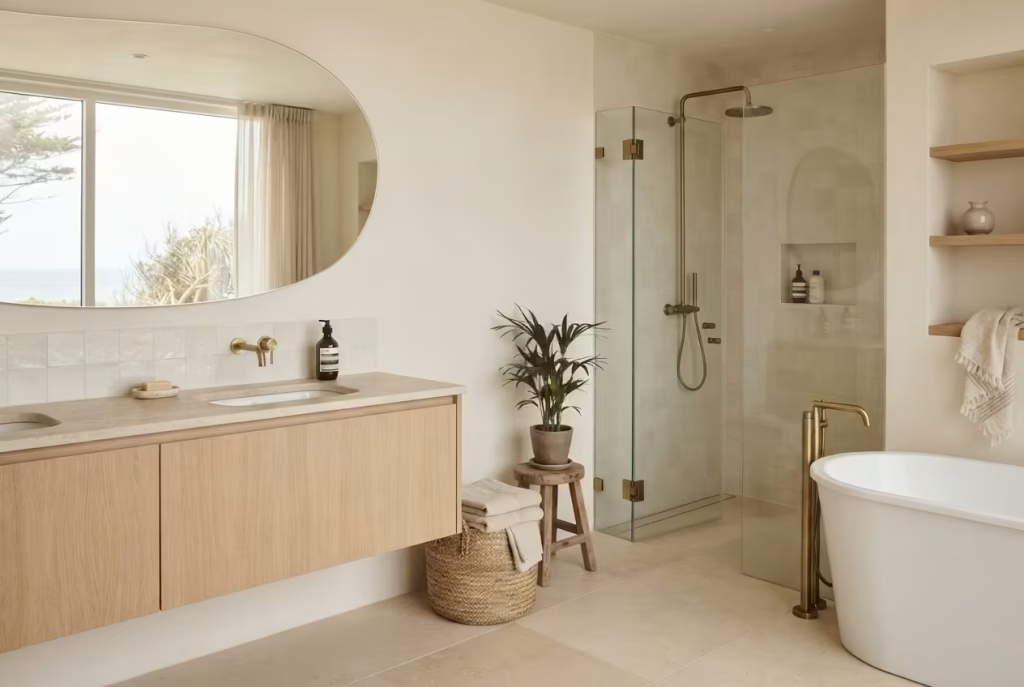
Simplicity is the quiet thread running through every genuinely successful coastal bathroom on this entire list, whatever the individual colour or tile choices happen to be. Hidden storage, a handful of considered accessories, and regular, honest decluttering do more for that calm, sun-bleached feeling than any single product ever could manage alone. The moment a coastal bathroom starts collecting stray shampoo bottles and half-empty toiletries across every available surface, the whole carefully built illusion rather falls apart, and fairly quickly at that.
Try this if: you want the finished look to genuinely last beyond the first fortnight.
What a Coastal Bathroom Renovation Actually Costs
Numbers matter a great deal here, because inspiration only carries you so far without a realistic budget sitting alongside it. Costs vary meaningfully by region and by the tradesperson you use, so treat the figures below as a sensible planning guide rather than gospel truth carved in stone.
| Project scope | Typical UK cost range | What’s usually included |
| Cosmetic refresh, no plumbing changes | £800 to £3,000 | Paint, new hardware, mirror, textiles, lighting swap |
| Small bathroom, partial renovation | £4,500 to £8,500 | New tile, vanity, fixtures, layout largely unchanged |
| Medium bathroom, full renovation | £8,000 to £15,000 | New suite, complete re-tile, updated plumbing and electrics |
| Large bathroom or ensuite, full renovation | £15,000 to £30,000+ | Freestanding tub, walk-in shower, structural changes |
A word to the wise, and it’s one worth heeding before a single tile is ordered: labour typically accounts for close to half of any full renovation budget, so keeping your existing layout, rather than shifting the loo or relocating the shower, remains by far the easiest way to stop costs spiralling out of hand. If funds are genuinely tight, a cosmetic refresh punches well above its weight class. New hardware, a considered lick of paint and better-quality textiles can transform a dated bathroom for a fraction of what a full strip-out demands, no plumber required whatsoever.
Quick budgeting tips worth bearing in mind:
- Get at least three quotes before committing, prices vary considerably between tradespeople doing near-identical work
- Keeping your existing plumbing layout can save thousands compared with relocating pipework
- Spend where it shows (tile, taps, vanity) and save where it doesn’t (extractor fan, boxing-in materials)
- Factor in a contingency of around 10 to 15 per cent for the inevitable surprise once the old tile comes off
Mistakes Worth Sidestepping Entirely
A handful of regrets crop up again and again once homeowners have actually lived with their choices for a good while, so it seems only sensible to lay them out plainly here rather than let you learn the hard way, at your own expense.
- Skipping the shower niche, or making it far too small. You will, without fail, always need more in-shower storage than you initially reckon on.
- Going all-in on bold, statement tile everywhere. It photographs beautifully for the socials, no doubt, but tastes shift considerably faster than tile budgets tend to allow for, and swapping it out later means demolition, waterproofing and a full re-tile from scratch.
- Covering an entire room in heavy, dark stone. Gorgeous in a showroom under carefully controlled lighting, but it can swallow light whole in a genuinely small bathroom, leaving the space feeling more like a cave than the retreat you were promised.
- Leaning too hard on literal beach decor. Shells, anchors and rope absolutely everywhere reads as a theme rather than a considered style, and themes date a great deal faster than genuine aesthetics ever do.
- Choosing stark white without any warmth mixed in. It can tip a bathroom cold and clinical rather than calm and welcoming, particularly once the artificial lighting kicks in on a grey afternoon.
Frequently Asked Questions
What makes a bathroom “coastal style” rather than simply blue and white?
Colour is only one part of a considerably bigger equation. True coastal style relies on natural materials such as timber, rattan and honest stone, generous natural light, and genuinely restrained detailing throughout. A blue-tiled bathroom fitted out with plastic accessories and synthetic towels won’t read as coastal, however “on theme” the tile itself might technically appear on paper.
How much does a coastal bathroom remodel cost?
A cosmetic refresh sits comfortably between roughly £800 and £3,000. A fuller renovation for a small to medium bathroom generally runs £4,500 to £15,000, while a large ensuite with structural changes involved can reach £30,000 or considerably more. Layout changes and relocating existing plumbing are what push costs up fastest, not simply the overall size of the room.
Can I get a genuine coastal look without undertaking a full renovation?
Yes, and it’s a properly popular route for good reason. Painting your existing vanity, swapping out hardware and the mirror, and investing in better linen towels alongside a jute rug will transform the feel of a bathroom over a single weekend, without a plumber or a skip parked on the drive.
What tile colours should I avoid in a coastal bathroom?
Stark, cold white can feel sterile once it’s grouted and genuinely lived with for a while. Dark tile shows hard water marks relentlessly if you happen to be in a hard water area, which covers a substantial part of the country. Heavy, richly veined stone spread across an entire wall can make a small bathroom feel closed in rather than luxurious, so treat it as an accent piece rather than the whole show.
How do I stop a coastal bathroom looking kitsch or hopelessly dated?
Avoid literal beach props entirely, anchors, shell collections, framed fish and the like, and lean instead on texture and material: rattan, driftwood, linen and natural stone. Understated abstract artwork reads as genuinely designed. A themed shelf of seaside souvenirs reads, unfortunately, as a gift shop that’s wandered off course.
What’s the best coastal palette for a small bathroom specifically?
Stick to pale, warm neutrals as your base, soft white, sand, dove grey, and use colour sparingly, confined to a single wall or vanity rather than spread throughout the whole room. Matching your fixtures to your wall colour, rather than contrasting them heavily, also helps a small room feel a fair bit more spacious than its actual dimensions suggest.
What’s the difference between coastal and Hamptons bathroom style?
Coastal leans relaxed and thoroughly lived-in, built on rattan, driftwood and a soft, forgiving palette. Hamptons is its more polished older cousin, crisp white and navy, formal panelling, marble and brass, with a noticeably more formal, tailored finish throughout. If in genuine doubt, coastal remains the more forgiving and considerably less fussy of the two to live with day to day.
Is coastal bathroom style likely to date quickly, like other trends?
Not if you build it properly. The trend-led elements, a particular shade of blue, a specific tile pattern, will eventually shift, as trends always do. But the underlying principles, light, honest natural material and genuine restraint, have underpinned good bathroom design for decades and show no real sign of going anywhere.