



Mid-Century Modern Bathroom Ideas: 26 Ways to Create a Timeless, Stylish Space
Most bathroom trends have a shelf life. Mid-century modern doesn’t, and that’s precisely why it keeps resurfacing in the same magazines, the same renovation shortlists, the same “what’s coming back” articles, decade after decade. A bathroom fitted out in 2026 with warm walnut, brushed brass, and a confident splash of colour will still look considered in 2036, in a way that a 2019 all-grey scheme already doesn’t.
The trouble is that most people trying to bring this style into a bathroom end up with something that looks like a themed hotel bar rather than a genuine mid-century room. That happens when the style gets treated as a mood board of isolated objects: a sunburst mirror here, a brass tap there, no logic connecting them.
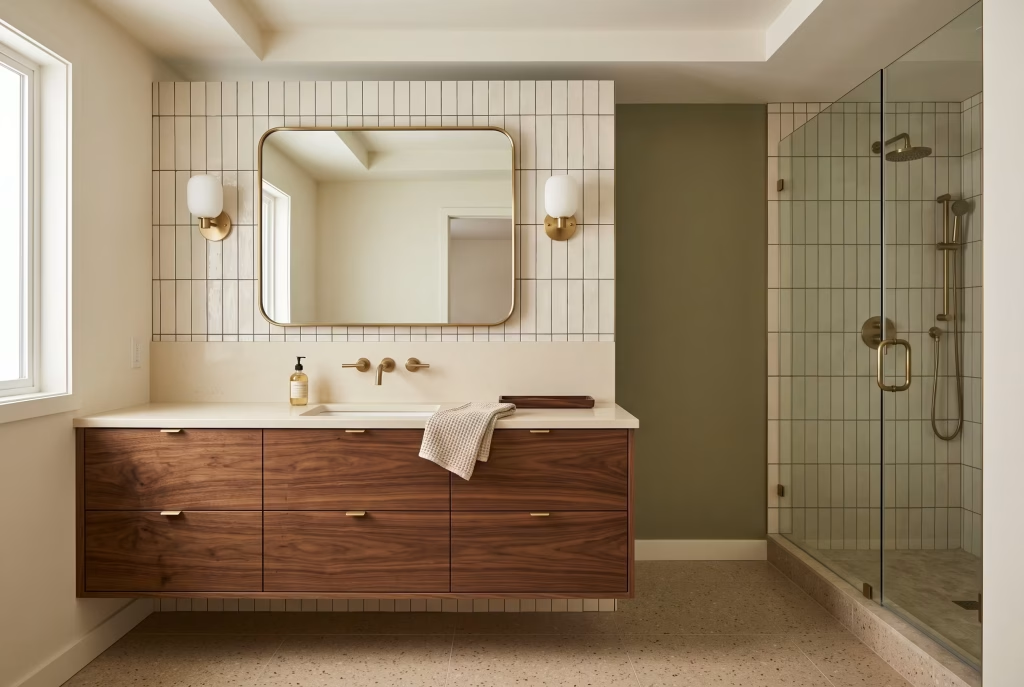
A genuinely mid-century modern bathroom works because it follows a small set of rules borrowed from the 1940s to 1960s: warm natural materials doing most of the talking, clean uncluttered lines, a confident but restrained use of colour, and metal finishes that add warmth rather than sparkle. Get that logic right and every individual choice, from the vanity to the grout colour, starts to feel inevitable rather than decorative.
Below are 26 ways to bring that logic into your own bathroom, whatever size or budget you’re working with, followed by answers to the questions people actually ask when they start planning one of these renovations.
You May also Like: 25 Dark Cottagecore Bathroom Ideas That Feel Moody, Warm, and Beautifully Lived In
1. Start With a Warm Wood Vanity
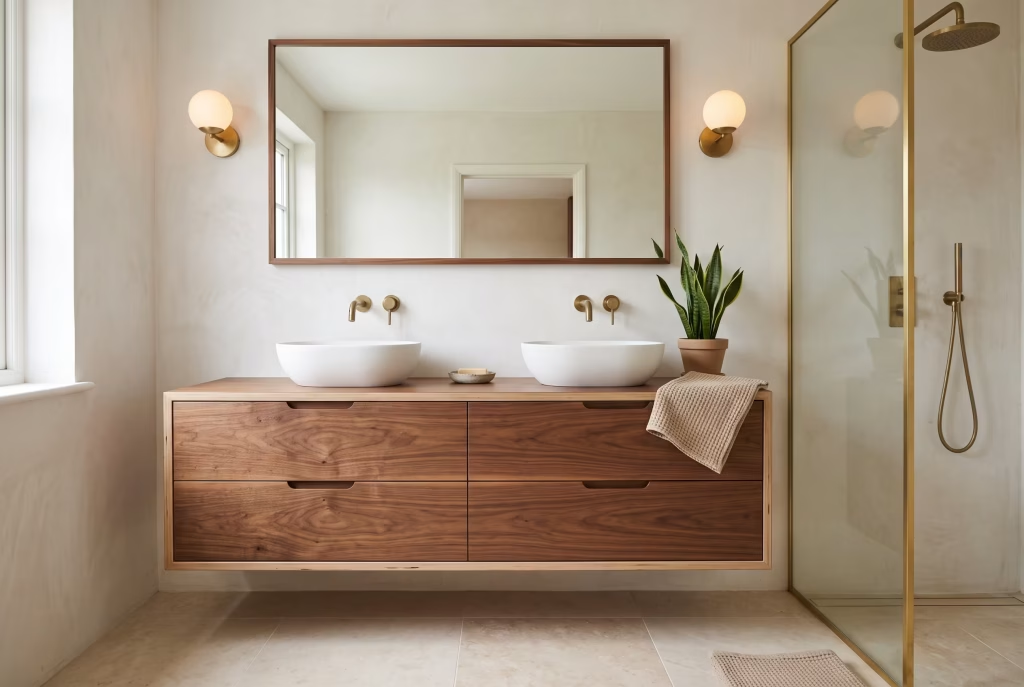
If you only change one thing in the whole room, make it this. In a bathroom, you don’t get the layers of furniture a bedroom or living room has to lean on, so the vanity has to carry most of the mid-century identity on its own.
Walnut, oak, and teak-toned finishes all work, provided the shape stays simple: straight fronts, minimal hardware, no ornate detailing. Wall-hung units in 600mm, 750mm, 900mm, or 1200mm widths are the most common sizing; 750mm suits a single-person bathroom comfortably, while 1200mm gives a double basin enough bench space without crowding a family ensuite.
Specify plywood carcasses with real timber veneer rather than MDF with a printed wood-effect wrap. It costs more up front, usually £250 to £900 depending on width and configuration, but it survives damp, daily use, and a decade of towels being dumped on the counter, where printed vinyl finishes start to peel and swell within a few years. This is the one area of the room where cutting the material corner shows up fastest.
2. Choose a Wall-Hung Vanity in a Small Bathroom
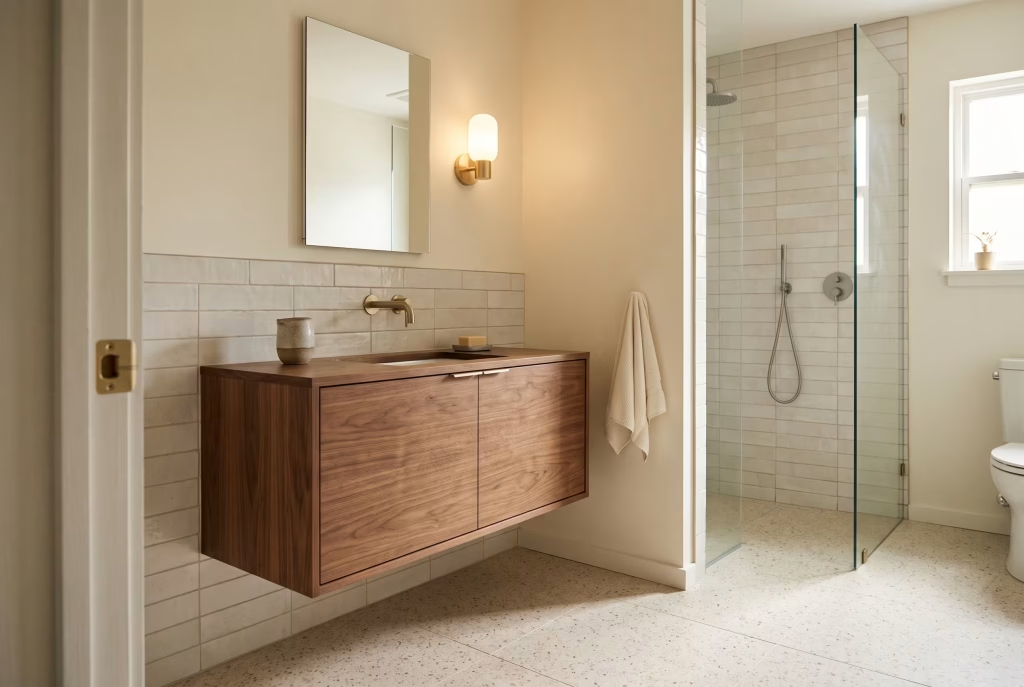
Mid-century furniture sits light on its feet. Slim legs, lifted profiles, visible floor beneath. That same idea does real practical work in a small bathroom, not just a stylistic one.
A floating vanity keeps the floor line unbroken, which reads as more square footage than you actually have. Building regulations aside, aim for a minimum of 700mm clear floor space in front of the unit so the room still functions day to day, and check the wall can take the load.
Solid timber noggings or a masonry wall are needed to carry a wall-hung cabinet safely; stud walls without reinforcement won’t hold it long-term, so this is worth flagging to your fitter before the vanity arrives, not after.
The payoff is a bathroom that looks considerably larger in photos and feels calmer to stand in, because your eye reads uninterrupted floor rather than a block of cabinetry.
3. Pair Walnut With Brushed Brass Hardware
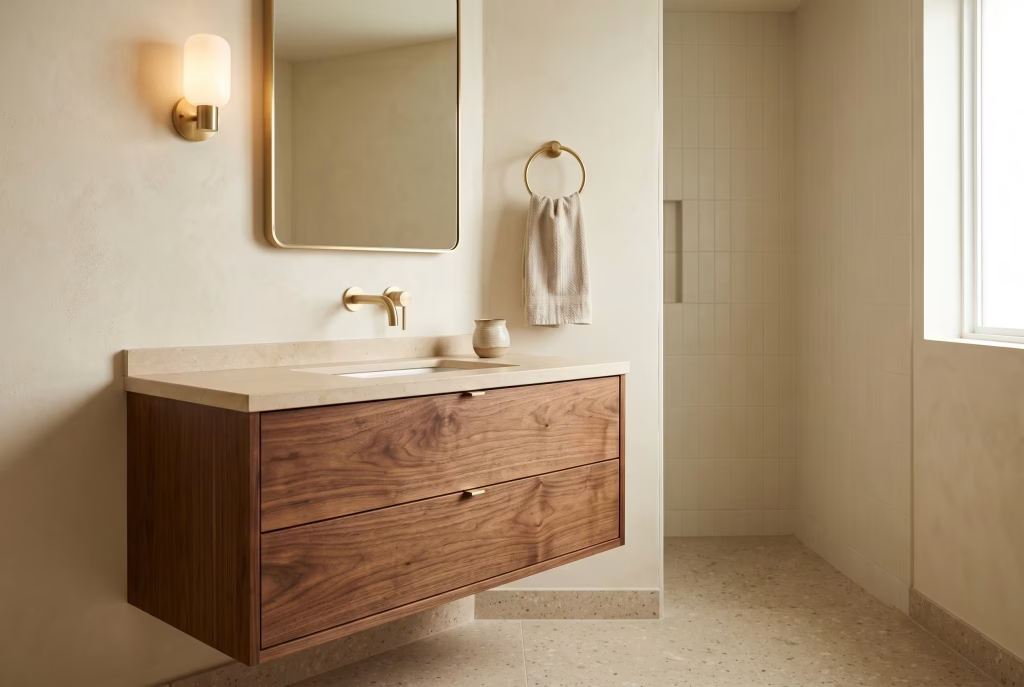
Wood keeps a mid-century bathroom grounded. Brass adds the polish that stops it looking like a plain timber box. Together they’re the single most reliable pairing in the whole style, and the easiest to get right on a modest budget.
Start with the pieces closest to the basin: a brushed brass wall-mounted tap, a brass-framed mirror, brass drawer pulls.
That’s usually enough to tie the whole wall together without a full retile. Wall-mounted taps in particular are worth the extra plumbing work, because they clear the vanity top and make the whole basin area read as more considered rather than just functional.
The mistake to avoid is over-doing it. Brass on the tap, the mirror, and the towel ring feels stylish. Brass on every hinge, every screw head, and every accessory tips into showroom rather than home. Pick three or four touchpoints and stop there.
4. Commit to a Saturated Mid-Century Colour
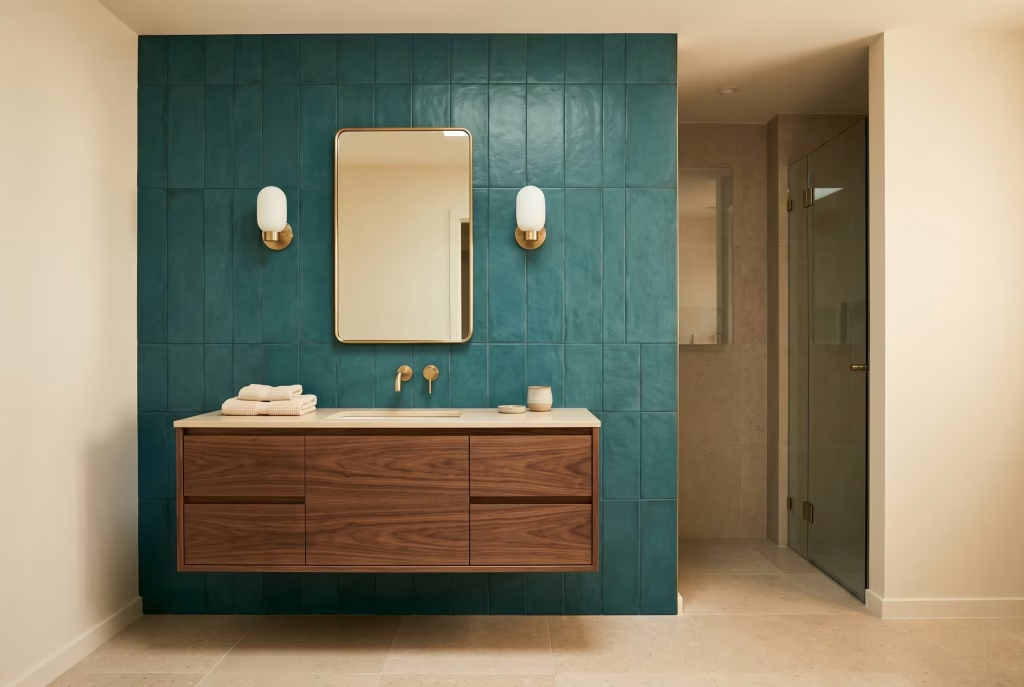
This is where a lot of modern reinterpretations get too timid. Original mid-century bathrooms from the 1950s and 60s were not shy: avocado green, burnt orange, mustard yellow, and deep teal were standard, not daring.
A confident single-colour wall, whether painted or tiled, does more to establish the era than any amount of brass hardware on its own. Sage green, warm terracotta, and deep teal tend to age the most gracefully today, because they sit closer to the earth-tone side of the original palette than the brighter pop-art shades, which can start to feel more like a costume than a colour scheme if used across every surface.
Keep the rest of the room quieter if you go bold on colour: a neutral floor, a plain wood vanity, and simple brass fixtures let the wall do its job without three competing statements fighting in one small room.
5. Go Moody in a Small Bathroom
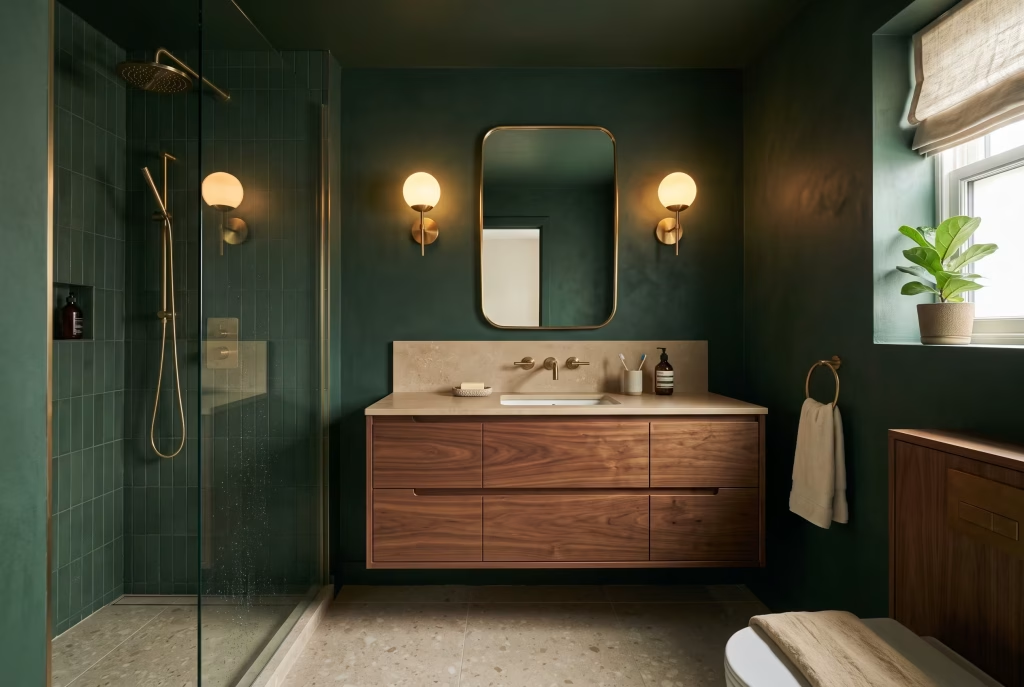
It sounds counterintuitive. Small, dark rooms are usually told to go pale and reflective to feel bigger. But a deep charcoal, forest green, or navy bathroom under 60 square feet can genuinely outperform a pale one, provided the lighting logic changes with it.
The trick is specificity, not just “paint it dark.” Dark matte walls paired with warm brass sconces that throw pools of amber light create depth instead of gloom; the metal catches and scatters the light rather than the room simply absorbing it. A bright white ceiling light on its own in a dark room reads flat and slightly grim.
This is one of the more underused mid-century directions, largely because it feels risky on paper. Committed to fully, with the right warm-toned lighting doing the work, it gives a small bathroom a sense of weight and intention that a pale room rarely achieves.
You May also Like: 25 Best Neutral bathroom Ideas Modern Trends
6. Get Mid-Century Brown Right
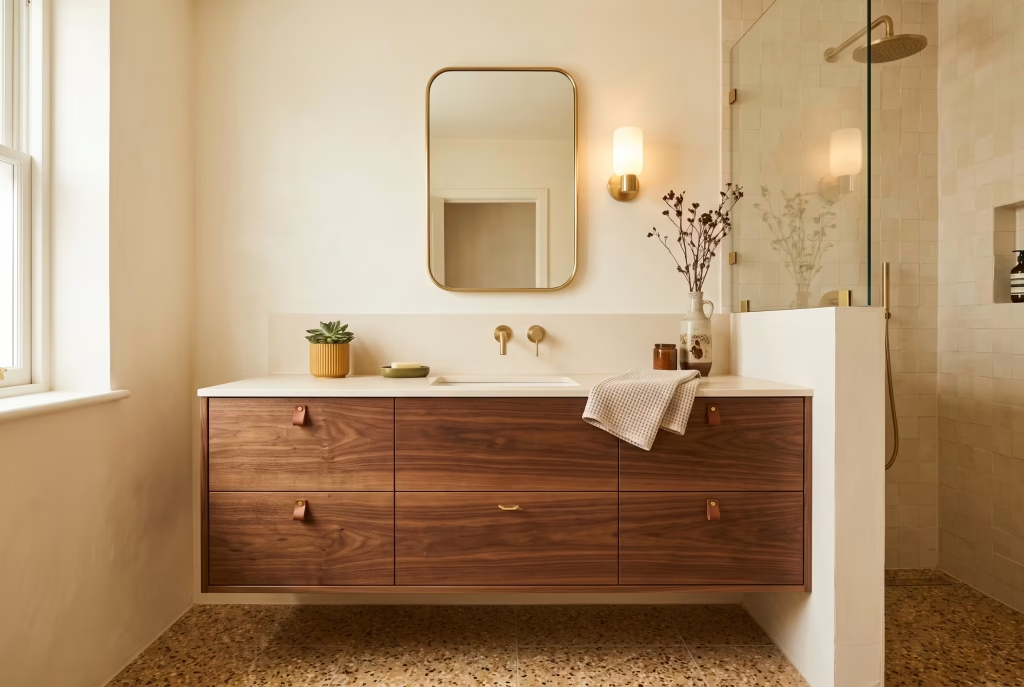
Brown had a genuinely bad decade around 2010, all builder-beige and flat chocolate accent walls. Mid-century brown is a different material entirely, and worth separating from that memory before you write it off.
The brown that belongs in this style is warm: oiled walnut, saddle leather, caramel-toned terrazzo. It pairs naturally with cream, warm white, mustard, and olive.
The one thing it should never sit next to is cool grey; that combination is exactly what made 2010s brown feel flat and dated, because a warm brown fighting a cool grey undertone reads as a clash rather than a palette.
If you’re nervous about brown, start with it in the vanity wood tone rather than the walls. It grounds the room without committing the whole space to a single strong colour.
7. Lay a Terrazzo Floor
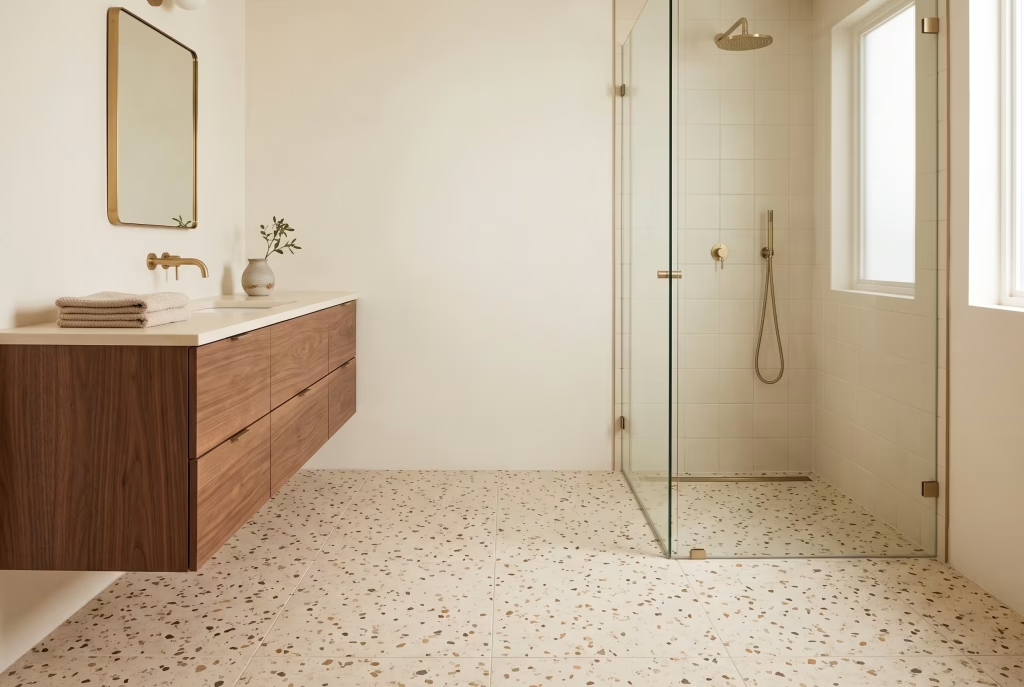
Terrazzo is one of the fastest routes to genuine mid-century character, because it delivers colour, texture, and movement in a single material rather than needing separate accessories to build the look.
Genuine terrazzo needs sealing and ongoing maintenance in a wet room, which puts many people off for a bathroom specifically. Porcelain terrazzo-look tile solves that: lower porosity, no sealing, and a slip-resistance rating you can actually check before you buy. Look for a DCOF or P4-equivalent rating on the product spec if it’s going anywhere near a shower floor; a beautiful terrazzo tile that’s dangerously slick when wet is a genuine safety issue, not a minor styling regret.
Give the floor room to be the feature: plain walls, warm wood, and simple brass fixtures let the terrazzo do the talking instead of competing with a second bold pattern elsewhere in the room.
8. Use Hexagon Tile as the Signature Floor
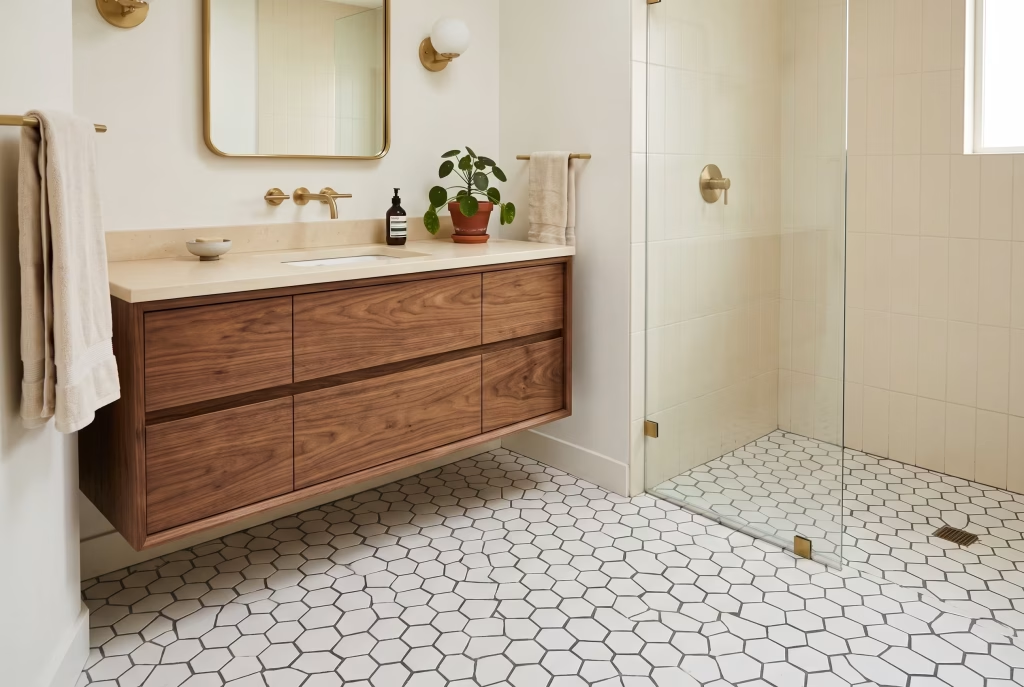
If terrazzo is the boldest floor choice, hexagon tile is the most recognisably mid-century one. Small format, around 1-inch penny-hex, reads distinctly vintage; larger formats from 3 to 6 inches read calmer and more contemporary while still nodding to the era.
White hexagon with a black or dark grey grout is the most period-accurate combination, and it’s a genuinely useful trick in a small bathroom: dark grout on white tile creates a graphic pattern that draws the eye without needing a second bold material anywhere else in the room.
Marble hexagon tile, in Calacatta or Carrara veining, elevates this considerably but comes at a real cost jump. Porcelain hexagon in the same shape and a similar colourway gets most of the visual effect at a fraction of the material and installation cost, which matters if the floor isn’t where you want to spend your budget.
9. Hang a Sunburst or Arched Mirror
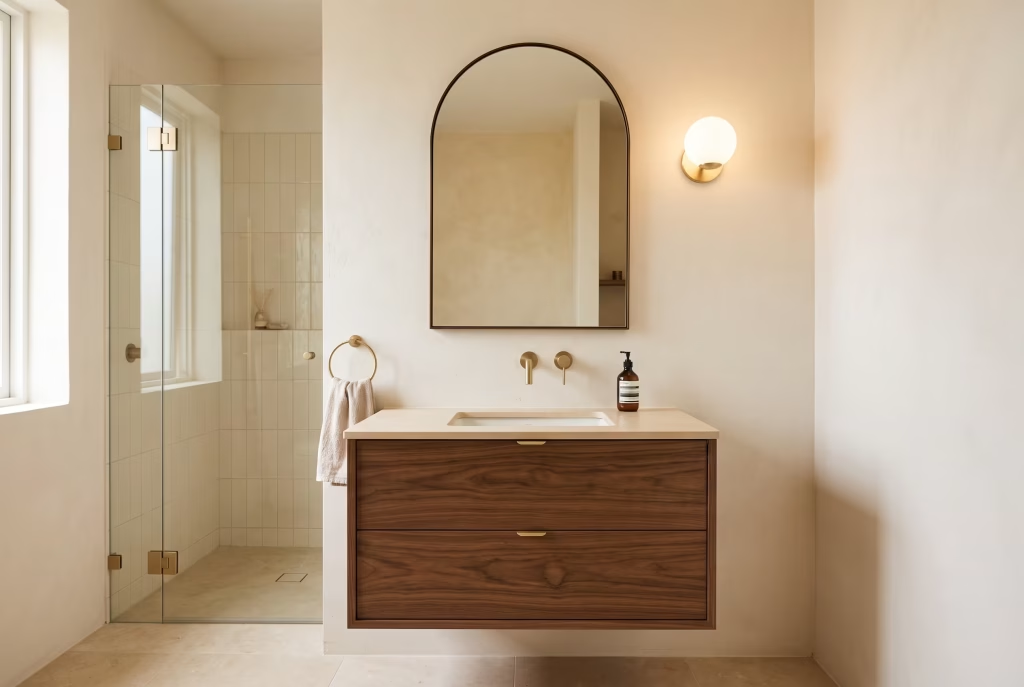
Your mirror changes the feel of the whole basin wall faster than almost anything else you’ll choose, because it’s the one object in the room guaranteed to sit at eye level.
A sunburst mirror is the most overtly retro option and works best given room to breathe, ideally in a powder room or guest bathroom rather than a busy family bathroom, where you’ll want something calmer for daily use. An arched mirror is the gentler alternative: it softens the straight lines of a rectangular vanity without tipping into full theme territory, and pairs well over almost any wood tone.
As a rough sizing rule, keep the mirror within the width of the vanity below it rather than stretching wider. A mirror that overhangs the unit on both sides tends to look accidental rather than chosen, even when the mirror itself is beautiful.
10. Add an LED Backlit Mirror for Practical Glamour
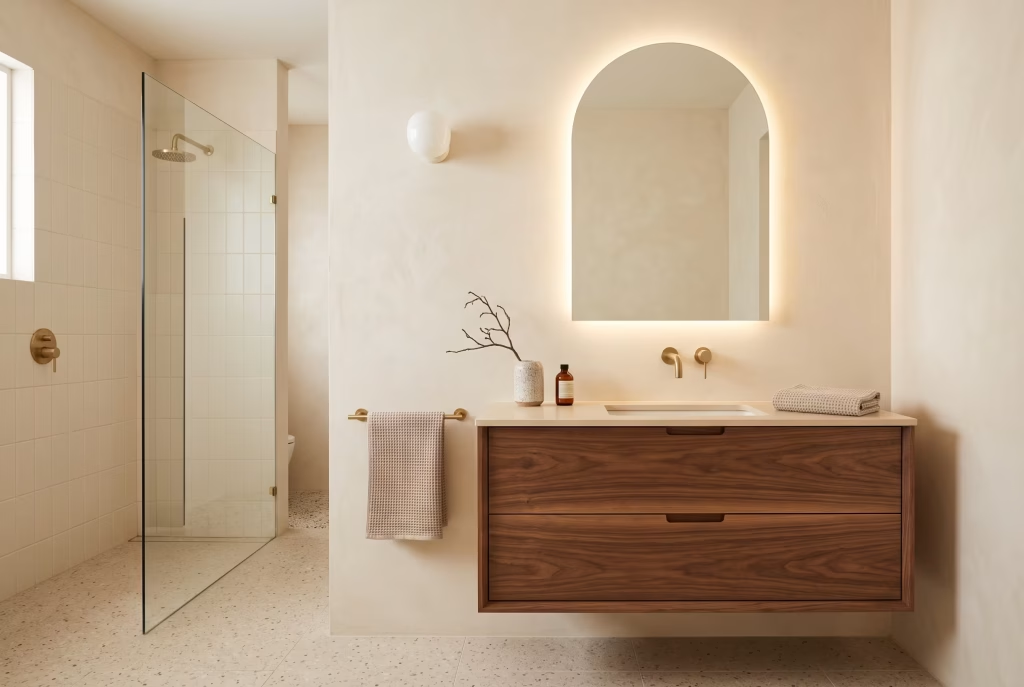
Not every mirror needs to be purely decorative. An arched or oval mirror with integrated LED backlighting and a demister pad gives you the mid-century shape along with genuinely useful daily function, which matters more than it sounds in a room people use for shaving, make-up, and skincare in low morning light.
Look for a colour temperature between 2,700K and 3,000K. Anything above 4,000K reads as a cool white that flattens warm wood tones and makes brass look slightly grey rather than golden, undoing a lot of the warmth you’ve built elsewhere in the room.
These fixtures need to be hardwired by a qualified electrician to meet bathroom electrical safety zones, so factor that labour cost in alongside the mirror price itself, typically an extra cost on top of a £150 to £600 mirror depending on your market and installer rates.
You May also Like: 15 Bathroom Remodel Ideas That Will Inspire Your Dream Renovation
11. Layer In Globe or Sputnik Lighting
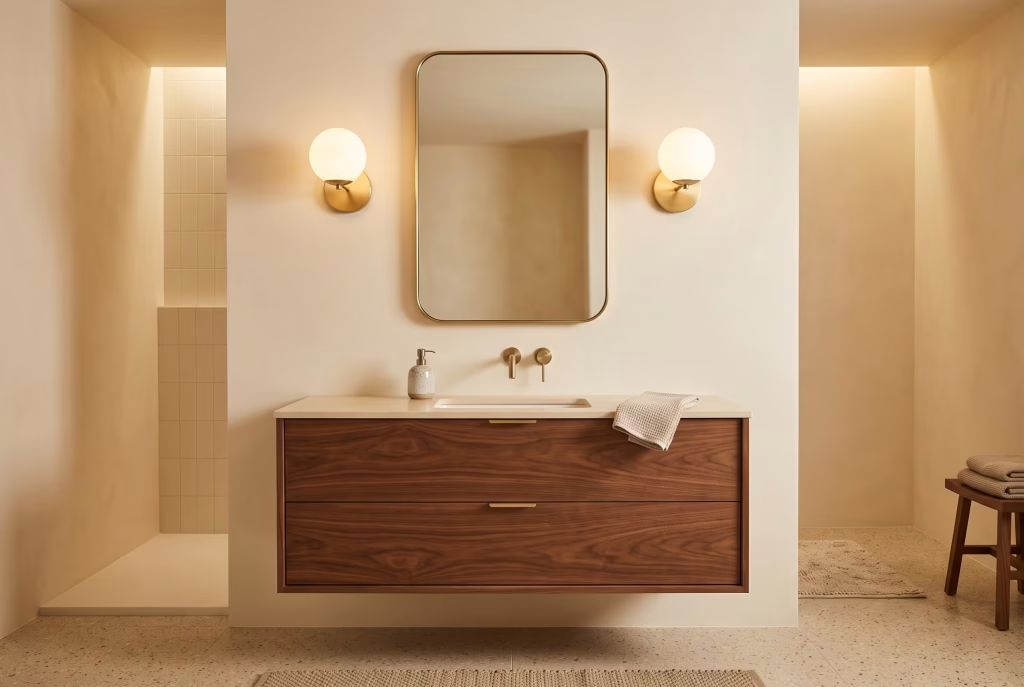
A single central ceiling light rarely does a mid-century bathroom any favours. It flattens the room and leaves the vanity area, where you actually need good light, comparatively dim.
Wall sconces either side of the mirror solve this properly. Globe shades in particular feel true to the era without reading as overtly themed, because the round shape echoes the basin, mirror, and taps you’ve likely already chosen elsewhere. A satin or antique brass finish on the sconce itself keeps the metal story consistent through the room.
In a smaller cloakroom, a single well-placed globe light is often enough. In a larger bathroom, a pair either side of a wider mirror gives more even, flattering light and avoids the slightly lopsided shadow a single off-centre fitting can cast across your face.
12. Choose a Wall-Hung or Back-to-Wall Toilet
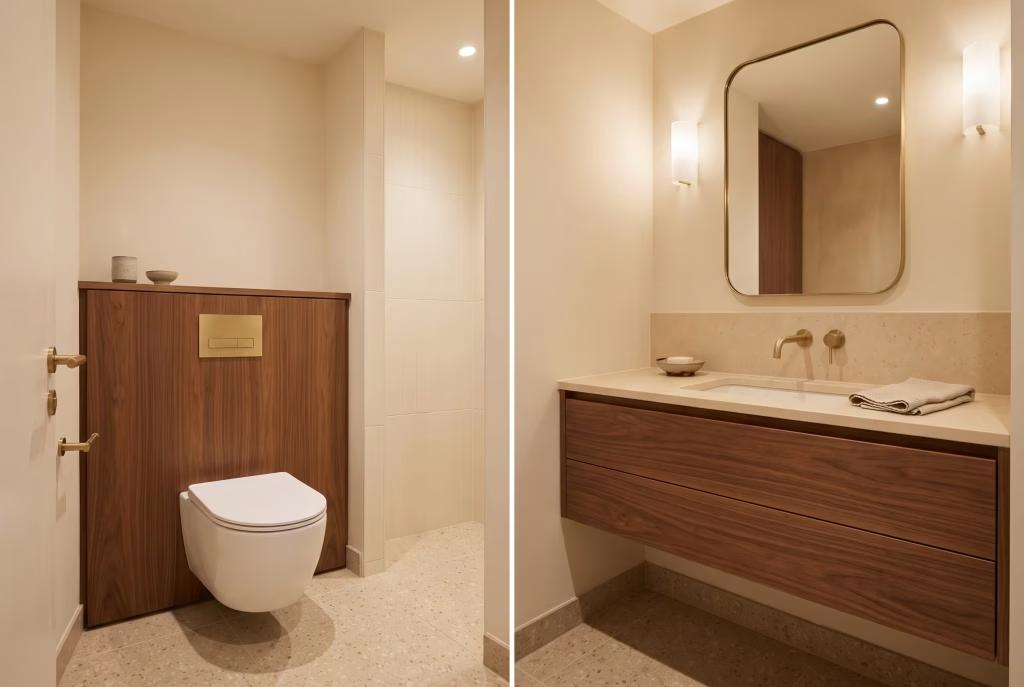
The toilet is rarely the star of a bathroom, but a bulky floor-standing unit with visible pipework can undercut every other considered choice in the room. A wall-hung pan with a concealed cistern keeps the profile low and the floor line clear, which matters even more in a small bathroom than in a large one.
This is a genuinely useful moment to fold the toilet into the same furniture run as the vanity, using a matching timber-fronted unit to hide the cistern rather than treating it as a separate white ceramic object. Done well, it stops reading as “the toilet” and starts reading as part of the room’s furniture.
Installation costs more than a standard back-to-wall pan because of the concealed cistern and reinforced wall bracket, so this is worth pricing in early if your budget is tight, rather than discovering it as a mid-renovation surprise.
13. Bring In Fluted or Slatted Wood Texture
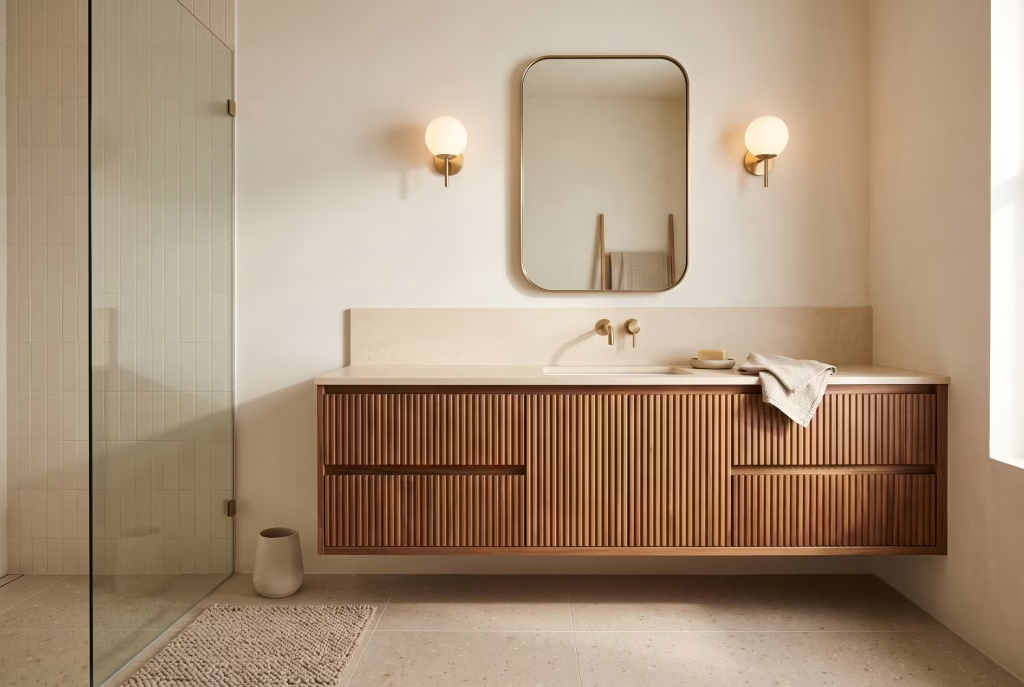
Mid-century rooms are clean-lined by design, which means texture matters more than it would in a busier style. Without it, a flat-fronted vanity and plain tile wall can start to feel sparse rather than restrained.
A slatted or fluted vanity front is the easiest way to introduce this. It adds rhythm and a bit of shadow play across the front of the unit without needing loud colour or pattern to do the work.
The same texture works well as a tall storage cabinet if the vanity itself stays plain, giving you one strong textural moment rather than a flat front and a flat cabinet competing for the same visual space.
Pick one or two textured pieces and stop. A slatted vanity and a fluted glass shower screen read as connected. Slatted vanity, fluted cabinet, ribbed tile, and a ribbed towel rail all at once starts to feel busy rather than considered.
14. Try a Freestanding Oval Bath
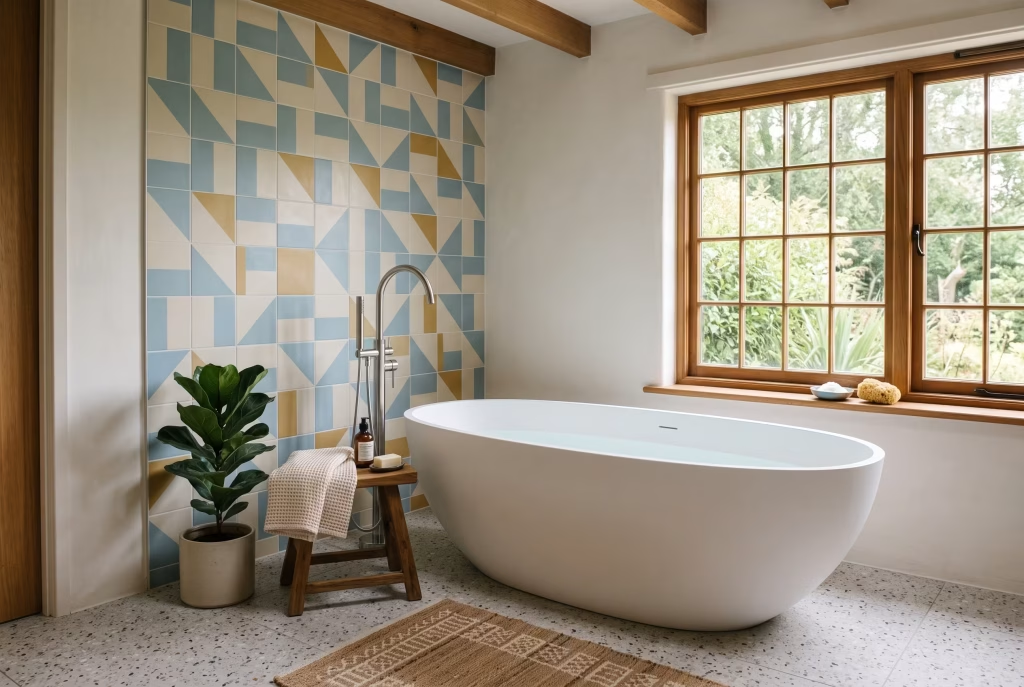
Where the room allows it, a freestanding bath is the closest thing a mid-century bathroom has to a genuine centrepiece. The rounded, sculptural shape does real work against the room’s straight lines and geometric tile, giving your eye somewhere soft to land.
Position matters more than the bath itself. Beneath a window, against a tiled feature wall, or on a terrazzo floor all give it context rather than leaving it stranded in the middle of an otherwise plain room.
Keep the surrounding area genuinely calm: a small stool, a floor-mounted tap, and one plant is usually enough. The bath should be the moment people notice, not one of several things competing for attention.
If a freestanding bath makes the room hard to move around comfortably, particularly in anything under roughly 6 square metres, a fitted bath with a fluted tile surround gets you most of the same visual softness without sacrificing floor space you actually need.
15. Soften the Room With a Curved Basin
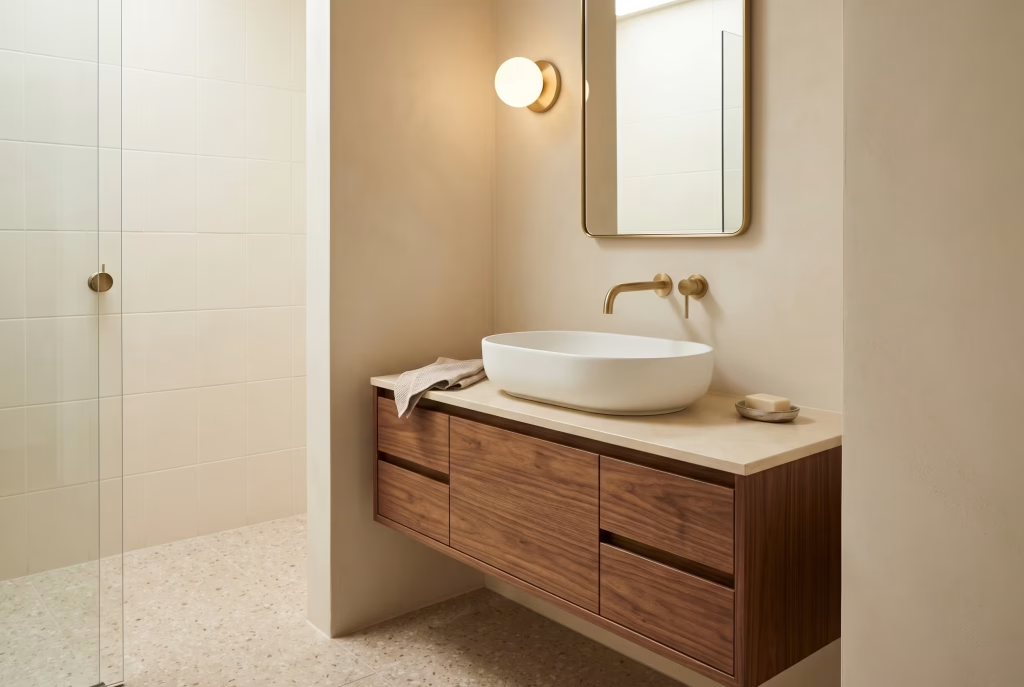
Straight lines matter in this style, but so does the occasional curve to stop the room feeling rigid. An oval or round countertop basin is the simplest way to introduce one without a structural change.
It breaks up the straight edges of the vanity immediately, and it’s a particularly useful trick in a narrow bathroom, where sharp square corners can make the walkway feel tighter than it actually is. You don’t need curves everywhere in the room; one rounded basin, or one arched mirror, is often enough to take the edge off an otherwise entirely straight-lined space.
You May also Like: 16 Beautiful Lake House Bathroom Ideas to Create a Cozy Retreat
16. Try a Coloured Countertop Basin as the Statement Piece
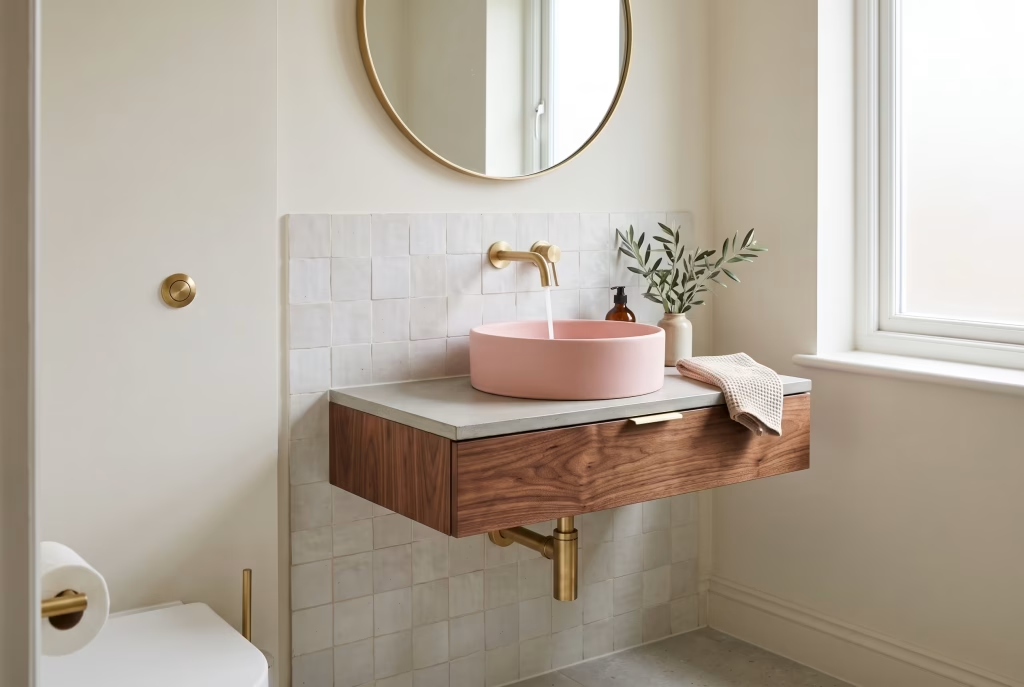
A basin can do the job a statement chair does in a living room: small enough not to overwhelm the room, visible enough to change the whole feel of the wall it sits on.
A pastel matt pink basin references the more playful, colourful side of mid-century design without committing the whole room to pink. A black terrazzo basin does the opposite: darker, more grounded, and particularly effective against a walnut vanity and brushed brass tap.
Either way, if the basin is doing the talking, keep the vanity, tile, and mirror around it calm enough to let it be the feature rather than one of several loud choices.
This is a genuinely good option for a guest cloakroom specifically, where you want one memorable design moment without renovating an entire family bathroom around it.
17. Choose Geometric or Patterned Tile as a Feature, Not a Backdrop
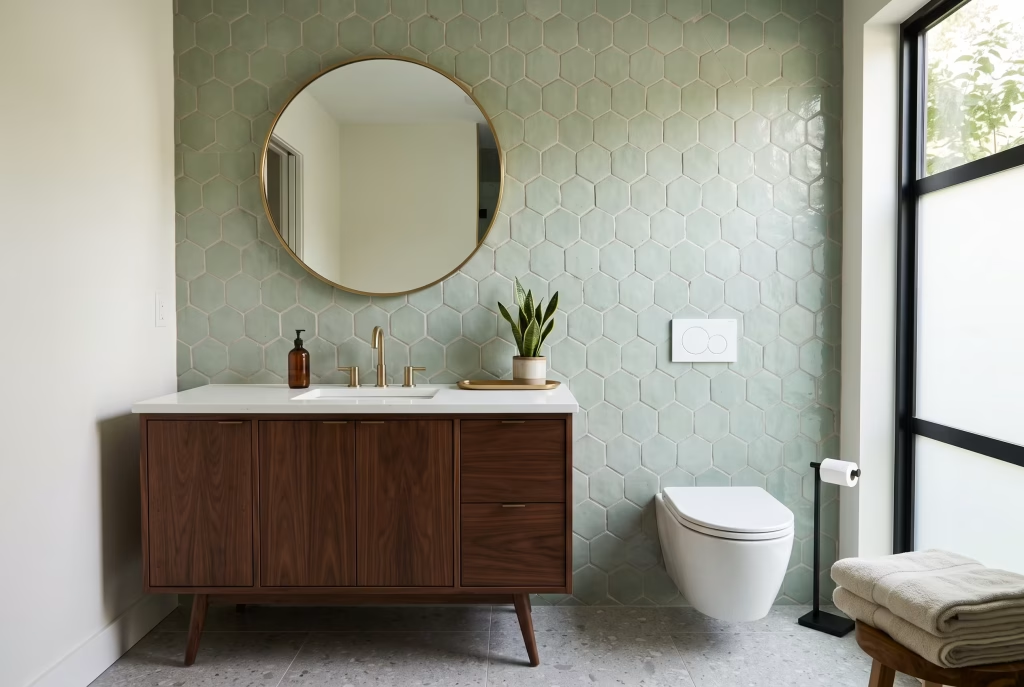
White metro tile is useful, but it won’t carry a mid-century look on its own. Strong shape is one of the era’s defining traits, and a bathroom is a good place to use it precisely because you can keep everything else in the room simple around it.
Hexagon, chevron, and herringbone all read as period-appropriate, but they carry different weight: hexagon is the classic floor choice, chevron and herringbone read as more directional and design-forward, and each is best used on one surface rather than both floor and walls simultaneously, or the pattern starts fighting itself rather than reading as intentional.
If you want shape without much visual noise, a soft sage or muted colourway in a hexagon or zellige-effect tile gets you the geometry without the boldness, which suits a main family bathroom better than a small, more experimental cloakroom would need.
18. Use Vertical or Stacked Subway Tile for a Sharper Read
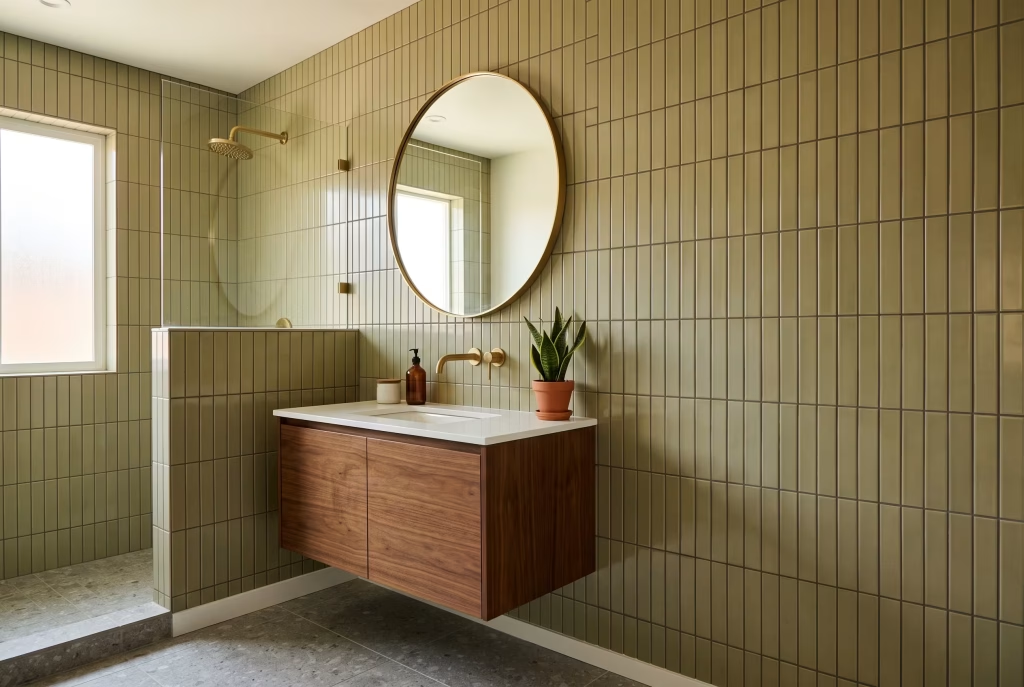
Standard horizontal subway tile is the most versatile mid-century wall option, but a vertical or stacked layout of the same tile gives a noticeably more contemporary, design-forward result using the exact same material.
Long, narrow tiles in a stacked layout exaggerate the effect further, creating a sleek, almost gallery-like wall rather than the classic brick-bond pattern most people picture with subway tile. Pairing it with a tinted grout, a warm grey or charcoal rather than stark white, adds a depth that white grout genuinely can’t achieve, and it’s a change your tiler can make at zero extra material cost.
This is a useful option if you love the classic subway shape but want the room to read as a considered contemporary take on mid-century rather than a straight historical recreation.
19. Add Cane or Rattan Texture
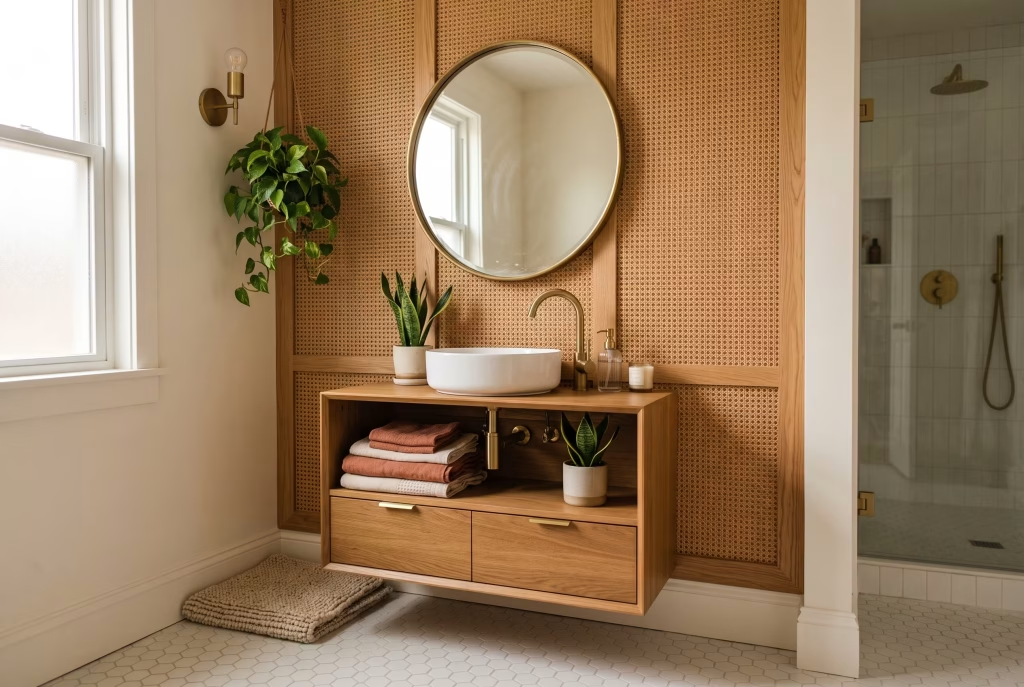
Mid-century isn’t purely a furniture and tile story; natural woven texture belongs in it too, and it’s an easy way to soften a bathroom’s hard surfaces without adding more furniture to an already tight floor plan.
Cane-effect wallpaper or panelling works especially well in a downstairs cloakroom or a well-ventilated main bathroom where you want the walls to feel less plain, but keep it out of direct splash zones unless the specific product is rated for wet areas; tile still needs to do the heavy lifting anywhere water actually hits.
A cane-panelled wall behind a vanity, paired with a round brass mirror and a simple white basin, gives the room genuine pattern and warmth without tipping into busy. It’s also one of the better antidotes to a bathroom that feels too shiny or too new, because natural woven texture reads as lived-in almost immediately.
20. Choose a Vintage-Detail Tap
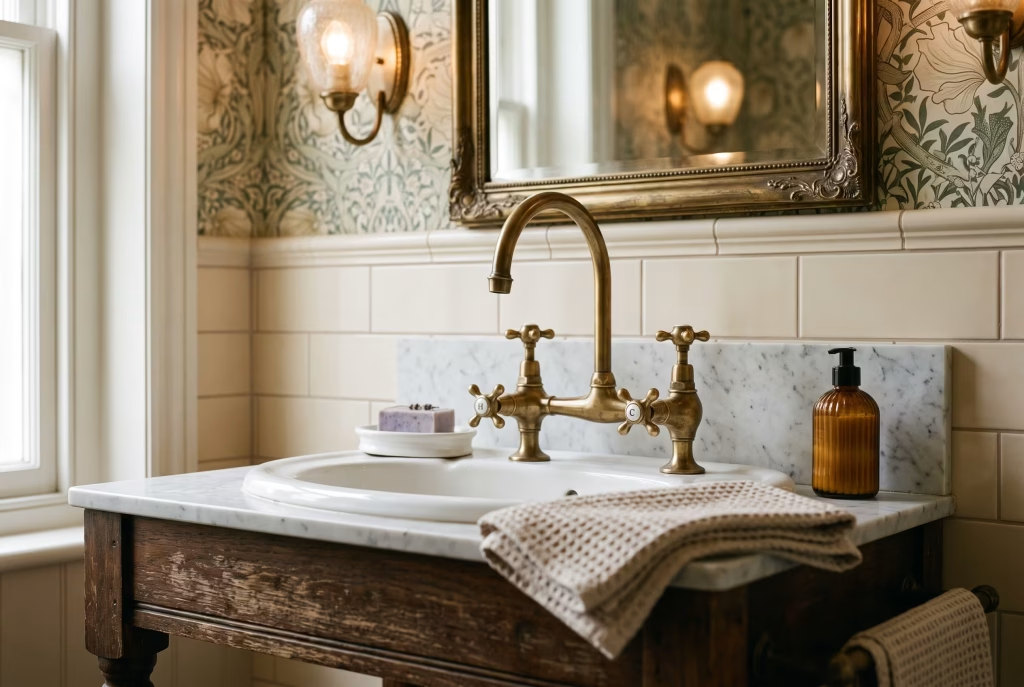
Taps are small, but they change the feel of the whole vanity more than their size suggests, because they’re one of the few objects in the room you physically touch every day.
Crosshead handles and rounded lever taps both read as period-appropriate; crosshead leans slightly more traditional, a rounded lever slightly more streamlined. Brass, antique brass, and matte black all work, and the choice should follow the rest of your fittings: crosshead taps suit a low-level toilet and warmer tile, while a sleek wall-mounted tap suits a floating vanity and terrazzo floor better.
It’s a small budget line, but it’s worth not treating as an afterthought bought in the last week of a renovation, because a mismatched tap finish is one of the most common reasons an otherwise well-planned bathroom looks slightly off in the finished photos.
You May also Like: 31 Beautiful Coastal Bathroom Ideas to Inspire Your Next Remodel
21. Keep Windows Bare Where Privacy Allows
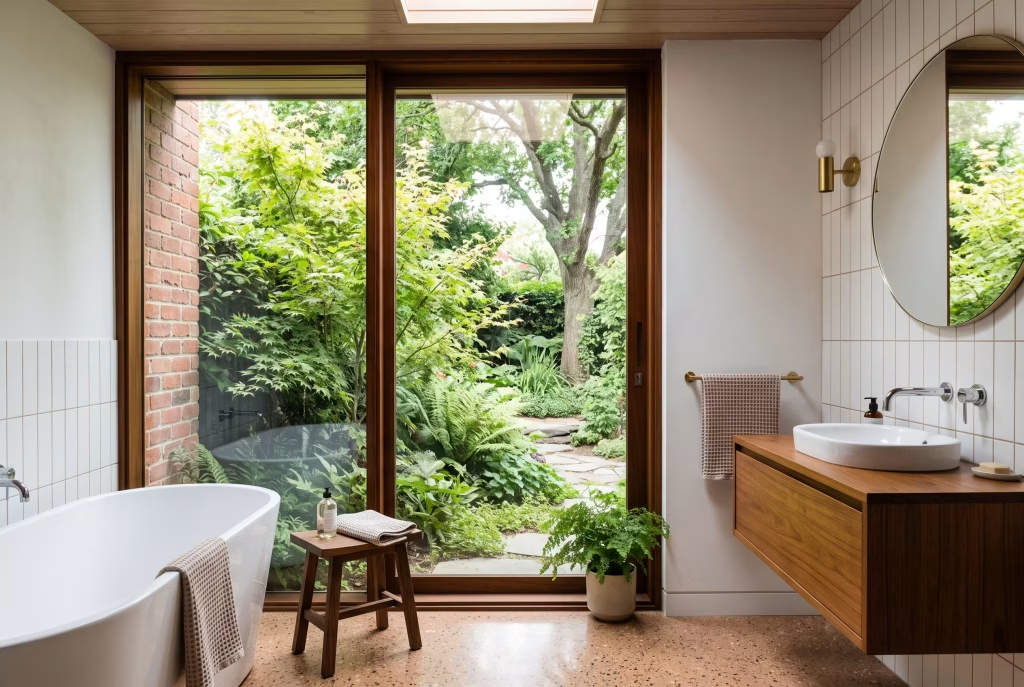
Natural light did a lot of work in original mid-century architecture, and it’s an easy, free upgrade to a bathroom’s character if your window position allows it.
Where privacy isn’t a concern, whether that’s a high window, an obscured pane, or a private garden aspect, leaving the window uncovered rather than adding a blind or curtain lets the room breathe in a way heavy window treatments never quite manage. If you’re lucky enough to have a genuine view, hiding it behind a blind for the sake of habit is a missed opportunity most people don’t think to question.
Where privacy genuinely matters, fluted or reeded glass in the window itself, or a simple frosted film, gets you most of the light with none of the exposure, and it echoes the fluted texture you may already be using elsewhere in the room.
22. Install a Skylight in a Windowless Bathroom
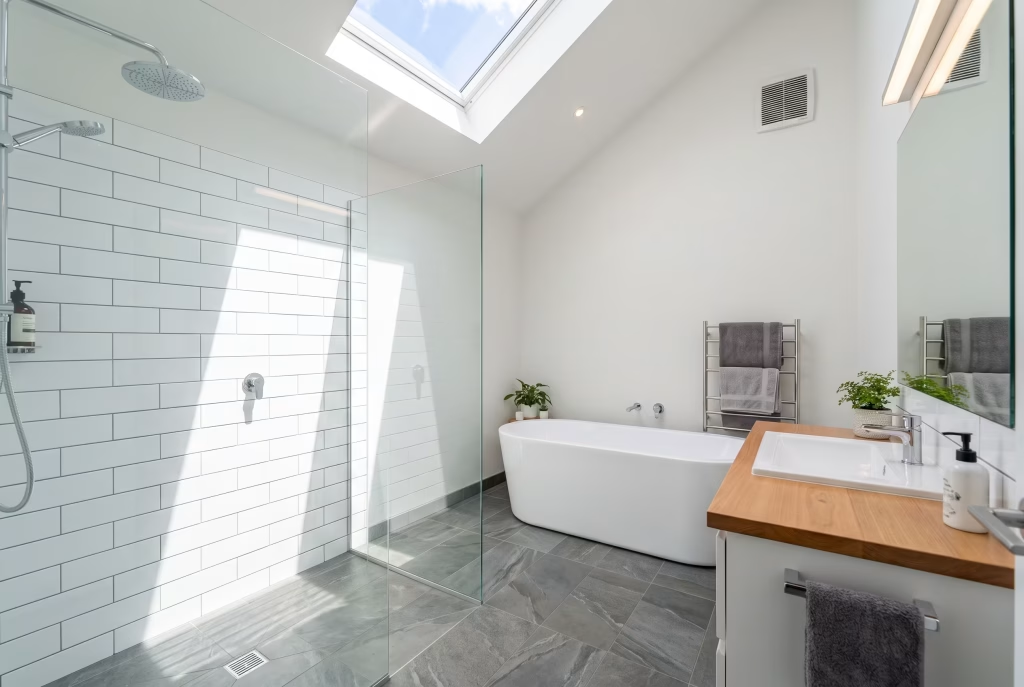
If your bathroom has no external wall and relies entirely on artificial light, a skylight is one of the few genuine structural upgrades worth the disruption. It doesn’t just make the room feel bigger; it changes the entire quality of light throughout the day in a way no fitting can replicate.
If there’s no window at all, ventilation becomes a building-regulations issue rather than a styling one; most codes require a minimum extraction rate for a windowless wet room, so this needs finalising with your contractor before cabinetry or ceiling work begins, not retrofitted afterwards once the room is finished and something has to be cut open again.
This is a bigger-budget, bigger-disruption idea than most on this list, but in a genuinely dark internal bathroom it does more for the room’s character than almost any surface finish could on its own.
23. Bring In One Real Plant
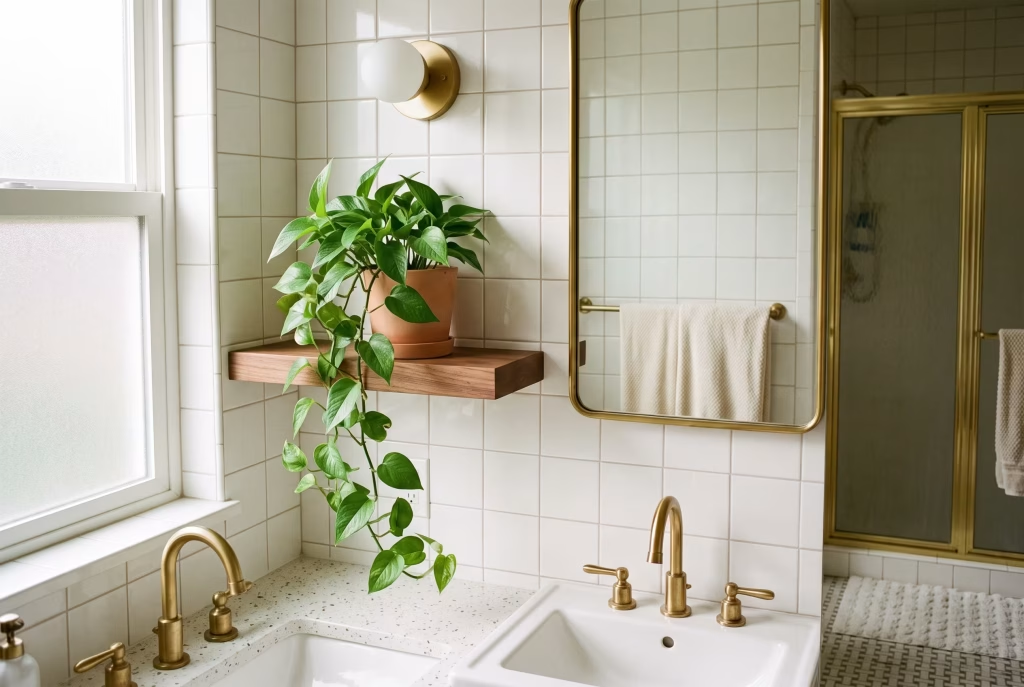
It’s a small detail, but a genuine plant, not a printed towel or a plant motif on tile, does more for a mid-century bathroom’s warmth than most people expect. The style has always leaned on the connection between interior and outdoor space, and a plant is the cheapest, fastest way to make that connection real rather than implied.
A trailing pothos or a hardy fern tolerates bathroom humidity and low light better than most houseplants, which matters in a room that rarely gets strong direct sun. Position it somewhere it won’t be knocked into the bath, a floating shelf or a wall-mounted planter usually works better than the floor in a small room, and resist the urge to add three or four; one well-placed plant reads as considered, a cluster of them starts to compete with everything else you’ve chosen.
You May also Like: 16 Sage Green Bathroom Ideas for a Serene and Stylish Space You’ll Love
24. Build Storage Into the Furniture, Not Onto the Surfaces
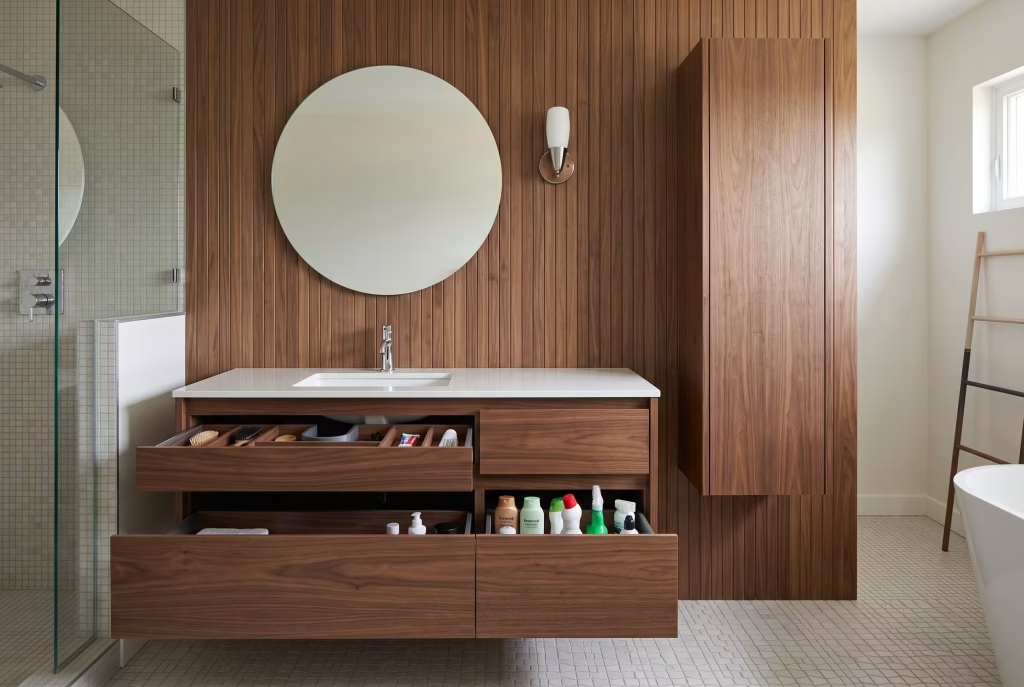
A mid-century bathroom looks calm because surfaces stay clear, and that only happens with genuine storage planned in from the start, not as an afterthought once the styling is done.
A tall, narrow wall-hung cabinet in a wood-effect finish reads as furniture rather than a bathroom fitting, and it solves the actual daily problem of where spare bottles, cleaning products, and backup toiletries live.
This matters more than it sounds: the most common complaint people have about a beautifully finished bathroom a few months in is that it no longer looks like the photos, because daily clutter has crept back onto every flat surface.
A genuinely useful vanity has at least one deep drawer for backups and one shallower drawer organised for daily items, with enough clearance that drawers open fully without catching on plumbing behind them; this is worth checking against your actual plumbing layout before the cabinet is ordered, not after it arrives and doesn’t quite fit.
25. Add a Vintage-Style Rug on a Tile Floor
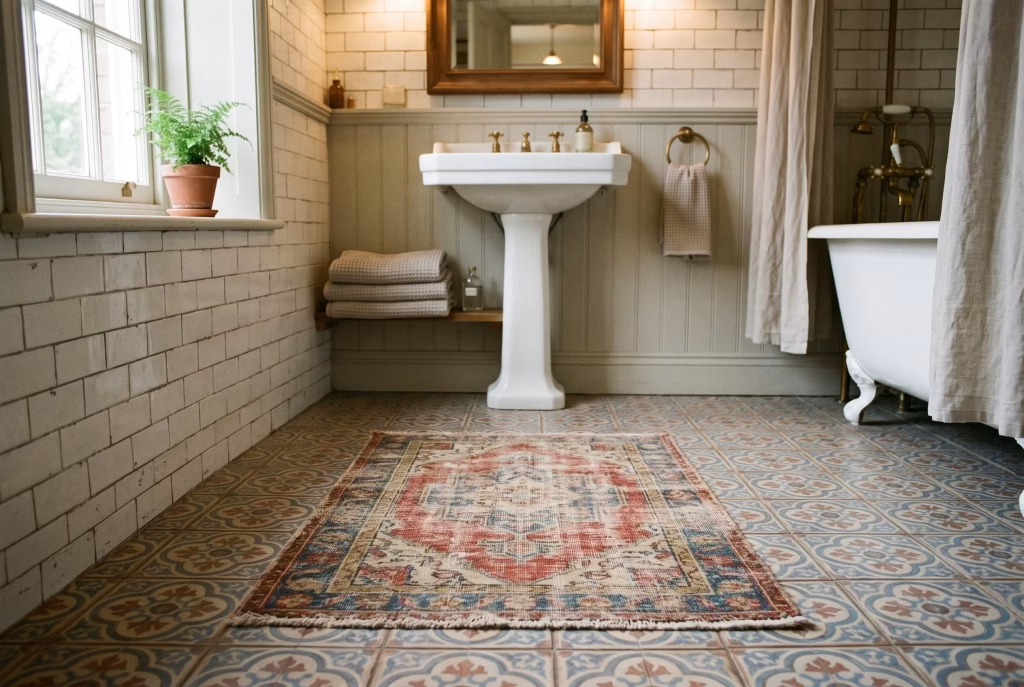
A small rug on top of a tile or terrazzo floor does two things a hard floor alone can’t: it breaks up an expanse of pattern that might otherwise feel relentless underfoot, and it adds a genuine softness to a room made almost entirely of hard, cold materials.
A faded, muted vintage-style pattern reads more period-appropriate than a bold new rug, and it tends to age better visually alongside the rest of the room’s warm, slightly worn material palette. Keep it away from directly beside the bath or shower, where it will get consistently wet, and choose one with a non-slip backing specifically rated for bathroom use rather than a decorative rug repurposed from another room.
26. Let the Powder Room Take More Risk Than the Main Bathroom
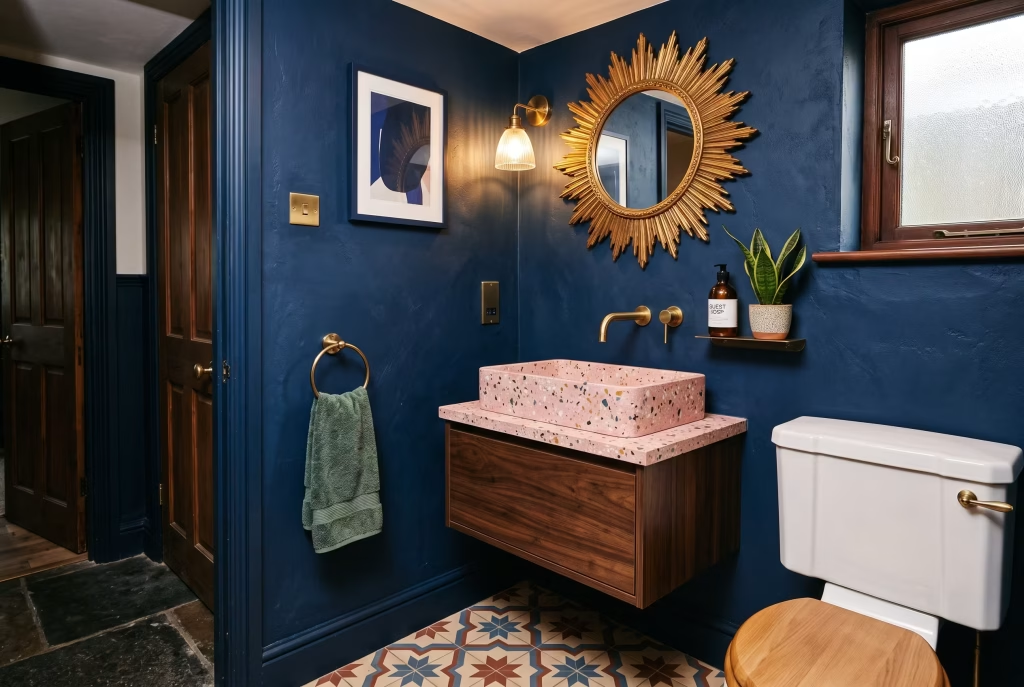
Not every idea on this list belongs in every bathroom in the house, and that’s worth saying plainly rather than pretending a family bathroom and a guest cloakroom should be styled identically.
A downstairs powder room, used for a few minutes at a time rather than daily routines, can carry a bolder colour, a stronger pattern, or a more overtly retro fixture, like a sunburst mirror or a saturated wall colour, than a main bathroom people use every morning half-awake ever could.
Save the moody navy walls, the pink terrazzo basin, or the boldest tile pattern for that room specifically, and keep the primary family bathroom in the calmer, more restrained end of the same palette.
This single distinction is one of the most common things people get wrong when they try to apply one mid-century mood board uniformly across an entire house, and it’s usually the fastest fix once a scheme starts to feel overdone.
Bringing It Together
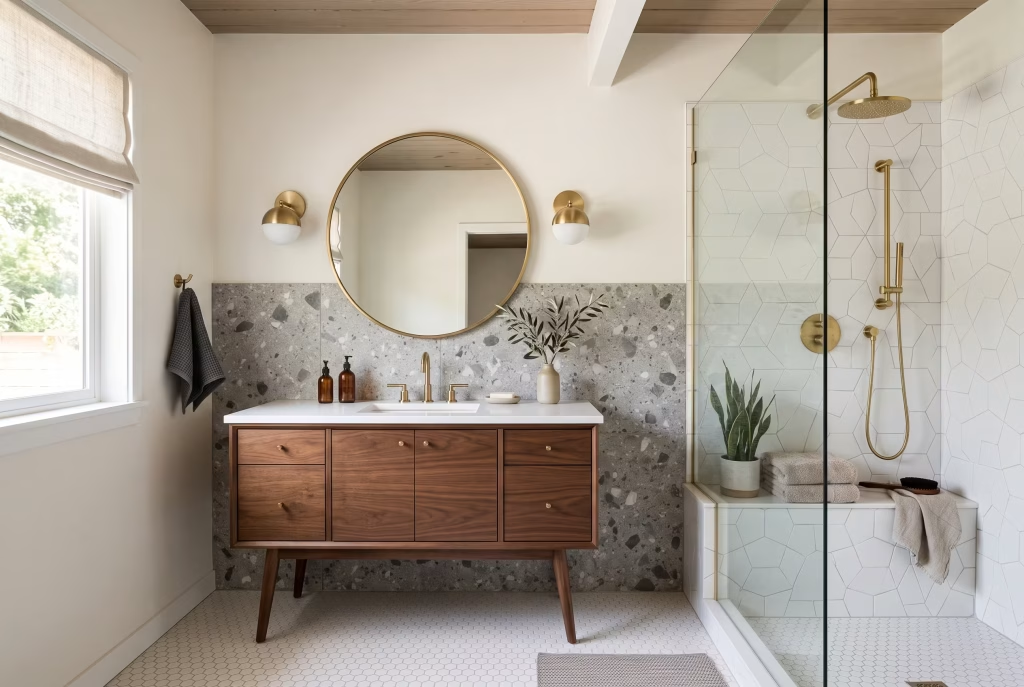
None of these 26 ideas needs to appear in the same bathroom. The best mid-century modern spaces are usually built from three or four of them, chosen deliberately and given room to actually be seen, rather than every idea on this list crammed into one small room competing for attention.
Start with the vanity, since it carries more of the room’s identity than anything else you’ll choose. Add warmth through brass. Choose one confident material, whether that’s colour, terrazzo, or a geometric tile, and let everything else in the room stay quiet enough to support it rather than compete with it.
Done that way, a mid-century modern bathroom doesn’t read as a themed decade recreation. It reads as a room that was designed with genuine intention, and that’s exactly why the style has never really gone away.
Frequently Asked Questions
What defines a mid-century modern bathroom?
A mid-century modern bathroom is built on a small, disciplined material vocabulary rather than any one specific object: warm wood (typically walnut, oak, or teak), brass or matte black fixtures, geometric or hexagon tile, clean uncluttered lines, and a restrained but confident use of colour drawn from the 1940s to 1960s. The style is defined more by the relationship between these materials than by any single statement piece.
What colours work in a mid-century modern bathroom?
The classic mid-century palette splits into two registers. Bold accent colours include turquoise, mustard yellow, burnt orange, and avocado green, best used on one wall or one fixture rather than throughout the room. Earthier, more restrained tones include sage green, warm terracotta, soft grey, and warm putty-toned neutrals, which tend to age more gracefully in a main family bathroom used every day. Both are period-accurate; the difference is intensity and where you use them.
Is mid-century modern still in style?
Yes. Unlike many decorative bathroom trends, mid-century modern draws on genuine mid-20th-century architectural and furniture design rather than a recent social-media aesthetic, and its core materials, walnut, marble, brass, and geometric tile, have anchored serious interior design for close to a century without falling out of favour. The risk with this style isn’t that it dates quickly; it’s that a single bathroom done in isolation, disconnected from the rest of the home’s material choices, can read as a styling exercise rather than a considered design decision.
Can you do mid-century modern in a small bathroom?
Yes, and in some respects a small bathroom suits the style particularly well. A wall-hung vanity keeps the floor line clear and the room feels larger as a result. A single strong material, terrazzo flooring, a hexagon tile, or one saturated wall colour, does more in a compact space than several competing choices would. Even a genuinely dark, moody colour scheme can work in a small bathroom, provided the lighting is warm and layered rather than a single flat overhead fitting.
How much does a mid-century modern bathroom renovation cost?
This varies enormously by market and scope, but as a general guide, a full mid-century-styled single bathroom, including a timber vanity, tile floor and walls, and brass or matte black fixtures, typically runs from the low thousands for a cosmetic refresh using existing plumbing, up to significantly more for a full gut renovation involving moved plumbing, a skylight, or bespoke joinery. Tile is usually the widest cost range within the room: a standard porcelain hexagon or subway tile costs considerably less installed than a genuine marble or hand-glazed artisan equivalent in the same pattern.
What’s the biggest mistake people make with mid-century modern bathrooms?
Treating it as a collection of individually sourced objects, a sunburst mirror, a brass tap, a terrazzo tile, bought separately without a shared material logic connecting them. The style reads as coherent when wood, metal, and colour repeat consistently through the room rather than each surface making its own unrelated decision. The second most common mistake is applying the same intensity of colour and pattern throughout an entire house; a bold, playful powder room and a calm, restrained main bathroom can both be genuinely mid-century without needing to match each other.