




26 Best Halloween Decor Ideas for Living Rooms: Stylish & Spooky
There is a particular hush that settles over a British living room in the last week of October. The clocks have gone back, the sky is black by teatime, and the lamp in the corner suddenly feels like the only warm thing for miles. Somebody lights a candle, somebody else fetches a blanket, and for an hour or two the room becomes a small, golden island against the dark.
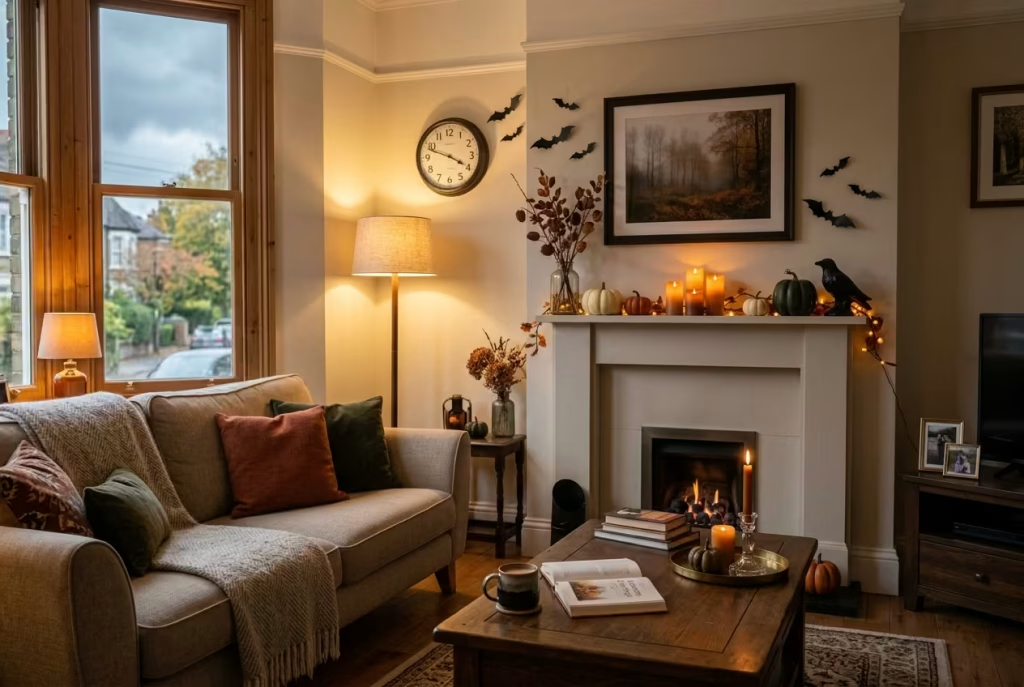
That feeling is the real prize of Halloween decorating. Plastic skeletons are optional. What matters is the mood: a room that makes people slow down, lean in and stay put. This year the calendar is on your side, too. Halloween lands on Saturday 31 October, and the clocks change the Sunday before, which gives you a full week of early darkness to play with.
Most guides, though, send you down one of two roads. One ends in a drawer full of glittery tat that looks tired by the second night. The other ends in a magazine spread you could only copy with a manor house and a team of stylists. This guide takes the sensible middle path. All 26 ideas below are built for real UK living rooms, with real sofas, real telly units, real budgets and, quite often, real cats and curious toddlers.
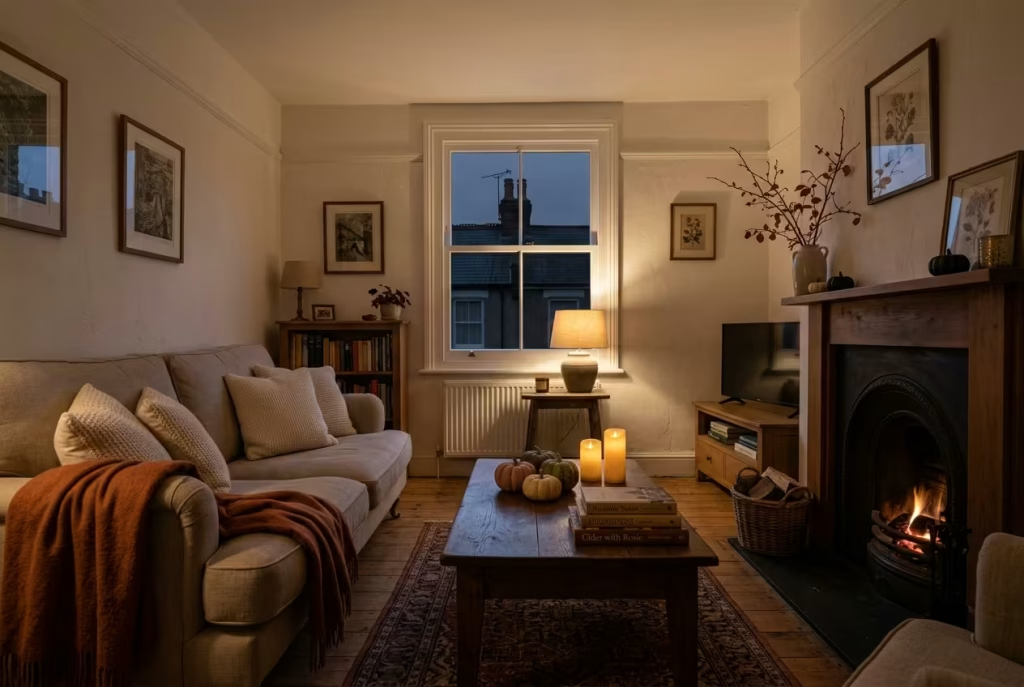
Some cost nothing more than a rummage through the cupboard under the stairs. Others repay a small outlay many times over. Each aims for a room that is eerie and elegant rather than loud and lurid, the sort that draws people towards the glow without them quite knowing why.
The quick answer
Short on time? Here is the whole method in a nutshell:
- Choose a tight palette. Two or three colours, repeated across the room, beat a dozen scattered about. Black, cream and burnt orange is the classic. Forest green with midnight black is the fresher alternative.
- Light the room in layers. Use lamps, flameless candles and fairy lights, and switch off the ceiling light. Pick warm bulbs of about 2,700K and avoid anything blue-white.
- Group in odd numbers. Three or five objects look composed. Two look like an afterthought.
- Go flameless wherever fabric is close. Over half of home candle fires start when something flammable sits too near the flame, according to the US National Fire Protection Association (NFPA).
- Give each surface one star. A single dressed mantel or console, rather than props on every shelf, gives the room an edited, expensive air.
Halloween 2026 at a glance
| Date | What it means for your living room |
| Early to mid October | Lay the base: faux pumpkins, dried stems, textured throws, lamps |
| Weekend of 24 to 25 October | Add the dramatic layer: bats, curiosities, darker candles, scent |
| Sunday 25 October | Clocks go back, so lighting matters from about teatime onwards |
| Saturday 31 October | Halloween itself: ceiling light off, lamps low, candles lit |
| Sunday 1 November | Lift the spooky layer off, keep the autumn base |
| Thursday 5 November | Bonfire Night: a smoky, amber room is the perfect welcome home |
What is trending this season
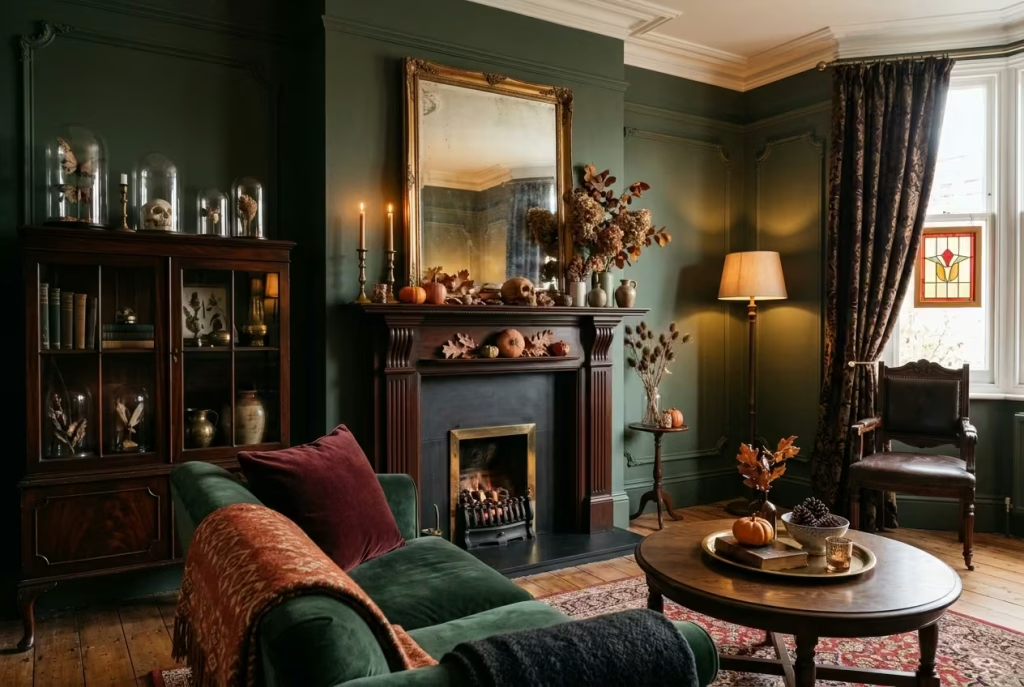
Designers quoted by Architectural Digest see a clear move away from cartoonish props. The live-shopping platform Whatnot reported pumpkin decor sales up 238% year on year, alongside a surge in “cabinet of curiosities” styling: curio cabinets, apothecary chests and glass domes. Searches for ornate gilt and stained-glass mirrors jumped twelvefold, a nod to the romantic Victorian look.
Colour is shifting as well. One designer told AD that deep burgundy and oxblood offer a welcome break from the orange-and-black overload, while another expects natural textures to dominate: terracotta, carved wood, dried grasses and preserved botanicals. Living Spaces’ stylists champion forest green paired with midnight black. You will find every one of these threaded through the ideas below.
Why a darker, moodier room feels so good
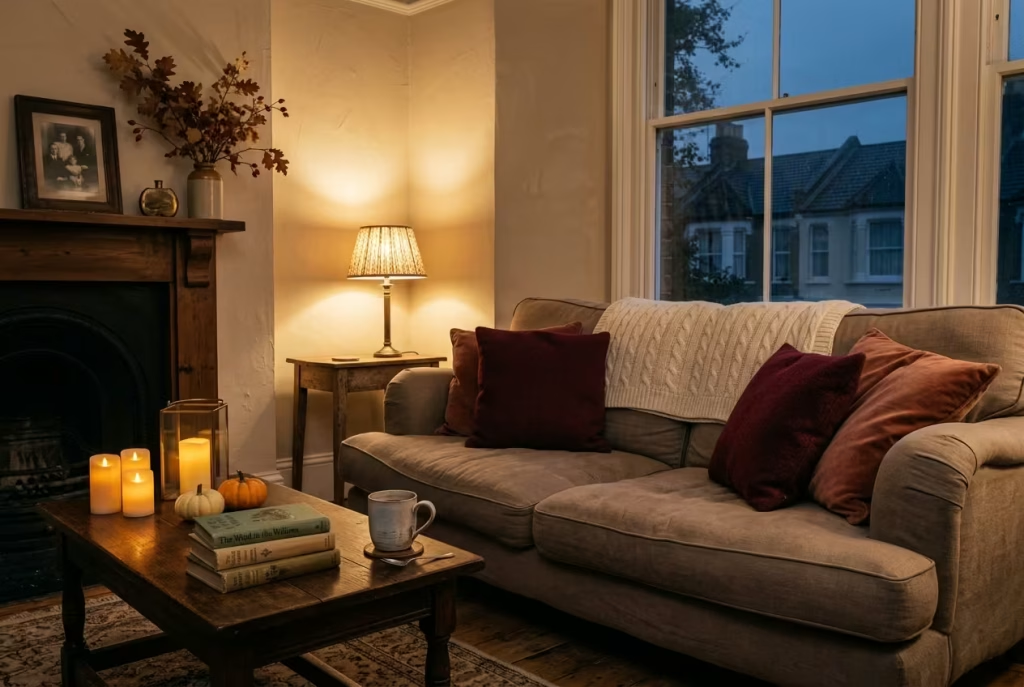
Seasonal decorating is not frivolous. Psychologist Deborah Serani of Adelphi University has linked it to a lift in mood, and she ties nostalgia to optimism. A University of Southampton study on nostalgia points the same way: fond memories of the past can colour how we picture the future. Most of this research looks at Christmas rather than Halloween, so read it as evidence for seasonal rituals in general. Even so, the logic travels well. Pulling out a lantern that reminds you of childhood, or dimming the lamps for a film night, tells the brain that something special is under way.
There is a practical payoff too. A living room is where a household overlaps: work emails, homework, takeaways, telly. A deliberate seasonal makeover turns that crossroads into a place with a point of view, and it gives everyone, from toddlers to grandparents, a shared reason to linger.
You May also Like: 27 Halloween Bedroom Decor Ideas to Create a Spooky, Cozy, and Stylish Space
Five ground rules before you start
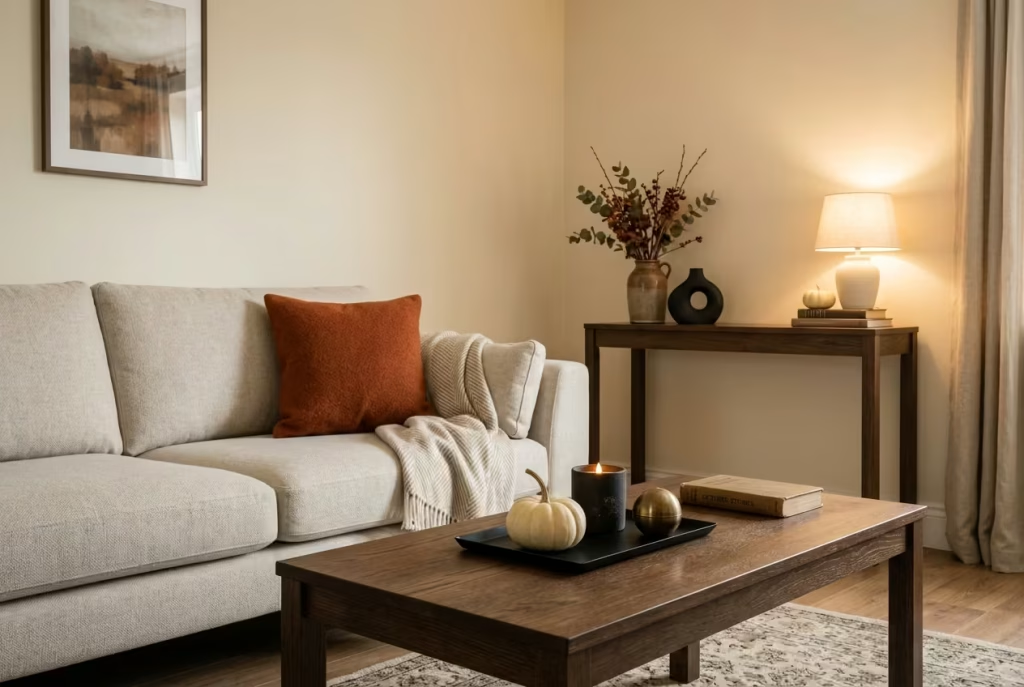
- Edit before you add. Clear the coffee table and shelves first. Spooky styling needs room to breathe, and a bare patch of wood is what makes one skull or candle look deliberate.
- Keep trays modest. A tray should cover no more than about a third of a table. Leave 30 to 50% of a coffee table visibly clear, or it stops being useful.
- Colour first, objects second. Settle the palette before you spend a penny, then reject whatever strays from it.
- Mix materials, not themes. Wood, brass, ceramic and velvet look collected. Ten items from one seasonal aisle look like a shop window.
- Mind the heat. Anything paper, fabric or dried sits well away from real flame and from hot bulbs.
Here is a palette table to pin down your direction:
| Palette | Mood | Best with | Add for depth |
| Black, cream, burnt orange | Classic and crisp | Neutral sofas, pale walls | Matte black pumpkins, brass |
| Forest green and midnight black | Gothic library | Green or grey sofas, dark rugs | Velvet cushions, dried ferns |
| Burgundy, charcoal and aged brass | Victorian drama | Brown leather, dark wood | Oxblood throw, antique frames |
| Terracotta, olive and dried grasses | Earthy and softer | Cream or oatmeal sofas | Carved wood, pampas stems |
| Plum and smoke grey | Modern witchy | Grey corner sofas, contemporary rooms | Black candles, smoked glass |
Fireplaces, mantels and clever stand-ins
1. Build the mantel around one dark mirror
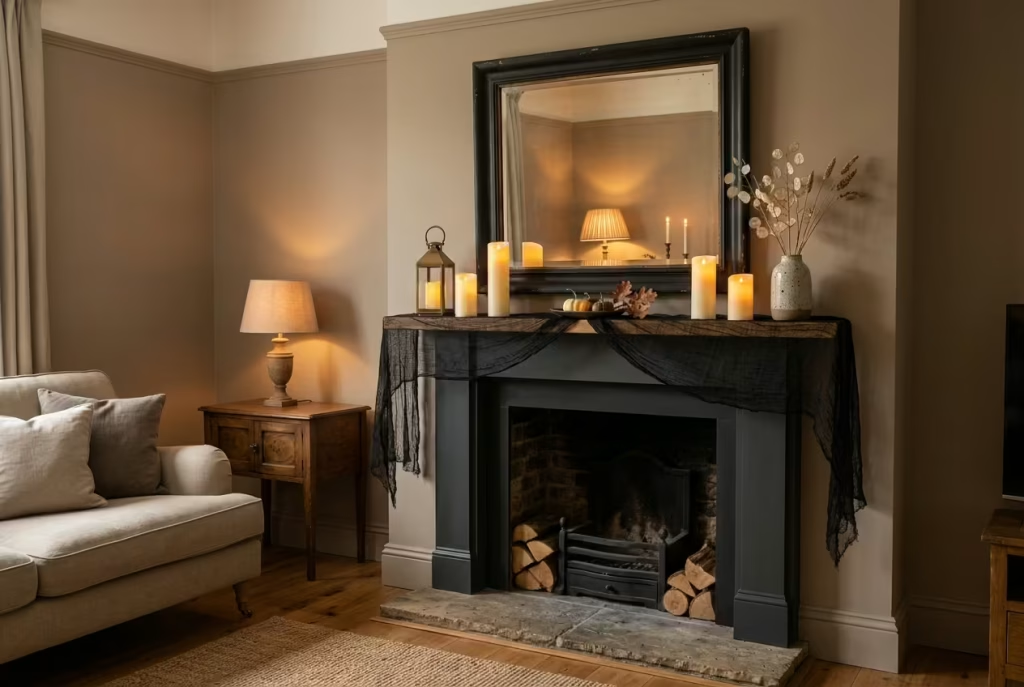
Every good mantel needs an anchor, and a dark-framed mirror or a brooding landscape print does the job beautifully. Hang it slightly off centre if the room allows, since a touch of asymmetry feels collected rather than catalogue-perfect. Lay a length of black gauze or sheer fabric along the shelf and let the ends trail about 20cm down each side. Then flank the anchor with objects of varied height, tallest at the back, so the eye climbs naturally towards the mirror.
The reason this works runs deeper than looks. A mirror catches whatever light you give it and throws it back, so a modest scatter of flameless candles seems twice as generous. Come evening, the reflection doubles the glow and widens the room, which is a quiet comfort on a night when the dark presses at the windows.
- What to gather: a mirror or print, 3 to 5 candle holders in mixed heights, a small dish or lantern, a handful of dried stems
- Fixing note: use proper wall fixings for any heavy mirror, never adhesive strips alone
- Reset: on 1 November, hang your everyday art back and the mantel is done in five minutes
2. Gather candles in threes and fives
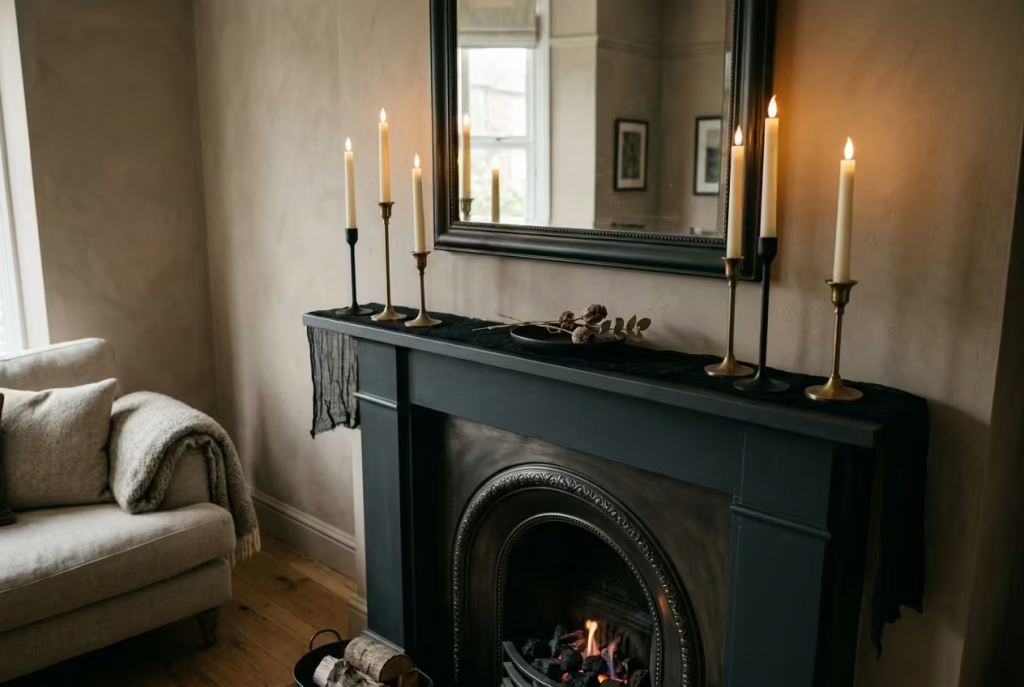
Odd numbers are the oldest trick in the stylist’s book, and for good reason. Three or five tapers at staggered heights look composed, while a pair reads as an accident. Use black or brass holders, set the tallest nearest the wall so nothing topples forward, and choose flameless tapers with a warm-white flicker. Blue-white LEDs give the game away within seconds, and nothing deflates a moody mantel faster.
If you prefer real flame, the rules are firm, and for good reason. Keep candles about 30cm from anything flammable, stand them on a heat-resistant surface, never leave them alone, and keep gauze, paper and dried stems well clear. A London Fire Brigade analysis covering five years recorded 86 fire-related injuries in London between Halloween and Bonfire Night, 14 of them linked to candles. The brigade also advises setting candles where nobody can knock them over, and that matters doubly when guests arrive in capes and floaty sleeves.
There is a gentler side to all this, of course. A cluster of candles at different heights has a way of slowing a room down. People lower their voices without being asked.
3. Turn an unused hearth into a small stage
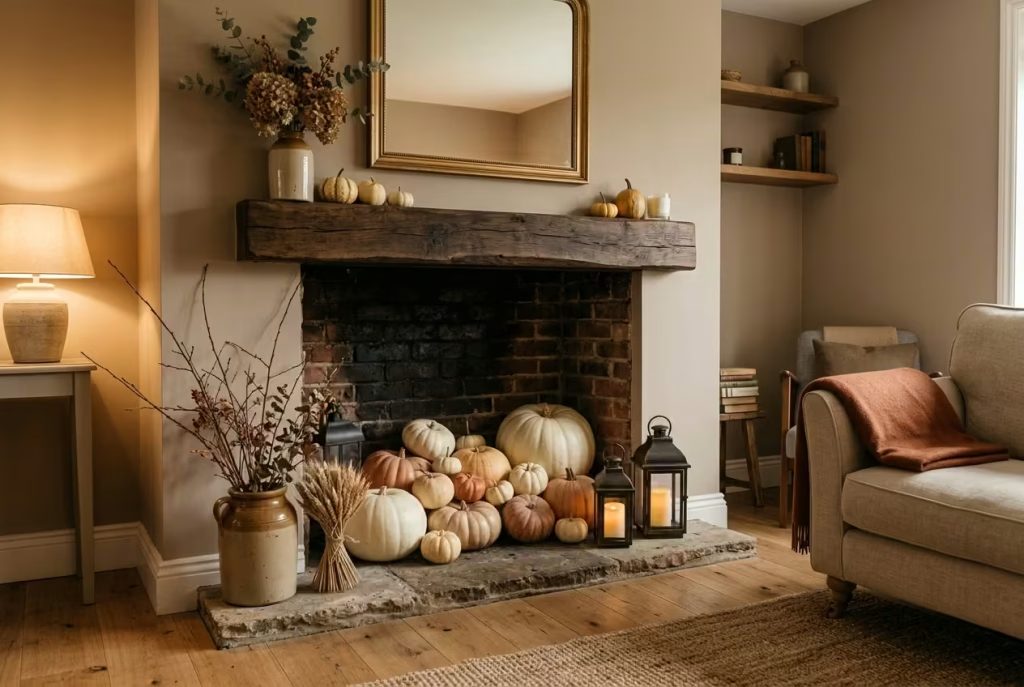
A fireplace that no longer burns is a dark little theatre waiting for its cast. Fill the opening with a heap of pumpkins in mixed sizes, a pair of lanterns and a few bare branches, and the dead space suddenly has a story to tell. White and natural pumpkins glow beautifully against soot-dark brick, while a bundle of dried wheat adds a harvest note that carries on into November.
If your fire is still in use, leave the hearth alone and keep every decoration well clear of it, with a fireguard in position. Many households find the empty-hearth version works best of all, because it fills a gap that usually looks bleak in autumn. A room with a cold, blank fireplace can feel a little forlorn as the nights draw in. A hearth brimming with pumpkins and lanterns tells the room it is loved.
4. No chimney breast Dress a console as a mock mantel
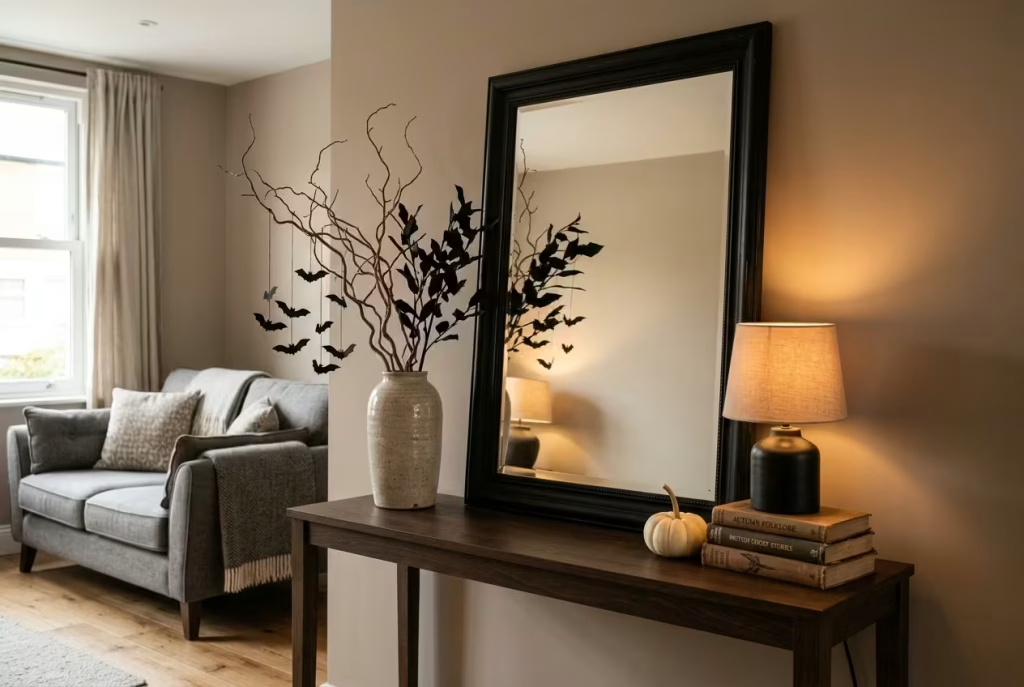
Plenty of UK homes, from new-builds to flats and terraces with blocked-up chimneys, have no fireplace at all, and that need not hold you back. A narrow console, a sideboard or a deep window ledge does exactly the same job. Lean a large mirror against the wall, tuck a tall vase of bare twigs beside it, and hang a small flock of paper bats from the branches on black thread. A table lamp with a warm bulb stands in for the fire.
This is also among the cheapest ideas in the whole guide. A handful of twigs from the garden, a sheet of black card and a reel of thread come to a couple of pounds. A tip from the field: spray the twigs matte black or leave them natural, but resist glitter, which sheds across a console and never quite vanishes.
Light, glow and the long, dark evening
5. Layer three kinds of light
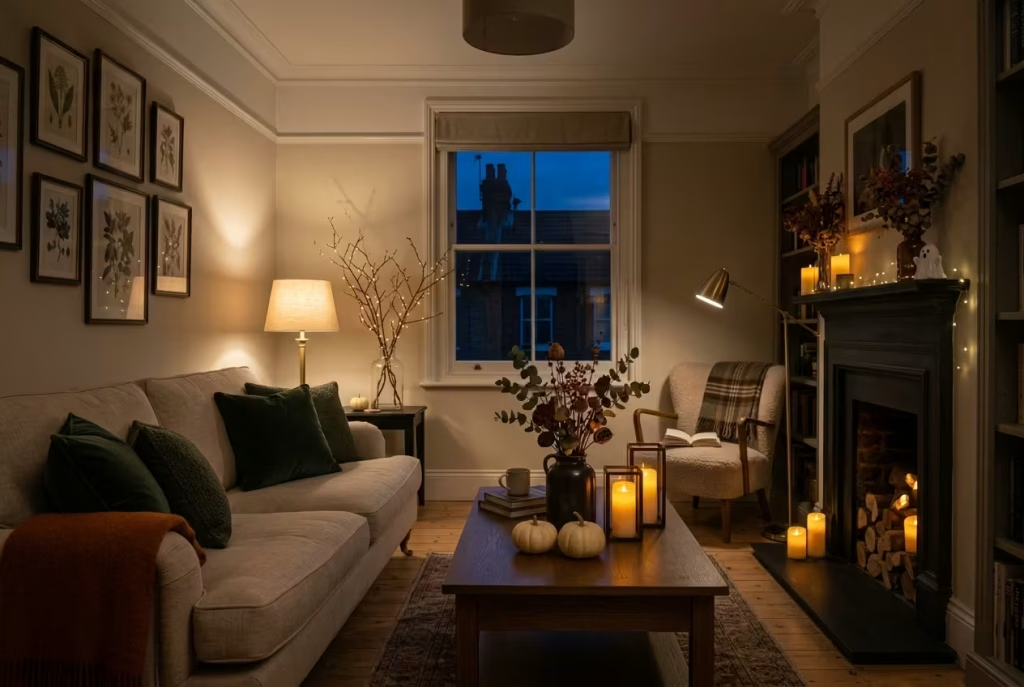
A single ceiling light flattens everything beneath it, which is why so many Halloween rooms feel like waiting areas. Build three tiers instead: table or floor lamps for general warmth, candles or flameless lanterns for sparkle, and string lights for a soft halo around the edges.
For a rough yardstick, a living room needs only about 100 to 300 lux of ambient light for relaxed evenings, far less than most overhead fittings pour out. That is why dimming works so well. If someone wants to read, a lamp with a bulb of at least 450 lumens, aimed at the page, spares the eyes without flooding the room. On the 31st, turn the main light off altogether. The shift from bright to glowing is half the magic.
There is real emotional pull in this layering. Pools of light create small, private territories within a shared room, so the sofa corner becomes a den and the armchair a reading burrow. People settle where the glow gathers.
6. Change the bulbs, not the lamps
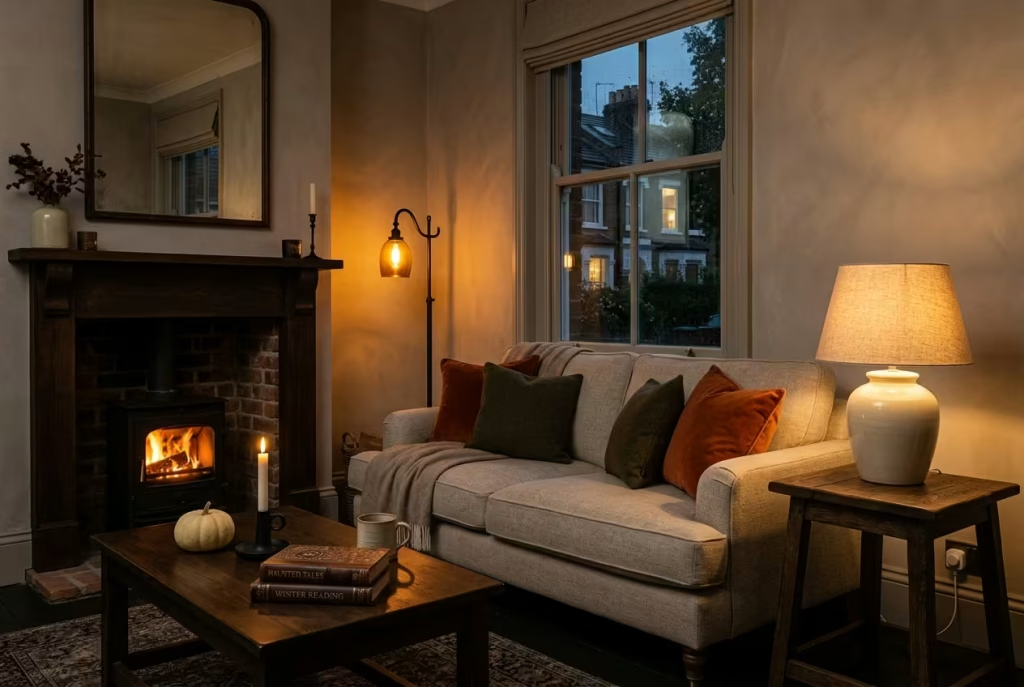
The cheapest transformation in this guide is a warmer bulb. A warm white of about 2,700K reads as candlelit, whereas 3,500K and above starts to feel clinical, like a dentist’s waiting room. Amber filament bulbs are a firm favourite with stylists, and a dimmer plug, usually well under £15, lets you slide the room from film night to full gloom in a second.
Colour has its place, but use it with a light hand. One deep orange or purple bulb in a corner lamp can look lovely. A whole room bathed in blue, by contrast, tends to resemble a student kitchen at 3am. Smart bulbs earn their keep for renters and gadget fans alike, since you can shift from warm white to amber for the evening and back again at the tap of a phone, without touching a single fitting.
7. Rescue the dark corners with lanterns
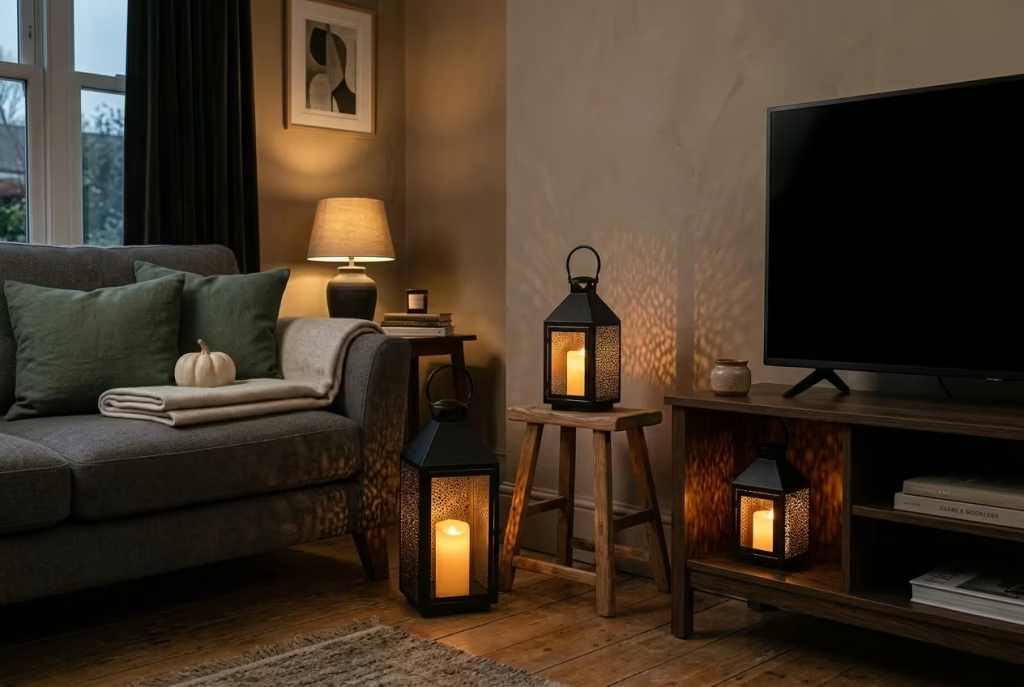
Every living room has a corner that dies after sunset, usually beside the telly or behind the door. A black metal or aged-wood lantern with a flameless candle inside brings it back to life. Place two or three at varied heights, perhaps one on the floor, one on a stool and one on a shelf, and the room seems to widen, because the eye now reads depth where it once saw shadow.
Move them about for an evening until the light feels balanced. You are aiming for pools of glow, not an even wash. Lanterns with pierced metal work, throwing lacy patterns across the wall, are particularly effective, and children adore them. There is something quietly magical about a dark corner suddenly flecked with moving light.
8. String lights behind books and jars
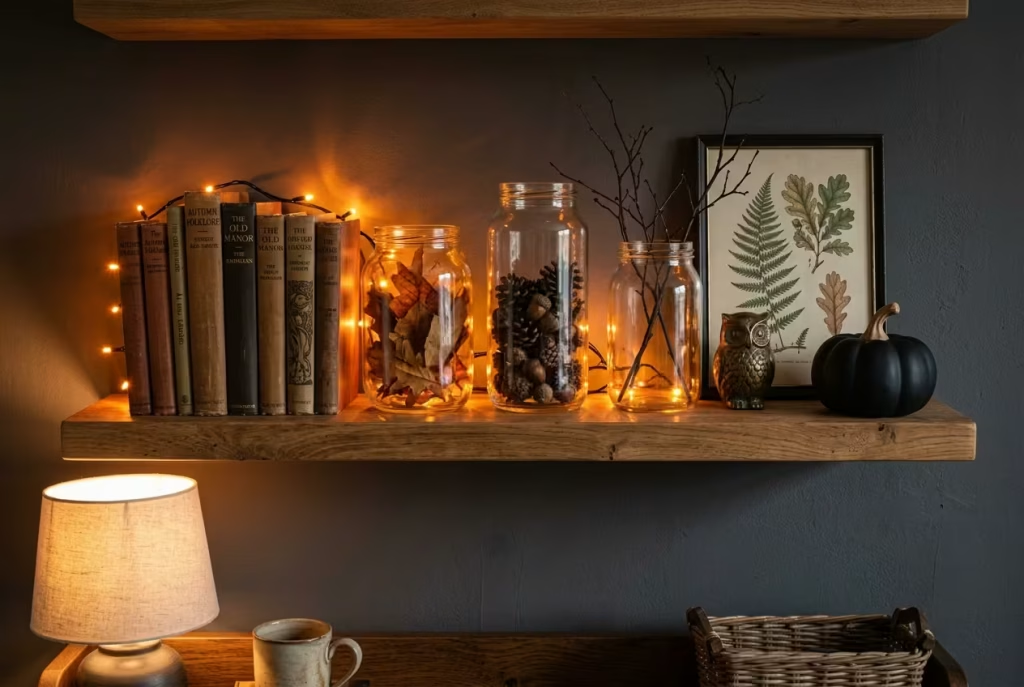
A single strand of warm-white or deep orange fairy lights, hidden behind a row of books or a line of glass jars, turns an ordinary shelf into a feature. Show the light and hide the wire. Battery-powered strands avoid trailing cables, which also makes them kinder to rental sockets and to anyone with small children.
Keep LED strings a few centimetres clear of dried foliage, paper and loose fabric. Fire services also advise against overloading sockets and recommend switching decorative lights off at the mains last thing at night, a habit worth forming now that sets you up well for Christmas. Set a timer plug if you tend to forget, and the shelf glows each evening without you lifting a finger.
Sofas, cushions and the art of the soft layer
9. Re-cover the cushions in your palette
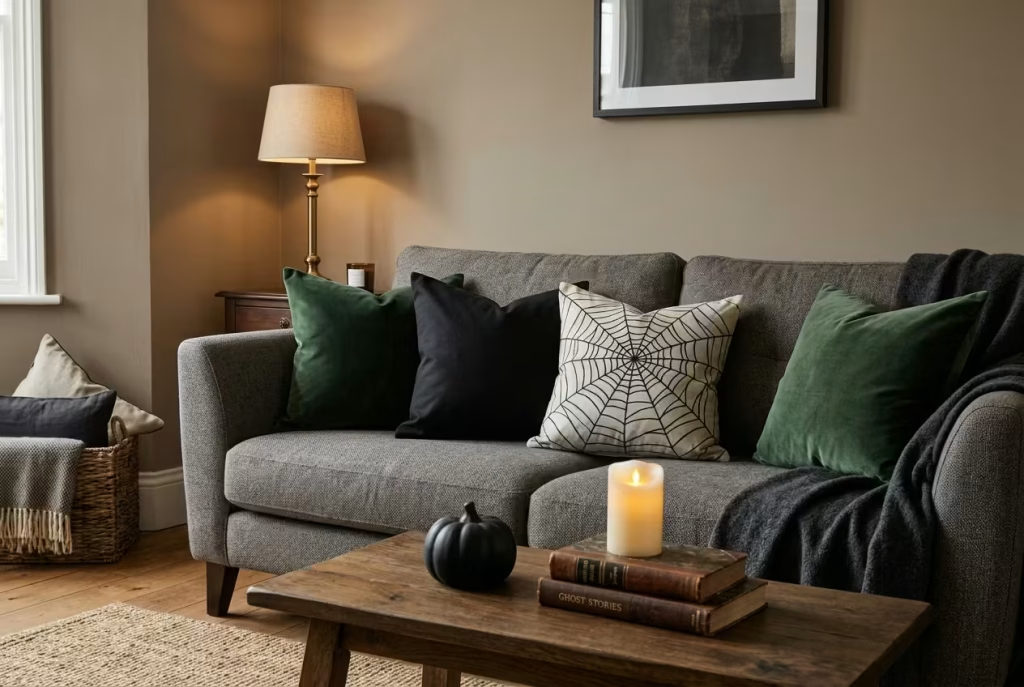
Swapping cushion covers is the quickest way to reshape a sofa for the season, and covers fold flat into a drawer afterwards. Standard 45cm covers are the easiest to find, so check your inserts before you shop. On a charcoal or grey sofa, deep green velvet and black look striking, while burnt orange and rust suit a cream one. Choose prints with restraint: an abstract web, a simple bat or a plain colour block, never a cartoon grin.
Pet owners, take note. Velvet, chenille and corduroy hold hair like a magnet, whereas smooth, tightly woven fabrics such as twill clean far more easily. Loosely looped bouclé and linen can snag on claws, so think twice if a cat rules the sofa. Fabric also changes the feel of a room long before anyone notices the pattern. Heavy velvet and wool look warm before you touch them, and the eye reads that comfort as a promise.
10. Drape a plaid or oxblood throw over one arm
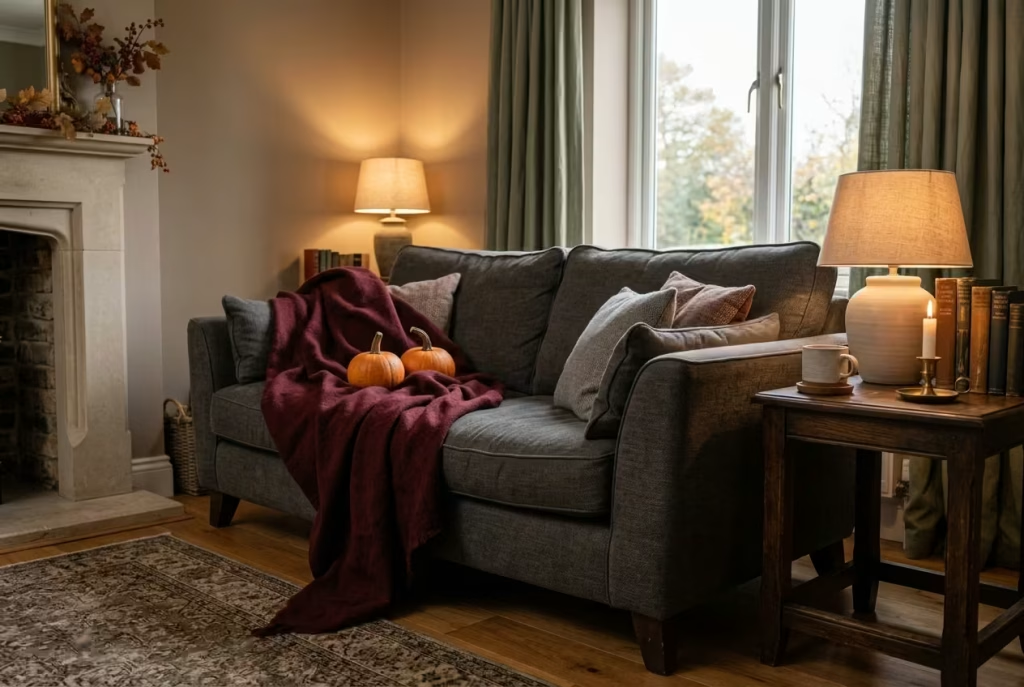
Throw a heavy plaid, a faux-fur or a burgundy wool blanket over a single sofa arm and perch two mini pumpkins on the fold. It takes under five minutes and says autumn louder than any slogan cushion could. Pick burnt orange or oxblood for warmth, and let the fabric fall in a slightly casual cascade rather than a tidy fold, so it looks as though somebody has just wandered off for the kettle.
That small hint of human presence is the point. A throw left looking half-used, rather than hotel-perfect, tells guests they are welcome to curl up. It is the difference between a room to admire and a room to sink into.
11. Lean a blanket ladder against the wall
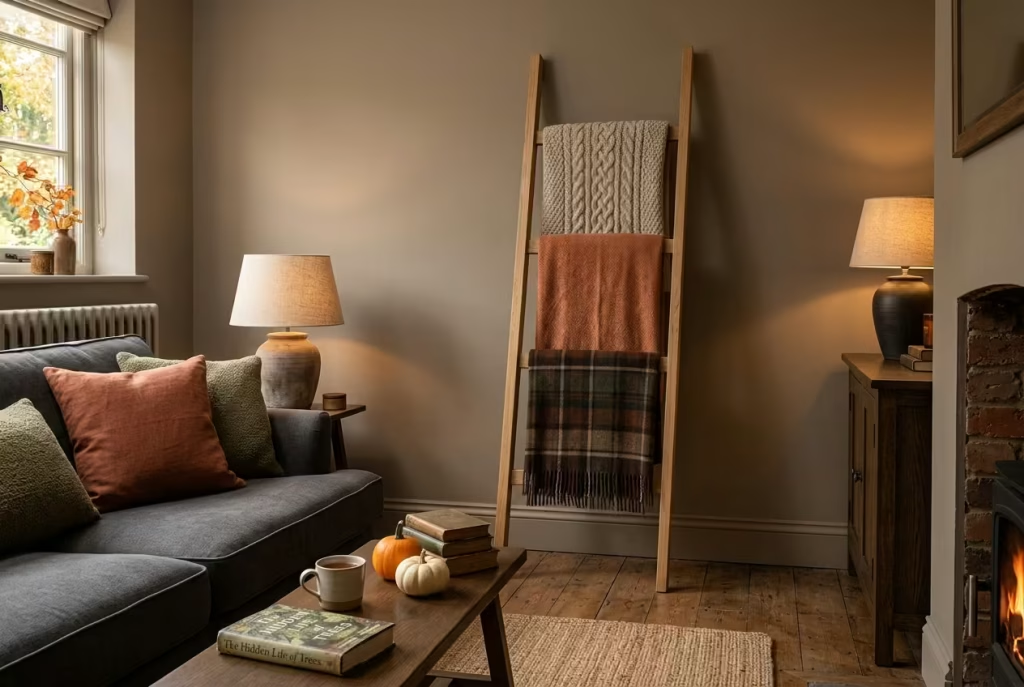
A wooden ladder, or even a plain pole rack, loaded with chunky throws turns storage into display. Mix textures: a knit, a faux-fur and a woven tartan work well together. Choose three throws in the same colour family but different weaves, and the stack looks layered, not chaotic. The ladder earns its keep twice over, because the blankets sit within arm’s reach when a chilly film night begins.
For safety, make sure the ladder leans at a stable angle against a solid wall and keep it away from radiators and fires. A stack of blankets within reach also does something emotional that no ornament can: it lets you offer warmth to a guest without a word.
12. Give a spare armchair a story
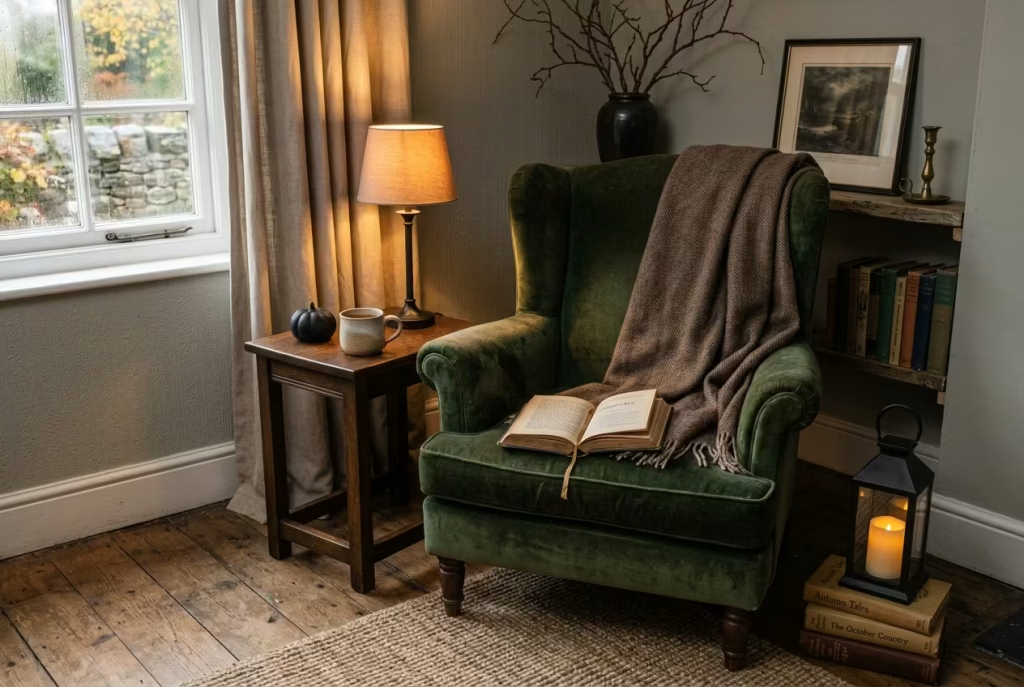
An empty armchair is a blank page. Set a vintage hardback on the seat, drape a wool blanket over the back, and place a lantern on the floor beside it, as if a Victorian scholar had just stepped out. No new purchase is needed, since the ingredients usually live in the house already.
If you fancy a skeleton guest, dress him with care: a scarf, a hat and a book in his bony hands. The gap between camp and charming lies almost wholly in the styling. Give him a posture too, slumped, as if mid-chapter, rather than stiff and upright. Done well, this is the idea that makes visitors laugh out loud, and shared laughter is half of what a Halloween room is for.
Coffee tables and side surfaces
13. Dress a pumpkin tray with restraint
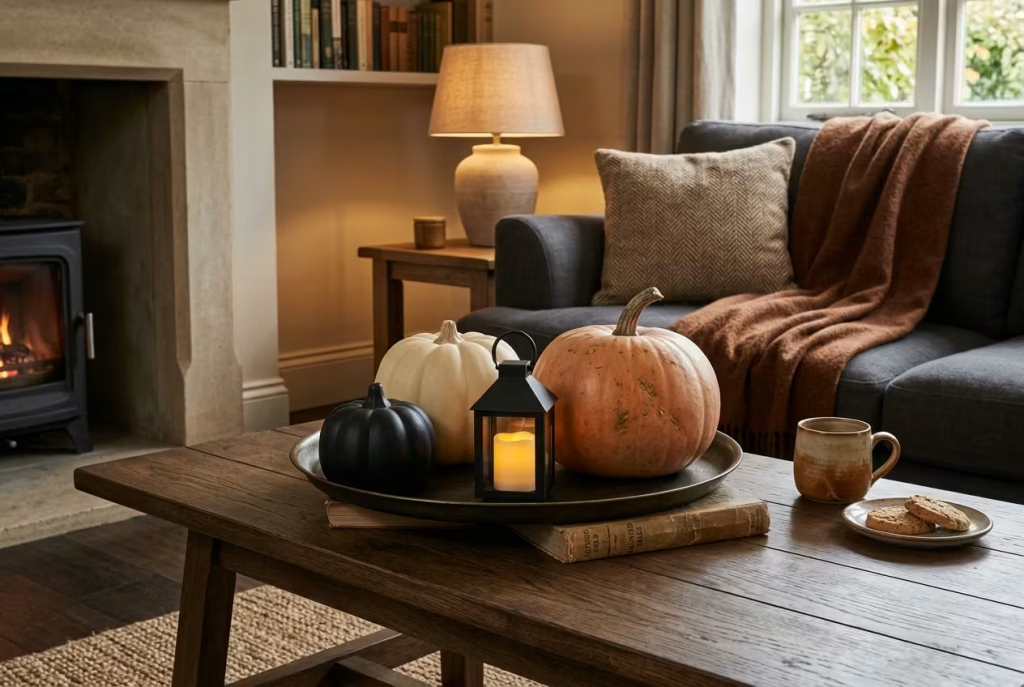
Begin with a wooden or metal tray, then group three pumpkins in graduated sizes: matte black, white and natural orange. Slip a small lantern between them and raise the tray on two old hardbacks for height. Keep the whole arrangement under about a third of the tabletop, so there is still room for a mug and a biscuit.
The choice between real and faux shapes both the look and the upkeep:
| Real pumpkins | Faux pumpkins | |
| Life indoors | A whole one lasts about a month at room temperature, less in a warm lounge; carved ones 3 to 5 days | Many years |
| Mess | Soft spots can leak onto wood and fabric, so always use a tray | None |
| Look | Authentic texture and colour variation | Convincing if matte or painted |
| Best for | A short, fresh display | A reusable core you add to each year |
Mixing the two gives the best of both worlds. An all-faux set can look like a shop display, whereas a few real ones nestled among them add honesty and a faint earthy smell. If the room runs warm or damp, lean on faux, since real pumpkins hasten to rot in humid air.
14. Build a cabinet of curiosities under glass
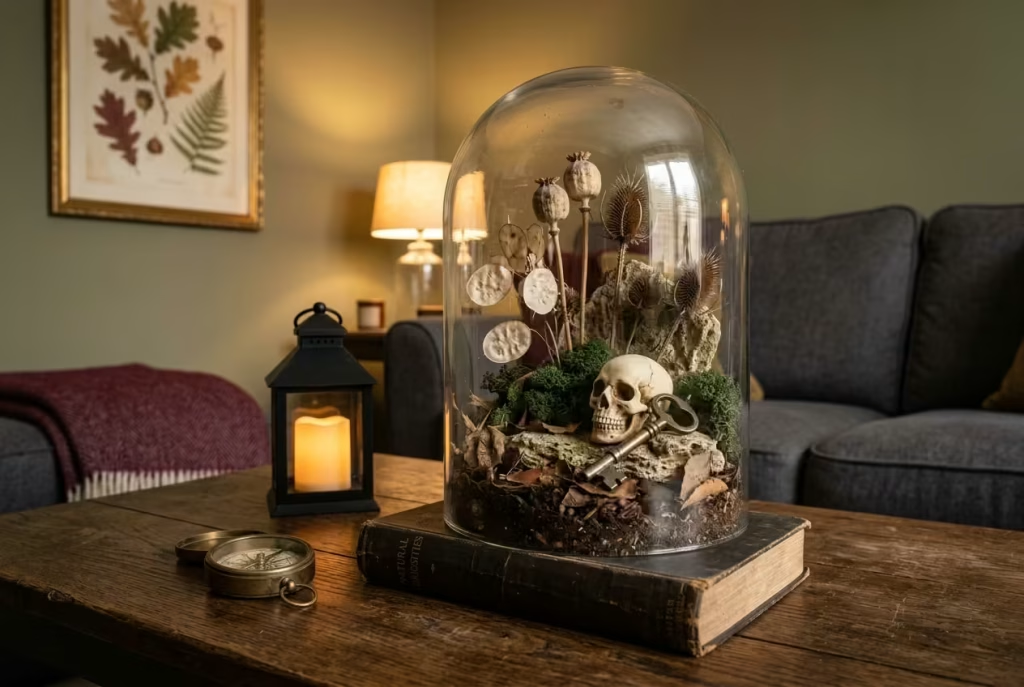
This is the boldest trend of the season, and it fits on a coffee table. Set a glass cloche, a lidded apothecary jar or a clear bell jar over a small arrangement: dried seed heads, a pinch of moss, a tiny skull and perhaps a vintage key. Treat it as a miniature museum, not a pile of props.
Odd, slightly lopsided collections look best. Think of a Victorian naturalist’s desk, where every object has a past and none of them match. Charity shops and car-boot sales are rich hunting grounds for brass keys, old compasses and small glass domes, and half the fun lies in the hunt. There is something deeply human about a collection of small, odd things: it invites people to lean in, pick up, ask where that came from, and the conversation does the rest.
15. Turn a drinks trolley into an apothecary

A bar cart or side table transforms with amber glass bottles, a decanter, black taper candles and one small skull. A designer in Architectural Digest advises restraint here: when a room is already dark and dramatic, a single skeletal touch supplies all the seasonal nod it needs.
Put the trolley to work on the night itself. A smoky mulled cider in dark glasses, or a pitcher of spiced apple juice for the younger guests, turns the display from ornament into ritual. Add a handwritten label on each bottle, in an old-fashioned script, and the whole thing feels like a witch’s pantry. A tray beneath the bottles guards against rings, which are the sort of stain that outlasts the party.
You May also Like: 24 Easy Halloween Kitchen Decor Ideas: DIY Spooky Touches and Budget-Friendly Cute Accents
Walls, windows and shelves
16. Hang a gallery wall of botanical and anatomical prints
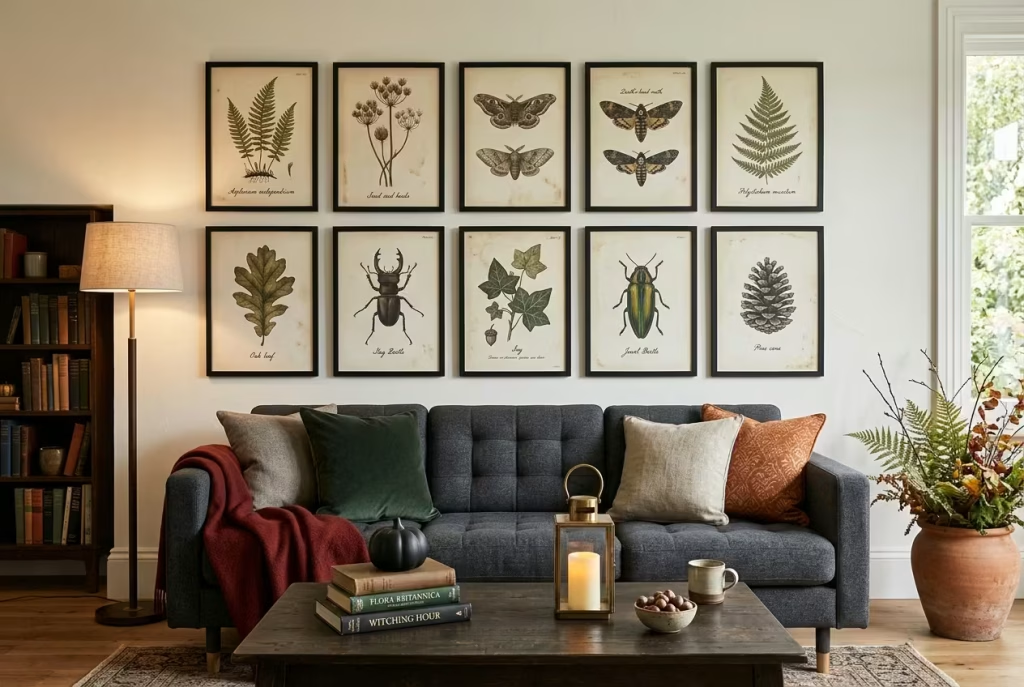
Frame vintage-style botanical sketches, insect charts or anatomical drawings in matching black frames. A grid of six or nine small frames above the sofa makes a bold statement, yet the effect stays grown-up rather than gruesome. Printable downloads from online marketplaces often cost under £10, and second-hand anatomy books from charity shops let you frame individual pages for a few pounds.
Use removable adhesive strips if you rent, and check their weight limits before you hang. Keep the gaps between frames consistent, around 5cm, so the grid looks planned. When November comes, swap in your usual prints and the same frames carry on through winter, which makes this one of the most economical ideas here. The emotional pay-off is subtle but real: a wall of curious, finely drawn things rewards anyone who stops and looks.
17. Fly paper bats across the window
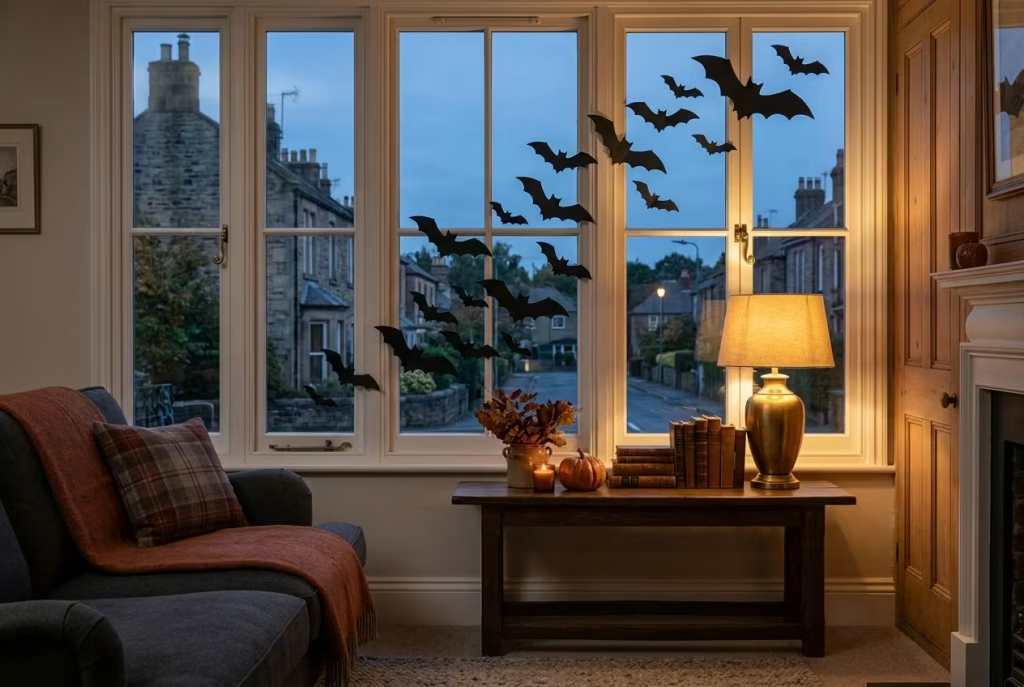
Cut a dozen bat silhouettes in three sizes from black card, perhaps 8cm, 15cm and 25cm across, then arrange them so they flutter in a single direction. Fix them to the inside of the glass with removable putty. After dark, with a lamp behind, they read as crisp silhouettes from the street, a small gift to every passer-by.
Odd numbers and varied sizes sell the effect, while uniform bats in neat rows look more like a school display. It makes a lovely afternoon with children, too: one folds the paper, one cuts, one decides where the colony settles. Years later, the memory of making them will outlast the bats themselves.
18. Edit the shelves for atmosphere
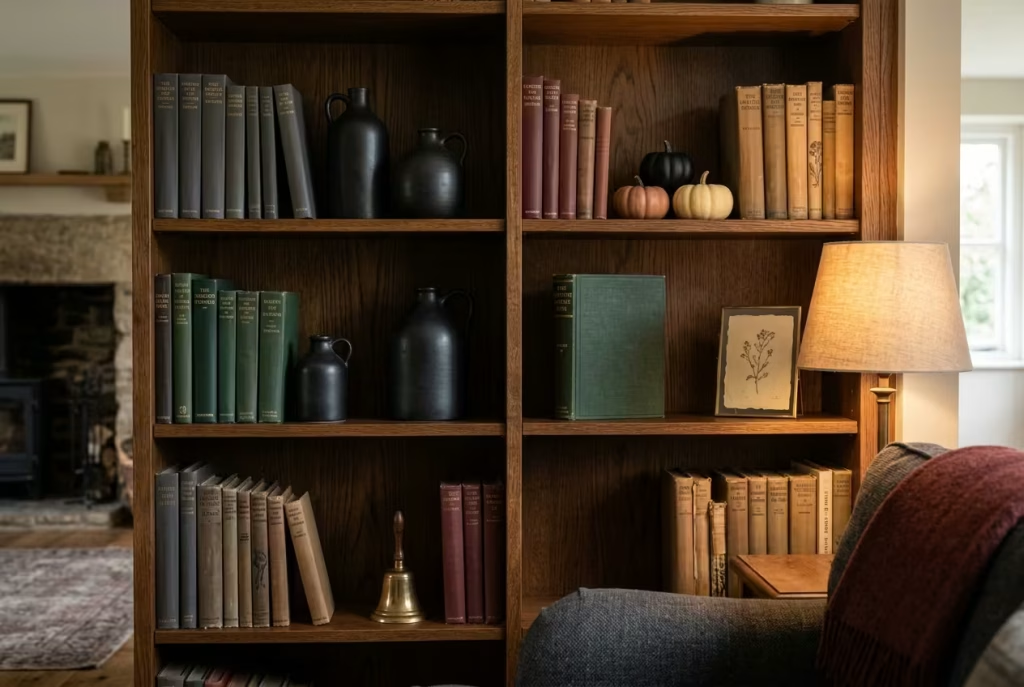
A packed bookcase rarely looks spooky; it just looks full. Clear a few bright objects, then add dark stoneware jugs, a framed botanical sketch and two or three small matte pumpkins between the books. Aim to leave roughly a third of each shelf empty, because a pause in the pattern lets the eye land on what matters.
Add one tiny brass bell or a concrete pumpkin as the finishing flourish. The goal is a subtle storyline, not a haunted house. Group books by spine colour if you can, with the darkest volumes together, and the whole case takes on a moody, library air. Face a few covers outwards if they are handsome, since a cover in deep green or burgundy can serve as artwork in its own right.
19. Swap in heavier curtains
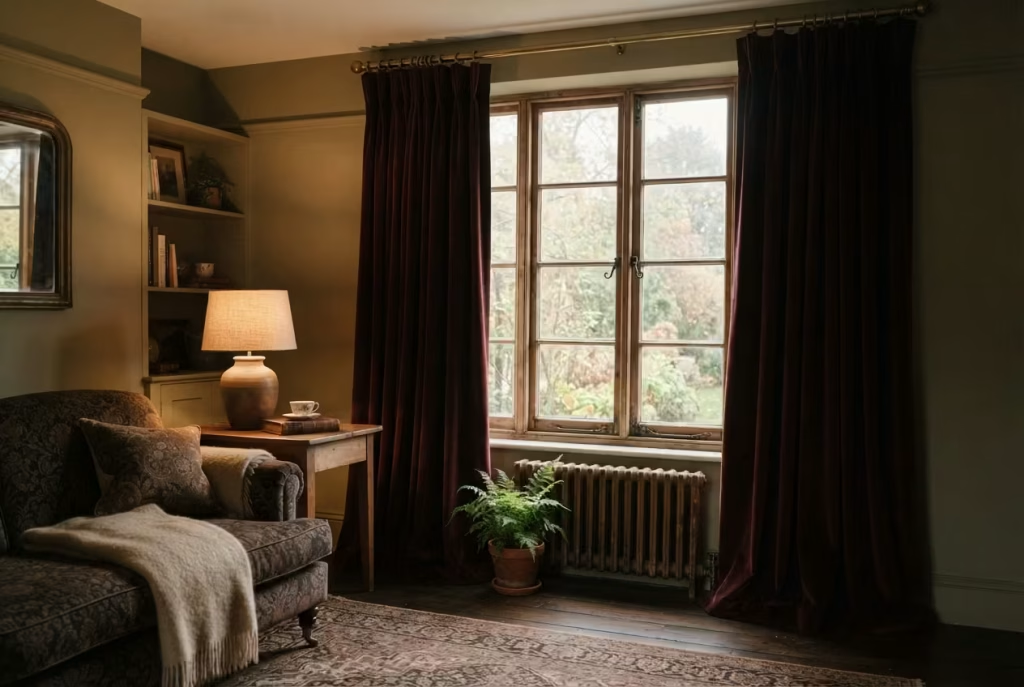
Dark velvet or heavy lined curtains in burgundy, bottle green or charcoal change a room’s mood overnight, much as a new frame changes a painting. Draw them at dusk and the evening feels instantly enclosed and theatrical, as if the room had pulled a blanket over its shoulders.
There is a practical bonus. The Energy Saving Trust estimates that around 18% of heat in an uninsulated home escapes through the windows, and Eco Experts suggests high-quality thermal curtains can cut a typical three-bedroom semi’s heating bill by up to £327 a year. Hang them close to the frame, overlap them in the middle, and let them reach the sill or the floor for the best result. It is a seasonal flourish that pays for itself once winter bites, and a quiet kindness to future you.
The telly unit and media wall
20. Style the TV console without fighting the cables
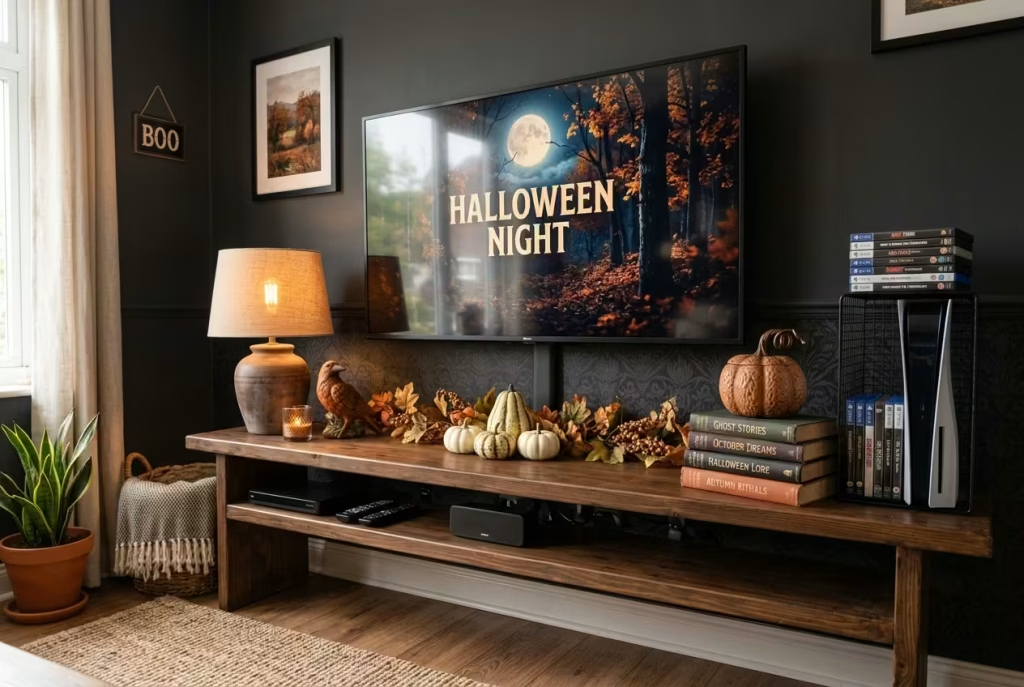
The television is the largest, blackest object in many living rooms, and almost every Halloween guide ignores it. Treat the console beneath it as a styled shelf. Place taller items at the ends and low ones in the middle, so the screen does not look boxed in. Keep the arrangement asymmetrical, with a lamp on one side and a stack of books topped with a small pumpkin on the other.
Tidy the cables first with trunking or clips, since a neat console always reads as more expensive. Leave ventilation gaps around the set and any games console, and keep flame well away from electronics. If the wall behind the screen is pale, a single strip of dark paint or removable wallpaper behind the unit warms the whole scene without touching the rest of the room.
This is where a room’s everyday life and its seasonal costume meet, and the join is worth getting right. A console that looks cared for tells the whole room that someone has been paying attention.
21. Let the screen do the haunting
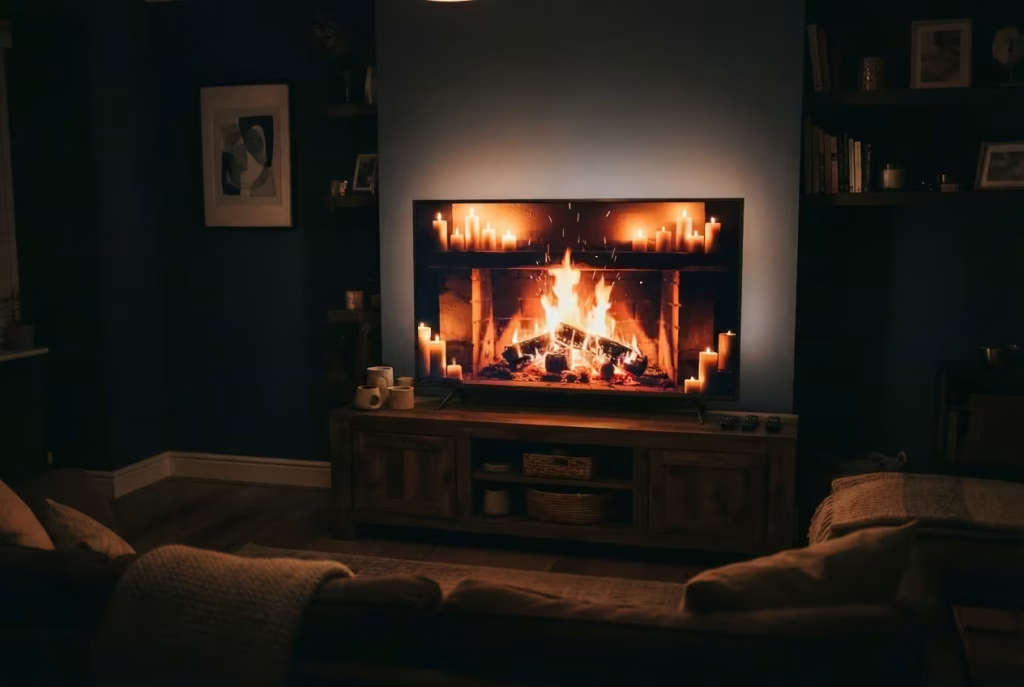
Why buy props when the biggest thing in the room can supply the atmosphere? Many streaming services and video sites offer free looping videos of crackling fires, haunted libraries, drifting ghosts and flickering candles. Switch one on during a gathering with the sound low, and the room gains movement and a flickering glow at no cost and no clutter.
It suits anyone short on storage, because the whole decoration lives in a remote control. It also helps in rooms where the telly dominates, since the screen stops competing with your styling and joins it. When the film starts, you can hand the room back to the story.
Scent, sound and a proper welcome
22. Add a spiced scent
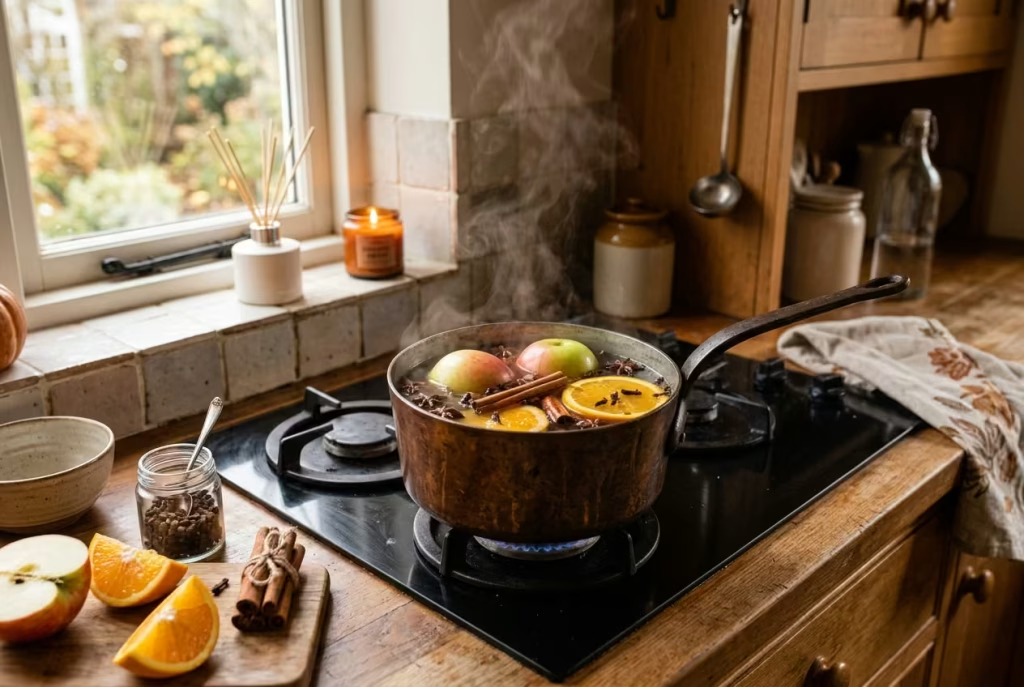
Scent is the last, quiet layer, and the one guests carry away with them. Scent reaches the brain’s emotional and memory centres by a more direct route than any other sense, which is why a whiff of cinnamon can transport a grown adult straight back to a childhood kitchen. A pumpkin-spice or cinnamon candle works on a side table, though a reed diffuser is the safer pick near fabric.
For a gentler homemade version, simmer a pot with two quartered apples, a sliced orange, two cinnamon sticks, a teaspoon of cloves and a litre of water on the lowest heat, lid off, topping up as it reduces. Never leave it unattended. Central heating dries indoor air, so a simmer pot does double duty, perfuming the room and softening the dryness in one go. By the time the cloves have given up their sweetness, the whole house smells like the best part of autumn.
23. Set a welcome station by the living room door
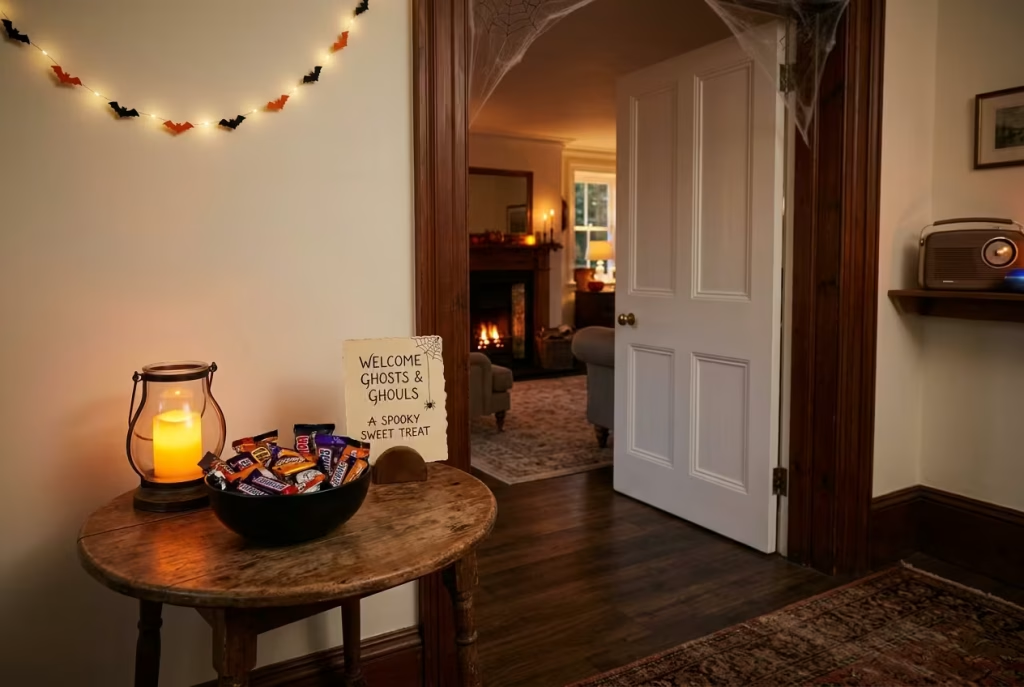
If trick-or-treaters or party guests pass through, make the threshold part of the show. Put a black bowl of sweets on a small table, flank it with a lantern and start a playlist of eerie instrumentals or old film scores, kept low enough to talk over. A handwritten card with a short, spooky greeting adds a personal flourish.
A small, deliberate station beats a sprawl of decorations. It tells arrivals, in effect, that this room has been dressed for them. Keep the walkway clear, since fire services stress that exits and routes through the home should never be blocked by decorations, and place the lantern where a swishing cape cannot reach it. For many children, that first glimpse of a glowing doorway is the moment Halloween becomes real.
You May also Like: 26 Creative Halloween Garden Decor Ideas for Front Yards and Backyards
Small rooms, rentals, pets and children
24. Go vertical in a compact living room
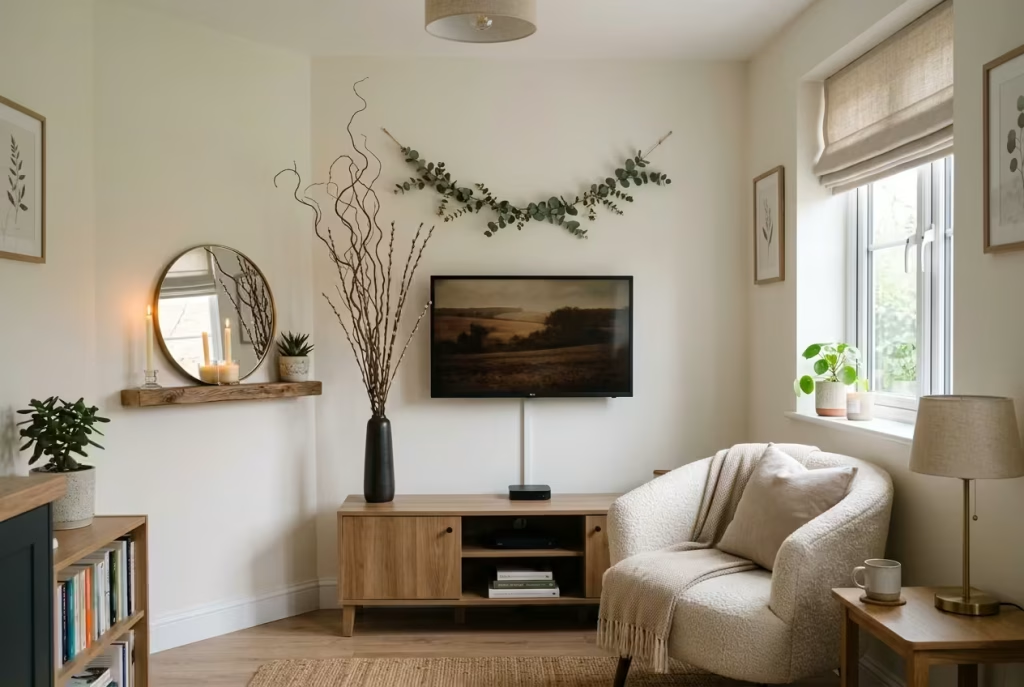
A small room cannot swallow lots of floor decor, so use the walls and the air. Hang a garland above the telly or across a window, lean a mirror on a ledge to double the candlelight, and let one tall arrangement of twigs do the work of three small objects. Stay disciplined on colour, because pattern multiplies visual clutter quickly in a tight space.
One contained vignette feels calmer than several scattered props. If you can manage only one tray, one lamp and one wall feature, that is already plenty. In a compact room, restraint is not a limit but a luxury. Every object gets room to be seen, and the whole space feels calmer for it, which is no small thing at the end of a long day.
25. Decorate a rental without risking the deposit
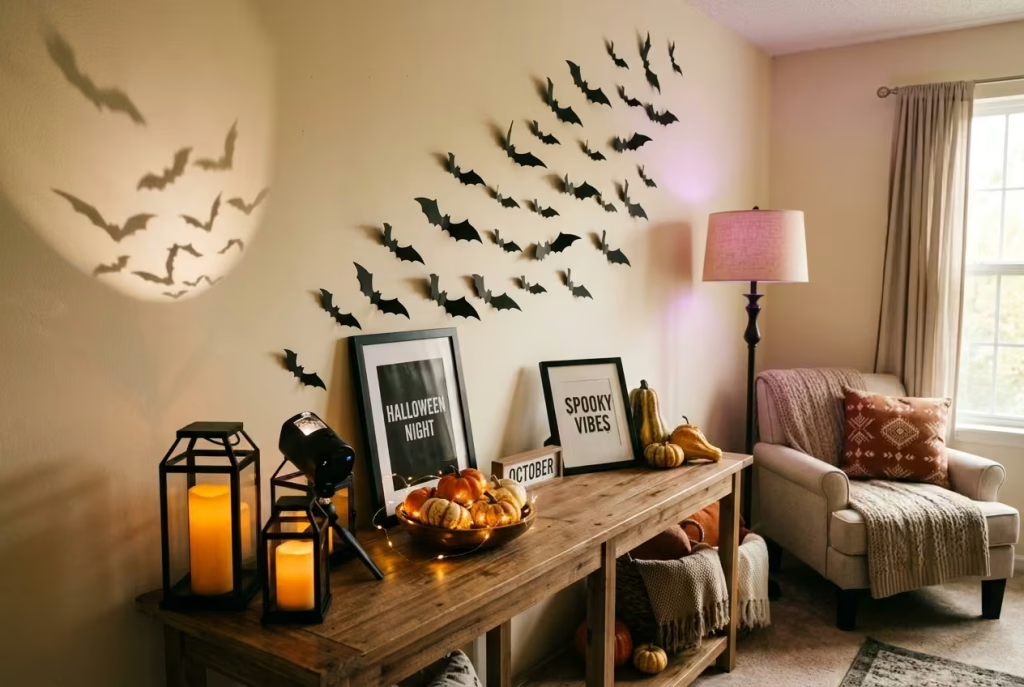
Renters can still go all out. Use removable hooks and putty for bats and prints, flameless candles and lanterns for light, and smart bulbs that shift from warm white to amber or purple on command. A small projector throwing flying-bat silhouettes onto a blank wall provides atmosphere without a single fixing. Stick-on decals peel off cleanly, and printable art slides into standard frames.
Check adhesive load limits before hanging anything weighty, and test removal on a hidden patch of paint first. A rented room often holds back from feeling like home, and a few seasonal touches can change that. Decorating, even temporarily, is a way of saying this place is mine for now, and that sentiment is worth more than any deposit.
26. Make it safe for children and pets
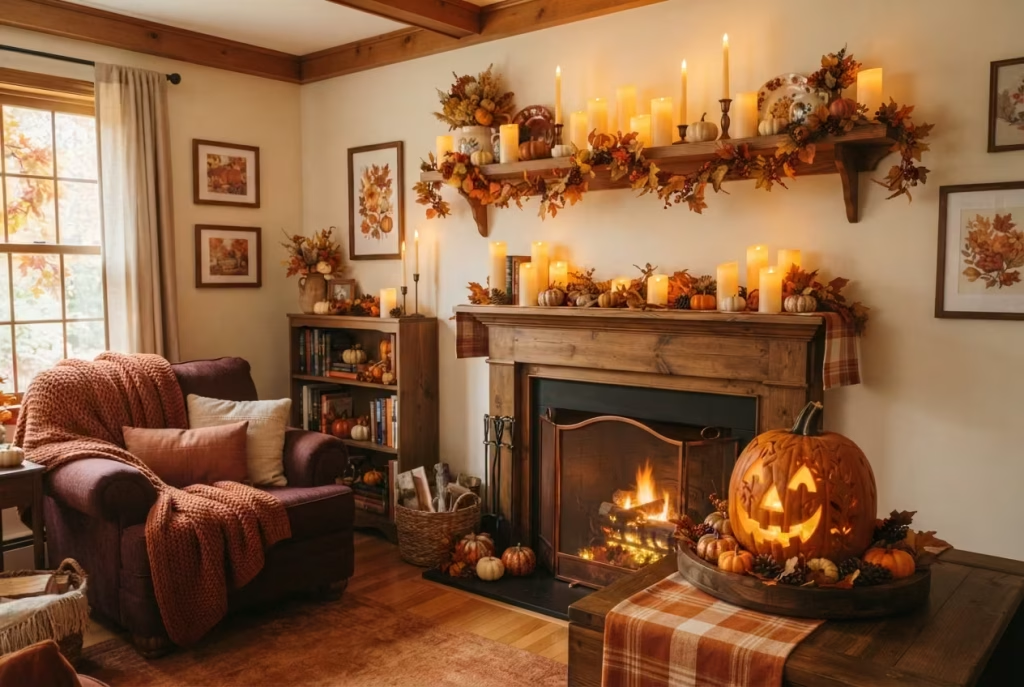
Atmosphere should never cost you a trip to the vet or to A&E. Put these habits in place:
- Choose flameless candles. Set them high and out of paws’ reach. Fire services across the UK, from East Sussex to Merseyside, recommend LED candles wherever children, pets or costumes are about.
- Keep fake cobweb high and indoors. A wildlife care director has warned that indoor pets may need surgery if they swallow synthetic web fibres, and Houston Humane notes pets can choke on it.
- Avoid small loose items at floor level. Pinecones, dried pods and tiny ornaments tempt dogs and toddlers alike.
- Tuck cables away. Run them behind furniture or into trunking.
- Put real pumpkins on trays. Rot should never reach a rug.
- Keep glass out of reach, and keep exits clear.
Safety is also a kindness. A household that feels safe is a household that can relax, and relaxation is the one ingredient no decoration can fake. When the cat is curled up on a sofa unbothered and the toddler is giggling at a flameless candle, the room has done its job.
Safety at a glance
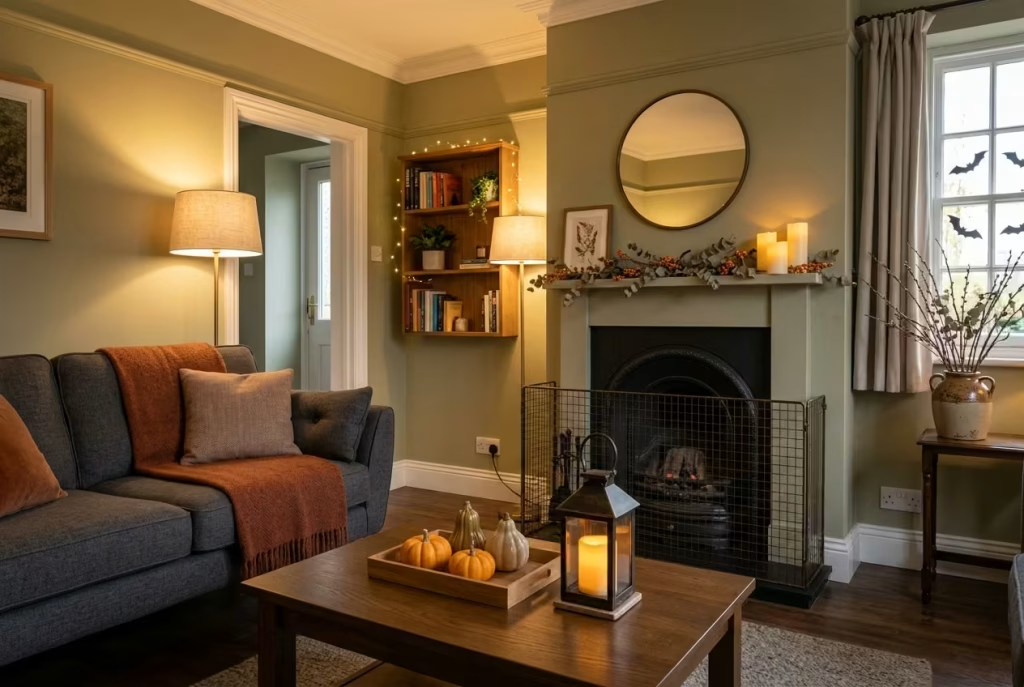
| Hazard | Why it matters | A safer approach |
| Real candles | NFPA data shows over half of candle fires start when décor, curtains or clothing sit too close; 21% involve a candle left unattended or misused | Use flameless candles; if real, keep about 30cm clear and never leave unattended |
| Gauze, paper and dried stems | Crepe paper, dried flowers and cornstalks are highly flammable | Keep well away from any flame, heater or bulb |
| Fairy lights and sockets | Overloaded sockets are a recognised fire risk | Use one plug per socket; switch lights off at the mains overnight |
| Fake webbing | Pets can choke or swallow it; wildlife groups say keep it indoors | Hang high inside, never near trees or open windows |
| Real pumpkins | Soft spots leak onto fabric and wood | Use a tray; replace after a week or two in a warm room |
| Blocked exits | Fire services warn against decorating escape routes | Keep doorways and hallways clear |
| Party costumes | Capes and tassels trail into flames | Choose LED lights if guests are in fancy dress |
What a Halloween makeover really costs
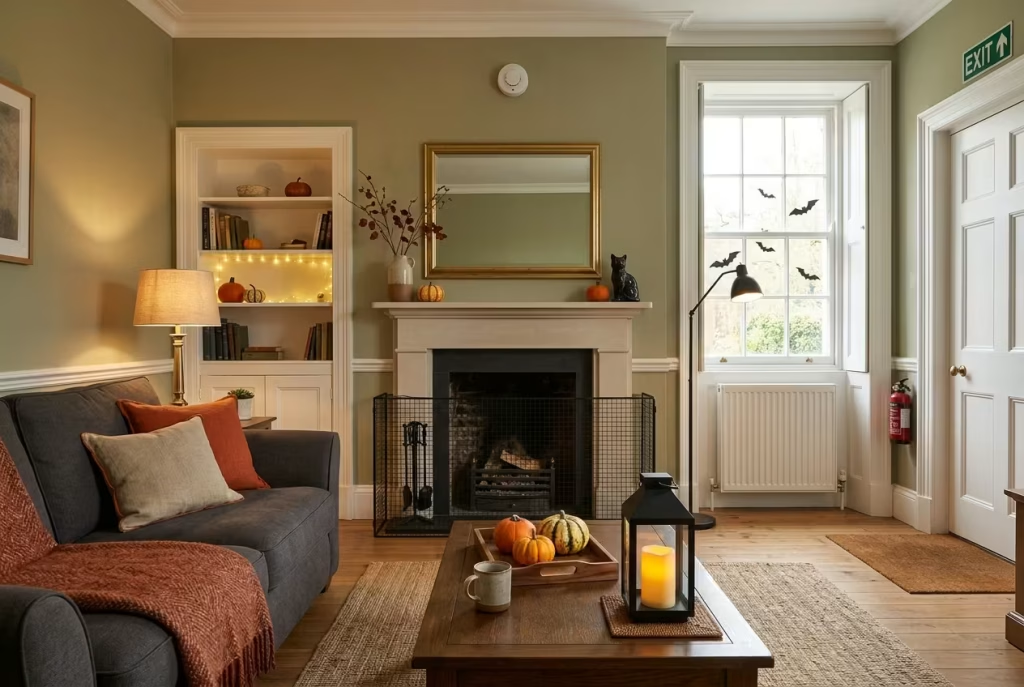
Finder’s October 2025 survey of 2,000 UK adults found that 55% planned a Halloween purchase, at an average of £26 per person. Millennials planned around £50, and London led the regional table at £36. Those figures make a useful benchmark. The ranges below are indicative shop prices, not guarantees.
| Budget | What it buys | Best for |
| Under £25 | Black card bats, twigs, a few faux pumpkins, a pack of flameless tapers, matte paint | A fast, tasteful refresh |
| £25 to £75 | Fairy lights, a dimmer plug, new cushion covers, a throw, a cloche or lantern, thrifted frames | A fuller, layered look |
| £75 to £150 | A mirror, heavier curtains, smart bulbs, a proper tray and quality faux stems | A look you can reuse for years |
Spend where it counts. One focal point and warm lighting give the highest return, and everything else can be borrowed, thrifted or made by hand. The best-dressed rooms rarely belong to the biggest spenders; they belong to people who edited hard.
Make it last from Halloween to Bonfire Night and beyond
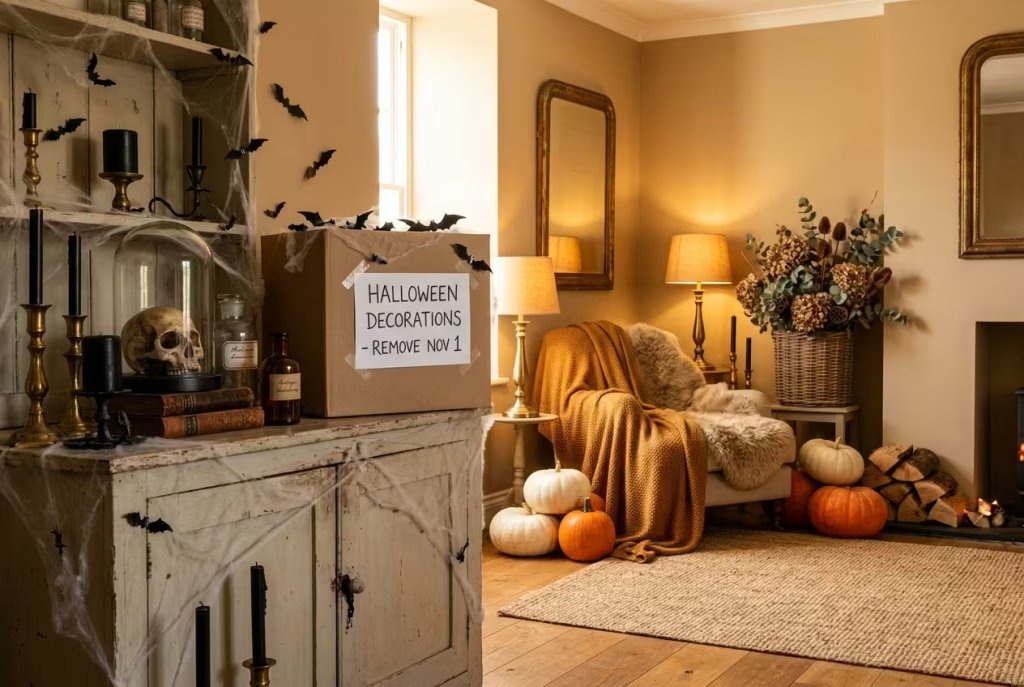
Treat the room as two layers. The base layer, which includes dried stems, plain pumpkins, warm throws and lamps, carries you comfortably from October into December. The spooky layer, with bats, curiosities, webs and darker candles, comes down on 1 November in one tidy sweep. Store it in a single labelled box and the whole job takes under half an hour.
If you dressed everything on trays and in baskets, the lift-off is quicker still. By Bonfire Night on Thursday 5 November, your living room has become a warm, amber, autumnal retreat rather than a leftover film set. And when you unpack that box next October, a little of this year’s memory will tumble out with it.
Final thoughts
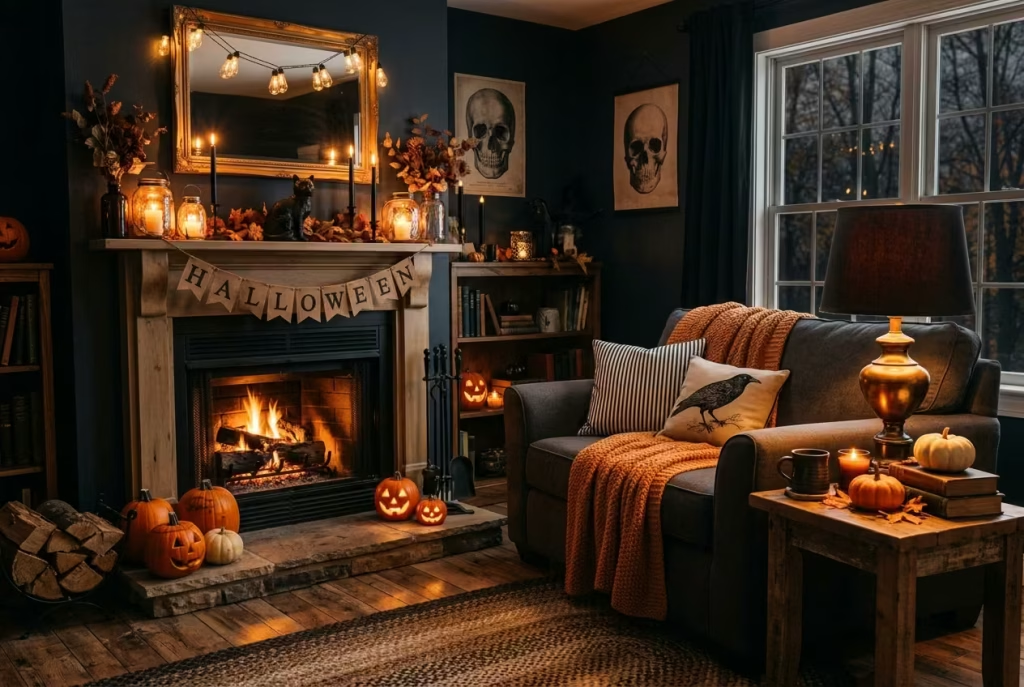
A great Halloween living room is never about quantity. It is about intention: a handful of well-chosen pieces, a warm glow and a clear point of view. Pick your palette, light the room low, give each surface one confident star and let the rest fall into shadow. Even five or six of these ideas will change how the room feels, and the best of them can be done by Saturday.
Years from now, nobody will remember the exact shade of your pumpkins. They will remember the lamp in the corner, the blanket within reach and the hush that fell when the lights went down.
Frequently asked questions
When should I put up Halloween decorations in the UK in 2026?
Early to mid October suits most households, and plenty of people wait until the final week. Opinion genuinely differs: a UK Mumsnet thread ranged from September starters to people who decorate only on the day. A sensible plan is to build a neutral autumn base first, then add the dramatic layer over the weekend of 24 to 25 October, just as the clocks change.
How do I decorate a living room for Halloween without it looking cheap?
Choose a tight palette, group objects in odd numbers, and mix materials such as wood, brass and velvet. Use what you already own, and light the room warmly. Designers consistently favour creating a mood over staging a literal scene, and they tend to leave generous space around each object.
What lighting makes a room feel spooky?
Warm, low and layered. Combine lamps with 2,700K bulbs, flameless candles and string lights, and turn the ceiling light off. A living room needs only about 100 to 300 lux for relaxed evenings, so dim lighting costs you nothing in comfort. Avoid blue-white bulbs, which feel clinical.
Are real candles safe in a living room?
They can be, with strict habits. Keep them about 30cm from anything flammable, on a heat-resistant surface, and never unattended. NFPA figures show over half of home candle fires begin when something flammable sits too close. Fire services across the UK recommend flameless candles wherever fabric, children or pets are around.
Is fake cobweb safe for cats and dogs?
Not entirely. Pets can choke on it or swallow it, and a wildlife care director has said surgery may be needed if fibres are eaten. Keep it indoors, high up and out of reach, and never string it across bushes or trees, where wildlife can become tangled.
How do I keep decorations safe around children and pets?
Choose flameless lights, avoid small loose items and glass at floor level, tuck away cables and keep walkways clear. Place real pumpkins on trays, and use smooth, tightly woven fabrics that resist claws and pet hair.
How can I decorate a living room without a fireplace?
Dress a console, sideboard or deep window ledge as a mock mantel. Add a leaning mirror, a lamp, a branch arrangement and a few pumpkins, and the room has its focal point without a chimney in sight.
How do I style a TV unit for Halloween?
Tidy the cables first, then use taller items at the ends and low ones in the middle, with a lamp on one side and books on the other. Leave ventilation gaps and keep flame away from electronics. A looping spooky video on the screen needs no props at all.
What are the best renter-friendly Halloween ideas?
Removable hooks, putty and stick-on decals for walls, flameless candles, smart bulbs and a small projector for bat silhouettes. None of these should damage paint, but test any adhesive on a hidden patch first.
How long do real pumpkins last indoors, and are faux ones worth it?
A whole pumpkin lasts about a month at room temperature, though less in a warm lounge, and carved ones last 3 to 5 days. Faux pumpkins last for years and need no upkeep, so a mix of the two works best.
How much does a stylish Halloween refresh cost?
You can do a convincing job for under £25 using paper, twigs and flameless candles. A fuller look runs £25 to £75, and a reusable upgrade £75 to £150. Finder’s survey puts the average UK planned spend at £26.
What colours work besides orange and black?
Forest green with midnight black, burgundy with charcoal and brass, terracotta with olive and dried grasses, and plum with smoke grey. Burgundy and oxblood are especially on trend this year.
How do I carry the look through to Bonfire Night and Christmas?
Keep an autumn base of dried stems, plain pumpkins and warm throws, and remove only the spooky layer on 1 November. The base then carries you smoothly through to December.