


27 Halloween Bedroom Decor Ideas to Create a Spooky, Cozy, and Stylish Space
Cast your mind back to the first Halloween you can remember. Perhaps it was a torch beam bobbing along a dark pavement, a carved pumpkin flickering on a doorstep, or a bedsheet with two eyeholes cut out of it. Whatever the picture, it probably came with a feeling: that delicious shiver of being a little bit scared, and completely safe.
That feeling is precisely what a Halloween Bedroom Decor can give you back. Not the shriek-and-run kind of fright, but the soft, slow-burning thrill of a room that has been quietly transformed while the rest of the world carried on. A lamp that glows the colour of toffee. A flurry of paper bats climbing the wall. A velvet cushion the shade of old claret waiting at the head of the bed.
Most Halloween effort goes where the audience is: the porch, the hall, the table laden with snacks. The bedroom, the room you see first thing and last thing every single day, is usually left to fend for itself. That is a missed trick, and a cheap one to fix. A neat, characterful refresh can be done for under £20, and a properly layered one for around £60.
This guide gathers 27 ideas, each with the practical detail that glossy galleries tend to skip: what to buy, what it costs, how long it takes, where the snags lurk, and why it matters to how the room feels. It also tackles the question hardly anyone else asks. This is the room where you sleep, so how do you make it spooky without making it a poor place to doze off, or worse, an unsafe one?
Quick answer: how do you decorate a bedroom for Halloween?
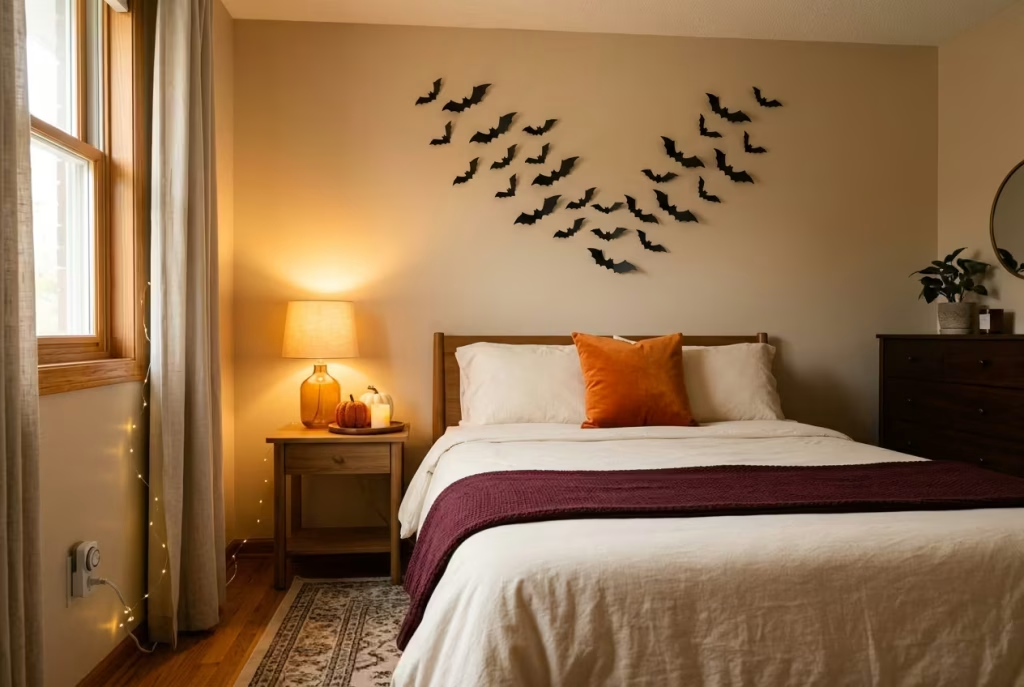
Start with light, then textiles, then walls, and finish with a few surfaces styled in odd numbers. Choose warm orange or amber bulbs, because they are kinder to sleep than purple or green. Swap in dark or velvet bedding, hang lightweight bats and witch hats with removable clips, and keep real flames out of the room altogether. Most people can achieve a polished result for £15 to £60.
The five-minute version:
- Fit one lamp with a warm amber bulb and switch off the harsh overhead light.
- Lay a velvet cushion in pumpkin or wine across the bed.
- Group three faux pumpkins on a tray on the nightstand.
- Stick a loose “V” of black card bats to the wall with removable strips.
- Use LED flameless candles and put every string of lights on a timer plug.
You May also Like: 15 Beautiful Ways to Create a Mexican-Inspired Bedroom You’ll Never Want to Leave
Why bother decorating the room nobody visits?
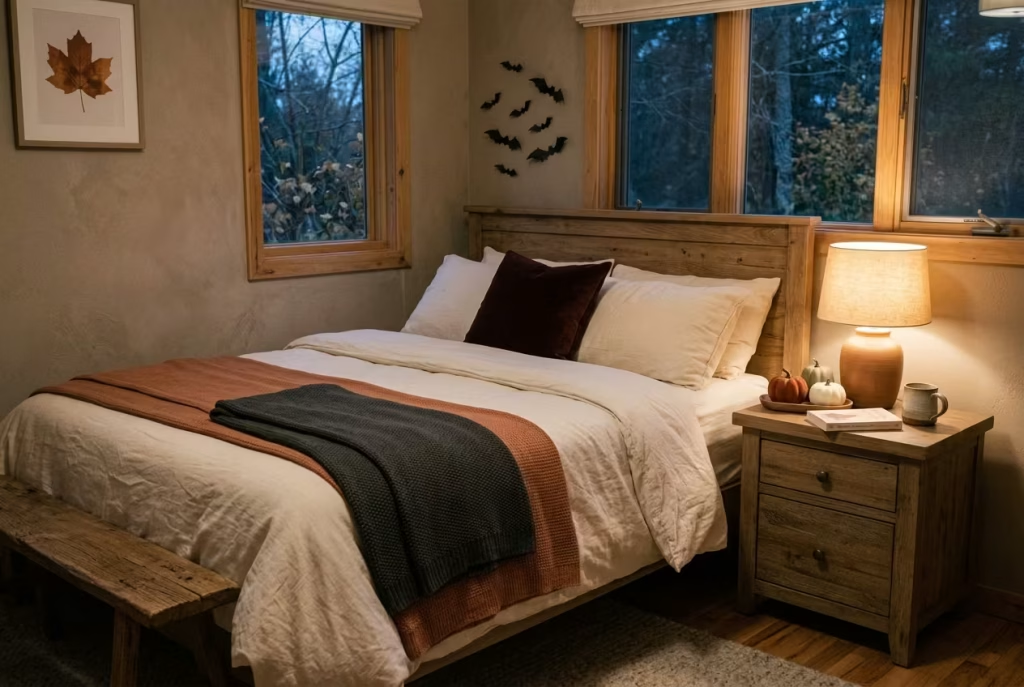
There is a quiet logic to it. A bedroom decorated for yourself, rather than for guests, tends to be more honest and often more stylish than anything staged for company. Nobody is marking your homework. You are simply making the start and the end of each day a touch more enjoyable.
Seasonal rituals do some of the heavy lifting here. Changing a room, even slightly, gives the weeks ahead a shape and something to look forward to. For people who live alone, work from home, or have just moved to a new city, that small marker of time passing can feel surprisingly grounding. A bedroom that has been dressed with care says, in its own quiet way, that you are worth the effort.
There is also a safety reason to think carefully, and it is the single most important point in this article. According to the US National Fire Protection Association (NFPA), roughly one-third (about 36 to 37%) of home candle fires begin in bedrooms. Around 60% start when something that can burn sits too close to the flame, and falling asleep is a factor in roughly one in ten. These figures are not meant to dampen the mood. They explain why this guide has one golden rule: all the atmosphere, none of the open flame.
Choose your look before you shop
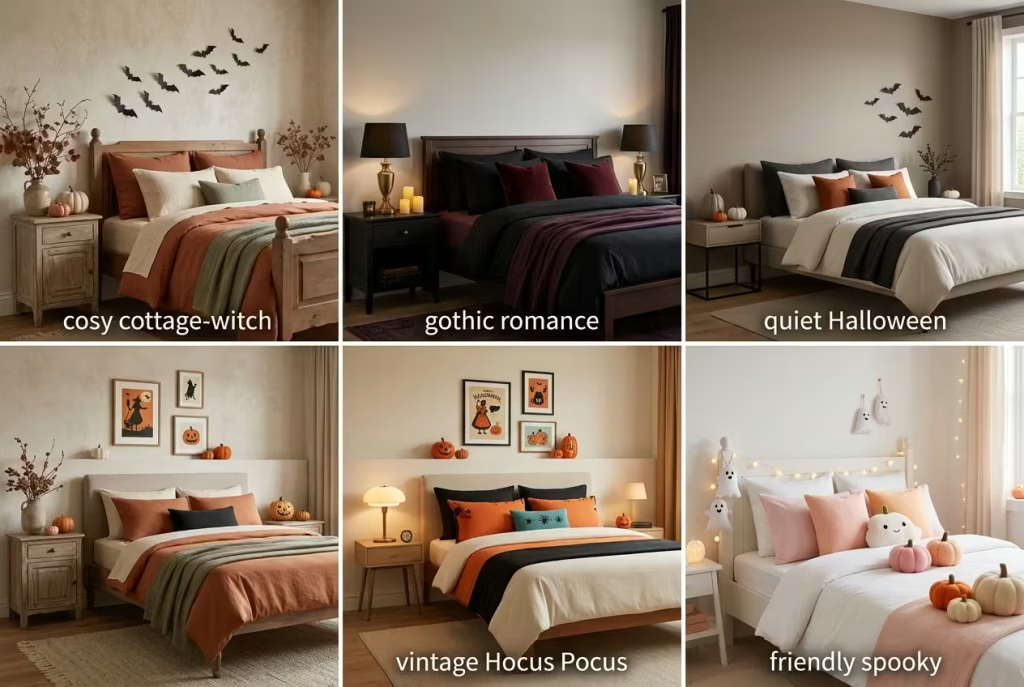
The quickest way to blow a budget is to wander the seasonal aisle with no plan. Settle on a style first, and every purchase after that gets easier.
| Style | Palette | Mood | Best for | Typical spend |
| Cosy cottage-witch | Rust, cream, sage, black | Storybook, soft, gently eerie | Anyone who puts comfort first | £20 to £60 |
| Gothic romance | Black, oxblood, aubergine, brass | Velvet, flickering (flameless) light, drama | Couples, adults, moody bedrooms | £40 to £120 |
| Quiet Halloween | Charcoal, taupe, burnt orange, bone | Subtle, grown-up, survives into November | Minimalists, shared homes | £10 to £40 |
| Vintage Hocus Pocus | Orange, black, teal, cream | Nostalgic, playful, a touch camp | Film fans, teenagers | £25 to £70 |
| Friendly spooky | Pastels, white, soft orange | Smiling ghosts, pumpkins, no scares | Young children | £15 to £45 |
The sleep-smart lighting rule most galleries ignore
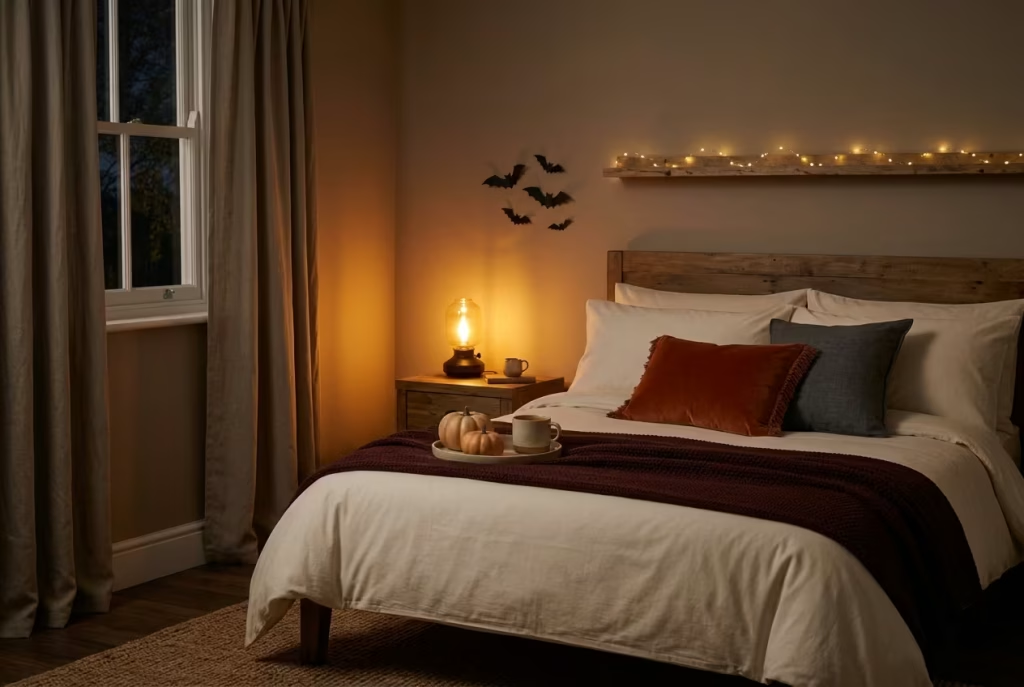
Here is where a Halloween bedroom parts company with a Halloween living room. The colour of light after dark changes how easily you drift off, and several of the most photographed Halloween lighting choices work against you.
Sleep specialists quoted in the interiors press, including Theresa Schnorbach of Emma and Chris Tattersall of Woolroom, recommend warm amber or orange-red light in the hours before bed, because it is less disruptive to the body clock than white or blue light. Several sleep-lighting guides put the sweet spot at roughly 2200K to 2700K and stress that brightness counts as much as colour, so dimming matters just as much as the shade you pick.
The happy coincidence is that classic Halloween orange sits squarely in that zone. The purple, green and neon strips that dominate social feeds are wonderful for a party and a poor bet for the pillow.
| Time of evening | Lighting to use | Why |
| Early evening, still awake | Anything goes, including purple and green | Mood and fun, no sleep to protect yet |
| 60 to 90 minutes before bed | Amber, orange or warm white, dimmed | Gentler on your body clock |
| Final 30 minutes | One low lamp or dimmed string lights | Signals that the day is over |
| Overnight | Off, or on a timer | Safer, and better for sleep |
Which bulb fits my lamp? In the UK, most bedside lamps take one of three fittings. Check before you buy, as it saves a frustrating second trip.
| Cap type | What it looks like | Common in |
| B22 | Bayonet, two pins that twist and lock | Older UK lamps and ceiling pendants |
| E27 | Large screw thread | Many modern table and floor lamps |
| E14 | Small screw thread | Candle-shaped bulbs, small lamps |
Lighting that sets the scene
1. Fit one lamp with an amber bulb and let the overhead rest
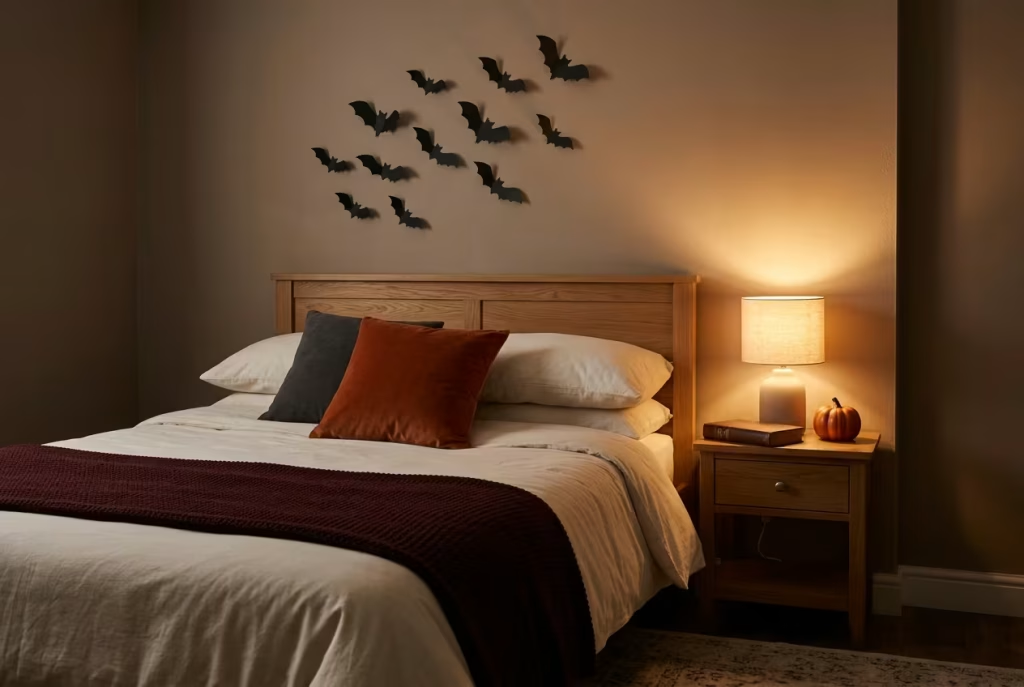
Think of the moment you walk into a candlelit restaurant: your shoulders drop before you have even sat down. That is what a single amber bulb can do for a bedroom. Switch off the glaring ceiling light, fit the lamp with a warm orange bulb, and the room stops looking like a place where you do chores and starts feeling like a hideaway. Edges soften, shadows stretch long across the wall, and ordinary furniture takes on the glow of the inside of a lantern.
The practical bits matter. Choose a dimmable bulb, and make sure your lamp or plug-in dimmer is compatible, as not every LED bulb works with every dimmer. Check the cap type from the table above, and read the maximum wattage printed on the lamp. Never put a hot filament bulb under a paper or fabric shade that was not built for it. If your lamp has a pale shade, you will get a wide wash of warm light. A dark shade gives a tighter, moodier pool, which suits a gothic scheme beautifully.
Try the “two-lamp triangle”: one amber lamp by the bed and a second, lower one on a chest or floor across the room. Light that arrives from two directions feels generous, and it removes the harsh shadows that a single lamp throws.
Cost: £4 to £12 per bulb. Time: two minutes.
2. Thread string lights behind the headboard, never beneath the cloth
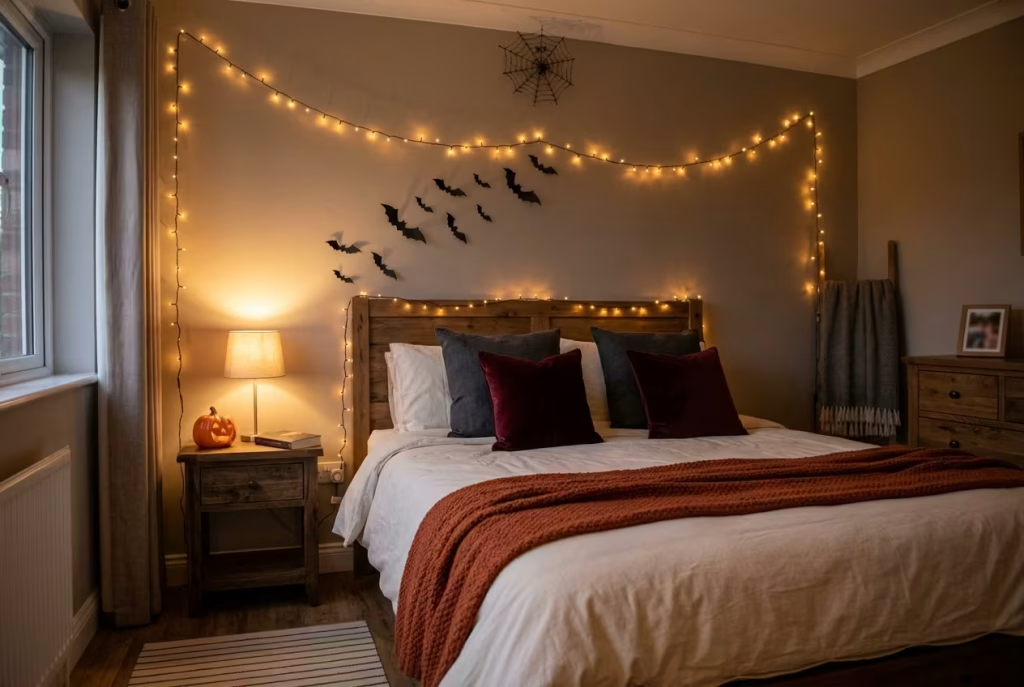
There is something almost childlike about fairy lights above a bed, a memory of tents built from blankets and torches shared under the covers. Run a line along the top of the headboard, or loop it across the wall behind, and you create a small glowing den within the larger room.
The popular blogger trick of draping spiderweb fabric over the lights looks wonderful in photographs, and it deserves a second thought. Fabric laid straight onto powered lights traps heat and hides a fault until it is too late to spot. A safer way to get the same look:
- Choose warm-white or amber LED strings from a certified seller, and avoid unbranded sets with no markings.
- Hold any fabric or webbing a hand’s width above the lights, never touching them.
- Plug them into a timer. US consumer-safety guidance is to switch decorative lights off when you go to bed, and one European lab-testing source advises against more than 12 hours of continuous running.
- Do not daisy-chain extra strands unless the instructions say it is allowed, as overloaded adapters are a genuine hazard.
- Check that cables are not pinched behind the headboard or bed frame, where insulation can quietly wear through.
LEDs run cool, so the real risk is low. Low is not zero, though, and a £5 timer plug closes the gap nicely. Battery-powered strings are a tidy alternative if your socket is far from the bed.
Cost: £6 to £20. Time: ten minutes.
3. Fill the room with flameless candles
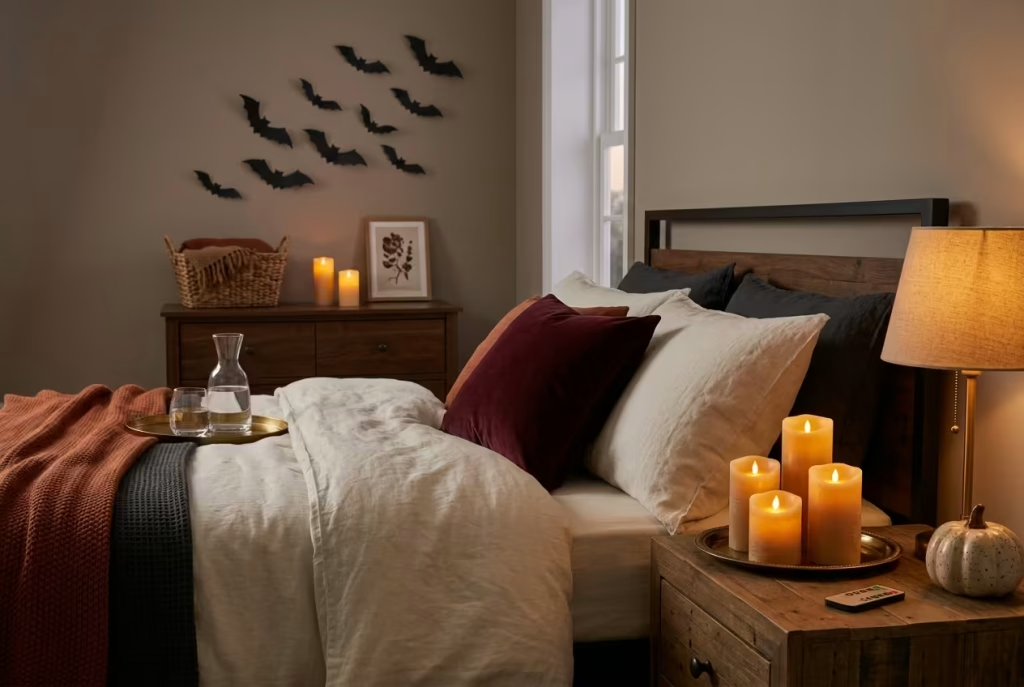
Candlelight is perhaps the oldest comfort we know. It flatters faces, slows conversation, and makes even a tidy room look storied. The trouble is that a bedroom is the last place a real flame belongs, and NFPA’s long-standing advice is to avoid candles in sleeping areas altogether and keep any flame at least 12 inches (30 cm) from anything that can burn.
Flameless candles let you keep the magic and drop the worry. Look for sets with a soft, uneven flicker rather than a steady glow, because it is the movement that tricks the eye. Wax-coated pillar styles look the most convincing in daylight, while slim tapers suit a mantel-style dresser.
Group them in threes or fives of different heights, on a tray of metal, glass or mirror, and the reflection multiplies the effect without adding a single extra bulb. A remote control or built-in timer means you can switch the lot off from your pillow, which is half the point of owning them. Pop in fresh batteries at the start of the month and keep a spare set in the drawer.
Cost: £8 to £25 for a set. Time: five minutes.
You May also Like: 26 Best Halloween Decor Ideas for Living Rooms: Stylish & Spooky
4. Give the nightstand a pumpkin lamp
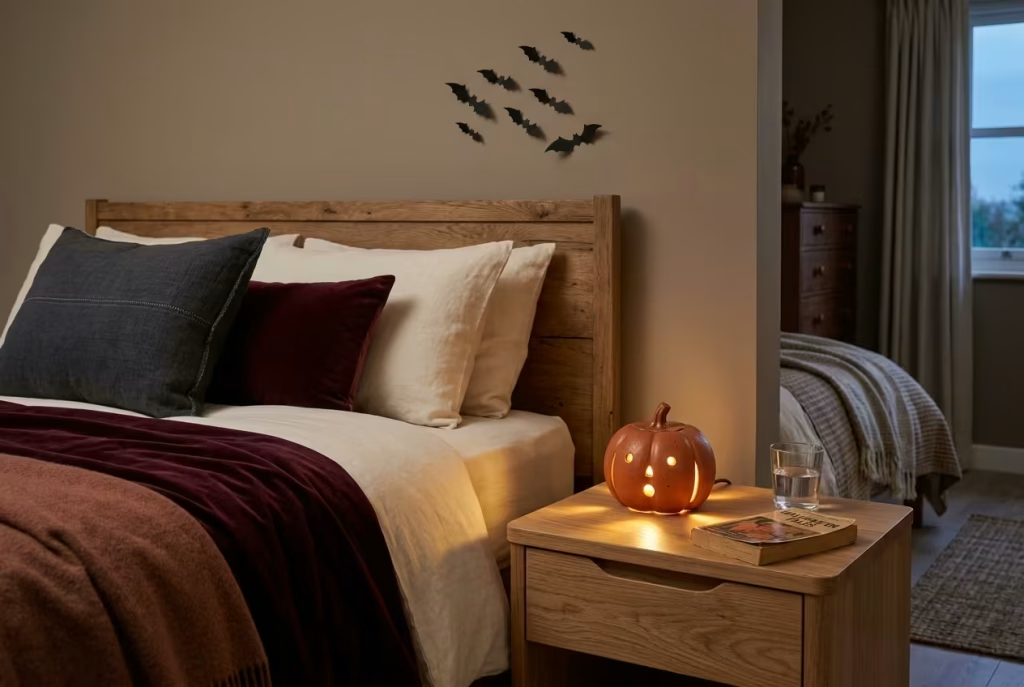
A small pumpkin lamp on the bedside table is the Halloween equivalent of a friendly night nurse: calm, steady and quietly there. It gives you a focal point without the mess and the fast rot of a real carved pumpkin, and you can reach it in the dark without knocking over a candle.
Material is everything. Fabric, ceramic, rattan or linen versions look smart and last for years, which suits anyone who dislikes seeing perfectly good decor head for the bin in November. Glossy plastic reflects harshly and shouts “party shop”. A slightly irregular, matt, handmade-looking pumpkin reads as something you found at a market rather than a megastore.
Mind the scale. On a standard nightstand, one lamp roughly the size of a grapefruit to a small melon is plenty. Pair it with a small book and a glass of water, rather than a crowd of objects, and the vignette feels calm enough to fall asleep beside.
Cost: £6 to £30. Time: one minute.
5. Turn the window into a silhouette
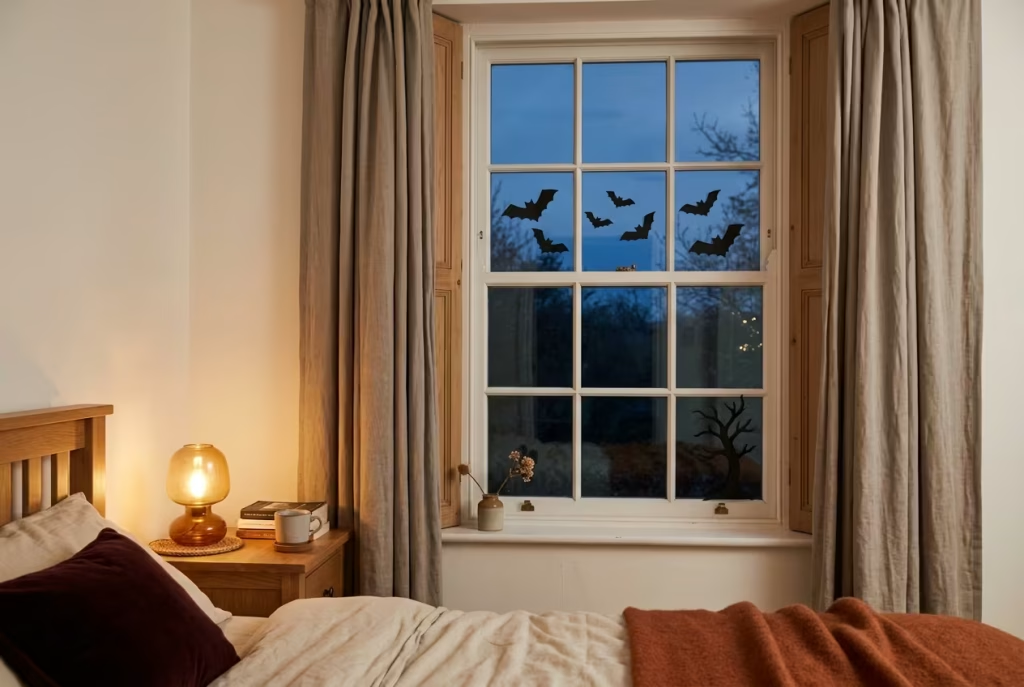
Windows are the cheapest stage in the house, and for those of us who grew up making paper decorations for the classroom glass, there is a pleasing echo of childhood in this one. Lisa O’Hanlon of The Shutter Store UK points to windows as one of the easiest places to make a big Halloween statement for very little money, and B&Q’s decor team prices window gel clings at around £5.99.
Gel clings, black card bats, or the outline of a crooked tree cut from black paper all work. From the inside they give the room a “view” with a bit of theatre in it. From the street they offer a handsome outline, especially once a lamp is lit behind them. For a bedroom, aim for clean, simple shapes rather than a busy collage, so the effect stays restful rather than frantic.
Press gel clings onto clean, dry glass, and peel them away slowly at the end of the season. Paper shapes can be held with a tiny dab of low-tack tape at the corners. Keep thin paper well clear of any radiator or heater beneath the sill.
Cost: £3 to £10. Time: fifteen minutes.
Dressing the bed
6. Go dark with the bedding
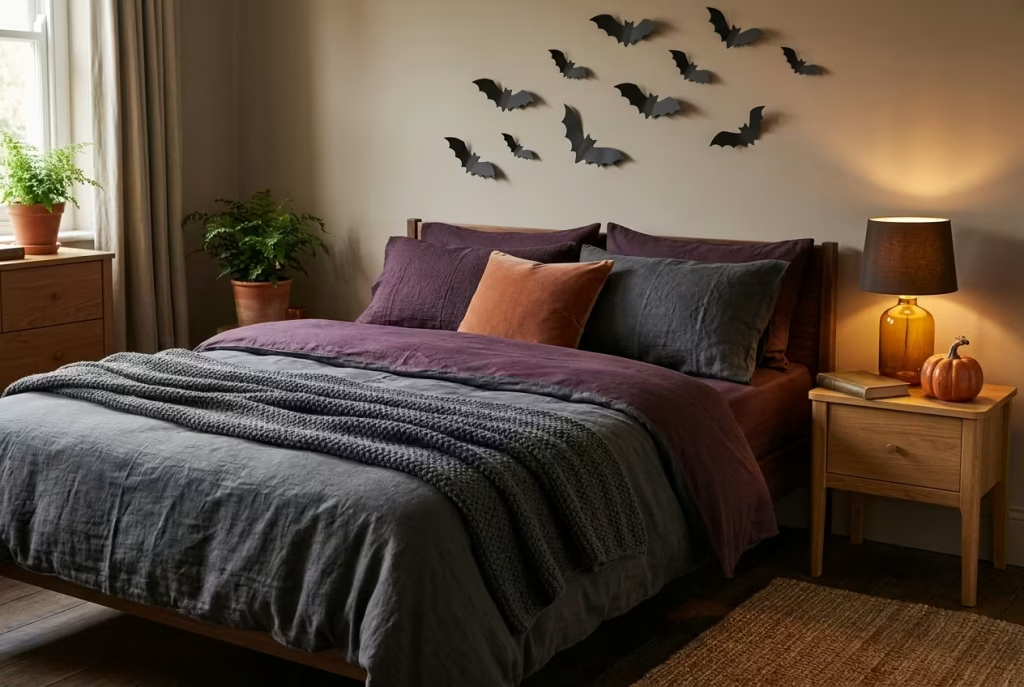
The bed is the largest block of colour in the room, which means changing it shifts the mood more than any accessory could. Dark linen, charcoal cotton or deep aubergine says October without a single pumpkin in sight. It also does something quietly emotional: dark, soft layers feel like being held, the way a thick coat does on a cold walk home.
A designer quoted by Saatva recommends layered textures for seasonal bedscapes, and the principle holds. Mix a matt cotton sheet with a slightly crinkled linen duvet cover and a chunky wool throw, and the eye reads richness even if every piece was affordable.
Not ready for a full swap? Pull a deep-toned duvet cover over your usual one and keep the sheet beneath neutral. Wash dark dyes separately for the first couple of cycles, as they can bleed onto paler fabrics. Choose breathable fibres such as cotton or linen over shiny polyester if you tend to run warm at night, because a hot, clammy sleep will undo any good the mood did you.
Cost: £25 to £90 for a set. Time: ten minutes.
7. Layer velvet cushions in pumpkin or wine
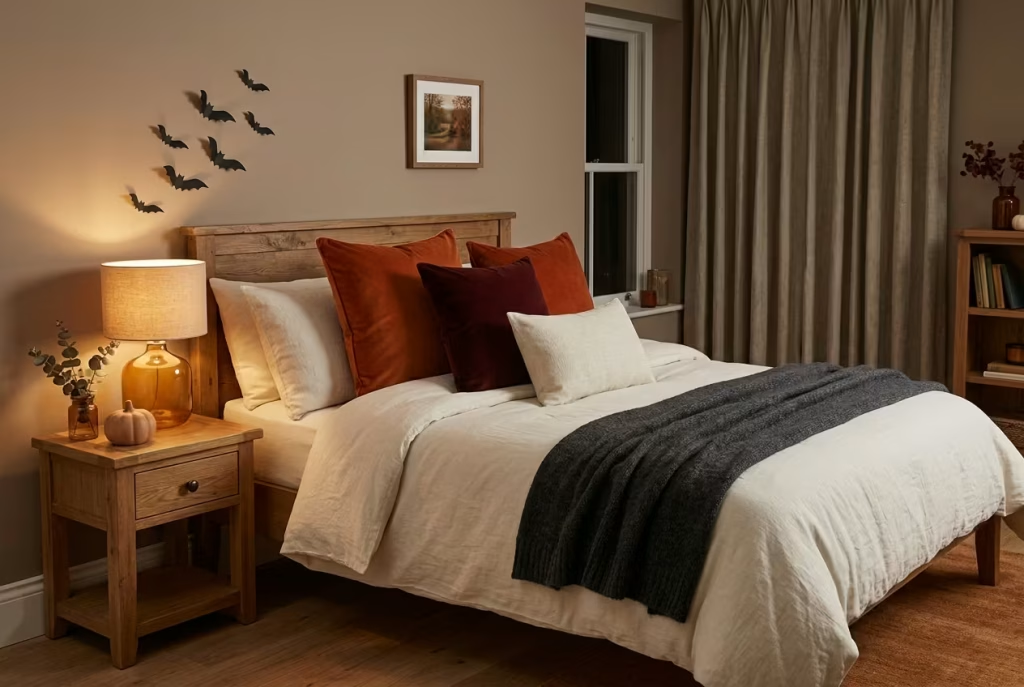
A printed “Boo!” pillow will tire you by the second week. A plain velvet cushion in rust, burnt pumpkin or oxblood will still be pleasing in the New Year. It nods to the season with grown-up confidence, and it invites a hand to rest on it, which is the whole point of a cushion.
Use the rule of three. In the UK the standard cushion is about 45 x 45 cm, so choose one large square (50 x 50 cm if you have a double or king), one standard square, and one lumbar (roughly 30 x 50 cm). Mix velvet with a chunky knit and a crisp linen, and you get the layered, hotel-style depth that interiors editors rave about.
Place them so the biggest sit at the back, the lumbar in front, and leave room to actually lie down. A bed you cannot get into without moving six cushions soon becomes a bed you resent.
Cost: £8 to £25 per cover. Time: five minutes.
You May also Like: California Coastal Interior Design: The Complete Guide to Getting the Look Right
8. Throw a plaid or ghost-motif blanket across the foot
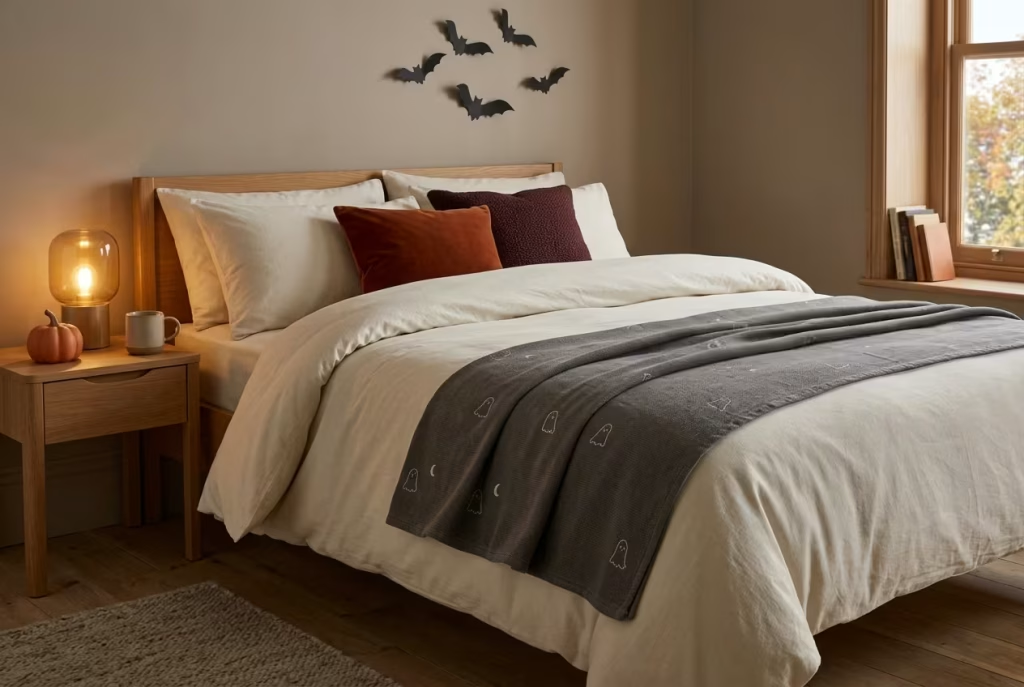
A throw at the foot of the bed is one of life’s small mercies: a place for cold feet to land, and a promise of warmth at the end of a long day. In October, a woollen tartan or checked blanket looks seasonal without trying, and carries on being useful through the first frosts.
If you fancy a flicker of humour, choose one with a subtle ghost, black cat or crescent moon rather than a loud all-over print. A typical UK throw measures about 130 x 180 cm, which is large enough to drape across a double bed’s foot and still pull up over your knees.
Fold it in thirds lengthways, then lay it slightly off-centre, so it looks tossed rather than staged. Wool and heavy cotton are warm and durable, and a throw that earns its keep all winter is a far better buy than anything that only works until 31 October.
Cost: £15 to £50. Time: one minute.
9. Hang a sheer black canopy, well away from heat
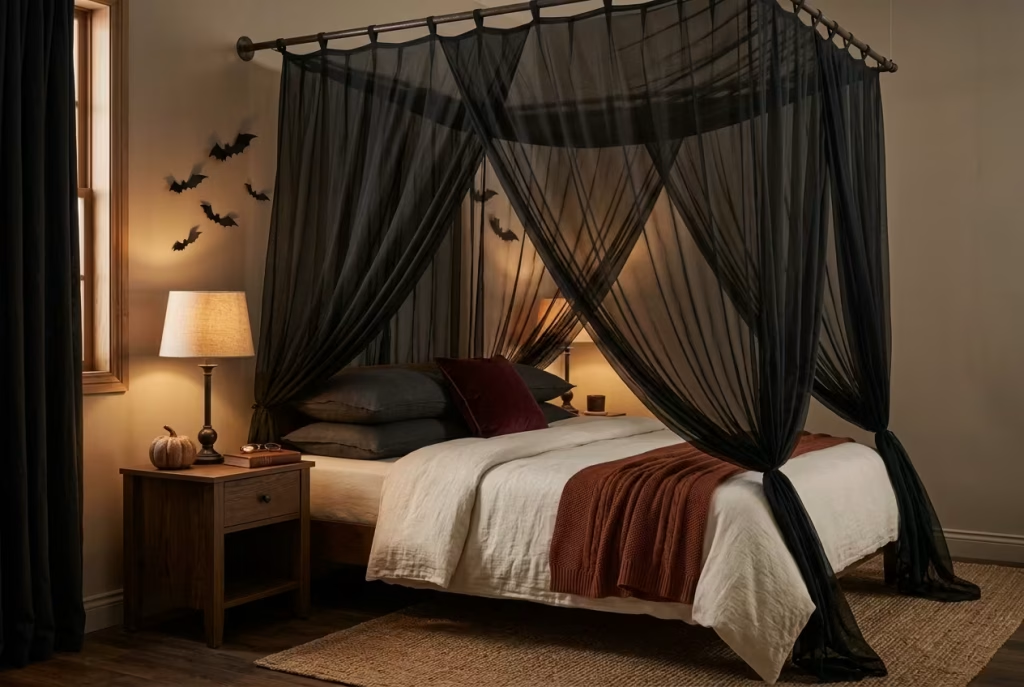
Few things make a bed feel more like a refuge than a canopy. It is the grown-up version of a childhood den, a softly curtained room within a room. In sheer black or smoky grey, it also looks gloriously gothic, turning a flat bed into something resembling a four-poster and the whole room into a film set.
A canopy needs careful siting, though:
- Hang it well clear of lamps, heaters and any powered lights.
- Choose fabric labelled flame-retardant where you can, particularly if the bed is near a radiator.
- Use a removable ceiling hook or a tension pole in rented rooms, so your deposit stays intact.
- Leave a gap between the fabric and any fairy lights, in line with the rule from idea 2.
Hang the rail about 20 to 30 cm above the headboard and let the fabric pool slightly at the sides. Sheer voile or chiffon filters light softly, so even a dim lamp feels atmospheric.
Cost: £15 to £45. Time: twenty minutes.
10. Style the bench or ottoman at the foot of the bed
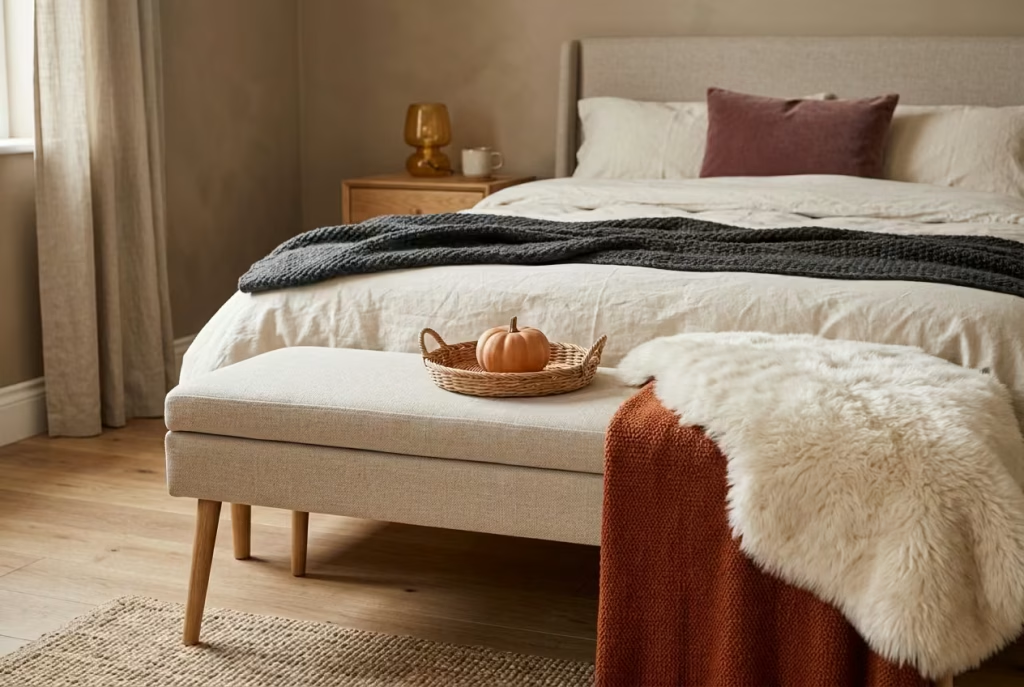
The end-of-bed bench is the most neglected spot in the bedroom, and quietly the most useful. Where the pillows and throws are about comfort, the bench is about order, and a little seasonal styling there makes the whole room look finished.
Dress it with a faux-fur throw or folded blanket, a small wicker tray, and one tiny pumpkin. The tray is the clever bit: it corrals small items, so the bench still works as a landing pad for your clothes and bag. Take everything off in seconds when you need the space.
If you have a pet that likes a high perch, leave fragile pieces off the bench altogether and choose a soft, unbreakable arrangement of throws and a stuffed pumpkin instead. Nobody wants to explain a shattered ceramic ghost to the cat.
Cost: £10 to £30 in extras. Time: five minutes.
Walls and ceiling
11. Float witch hats from the ceiling
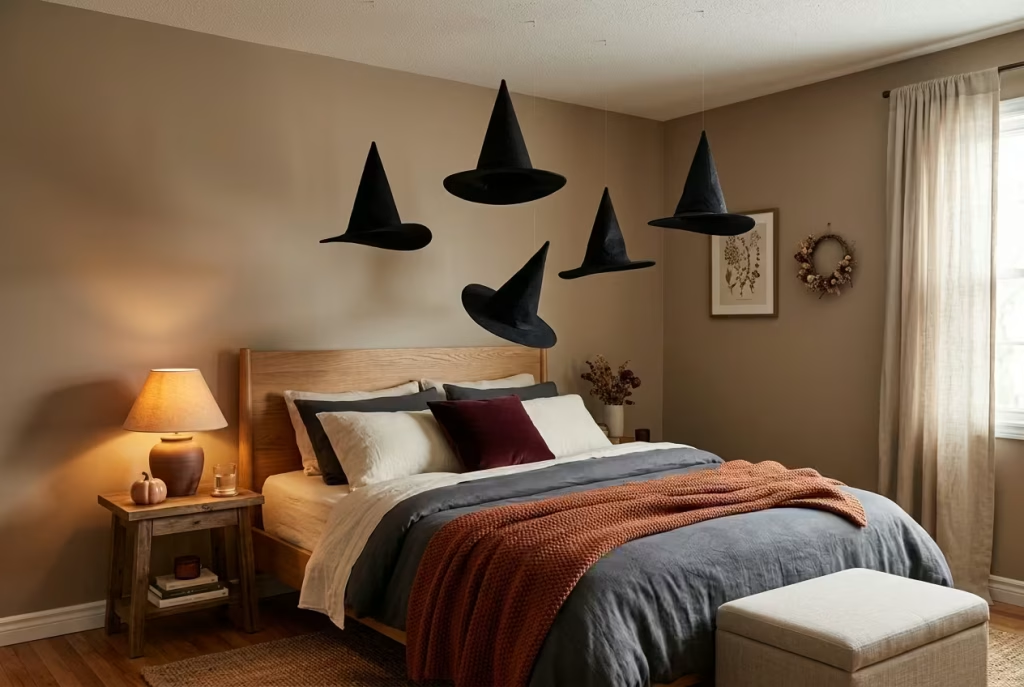
There is a reason this idea is everywhere: it works on the part of the brain that loves magic. A cluster of witch hats hanging in mid-air looks like a coven caught mid-gossip, and it fills the empty space above the bed, a part of the room most of us ignore.
Tie clear fishing line to the tip of each hat, then attach the other end to the ceiling with a small clear Command-style clip, following the weight limit on the packet. Aim for five or seven hats at different heights. Vary the drops between 30 cm and 90 cm, and stagger them so they do not line up like washing.
Doing it well:
- Stay clear of ceiling fans, smoke alarms and light fittings.
- Stick to odd numbers, which look more natural than pairs.
- Tilt a few hats slightly, as if caught by a draught.
- Choose lightweight felt or card, since heavy hats will droop and pull the clips away.
Take them down gently at the end of the season by pressing the clip and peeling slowly, so you do not lift paint.
Cost: £6 to £15 for a set. Time: twenty minutes.
12. Send a flock of bats up the wall
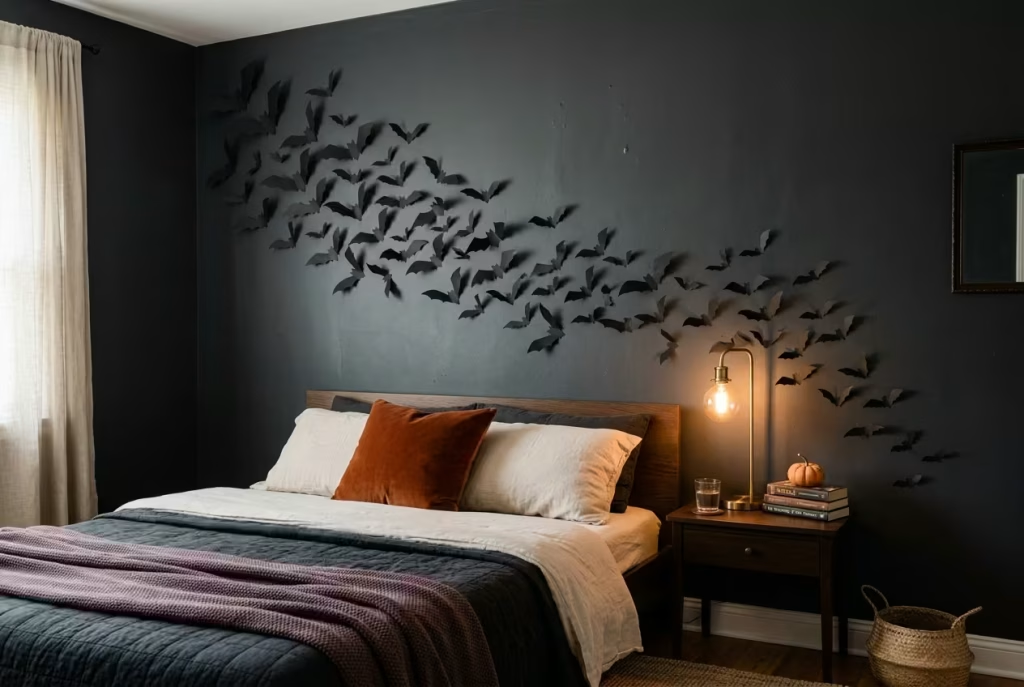
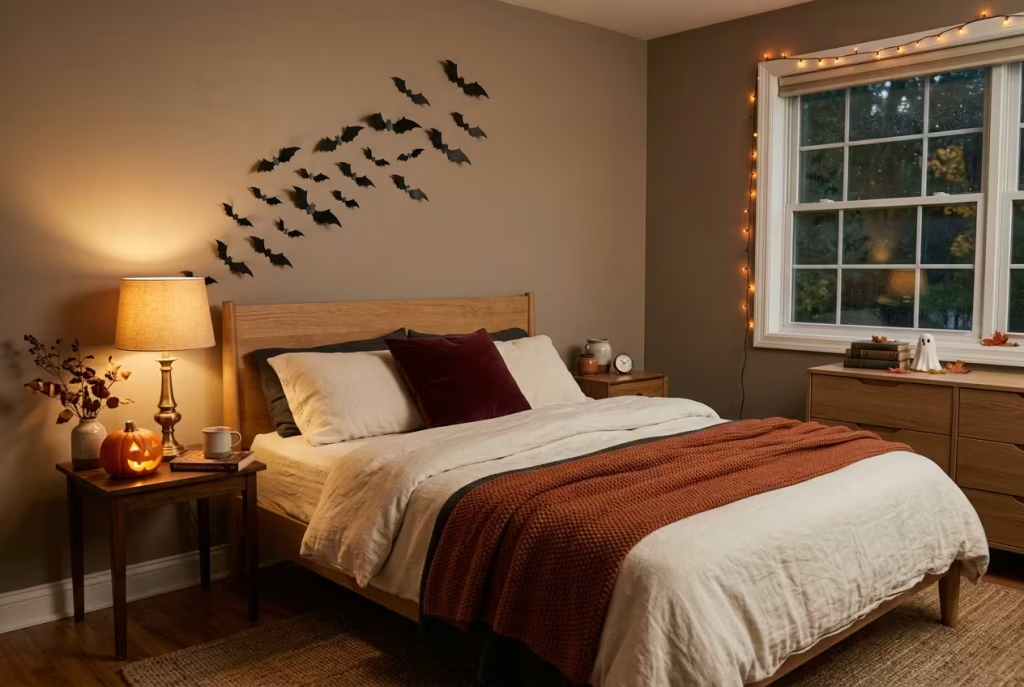
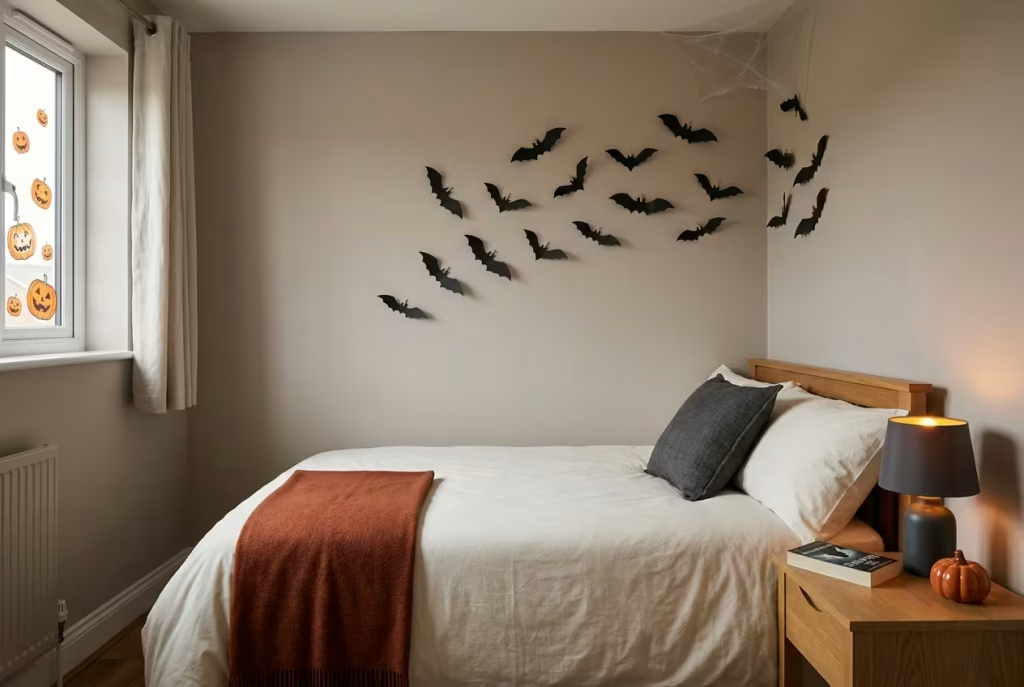
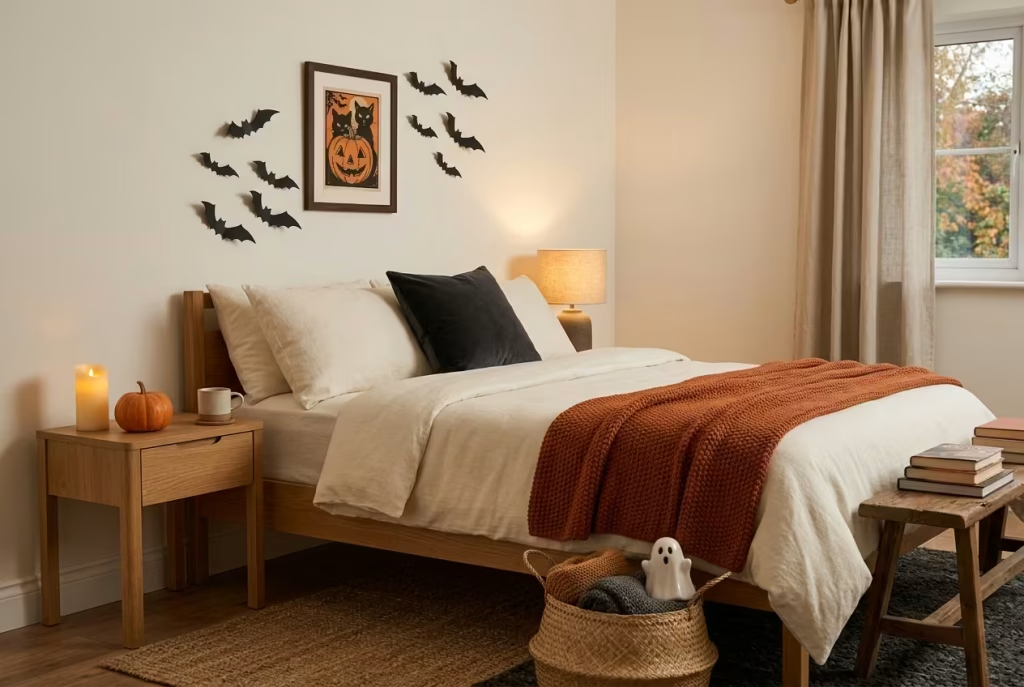
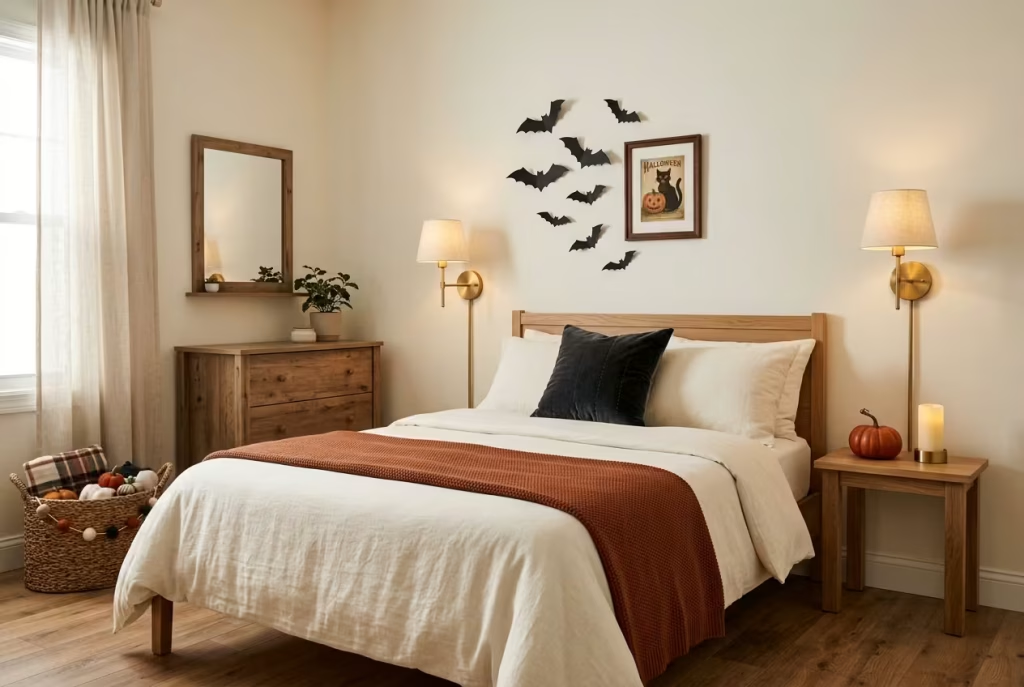
A single bat is a decoration. A flock is a story. Black card bats, cut by hand or bought in a pack, fixed in a loose “V” climbing from the corner of the room, turn an ordinary wall into a scene with movement in it, as though something has just burst out of the shadows.
Use removable strips or poster putty, and press gently on painted surfaces. Mix three sizes, with the largest near the corner and the smallest at the tip, to create perspective, and fold the wings slightly forward so a few seem to fly off the wall. That small bend adds shadow, which adds depth for no extra outlay.
Making your own is a lovely rainy-afternoon job, and a good one to do with children. Fold black card in half, draw half a bat shape against the fold, cut it out and open it up. Matt black card looks better than shiny, and a pack costs less than a coffee.
Cost: under £5 in card, £6 to £10 ready-made. Time: thirty minutes.
13. Swap your wall art for eerie prints
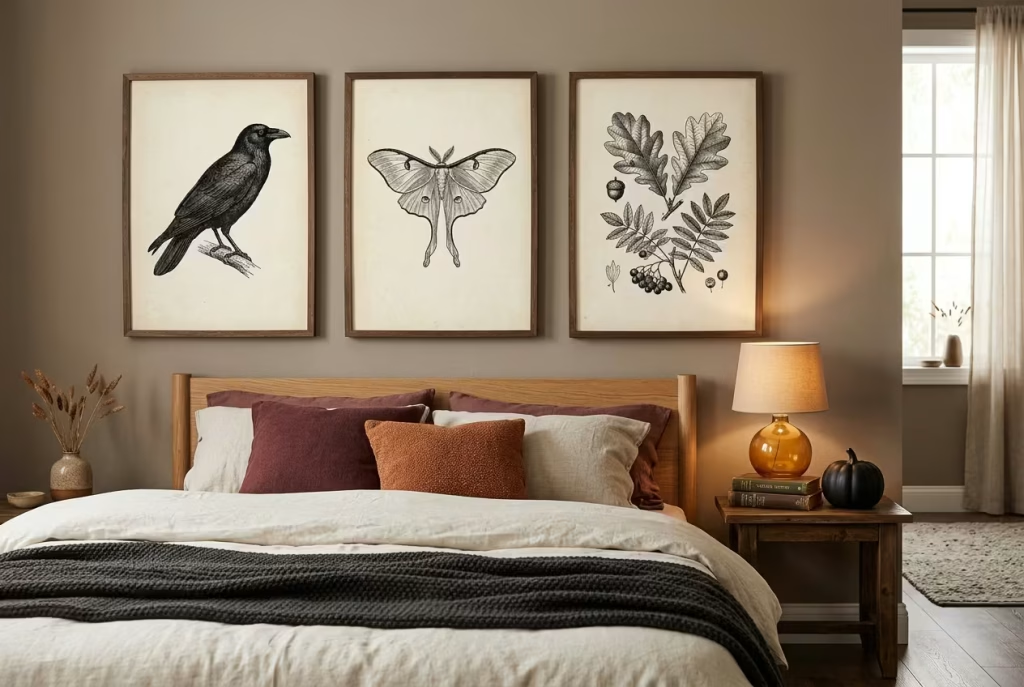
Sometimes the most atmospheric change is not adding but replacing. Slip a vintage-style illustration of a moth, a raven or a crescent moon into the frames you already own, and the room acquires a new character overnight, without any extra clutter. It is also the quietest way to decorate, which suits grown-up bedrooms perfectly.
Download free public-domain engravings and botanical plates from museum and library archives, print them on cream or off-white paper, and tea-stain the edges for an aged finish. Steep a tea bag in warm water, dab lightly, and let it dry flat. The result looks like something from a museum gift shop.
Choose images with plenty of white space and bold silhouettes. Detailed, busy illustrations tend to look muddy at small sizes, while a single strong shape holds its own across the room.
Cost: under £5. Time: fifteen minutes.
14. Drape the mirror in black mesh or net
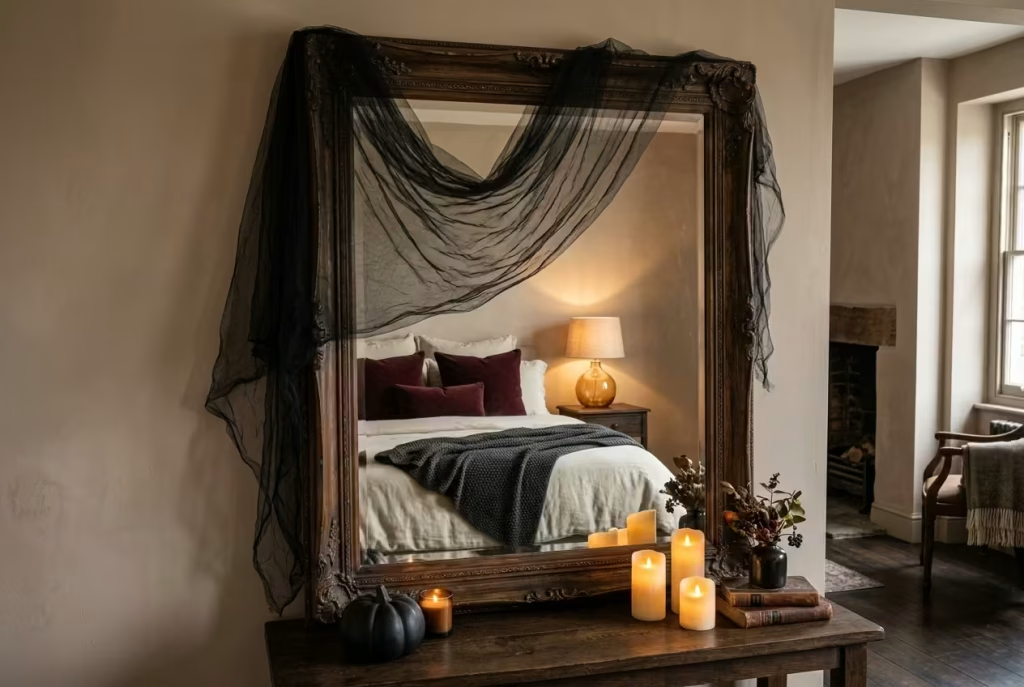
A mirror is a hard-working piece of Halloween kit. It doubles every flameless candle and every pool of amber light, so a small display suddenly looks twice as generous. Add a drift of black mesh, tulle or light netting over the frame and you get a cobweb effect that is far more elegant than the stretchy plastic webbing sold in packets.
Pin or tuck the fabric behind the top edge of the frame rather than laying it across the glass, so the reflection stays clear. Let it fall in soft folds down one side, asymmetrically, as though it has been there for a hundred years. Keep it well clear of bulbs and heat, and secure it so it cannot slip off in the night.
A tip from stage dressers: tea-staining or lightly dusting the fabric with a little grey chalk powder makes it look aged and dusty, and costs nothing.
Cost: £3 to £8. Time: ten minutes.
You May also Like: 24 Easy Halloween Kitchen Decor Ideas: DIY Spooky Touches and Budget-Friendly Cute Accents
Surfaces and styling
15. Cluster faux mini pumpkins on the nightstand
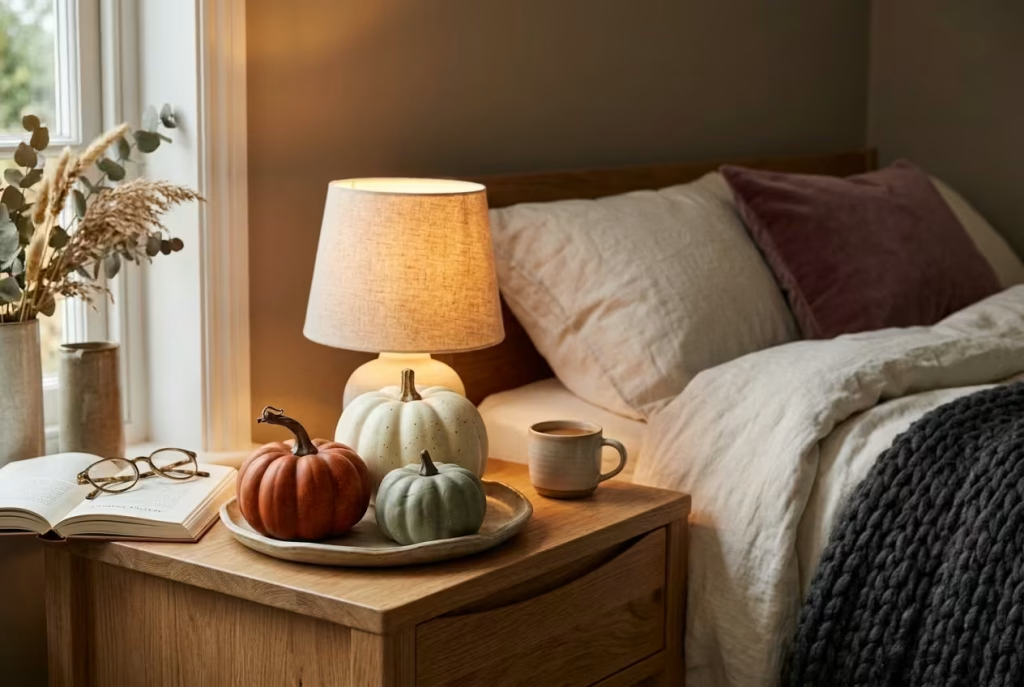
A little cluster of pumpkins by the bed is the Halloween equivalent of a bowl of fruit: comforting, pretty, and endlessly adjustable. Three small faux pumpkins in different sizes, perhaps one white, one orange and one dusty sage, on a small tray, is a bedside look that simply works. Odd numbers feel natural, and the tray makes it feel intentional.
Faux ones last for years, never go soft and will not attract insects, which is a boon in a room where you sleep. If you prefer real ones, keep them in a cool room and swap them weekly. Warm bedrooms speed up rot, and a squishy pumpkin on the bedside table is nobody’s idea of atmosphere.
For a more grown-up palette, try ghost pumpkins (pale grey-white), Jarrahdale (blue-grey) or painted matt black. A single black pumpkin among cream ones looks gloriously sophisticated.
Cost: £6 to £20. Time: five minutes.
16. Build an apothecary potion shelf
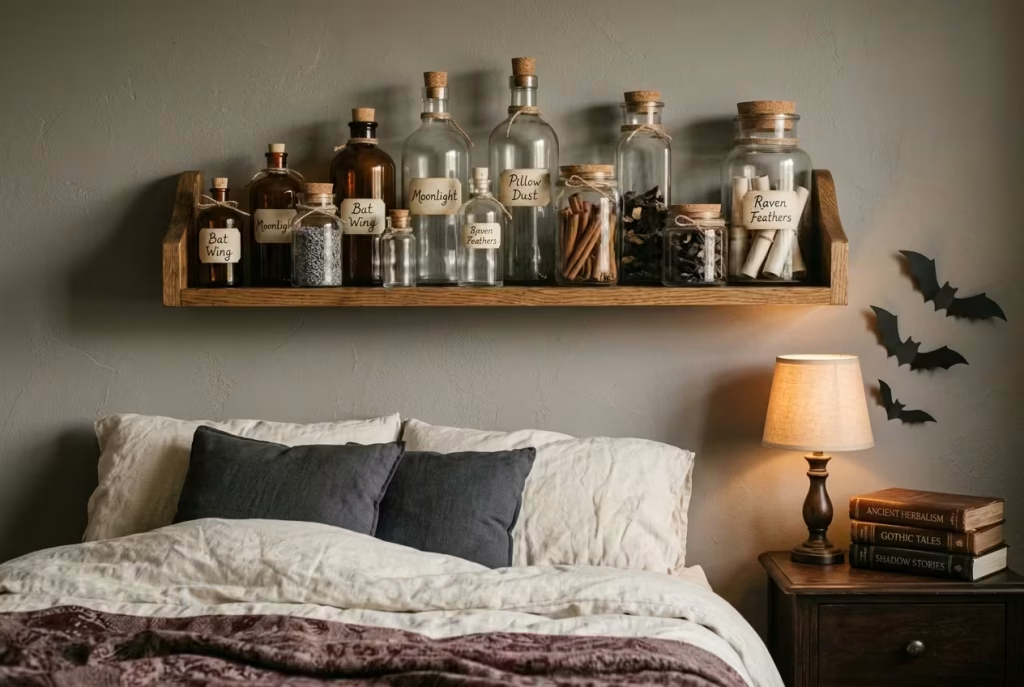
For anyone who spent childhood mixing “potions” in the garden from mud and petals, this idea comes with a sweet touch of nostalgia. A shelf of mismatched jars and bottles, labelled in spidery handwriting, looks like the larder of a very particular witch.
Gather old jam jars, glass bottles and apothecary jars, soak off the labels, and add new ones with a fine pen: “Bat Wing”, “Moonlight”, “Pillow Dust”, “Raven Feathers”. Fill with dried lavender, cinnamon sticks, or tea-light-style LED bulbs, and cluster them on a shelf in varying heights. Corks and twine add instant age.
Odd-sized, mismatched glass looks better than a matching set, so car boot sales and charity shops are the perfect hunting ground. Keep dried herbs and anything flammable well away from lamps and heat, and wash glass thoroughly before filling.
Cost: £0 to £10. Time: thirty minutes.
17. Stack spooky books as decor
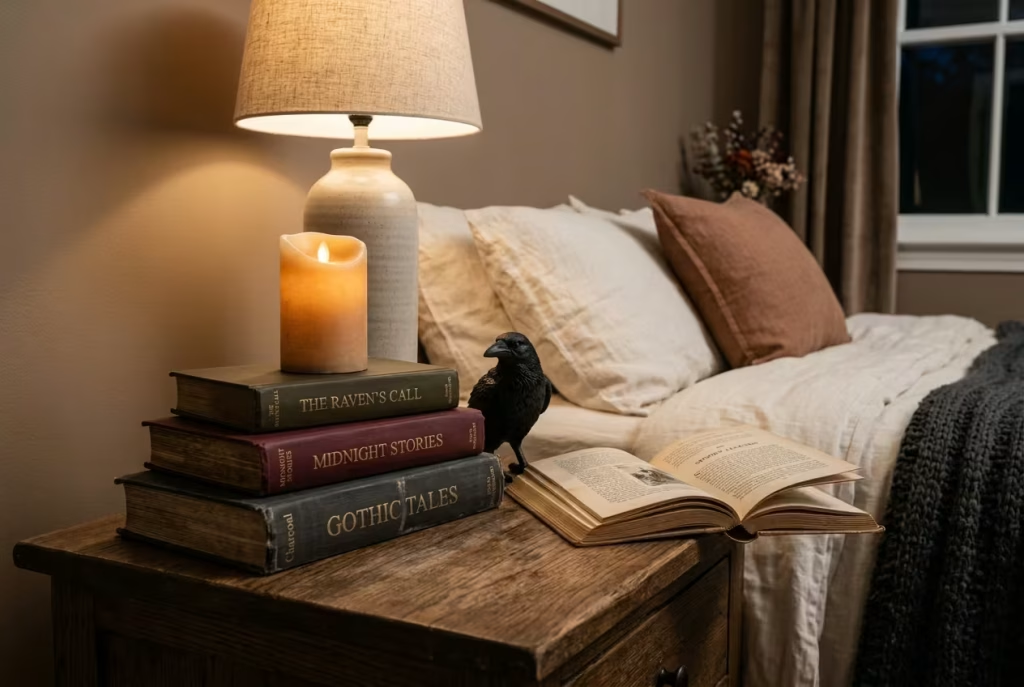
Books are the most personal decor there is, and a small pile beside the bed says “a person who reads lives here” more clearly than any sign could. Stack three vintage-looking hardbacks with dark or gilt spines, perch an LED candle on top, and add a small skull or raven beside it.
If your own books are all brightly jacketed paperbacks, cover plain ones in brown paper or fabric and handwrite spooky titles on the front. Stack no more than three, with the largest at the bottom, and let one lie open as though someone has just stepped out of the room. That open book is the detail that turns a stack into a story.
Keep anything with a real flame, even a tea light, away from paper. Flameless is the only sensible partner for a pile of books.
Cost: £0 to £8. Time: ten minutes.
18. Style the chest of drawers like a miniature mantel
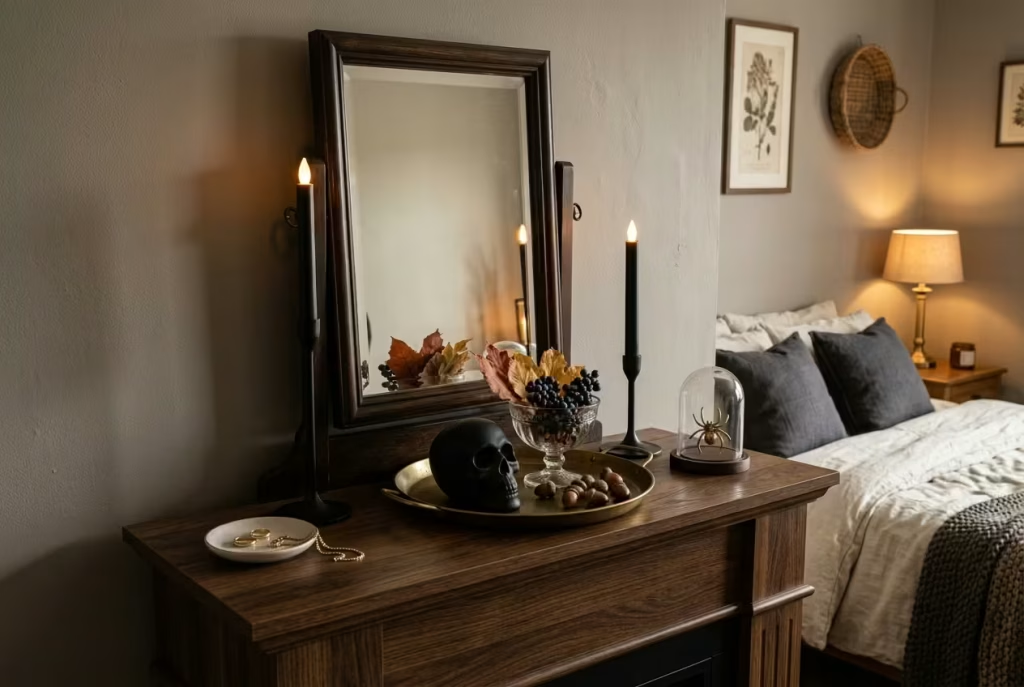
If you have no fireplace, the top of a chest of drawers can play the part, and a well-styled surface is one of the most satisfying things in any bedroom. Think of it as a small stage with a backdrop, a middle layer and a few props.
Anchor the back with a mirror or framed print. Add a small tray in the middle, a pair of candlestick-style LEDs either side, a bowl of faux berries or autumn leaves, and one statement object such as a skull, a ghost or a cloche with a tiny spider beneath. Vary the heights so the eye travels up and down.
Keep roughly a third of the surface clear. Empty space is what separates a styled surface from a crowded one, and it keeps the top usable for your keys and jewellery. Pair it with a small dish so everyday bits have somewhere to live.
Cost: £10 to £30. Time: fifteen minutes.
19. Let one skeleton roam the room
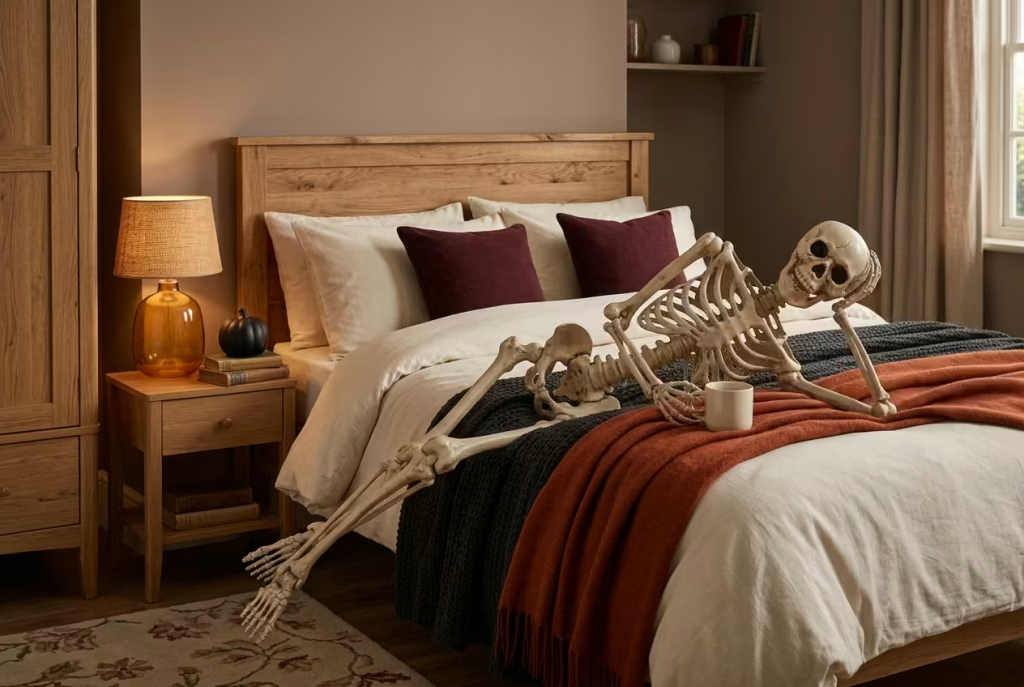
There is a particular kind of joy in coming home to find a skeleton has moved. One good-quality skeleton, posed somewhere new every few days, turns your bedroom into a gentle running joke. Prop it at the desk, seat it on a bedside chair, or let it lounge across the covers, mug in hand.
It is also remarkably thrifty. One decent figure does the work of a dozen novelty decorations, which is kinder to your bank balance and to the planet. For couples and housemates, moving the skeleton while the other is out is a harmless prank that keeps the season playful.
Choose a poseable skeleton with bendy joints rather than a rigid one, and place it away from heaters and from doorways, so nobody gets a real fright at three in the morning on the way to the loo.
Cost: £8 to £25. Time: two minutes.
Doors and windows
20. Dress the inside of the bedroom door
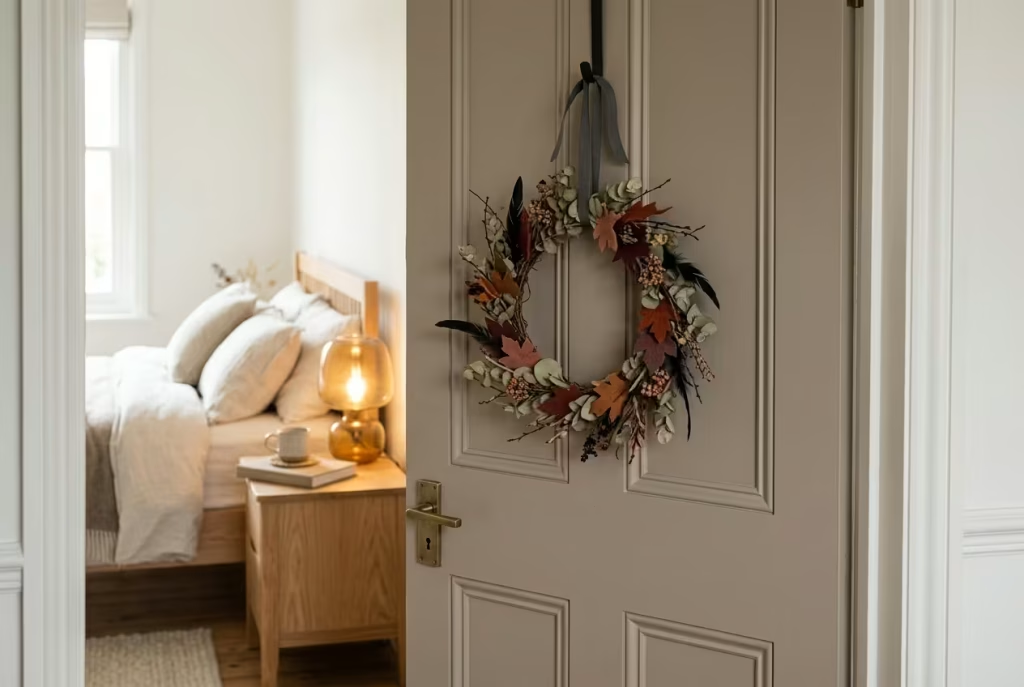
The back of a bedroom door is prime real estate that almost nobody uses. It is the last thing you see as you leave and the first as you return, which makes it a lovely place for a small, cheerful touch. A garland, a little wreath or a sign reading “Do Not Disturb: Witching Hour” gives you a daily smile.
Because it is indoors, it is shielded from the weather, so even paper and fabric pieces survive intact. Hang it with an over-the-door hook or a Command hook, so there is no drilling and no marks. Keep the item light, as heavy wreaths can pull adhesive away or rub the paint when the door swings.
A wreath of dried foliage, felt leaves and a few black feathers looks gorgeous on a bedroom door, and it tides over nicely until Bonfire Night.
Cost: £4 to £15. Time: five minutes.
21. Choose cobwebs wisely at the window
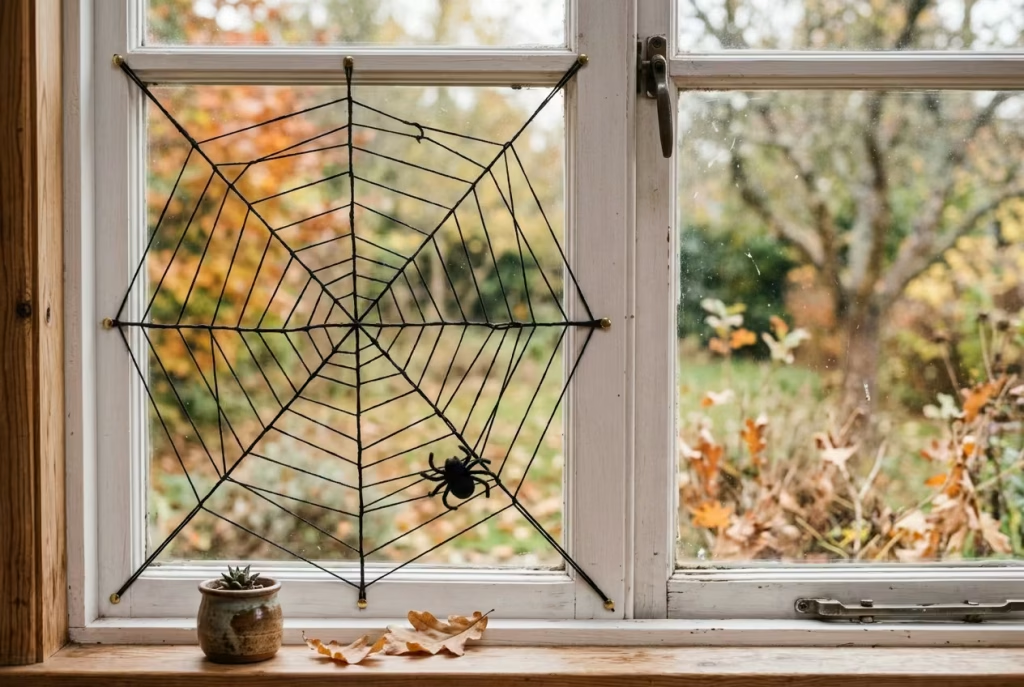
Cobwebs are the classic Halloween shorthand, but they come with a catch. Synthetic stretch webbing is a live issue with wildlife groups. Rescuers across several US states report birds, bees, chipmunks and even owls entangled in it, and vets warn that pets who swallow the fibres may need surgery. A Cornell wildlife veterinarian likened it to the mist nets used to catch birds.
The simple answer: keep it indoors. Choose thicker, rope-style webbing with bigger gaps if you can, and bin it properly after the season rather than letting scraps blow around the garden. If your window opens onto a garden with nesting birds, or you have a cat that chews anything stringy, skip it altogether and use paper or fabric alternatives.
A lovely, safer swap is a “web” made from black thread or twine, tied between three tacks hammered into a window frame you own, or stuck with removable clips. It is tidier, it looks handmade, and it is easy to remove in one piece.
Cost: £3 to £6. Time: five minutes.
You May also Like: 26 Creative Halloween Garden Decor Ideas for Front Yards and Backyards
The senses beyond sight
22. Fill the air with scent, not smoke
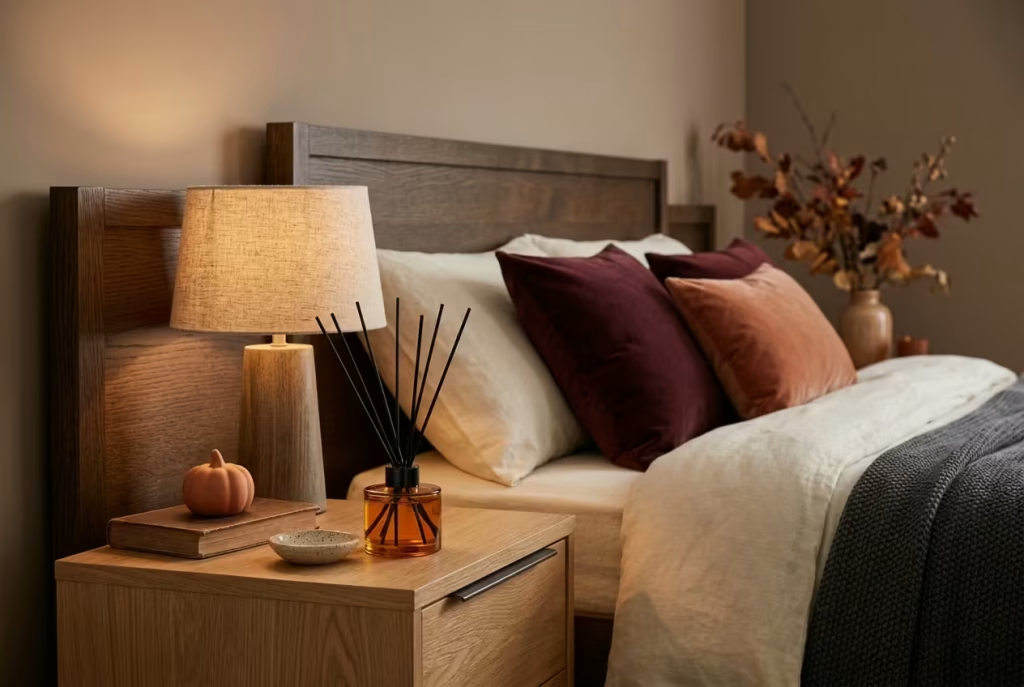
Scent is the most memory-laden of our senses, and it can carry us straight back to a kitchen, a bonfire or a grandparent’s cardigan in a heartbeat. That makes it one of the most powerful tools in a Halloween bedroom, and one of the cheapest. An electric or reed diffuser in notes of cinnamon, clove, amber, fig or smoky vanilla suits the season without becoming cloying.
A few pointers:
- Skip sweet “pumpkin spice” if it turns your stomach at night. Spice and wood notes tend to feel calmer and more grown-up.
- Use a diffuser with a timer, so the fragrance fades before you fall asleep.
- Check that any essential oil is safe around pets, as several are toxic to cats. If in doubt, ask your vet.
- Open a window for ten minutes each day. Fresh air does more for a bedroom than any fragrance.
Reed diffusers are the safest option for a bedroom, with no heat and no flame. Start with a small bottle and judge the strength before committing to a larger one.
Cost: £8 to £25. Time: five minutes.
When space, rules or the landlord are against you
23. Pack a damage-free decorating kit
If you rent, the fear of losing your deposit can drain the fun out of decorating. It need not. New UK research cited in the Yorkshire Evening Post found that using the wrong methods to attach decorations can cost up to around £355 to put right. Paint repairs average about £200 and a replacement plug socket about £75, while a DIY touch-up from a tester pot can cost as little as £1.
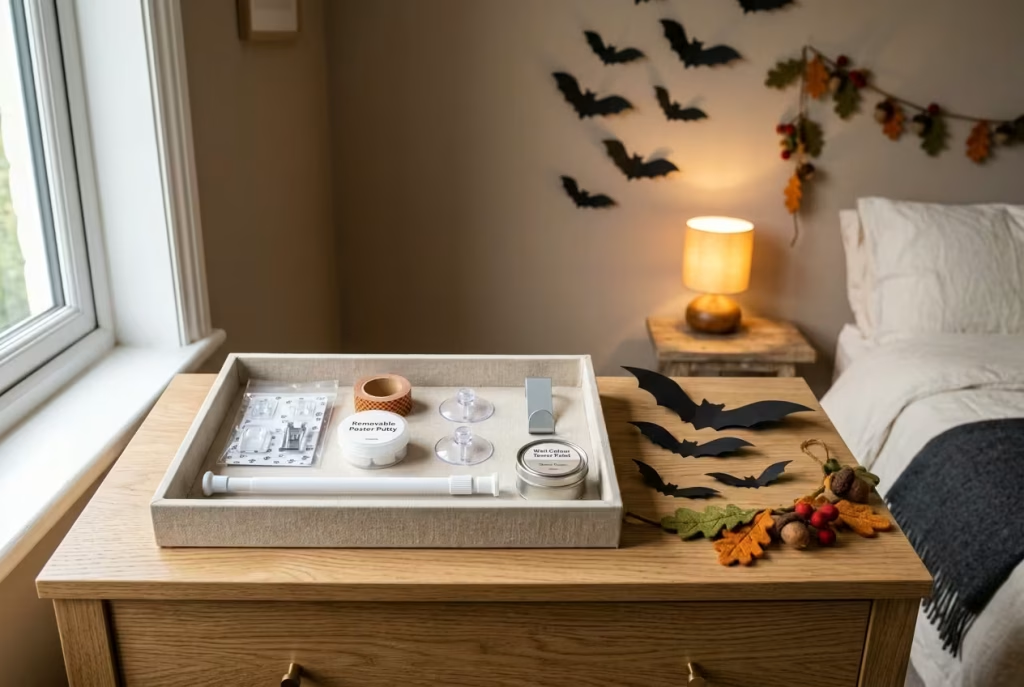
A renter-safe kit:
- Clear Command clips and hooks for lights, bats and garlands.
- Poster putty for lightweight prints.
- Suction hooks for glass and tiles.
- Tension rods and over-door hooks instead of screws.
- Removable washi tape for borders and paper cutouts.
- A spare tester pot of your wall colour, just in case.
Test a small patch first, respect the weight limits on the packet, and press each strip firmly for about 30 seconds on a clean, dry surface. When it is time to remove one, pull the tab slowly along the wall, parallel to it, rather than yanking straight out.
There is a small, real joy in knowing that everything you put up will come down without a trace. It lets you decorate boldly, without the nagging worry.
Cost: £8 to £20. Time: five minutes.
24. Pick one star for a small bedroom
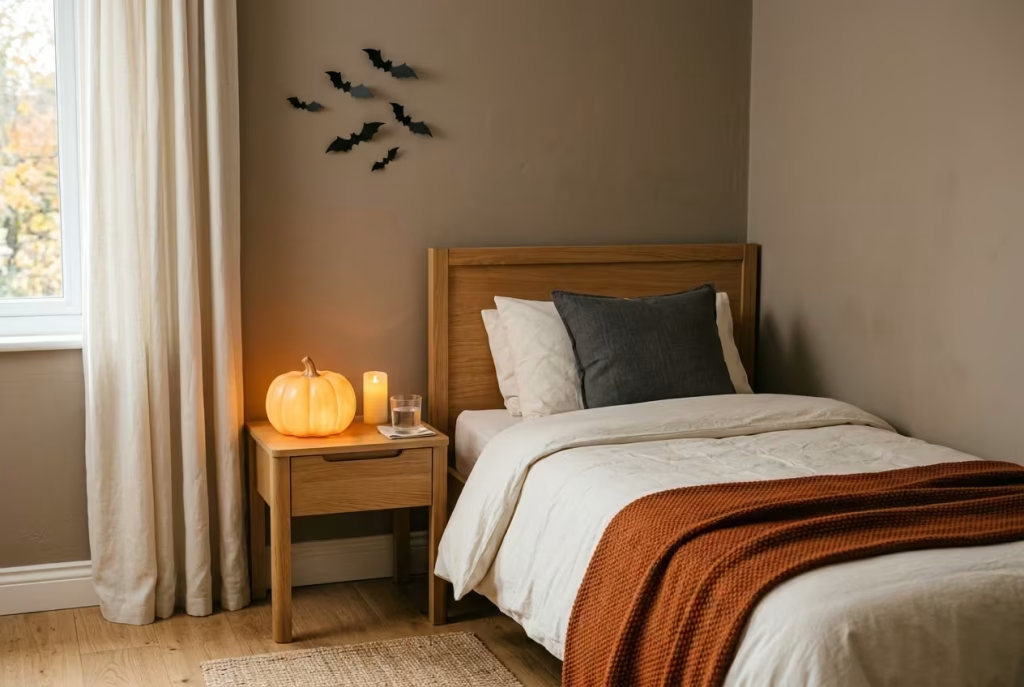
A small bedroom has its own kind of charm: it feels like a nest. The risk with Halloween is that a nest quickly turns into a cluttered cupboard. When floor and wall space are scarce, resist the urge to decorate everything.
Choose one star: a glowing pumpkin lamp, a bat-covered wall, or a floating hat canopy over the bed. Then back it up with two quiet extras, such as a throw and a flameless candle. Look upwards, because walls and ceilings are free real estate in a tight room, whereas surfaces fill up fast.
Keep floors and bedside tables clear for safety, particularly if you share a small room or have children. A tiny room dressed in one confident idea reads as designed. The same room hung with twenty small items reads as a jumble sale.
Cost: £10 to £30. Time: thirty minutes.
For children, teenagers and grown-ups
25. Keep a child’s room friendly, not frightening
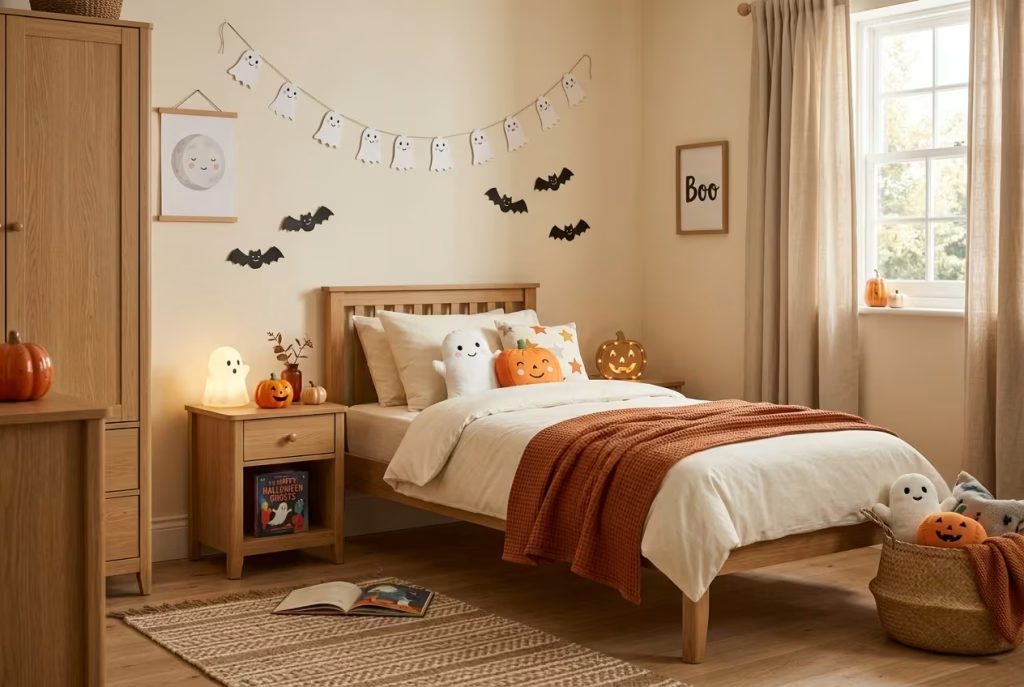
For a small child, the bedroom is the safest place in the whole world, and it needs to stay that way. Young children often struggle to separate fantasy from fact. Theresa Kruczek, a counselling psychology professor at Ball State University, notes that preschoolers and early-elementary children can find Halloween imagery genuinely confusing. The Sleep Foundation, as relayed by a sleep education centre, advises avoiding scary content for at least an hour before bed.
So in a child’s bedroom:
- Choose smiling ghosts, friendly pumpkins and soft bats rather than skeletons or gory props.
- Keep creepy or glowing figures out of the room where they sleep.
- Let them explore decorations in daylight, so they feel in charge of them.
- Add a nightlight and a calming bedtime story to keep the routine steady.
- Involve them in making a few pieces, such as paper bats or a painted pumpkin. A child who made the ghost is rarely afraid of it.
If a child does have a bad dream, take it seriously, reassure them, and move the offending decoration somewhere else. Treat the bedroom as a sanctuary, and put the scary stuff in the hallway or living room.
Cost: £10 to £30. Time: twenty minutes.
26. Give teens and students a scene, not a shrine
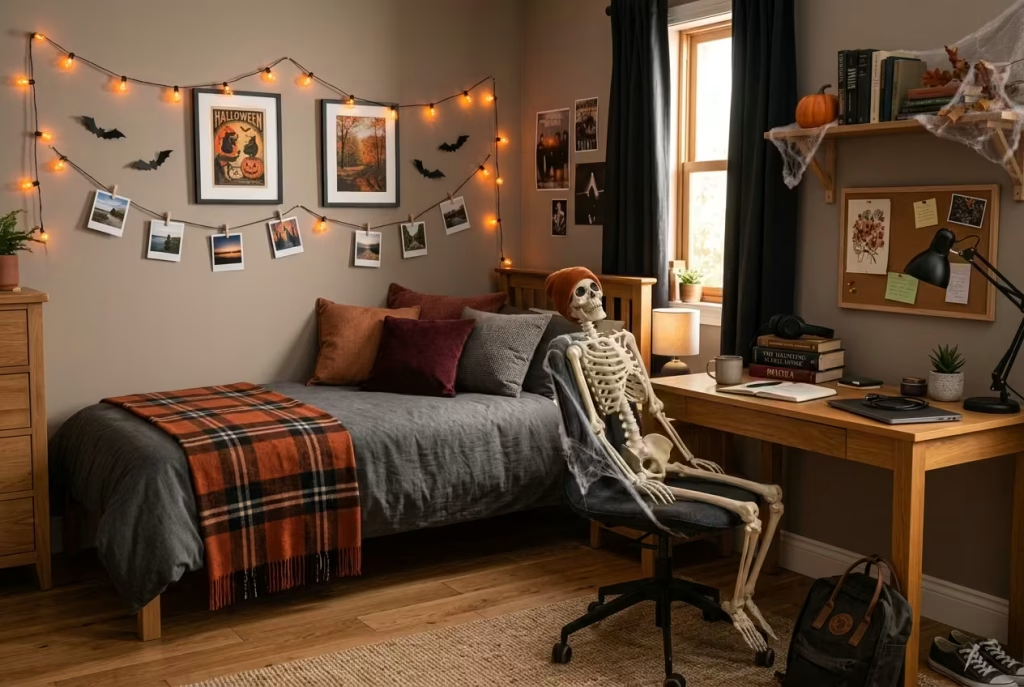
For a teenager, a bedroom is not just a place to sleep. It is a statement of who they are becoming, and for a student in their first term away from home, it may be the only corner of the world that is entirely theirs. Halloween is a lovely chance to make it feel lived in and loved.
Think orange fairy lights, a themed poster or two, a plaid blanket, and a skeleton lounging on a chair. Budgets are often tight, so lean on pound-shop staples: cheesecloth, cobwebs (indoors), skeleton garland and black card cut into bats. A few photographs of friends, tucked into the lights, turn decor into memory.
In halls of residence, check the rules on candles, adhesives and electrical items before you begin. Many halls ban real candles outright, which makes LED versions the obvious pick. Keep cheesecloth and paper well away from lamps and sockets, and switch lights off when you leave the room.
Cost: £10 to £25. Time: thirty minutes.
27. Try a quiet Halloween that lasts until Bonfire Night
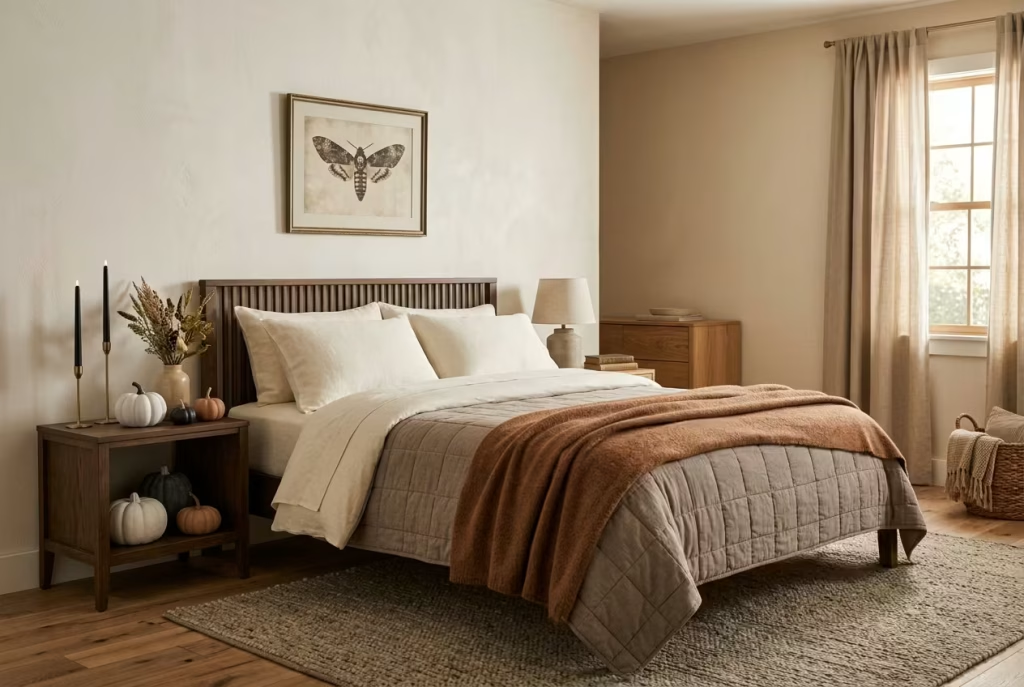
Not everyone wants a haunted house. Some of us simply want the room to acknowledge the season, gently, the way a good host nods to a guest. If orange-and-black overload feels a bit much, this is your idea.
Take your existing autumn palette and add just three Halloween notes: a pair of black taper-style LED candles, a vintage-feel print of a moth or raven, and a small group of white or charcoal pumpkins. Home & Texture’s advice is to layer Halloween onto the earthy tones already in your autumn scheme, and it works beautifully.
The test is simple. If a piece would look odd on 1 November, it does not belong. Everything else earns a second life as ordinary autumn decor, so you spend less, store less and keep the room looking sophisticated well into the month. It is also the most considerate choice for a shared bedroom, where one half of the couple adores Halloween and the other would rather not wake up to a skeleton.
Cost: £15 to £40. Time: fifteen minutes.
Why these ideas work: a quick look at the feel-good factors
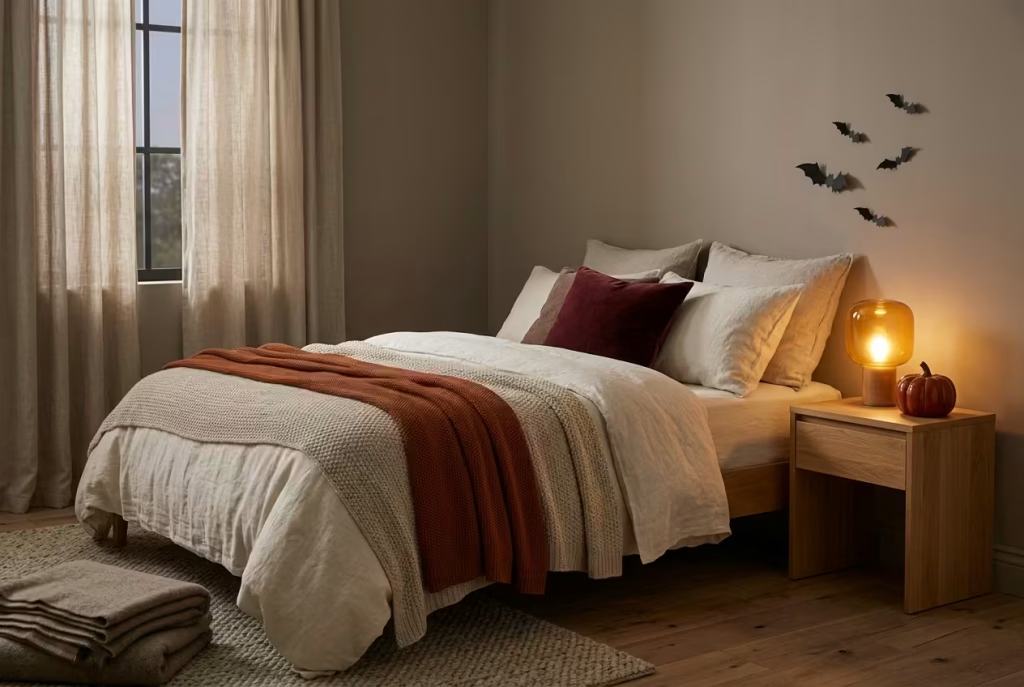
Behind every successful Halloween bedroom sit a few simple principles. Understanding them helps you adapt any idea to your own space.
- Warm light feels welcoming. Amber and orange tones tend to feel cosy and inviting, and they sit in the range sleep specialists recommend for the evening.
- Texture feels like comfort. Velvet, wool, knits and linen give the eye depth and the hand something pleasant to touch, which is why layered textiles do more than printed novelty items.
- Small rituals mark time. Changing a few things each season gives the year a rhythm, and that sense of gentle anticipation can brighten the dullest week.
- Familiar memories soothe. Pumpkins, torches, bonfire smoke and paper bats connect to happy childhood scenes. Used lightly, they bring a feeling of safety, not fright.
- Less is more. A single focal point and a few odd-numbered groupings feel calm. Crowded surfaces, even festive ones, make a bedroom harder to relax in.
All 27 ideas at a glance
| # | Idea | Cost | Time | Best for |
| 1 | Amber bulb | £4 to £12 | 2 min | Everyone |
| 2 | Headboard string lights | £6 to £20 | 10 min | Cosy looks |
| 3 | Flameless candles | £8 to £25 | 5 min | Gothic drama |
| 4 | Pumpkin lamp | £6 to £30 | 1 min | Nightstands |
| 5 | Window silhouette | £3 to £10 | 15 min | Street-facing rooms |
| 6 | Dark bedding | £25 to £90 | 10 min | Big visual impact |
| 7 | Velvet cushions | £8 to £25 | 5 min | Subtle styling |
| 8 | Plaid or ghost throw | £15 to £50 | 1 min | Warmth |
| 9 | Black canopy | £15 to £45 | 20 min | Theatre |
| 10 | Bench styling | £10 to £30 | 5 min | Tidy corners |
| 11 | Floating witch hats | £6 to £15 | 20 min | High ceilings |
| 12 | Bat flock | under £10 | 30 min | Renters |
| 13 | Eerie prints | under £5 | 15 min | Tight budgets |
| 14 | Mirror mesh | £3 to £8 | 10 min | Elegant looks |
| 15 | Faux pumpkins | £6 to £20 | 5 min | Longevity |
| 16 | Potion shelf | £0 to £10 | 30 min | Thrifters |
| 17 | Spooky books | £0 to £8 | 10 min | Book lovers |
| 18 | Dresser mantel | £10 to £30 | 15 min | Styling fans |
| 19 | Roaming skeleton | £8 to £25 | 2 min | Humour |
| 20 | Door dressing | £4 to £15 | 5 min | Renters |
| 21 | Indoor-only cobweb | £3 to £6 | 5 min | Safe spookiness |
| 22 | Scent | £8 to £25 | 5 min | Mood |
| 23 | Damage-free kit | £8 to £20 | 5 min | Rentals |
| 24 | One focal point | £10 to £30 | 30 min | Small rooms |
| 25 | Friendly kids’ room | £10 to £30 | 20 min | Young children |
| 26 | Teen and dorm scene | £10 to £25 | 30 min | Students |
| 27 | Quiet Halloween | £15 to £40 | 15 min | Minimalists |
Bedroom Halloween safety at a glance
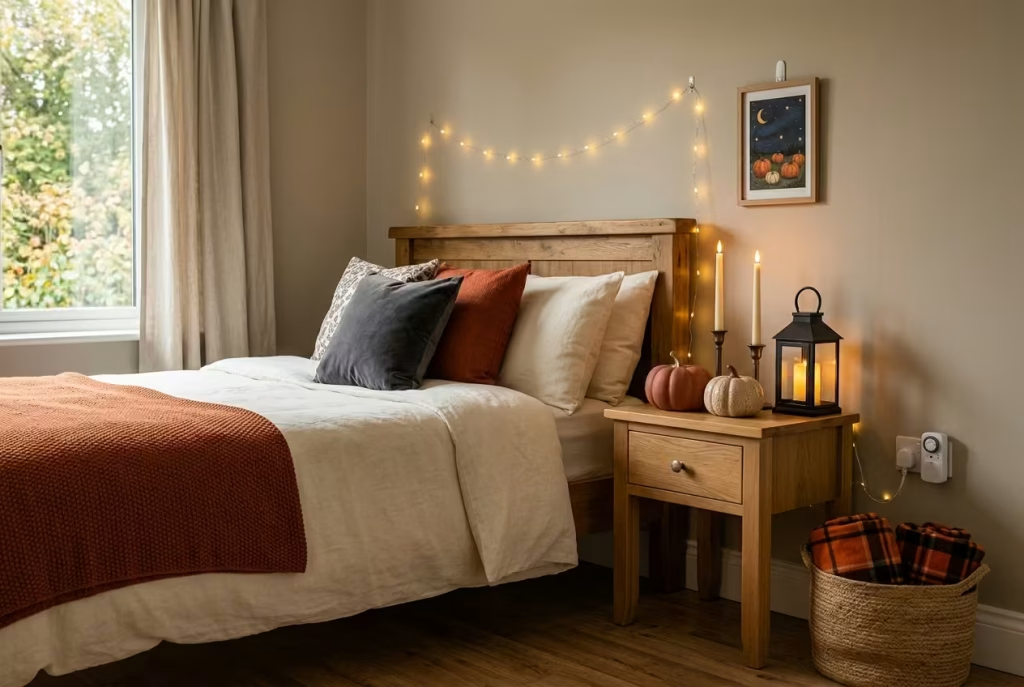
| Risk | What the evidence says | What to do |
| Real candles | NFPA: about a third of home candle fires start in bedrooms, and around 60% involve combustibles too close | Use LED flameless candles. If you must use a flame, keep it 30 cm from anything that burns and never leave it unattended |
| Falling asleep with a flame | A factor in roughly 10 to 11% of candle fires | Never sleep with a flame lit |
| String lights | US guidance is to switch off at bedtime, and one lab source advises against more than 12 hours continuous use | Use a timer plug, avoid daisy-chaining, keep fabric clear of bulbs |
| Fabric over lights | Traps heat and hides faults | Leave a hand’s width gap, or use battery LEDs |
| Stretch cobwebs | Wildlife rehabbers report birds and small animals tangled, and pets can swallow fibres | Indoors only, rope-style if possible, bin after the season |
| Essential oils | Several are toxic to cats | Check labels, ventilate, or choose a pet-safe scent |
| Wall adhesives | Wrong methods can cost up to about £355 in repairs | Use removable clips and test first |
What it really costs
| Budget | What you get | Rough spend |
| Under £20 | Indoor cobwebs, window clings, black card bats, one amber bulb, Command clips | £15 to £20 |
| £20 to £60 | All of the above plus pumpkin lights, velvet cushion covers, flameless candles, a throw | £40 to £60 |
| £60 and up | Dark bedding, sheer canopy, quality faux pumpkins, diffuser, framed prints | £90 to £150+ |
Prices are rough high-street ranges and shift with the season. For reference, B&Q’s decor team quoted hanging cobwebs at £4.77, window gel clings at £5.99 and pumpkin string lights at £6.40.
Five common mistakes, and how to dodge them
- Buying first, planning later. Pick a style and a palette before you reach the shop, and you will spend less and regret less.
- Lighting the whole room in purple. It photographs well and sleeps badly. Keep colour for the early evening.
- Draping fabric on hot things. Lamps, heaters and powered lights all need breathing space.
- Overcrowding surfaces. Leave a third of each surface clear, and the styling will look expensive.
- Forgetting the takedown. Choose pieces you can remove without damage and store without fuss.
A relaxed weekend plan
Short on time? Spread the work, and nothing feels like a chore.
- Friday evening: swap the bulb, hang the string lights on a timer, set out the flameless candles.
- Saturday morning: change the bedding and cushions, then drape the throw.
- Saturday afternoon: float the hats, fly the bats, refresh the wall art.
- Sunday: style the nightstand, dresser and shelves, then step back and fine-tune. Allow an hour or two for tweaks, because the devil is in the detail.
Packing it away without the faff
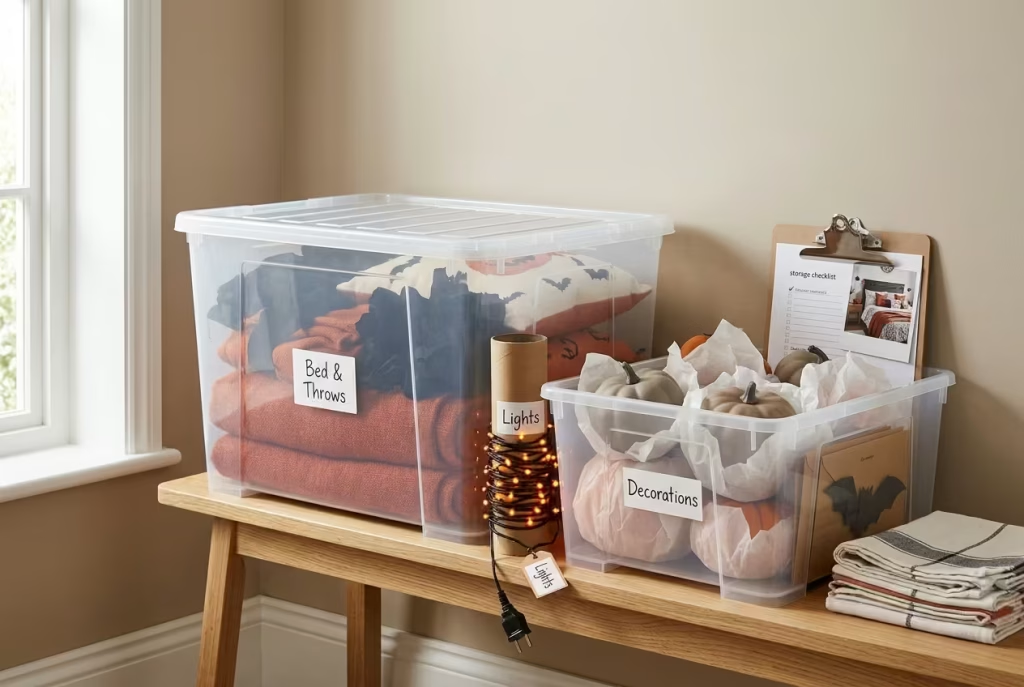
A little care in November saves a lot of grumbling next October.
- Wrap breakables in tissue or old tea towels.
- Coil lights around a cardboard tube to stop tangles, and check the cable for damage before storing.
- Bin stretch webbing responsibly, since it does not biodegrade.
- Keep it dry. A lidded plastic box in a cool, dry cupboard beats the loft, where damp and heat can ruin fabric and glue.
- Label the box by area (“Bed”, “Walls”, “Lights”) so setting up next year takes minutes, not an afternoon.
- Take a photo of your favourite arrangement before you dismantle it, so recreating it next year is a pleasure rather than a puzzle.
Final thoughts
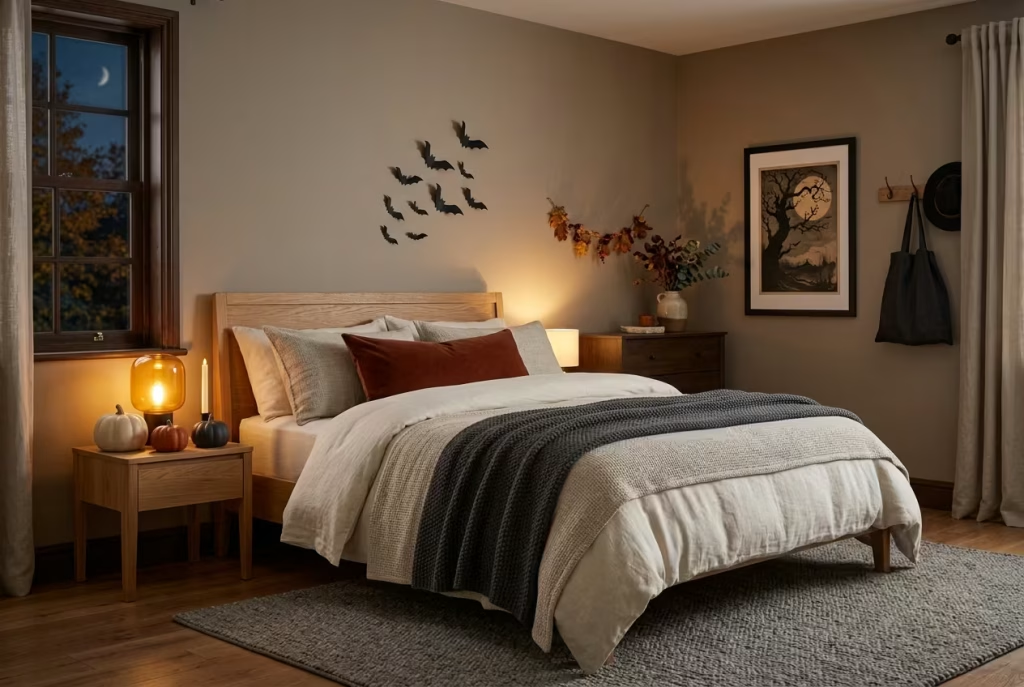
The best Halloween bedrooms are rarely the ones with the most props. They are the ones that feel like a small act of kindness to yourself: warm light, a bed you want to sink into, and one or two spooky touches that make you grin when you walk through the door.
Think back to that torch beam on the dark pavement, and the thrill of being a little bit scared with everything safe and warm behind you. A bedroom can hold exactly that feeling, all October long.
Begin with the amber bulb. Add a velvet cushion, a trio of pumpkins and a handful of bats on the wall. Keep the flames electric and the lights on a timer, and you will have a room that is spooky, cosy and properly stylish, one that still lets you sleep like a log once the lights go out.
Frequently asked questions
1. How do I make Halloween bedroom decor look stylish, not tacky?
Limit yourself to two or three colours, favour natural or tactile materials such as velvet, wool, linen and glass, and build on the decor you already own. One considered arrangement beats a dozen novelty items. As a quick test, ask whether the piece would still look at home on 1 November.
2. Is it safe to use candles in a Halloween bedroom?
LED flameless candles are far safer. NFPA data shows around a third of home candle fires start in bedrooms, and about 60% occur when something combustible is too close. NFPA advises keeping real candles at least 12 inches (30 cm) from anything that can burn and avoiding them in sleeping areas.
3. Can I leave fairy lights on overnight?
LED lights run cool, so the risk is low, but sources disagree on whether it is entirely safe. US consumer-safety guidance advises switching decorative lights off at bedtime, and one lab-testing source suggests no more than 12 hours of continuous use. A plug-in timer is the simplest solution, and avoid overloading sockets or daisy-chaining strands.
4. What colour lights are best for a Halloween bedroom if I want to sleep well?
Warm amber or orange light, at roughly 2200K to 2700K, is the gentlest on your body clock. Dim it in the last hour or two before bed. Keep purple, green and neon lighting for early evening, while you are still awake.
5. How do I decorate a rented bedroom without damaging the walls?
Use removable Command clips and hooks, poster putty, suction hooks and tension rods rather than nails or sticky tape. Test a small area first and follow the weight limits. Careless methods can lead to repair bills of up to roughly £355.
6. Are fake spiderwebs safe for pets and wildlife?
Not entirely. Wildlife rehabilitators report birds, bees and small mammals tangled in synthetic webbing, and pets may need veterinary treatment if they swallow it. Keep it indoors, choose thicker rope-style webbing with larger gaps, and dispose of it properly after Halloween.
7. How do I decorate a child’s bedroom without causing nightmares?
Pick friendly imagery such as smiling ghosts and pumpkins, and keep scary props out of the sleeping space. The Sleep Foundation advises avoiding frightening content for at least an hour before bed. Let children explore decorations in daylight, involve them in making a few pieces, and keep a calm, predictable bedtime routine.
8. How do I decorate a small bedroom for Halloween?
Choose one focal point, such as a floating hat canopy or a bat-covered wall, and keep everything else quiet. Use vertical space on walls and ceiling rather than crowding the floor or surfaces, and let lighting create the atmosphere.
9. How much does a Halloween bedroom refresh cost?
A neat, effective look can cost £15 to £20, a fuller layered one £40 to £60, and a premium dark-bedding and canopy set-up £90 or more. A few good textiles you can reuse each autumn usually give better value than lots of novelty items.
10. What are the best Halloween bedroom colours beyond orange and black?
Oxblood and aubergine for gothic drama, sage and cream for a soft cottage-witch look, charcoal and taupe for a quiet, grown-up scheme, and teal with orange for a vintage Hocus Pocus feel.
11. When should I put up and take down Halloween bedroom decor?
Many people start in the first half of October and pack away between 1 and 5 November. If you have layered Halloween over an autumn palette, you can leave most of it up until Bonfire Night and simply remove the obvious skulls and bats.
12. How do I store Halloween decor so it lasts?
Wrap fragile pieces, coil lights around a tube, check cables for damage, keep everything in a labelled lidded box in a cool, dry cupboard, and bin stretch webbing rather than reusing it.