



20 Gorgeous White Stucco Townhouse Ideas for Timeless Curb Appeal
White stucco has a way of making a townhouse feel quietly resolved. It is not dramatic in the obvious sense, nor does it rely on ornament to hold attention. Its strength lies elsewhere, in the way it catches daylight, softens hard architectural lines, and gives even a compact urban facade a sense of calm permanence. That is precisely why it endures. While exterior trends come and go in predictable cycles, white stucco remains convincing because it is rooted less in fashion than in atmosphere. It can feel Mediterranean, coastal, contemporary, classical, or gently modernist depending on the detailing around it, yet it rarely feels locked to a single moment.
In townhouse design, that versatility matters. These homes often work with narrow frontages, stacked storeys, and a visual relationship between levels that can either feel beautifully composed or slightly disjointed. A white stucco exterior helps bridge that complexity. It simplifies the elevation without flattening it, allowing doors, windows, railings, planting, and lighting to take on more deliberate roles. I have found that the best examples never rely on the stucco alone. What makes them memorable is the balance around it: a dark bronze window frame that sharpens the facade, limestone steps that add weight at ground level, or a timber door that introduces warmth against an otherwise restrained palette.
More importantly, curb appeal does not end at the front threshold. In a well-designed townhouse, the exterior should prepare you for what happens inside. The softness of the render, the quality of light on white walls, the measured contrast of natural materials, all of it should continue through the entrance hall, staircase, and principal rooms. That continuity is what turns a beautiful facade into a home with real design integrity.
Why White Stucco Works So Well on Townhouses
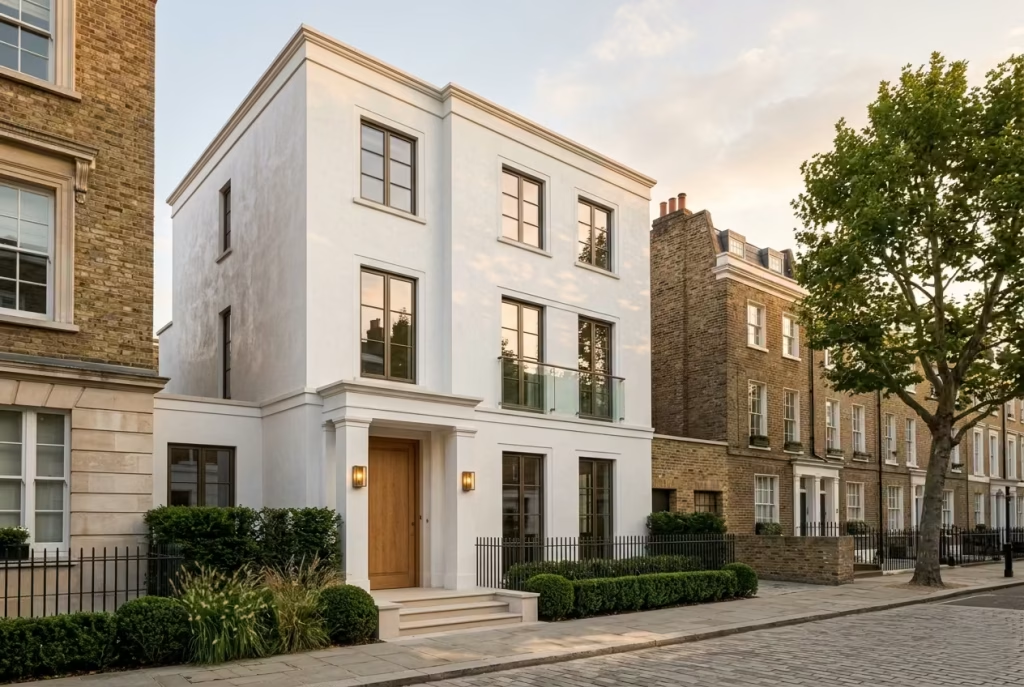
White stucco suits townhouses for reasons that go far beyond colour preference. At its best, it changes the way a building sits on the street. It can make a narrow facade feel calmer, a tall elevation feel lighter, and a compact urban home feel more composed from pavement to parapet. In townhouse design, where proportion is often working hard behind the scenes, that matters. These homes rarely have the luxury of sprawling frontage or generous setbacks. They rely on verticality, rhythm, and carefully judged surface treatment to create presence. White stucco does that work quietly, but very effectively.
What makes it especially useful is its ability to operate as both finish and atmosphere. It is not simply a coating applied to a wall. It influences how light behaves, how architectural details are perceived, and how the building relates to its neighbours. In dense residential streets, where brick, stone, painted timber, and glass often compete for attention, stucco can bring a welcome sense of visual exhale. It strips away some of the noise and allows the architecture itself to speak more clearly.
Townhouses are often defined by straight lines, repetitive window openings, shared party walls, and relatively narrow proportions. In many urban settings, that can create a frontage that feels slightly severe if every surface is crisp, dark, or heavily articulated. White stucco softens that effect without making the architecture feel weak. It acts almost like a visual buffer, muting sharp transitions and giving the building a smoother, more settled character.
This is particularly valuable on homes with strong geometry. A three-storey townhouse with boxy bay projections, steel-framed windows, and a shallow entrance stair can easily tip into looking hard-edged if the exterior palette is too stark. Stucco introduces a more forgiving surface. Even when applied smoothly, it has a faint movement to it, a subtle irregularity that catches light in a gentler way than painted cement board or polished stone. That slight softness can be the difference between a facade that feels forbidding and one that feels quietly elegant.
In practical terms, this matters because most people do not experience a townhouse from an architectural elevation drawing. They experience it while walking up to the front door, parking across the street, or looking out from the pavement at dusk. A material that softens the mass of the building can make that daily interaction feel more welcoming. It is a small shift, but one that punches above its weight.
One of the most useful qualities of white stucco is how well it handles daylight. Townhouses often have constrained frontages, sometimes only 4.5 to 6 metres wide (roughly 15 to 20 feet), so the facade needs to work harder to create visual generosity. A light-reflective finish helps immediately. White stucco bounces daylight across the surface rather than absorbing it, which makes the elevation feel more open and expansive, particularly on streets where buildings sit close together.
This becomes even more noticeable in locations where natural light is limited by neighbouring structures. A narrow townhouse hemmed in by taller buildings can feel visually compressed if the exterior finish is dark, flat, or heavy. White stucco lifts that weight. It draws attention to the full height of the facade and can make upper floors feel less imposing. On a practical level, it also improves the reading of details such as cornices, reveals, recessed entries, and window surrounds because shadows appear cleaner and more deliberate against a pale surface.
That said, not all white facades create the same effect. A bright, cold white can feel almost glaring on a sunny street, particularly when paired with reflective glazing or black trim. A softer mineral white or chalky off-white tends to be easier on the eye and more forgiving over time. In my experience, the sweet spot for most townhouses sits in that warm-white range where the facade still feels fresh but does not look clinical. Think of tones with a touch of cream, stone, or lime rather than anything icy or blue-based.
It Bridges Contemporary and Traditional Architecture with Ease
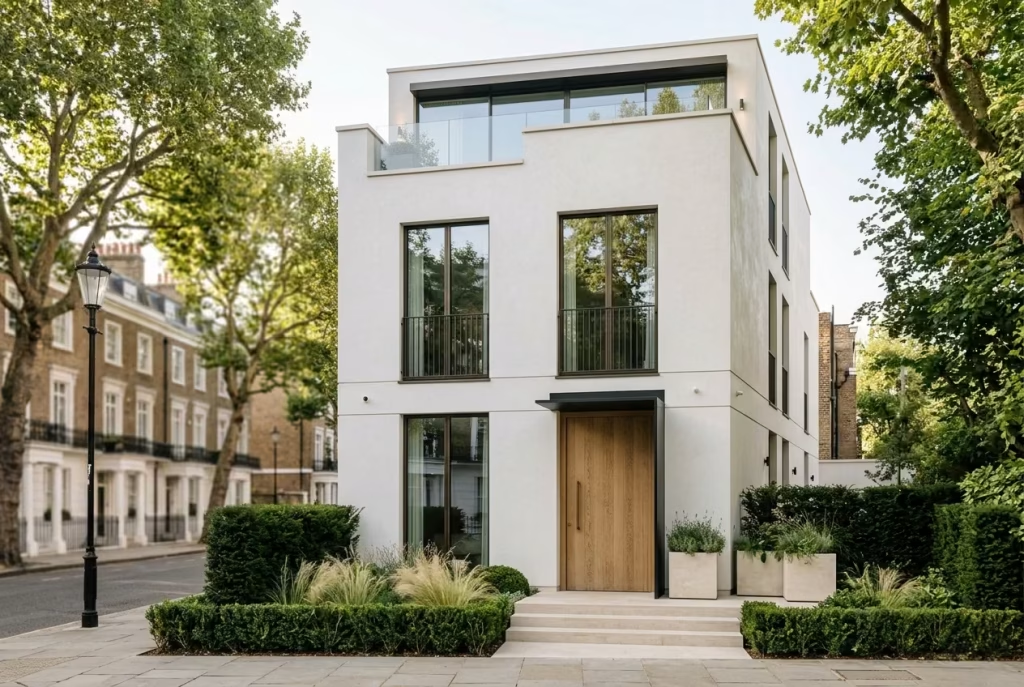
One of white stucco’s biggest strengths is its flexibility across architectural styles. It can sharpen a modern townhouse and quieten a traditional one, which is no small feat. On a contemporary facade, especially one with slimline aluminium windows, flush detailing, and restrained landscaping, white stucco feels crisp and architectural. It gives the composition a gallery-like clarity without making it feel sterile, provided the surrounding materials introduce enough warmth.
On a more traditional townhouse, the same finish can do something entirely different. It can simplify decorative features, unify mismatched additions, and bring older elevations back into balance. Where brick or stone may highlight every change in age and repair, stucco can create continuity. This is often useful in period townhouses that have been altered over time, perhaps with a rear extension, replacement windows, or patched masonry. A well-specified stucco finish can act as the common thread, pulling disparate elements together so the house reads as one coherent whole rather than a sequence of updates stitched together over decades.
This is where stucco earns its keep. It is not married to one aesthetic camp. It can sit comfortably beside wrought iron balconies, classical mouldings, timber sash windows, minimalist bronze frames, or a contemporary pivot door, depending on how it is detailed. Few exterior finishes can wear that many hats without looking confused.
It Creates a Cleaner Backdrop for Architectural Details
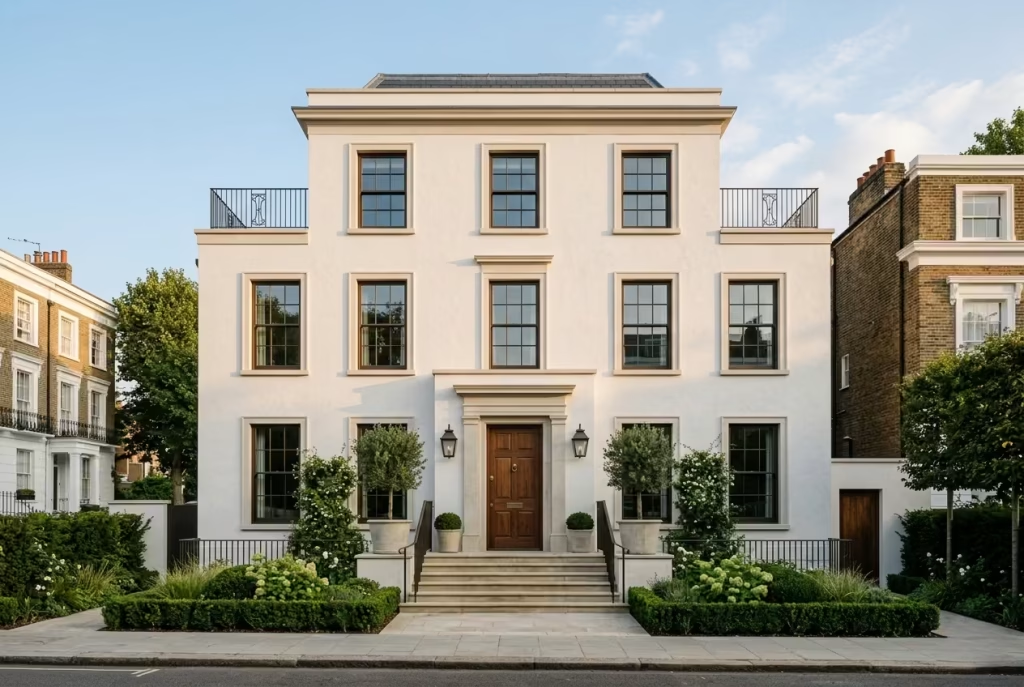
Townhouses rarely succeed because of one heroic gesture. More often, their beauty comes from a series of smaller decisions working in harmony: the width of the front steps, the depth of a window reveal, the shape of the handrail, the planting at the threshold, the finish on the front door hardware. White stucco helps because it gives those details room to breathe.
Against a pale, matte surface, secondary materials tend to read more clearly. Black steel lanterns feel sharper. A walnut or oak front door feels richer. Stone treads look grounded rather than fussy. Even greenery, whether clipped box, olive trees in planters, or climbing jasmine around an entry arch, appears more intentional when set against a quiet white backdrop. It is a bit like clearing the table before serving dinner. The supporting pieces are still there, but the main ingredients finally get the attention they deserve.
For homeowners, this has a practical upside too. If the base material is visually restrained, you have more freedom to update the frontage over time without unravelling the whole composition. A change in front door colour, lighting, planters, or railings can shift the mood significantly without requiring a full exterior overhaul. That flexibility makes white stucco a particularly sensible long-term choice for people who want a timeless shell with room to evolve.
It Works with the Vertical Rhythm of Townhouses
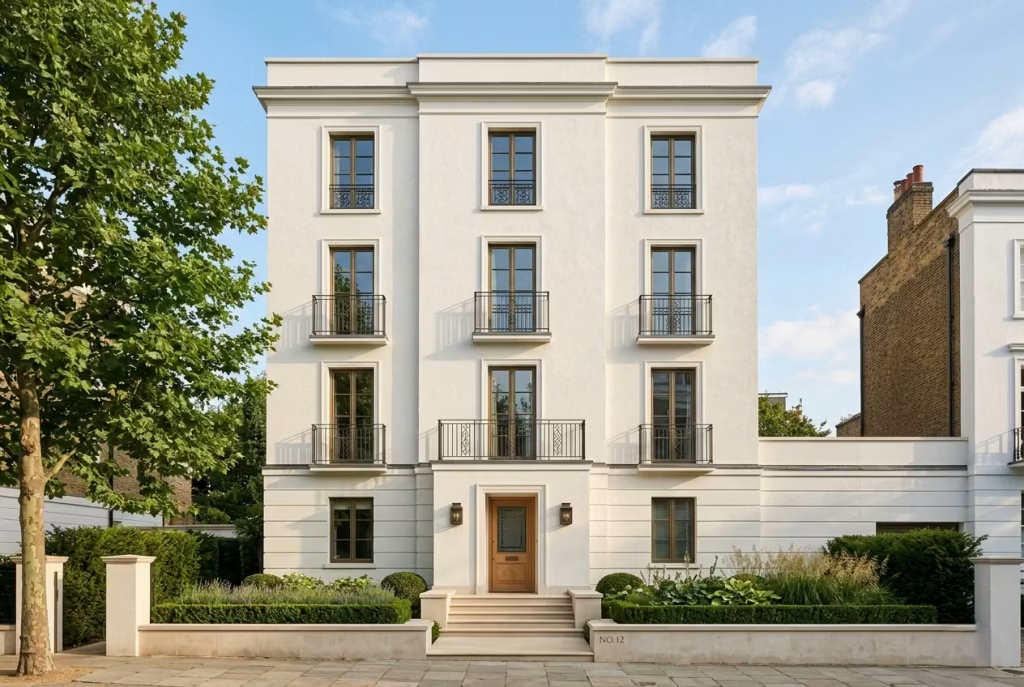
Unlike detached houses, townhouses are often read as stacked compositions. There is the lower ground or entry level, the middle floors where windows usually dominate, and the upper parapet or roofline that finishes the building against the sky. A material that visually stitches those layers together is incredibly useful. White stucco does exactly that.
Because it reads as continuous rather than heavily segmented, it can help a multi-storey townhouse feel taller in a graceful way rather than simply narrow and upright. It smooths transitions between floors and reduces the sense of visual interruption that can happen when too many facade materials are introduced. This is especially important when the building already has several competing elements, such as a basement stair, projecting bay, Juliet balcony, dormer, and a small front garden boundary wall. Add too many finishes to that mix and the facade starts to feel busy. Keep the main envelope in white stucco and the eye can travel more easily, taking in the whole building rather than tripping over every change in material.
That sense of continuity is often what separates a townhouse that feels tailored from one that feels pieced together. The architecture breathes better when there is one calm, confident surface holding everything in place.
Real-Life Design Insight: White Is Never Just White
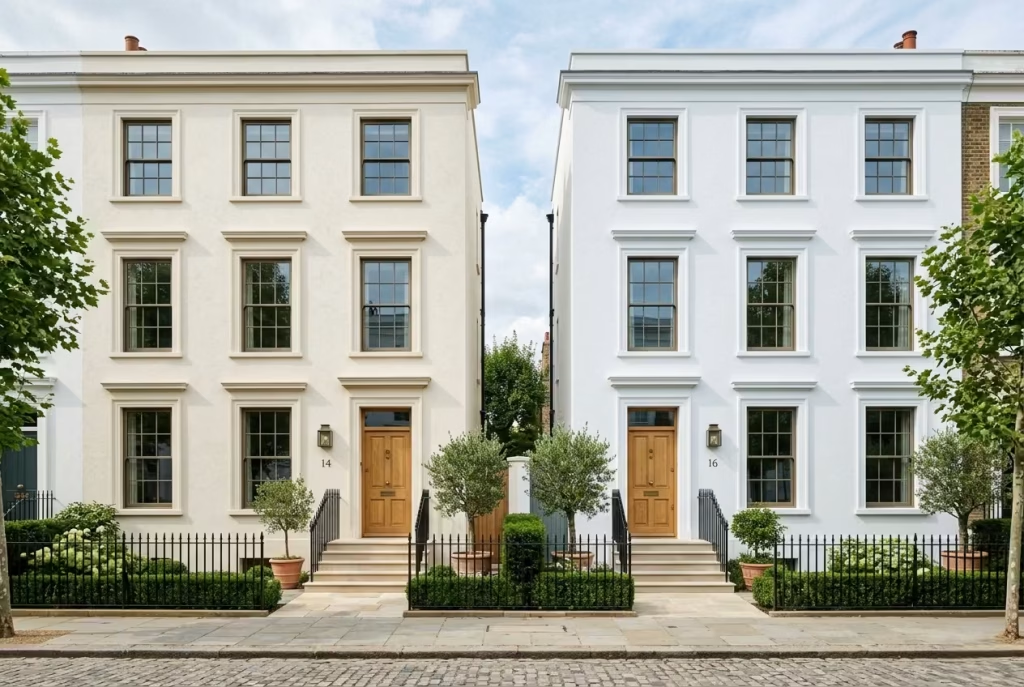
This is where many exterior schemes live or die. People often talk about white as though it were a single decision, when in reality it is a family of tones that can behave very differently once they are outside, exposed to shifting daylight and the colours around them. On a sample card, two whites may look almost identical. On a townhouse facade, they can feel worlds apart.
White Changes Constantly with Light Conditions
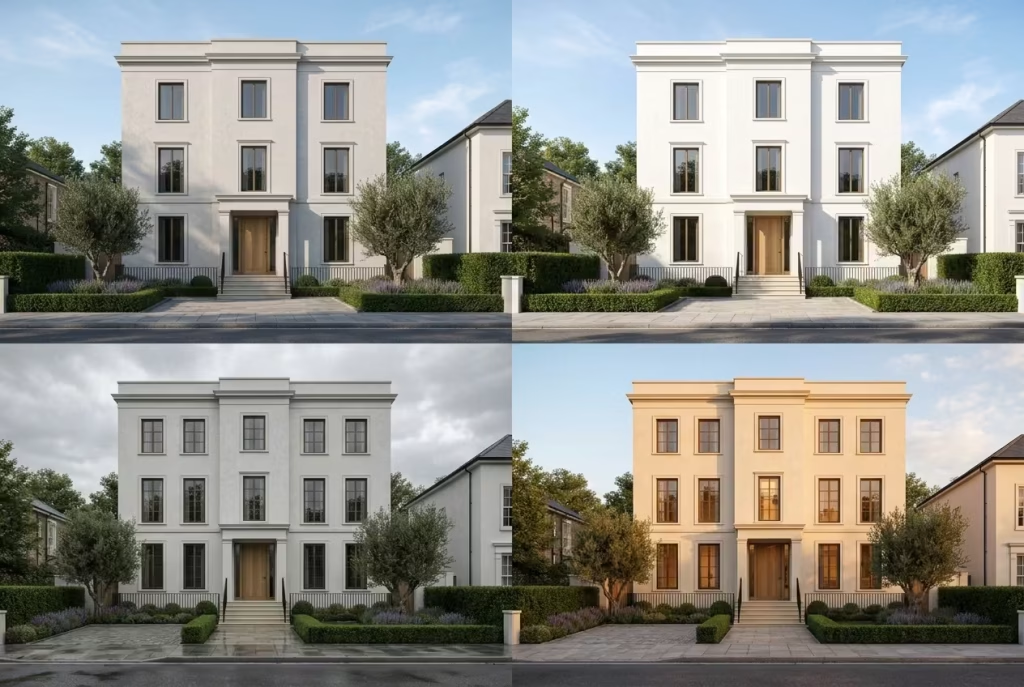
A white stucco wall at 9am will not look the same at 4pm, and it certainly will not look the same on an overcast winter afternoon as it does in high summer. Full sun tends to flatten pale surfaces slightly, reducing subtle undertones and increasing brightness. Shade does the opposite. It can pull out grey, green, or blue notes that seemed invisible indoors. Overcast skies often reveal the true depth of a white because the light becomes softer and more diffuse, no longer blown out by direct sun.
This matters because townhouses are frequently affected by uneven light exposure. One side of the facade may catch strong western sun while the recessed entrance sits in shadow for most of the day. If you choose a white without testing it in those conditions, the result can be disappointing. I always recommend sampling stucco or masonry paint on at least two areas of the facade, ideally one in direct light and one in shade, and living with it for a few days. It sounds simple, but it saves expensive second-guessing later.
Warm Whites Feel More Settled on Residential Streets
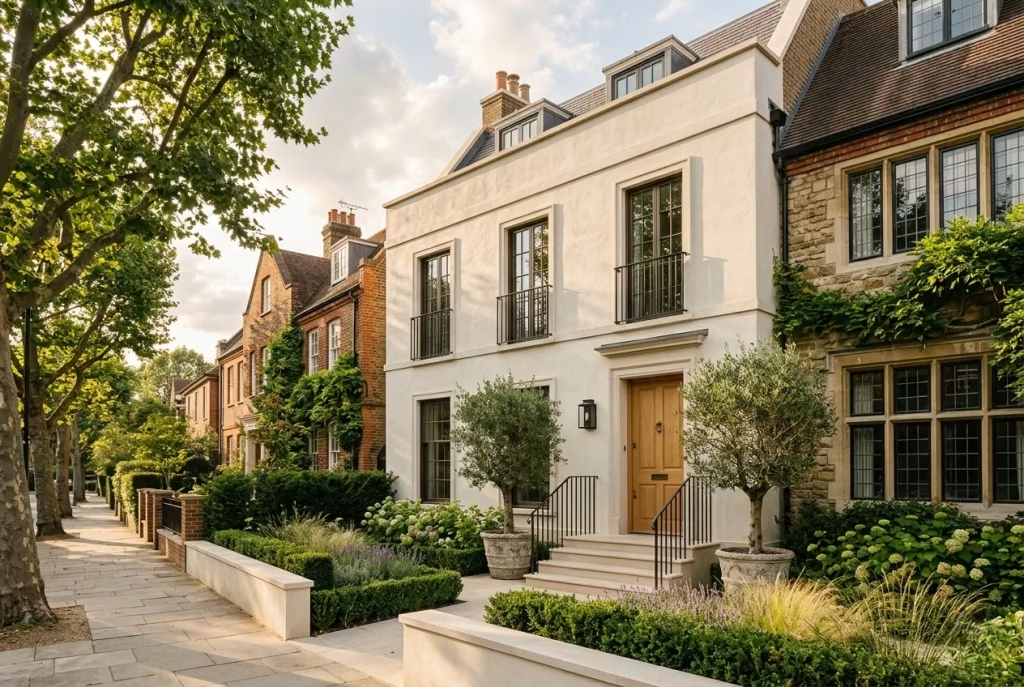
For most townhouses, particularly those in established residential neighbourhoods, warm whites are usually the safer and more elegant choice. They feel softer against brick neighbouring properties, mature planting, stone paving, and timber doors. Rather than shouting for attention, they settle into the street with a kind of quiet assurance. Shades with undertones of cream, chalk, putty, limestone, or soft sand tend to create that effect.
They are also kinder to the eye over time. A warm white can absorb the changing tones of daylight and still feel balanced, whereas a very bright cool white may look brilliant at noon and stark by late afternoon. If the house has period detailing, warm whites almost always make those elements feel more believable because they echo the mellow quality of traditional lime-based finishes.
Cooler Whites Can Sharpen Modern Detailing, but They Need Restraint
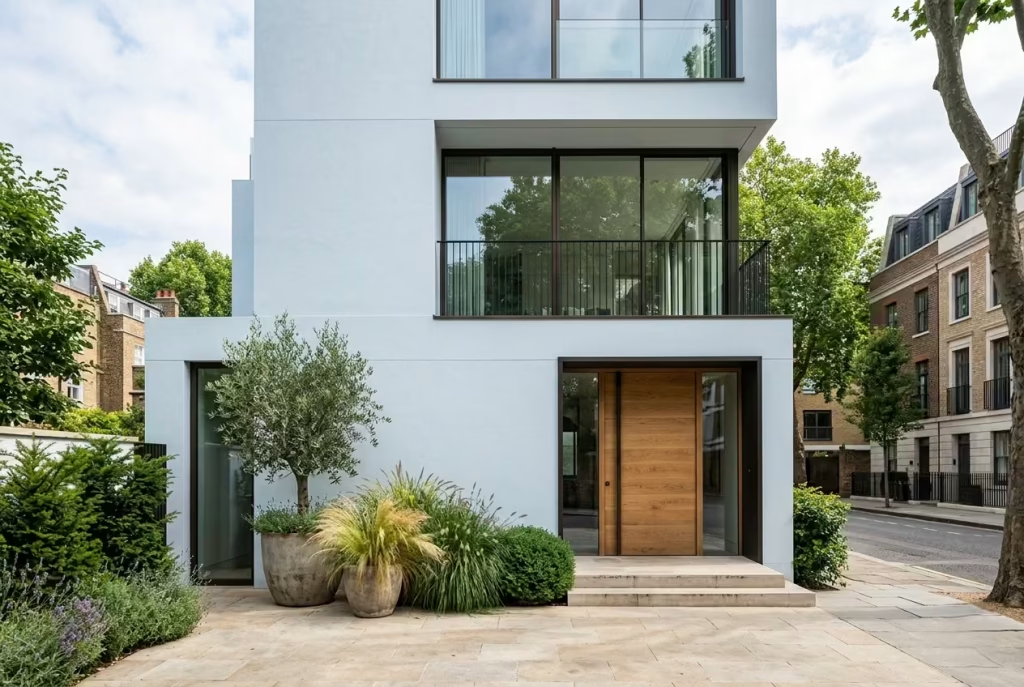
Cooler whites are not wrong, but they are more demanding. Used well, they can look crisp and beautifully modern, especially on townhouses with minimal lines, flush render, dark-framed glazing, and little ornamental detail. They create a sharper contrast, which can be highly effective if the architecture is clean enough to support it.
The challenge is that cooler whites can quickly feel brittle when paired with too many hard finishes. If you have black metal railings, dark paving, reflective glass, and no planting to soften the picture, the overall effect may feel severe rather than refined. In those cases, it helps to introduce something tactile and warmer nearby, perhaps a timber door, a limestone threshold, or textured greenery, so the facade does not feel all edge and no ease.
Practical Takeaways Before Choosing White Stucco for a Townhouse
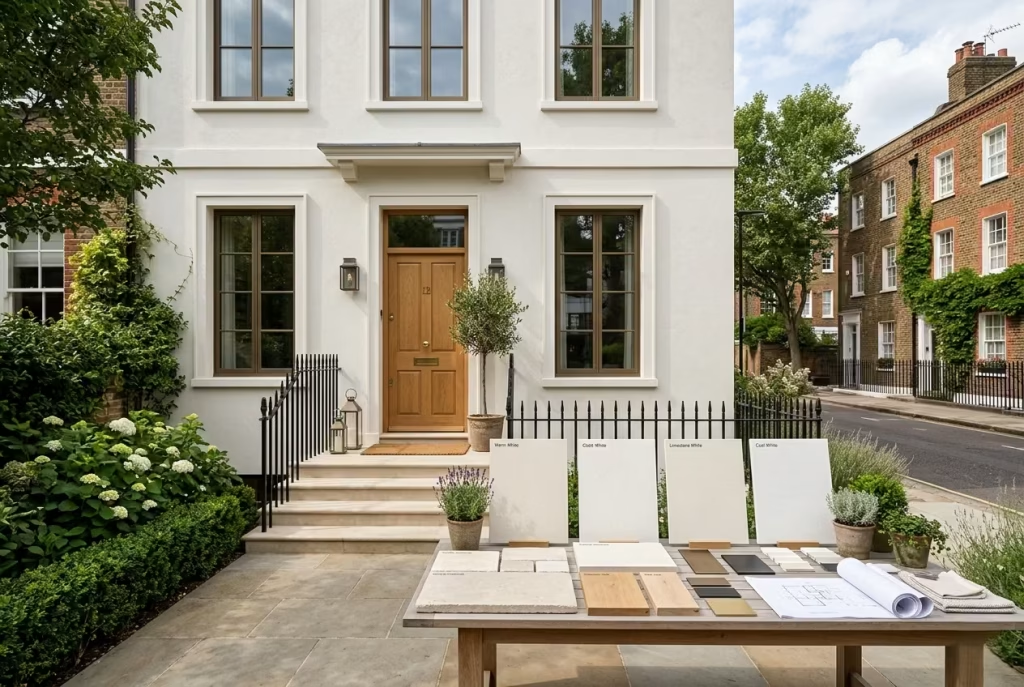
If you are considering white stucco for a townhouse exterior, a few design principles are worth keeping in mind:
- Study the street first. Look at the surrounding buildings, paving, planting, and natural light. White should feel intentional in context, not dropped in from another climate or architectural style.
- Test the colour outside, not just on a paint card. Morning sun, afternoon glare, and shadow can all shift the undertone.
- Think about maintenance from the beginning. White stucco shows dirt, splash marks, and pollution more readily than mid-tone finishes, particularly at lower levels near planting beds or roads.
- Use contrast carefully. Dark windows, bronze lanterns, stone steps, and timber doors can all work beautifully, but they need to be balanced rather than piled on.
- Choose texture with purpose. A lightly textured stucco can feel softer and hide minor imperfections better than an ultra-smooth finish, which tends to look more contemporary but can be less forgiving.
Exterior Ideas for Timeless Curb Appeal
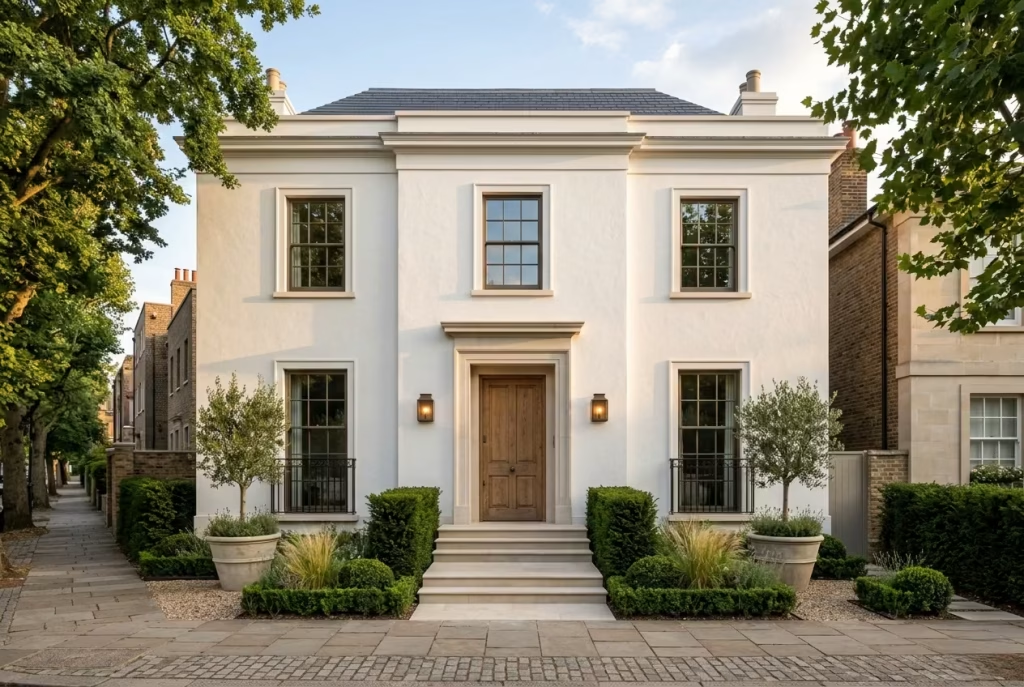
The exterior of a white stucco townhouse rarely succeeds because of one headline feature alone. More often, its appeal is built layer by layer, through the quiet discipline of proportion, the placement of architectural details, and the tension between softness and structure.
A beautifully rendered facade may set the tone, but it is the supporting elements that give it depth: the front door that introduces warmth, the window frames that sharpen the elevation, the steps that anchor it to the ground, and the planting that stops everything from feeling too polished for its own good.
In townhouses especially, where frontage is often limited and every visible detail carries more weight, curb appeal depends on making each decision count. The following ideas focus on precisely that. Not quick cosmetic tricks, but considered exterior moves that help a white stucco townhouse feel more elegant, more resolved, and far more memorable from the street.
Pair White Stucco with a Steady Roofline
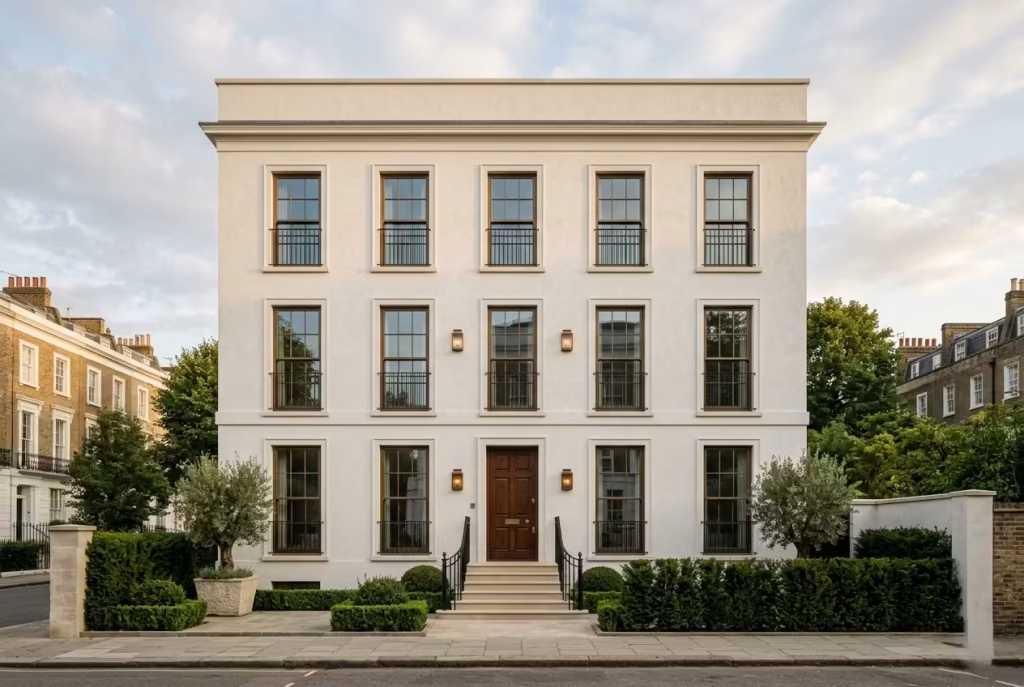
A white stucco townhouse almost always looks stronger when the roofline feels calm, deliberate, and visually settled. That may sound like a small architectural detail, but it often makes the difference between a facade that feels timeless and one that feels faintly unresolved. White stucco already brings softness and lightness to a building. If the roofline above it is cluttered with awkward peaks, fussy trim, oversized gutters, or poorly integrated dormers, the entire elevation can start to feel top-heavy. Instead of allowing the stucco to read as elegant and composed, the eye gets caught in unnecessary visual noise.
The most successful townhouse exteriors usually rely on simple roof geometry. A clean parapet, a restrained gable, or a well-proportioned cornice line gives the facade a clear stopping point and helps the whole composition hold together. In narrow townhouses especially, where the elevation is often read vertically, a steady roofline works almost like the final full stop at the end of a sentence. It contains the architecture neatly and stops the eye from drifting upward into a tangle of competing forms. This is particularly important if the house already has strong elements lower down, such as a raised stoop, tall sash windows, Juliet balconies, or an articulated entry surround. With so much happening across a compact frontage, the roof should be the part that keeps its head.
From a design perspective, white stucco benefits from that kind of restraint because it highlights silhouette more than heavily textured or darker materials do. When the facade is pale and light-reflective, every outline becomes more noticeable. Roof edges, gutter lines, flashing details, and trim profiles are all more visible against the sky, which means they need to be resolved with care. I have seen beautifully renovated townhouses lose some of their polish because the render was elegant but the roofline was handled as an afterthought. Bulky black plastic gutters, mismatched fascia boards, or shiny metal flashing can stick out like a sore thumb against a refined stucco finish, instantly cheapening what should feel tailored and architectural.
If you are updating an existing townhouse rather than building from scratch, this is one of the smartest places to tighten the design. Look at the roofline as a whole rather than as separate maintenance items. Ask whether the gutters can be reduced in visual bulk, whether downpipes can be aligned more discreetly, and whether the trim colour is helping the facade feel quieter or busier. Slim-profile metal guttering, colour-matched to the stucco or to the window frames, often works far better than bright white PVC because it recedes rather than shouting for attention. Flashing should do the same. It is there to protect the building, of course, but visually it should almost disappear. The best detailing is often the kind you barely notice until it is done badly.
There is also a practical side to this, and it matters. White stucco shows staining more readily than darker exteriors, particularly beneath roof edges where rainwater can mark the render over time. A poorly designed gutter system can leave streaking, splashback, and moisture discolouration that undermines the crispness of the facade within a season or two. That is why understated detailing is not just an aesthetic preference. It is part of making the exterior easier to live with. Well-positioned gutters, proper drip edges, and carefully integrated flashing help keep water moving away from the stucco rather than down its face, which in turn protects the finish and reduces maintenance.
As a rule of thumb, if the house has a classic or period character, I would keep the roofline detailing traditional but pared back. Think simple cornices, neatly profiled eaves, and painted metalwork that blends into the architecture rather than dominating it. If the townhouse leans contemporary, a flush parapet or very clean eaves detail can look exceptionally sharp against white stucco, especially when paired with slim dark-framed windows. Either way, the goal is the same: to let the roofline provide structure without stealing the limelight.
When this balance is right, the effect is subtle but powerful. The facade feels taller, calmer, and more assured. The white stucco reads as intentional rather than decorative, and the whole townhouse has that elusive quality good exteriors often share: it looks effortless, even though every line has been carefully considered.
Introduce Black or Bronze Window Frames
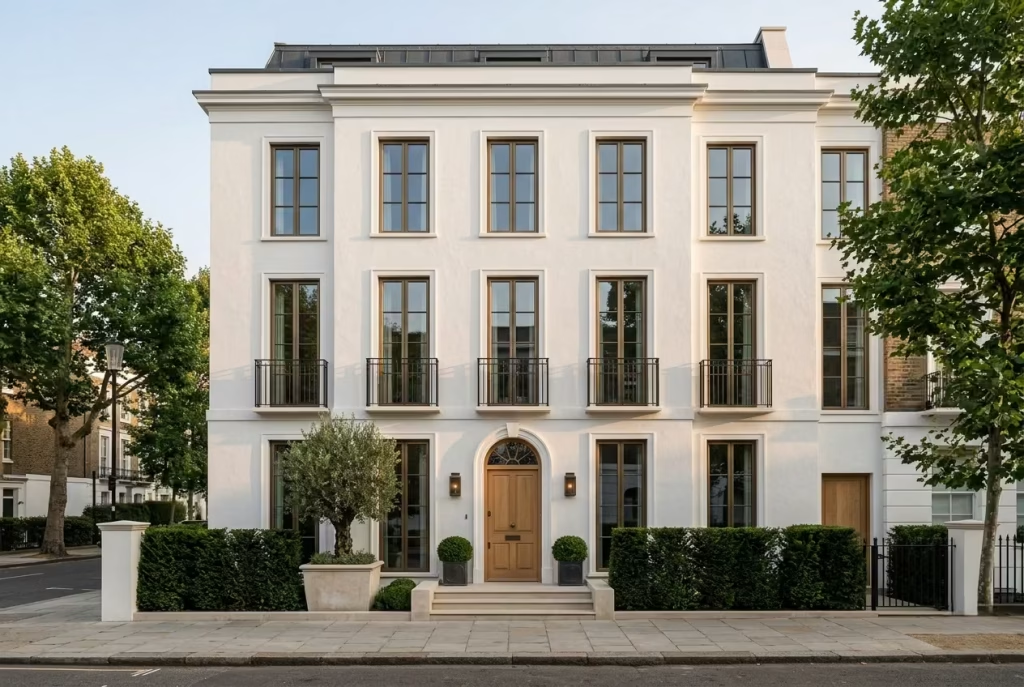
One of the most effective ways to give a white stucco townhouse more presence is to frame it with contrast. Black or bronze window frames do exactly that. Against a pale rendered facade, they create definition where white stucco alone can sometimes feel too soft or visually diffuse, particularly on taller elevations with repeated window openings. The contrast sharpens the architecture, draws attention to proportion, and gives the frontage a sense of structure that feels considered rather than decorative.
This works especially well on townhouses because windows often do much of the heavy lifting visually. On a narrow facade, they establish rhythm from floor to floor and help break up the height of the building. If the frames disappear entirely into the stucco, the elevation can lose some of its clarity, particularly from the street where details need to read quickly. Dark-framed glazing solves that problem neatly.
It outlines each opening, emphasises symmetry where it exists, and gives the facade a stronger architectural cadence, almost like adding eyeliner to a beautifully simple face. The stucco remains the calm backdrop, but the windows suddenly have enough presence to anchor it.
Black tends to feel crisper and more graphic, which suits contemporary townhouses or homes with clean lines and minimal detailing. Bronze, by contrast, is often the more nuanced choice. It still adds contrast, but with a softer, more lived-in warmth that sits beautifully against warm whites, limestone steps, timber doors, and mature planting. In real homes, bronze can be easier on the eye because it does not create the same stark jump as a true black, especially in full sun where black frames can sometimes read a little severe.
The key is proportion. If the frames are slim and well-made, the contrast feels elegant. If they are bulky, shiny, or paired with too many other dark elements, the facade can start to feel heavy-handed. I usually treat dark window frames as the architectural linework of the house, there to sharpen and steady the composition, not dominate it.
When handled with that level of restraint, they bring exactly the right amount of edge to white stucco, giving the townhouse definition without sacrificing the softness that made the exterior appealing in the first place.
Add a Refined Front Door Statement
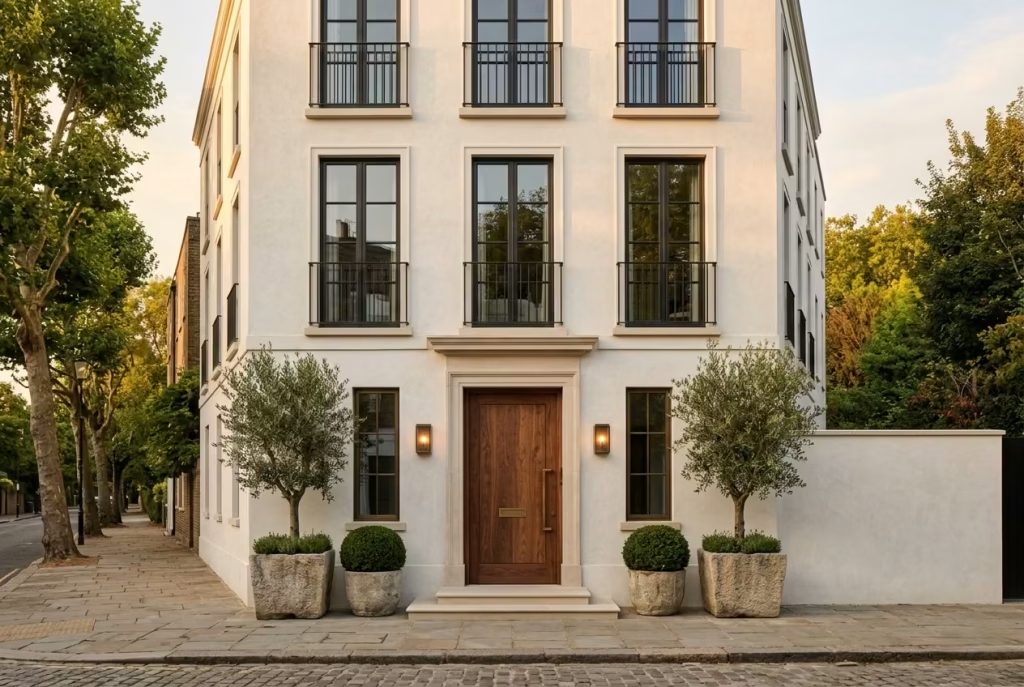
On a white stucco townhouse, the front door has an outsized role. It is one of the first details the eye lands on, and because the surrounding facade is often pale, calm, and relatively restrained, the entrance becomes the natural place to introduce depth, character, and a stronger sense of welcome. The trick is to treat it as a considered architectural feature rather than a splash of colour for its own sake. A good front door should feel like part of the house’s language, not a last-minute attempt to liven things up.
This is why deep wood finishes, painted navy, charcoal, or muted green tend to work so well. They add enough contrast to punctuate the facade, but they do so with substance rather than noise. A walnut-stained oak door, for instance, can bring warmth to a white stucco exterior that might otherwise feel slightly austere, especially when paired with stone steps or bronze lighting.
A dark painted finish, on the other hand, gives the entry a more tailored edge and can help ground the lower portion of a tall townhouse, which is often important when the building rises across three or four storeys. Muted green is particularly effective on homes with softer landscaping because it echoes foliage without slipping into anything too obvious or saccharine.
Colour, however, is only half the story. Proportion matters just as much, if not more. A front door that is too narrow, too squat, or crowded by oversized sidelights can throw off the balance of the entire entrance.
On period townhouses, taller doors with generous panels often feel more convincing because they suit the verticality of the facade and give the threshold a sense of ceremony. On more contemporary homes, a flush timber door or a slim-framed glazed design can work beautifully, provided the scale still feels generous enough for the frontage.
As a rule, the entrance should hold its own against the surrounding windows rather than look like an afterthought tucked beneath them.
Material quality is where the difference between stylish and truly timeless often lies. Solid timber, properly sealed hardwood, or a well-crafted painted composite door with a matte finish will always feel more substantial than anything glossy, flimsy, or overly decorative. The same goes for hardware.
A beautifully weighted handle, a discreet letter plate, and a well-placed exterior lantern can elevate the whole composition far more effectively than ornate detailing ever could. In other words, this is not the place to gild the lily. A refined front door works because it brings focus and balance to the facade, giving the townhouse a point of arrival that feels grounded, elegant, and quietly confident.
Use Symmetry to Strengthen Narrow Frontages
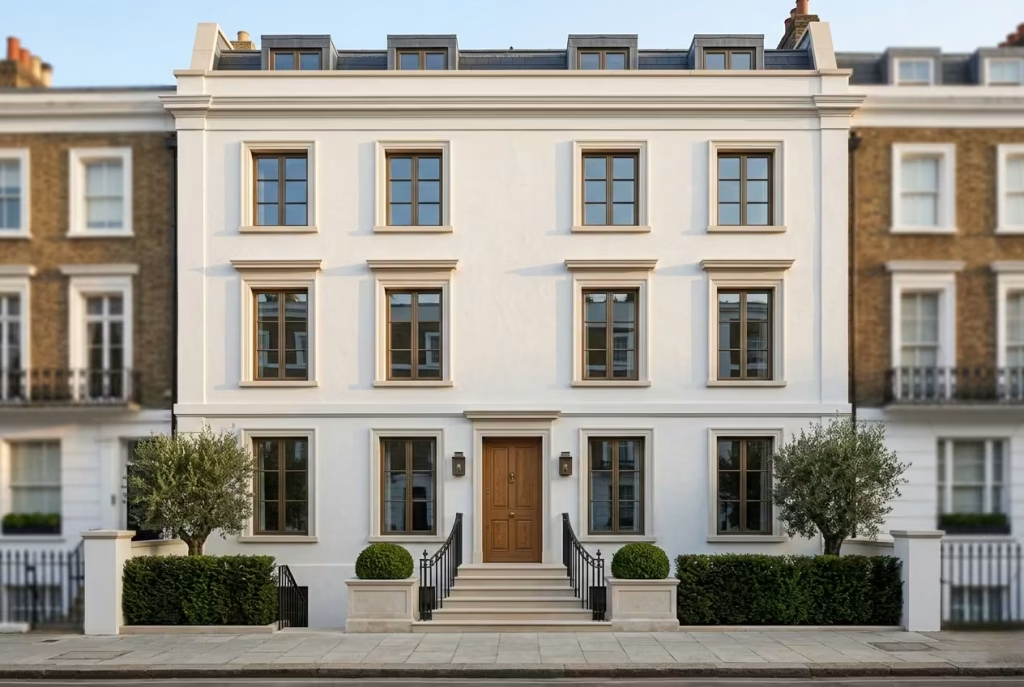
When a townhouse has a narrow frontage, symmetry can be one of the most useful design tools in the box. It brings order to facades that might otherwise feel pinched, top-heavy, or slightly haphazard, particularly when the building rises across several storeys but only occupies a modest width on the street.
White stucco, with its calm and light-reflective quality, makes that sense of order even more noticeable. It clears the visual clutter, which means the arrangement of windows, lighting, steps, and door placement suddenly matters all the more. Get the composition right and the facade feels settled and quietly elegant. Get it wrong and even beautiful materials can struggle to pull their weight.
Balanced windows are usually the starting point. Repeating similar openings across the elevation gives the eye something reliable to follow, which is especially helpful on taller homes where verticality can otherwise feel a touch awkward.
Even if the interior layout prevents perfect symmetry, there is often room to create visual balance through consistent window heights, aligned lintels, or matching frame proportions. That sense of rhythm helps the house read as intentional from the pavement rather than pieced together one renovation at a time.
The same principle applies to the entrance sequence. A centred front door, where the architecture allows for it, often lends a townhouse more poise straight away. It creates a natural focal point and makes the approach feel clearer, particularly when paired with matching planters, evenly spaced lanterns, or a symmetrical run of steps.
This does not mean every frontage needs to look formal or rigid. The goal is not to turn the house into a stage set. It is simply to give the eye a feeling of balance, the sort that makes a facade feel calm at first glance and more convincing the longer you look.
Lighting is another area where symmetry earns its keep. Wall lanterns placed at the same height on either side of a door, or a pair of uplights positioned evenly beneath windows, can quietly sharpen the whole elevation after dark.
It is one of those details that seems minor on paper but, in practice, can tie everything together. In compact townhouses, where there is little room for grand gestures, this kind of measured repetition often works wonders. It helps the facade feel composed, tailored, and confident in its own skin, which is exactly what timeless curb appeal should do.
Incorporate Stone or Limestone Steps
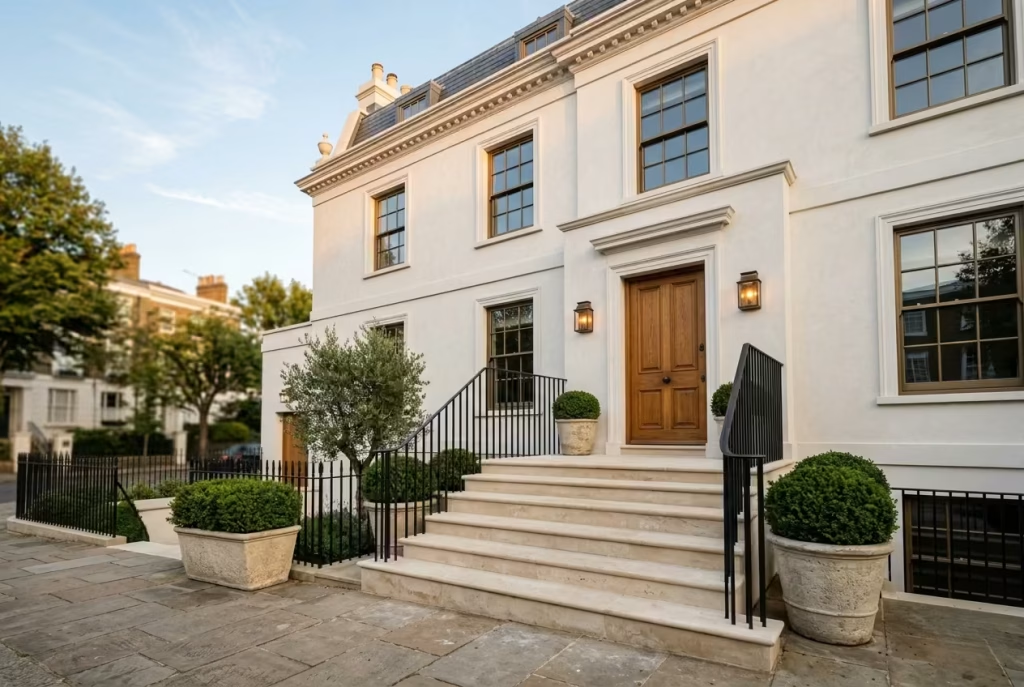
If white stucco gives a townhouse its softness, stone steps are often what give it weight. They anchor the facade to the ground, introduce texture where a rendered exterior can otherwise feel a touch flat, and make the entrance look more permanent, as though it belongs to the architecture rather than sitting awkwardly in front of it.
On townhouses in particular, where the front approach is often compressed into a small run of steps, a narrow stoop, or a raised threshold, that sense of grounding matters more than people realise. It is the difference between an entry that feels insubstantial and one that has genuine presence.
Limestone is especially effective here because it carries a quiet elegance without trying too hard. Its chalky, mineral quality sits beautifully against white stucco, creating tonal contrast rather than a harsh visual break.
That subtle shift is important. A white facade paired with heavily patterned stone or something too dark can feel abrupt, whereas pale limestone, travertine, or a soft grey natural stone tends to deepen the composition without stealing the show.
It adds just enough variation to stop the frontage from reading as one continuous block of light material, which can otherwise leave a townhouse looking washed out in strong sun.
There is also a practical reason stone steps are worth the investment. They age better than many painted or tiled alternatives, particularly on exposed front entries that deal with rain, grit, plant debris, and daily foot traffic. Honed or lightly textured finishes are usually the sweet spot.
They feel refined underfoot, but still provide enough grip when the weather turns or the steps catch morning condensation. I would avoid anything highly polished at an exterior threshold. It may look smart in the brochure, but it can become slippery in real life and tends to show wear more quickly where people pause, pivot, or drag in dirt from the street.
Proportion matters here too. The depth of each tread, the height of the riser, and the width of the stair should feel in step with the townhouse itself. As a guide, exterior risers are often most comfortable around 150 to 170 mm high, with treads of roughly 280 to 320 mm, though the architecture should always lead.
If the steps are too shallow or meanly scaled, the entrance can feel stingy, even if the material is beautiful. Done well, stone steps do more than connect pavement to front door. They give the whole facade a stronger footing, both visually and practically, and make the arrival feel considered from the very first step.
Layer Exterior Lighting with Purpose
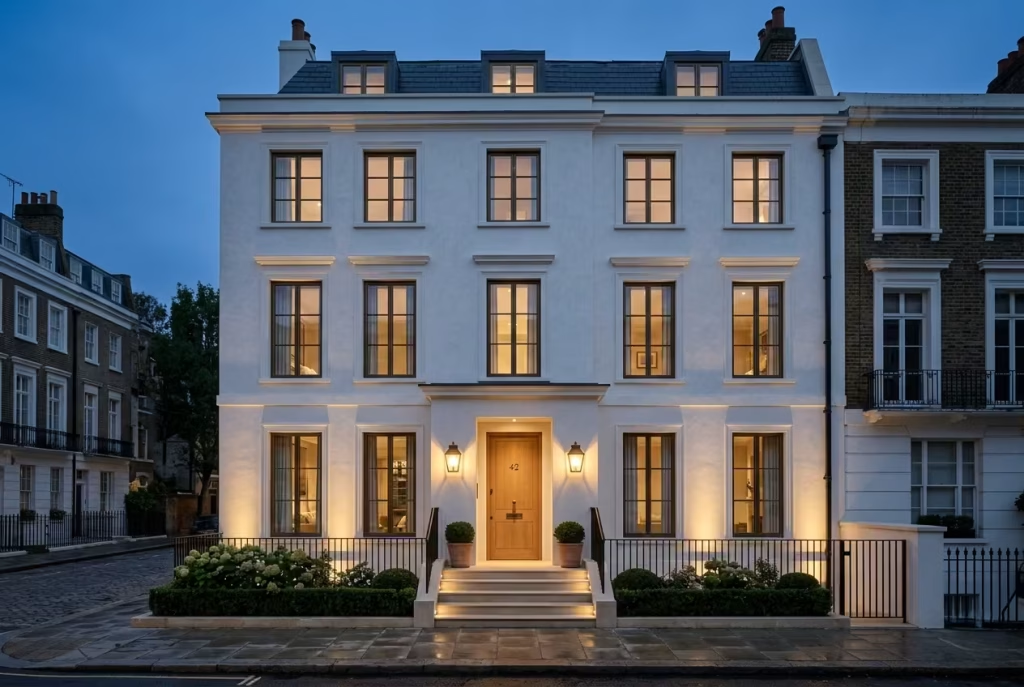
A white stucco townhouse can look beautiful in daylight, but if the exterior lighting is handled carelessly, much of that character disappears the moment the sun drops. Good outdoor lighting should not simply make the house visible after dark.
It should shape the way the facade is experienced, guide people safely to the door, and give the exterior a softer, more welcoming presence in the evening. On a rendered townhouse, where the walls already reflect light beautifully, even a modest lighting scheme can go a long way if it is layered with intention rather than scattered about as an afterthought.
Wall lanterns are usually the backbone of that scheme. Placed either side of the entrance, or flanking a porch if the architecture allows, they help frame the door and give the facade a sense of balance once dusk settles in.
On taller townhouses, they also break up the verticality at eye level, which can make the frontage feel less looming and more human in scale. Step lights play a different role but are just as useful, particularly where the entry is raised above street level. Recessed lights built into risers or low side walls help people navigate safely without flooding the entrance with glare, and they make stone or limestone steps feel far more considered at night.
Then there is porch lighting, which is often where a little restraint goes a long way. A discreet ceiling-mounted fixture or a small downlight tucked into the soffit can wash the entry in a soft pool of light, enough to make the threshold feel welcoming without turning it into a shopfront.
Colour temperature is where many exteriors go off the rails. For a townhouse, warm light in the 2700K to 3000K range is almost always the better choice. It flatters white stucco, softens stone, and gives timber doors or bronze hardware a richer, more settled look. Cooler LEDs, by contrast, can make the facade feel harsh and slightly clinical, particularly against pale render, which tends to amplify every blue note in the light. I
would also keep brightness in check. Exterior lighting should reveal the house, not interrogate it. A few well-placed fittings with a warm, consistent glow will usually do more for curb appeal than a row of overly bright fixtures ever could. When layered properly, lighting does not just illuminate the townhouse. It gives it a second life after sunset, quieter perhaps, but often even more atmospheric than by day.
Add Iron or Slimline Metal Railings
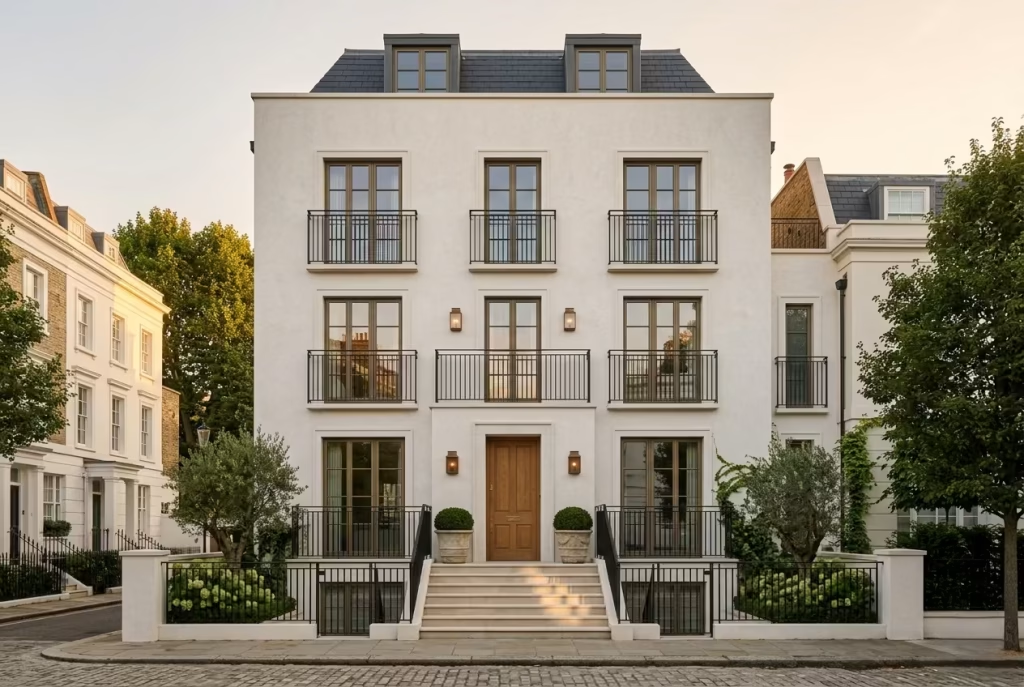
Railings are often treated as a practical necessity, yet on a white stucco townhouse they can become one of the quiet details that pulls the entire facade together. They introduce rhythm, define transitions, and give stairs, balconies, or upper terraces a clear architectural outline without overwhelming the simplicity of the exterior.
Against a pale stucco backdrop, even the finest metal profile becomes more noticeable, which is why thoughtful design matters. Like a thread running through a well-tailored garment, the right railing connects different parts of the building into one cohesive composition.
Slimline wrought iron or powder-coated steel works particularly well because it adds definition without creating visual weight. Delicate vertical balusters, understated horizontal rails, or clean geometric patterns complement the softness of white stucco while introducing just enough contrast to keep the facade from feeling one-dimensional.
This balance is especially valuable on townhouses with raised entrances or projecting balconies, where railings naturally draw the eye upward. Instead of competing with the architecture, they should gently reinforce its lines, allowing windows, doors, and surrounding materials to remain the focal points.
It is easy to fall into the trap of choosing elaborate decorative railings in the hope of adding character, but more often than not, less proves to be more.
Heavy scrollwork, oversized posts, or highly ornamental patterns can make a narrow frontage feel crowded and visually dated. Simple profiles, by contrast, age remarkably well because they rely on proportion rather than decoration.
They also pair comfortably with a wide range of architectural styles, whether the townhouse leans towards classic elegance or contemporary restraint. It is a classic example of keeping the main thing the main thing. The railing should support the architecture, not steal the spotlight.
Material quality deserves just as much attention as the design itself. Hot-dip galvanised steel with a durable powder-coated finish offers excellent resistance to corrosion, making it a sensible choice for homes exposed to frequent rain or coastal air.
Matte black remains a timeless favourite, while dark bronze introduces a softer warmth that sits beautifully alongside limestone, timber doors, and mature planting. Whichever finish you choose, consistency is key.
Matching the railing colour with window frames, exterior lighting, or gate hardware creates subtle continuity, helping the entire frontage feel measured, refined, and built to stand the test of time.
Soften the Base with Planting
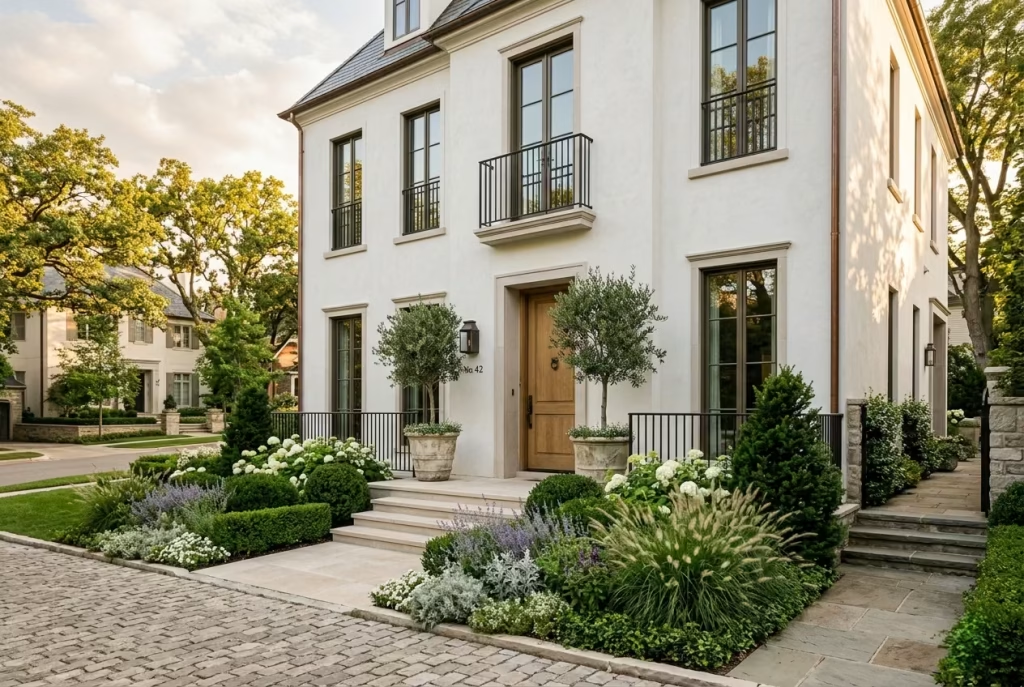
A beautifully rendered white stucco townhouse can sometimes feel a little too crisp if it rises directly from stone paving or bare ground.
Thoughtfully chosen planting solves that almost effortlessly. It softens the transition between architecture and landscape, giving the building a stronger sense of belonging within its surroundings rather than appearing as though it has simply been placed on the site.
Even a modest planting scheme can breathe life into the facade, introducing colour, texture, and seasonal variation that make the home feel more welcoming throughout the year.
Evergreen planting provides the foundation because it keeps the entrance looking structured regardless of the season. Clipped box hedging, compact yew, or neatly shaped evergreen shrubs create a sense of permanence that pairs naturally with the timeless quality of white stucco.
These plants establish clear lines without competing with the architecture, helping the lower portion of the facade feel settled and visually anchored. For townhouses with limited front gardens, symmetrical container trees such as olive trees, bay laurels, or multi-stem evergreens can achieve a similar effect while taking up very little space.
Their upright form complements the vertical proportions of townhouse architecture and introduces height without making the frontage feel crowded.
Layering is where the landscape begins to tell a richer story. Once the evergreen structure is in place, seasonal planting can weave in moments of colour and softness without dominating the composition.
Lavender spilling gently over stone edging, ornamental grasses moving in the breeze, or flowering perennials that bloom at different times of the year create subtle shifts that keep the entrance feeling alive.
It is a reminder that a well-designed exterior is never completely static. Like a fine wine that improves with age, the landscape gains depth as plants mature, filling out the space and giving the townhouse a lived-in elegance that cannot be achieved on installation day alone.
Planting also has a practical role that often goes unnoticed. Shrubs and groundcover help reduce rain splash against the lower section of white stucco walls, where dirt and moisture marks are most likely to appear.
Keeping plants a comfortable distance from the render, usually around 300 to 450 mm or 12 to 18 inches, allows air to circulate while making maintenance easier. This small detail protects both the planting and the exterior finish over time.
Perhaps the greatest strength of landscaping is that it encourages the architecture to share the spotlight with nature. White stucco reflects changing daylight beautifully, while foliage introduces movement, shadow, and texture that evolve with every season.
Together, they create a frontage that feels balanced and deeply connected to its streetscape, proving that the most memorable curb appeal often grows from the ground up rather than relying solely on the building itself.
You May also Like: 25 Farmhouse Garden Ideas That Feel Timeless, Practical, and Full of Charm
Use Timber Accents for Warmth
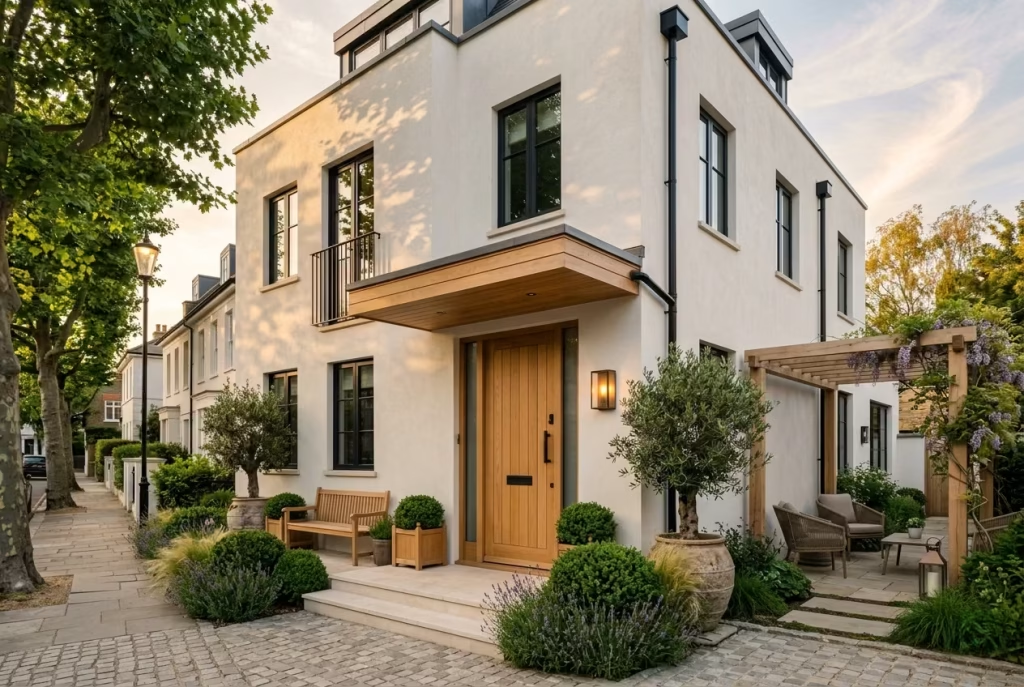
White stucco has an unmistakable freshness, but without a balancing material it can sometimes feel a little too pristine. Timber is one of the most effective ways to introduce warmth because it brings natural variation in colour and grain that manufactured finishes simply cannot replicate.
The contrast is gentle rather than dramatic, allowing the townhouse to feel inviting instead of overly polished. Like adding a pinch of salt to a well-cooked meal, the right timber accents do not overpower the design. They quietly bring everything into balance.
A timber front door is often the obvious starting point, yet there are many other opportunities to weave this material into the exterior. Natural wood shutters, soffit linings, pergola beams, built-in bench seating, or even timber-clad ceiling panels beneath a covered porch can soften the clean lines of a white stucco facade.
These details create visual continuity and introduce layers of texture that make the architecture feel richer without relying on excessive ornament. On compact townhouses, where every element is viewed at close range, these tactile finishes can leave a lasting impression.
The choice of timber deserves careful thought. Warm-toned species such as oak, cedar, thermally modified ash, or Accoya develop character over time and pair beautifully with white stucco, limestone, and dark metalwork.
Some homeowners prefer to preserve the original colour with UV-resistant oils, while others embrace the graceful silver-grey patina that certain species develop naturally with age. Either approach can look elegant, provided it feels intentional and complements the wider material palette. The key is consistency.
Mixing several timber tones within one small frontage can muddy the composition and distract from the architecture. Quality detailing matters just as much as the timber itself. Narrow, well-proportioned boards, concealed fixings, crisp joints, and carefully finished edges give the material a bespoke appearance.
Poorly detailed timber, on the other hand, can quickly lose its charm through uneven weathering or visible gaps. In my experience, it is far better to use timber sparingly but exceptionally well than to scatter it across the facade without a clear purpose.
One beautifully crafted bench beneath the entrance window or a thoughtfully designed pergola above a terrace can achieve far more than covering every available surface in wood.
Beyond appearance, timber also changes how a home feels. It catches the morning sun with a soft glow, complements surrounding planting, and introduces a tactile quality that encourages people to slow down and appreciate the entrance.
Against the calm backdrop of white stucco, those natural textures stop the exterior from feeling cold or impersonal. Instead, they create a townhouse that feels welcoming, lived in, and designed with longevity in mind rather than fleeting fashion.
Keep Facade Details Minimal but Intentional
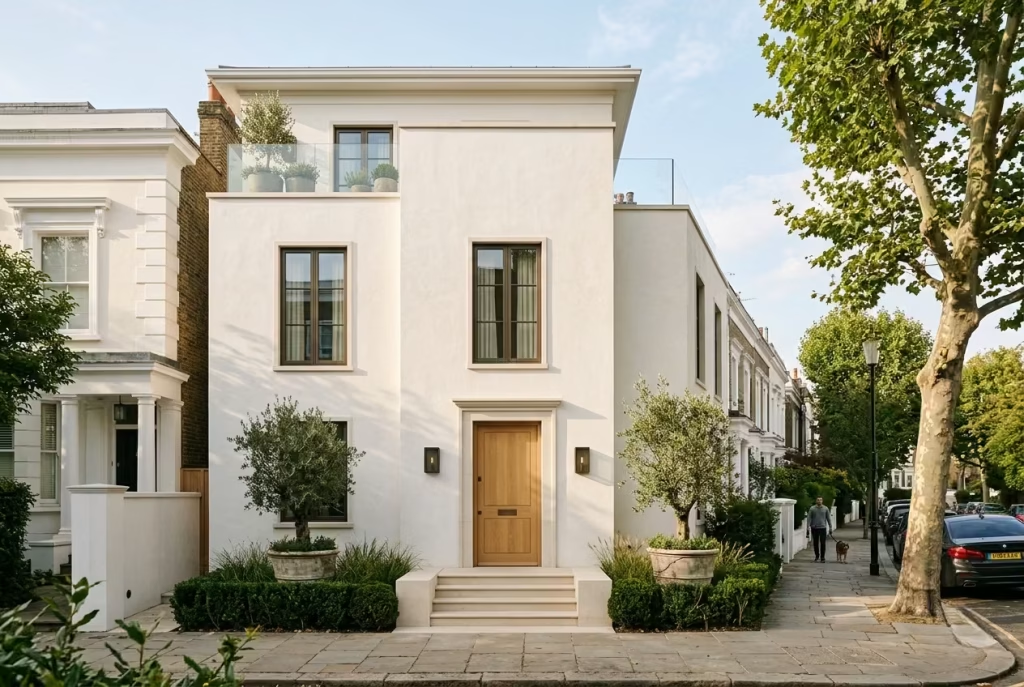
One of the greatest strengths of a white stucco townhouse is its ability to let architecture take centre stage. That quality can easily be lost when too many decorative elements compete for attention.
Oversized mouldings, elaborate trim, multiple cladding materials, and ornamental features added without a clear purpose often create visual clutter rather than character. It is a classic case of less being more. The most memorable homes rarely rely on an endless collection of details. Instead, they succeed because every element has earned its place.
A restrained facade allows the eye to appreciate proportion before decoration. Clean window surrounds, a thoughtfully designed entrance, carefully chosen lighting, and one or two complementary materials are usually enough to create depth and personality.
White stucco naturally reflects light and highlights the shape of the building, so there is little need to disguise it with excessive embellishment. In fact, every additional feature becomes more noticeable against a pale surface, making it even more important to edit carefully. Removing unnecessary details often improves a facade more than adding new ones.
Limiting the number of exterior finishes is another design decision that pays dividends over time. A simple palette of white stucco, natural stone, timber, and one metal finish creates harmony because each material has room to breathe.
Introducing brick, multiple paint colours, decorative tiles, contrasting render textures, and several metal finishes within the same frontage can leave the exterior feeling fragmented. When materials are chosen with intention, each one contributes something different, whether it is warmth, texture, durability, or contrast, without competing for the spotlight.
This approach also makes future updates far easier. A restrained facade provides a timeless backdrop that can evolve through planting, outdoor furniture, lighting, or seasonal styling without requiring major architectural changes. Rather than chasing every passing trend, you are building a home with lasting flexibility.
I have found that the townhouses people continue to admire years later are rarely the ones filled with decorative flourishes. They are the homes that feel balanced, carefully edited, and confident enough not to shout. Like a well-tailored suit that never falls out of fashion, thoughtful restraint gives a white stucco townhouse an elegance that stands the test of time.
Outdoor Living Moments That Extend the Architecture
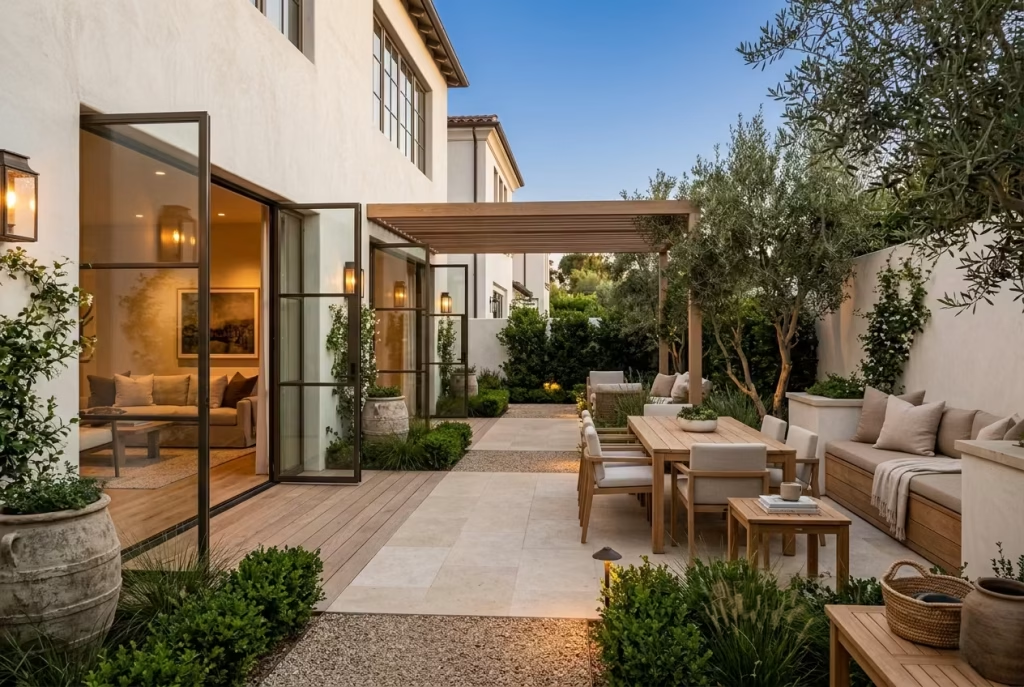
The most successful white stucco townhouses do not stop making an impression at the front door. Their design continues naturally into courtyards, terraces, balconies, and garden spaces, creating a home that feels connected rather than divided into separate indoor and outdoor zones. These transitional areas often occupy only a modest footprint, yet they can transform the way a townhouse is experienced every day. A thoughtfully planned courtyard becomes a peaceful morning retreat, a well-proportioned balcony evolves into an outdoor sitting room, and a carefully framed terrace encourages family and guests to linger long after the sun begins to set.
What makes these spaces truly memorable is not their size but the way they echo the architecture. Repeating the same restrained palette of white stucco, natural stone, timber, and greenery creates visual continuity that allows the exterior to unfold gracefully rather than feeling like an unrelated extension. It is often said that good design is in the details, and nowhere is that more apparent than in compact outdoor spaces where every material, sightline, and furnishing carries greater significance. When each decision works in harmony, the boundaries between house and landscape begin to soften.
The following ideas focus on creating outdoor spaces that feel like a natural continuation of the townhouse itself. Instead of treating terraces, balconies, and courtyards as decorative extras, they explore how thoughtful planning, durable materials, and carefully layered textures can add comfort, functionality, and timeless character while strengthening the architecture as a whole.
Create a Small Courtyard with Quiet Luxury
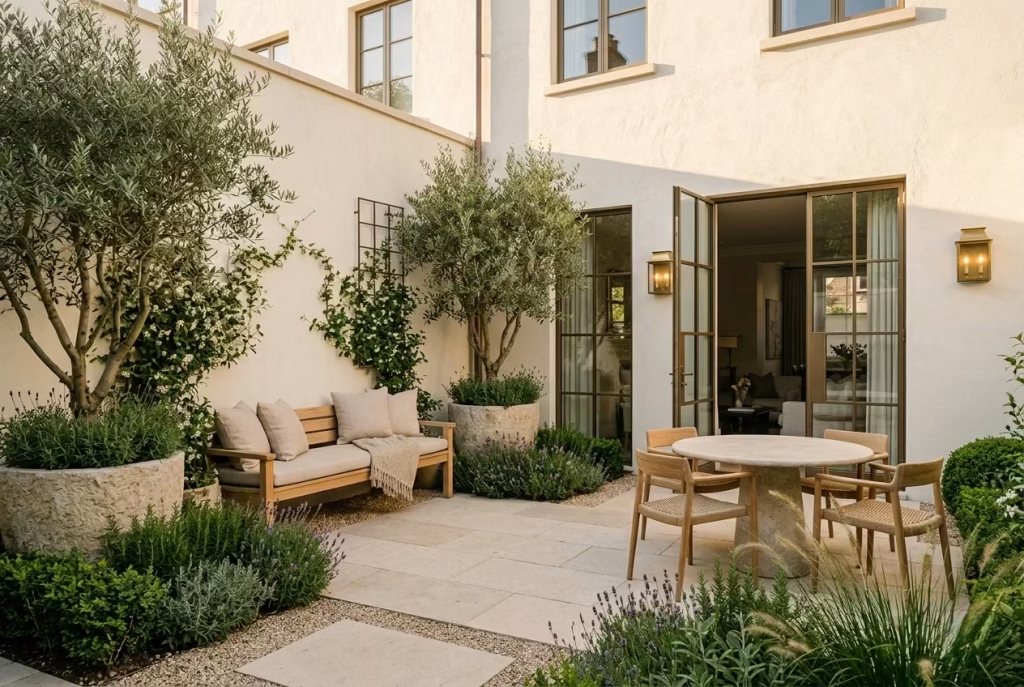
A small courtyard may not have the scale of a sprawling garden, but when thoughtfully designed, it can become one of the most rewarding spaces in a townhouse. In homes where outdoor space is often limited to a compact rear garden or an enclosed side courtyard, every square metre has the potential to work harder.
Rather than trying to squeeze in too many features, the most successful courtyards embrace simplicity, allowing carefully chosen materials and purposeful layouts to create a sense of calm that feels worlds away from the surrounding street.
The foundation of that atmosphere usually begins beneath your feet. Gravel, natural stone pavers, or limestone tiles introduce texture in a way that feels understated yet deeply inviting. Gravel produces a gentle crunch underfoot that instantly slows the pace, turning even a short walk across the courtyard into a more sensory experience.
Stone pavers, especially when laid with consistent spacing, create a cleaner architectural rhythm that complements the crispness of white stucco, while lightly textured limestone brings subtle tonal variation that becomes even more beautiful as daylight shifts across its surface. Each material contributes something different, but together they share one important quality. They age gracefully, developing character through use rather than losing their appeal.
The layout deserves just as much attention as the material palette. In compact courtyards, it often pays to resist the temptation to fill every corner. Leaving breathing room between seating, planting, and pathways makes the space feel noticeably larger and far more comfortable to use.
As a practical guide, maintaining a circulation path of at least 900 mm to 1.2 metres, roughly 3 to 4 feet, allows people to move easily without the courtyard feeling cramped. A built-in bench along one wall, paired with a simple dining table or a pair of lounge chairs, frequently achieves more than multiple pieces of freestanding furniture competing for limited space.
Planting adds the finishing layer, softening the hardscape without overwhelming it. Evergreen shrubs, fragrant herbs, climbing vines, or multi-stem specimen trees introduce movement, colour, and seasonal interest while preserving the courtyard’s peaceful character.
Soft outdoor lighting, perhaps from discreet wall fixtures or subtle uplighting beneath planting, extends the enjoyment well into the evening, creating an atmosphere that feels intimate rather than theatrical.
What makes these spaces memorable is not extravagance but thoughtful restraint. A well-designed courtyard becomes a natural extension of the townhouse, echoing the same materials, proportions, and quiet confidence found throughout the architecture.
It offers somewhere to enjoy a morning coffee, share an evening meal, or simply pause for a few moments of fresh air, proving that even the smallest outdoor space can punch well above its weight when every design decision is made with care.
Design a Balcony as a Real Outdoor Room
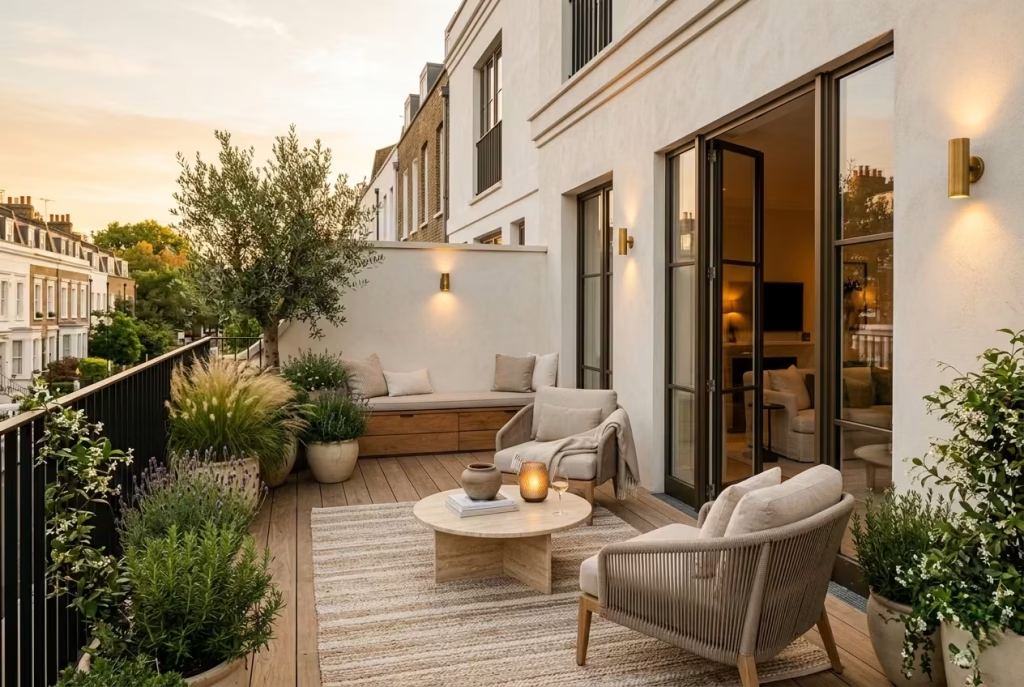
A balcony should never feel like an afterthought or a place reserved only for the occasional potted plant. In a townhouse, where outdoor space is often at a premium, even a modest balcony can become an extension of everyday living when it is planned with the same care as an interior room.
The most inviting balconies are those that encourage daily rituals, whether that means enjoying a quiet morning coffee, reading in the afternoon sun, or winding down with family as evening settles in. When the space supports real life rather than simply looking attractive from the street, it becomes one of the hardest-working areas of the home.
The secret lies in choosing furniture that respects the scale of the space. A compact bistro table, two comfortable lounge chairs, or a built-in bench with concealed storage often delivers more comfort than trying to squeeze in a full outdoor dining set. Leaving enough room to move comfortably is equally important.
As a general guide, maintaining a clear walkway of at least 750 to 900 mm, roughly 30 to 36 inches, prevents the balcony from feeling cramped and makes it far easier to enjoy on a daily basis. It is a reminder that successful design is not about filling every available corner. Sometimes the empty space between furniture pieces is what allows the balcony to breathe.
Materials also play a defining role because balconies are exposed to changing weather throughout the year. Powder-coated aluminium, sustainably sourced hardwood, porcelain pavers, and performance fabrics stand up well to sun, rain, and fluctuating temperatures while requiring relatively little maintenance.
These finishes also complement the clean simplicity of a white stucco townhouse, creating continuity between the architecture and the outdoor living space. A weathered teak chair, a stone-topped side table, or a timber deck beneath your feet introduces warmth and texture that soften the crispness of the surrounding render without overpowering it.
Planters complete the picture by adding softness and a sense of life. Instead of scattering small pots across every surface, it often works better to group a few larger containers filled with evergreen shrubs, ornamental grasses, fragrant herbs, or climbing plants.
This creates a stronger visual rhythm while leaving the balcony feeling open and uncluttered. Thoughtfully positioned greenery can also provide a welcome sense of privacy, particularly in urban settings where neighbouring properties sit close by.
Perhaps the most valuable shift is to stop thinking of the balcony as an architectural feature and start treating it as another room in the home. Adding an outdoor rug, soft cushions, warm lighting, or a lightweight throw for cooler evenings encourages the space to be used throughout much of the year instead of only during perfect weather.
Once the balcony becomes part of everyday routines rather than an overlooked platform beyond the door, it earns its place as a genuine living space, proving that even the smallest outdoor area can become a cherished retreat when designed with intention.
Use Texture in Hard Landscaping
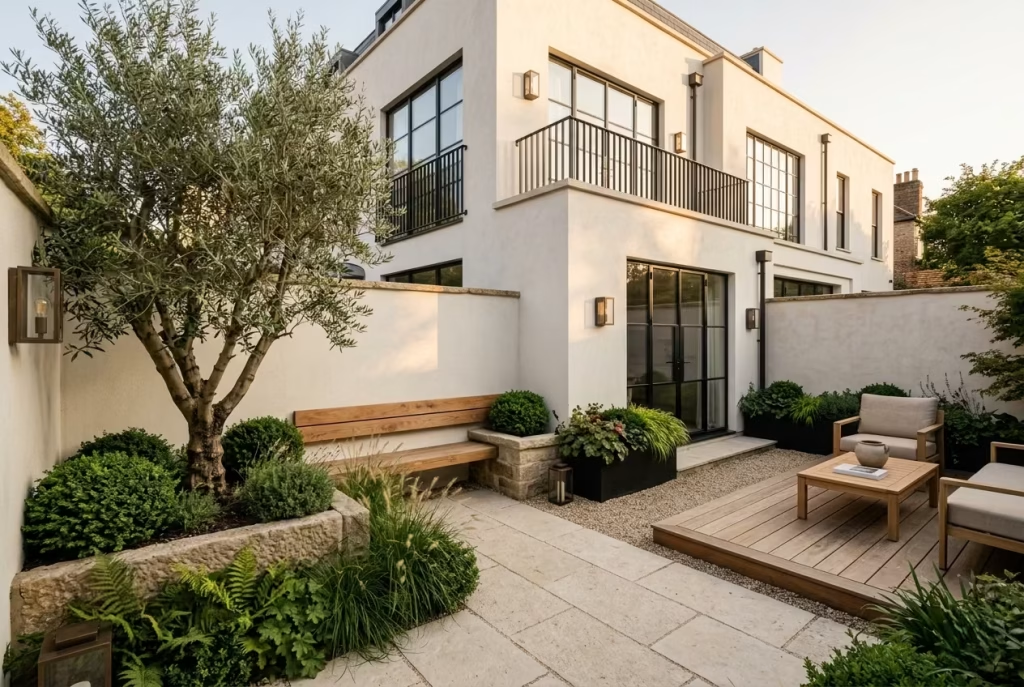
A white stucco townhouse does not need an abundance of decorative features to feel rich in character. More often than not, it is the interplay of textures that gives the exterior its depth and lasting appeal. Hard landscaping provides the perfect opportunity to introduce those subtle layers.
When smooth render sits alongside natural stone, warm timber, gravel, and carefully chosen planting, the result feels balanced and inviting rather than flat or predictable. Each material contributes its own personality, creating a setting that rewards a closer look without ever feeling overdesigned.
This approach is particularly valuable in compact urban spaces where every surface is seen at close range. A small courtyard or front garden rarely has the luxury of sweeping views or dramatic changes in level, so texture becomes the element that keeps the eye engaged. A lightly riven limestone path catches the afternoon light differently from smooth stucco walls.
Fine gravel introduces movement and sound underfoot, while timber seating or decking adds warmth through its natural grain. Even the soft foliage of ornamental grasses or clipped evergreens brings another layer of contrast against the more structured materials surrounding them. Individually, these details may seem modest. Together, they create an outdoor space with genuine depth.
The key is to edit the palette rather than continually adding new finishes. Three or four complementary materials are often all that is needed to build a cohesive landscape. For example, pairing white stucco with limestone paving, oak or cedar detailing, and evergreen planting creates a timeless combination that feels calm across every season.
Introducing too many competing textures can have the opposite effect, making a small space appear fragmented and visually busy. As the saying goes, too many cooks spoil the broth. A restrained material palette allows each finish to stand out for the right reasons.
Practical performance should also guide material selection. Textured stone provides better grip than highly polished surfaces, making pathways and terraces safer during wet weather. Timber should be suitable for exterior use and detailed to allow water to drain freely, helping it weather evenly over time.
Gravel offers excellent permeability, reducing standing water while adding a relaxed, natural quality to the landscape. These decisions may not be the first things visitors notice, but they contribute significantly to how the space functions throughout the years.
The most memorable townhouse exteriors rely on texture because it feels authentic. Rather than shouting for attention through elaborate ornament, they create interest through honest materials that age gracefully and reveal more character with time.
That quiet layering is what gives a white stucco home its sense of permanence, proving that in smaller outdoor spaces, texture almost always leaves a stronger impression than decoration alone.
You May also Like: 25 Sage Green Basement Ideas for a Calm, Stylish, and Modern Lower-Level Space
Frame Views from the Street to the Garden
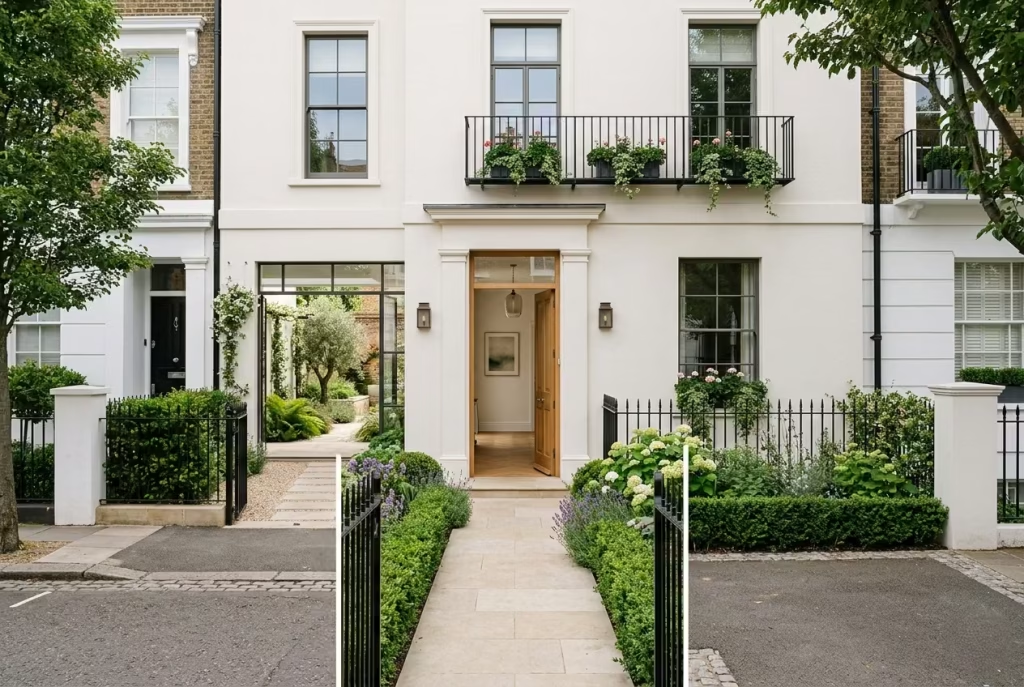
One of the most overlooked ways to elevate a white stucco townhouse is to think beyond the facade itself and consider what the eye experiences from the moment someone approaches the property. A well-designed home does not reveal everything at once.
Instead, it gently draws people forward, allowing one carefully composed view to lead naturally into the next. This subtle progression creates curiosity and makes even a compact townhouse feel more generous than its footprint might suggest. It is a quiet design principle, yet it often leaves one of the strongest lasting impressions.
Creating that sense of arrival begins with alignment. A front path that leads confidently towards the entrance, a doorway that offers a glimpse of a rear courtyard, or a straight visual connection through the hallway to greenery beyond all help establish a natural flow.
Rather than allowing walls, fences, or planting to interrupt the experience, thoughtful positioning encourages the eye to travel effortlessly from the street towards the garden. It is much like turning the pages of a good book. Each view reveals just enough to invite the next, making the journey through the home feel engaging rather than abrupt.
Planting plays an equally important role in shaping these sightlines. Instead of creating solid barriers, consider using layered landscaping that frames key views while preserving glimpses of what lies beyond. Low evergreen hedges, ornamental grasses, slender multi-stem trees, or climbing plants around gates and archways can soften boundaries without closing them off completely.
This layered approach introduces depth and allows natural light to filter through, making smaller front gardens appear noticeably more spacious. It also helps the white stucco facade sit comfortably within the landscape instead of feeling isolated from it.
Architectural openings deserve the same level of attention. A glazed front door, carefully positioned side windows, or large rear doors aligned with the entrance can establish a visual corridor that connects the entire property.
Even where complete sightlines are not possible, repeating materials such as limestone paving, timber accents, or matching planting palettes from the front garden to the rear creates a sense of continuity that quietly ties everything together. In many of the townhouse renovations I have worked on, this continuity has transformed homes that once felt enclosed into spaces that appear brighter, longer, and remarkably more open without altering the building’s footprint.
Ultimately, memorable curb appeal is not just about what people see when they stop at the front gate. It is about what encourages them to keep looking.
When paths, architecture, and landscaping work hand in hand, the home unfolds naturally, creating a welcoming sequence of spaces that feels calm, intentional, and beautifully connected from the street to the garden.
Indoor Ideas That Echo the White Stucco Exterior
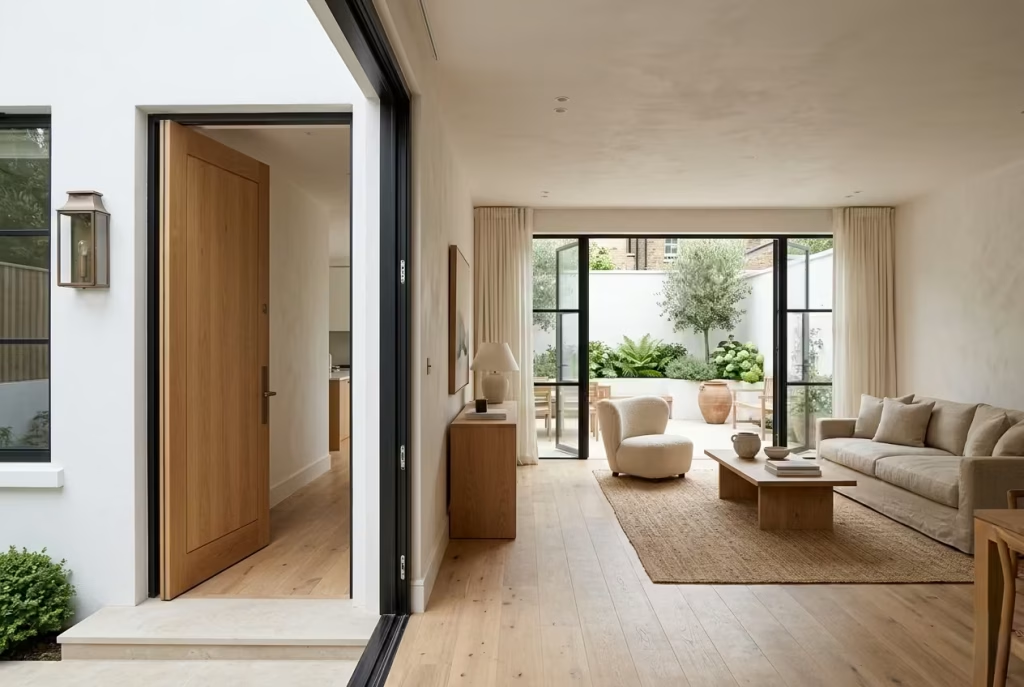
The best white stucco townhouses do not leave their design story at the front door. Instead, the calm elegance established outside continues indoors through thoughtful material choices, carefully balanced proportions, and a palette that feels connected from one space to the next. This continuity is what separates a home that merely looks attractive from one that feels genuinely considered. When the textures, colours, and quality of light inside reflect the quiet confidence of the exterior, every room becomes part of the same architectural narrative.
It is not about matching everything perfectly, but about creating a natural dialogue between indoors and out. Soft mineral tones, warm timber, natural stone, tactile fabrics, and light-filled spaces all help reinforce that connection, allowing the home to feel cohesive, welcoming, and timeless. The following ideas explore how to carry the understated beauty of a white stucco facade into the interior, creating rooms that feel every bit as refined, comfortable, and enduring as the architecture that surrounds them.
Carry the White Palette Inside, but Soften It
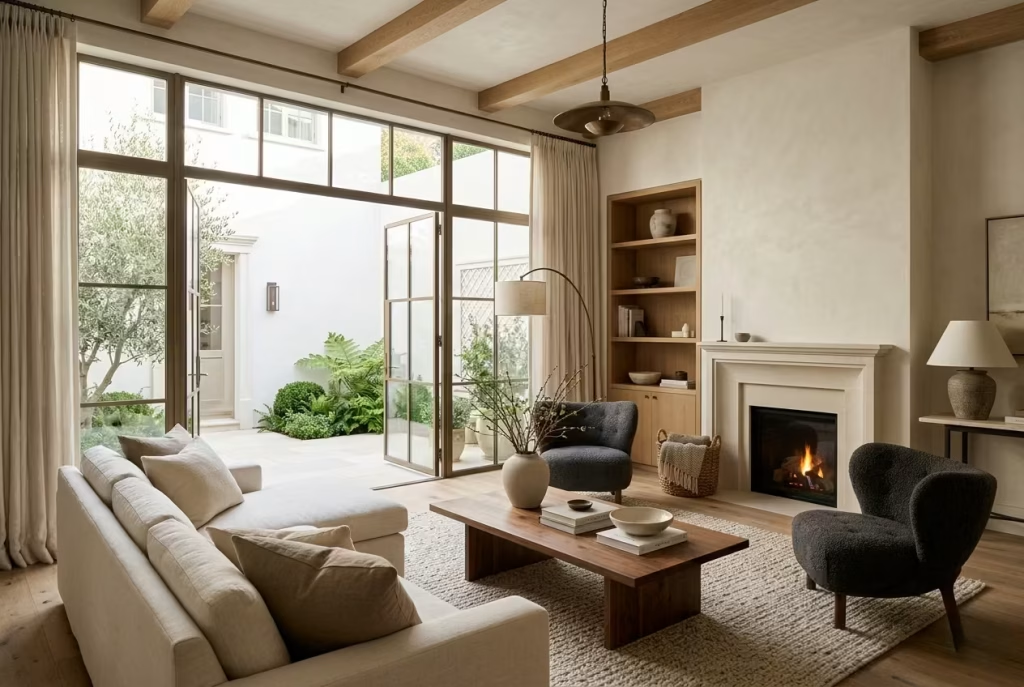
A white stucco exterior creates an immediate sense of lightness, but that feeling should evolve rather than repeat itself once you step indoors. Simply painting every interior wall bright white rarely achieves the same elegance. In fact, it can leave rooms feeling cold, flat, or lacking personality.
The goal is to preserve the calm character established outside while introducing warmth and depth that make everyday living more comfortable. The most successful interiors do not copy the exterior colour exactly. Instead, they reinterpret it through softer tones and richer textures that feel welcoming from morning until night.
Warm whites, bone, oat, chalk, and gentle cream shades are particularly effective because they respond beautifully to changing daylight. Unlike stark white, which can appear harsh under direct sun or take on grey-blue undertones in shaded rooms, these softer hues adapt more gracefully throughout the day.
Morning light often reveals their subtle warmth, while evening lighting brings out a cosy, relaxed atmosphere that encourages people to linger. This quiet shift creates interiors that feel alive rather than static, proving that even the palest colours can have remarkable depth when chosen thoughtfully.
Material selection is equally important in preventing an all-white palette from feeling one-dimensional. Linen curtains, limewashed walls, natural oak flooring, wool rugs, stone countertops, and matte ceramic finishes each introduce their own texture while remaining within a restrained colour family.
These layers catch light differently, allowing the room to feel rich without relying on bold colours or excessive decoration. It is a reminder that texture often speaks louder than contrast. A chalky painted wall beside brushed timber joinery or honed limestone flooring creates far more visual interest than a collection of unrelated accent colours.
This softer palette also strengthens the connection between the exterior and interior. As daylight filters through the windows, the white stucco outside subtly reflects into the rooms, making the transition feel seamless rather than abrupt.
Keeping adjacent spaces within a similar tonal range is particularly beneficial in townhouses, where natural light often travels from front to back through a sequence of connected rooms. The consistent palette helps the eye move effortlessly from one space to the next, making even modest interiors feel brighter and more spacious.
Of course, softness does not mean monotony. A carefully chosen charcoal armchair, aged bronze lighting, or a walnut dining table can provide just enough contrast to ground the room without disrupting its sense of calm. Like the final brushstroke on a well-balanced painting, these darker elements give the lighter backdrop something to respond to.
The result is an interior that echoes the timeless elegance of the white stucco exterior while feeling warm, comfortable, and genuinely lived in, a home that welcomes you in rather than simply impressing from a distance.
Let Natural Light Do the Heavy Lifting
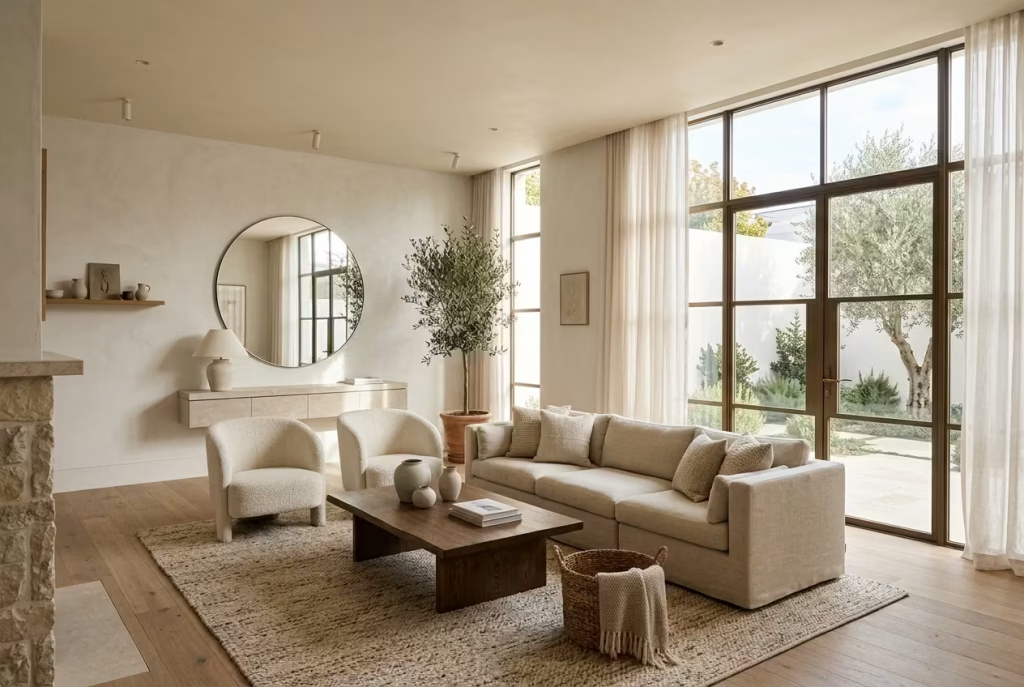
One of the greatest advantages of a white stucco townhouse is the way it works with natural light. Outside, the softly textured surface reflects daylight with remarkable ease, creating a bright yet gentle appearance throughout the day. Inside, that same quality can become one of the home’s greatest assets if the interior is designed to welcome and distribute light rather than block it.
Instead of relying on stronger colours or excessive decoration to make rooms feel inviting, allow daylight to become the defining feature. It is often the simplest design decision, yet it delivers some of the most dramatic results.
This is especially valuable in townhouses, where natural light often enters from the front and rear, leaving the centre of the home more dependent on borrowed light. A thoughtful approach to window treatments can make a noticeable difference.
Sheer linen or lightweight woven curtains soften direct sunlight without sacrificing brightness, allowing rooms to feel airy while preserving privacy during the day. Unlike heavy drapery, which can visually shorten windows and absorb precious daylight, translucent fabrics create a gentle filter that enhances the quiet elegance already established by the white stucco exterior.
Reflective surfaces can further extend the reach of natural light when used with restraint. A honed stone countertop, softly polished timber flooring, satin-finished cabinetry, or a handcrafted ceramic vase all catch light in subtle ways without introducing unwanted glare.
Matte finishes generally perform better than high-gloss alternatives because they diffuse light more evenly, creating a softer atmosphere that feels comfortable from morning through evening. It is these understated reflections that give a room its quiet sparkle, allowing the architecture to shine without demanding attention.
Mirrors deserve equal consideration, but placement matters far more than size. Rather than covering walls with oversized reflective panels, position mirrors where they can borrow daylight from nearby windows or reflect a beautiful view into another part of the room.
A mirror opposite a garden-facing window can double the impression of greenery, while one placed along a hallway may help carry daylight deeper into the home. This approach makes spaces feel brighter and more open without creating an artificial or overly styled appearance.
The real magic happens when light becomes part of the material palette itself. Warm white walls, natural timber, textured fabrics, and pale stone all respond differently as daylight shifts throughout the day, creating subtle changes that keep interiors feeling fresh and alive.
In my experience, homes designed around natural light rarely lose their appeal because they are constantly evolving. Instead of chasing trends or filling every corner with decorative objects, they allow the changing rhythm of daylight to do what it does best, revealing the beauty of the space one quiet moment at a time.
You May also Like: Baja Earth House: How to Keep a Desert Home Cool Naturally
Use Calming Transitional Spaces
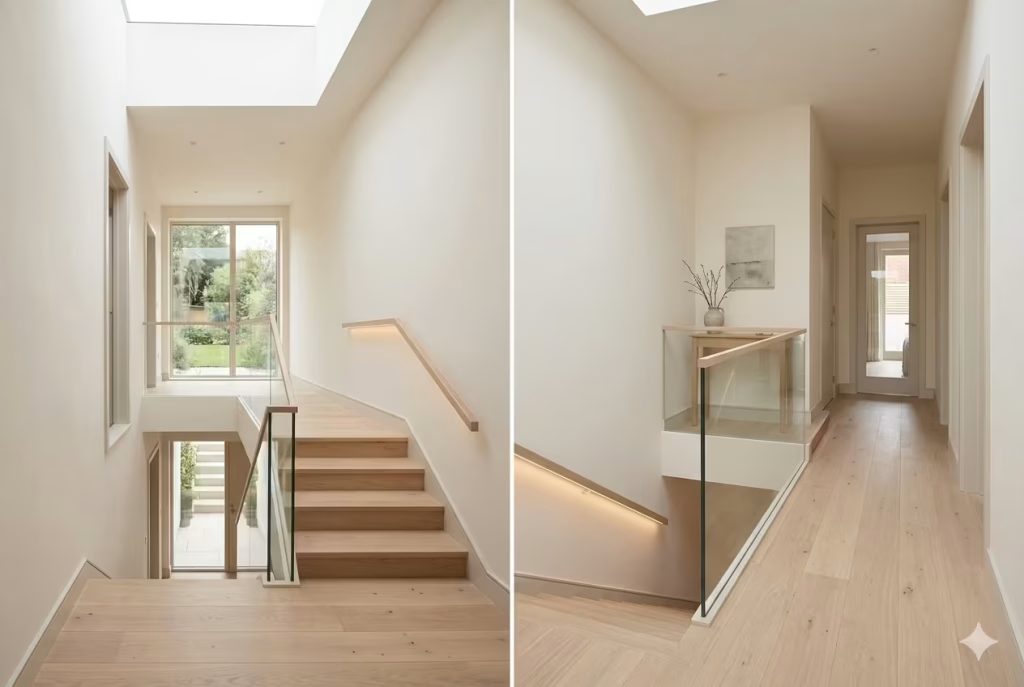
The most memorable townhouses are not defined solely by their living rooms or kitchens. They are shaped just as much by the spaces in between. Hallways, stairwells, and landings quietly connect the home together, setting the pace for how each room is experienced.
Although they are often treated as little more than circulation routes, these transitional spaces establish the first impression once someone steps through the front door. When designed with care, they create a gentle rhythm that makes the entire home feel more composed, spacious, and inviting.
A white stucco townhouse naturally lends itself to this sense of calm because its exterior already celebrates simplicity and restraint. Carrying that philosophy indoors means resisting the temptation to fill every wall with artwork or every landing with furniture. Instead, allow these spaces to breathe.
Generous walkways, uncluttered sightlines, and a carefully edited selection of materials encourage the eye to move comfortably from one room to the next. As the old saying goes, sometimes the journey is just as important as the destination. In well-designed homes, these connecting spaces become part of the experience rather than forgotten gaps between larger rooms.
Natural light plays an especially important role here. Stairwells often receive light from upper-floor windows or rooflights, and allowing that daylight to travel freely can dramatically change the atmosphere of the home. Glass balustrades, slim timber handrails, pale wall finishes, and doors with glazed panels all help distribute light into areas that might otherwise feel enclosed. Where daylight is limited, layered lighting creates a similar effect.
Soft wall sconces, discreet recessed lighting, or LED strips tucked beneath handrails introduce a welcoming glow without overwhelming the architecture. Choosing warm colour temperatures around 2700K to 3000K keeps these spaces feeling comfortable during the evening while maintaining continuity with the rest of the interior.
Material consistency is another subtle but powerful tool. Continuing the same timber flooring, stone finishes, or paint palette through hallways and landings creates visual flow that makes the townhouse feel larger than its footprint suggests. Frequent changes in flooring or bold shifts in colour can interrupt that experience, causing compact spaces to feel fragmented.
Even practical details such as slim skirting boards, concealed storage, and well-proportioned internal doors contribute to a calmer environment because they reduce visual interruptions and allow the architecture to take the lead.
These spaces also offer an opportunity to slow the pace of daily life. A thoughtfully placed console table, a sculptural pendant above the stairwell, a single piece of artwork, or a carefully framed view towards the garden can create moments of quiet interest without cluttering the circulation path.
Rather than competing for attention, each element works together to guide movement naturally through the home. It is this understated approach that gives a townhouse its lasting appeal, proving that even the areas people pass through every day deserve the same level of thought and craftsmanship as the rooms where they choose to stay.
You May also Like: 15 Red Brick House Facades That Look Bold, Modern, and Timeless
Design a Summer Bedroom That Feels Cool and Composed
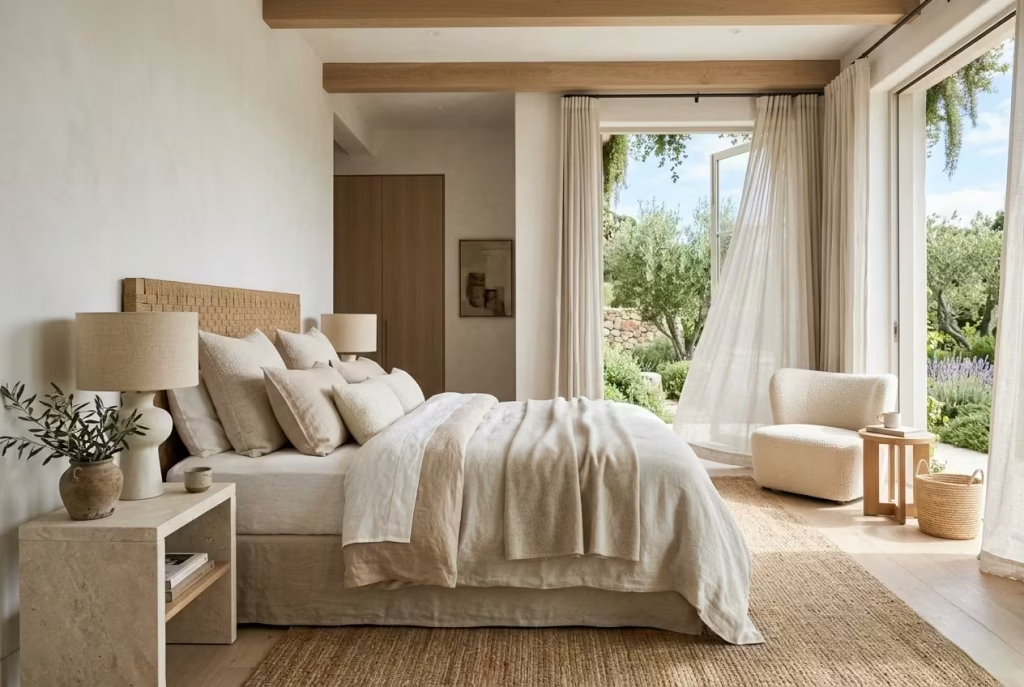
A beautifully designed white stucco townhouse should offer the same sense of calm upstairs as it does from the street. The bedroom, especially during the warmer months, is where that design philosophy becomes deeply personal. Rather than relying on seasonal décor that comes and goes, focus on creating a room that naturally feels lighter, cooler, and more restorative.
The best summer bedrooms are not simply brighter in colour. They are carefully composed environments where materials, light, and airflow work together to support genuine comfort. When every element pulls in the same direction, the room becomes a welcome retreat at the end of a warm day.
The foundation begins with breathable natural materials. Linen bedding, washed cotton, lightweight wool throws, and textured woven rugs allow air to circulate more freely than many synthetic alternatives, making the room feel noticeably fresher without changing the temperature itself.
Linen, in particular, has a relaxed character that pairs beautifully with the understated elegance of a white stucco home. Its softly creased texture catches daylight in subtle ways, giving the bedroom warmth and depth while avoiding the overly polished appearance that glossy fabrics often create.
The surrounding finishes deserve equal attention. Pale oak flooring, limewashed walls, matte painted joinery, and low-sheen furniture finishes gently reflect daylight, helping the room feel open without becoming stark. These surfaces respond beautifully to changing natural light, revealing soft tonal variations from sunrise through early evening.
Rather than filling the room with bold colours or decorative distractions, let texture become the focal point. A boucle chair, a woven headboard, handcrafted ceramics, or a stone bedside lamp introduces quiet richness while preserving the restful atmosphere. It is often these tactile details that transform a pleasant bedroom into one that truly invites you to unwind.
Window treatments play a surprisingly important role in maintaining comfort throughout summer. Sheer linen curtains diffuse strong sunlight during the day while preserving a connection to the outdoors, and when paired with blackout blinds behind them, they offer flexibility without compromising the room’s appearance.
If possible, avoid positioning the bed where direct afternoon sun falls across the mattress or pillows for extended periods. In west-facing bedrooms, this simple adjustment can noticeably improve comfort during hotter months while reducing fading on upholstered headboards, timber furniture, and natural fabrics over time.
What elevates a summer bedroom is not the number of decorative accessories but the quality of the experience it creates. A gentle cross-breeze through open windows, filtered morning light falling across natural timber, crisp linen sheets that become softer with every wash, and a carefully edited palette of warm neutrals all contribute to a space that feels calm without trying too hard. Much like the white stucco exterior itself, the room relies on thoughtful restraint rather than excess, proving that lasting comfort often comes from getting the fundamentals beautifully right.
Choose Materials That Age Gracefully
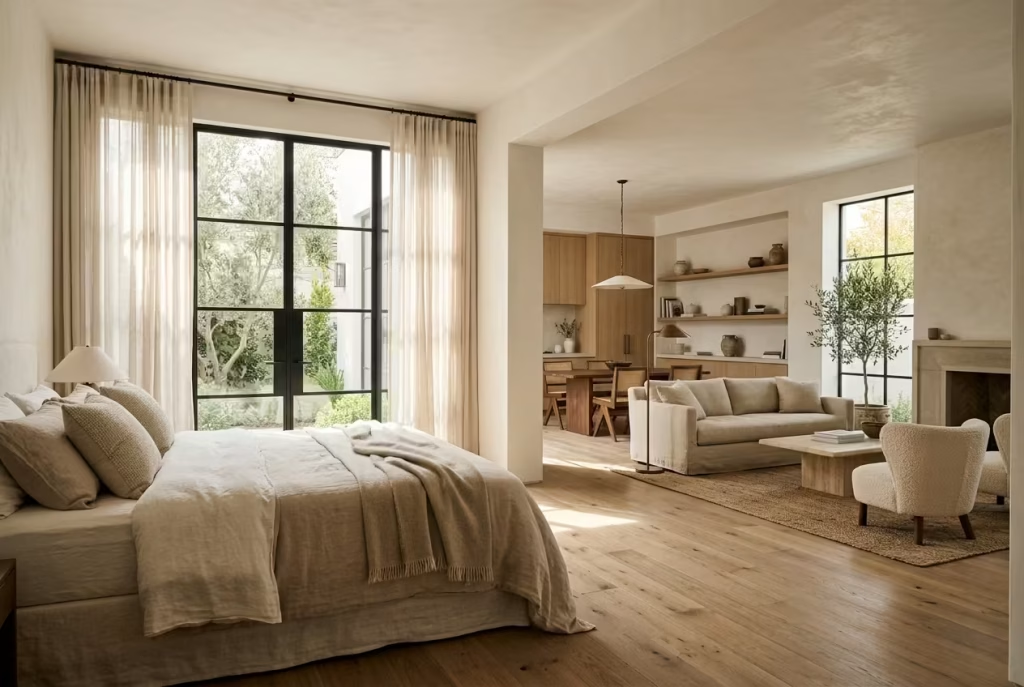
One of the defining characteristics of a truly timeless townhouse is not how it looks on the day the renovation is finished, but how it continues to look five, ten, or even twenty years later. Beautiful homes are rarely built around materials that remain perfectly untouched. Instead, they embrace finishes that develop character through daily life, changing light, and the passing of seasons.
Rather than fighting the natural process of ageing, they work with it, creating interiors and exteriors that feel richer with every passing year. It is a classic example of playing the long game. The greatest design investment is often choosing materials that mature gracefully instead of chasing finishes that only look impressive when brand new.
White stucco already embodies this philosophy. When properly applied and maintained, its softly textured surface develops subtle tonal variation that gives the building depth without appearing worn. Carrying that same approach indoors creates a home that feels cohesive from the outside in.
Limewashed walls, hand-applied plaster, pale oak flooring, linen upholstery, natural stone surfaces, and matte painted joinery all share one valuable quality. They reveal their beauty gradually rather than all at once. Small marks, gentle weathering, and everyday use become part of their story instead of flaws that need to be hidden.
Oak is a particularly good example. Freshly installed, it offers warmth and quiet texture, but over time it develops a richer tone that adds depth to floors, staircases, and bespoke cabinetry. Linen follows a similar path. It becomes softer after repeated washing while retaining its relaxed appearance, making it one of the few fabrics that often improves through regular use.
Natural stone also rewards patience. Honed limestone, marble, or travertine slowly acquire a gentle patina that reflects the rhythms of daily life without losing their elegance. These materials do not ask to remain pristine. They simply ask to be cared for well.
Matte painted joinery and mineral-based wall finishes contribute in a different but equally important way. Unlike high-gloss surfaces that readily reveal fingerprints, scratches, and uneven reflections, low-sheen finishes create a quieter backdrop that allows architectural details to take centre stage.
They also respond more gently to changing daylight, producing softer shadows and a greater sense of depth throughout the home. This understated quality is particularly valuable in white stucco townhouses, where natural light is already one of the building’s greatest strengths.
Choosing enduring materials is also a practical decision. Fewer replacements mean less disruption, lower long-term costs, and a home that evolves naturally instead of requiring constant cosmetic updates. More importantly, these finishes create an atmosphere that cannot be manufactured overnight. As timber deepens in colour, stone develops its own subtle patina, and limewashed walls gain quiet character, the house begins to tell its own story.
That is the difference between following a trend and creating a home with lasting soul. The finest white stucco townhouses are remembered not because they remain frozen in time, but because they become more beautiful as life unfolds within them.
Create Visual Continuity Between Exterior and Interior
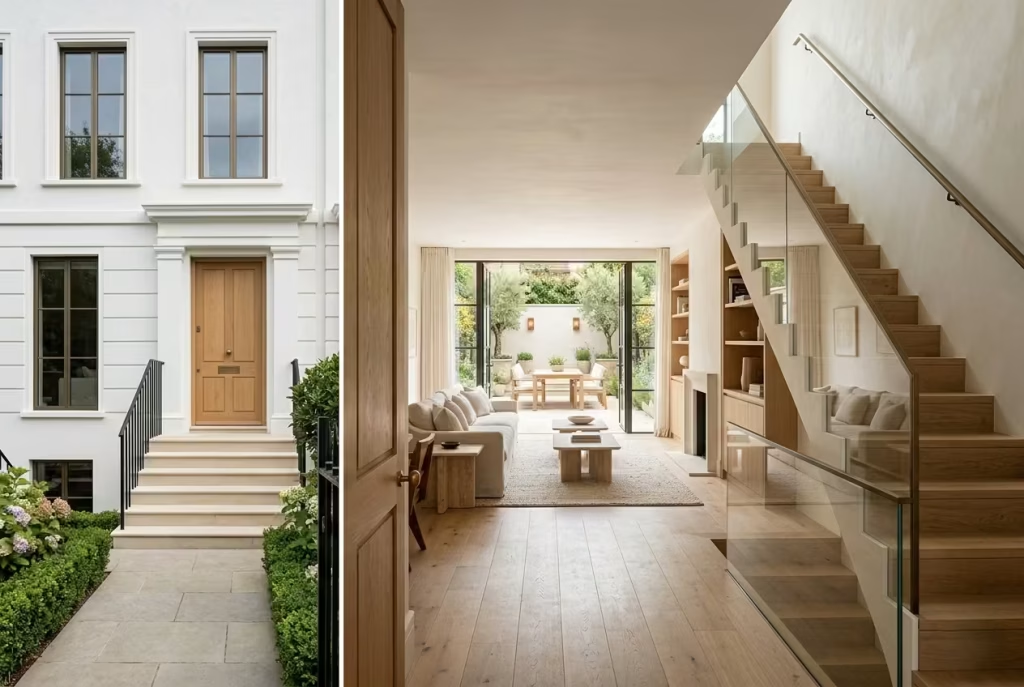
The most successful white stucco townhouses rarely feel as though the exterior and interior were designed separately. Instead, they unfold as one continuous experience, where every transition feels natural and every space belongs to the same architectural story.
That sense of continuity is what gives a home lasting elegance. Rather than relying on dramatic statements in individual rooms, it builds quiet confidence through consistency, allowing the character established at the front façade to flow effortlessly into the entrance hall, staircase, living spaces, bedrooms, and outdoor terraces.
This begins with a carefully edited material palette. Repeating key finishes such as warm white walls, pale oak flooring, limestone, brushed bronze, matte black accents, or linen textiles creates familiar visual references as you move through the home.
The materials do not need to appear in exactly the same way in every room, but they should feel as though they belong to the same family. A limestone step at the entrance might be echoed by a stone fireplace surround, while the oak front door finds a quieter companion in timber stair treads or bespoke cabinetry. These subtle connections help each room feel related without becoming predictable.
Threshold spaces deserve particular attention because they are where this continuity is either strengthened or broken. The front hall should introduce the palette that continues throughout the house, creating an immediate sense of calm after entering from the street. As you move upward, the staircase becomes more than a practical route between floors.
It acts as the spine of the home, connecting different levels through consistent flooring, balustrades, lighting, and finishes. By the time you arrive in the bedroom or step onto the terrace, the transition should feel almost effortless. Nothing appears abrupt because every space quietly prepares you for the next.
Light also plays a central role in unifying the home. When daylight moves freely from the front façade through internal rooms and towards the rear garden, it naturally ties spaces together. Keeping window treatments light, using similar colour temperatures for artificial lighting, and allowing materials to reflect light consistently all reinforce this feeling of flow.
Even compact townhouses benefit from this approach because visual continuity makes rooms feel more generous than their dimensions alone might suggest.
In my experience, the homes that leave the strongest impression are rarely those filled with the greatest number of expensive finishes. They are the ones where every decision feels connected to the next. The front door introduces the same warmth found in the staircase, the bedroom reflects the calm established by the exterior, and the terrace feels like a natural extension of the living room.
Piece by piece, those thoughtful connections create a home that is greater than the sum of its individual rooms. Like a beautifully composed piece of music, each element has its own role, yet together they create a lasting sense of harmony that never goes out of style.
You May also Like: 25 Boho Office Ideas to Inspire a Creative Workspace
Material and Finish Choices That Make White Stucco Feel More Expensive
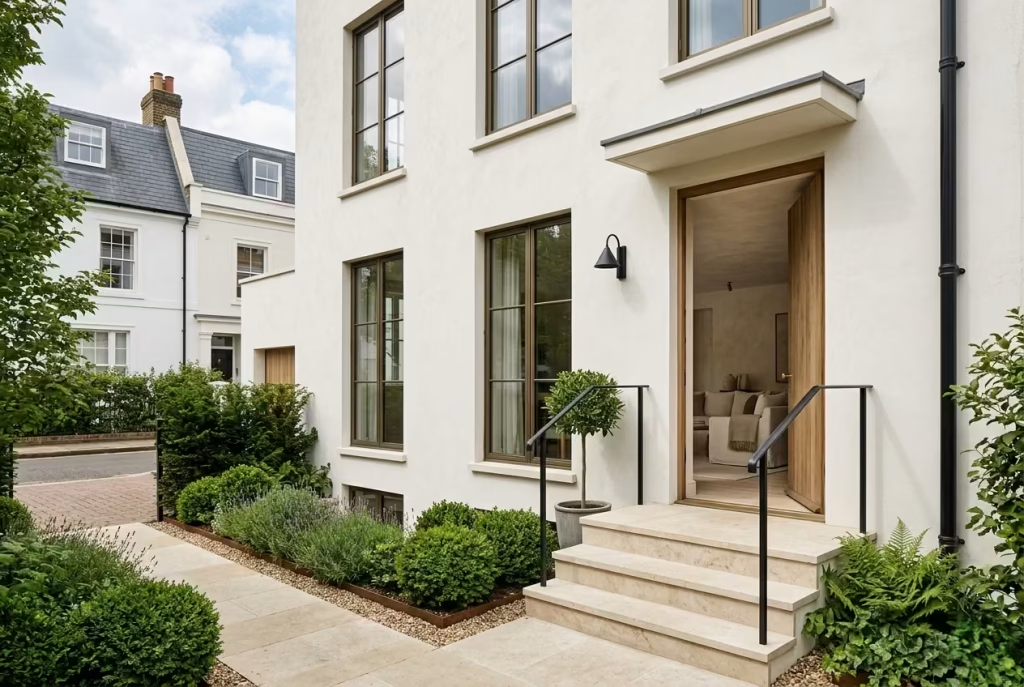
The beauty of a white stucco townhouse is rarely determined by the render alone. What elevates it from attractive to truly exceptional is the collection of materials that surround it. Every finish, whether beneath your feet, framing the windows, or wrapping the entrance, influences how the stucco is perceived. Carefully selected materials add depth, warmth, and permanence, allowing the architecture to feel quietly luxurious rather than newly decorated.
The most successful townhouses rely on a restrained palette where each material has a clear purpose. Instead of competing for attention, stone, timber, metal, and carefully chosen paint colours work together to create subtle contrast and tactile richness.
It is these thoughtful combinations, rather than expensive embellishments, that give a home its lasting appeal. Like putting the final pieces into a carefully crafted puzzle, the right finishes complete the architectural story while ensuring the townhouse continues to look elegant long after passing trends have faded.
Stucco Finish Types
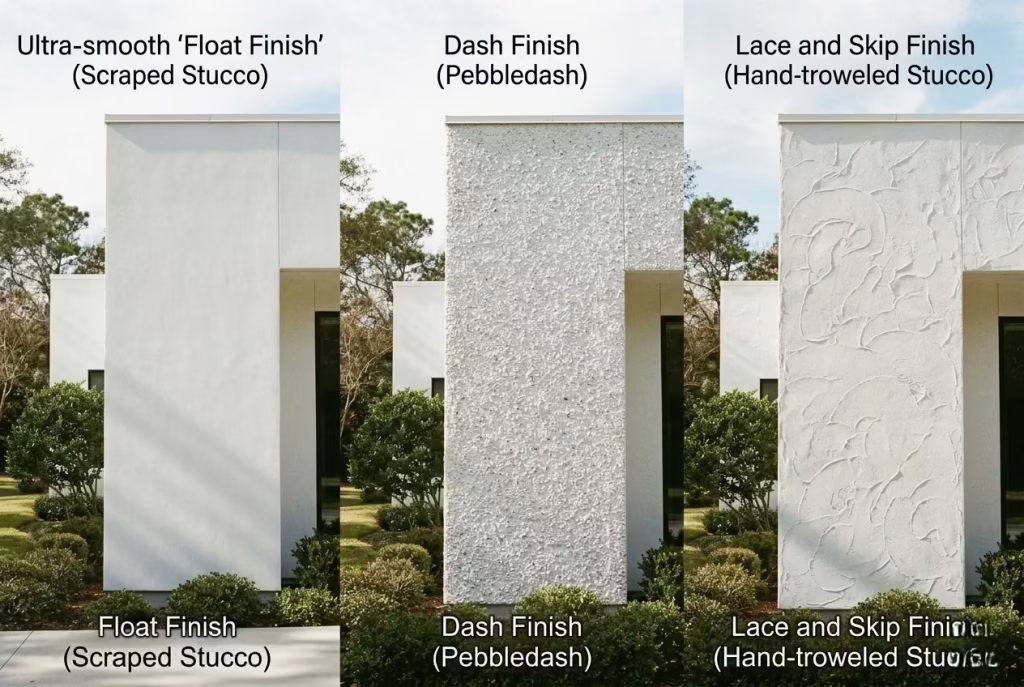
Not all white stucco creates the same impression. The finish itself has a significant influence on how light moves across the façade, how shadows develop throughout the day, and how refined the architecture ultimately feels.
While perfectly smooth render often appears striking in photographs, it can be surprisingly unforgiving in real homes. Even minor imperfections, movement cracks, or subtle changes in the substrate become more noticeable when the surface is completely flat, particularly under strong sunlight.
A lightly textured finish often produces a more sophisticated result because it introduces gentle movement without distracting from the overall design. Fine mineral aggregates or hand-applied render techniques create delicate variations that catch daylight beautifully, giving the façade greater depth and a softer visual character.
Morning light may reveal subtle texture, while the lower evening sun creates gentle shadows that make the building feel more dimensional. This understated richness is one reason many timeless European townhouses continue to age so gracefully.
The surrounding environment should also influence the choice. Contemporary urban homes often suit smoother finishes with crisp detailing, while traditional or coastal townhouses frequently benefit from a softer texture that feels more relaxed and established.
Whatever the style, consistency remains essential. Uneven repairs or mismatched render textures are far more noticeable on white façades, making professional application and careful maintenance well worth the investment.
Trim and Joinery Colours
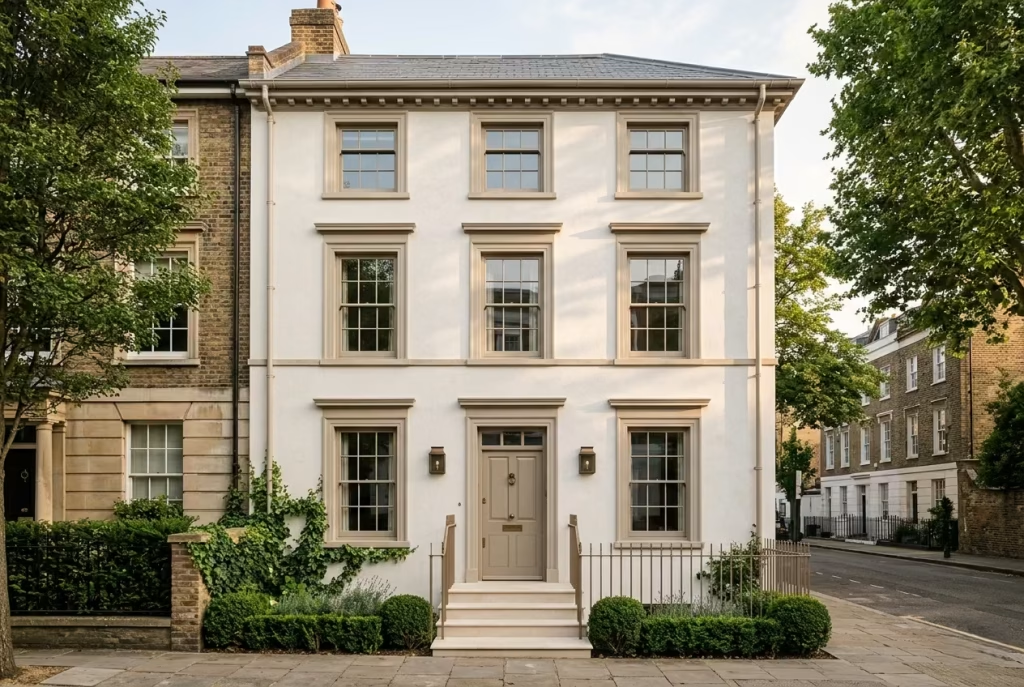
Once the stucco has established the foundation, trim and joinery introduce personality. These secondary colours shape the mood of the townhouse just as much as the render itself, influencing whether the architecture feels warm and welcoming, crisp and contemporary, or quietly traditional.
Warm white trim creates a seamless appearance, allowing architectural proportions to take centre stage without obvious visual interruption. This approach is particularly effective for period-inspired townhouses where elegance comes from restraint rather than contrast. Soft grey introduces gentle definition while maintaining a calm palette, making it an excellent partner for limestone, pale timber, and mature landscaping.
Stone-coloured joinery brings subtle warmth that complements natural materials and softens the brightness of white stucco. It feels especially appropriate on homes designed around earthy textures and Mediterranean influences. Charcoal offers a stronger architectural edge, outlining windows and doors with confidence while remaining less severe than true black.
Bronze sits somewhere between traditional and contemporary, adding depth with a warmth that changes beautifully throughout the day as natural light shifts across its surface. Muted black delivers the strongest contrast of all, creating crisp lines that emphasise window proportions and modern detailing without appearing overly stark when finished in a matte or low-sheen coating.
The key is choosing one dominant trim colour and repeating it consistently across windows, doors, railings, gutters, and exterior lighting wherever appropriate. This continuity creates a sense of craftsmanship that feels intentional rather than pieced together over time.
Flooring and Threshold Materials
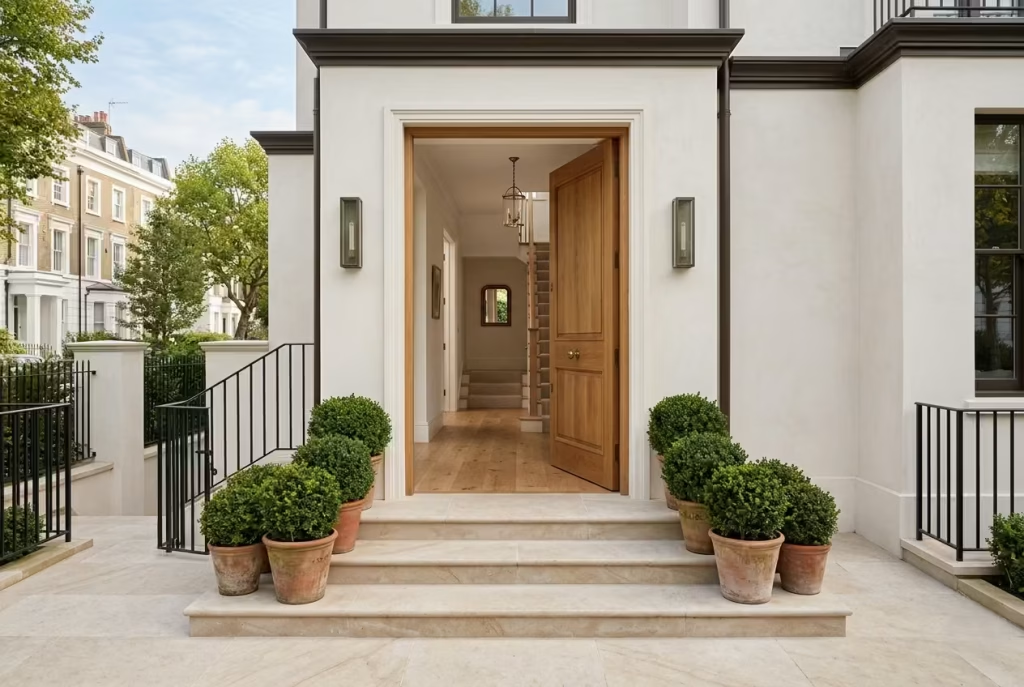
The journey into a townhouse begins beneath your feet, making flooring and threshold materials every bit as important as the façade itself. These surfaces bridge indoors and outdoors, shaping first impressions while enduring years of daily use. Choosing durable materials that age gracefully ensures the entrance remains welcoming long after the initial renovation is complete.
Natural stone continues to be one of the strongest choices for thresholds because of its timeless appearance and exceptional longevity. Limestone offers soft tonal variation that pairs beautifully with white stucco, while granite provides outstanding durability for heavily used entrances. Honed finishes generally strike the best balance between elegance and practicality, reducing glare while offering better grip during wet weather than highly polished alternatives.
Porcelain has become an increasingly popular option thanks to its impressive performance. High-quality exterior-rated porcelain resists staining, frost, moisture, and fading while requiring relatively little maintenance. Large-format porcelain tiles also create a clean, contemporary appearance, particularly when grout lines are kept narrow and colours are selected to complement the surrounding architecture.
Timber flooring introduces immediate warmth once you step inside. Engineered oak performs especially well in townhouses because it remains more dimensionally stable than solid timber while retaining the authentic grain and character homeowners value. Its natural texture softens the transition from exterior stone and creates a welcoming atmosphere that grows richer with age.
Terrazzo offers an entirely different expression. Whether traditional or contemporary, its gently mottled surface adds visual interest without overwhelming the surrounding palette. It is exceptionally durable, easy to maintain, and particularly effective in entrance halls where its subtle pattern disguises everyday dust and foot traffic better than plain finishes.
Whichever material you choose, continuity often delivers the most refined result. Repeating similar tones across exterior paving, entrance thresholds, and interior flooring creates a seamless visual flow that makes the townhouse feel larger, calmer, and more thoughtfully resolved. When materials complement one another instead of competing for attention, the white stucco exterior becomes part of a cohesive architectural experience that extends from the pavement to the heart of the home.
Practical Design Notes for Real Homes
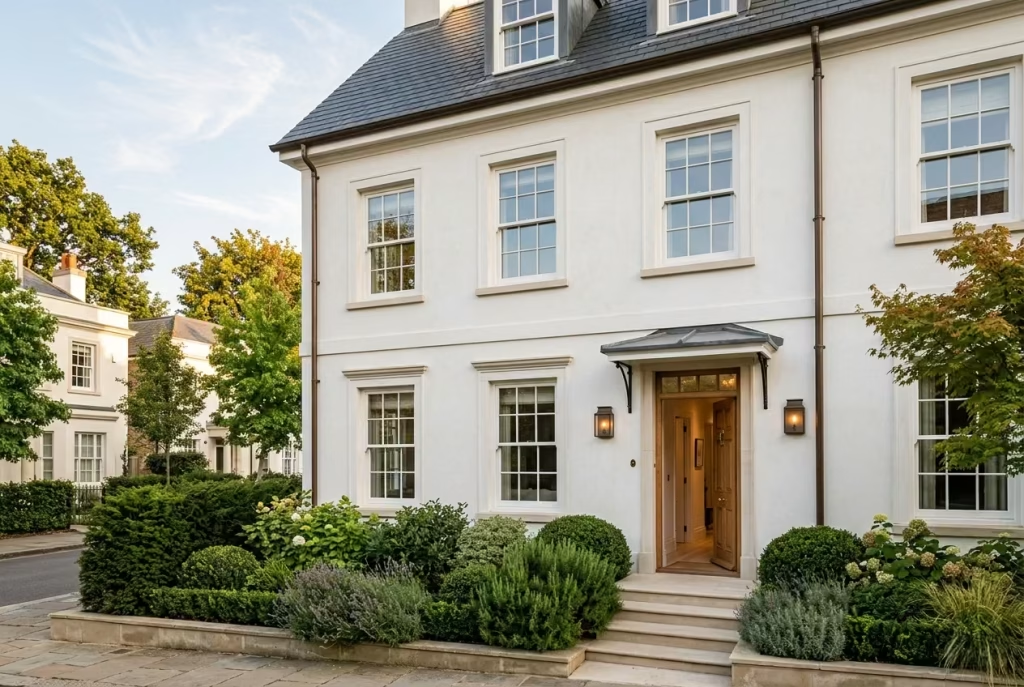
Beautiful white stucco townhouses rarely stay beautiful by accident. Behind every elegant façade is a series of thoughtful decisions about materials, maintenance, and long-term performance. While photographs often capture a home at its very best, real life brings changing weather, everyday wear, and years of natural ageing.
Understanding how white stucco behaves in those conditions allows homeowners to make informed choices from the outset, creating a home that remains just as appealing years after completion as it did on day one.
White stucco is remarkably versatile, but it is also honest. Its pale surface reflects light beautifully, yet that same quality means it reveals dirt, airborne pollution, algae, and moisture staining more readily than darker exterior finishes. In busy urban streets, traffic residue can gradually dull lower sections of the façade, while coastal homes face additional challenges from salt-laden air, driving rain, and persistent humidity.
Neither environment should discourage the use of white stucco, but both call for a realistic maintenance plan. A gentle exterior wash every year or two, combined with prompt removal of organic growth and routine inspections, usually prevents minor issues from becoming more noticeable over time.
Hairline cracks are another aspect that often worries homeowners unnecessarily. Small settlement cracks can develop as buildings naturally expand, contract, and adjust to seasonal temperature changes. In many cases, these are cosmetic rather than structural, but they should never be ignored completely.
Regular inspections make it easier to distinguish harmless surface movement from problems that require professional attention. Addressing minor repairs early is usually quicker, less disruptive, and considerably more cost-effective than allowing moisture to penetrate behind the render.
Choosing the right exterior coating is equally important. High-quality mineral renders, breathable lime-based systems, or premium masonry paints formulated for local weather conditions generally provide better long-term performance than lower-cost alternatives. Vapour-permeable finishes allow trapped moisture to escape while continuing to repel driving rain, helping reduce blistering, peeling, and premature deterioration.
In regions with frequent freeze-thaw cycles or prolonged damp conditions, selecting a weather-resistant render system from the beginning can significantly extend maintenance intervals and preserve the crisp appearance of the façade.
Inside the home, restraint should never be confused with sterility. A townhouse inspired by white stucco benefits from a light palette, but filling every room with bright white walls, glossy finishes, and minimal texture often produces an atmosphere that feels clinical rather than comfortable.
Layering warm whites with bone, chalk, oat, or soft cream tones introduces subtle depth while preserving brightness. Natural oak, linen, wool, woven fibres, stone, and matte painted joinery add tactile richness that makes the interior feel welcoming throughout every season. These gentle contrasts allow the architecture to remain the focal point without leaving the rooms feeling flat or impersonal.
Lighting is another detail that quietly influences the entire experience. White stucco and pale interior finishes respond dramatically to artificial light, making colour temperature just as important as fixture selection. Warm lighting between 2700K and 3000K generally produces the most flattering effect, revealing the soft undertones in plaster, timber, and stone while creating an atmosphere that feels relaxed and residential.
Cooler LEDs above 4000K, by comparison, can make white surfaces appear sharper and more clinical, diminishing the warmth of surrounding materials. Using a consistent warm lighting palette throughout entrance halls, staircases, living spaces, and outdoor areas also strengthens the visual connection between the exterior and interior, allowing the home to feel cohesive from the first approach to the final room.
Ultimately, the longevity of a white stucco townhouse depends less on chasing perfection and more on making thoughtful decisions that stand the test of time. Durable materials, regular care, breathable finishes, and carefully layered interiors all contribute to a home that grows more characterful with age rather than simply growing older. Those are the choices that transform a beautiful renovation into an enduring piece of architecture, one that continues to reward its owners year after year.
You May also Like: 16 Stunning Japandi Front Doors That Perfectly Blend Warmth and Minimalism
Comparison Table: Design Choices That Elevate a White Stucco Townhouse
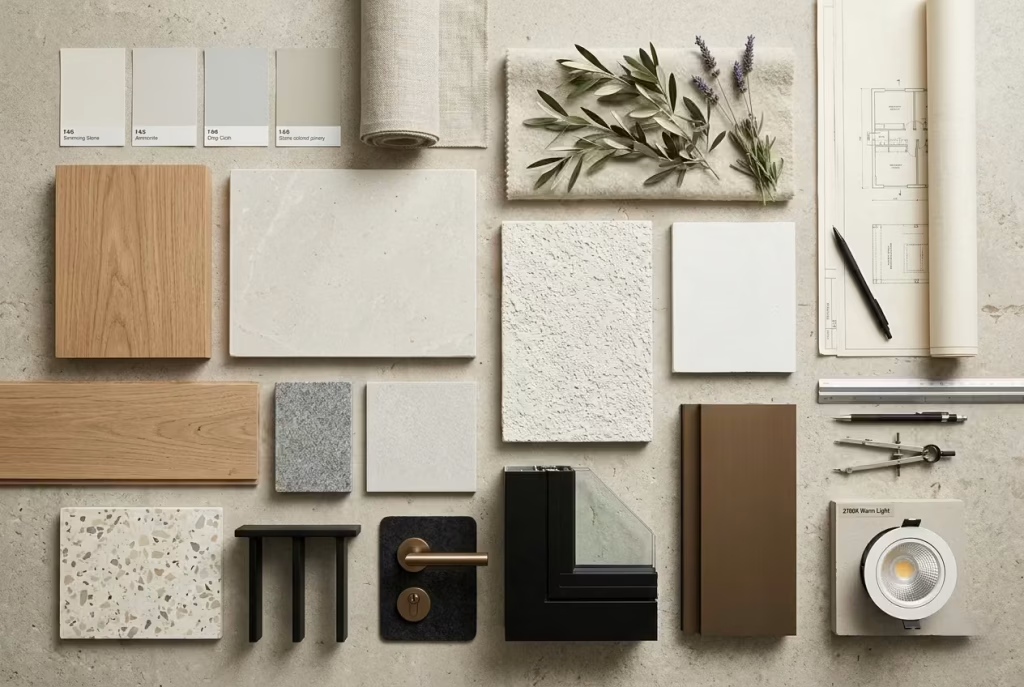
Designing a timeless white stucco townhouse is rarely about one standout feature. More often, it is the accumulation of thoughtful decisions that gradually shapes the home’s character. The render, window frames, entrance materials, lighting, and architectural detailing all influence how the façade is perceived and how comfortably the house functions over time. While aesthetic appeal is important, long-term durability, maintenance, and everyday usability deserve equal consideration. The comparison below highlights some of the most influential design choices, showing how each one affects the overall appearance while helping homeowners select materials and finishes that suit both their lifestyle and the architecture.
| Design Choice | Visual Effect | Best Use | Practical Consideration |
|---|---|---|---|
| Smooth white stucco | Creates a crisp, clean, contemporary appearance with sharp architectural definition. | Modern and minimalist townhouses with simple geometric forms. | Requires excellent substrate preparation and skilled installation because surface imperfections and repairs are more noticeable. |
| Lightly textured white stucco | Adds subtle depth and gentle shadow, giving the façade a softer, more established character. | Traditional, transitional, Mediterranean, and heritage-inspired homes. | Better disguises minor surface movement, small repairs, and everyday weathering while remaining timeless. |
| Black window frames | Introduces bold architectural contrast that highlights window proportions and strengthens the building’s silhouette. | Contemporary urban façades and homes with clean, restrained detailing. | Use selectively. Excessive black accents can make a compact frontage feel visually heavy, particularly on narrow townhouses. |
| Timber front door | Brings natural warmth, texture, and a welcoming focal point that balances the brightness of white stucco. | Suitable for almost every architectural style, especially where the exterior feels slightly formal or minimal. | Requires periodic sealing or refinishing to protect against weather, UV exposure, and moisture while preserving its appearance. |
| Natural stone steps | Creates a strong visual foundation and gives the entrance a sense of permanence and understated luxury. | Front entrances, raised stoops, terraces, and garden transitions. | Honed or lightly textured finishes provide better slip resistance and generally weather more gracefully than polished stone. |
| Warm exterior lighting (2700K to 3000K) | Produces a welcoming evening ambience while revealing the texture and softness of white stucco. | Entrance pathways, courtyards, terraces, balconies, and architectural lighting. | Keep the colour temperature consistent across all exterior fixtures to avoid an uneven or patchy appearance after dark. |
The most enduring white stucco townhouses rarely rely on expensive materials alone. Instead, they succeed because every finish has been selected with purpose and every detail contributes to the same architectural vision. When materials, lighting, and proportions work together rather than competing for attention, the result feels effortless, refined, and built to last. In many respects, timeless design is not about making more decisions. It is about making better ones.
A Short Listicle of Styling Moves That Always Work
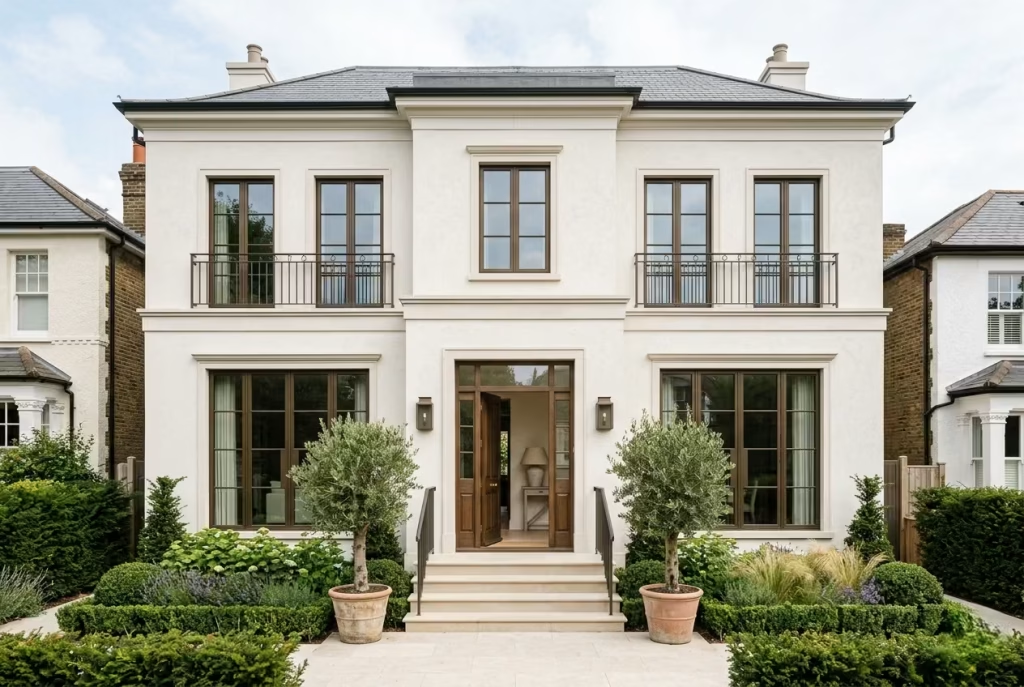
The most elegant white stucco townhouses are rarely defined by bold gestures or expensive statement pieces. Their appeal comes from a collection of thoughtful decisions that quietly reinforce one another, creating a home that feels balanced from every angle. When the fundamentals are right, there is little need to chase passing trends or constantly refresh the design. The following styling principles have stood the test of time because they focus on proportion, material harmony, and everyday livability rather than short-lived fashion.
- Keep the palette restrained.
Limit the foundation to warm whites, soft stone tones, natural timber, and a few carefully chosen accent colours. A disciplined palette allows materials and architecture to shine while making the home feel calm and cohesive. Instead of introducing a new colour in every space, let subtle tonal variation create interest. It is often the quietest schemes that leave the strongest impression. - Repeat one or two metal finishes throughout the home.
Bronze, aged brass, matte black, or brushed nickel each tell a different design story, but mixing too many can quickly make a townhouse feel visually unsettled. Repeating the same finish across exterior lighting, door hardware, stair railings, cabinet handles, and bathroom fittings creates continuity that the eye naturally understands. These small connections may not demand attention individually, yet together they make the entire home feel thoughtfully resolved. - Use planting to soften architectural lines.
White stucco and clean geometry benefit from the movement that greenery naturally provides. Layer evergreen shrubs, ornamental grasses, climbing vines, and seasonal planting to introduce texture without overwhelming the architecture. Well-placed planting also helps the home settle into its surroundings, creating a gentler relationship between built form and landscape. Even a compact townhouse can feel remarkably more welcoming when nature becomes part of the composition. - Mix matte and natural finishes instead of relying on high gloss.
Matte paint, honed stone, brushed metals, linen fabrics, and natural timber absorb and reflect light in softer ways than polished surfaces. This combination creates visual depth while maintaining a relaxed atmosphere that feels comfortable every day. Contrasting textures, rather than shiny finishes, are often what give luxury interiors their quiet richness. - Preserve symmetry wherever the architecture allows.
Balanced window treatments, matching wall lights, centred front doors, and evenly spaced planting create a sense of order that immediately makes a townhouse feel more composed. Symmetry does not have to be perfect to be effective. Even subtle alignment between architectural features helps establish rhythm and allows the façade to feel settled rather than improvised. - Treat threshold spaces with the same care as the main rooms.
Entrance halls, stair landings, porches, and garden transitions are the threads that stitch a home together. Choosing consistent flooring, thoughtful lighting, and a restrained material palette ensures these connecting spaces feel intentional instead of overlooked. More often than not, they are the areas that quietly shape a visitor’s first and last impression. - Let daylight and proportion do most of the work.
Resist the temptation to solve every design challenge with additional decoration. Well-positioned furniture, generous circulation space, carefully framed views, and abundant natural light often transform a room more effectively than another layer of accessories. As the saying goes, good things come to those who wait. Allow the architecture, changing daylight, and honest materials to reveal their beauty naturally, creating a townhouse that feels timeless because it was never trying too hard in the first place.
You May also Like: 25 Entryway Renovation Ideas That Transform Your Home from the Moment You Walk In
Common Mistakes to Avoid
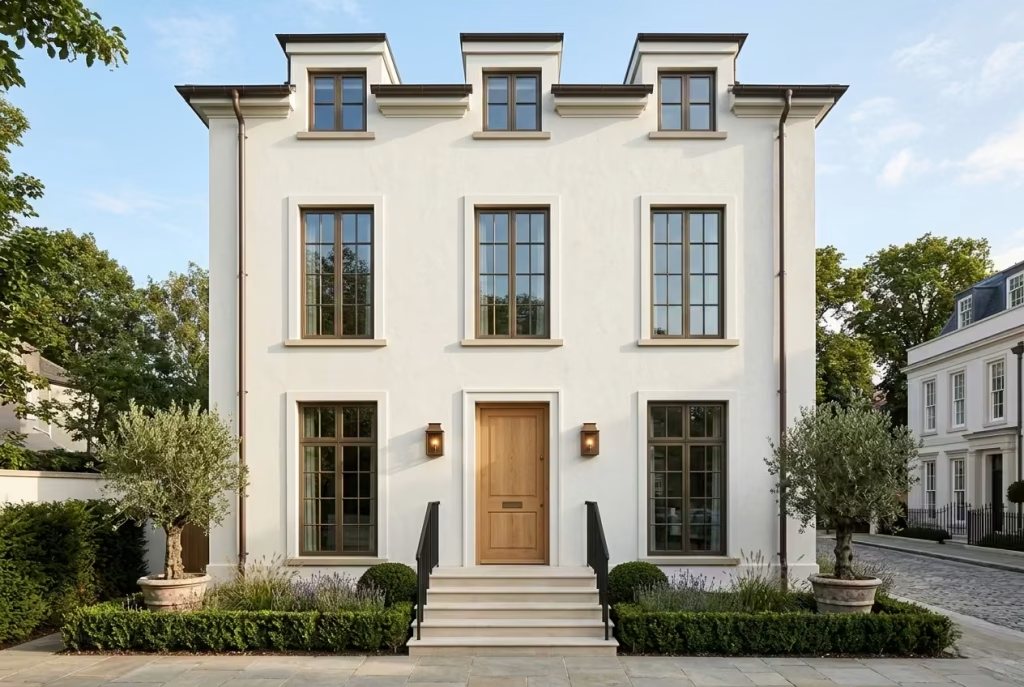
Designing a white stucco townhouse is often an exercise in restraint. The material has a quiet confidence that allows architecture, proportion, and natural light to take centre stage, but that same simplicity leaves very little room for careless decisions. Small missteps that might go unnoticed on a more heavily detailed home often become immediately apparent against the clean backdrop of white stucco.
The encouraging news is that most of these mistakes are entirely avoidable with thoughtful planning. Understanding what to leave out can be just as valuable as knowing what to include, especially when the goal is to create a home that continues to feel elegant long after trends have faded.
Overcomplicating the Facade with Too Many Materials
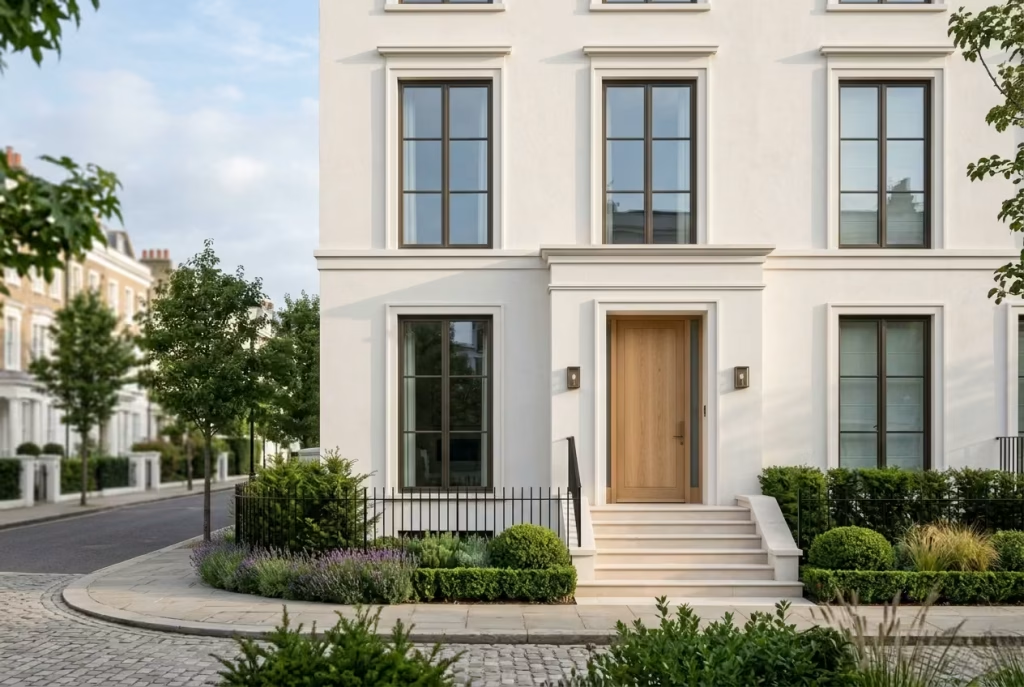
One of the quickest ways to dilute the beauty of white stucco is to surround it with an excessive mix of finishes. Brick, timber, stone, metal panels, decorative tiles, contrasting renders, and multiple paint colours may each look appealing individually, but together they often compete instead of complementing one another. Rather than creating richness, the façade can begin to feel visually fragmented.
A more refined approach is to build the exterior around three or four carefully selected materials that each serve a clear purpose. White stucco might provide the foundation, natural stone could ground the entrance, timber introduces warmth, and a single metal finish adds definition. Giving each material room to breathe allows its qualities to be appreciated while keeping the architecture as the main focus. More often than not, thoughtful editing produces a stronger result than adding another decorative layer.
Using Bright White That Feels Harsh in Strong Sun
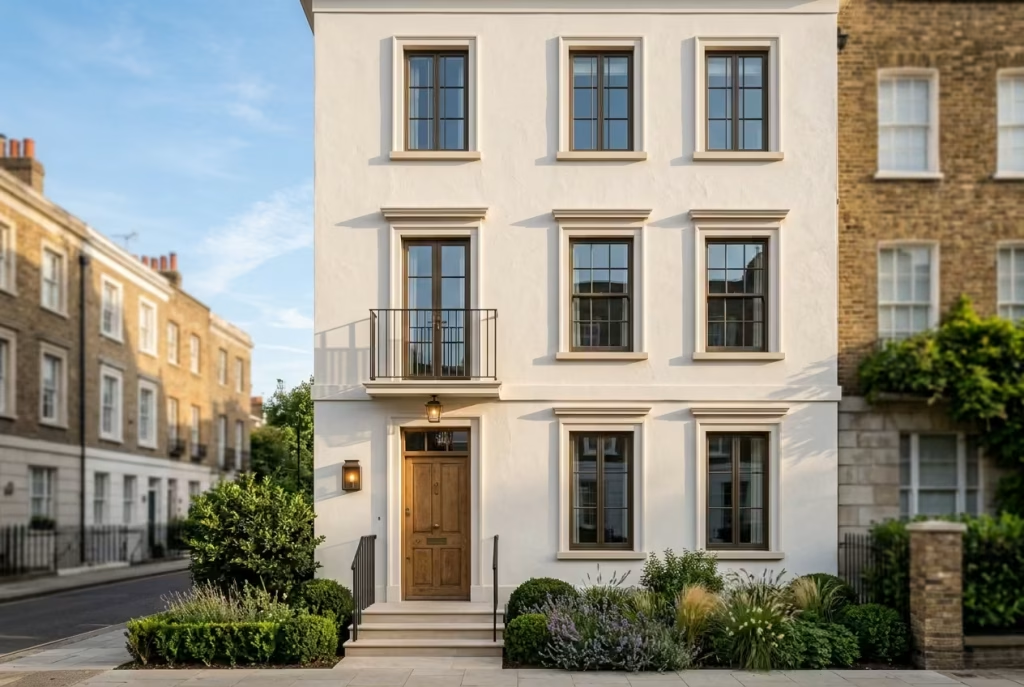
Not every white paint or render performs in the same way. Bright whites with cool blue undertones may appear fresh on a sample board, yet under strong sunlight they can become almost dazzling, making the façade feel harder and less welcoming. On large surfaces, especially in open settings, this intensity can also exaggerate shadows and make neighbouring materials appear disconnected.
Warm whites, soft mineral whites, or gentle off-white tones generally create a more balanced appearance throughout the day. They respond gracefully to morning light, overcast skies, and evening sunshine, allowing the townhouse to maintain its character in changing conditions. Testing several large samples directly on the exterior before making a final decision is one of the wisest investments a homeowner can make because natural light often tells a very different story than a paint chart.
Ignoring the Relationship Between Exterior and Interior Colour Palette
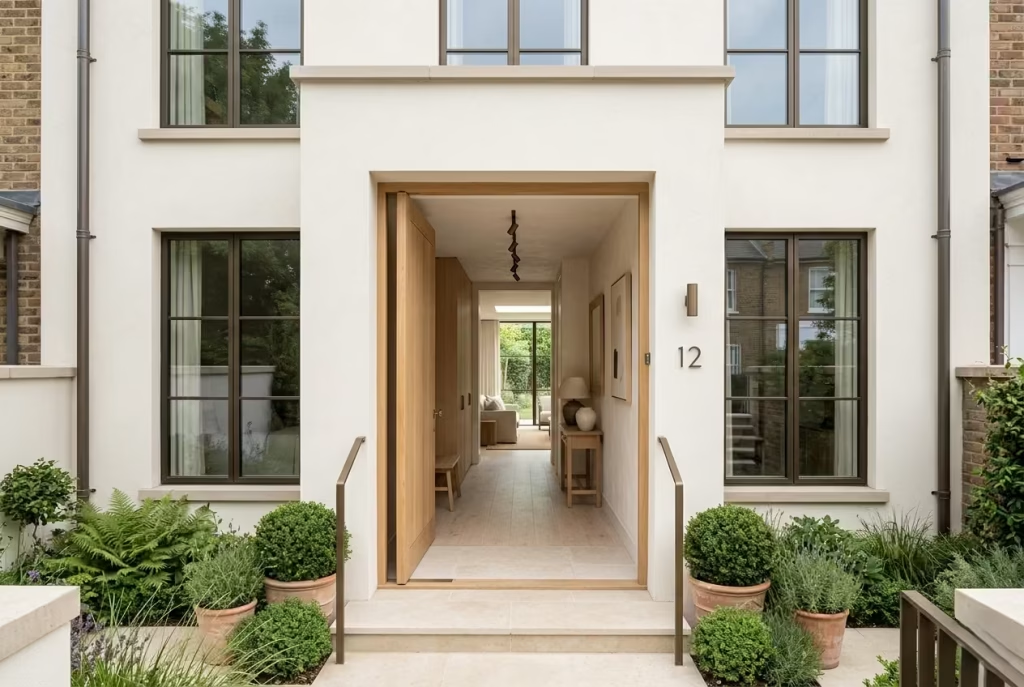
A beautifully designed façade loses some of its impact when the interior tells a completely different story. Walking through the front door should feel like a natural continuation of the architectural experience, not an abrupt change in mood. If the exterior celebrates soft whites, natural stone, and warm timber while the interior introduces unrelated colours and finishes, the home can feel disconnected despite each space being attractive on its own.
Creating continuity does not mean repeating identical colours everywhere. Instead, echo the same tonal family through flooring, joinery, textiles, and wall finishes. Warm neutrals, natural materials, and subtle textures allow the transition between indoors and outdoors to feel effortless. This layered consistency is particularly valuable in townhouses, where connected sightlines make visual harmony even more noticeable.
Choosing Decorative Details That Compete with the Architecture
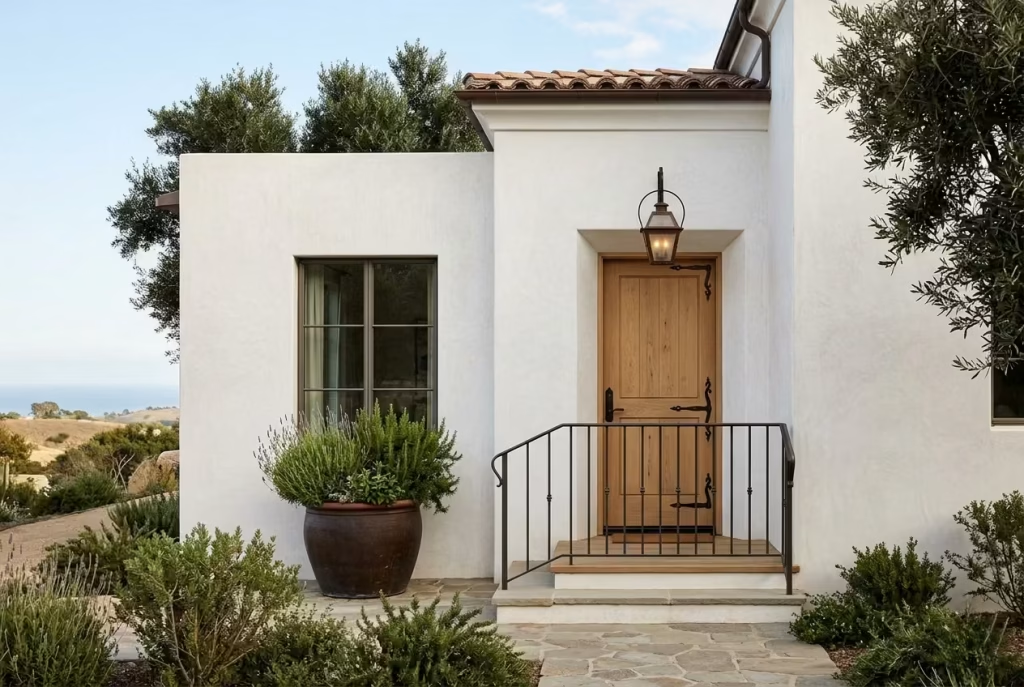
White stucco already provides a strong architectural canvas, so it rarely benefits from excessive ornamentation. Oversized mouldings, elaborate brackets, ornate lighting, decorative columns, and multiple feature elements can distract from the building’s proportions rather than enhancing them. Before long, the eye no longer knows where to rest, and the quiet elegance that defines timeless architecture begins to disappear.
Instead, let one or two carefully crafted features become the focal point. A beautifully detailed front door, elegant metal railings, or thoughtfully proportioned exterior lighting often contributes far more than a collection of decorative additions. As the saying goes, too much of a good thing can quickly become too much. When every detail has a clear purpose, the architecture speaks with greater confidence.
Leaving Balconies, Entries, or Hallways Visually Unresolved
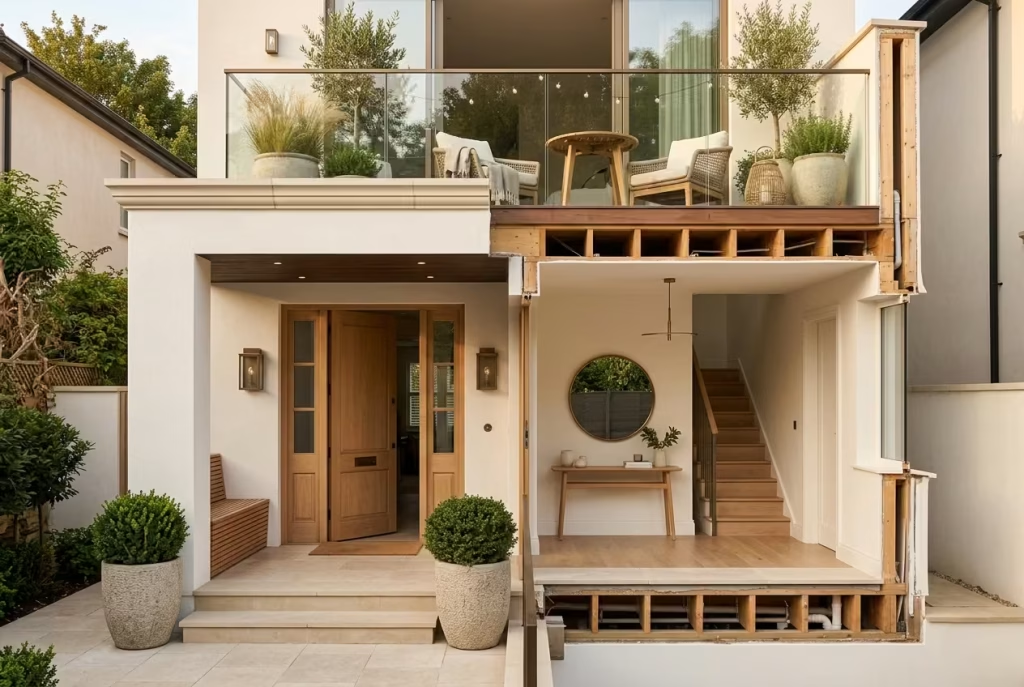
Some of the most frequently overlooked areas in a townhouse are also the ones experienced every single day. Balconies become storage spaces instead of outdoor retreats, entrance porches feel unfinished, and hallways are treated as little more than corridors connecting larger rooms. Although these spaces may seem secondary, they shape how the home is experienced from the moment someone arrives until they leave.
Treat these transition zones with the same level of care as the principal living spaces. Continue the material palette, introduce layered lighting, add carefully chosen planting, and keep furniture scaled to the available space. A simple bench, a well-positioned mirror, a generous planter, or a thoughtfully selected pendant light can completely change the atmosphere without requiring a major renovation. When these connecting spaces feel resolved, the entire townhouse feels more complete because every part of the home contributes to the same architectural narrative rather than feeling like an afterthought.
The finest white stucco townhouses rarely achieve their timeless character through expensive additions alone. They succeed because unnecessary distractions have been removed, allowing proportion, craftsmanship, natural materials, and thoughtful detailing to do the heavy lifting. In design, knowing when to stop is often every bit as important as knowing where to begin.
Closing Section: The Quiet Strength of White Stucco
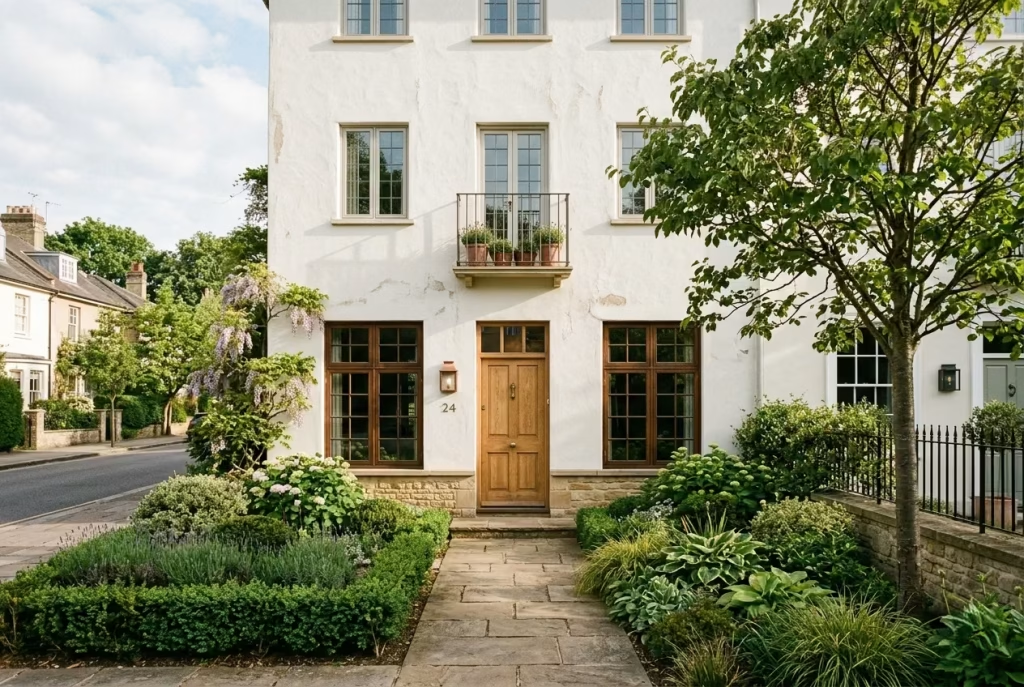
The enduring appeal of a white stucco townhouse has never been about following the latest design movement or making the boldest statement on the street. Its strength lies in something far more lasting. Proportion that feels balanced at every angle, materials chosen with care, and a level of restraint that allows the architecture to speak for itself. While trends inevitably come and go, these principles remain remarkably consistent because they are rooted in how people genuinely experience a home rather than how it appears in a single photograph.
Throughout this article, one idea has surfaced time and again. Timeless curb appeal is not created by one spectacular feature. It grows from hundreds of thoughtful decisions that quietly support one another. A softly textured stucco finish that responds beautifully to changing daylight. Natural stone that becomes richer with age.
Warm timber that introduces comfort without overpowering the façade. Layered planting that softens architectural lines. Carefully placed lighting that transforms the home after sunset. Interiors where natural light, tactile materials, and calm colour palettes continue the story established outside. Piece by piece, these choices build a townhouse that feels intentional from the first glance to the final room.
Perhaps the most valuable lesson is that good design rarely asks for more. More decoration, more colours, or more expensive finishes do not automatically create a better home. In many cases, they achieve the opposite. The most memorable white stucco townhouses understand when to hold back, allowing space, light, texture, and craftsmanship to take centre stage. As the old saying goes, quality always shines through. A carefully edited material palette and well-considered proportions will almost always outlast fashionable details that lose their appeal within a few seasons.
I have found that the homes people continue to admire years after completion all share one characteristic. They feel effortless. Nothing appears forced, every material has a reason for being there, and each room connects naturally to the next. The front entrance welcomes rather than competes for attention, the staircase carries the same quiet rhythm as the living spaces, and the garden feels like a seamless extension of the architecture. That sense of continuity is what gives a townhouse its lasting character.
If you are planning to build, renovate, or simply refresh a white stucco townhouse, let every decision begin with the fundamentals. Focus on proportion before decoration, invest in materials that become more beautiful with age, and allow natural light to shape the atmosphere wherever possible. When restraint is paired with craftsmanship and thoughtful detailing, white stucco becomes far more than an exterior finish. It becomes the foundation for a home that feels composed from the street, peaceful inside, and beautifully equipped to stand the test of time.
Frequently Asked Questions about White Stucco
Does white stucco stay clean over time?
White stucco can remain beautiful for many years, but like any light-coloured exterior, it requires periodic maintenance. Homes in urban areas may collect traffic residue, while coastal properties are more exposed to salt, moisture, and airborne particles. Choosing a high-quality breathable render or masonry paint, ensuring good drainage, and washing the façade every year or two helps preserve its fresh appearance. Regular inspections also allow small stains or hairline cracks to be addressed before they become more noticeable.
Is white stucco a good choice for townhouses?
Yes, white stucco is particularly well suited to townhouses because it reflects natural light and visually enlarges narrow façades. Its clean, continuous surface helps simplify complex elevations while creating a timeless appearance that works equally well with traditional, transitional, and contemporary architecture. When paired with quality materials such as natural stone, timber, and carefully selected metal finishes, it gives compact homes a more refined and spacious presence.
Which shade of white works best for a stucco townhouse?
Warm whites and soft off-whites generally produce the most balanced result. Shades with subtle cream, mineral, or stone undertones respond beautifully to changing daylight and create a welcoming appearance throughout the year. Bright, cool whites can sometimes appear harsh in direct sunlight and may emphasise surface imperfections more than warmer alternatives. Testing large exterior samples in different lighting conditions is always worthwhile before making a final decision.
What materials pair best with a white stucco exterior?
Some of the most timeless combinations include limestone, travertine, natural oak, cedar, bronze, matte black steel, and softly textured porcelain. These materials introduce warmth and depth without competing with the simplicity of white stucco. The most successful projects usually limit the exterior palette to three or four complementary finishes, creating harmony rather than visual clutter.
Is white stucco suitable for modern and traditional homes?
Absolutely. The versatility of white stucco is one of its greatest strengths. Smooth render paired with slim metal frames and minimalist detailing creates a crisp contemporary look, while lightly textured finishes, timber joinery, stone steps, and traditional proportions produce a softer, more classical appearance. The surrounding materials and architectural details ultimately determine the home’s character.
How can I make a white stucco townhouse feel warmer?
Warmth comes from layering natural materials rather than adding stronger colours. Timber front doors, stone paving, textured planting, bronze hardware, warm white lighting between 2700K and 3000K, and soft landscaping all balance the brightness of the stucco. Inside, introducing linen, wool, oak, natural stone, and warm neutral paint colours creates a home that feels inviting while maintaining a light, cohesive palette.
What type of lighting works best with white stucco?
Warm lighting typically flatters white stucco far better than cool-toned LEDs. Fixtures with a colour temperature between 2700K and 3000K enhance the render’s subtle texture and create a welcoming atmosphere after sunset. Layering wall lanterns, pathway lights, step lighting, and discreet garden illumination also adds depth to the façade while improving safety and usability.
Does white stucco increase curb appeal?
In many cases, yes. A thoughtfully designed white stucco townhouse often appears brighter, cleaner, and more architecturally defined than darker exterior finishes. Combined with balanced proportions, quality landscaping, and carefully selected materials, white stucco creates timeless curb appeal that appeals to a wide range of buyers and continues to feel relevant as design trends evolve.
How do I stop a white interior from feeling cold?
The secret is to layer tone and texture instead of relying on bright white alone. Warm whites, bone, chalk, oat, and soft cream shades create a gentler backdrop, while natural oak, woven textiles, matte finishes, stone, and linen introduce warmth without sacrificing brightness. Allowing natural daylight to become part of the design also helps rooms feel comfortable and lived in rather than stark or clinical.
What is the biggest design mistake when renovating a white stucco townhouse?
The most common mistake is trying to do too much. Mixing numerous materials, introducing excessive decorative detailing, or using unrelated colour palettes often weakens the architecture instead of enhancing it. The most successful white stucco townhouses rely on proportion, thoughtful restraint, and a carefully edited palette of enduring materials. When every design decision supports the same architectural vision, the result feels calm, cohesive, and timeless.