




25 Fall Reading Nook Ideas: Create the Perfect Cozy Autumn Reading Space
There’s a particular hush that settles over a house once autumn properly arrives. The light turns amber a good hour earlier than it did in August, the wind starts having proper opinions about the windows, and something in the body simply asks to sit down somewhere soft with a book and not be disturbed. Chasing that feeling with a stack of cushions on the sofa arm works for about a week. Building an actual reading nook, somewhere the whole house silently agrees is off limits for anything but a good story and a cup of something warm, is what makes the feeling last the whole season.
There’s a quieter reason this matters more than it might seem. The Reading Agency’s own research found that half of UK adults don’t read regularly, and that more than 27 million adults are, in their words, missing out on the genuine benefits reading brings, including lower stress and sharper focus.
The two reasons people give most often for falling out of the habit are painfully familiar: a lack of time, cited by a third of respondents, and the pull of social media, cited by one in five. Separate research commissioned by Royal Mail found that 70% of 18 to 34 year olds actively wish they read more than they currently manage. That’s not a small gap between wanting and doing, and it isn’t solved by buying more books.
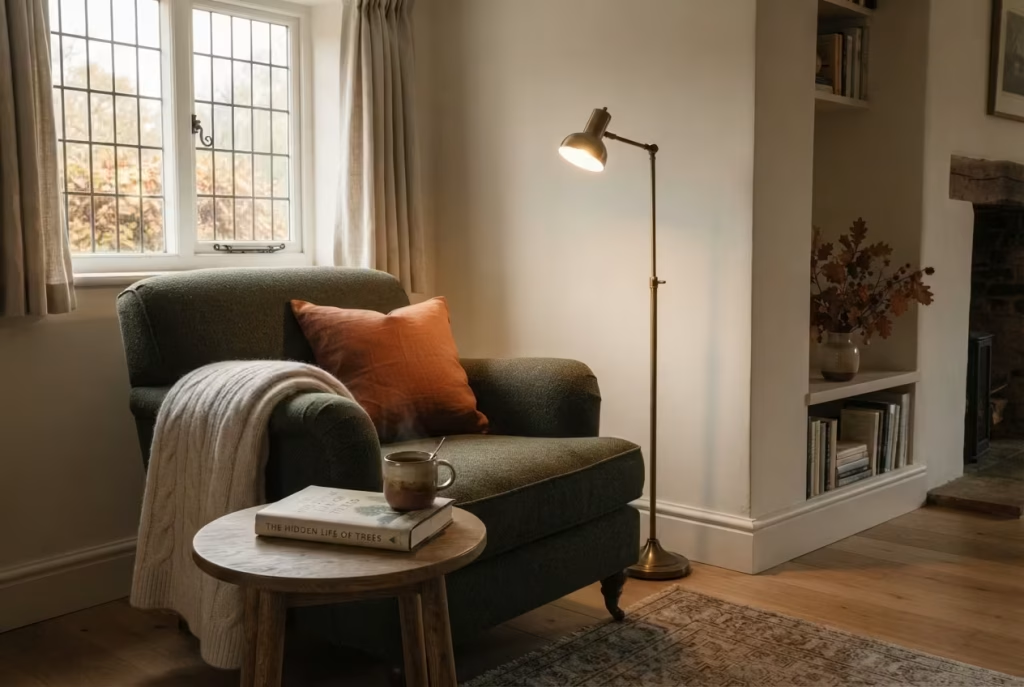
It’s solved, more often than people expect, by removing the friction between “I fancy reading” and “there’s actually somewhere set up for that.” A proper nook does exactly this. It turns reading from something that has to compete with a phone, a to-do list, and the general pull of the rest of the house into something with its own dedicated, inviting home.
None of this needs a spare room, a tradesman, or a Pinterest budget to pull off, whatever the glossier decor blogs might imply. It needs the right corner, a chair that will still feel good an hour in rather than five minutes in, light bright enough to actually read by, and a little know-how about where most people go wrong.
That last part is where this guide earns its keep. Below sit 25 genuinely different ideas, sorted by the sort of space you’re actually working with rather than by aesthetic mood board, each one carrying real measurements, proper material suggestions, and the reasoning behind the choice rather than a caption dressed up as advice.
There’s a psychology section worth reading properly rather than skimming, a safety section most autumn decor pieces conveniently forget exists, and an FAQ built from the questions people genuinely ask before they pick up a paintbrush or a staple gun.
The Short Answer, For Anyone in a Hurry
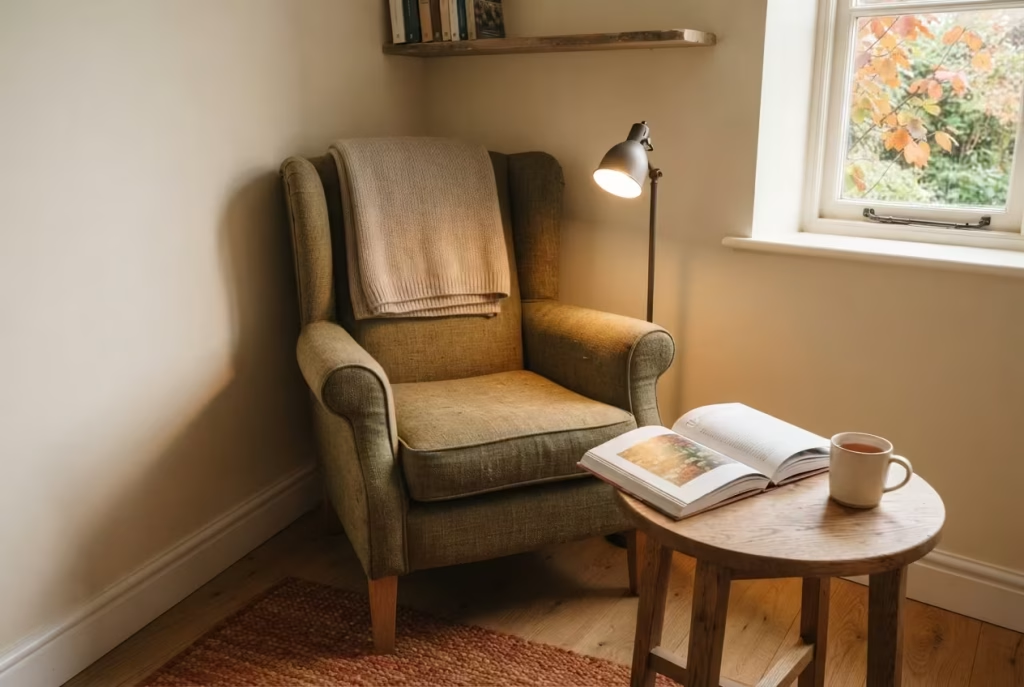
- Fastest route to a working nook: one comfortable, properly supportive chair, a light source somewhere around 2,700 to 3,000 Kelvin, a small side table within arm’s reach, and a single decent throw. Everything past that is decoration.
- Smallest space that genuinely works: a corner as modest as 3ft by 3ft (roughly 90cm by 90cm) is enough for one armchair and a bit of breathing room around it.
- Correct light level for reading: 300 to 500 lux measured at the page, noticeably brighter than the 100 to 300 lux that suits a living room for general lounging, which explains why a single ceiling pendant so rarely does the job on its own. If buying by bulb rather than measuring lux, look for one rated at least 450 lumens, the figure lighting designers reach for specifically to head off eye strain.
- Firm or soft chair? Firm, every time, with proper back support built in. A chair that looks the picture of squashy comfort in a photograph is often the very thing that leaves you rubbing your lower back by chapter three.
- The single biggest safety mistake: candles or a portable heater sitting within a metre of throws, curtains, or cushions. London Fire Brigade logged 340 home fires in a single year in London alone, all traced back to exactly this kind of cosy autumn set-up.
- What it actually costs: anywhere from nothing at all, using furniture already knocking about the house, up to £600 or more for a fully custom built-in window seat with storage underneath.
A Nook at a Glance Which Type Suits Which Home
| Nook type | Best suited to | Typical cost | Standout feature |
| Window seat | Homes with a bay, bow, or deep sill | £150 to £600+ | Built-in storage beneath the seat |
| Bedroom corner | Anyone wanting privacy from the rest of the house | Under £50 to £200 | Cheapest to set up, uses existing furniture |
| Living room nook | Open-plan homes needing a defined zone | £100 to £350 | Works around a fireplace or bookshelves |
| Attic or loft retreat | Sloped ceilings, awkward headroom | £100 to £400 | Genuine seclusion, skylight light |
| Outdoor or porch spot | Covered porches, balconies, gardens | £50 to £300 | Only usable for part of the season |
| Small-space or rental | Flats, studios, no permission to drill | Under £50 to £150 | Fully reversible, no wall fixings needed |
Why This Actually Works The Psychology Worth Knowing
Most autumn decor guides treat cosiness as a purely visual affair: warm colours in, cool ones out, job done. That’s only half the story, and arguably the less interesting half. A properly built nook does measurable work on the nervous system, not just the eye, and understanding why makes every decision further down this guide feel less like decoration and more like something worth actually getting right.
The evidence for this is more concrete than you’d expect from something as soft-edged as “cosiness.” Research out of the University of Sussex found that reading for as little as six minutes can lower stress levels by up to 68%, comfortably outpacing music (61%), a cup of tea (54%), or a walk round the block (42%).
The team, led by cognitive neuropsychologist Dr David Lewis, measured heart rate and muscle tension directly rather than simply asking people how they felt, which is part of why the finding has held up so well since. Dr Lewis put the effect down to how fully reading engages the imagination, pulling attention clean away from repetitive, anxious thoughts in a way that passive activities like scrolling or watching telly simply don’t manage. Set against the Reading Agency figures above, that lack-of-time and social-media excuse starts to look less like a character flaw and more like a design problem with a fairly straightforward fix: build the six minutes a home, and it stops competing with the phone for attention.
Lighting does more heavy lifting here than it’s ever given credit for. CIBSE guidance puts the ideal for reading tasks at 300 to 500 lux, considerably brighter than the 100 to 300 lux that feels perfectly pleasant for general living room ambience. That gap explains a very specific and very common complaint: a reading corner that looks entirely right in photographs but somehow never gets used, because the room’s main light is fine for sitting about in but leaves the eyes working overtime on the page. Nearly every idea below that mentions lighting is quietly solving this exact, measurable problem rather than chasing a look, and it’s worth remembering the next time a lamp seems like an unnecessary expense on top of an already-comfortable chair.
There’s a simpler mechanism at work too, and it’s one interior designers rely on more than they’ll usually admit outright: separation. A nook that reads as visually distinct from the rest of the room, whether through a change underfoot, a curtain, or an armchair angled away from the main throughway, gives the brain a clear line in the sand between “getting on with things” and “properly resting.”
That boundary earns its keep every single time the spot gets used, which is precisely why the ideas ahead spend as much energy on carving out that sense of separation as they do on cushions and colour palettes. Think of it as the difference between a desk in a spare corner and an actual home office; the furniture might be identical, but only one of them tells your brain, convincingly, that work has finished for the day.
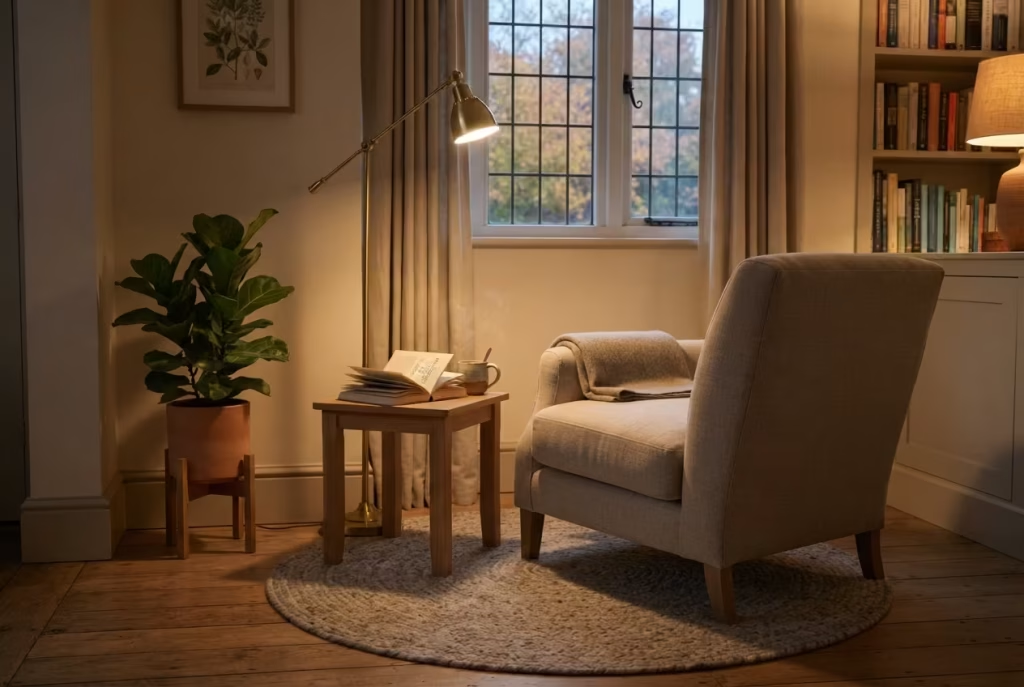
One shorthand crops up again and again across real reading nooks that people have actually built and lived in, rather than the styled-for-a-shoot variety: seating, a small table, a plant, and a light source. That’s genuinely the whole list. Every idea below builds from that same four-part foundation, adjusting the details to suit the space rather than reinventing the wheel each time, and it’s worth keeping in your back pocket if any of the 25 ideas ahead starts to feel more elaborate than your weekend allows.
Getting the Seat Right, Not Just the Look
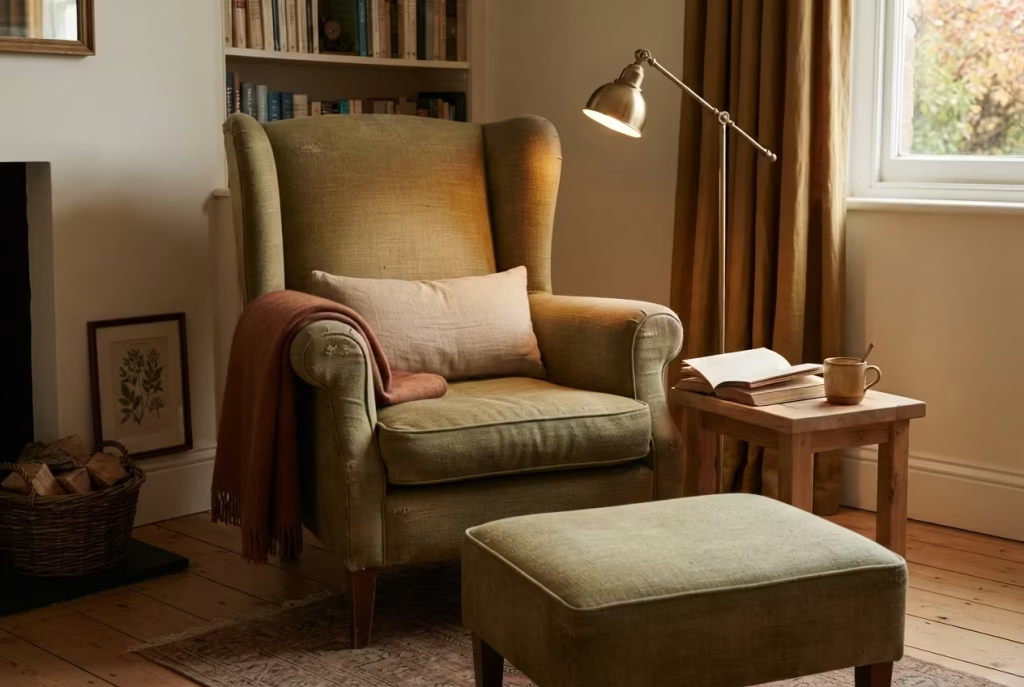
Here’s the detail nearly every autumn roundup skips clean over, and it’s the one that decides whether a nook earns its keep past the first fortnight or quietly becomes somewhere the laundry basket ends up living.
A chair that photographs beautifully, all deep cushions and inviting slouch, is very often too soft to sit in properly for an hour at a stretch. One long-time book blogger, writing candidly about building her own nook, chose a firm-seated wing chair over a plush one for exactly this reason: a seat that’s soft all the way through invites slouching within minutes, and slouching over a book for any real stretch of time is a reliable way to end a reading session early with an aching lower back rather than a finished chapter.
Workplace ergonomics research from Steelcase backs this up on a much larger scale: postural variety and proper lumbar support, not softness for its own sake, are what actually keep the body comfortable through long periods of sitting. In practice, this means reaching for a firm seat base with a genuinely supportive backrest (a wing chair or high-backed armchair does double duty here, since the wings support the head too), then layering softness on top through cushions rather than choosing a chair that gives way the moment you sit down. A small ottoman or footstool that lets you shift leg position now and again does more for long-session comfort than any number of extra scatter cushions ever will.
None of this needs to mean a new purchase, and there’s something rather satisfying about a reading chair with a bit of history to it. Charity shops and second-hand marketplaces regularly turn up solid, well-built armchairs for £20 to £80, often in far better structural condition than a flat-pack equivalent at three times the price, since older frames were more commonly built from hardwood rather than particleboard. A chair with a slightly faded arm or a mark on one cushion carries none of the weight it would if it were the centrepiece of a formal living room; in a reading nook, a bit of visible history is part of the charm rather than something to apologise for.
Worth saying plainly, while we’re on the subject: reading in bed is not the same thing as having a reading nook, and the distinction matters more than it sounds. Propped up against a stack of pillows with no real structural support, the neck and shoulders end up doing work they were never built for over a long session, which is exactly why a proper chair, even a modest one, in a space that feels genuinely separate from the bed itself, pays for itself within the first few uses.
There’s an emotional side to this too, rarely mentioned in the same breath as ergonomics: a spot that exists purely for reading, distinct from where you work, sleep, or scroll, becomes a small daily signal that you’re allowed a few minutes that belong entirely to you. That’s not a small thing in a house that’s usually asking something of every other corner in it.
Where the Window Does the Work Window Seat Nooks
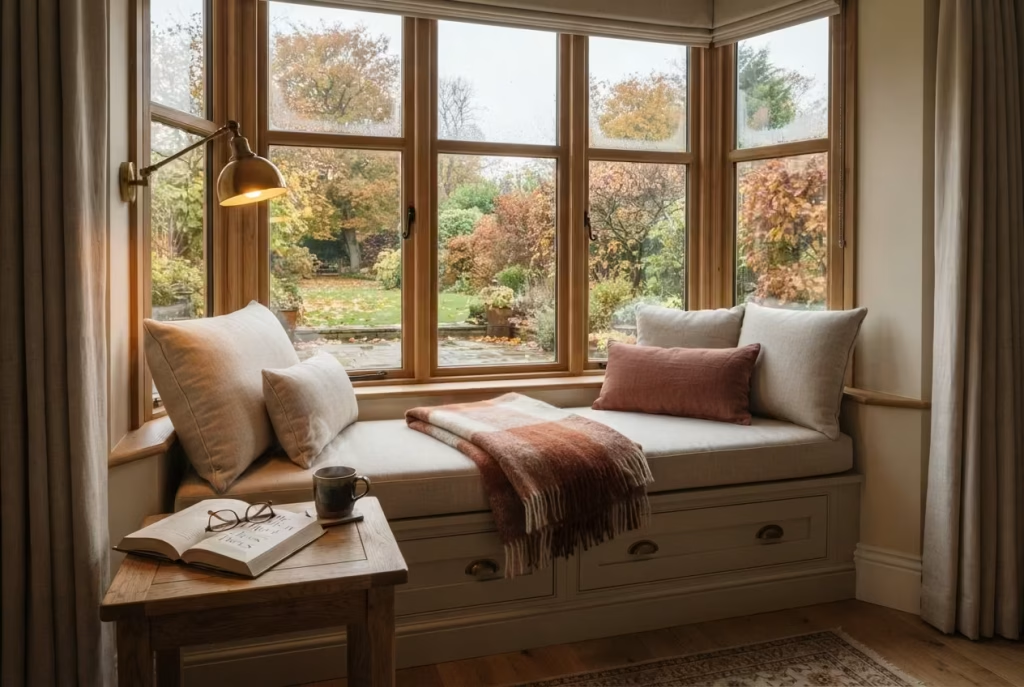
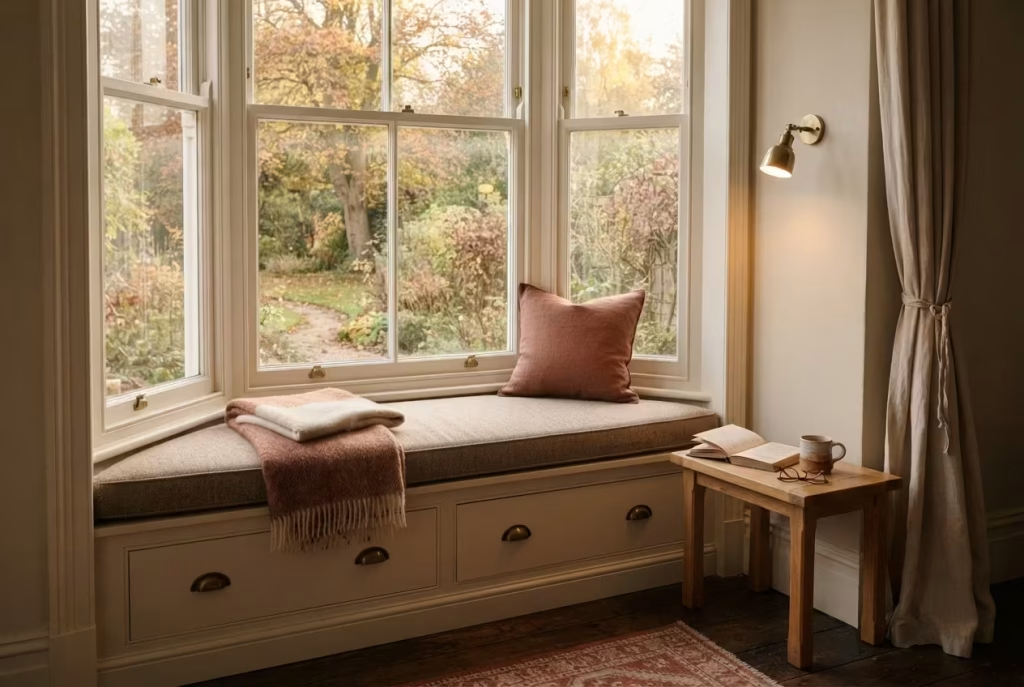
A window seat remains the single most requested reading nook feature going, and it’s easy to see why: there’s something genuinely restorative about watching the last of the leaves come down while warm and dry on the other side of the glass, book in hand, with nowhere else you need to be.
It’s also the one people get the measurements wrong on most often, which leaves a finished seat that looks entirely right but feels, within ten minutes of sitting down, like something’s slightly off.
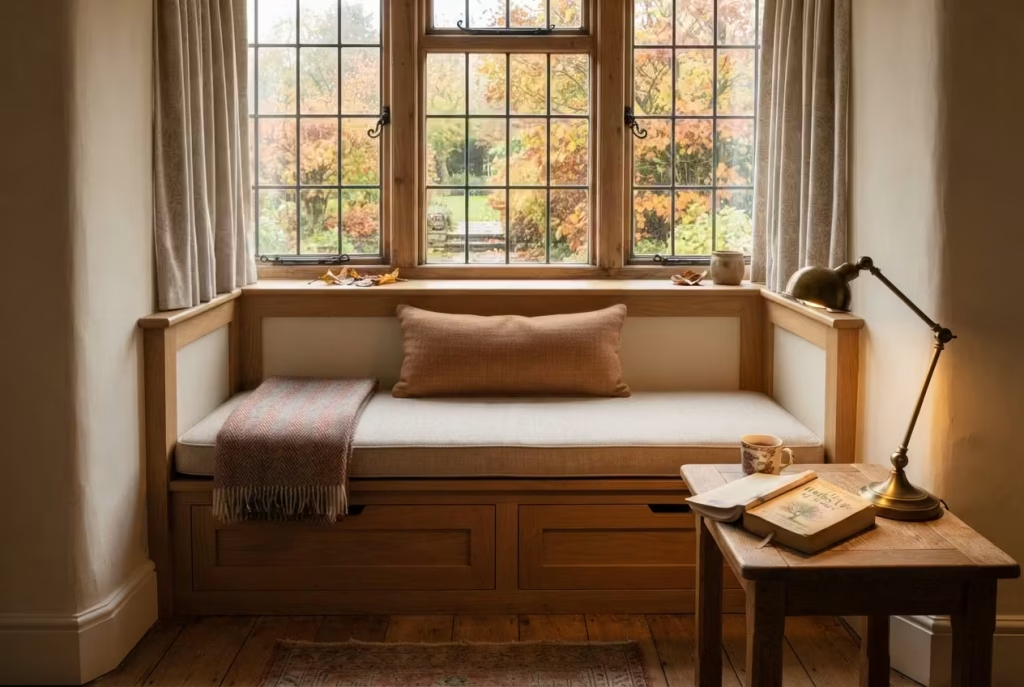
The numbers that actually matter: drawing on guidance from This Old House and decades of hands-on advice from the carpenters at Ask the Builder, a comfortable window seat runs 16 to 20 inches (40 to 51cm) deep, sits 17 to 19 inches (43 to 48cm) off the floor once the cushion’s accounted for, and needs a minimum width of 32 inches (81cm) for one person sitting forward, or a full 48 inches (122cm) if you’d rather sit sideways with your back against the wall. Cushions want to be 2 to 4 inches (5 to 10cm) thick as a baseline, and if the plan is to properly curl up rather than just perch for a chapter, push the depth out to 24 inches (61cm) so your legs have somewhere to go.
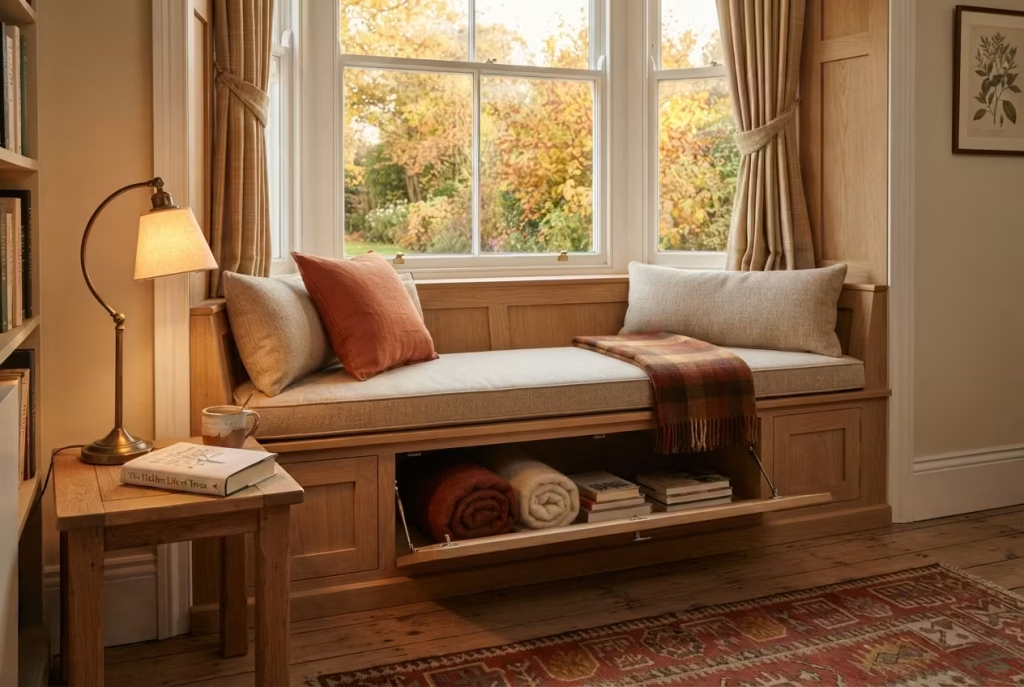
The built-in bench with hidden storage. A hinged-top bench keeps blankets and books tucked out of sight until they’re wanted, solving the single biggest gripe about smaller rooms: nowhere sensible to stash seasonal throws once the lighter summer ones come out of rotation. Go for a hinged-front design over a lift-top one where you can, since items have to be deliberately placed rather than lobbed in, which keeps the bench from slowly turning into a glorified dumping ground. A basic flat-pack bench-with-storage kit typically runs £120 to £250, while a bespoke carpenter-built version, fitted precisely to an awkward bay, tends to land somewhere between £400 and £900 depending on the joinery involved.
You May also Like: 15 Dreamy Farmhouse Reading Corner Ideas for the Ultimate Cozy Escape
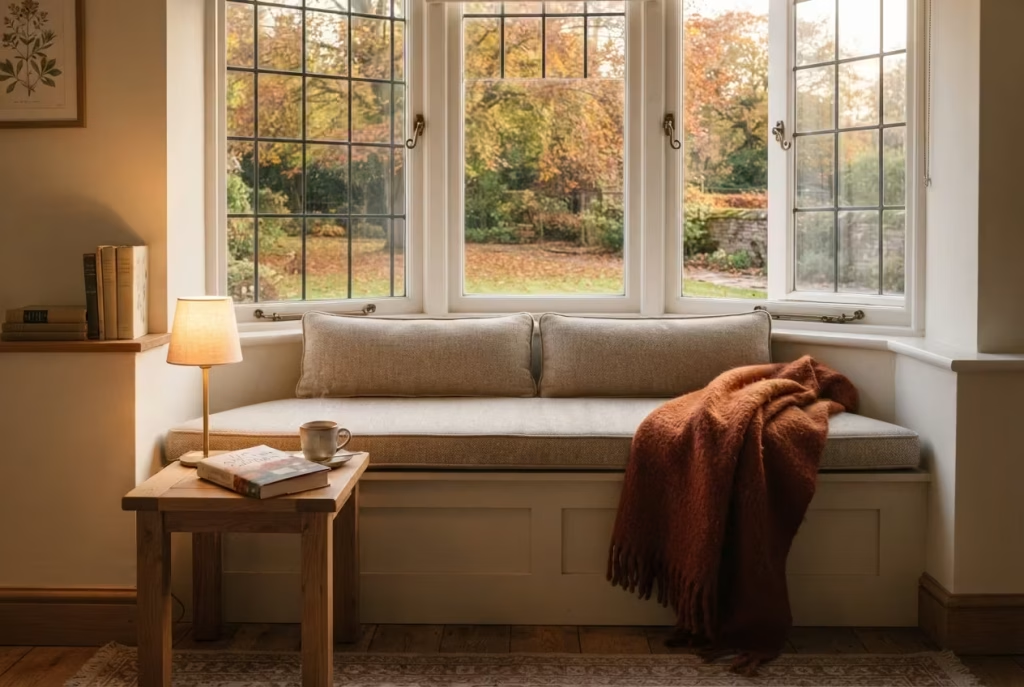
The bay window reading corner. Bay and bow windows typically span 36 to 84 inches wide, more than enough room for a proper bench plus a small side table tucked into one corner. Layer a wool throw in rust or burnt orange with two firm lumbar cushions rather than a pile of soft decorative ones, since firm support in the small of the back is what actually carries a long reading session, not sheer volume of cushioning. A genuine wool throw, ideally 400 to 600 grams per square metre for real autumn weight, will run £35 to £90 depending on the weave, and is worth the outlay over a synthetic equivalent since wool naturally regulates temperature rather than trapping damp heat the way some fleece blends can.
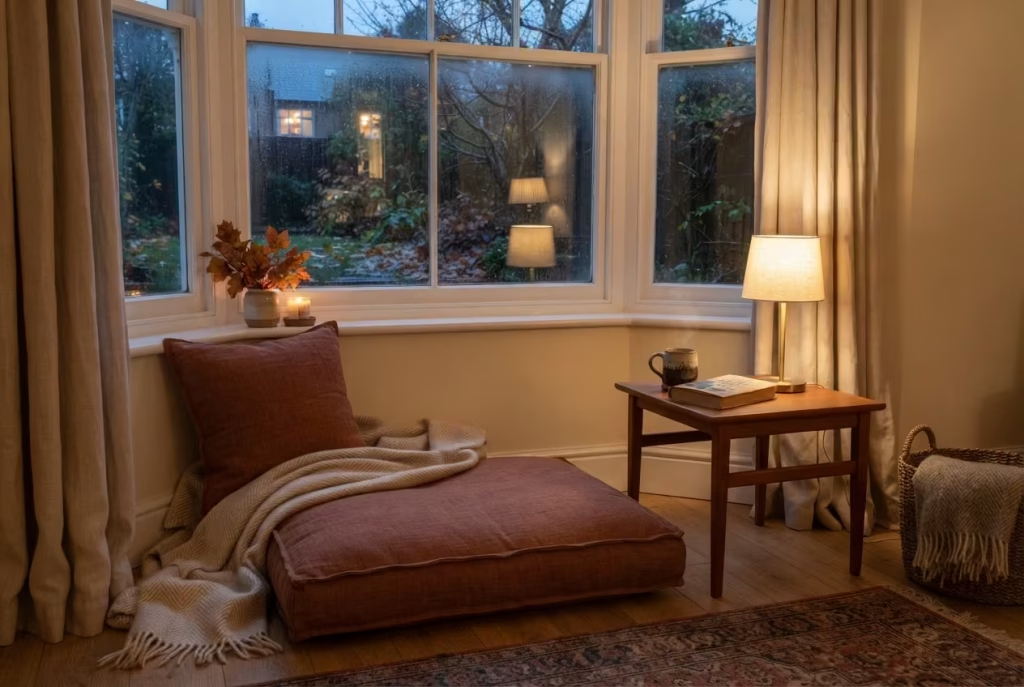
The floor-cushion window nook for renters. Where a built-in bench simply isn’t on the cards, a deep floor cushion, at least 4 inches thick, placed straight onto the windowsill ledge or the floor beneath it achieves much the same effect without a scrap of structural work. Add a folded wool blanket as a base layer against cold glass, since older double-glazed and any single-glazed windows can drop the air temperature noticeably within 12 inches of the pane on a properly cold evening. There’s something quietly clever about this approach beyond the low cost: it takes ten minutes to set up and ten minutes to undo, which makes it genuinely low-stakes to try before committing to anything more permanent.
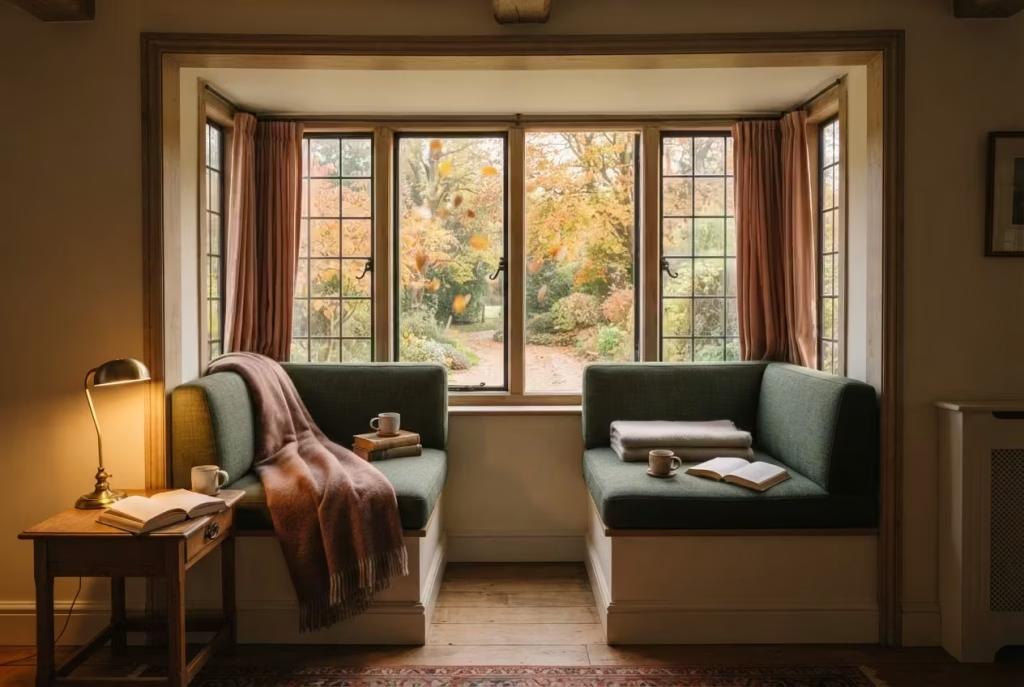
The two-seat facing window nook. For deeper bay windows, a design first spotted in older European homes cuts a centre section out of the seat, roughly 24 inches wide, leaving two 24-inch sections that face one another. It lets two people read together, or lets one person stretch their legs across to the far side, which is no small luxury on a lazy Sunday. For households where reading has always been a shared, quiet activity rather than a solitary one, this layout does something the single-chair versions can’t: it makes companionable silence the whole point of the space, rather than an accident of two people happening to be in the same room.
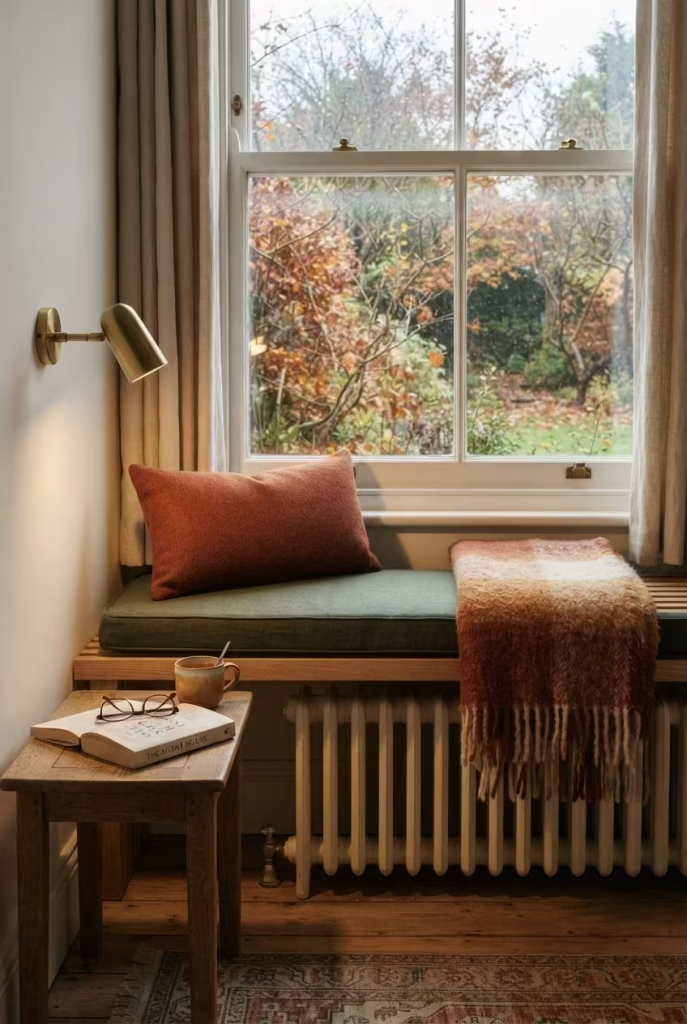
The radiator-adjacent seat. If a radiator already lives beneath the window, resist the urge to move it. A slim slatted bench top built over it, leaving at least 3 inches of clearance for airflow, keeps the heat doing its job while adding a genuinely usable seat, and gives you the warmest reading spot in the whole house right through the coldest stretch of autumn. There’s a real cost argument here too: relocating a radiator through a plumber typically costs £150 to £400 depending on pipework, so building around an existing one rather than moving it is often the difference between a weekend project and a job that needs booking in weeks ahead.
Bringing the Corner In Bedroom Reading Retreats
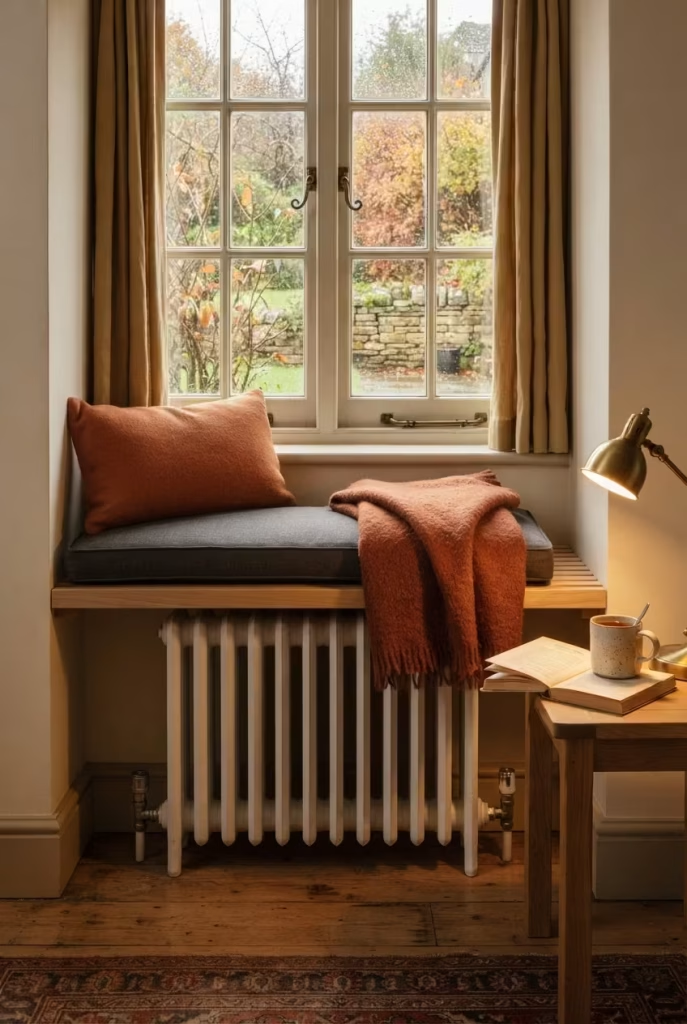
Bedrooms hand you a kind of privacy the rest of the house simply can’t match, and it’s worth more than it’s usually given credit for: people consistently read longer, and more often, in a spot kept separate from wherever their phone tends to end up. For anyone sharing a home, whether with a partner, flatmates, or a young family, the bedroom is often the one room where a closed door genuinely means something, and that’s a resource worth building into rather than overlooking.
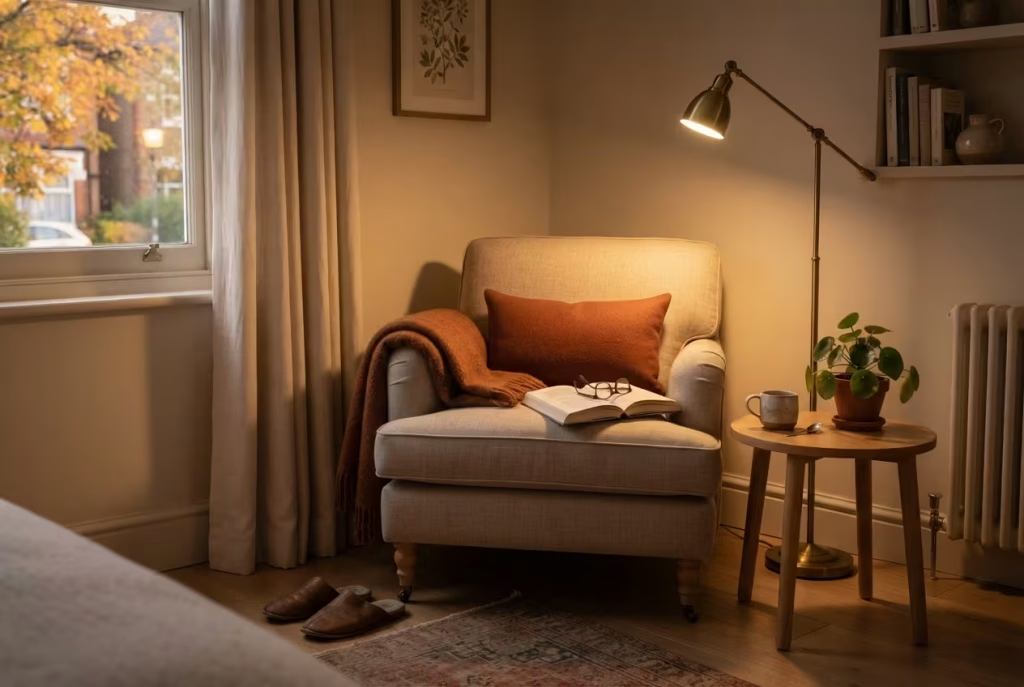
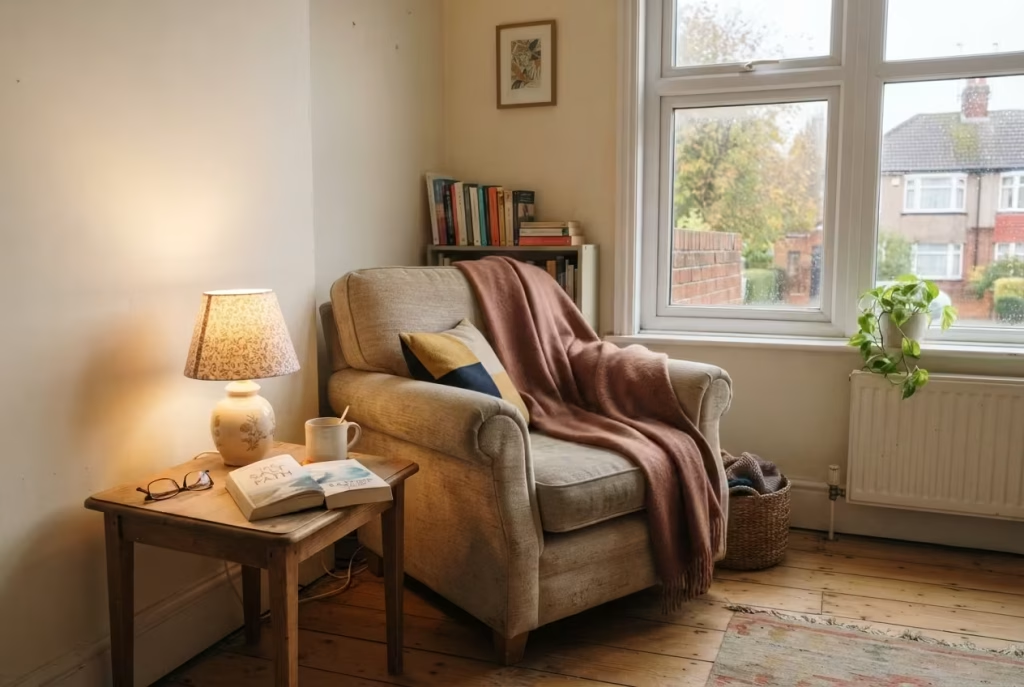
The corner armchair with a proper reading lamp. Angle the chair at 45 degrees into the corner rather than pushing it flat against the wall; this one small adjustment makes even a tight space feel deliberate rather than shoehorned in. Pair it with a floor lamp delivering 300 to 500 lux directly at seated head height, since bedroom ambient lighting (typically only 100 to 200 lux) will otherwise leave you squinting by the second chapter. A decent floor lamp with a warm 2,700K bulb included sits comfortably in the £40 to £90 range, and is one of the few purchases on this entire list that noticeably changes how a room feels the very first evening it’s switched on.
You May also Like: 15 Secret Earthy Reading Nook Ideas That Turn Any Corner Into a Cozy Escape
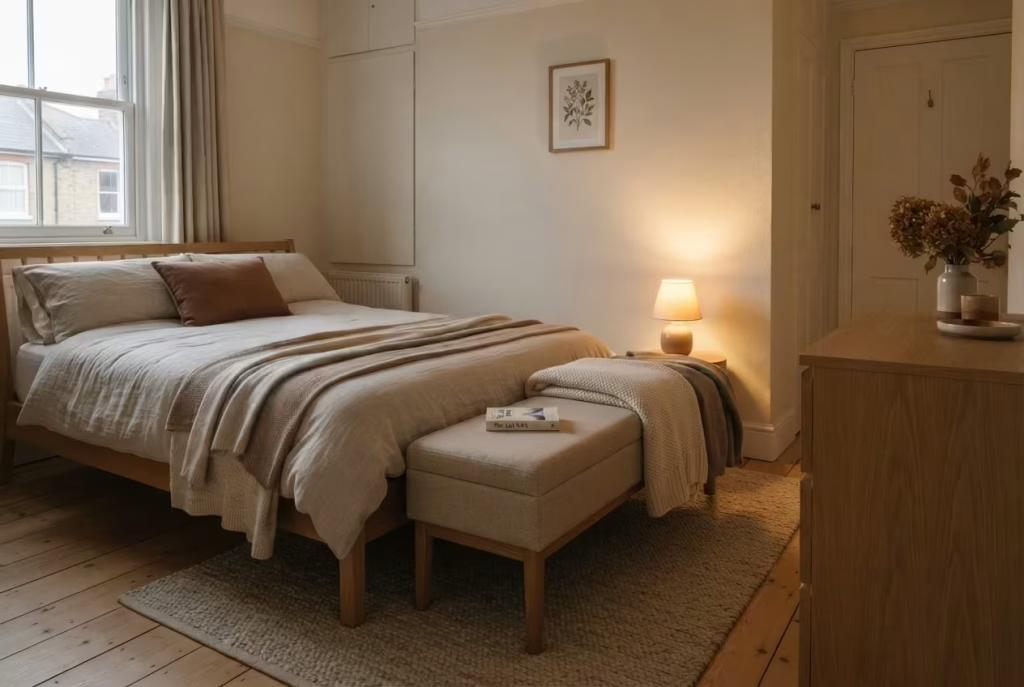
The footboard bench nook. A slim bench, 12 to 16 inches deep, placed at the foot of the bed doubles as extra seating and a proper reading perch, particularly handy in bedrooms too tight for a separate chair. Add a folded chunky knit throw and a single low table lamp on a nearby dresser for task light, and you’ve solved lighting and comfort in one move. There’s a practical bonus too: a footboard bench does the quiet work of a valet chair and a reading spot at once, which matters in a bedroom where every extra piece of furniture has to earn its floor space twice over.
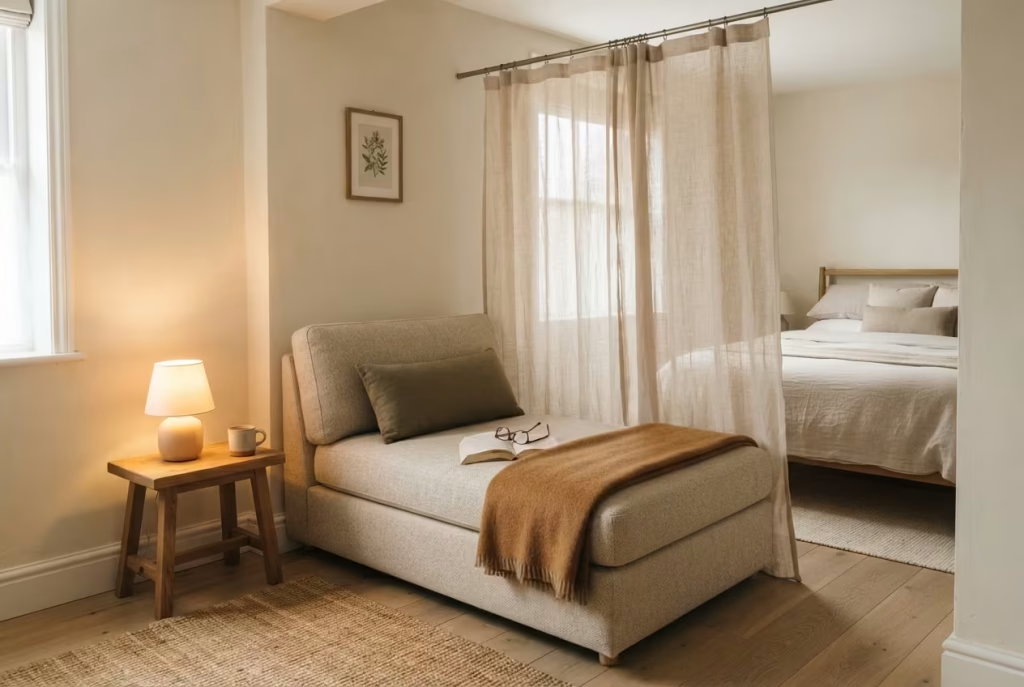
The canopy daybed corner. For a bedroom with an unused corner rather than a window to speak of, a daybed with a simple curtain rod and a lightweight panel creates exactly the visual separation the brain responds to, screening the nook from the sleeping area without needing so much as a stud wall. Choose a curtain in a natural linen or cotton blend rather than a heavy blackout fabric here; the goal is softening the edges of the space, not sealing it off entirely, and a lighter fabric lets daylight filter through even with the curtain drawn.
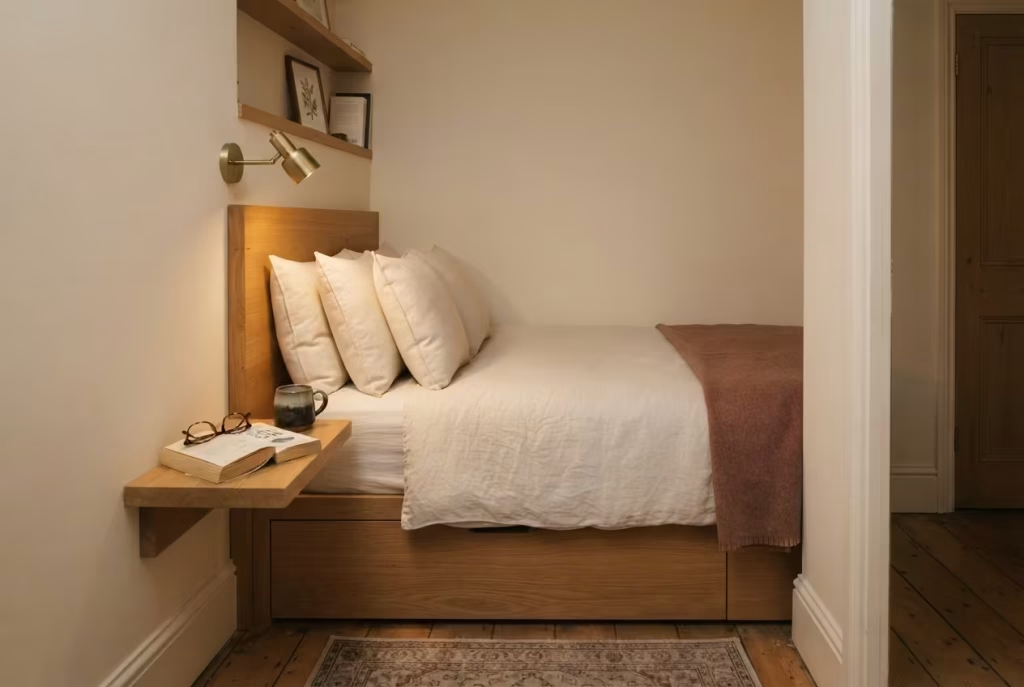
The built-in bed reading nook. If the bedroom has a built-in or platform bed already, prop two or three firm pillows vertically against the headboard and add a slim side table, or a wall-mounted floating shelf where floor space is at a premium, within easy reach for tea and a book. It’s the lowest-cost idea in this entire list, since it leans entirely on furniture already in the room, and it’s worth trying first before spending a penny on anything else, simply to work out how much of a proper nook you actually need before committing further.
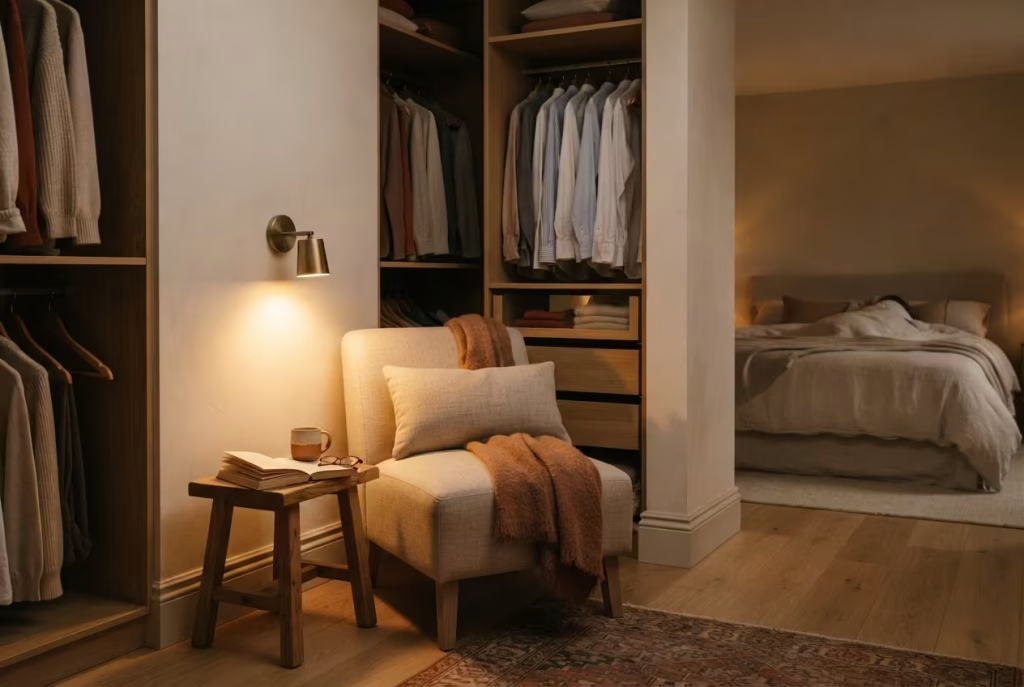
The walk-in wardrobe reading nook. In larger bedrooms with a walk-in space going spare, a single slipper chair and a plug-in wall sconce turn an otherwise underused corner of the wardrobe into a genuinely private reading spot, ideal for anyone sharing a bedroom who fancies reading without disturbing a partner already asleep. It’s a small kindness to build into a shared bedroom, and one that tends to get used far more than the space it occupies would suggest, precisely because it solves a real, recurring tension rather than an aesthetic one.
Living Rooms Rarely Give You a Corner for Free
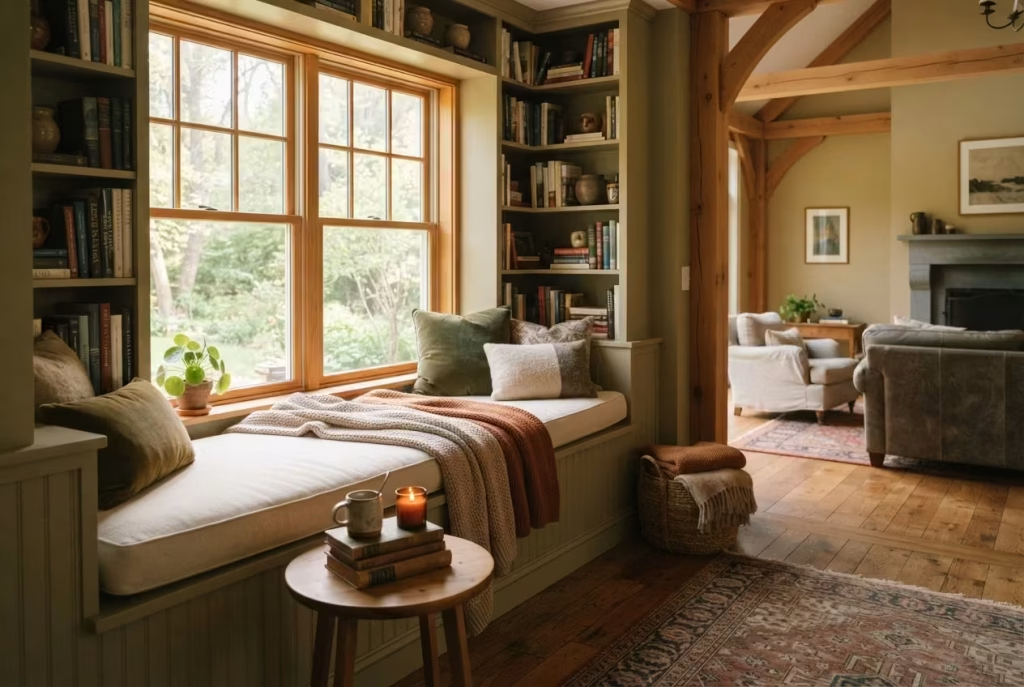
Living rooms are, without question, the hardest room in the house to carve a proper nook out of, given they’re built for several people and several activities happening all at once. The trick that consistently works isn’t walling anything off; it’s creating a sense of enclosure within the open space itself, and doing it well means the rest of the household barely notices the change until they find themselves wanting to sit there too.
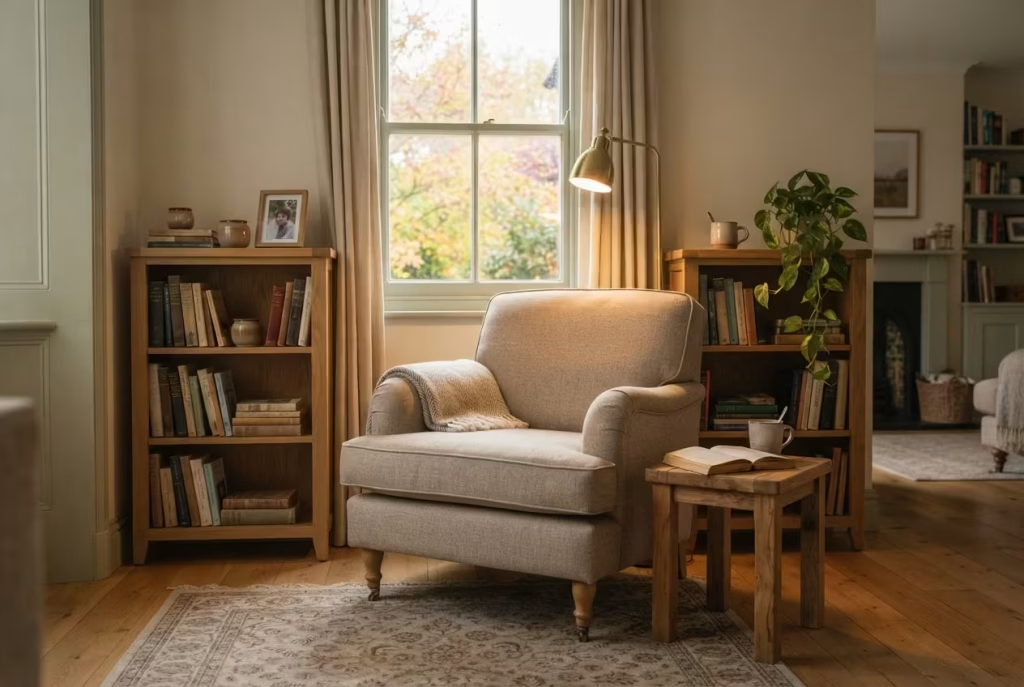
The bookshelf-flanked armchair. Two low bookshelves either side of a single armchair, even at a modest 30 inches tall, create a genuine “room within a room” effect that punches well above its actual footprint. Angle the chair slightly away from the television or main seating area so the sightline lands on a window or a bare wall instead of the rest of the household going about its business. Filling those shelves with a mix of book spines and a few personal objects, rather than styling them purely for symmetry, is what turns the corner from a display into somewhere that actually feels like yours.
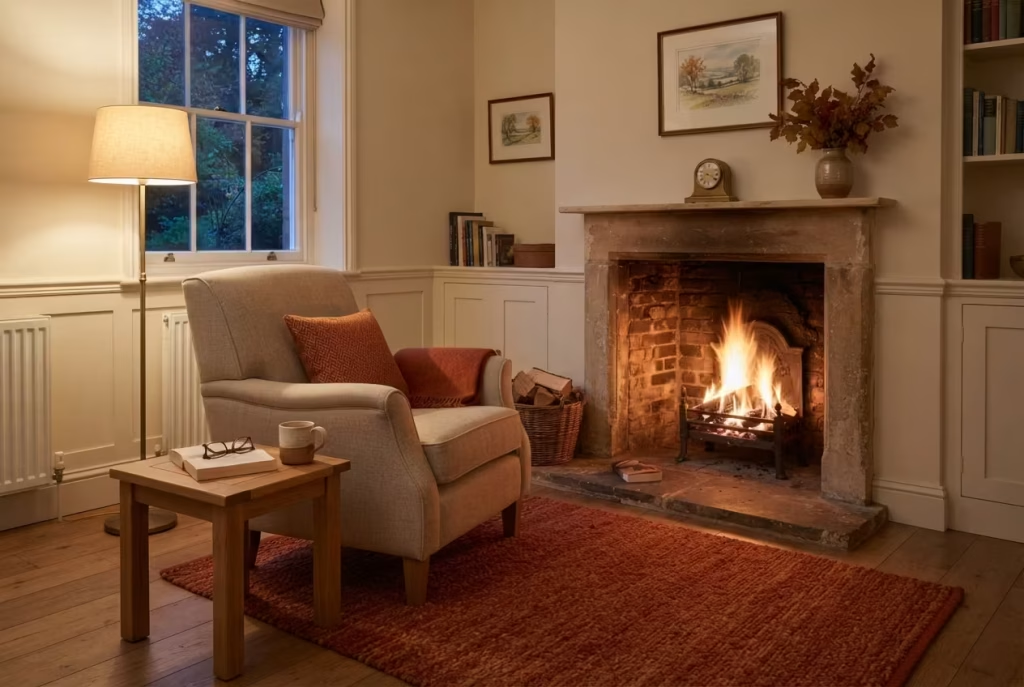
The fireside chair. Where the living room has a working or electric fireplace, a single chair set at a diagonal to the hearth, never side-on, which puts unnecessary heat on one side of the body, becomes the single most requested seat in the house come October, no contest. Keep flammable throws and cushions at least a metre from any open flame or electric fire element, as covered properly in the safety section below. There’s a reason this spot gets fought over every year without fail: the combination of radiant warmth, low flickering light, and a book is about as close as a living room gets to recreating the feeling of being somewhere entirely removed from the everyday.
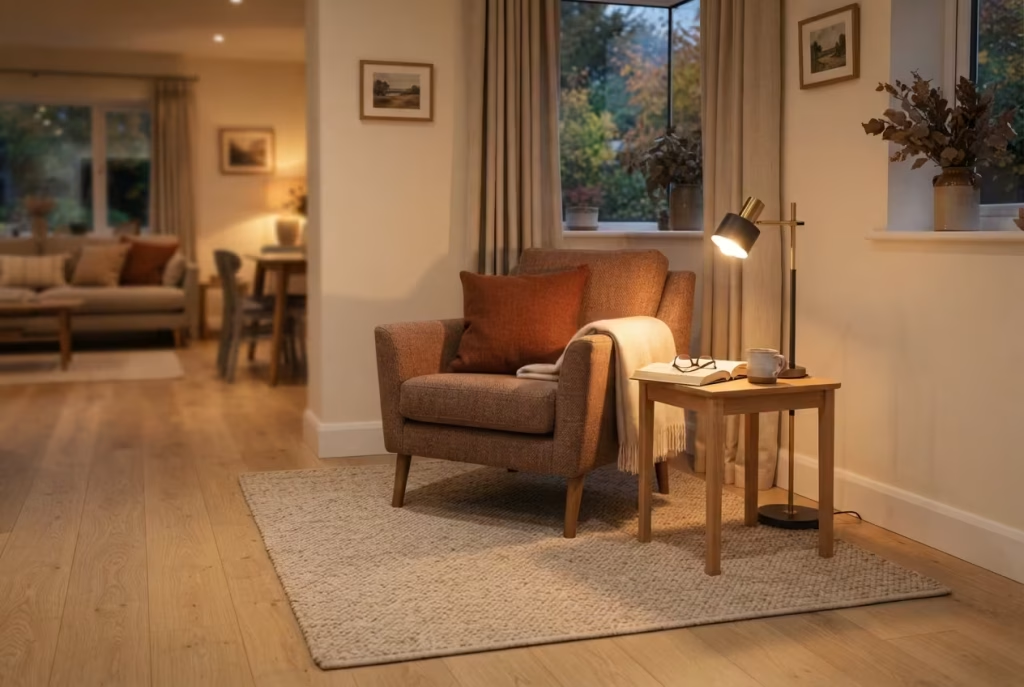
The rug-defined corner. Where furniture simply can’t divide the room, a smaller area rug, roughly 4ft by 6ft (120cm by 180cm), laid under just the reading chair and side table draws a visual boundary the eye reads as a separate zone, even inside a fully open-plan space with nothing else to mark it out. A wool or wool-blend rug in this size typically costs £60 to £180, and the underfoot warmth alone is worth the outlay once the central heating starts working overtime through the colder months.
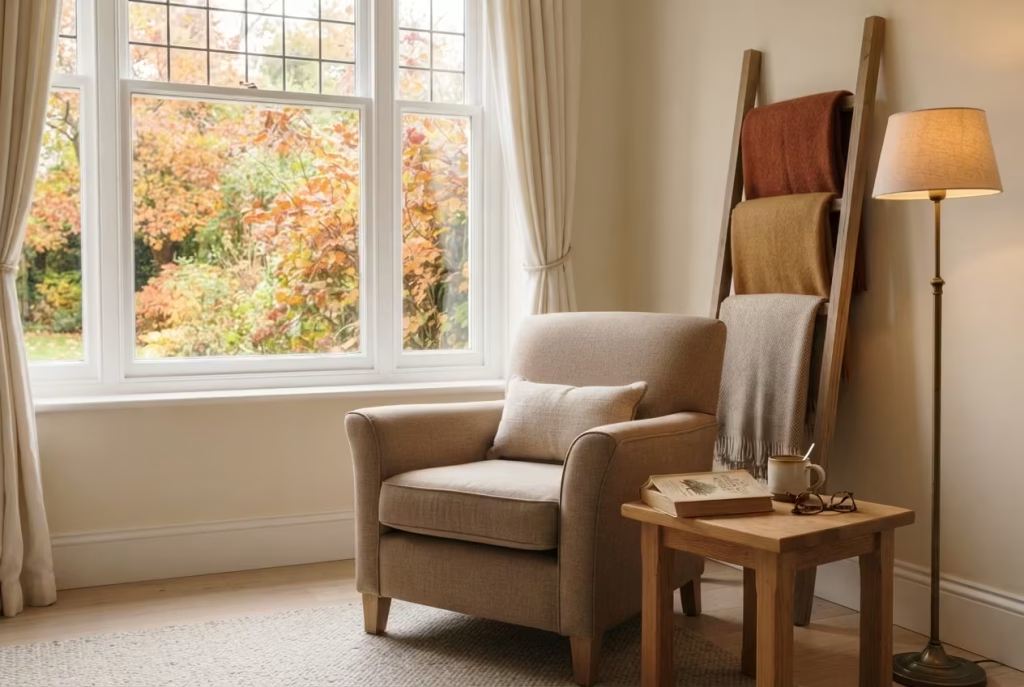
The window-adjacent reading chair with a blanket ladder. A leaning wooden blanket ladder beside the chair keeps two or three folded throws visible and within reach without a basket eating into floor space, and it adds precisely the sort of layered texture that makes a corner read as considered rather than accidental. It’s a small detail, but one that consistently gets remarked on by visitors, since a stack of neatly folded blankets communicates intention in a way a single throw draped over an armrest simply doesn’t.
Up in the Rafters Attic and Loft Retreats
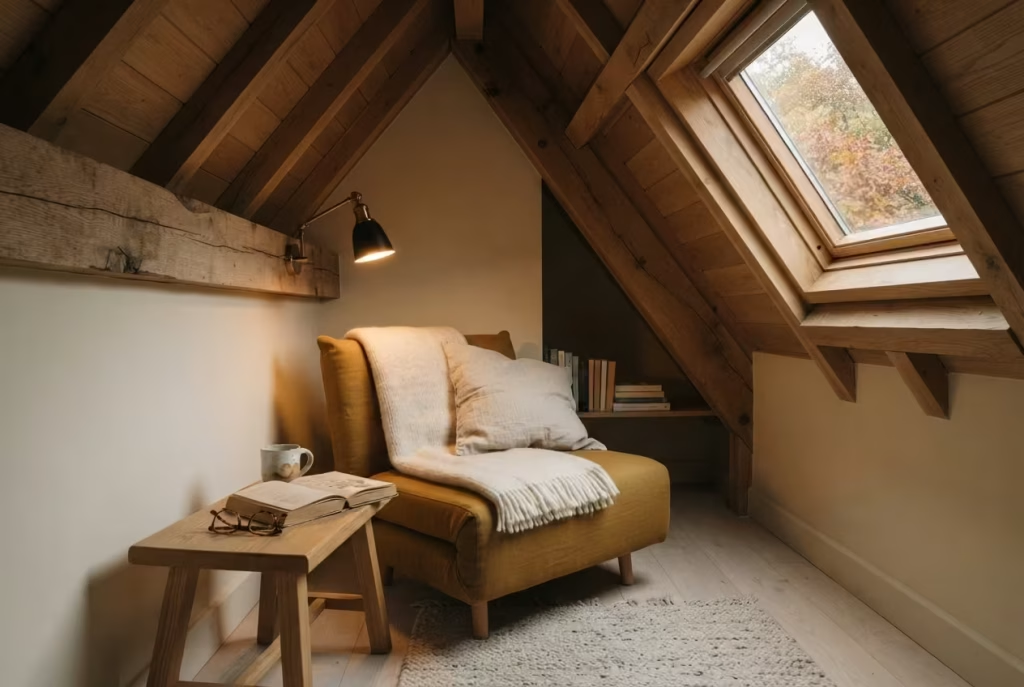
Attics and lofts offer a degree of seclusion nowhere else in the house can match, which is precisely why they rank so consistently among the most-searched reading nook locations, though sloped ceilings and limited headroom mean standard furniture measurements need a rethink. There’s something almost childlike about the appeal of a proper attic hideaway too, a faint echo of building dens as a kid, which is worth leaning into rather than styling out.
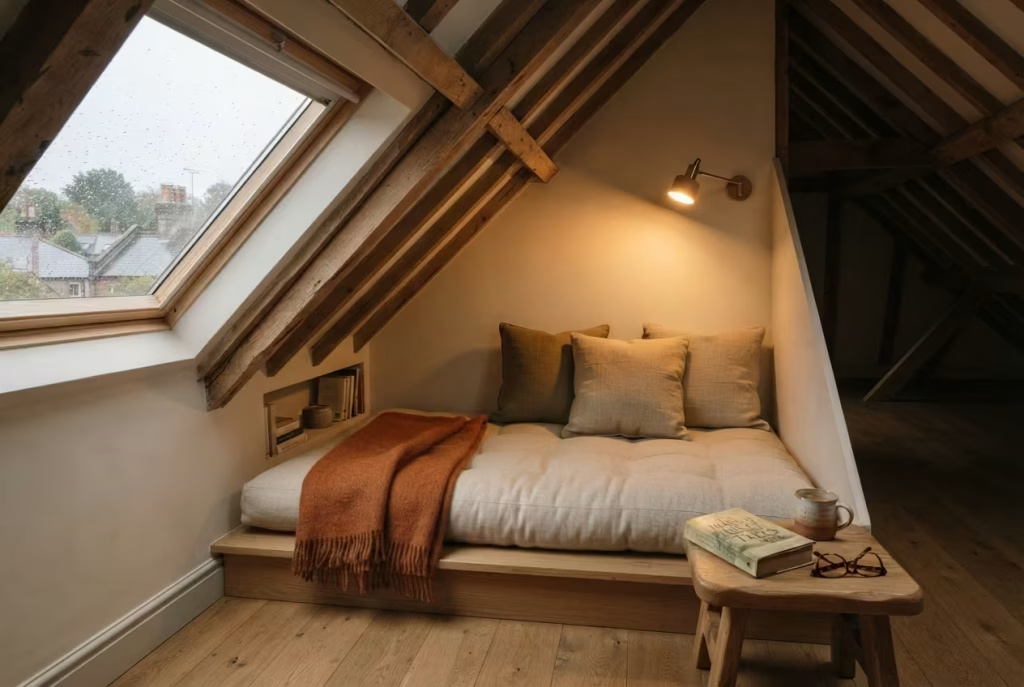
The under-eaves floor nook. Where ceiling height drops below the standard 6ft 6in a chair needs, floor seating solves the problem outright. A low platform, 4 to 6 inches off the floor, topped with a thick futon-style cushion, plus two or three floor cushions for back support, makes proper use of space a chair physically couldn’t occupy in the first place. Insulate underneath the platform where possible, since attics lose heat faster than any other room in the house and a floor-level seat is closer to that heat loss than a chair would be.
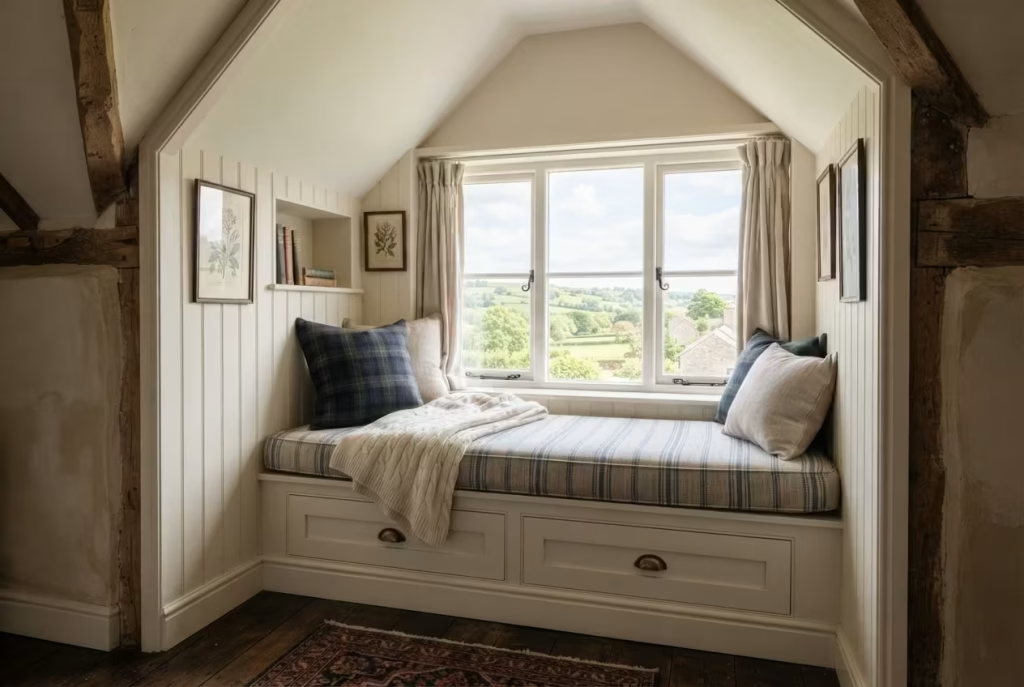
The dormer window seat. Dormer windows typically create a recessed alcove 3 to 4 feet deep, generous enough for a proper bench seat with storage underneath, following the same 16 to 20 inch depth guidance covered in the window seat section above. The slight sense of enclosure a dormer naturally creates, walls on three sides rather than the usual one, does a good deal of the separation work discussed earlier without any extra effort at all.
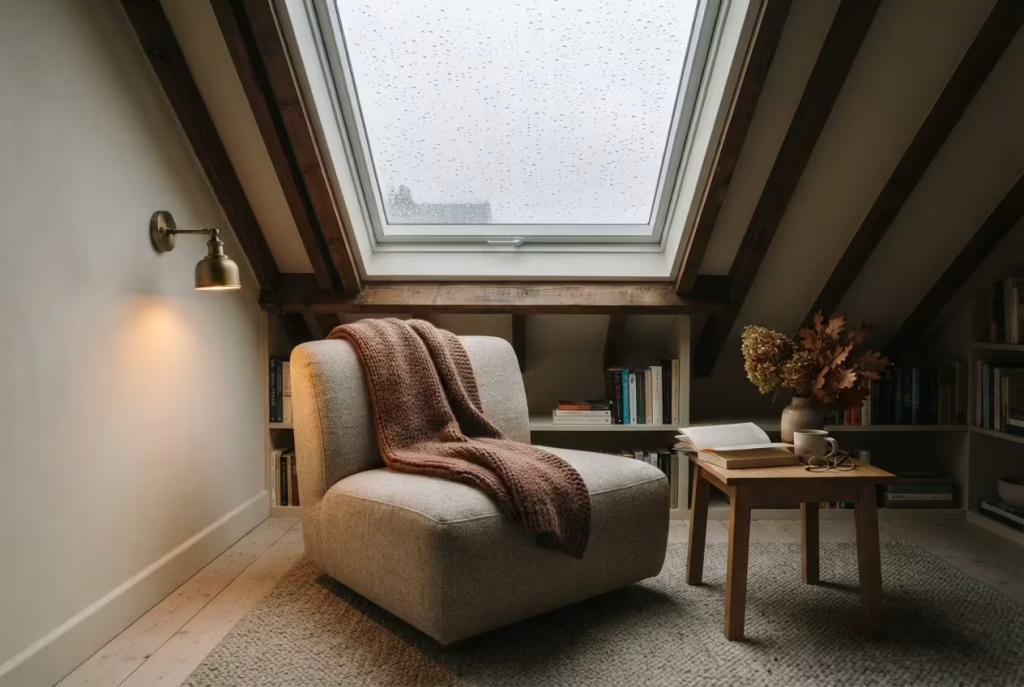
The skylight reading corner. Positioning a chair directly beneath a skylight rather than a side window changes the quality of light entirely through the day, since it tracks overhead rather than raking in sideways, sidestepping the glare-and-shadow trouble side-facing attic windows so often bring in the afternoon. There’s a particular pleasure in reading beneath a skylight on a rainy autumn afternoon that’s genuinely hard to replicate anywhere else in the house, watching the weather rather than merely hearing it.
You May also Like: 25 Creative Ways to Transform Your Spanish Reading Nook This Weekend
Taking It Outdoors While Autumn Still Allows It
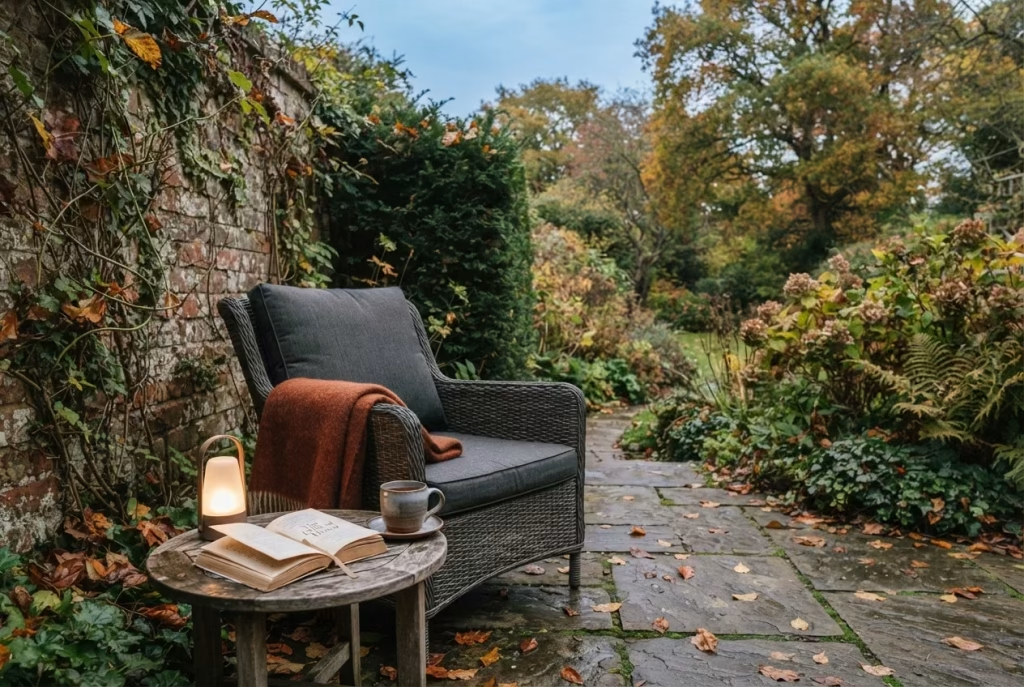
Autumn’s mild daytime temperatures, before the real cold properly sets in, make this the best window of the whole year for reading outside, provided the setup accounts for wind, damp, and evenings that draw in earlier by the week. There’s a narrow but genuine pleasure in this that’s easy to let slip past unnoticed if the garden gets written off the moment summer ends.
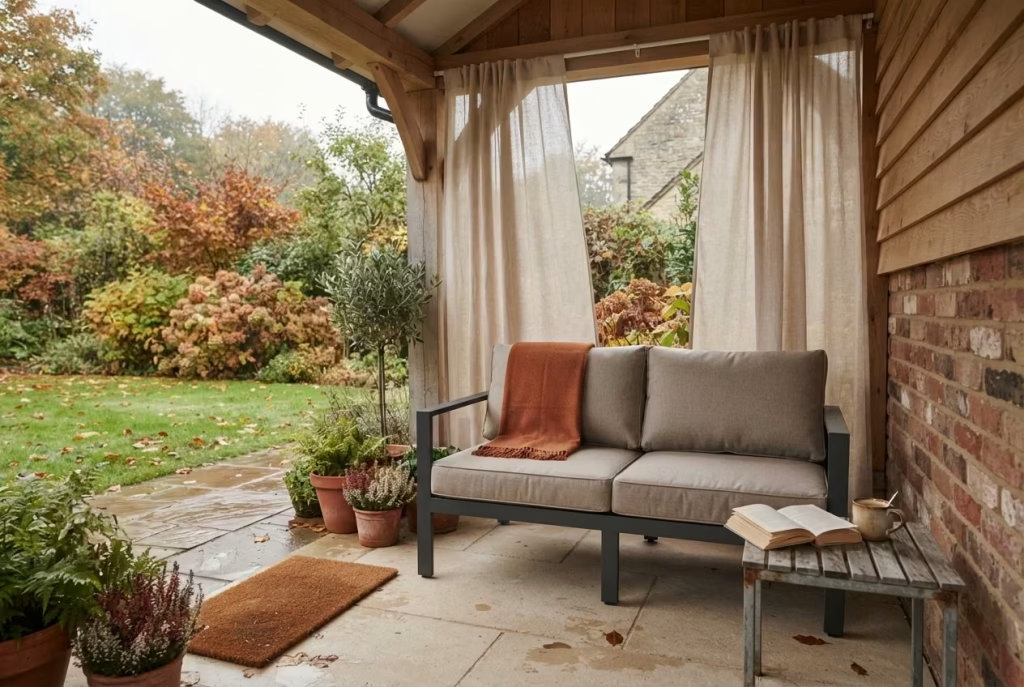
The covered porch loveseat. A weather-resistant loveseat with washable outdoor cushions copes with autumn’s damp mornings a great deal better than indoor furniture dragged outside, which soaks up moisture and mildews within weeks flat. Add outdoor curtains on a simple track to cut wind on any exposed porch. A decent outdoor loveseat with weatherproof cushions typically costs £150 to £400, and holding out for genuinely quick-dry foam inside the cushions, rather than standard upholstery foam wrapped in a waterproof cover, makes a real difference to how usable the seat actually is the morning after rain.
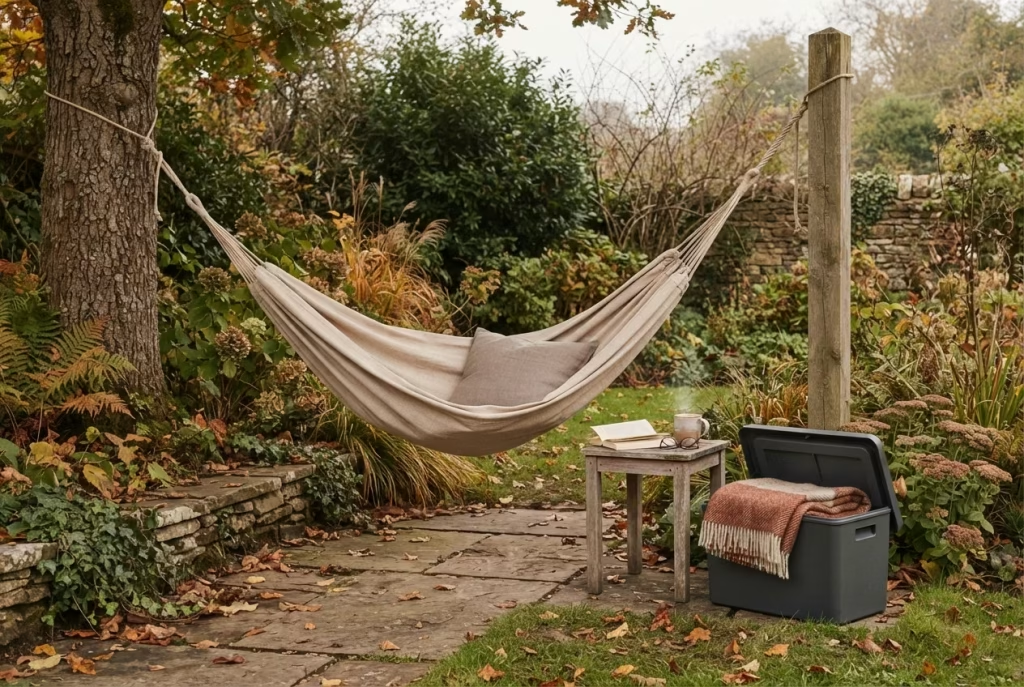
The garden hammock nook. A hammock strung between two fixed points at roughly 4.5ft off the ground, with a folded wool blanket kept in a waterproof box nearby rather than left out overnight, stretches outdoor reading well past the point most people quietly give up on the garden for the year. There’s something almost defiant about still using the garden properly into October, and it tends to be remembered far more fondly than the days spent there in the height of summer, simply because it takes a bit more intention to make happen.
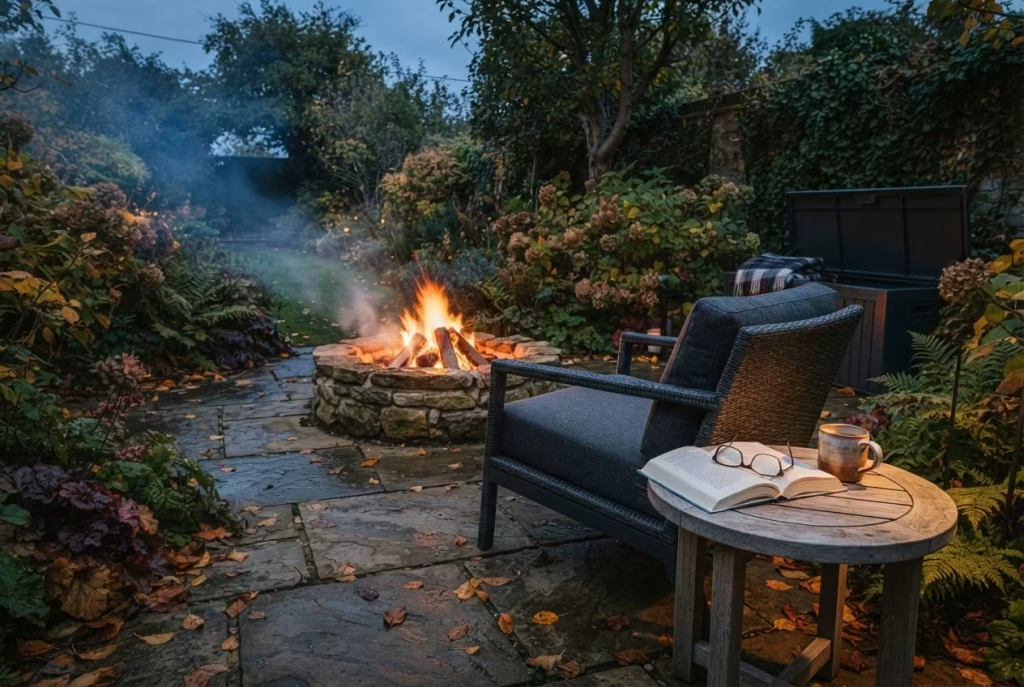
The fire-pit adjacent seating spot. A single chair pulled just outside the main fire-pit circle, angled so the fire throws ambient light without any smoke drift, gives outdoor reading a genuinely different character once the sun starts dropping earlier through October and November. The crackle of a fire nearby does something a lamp never quite manages, adding a layer of ambient sound that makes solitary reading feel considerably less solitary.
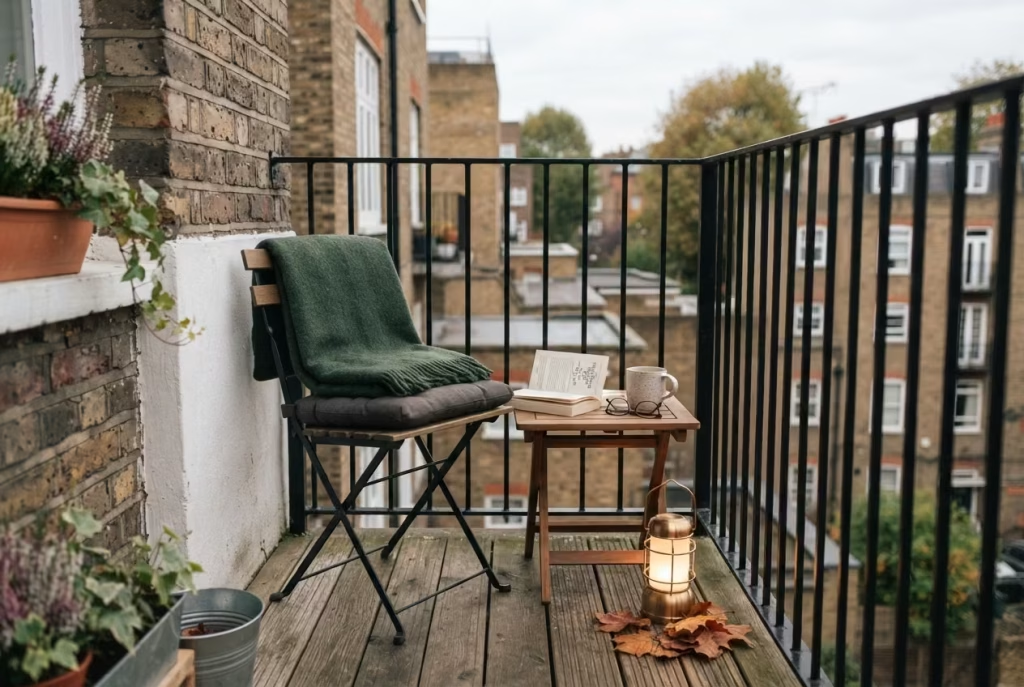
The balcony or courtyard micro-nook. For flats with only a small balcony to their name, a single folding chair, a battery-powered lantern (never an open flame on a shared or timber balcony, no exceptions), and a fold-flat side table create a usable nook in as little as 3ft by 3ft of floor space, and pack away entirely the moment the weather turns properly foul. For anyone without a garden at all, this is often the only outdoor reading option going, which makes it worth the modest effort of setting up and packing away each time, rather than dismissing it as too small to bother with.
When Space, Or the Landlord, Says No Small-Space and Rental Nooks
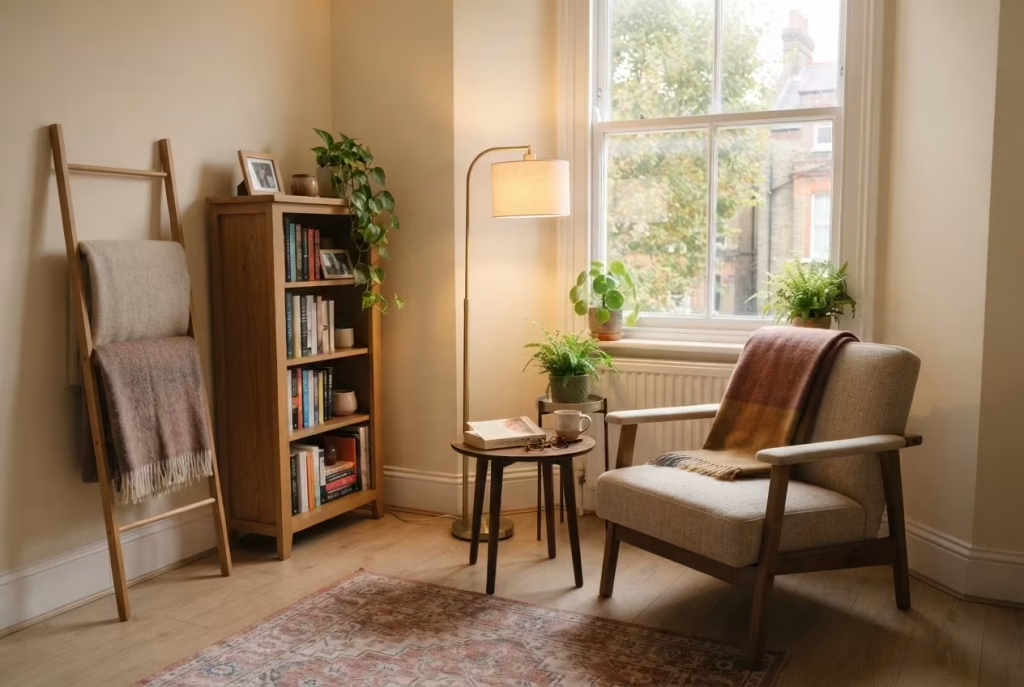
This is the segment nearly every competitor guide fobs off with a single throwaway line, despite it being one of the most commonly searched variations of this exact topic, and no wonder, given how many people are reading this from a rented flat rather than a house with rooms going spare. There’s a particular frustration in wanting a proper home for yourself within a space that technically belongs to someone else, and every idea here is built specifically to sidestep that tension rather than pretend it doesn’t exist.
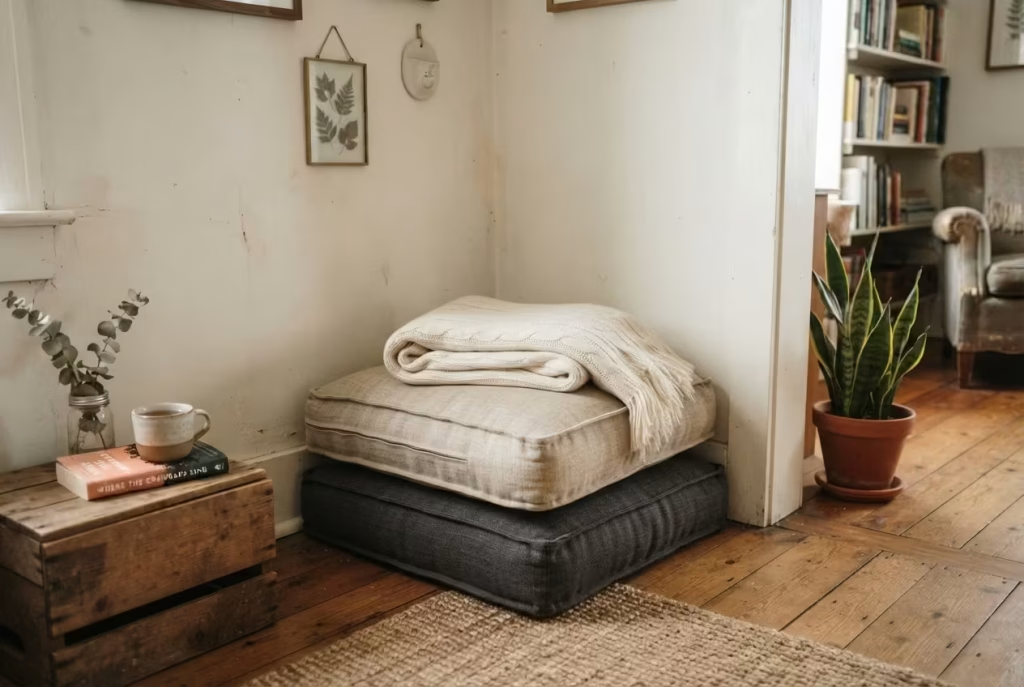
The corner floor cushion stack. Two firm floor cushions stacked with a folded blanket on top, positioned in literally any corner going unused, needs no furniture purchase and no wall fixings whatsoever, making it the genuine zero-cost entry point into this entire list. It’s proof, more than anything else on this list, that a proper nook is a decision about attention and intention rather than a spending decision.
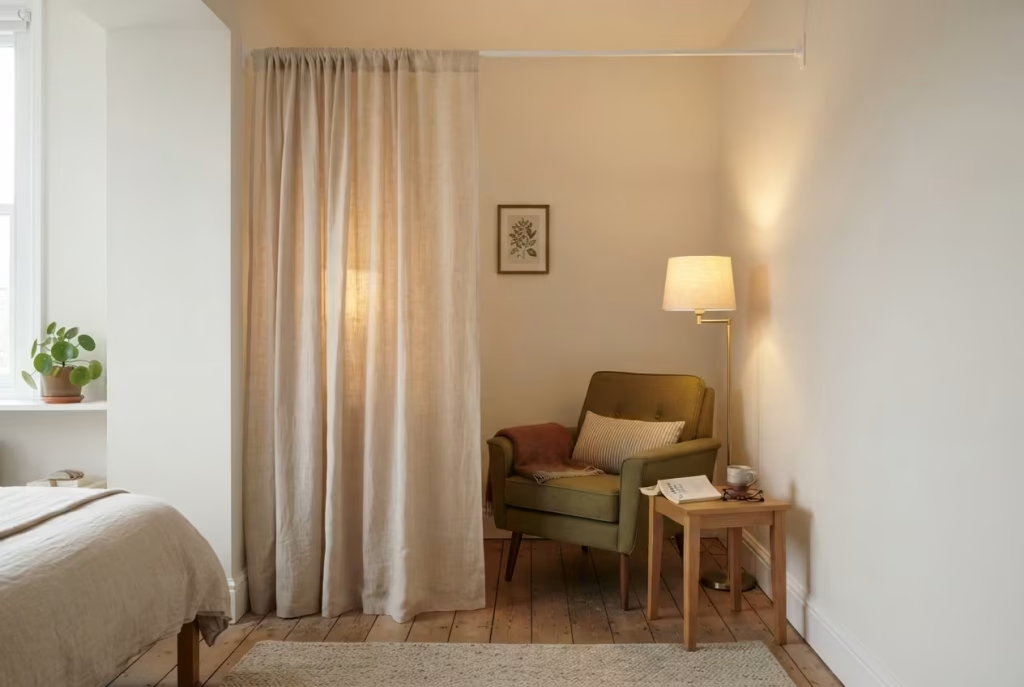
The command-strip curtain divider. Adhesive curtain rod brackets, rated for the weight of a lightweight curtain only rather than a heavy blanket-style panel, let renters section off a nook-sized patch of a bedroom or living room without a single hole drilled, and come down completely at the end of a tenancy without a trace. Test the brackets with the actual curtain weight for 24 hours before relying on them fully, since adhesive strength varies noticeably by wall finish, and a freshly painted wall behaves quite differently to an older, slightly textured one.
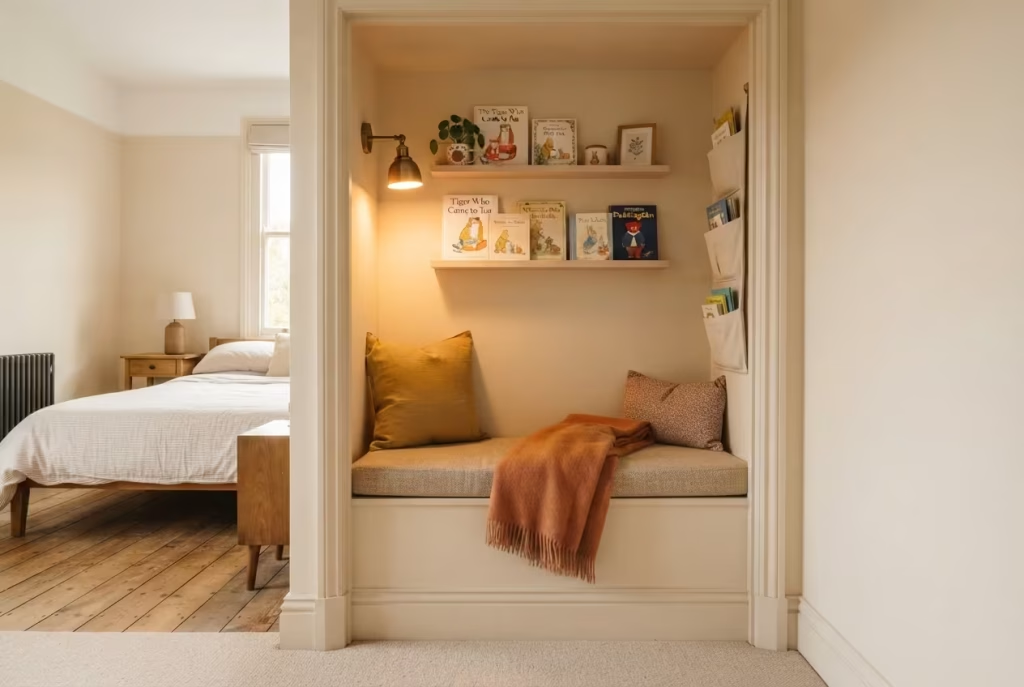
The converted closet nook. Taking the doors clean off an underused closet and fitting a slim cushion, a small lamp, and a stack of shelves is one of the most consistently reused ideas across genuine reading nooks, and for good reason: it looks temporary, but isn’t, and a rental closet reverts to its former self in an afternoon if it needs to. Keep the door properly removed rather than left ajar, since a closet nook needs to stay well lit and well ventilated to feel like a proper retreat rather than a cupboard with a cushion in it, and this matters even more where the nook is being set up for a child, where visibility and airflow are a genuine safety consideration rather than a styling preference. An over-the-door fabric organiser or slim floating shelf on the inside wall keeps a small rotating book collection within reach without eating into floor space for a bookcase, and there’s a genuine sense of occasion for a child in having a space that’s entirely theirs, however modest its dimensions.
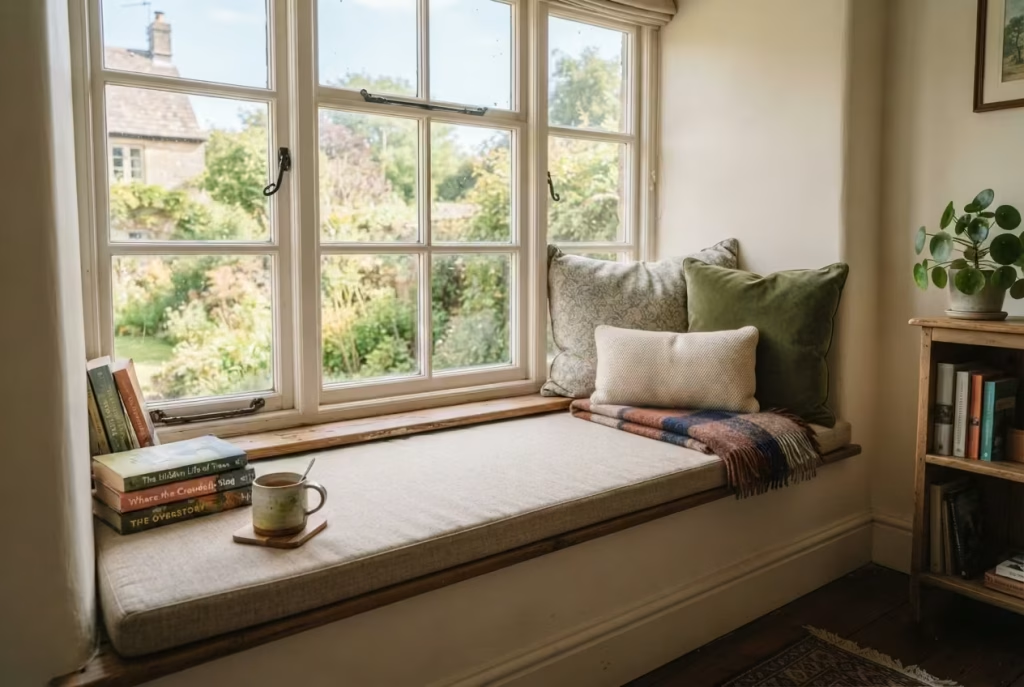
The windowsill perch. Even without room for a chair proper, a deep windowsill, 12 inches or more, fitted with a flat cushion cut to size and a couple of cushions for back support against the window frame, makes for a genuine, if compact, reading spot, and it works in practically any rental regardless of the room’s shape or quirks. Have the cushion cut to size by an upholsterer rather than trimming a standard one yourself where the budget allows; it typically costs £15 to £30 and the finished fit looks considerably more deliberate than an off-the-shelf cushion pushed awkwardly into a corner.
Keeping It Cosy Once the Real Cold Arrives
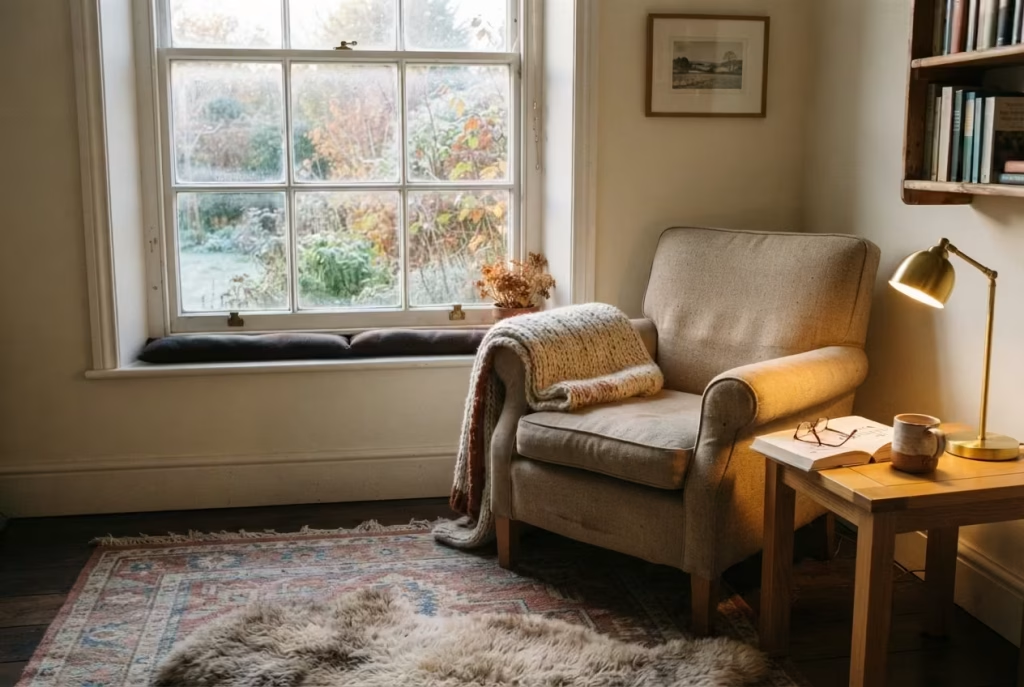
A nook built for early autumn rarely survives December unchanged, and it shouldn’t need to. As the season deepens, swap lighter cotton throws for heavier knits, introduce a second layer of texture underfoot with a sheepskin or thick wool rug, and consider whether the same corner needs a draught excluder if it sits near an exterior wall or an older window frame. Small, seasonal adjustments like these are what turn a one-season photo opportunity into a spot that earns its keep from October right through to February, and there’s a genuine satisfaction in a nook that quietly evolves alongside the weather rather than looking slightly wrong the moment the first frost arrives.
What It Actually Costs, By Tier
| Tier | Typical spend | What’s included |
| Budget | Under £50 | Existing furniture repositioned, floor cushions, one throw, a second-hand lamp |
| Mid-range | £150 to £400 | New armchair or bench, proper reading lamp, cushions, small side table, rug |
| Full custom | £500 and up | Built-in window seat with storage, bespoke cushions, an electrician for wiring and lighting |
The Safety Section Most Guides Leave Out
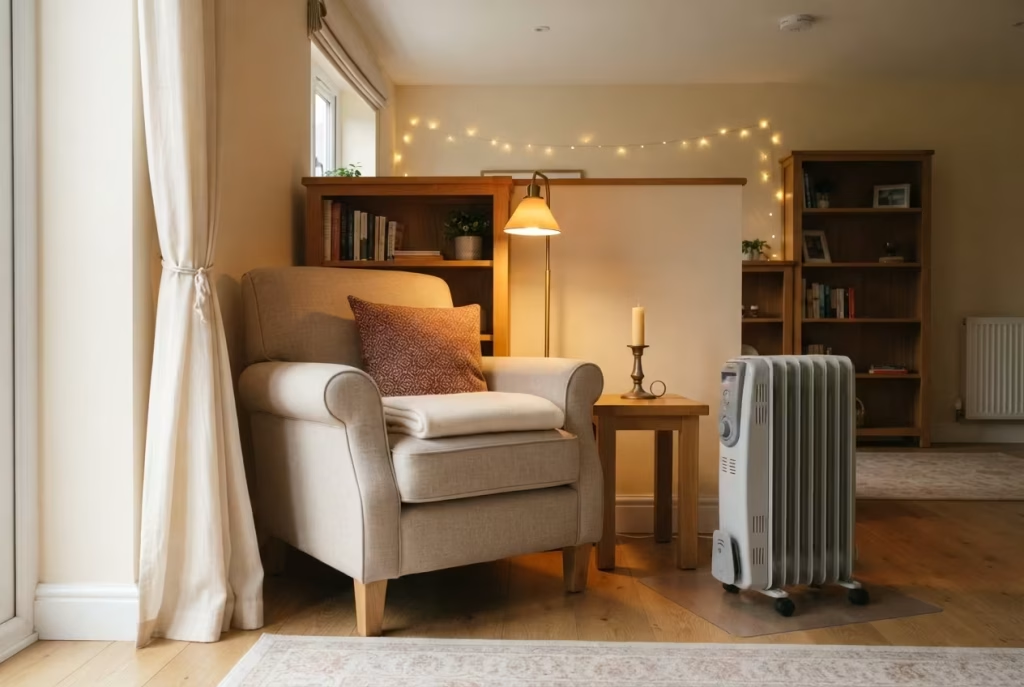
Reading nooks concentrate exactly the ingredients that cause seasonal house fires: soft furnishings, candles, and portable heaters, all crammed into one small, enclosed spot by design. London Fire Brigade issued a specific warning about this very pattern, describing it as the “hygge” fire risk, after logging 340 home fires in a single year in London alone caused by candles, heaters, and electric blankets used to build exactly this kind of cosy set-up. It’s a genuinely sobering statistic to sit alongside something as gentle-sounding as a reading corner, and it’s precisely why this section exists rather than getting reduced to a single caveat at the bottom of the page.
| Hazard | Safe practice |
| Candles | Keep at least 12 inches (30cm) from anything flammable, never leave unattended, use a proper holder rather than a bare tea-light foil cup |
| Portable heaters | Sit at least one metre away from a heater, keep it clear of curtains, throws, and furniture, never use it to dry clothes |
| Electric blankets | Unplug before sleeping unless thermostatically controlled, never fold when storing, replace after 10 years or at the first sign of wear |
| String lights | Check for a proper fire-safety rating before draping near fabric canopies or curtain dividers, and don’t leave them plugged in overnight |
You May also Like: 25 Japanese Reading Nook Secrets for a Perfectly Calm Home
Bringing It All Together
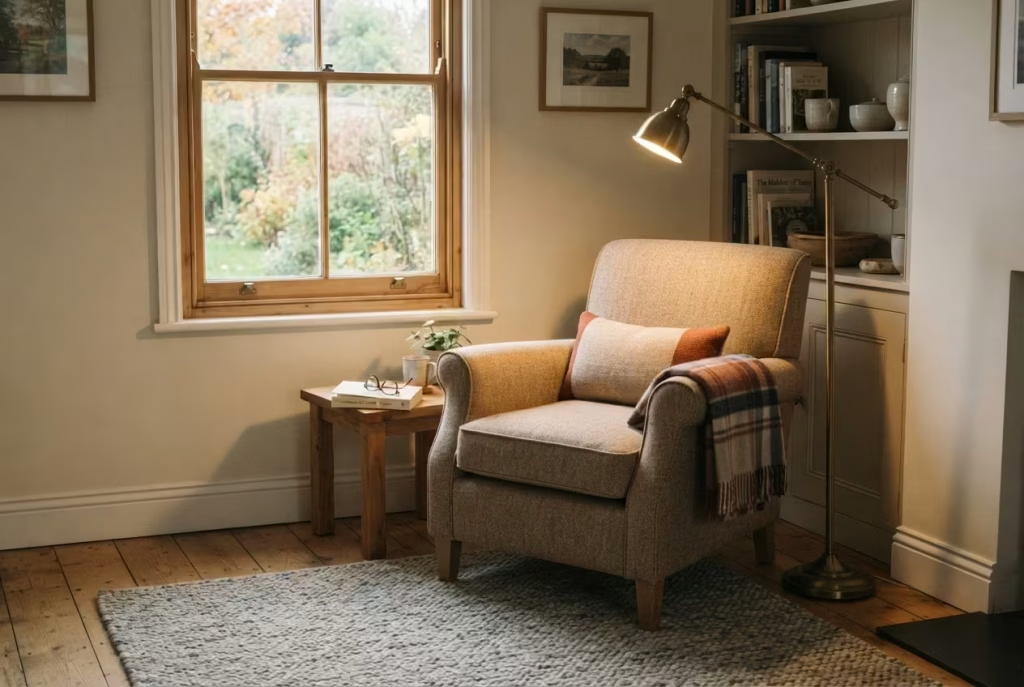
The nooks that genuinely earn their keep all year round, rather than just for one cosy photograph in October, tend to share the same three things: seating that’s still comfortable well past the ten-minute mark, light bright enough to actually read by rather than merely sit by, and some form of proper separation, physical or simply visual, from the rest of the room. Everything else, the cushion colour, the blanket ladder, the string lights, is decoration sitting on top of that foundation, not a substitute for it.
There’s a broader point worth sitting with too. Given how many people genuinely wish they read more, and how much of that gap comes down to time and distraction rather than any lack of interest in books themselves, a reading nook is one of the few pieces of home decor that actually does something about the problem rather than just looking nice next to it. Pick whichever of the 25 ideas above best fits the space already sitting in your home, get the measurements and the light level sorted first, and the cosy part looks after itself from there. What tends to follow, more often than not, is simply more reading, which was rather the point all along.
Frequently Asked Questions
What’s the minimum space needed for a reading nook?
A single armchair with a small side table fits comfortably into a corner as modest as 3ft by 3ft (90cm by 90cm). A windowsill perch needs even less than that, just a sill at least 12 inches deep.
How deep should a window seat be for reading?
Between 16 and 20 inches (40 to 51cm) for upright, forward-facing sitting. Push this to 24 inches (61cm) if the plan is to bring your legs up and curl sideways properly.
What light level is actually best for reading?
Between 300 and 500 lux measured at the page. That’s noticeably brighter than the 100 to 300 lux comfortable for general living room ambience, which is why a reading corner can look entirely right yet still feel under-lit once a book’s actually open. Buying by bulb rather than lux meter, look for one rated at least 450 lumens, the figure lighting designers reach for specifically to head off eye strain.
Should a reading nook chair be soft or firm?
Firm, with a proper backrest, rather than the softest option on the showroom floor. A very soft seat encourages slouching within minutes, which turns out to be the most commonly reported reason a reading chair ends up causing back pain rather than genuine comfort. Layer softness on top of a firm base through cushions, rather than choosing a chair that’s soft the whole way through.
Can I build a reading nook if I rent and can’t drill into the walls?
Yes, without much trouble at all. Floor cushions, adhesive curtain rod brackets rated for lightweight fabric, over-door storage organisers, and a freestanding floor lamp achieve most of the same effect without a single permanent fixing, and every bit of it comes down at the end of a tenancy without leaving a mark behind.
Is it safe to use candles in a reading nook surrounded by soft furnishings?
Only with real precautions taken. Keep candles at least 12 inches from throws, cushions, and curtains, never leave one burning unattended, and consider battery-powered LED candles instead, since fire services specifically flag cosy autumn set-ups involving candles and heaters as a genuine seasonal fire risk, not a hypothetical one.
What’s the best cushion thickness for a window seat?
2 to 4 inches (5 to 10cm) as a baseline for basic comfort, though a cushion closer to 4 inches is worth the extra cost if the seat’s going to see more than the odd short reading session.
Do I need a specific colour palette for a fall reading nook?
No single palette is required, though warm hues, rust, burnt orange, deep green, camel, tend to read as more inviting under lower autumn light than cool tones do, since they reflect the warmer colour temperature of afternoon and evening light rather than fighting against it.
How do I stop a reading nook turning cold once the weather properly turns?
Layer textiles rather than leaning on one throw alone: a base layer against any cold surface, whether that’s window glass or bare floor, then a mid-weight blanket, then a chunky knit on top. If the nook sits beside a radiator, a slim bench built over it, with clearance left for airflow, keeps the heat doing its job rather than blocking it entirely.
What’s the actual psychological benefit of a dedicated reading spot over just reading on the sofa?
A visually distinct nook, whether created through furniture placement, a rug, or a curtain, gives the brain a clear boundary between rest and everyday activity, which supports exactly the kind of fast stress reduction that concentrated reading has been shown to produce. Given how many people report reading less than they’d like because of time pressure and digital distraction, a nook also works as a small physical commitment device, a corner that makes the choice to read easier than the choice not to.
Can a reading nook work in a room with no natural window light?
Yes, so long as the artificial lighting properly compensates. Aim for 300 to 500 lux directly at the page from a dedicated lamp, since ambient ceiling light alone rarely covers a genuine reading level once it’s properly accounted for.
What’s the cheapest way to start a reading nook this weekend?
Reposition an existing chair at a slight angle away from the main room, add one lamp with a warm bulb around 2,700K, and bring over a throw and a firm cushion. This costs nothing beyond what most households already own, and takes under an hour start to finish.
Should outdoor reading nooks use real candles or lanterns?
Battery-powered lanterns are the safer bet on balconies, decking, or anywhere near timber structures, since wind exposure outdoors makes an open flame a great deal harder to control than it would be indoors.