



25 Modern Victorian Bedroom Ideas That Feel Rich, Elegant, and Effortlessly Livable
Some bedroom styles arrive loudly, dominate design conversations for a few years, then disappear just as quickly. Modern Victorian interiors have endured for a very different reason. They speak to something quieter and far more lasting: the desire for rooms that feel layered, intimate, and deeply lived in without losing elegance along the way. There is a certain confidence to the style, one that does not rely on excess to make an impression. Instead, it works through balance. Ornament sits beside restraint. Soft textiles temper architectural structure. Historic detail, carefully edited, becomes surprisingly relevant for contemporary life.
What continues to make modern Victorian bedrooms so compelling is their ability to feel rich without becoming oppressive. The best examples are never overloaded with decoration or trapped in nostalgia. They understand when to pause. A single marble fireplace, aged brass hardware catching late afternoon light, full-height curtains falling softly onto timber floors, these details carry weight precisely because the room allows them space to breathe. A little goes a long way.
In my own experience working on bedroom renovations, the most successful Victorian-inspired spaces are usually the ones that preserve the architectural bones while quietly simplifying everything layered around them. Original mouldings, ceiling roses, and tall proportions provide the sense of heritage, while lighter palettes, breathable fabrics, and cleaner-lined furnishings stop the room from feeling overly formal. It becomes less about recreating the past and more about refining it for modern living.
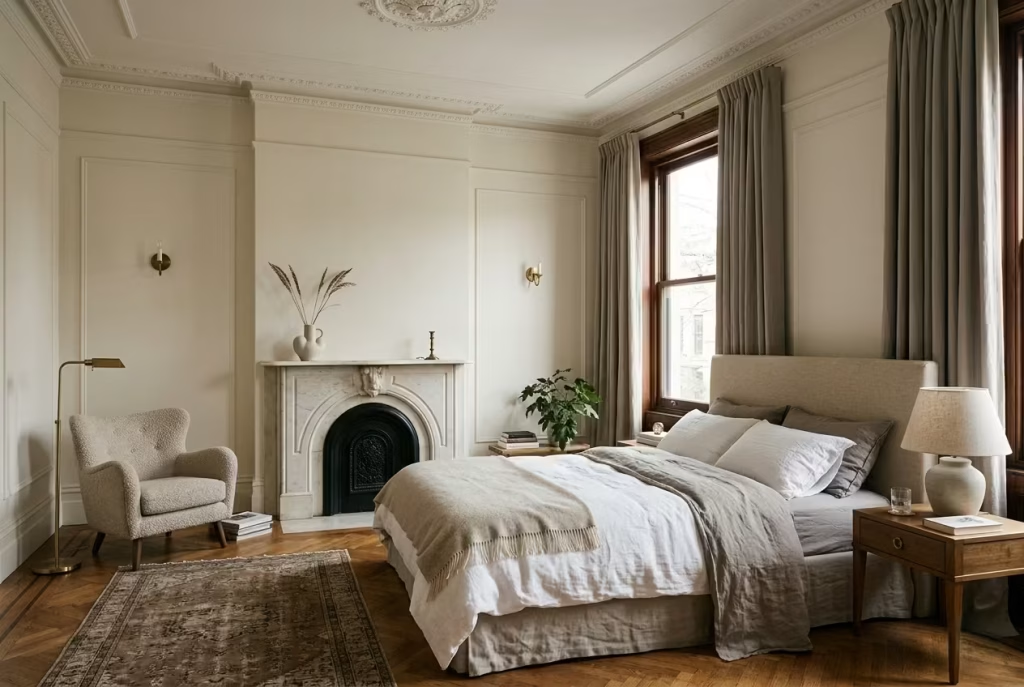
That balance matters even more in bedrooms, where comfort ultimately decides whether a design succeeds or merely photographs well. A modern Victorian bedroom should feel elegant enough to impress guests, yet calm enough to retreat into at the end of a long summer evening, windows open, linen sheets creased slightly, and the room settling softly around you like it has belonged there for years.
25 Modern Victorian Bedroom Ideas
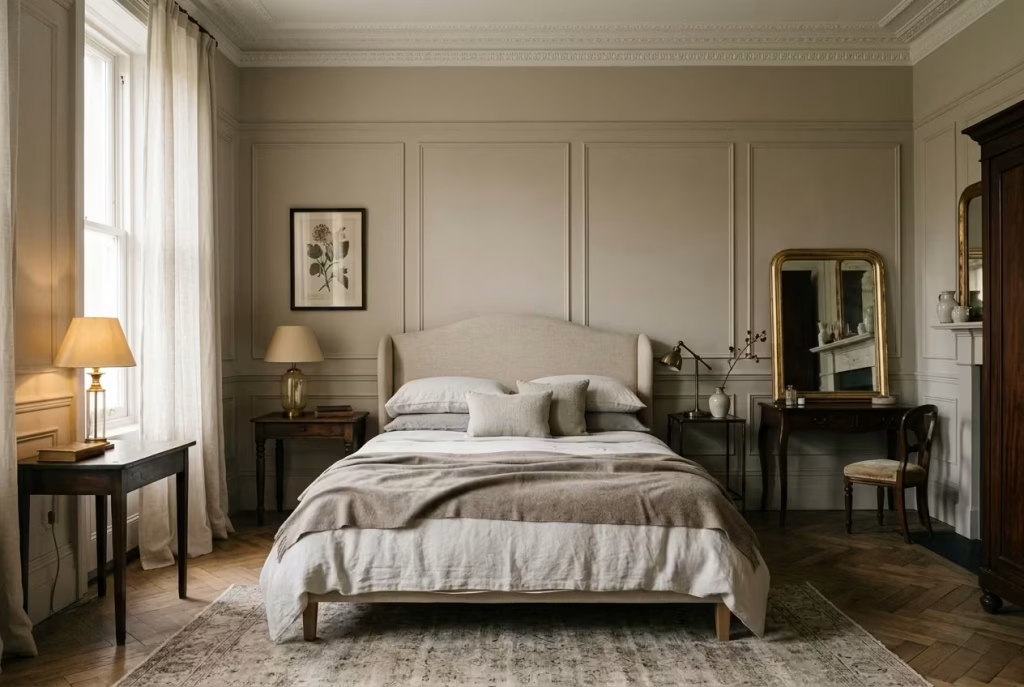
The beauty of a modern Victorian bedroom rarely comes from one dramatic gesture alone. More often, it unfolds slowly through layered textures, thoughtful contrasts, and details that feel collected rather than copied straight from a showroom floor. A curved headboard beside crisp linen bedding.
Deep wall tones softened by morning light. Antique brass catching the glow of a bedside lamp long after sunset. These rooms work because they understand balance. They carry enough ornament to feel rich, yet enough restraint to remain breathable and genuinely livable.
In many of the bedroom projects I have worked on over the years, the spaces that stay memorable are not necessarily the largest or most expensive. They are the ones where every element quietly pulls in the same direction. Nothing fights for attention, yet nothing fades into the background either.
That sweet spot, somewhere between elegance and ease, is where modern Victorian design truly earns its keep. The following ideas explore how to create that feeling in ways that feel practical for real homes, whether you are working with soaring period ceilings or a modest modern bedroom that simply needs more soul.
Use a Soft, Refined Colour Palette
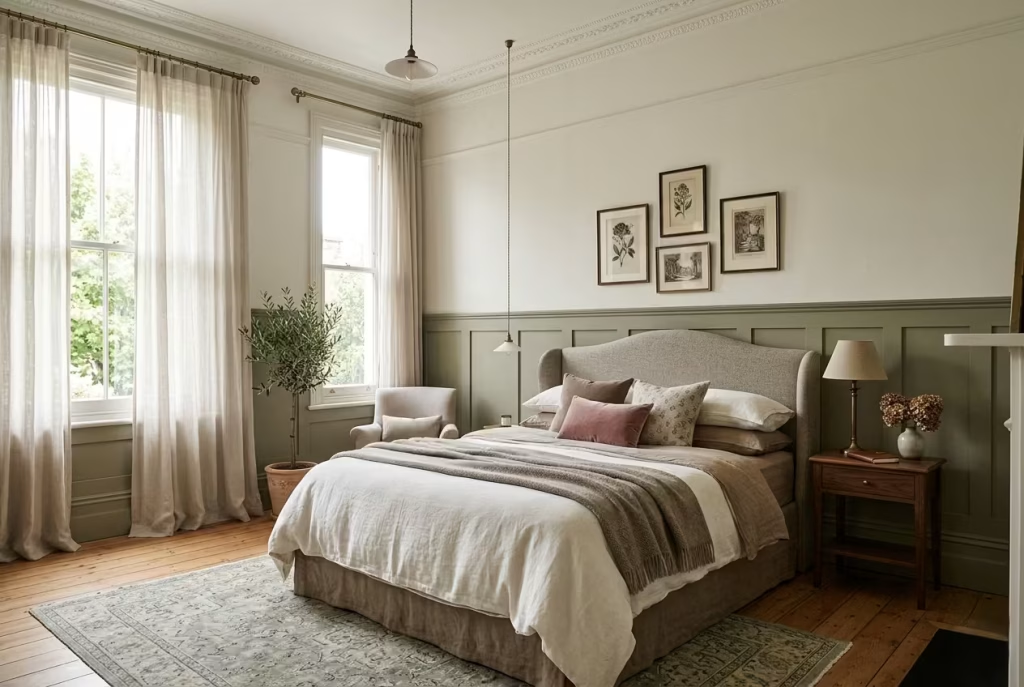
Colour is often where a modern Victorian bedroom either finds its rhythm or loses the plot entirely. Many people instinctively lean toward heavy burgundy, dense charcoal, or overly saturated emerald because they associate Victorian interiors with drama. Yet in practice, the rooms that feel genuinely luxurious tend to whisper rather than shout. Their palettes are layered carefully, with smoky undertones and softened contrasts that settle into the architecture naturally instead of sitting on top of it like costume jewellery.
Muted jewel tones work beautifully here because they carry depth without becoming theatrical. A dusty olive wall beside warm walnut furniture can feel grounded and quietly expensive at the same time. Dusky pink, particularly when paired with aged brass or antique bronze, softens the harder architectural lines often found in period-inspired spaces.
Mushroom tones have become a favourite of mine in recent years because they shift subtly throughout the day, appearing warm and cocooning by lamplight, then cooler and more tailored once daylight pours in through sheer curtains. Inky blue, especially in matt finishes, adds atmosphere in a way that feels calm rather than cavernous.
One detail many homeowners overlook is how colour placement affects the emotional weight of the room. In several Victorian-inspired renovations I have worked on, we intentionally kept the deeper tones confined to a single wall or within panelled sections roughly 100 to 120 cm high, while leaving the remaining walls in lighter parchment whites or warm stone shades.
That contrast creates intimacy without making the room feel boxed in. It is a classic case of knowing when to hold your horses. Too much darkness spread across every surface can quickly flatten a bedroom, particularly one with limited natural light.
Texture also plays a quiet but essential role in how these colours are perceived. Olive velvet cushions against crisp ivory bedding feel entirely different from the same olive painted across glossy walls. Limewashed finishes, brushed cottons, soft linens, and chalky matt paints give muted tones far more dimension, allowing the palette to breathe naturally instead of feeling static.
The strongest Victorian-inspired bedrooms rarely rely on colour alone to create richness. Instead, colour acts as the thread pulling everything together softly, patiently, and almost invisibly.
Pros
- Creates a calm, elegant atmosphere that ages beautifully
- Makes ornate Victorian detailing feel lighter and more current
- Allows furniture, texture, and architectural features to stand out naturally
- Works especially well for restful, cocooning bedrooms
Cons
- Darker shades can feel oppressive in low-light rooms if not balanced with lighter surfaces
- Overly muted palettes may feel flat without layered textures and varied materials
- Poor paint finishes can make sophisticated colours appear muddy rather than refined
Add Wall Panelling for Structure
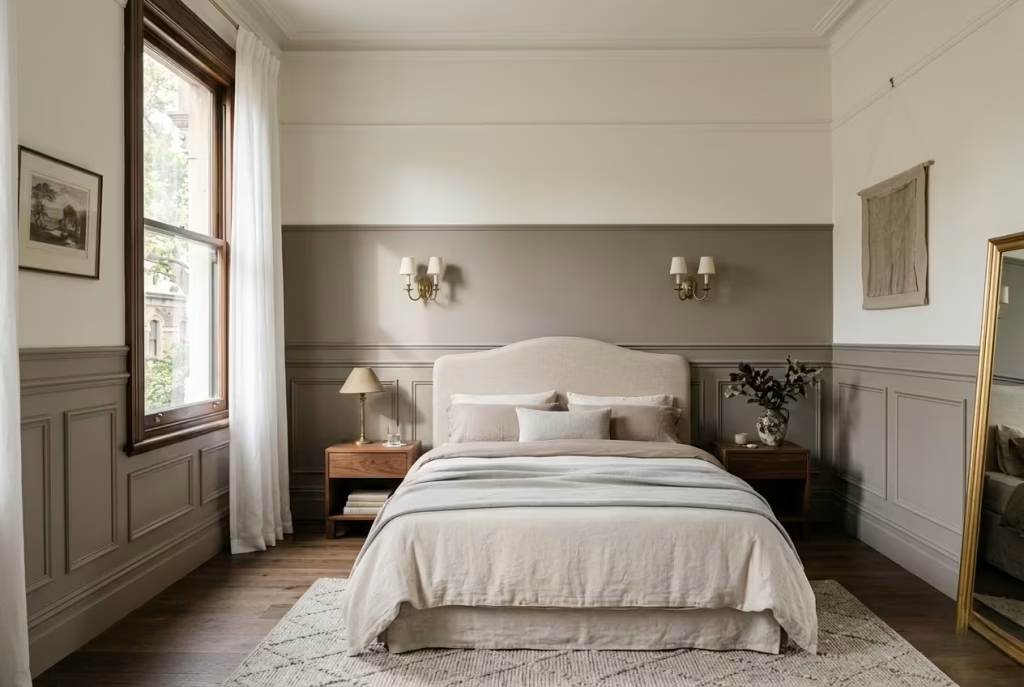
One of the reasons modern Victorian bedrooms feel so composed is because the walls themselves carry presence long before furniture ever enters the room. Panelling introduces a kind of quiet architecture that immediately gives a bedroom depth, rhythm, and permanence.
Even in relatively plain spaces, the addition of dado rails, picture rails, or carefully proportioned wall moulding can completely shift the atmosphere from flat and forgettable to layered and intentional.
What makes panelling especially powerful in modern Victorian interiors is its ability to create detail without relying on clutter. Instead of filling a room with excessive décor, the walls begin doing some of the heavy lifting themselves.
That distinction matters more than many people realise. A bedroom with strong architectural lines naturally requires fewer accessories, which is often why these spaces feel calmer despite their decorative roots.
Half height panelling tends to be one of the most versatile approaches, particularly in modern homes trying to borrow Victorian character without feeling overly formal. In smaller bedrooms, I often find this style gives the room a tailored, settled appearance without making the walls close in visually.
Panels installed roughly 90 to 120 cm high create structure around the lower half of the room while allowing lighter paint tones above to keep the eye moving upward. It is a subtle balancing act, but when handled well, the effect feels effortless.
Picture rails offer another layer of refinement that often gets overlooked. Originally practical in Victorian homes for hanging artwork without damaging plaster, they now provide a graceful visual break between the wall and ceiling.
In taller bedrooms especially, they help the proportions feel more considered, almost like the room has exhaled slightly. Meanwhile, dado rails bring definition around the midpoint of the walls, which works beautifully when paired with tonal paint combinations or wallpaper above.
Material choice also changes the emotional tone of the space more than people expect. Deep mouldings painted in the same colour as the walls create softness and cohesion, while contrasting trim introduces a sharper, more decorative edge.
I have worked on projects where simply switching from glossy white trim to colour drenched panelling transformed a bedroom from feeling choppy and cold into something far more cocooning and mature.
The key, as always, lies in restraint and proportion. Panelling should support the architecture, not wrestle with it for attention. Oversized mouldings in low ceiling rooms can feel heavy handed very quickly, while panels spaced too tightly together often create visual noise rather than elegance.
Sometimes the difference between timeless and overdone comes down to just a few centimetres. That is the funny thing about good design. It often succeeds quietly, almost with one hand tied behind its back.
Pros
- Adds architectural depth and visual structure without relying on excess décor
- Makes even newer homes feel more established and character rich
- Helps ground furniture and create a more cohesive bedroom layout
- Can increase perceived value and sophistication within the space
- Allows simpler styling because the walls already provide interest
Cons
- Poorly scaled panelling can make ceilings appear lower than they are
- Overly ornate mouldings may feel too formal for modern living
- Incorrect spacing or proportions can create visual clutter instead of refinement
- Installation and finishing require precision to avoid a cheap or uneven appearance
Choose an Upholstered Bed With Gentle Curves
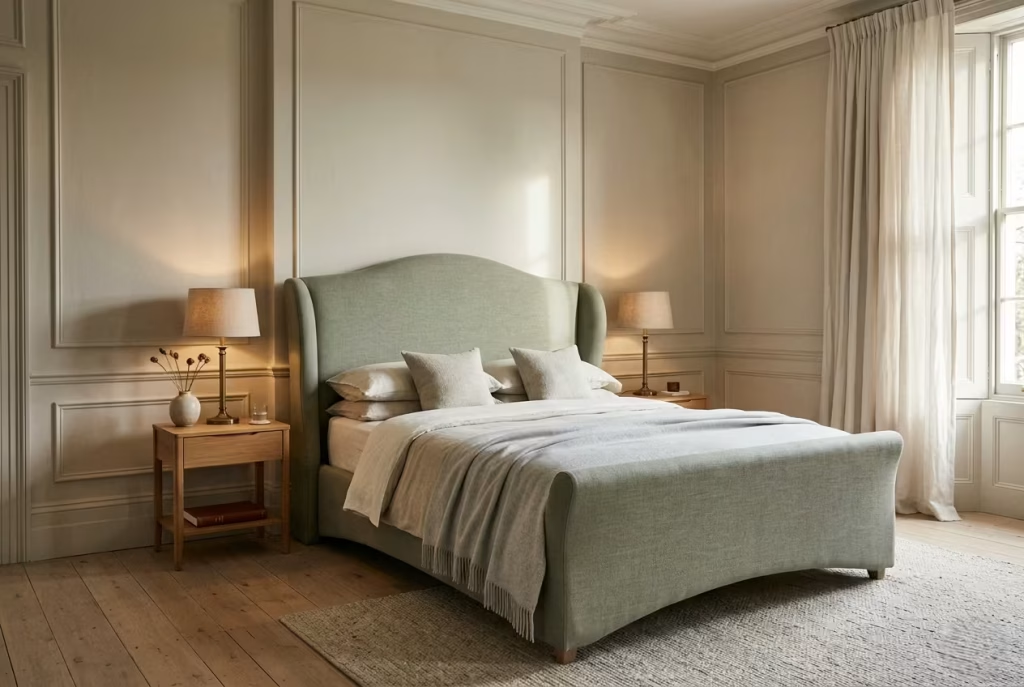
A modern Victorian bedroom often lives or dies by the bed, because that is where the eye lands first and lingers longest. An upholstered bed with gentle curves brings softness into the room in a way that feels elegant rather than overworked.
Sleigh-inspired shapes, arched headboards, and tailored frames all nod to Victorian romance, but in a more restrained, contemporary register. They give the room a sense of poise without turning it into a period pastiche, which is exactly where the sweet spot lies.
In practical terms, the best upholstered beds tend to do more than simply look beautiful. They help the room feel settled, anchored, and emotionally warmer. A curved headboard can take the edge off harder architectural details such as panelling, tall skirting boards, or angled ceilings.
In a bedroom with a cooler palette, it also acts like a visual counterweight, drawing the whole scheme together so the room does not feel too stiff or hotel-like. I have found in real projects that this one piece can completely change the mood of a room, almost overnight, like a missing piece clicking into place.
For proportion, headboards around 120 to 150 cm high usually strike the right balance in a standard bedroom. They feel substantial enough to register as a proper focal point, yet they do not loom over the room or swallow the wall behind them. In smaller rooms, I often recommend keeping the silhouette clean and the upholstery tone close to the wall colour.
That keeps the bed present, but not shouting for attention. In larger rooms, a more sculptural arched or softly winged frame can create a richer, more layered composition without upsetting the calm.
Fabric choice matters just as much as shape. Linen-blend upholstery feels relaxed and breathable, while velvet introduces a deeper, more luxurious note, especially in evening light. Neutral tones are often the safest route, but muted sage, clay, taupe, or ink can bring extra character if the rest of the room is restrained. The key is to let the bed anchor the space, not elbow everything else aside.
Pros
- Softens the room and tempers harder Victorian-style details
- Creates a strong focal point without needing heavy decoration
- Makes the bedroom feel more inviting, settled, and comfortable
- Works well with both traditional and contemporary bedside furniture
- Upholstery adds a sense of warmth and tactility that bare frames often lack
Cons
- Oversized headboards can overwhelm narrow bedrooms or low ceilings
- Curved or winged designs may reduce the feeling of openness in compact spaces
- Upholstered fabric needs more care than timber or metal finishes
- Poorly chosen proportions can make the bed look bulky rather than elegant
Layer Bedding Like a Boutique Hotel, Not a Showroom
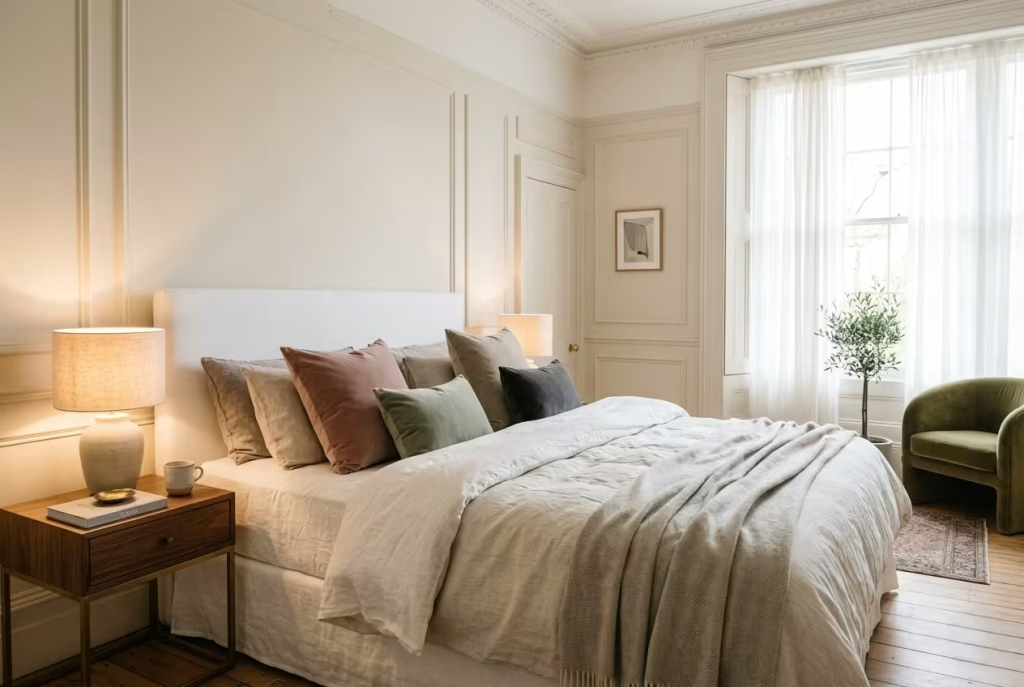
The difference between a bedroom that feels luxurious and one that feels staged often comes down to the bedding. Modern Victorian interiors thrive on softness and layering, yet the most inviting beds are rarely the ones piled sky-high with decorative cushions and perfectly folded throws that nobody actually wants to touch.
Real comfort has a slightly undone quality to it. Crisp cotton sheets creased gently from use, linen duvet covers catching the morning light, and a velvet cushion or two placed with intention rather than military precision. That relaxed balance is where the magic happens.
One of the easiest ways to bring warmth into a Victorian-inspired bedroom is through texture layering instead of excessive colour or ornament. Fresh white or parchment-toned cotton sheets create the clean foundation, while linen adds movement and softness that feels far more lived-in than overly polished bedding sets.
Washed velvet cushions introduce depth without looking overly formal, particularly in muted olive, tobacco, dusty rose, or deep ink tones. A restrained throw folded loosely at the foot of the bed finishes the arrangement beautifully, almost like the final brushstroke on a painting that did not need overexplaining.
What many people overlook is how bedding changes the emotional temperature of a room across the seasons. In summer, heavy quilts and dense layered blankets can make even the most beautiful Victorian bedroom feel stifling. I often recommend stripping things back once warmer weather arrives.
Lightweight linen coverlets, breathable cotton bedding, and softer woven throws immediately make the room feel fresher and easier to live in. There is something deeply comforting about walking into a bedroom on a hot evening and seeing airy fabrics move slightly with the breeze rather than thick winter layers trapping heat like a closed curtain.
Scale and proportion matter here too. A king-size bed usually looks best with two larger European pillows at the back, two sleeping pillows, and perhaps one smaller accent cushion if needed. Beyond that, things can quickly become all fur coat and no knickers. Too many cushions not only clutter the bed visually, they also turn a practical routine into unnecessary effort every single night.
The most memorable bedrooms are rarely the most decorated. More often, they are the ones that quietly invite you in, where the bedding looks soft enough to fall into after a long day and the entire room feels like it has exhaled.
Pros
- Creates a welcoming, hotel-like atmosphere that feels comfortable rather than overly formal
- Adds texture and depth without needing excessive decoration elsewhere in the room
- Allows easy seasonal updates by swapping fabrics and layering pieces
- Breathable materials like cotton and linen improve comfort during warmer months
- Softer bedding layers help Victorian-inspired spaces feel more relaxed and livable
Cons
- Too many layers or decorative cushions can make the room feel cluttered and impractical
- Heavy fabrics may trap heat and reduce comfort in summer
- Overly coordinated bedding sets can feel artificial and lack personality
- High-quality natural materials often require more maintenance and careful laundering
Bring in Antique or Antique-Style Furniture
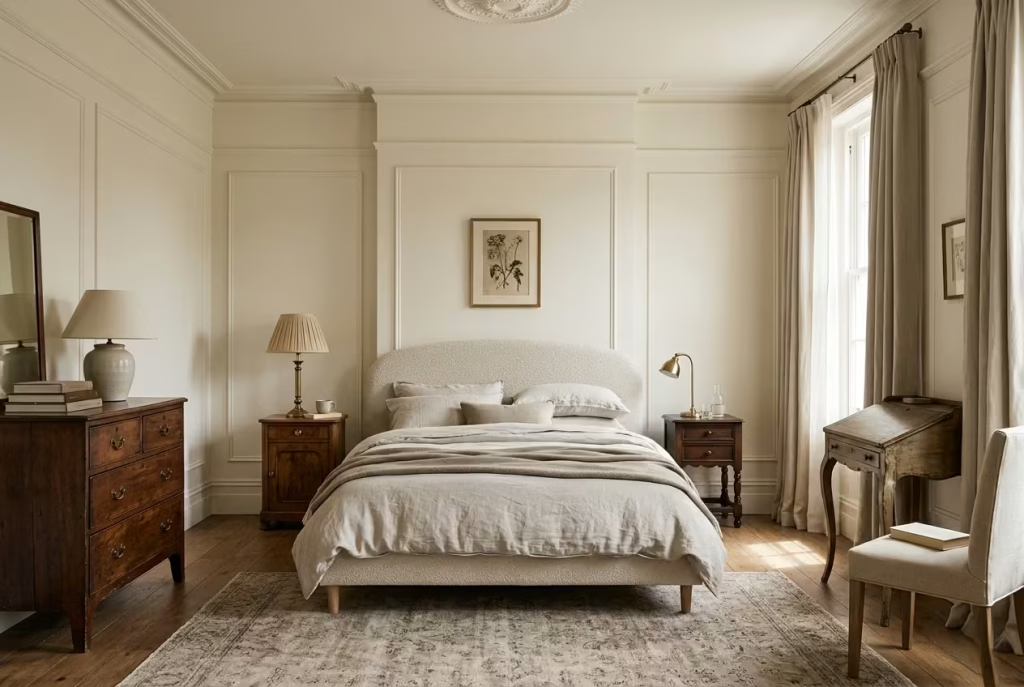
A modern Victorian bedroom begins to feel truly believable once it contains pieces with a little history in their bones. Antique or antique-style furniture introduces depth that brand-new matching sets often struggle to replicate.
A gently worn chest of drawers, a walnut bedside table with softened edges, or a small writing desk tucked near a window can instantly shift the atmosphere from showroom polished to quietly collected. These pieces carry a sense of permanence that makes a bedroom feel layered over time rather than assembled in a hurry one weekend.
One of the biggest mistakes people make with Victorian-inspired interiors is buying everything from the same collection. The result often feels too uniform, almost like a furniture catalogue trying too hard to convince you it has personality.
Real homes rarely evolve that way. The most compelling bedrooms usually mix periods and finishes with a lighter touch. A tailored upholstered bed paired with antique bedside tables, or a contemporary lamp resting on a vintage chest, creates contrast that feels far more natural and lived-in.
Bedside tables are especially important because they sit right within your line of sight every morning and evening. In practical terms, tables around 50 to 65 cm high tend to align comfortably with most mattress heights, making them easier to use without awkward reaching.
I have worked on projects where replacing oversized modern nightstands with slimmer antique pieces immediately improved the flow of the room. Suddenly the space could breathe again. Narrower furniture often allows more visible floor area, which quietly makes even compact bedrooms feel larger.
Dressing tables and small writing desks also work beautifully in modern Victorian spaces because they introduce a sense of ritual back into the bedroom. There is something wonderfully grounding about a dedicated corner for reading, journaling, or getting ready slowly in the morning rather than rushing around with one eye on the clock. Even a compact desk with curved legs and aged brass handles can soften an otherwise functional room and make daily routines feel a touch more intentional.
Materiality matters here too. Dark-stained oak, walnut, painted timber, marble tops, and aged brass hardware all contribute to that layered Victorian atmosphere without tipping into excess. Small imperfections should not be feared either.
Slight wear, softened edges, or an uneven patina often become the very details that make a room memorable. They stop the space from feeling too slick or too precious, which, truth be told, is half the battle in luxury interiors.
Still, balance is essential. Too many heavily carved antiques crammed into one bedroom can quickly feel like a museum with the lights turned low. The strongest spaces know when to let a single piece take centre stage and when to keep things understated.
Pros
- Adds character, depth, and individuality that mass-produced furniture often lacks
- Helps modern bedrooms feel warmer, more established, and visually layered
- Mixes beautifully with contemporary lighting and upholstery for a balanced look
- Slimmer antique pieces can improve flow in smaller bedrooms
- Quality vintage furniture is often made from durable solid timber with excellent craftsmanship
Cons
- Genuine antiques may offer less practical storage compared to modern furniture
- Older drawers and doors can stick, wobble, or feel uneven over time
- Antique dimensions are sometimes shallower or lower than modern expectations
- Overusing ornate vintage furniture can make the room feel visually heavy
- Restoring or sourcing authentic pieces may require additional budget and patience
You May also Like: Master Bedroom Design: A Complete Guide to Creating a Space That Restores, Supports, and Endures
Mix Old and New Lighting
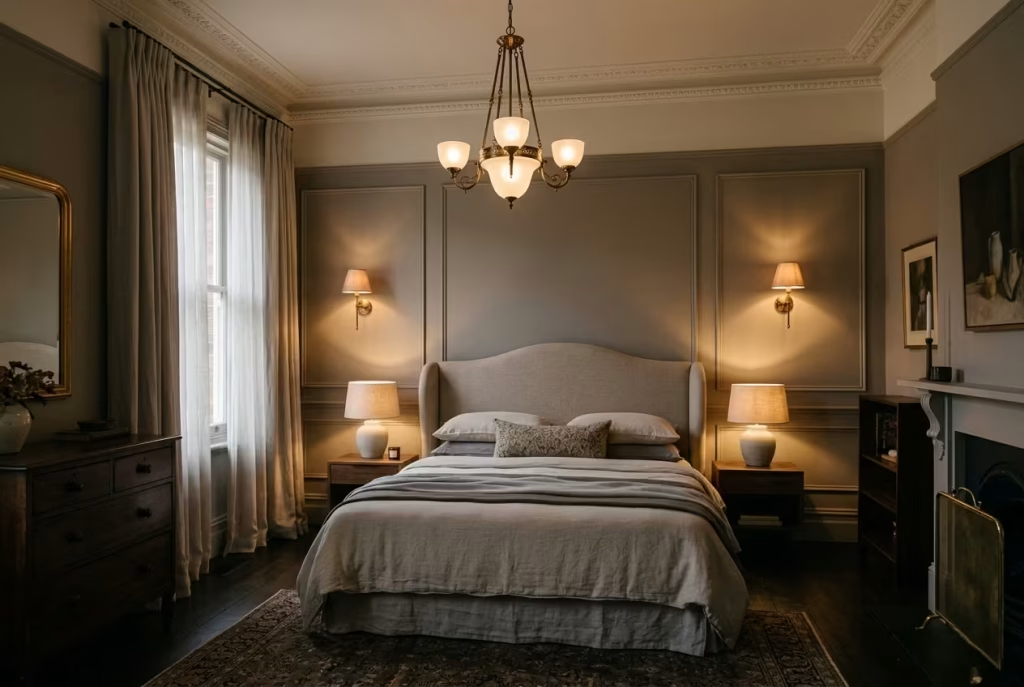
Lighting has a remarkable way of revealing whether a bedroom truly feels considered or whether it is simply dressed up on the surface. In modern Victorian interiors especially, the lighting scheme often becomes the thread that quietly ties the entire room together.
Done well, it adds warmth, softness, and atmosphere that settle into the architecture naturally. Done poorly, it can tip the room straight into theatrical territory faster than you can blink.
One of the most effective approaches is mixing Victorian-inspired fixtures with cleaner contemporary lighting. A decorative ceiling pendant with aged brass detailing or opal glass shades immediately introduces heritage character, particularly in rooms with ceiling roses or wall mouldings already in place.
Yet pairing those traditional elements with simpler bedside lamps keeps the space grounded in the present. That contrast matters. Without it, the room risks feeling too themed, almost as though it belongs on a film set rather than inside a real home.
In my own projects, lighting is often the moment where a room either settles into itself beautifully or loses balance altogether. I have seen carefully restored Victorian bedrooms undone by chandeliers dripping with excessive crystal and heavy ornamentation. Instead of elevating the room, they pulled every ounce of calm out of it.
A classic bedroom needs moments of restraint to stop it becoming all fur coat and no knickers. Sometimes a pared-back linen shade beside a decorative wall sconce creates far more sophistication than an oversized statement fitting ever could.
Layering different types of lighting also transforms how the bedroom functions throughout the day. Wall lights beside the bed free up surface space while creating a softer, more intimate glow for evening reading. Table lamps with ceramic or pleated shades add warmth at eye level, helping the room feel gentler after sunset.
Meanwhile, modern dimmer systems quietly do the heavy lifting in the background, allowing the atmosphere to shift depending on the time of day or season. Bright and airy in the morning. Low and cocooning at night.
Placement deserves careful attention too. Bedside wall lights positioned roughly 150 to 170 cm from the floor generally sit comfortably above most headboards without feeling awkwardly high. Ceiling pendants should feel visually centred within the room rather than simply aligned to electrical points, which is something many renovations unfortunately overlook.
Material choices influence the mood more than people expect. Antique brass, bronze, smoked glass, alabaster, and fabric shades all soften light beautifully, creating shadows and warmth that flatter Victorian detailing rather than overpower it. Cooler chrome finishes, by comparison, can sometimes feel too sharp unless balanced carefully with softer textures elsewhere.
The most memorable bedrooms are rarely brightly lit from every angle. They glow gently instead, with pockets of warmth that invite you to slow down, switch off, and stay awhile.
Pros
- Creates layered atmosphere and a more emotionally warm bedroom
- Balances Victorian character with contemporary livability
- Different light sources improve functionality throughout the day
- Dimmer controls help the room adapt easily across seasons and moods
- Decorative fixtures add visual richness without needing excessive décor
Cons
- Overly ornate lighting can make the room feel heavy or overly theatrical
- Poorly placed fixtures may create harsh shadows or awkward proportions
- Mixing too many lighting styles can lead to visual confusion
- Vintage-inspired fittings sometimes provide less practical brightness on their own
- Statement pendants that are too large can overwhelm lower ceilings or compact rooms
Lean Into Soft Florals, But Keep Them Controlled
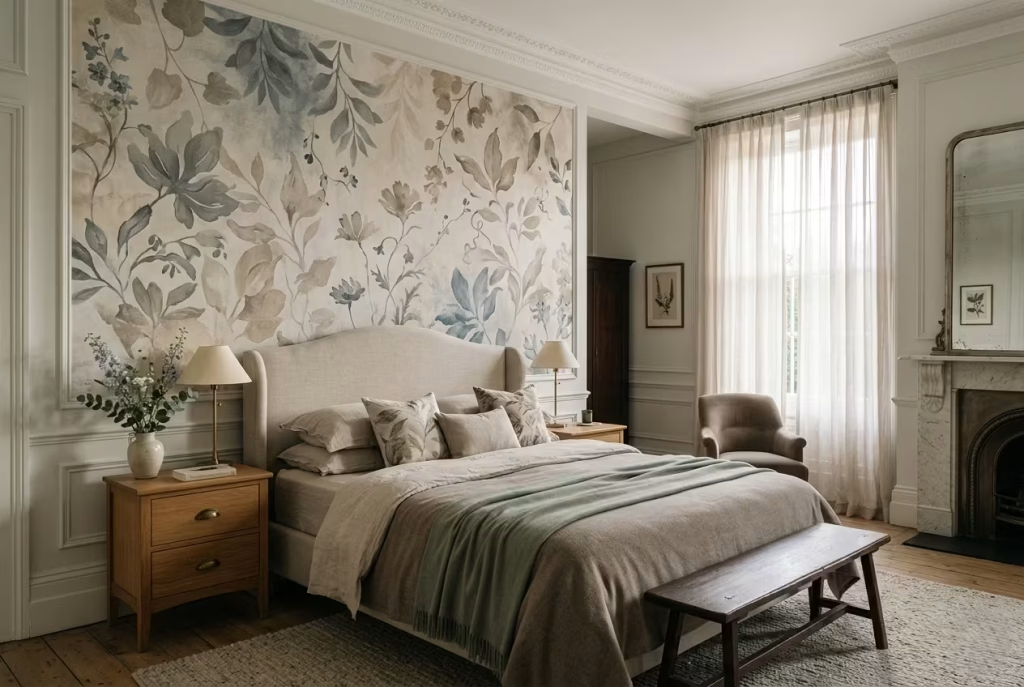
Florals have long been woven into the fabric of Victorian interiors, but in a modern bedroom, they work best when handled with a lighter hand and a sharper eye. The goal is not to drown the room in pattern from skirting board to ceiling.
Instead, it is about introducing softness and movement in ways that feel elegant, atmospheric, and quietly romantic. When used thoughtfully, florals can soften rigid architecture, warm up muted palettes, and give a bedroom the kind of emotional depth that plain surfaces alone sometimes struggle to achieve.
The strongest modern Victorian bedrooms tend to favour florals that feel slightly faded, painterly, or abstracted rather than overly crisp and traditional. Stylised botanical prints, washed damasks, and hand-painted wallpaper patterns often sit more comfortably in contemporary homes because they carry texture and character without feeling sugary or old-fashioned.
There is a world of difference between a bedroom that nods to Victorian romance and one that feels trapped in a grandmother’s guest room with the curtains permanently drawn.
Scale plays a huge role in whether floral patterns feel timeless or chaotic. Larger, more open motifs generally create a calmer atmosphere, particularly in bedrooms where visual quiet matters. Tiny repetitive prints, while charming in theory, can quickly make a room feel busy once layered with bedding, curtains, artwork, and furniture.
I often recommend limiting floral patterns to one statement wall behind the bed or introducing them through a smaller fabric application such as cushions, a bench seat, or curtain panels. That controlled approach allows the pattern to breathe instead of fighting every other surface for attention.
Wallpaper placement deserves particular care. In one Victorian renovation project I worked on, we used a muted botanical wallpaper only within recessed wall panels behind the bed while keeping the surrounding walls in a soft limestone paint finish. The result felt layered and intimate without overwhelming the room. Had we papered every wall, the bedroom would have tipped over the edge in a heartbeat. Sometimes restraint is what gives decorative choices their power in the first place.
Colour palette matters just as much as pattern itself. Florals grounded in smoky greens, dusty blues, parchment tones, faded plum, or warm taupe tend to age beautifully because they harmonise naturally with timber furniture, brass accents, and upholstered textures. Bright, highly saturated florals, on the other hand, often feel trend-led and visually exhausting over time.
Texture can also soften the effect. A linen cushion with a subtle botanical print feels worlds apart from glossy printed fabrics that reflect too much light. Likewise, matt wallpaper finishes tend to create a more sophisticated atmosphere than highly reflective surfaces, particularly under evening lighting.
The beauty of florals in a modern Victorian bedroom lies in their ability to add emotion without shouting for attention. They bring softness into the room almost quietly, like music playing low in the background, noticeable not because it dominates the space, but because the room would feel strangely empty without it.
Pros
- Adds romance, softness, and visual layering to the bedroom
- Helps Victorian-inspired interiors feel authentic and emotionally warm
- Creates a more inviting atmosphere without relying on excessive furniture or décor
- Works beautifully alongside muted paint tones, natural textures, and antique finishes
- Controlled floral applications can make a room feel curated rather than overly designed
Cons
- Too much pattern can quickly overwhelm the room and feel visually tiring
- Highly trend-driven florals may date faster than simpler finishes
- Small repetitive prints can make compact bedrooms feel cluttered
- Overly traditional patterns may clash with cleaner contemporary furniture
- Poor colour coordination can make the space feel heavy or overly decorative
Use Curtains to Frame the Room, Not Just Cover the Window
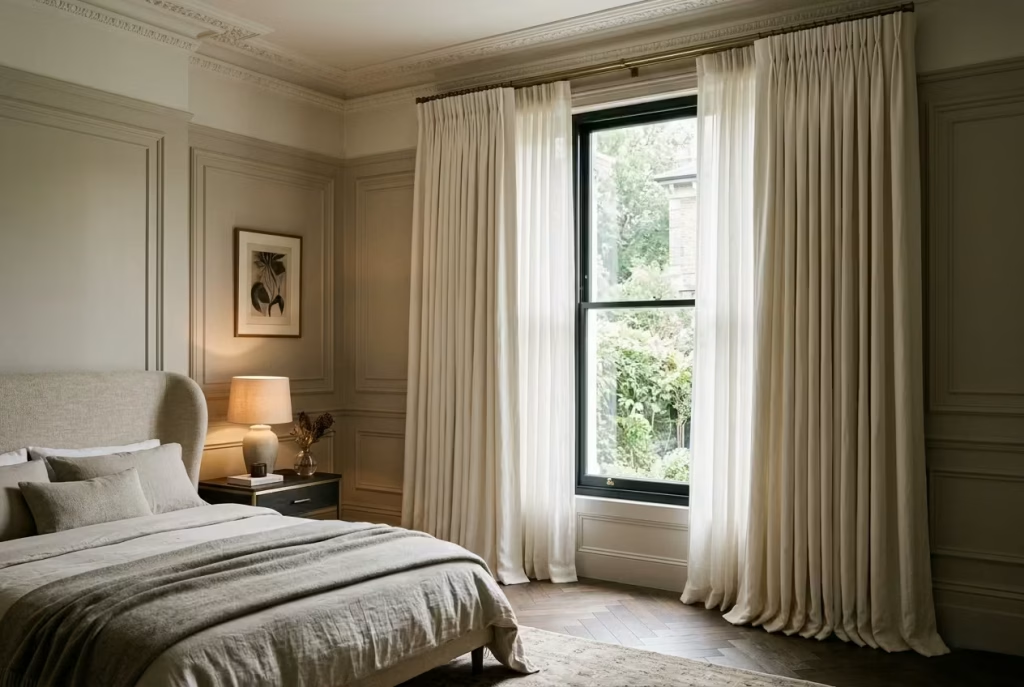
Curtains do far more than block light or provide privacy. In a modern Victorian bedroom, they become part of the room’s architecture itself, shaping how the space feels from the moment you walk in. Well-chosen curtains soften sharp lines, introduce movement, and give the room that elusive sense of fullness many bedrooms struggle to achieve. Without them, even beautifully designed spaces can feel oddly unfinished, as though something important was left unsaid.
One of the biggest differences between an ordinary bedroom and one that feels quietly luxurious often comes down to how the windows are treated. Victorian-inspired interiors naturally benefit from softness, and curtains provide that in spades.
Full-length panels grazing the floor create a sense of height and elegance that blinds alone simply cannot replicate. There is something deeply grounding about fabric falling in long uninterrupted lines, especially when morning light filters through gently textured linen or softly lined cotton.
Placement matters just as much as fabric choice. Hanging curtain rods higher than the actual window frame instantly elongates the walls and draws the eye upward, which can make even modest bedrooms feel more expansive. In most projects,
I prefer mounting curtains roughly 15 to 25 cm above the window frame whenever ceiling height allows. Letting the fabric skim the floor rather than stopping short also creates a cleaner, more refined silhouette. Curtains that hover awkwardly above the floor tend to look like they have missed the mark by a country mile.
Fabric selection changes the emotional atmosphere of the room more than many homeowners realise. Linen curtains feel relaxed, breathable, and beautifully imperfect, making them ideal for summer months or brighter bedrooms with plenty of natural light.
Velvet introduces a richer, more cocooning quality, particularly in larger Victorian-style spaces where the room can handle heavier texture. Cotton blends often sit somewhere comfortably in the middle, offering softness and practicality without feeling too formal or too casual.
I have found that layering curtains with sheer panels underneath works especially well in modern Victorian bedrooms because it allows the room to shift naturally throughout the day. During daylight hours, sheers soften incoming light without darkening the room completely.
In the evening, heavier outer curtains create privacy and warmth, wrapping the bedroom in a much calmer atmosphere. It is one of those details people rarely notice consciously, yet they immediately feel the difference once it is there.
Colour should feel integrated rather than attention-seeking. Curtains that closely echo the wall colour or bedding palette often create a more sophisticated effect than highly contrasting drapery. Soft olive, mushroom, warm stone, dusty blue, or parchment tones tend to settle beautifully into Victorian-inspired interiors without overwhelming the architecture.
Still, balance is essential. Thick, heavily lined velvet curtains in a small south-facing bedroom can quickly trap heat and make the room feel stuffy during warmer months. Bedrooms should feel inviting, not airless. Good design always leaves room for comfort alongside beauty.
Pros
- Softens architectural lines and makes the room feel warmer and more inviting
- Improves the visual proportions of the bedroom by drawing the eye upward
- Adds texture, movement, and depth without relying on excessive decoration
- Layered curtains can make Victorian-inspired bedrooms feel calmer and more refined
- Helps control natural light, privacy, and atmosphere throughout the day
Cons
- Heavy fabrics may trap warmth and feel uncomfortable during summer months
- Poor curtain placement can make windows appear smaller or ceilings lower
- Excessively ornate drapery can overwhelm a modern Victorian scheme
- Delicate fabrics such as linen or velvet may require more maintenance over time
- Curtains that are too short often disrupt the elegance of the entire room
Add a Heritage Mirror
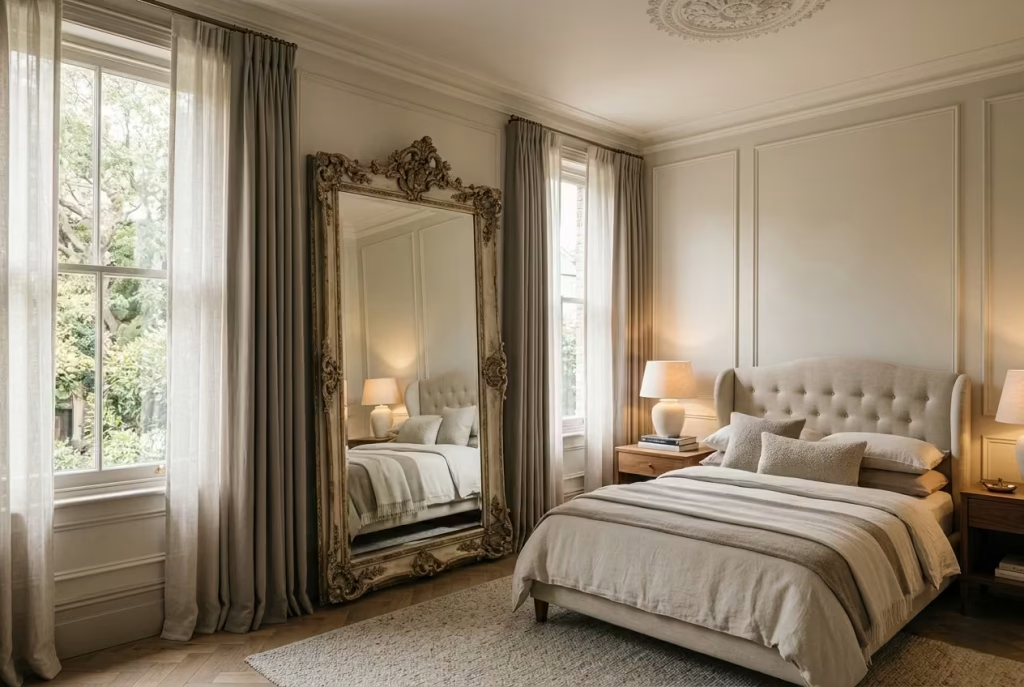
A heritage mirror has a way of changing the entire mood of a bedroom without demanding much floor space or visual noise. In modern Victorian interiors, mirrors are not simply practical objects hung out of habit.
They become part of the atmosphere itself, catching light, softening shadows, and quietly reinforcing the room’s sense of history. A well-placed mirror can make a bedroom feel brighter, taller, and more emotionally layered almost instantly, which is why these pieces have remained design staples for generations.
The frame is where much of the personality lives. Gilded finishes bring warmth and old-world elegance, especially when paired with muted wall colours or darker paint tones. Aged gold catches evening lamplight beautifully, giving the room a softer glow that feels intimate rather than flashy.
Bevelled mirrors, meanwhile, introduce subtle detail through the glass itself, adding dimension without overwhelming the room. Dark wood frames offer something slightly moodier and more grounded, particularly in bedrooms with walnut furniture, olive walls, or heavier Victorian detailing already in place.
Placement matters more than many people expect. A mirror positioned opposite or adjacent to a window can completely transform how daylight moves through the room. In several Victorian-inspired bedroom renovations I have worked on, adding a tall mirror beside the window instantly lifted spaces that previously felt dull and closed in. The room suddenly felt alive, as though it had finally learned how to breathe properly. It is often the simplest adjustments that punch above their weight.
Scale also deserves careful consideration. Oversized mirrors leaning casually against the wall can work beautifully in larger bedrooms with generous ceiling heights, creating a relaxed but elegant atmosphere. In more compact rooms, a medium-sized mirror above a chest of drawers or fireplace tends to feel more balanced and intentional.
One thing I always caution against is scattering multiple ornate mirrors around the room simply for decoration’s sake. Once every wall begins reflecting another decorative frame, the space can quickly lose its calm and start chasing its own tail visually.
Material combinations help heritage mirrors feel more contemporary and less theatrical. A gilded mirror above a streamlined marble console, or a dark timber-framed mirror beside crisp linen curtains, creates the kind of contrast that keeps Victorian interiors feeling fresh rather than frozen in time. That balance between refinement and restraint is where the room truly comes into its own.
Mirrors also bring emotional softness into bedrooms in ways that are hard to quantify. They catch candlelight, reflect movement, and bounce natural light gently around darker corners. Especially during winter mornings or late summer evenings, that subtle glow can make the room feel far more comforting and alive.
The trick is knowing when enough is enough. One beautiful heritage mirror can elevate a bedroom effortlessly. Five ornate mirrors competing for attention can turn elegance into clutter before you know it.
Pros
- Creates a layered, collected atmosphere that feels timeless and elegant
- Expands the room visually and helps smaller bedrooms feel more open
- Reflects natural and artificial light, making the space brighter and softer
- Adds instant Victorian character without needing major renovation work
- Works beautifully alongside antique furniture, panelling, and muted colour palettes
Cons
- Too many ornate mirrors can make the room feel visually busy or overly decorative
- Highly reflective surfaces may create glare in very bright bedrooms
- Oversized mirrors can overwhelm compact walls if proportions are ignored
- Gilded or antique finishes may feel too formal if the rest of the room lacks balance
- Vintage mirrors sometimes show ageing marks or imperfections in the glass that may not suit every homeowner
Use One Statement Vintage Piece
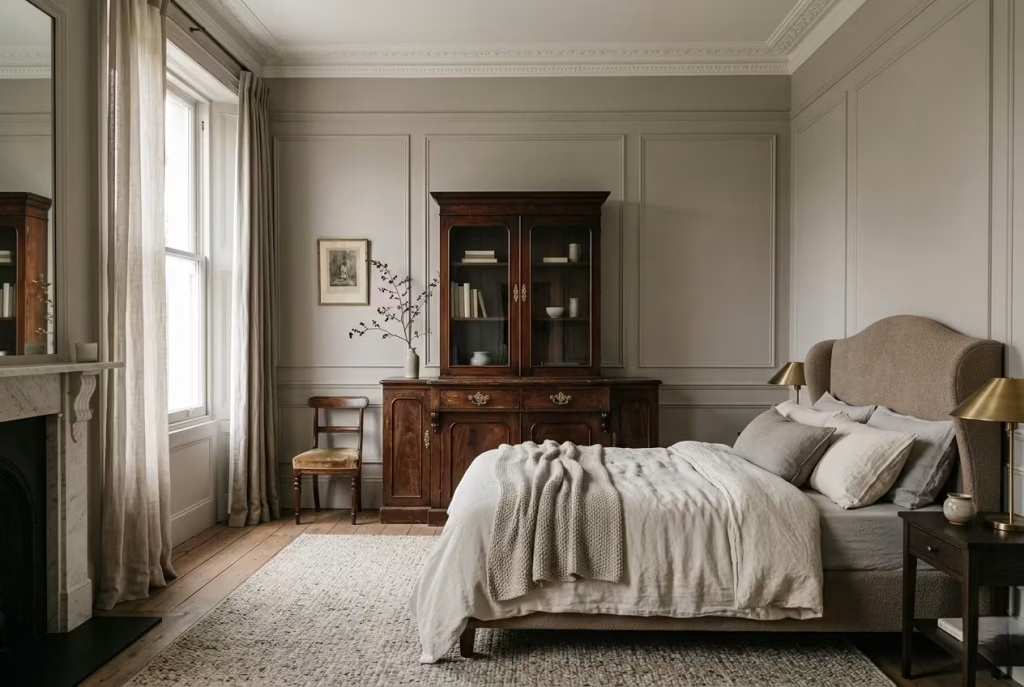
Modern Victorian bedrooms feel most convincing when they contain at least one piece that looks as though it has lived a little. Not polished within an inch of its life. Not freshly unpacked from a warehouse.
A single vintage chair with worn timber arms, an old dressing table stool upholstered in faded velvet, or a beautifully aged cabinet tucked into the corner can introduce a depth that newer furniture often struggles to replicate. These pieces bring a certain emotional gravity into the room, the kind that cannot be manufactured overnight.
The key lies in restraint. One carefully chosen vintage piece often says far more than a room crowded with matching furniture sets all singing from the same hymn sheet. That contrast between old and new is what gives modern Victorian interiors their richness.
A contemporary upholstered bed beside an antique occasional bench creates tension in the best possible way. The room feels layered, believable, and naturally evolved rather than rigidly designed around a single catalogue aesthetic.
In practice, statement vintage pieces work because they interrupt perfection slightly. They introduce irregularity, softness, and individuality into spaces that might otherwise feel too coordinated. I once worked on a Victorian townhouse bedroom where nearly everything in the room was relatively understated, pale walls, linen curtains, tailored upholstery, yet a single dark mahogany cabinet with timeworn brass handles became the detail everyone remembered. It grounded the entire room emotionally. Without it, the space would have looked beautiful, but perhaps a little forgettable.
Scale matters enormously here. Vintage furniture often carries stronger visual weight than modern pieces because of carved details, darker timbers, or more sculptural shapes. A bulky cabinet squeezed into a narrow bedroom can make circulation feel awkward very quickly.
Likewise, an oversized chaise at the foot of the bed may sound romantic in theory but can become a daily nuisance if it interrupts movement around the room. Sometimes less truly is more, particularly in bedrooms where calm and comfort matter just as much as aesthetics.
Placement should feel intentional rather than random. A vintage chair near a window instantly creates a quiet reading corner. A small bench at the foot of the bed can soften the transition between furniture zones.
Even a compact side cabinet layered with books, a lamp, and a ceramic vase can make the room feel more personal and lived-in. These are the details that quietly shape atmosphere over time.
Material wear should also be embraced to a degree. Slightly faded upholstery, softened timber edges, or aged brass patina often become the very qualities that bring authenticity into the room.
In fact, perfectly restored vintage furniture can sometimes lose the charm that made it special in the first place. A few imperfections remind us that beauty does not always need to arrive spotless and untouched.
The strongest modern Victorian bedrooms rarely feel over-curated. They leave room for personality, memory, and objects that carry stories beneath the surface. One remarkable vintage piece can achieve that almost effortlessly.
Pros
- Adds personality, soul, and individuality to the bedroom
- Creates a more layered and emotionally rich atmosphere
- Prevents the room from feeling overly uniform or showroom-like
- Introduces contrast that helps modern and Victorian elements coexist naturally
- Quality vintage craftsmanship often brings texture and detail difficult to find in newer furniture
Cons
- Poorly scaled vintage furniture can overwhelm smaller bedrooms
- Dark or heavily carved pieces may visually weigh down lighter interiors
- Authentic vintage items sometimes require restoration or maintenance
- Mixing too many statement pieces can create visual clutter and confusion
- Older furniture may not always offer modern practicality or storage efficiency
You May also Like: 25 Fresh Light and Airy Bedroom Ideas for Summer Serenity
Soften the Floor With a Proper Rug
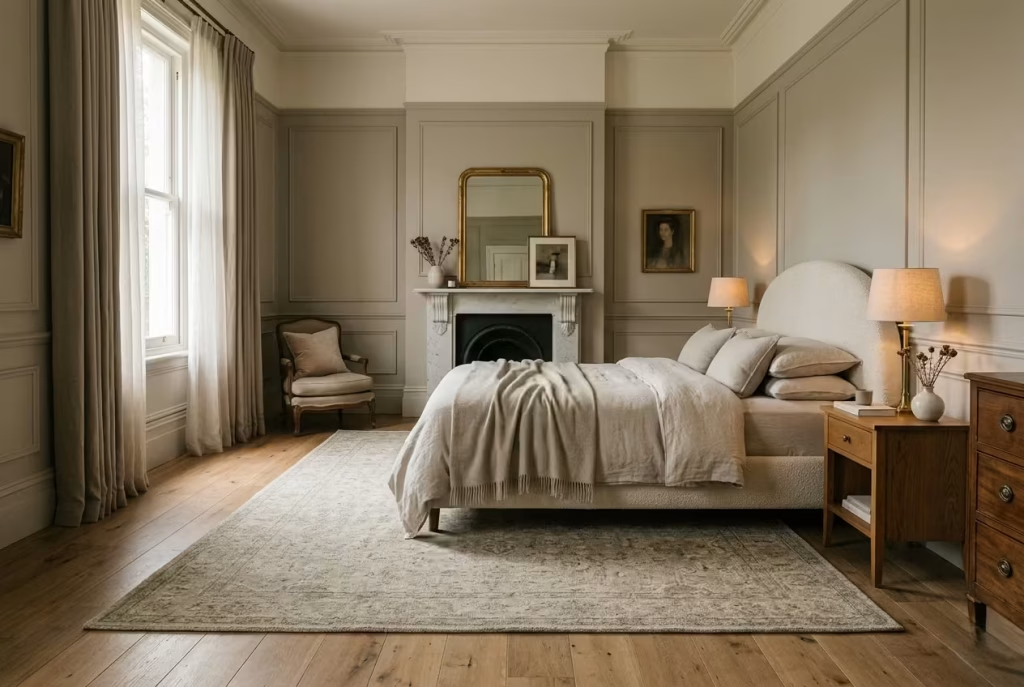
A bedroom without a rug can sometimes feel a little like a conversation missing its final sentence. Everything may technically be in place, yet the room still lacks warmth, cohesion, and that quiet sense of comfort that encourages you to linger. In modern Victorian interiors especially, rugs play a far greater role than simple decoration. They anchor the furniture, soften architectural edges, and introduce the kind of layered texture that makes a bedroom feel deeply settled rather than visually adrift.
The most successful Victorian-inspired bedrooms often rely on rugs to bridge the gap between elegance and livability. Timber floors, painted floorboards, or stone-effect surfaces can all look beautiful on their own, but they also risk making the space feel slightly cold or echoing if left completely exposed. A well-proportioned rug changes that instantly. The room begins to feel calmer underfoot, softer around the edges, and far more inviting first thing in the morning when bare feet meet warmth instead of a cold floor.
Material selection matters enormously here. Wool rugs remain one of the strongest choices because they hold warmth beautifully while also aging gracefully over time. Their slight irregularity and softness bring balance to Victorian detailing, especially in bedrooms with mouldings, dark furniture, or layered fabrics already in play.
Natural fibre rugs such as jute or sisal can work well too, particularly in lighter summer bedrooms where you want the room to feel airy and relaxed rather than overly formal. Faded Persian-style rugs, meanwhile, introduce history and depth almost effortlessly. Their worn patterns and muted tones soften the room emotionally, giving it that lived-in richness many homeowners chase but rarely achieve through new décor alone.
Size is where things often go pear-shaped. One of the quickest ways to weaken a bedroom visually is by choosing a rug that is too small for the bed and surrounding furniture. Ideally, the rug should extend at least 50 to 70 cm beyond the sides of the bed wherever possible. That extra width helps frame the sleeping area properly while allowing the room to feel more balanced overall. In larger bedrooms, extending the rug farther can make the entire composition feel more luxurious and grounded.
Placement also shapes how the room functions emotionally. A rug tucked too far under the bed disappears visually and loses much of its impact. On the other hand, allowing enough visible rug around the bed creates softness exactly where the eye and body need it most. I often find that this simple adjustment completely changes how generous a room feels, even without altering a single piece of furniture.
Colour and pattern should support the room rather than dominate it. Muted terracotta, faded olive, smoky blue, warm taupe, and parchment tones tend to work beautifully in modern Victorian spaces because they echo the richness of the style without becoming visually exhausting. Overly sharp geometric patterns or highly saturated colours can sometimes jar against softer Victorian detailing and interrupt the room’s sense of calm.
There is also something emotionally grounding about rugs that look slightly timeworn. A softly faded Persian rug, layered beneath crisp linen bedding and warm timber furniture, creates a sense of permanence that feels deeply comforting. It suggests a room that has evolved naturally over time rather than being assembled all in one breath.
Pros
- Adds warmth and softness that make the bedroom feel more comfortable and inviting
- Helps visually anchor the bed and create a more cohesive room layout
- Improves acoustics by reducing echo and hard surface noise
- Introduces texture, colour, and layering without relying on excessive decoration
- Makes Victorian-inspired interiors feel more relaxed and emotionally grounded
Cons
- Undersized rugs can make the room feel disconnected and visually awkward
- Thick wool rugs may trap heat in warmer climates or summer months
- Pattern-heavy rugs may compete with wallpaper, bedding, or decorative moldings
- Larger high-quality rugs often require a significant investment and ongoing care
You May also Like: 15 Pink English Country Bedroom Ideas That Make Any Room Glow
Let Texture Do the Heavy Lifting
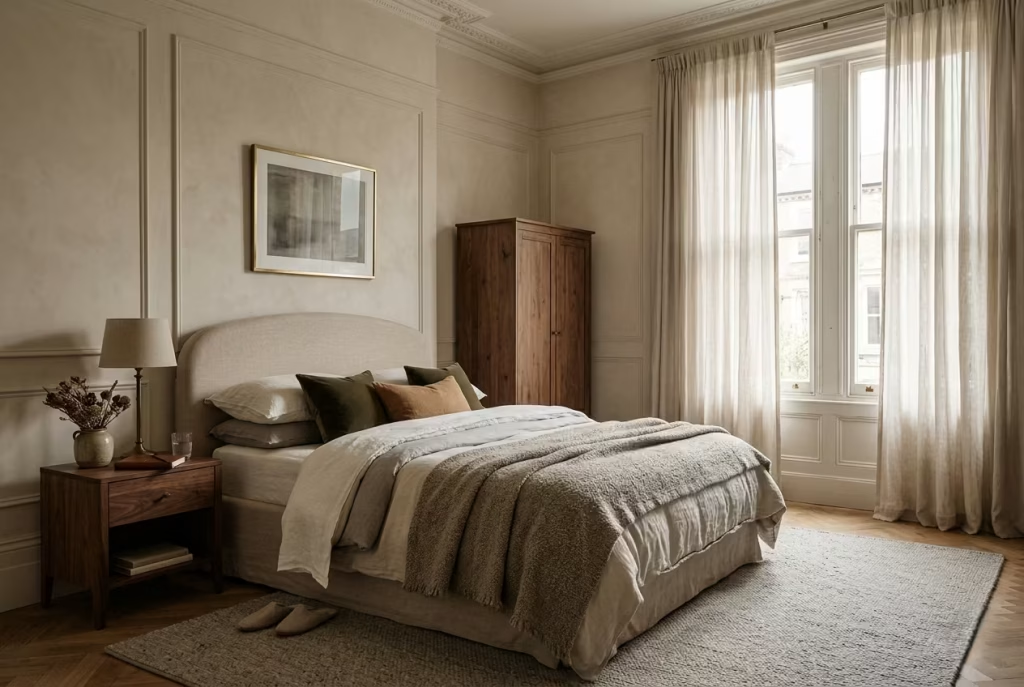
Some of the most beautiful modern Victorian bedrooms are not especially colourful at all. In fact, many rely on a relatively restrained palette and instead build richness through texture, which is often the detail that quietly transforms a room from flat and forgettable into something deeply atmospheric.
Texture introduces depth in a subtler, more sophisticated way than colour ever could on its own. It catches light differently throughout the day, softens architectural form, and gives a bedroom that layered, lived-in quality people instinctively respond to without always understanding why.
In many bedroom projects I have worked on, texture ends up doing the heavy lifting long before decorative styling enters the picture. A plaster wall with slight movement in the finish feels entirely different from a perfectly smooth painted surface. Linen curtains shifting gently near an open window bring a softness that synthetic fabrics rarely achieve.
Brushed cotton bedding, slightly creased and imperfect, creates comfort visually before anyone even sits down on the bed. These details matter because they make the room feel human rather than overly polished.
Velvet remains one of the most effective textures in modern Victorian interiors when used with restraint. A velvet cushion in deep olive or faded tobacco can add richness almost instantly, particularly beside crisp cotton sheets or textured linen upholstery.
The contrast between matte and sheen creates movement across the room, especially under evening lighting. Too much velvet, however, can quickly tip the space into heaviness, which is why balance is everything. Sometimes one beautifully upholstered bench or a pair of velvet cushions says more than an entire room wrapped head to toe in plush fabric.
Natural timber introduces another kind of warmth altogether. Walnut, oak, and aged wood finishes bring grounding energy into Victorian-inspired bedrooms, helping ornate details feel calmer and more approachable.
I often find that timber prevents the room from becoming too precious. It adds honesty. A slightly worn bedside table or softly aged oak floorboards can stop even the most elegant bedroom from feeling stiff as a board.
Aged brass works in much the same way. Unlike highly polished metals that scream for attention, aged finishes settle into the background more gracefully. Brass drawer handles, wall lights, curtain rods, or mirror frames catch light gently and add warmth without creating visual noise. Their beauty lies partly in their restraint.
Texture layering becomes especially important when the colour palette is neutral. Mushroom walls beside plaster finishes, linen bedding, brushed cotton throws, and soft wool rugs create a bedroom that feels calm but far from bland. The room gains depth through material variation rather than dramatic contrast. That distinction is often what separates timeless interiors from trend-driven ones.
Still, texture requires editing just like colour does. Too many competing finishes in one room can muddy the atmosphere surprisingly quickly. Rough timber, glossy velvet, heavy boucle, metallic accents, patterned wallpaper, and thick layering all fighting for attention can leave the space feeling visually tangled rather than refined. Good design knows when to pull back and allow certain materials room to breathe.
The most memorable Victorian-inspired bedrooms are often the ones where texture unfolds slowly. You notice the softness of the linen first, then the warmth of the timber, then the subtle glow of aged brass after sunset. The room reveals itself gradually, which is precisely what makes it feel enduring.
Pros
- Creates richness and depth without relying on excessive colour or decoration
- Makes the bedroom feel warmer, softer, and more emotionally inviting
- Helps neutral palettes feel layered and visually interesting
- Natural materials often age beautifully and develop more character over time
- Adds tactile comfort that improves both the visual and physical experience of the room
Cons
- Too many competing textures can make the room feel visually cluttered
- Delicate materials such as velvet or linen may require more maintenance
- Poor-quality textured finishes can appear messy rather than refined
- Overlayering heavy fabrics may reduce the sense of lightness in smaller bedrooms
- Mixing incompatible textures can disrupt the room’s overall harmony
Include a Fire Surround or Mantel if the Room Has One
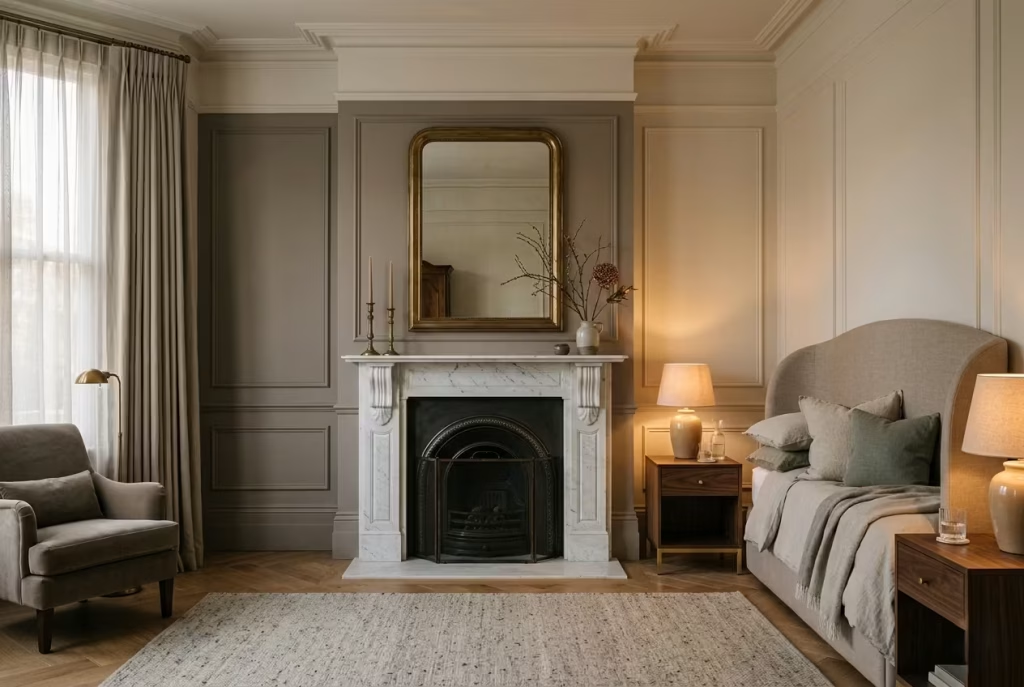
A fireplace has a quiet authority in a bedroom that very few architectural features can match. Even when no fire burns inside it, the surround itself often becomes the emotional centre of the room, grounding the space with a sense of permanence and history.
In modern Victorian bedrooms especially, original fireplaces and decorative mantels carry enormous visual weight because they connect the room back to its architectural roots. They remind you that the space existed long before the latest paint colour or furniture arrangement ever arrived.
If a bedroom already has an original fireplace, it is almost always worth preserving where possible. Marble surrounds, cast iron inserts, carved timber mantels, and tiled hearths introduce texture and authenticity that are difficult to replicate convincingly.
These features add character almost effortlessly, allowing the room to feel elegant without needing layers of excessive decoration piled on top. In many Victorian homes I have worked on, the fireplace naturally became the anchor around which the rest of the design quietly revolved.
Even decorative or non-working fireplaces can transform a room when handled thoughtfully. A simple mantel painted in a soft stone tone, paired with a heritage mirror or understated artwork above, immediately introduces architectural structure and balance.
The beauty often lies in restraint. One ceramic vase with branches, a small stack of books, or a pair of aged brass candlesticks usually feels far more sophisticated than a mantel crowded with accessories from end to end. The moment every inch becomes filled, the room can start feeling busy and overworked before you know it.
Scale and proportion matter enormously here. In smaller bedrooms, particularly those with lower ceilings, bulky dark mantels can dominate the room too aggressively if they are not balanced with lighter colours or softer materials nearby. I often find that keeping the surrounding wall palette calm allows the fireplace itself to breathe naturally rather than fight for attention.
Material combinations also influence the overall mood. A dark marble surround beside linen curtains and pale bedding creates beautiful contrast, while painted timber mantels feel softer and more relaxed in lighter Victorian-inspired bedrooms. Aged brass fireplace tools or subtle candlelight nearby can introduce warmth without turning the feature into a theatrical set piece.
There is also something emotionally comforting about fireplaces in bedrooms, even purely decorative ones. They create a visual pause within the room, a focal point that naturally draws the eye and slows the atmosphere down. Especially during colder months or rainy evenings, that sense of grounding can make the bedroom feel deeply cocooning and intimate.
The trick, as with so many Victorian details, is avoiding the temptation to overdo it. A fireplace already carries enough presence on its own. It does not need every decorative object in the house fighting for space on the mantelpiece.
Pros
- Adds authentic Victorian character and architectural depth to the bedroom
- Creates a strong natural focal point that anchors the room visually
- Helps the space feel warmer, more layered, and emotionally grounded
- Original fireplaces can increase the perceived value and charm of a home
- Decorative mantels provide styling opportunities without requiring large furniture pieces
Cons
- Overstyling the mantel can make the room feel cluttered and visually heavy
- Large dark surrounds may overpower smaller bedrooms if not balanced carefully
- Restoring original fireplaces can require significant budget and specialist work
- Non-working fireplaces may reduce usable wall or furniture placement space
- Excessively ornate fireplace décor can make modern Victorian interiors feel dated
Keep Storage Elegant and Hidden
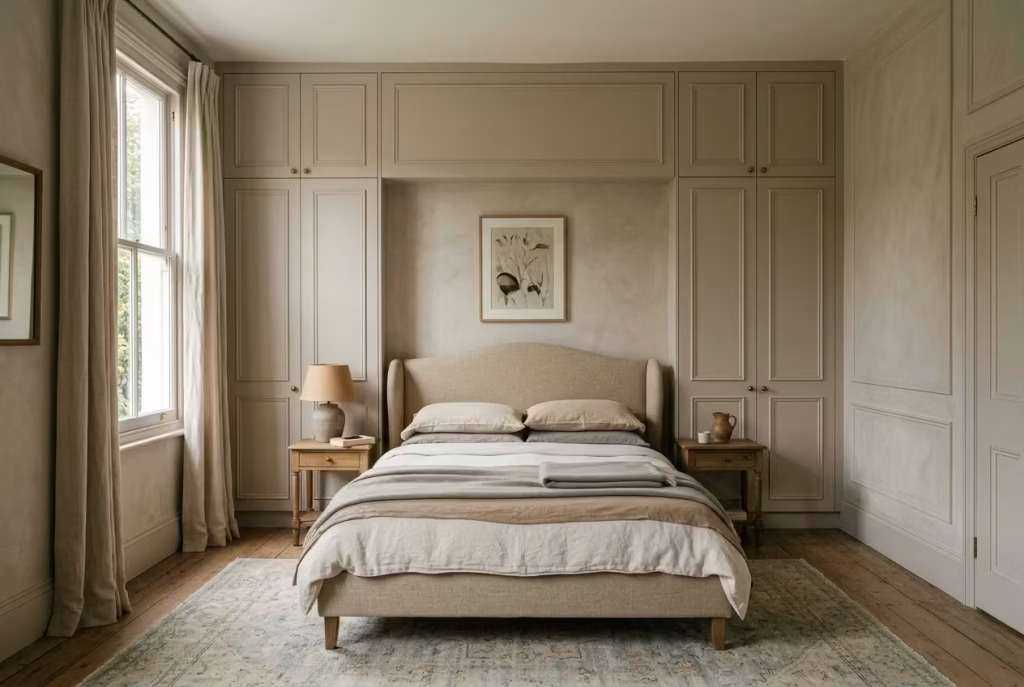
A modern Victorian bedroom can carry rich textures, layered fabrics, antique details, and decorative mouldings beautifully, but none of that matters if clutter quietly takes over the room. Storage is often the invisible backbone of a successful bedroom design.
When handled properly, it allows the space to feel calm, graceful, and deeply livable without sacrificing practicality. When handled poorly, even the most elegant bedroom can begin to feel chaotic around the edges, like a beautiful coat hanging on a crooked hook.
One of the smartest ways to preserve serenity in a Victorian-inspired bedroom is through storage that blends into the architecture rather than competing with it. Built-in wardrobes painted in the same tone as the walls create a softer visual flow, especially in rooms where large freestanding furniture might otherwise dominate. Instead of breaking the room into bulky sections, the storage settles quietly into the background, allowing architectural details, lighting, and furniture to take centre stage more naturally.
Painted joinery works particularly well in Victorian interiors because it echoes the feeling of traditional craftsmanship while still supporting modern living. Warm mushroom tones, soft olive, dusty taupe, or muted stone colours help larger storage pieces feel far less imposing than bright white wardrobes with sharp glossy finishes.
I have seen compact bedrooms completely transformed simply by colour drenching the wardrobes and walls together. Suddenly, the eye stops jumping from one surface to another, and the room begins to feel calmer almost immediately.
Concealed storage also changes the emotional atmosphere of the bedroom more than people expect. Hidden drawers beneath window seats, integrated bedside storage, or wardrobes designed around awkward alcoves allow daily necessities to disappear quietly from view.
That visual breathing room matters. Bedrooms should feel restorative, not like they are buckling under the weight of laundry piles, tangled charging cables, and overflowing surfaces.
In many renovation projects, I often encourage homeowners to think beyond basic wardrobes alone. A shallow built-in cabinet beside the chimney breast, for instance, can provide enough storage for books, folded linens, or seasonal clothing without overwhelming the room. Likewise, upholstered storage benches at the foot of the bed offer practicality while still contributing to the room’s softness and elegance.
Hardware selection deserves careful attention too. Aged brass handles, timber knobs, or understated ironmongery tend to sit more comfortably within modern Victorian interiors than highly polished contemporary fittings. The details may seem small, but they are often what separate tailored joinery from something that feels generic and mass-produced.
Still, hidden storage should not come at the expense of proportion or warmth. Floor-to-ceiling cabinetry installed wall to wall can sometimes make a bedroom feel boxed in if the design lacks depth, shadow lines, or thoughtful detailing. Good storage should feel integrated, not oppressive.
There is also a certain luxury in not having everything on display. A bedroom that feels visually quiet allows the mind to settle more easily at the end of the day. That sense of calm rarely happens by accident. More often than not, it is carefully designed behind closed doors.
Pros
- Keeps the bedroom visually calm, organised, and easier to relax in
- Allows decorative Victorian details to stand out without competing against clutter
- Built-in storage maximises space efficiently, especially in smaller rooms
- Painted joinery can make large storage areas feel softer and more architectural
- Concealed storage helps everyday living feel more seamless and less stressful
Cons
- Custom joinery often requires a higher upfront investment
- Poorly designed built-ins can make the room feel heavy or boxed in
- Fixed cabinetry offers less flexibility if the room layout changes later
- Excessively seamless storage may make the room feel too clinical without texture or warmth
- Bespoke storage solutions usually require longer planning and installation time
Choose Art That Feels Considered, Not Decorative for Decoration’s Sake
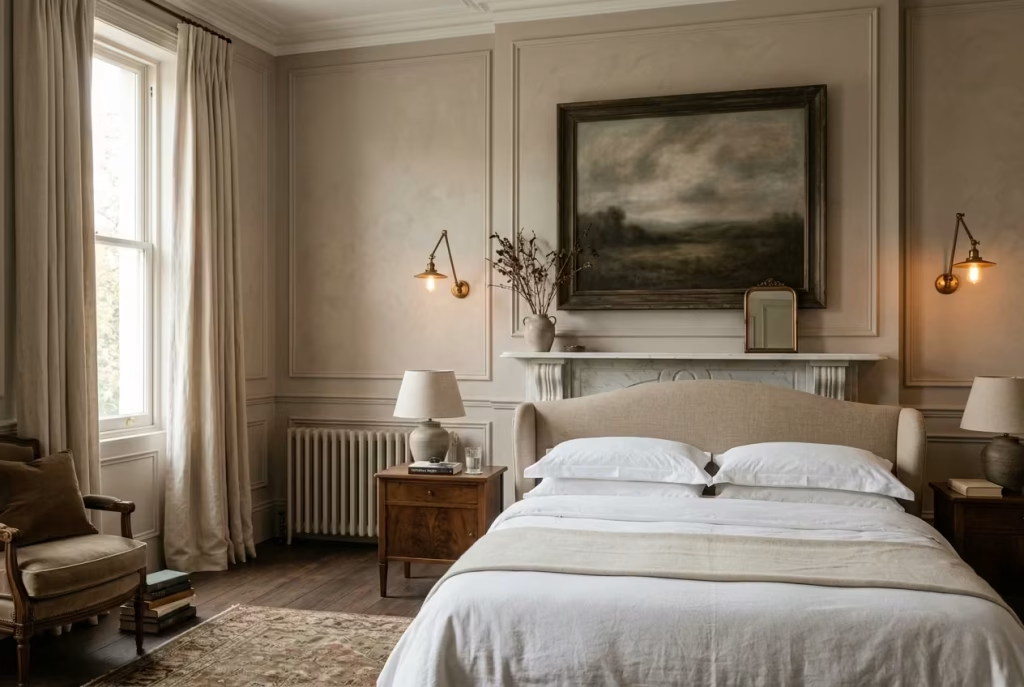
Artwork has a remarkable ability to shape the emotional tone of a bedroom long before anyone notices the furniture or paint colour. In modern Victorian interiors especially, art should feel personal, layered, and intentional rather than simply filling an empty patch of wall.
The strongest bedrooms rarely rely on loud statement pieces screaming for attention from across the room. Instead, the artwork settles naturally into the space, almost as though it has always belonged there.
Portraiture, still life paintings, botanical studies, and subdued contemporary works with classical undertones tend to work beautifully in Victorian-inspired bedrooms because they echo the quiet richness of the architecture without overpowering it.
A softly faded oil portrait above a fireplace, a charcoal botanical sketch beside the bed, or an abstract piece grounded in earthy tones can introduce depth and atmosphere in ways that decorative accessories often cannot. Good art brings emotional texture into the room. It gives the space a pulse.
One thing I have learned over years of residential projects is that artwork should never feel like an afterthought tacked onto the walls at the eleventh hour.
The right piece anchors the room emotionally and visually. The wrong one pulls everything apart. It is a bit like seasoning in cooking. Too little and the room falls flat. Too much, or the wrong choice entirely, and suddenly the balance is gone.
Scale plays a far greater role than most homeowners realise. A tiny artwork floating awkwardly above a king-size bed can weaken the entire composition, no matter how beautiful the piece itself may be. Likewise, oversized artwork crammed into a narrow bedroom can make the walls feel visually crowded.
In most cases, art above a bed or fireplace tends to work best when it occupies roughly two-thirds the width of the furniture beneath it. That proportion helps the room feel balanced without becoming rigid or overly symmetrical.
Framing also changes the emotional language of the room. Dark timber frames feel grounded and traditional, while antique brass or aged gilt finishes add warmth and softness. Simple off-white mounts often help older artwork breathe, particularly against darker Victorian-inspired walls. Highly glossy frames or ultra-bright colours, on the other hand, can sometimes jar against the quieter atmosphere these bedrooms rely on.
I often encourage clients to choose artwork that reveals itself slowly rather than pieces designed purely for instant impact. A muted landscape, an old botanical print, or a contemporary painting with restrained colour variation tends to age far more gracefully than trend-driven graphic prints. Bedrooms should feel restorative and deeply personal, not like hotel lobbies trying too hard to impress passing strangers.
Placement matters too. Art hung too high creates visual disconnect, while pieces positioned thoughtfully closer to eye level feel naturally integrated into the room. Layering smaller artworks on a mantel or resting framed pieces casually atop a chest of drawers can also soften the formality that sometimes creeps into Victorian-inspired interiors.
The beauty of carefully chosen artwork lies in its ability to make a room feel inhabited emotionally, not just decorated physically. It introduces memory, mood, and personality in ways furniture alone rarely can.
Pros
- Adds emotion, individuality, and depth to the bedroom
- Helps anchor the room visually and strengthen the overall composition
- Creates a more personal and lived-in atmosphere
- Complements Victorian architectural details without requiring excessive styling
- Timeless artwork often ages far better than trend-driven decorative pieces
Cons
- Overly decorative or loud pieces may distract from the architecture and furnishings
- Too many framed works can create visual clutter and overwhelm smaller spaces
- High-quality original art or custom framing can become expensive quickly
- Trend-based artwork choices may feel dated within a few years
Use Brass, Bronze, or Darkened Metal Finishes
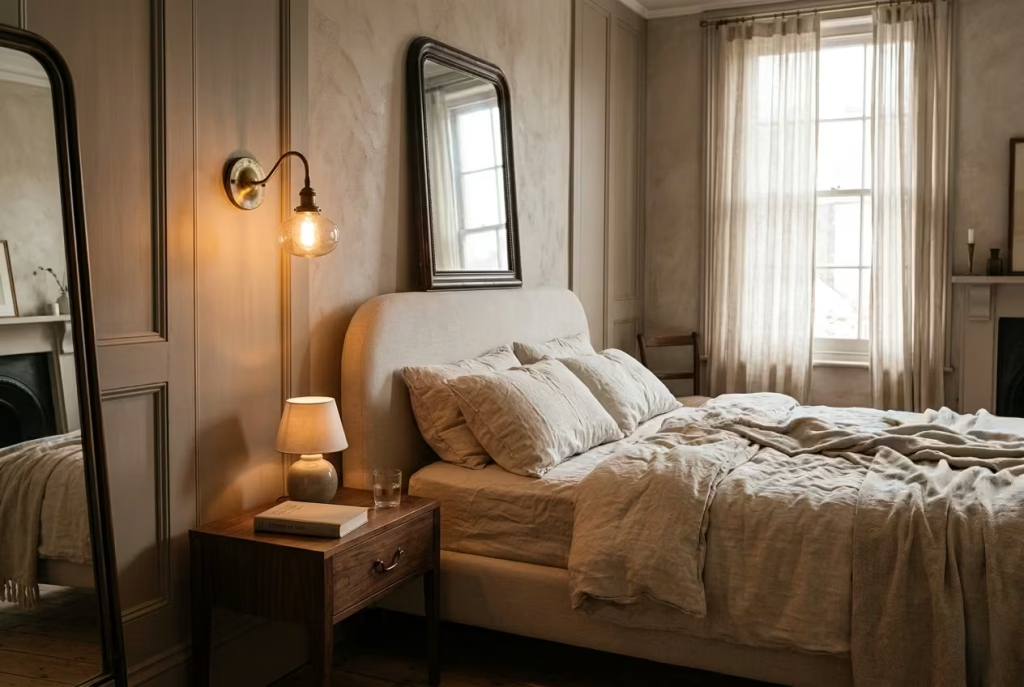
Metal finishes may seem like small supporting details in a bedroom, yet they often influence the overall atmosphere far more than people expect. In modern Victorian interiors, brass, bronze, and darkened metal finishes help ground the space emotionally and visually, adding warmth and quiet richness without relying on loud decorative gestures.
They work almost in the background, catching light subtly throughout the day and giving the room that layered, collected quality that makes it feel lived-in rather than freshly staged.
The secret lies in choosing finishes with softness and age rather than high shine. Brushed brass, antique bronze, pewter, and darkened iron all sit beautifully within Victorian-inspired bedrooms because they feel settled and mature.
Highly polished chrome or mirror-finish gold often pulls too much attention toward itself, which can disrupt the calm balance these interiors depend on. Good Victorian-inspired design rarely feels flashy. It carries itself with a little more restraint, like someone who does not need to shout to command attention.
Brass remains one of the most versatile choices because it introduces warmth without overwhelming the palette. Aged brass wall lights beside linen bedding, subtle brass handles on painted joinery, or a dark bronze mirror frame can immediately soften a room filled with cooler colours or architectural lines.
I have often found that these smaller metal details are what quietly pull a bedroom together at the eleventh hour. Without them, the room may still look beautiful, but something feels slightly unfinished beneath the surface.
Darkened metals work particularly well in bedrooms with moodier palettes such as olive, mushroom, charcoal, or inky blue. Bronze and blackened iron create contrast while still feeling grounded and understated.
They add visual weight in a way that feels calm rather than harsh, especially when paired with natural textures like oak, wool, plaster, or linen. The combination creates depth almost effortlessly.
One detail many homeowners overlook is consistency of tone rather than perfect matching. Metals do not need to match identically across every fitting in the room. In fact, that approach can sometimes feel too rigid and artificial. What matters more is that the finishes speak the same visual language.
Aged brass lighting can sit beautifully beside dark bronze drawer pulls if both carry similar warmth and softness. Problems usually arise when bright chrome, polished gold, matte black, and brushed nickel all begin competing for attention in the same space. At that point, the room can lose its footing rather quickly.
Texture also changes how metal is perceived. Hammered brass catches light differently from smooth polished surfaces. Patinated bronze develops depth over time, which only adds to the room’s character. These imperfections are often what make the finishes feel authentic rather than overly manufactured.
Metal details become especially important in the evening, when softer lighting allows warm finishes to glow gently against darker walls or layered fabrics. It is a subtle effect, but one that gives modern Victorian bedrooms their unmistakable sense of intimacy and depth.
The beauty of aged metals lies partly in their quiet confidence. They do not beg for attention, yet without them, the room often feels strangely incomplete.
Pros
- Adds warmth and depth without relying on excessive ornamentation
- Helps Victorian-inspired bedrooms feel more timeless and grounded
- Aged finishes soften the room and work beautifully with natural materials
- Brushed or darkened metals hide fingerprints and wear more gracefully than polished finishes
- Creates subtle contrast that enhances architectural details and furniture
Cons
- Mixing too many metal finishes can create visual inconsistency and confusion
- Highly darkened metals may feel too heavy in very small or low-light bedrooms
- Cheap imitation finishes can quickly lose their patina and appear artificial
- Certain finishes require careful maintenance to preserve their aged appearance
- Overusing brass or bronze accents may make the room feel overly themed
You May also Like: 25 Neutral Modern Bedroom Ideas That Feel Calm, Considered, and Timeless
Create a Reading Corner
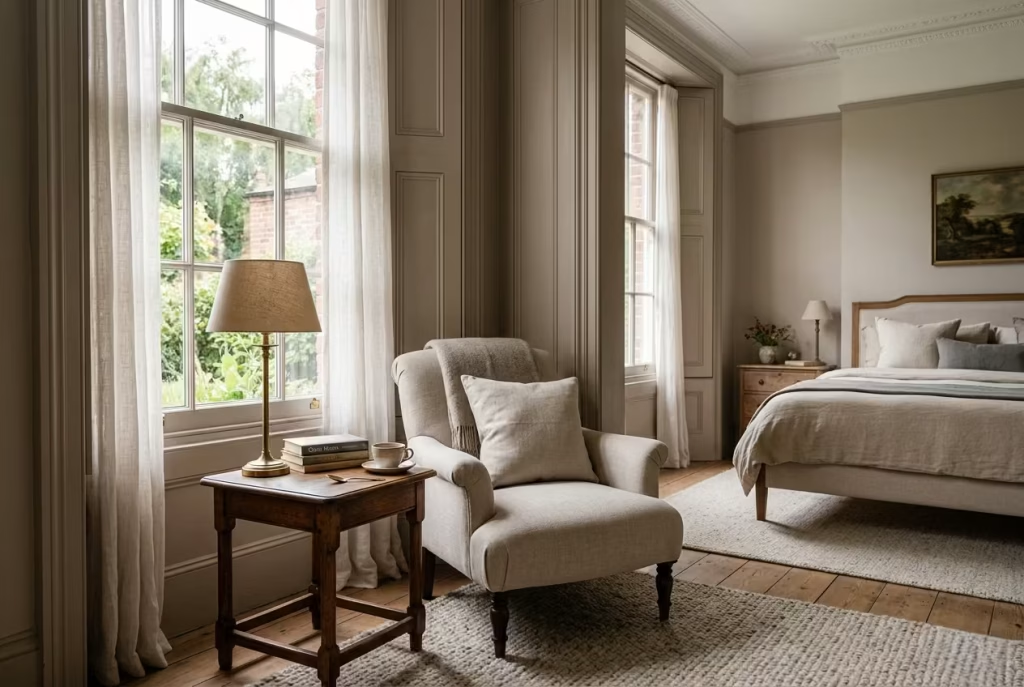
One of the most effective ways to make a modern Victorian bedroom feel genuinely lived-in is by giving it a purpose beyond sleep alone. A reading corner, however modest, introduces a slower rhythm into the room.
It creates a place to pause with a book on a rainy afternoon, sip coffee before the rest of the house wakes up, or simply sit quietly at the end of a long day while the evening light softens around the walls. These moments matter more than many people realise. They are often what transform a beautiful bedroom into one that feels deeply personal.
The charm of a reading corner lies in its simplicity. It does not need an enormous footprint or dramatic styling to work well. A compact upholstered chair, a small side table, and a carefully positioned lamp are often enough to turn an overlooked corner into one of the most inviting spots in the room.
In Victorian-inspired interiors especially, these quieter moments of function help balance the decorative richness of the architecture. Without them, bedrooms can sometimes feel a touch too formal, all dressed up with nowhere to go.
Placement is everything. Corners near windows naturally work best because they benefit from daylight during the day and softer ambient lighting at night. I often encourage homeowners to look for awkward or underused areas rather than trying to squeeze furniture where it clearly does not belong. An empty corner beside a fireplace, a bay window nook, or even the space between wardrobes and curtains can often become surprisingly effective once properly considered.
Circulation space deserves careful attention here. A reading chair needs enough breathing room around it to feel comfortable rather than cramped. Ideally, allowing at least 60 to 75 cm of clearance around the chair helps movement feel natural and prevents the corner from becoming visually congested.
I have seen many bedrooms where oversized armchairs swallowed the room whole, leaving everything else struggling for oxygen. Sometimes a slimmer occasional chair with softer curves creates a much stronger result than bulky seating trying too hard to make a statement.
Material selection shapes the emotional tone of the corner significantly. Linen upholstery feels relaxed and breathable during summer months, while velvet or brushed cotton introduces warmth and intimacy during colder seasons. A small timber or marble-topped side table paired with aged brass lighting adds enough Victorian character without pushing the room into theatrical territory.
Lighting plays a surprisingly important role too. Reading corners should feel softly illuminated rather than brightly spotlighted. A wall light or small table lamp with a fabric shade creates a much calmer atmosphere than harsh overhead lighting. In the evening especially, that gentle pool of light can make the bedroom feel wonderfully cocooning, like the room has finally settled into itself after a busy day.
Accessories should remain restrained. A folded throw, a single cushion, or a small stack of books usually provides enough personality. Once too many decorative pieces begin crowding the corner, the simplicity that made it inviting in the first place can quickly disappear.
The beauty of a reading corner is not really about furniture at all. It is about creating permission to slow down. In homes where every room seems designed for productivity, a quiet chair near a window can feel like a breath of fresh air.
Pros
- Makes the bedroom feel more personal, welcoming, and emotionally layered
- Turns unused corners into functional spaces without major renovation work
- Encourages relaxation and slower daily routines within the bedroom
- Adds softness and balance to Victorian architectural detailing
- Creates an inviting focal point that enhances the room’s lived-in atmosphere
Cons
- Poorly scaled furniture can make the bedroom feel cramped or cluttered
- Oversized chairs may disrupt circulation and visual balance
- Small bedrooms may struggle to accommodate additional seating comfortably
- Excessive styling can make the corner feel decorative rather than functional
- Inadequate lighting can reduce practicality and comfort for actual reading use
Keep the Ceiling Quiet but Intentional
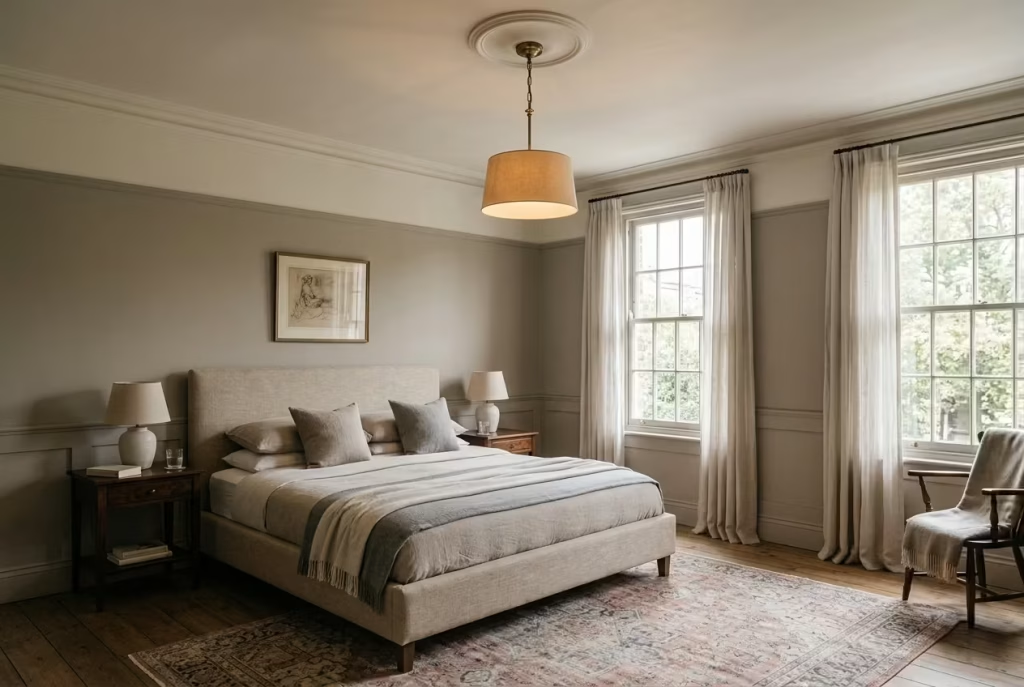
In many Victorian-inspired bedrooms, the ceiling is often overlooked or overworked, when in reality it should sit somewhere in between. It is not a surface that needs to compete for attention, yet it also should not be ignored. A well-considered ceiling acts like the final layer of composition, quietly reinforcing proportion, framing the room, and giving everything below it a sense of architectural completeness.
In modern Victorian design, restraint is what keeps the ceiling from tipping into excess. Ceiling roses, simple cornicing, and lightly profiled mouldings are often more than enough to reference the period without overwhelming the space.
These details work best when they feel like they belong to the structure rather than sitting on top of it like decoration for decoration’s sake. The most successful ceilings tend to feel almost inevitable, as though removing them would leave the room slightly unfinished rather than noticeably bare.
Ceiling roses, in particular, can be a subtle but powerful detail when paired with the right lighting. A modestly scaled rose around a pendant light draws the eye upward in a gentle, controlled way.
It gives the centre of the room a sense of quiet focus without becoming overly ornate. I have often found that when ceiling roses are kept in proportion to both the room size and the light fitting, they add a layer of refinement that feels completely natural rather than theatrical.
Cornicing plays a different but equally important role. Simple, well-proportioned coving helps define the transition between wall and ceiling, especially in bedrooms with Victorian influence where architectural clarity matters.
It frames the room in a way that feels soft but structured, almost like a subtle outline that holds everything together. In taller rooms, slightly deeper cornicing can help ground the proportions, while in smaller bedrooms, slimmer profiles maintain elegance without visually lowering the ceiling line.
In practice, I often find that the ceiling becomes most successful when it quietly echoes the language used elsewhere in the room rather than introducing new complexity. If the walls already feature panelling or textured finishes, the ceiling should respond with simplicity. If the room is otherwise minimal, then a touch more detail in the ceiling can provide just enough character to avoid flatness.
Colour choice also plays a surprisingly important role here. A pure, bright white ceiling can sometimes feel too stark against softer Victorian palettes. Instead, a warm off-white or a very subtle tonal variation from the walls often creates a more cohesive and calming effect. In some projects, colour-drenching the ceiling in the same muted tone as the walls has helped blur harsh lines and create a cocoon-like atmosphere that feels deeply restful, especially in bedrooms designed for relaxation.
The real danger with ceilings in Victorian-inspired interiors is over-decoration. Too many layers of moulding, excessive ornamentation, or competing decorative features can quickly pull the eye upward in a way that feels busy rather than beautiful. Instead of lifting the room, it can end up fragmenting it. A ceiling should guide the gaze gently, not demand constant attention.
When handled with care, the ceiling becomes almost invisible in the best possible way. It supports the room without stealing focus, allowing furniture, lighting, and texture to do the storytelling while the architecture quietly holds everything in place.
Pros
- Reinforces Victorian character in a subtle and architectural way
- Adds refinement without introducing visual clutter
- Helps define room proportions and improve spatial balance
- Keeps the overall bedroom composition cohesive and intentional
- Works as a quiet framing element for lighting and wall design
Cons
- Overly ornate detailing can make the room feel visually heavy or dated
- Excess moulding may reduce the sense of calm in smaller bedrooms
- Poorly scaled cornicing can distort ceiling height perception
- Competing ceiling details can distract from the rest of the room design
- High levels of ornamentation may feel excessive in more modern interpretations of Victorian style
Introduce Seasonal Swaps for Summer
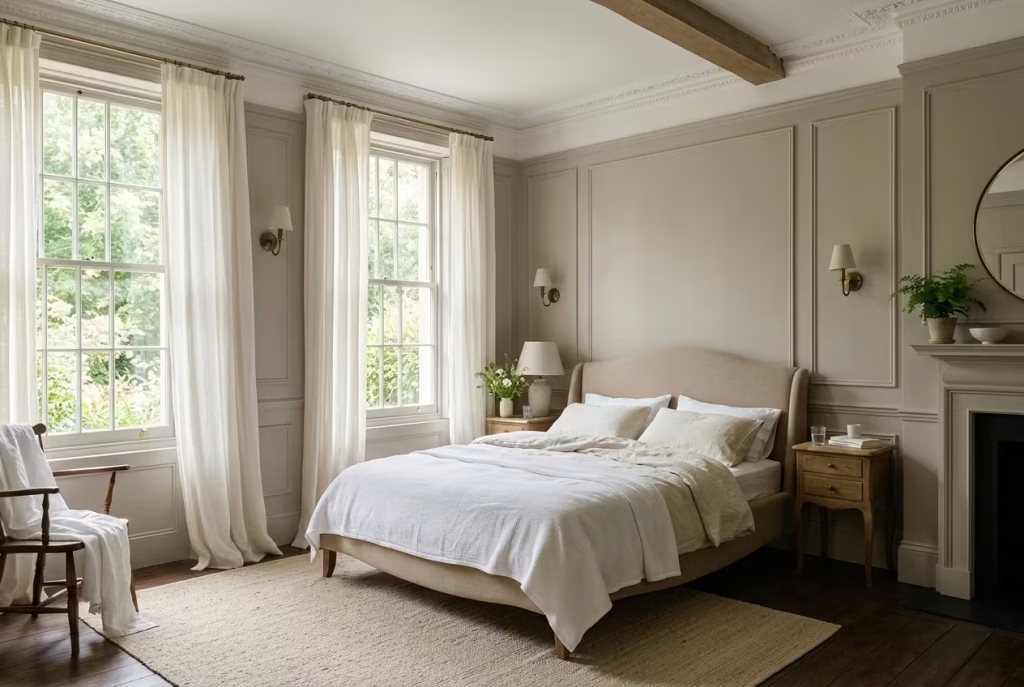
A well-designed modern Victorian bedroom should never feel locked into a single seasonal mood. The real sophistication lies in how effortlessly the space can shift between warmth in winter and lightness in summer, without losing its architectural identity.
The bones of the room, panelling, proportions, lighting, and key furniture pieces, remain steady, while the textiles quietly adapt to the rhythm of the weather. That subtle flexibility is what keeps the style feeling alive rather than static.
In summer, the most effective transformation is often the simplest. Heavier bedding is replaced with breathable linen or crisp cotton layers that allow the room to feel visually and physically lighter. Thick quilts and dense throws, which work beautifully in colder months, can suddenly feel like they are weighing the room down once the temperature rises. Swapping them for lightweight coverlets instantly changes the emotional temperature of the space, making it feel more open and easier to inhabit during warmer nights.
Curtains also play a significant role in seasonal adjustment. Heavy velvet or lined drapery can be stored away in favour of softer linen panels that allow more filtered daylight to enter the room. The shift is not just functional but atmospheric.
Light behaves differently when it passes through sheer or loosely woven fabric, and that change alone can make a Victorian-inspired bedroom feel almost airier, as though it has quietly exhaled.
Accessories should follow the same principle of restraint and refreshment. Deep, saturated tones can be softened with pale cushions, washed neutrals, or muted botanical accents that feel more in tune with summer light.
Even small changes, like replacing dark ceramic lampshades with lighter fabric ones or swapping heavy wool rugs for flatter natural fibre alternatives, can dramatically shift the mood without altering the underlying design language.
In many real projects, I have found that the most successful Victorian bedrooms are not those that are completely restyled each season, but those that evolve gently. The structure stays consistent, which preserves architectural integrity, while the layers on top respond to climate and comfort. This approach avoids the trap of constant reinvention and instead creates a room that feels seasonless in principle, yet seasonally aware in practice.
The result is a bedroom that never feels outdated or overworked. Instead, it breathes with the year, adjusting quietly in the background while still holding onto its core identity. That balance between permanence and adaptability is often what gives modern Victorian interiors their enduring appeal.
Pros
- Keeps the bedroom comfortable and visually appropriate for warmer months
- Allows the same core design to feel fresh without major renovation work
- Improves airflow, light quality, and overall seasonal comfort
- Encourages a more thoughtful, layered approach to interior styling
- Helps maintain a timeless Victorian structure while adapting surface details
Cons
- Requires storage space for off-season bedding, curtains, and textiles
- Frequent swapping of fabrics can feel slightly time-consuming if not organised
- Quality seasonal textiles may require additional investment over time
- Poor coordination between seasonal pieces can disrupt visual harmony
- Without careful planning, the room may lose consistency in style across transitions
Balance Darker Features With Light
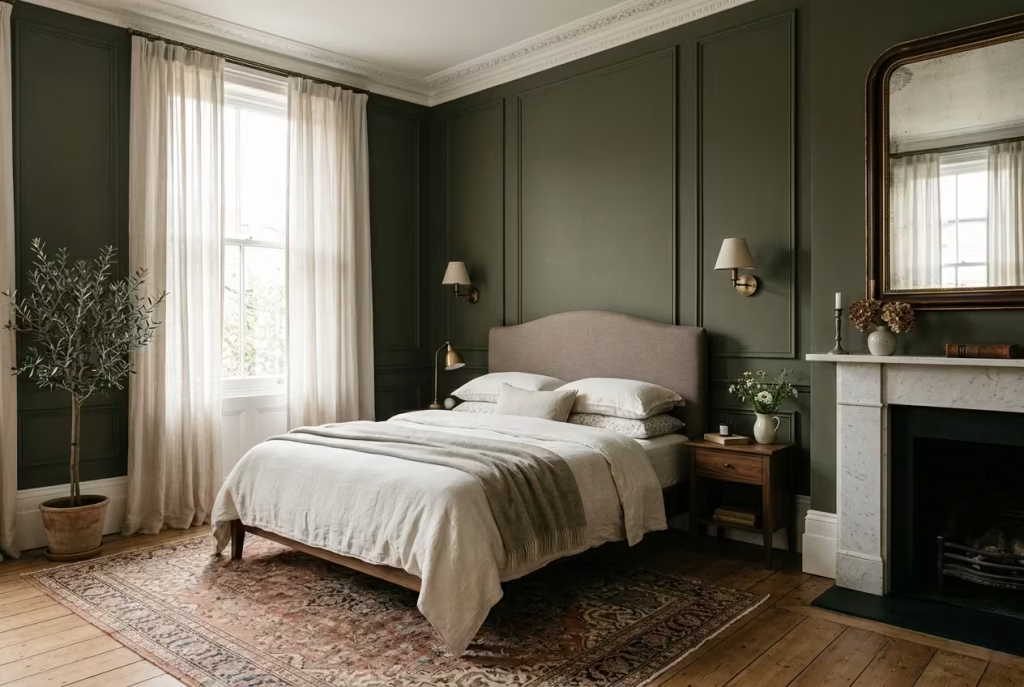
Modern Victorian bedrooms often flirt with deeper, moodier tones because they carry such natural elegance, inky blues, smoked greens, charcoal plaster, or rich oxblood accents all bring undeniable depth.
But the real craft lies not in choosing these colours, rather in knowing how to stop them from swallowing the room whole. Without a careful counterbalance, even the most beautiful dark palette can tip from atmospheric into oppressive, like a stage set with the lights turned down too far.
The key is contrast, but not the harsh kind. Think of it as a quiet dialogue between shadow and softness. When walls lean into deeper colour, the surrounding elements need to introduce lightness in both tone and texture. Pale bedding becomes essential here, not as an afterthought but as a deliberate design anchor.
Crisp cotton sheets, soft linen duvets, and washed neutrals immediately lift the visual weight of the room, allowing the eye to rest and reset. It is this interplay that prevents darker Victorian schemes from feeling static or heavy-handed.
Reflective surfaces also play a surprisingly important role. A heritage mirror, lightly aged glass, or subtle metallic accents in brass or bronze can bounce available light around the room, breaking up dense areas of shadow.
I have often seen a well-placed mirror completely transform a darker bedroom that initially felt enclosed. It does not add brightness in a technical sense alone, it changes how light behaves in the space, which is far more powerful in practice.
Natural light, of course, becomes the guiding force. In rooms where daylight is limited, darker Victorian palettes require even more restraint. Sheer or softly filtered curtains can help maintain brightness during the day, while layered lighting takes over in the evening to prevent the space from collapsing into darkness. Wall lights, bedside lamps, and warm dimmable fittings ensure the room retains depth without losing clarity.
There is also an important material conversation happening in these spaces. Dark walls paired with light timber, linen upholstery, plaster finishes, or pale stone surfaces create a grounded contrast that feels sophisticated rather than theatrical. It is the difference between a room that feels like a lived-in Victorian townhouse and one that resembles a set piece waiting for a cue.
One mistake I often see is the assumption that dark automatically means dramatic in a positive sense. In reality, drama without balance quickly becomes fatigue for the eye. The most successful rooms know when to hold back, allowing lighter elements to breathe and give structure to the darker tones surrounding them.
When handled with care, this balance creates a bedroom that feels both cocooning and breathable at the same time. It has weight, but not heaviness. Depth, but not darkness for its own sake. That equilibrium is where modern Victorian interiors quietly come into their own.
Pros
- Creates a rich, dramatic atmosphere without overwhelming the room
- Allows Victorian-inspired colours to feel contemporary and livable
- Pale bedding and finishes help maintain visual balance and clarity
- Reflective surfaces enhance natural and artificial light effectively
- Works beautifully for creating cocooning yet elegant bedroom environments
Cons
- Poor natural light can make dark schemes feel enclosed or cave-like
- Requires careful balancing of tones to avoid visual heaviness
- Too many dark elements without contrast can reduce spatial perception
- Artificial lighting must be well planned to prevent dull or flat interiors
- Incorrect fabric or finish choices can make the room feel overly heavy or dated
Use Wallpaper as a Soft Background, Not the Whole Story
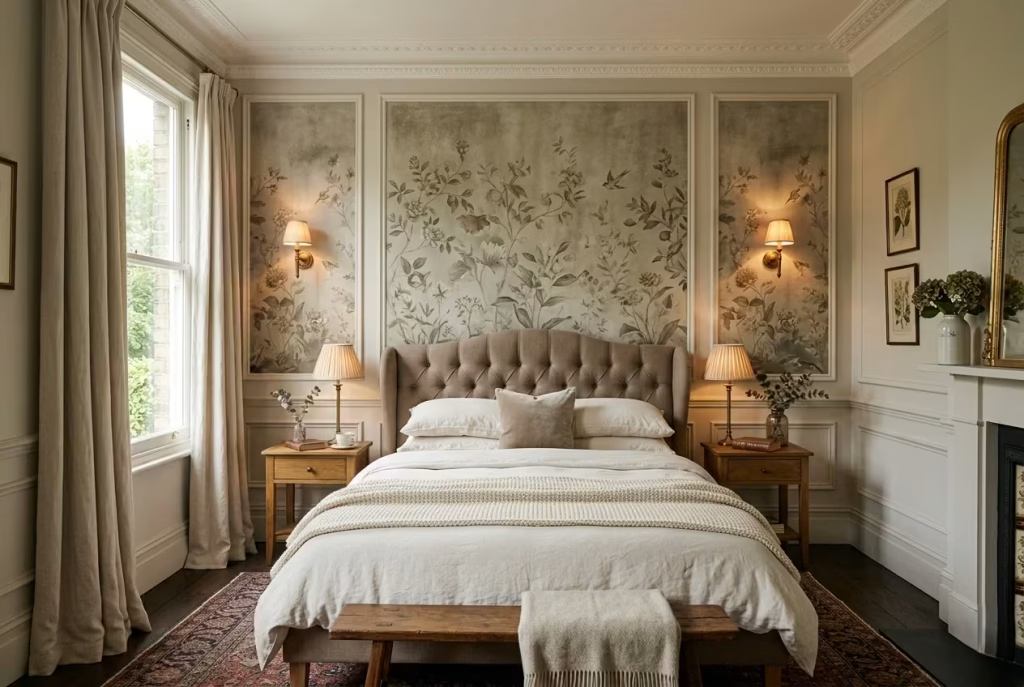
Wallpaper in a modern Victorian bedroom should feel like atmosphere rather than announcement. It is there to support the room’s mood, not to hijack it. The most successful schemes treat wallpaper almost like a quiet backdrop that sets tone and depth, while everything else, furniture, lighting, textiles, is allowed to breathe in front of it. When handled well, it can give a bedroom an immediate sense of heritage and emotional layering without the need for heavy styling or excessive ornament.
The mistake many people make is treating wallpaper as the main event. Once every surface competes for attention, the room starts to feel visually noisy, as if every element is trying to outdo the next. Victorian-inspired interiors rarely work that way in practice.
The beauty lies in hierarchy, where one element leads and others follow more gently. Wallpaper should sit slightly behind that conversation, adding richness without demanding constant focus.
Patterns with depth and restraint tend to work best. Soft damasks, faded botanical studies, textured linen effects, or painterly prints all introduce that sense of age and subtle complexity without overwhelming the eye.
These designs often behave differently depending on the light, which is exactly what makes them so effective in bedrooms. In morning light, they can feel airy and muted, while in the evening they take on a deeper, more atmospheric tone, almost like the room is slowly changing its mood throughout the day.
Placement is just as important as pattern choice. One of the most effective approaches is to use wallpaper on a single feature wall, often behind the bed, allowing it to frame the focal point without wrapping the entire room in visual noise.
In some Victorian-inspired projects, I have also used wallpaper within panelling or recessed wall sections, which creates a layered effect that feels architectural rather than purely decorative. This method keeps the surface interesting but controlled, like a well-edited composition rather than an unfiltered statement.
The surrounding elements need to respond carefully when wallpaper is introduced. Bedding should remain relatively restrained, curtains should not compete in scale or pattern, and furniture finishes should lean toward grounding materials such as timber, aged brass, or soft upholstery. It is this restraint around the wallpaper that allows it to feel elegant rather than overwhelming.
Colour choice plays a decisive role in longevity. Muted greens, soft taupes, dusty blues, warm neutrals, and faded plum tones tend to age more gracefully than high-contrast or trend-led palettes. The more subtle the base tone, the more flexibility the room has to evolve over time without feeling locked into a specific moment.
There is also an emotional quality to well-chosen wallpaper that is often underestimated. It can soften acoustics, warm up cold plaster walls, and introduce a sense of intimacy that paint alone sometimes struggles to achieve. In bedrooms especially, this matters. The room should feel like a place that gently holds you, not one that competes for attention every time you walk in.
When wallpaper is used as a supporting layer rather than the central performance, it quietly elevates everything around it. It becomes part of the room’s rhythm rather than the headline act.
Pros
- Instantly adds mood, depth, and a subtle sense of heritage character
- Works as a soft backdrop that enhances rather than competes with furnishings
- Can introduce texture and atmosphere that paint alone cannot achieve
- Effective for creating focal points when used on a single wall or panelled section
- Helps Victorian-inspired bedrooms feel layered and emotionally rich
Cons
- Trend-driven patterns can date quickly if chosen without restraint
- Overuse across all walls can make the room feel visually overwhelming
- Bold prints may clash with furniture, textiles, or architectural detailing
- Poor lighting can flatten the texture and reduce the wallpaper’s depth
- Difficult to update compared to painted surfaces if design preferences change
Style the Bedside Tables With Breathing Room
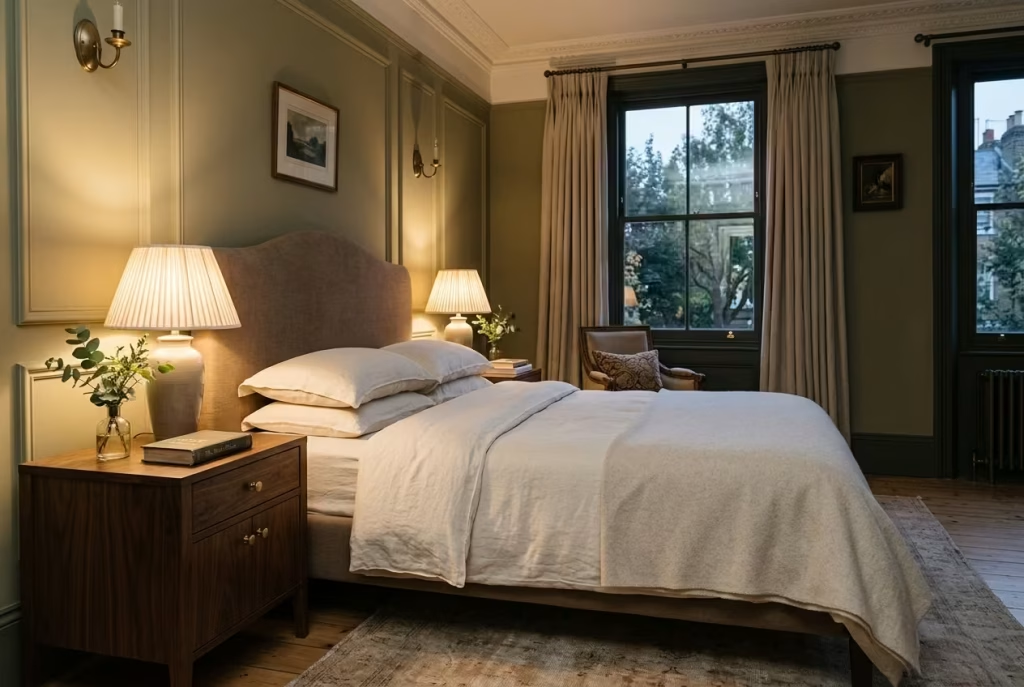
Bedside tables are often treated as dumping grounds, yet in a modern Victorian bedroom they quietly function as one of the most visible styling moments in the entire space. They sit at eye level, flanking the bed like supporting characters in a carefully composed scene.
When styled well, they reinforce calm, balance, and intention. When overloaded, they undo the entire atmosphere in seconds, no matter how beautiful the rest of the room might be.
The guiding principle here is restraint, but not emptiness. A well-styled bedside table should feel composed rather than curated to death. A single lamp with a soft fabric or glass shade provides the anchor, casting a warm pool of light that softens the surrounding textures.
One book, perhaps slightly lived-in rather than perfectly staged, adds a human touch. A small ceramic or glass object introduces quiet material contrast, catching light in subtle ways without demanding attention. That is often enough. Anything beyond that risks tipping the balance from elegant to cluttered.
In practice, I often find that the most successful bedside arrangements follow a simple rhythm: light, utility, and one considered object. Everything else becomes noise. In Victorian-inspired bedrooms especially, where architectural detail and textiles already carry visual weight, the bedside surface should feel like a moment of pause rather than another layer of complexity. It is a place for the eye to rest, not wander endlessly.
Scale matters just as much as content. Oversized table lamps paired with small surfaces can feel top-heavy, while overly tiny accessories on large nightstands tend to disappear completely. I usually recommend allowing enough negative space around each object so the surface can breathe. That breathing room is what gives the arrangement its quiet confidence. Without it, even expensive objects can start to feel strangely chaotic, like they are all speaking at once.
Material harmony also plays a subtle but important role. A ceramic lamp base beside a linen lampshade, a soft leather-bound book, or a brushed metal detail on a simple tray can all work together to create depth without excess. In Victorian-inspired interiors, these layered materials echo the richness of the architecture, but in a more controlled and contemporary way.
There is also something deeply calming about not overthinking bedside styling. Bedrooms are ultimately restorative spaces, and the bedside table should support that function. Too many objects introduce visual static, which the mind registers even if you do not consciously notice it. A pared-back surface, on the other hand, creates a sense of order that quietly carries into how the room feels as a whole.
The strongest bedside arrangements are rarely the most elaborate. They are the ones that feel intentional without trying too hard, as though each object has earned its place rather than been placed there out of habit.
Pros
- Creates a calm, uncluttered visual moment within the bedroom
- Reinforces the sense of restraint that defines luxury Victorian-inspired interiors
- Allows lighting, books, and objects to feel intentional rather than accidental
- Helps maintain focus on the bed and surrounding architecture
- Makes daily routines feel more orderly and less visually distracting
Cons
- Over-accessorising can quickly lead to visual clutter and reduce calm
- Too much negative space may feel under-styled if not handled carefully
- Requires discipline to maintain long-term minimal yet lived-in styling
- Functional items can easily accumulate and disturb the intended simplicity
Use Symmetry, Then Break It Gently
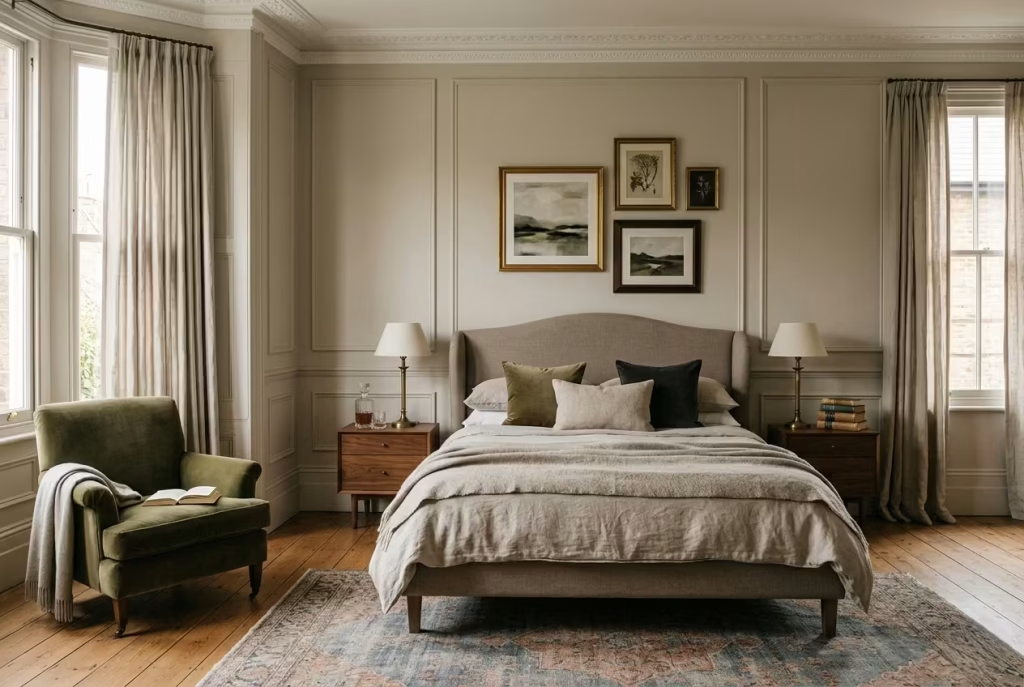
Symmetry is one of the oldest tools in interior design, and in modern Victorian bedrooms it still carries enormous weight. It creates calm almost instantly, gives the eye a place to settle, and brings a sense of order that feels quietly luxurious.
A centrally placed bed with matching bedside tables and paired lamps forms a natural visual anchor, almost like the room has been carefully grounded before anything else is added. But the real sophistication begins when that symmetry is softened, not abandoned, allowing the space to feel composed yet lived-in rather than overly staged.
The strength of symmetry lies in its predictability. The brain reads balance as calm, which is why hotel bedrooms often rely on mirrored arrangements. In a Victorian-inspired context, this structure echoes the architectural logic of the period itself, where proportion and alignment were rarely accidental. A symmetrical base gives the room its backbone. Without it, even the most beautiful furniture can feel slightly adrift, like a conversation without punctuation.
However, perfection can quickly become sterile if left untouched. That is where the gentle disruption comes in. Once the foundation is set, introducing a carefully chosen element that breaks the rhythm slightly brings the room to life.
This might be a reading chair placed asymmetrically in a corner, a slightly off-centre artwork above the bed, or a single sculptural object that refuses to mirror anything else in the space. These small deviations are what stop the room from feeling like a set piece.
In real projects, I often start by building strict symmetry around the bed first. It gives immediate structure to the room, especially in Victorian bedrooms where architectural detailing can already feel quite strong. Then, once everything feels balanced, I begin to loosen it deliberately. A chair angled toward a window rather than aligned with the bed.
A lamp with a slightly different silhouette on one side. A stack of books placed casually instead of perfectly mirrored. These are not random choices, but controlled interruptions that make the space feel human.
The key is restraint. Breaking symmetry should feel like a whisper, not a disruption. If everything becomes asymmetrical, the room loses its grounding entirely. But when used sparingly, those subtle variations create a sense of movement and personality that pure symmetry alone cannot achieve. It is the difference between a room that feels designed and a room that feels inhabited.
Lighting and texture also help soften rigid structure. A slightly warmer lampshade on one side, a different fabric on a cushion, or a softer drape in the curtains can all introduce micro-variations that prevent the space from feeling too engineered. Victorian interiors, after all, were never truly perfect. They evolved, accumulated, and shifted over time, which is exactly what makes them so enduring.
The most successful bedrooms tend to sit in that in-between space, where order is present but not overbearing, and where small imperfections give the room its soul.
Pros
- Creates a strong sense of balance and calm through structured layout
- Helps anchor the bed as the central focal point of the room
- Makes the space feel refined, intentional, and visually composed
- Allows decorative elements to feel more impactful when introduced thoughtfully
- Reflects traditional Victorian design principles of proportion and alignment
Cons
- Over-reliance on mirrored arrangements may reduce personality in the space
- Poorly handled asymmetry can make the room feel disjointed or chaotic
- Requires careful editing to avoid visual imbalance once symmetry is disrupted
- Too many “unexpected” elements can undermine the overall coherence of the design
You May also Like: 25 Soft & Serene Sage Green Bedrooms for the Ultimate Relaxing Vibe
Let Natural Materials Stay Visible
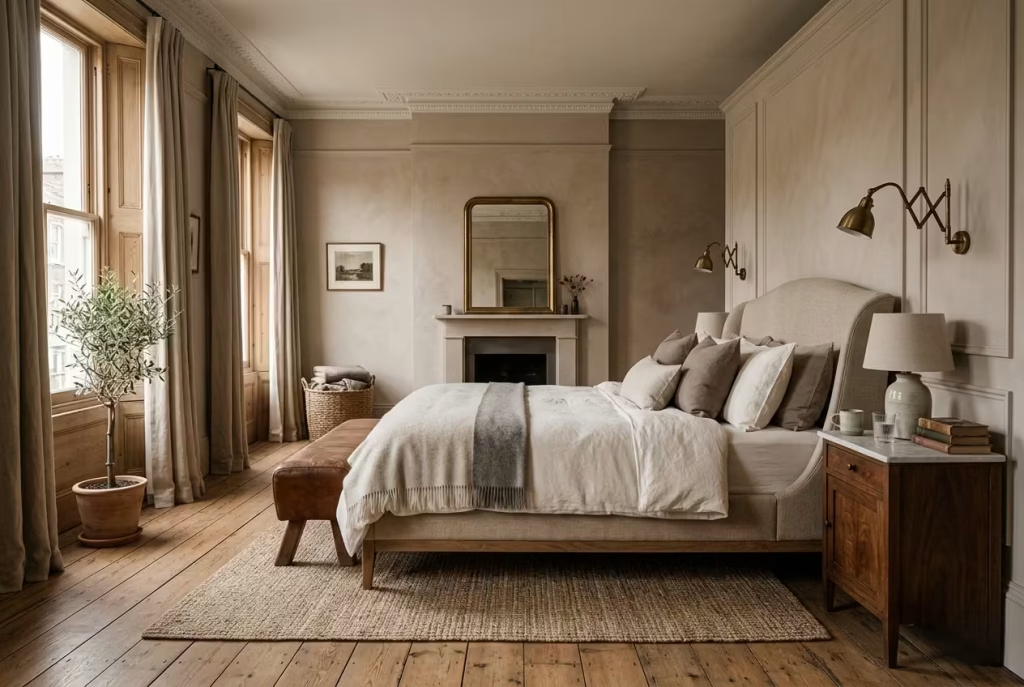
Modern Victorian bedrooms feel most believable when materials are allowed to speak for themselves rather than being overly polished or disguised. Natural surfaces carry a kind of honesty that immediately grounds a space.
Timber grain, woven fibres, stone textures, ceramic forms, and aged leather all introduce a tactile depth that synthetic finishes rarely replicate convincingly. When these materials are left visible and unforced, the bedroom begins to feel more rooted, as though it has developed gradually rather than being assembled in a single design moment.
Timber is often the starting point in this conversation. Whether it appears in flooring, bedside tables, or vintage furniture, the grain itself adds movement and character that softens the more structured Victorian elements in the room.
I have often found that even a simple oak surface, left unpainted or only lightly finished, can change the emotional temperature of a bedroom. It stops the space from feeling too curated and introduces a natural rhythm that the eye can rest on without effort.
Woven materials such as rattan baskets, jute rugs, or linen storage pieces bring a quieter, more functional form of texture. They do not demand attention, yet they subtly warm the room.
In Victorian-inspired spaces, they help balance the more formal architectural detailing by introducing something slightly more relaxed and grounded. A simple woven basket beside a reading chair or beneath a console table can make the room feel far more lived-in without adding visual clutter.
Stone and ceramic elements introduce a different kind of weight. A marble-topped surface, a ceramic lamp base, or a stone accessory on a mantel brings stillness into the composition. These materials feel permanent, almost architectural, which is why they sit so comfortably within Victorian-inspired interiors. They act like quiet anchors within the room, preventing lighter textures from feeling too fragile or temporary.
Aged leather adds yet another layer of depth, particularly in seating or small accent pieces. It develops character over time, which aligns beautifully with the Victorian idea of interiors evolving rather than remaining static. A leather bench at the end of the bed or a softly worn chair in a reading corner introduces warmth without needing embellishment.
The real strength of natural materials lies in their ability to coexist without competition. When used thoughtfully, they create a layered environment where nothing feels artificial or overly manufactured. However, balance is essential. A room filled only with natural textures can begin to feel visually flat if there is no contrast to lift it. Without a counterpoint, even the richest materials can lose their definition and blend into one another.
That is why contrast, whether through lighting, paint, or subtle metallic accents, becomes so important. It gives natural materials something to respond to, allowing their texture and depth to stand out rather than dissolve into uniformity.
When handled well, natural materials do not just decorate a bedroom. They give it a sense of grounding, as though the space is connected to something older, slower, and more enduring.
Pros
- Adds authenticity, warmth, and tactile richness to the bedroom
- Grounds Victorian-inspired interiors with natural depth and texture
- Helps spaces feel more lived-in and emotionally balanced
- Works beautifully with both traditional and contemporary furniture pieces
- Materials age gracefully and develop character over time
Cons
- Too many similar natural textures can make the room feel visually flat
- Lack of contrast may reduce definition and clarity in the design
- Not ideal for confidential or high-noise work
- Some materials require maintenance to preserve their appearance over time
- Overuse of rustic finishes can feel unrefined if not balanced carefully
- Poor quality natural materials may look inconsistent or overly worn in a short time
Edit Ruthlessly
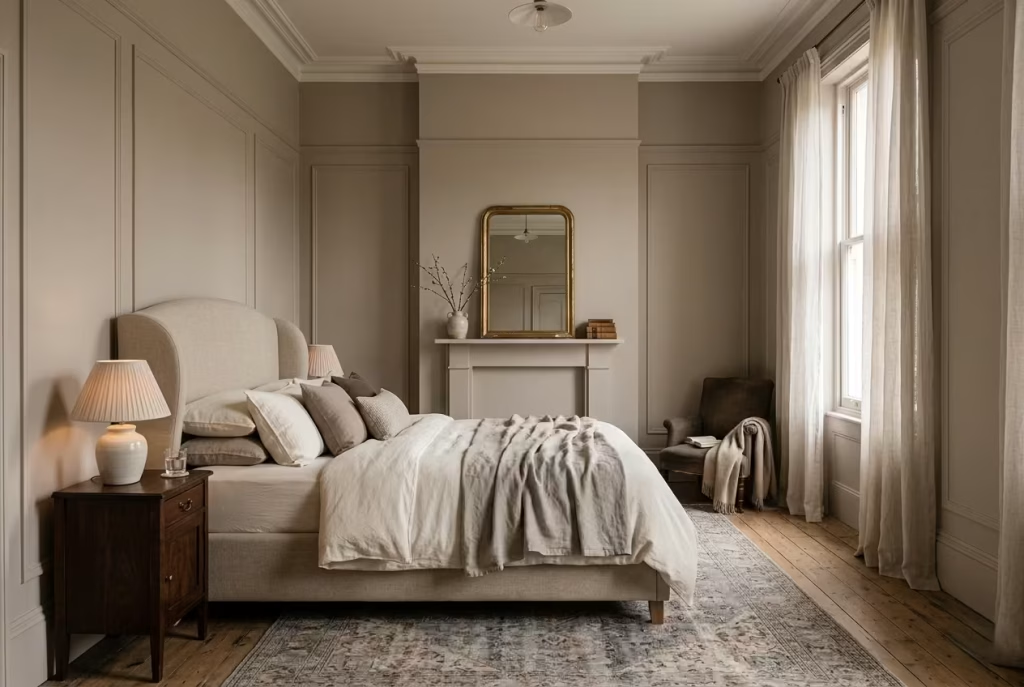
If there is one principle that quietly separates a well-styled modern Victorian bedroom from one that feels genuinely refined, it is editing. Not adding, not layering, not collecting, but deliberately stepping back and allowing space to do its work.
Victorian interiors are often associated with richness and detail, yet in contemporary interpretation, that richness only works when it is given room to breathe. Without restraint, even the most beautiful elements begin to compete, and the room loses its sense of calm authority.
The strongest bedrooms are rarely the most decorated. They are the most considered. Every object feels like it has earned its place, not because there was nowhere else to put it, but because it genuinely contributes to the atmosphere.
This is where editing becomes as important as selection. A bedroom can contain excellent furniture, rich textures, and carefully chosen colour, yet still feel slightly off if there is too much happening at once. Visual noise builds slowly, and once it takes hold, it dulls the impact of everything else in the room.
In real-world projects, I often find the final stage is not about adding anything new, but removing what is unnecessary. A second chair that repeats the first without purpose. An extra cushion that breaks the clarity of the bed. A decorative object that looked appealing in isolation but weakens the composition once placed in context.
Taking these elements away is rarely dramatic in the moment, but the difference it makes to the room is immediate. Suddenly, the architecture becomes clearer, the lighting feels more intentional, and the textures begin to speak for themselves.
This approach is especially important in modern Victorian bedrooms because the style naturally carries visual weight. Panelling, mouldings, layered fabrics, antique references, and decorative lighting can easily accumulate into something heavy if not carefully balanced. Editing ensures that each of these elements has space to register properly, rather than being lost in a crowded field of details.
There is also an emotional side to restraint. A room with fewer, more deliberate elements often feels more restful because the eye is not constantly processing information. Instead of scanning from object to object, it settles. That sense of calm is what people usually respond to when they describe a bedroom as “expensive” or “well designed,” even if they cannot always articulate why.
Light and negative space are part of this editing process too. Empty surfaces, clear sightlines, and uncluttered corners are not signs of something missing. They are what allow the rest of the room to breathe properly. In many cases, it is this breathing room that gives Victorian-inspired interiors their modern relevance, preventing them from tipping into heaviness or nostalgia.
The real discipline lies in resisting the urge to fill every gap. Once the essential elements are in place, the final decision is often what not to include. That restraint is what transforms richness into elegance, and decoration into design.
Pros
- Creates clarity, calm, and a more refined visual composition
- Allows key Victorian-inspired details to stand out more effectively
- Reduces visual noise and enhances the feeling of spaciousness
- Helps the room feel more expensive, intentional, and professionally designed
- Improves emotional comfort by reducing overstimulation in the space
Cons
- Requires discipline and confidence to remove items that feel “nice but unnecessary”
- Over-editing can risk making the room feel sparse if not balanced carefully
- May feel counterintuitive for those drawn to layered, decorative styles
- Needs periodic reassessment as clutter can gradually re-enter the space over time
- Achieving the right balance between richness and restraint can take refinement and time
You May also Like: 25 Dark Cottagecore Bedroom Concepts: How to Master the Moody Aesthetic
What Defines a Modern Victorian Bedroom?
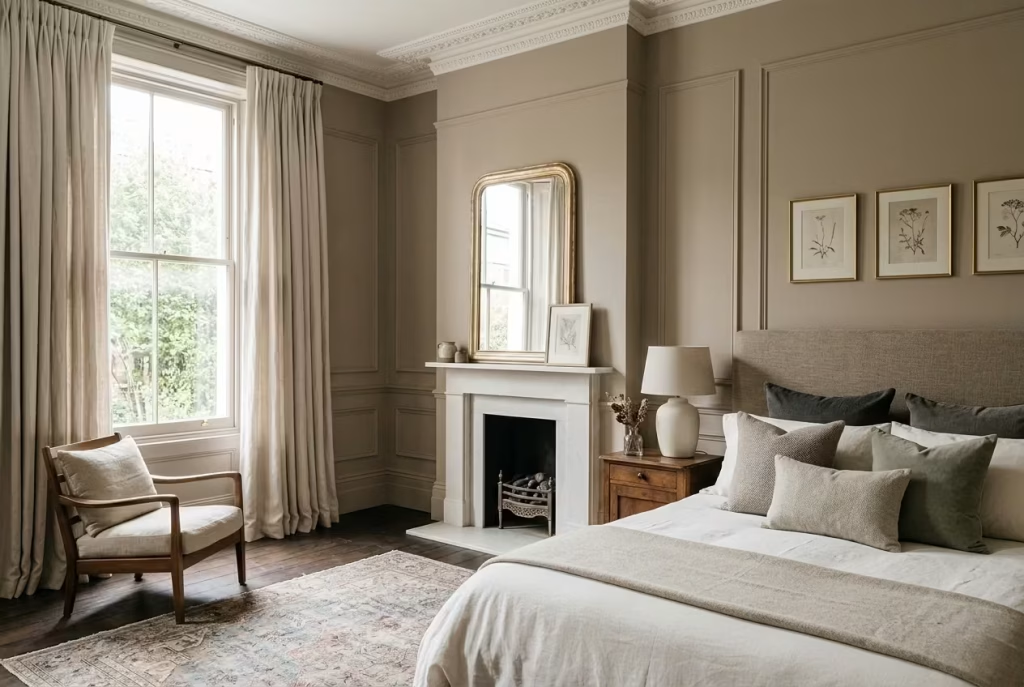
A modern Victorian bedroom is not a literal recreation of the past, nor is it a purely contemporary space with a few decorative references sprinkled on top. It sits somewhere in between, where architectural memory meets present-day restraint. The style works because it understands proportion, edits excess, and allows classical detail to feel relevant rather than theatrical. In essence, it preserves the romance of Victorian interiors, while quietly stripping away anything that feels heavy, crowded, or performative.
Panelled Walls or Period Moulding
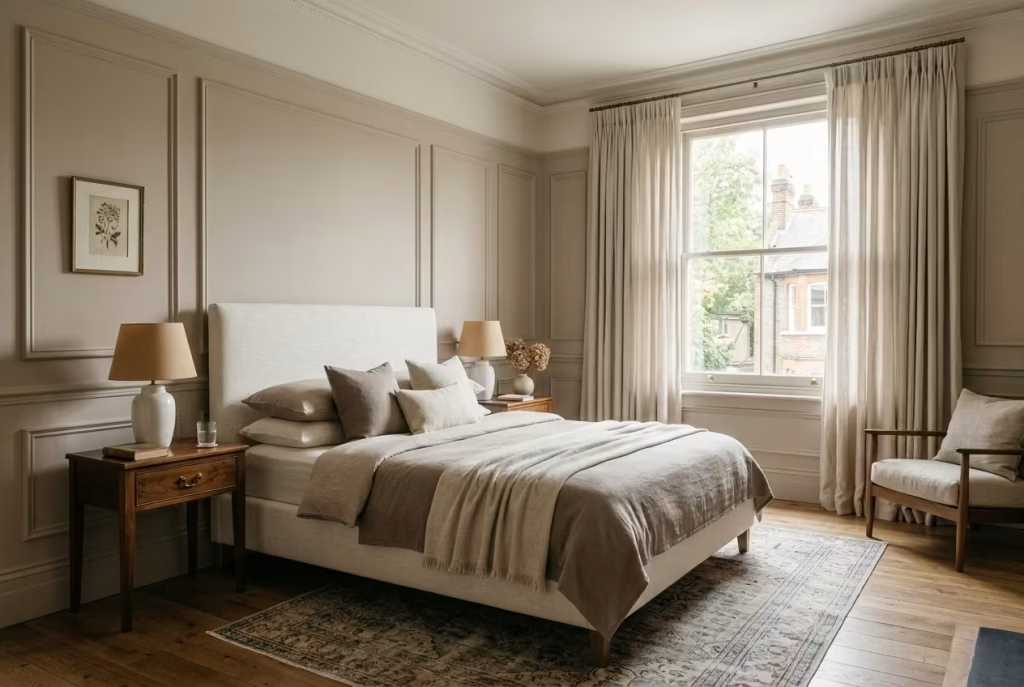
Wall panelling is often the first architectural signal of Victorian influence. It introduces rhythm and structure to otherwise plain surfaces, giving the room a sense of permanence and quiet order. Whether through full-height panelling, dado rails, or subtle moulding profiles, the intention is always the same: to create depth without visual chaos.
In practice, I often find that restraint in detailing makes the biggest difference. A softly profiled panel painted in a tonal shade can feel far more refined than heavily ornate mouldings competing for attention. It gives the room a tailored backbone, almost like a well-cut suit that does not need embellishment to feel complete.
Curved or Upholstered Furniture
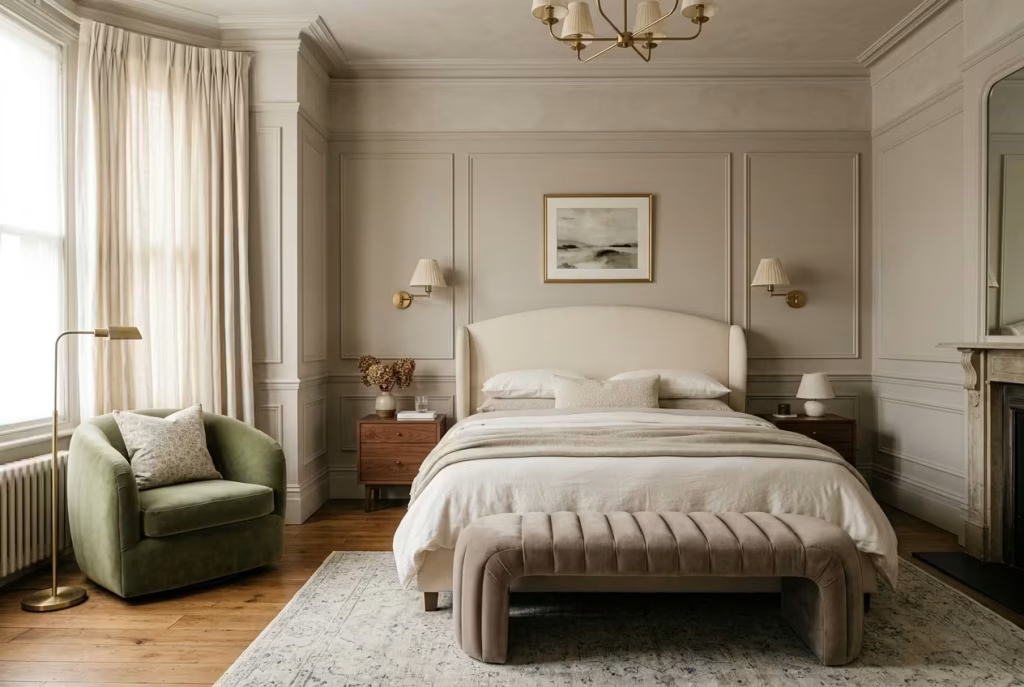
Victorian interiors were never built on sharp minimalism. Their softness came through curves, padding, and gentle silhouettes. The modern interpretation keeps this language but simplifies it. Upholstered bed frames, arched headboards, and rounded occasional chairs introduce a sense of ease that offsets architectural rigidity.
The key is proportion. Curves should soften the room, not dominate it. When scaled correctly, they create a quiet contrast against straight architectural lines, allowing the bedroom to feel more human and less rigid. It is this balance that prevents the space from feeling overly formal or museum-like.
Rich but Muted Colour Palettes
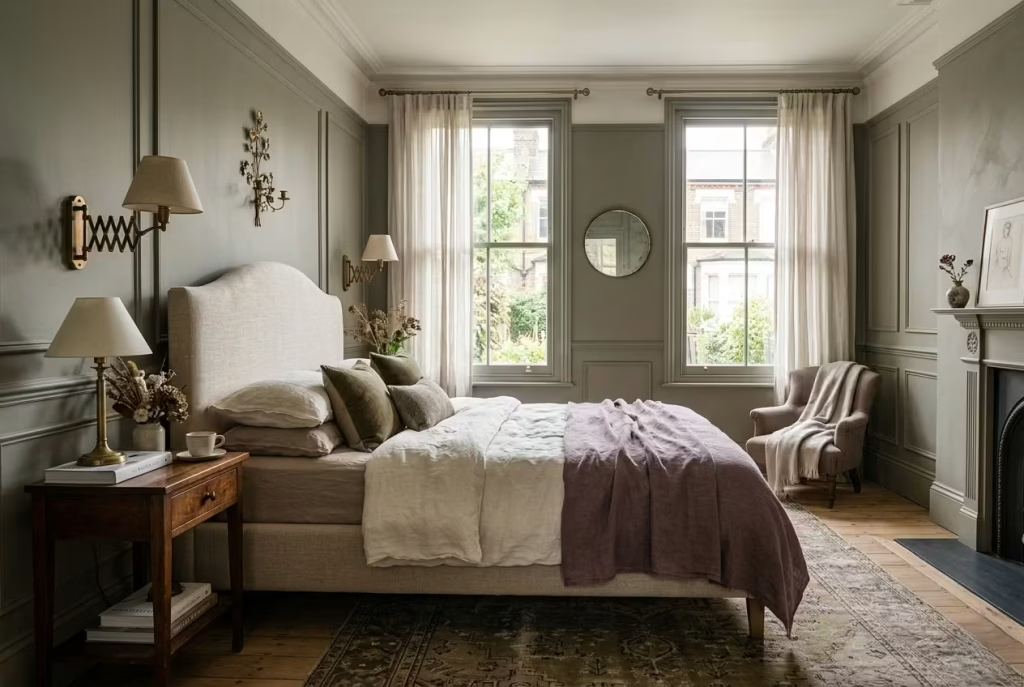
Colour in a modern Victorian bedroom is never loud for the sake of impact. Instead, it leans into depth and restraint. Think mushroom, smoky olive, faded plum, parchment white, inky blue, and softened taupe. These tones carry weight without overwhelming the senses.
The real strength of these palettes lies in their behaviour under changing light. Morning brightness softens them, while evening lamplight deepens their mood. I often see spaces transformed simply by limiting contrast and allowing colour to sit within a narrow, tonal range. It creates cohesion that feels calm rather than visually fragmented.
Layered Textiles
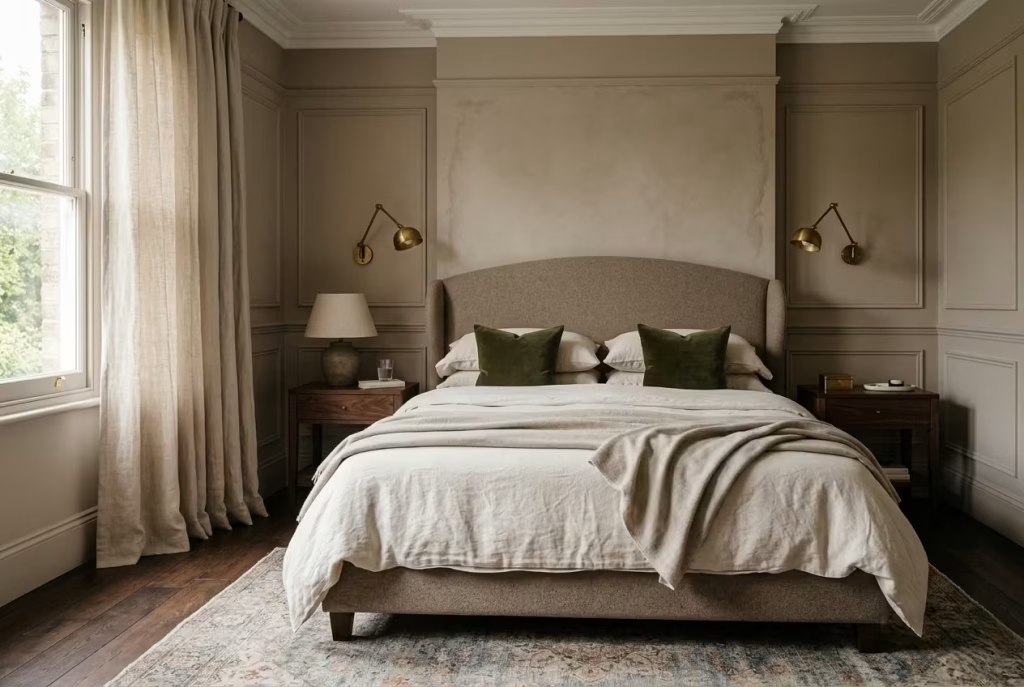
Textile layering is where Victorian richness is most gently translated into modern living. Linen bedding, brushed cotton sheets, wool throws, and velvet accents all work together to create a sense of comfort and depth.
However, layering is not about accumulation. It is about contrast in texture rather than excess in quantity. A room with too many competing fabrics quickly loses clarity. But when carefully edited, layering becomes the element that makes the bedroom feel lived-in, softened, and emotionally warm, almost like it has settled into itself over time.
Antique or Antique-Inspired Detailing
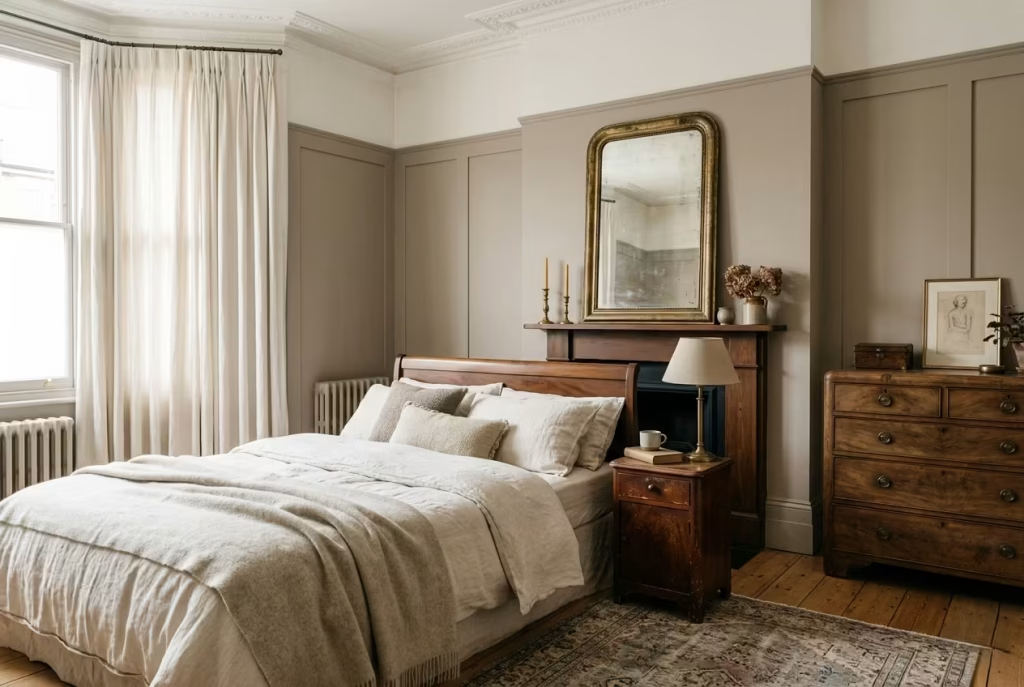
A modern Victorian bedroom rarely relies solely on new furniture. Instead, it introduces aged references through antique or antique-inspired pieces. This might be a weathered wooden chest, a brass-framed mirror, or a bedside table with visible patina.
These elements bring a sense of continuity, as though the room has evolved rather than been installed. The charm lies in imperfection. Slight wear, softened edges, and aged finishes give the space character that cannot be manufactured. It is this subtle irregularity that keeps the room from feeling too polished or artificial.
Contemporary Lighting and Cleaner Silhouettes
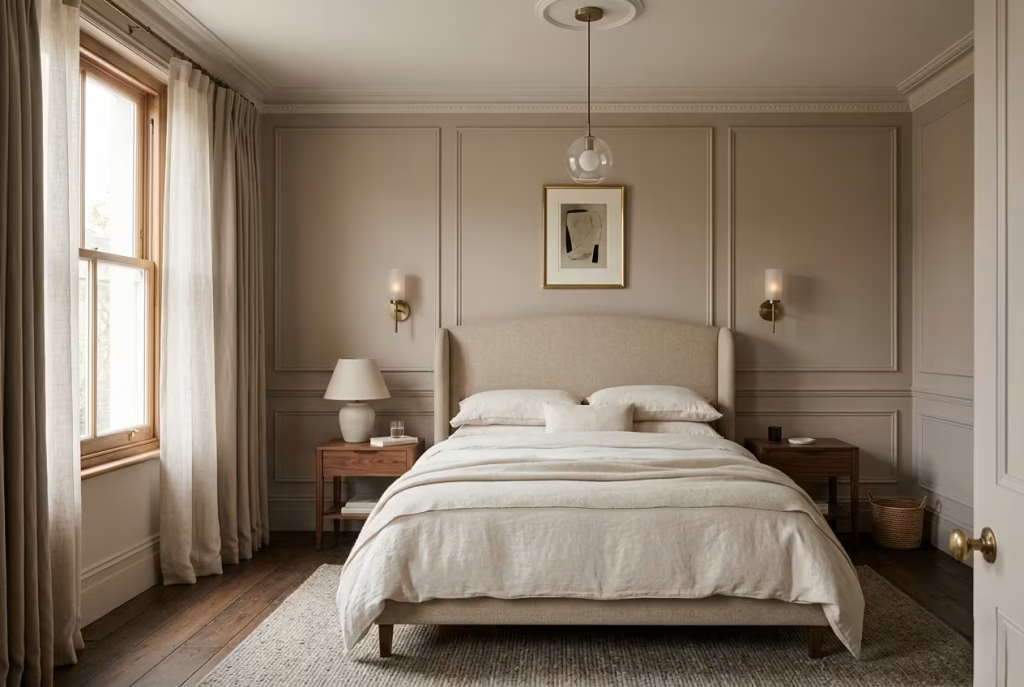
Lighting is where the modern part of Victorian design becomes most visible. While the architectural language may reference the past, the lighting brings the room firmly into the present. Clean-lined lamps, softly diffused wall lights, and understated pendants prevent the space from becoming overly ornate.
This contrast is essential. Without it, the room risks tipping into historical imitation rather than interpretation. Contemporary lighting acts as a balancing force, ensuring that decorative detail does not overwhelm the atmosphere. It introduces clarity, control, and a sense of ease that keeps the room grounded in modern living.
Design Note: The Balance Between Heritage and Restraint
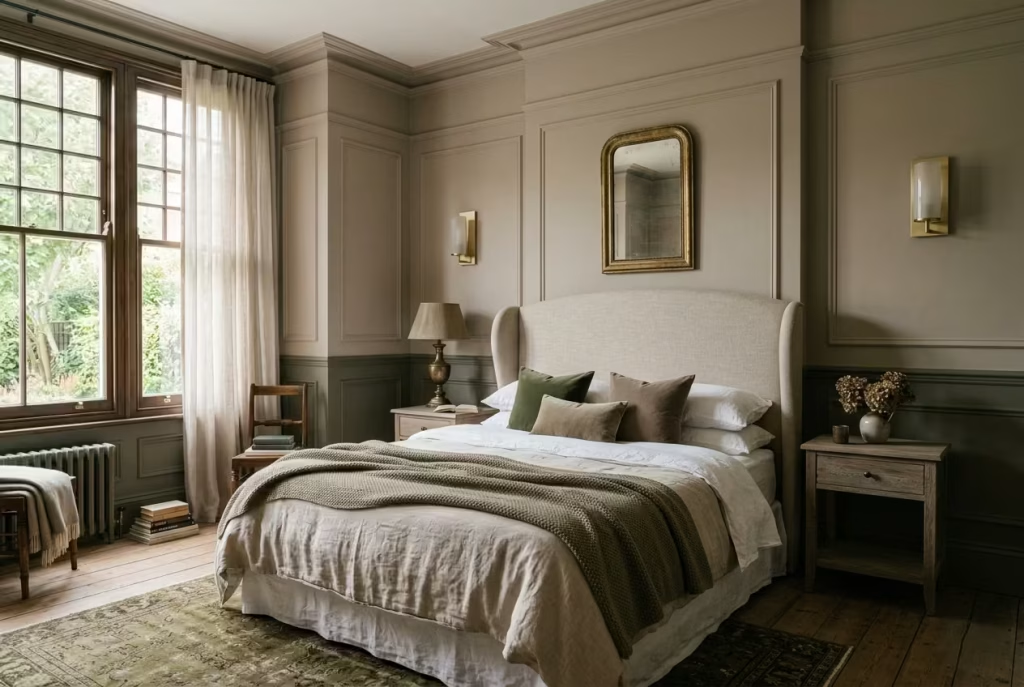
Traditional Victorian interiors were expressive, layered, and often visually dense. They embraced ornament without hesitation. The modern interpretation, however, is more selective. It borrows the richness but trims away the excess, keeping only what adds clarity, depth, or emotional warmth.
In practice, this means editing is just as important as adding. The most successful modern Victorian bedrooms are not those filled with the most detail, but those where every detail has a reason to exist. The romance remains, but it is refined, softened, and allowed to breathe.
How to Make a Modern Victorian Bedroom Feel Livable
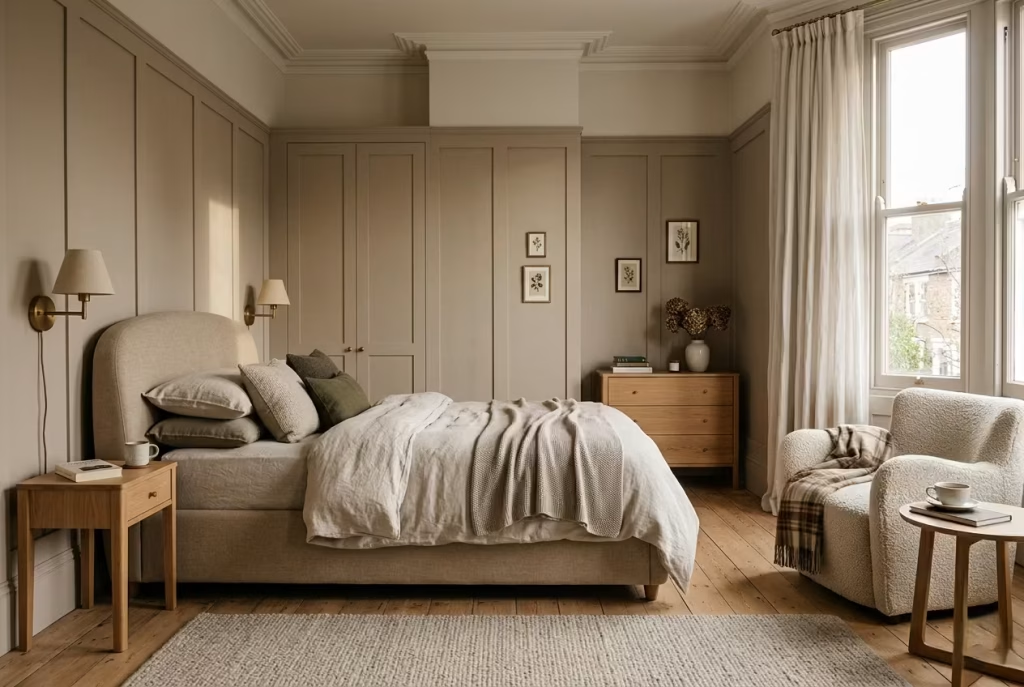
A modern Victorian bedroom can easily succeed on atmosphere alone, but true longevity comes from how well it supports everyday life. The most convincing spaces are not the ones that only look composed in photographs, but the ones that quietly function without friction day after day. Livability is where romance meets reality, and where design decisions either hold up or slowly begin to unravel.
Circulation Around the Bed
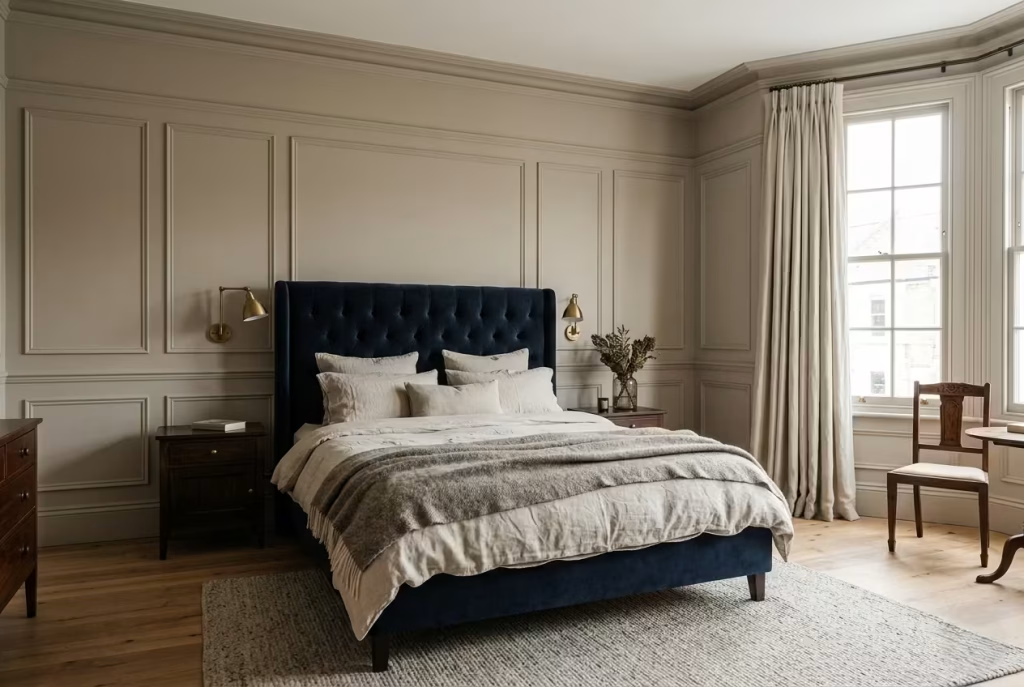
Circulation is often the silent test of a bedroom’s success. A beautiful layout quickly loses its appeal if movement feels restricted or awkward. Ideally, there should be enough clearance on both sides of the bed to allow easy passage without brushing against furniture. A practical target is around 60 to 90 cm where space allows, though even slightly less can work if the layout is carefully controlled.
In Victorian-inspired rooms, where furniture often has more visual weight, this spacing becomes even more important. I have seen many bedrooms where the bed looked perfectly placed visually, yet daily use felt slightly constrained. Once circulation improves, the entire room tends to breathe better, almost as if it has been quietly rebalanced.
Practical Bedside Storage
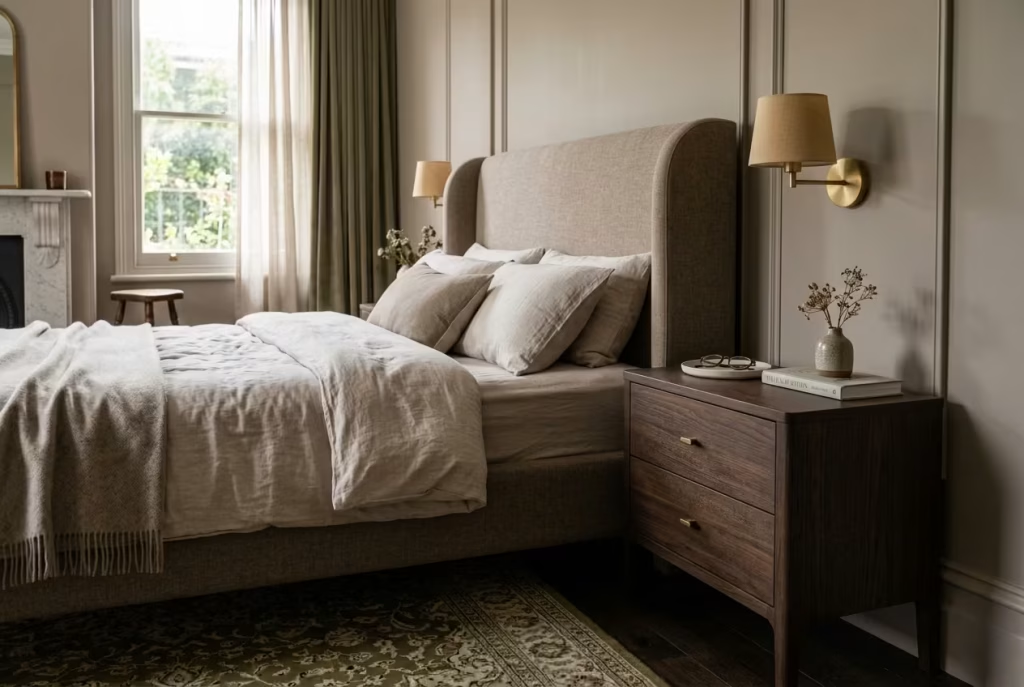
Bedside storage is where aesthetics and function meet in the most honest way. A modern Victorian bedroom should never force you to sacrifice practicality for style. The bedside table needs to hold the essentials without becoming a dumping ground.
A drawer or concealed shelf is often more useful than an open surface alone. It allows visual calm while still accommodating the realities of daily life, books, chargers, skincare, or reading glasses. In many projects, I find that the difference between a cluttered room and a serene one often comes down to how well this small zone is resolved.
The most successful bedside setups feel almost effortless. Everything has a place, yet nothing feels over-designed or overly rigid.
Breathable Bedding Choices
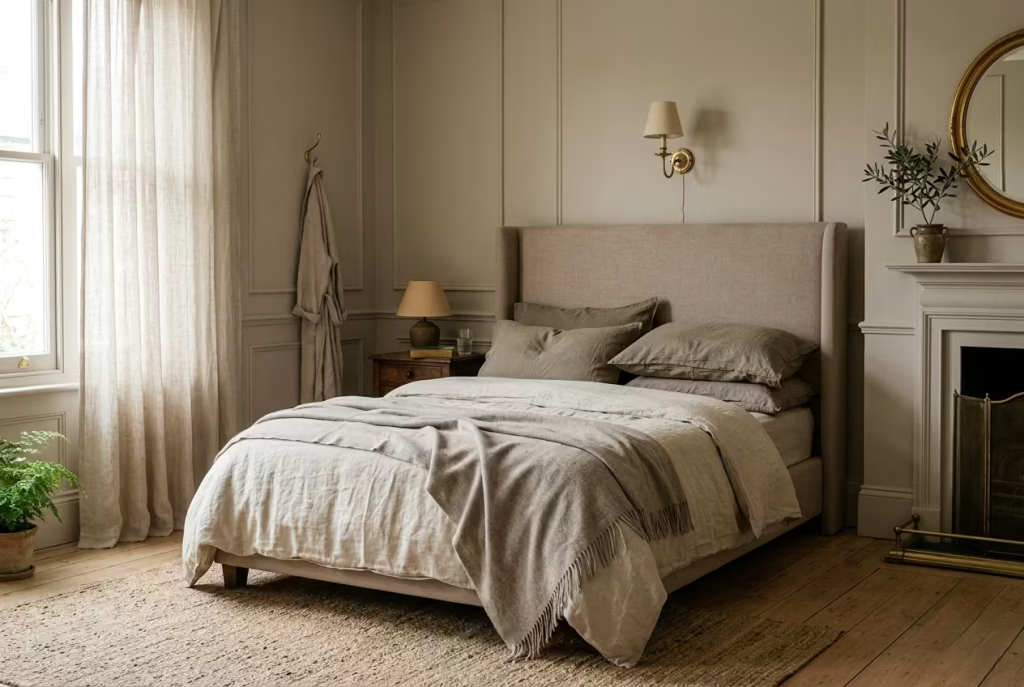
Bedding plays a direct role in both comfort and atmosphere. In a Victorian-inspired bedroom, heavy layering can look beautiful but may not always feel practical throughout the year. Breathable materials such as linen, washed cotton, and lightweight wool blends help regulate comfort while maintaining visual softness.
What matters most is how the bedding behaves over time. Natural fabrics that crease gently tend to feel more relaxed and lived-in, which suits the slightly softened elegance of Victorian design. Overly synthetic or overly structured bedding often works against the intended mood, making the room feel staged rather than inhabited.
Blackout Needs Versus Natural Light
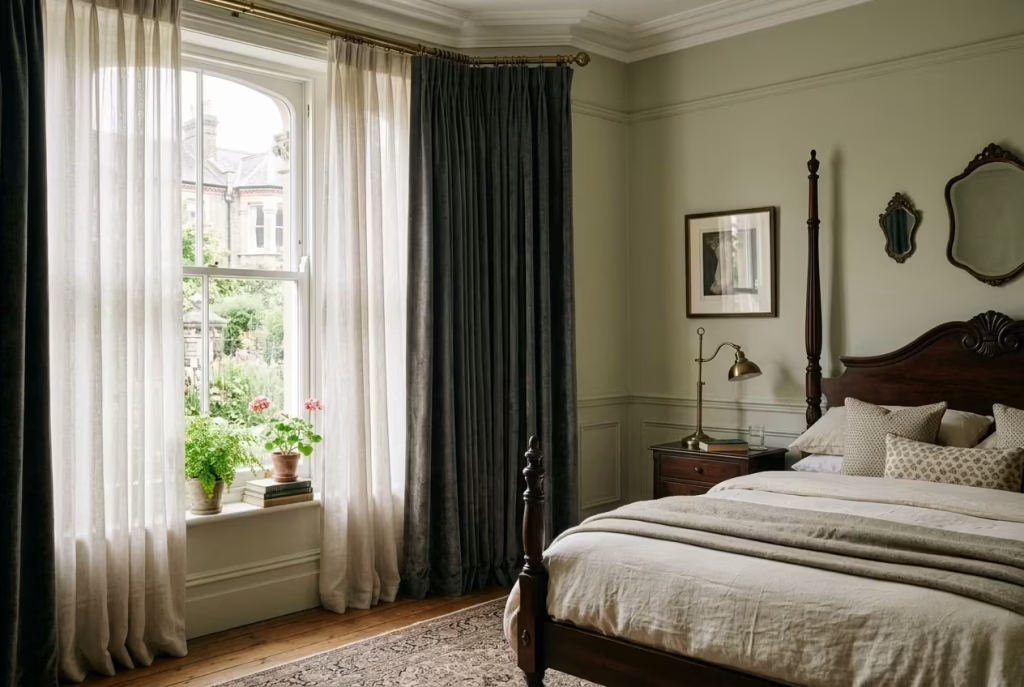
Light control is one of the most underestimated aspects of bedroom design. A modern Victorian space needs to strike a careful balance between softness during the day and darkness at night. Too much natural light without control can disrupt sleep, while overly heavy window treatments can make the room feel closed in.
A layered approach works best. Sheer curtains for daytime diffusion paired with heavier drapes or blackout linings for night use create flexibility without compromising atmosphere. This allows the room to shift its character depending on time of day, which is essential in maintaining both comfort and mood.
In practice, I often find that how a room handles morning light is just as important as how it feels in the evening.
Wardrobe Planning
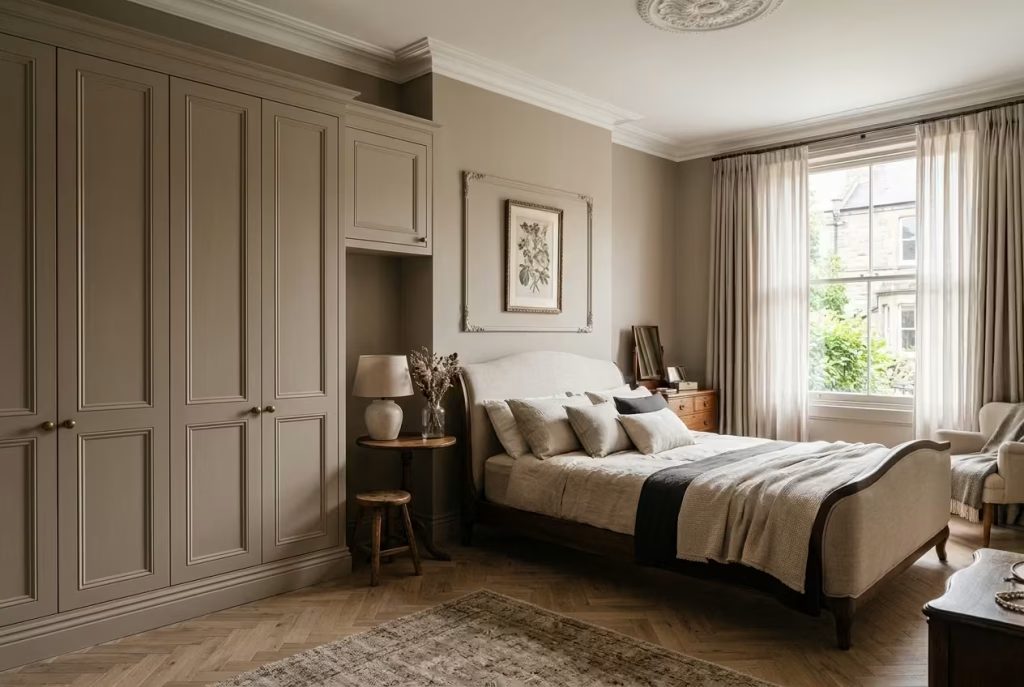
Storage planning is where Victorian charm must meet modern necessity. While freestanding antique furniture can add character, it rarely offers the capacity required for everyday living on its own. Built-in or hybrid wardrobe solutions tend to work best when they are carefully integrated into the architecture.
Panelled wardrobe doors painted in tonal colours help maintain visual continuity, preventing storage from dominating the room. Internally, thoughtful organisation matters more than complexity. Hanging space, folded storage, and dedicated zones for seasonal items keep the room functioning smoothly without visual overload.
When wardrobe planning is done well, the bedroom feels calmer almost immediately, as though a layer of background stress has been quietly removed.
Maintenance of Delicate Fabrics and Finishes
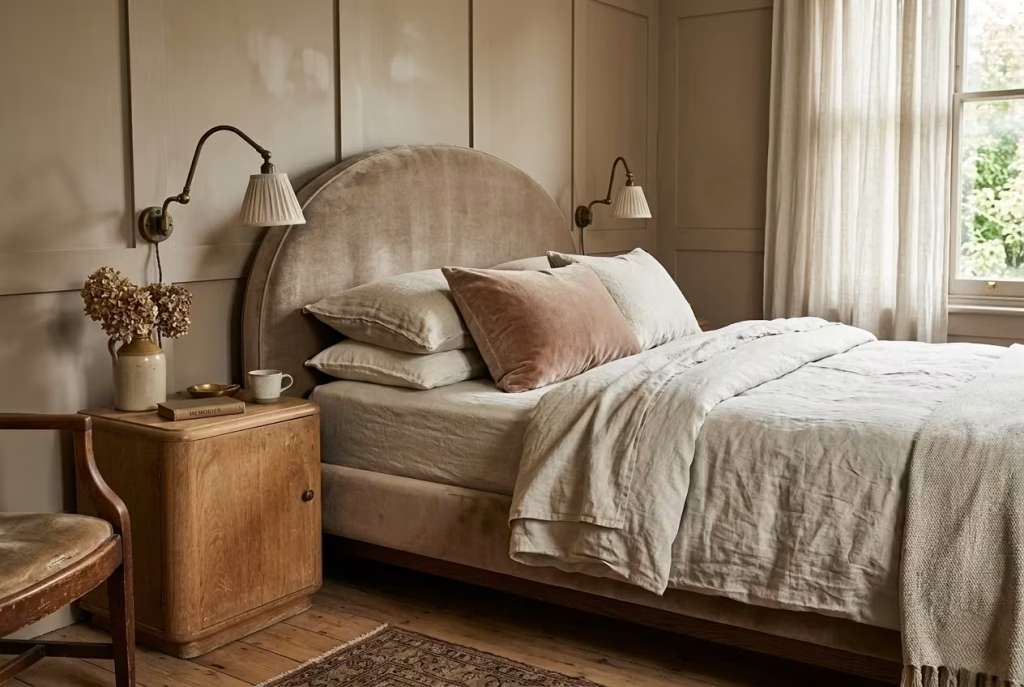
A Victorian-inspired bedroom often introduces more delicate materials than a purely contemporary space. Velvet, linen, aged brass, painted finishes, and soft upholstery all require a degree of ongoing care to retain their character.
The key is not perfection, but gentle maintenance. Fabrics should be allowed to age gracefully rather than constantly reset to a pristine condition. Light brushing of velvet, occasional steaming of linen, and careful cleaning of metal finishes help preserve texture without stripping away their natural patina.
Over time, these materials develop a lived-in quality that actually enhances the design. However, without basic upkeep, they can quickly lose their clarity and begin to feel tired rather than refined.
A truly livable modern Victorian bedroom is not defined by how much it holds visually, but by how effortlessly it supports daily life. When circulation, storage, light, and materials all work in quiet harmony, the room stops feeling like a composition and starts feeling like a place you naturally want to return to.
Best Materials for a Modern Victorian Bedroom
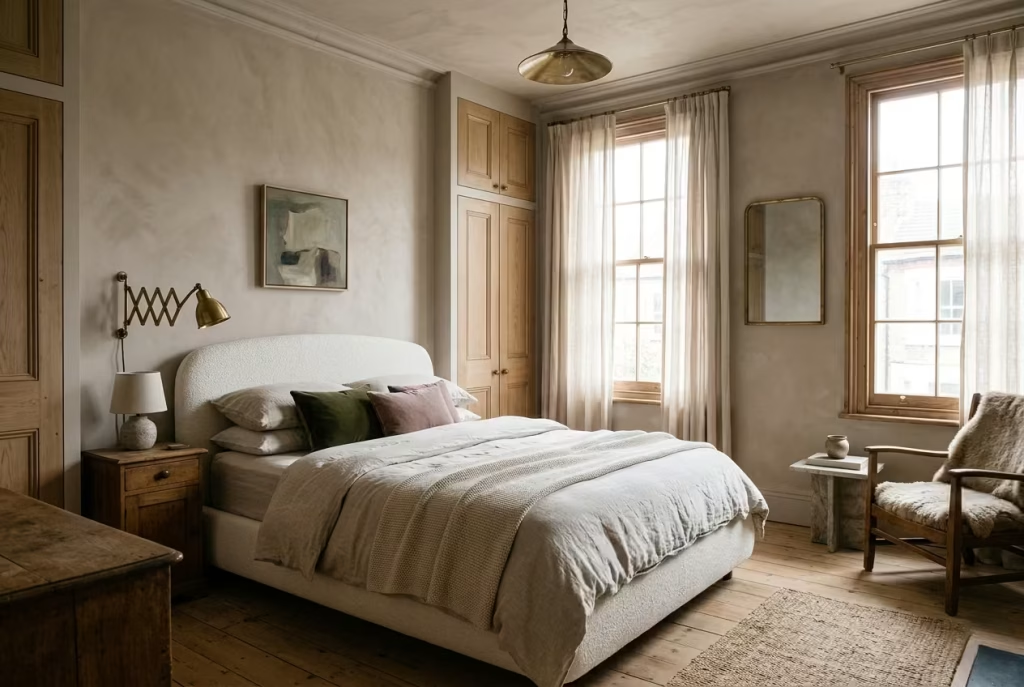
Material choice is where a modern Victorian bedroom either becomes convincingly layered or quietly falls apart. Colour and layout set the tone, but materials determine how the room feels to live in day after day. The goal is not abundance, but coherence, where each surface contributes to a broader sense of calm, depth, and tactile richness without tipping into visual overload.
Limewash or Soft Matt Paint
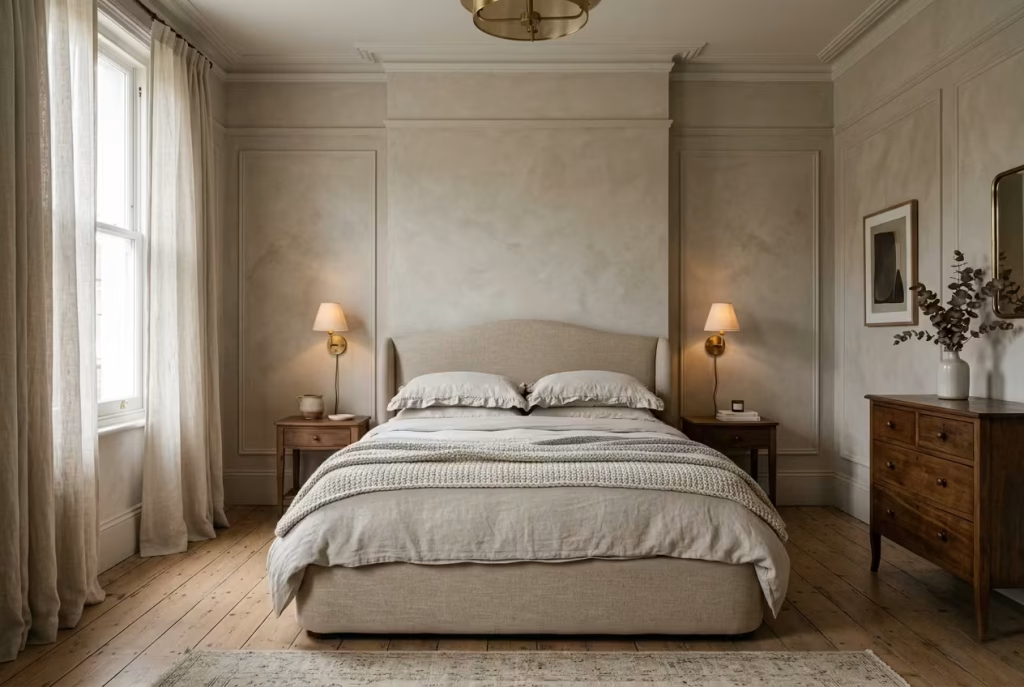
Walls set the emotional baseline of the room, and limewash or soft matt paint is often the most effective way to introduce depth without harshness. Unlike flat, uniform finishes, limewash carries subtle movement, catching light in an uneven, almost atmospheric way that feels naturally aged rather than manufactured.
In practice, this finish works particularly well in Victorian-inspired bedrooms because it softens architectural detailing such as cornicing or panelling. Instead of competing with these features, it allows them to sit more comfortably within the overall composition. Soft matt paint offers a similar restraint, especially in muted tones like warm stone, faded olive, or smoky taupe, where the colour feels absorbed into the surface rather than sitting on top of it.
Timber With a Warm Finish
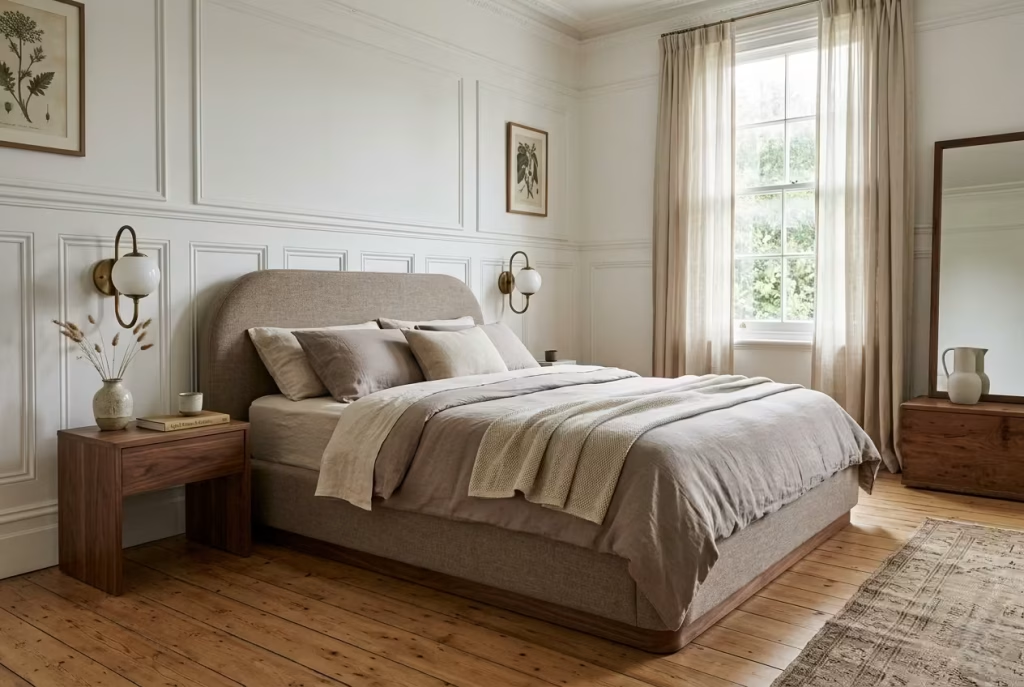
Timber introduces grounding and structure, which is essential in a bedroom that leans into decorative heritage influences. Warm oak, walnut, or lightly stained finishes bring a natural honesty that prevents the space from feeling overly styled or artificial.
Used in flooring, furniture, or detailing, timber acts as the quiet backbone of the room. I often find that when a bedroom begins to feel visually heavy, introducing or simplifying timber tones immediately restores balance. The grain itself adds movement, but in a way that feels organic and unforced, almost like the room has been shaped gradually over time.
Linen for Summer
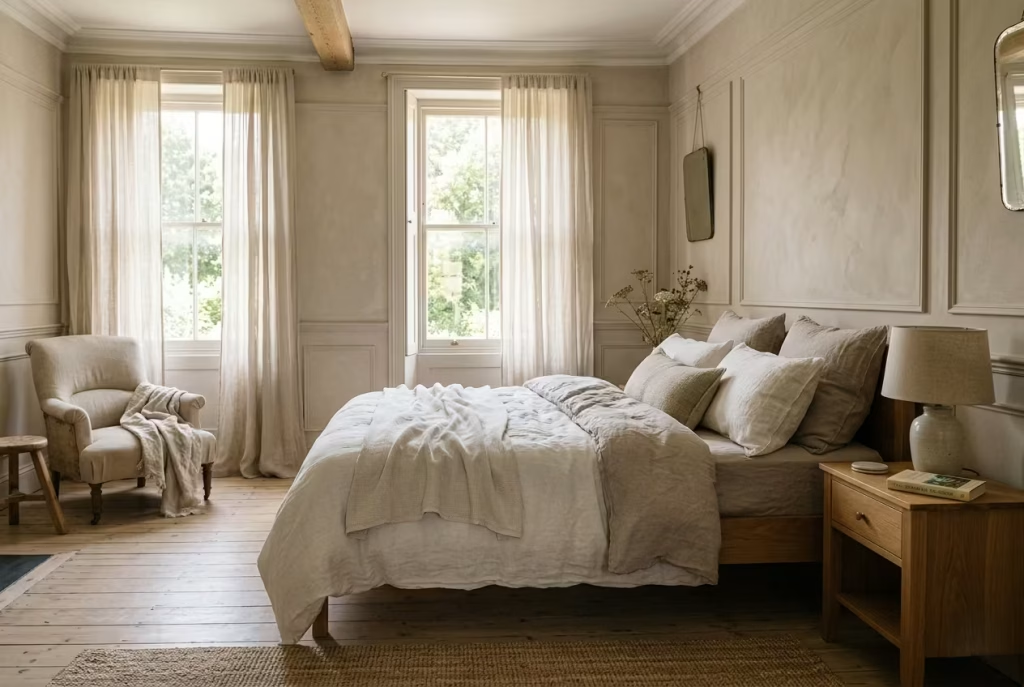
Linen is one of the most effective fabrics for softening a Victorian-inspired bedroom, particularly in warmer months. Its naturally breathable structure allows air to circulate while maintaining a relaxed, slightly rumpled elegance that feels lived-in rather than staged.
What makes linen so valuable is its ability to age gracefully. It never looks overly polished, which aligns perfectly with the understated romance of modern Victorian design. Whether used in bedding or curtains, it introduces ease without sacrificing refinement.
Velvet in Controlled Doses
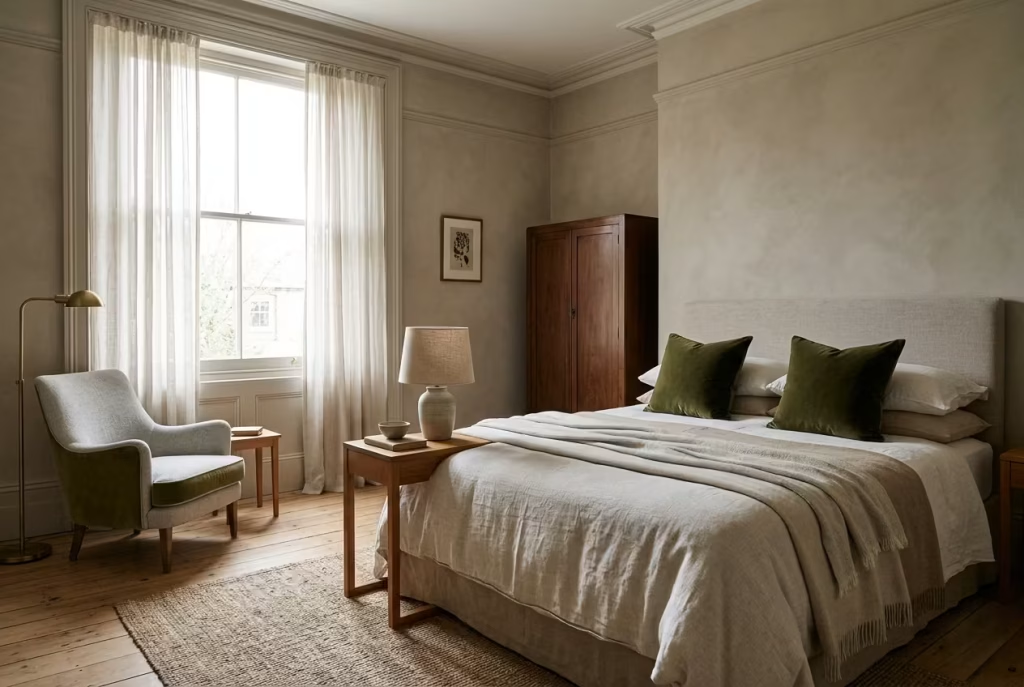
Velvet brings depth, but it must be handled with care. Used sparingly, it adds richness and a sense of quiet luxury, particularly in cushions, headboards, or accent seating. Its strength lies in how it reacts to light, shifting tone throughout the day and adding subtle visual movement.
However, restraint is essential. Too much velvet can quickly dominate a room, especially when paired with other heavy textures. In well-balanced interiors, it acts more like punctuation than a full sentence, reinforcing mood rather than defining it entirely.
Wool Rugs
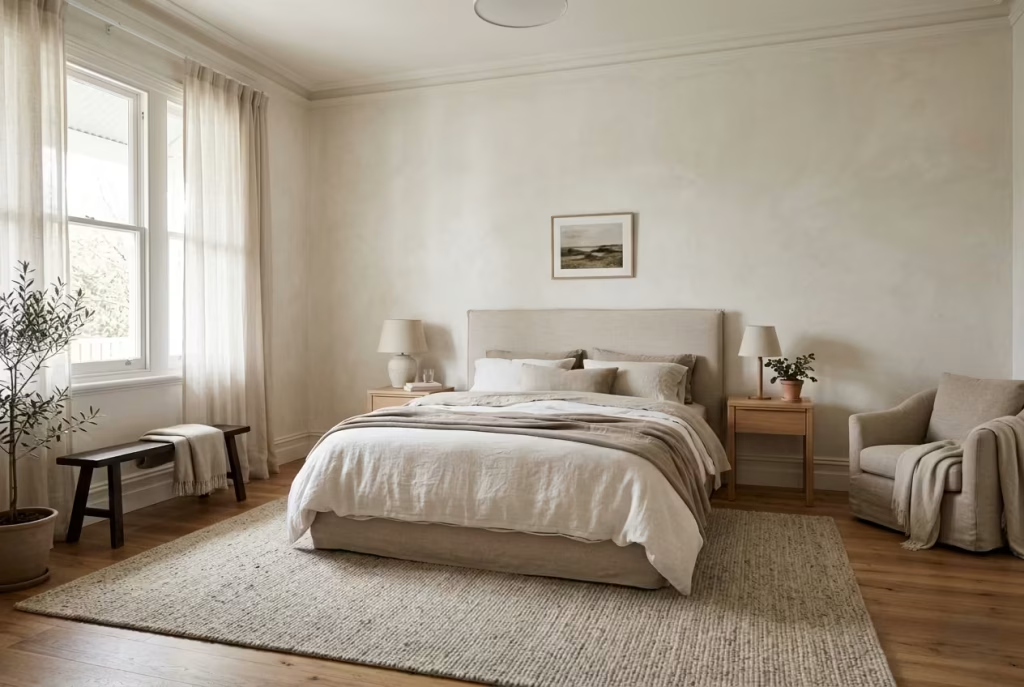
Wool rugs are one of the most grounding elements in a Victorian-inspired bedroom. They soften acoustics, add warmth underfoot, and help visually anchor the furniture layout. Their slightly irregular texture prevents the floor from feeling flat or overly polished.
In real projects, I often use wool rugs to bring coherence to a space that feels visually fragmented. Once placed correctly, they quietly unify the room, drawing furniture together without drawing attention to themselves.
Brass or Bronze Accents
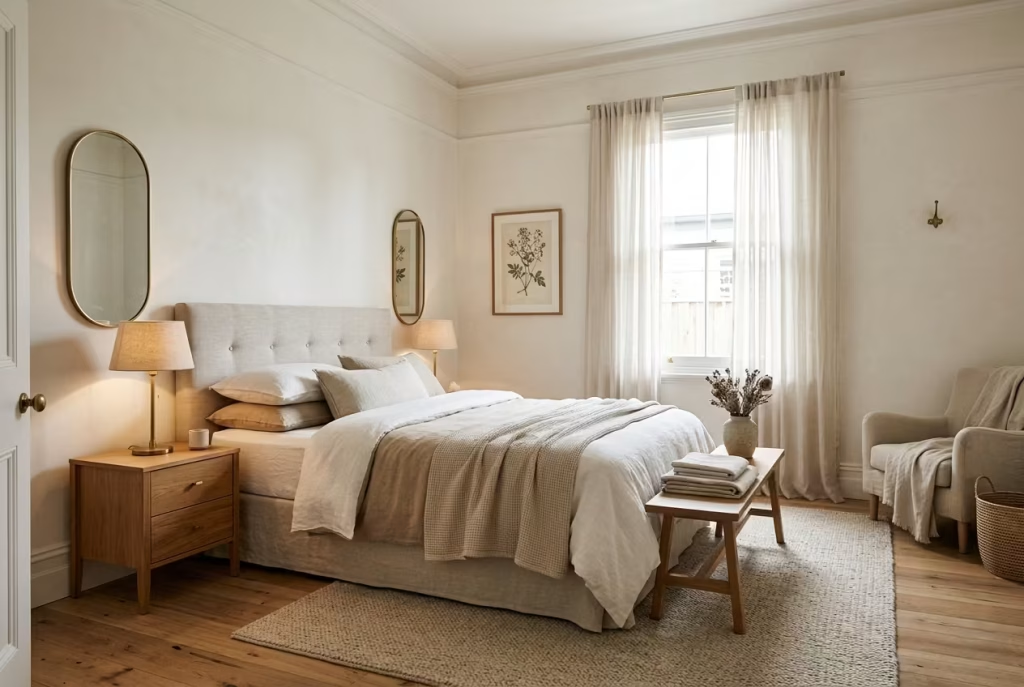
Metal finishes act as the subtle highlights within the material palette. Brass and bronze, particularly in aged or brushed forms, introduce warmth and gentle reflectivity without overpowering the scheme.
These accents work best when they are repeated lightly across the room rather than concentrated in one area. A bedside lamp base, a mirror frame, or simple hardware details can be enough. The aim is not shine, but softness, a kind of patinated glow that settles into the background while still lifting the overall composition.
Plaster or Moulded Detailing
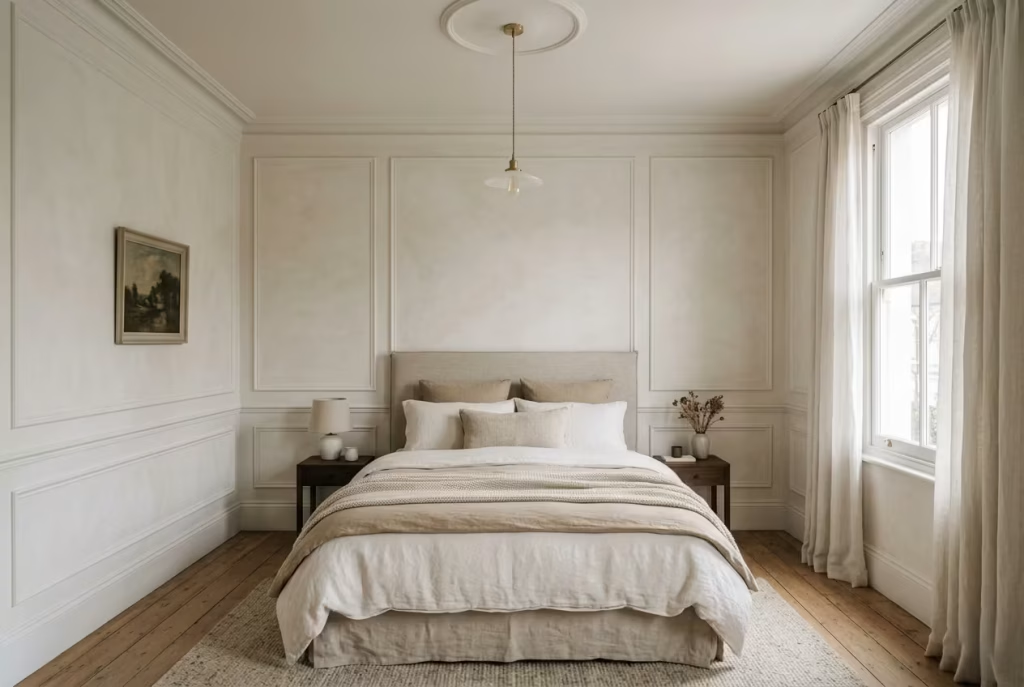
Plasterwork and moulding bring architectural depth that defines Victorian influence more than almost any other material. Whether through subtle wall panelling, ceiling roses, or lightly profiled cornicing, these elements create structure and rhythm within the room.
The key is proportion. Overly ornate detailing can quickly feel heavy, while simplified profiles maintain elegance without overwhelming the space. When done well, plaster detailing feels like it has always belonged there, shaping the room rather than decorating it.
Real-Life Application Insight
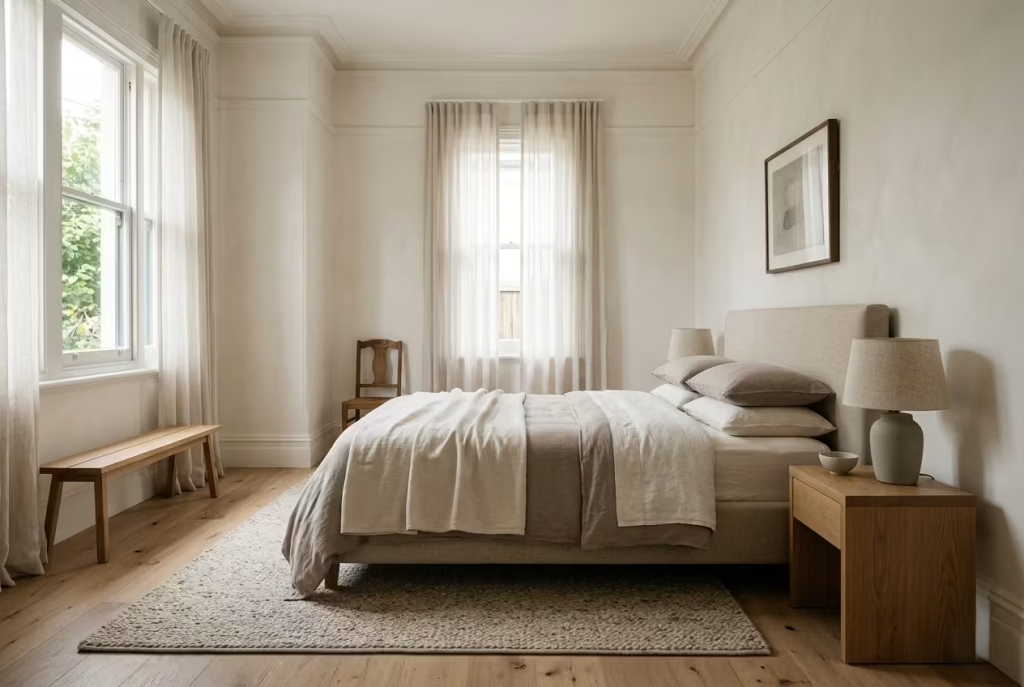
A successful modern Victorian bedroom is never about accumulating beautiful materials for their own sake. It is about restraint, rhythm, and cohesion. Each material should support the others, not compete with them. When the balance is right, the room reads as lived-in and emotionally grounded rather than overly styled or curated.
The most refined interiors are often the quietest ones visually, where texture, tone, and material quietly do the work in the background, allowing the space to feel both rich and effortlessly natural.
Common Mistakes to Avoid
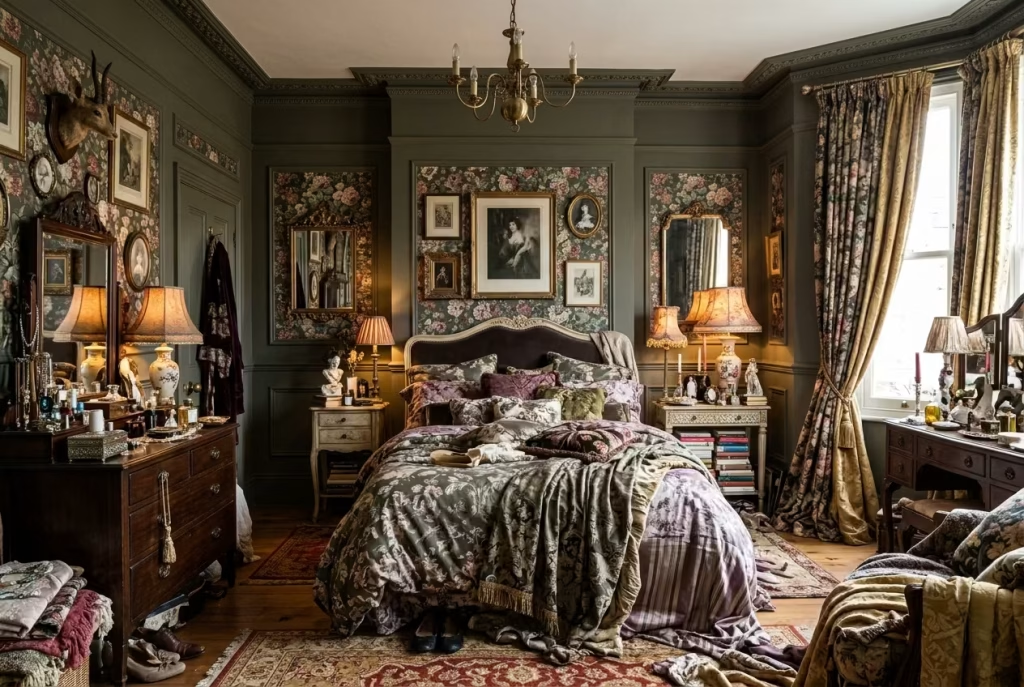
Even the most thoughtfully designed modern Victorian bedroom can lose its clarity if a few small missteps accumulate. The style depends on balance, restraint, and a clear sense of hierarchy. When that balance slips, the room can quickly move from refined to visually overworked, like a beautiful composition where every instrument is playing at full volume at once. The aim here is to recognise where things typically go wrong, so the space remains composed, breathable, and enduring.
Over-Ornamenting Every Surface
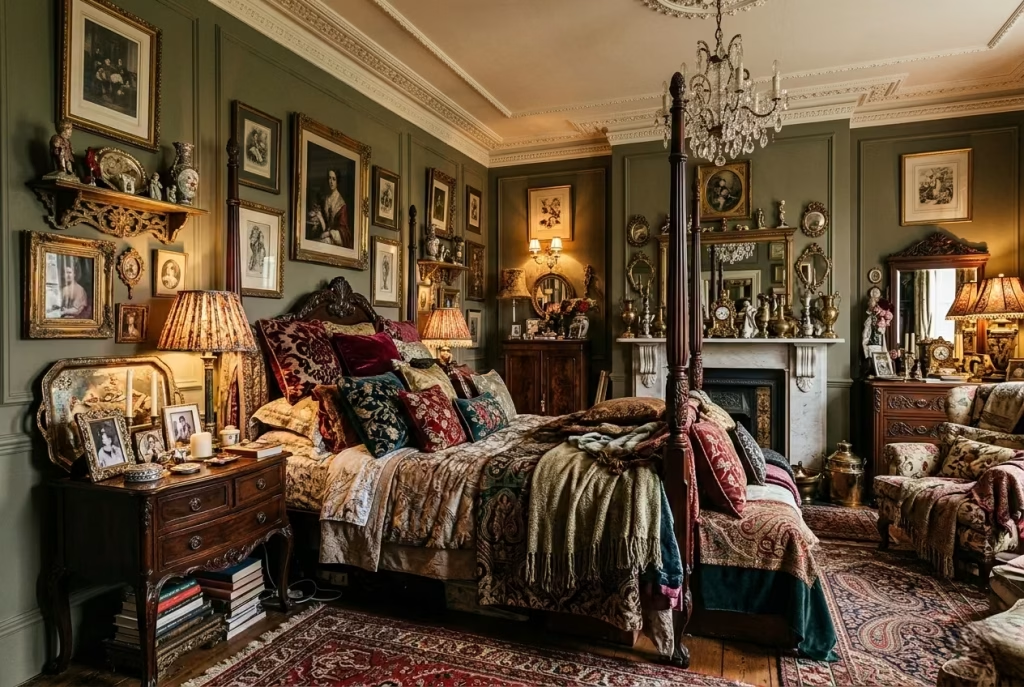
One of the most common pitfalls is the instinct to decorate every available surface. Victorian interiors historically embraced ornamentation, but the modern interpretation relies on editing that richness down. When panelling, furniture detail, lighting, textiles, and accessories all compete at once, the eye loses its resting point.
In practice, restraint creates hierarchy. A single well-chosen decorative moment, such as a mantel display or a statement headboard, carries far more impact than scattering detail everywhere. Without that discipline, the room begins to feel visually congested rather than layered.
Using Too Many Dark Tones in a Low-Light Room
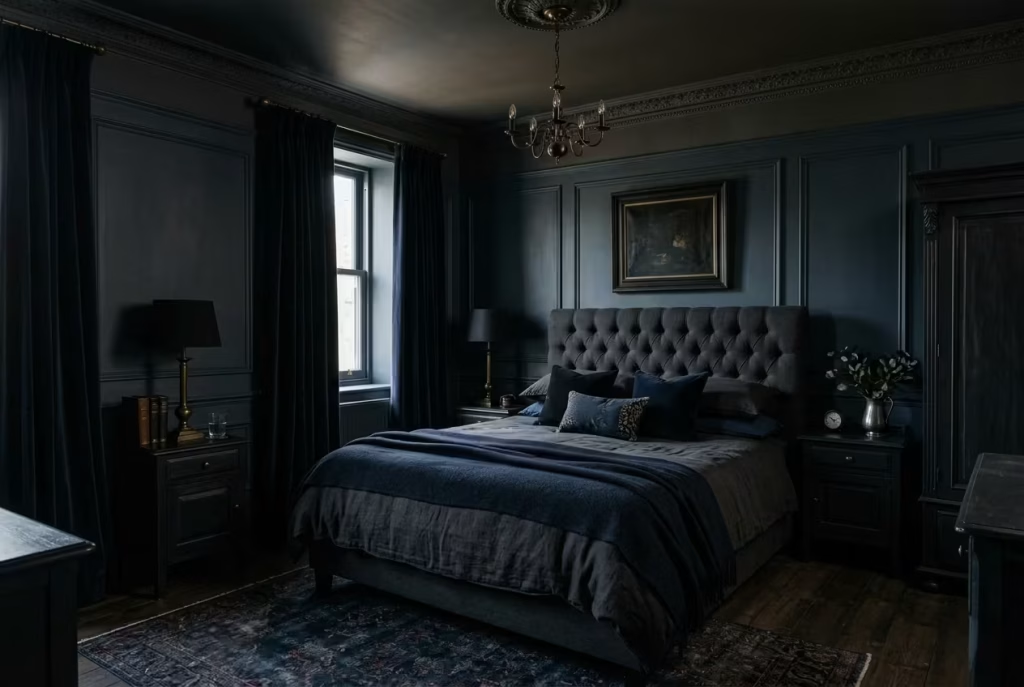
Moody palettes can be incredibly effective in Victorian-inspired bedrooms, but they require honest assessment of natural light. In poorly lit spaces, layering multiple dark tones across walls, furniture, and textiles can easily tip the room into heaviness.
The issue is not darkness itself, but lack of contrast. Without lighter bedding, reflective surfaces, or softened accents, the space can feel compressed. I often find that introducing even a small amount of lightness restores clarity almost immediately, preventing the room from feeling enclosed or cave-like.
Choosing Undersized Rugs or Lamps
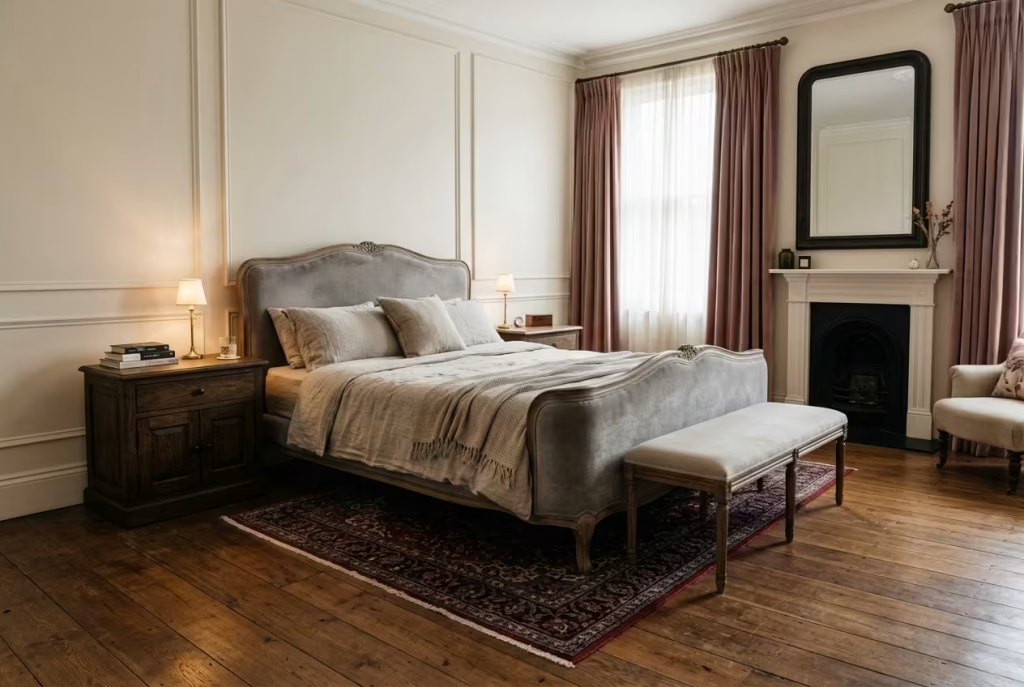
Scale is one of those details that quietly determines whether a room feels professionally designed or slightly unresolved. Undersized rugs can make furniture appear disconnected, as if each piece is floating independently. Similarly, small lamps on large bedside tables often feel lost and visually weak.
A rug should ground the bed and extend beyond it generously, while lighting should feel proportionate to the furniture it supports. When scale is wrong, even expensive pieces lose their presence, which is why this mistake has such a noticeable impact on overall composition.
Mixing Too Many Historical References at Once
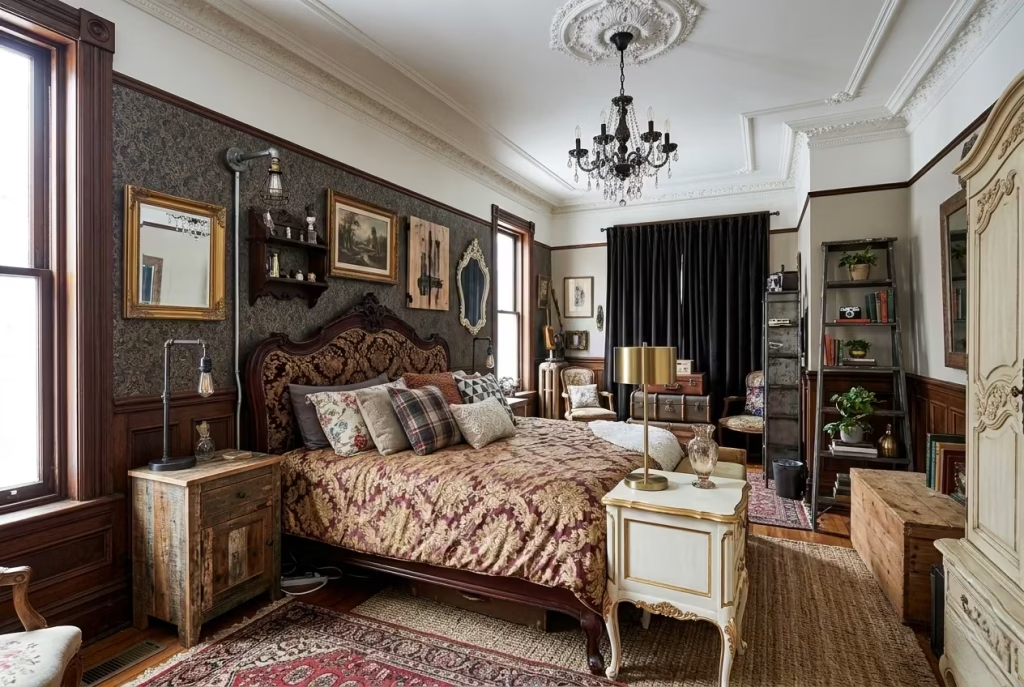
Modern Victorian design works because it interprets history rather than replicates it. The problem arises when too many periods or styles are introduced simultaneously, heavy Victorian detailing, French provincial curves, industrial lighting, and rustic farmhouse textures all competing in one room.
The result is often confusion rather than character. Instead of feeling layered, the room begins to feel disjointed, as though it cannot decide what it wants to be. A clearer direction, even if subtly eclectic, always produces a more cohesive and calming result.
Forgetting Airflow and Seasonal Comfort
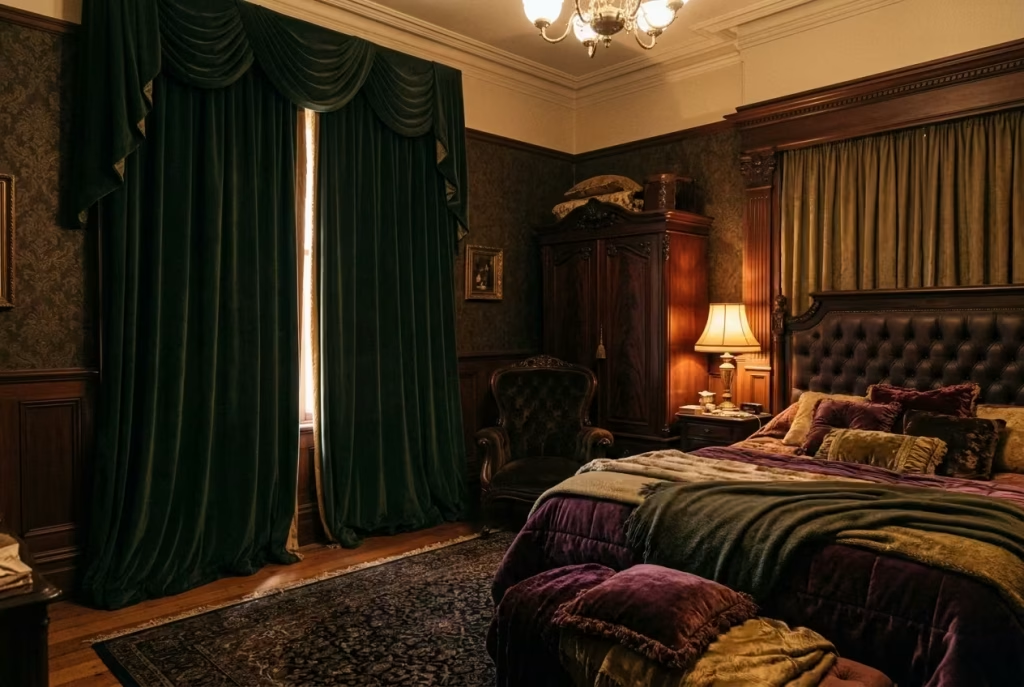
Bedrooms are lived-in spaces first, not just visual compositions. One of the most overlooked mistakes is designing a room that looks beautiful but does not respond well to changing seasons or airflow needs.
Heavy drapery, dense layering, and overly insulated fabrics can make a room feel stifling in warmer months. Likewise, a lack of breathable textiles can affect comfort long before aesthetics become relevant. A well-designed Victorian-inspired bedroom should shift easily between seasons without requiring a complete visual overhaul.
Making the Room Feel “Themed” Instead of Refined
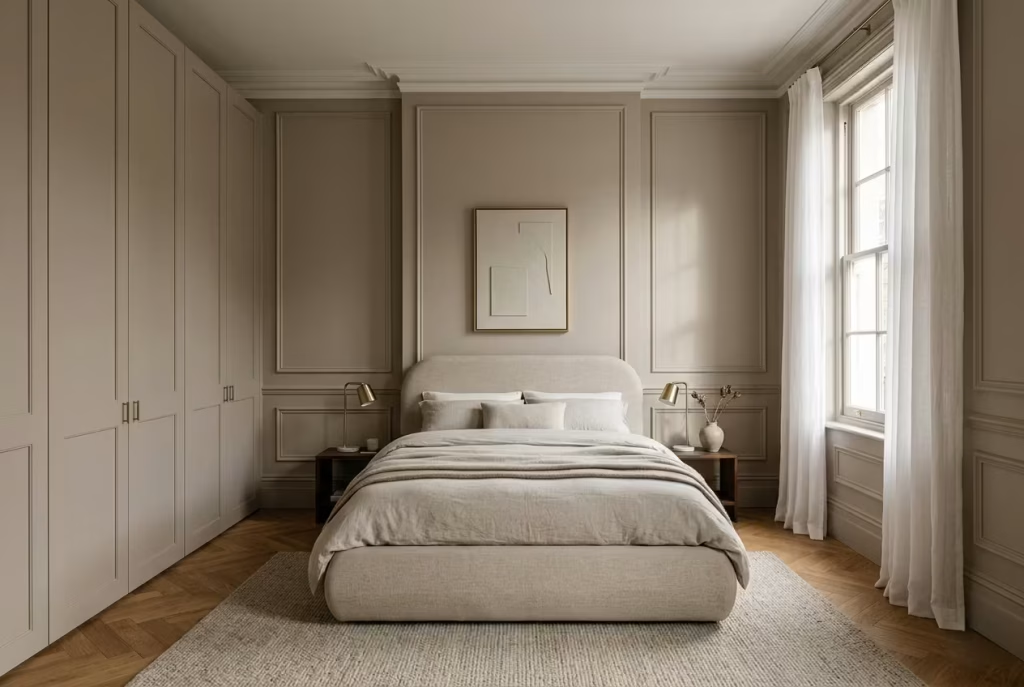
Perhaps the most critical mistake is leaning too heavily into theme rather than interpretation. When a room tries too hard to look Victorian, it often ends up feeling staged, like a curated set rather than a lived-in space.
True refinement comes from restraint. It is the difference between suggestion and imitation. A few well-placed architectural references, softened materials, and considered furnishings will always feel more authentic than an overly coordinated “period look.” The best rooms do not announce their style loudly, they let it emerge quietly through proportion, texture, and tone.
When these common mistakes are avoided, the modern Victorian bedroom begins to settle into its most natural state, composed, breathable, and quietly confident. It stops trying to impress and starts simply feeling right.
Final Thoughts: Modern Victorian, Reworked for Real Life
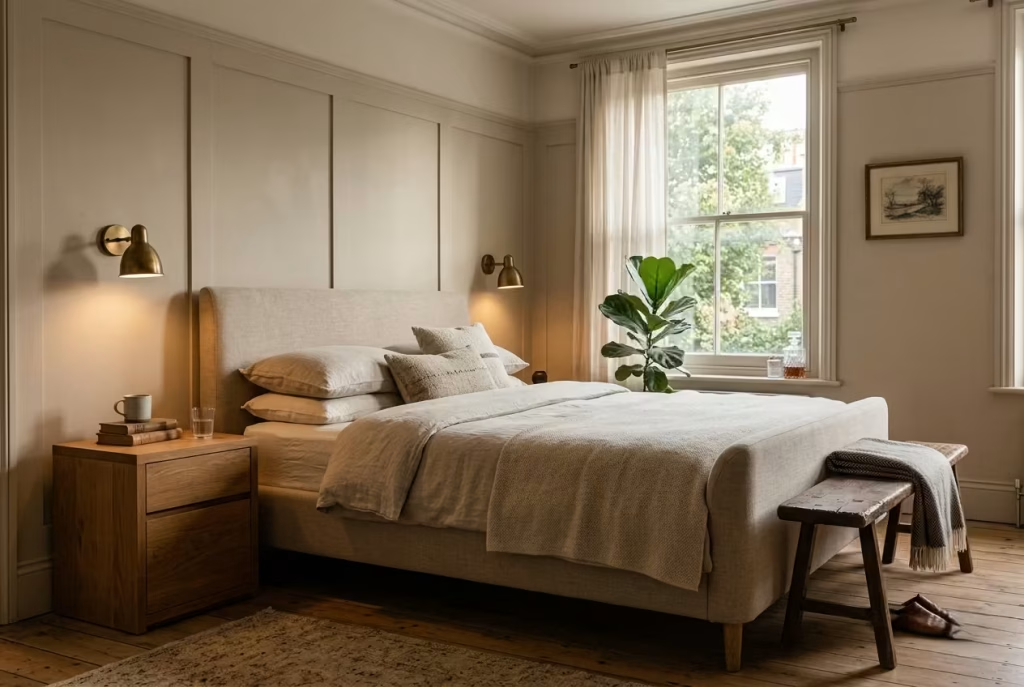
Modern Victorian design endures for one simple reason: it understands how to hold contrast without losing composure. It sits between two worlds, one rooted in architectural history and another shaped by contemporary living needs. The result is not a reconstruction of the past, but a careful refinement of it, where heritage detail is present but never overpowering, and comfort is prioritised without sacrificing character.
The most successful bedrooms in this style are rarely the most ornate. Instead, they are the most considered. They take the essence of Victorian interiors, the mouldings, the softness of upholstered forms, the richness of materials, and translate them into something lighter, more breathable, and easier to live with on a daily basis. The excess is quietly edited out, leaving behind only what supports atmosphere, proportion, and tactile depth.
What makes this approach so enduring is its flexibility. A modern Victorian bedroom can feel calm and minimal at its core, yet still carry enough detail to avoid feeling sterile. It can lean into moodiness without becoming heavy, or embrace softness without losing structure. That balance is what allows it to age well, both visually and functionally, as lifestyles shift and evolve over time.
In practice, the rooms that stand out are never trying too hard. They carry history lightly, almost like a memory rather than a statement. A panelled wall softened by warm paint, a well-proportioned upholstered bed, a worn timber surface, a hint of brass catching evening light, these elements work together quietly rather than competing for attention. Nothing feels excessive, yet nothing feels empty either.
There is also a deeper quality at play: restraint. When a space is carefully edited, it creates room not only for visual clarity but for everyday life to unfold more naturally. The bedroom becomes less about display and more about experience. It supports rest, routine, and stillness without needing constant adjustment or styling.
Ultimately, modern Victorian design is not about recreating a specific era. It is about borrowing its emotional language and reshaping it for contemporary living. The romance remains, but it is softened. The detail remains, but it is controlled. The structure remains, but it feels lighter, more open, more forgiving.
When all of this comes together, the bedroom stops feeling like a concept and starts feeling like a place that simply works, quietly confident, beautifully balanced, and grounded in real life.
Frequently Asked Questions: Modern Victorian Bedrooms Reworked for Real Life
What defines a modern Victorian bedroom in practical terms?
A modern Victorian bedroom blends traditional architectural cues with contemporary restraint. In practical terms, this means features like wall panelling, mouldings, or ceiling detailing are paired with simplified furniture forms, muted colour palettes, and layered but controlled textiles.
The key difference from traditional Victorian design is editing. Where historical interiors leaned into abundance, the modern interpretation selects only what supports calmness, proportion, and daily comfort. It feels structured, but never overcrowded.
Can a modern Victorian bedroom work in a small space?
Yes, and in many cases it works particularly well in smaller bedrooms because the architectural detailing can add depth without requiring large-scale furniture.
The important consideration is proportion. Light-toned panelling, compact upholstered beds, and carefully scaled storage prevent the room from feeling compressed. Overly heavy colours or oversized furniture should be avoided, as they can quickly overwhelm limited floor area.
When handled correctly, even a small bedroom can feel layered and elegant rather than tight or restrictive.
What colours work best for a modern Victorian bedroom?
Muted, tonal palettes work most effectively. Think smoky neutrals, warm stone, parchment white, olive, faded plum, and softened navy or inky blue.
These colours are chosen not just for appearance, but for how they behave under changing light. They tend to shift gently throughout the day, creating depth without visual noise. High-contrast or overly saturated tones are usually avoided as they can disrupt the calm, cohesive atmosphere that defines this style.
How do you keep a Victorian-inspired bedroom from feeling too heavy?
Balance is the deciding factor. Heavier elements such as dark walls, velvet, or ornate detailing should always be offset with lighter counterparts.
This might include linen bedding, pale curtains, reflective mirrors, or natural timber finishes. Introducing negative space is equally important. A room that is slightly under-styled often feels more refined than one that is overfilled. In essence, weight should be distributed, not concentrated.
What type of lighting suits a modern Victorian bedroom?
Layered lighting works best. This typically includes soft ambient ceiling lighting, bedside lamps, and occasional wall lights with warm, diffused tones.
Contemporary fittings are often paired with traditional references, such as brass finishes or fabric shades, to maintain the Victorian character without feeling overly period-specific. Dimmable lighting is particularly important, as it allows the room to shift in mood throughout the day.
Can modern furniture be mixed with Victorian-style elements?
Yes, and this combination is central to the style. Modern Victorian design relies on contrast between old and new.
Clean-lined furniture can sit comfortably alongside panelled walls, antique-inspired pieces, or decorative mouldings. The key is not matching everything stylistically, but ensuring there is a consistent material and colour language that ties the room together. This balance prevents the space from feeling like a period replica.
What are the biggest mistakes to avoid?
The most common issues include over-decoration, excessive use of dark tones in low-light rooms, and poor scale choices for rugs or lighting.
Another frequent mistake is mixing too many historical references, which can make the room feel confused rather than cohesive. Finally, ignoring airflow, seasonal comfort, and everyday practicality often results in spaces that look good but do not function well long term.
Is this style expensive to achieve?
It does not need to be. The effect of a modern Victorian bedroom comes more from proportion, restraint, and material choice than from expensive furnishings.
Even modest spaces can achieve the look through thoughtful use of paint, simple panelling, well-chosen textiles, and careful editing. Investment pieces such as upholstery or joinery can elevate the space, but they are not essential for capturing the overall feel.
How do you make the style feel timeless rather than trend-led?
Timelessness comes from restraint and material honesty. Avoid overly fashionable patterns, exaggerated colour schemes, or heavily themed accessories.
Instead, focus on enduring elements such as natural textures, soft neutrals, quality lighting, and balanced proportions. When the design feels calm and slightly understated, it naturally avoids the risk of becoming dated quickly.