


Why Modern Organic Living Rooms Feel So Warm, Calm, and Inviting
Some living rooms are beautiful to look at yet strangely difficult to settle into. They impress at first glance, with carefully curated furniture, statement pieces, and flawless styling, but often feel more like a showroom than a space designed for everyday life. Others have a different quality entirely. You walk in, sink into a chair, and immediately feel at ease. These are the rooms people linger in long after the conversation ends, the spaces that quietly invite you to stay a little longer.
That distinction helps explain the growing appeal of modern organic design. As homes increasingly become places for work, rest, and connection, many homeowners are moving away from interiors designed purely for visual impact and towards spaces that support wellbeing. The focus is no longer on creating a room that looks perfect in photographs. Instead, it is about creating one that feels comfortable, balanced, and deeply welcoming.
Modern organic living rooms achieve this through a careful combination of natural materials, soft forms, layered textures, and calming colour palettes. Nothing feels forced or overly decorative. Every element works together to create an atmosphere that is both refined and reassuring, sophisticated without feeling untouchable.
In my experience, the most successful organic interiors are not defined by a single sofa, finish, or design trend. Their appeal comes from the way light moves across textured surfaces, how natural materials age gracefully over time, and how the room supports the rhythms of daily life without demanding attention.
In this article, we will explore the design principles behind modern organic living rooms and why they continue to feel so warm, calm, and inviting in homes of every size and style.
Modern Organic Design Is Built Around How People Actually Live
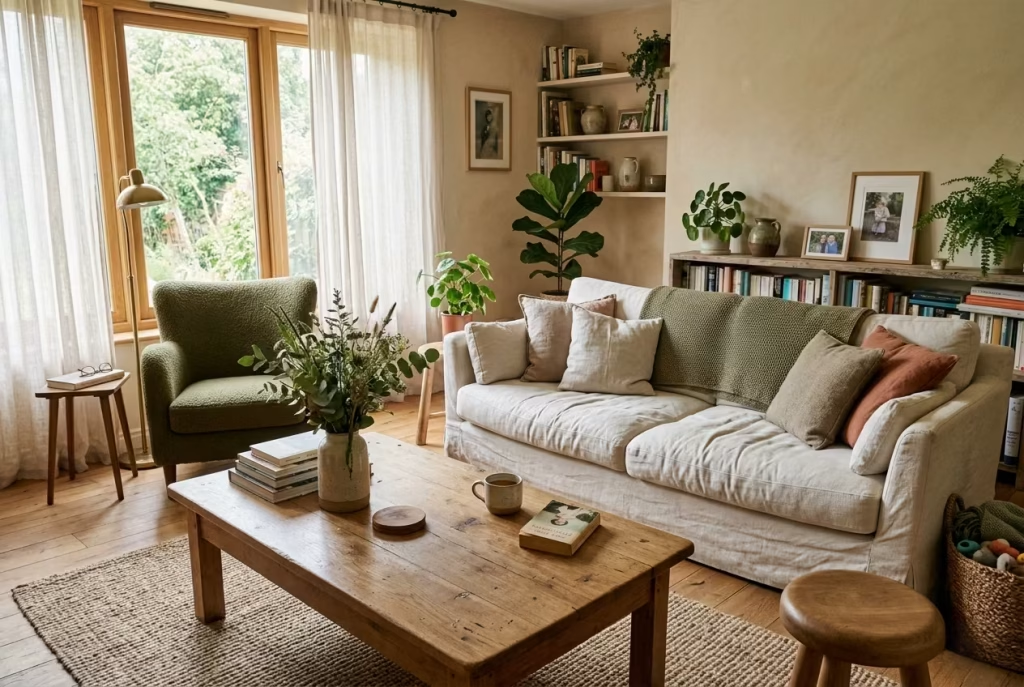
Modern organic design resonates so deeply because it begins with people rather than aesthetics. Unlike styles that prioritise visual impact above all else, this approach considers how a room is used throughout the day, how it feels to move through, and how comfortably it supports everyday routines.
The goal is not to create a living room that looks untouched, but one that welcomes real life without sacrificing beauty. From furniture arranged for conversation to materials chosen for their warmth and longevity, every decision is rooted in human experience.
The result is an interior that feels effortless rather than staged, offering a sense of ease that remains long after the initial design appeal has faded.
Moving Beyond Showroom Perfection
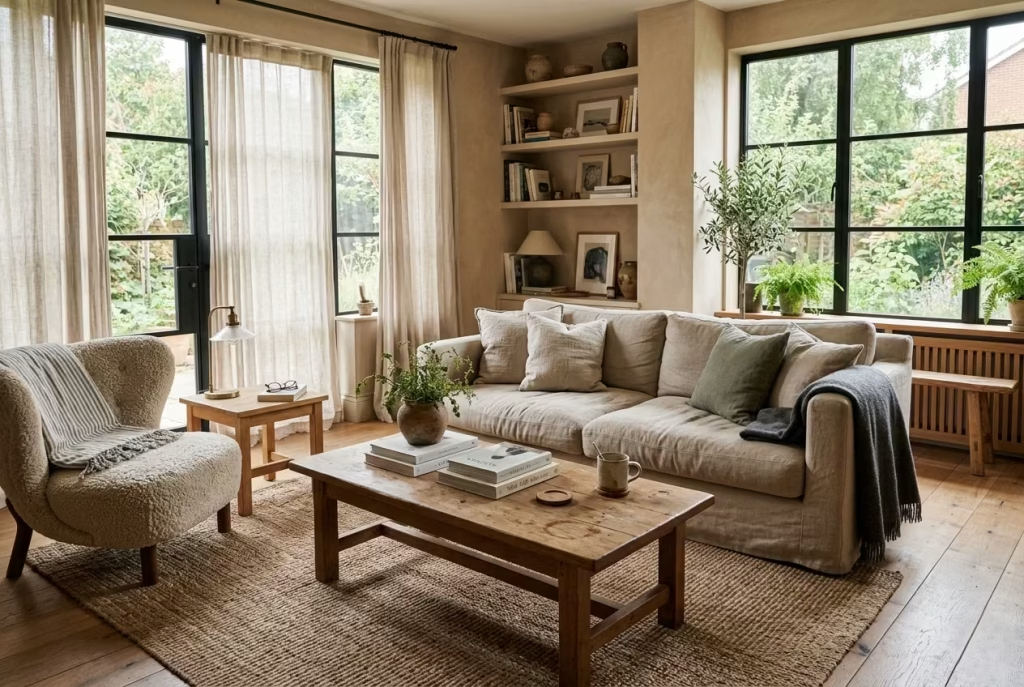
For years, many living rooms were designed to impress rather than support the realities of daily life. Magazine-worthy interiors often showcased immaculate furniture arrangements, pristine fabrics, and carefully styled accessories positioned as though nobody had ever sat down, put their feet up, or left a book on the coffee table. While visually striking, these spaces frequently lacked something essential: a sense of ease. They looked beautiful from a distance but felt surprisingly difficult to inhabit.
One of the reasons highly curated rooms can feel disconnected is that they prioritise appearance over interaction. When every object feels precious and every surface appears untouchable, people naturally become more cautious within the space. Conversations feel slightly restrained, children are constantly reminded to be careful, and relaxation becomes secondary to preservation. The room may photograph well, but it rarely becomes the place where family members instinctively gather at the end of a long day.
Modern organic design challenges this mindset. Rather than creating interiors that perform like stage sets, it embraces the idea that a living room should evolve alongside the people who use it. A linen sofa that softens with age, a wooden coffee table that develops character through daily use, or a favourite armchair positioned beside a sunny window all contribute to a room that feels genuinely lived in. These elements tell a story, one written gradually through everyday experiences rather than styled overnight.
This shift reflects a broader movement towards livable luxury. Today, luxury is increasingly measured not by formality or exclusivity but by comfort, authenticity, and longevity. Homeowners are looking for spaces that work hard behind the scenes while still feeling refined. They want durable fabrics that withstand family life, layouts that encourage conversation, and materials that become more beautiful as the years pass. In many of the most successful living room projects I have worked on, the goal was never perfection. It was creating a space where people could truly exhale.
There is an old saying that a house becomes a home when it carries the marks of life. Modern organic living rooms embrace that philosophy wholeheartedly. They understand that a slightly rumpled linen cushion, a stack of well-loved books, or a woven throw casually draped across a sofa often creates more warmth than the most meticulously staged arrangement. Far from diminishing the design, these details give it soul.
The result is a living room that feels welcoming from the moment you enter. It is polished without feeling precious, sophisticated without feeling distant, and thoughtfully designed without constantly reminding you that it has been designed at all. That balance, delicate yet powerful, is what makes modern organic interiors so deeply appealing in a world that often feels increasingly fast-paced and over-curated.
Comfort as a Design Principle
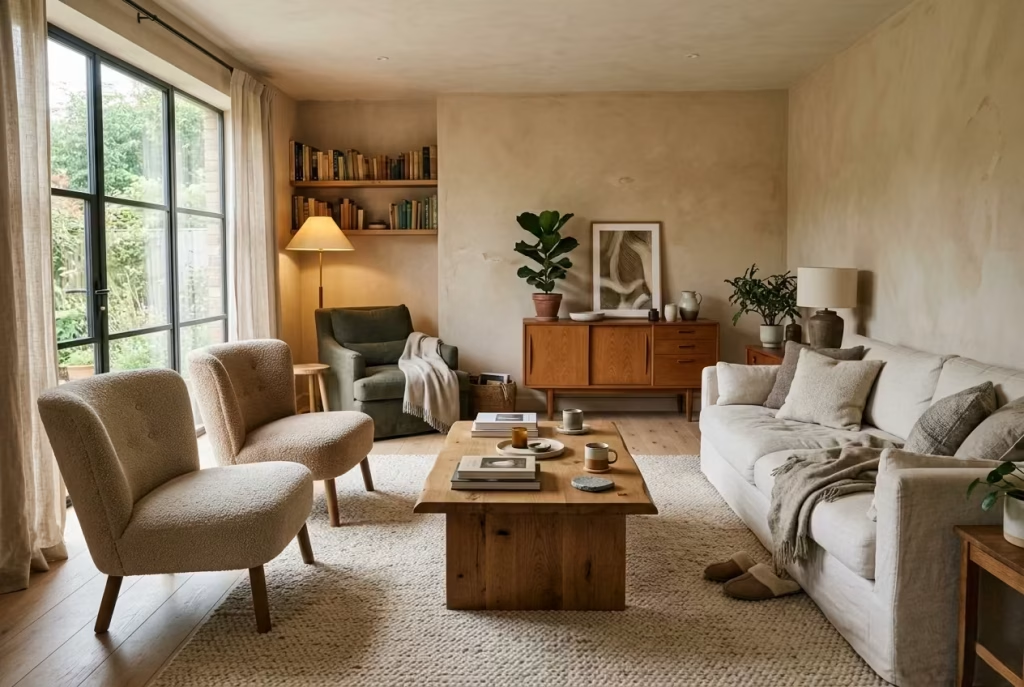
One of the defining characteristics of a modern organic living room is that comfort is treated as a foundational design principle rather than an afterthought. The room is not planned around a focal photograph or a single statement piece. Instead, it is shaped around the people who will spend hours within it, whether that means enjoying a quiet morning coffee, gathering with friends on a weekend evening, or simply unwinding after a demanding day. The difference may seem subtle on paper, but in practice it changes everything.
Furniture layouts play a significant role in creating this sense of comfort. In many poorly planned living rooms, seating is pushed against walls or arranged solely around a television, leaving conversation to fend for itself. Modern organic interiors take a more considered approach. Sofas and chairs are positioned to encourage eye contact, natural interaction, and easy movement throughout the room. There is a rhythm to the arrangement, one that allows people to drift effortlessly between activities without feeling boxed into a single function.
I often find that the most inviting layouts resemble a well-conducted conversation. No seat feels isolated. No pathway feels awkward. Every element contributes to a sense of connection. A sofa paired with two accent chairs, positioned within comfortable speaking distance, can transform how a room is experienced. Rather than feeling like a collection of furniture pieces, the space begins to function as a setting for shared moments, both large and small.
Daily rituals also deserve a place at the design table. This is something many homeowners overlook when focusing exclusively on aesthetics. A living room should support the habits that naturally occur throughout the day. Perhaps someone enjoys reading near a window each afternoon as sunlight drifts across the floor. Maybe a family gathers in the same corner every evening to talk before dinner. These seemingly ordinary routines often become the heartbeat of a home, and thoughtful design can strengthen them in meaningful ways.
In one family project, the original layout centred entirely around a large television mounted above a fireplace. While visually balanced, the room felt strangely detached. Family members tended to scatter rather than spend time together. During the redesign, we introduced a curved seating arrangement around a substantial oak coffee table and created a dedicated reading corner beside a floor lamp and bookcase.
The television remained part of the room, but it no longer dictated every interaction. Within weeks, the homeowners noticed a remarkable change. Conversations lasted longer, children naturally gravitated towards the shared seating area, and the room became the preferred gathering space throughout the house.
What makes these transformations so effective is that they address human behaviour rather than decorating trends. People are naturally drawn to spaces that make interaction feel effortless. A chair angled towards a sofa rather than a wall. A side table placed exactly where a cup of tea can be reached without thought. A footstool positioned where tired legs instinctively seek relief. These details may fly under the radar individually, yet together they create an atmosphere that feels as comfortable as an old pair of shoes.
The beauty of modern organic design lies in its understanding that luxury is not always something you see immediately. Often, it is something you feel. It is the ease of settling into a room without adjusting furniture, the quiet satisfaction of having everything within reach, and the sense that the space supports life as it unfolds naturally. When comfort becomes a guiding principle rather than a finishing touch, a living room gains a quality that never goes out of style.
The Psychology of Natural Comfort
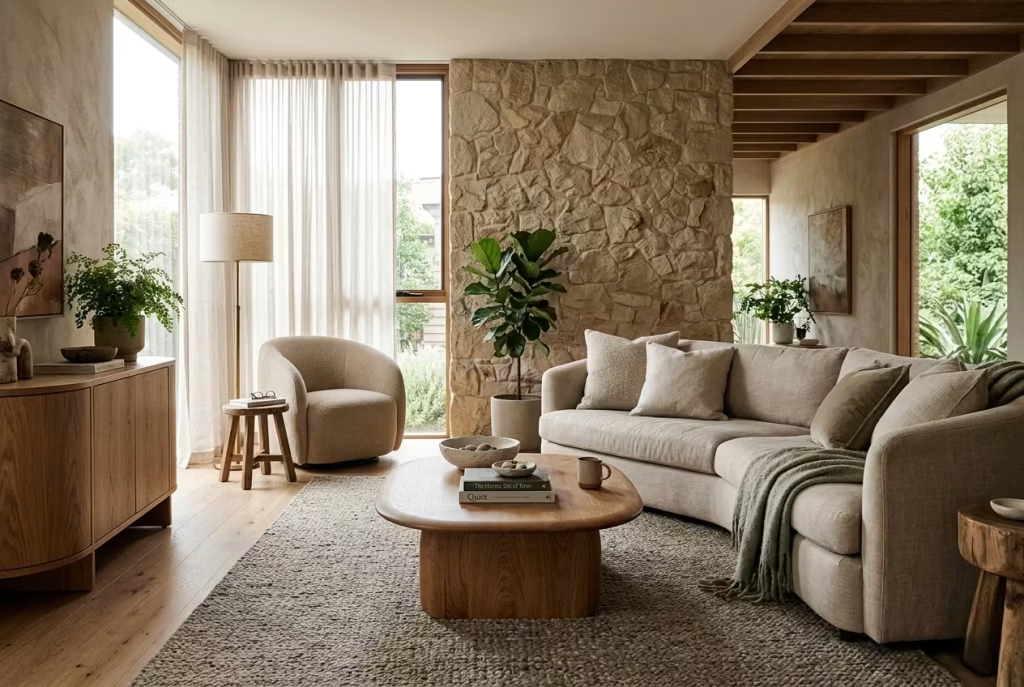
There is a reason people often feel more relaxed in a room filled with wood, linen, stone, and soft organic forms than in one dominated by glossy surfaces and rigid geometry. The response is not simply a matter of personal taste. It is rooted in the way human beings have interacted with their surroundings for thousands of years. Long before cities, technology, and contemporary interiors became part of everyday life, people lived in environments shaped by natural materials, changing light, and imperfect forms. Even today, many of those instincts remain quietly embedded within us.
Natural textures engage the senses in a way synthetic finishes often struggle to replicate. A hand-brushed oak table reveals subtle grain patterns beneath the fingertips. Linen catches the light differently throughout the day. Textured stone carries a visual depth that flat surfaces rarely achieve. These qualities introduce layers of sensory information that the brain processes as familiar and reassuring. Instead of overwhelming the eye with constant stimulation, they create gentle variation, inviting attention without demanding it.
This is one reason heavily polished interiors can sometimes feel emotionally distant despite their sophistication. The eye moves across reflective surfaces quickly, finding little resistance or complexity along the way. Natural materials behave differently. They encourage the eye to linger. Tiny imperfections, tonal shifts, and organic markings provide visual richness that unfolds gradually, much like discovering new details in a favourite landscape after returning to it time and time again.
The same principle applies to softer environments. Curved furniture, rounded edges, layered textiles, and gentle transitions between materials help reduce the visual tension often created by hard lines and sharp contrasts. While most people may never consciously identify these elements, they frequently respond to them on an instinctive level. The room feels calmer. More welcoming. Easier to settle into. It becomes a place where the mind can loosen its grip and the body can relax without effort.
In residential design, I have often noticed that clients struggle to explain why they are drawn to certain spaces. They rarely say, “I prefer the psychological effects of biophilic textures.” Instead, they describe a feeling. They mention that a room feels peaceful, grounded, or comforting. Those reactions are valuable reminders that successful interiors are not built solely through visual composition. They are shaped through emotional responses that occur quietly beneath the surface.
Real-Life Application: Transforming a Formal Sitting Room into a Family-Focused Organic Living Space
One project that illustrates this beautifully involved a formal sitting room that looked elegant but remained largely unused. Positioned at the front of the house, it featured structured furniture, polished dark wood finishes, and decorative accessories arranged with near-perfect symmetry. Guests admired it. The homeowners rarely entered it.
The challenge was not functionality alone. The room lacked emotional warmth. Everything felt carefully preserved, almost as though life was happening elsewhere. The family naturally gravitated towards the kitchen and informal living areas because those spaces felt easier to inhabit.
Rather than starting from scratch, we focused on altering the atmosphere. The existing furniture was replaced with deeper, more relaxed seating upholstered in textured linen. A large wool rug was introduced beneath the seating arrangement to soften acoustics and visually anchor the room. Dark polished surfaces gave way to lighter oak finishes with visible grain patterns. Decorative symmetry was loosened in favour of layered styling that felt collected rather than arranged.
One of the most impactful changes involved reshaping how the room was used. Instead of centring every piece around appearance, we designed around family habits. A reading chair was positioned near natural light. Storage for books and games was integrated into the design. Side tables were placed where they could genuinely support daily activities rather than simply complete a composition.
The transformation was remarkable, though not because of any dramatic architectural intervention. The room simply began to feel human. What had once been a space admired from a distance became a room occupied every day. Children sprawled across the rug with books. Family members gathered there in the evenings. Weekend conversations stretched comfortably into the afternoon.
That experience reinforced an observation I have encountered repeatedly throughout residential projects: people rarely form lasting attachments to rooms that exist purely for display. They connect with spaces that support their routines, welcome imperfection, and offer comfort without asking for constant care in return. Modern organic design succeeds because it understands this fundamental truth. Rather than fighting against human nature, it works hand in hand with it, creating interiors that feel not only beautiful but genuinely restorative.
Natural Materials Create an Immediate Sense of Warmth
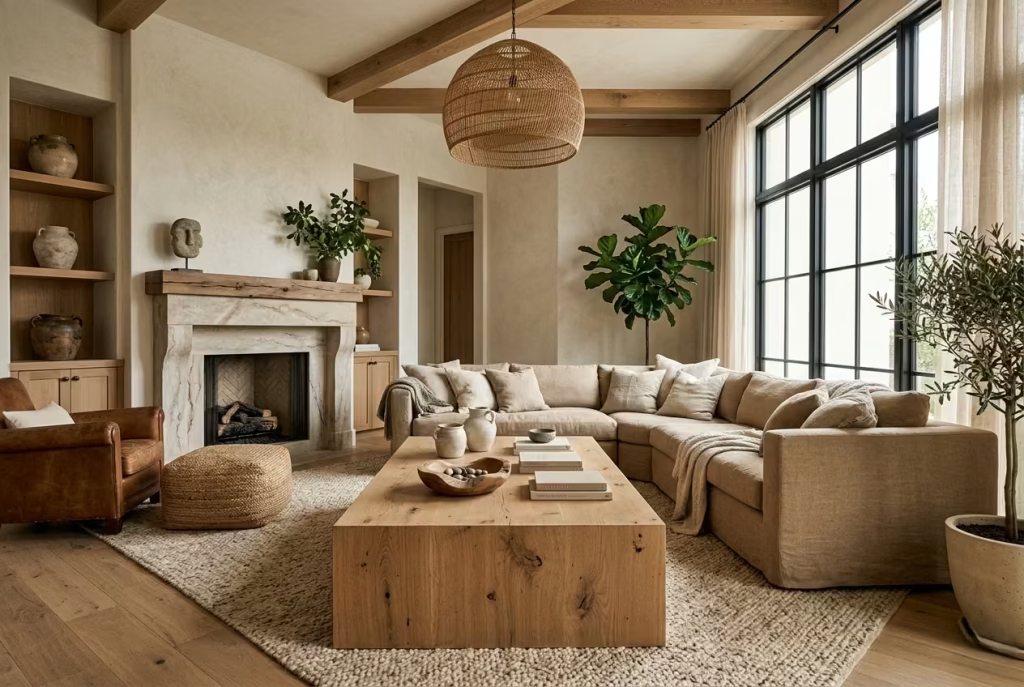
Few design decisions influence the atmosphere of a living room as profoundly as the materials chosen to shape it. Before furniture layouts, colour palettes, or decorative accessories have a chance to make an impression, materials begin communicating with the senses. They determine how light is reflected, how surfaces feel to the touch, and ultimately how welcoming a room becomes.
This is one of the reasons modern organic interiors feel so effortlessly inviting. Rather than relying on visual tricks or fleeting trends, they draw upon materials that possess an inherent warmth and authenticity. Wood with visible grain, stone marked by natural variation, and textiles rich in texture bring a depth that manufactured finishes often struggle to achieve. Much like a well-worn leather-bound book or a favourite walking trail softened by time, these materials carry character that cannot be artificially replicated.
They introduce subtle imperfections, layered textures, and visual richness that help a room feel grounded from the moment you enter. In many ways, they form the backbone of modern organic design, creating an environment that feels calm, comforting, and deeply connected to the natural world.
Wood Adds Visual and Emotional Warmth
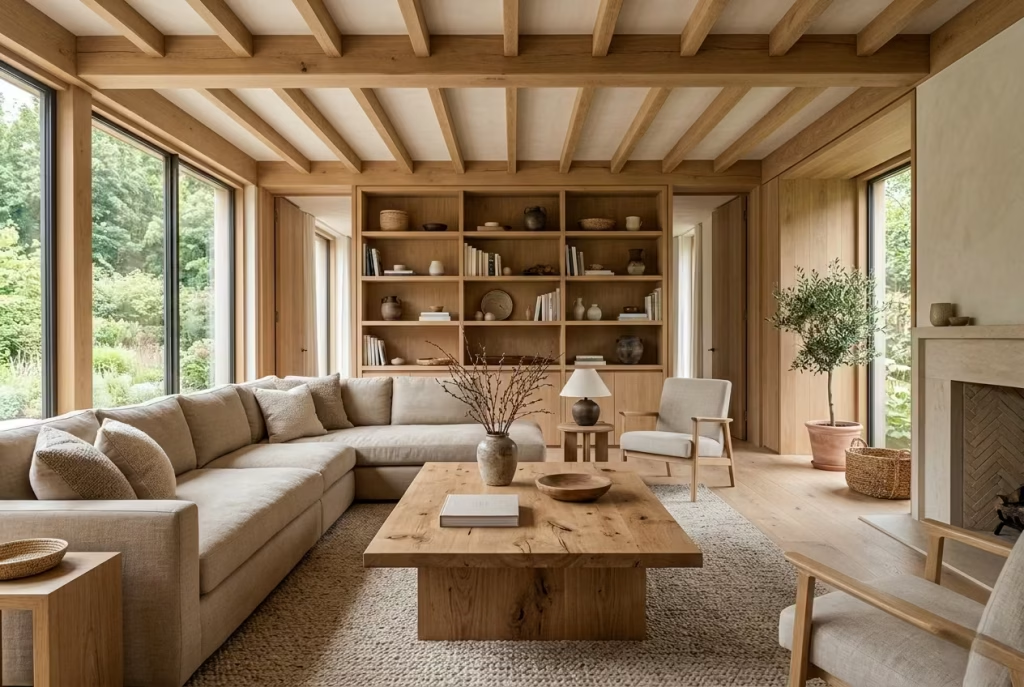
Among all the materials used in interior design, wood possesses a unique ability to make a room feel welcoming almost instantly. It introduces warmth that extends far beyond colour alone, influencing how a space is perceived emotionally as well as visually. Walk into a living room filled with stone, glass, and metal, and the atmosphere may feel refined and contemporary. Introduce natural timber into the equation, and suddenly the room begins to feel grounded, approachable, and far more connected to everyday life.
Part of wood’s enduring appeal lies in its remarkable diversity. Each species carries its own personality, bringing a different mood to the interior. Oak, for instance, is often prized for its balanced character. Its soft grain patterns and honey-toned undertones create an easygoing warmth that complements a wide range of design styles.
Walnut offers something richer and more dramatic, with deep chocolate hues that introduce depth and sophistication without overwhelming the space. Ash sits at the lighter end of the spectrum, lending an airy quality that works beautifully in living rooms where natural light is abundant.
Reclaimed timber, meanwhile, brings history into the home. Marked by knots, weathering, and subtle imperfections, it carries a sense of authenticity that feels increasingly valuable in an age of mass production.
What makes these materials particularly effective within modern organic interiors is their ability to soften contemporary architecture. Many modern homes feature clean lines, expansive glazing, and open-plan layouts. While visually striking, these architectural elements can sometimes feel a little stark when left unbalanced. Wood acts as a counterweight. It introduces texture, variation, and visual movement that gently temper sharper surroundings.
Grain patterns play an especially important role in this process. Unlike manufactured finishes that often appear uniform from edge to edge, natural timber reveals intricate markings that unfold gradually across its surface. Swirls, knots, growth rings, and tonal shifts create subtle visual complexity.
The eye follows these patterns almost instinctively, discovering new details without feeling overwhelmed. It is a small but significant distinction. Where perfectly flat surfaces can sometimes appear static, wood introduces a sense of life and movement that makes a room feel more relaxed and layered.
I have often seen this transformation occur during renovation projects. In one contemporary living room, the original scheme relied heavily on painted cabinetry, polished surfaces, and monochromatic finishes. The space looked sleek but lacked a sense of warmth. Rather than undertaking a complete redesign, we introduced white oak shelving, a custom timber coffee table, and oak ceiling beams.
The architecture remained exactly the same, yet the atmosphere shifted dramatically. Visitors frequently commented that the room felt calmer, though few could pinpoint precisely why. The answer lay in the natural material palette quietly working behind the scenes.
Another reason wood resonates so strongly is that it ages with grace. Scratches blend into the grain. Minor wear contributes character rather than detracting from it. Over time, timber develops a patina that reflects years of use and interaction. Much like a treasured family heirloom passed from one generation to the next, it gains richness through experience rather than losing value because of it.
This quality aligns perfectly with the philosophy of modern organic design. Instead of chasing perfection, the focus shifts towards materials that evolve naturally alongside the household. A walnut side table that gathers memories over countless conversations or an oak bookshelf filled gradually with favourite reads becomes more than furniture. It becomes part of the home’s story.
Ultimately, wood succeeds because it speaks a language people instinctively understand. It reminds us of forests, craftsmanship, and the natural world beyond our walls. Whether used sparingly through accent pieces or incorporated extensively throughout the room, it has a remarkable ability to take the edge off contemporary interiors, creating spaces that feel both refined and reassuring. In a world increasingly filled with artificial surfaces and digital experiences, that connection carries more weight than ever.
Stone Introduces Quiet Permanence
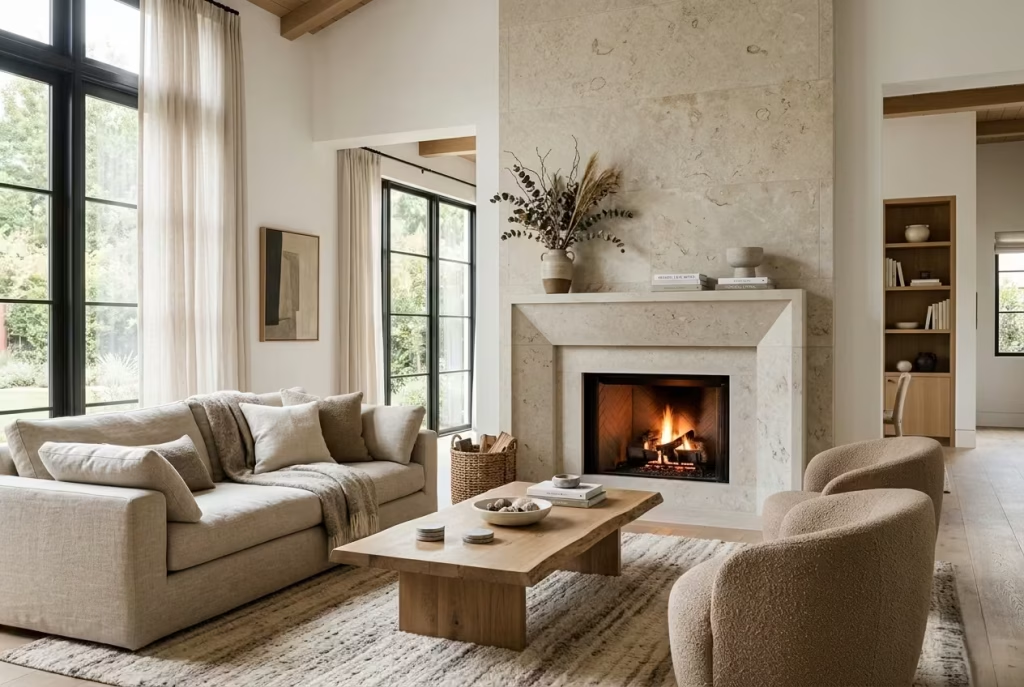
If wood brings warmth and familiarity to a living room, stone contributes something equally valuable: a sense of permanence. There is a reassuring quality to natural stone that few materials can match. Formed slowly over thousands, sometimes millions, of years, it carries an inherent weight and authenticity that immediately anchors a space. While trends come and go like passing weather, stone tends to remain steadfast, offering a feeling of longevity that makes interiors feel settled rather than temporary.
One of the most fascinating aspects of stone is its ability to feel substantial without becoming visually heavy. In modern organic living rooms, it often acts as the calm centre of gravity around which softer materials can gather. A limestone fireplace, a travertine coffee table, or a marble side table introduces texture and depth while maintaining a sense of restraint. The effect is subtle yet powerful. Rather than competing for attention, stone creates a quiet confidence that allows the entire room to feel more composed.
Limestone is particularly effective in this regard. Its muted tones and naturally weathered appearance lend a softness that works beautifully within relaxed interiors. Unlike highly polished materials that can sometimes dominate a room, limestone feels approachable.
Its surface often contains delicate variations and fossil markings that reveal themselves gradually, adding character without creating visual clutter. In spaces designed for comfort and calm, this understated quality is worth its weight in gold.
Travertine has experienced renewed popularity in recent years, though its appeal extends far beyond current design movements. What makes travertine so compelling is its organic texture and tonal variation.
Its naturally occurring pits and subtle movement create depth that feels effortless rather than manufactured. Whether used for coffee tables, plinths, shelving details, or fireplace surrounds, travertine introduces a warmth that surprises many homeowners who traditionally associate stone with colder environments.
Marble occupies a slightly different role. Long celebrated for its elegance, marble has the ability to elevate a room while still supporting the organic principles of the design. The key lies in selecting varieties with softer veining and warmer undertones.
Cream marbles, light taupes, and earthy beige variations often integrate more comfortably into organic interiors than stark white options with dramatic contrast. Used thoughtfully, marble contributes refinement while preserving the relaxed atmosphere that defines the style.
Beyond individual stone types, textured finishes deserve special attention. In my experience, texture often matters more than the specific material itself. Honed, brushed, tumbled, or lightly textured surfaces interact with light in a far gentler manner than highly polished alternatives.
Instead of producing sharp reflections, they absorb and diffuse light, creating a softer visual experience throughout the day. This distinction may seem minor, yet it has a significant impact on how a room feels. The atmosphere becomes quieter, less formal, and considerably more inviting.
I witnessed this firsthand during the renovation of a large open-plan living room where the original fireplace featured glossy stone panels with a reflective finish. Although technically impressive, the installation felt disconnected from the relaxed character the homeowners wanted to achieve.
We replaced it with honed limestone featuring subtle tonal movement and a lightly textured surface. The fireplace remained the focal point, but its presence changed completely. Rather than demanding attention, it began to support the room as a whole. The space felt calmer, warmer, and more balanced almost overnight.
Another reason stone contributes so effectively to modern organic interiors is the way it embraces imperfection. Natural markings, mineral deposits, veining patterns, and colour variations are not flaws to be corrected.
They are part of the material’s story. No two slabs are identical, which means every installation carries a degree of individuality. Much like the rings within a tree trunk or the shifting contours of a landscape shaped by time, these variations remind us that beauty often lies in uniqueness rather than uniformity.
Stone also possesses remarkable staying power from a practical perspective. A well-chosen limestone hearth, travertine table, or marble feature can remain relevant for decades without feeling outdated. This longevity aligns perfectly with the modern organic philosophy of investing in fewer, better materials that age gracefully over time. Instead of constantly chasing the next design trend, homeowners create interiors with roots deep enough to withstand changing tastes.
Ultimately, stone brings something increasingly rare to contemporary living spaces: a feeling of stillness. It slows the eye, grounds the room, and introduces a connection to the natural world that feels both ancient and reassuring. In a living room designed for comfort, reflection, and meaningful connection, that quiet sense of permanence becomes one of the most valuable design elements of all.
Linen, Wool, and Cotton Make Spaces Feel Human
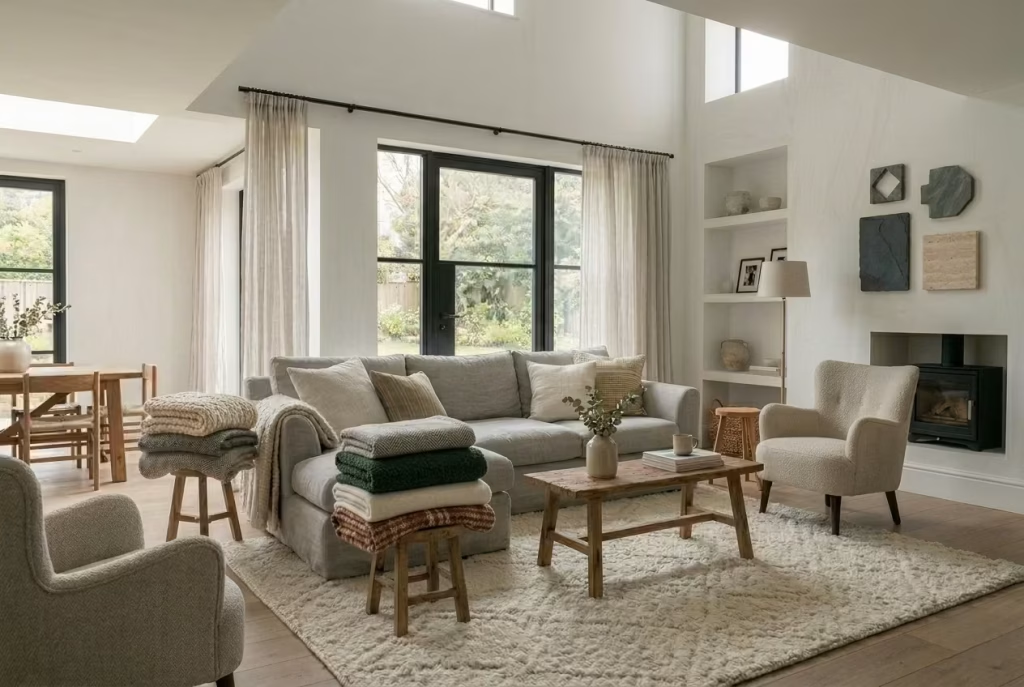
While wood and stone establish the structural warmth of a modern organic living room, it is often textiles that bring the final layer of comfort. They soften hard surfaces, absorb sound, introduce visual depth, and perhaps most importantly, make a room feel lived in rather than merely designed. A living room can have beautiful architecture and exceptional furniture, but without carefully chosen fabrics, it can still feel emotionally distant. Natural textiles help bridge that gap, creating an atmosphere that encourages people to relax, settle in, and stay awhile.
Linen, wool, and cotton have remained design staples for generations because they possess qualities that synthetic alternatives struggle to replicate. They feel authentic from the first touch. There is a quiet honesty to them. They do not attempt to conceal their nature behind excessive treatments or artificial finishes. Instead, they celebrate texture, movement, and imperfection in ways that make interiors feel more approachable.
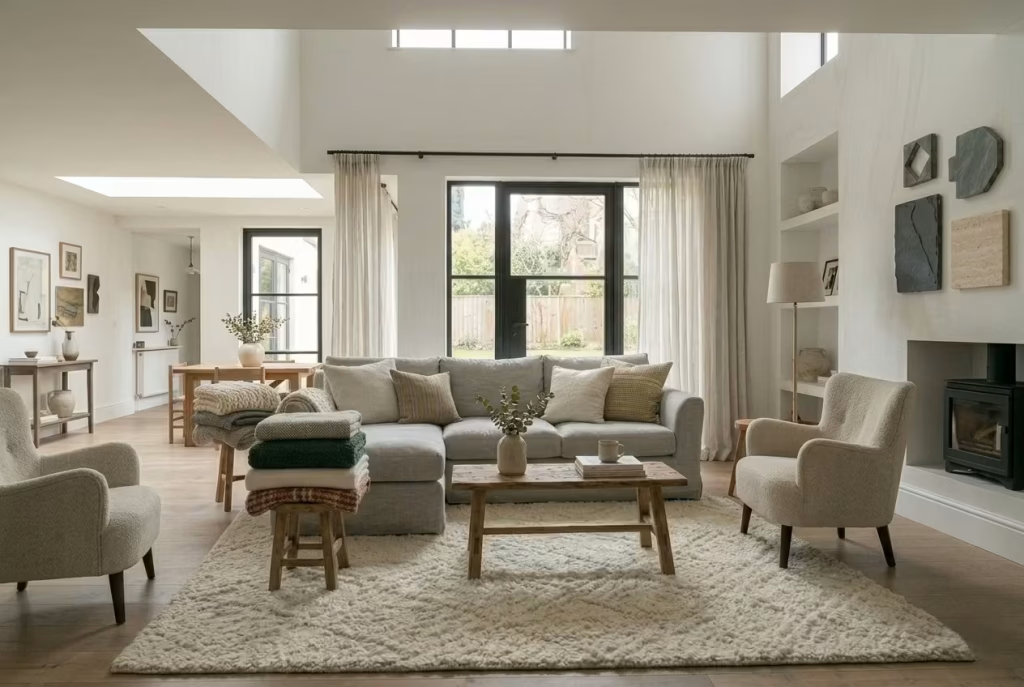
Linen, in particular, embodies this philosophy beautifully. Its relaxed drape and subtle creasing introduce a sense of ease that polished fabrics often lack. A linen sofa or set of curtains never feels overly formal. Instead, it creates an environment that feels welcoming and effortless, as though the room has settled comfortably into itself over time. The slight wrinkles that appear through daily use are not defects to be corrected. They become part of the fabric’s character, adding depth and authenticity.
Wool contributes a different kind of comfort. Rich in texture and naturally insulating, it introduces warmth that extends beyond temperature alone. A wool rug beneath your feet or a woven wool throw draped across a sofa adds softness while helping to absorb sound, making a room feel quieter and more intimate. In larger living spaces, this acoustic benefit can be transformative. Rooms that once felt echoey and expansive suddenly become calmer and more cocooning.
Cotton offers versatility and familiarity. Whether used on upholstery, cushions, or lightweight window treatments, it brings a relaxed quality that works effortlessly alongside other natural materials. Its breathable nature and subtle texture allow it to support the overall design without overwhelming it. In many ways, cotton acts as the connective tissue that helps different layers of an organic interior work together harmoniously.
You May also Like: 25 Dark Cottagecore Living Room Ideas That Feel Moody and Magical
Why Natural Textiles Age Gracefully
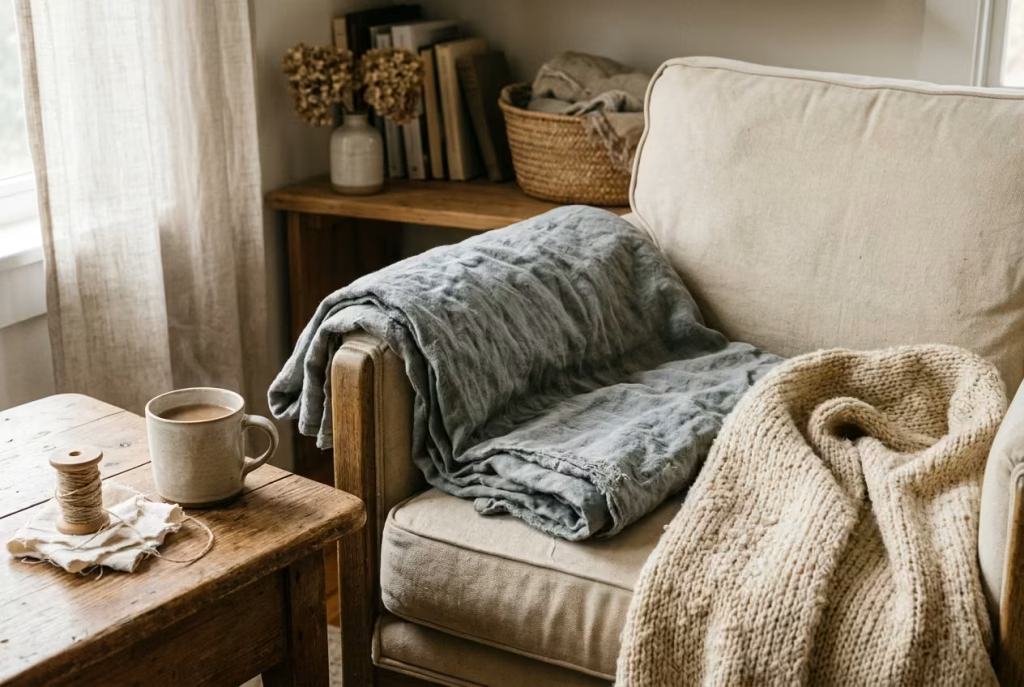
One of the greatest advantages of natural textiles is their ability to improve with time. Many synthetic fabrics look pristine on installation day but begin to show wear in ways that feel abrupt and unflattering. Natural fibres tend to follow a different path. They soften, develop character, and become more comfortable through regular use.
Linen becomes more supple with every wash. Wool gains a lived-in richness that enhances its tactile qualities. Cotton develops a softness that makes it increasingly pleasant to use. Rather than fighting the passage of time, these materials embrace it. They understand that beauty is not always found in perfection but often in the subtle signs of life and use.
This ageing process aligns closely with how people actually live. Homes are not static environments. They evolve alongside the individuals who occupy them. Materials that accommodate this evolution often create interiors that feel more enduring and emotionally satisfying over the long term.
The Importance of Tactile Comfort
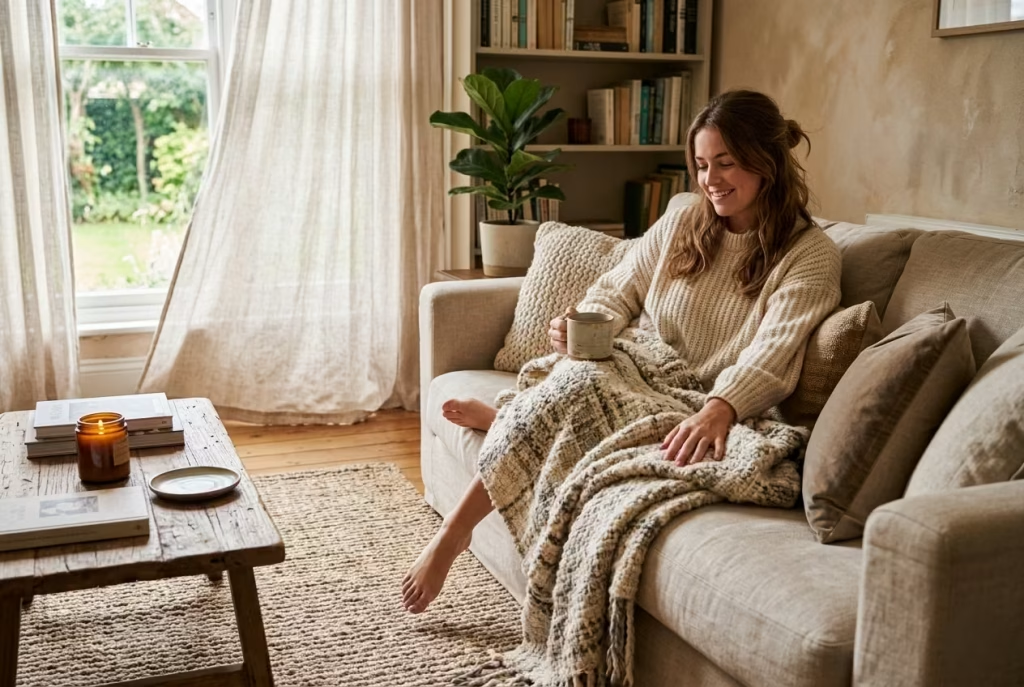
Visual design may capture attention first, but tactile comfort determines how people experience a room once they are in it. This is an area that is frequently underestimated during renovations. Homeowners often focus on colour palettes, furniture styles, and decorative details while overlooking the physical sensations created by materials.
Yet touch is constantly shaping our perception of a space. The softness of a cushion beneath your arm. The texture of a woven rug underfoot. The gentle drape of a linen curtain moving with a breeze through an open window. These experiences may seem small individually, but together they influence whether a room feels inviting or sterile.
I often tell clients that comfort is rarely created through one dramatic design decision. More often, it emerges through dozens of subtle sensory experiences layered together thoughtfully. A living room that appeals to both the eye and the hand tends to feel significantly more welcoming than one designed solely for visual impact.
Real-Life Project Experience: From Polished Perfection to Everyday Warmth
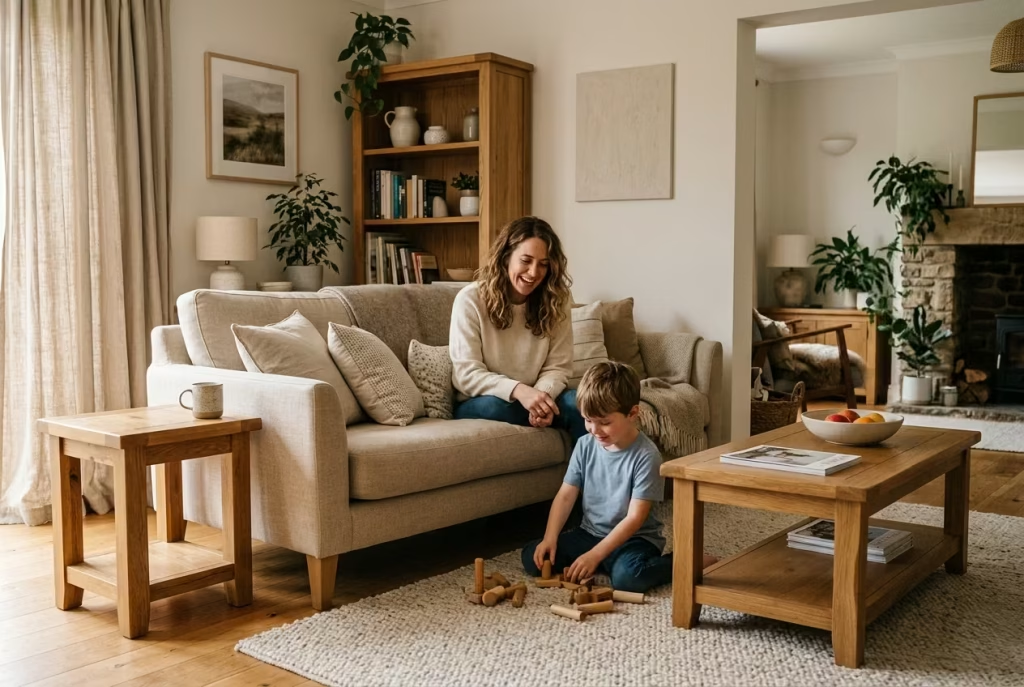
One renovation project stands out as a clear example of how natural materials can completely reshape the atmosphere of a living room. The homeowners had recently completed a contemporary refurbishment that featured glossy cabinetry, polished stone surfaces, high-sheen finishes, and sleek furniture throughout. On paper, everything looked impressive. In reality, the room felt cold and strangely disconnected from the family who lived there.
The challenge was not the layout or architecture. It was the sensory experience. Every surface reflected light sharply. The room felt visually hard despite its generous proportions and abundant natural light.
Rather than undertaking another major renovation, we focused on introducing natural textures. High-gloss accent furniture was replaced with oak pieces featuring visible grain. Smooth synthetic cushions gave way to linen and cotton blends. A large wool rug was added beneath the seating arrangement. Window treatments were redesigned using textured linen rather than crisp synthetic fabrics.
The transformation was immediate. Light began interacting with surfaces differently, creating softer shadows and more visual depth. The room felt quieter despite no structural changes being made. Most importantly, the family started using the space more frequently. What had once been a room admired from a distance became a room genuinely lived in.
That experience reinforced an important lesson: atmosphere is often shaped less by what we see and more by what we feel.
Pros
- Timeless Appeal Natural materials rarely feel tied to a particular trend cycle. Linen, wool, cotton, wood, and stone have remained relevant across generations because they possess an enduring quality that transcends changing fashions. Investing in them often results in interiors that feel just as appropriate years later as they do today.
- Better Ageing Characteristics Many natural materials develop character through use rather than deteriorating visually. Linen softens, timber acquires patina, and wool becomes richer with time. These qualities allow a living room to mature gracefully rather than appearing worn out.
- Rich Sensory Experience Natural fibres engage multiple senses simultaneously. They create visual depth, tactile comfort, acoustic softness, and a stronger connection to nature. This layered experience contributes significantly to the calm and inviting atmosphere associated with modern organic interiors.
Cons
- Higher Material Costs Quality natural materials often require a larger upfront investment than synthetic alternatives. Premium linen upholstery, solid timber furniture, and high-quality wool rugs can carry higher price tags. However, their longevity frequently offsets the initial expense over time.
- Requires Thoughtful Maintenance Natural materials reward care. Linen may wrinkle, wool requires occasional specialist cleaning, and timber benefits from periodic maintenance. While none of these demands are particularly burdensome, they do require homeowners to embrace a more considered approach to caring for their interiors.
- Ultimately, these trade-offs are often worthwhile. The warmth, authenticity, and comfort created by natural textiles cannot easily be replicated. In modern organic living rooms, they do far more than decorate a space. They help transform it into an environment that feels deeply human, rich in character, and increasingly beautiful as the years unfold.
Organic Shapes Quietly Reduce Visual Stress
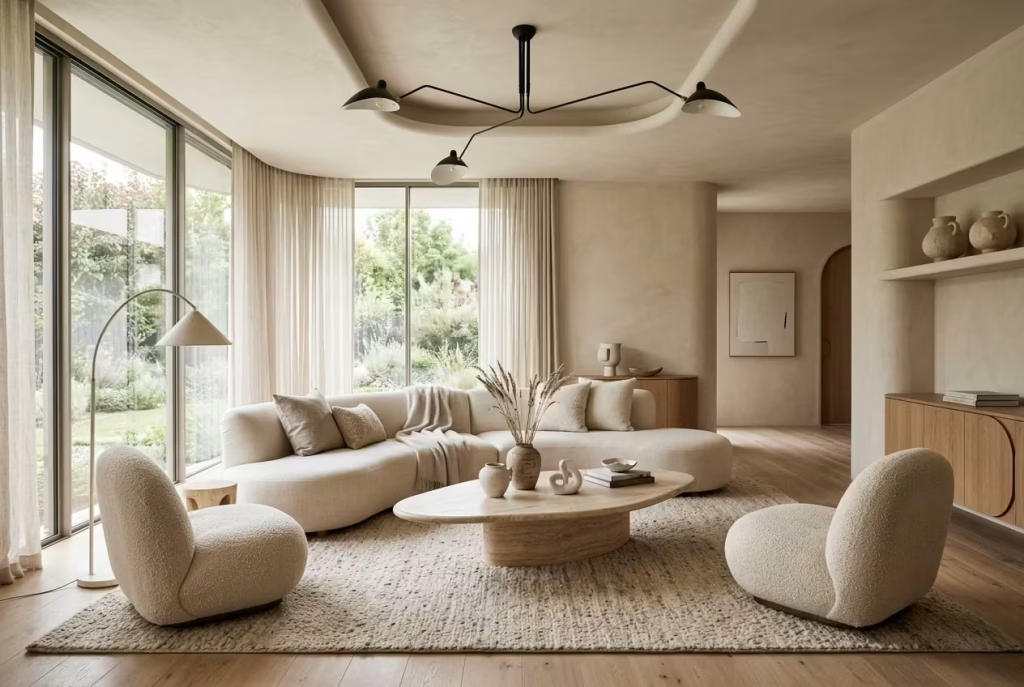
Much of what makes a modern organic living room feel calm cannot always be traced back to colour palettes or material selections alone. Often, the effect comes from something far less obvious: shape. The human eye is constantly processing information, moving from one surface, line, and object to the next. When a room is dominated by rigid angles, sharp corners, and highly structured forms, that visual journey can feel surprisingly demanding. Organic shapes introduce a different experience altogether.
Curves, softened edges, and flowing silhouettes create a gentler rhythm that allows the eye to move naturally through the space without interruption. Much like a winding garden path that reveals itself gradually rather than a straight road stretching endlessly ahead, these forms encourage a slower, more relaxed way of seeing.
They soften architectural rigidity, reduce visual tension, and help create interiors that feel instinctively welcoming. While their influence may operate quietly in the background, organic shapes often play a significant role in transforming a living room from merely attractive into genuinely restorative.
The Hidden Impact of Curves
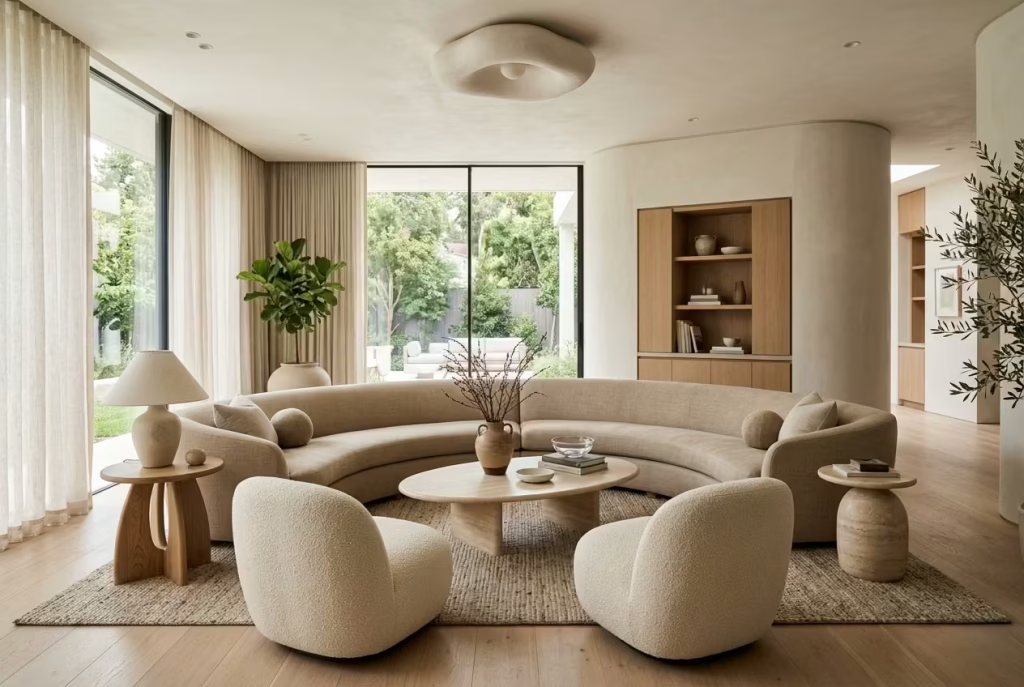
When people think about creating a warm and inviting living room, their attention usually turns towards colours, materials, or decorative accessories. Yet one of the most influential design elements often operates quietly behind the scenes. Shape. More specifically, the presence of curves. While easy to overlook at first glance, rounded furniture and softer silhouettes can dramatically influence how a room feels, altering its mood in ways that are both subtle and surprisingly powerful.
Our surroundings constantly communicate with us through visual cues. Sharp angles, rigid forms, and highly structured layouts create a sense of order and precision, but when repeated excessively, they can also introduce a level of visual tension. Curved forms work differently. They guide the eye more gently through a room, creating movement without abrupt interruptions. There is a natural flow to them, much like water finding its course through a landscape or a river bending effortlessly around the contours of the land. The experience feels smoother, calmer, and easier to absorb.
This connection is not accidental. In nature, perfectly straight lines are relatively rare. Trees branch unpredictably, coastlines curve, and hills roll across the horizon in soft undulations. Because of this, organic shapes often feel familiar on an instinctive level. They echo patterns that human beings have encountered throughout history, creating environments that feel less mechanical and more harmonious.
Rounded furniture plays a significant role in bringing this quality indoors. A curved sofa, for example, changes more than the appearance of a room. It alters how people interact within it. Unlike traditional linear seating that often directs attention in a single direction, a gently curved sofa encourages connection between occupants. Conversations become easier. Eye contact feels more natural. The arrangement subtly draws people together rather than positioning them side by side like passengers waiting at a station.
The same principle applies to accent chairs, coffee tables, and ottomans. Circular and oval forms soften the visual landscape of a living room, preventing the eye from becoming trapped within a grid of straight edges. Even a simple round coffee table can create a noticeable shift in atmosphere. Instead of acting as a hard interruption between seating pieces, it becomes a softer focal point around which movement and interaction can unfold more comfortably.
In one renovation project, I worked with homeowners who felt their newly built living room looked polished but lacked warmth. The architecture featured clean contemporary lines, expansive glazing, and angular built-in cabinetry. Every element was technically successful, yet the room felt somewhat formal despite its generous proportions. Rather than changing the structure itself, we focused on introducing softer silhouettes. A curved sofa replaced a boxy sectional. Rounded occasional tables replaced square designs. Sculptural armchairs with gently wrapped forms were added to the seating arrangement.
The transformation was remarkable. Nothing about the room became less sophisticated, yet the atmosphere changed almost immediately. Visitors lingered longer. The homeowners naturally gravitated towards the space throughout the day. What had once felt carefully composed began to feel inviting and relaxed. The room had not lost its contemporary identity. It had simply become more approachable.
Another advantage of organic forms is their ability to balance architectural contrast. Many modern homes feature straight walls, rectangular windows, and structured layouts. While these features provide clarity and order, they can sometimes create an environment that feels overly disciplined. Curved furniture acts as a visual counterpoint, introducing softness where rigidity might otherwise dominate. It is a classic case of opposites attracting. The contrast allows both elements to shine while preventing either from becoming overwhelming.
There is also an emotional dimension to rounded shapes that should not be underestimated. Hard corners often communicate boundaries and separation. Softer forms suggest openness and comfort. This may help explain why people frequently describe rooms with organic furniture as feeling more welcoming, even when they cannot identify the specific reason. The reaction happens below the surface, shaped by visual cues that quietly influence perception.
For homeowners considering a modern organic living room, embracing curves does not require replacing every piece of furniture. Often, a few carefully selected elements are enough to shift the mood. A rounded armchair, an oval coffee table, a curved floor lamp, or a sculptural side table can introduce visual softness while maintaining balance throughout the room. Like a breath of fresh air drifting through an open window, these additions may seem modest, yet their impact can be far-reaching.
Ultimately, the power of curves lies in their ability to make interiors feel more human. They soften formality, encourage connection, and reduce the visual friction that can accumulate within highly structured spaces. In a world filled with hard edges, screens, and constant stimulation, that gentle sense of ease is often exactly what a living room needs.
Why Imperfection Feels More Relaxing
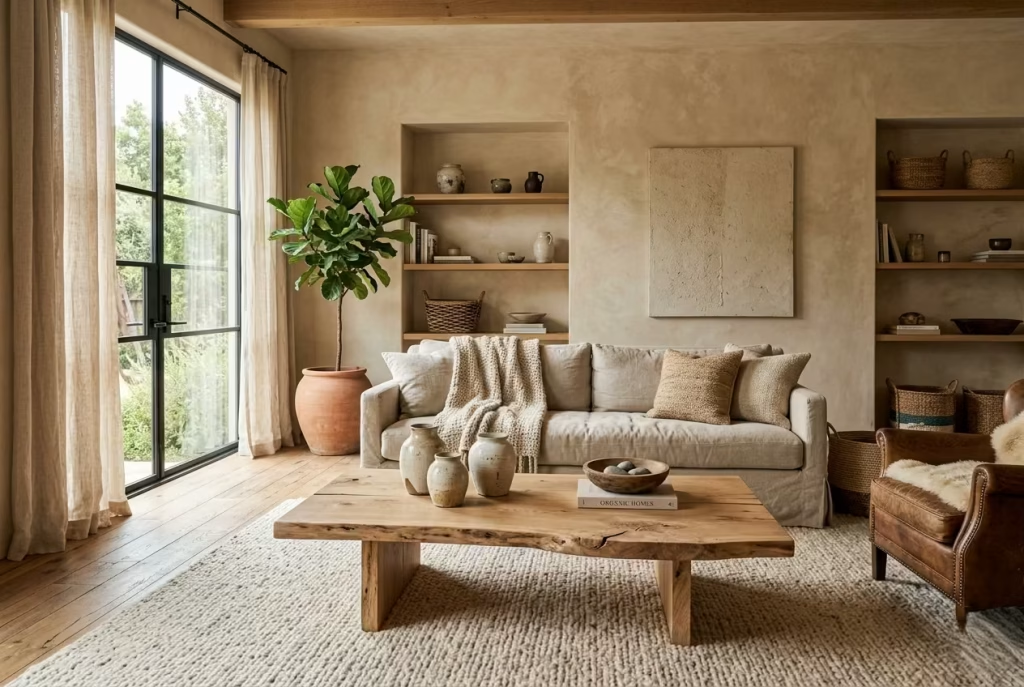
For decades, interior design often chased the idea of perfection. Furniture was expected to be flawless, surfaces uniform, and finishes so precise that every detail appeared untouched by human hands. While this approach can create impressive interiors, it sometimes produces spaces that feel surprisingly sterile. There is a certain tension that comes with perfection. It asks to be admired, protected, and maintained. Imperfection, on the other hand, tends to invite participation. It feels approachable. It allows people to settle in without feeling as though they might disturb the carefully arranged order of things.
This is one of the subtle reasons modern organic living rooms resonate so strongly. They embrace the beauty found in natural variation, handcrafted details, and materials that reveal the marks of their making. Instead of striving for absolute uniformity, they celebrate the small irregularities that make a space feel authentic. Much like a handwritten letter that carries more character than a perfectly formatted document, these imperfections create an emotional connection that polished precision often struggles to achieve.
At a psychological level, imperfection reduces pressure. When every surface appears flawless, people become acutely aware of preserving it. A room can begin to feel more like a museum exhibit than a place to live. Organic interiors take a different path. They acknowledge that life is inherently imperfect and that a home should accommodate that reality rather than resist it. The result is an environment that feels more forgiving, more comfortable, and ultimately more relaxing.
Handcrafted Finishes Create Character That Cannot Be Manufactured
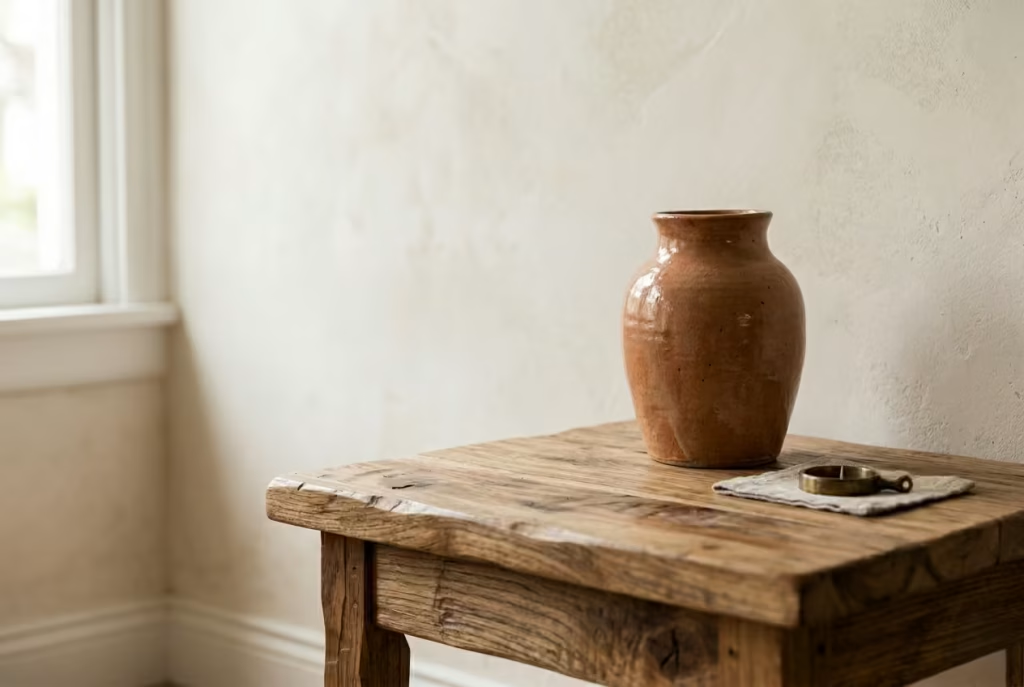
Handcrafted finishes bring a depth and individuality that machine-made products rarely achieve. Whether it is a hand-trowelled plaster wall, a carved timber side table, or a ceramic vase shaped by an artisan’s hands, these pieces carry subtle evidence of human involvement. Tiny variations in texture, form, and finish become part of the story.
What makes handcrafted elements particularly compelling is that they reveal their complexity gradually. The longer you spend with them, the more details emerge. Light catches a textured plaster surface differently throughout the day. Hand-finished timber reveals unique grain patterns and tool marks. Ceramic pieces display slight asymmetries that make them feel alive rather than replicated.
In many of my projects, these handcrafted details often become the features homeowners appreciate most over time. They may not command immediate attention like a dramatic chandelier or statement sofa, but they reward repeated observation. They possess a quiet richness that unfolds slowly, much like a favourite novel that reveals something new with every reading.
Handcrafted finishes also introduce a sense of craftsmanship that feels increasingly valuable in a world dominated by mass production. They remind us that design is not only about appearance but also about process, skill, and the people behind the objects we bring into our homes.
Organic Edges and Artisanal Details Soften the Room
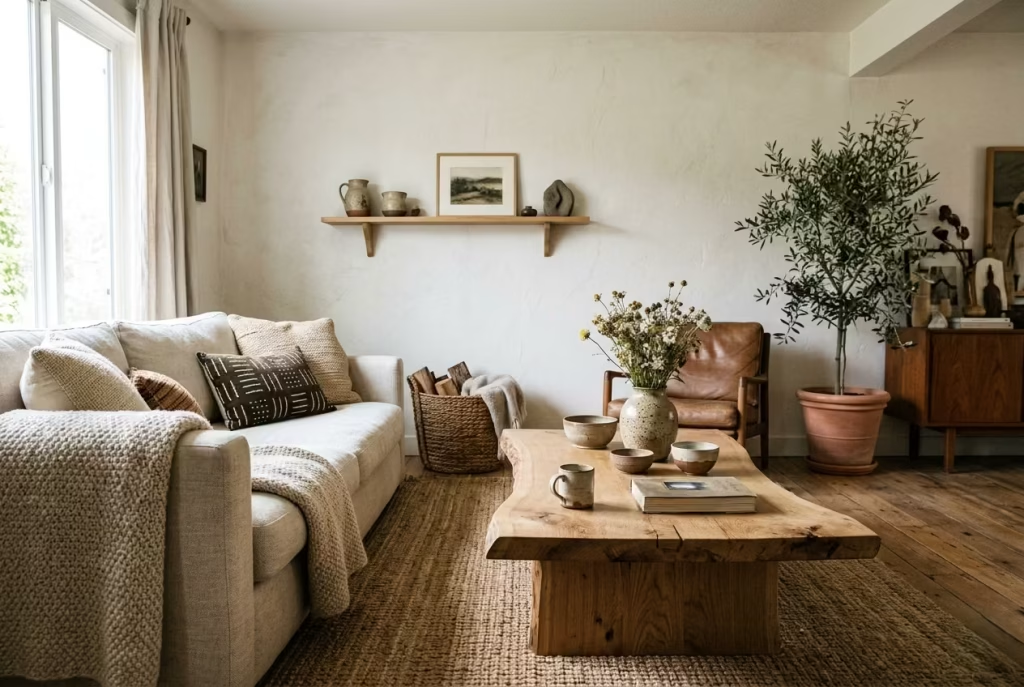
Organic edges have a remarkable ability to make interiors feel less rigid. Consider the difference between a perfectly rectangular coffee table and one crafted from a slab of wood with a gently irregular edge. Both serve the same function, yet they communicate entirely different emotions. The former feels structured and controlled. The latter feels natural and relaxed, as though it belongs to the landscape from which it originated.
These softer contours create visual movement that feels more spontaneous and less predictable. The eye travels across them naturally, discovering subtle variations along the way. Rather than demanding attention, they encourage exploration.
Artisanal details work in a similar manner. Handwoven baskets, textured ceramics, woven textiles, and sculptural objects introduce layers of individuality that make a living room feel collected over time rather than assembled in a single shopping trip. These pieces often carry a sense of history and craftsmanship that mass-produced accessories struggle to replicate.
I recall a project where a newly renovated living room featured beautiful architecture and high-quality furnishings but still felt somewhat incomplete. Everything matched perfectly, yet the room lacked personality. To address this, we introduced hand-thrown ceramic vessels, a live-edge oak coffee table, and a collection of woven accessories sourced from independent artisans. None of these additions were particularly large or expensive, but together they transformed the atmosphere. The room began to feel warmer, more layered, and considerably more personal.
That experience reinforced an important lesson. Often, what makes a living room memorable is not perfection but character. The slight variation in a handcrafted bowl. The irregular edge of a timber surface. The visible weave within a natural fibre basket. These details act as the seasoning rather than the main ingredient, yet without them the design can feel flat.
There is an old saying that the devil is in the details. In organic interiors, the opposite is often true. The comfort is in the details. The small imperfections, scattered thoughtfully throughout a room, help create an environment that feels human rather than manufactured.
Ultimately, imperfection works because it mirrors life itself. Homes are places where people gather, celebrate, relax, and create memories. They are not static compositions frozen in time. By embracing handcrafted finishes, organic edges, and artisanal details, modern organic living rooms create spaces that feel less concerned with appearances and more focused on experience. That shift, subtle though it may be, is often what transforms a beautiful room into one that people genuinely love spending time in.
Breaking Up Architectural Rigidity
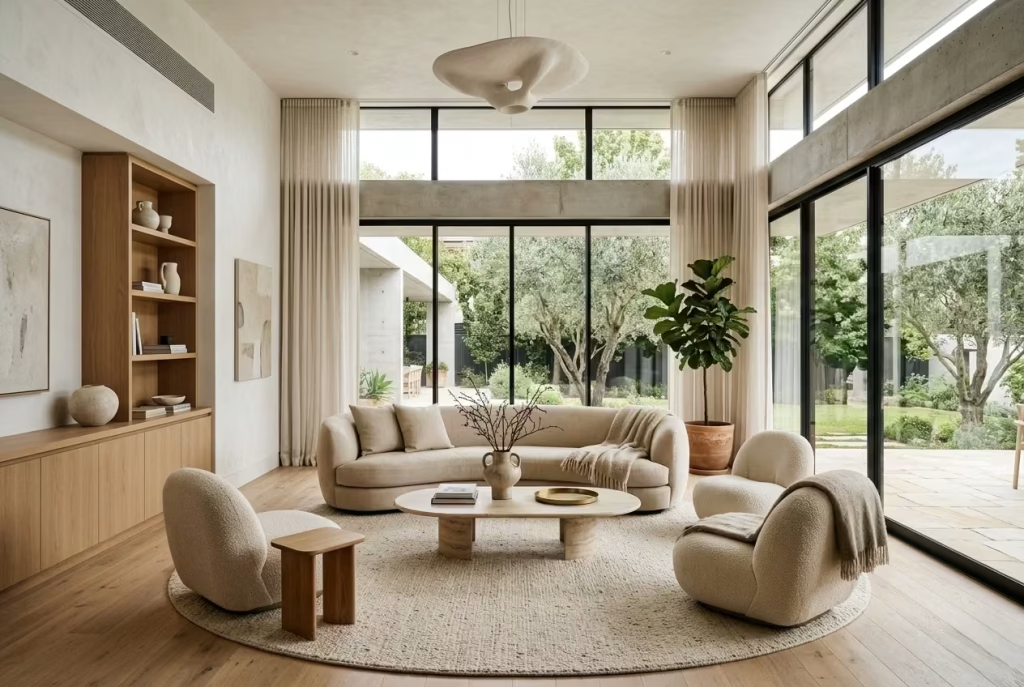
Modern homes often excel at creating clean, well-organised spaces. Expansive glazing, crisp wall lines, rectangular openings, and carefully defined architectural forms provide clarity and structure. These features contribute to the contemporary aesthetic many homeowners admire. Yet when every element follows the same visual language, a living room can begin to feel overly disciplined. The space may appear impressive, but it can also feel somewhat formal, lacking the warmth and ease that encourage people to fully relax.
This is where modern organic design introduces an important layer of balance. Rather than competing with architecture, it softens it. The goal is not to erase strong architectural lines but to create a conversation between structure and comfort. Much like a well-tailored jacket paired with a soft cashmere scarf, the contrast between precision and softness often creates a more engaging and inviting result than either element could achieve alone.
Straight lines naturally communicate order, efficiency, and stability. These qualities are valuable, but when repeated without variation, they can create visual monotony. The eye begins to encounter the same geometry repeatedly, causing the room to feel somewhat rigid. Softer furnishings interrupt this pattern. Curves, rounded forms, textured fabrics, and organic silhouettes introduce movement and fluidity, helping the space feel more relaxed and approachable.
One of the reasons this balance works so effectively is that it mirrors the relationship between nature and architecture. Buildings are inherently structured. Nature is inherently irregular. Modern organic interiors draw from both worlds, creating environments that feel organised without becoming sterile and comfortable without appearing chaotic.
Balancing Straight Architectural Lines with Softer Furnishings
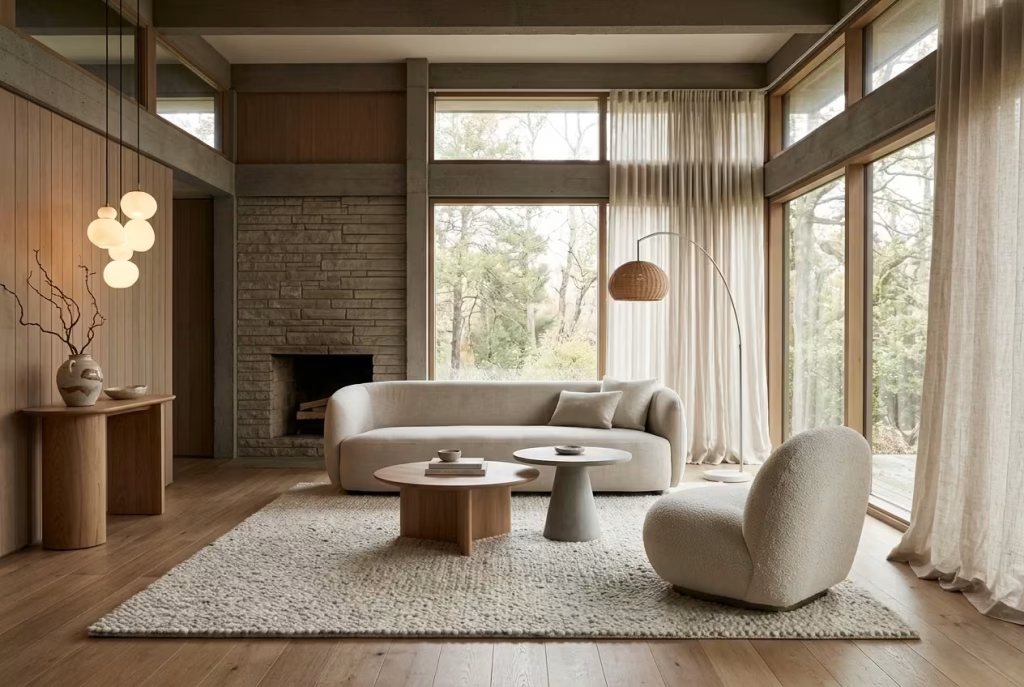
Achieving this balance does not require dramatic changes. In many cases, the most successful interventions are surprisingly subtle. A curved sofa positioned within a room dominated by rectangular architecture immediately changes how the space is perceived. Rounded coffee tables reduce the visual interruption created by sharp corners. Sculptural armchairs introduce fluidity where straight lines previously dominated.
Textiles also play an important role. Linen upholstery, wool rugs, and softly draped curtains help soften the architectural framework without obscuring it. Their textures introduce visual variation while maintaining the calm, restrained atmosphere that defines modern organic design.
Lighting contributes as well. Floor lamps with curved profiles, pendant lights featuring rounded forms, and handcrafted ceramic bases help break up repetitive geometry. These details may seem modest individually, yet together they create a room that feels considerably more layered and welcoming.
In my experience, homeowners often focus on adding more furniture when a room feels cold. The real solution is frequently about changing the shape of what is already there. A few carefully chosen organic forms can accomplish more than filling a space with additional pieces.
Real-Life Application: Softening an Open-Plan Living Room
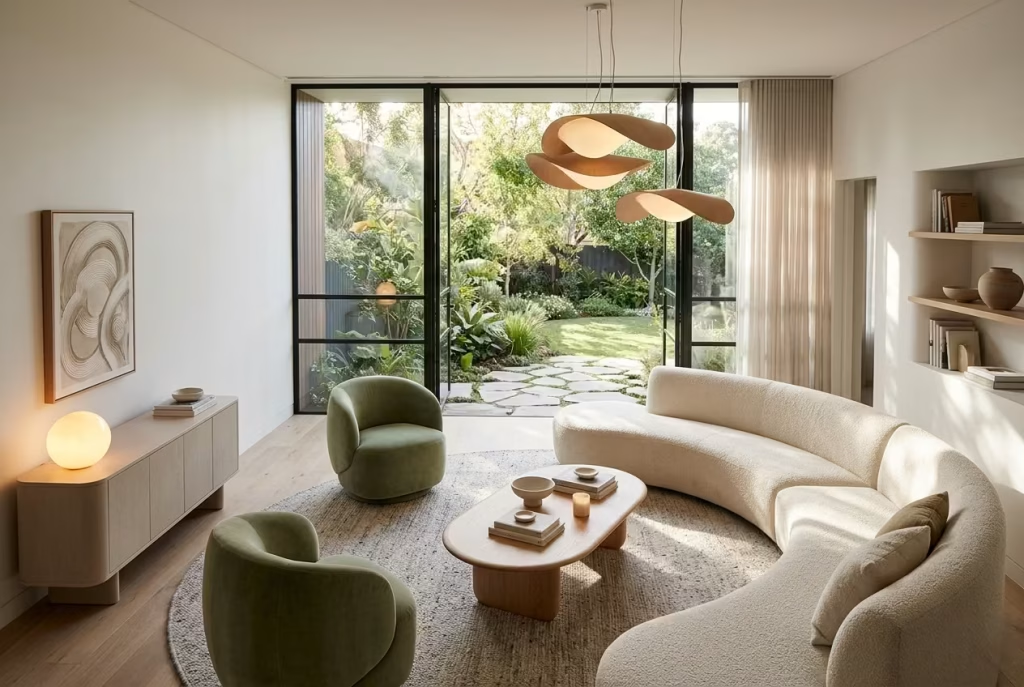
I encountered this challenge during the renovation of a large open-plan living area within a contemporary family home. Architecturally, the space was exceptional. Floor-to-ceiling windows framed garden views beautifully, while long uninterrupted walls and expansive ceilings created a strong sense of openness. Despite these strengths, the living room felt surprisingly austere.
The issue became clear after spending time in the space. Almost every element followed the same geometric language. The sectional sofa featured sharp angles. The coffee table was rectangular. Storage units were linear. Even the lighting echoed the room’s rigid architectural framework. Individually, each piece worked well. Collectively, they created an environment that felt somewhat unyielding.
Rather than redesigning the room entirely, we focused on introducing softer forms. The angular sofa was replaced with a gently curved design that naturally encouraged conversation and improved visual flow. A large oval coffee table took the place of the rectangular version. Rounded accent chairs were positioned near the windows, while a circular rug subtly anchored the seating arrangement.
The transformation was immediate. The room retained its contemporary character, but the atmosphere became noticeably more relaxed. Visitors no longer felt as though they were stepping into a carefully staged environment. Instead, the space welcomed interaction. Conversations flowed more naturally, movement throughout the room felt easier, and the entire living area gained a sense of warmth that had previously been missing.
Interestingly, none of the architectural features changed. The difference came entirely from introducing contrast. By softening the room’s geometry, we allowed its strongest architectural qualities to shine without overwhelming the experience of being there.
You May also Like: 25 Modern Spanish Colonial Living Room Ideas That Feel Timeless and Lived-In
Suggested Measurements for Comfort and Flow
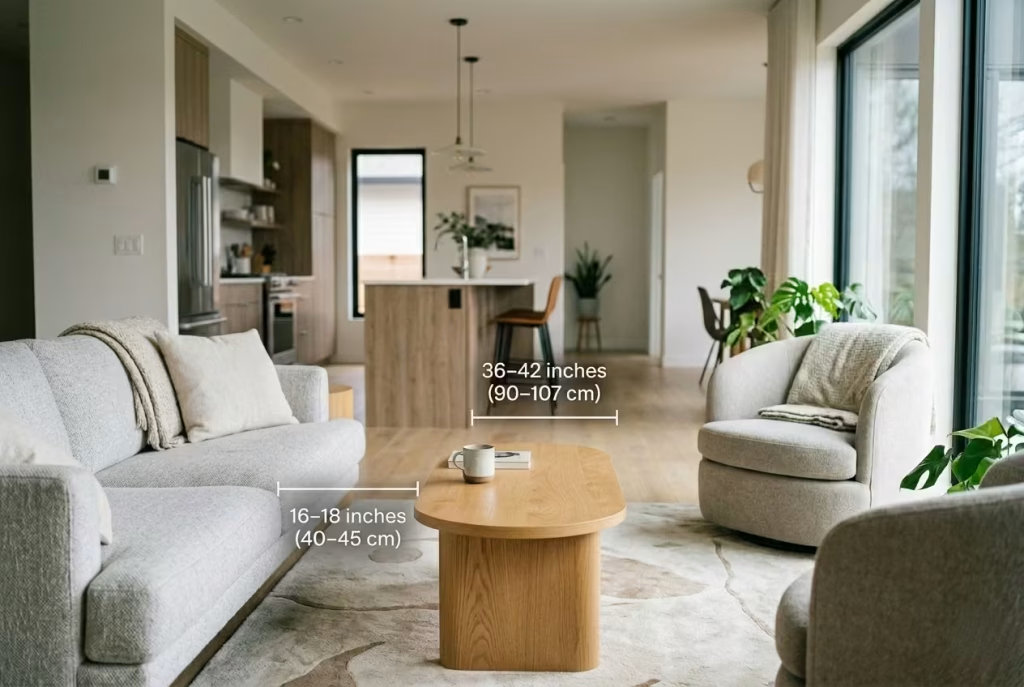
While aesthetics play an important role, successful living rooms also rely on practical spatial planning. Comfort is often shaped by dimensions that remain largely invisible when done correctly.
For coffee tables, maintaining a clearance of 16 to 18 inches (40 to 45 cm) between the table and surrounding seating generally provides the ideal balance between accessibility and comfort. This distance allows people to reach drinks, books, or decorative objects easily without feeling cramped.
Circulation paths deserve equal attention. In open-plan layouts, primary walkways should ideally measure 36 to 42 inches (90 to 107 cm) wide. This allows people to move comfortably through the room without disrupting conversations or navigating awkward bottlenecks. Rooms that respect these clearances tend to feel effortless to use, even when occupied by multiple family members or guests.
These measurements may appear purely functional, yet they have a significant influence on how a room feels. When movement flows naturally and furniture relationships feel intuitive, people rarely notice the planning behind them. They simply experience a sense of ease. In many ways, that is the hallmark of excellent design. The room works so well that its intelligence remains almost invisible.
Ultimately, breaking up architectural rigidity is not about rejecting contemporary design. It is about introducing enough softness to make it feel human. Curved furniture, rounded forms, thoughtful spacing, and layered textures help create living rooms that support both visual beauty and everyday comfort. Like smoothing the rough edges from a well-travelled path, these adjustments make the journey through the room feel gentler, more natural, and far more enjoyable.
The Colour Palette Creates Emotional Calm Without Feeling Boring
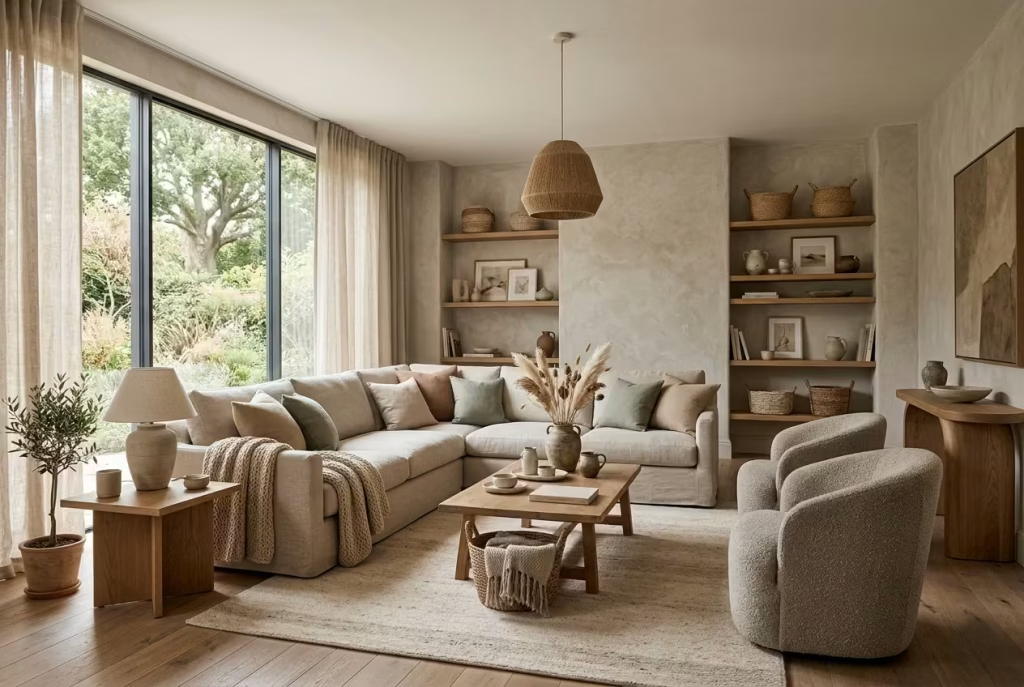
Colour is often the first thing people notice in a living room, yet its most powerful influence usually happens beneath conscious awareness. It shapes mood, affects perception, and quietly determines whether a space feels energising, comforting, sophisticated, or overwhelming. In modern organic interiors, colour is rarely used to make a dramatic statement. Instead, it works like a steady undercurrent, guiding the atmosphere of the room without demanding constant attention. The palette typically draws inspiration from nature, borrowing tones found in weathered stone, sunlit sand, aged timber, dried grasses, and earthy landscapes. These colours create a sense of familiarity that feels instinctively calming, but their success is not simply a matter of choosing neutrals.
The most inviting modern organic living rooms rely on subtle variation, depth, and thoughtful layering to prevent the space from feeling flat or predictable. Like a landscape that reveals new details the longer you look at it, a well-balanced palette creates visual interest through nuance rather than contrast, allowing the room to feel serene, warm, and endlessly engaging at the same time.
The Power of Earth-Derived Colours
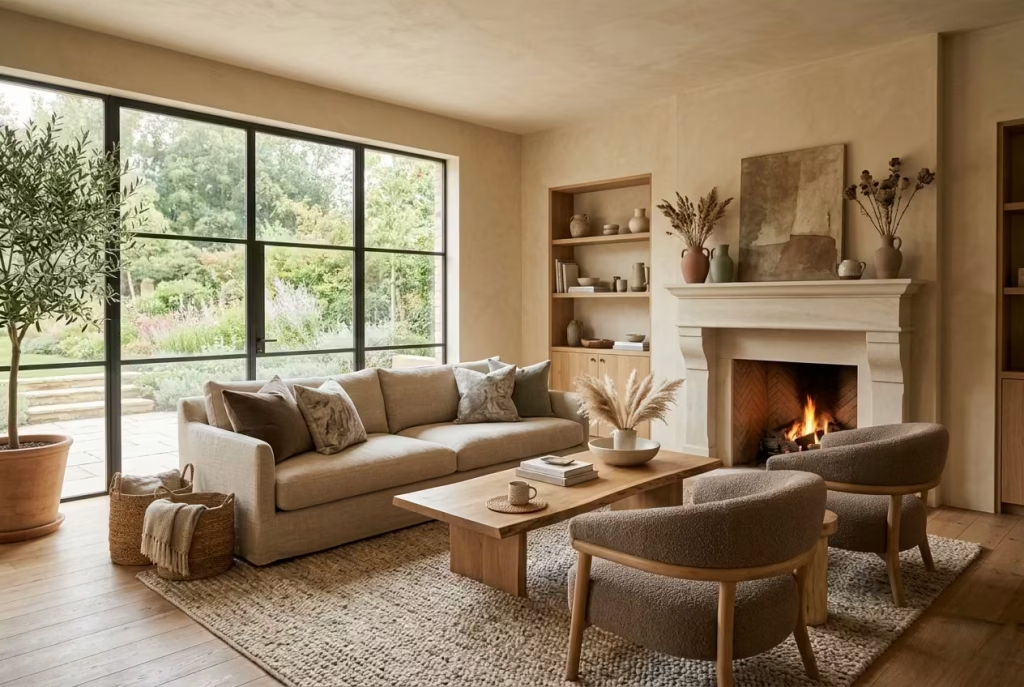
Some colours capture attention immediately. Others work more quietly, shaping the atmosphere of a room in ways that are felt long before they are consciously noticed. Earth-derived colours belong firmly in the latter category. They do not shout for recognition or compete for the spotlight. Instead, they create a sense of ease that settles over a space gradually, much like the soft glow of late afternoon sunlight filtering through a window. This understated quality is one of the reasons they have become a defining feature of modern organic living rooms.
Unlike trend-driven shades that often rise and fall with changing tastes, colours inspired by nature possess a timeless familiarity. We encounter them constantly in the world around us. They appear in weathered landscapes, natural stone formations, forest floors, clay-rich soil, and coastal dunes shaped by wind and time. Because these tones are already deeply embedded within our visual experience, they tend to feel comfortable and reassuring rather than demanding or intrusive.
Sand: Bringing Lightness Without Sterility
Sand tones provide an ideal foundation for modern organic interiors because they offer warmth without becoming overly yellow and brightness without feeling clinical. Their versatility allows them to work across a wide range of architectural styles, from contemporary apartments to traditional family homes.
In living rooms, sand-coloured walls, upholstery, or rugs create an atmosphere that feels open and relaxed. They reflect natural light beautifully while maintaining enough warmth to prevent the space from feeling cold. Much like a shoreline stretching towards the horizon, sand tones create a visual sense of openness that allows other materials and textures to take centre stage.
One practical advantage of sand-based palettes is their ability to adapt throughout the day. Morning sunlight enhances their softness, while evening light deepens their warmth, helping the room maintain a welcoming character from dawn until dusk.
Stone: The Quiet Foundation of Calm
Stone-inspired colours occupy a unique position within organic interiors. Neither distinctly warm nor overtly cool, they provide balance and stability. Soft greys, mineral taupes, and muted greige tones create a grounding effect that helps larger living rooms feel cohesive and composed.
These colours work particularly well when homeowners want a calm atmosphere without relying exclusively on beige or cream. They introduce subtle complexity while preserving the tranquillity that defines modern organic design.
I often describe stone tones as the unsung heroes of a colour scheme. They rarely steal attention, yet they support everything around them. Much like a strong foundation beneath a well-built home, their contribution is easy to overlook but impossible to replace.
Clay: Adding Warmth with Character
Clay tones bring a richness that instantly makes a room feel more inviting. Inspired by sun-baked earth and natural terracotta landscapes, they introduce depth while maintaining a connection to nature.
What makes clay especially effective is its ability to warm a room without overwhelming it. Whether incorporated through accent chairs, decorative objects, artwork, or textiles, it creates visual interest while remaining grounded and approachable.
In homes where the overall palette feels slightly flat, clay often acts as the missing piece of the puzzle. It introduces warmth and personality without disrupting the calm atmosphere that homeowners are trying to achieve.
Oat: The Art of Subtle Sophistication
Oat tones occupy the delicate space between cream, beige, and soft taupe. Their beauty lies in their restraint. At first glance, they may appear simple, but closer observation reveals a depth that prevents them from feeling one-dimensional.
This quality makes oat one of the most effective colours for creating layered organic interiors. It pairs beautifully with timber, linen, wool, and stone while allowing natural textures to remain the focal point.
In many projects, oat serves as a bridge connecting lighter and darker elements within the room. It smooths transitions between materials, helping the overall design feel cohesive and effortless.
Mushroom: Depth Without Darkness
Mushroom tones have become increasingly popular because they offer something many homeowners seek but struggle to find: depth without heaviness.
Sitting comfortably between grey and brown, mushroom colours introduce richness while maintaining softness. They create visual contrast without the starkness often associated with darker shades.
When used on upholstery, cabinetry, or accent walls, mushroom tones help anchor a living room while preserving its relaxed character. They are particularly effective in spaces where homeowners want sophistication without sacrificing comfort.
Much like the rich layers of a forest floor after rainfall, mushroom tones bring complexity that unfolds gradually, rewarding attention without demanding it.
Soft Greens: A Connection to Nature Indoors
Among all earth-derived colours, soft greens perhaps carry the strongest association with wellbeing. Their connection to foliage, gardens, and natural landscapes creates an immediate sense of calm that many people respond to instinctively.
Unlike vibrant greens that can dominate a room, muted sage, olive, eucalyptus, and moss-inspired shades feel gentle and restorative. They introduce colour while maintaining harmony with the broader palette.
Soft greens work particularly well in living rooms that receive abundant natural light. As daylight shifts throughout the day, these colours reveal subtle variations that keep the space visually engaging without becoming distracting.
In one renovation project, a family wanted to introduce colour into their living room but worried about compromising its calm atmosphere. We incorporated muted sage upholstery alongside oak furniture and textured linen curtains. The result felt fresh and grounded simultaneously. The room gained personality while retaining the sense of comfort the homeowners valued most.
Why Earth-Derived Colours Feel So Enduring
The lasting appeal of these colours comes from their ability to work with human psychology rather than against it. Bright, high-contrast palettes can be exciting in small doses, but they often require constant attention. Earth-inspired colours create a different experience. They allow the mind to relax. They support the room rather than dominate it.
There is an old expression about feeling at home in one’s surroundings. Earth-derived colours help create exactly that sensation. They remind us of landscapes, seasons, and natural materials that have surrounded humanity for centuries. As a result, they rarely feel forced or unfamiliar.
Perhaps that is their greatest strength. They do not rely on novelty to remain interesting. Instead, they reveal their beauty slowly through shifting light, layered textures, and the everyday moments that unfold within the room. In modern organic living rooms, that quiet confidence often proves far more powerful than any bold colour statement ever could.
Why Neutral Doesn’t Mean Plain
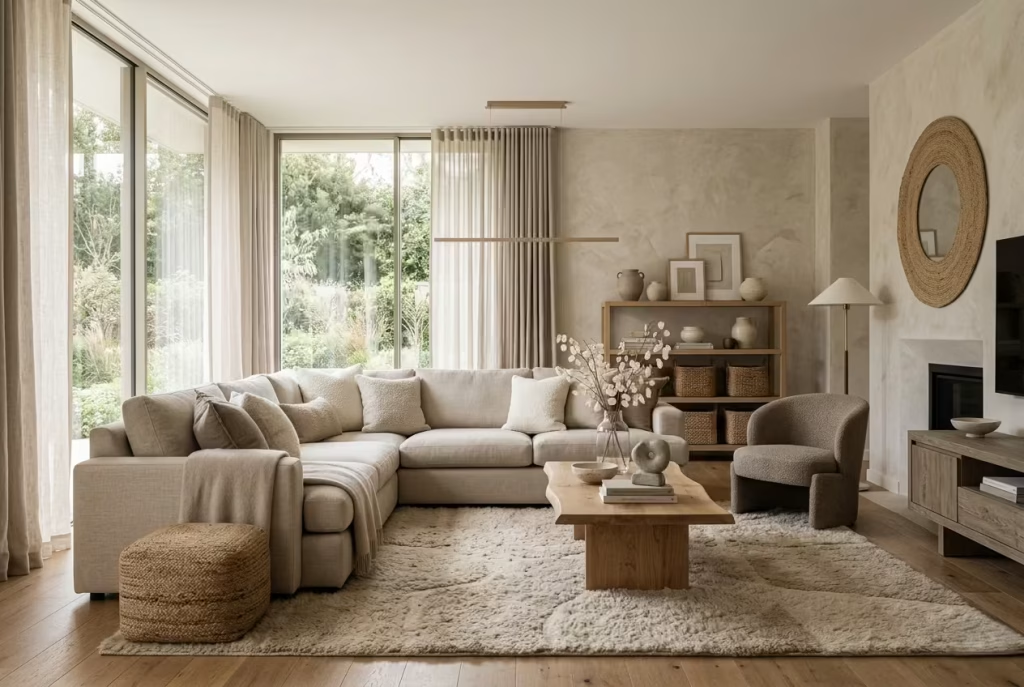
One of the biggest misconceptions in interior design is the belief that neutral colour schemes are inherently dull. It is an assumption that has lingered for years, often leading homeowners to introduce bold colours simply to avoid a room feeling lifeless. Yet when a neutral interior falls flat, the problem is rarely the palette itself. More often, it is the absence of depth, contrast, and thoughtful layering. A well-designed neutral living room can feel every bit as rich, sophisticated, and engaging as one filled with stronger colours. In many cases, it can feel even more compelling because its beauty unfolds gradually rather than revealing everything at once.
The secret lies in understanding that neutral is not a single colour. It is an entire family of tones, each carrying its own undertones, textures, and visual weight. Cream, oat, mushroom, stone, sand, taupe, warm grey, soft beige, and weathered ivory may appear similar from a distance, yet each contributes something distinct to the atmosphere of a room. When combined thoughtfully, they create a layered composition that feels nuanced rather than one-dimensional.
Much like a landscape viewed on a misty morning, where subtle shifts in light reveal depth across fields, hills, and distant horizons, a successful neutral interior relies on variation rather than dramatic contrast. The eye moves gently between tones, discovering small differences that keep the space visually alive.
Layering Tonal Variation for Depth
Tonal layering is one of the most powerful techniques in modern organic design because it creates richness without disrupting the sense of calm. Instead of relying on bold colour changes, the room gains character through carefully considered variations within the same colour family.
Imagine a living room built around warm earthy neutrals. The walls may be finished in a soft limestone shade. The sofa might feature a slightly deeper oat-toned linen upholstery. Cushions introduce mushroom and sand hues, while a wool rug brings in subtle variations of cream and taupe. Individually, none of these colours demand attention. Together, they create an environment that feels layered, sophisticated, and deeply comfortable.
This approach works because the eye naturally appreciates complexity, but it does not always require dramatic shifts to find it. Small tonal differences provide enough variation to maintain interest while preserving visual harmony. The result feels balanced rather than busy.
Texture plays a crucial supporting role in this process. When colours remain relatively restrained, materials become responsible for much of the visual depth. A nubby wool throw reflects light differently than smooth linen upholstery. A textured plaster wall creates shadows that add dimension throughout the day. Natural timber introduces grain patterns that enrich the palette without introducing additional colour.
In many of my projects, homeowners initially worry that an organic neutral scheme will feel too safe. What often surprises them is how dynamic the finished room becomes once texture and tonal variation begin working together. Rather than feeling bland, the space gains a quiet richness that reveals itself slowly. The room never grows tired because there is always another layer to appreciate.
I remember working on a living room where the client was convinced they needed a bold feature wall to prevent the design from feeling monotonous. Instead, we focused on building depth through subtle tonal shifts. Warm ivory walls were paired with a stone-coloured sofa, mushroom-toned accent chairs, natural oak furniture, and layered linen textiles. Once completed, the room felt remarkably sophisticated. Visitors frequently described it as rich and welcoming, despite the fact that the palette contained almost no strong colour contrasts.
The lesson was clear. Depth does not always come from colour intensity. Often, it emerges through restraint.
Another advantage of tonal layering is its ability to adapt over time. Rooms built around strong trend-driven colours can sometimes feel tied to a particular moment. Neutral palettes offer greater flexibility. Artwork can change. Decorative accessories can evolve. Furniture can be updated gradually. The underlying scheme remains relevant because it provides a stable foundation rather than competing for attention.
There is also a psychological benefit to this approach. High-contrast environments constantly draw the eye from one focal point to another, creating a sense of visual activity. Tonal interiors encourage a slower experience. The eye moves naturally through the room without interruption, creating a feeling of ease that many people associate with comfort.
Like a well-composed piece of music built on subtle variations rather than dramatic crescendos, a layered neutral living room creates interest through rhythm, texture, and nuance. It invites closer observation rather than demanding immediate attention.
Ultimately, neutral does not mean plain. When handled thoughtfully, it becomes a canvas for depth, texture, light, and materiality. The beauty lies not in what is shouted but in what is whispered. In modern organic living rooms, that quiet confidence often proves far more enduring than any fleeting colour trend.
You May also Like: 25 Designer Secrets for Styling a Neutral Living Room That Feels Warm and Inviting
Using Contrast Without Disrupting Serenity
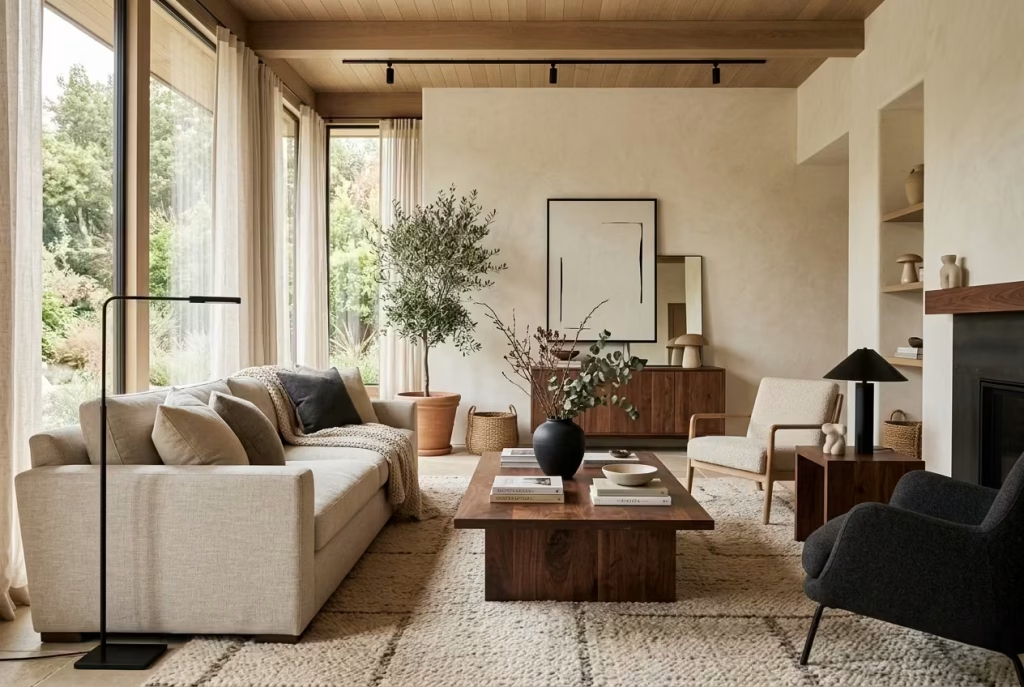
A calm living room does not have to be built entirely from light colours and closely matched tones. In fact, some degree of contrast is often essential. Without it, even the most thoughtfully designed space can begin to feel visually adrift, lacking the definition needed to guide the eye and create a sense of structure. The challenge lies in introducing contrast carefully. Too little can make a room feel flat. Too much can transform a peaceful environment into one that feels restless and demanding. The most successful modern organic living rooms occupy the sweet spot in between, where contrast provides depth and character without disturbing the overall sense of ease.
Think of contrast as seasoning in a well-prepared meal. Used sparingly, it enhances every ingredient around it. Used excessively, it overwhelms the experience. The goal is not to create drama for its own sake but to establish balance, allowing lighter elements to feel brighter and softer materials to feel even more inviting.
Black Accents: Small Details, Significant Impact
Black accents are among the most effective tools for introducing definition into an organic interior. Their strength lies not in their size but in their ability to create visual anchors throughout a room.
A slim black floor lamp, a dark-framed artwork, understated cabinet hardware, or a sculptural side table can provide moments of contrast that help organise the space visually. These elements act like punctuation marks within a sentence. They create rhythm and clarity without dominating the overall composition.
One common mistake homeowners make is assuming black automatically creates harshness. In reality, when used selectively and surrounded by softer natural materials, black often enhances warmth rather than diminishing it. Against linen upholstery, oak furniture, and textured plaster walls, black details introduce a level of sophistication that prevents the room from feeling overly delicate or washed out.
The key is restraint. A handful of carefully placed accents usually achieves far more than an abundance of dark elements competing for attention.
Dark Woods: Adding Depth Without Weight
Dark timber introduces another layer of contrast, though its effect tends to feel richer and more organic than black alone. Walnut, smoked oak, and darker stained woods provide visual depth while maintaining a connection to nature.
What makes dark wood particularly valuable is its ability to ground a room. In living spaces dominated by lighter neutrals, darker timber pieces help create a sense of stability. A walnut coffee table, for example, can anchor an entire seating arrangement, giving the eye a place to rest amid softer surrounding tones.
Unlike stark colour contrasts that can feel abrupt, dark woods transition naturally within organic interiors because they still carry the warmth and texture of natural materials. Their grain patterns soften their visual presence, preventing them from feeling overly severe.
I often compare dark wood to the roots of a mature tree. While not always the first thing people notice, it provides structure and depth that support everything around it.
Textural Contrast Creates Quiet Drama
Not all contrast needs to come from colour. In many cases, texture provides a more refined and enduring solution.
Textural contrast introduces variation without disrupting harmony. A smooth limestone surface paired with a chunky wool throw. Soft linen upholstery alongside a hand-carved timber table. A woven basket placed against a plaster wall rich with subtle movement. These combinations create visual interest while preserving the room’s calming atmosphere.
One reason texture works so effectively is that it engages the eye gradually. Rather than creating an immediate visual jolt, it rewards closer observation. The room feels layered and dynamic without becoming busy.
In modern organic interiors, textural contrast often contributes more to perceived richness than colour contrast alone. It creates depth that unfolds slowly, allowing the space to remain comfortable for prolonged periods.
This distinction matters because living rooms are not spaces people experience for a few moments. They are environments occupied for hours at a time. Design choices that feel exciting initially can become exhausting if they constantly compete for attention.
Real-Life Designer Insight: When Contrast Goes Too Far
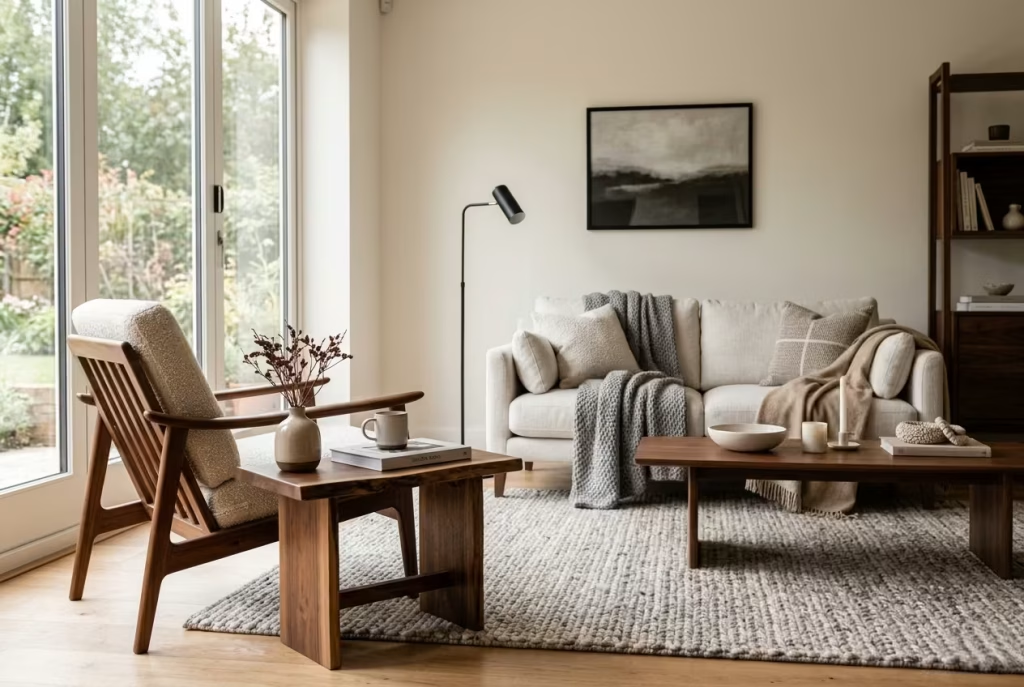
One of the most valuable lessons I have learned throughout residential design projects is that contrast has a tipping point. Beyond a certain threshold, it begins working against the very atmosphere homeowners are trying to create.
Several years ago, I worked on a contemporary living room where the original design heavily emphasised visual contrast. Crisp white walls were paired with black feature elements throughout the space. Furniture alternated sharply between light and dark finishes. Decorative accessories reinforced the same high-contrast approach at every opportunity.
At first glance, the room looked striking. Photographs captured beautifully defined lines and dramatic focal points. Yet the homeowners consistently described the space as uncomfortable. They spent surprisingly little time there despite investing heavily in the renovation.
After spending time in the room, the reason became apparent. The eye never had an opportunity to settle. Every surface competed for attention. Every transition demanded focus. The visual experience felt more like navigating a busy city intersection than relaxing within a family living room.
During the redesign, we softened the palette considerably. Strong black-and-white contrasts were replaced with layered neutrals. Dark accents remained but were used more selectively. Walnut furniture introduced warmth, while textured fabrics helped create gentler transitions between materials.
The change was immediate. The room retained its sophistication, but the atmosphere became noticeably calmer. Most importantly, the homeowners began using the space regularly. The living room stopped performing like a showpiece and started functioning as a home.
That project reinforced an important principle: visual excitement and long-term comfort are not always the same thing. What captures attention in a photograph may not necessarily support daily living.
The most enduring modern organic interiors understand this distinction. They use contrast with intention rather than abundance. Black accents define. Dark woods ground. Textural variation enriches. Together, these elements create depth and character while preserving the serenity that makes the space so inviting.
Like a well-balanced conversation where every voice has room to be heard, successful contrast supports the overall composition without overpowering it. When handled thoughtfully, it adds dimension and sophistication while allowing the room’s calm spirit to remain firmly intact.
Layered Textures Make the Room Feel Instantly More Inviting
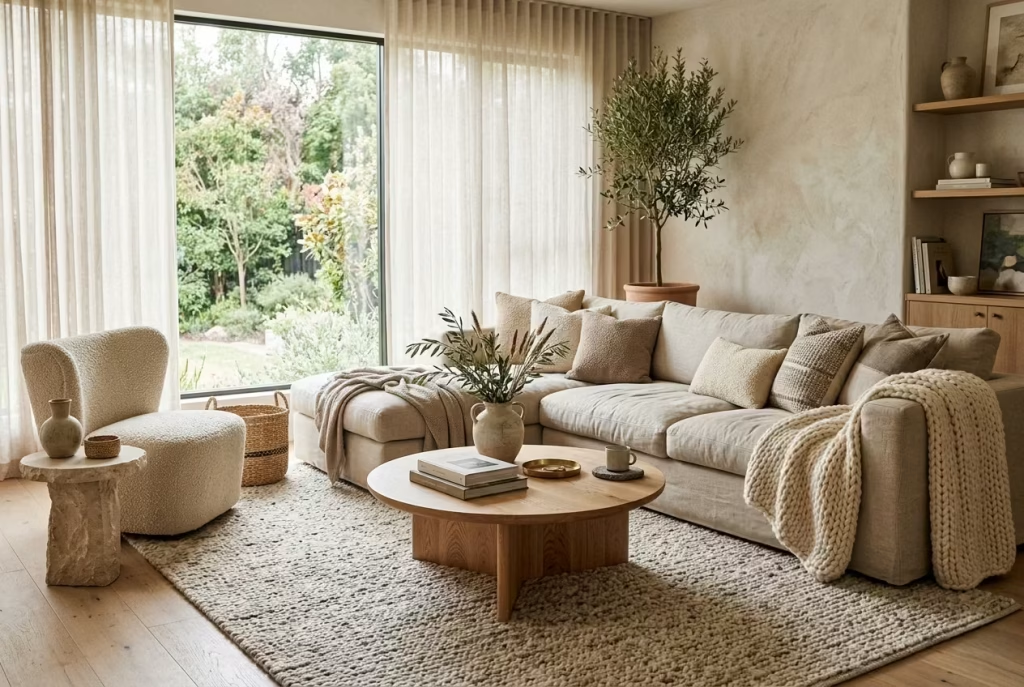
If colour establishes the mood of a living room and furniture defines its function, texture is what brings the space to life. It is often the difference between a room that looks attractive and one that feels genuinely welcoming. Many modern organic interiors rely on relatively restrained colour palettes, which means texture takes on an even greater role in creating depth, warmth, and visual interest.
Without it, even the most carefully selected furnishings can leave a room feeling flat, much like a beautifully prepared meal missing its final seasoning. Layered textures engage both the eye and the senses, encouraging people to experience the space rather than simply observe it.
From the softness of a wool throw and the irregular weave of linen to the tactile grain of natural timber and the subtle movement within stone, each layer contributes to a richer and more immersive environment. Together, these materials create a living room that feels collected, comfortable, and deeply lived in, inviting people to settle in, slow down, and enjoy the space long after first impressions have faded.
Texture Creates Depth That Colour Alone Cannot
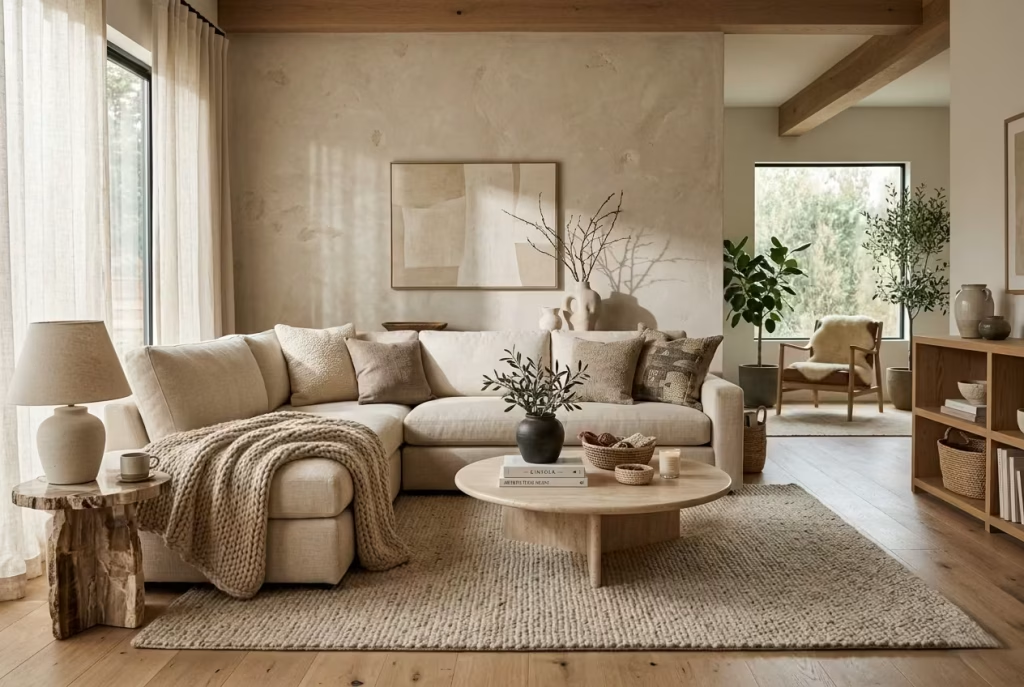
Colour may define the first impression of a living room, but texture is what sustains interest over time. A space built purely on colour can look coherent and visually pleasing, yet still feel surprisingly two-dimensional once the initial impact fades. Texture introduces another layer of complexity, one that cannot be achieved through pigment alone. It shapes how light behaves across surfaces, how materials interact with one another, and how the room is experienced at a sensory level. In many ways, it is the quiet force that prevents interiors from feeling visually static, adding richness that unfolds gradually rather than all at once.
Unlike colour, which is immediately registered by the eye, texture often reveals itself slowly. A linen sofa catches light differently depending on the time of day, shifting from soft and matte in the morning to subtly shadowed in the evening. A wool rug underfoot absorbs sound while adding tactile depth that anchors the seating area. A hand-finished plaster wall creates gentle irregularities that break up light in a way that feels natural and unforced. These variations may seem subtle in isolation, yet together they form a layered visual experience that keeps the room feeling alive.
One of the most compelling aspects of texture is its ability to create contrast without introducing visual noise. A smooth stone coffee table placed beside a nubby wool throw or a finely woven linen cushion creates a dialogue between surfaces that feels balanced rather than chaotic. The eye moves between these differences instinctively, much like walking through a landscape where grass, stone, water, and wood coexist in harmony. This interplay gives the room a sense of depth that flat, uniform finishes simply cannot replicate.
Texture also plays a crucial role in how a space feels emotionally. Smooth, reflective surfaces tend to create distance, while tactile, natural materials invite closeness. There is something inherently grounding about touching raw timber grain or resting against a fabric that carries visible weave and structure. These experiences anchor people in the present moment, making the room feel more comforting and human. It is this quiet sensory engagement that often determines whether a space feels like a place to pass through or a place to stay.
In practice, layering texture requires restraint as much as creativity. Too many competing surfaces can overwhelm the eye, while too few can leave a room feeling unfinished. The most successful modern organic interiors tend to follow a rhythm of repetition and variation. A limited palette of materials is used consistently, but each is introduced in different forms and finishes. For example, oak may appear in flooring, furniture, and shelving, yet each application carries a slightly different texture and tone, allowing continuity without monotony.
I have often found that the most transformative changes in a living room do not come from altering colour schemes but from adjusting texture balance. In one project, a space that initially felt cold and overly polished was completely redefined through the introduction of softened materials.
A smooth leather sofa was paired with linen cushions, a flat woven rug replaced a glossy surface, and a textured plaster feature wall replaced painted drywall. The colour palette remained largely unchanged, yet the atmosphere shifted noticeably. The room became warmer, more grounded, and significantly more inviting, as though it had finally learned how to breathe.
This is where texture proves its true value. It does not compete for attention in an obvious way, yet it shapes perception continuously in the background. Like the grain in wood or the weave in fabric, its influence is always present, even when not consciously noticed. Over time, it becomes the element that gives a room its character, its depth, and its quiet sense of ease.
Ultimately, texture is what turns a well-decorated space into a genuinely inhabitable one. It adds the richness that colour alone cannot achieve, transforming surfaces into experiences and rooms into environments that feel layered, considered, and deeply human.
The Most Effective Material Pairings
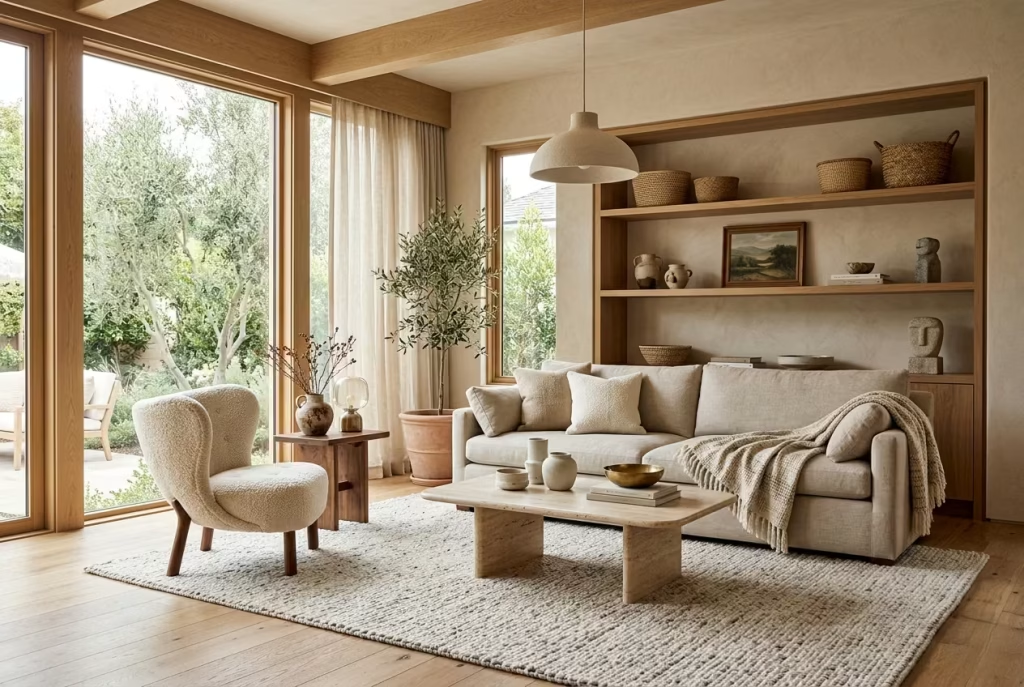
In modern organic living rooms, harmony is rarely achieved through a single standout material. It emerges instead from carefully considered combinations that balance softness with structure, warmth with restraint, and texture with clarity. When materials are paired thoughtfully, they begin to elevate one another, creating a layered experience that feels richer than any individual element could achieve on its own. The most successful interiors often rely on a small, disciplined palette of pairings that work quietly in the background, shaping atmosphere without drawing unnecessary attention to themselves.
Rather than chasing complexity for its own sake, the focus shifts towards relationships between materials. How they interact, how they contrast, and how they soften one another over time. Like ingredients in a well-balanced recipe, each pairing contributes something essential, yet no single component dominates the final result.
Linen + Oak: Effortless Warmth with Natural Balance
Linen and oak form one of the most enduring combinations in organic interior design. Together, they create an atmosphere that feels relaxed yet refined, grounded yet light. Linen, with its soft drape and natural irregularity, introduces a sense of ease that prevents a space from feeling overly structured. Oak, on the other hand, provides stability through its visible grain and warm undertones, offering a subtle architectural backbone.
When placed together, these materials strike a quiet balance. A linen-upholstered sofa resting against oak flooring or a dining table framed by linen curtains feels instinctively comfortable. There is nothing forced or overly styled about the pairing. Instead, it feels as though the materials naturally belong in the same conversation, each allowing the other to breathe.
Over time, both materials age gracefully. Linen softens with use, developing a lived-in character, while oak deepens in tone, gaining richness through exposure to light and daily life. This shared evolution strengthens their relationship, making the interior feel increasingly cohesive rather than static.
Wool + Stone: Softness Anchored by Stillness
Wool and stone bring together two very different qualities that complement each other with remarkable ease. Wool introduces warmth, tactility, and acoustic softness, while stone contributes permanence, calm, and visual weight. When combined, they create a grounding effect that makes a living room feel both serene and stable.
A wool rug placed beneath a stone coffee table is one of the simplest yet most effective ways to achieve this balance. The softness underfoot contrasts beautifully with the cool solidity of stone, creating a sensory experience that feels complete. Similarly, a wool throw draped over a seating area near a stone fireplace introduces a sense of comfort without disrupting the architectural presence of the material.
Stone has a natural tendency to feel still and composed, almost like a visual anchor within a room. Wool softens that stillness, preventing it from becoming too rigid or cold. The result is a space that feels grounded but never heavy, calm but never static.
Bouclé + Walnut: Quiet Luxury with Depth and Character
Bouclé and walnut offer a more expressive pairing, one that introduces subtle richness without compromising the calm ethos of modern organic design. Bouclé, with its looped, tactile surface, brings softness and visual depth that immediately draws the hand as much as the eye. It has an inviting, almost cloud-like quality that encourages relaxation.
Walnut, by contrast, adds depth through its darker tones and refined grain patterns. It introduces a sense of sophistication and structure that balances bouclé’s softness. When used together, the two materials create a dialogue between texture and tone that feels both considered and effortless.
A walnut side table positioned beside a bouclé armchair is a classic example of this pairing in action. The softness of the upholstery is grounded by the richness of the timber, while the wood’s natural variation prevents the overall look from becoming too uniform. There is a sense of quiet luxury here, not defined by excess but by restraint and careful composition.
This pairing works particularly well in living rooms where homeowners want comfort without sacrificing elegance. It brings a layered, tactile quality that feels indulgent yet approachable, much like a well-worn favourite garment that only improves with time.
Ultimately, the most effective material pairings in modern organic interiors succeed because they are built on balance rather than contrast for its own sake. They allow each material to retain its identity while contributing to a larger, more cohesive atmosphere. When handled with care, these combinations transform a living room into a space that feels naturally composed, deeply comfortable, and effortlessly lived in.
Natural Light Plays a Bigger Role Than Most People Realise
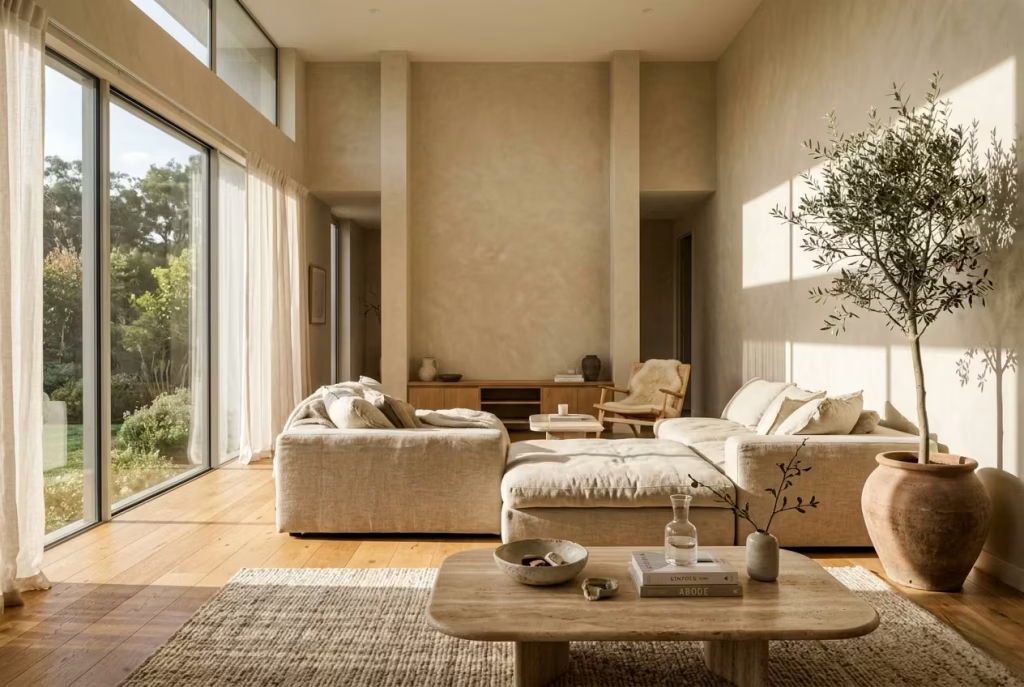
Natural light is often treated as a bonus feature in a living room rather than a core design material, yet its influence runs far deeper than most homeowners realise. It does not simply illuminate a space; it actively reshapes how every surface, texture, and colour is perceived throughout the day. A room that feels soft and welcoming in the morning can appear entirely different by late afternoon, not because anything has changed physically, but because light has shifted its angle, intensity, and warmth.
In modern organic interiors, this dynamic quality becomes part of the design itself. Materials such as linen, timber, stone, and wool respond to light in subtle ways, revealing depth, movement, and variation that artificial lighting rarely replicates. When handled thoughtfully, natural light has the ability to soften architectural edges, enhance material richness, and create a sense of rhythm that ties the entire room together.
It is this constantly evolving interaction that gives a living room its quiet sense of life, making it feel less like a static arrangement of objects and more like a space that breathes alongside the day.
The Relationship Between Light and Material
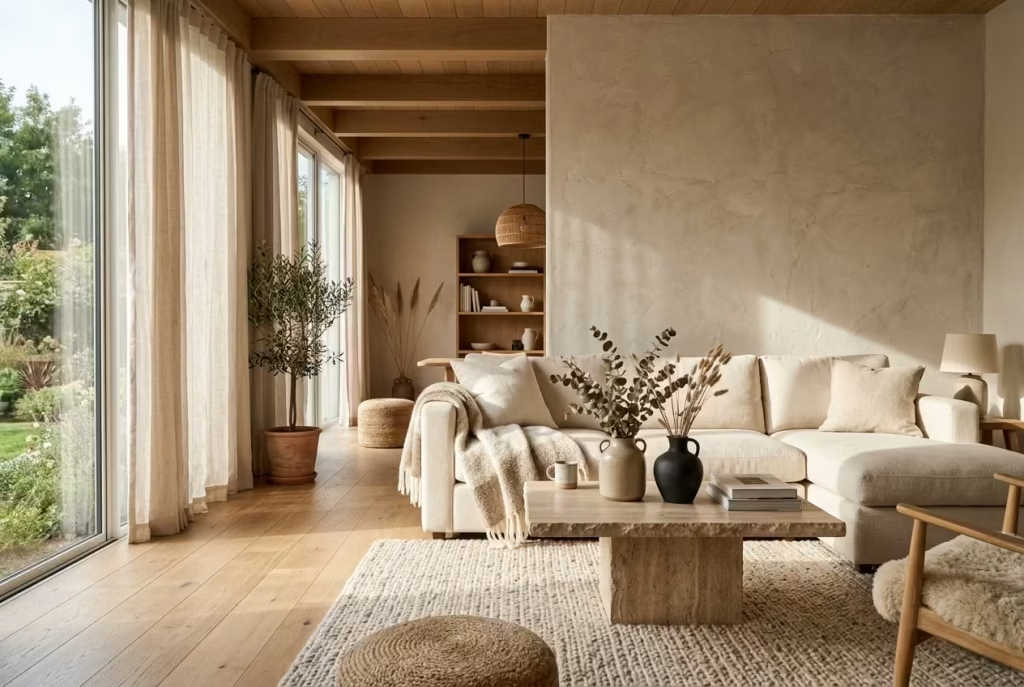
Natural light does not simply illuminate a living room, it collaborates with it. Every material within a space responds differently to daylight, and it is this ongoing interaction that quietly shapes the atmosphere from morning through to evening. In modern organic interiors, this relationship becomes especially important because the design language is intentionally restrained. With fewer bold colours or high-contrast elements to rely on, it is the subtle behaviour of light across surfaces that brings depth, movement, and emotional tone to the room.
Rather than treating materials as static finishes, it helps to think of them as active participants in the daily rhythm of the home. Timber warms and deepens as sunlight passes across its grain. Stone shifts in tone as shadows move slowly over its textured surface. Linen softens under diffused light, taking on a gentle, almost weightless quality. These changes may be subtle in isolation, but together they create a living environment that never feels entirely still. It is a bit like watching a landscape change with the weather. The structure remains the same, yet the mood is constantly evolving.
One of the most compelling aspects of this relationship is how light reveals detail that might otherwise go unnoticed. A hand-finished plaster wall, for example, can appear almost flat under artificial lighting, but natural daylight brings out its irregularities, casting soft micro-shadows that add depth and character. Similarly, woven textiles begin to show their complexity when light grazes across their surface, highlighting the interplay of threads and fibres that give the material its tactile identity.
This dynamic is also what makes material selection so critical in naturally lit spaces. Glossy or highly reflective surfaces can sometimes feel overpowering, as they tend to bounce light in a more aggressive and less forgiving way. In contrast, matte and textured finishes absorb and diffuse light, allowing it to settle more gently within the room. The result is a softer visual experience that feels easier on the eyes, particularly in spaces where large windows or open exposures bring in abundant daylight.
In practice, I often observe how small material adjustments can dramatically change the way light behaves in a room. In one renovation, a living space with extensive glazing initially felt harsh during peak daylight hours. The surfaces were predominantly smooth and reflective, which amplified brightness rather than tempering it. By introducing oak flooring, linen upholstery, and a lightly textured plaster finish on key walls, the quality of light changed entirely. Instead of bouncing sharply around the room, it began to diffuse more naturally, creating a calmer and more balanced atmosphere. The architecture remained untouched, yet the experience of the space transformed.
Another important aspect of this relationship is timing. Morning light tends to be cooler and more directional, which emphasises texture and structure. Midday light becomes more neutral and even, revealing true colour and material balance. Evening light, often warmer and lower in angle, enhances softness and adds a sense of intimacy. When materials are chosen with this daily progression in mind, a living room begins to feel almost responsive, as though it adjusts itself subtly to the rhythm of the day.
This is where modern organic design shows its real strength. It does not rely on fixed visual impact. Instead, it allows light and material to work together in a continuous dialogue. The space becomes less about how it looks at a single moment and more about how it feels across time.
Ultimately, the relationship between light and material is what gives a living room its quiet sense of depth. When handled with care, it creates an environment that feels grounded yet ever-changing, familiar yet never entirely the same. It is this delicate balance that turns natural light from a background element into one of the most powerful design tools in the entire space.
You May also Like: 25 Sage Green Living Room Ideas: Timeless Designs for a Calm and Stylish Space
Creating Softness Throughout the Day
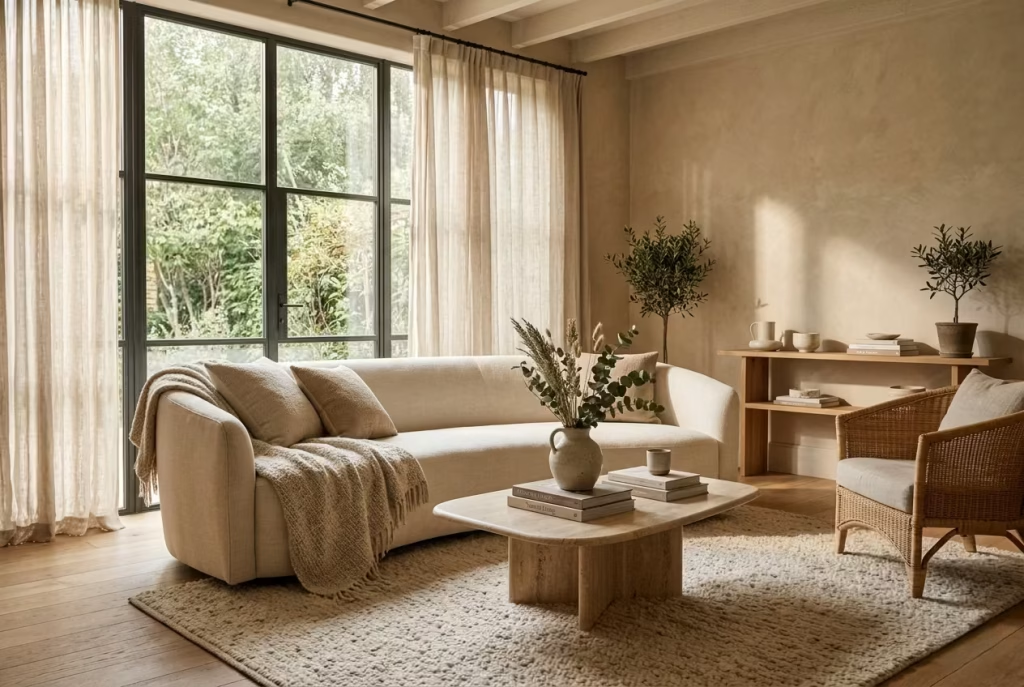
A truly successful living room does not rely on a single moment of beauty. It performs across time, adjusting itself gently as daylight shifts, shadows lengthen, and evening settles in. In modern organic interiors, softness is not treated as a fixed visual effect but as a continuous experience shaped by light, material, and spatial rhythm. The aim is not to create a room that looks perfect at one point in the day, but one that feels consistently comfortable from morning through to night, like a space that quietly understands the tempo of everyday life.
This sense of softness is deeply tied to how natural light interacts with the materials within a room. In the early hours, when light is cooler and more directional, surfaces tend to appear more defined. Grain in timber becomes sharper, woven textures gain clarity, and architectural lines feel more pronounced. As the day progresses and light becomes fuller and more diffused, those same materials begin to soften. Edges blur slightly, tones merge more gently, and the overall atmosphere becomes easier on the eye. By the time evening arrives, warmer light often wraps the room in a subdued glow, allowing textures to feel more intimate and enclosed, almost like the space is drawing itself inward for comfort.
One of the most effective ways to support this daily transformation is through layered material choices that respond differently to changing light conditions. Linen curtains, for example, act as filters rather than barriers, allowing daylight to pass through while reducing its intensity. This creates a gentle diffusion that prevents harsh contrasts, particularly during peak sunlight hours. Wool rugs help anchor the space visually while absorbing both sound and light, contributing to a calmer, more grounded feel. Timber surfaces shift in tone throughout the day, offering subtle variation that keeps the room visually engaging without becoming distracting.
Softness is also shaped by how shadows behave within a space. In rooms with minimal texture or overly polished finishes, shadows can appear sharp and fragmented, creating a sense of visual tension. In contrast, textured walls, natural fabrics, and matte surfaces allow shadows to fall more gradually. They soften transitions between light and dark, which in turn creates a more fluid visual experience. It is this gradual blending of contrast that often makes a room feel calm without appearing dull.
I have often noticed this effect most clearly in homes with large glazing systems. In one project, a living room with expansive south-facing windows initially felt visually intense during midday. The light was beautiful, but it lacked restraint, bouncing off smooth surfaces and creating a sense of constant brightness. By introducing layered linen drapery, replacing high-gloss finishes with natural oak, and incorporating textured plaster on key wall sections, the character of the room changed throughout the day in a far more balanced way. Morning light felt crisp but controlled. Midday light became softer and more diffused. Evening light settled into the room with a sense of quiet enclosure. The space no longer felt static. It began to breathe with the rhythm of the day.
This evolving quality is what gives modern organic living rooms their emotional depth. Softness is not achieved through a single material choice or decorative decision. It is the result of many small, carefully considered layers working together over time. Each hour of the day reveals a slightly different version of the same room, yet the overall feeling remains consistent: calm, grounded, and easy to inhabit.
Ultimately, creating softness throughout the day is about designing for experience rather than appearance. When light and material are allowed to interact naturally, the living room becomes more than a composed interior. It becomes a living environment that adapts quietly to its occupants, offering comfort not just in how it looks, but in how it feels as time unfolds.
Window Treatments That Enhance Rather Than Block Light
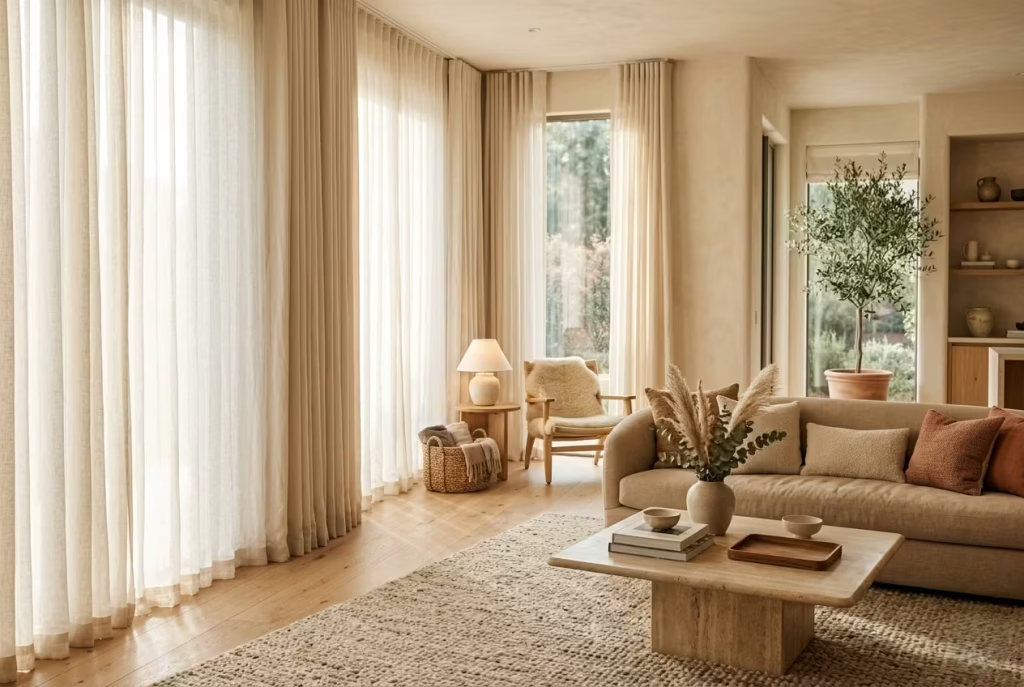
Window treatments are often introduced as a functional necessity first and a design decision second, yet in modern organic living rooms they play a far more influential role. They are not simply about controlling privacy or blocking glare. They actively shape how natural light enters a space, how it disperses across materials, and how the room feels at different times of the day. When handled thoughtfully, they become quiet mediators between the interior and the outside world, softening transitions rather than interrupting them. In many homes, the difference between a room that feels heavy and one that feels airy often comes down to this single layer.
The most common design misstep is treating curtains or blinds as a full stop in the composition of a room. Heavy, opaque drapery can certainly provide privacy and insulation, but it often comes at the cost of light quality. When natural light is overly restricted, interiors can lose their sense of movement and atmosphere. Shadows become flatter, materials appear less dynamic, and the room risks feeling enclosed even when it is physically spacious. Modern organic design takes a different approach, using window treatments as a filter rather than a barrier.
Real-Life Project Experience: Transforming a North-Facing Living Room
One project that clearly demonstrated the impact of window treatments involved a north-facing living room that struggled with a persistent sense of heaviness. The architecture was well considered, with generous proportions and carefully selected furnishings, yet the atmosphere never quite lifted. The primary issue was the window dressing. Thick, heavy drapery had been installed in an attempt to create a sense of luxury and privacy, but it inadvertently blocked much of the already limited natural light.
The room felt static, almost as though it was permanently in a softened shadow. Timber surfaces lacked warmth, textiles appeared flatter than intended, and even carefully chosen decorative pieces did not quite come to life. It was a space that looked composed but never truly felt inviting.
Rather than introducing artificial brightness, the solution focused on refining how light entered the room. The heavy drapery was replaced with lightweight linen curtains in a warm neutral tone. These were layered with a discreet sheer panel that allowed for privacy without sacrificing daylight. The difference was immediate and surprisingly profound. Light began to move more freely through the space, diffusing gently rather than stopping abruptly at the windows.
Suddenly, the room felt lighter in every sense. The oak furniture gained depth, the wool rug appeared more textured, and the overall atmosphere shifted from closed to open. It was not a dramatic transformation in terms of furnishings, yet the emotional impact was significant. The space began to feel lived in rather than observed.
What stood out most was how the same room, with the same proportions and furniture, could feel entirely different simply by changing the way light was handled. It reinforced a fundamental principle in design: light is not just something a room receives, it is something it actively processes.
Pros
Improves Mood Light, softly filtered through materials like linen or sheer fabrics, has a noticeable effect on emotional comfort. Rooms feel more open, less confined, and more in tune with natural rhythms, which often translates into a calmer daily experience.
Enhances Materials When light is allowed to move gently through a space, it reveals the true character of natural materials. Timber grain becomes more expressive, textured fabrics gain dimension, and stone surfaces develop subtle tonal variation throughout the day.
Makes Rooms Feel Larger By avoiding harsh light blockage, window treatments that diffuse rather than conceal create an impression of openness. Boundaries feel less rigid, allowing the space to extend visually beyond its physical limits.
Cons
Requires Privacy Solutions Lightweight treatments often need to be paired with thoughtful layering, such as sheers or blinds, to maintain privacy, particularly in street-facing or densely populated areas. This requires more considered planning compared to single heavy drapery solutions.
Seasonal Light Variations Because these treatments allow more natural light into the space, rooms may feel brighter in summer and comparatively softer in winter. While this can add seasonal character, it may also require occasional adjustments to maintain balance and comfort.
Ultimately, window treatments in modern organic interiors are not decorative afterthoughts. They are active participants in shaping atmosphere. When chosen with care, they allow light to move through a room in a way that feels natural, gentle, and ever-changing, turning even the simplest living space into an environment that feels quietly alive.
Modern Organic Living Rooms Encourage Slower, More Meaningful Living
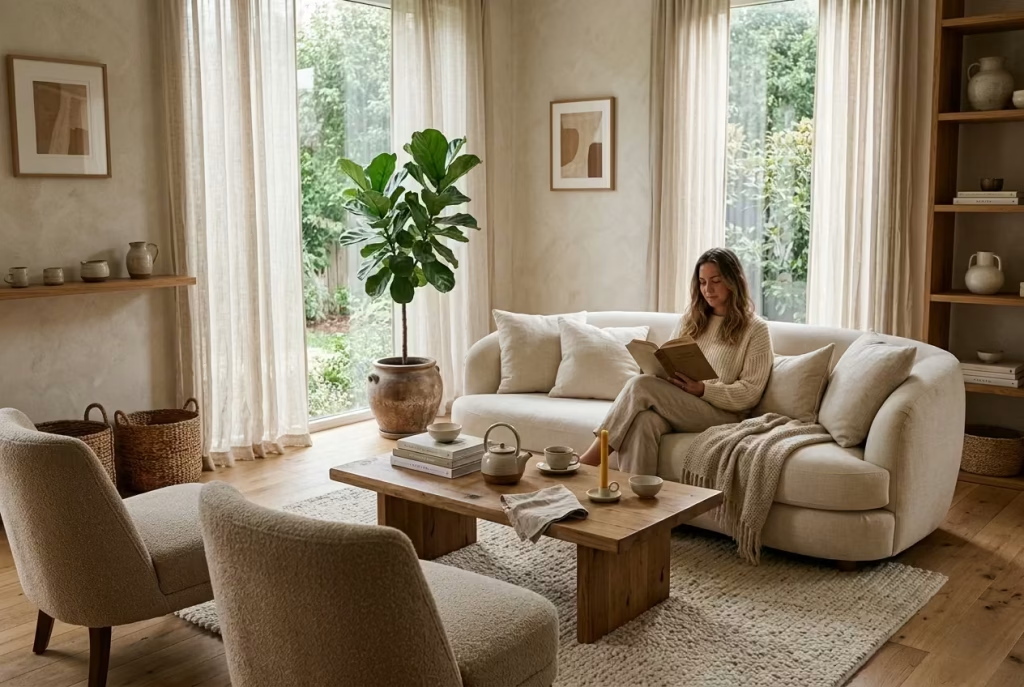
There is a quiet shift happening in how people want to experience their homes. Beyond aesthetics, beyond trend cycles, the living room is increasingly being asked to do something more grounded and human: support a slower pace of life. Modern organic design responds to this shift not through excess, but through restraint, clarity, and emotional balance. It creates environments where nothing feels rushed or overstimulated, where the eye can settle and the body can ease into its surroundings without effort.
In these spaces, material choices, lighting, spatial flow, and texture all work together to remove unnecessary noise from the environment. The result is a living room that does not compete for attention but instead earns it gradually, allowing everyday moments to feel more intentional.
Whether it is the softness of natural fabrics, the quiet stability of timber, or the gentle diffusion of daylight across textured surfaces, everything contributes to a sense of ease that feels almost restorative. It is this carefully considered simplicity that allows modern organic living rooms to support not just how people live, but how they experience time within their home.
Designing Around Daily Rituals
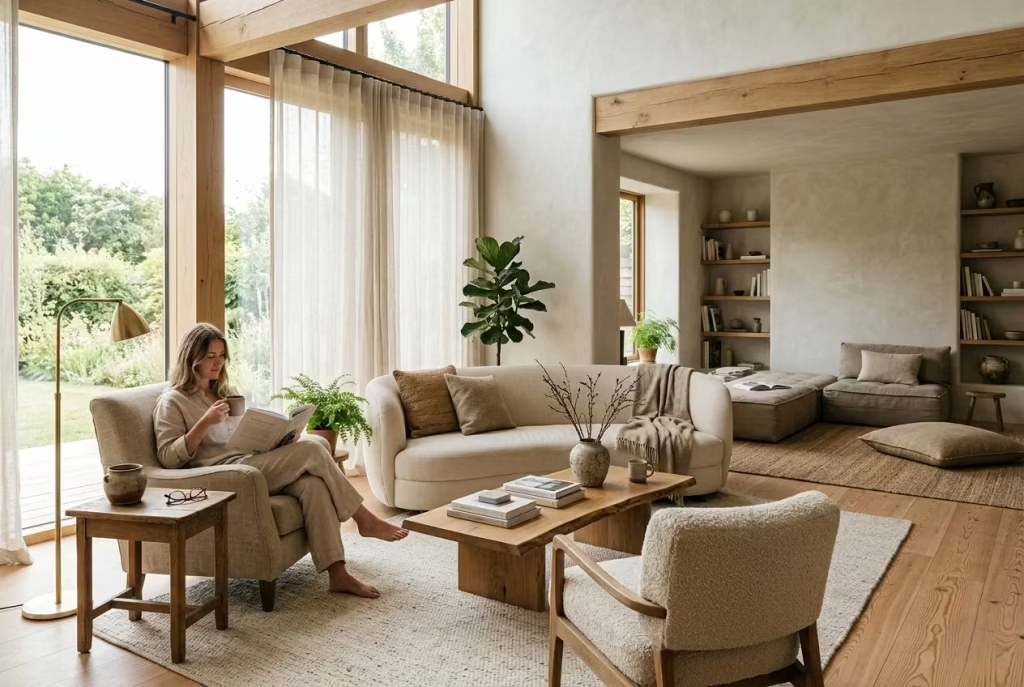
A well-designed living room is not defined solely by how it looks when photographed, but by how it supports the rhythm of everyday life. In modern organic interiors, the most successful spaces are shaped around daily rituals rather than abstract design ideals. Morning coffee by the window, an evening stretch on the rug, quiet reading after work, or simply winding down with soft lighting each activity carries its own pace, and the room should respond to these moments with quiet ease. When design aligns with routine, the space stops feeling staged and starts feeling instinctively usable, as though it already understands how it is meant to be lived in.
This approach requires stepping away from the idea of the living room as a static composition. Instead, it becomes a sequence of micro environments within a single space. A sunlit corner might naturally lend itself to reading during the day, while a softer, more enclosed seating arrangement becomes the preferred spot in the evening. A low table positioned within easy reach encourages informal gatherings, while a generously proportioned sofa supports longer periods of rest. These subtle spatial cues guide behaviour without forcing it, allowing daily rituals to unfold naturally rather than being consciously arranged each time.
In many traditional layouts, furniture is positioned primarily for symmetry or visual balance. While this can create order, it does not always reflect how people actually use a room. Modern organic design takes a more intuitive approach, allowing function to lead placement. Chairs are angled to encourage conversation rather than strict alignment. Lighting is positioned to support reading or relaxation rather than purely decorative effect. Even circulation paths are considered in relation to how people move through the space at different times of the day.
One of the most effective ways to support daily rituals is through zoning, even in open-plan living rooms. This does not require physical barriers or heavy architectural interventions. Instead, it can be achieved through subtle shifts in material, lighting, or furniture grouping. A wool rug might define a conversation area, while a timber console subtly marks a transition between functional zones. A reading chair placed near natural light becomes an intentional pause point within the room, quietly encouraging moments of stillness.
I have often observed how small adjustments to layout can dramatically change how a space is used. In one project, a large but underutilised living room felt disjointed despite its generous proportions. The furniture had been arranged symmetrically along the walls, creating a sense of distance rather than connection. By rethinking the layout around daily routines, we introduced a more layered arrangement.
A reading nook was placed near the window with a softly upholstered chair and a floor lamp, while the main seating area was reoriented to encourage conversation. A secondary lounge zone was created for informal relaxation. The change was subtle in physical terms but significant in lived experience. The room became a place people naturally gravitated towards throughout the day rather than a space reserved for occasional use.
Lighting also plays a crucial role in supporting these rituals. Morning light is best left unobstructed to encourage alertness and openness. Midday light benefits from gentle diffusion through linen or sheer fabrics, creating a balanced environment for productivity or casual activity. Evening lighting should shift towards warmth and softness, with layered sources that support relaxation rather than brightness. When lighting is treated as part of the daily rhythm rather than a fixed installation, the room begins to adapt naturally to human behaviour.
Ultimately, designing around daily rituals is about recognising that a living room is not a finished object but an evolving environment. It should support how people actually live, not how they imagine they should live. When spaces are shaped with this understanding, they begin to feel less like curated interiors and more like lived experiences. Over time, this quiet alignment between design and routine is what transforms a house into a place of genuine comfort and belonging.
Spaces That Invite Connection
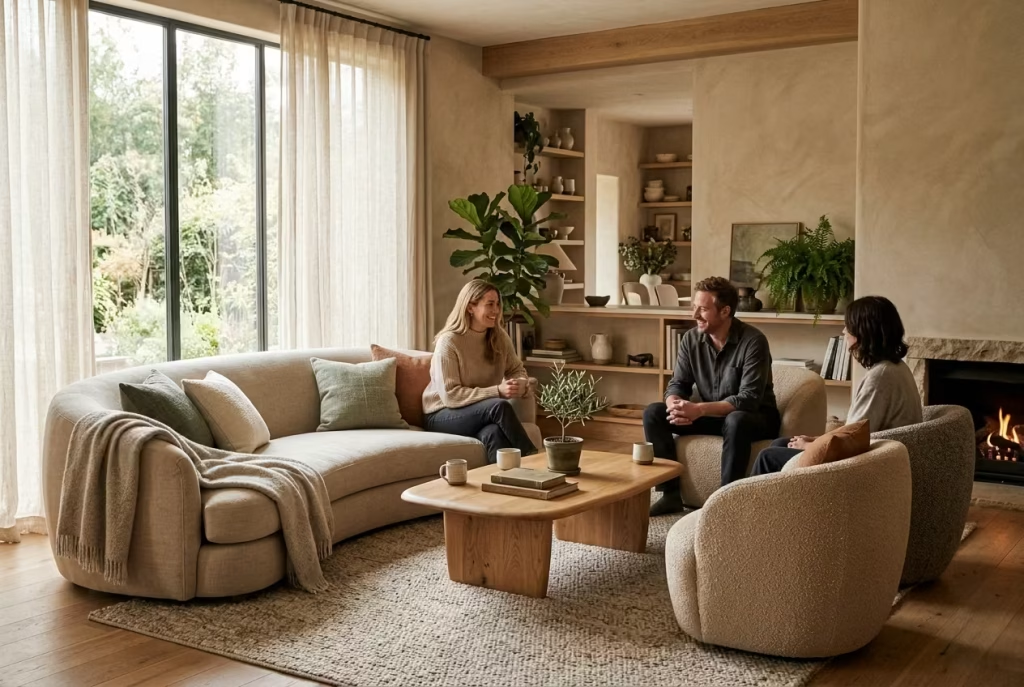
A living room is at its best when it does more than simply accommodate people, it encourages them to engage with one another without effort or formality. In modern organic design, connection is not treated as an afterthought but as a guiding principle that shapes layout, proportion, and atmosphere.
The goal is to create an environment where conversation flows naturally, where people feel physically and emotionally at ease, and where time spent together feels unhurried rather than structured. When a space supports connection in this way, it begins to feel less like a display of design choices and more like a living backdrop to everyday relationships.
This sense of ease is often achieved through subtle spatial decisions rather than overt gestures. Seating that is arranged to face inward rather than outward encourages dialogue rather than distraction. Curved forms gently guide people towards one another, reducing the sense of separation that linear arrangements can sometimes create.
Even the distance between furniture pieces plays a role, with carefully considered spacing allowing conversation to feel intimate without becoming restrictive. Like a well-set table that invites guests to linger rather than rush through a meal, the arrangement of a living room can quietly shape the rhythm of interaction.
Lighting further reinforces this atmosphere of connection. Harsh overhead brightness tends to flatten a room and discourage relaxation, while layered, softer lighting creates pockets of warmth that draw people in. A combination of table lamps, floor lamps, and diffused natural light helps establish a more human scale, where faces are gently illuminated and the room feels less like a stage and more like a shared environment. It is within this softened light that conversations tend to stretch naturally, unforced and unhurried.
Material choice also plays an understated but important role in encouraging connection. Soft textiles such as linen, wool, and cotton introduce a sense of comfort that makes people want to settle in rather than remain on the edge of the space. Upholstered seating with tactile surfaces invites touch and relaxation, while natural materials like timber and stone provide grounding elements that balance the softness with stability. Together, they create an environment that feels both welcoming and secure, like a place where people can let their guard down without even thinking about it.
In one residential project, I worked on a living room that initially felt visually impressive but socially distant. The layout was symmetrical and outward-facing, with furniture positioned to highlight architectural features rather than human interaction. Guests tended to disperse into separate corners of the room, and conversations rarely carried across the space. By rethinking the arrangement, we shifted the focus inward.
Seating was grouped into a more conversational layout, a large rug was introduced to define the shared zone, and lighting was softened to create a more intimate atmosphere. The transformation was subtle in appearance but profound in experience. The room began to function as a gathering point rather than a pass-through space.
What became clear through that process is that connection is rarely created through design spectacle. It emerges from comfort, proximity, and subtle cues that signal welcome. When a living room is designed with these principles in mind, it stops feeling like a carefully arranged set of objects and starts feeling like a place where people naturally come together.
Ultimately, spaces that invite connection are those that remove barriers rather than introduce them. They soften formality, encourage closeness, and allow everyday interactions to unfold with ease. In modern organic living rooms, this sense of connection becomes the quiet foundation that gives the entire space its meaning.
Why Less Visual Noise Feels Better Over Time
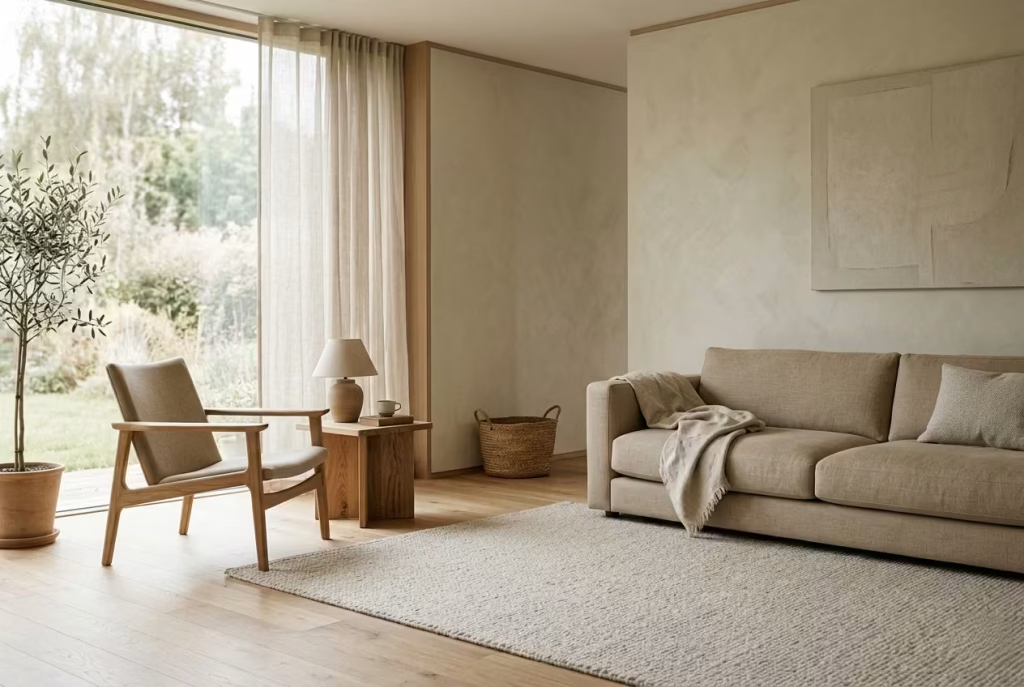
A living room that feels instantly impressive is not always the same as one that feels comfortable to live in every day. Over time, spaces filled with excessive visual information, competing patterns, strong contrasts, and unnecessary decorative layering can begin to feel mentally tiring. The eye has nowhere to rest, and the mind, in turn, struggles to settle. Modern organic interiors respond to this by reducing visual noise and allowing clarity, rhythm, and softness to take precedence. The result is a space that does not demand attention but gently supports it, like a quiet backdrop that makes everyday life feel less rushed and more intentional.
Visual calm is not about emptiness. It is about control. When elements are carefully edited and thoughtfully placed, the room begins to feel coherent rather than cluttered. Materials, tones, and forms work together in a restrained composition, allowing the space to breathe. This sense of openness often becomes more valuable over time, especially in homes where living rooms are used throughout the day for different activities. Reading, conversation, family time, and moments of rest all benefit from an environment that feels visually settled rather than overstimulated.
Real-Life Applications
In practice, reducing visual noise is less about removing everything and more about defining clear zones of purpose within the room. When each area has a function and a sense of calm identity, the overall space feels easier to understand and more enjoyable to use.
Reading corners benefit most from simplicity. A quiet chair, a soft floor lamp, and a small side table are often enough. When surrounded by too many competing objects or patterns, the mind tends to wander. In a restrained setting, however, the focus naturally shifts toward rest and concentration, allowing reading to feel more immersive.
Conversation zones work best when visual distractions are minimised. A carefully grouped seating arrangement with consistent materials and a limited palette helps keep attention on people rather than objects. This encourages longer, more natural dialogue, as the environment supports rather than interrupts interaction.
Family gathering spaces require a balance between warmth and order. While they should feel inviting and lived in, too much visual complexity can quickly become overwhelming. By maintaining a consistent material language, such as timber, linen, and soft stone tones, the space remains welcoming without feeling chaotic.
Suggested Space Planning Measurements
Good spatial design often feels intuitive, but it is underpinned by precise proportions that support comfort and ease of movement.
For a reading nook, a minimum footprint of 4 ft × 5 ft (1.2 m × 1.5 m) is typically enough to create a comfortable and functional corner. This allows space for a chair with a small table and adequate circulation without feeling cramped. When positioned near natural light, this compact zone can become one of the most used and appreciated parts of the room.
For comfortable seating arrangements, a distance of 7 to 10 ft (2.1 m to 3 m) between main seating elements generally works well. This range supports conversation without forcing proximity while still maintaining a sense of connection. Too close and the space feels compressed, too far and interaction begins to weaken. This balance is often what separates a functional layout from one that truly feels inviting.
Ultimately, reducing visual noise is about more than aesthetics. It is about emotional clarity. When a living room is free from unnecessary distraction, it becomes easier to relax, easier to connect, and easier to simply exist within. Over time, this quiet restraint proves far more rewarding than any heavily styled or visually dense arrangement, offering a sense of calm that deepens the longer you live with it.
What Most Modern Organic Living Rooms Get Wrong
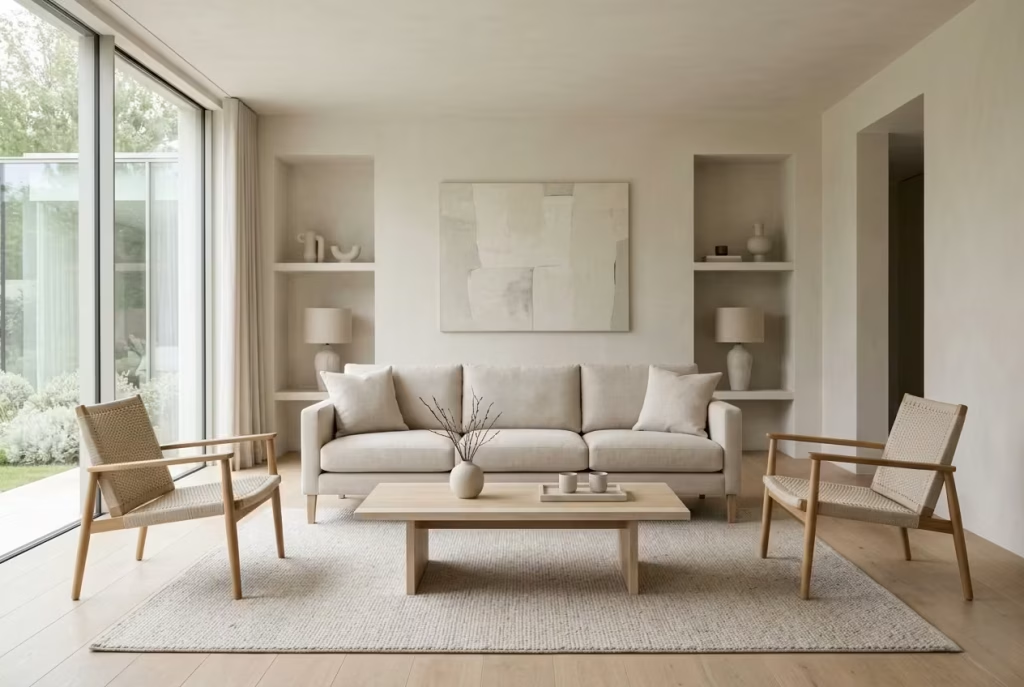
Modern organic living rooms have become widely admired for their calm palettes, natural materials, and softly layered textures, yet in practice many of these spaces fall short of their intended emotional effect. The intention is usually right, to create a home that feels grounded, warm, and connected to nature, but the execution often slips into something overly curated or visually restrained to the point of feeling flat. Instead of achieving effortless calm, the room can end up feeling like a carefully styled showroom version of relaxation, where everything looks composed but little feels genuinely lived in.
This is where the balance often breaks. Either the design becomes too rigid in its pursuit of perfection, or it leans too heavily on aesthetics without considering how people actually move, sit, gather, and spend time within the space. A truly successful modern organic living room is not defined by how closely it follows a style formula, but by how well it supports daily life while maintaining a sense of ease, warmth, and natural flow.
Mistaking Organic Design for Beige Minimalism
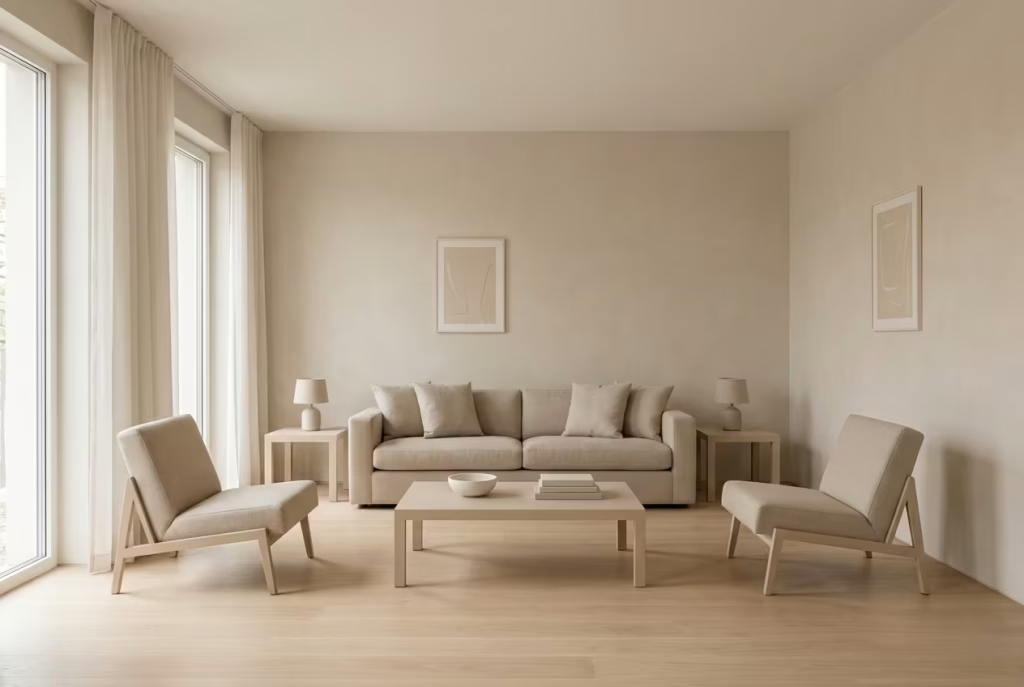
One of the most common misunderstandings in contemporary interiors is the assumption that modern organic design is simply a softer version of minimalism, dressed in beige tones and stripped of personality. It is an easy mistake to make at first glance. Both approaches often share a restrained palette, a preference for natural materials, and a general avoidance of visual clutter. Yet beneath the surface, they operate on entirely different principles. Where beige minimalism often prioritises reduction for its own sake, modern organic design is rooted in sensory richness, material depth, and lived-in comfort.
When organic design is reduced to beige minimalism, something essential is lost. The space may appear calm and orderly, but it can quickly slip into feeling emotionally distant. Rooms become visually composed but lack the subtle imperfections, tonal variation, and tactile warmth that make them feel human. It is a bit like looking at a beautifully arranged still life that has forgotten to include any trace of life itself. Everything is technically correct, yet nothing invites you to stay.
True organic interiors are never about flattening the palette into a single neutral note. Instead, they rely on layers of earthy tones, shifting textures, and materials that respond to light in different ways throughout the day. Linen, wool, timber, stone, and plaster each bring their own personality into the mix. When these elements are handled with care, even a quiet palette becomes full of depth and movement, revealing detail gradually rather than all at once.
The issue with beige minimalism is not the colour itself, but the lack of variation within it. When every surface sits within the same tonal band, the eye has nowhere to rest or travel. Without contrast in texture, material, or subtle tonal shifts, the room can begin to feel visually static. Organic design avoids this by embracing imperfection and variety. A slightly warmer timber next to a cooler stone, a loosely woven linen beside a dense wool rug, or a hand-finished wall that catches light unevenly all contribute to a sense of quiet complexity.
In many real-world projects, I have seen homeowners unintentionally drift into this beige minimalism trap after being inspired by curated images online. The result often feels initially soothing but gradually reveals its limitations. One particular living room comes to mind where every surface had been chosen in soft neutral tones with the intention of creating calm.
However, because the materials were too similar in tone and texture, the space lacked definition. It felt more like a single washed-out surface than a layered interior. By introducing subtle shifts, oak furniture with visible grain, a slightly deeper-toned rug, and textured plaster on one feature wall, the room immediately gained depth without losing its calm character. Nothing became louder, yet everything became more alive.
Another overlooked aspect is emotional warmth. Beige minimalism often prioritises visual neutrality to the point where emotional engagement is reduced. Organic design, on the other hand, embraces warmth through material honesty.
The slight irregularities in handmade objects, the softness of worn textiles, and the natural variation in wood grain all contribute to a sense of familiarity that feels reassuring rather than sterile. These details may appear small individually, but together they create an environment that feels grounded and lived in.
Ultimately, the difference comes down to intention. Beige minimalism often seeks to remove complexity, while modern organic design seeks to refine it. One reduces until little remains. The other edits carefully until only what matters is left, but ensures that what remains still feels rich, tactile, and emotionally engaging. When this distinction is understood, the living room moves beyond a flat aesthetic and becomes something far more meaningful: a space that feels calm without losing its sense of life.
Overusing Trend-Led Furniture
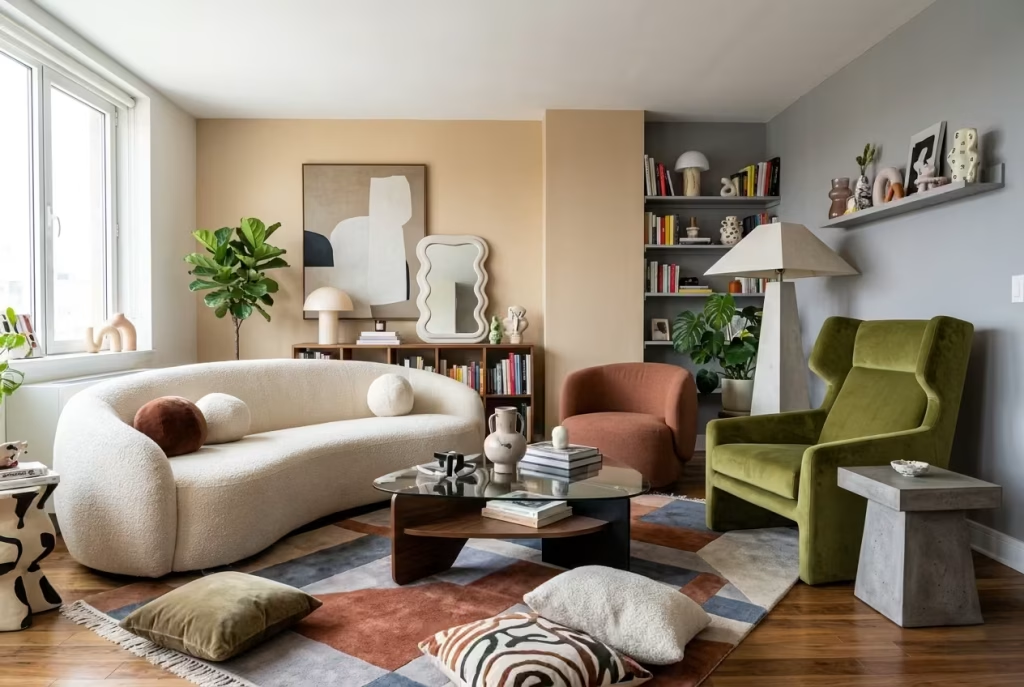
Trend-led furniture has a way of entering living rooms with quiet confidence, often framed as the finishing touch that will pull everything together. At first, it can feel like an easy win. A sculptural chair seen across social media, a curved sofa that dominates design feeds, or a statement coffee table that promises instant character. Yet when these pieces are used too frequently or without restraint, the room can quickly lose its sense of grounding. What begins as a curated interior starts to feel more like a rotating display of design moments, where visual appeal is prioritised over long-term comfort and coherence.
The issue is not the furniture itself but the over-reliance on it as a source of identity. Trend-led pieces are often designed to stand out, which means they carry strong visual signatures. When too many of these elements are introduced at once, they begin to compete rather than complement. The room starts to feel fragmented, like a collection of individual statements rather than a unified space. Over time, this can create a subtle sense of fatigue, where the eye is constantly moving but never fully settling.
Modern organic living rooms, by contrast, rely on a quieter foundation. They prioritise timeless forms and natural materials that age gracefully rather than demand attention. This does not mean avoiding contemporary design altogether, but rather integrating it with intention. A sculptural chair, for example, works best when surrounded by restrained elements that allow it to breathe. Without that balance, even the most beautiful piece can begin to feel visually loud.
One of the most common pitfalls I encounter in renovation projects is the accumulation of trend-driven items introduced over time. A sofa chosen for its popularity one year, followed by a bold accent chair the next, then a distinctive coffee table shortly after. Individually, each piece may be well designed. Together, however, they often lack a shared visual language. I once worked on a living room where nearly every seating element had been selected from a different design trend. The result was a space that looked interesting in isolation but felt uneasy as a whole. There was no rhythm, no continuity, and no sense of visual rest.
The solution was not to replace everything but to recalibrate. By retaining a few key pieces and introducing more neutral, grounding elements such as oak furnishings, linen upholstery, and textured rugs, the room began to regain coherence. The trend-led items were still present, but they were no longer competing for attention. Instead, they became accents within a calmer, more enduring framework. The space immediately felt more settled, as though it had finally learned how to slow down.
Another overlooked consequence of overusing trend-led furniture is its impact on emotional longevity. What feels exciting today can quickly become visually tiring when it dominates the room. Living spaces are not meant to be reset every season. They are meant to evolve gradually, accumulating character over time. When furniture choices are too heavily tied to trends, that sense of evolution is interrupted, and the room can feel dated far sooner than expected.
A more sustainable approach is to treat trend-led pieces as punctuation rather than the main narrative. They should add emphasis, not define the entire composition. When balanced with quieter, more enduring elements, they can bring personality without overwhelming the space. It is a bit like seasoning in cooking. A thoughtful amount enhances the experience, but too much masks the subtleties of the ingredients beneath.
Ultimately, modern organic living rooms work best when they are anchored in restraint. Trend-led furniture has its place, but it should never carry the full weight of the design. When used sparingly and with intention, it can add interest and freshness. When overused, it risks turning a calm, grounded interior into a space that feels visually restless, constantly chasing its next moment rather than settling into its own identity.
Forgetting Personality and Storytelling
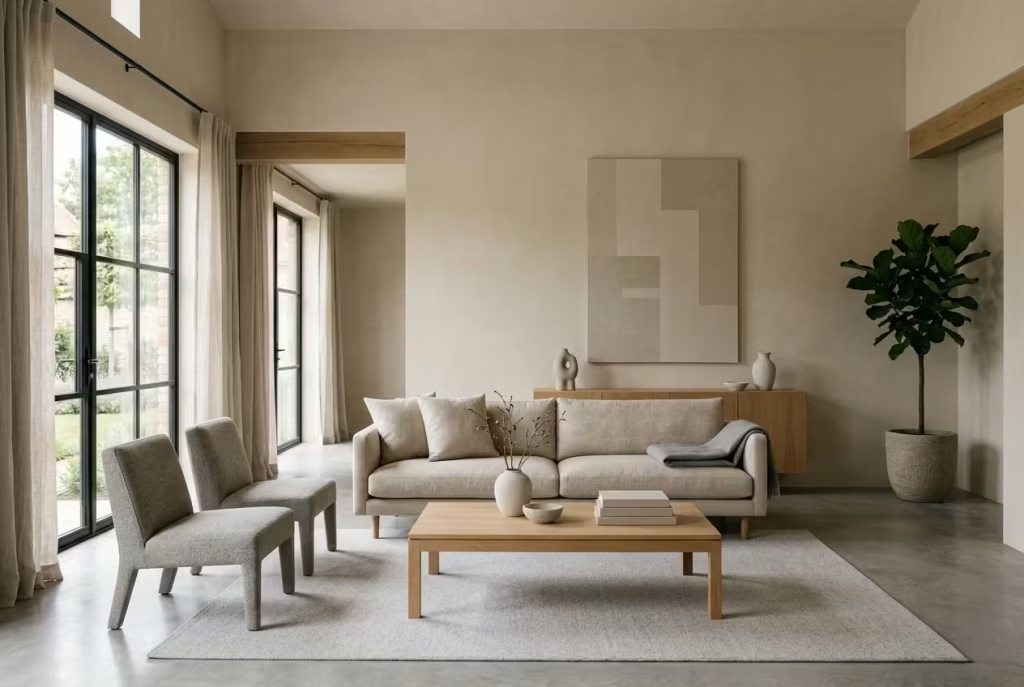
One of the quietest mistakes in modern organic living rooms is the gradual disappearance of personality. In the pursuit of calm, cohesion, and visual restraint, spaces can sometimes become so carefully edited that they lose the very thing that makes them feel alive. A room may be beautifully composed, materially refined, and visually balanced, yet still feel emotionally distant if it does not carry any sense of story. Without personal layering, even the most well-designed interior risks becoming a polished shell, pleasant to look at but difficult to connect with over time.
Storytelling in interiors is not about filling a space with objects for the sake of decoration. It is about allowing a room to reflect the life that unfolds within it. Modern organic design often provides an ideal foundation for this because it already values material honesty and natural imperfection. However, when taken too far into visual restraint, it can unintentionally erase traces of individuality. The result is a space that feels curated but not lived in, as though it belongs more to an aesthetic principle than to the people who occupy it.
True personality in a living room rarely comes from statement pieces alone. It emerges through layers that accumulate gradually, like a well-worn narrative. A hand-thrown ceramic bowl collected on a trip, a linen throw that has softened with use, or a piece of artwork that holds personal meaning all contribute to a sense of depth that cannot be replicated through styling alone. These elements do not shout for attention, but they anchor the space in lived experience, giving it a sense of authenticity that grows stronger over time.
In many projects I have worked on, I have seen beautifully designed rooms that initially felt complete yet lacked emotional resonance. Everything was perfectly coordinated, from the neutral palette to the carefully selected furniture, yet there was a subtle absence of character. In one particular case, a living room had been designed with exceptional attention to material and proportion, but the homeowners felt disconnected from it. It looked like a space they could admire rather than inhabit.
We began to reintroduce personal layers, not in a cluttered or decorative sense, but in a more intentional and restrained way. Books that had been part of the family’s daily life were placed within reach. A few pieces of art collected over time were given space to breathe on the walls. A textured rug with subtle irregularities replaced a more uniform option, introducing a sense of warmth and familiarity. Gradually, the room began to shift. It stopped feeling like a composed image and started feeling like a lived environment.
What became clear through that process is that personality does not rely on excess. It relies on meaning. Even a single object, if it carries significance, can change the emotional tone of a room. The key is not to overload the space, but to allow carefully chosen elements to exist without over-editing them into uniformity. Imperfections, memories, and personal traces are what give a room its quiet depth, like faint brushstrokes that reveal the hand behind the canvas.
When storytelling is missing, interiors can begin to feel strangely weightless. Everything is visually correct, yet nothing feels anchored. Over time, this can make a space less enjoyable to live in, even if it remains visually impressive. On the other hand, when personality is present in a subtle and considered way, the room develops a sense of continuity. It feels as though it has evolved rather than been installed, shaped gradually by the people who live within it.
Ultimately, modern organic living rooms are not just about achieving calm through material and colour. They are about creating environments that hold memory, meaning, and identity. When storytelling is woven into the design with restraint and care, the result is a space that feels grounded, familiar, and quietly enduring, like a place that understands not only how you want to live, but who you are while living there.
Prioritising Aesthetics Over Comfort
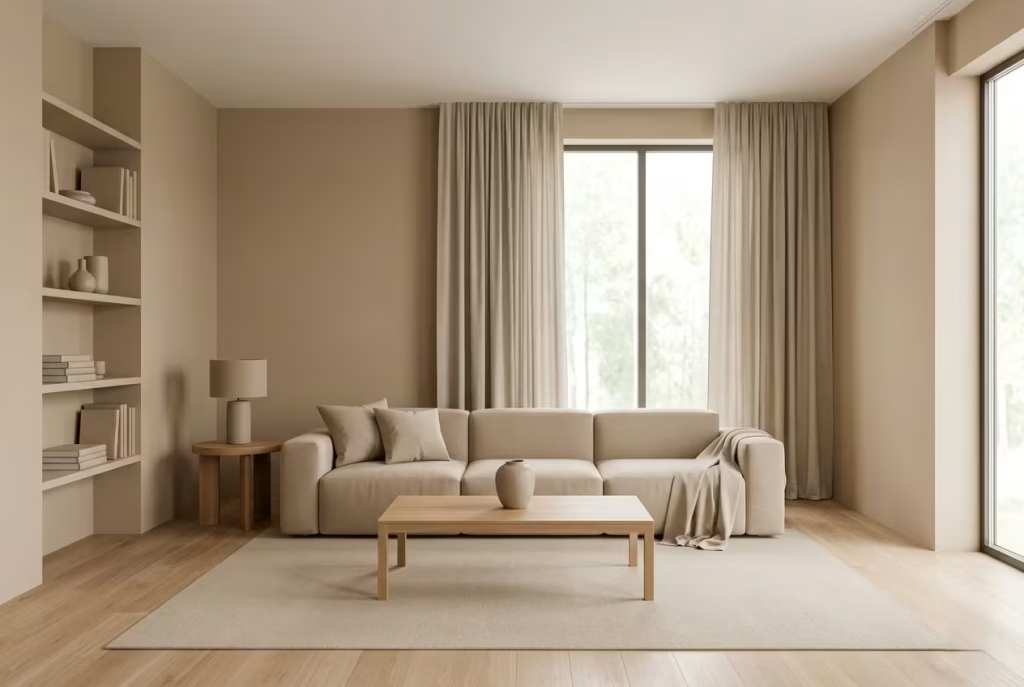
A living room can look perfectly composed on the surface and still fail at the one thing it is fundamentally meant to do, which is support comfortable daily living. This is where many modern organic interiors quietly go off track. In the pursuit of creating something visually serene and editorial in appearance, comfort is sometimes treated as a secondary consideration rather than the foundation it should always be. The result is a space that photographs beautifully but does not always invite people to stay for long periods without adjustment or compromise.
Comfort in interior design is not a decorative feature. It is a lived experience that reveals itself over time. The height of seating, the depth of a sofa, the softness of upholstery, the positioning of lighting, and even the ease of movement through a room all contribute to whether a space feels genuinely usable or simply visually appealing.
When these elements are overlooked in favour of strict aesthetic control, the room begins to feel like it is being observed rather than lived in. It is a subtle shift, but one that becomes increasingly noticeable the longer you spend in the space.
Modern organic design works best when aesthetics and comfort evolve together rather than competing for priority. The most successful interiors are rarely those that are installed in a single moment of completion. Instead, they are the ones that develop gradually, shaped by how people actually use them over time.
A sofa might be repositioned slightly after a few weeks of living with it. A rug may be replaced once circulation patterns become clearer. Lighting is often adjusted after observing how natural daylight moves through the room across different seasons. These small refinements accumulate, creating a space that feels increasingly intuitive.
From professional experience, I have seen many projects where the initial focus was heavily weighted towards visual presentation. One living room comes to mind where every piece had been selected for its sculptural quality and aesthetic impact.
The palette was beautifully restrained, the proportions were carefully considered, and the overall composition looked flawless in photographs. Yet when the homeowners began using the space, discomfort quickly became apparent. The seating felt too formal for long conversations, the lighting lacked flexibility for evening use, and the arrangement encouraged sitting in isolation rather than together.
Rather than starting again, we allowed the space to evolve naturally. Seating was reconfigured to improve conversation flow, softer cushions were introduced to enhance comfort, and layered lighting was added to support different times of day. Nothing dramatic was changed, yet the emotional experience of the room shifted significantly. It began to feel less like a staged environment and more like a living one, shaped by everyday routines rather than design intention alone.
This gradual evolution is often what separates a visually successful interior from one that truly works in real life. Aesthetic appeal can be achieved quickly through careful selection of materials and furnishings, but comfort requires time, observation, and adjustment. It is shaped by how people actually sit, move, relax, and gather within a space. When designers or homeowners allow this process to unfold, the result is almost always more grounded and enduring.
There is also a psychological dimension to this balance. Spaces that prioritise appearance over comfort can create a subtle sense of restriction, even when nothing is physically wrong. People may find themselves adjusting their posture more often, avoiding certain seating areas, or spending less time in the room without fully understanding why. On the other hand, when comfort leads the design process, the space naturally encourages longer stays, easier conversation, and a greater sense of ease.
Ultimately, the most successful modern organic living rooms are not those that arrive fully formed, but those that settle into themselves over time. They begin with a strong aesthetic foundation, but they are refined through lived experience. Comfort is not layered on at the end as an afterthought. It is woven into the process from the beginning, quietly shaping every decision until the space feels not only beautiful, but genuinely easy to live in.
The Future of Modern Organic Living Rooms
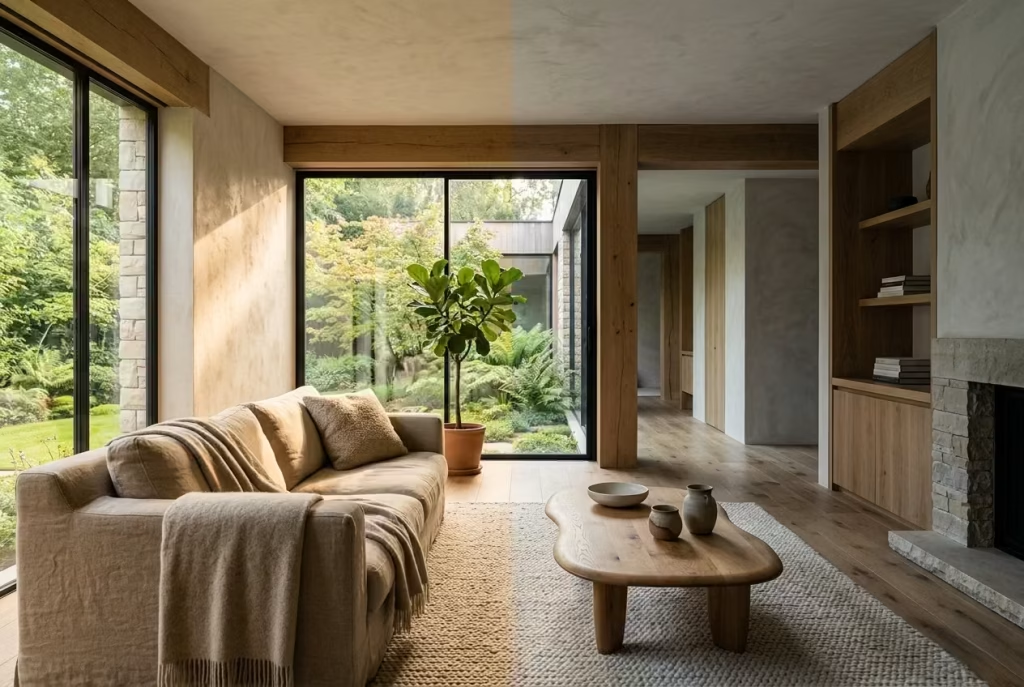
Modern organic living rooms are steadily moving beyond their current identity as a design trend and evolving into something far more enduring. What began as a response to overly polished, high-gloss interiors is now becoming a broader shift in how people define comfort, beauty, and everyday living. The future of this style is less about strict visual codes and more about deeper principles, balance, tactility, and emotional intelligence within space.
Instead of chasing a fixed aesthetic, homeowners and designers are increasingly focusing on how rooms behave over time, how they respond to light, how materials age, and how spaces support changing routines.
This evolution suggests a move away from static perfection and towards interiors that feel alive, adaptable, and quietly responsive to the people who inhabit them. In many ways, modern organic design is beginning to act less like a style direction and more like a long-term philosophy for living well at home.
The Move Toward Authentic Materials
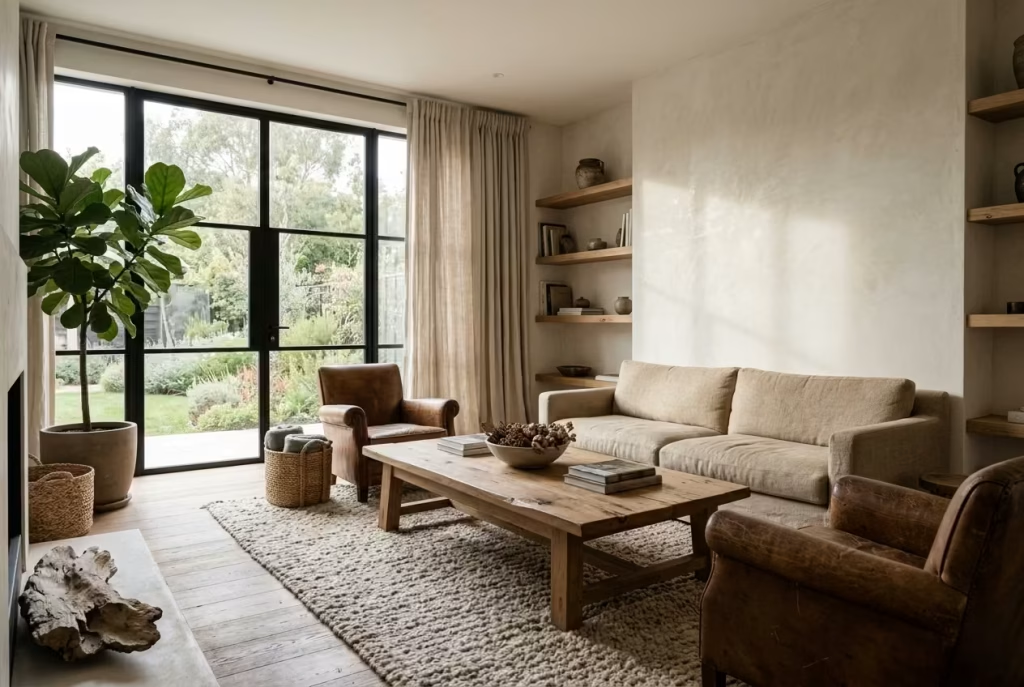
One of the clearest directions shaping the future of modern organic living rooms is the growing emphasis on authentic materials. Not just materials that look natural, but those that genuinely behave, age, and respond like the elements they are derived from. This shift is subtle, yet it is steadily redefining what people consider valuable in interior spaces. Instead of chasing flawless finishes or overly processed surfaces, there is a renewed appreciation for materials that carry evidence of origin, touch, and time.
Authentic materials bring a certain honesty into a room that synthetic alternatives often struggle to replicate. Timber that shows visible grain variation, stone with natural veining and irregularity, linen that creases rather than remains rigid, and wool that softens with use all contribute to an environment that feels grounded in reality rather than staged perfection. These qualities may seem small in isolation, but together they create a sense of depth that cannot be manufactured. It is the difference between something that looks complete on day one and something that grows more characterful with every passing year.
This movement is also closely tied to a broader change in how people relate to their homes. Interiors are no longer expected to remain static or untouched. Instead, they are becoming spaces that are allowed to evolve, gather patina, and reflect the rhythm of daily life. A coffee table that develops subtle marks over time, or a stone surface that softens in tone with exposure to light, begins to tell a quiet story of use. Rather than being seen as imperfections, these changes are increasingly valued as part of the material’s identity.
From a design perspective, working with authentic materials requires a more considered approach. It is no longer enough to select finishes based purely on appearance. One must think about how each material will behave under natural light, how it will interact with surrounding textures, and how it will feel under everyday use. In practice, this often means favouring materials that are less processed and more responsive. Hand-finished timber, lime plaster walls, natural stone floors, and undyed textiles are all becoming central to this approach, not because they are trendy, but because they hold their integrity over time.
I have seen this shift play out in several residential projects where clients initially leaned towards highly refined, almost pristine finishes. Everything appeared clean and controlled, yet something always felt slightly disconnected. When we began introducing more authentic materials, the atmosphere changed noticeably. In one living room, replacing a polished, uniform surface with a textured limestone finish immediately softened the entire space. The light no longer bounced harshly but instead settled gently across the surface, creating a more natural rhythm throughout the day. Similarly, introducing oak furniture with visible knots and grain variation brought a sense of warmth that had previously been missing.
What becomes clear through these experiences is that authenticity is not about imperfection for its own sake. It is about allowing materials to express themselves fully without over-processing or excessive refinement. There is a quiet confidence in this approach, as it does not rely on disguising natural variation but rather embraces it as part of the design language.
Ultimately, the move toward authentic materials signals a deeper shift in interior design thinking. Homes are no longer being designed as static displays, but as living environments that evolve alongside their occupants. When materials are chosen with honesty and intention, they do more than decorate a space. They shape its character, influence its mood, and quietly anchor it in time. In this way, authenticity becomes less of a style choice and more of a foundation for creating interiors that feel enduring, grounded, and genuinely human.
Sustainability and Longevity
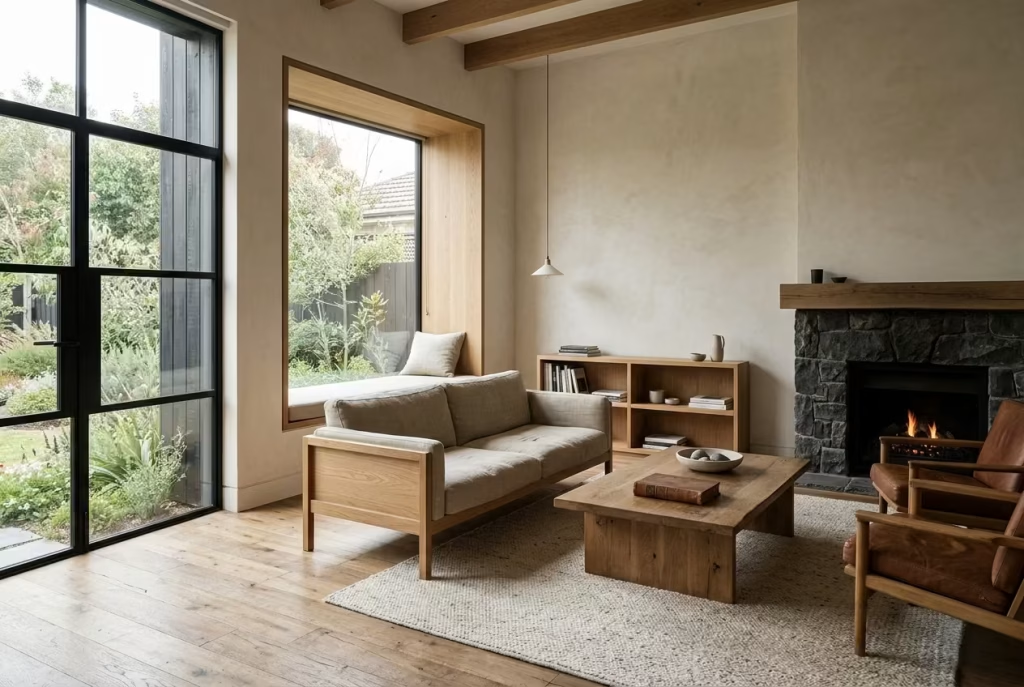
Sustainability in modern organic living rooms is no longer a surface level consideration or a design label applied at the end of a project. It has become a guiding principle that quietly shapes every material decision, every furnishing choice, and every detail that determines how a space will age over time. At its core, it is not just about reducing environmental impact, but about choosing things that are built to last, both physically and aesthetically. Longevity, in this sense, becomes the true measure of sustainability. A room that avoids constant replacement, resists short lived trends, and develops character through use is far more aligned with responsible design than one that needs frequent updating.
This shift has encouraged a move away from disposable interiors and fast design cycles. Instead of selecting pieces that serve a temporary visual purpose, there is a stronger emphasis on furniture and materials that improve with age. Solid timber that develops patina, natural stone that softens in tone, and high quality textiles that wear in rather than wear out all contribute to this long term thinking. These materials do not demand perfection on day one. They are valued for how they evolve, like a well worn path that becomes more defined with every step.
Longevity also has a spatial dimension. A well designed living room should be flexible enough to adapt to changing routines without requiring constant reinvention. This is where thoughtful layout planning becomes essential. Furniture that can be repositioned, lighting that can adjust to different moods, and storage that integrates seamlessly into the architecture all contribute to a space that remains relevant over time. When a room is designed with this adaptability in mind, it avoids the trap of becoming outdated simply because life inside it has changed.
From a real world design perspective, I often find that the most sustainable decisions are not the most dramatic ones, but the most considered. In one residential project, the brief initially leaned toward highly stylised, trend driven finishes that would have looked impressive in the short term but likely dated quickly. Instead, we focused on a restrained palette of oak, limewashed walls, wool textiles, and stone surfaces. These choices may have felt quieter at first glance, but over time they proved far more resilient. The space did not need to be refreshed seasonally or reworked to stay relevant. It simply aged into itself, becoming more grounded and visually cohesive with every passing year.
There is also a psychological benefit to this approach. Interiors that prioritise longevity tend to feel more stable and reassuring. When people are not constantly surrounded by changing aesthetics or short lived statements, they develop a stronger sense of attachment to their environment. The home becomes less of a backdrop for trends and more of a constant presence in daily life. This emotional durability is often overlooked, yet it plays a significant role in how comfortable a space feels over time.
Of course, sustainability is not only about materials and longevity, but also about restraint. Choosing fewer, better made pieces rather than filling a room with unnecessary objects reduces waste and creates visual clarity. It allows each element to hold more meaning within the space. In modern organic interiors, this restraint often translates into calmer rooms that feel more intentional, where every object has a reason to exist and nothing feels excessive or temporary.
Ultimately, sustainability and longevity are deeply connected in modern organic living rooms. One cannot exist meaningfully without the other. A truly sustainable interior is not defined by labels or trends, but by its ability to endure gracefully. When materials are chosen with care, when design decisions prioritise time over immediacy, and when spaces are allowed to evolve naturally, the result is a home that feels not only responsible, but quietly enduring in the most human sense of the word.
Why Emotional Design Is Becoming More Important
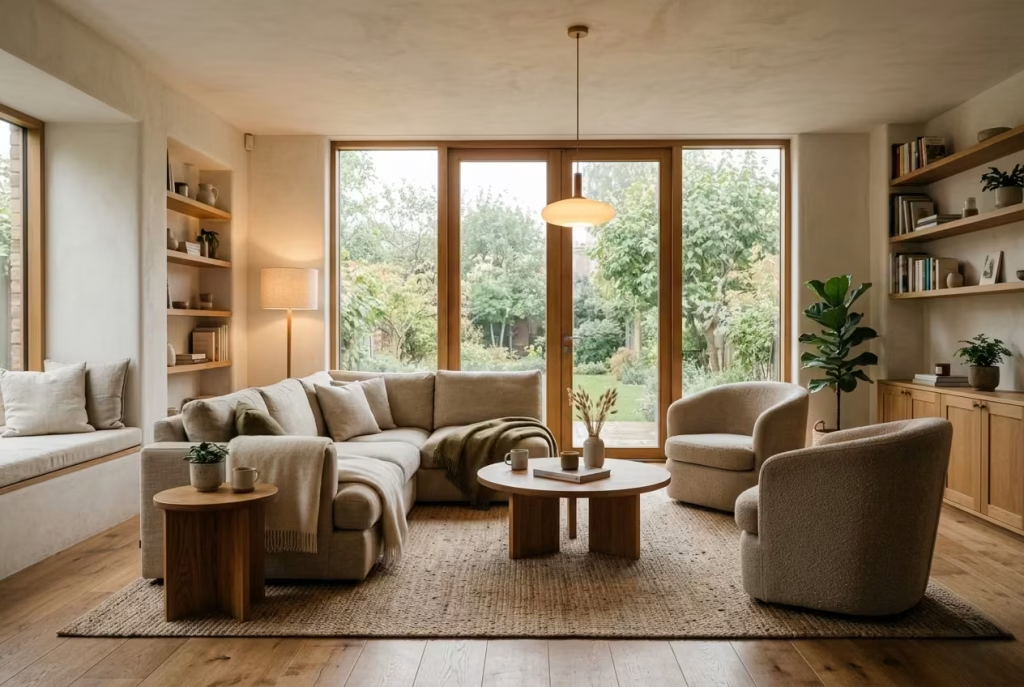
Modern organic living rooms are increasingly shaped by a question that goes beyond style or function, and it is quietly redefining how interiors are conceived. How does a space make people feel over time, not just on first impression. This shift towards emotional design reflects a broader change in lifestyle expectations, where homes are no longer viewed as static showcases, but as active environments that support wellbeing, routine, and mental clarity. In this context, aesthetics alone are no longer enough. A room can be visually resolved yet still feel unsettled if it does not support emotional ease.
Emotional design focuses on how spatial decisions influence mood, behaviour, and daily experience. It considers how light softens a morning routine, how texture calms overstimulation, and how spatial flow reduces or amplifies stress. In modern organic interiors, these factors are becoming central rather than secondary. The aim is not simply to create something beautiful, but to create something that feels instinctively right to live in, like a space that understands the rhythm of human life without needing constant adjustment.
This growing importance is closely tied to how people now use their homes. Living rooms are no longer reserved for occasional hosting or passive viewing. They have become multifunctional environments where people work, rest, gather, and recover throughout the day. With this increased intensity of use, the emotional quality of the space becomes far more critical. A room that feels visually impressive but emotionally напряж can quickly become draining, while a space that feels calm and grounded can actively support daily wellbeing.
From a design perspective, emotional impact is shaped through a combination of material, proportion, and sensory balance. Soft natural textures such as linen, wool, and timber help reduce visual tension, while balanced layouts encourage ease of movement and social connection. Even subtle decisions, such as the height of seating or the warmth of lighting, contribute to how secure and comfortable a room feels. These elements often operate below conscious awareness, yet they have a cumulative effect that defines the overall experience of the space.
I have seen this distinction play out clearly in real projects. In one living room, the initial design was visually striking, with strong symmetry, polished finishes, and carefully curated furniture. However, the space felt emotionally distant. Conversations felt formal, and the room was rarely used beyond brief moments. When we reworked the design with emotional comfort in mind, introducing softer materials, adjusting seating proximity, and layering warmer lighting, the transformation was immediate. The room did not lose its design clarity, but it gained a sense of ease that encouraged people to stay longer and use it more naturally.
This is where emotional design proves its real value. It does not replace aesthetics or function, but it refines them. It asks a more nuanced question about how a space behaves once it is lived in, not just how it appears when first completed. Over time, this approach creates interiors that feel less like constructed environments and more like supportive backdrops to everyday life.
Ultimately, the rise of emotional design signals a deeper maturity in how we think about interiors. It acknowledges that people do not simply live in spaces, they experience them. When a living room is shaped with emotional intelligence, it moves beyond visual appeal and becomes something more enduring, a place that quietly supports comfort, connection, and a sense of belonging that grows stronger the longer it is lived in.
Homes Designed for Wellbeing Rather Than Performance
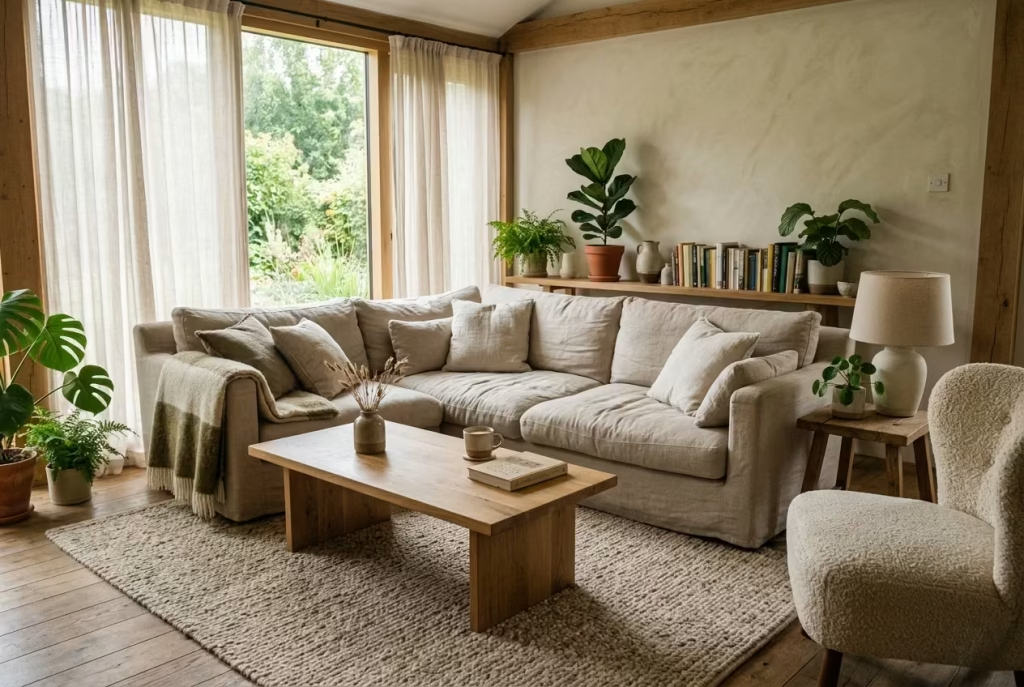
The idea of a living room as a performance space has been quietly dissolving for some time. Where once interiors were often composed to impress, to signal taste, status, or visual control, there is now a clear shift toward something more grounded and human. Modern organic living rooms are increasingly designed for wellbeing rather than presentation, prioritising how a space supports everyday life over how it appears in a single moment. This change reflects a broader cultural adjustment, where the home is no longer a backdrop for occasional admiration, but a constant environment that must sustain comfort, calm, and emotional stability.
Performance driven interiors tend to focus on impact. Strong visual statements, highly curated compositions, and flawless finishes are often used to create immediate effect. While this can be visually compelling, it often comes at the expense of ease. Spaces designed primarily to impress can feel restrictive in daily use, as though they require careful maintenance in order to preserve their intended appearance. Over time, this can create a subtle psychological distance between the occupant and the room, where the space feels observed rather than lived in.
Wellbeing focused design takes a different approach. Instead of asking how a room will look when it is first completed, it asks how it will feel after months and years of use. It considers how light enters the space throughout the day, how materials age under natural conditions, and how furniture supports the body during extended periods of rest or conversation. These considerations may appear subtle, but together they shape a living environment that feels more intuitive and less demanding.
A wellbeing led living room often relies on restraint, but not in the sense of emptiness. Rather, it is a considered reduction of unnecessary visual and physical stress. Soft natural materials, balanced proportions, and thoughtful spatial planning work together to create a sense of ease. Linen that moves gently with air, timber that softens with age, and stone that grounds the space visually all contribute to an environment that feels stable and reassuring. Instead of competing for attention, these elements support one another quietly in the background.
In practice, I have seen a noticeable difference between spaces designed for performance and those designed for wellbeing. One particular project comes to mind where the original brief emphasised visual precision. Every element was carefully aligned, and the overall composition was undeniably striking. Yet the homeowners described the space as difficult to relax in. It felt too composed, too controlled, almost as if it required them to behave in a certain way. When we shifted the focus toward wellbeing, adjusting seating for comfort, softening the material palette, and introducing more natural light diffusion, the atmosphere changed significantly. The room began to feel less like a display and more like a place of rest.
This evolution is subtle but important. A wellbeing focused interior does not reject design quality or aesthetic clarity. Instead, it integrates them into a more human centred framework. It recognises that comfort, familiarity, and ease are not secondary outcomes, but essential foundations. When these qualities are prioritised, the room becomes more forgiving, more adaptable, and ultimately more enjoyable to live in.
Another defining characteristic of wellbeing driven design is its relationship with time. Performance spaces often feel tied to a specific moment, carefully composed for immediate impact. Wellbeing oriented spaces, however, are designed to age gracefully. They accept change, accommodate use, and develop character through lived experience. This allows the interior to feel less like a finished object and more like an evolving environment that grows alongside the people who inhabit it.
Ultimately, homes designed for wellbeing rather than performance reflect a deeper understanding of what it means to live well. They move away from the pressure of visual perfection and toward a quieter, more sustainable form of beauty. One that is measured not by how impressive a room appears at first glance, but by how consistently it supports comfort, calm, and a sense of belonging over time.
Conclusion: Warmth Is Not a Style Choice, It Is a Feeling
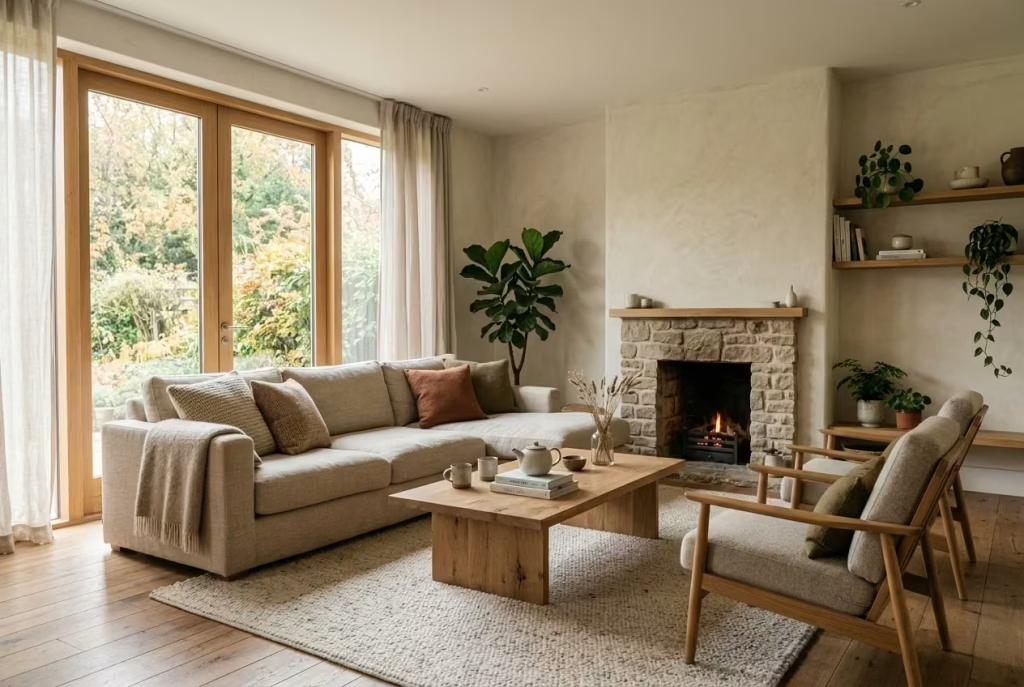
Warmth in a living room is often mistaken for a visual outcome, something achieved through colour palettes, furniture selections, or decorative styling. In reality, it runs far deeper than aesthetics. It is an emotional condition shaped by how a space behaves, how it responds to light, and how naturally it supports everyday life. Modern organic living rooms succeed because they understand this distinction, designing not just for appearance but for lived experience.
When natural materials, layered textures, organic forms, and thoughtful spatial layouts come together, they create more than a cohesive interior. They form an environment that feels instinctively comfortable, where nothing is forced and everything has room to breathe. The most memorable spaces are rarely defined by expense or excess. Instead, they are shaped by clarity, restraint, and a quiet sensitivity to how people actually move through and use them.
Ultimately, modern organic design works because it connects with both the senses and emotions at the same time. When approached with care, it produces living rooms that feel timeless, restorative, and deeply connected to the rhythm of real life.
Frequently asked questions
What defines a modern organic living room?
A modern organic living room is defined by a balance of natural materials, soft tonal palettes, and relaxed spatial layouts. Rather than focusing on strict minimalism or decorative excess, it prioritises comfort, texture, and a sense of ease. Timber, stone, linen, wool, and muted earth tones are often combined to create a grounded and calming atmosphere that feels connected to nature.
Is modern organic design suitable for small living rooms?
Yes, it works particularly well in smaller spaces when handled correctly. The key is restraint and layering rather than clutter. Light natural tones, reflective but matte finishes, and well-proportioned furniture help maintain openness. Thoughtful use of texture prevents the room from feeling flat, even when the palette is restrained.
What colours work best in modern organic interiors?
Earth-inspired neutrals tend to work best, including sand, oat, stone, clay, and soft greens. These colours respond well to natural light and create a calm foundation. Subtle tonal variation is more important than contrast, as it adds depth without disrupting the overall sense of serenity.
How do you make a neutral living room feel warm and not boring?
Warmth comes from layering, not just colour. Mixing textures like linen, wool, timber, and stone adds depth and tactility. Varying finishes within the same tonal family also helps prevent flatness. A neutral room becomes engaging when it feels rich in material detail rather than dependent on bold colour.
Can modern organic interiors include bold or dark elements?
Yes, but they should be used sparingly and with intention. Dark woods, black accents, or sculptural furniture can add contrast and definition, but the overall atmosphere should remain calm. When overused, these elements can disrupt the sense of balance that defines organic design.
What is the biggest mistake people make with this style?
The most common mistake is confusing modern organic design with beige minimalism. Removing too much variation in tone and texture can lead to a space that feels visually flat and emotionally distant. Organic design should always feel layered, tactile, and alive, even within a restrained palette.