


Cozy Fall Kitchen Decor Ideas And the One Detail That Changes Everything
Quick answer: You don’t need to redecorate your whole kitchen for autumn, and honestly, trying to is usually what ruins it. Pick one zone (the island, the open shelving, the coffee corner) and change a single small detail there: a jug of dried wheat, a warmer bulb overhead, a plaid towel slung over the oven handle.
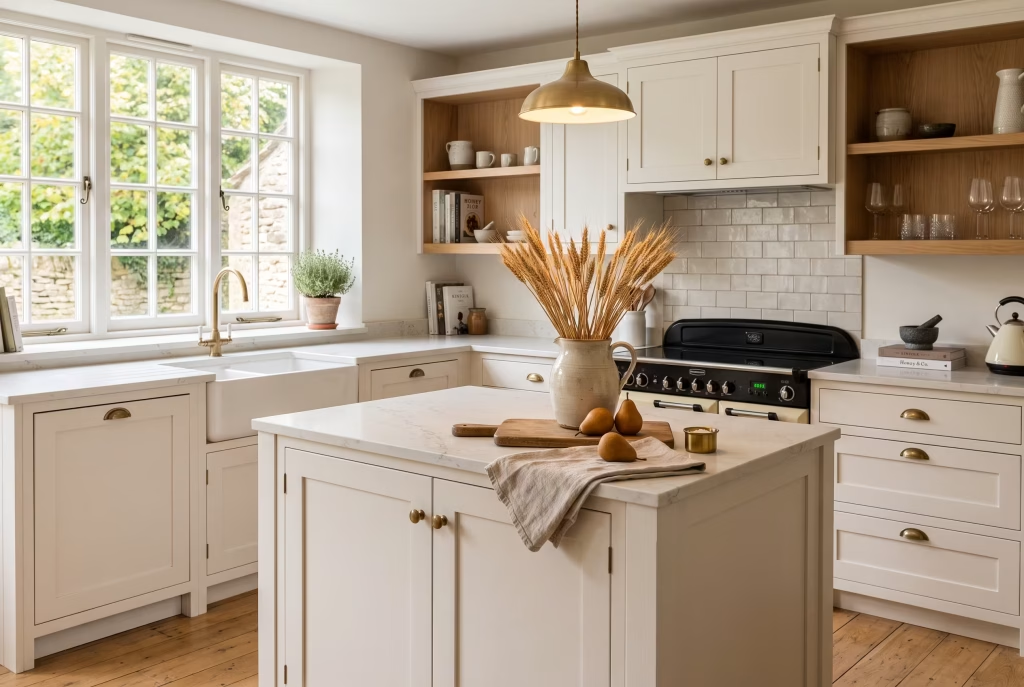
That one detail is what your eye then reads into everything else in the room. What follows is 28 ideas sorted by Fall Kitchen zone, the psychology behind why a handful of them work so disproportionately well, honest cost breakdowns, real guidance for small kitchens and rentals, how long fresh produce actually survives on a counter, and answers to the questions people keep circling back to in comment sections every single September.
The Morning Everything Shifts
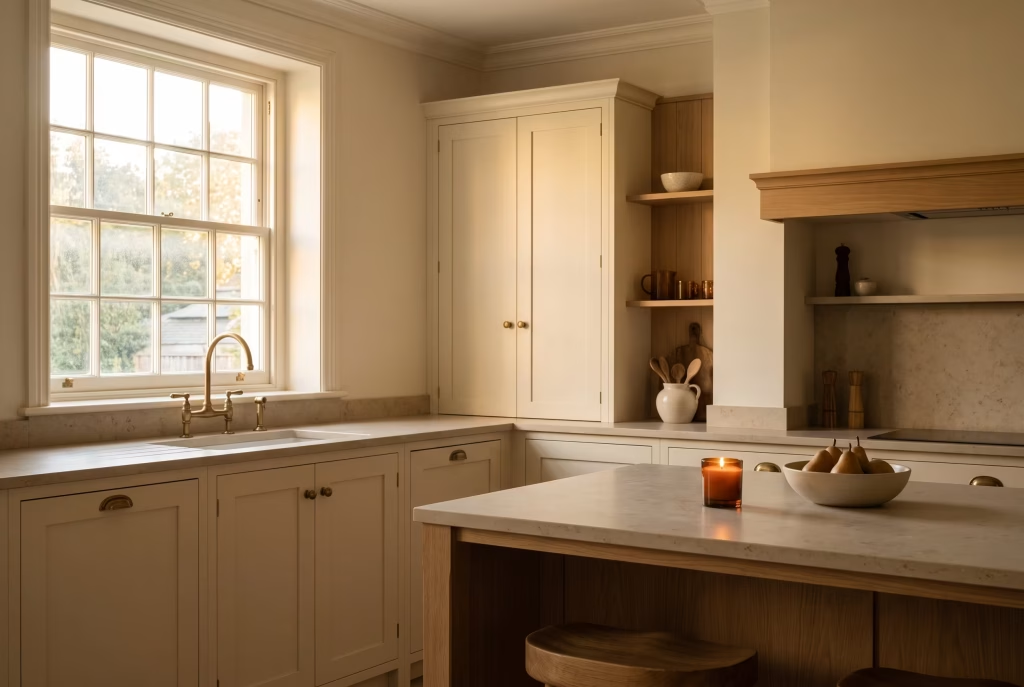
There’s a particular kind of magic trick that happens in a kitchen every September, usually before you’ve even had coffee. You wander in half-asleep, flip the light on, and something is different, though you couldn’t say exactly what for the first few seconds.
Maybe it’s a candle that wasn’t lit yesterday. Maybe the light through the window looks a shade warmer than it did last week. Nothing has actually been renovated. Nobody called a contractor. And yet the whole room seems to exhale a little.
That reaction isn’t decor doing its job in the way most people assume. It’s psychology doing its job, and decor is just the delivery mechanism. Coziness in a kitchen almost never comes from the sum of many decorations stacked on top of each other. Far more often, it’s one detail, chosen with intention and placed exactly where your eye naturally lands first, quietly carrying nearly all of the emotional weight.
Everything below is really just a long list of candidates for that one detail. You’re not meant to do all 28 of them (please don’t, your counters will hate you). You’re meant to find the one or two that genuinely belong in your kitchen, and let those do the heavy lifting while the season unfolds around them.
You May also Like: 25 Small Kitchen Ideas That Maximize Space and Make Cooking Way More Enjoyable
Why Autumn Lands in the Kitchen Before It Lands Anywhere Else
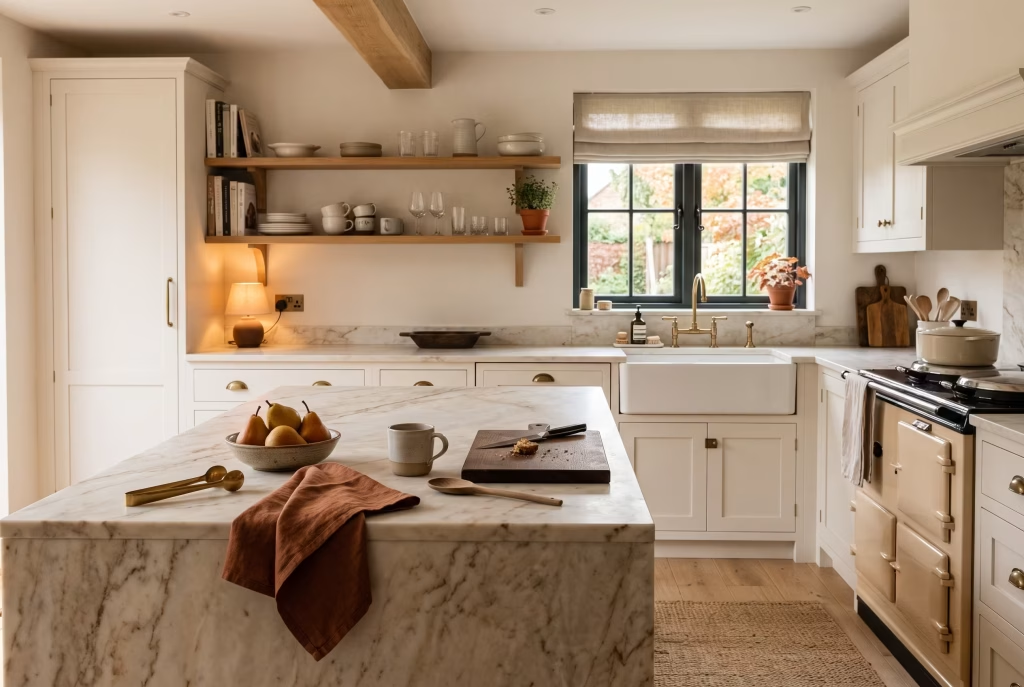
Living rooms get styled for autumn. Porches get dressed up for it, sometimes to an almost competitive degree. But the kitchen is where you actually feel the season turning over, because it’s the room you inhabit for the least glamorous, most repetitive stretches of your day: the bleary first coffee, the school-lunch scramble, the mid-morning tea you make on autopilot, the last dishes before bed.
A room you pass through occasionally doesn’t need much to read as seasonal. A room you live in for two hours a day rewards a single, well-placed change far more generously than an armful of orange trinkets scattered across every flat surface you own.
That’s also precisely why over-decorating backfires here, and only here, in a way it might not in a formal dining room you use twice a month. A kitchen has to keep functioning while it’s also being asked to look nice. Every idea in this guide has been written with that tension front and centre, so none of them ask you to sacrifice counter space you’ll be reaching for at seven the next morning.
The Psychology of a Kitchen That Feels Warm (Not Just Looks Warm)
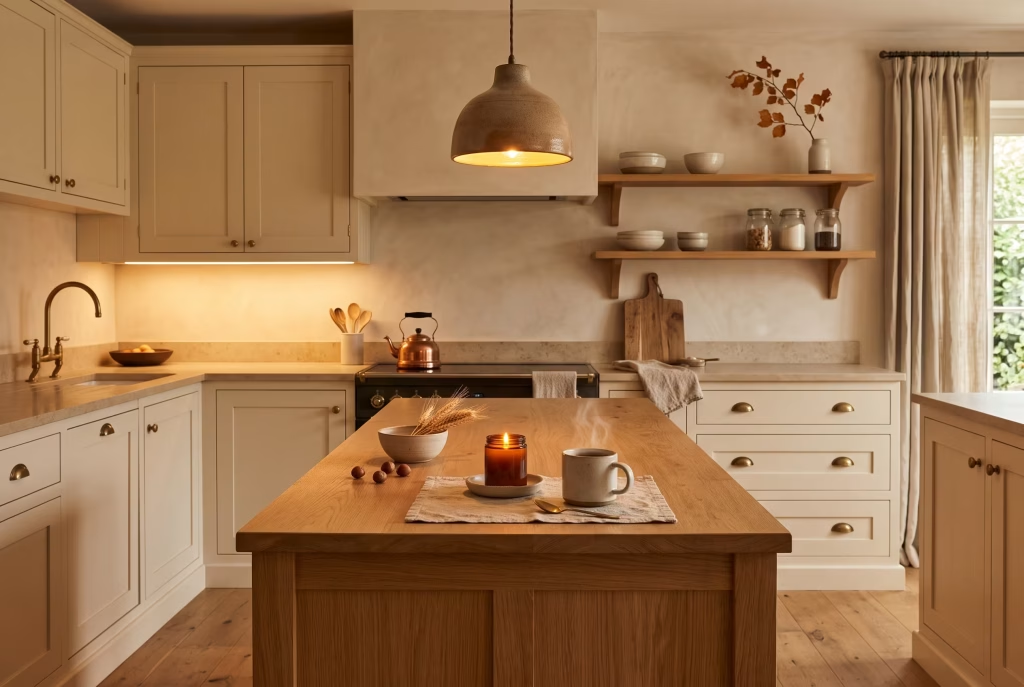
Before diving into the ideas themselves, it’s worth understanding why a handful of very small, very cheap changes produce feelings wildly out of proportion to their price tag. This isn’t decorating folklore. There’s genuine sensory science underpinning most of it.
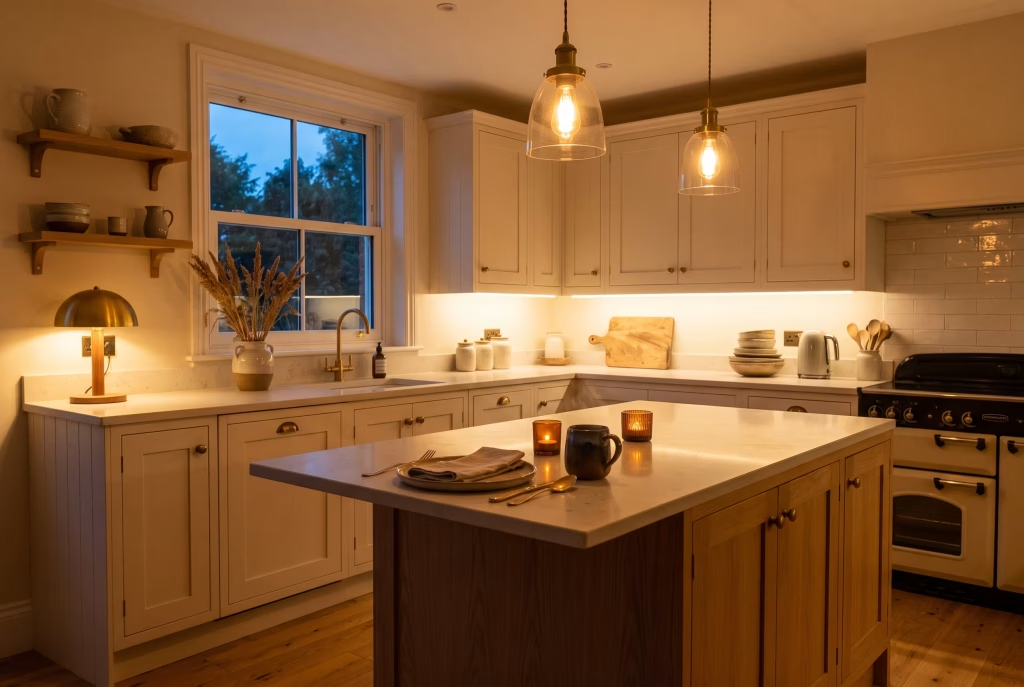
Warm light quite literally changes how your brain reads a space. Cooler, bluer light (the kind most kitchens are built with, since it’s better for chopping vegetables safely) signals alertness and task-focus to your nervous system. Warmer light, especially anything below roughly 2700 Kelvin, triggers the same relaxation response your body associates with candlelight, firelight, and dusk. Swap nothing else in your kitchen and simply changing your bulbs will make the room feel emotionally different by dinnertime.
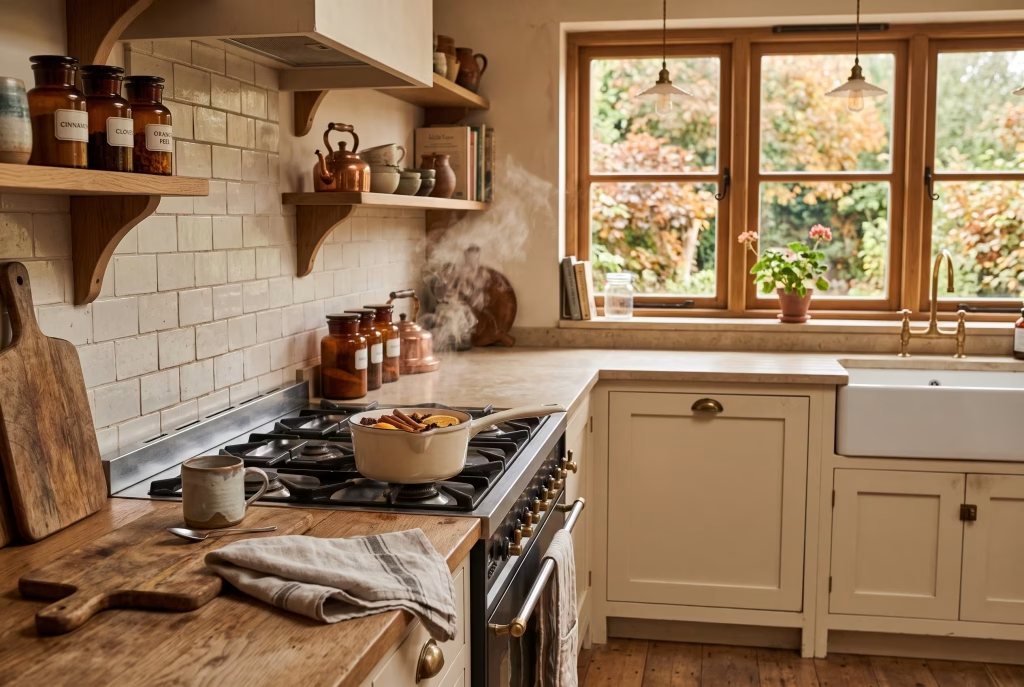
Scent is tied directly to memory in a way sight and sound aren’t. The olfactory bulb sits extraordinarily close to the amygdala and hippocampus, the parts of your brain responsible for emotion and memory formation. That’s the actual, physiological reason a simmering pot of cinnamon and orange peel can make an entire kitchen feel like a childhood you haven’t thought about in years. It isn’t sentimentality. It’s neuroanatomy.
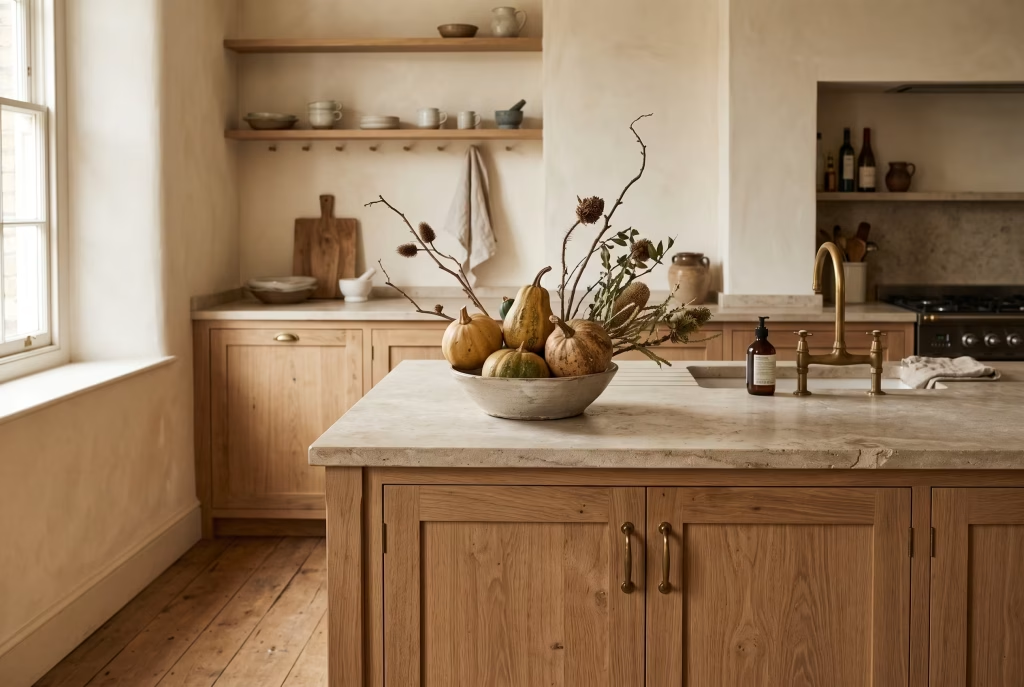
Natural materials calm the nervous system in a measurable way, a phenomenon researchers call biophilia. Wood grain, dried botanicals, and organic imperfect shapes (a lumpy gourd, a crooked branch) read as safe and unthreatening to a part of the brain that’s still, on some level, scanning for danger. This is a large part of why a bowl of foraged branches often feels more genuinely cozy than a symmetrical bouquet from a shop, even though the shop version cost more.
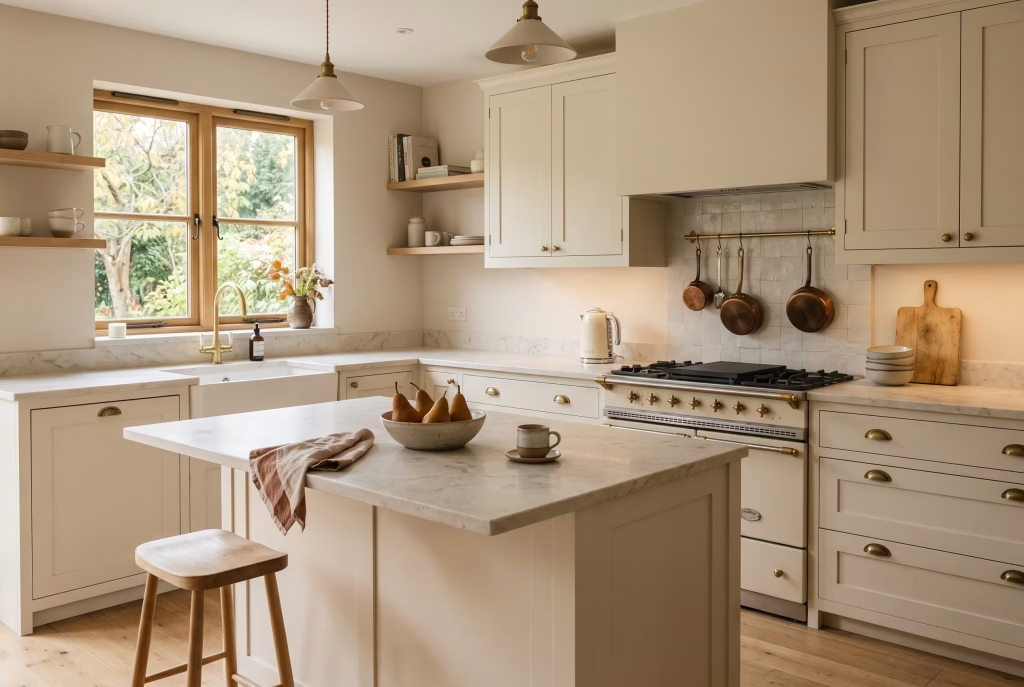
Clutter raises cortisol, and a working kitchen is uniquely vulnerable to it. Studies on domestic environments consistently link visual clutter to elevated stress hormones, and a kitchen accumulates clutter faster than almost any other room because it’s where mail lands, where school permission slips pile up, where the fruit bowl becomes a junk drawer with skin on. This is the real reason “leave visible empty space” appears more than once in this guide. It isn’t a styling preference. It’s a nervous-system one.
Keep these four ideas in your back pocket as you read on, because they explain why some of the ideas below (the ones involving light temperature and scent especially) punch so far above their cost.
Choosing a Palette Your Kitchen Already Half Has
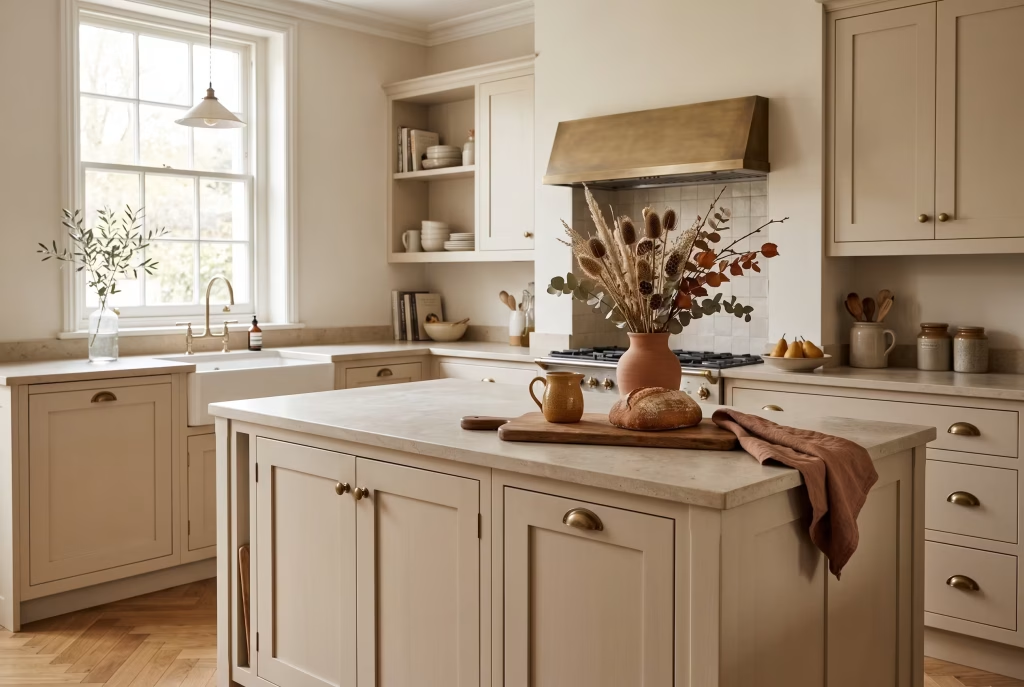
Before you buy a single thing, take a proper look at what’s already on your walls and cabinets, because it decides more than most people expect, and getting this step wrong is the single most common reason a fall kitchen refresh ends up looking flat rather than rich.
If your cabinetry leans warm white or cream (something with a faint yellow or beige undertone, the kind often described as an aged linen shade), rust, ochre, and burnt orange will genuinely glow against it.
If your cabinets lean towards a stark, blue-based white, those same warm tones can read slightly dull, even a touch grey, purely because the undertones are fighting each other rather than working together. That doesn’t rule orange out entirely in a cool-toned kitchen. It just means leaning harder on brown, cream, and black, and treating orange as an accent rather than the backbone.
Light temperature matters every bit as much as paint colour, and it’s the variable people forget about most often. A kitchen lit entirely by one cool-white overhead fixture will flatten warm wood, copper, and rust no matter how thoughtfully you’ve arranged them, the same way a photograph shot in the wrong white balance makes even a beautiful meal look slightly unappetising. Swapping to warm white or amber bulbs is, pound for pound, one of the highest-return changes on this entire list, and it costs roughly what a four-pack of light bulbs costs, because that’s precisely what it is.
You genuinely don’t need orange anywhere in the mix if it’s not your kitchen’s language. Deep red, burgundy, olive, mustard, warm brown, sage, cream, and rust all read as unmistakably autumnal, and several of them (sage and cream especially) work far better than orange in a small or predominantly neutral space, where a bold saturated colour can start to feel loud rather than layered.
The Ideas, Zone by Zone
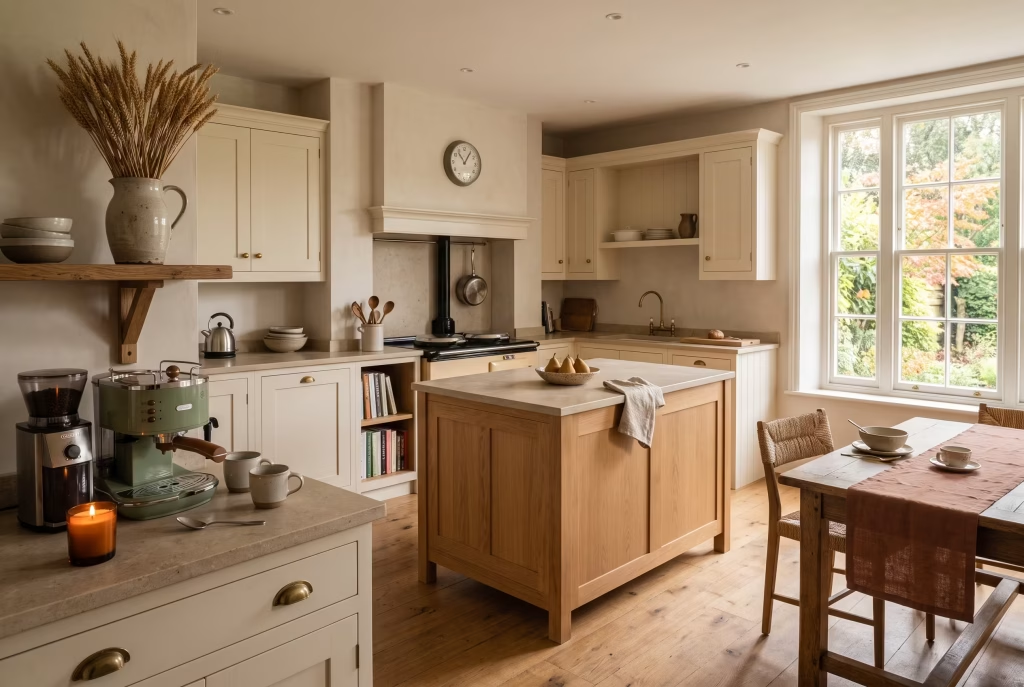
Think of your kitchen less as a single room to decorate and more as a handful of small rooms stacked together under one roof: the surface where you actually cook, the shelf you glance at while the kettle works itself up, the corner where you stand half-awake waiting for coffee to happen, the table where the day either starts gently or ends the same way.
Each zone carries a different emotional job, which is exactly why the same pumpkin can look purposeful on an island and slightly lost, almost apologetic, on a windowsill nobody ever actually stops at. Work zone by zone rather than object by object, and the “one small detail” idea stops being an abstraction and becomes something you can actually execute by Sunday afternoon.
Your Island or Main Counter
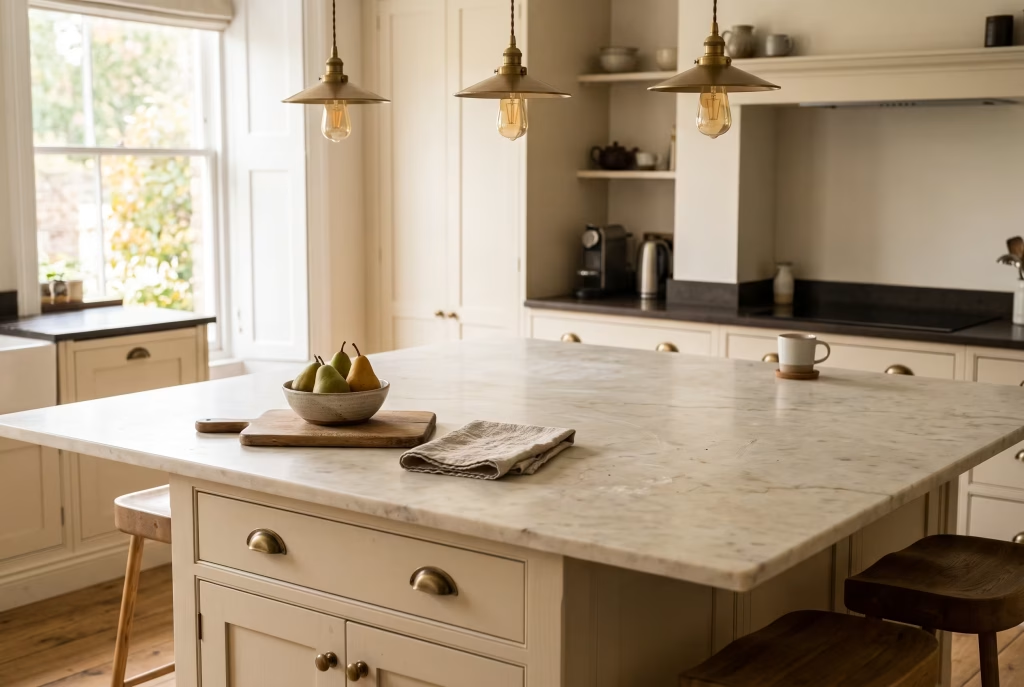
This is the surface people see first, the one that sets the emotional register for the rest of the room, so it earns the most careful editing, never the most decoration. It’s also the zone most prone to over-styling, because it’s tempting to treat an island like a stage rather than the place you’ll set your keys, your grocery bags, and Tuesday’s dinner plates down on. The goal here isn’t to make the island untouchable. It’s to make it look cared for, the way a well-kept desk looks cared for even mid-project.
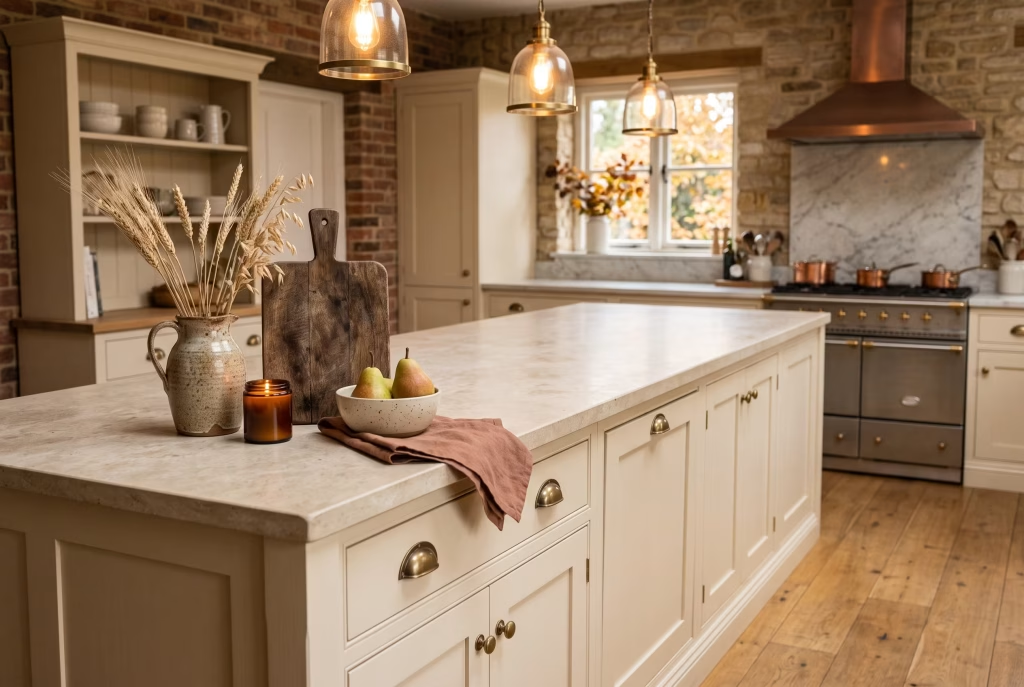
1. Build one grouping, not several scattered ones. Choose a single spot, one end of the island or one clear run of counter, and let everything fall-related live there. A cluster of three to five items (odd numbers genuinely read as more relaxed than even ones, there’s a real reason design books keep repeating this) looks intentional. The exact same items spread the full length of the counter looks like clutter that happened to you rather than something you chose. Cost & effort: free-$15 if you’re using what you own already. Five minutes, give or take. How it feels to live with: your eye has one place to land instead of six, which sounds trivial until you notice how much calmer the whole counter feels by comparison.
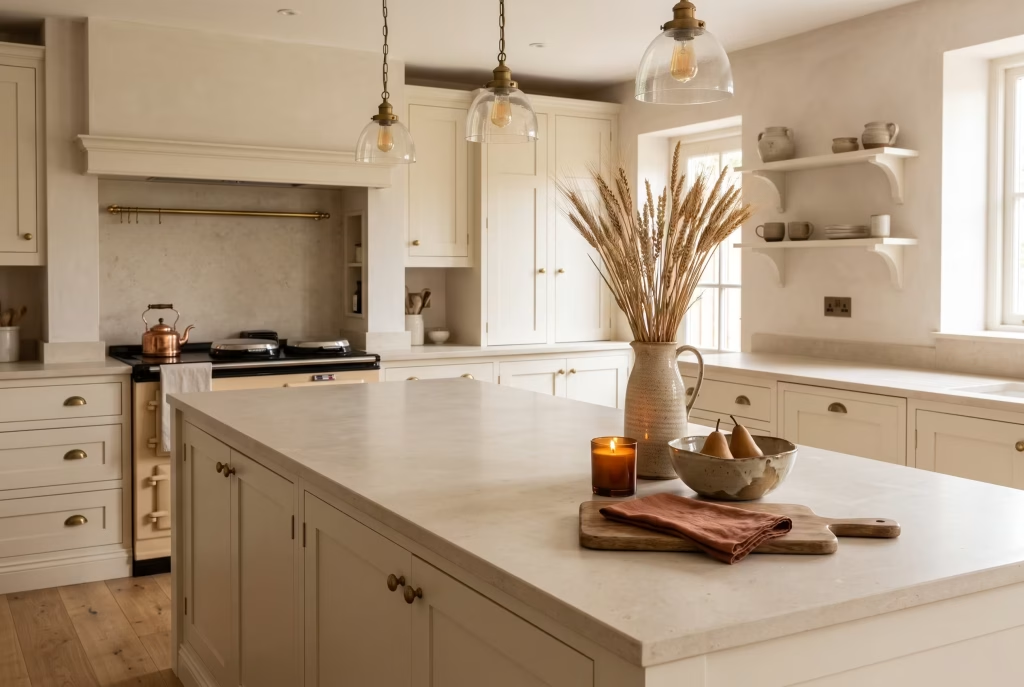
2. Stack for height variation, not for symmetry. Within your grouping, put the tallest piece towards the back, a mid-height item or two in front of that, and something low and flat right at the front, so the eye has a gentle slope to travel down rather than a flat, monotonous row. This is basic visual hierarchy, the same principle a florist uses in a bouquet, just applied to gourds and jugs instead of stems. Cost & effort: free, once the pieces exist. Two minutes of rearranging.
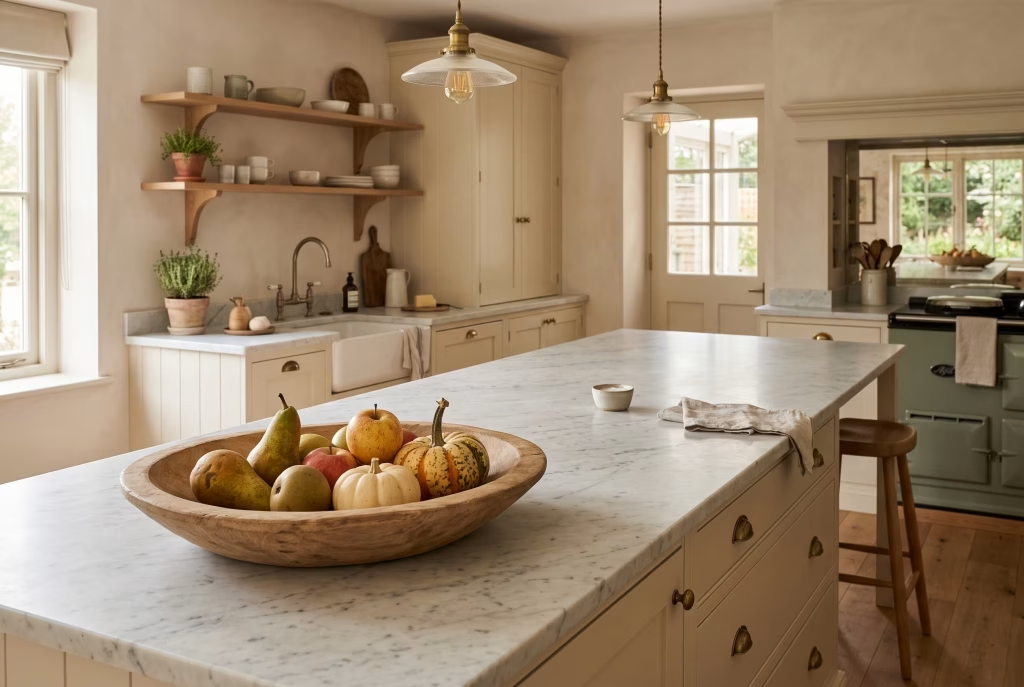
3. Fill a dough bowl or wide, shallow bowl loosely with produce. Apples, pears, mini pumpkins, or a mixture of all three, arranged so there’s still visible air between the pieces rather than everything crammed edge to edge. A tightly packed bowl reads as stock photography. A loosely filled one reads as something you gathered, even if you bought it all in one trip to the same shop fifteen minutes ago. Cost & effort: $5-15 for produce, or free if the bowl’s already yours. How it feels to live with: it’s edible decor, which means it does double duty and never has that slightly sad, dusty feeling that permanent decorations eventually get.
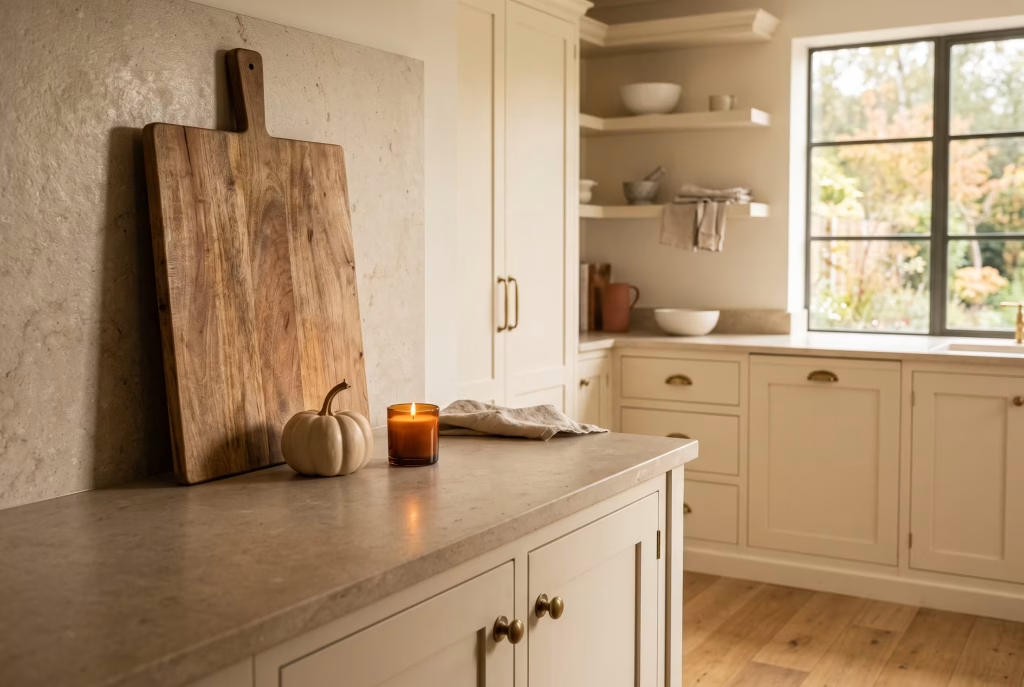
4. Lean a cutting board against the backsplash rather than laying it flat. Prop it upright and rest something small in front, a candle, a mini pumpkin, so it becomes a backdrop rather than furniture. This leaned-and-layered trick, borrowed straight from how stylists shoot kitchens for magazines, does more visual work than the board simply lying flat on the counter ever will. Cost & effort: free, if you already own a board.
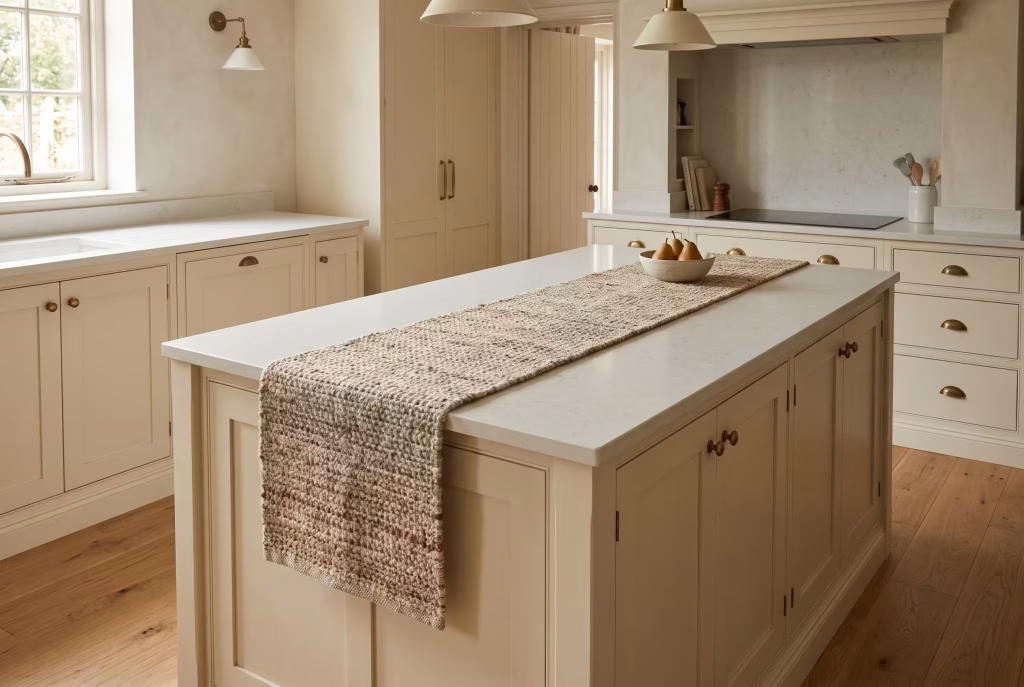
5. Add one runner rather than styling a full tablecloth’s worth of props. A chunky knit or plaid runner along the island softens all that hard, cold surface without introducing a single object you’ll need to move before you can actually use the counter for its intended job. Cost & effort: $15-35.
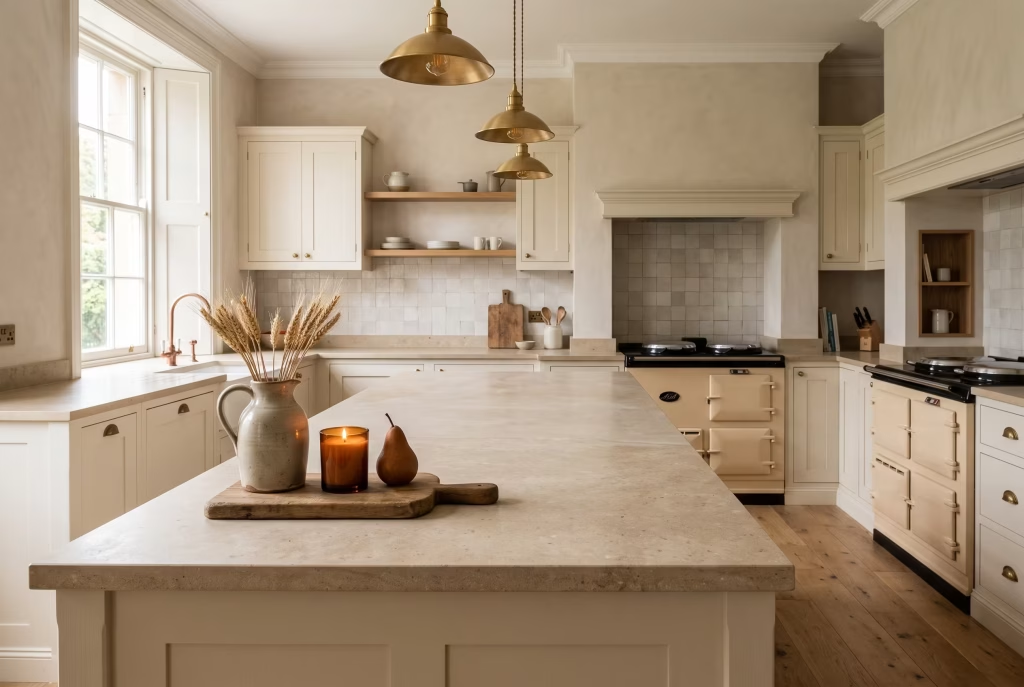
6. Leave visible empty space, deliberately, even when it feels like you’re not finished. This is the idea people skip most often, because it doesn’t feel like doing anything, but empty counter space is quietly doing enormous work: it’s what allows the styled section to read as a choice rather than an accumulation. If you’ve just added five things and the whole counter suddenly looks busy, take one thing away before you add a sixth. Cost & effort: free, and arguably the cheapest, highest-impact idea on this entire list.
You May also Like: 25 White Kitchen Designs That Blend Style and Function
Open Shelving and Cabinets
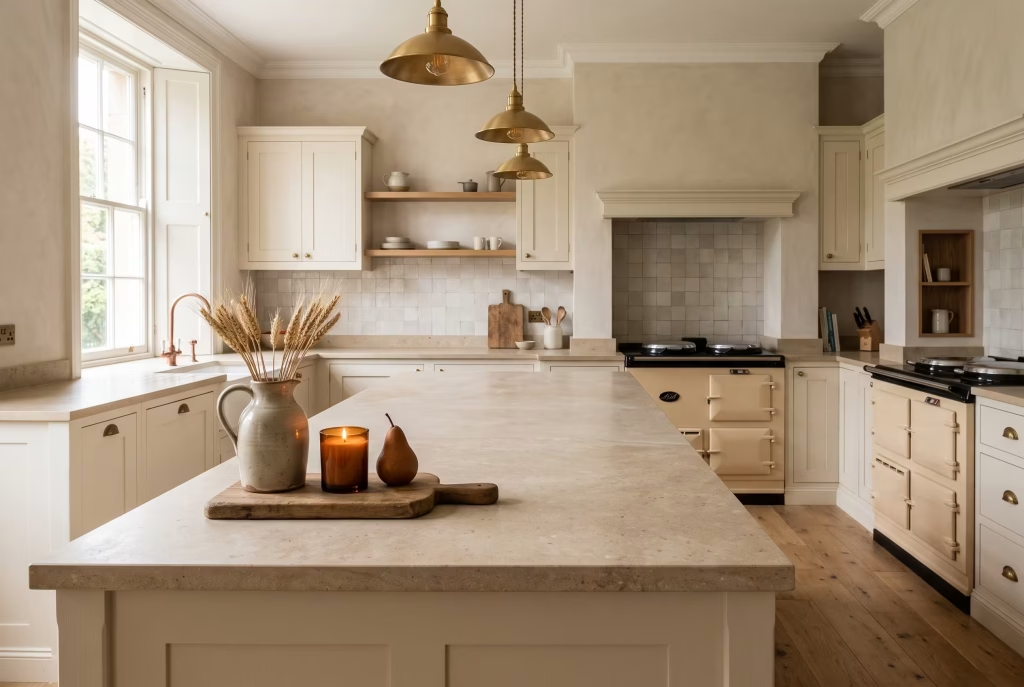
If you’ve got open shelves, they’re some of the most forgiving real estate in the whole kitchen, since they don’t compete with anything you actually need to cook on. They’re also the zone where a genuinely lived-in kitchen tends to give itself away, a slightly mismatched stack of bowls you use every single day says more about a home than a perfectly coordinated display that nobody’s ever reached for. The trick with open shelving isn’t styling it until it looks finished. It’s styling it so it still looks like somewhere you’d grab a mug from at seven in the morning without a second thought.
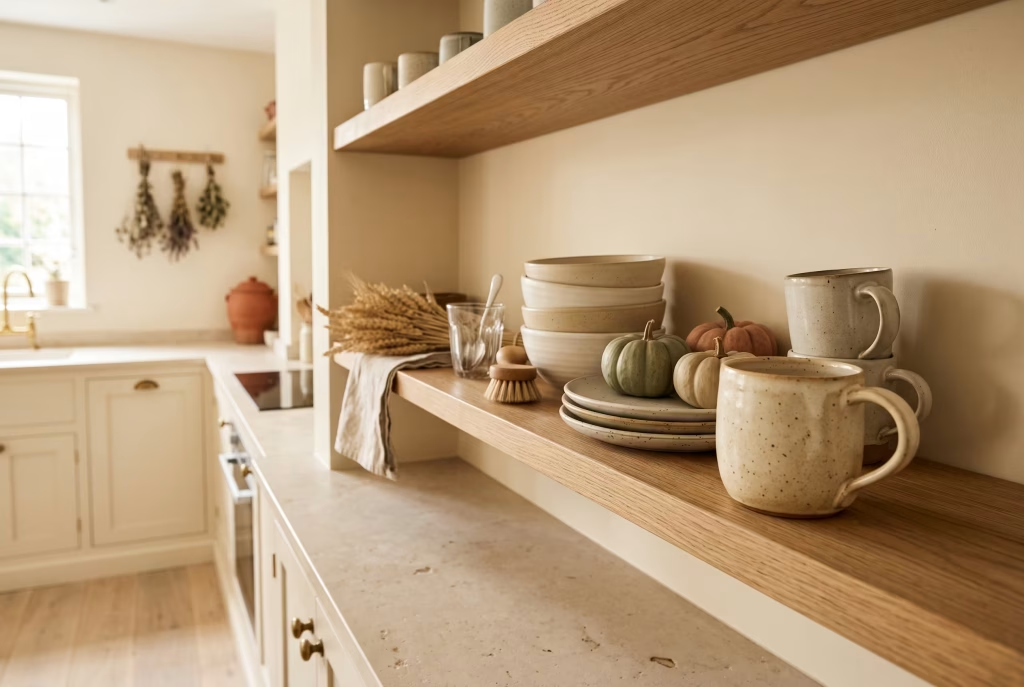
7. Let everyday objects and seasonal ones share the same shelf. A cluster of mini pumpkins sitting beside the bowls you actually cook out of reads as lived-in and warm. A shelf devoted purely to seasonal objects, with nothing functional in sight, starts to resemble a shop window. Pull one everyday piece slightly forward so it’s the first thing your eye catches. Cost & effort: free, if the pumpkins are already yours; $8-20 for a small fresh cluster.
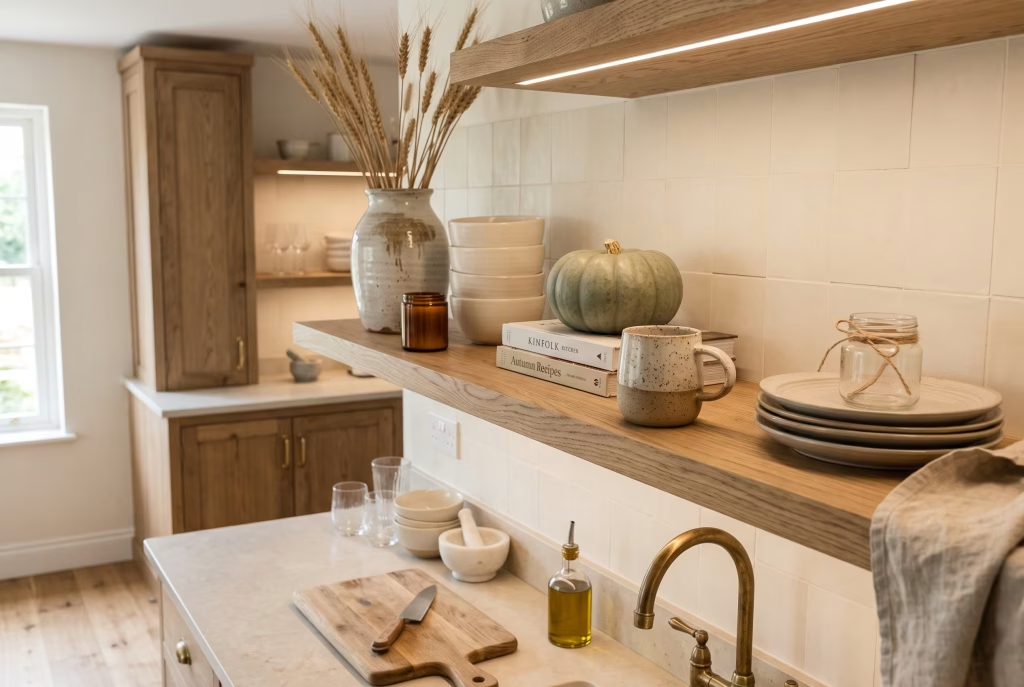
8. Layer front to back rather than lining everything up flush with the shelf edge. Set a taller jar or vase towards the back, then something shorter in front of it. Objects marching along in a single row, however handsome individually, flatten the whole composition into something two-dimensional. Cost & effort: free.
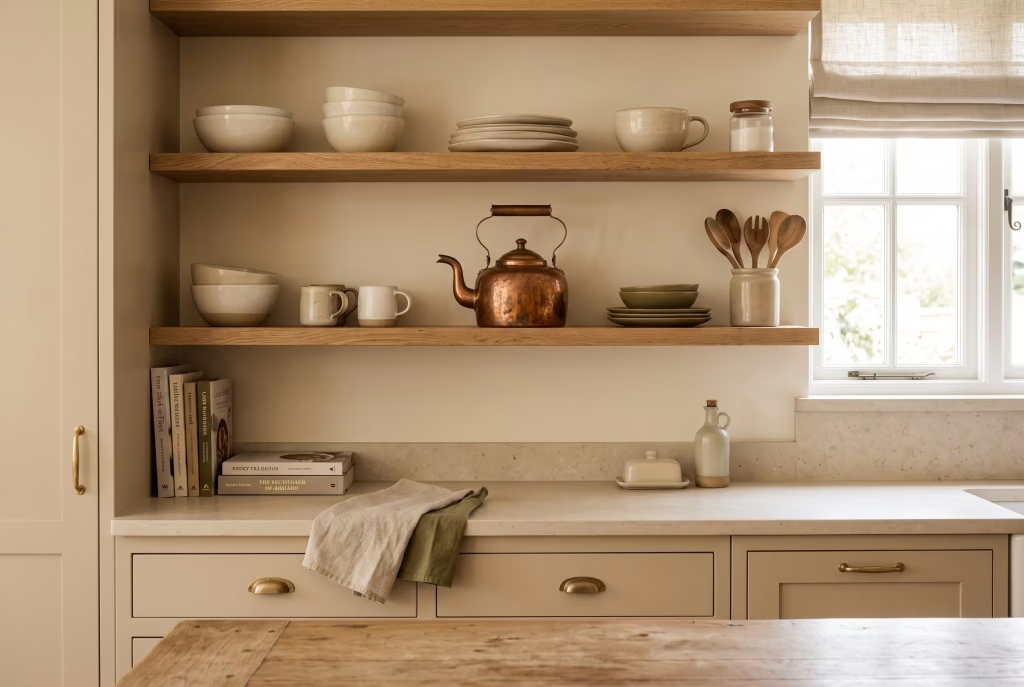
9. Bring in exactly one warm metal, and let it do the talking. Copper, brass, or aged black all read as unmistakably autumnal against open shelving, and a single well-chosen kettle, canister, or pair of candlesticks does more heavy lifting than half a dozen smaller trinkets in a cooler-toned finish. Cost & effort: $10-40 for something secondhand. Copper, in particular, turns up at charity shops and flea markets for a fraction of what it costs new, since most of its charm comes from age and patina rather than price tag.
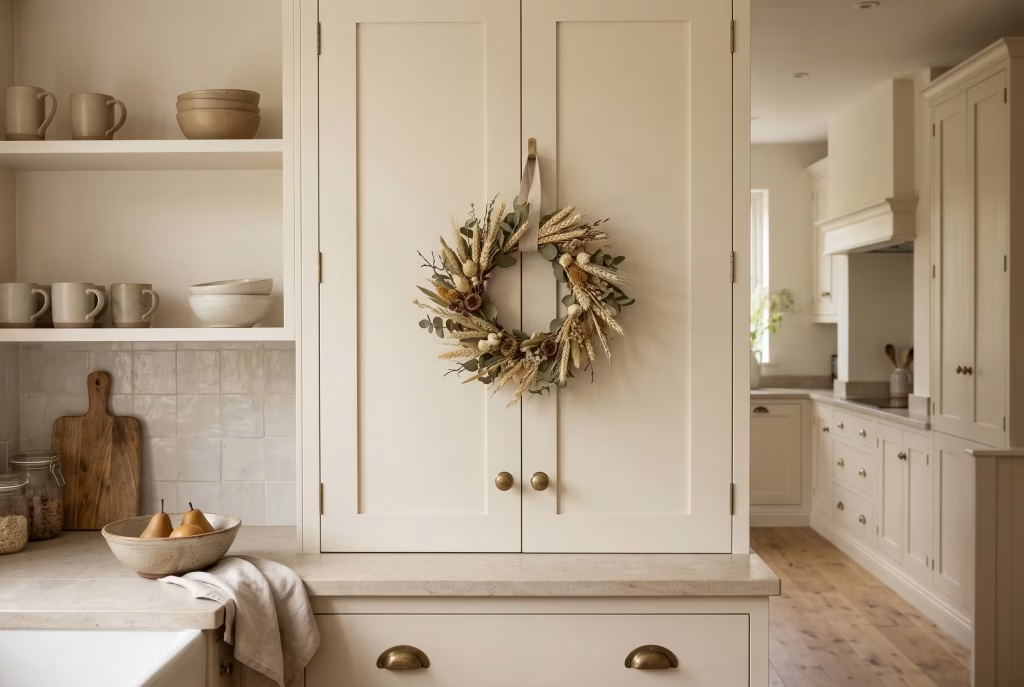
10. Hang a small wreath or swag directly on a cabinet door. Measure the door panel first, and choose something roughly half that panel’s height, so it sits centred and confident rather than looking like it’s floating or crowding the frame. Dried wheat, eucalyptus, or a simple twig wreath all work beautifully here, at a fraction of what a full-sized front-door version costs. Cost & effort: $10-25. Fifteen minutes, tops.
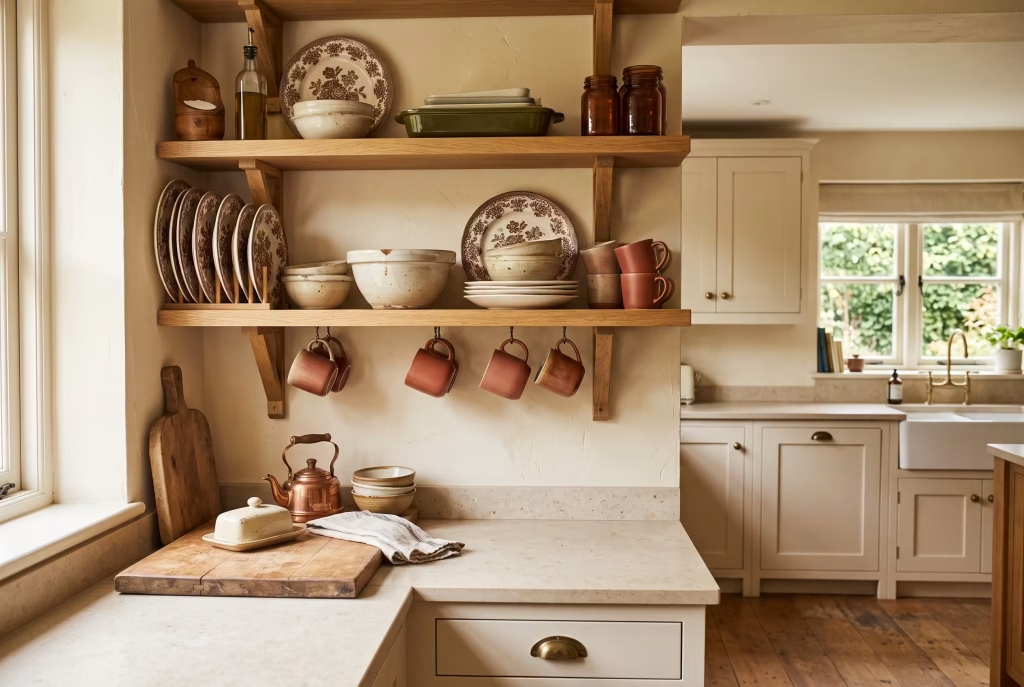
11. Swap in warm-toned everyday dishes, assuming you already own some. You don’t need to buy a single new plate for autumn. If brown transferware, stoneware, or anything in cream, rust, or olive is already sitting in a cupboard somewhere, displaying it on open shelving for a season is, in its entirety, the whole decorating job, done with pieces you already paid for months or years ago. Cost & effort: free.
The Coffee or Tea Station
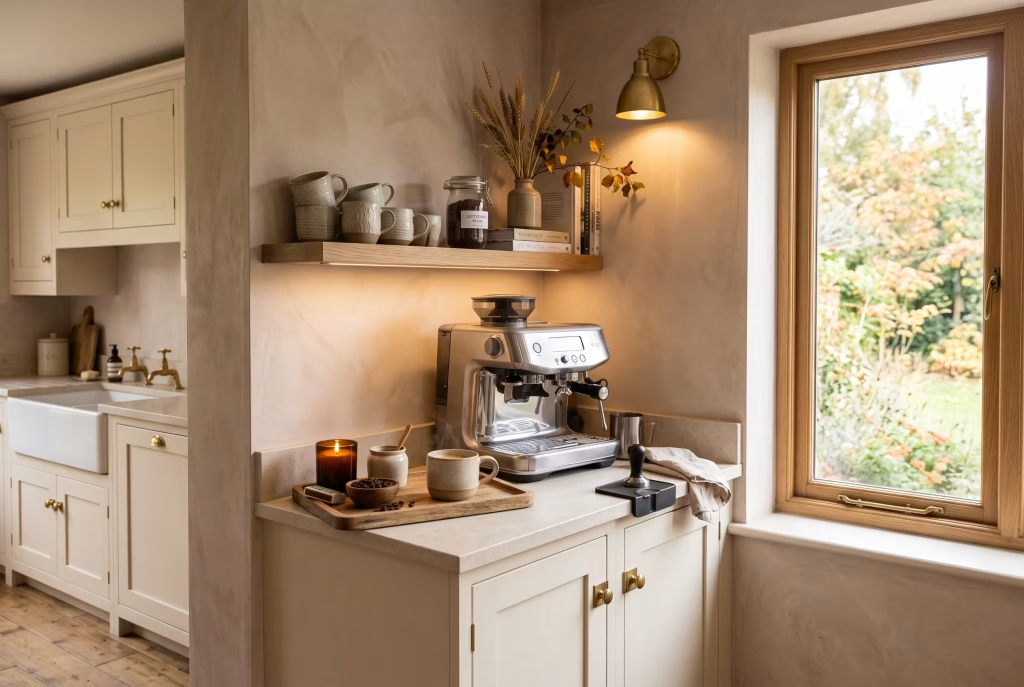
Kitchens with a coffee corner get one clear exception to the “less is more” rule, and it’s earned. This is the spot you stand at every single morning, often half-conscious, often before you’ve had the chance to feel much of anything else about the day ahead. A five-second glance at a warm, well-lit corner while the machine or kettle works through its cycle delivers a genuinely disproportionate amount of the emotional return you get from decorating an entire kitchen. It’s worth treating this particular zone a touch more generously than the rest.
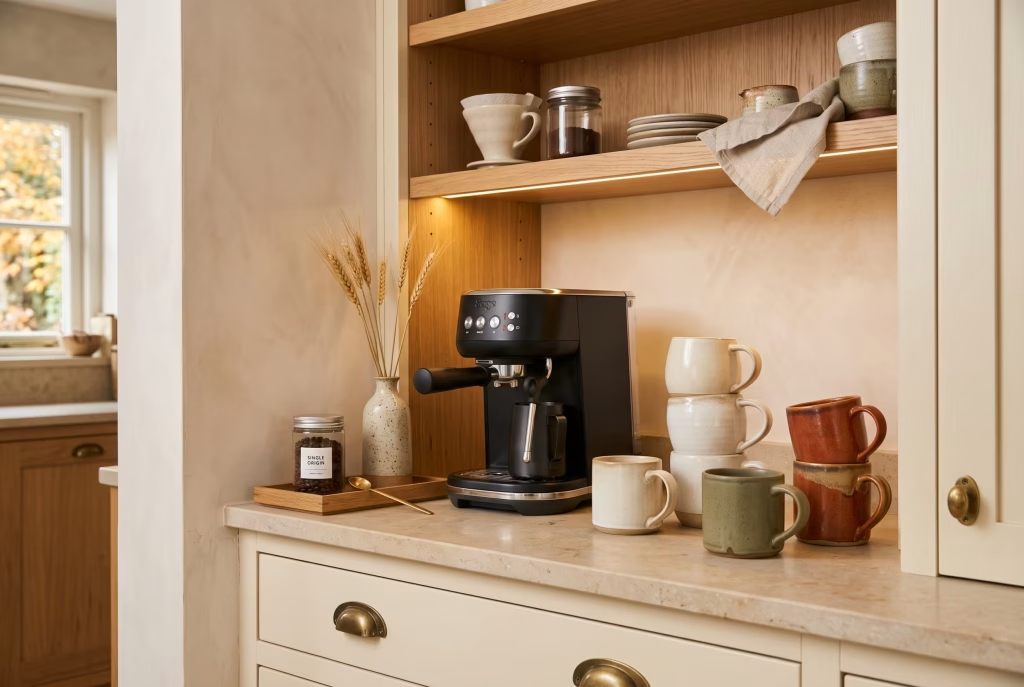
12. Stack mugs by colour rather than by matching set. Cream and rust mugs grouped together look considerably more curated than the exact same mugs mixed at random, even though it’s the identical collection you already owned yesterday. Cost & effort: free.
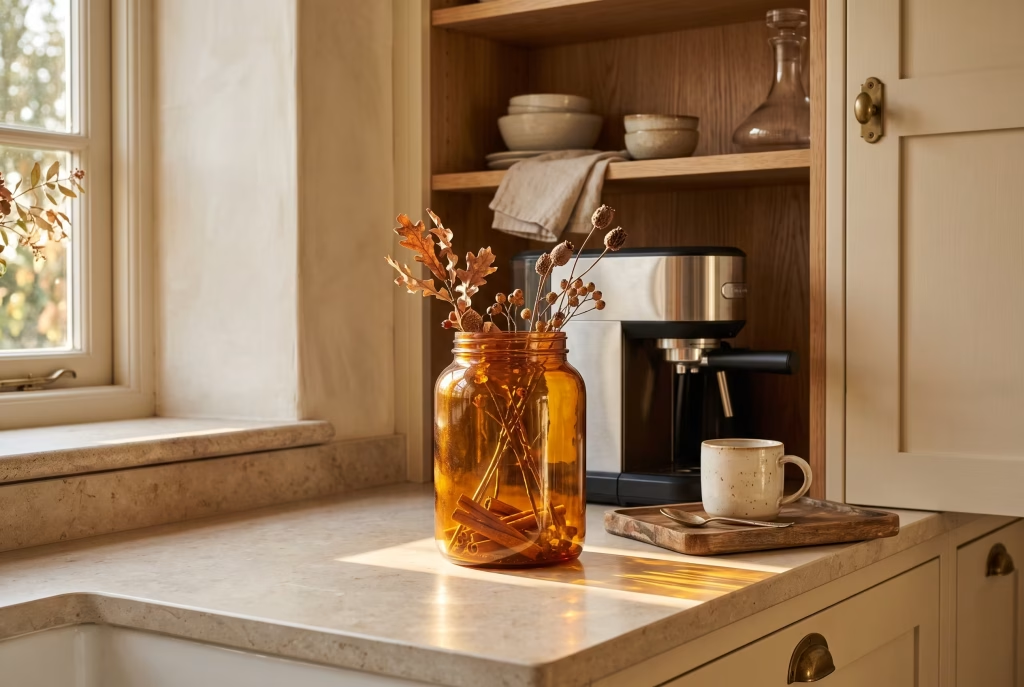
13. Add one amber glass jar and let the light do the rest. Fill it with cinnamon sticks, dried botanicals, or nothing at all, and let the glass itself catch and hold the light. Amber glass genuinely shifts colour through the course of a day, deepening noticeably by late afternoon, which makes this one of the higher-impact, lower-cost swaps in the entire guide. Cost & effort: $8-20.
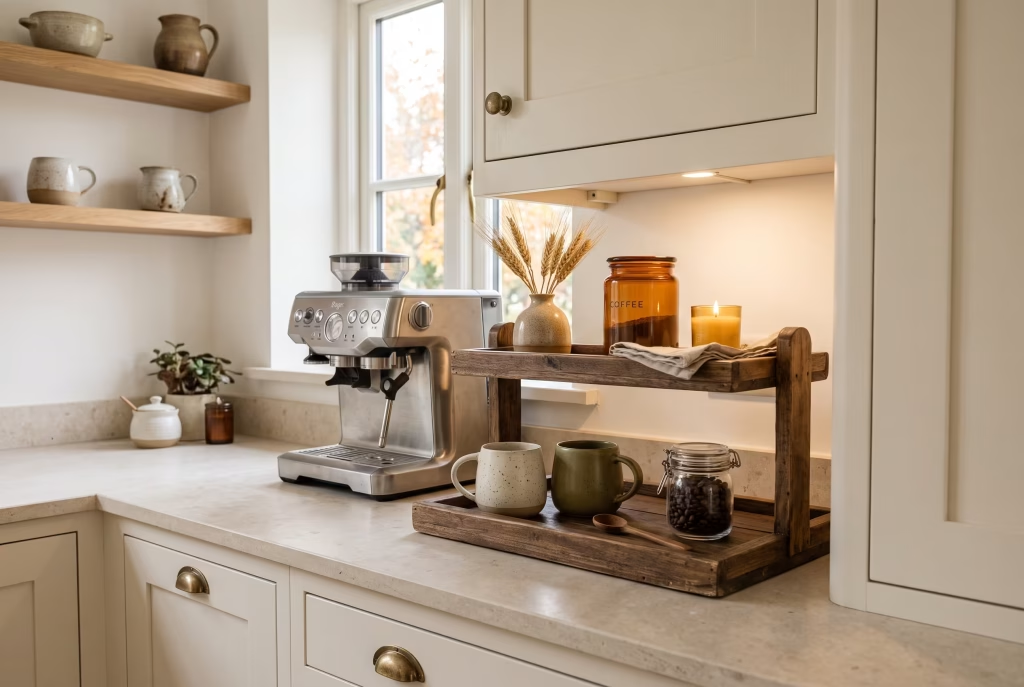
14. Contain the whole station with a small tiered tray. Whatever ends up on it, the tray’s edges act as a visual boundary, so the corner reads as one deliberate, styled moment rather than loose clutter slowly creeping outward around your coffee maker. Cost & effort: $15-30 for a tray, or free if you’re repurposing one you already own.
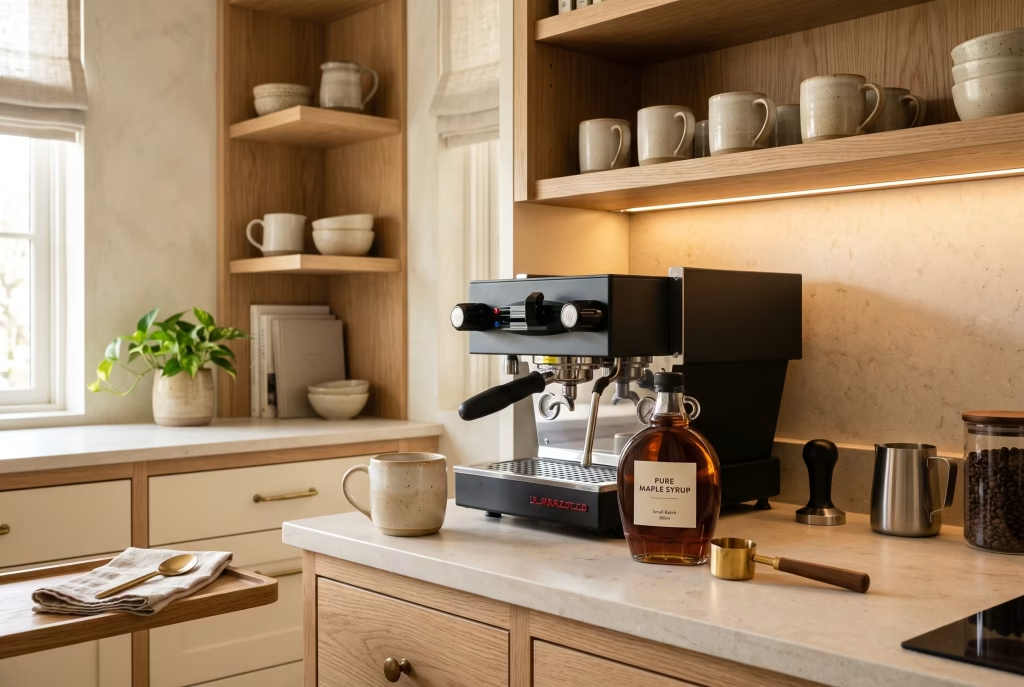
15. Swap in one seasonal syrup or spice at the very start of autumn. A cinnamon or maple syrup in a pretty glass bottle is functional decor, useful and seasonal at once, and needs no further styling beyond simply existing on the counter. Cost & effort: $8-15.
You May also Like: 25 Kitchen Colour Ideas That Transform Your Space Instantly
Sink and Window
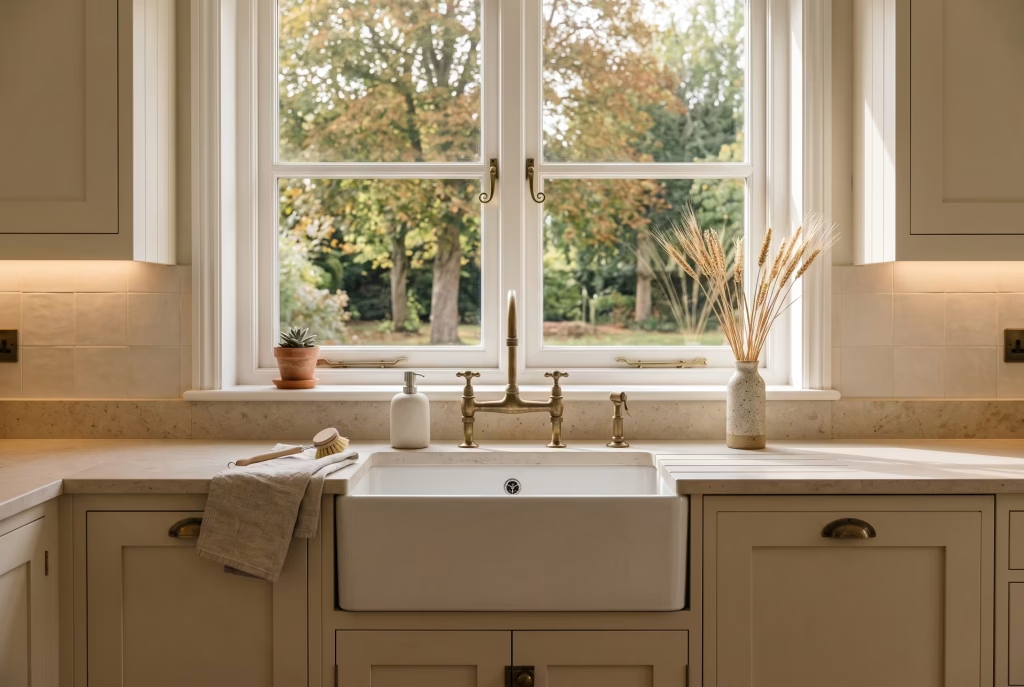
Most people walk straight past this spot without a second glance, which is precisely why it rewards attention so generously: you stand here daily, often for longer than you’d guess, and right now it has absolutely nothing on it.
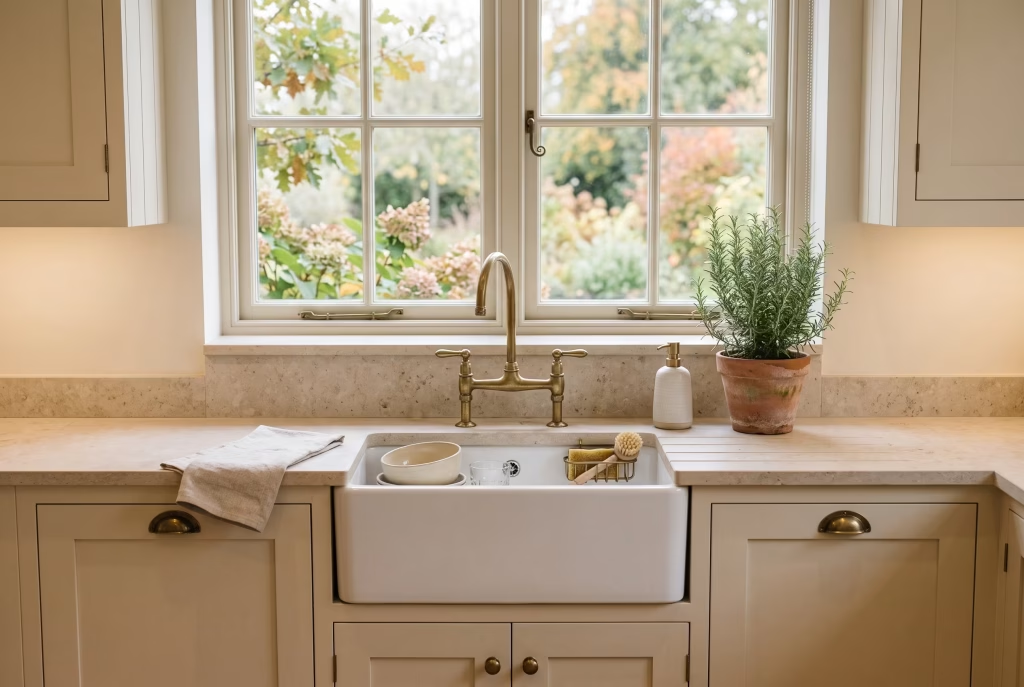
16. Add a small potted herb or plant beside the sink. A single rosemary plant or a small mum in a pretty pot outperforms almost any purchased decoration here, simply because you’re already standing in front of it several times a day whether you notice it or not. Cost & effort: $6-15.
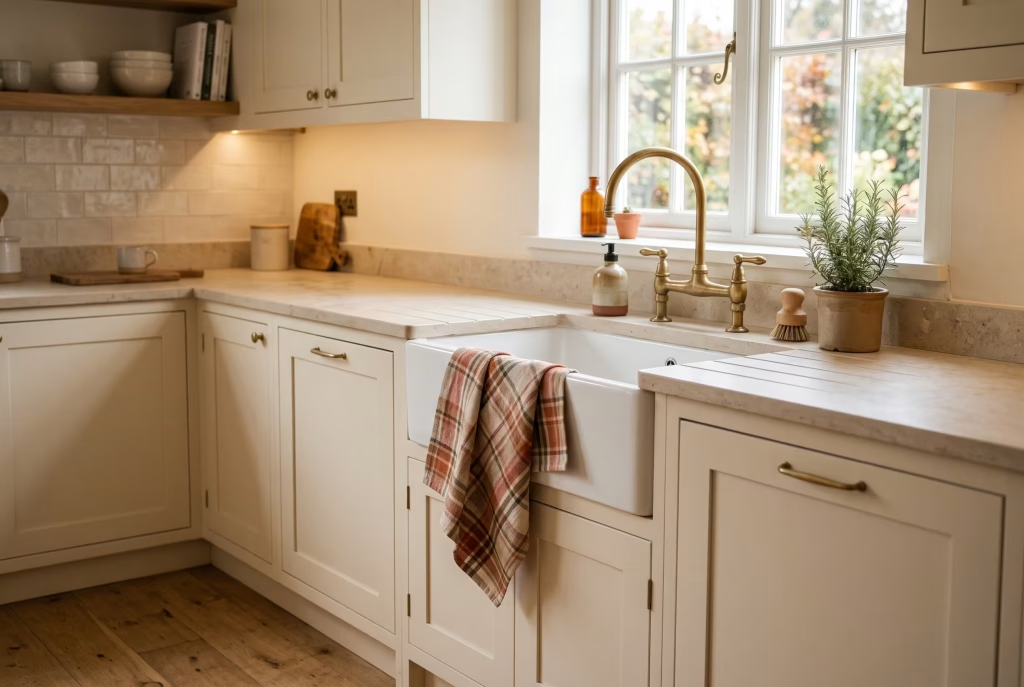
17. Drape a tea towel over the tap or oven handle, and let it be a little imperfect. An orange check or plaid towel here is one of the cheapest, fastest swaps in this entire guide, and there’s genuinely no version of “too casual” available to you, a towel tossed slightly askew looks more real than one folded with hospital corners ever could. Cost & effort: $6-15.
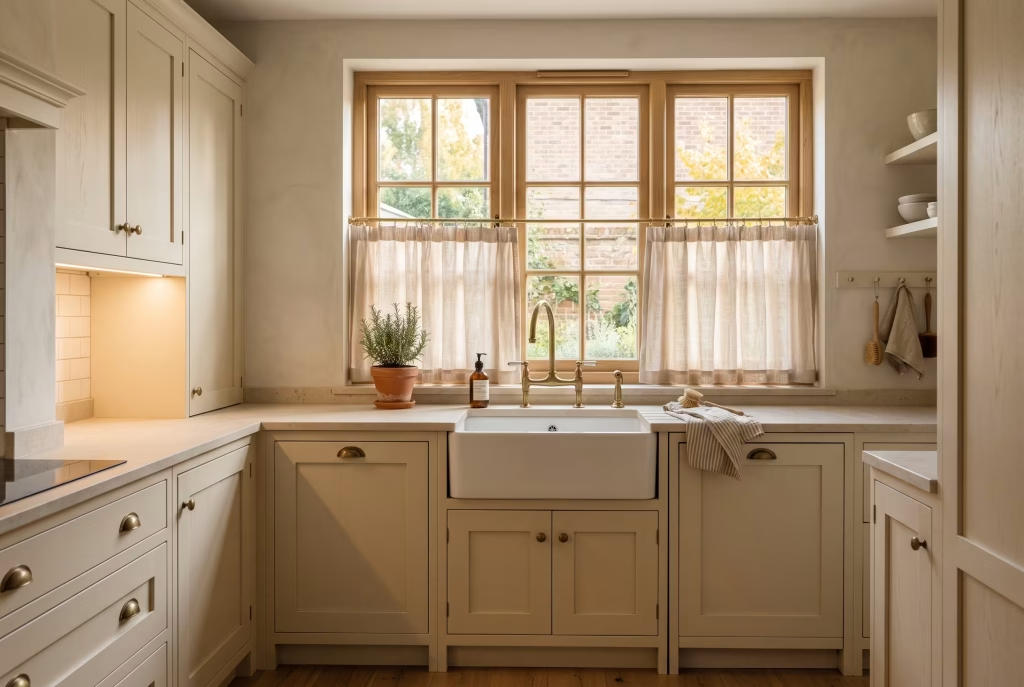
18. Hang a sheer or café curtain, assuming your sink sits under a window. Autumn light tends to arrive lower and warmer in the afternoon, and a light curtain filters and softens it rather than blocking it outright, which keeps even a small kitchen feeling open instead of shut in. Cost & effort: $20-40.
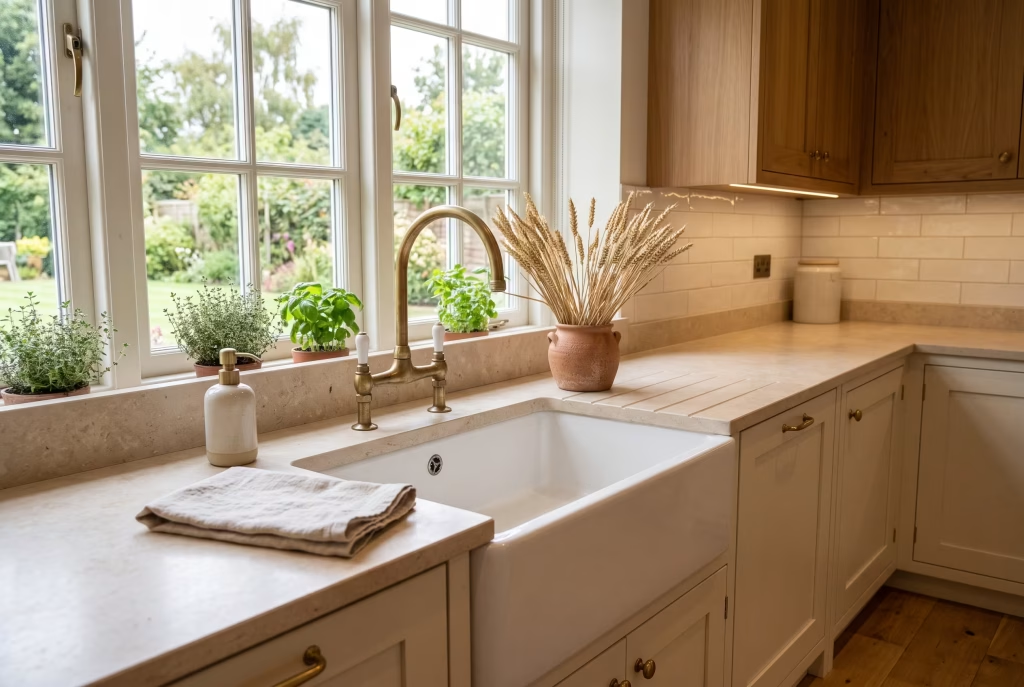
19. Tuck a small dried bundle beside the tap, never directly in front of it. Wheat, dried grasses, or a small terracotta pot of cuttings, kept just off to one side. A tall arrangement placed squarely in the tap’s path turns a charming detail into a daily annoyance within about three days flat, and you’ll end up moving it anyway, so save yourself the trouble now. Cost & effort: $8-15.
Table and Eating Nook
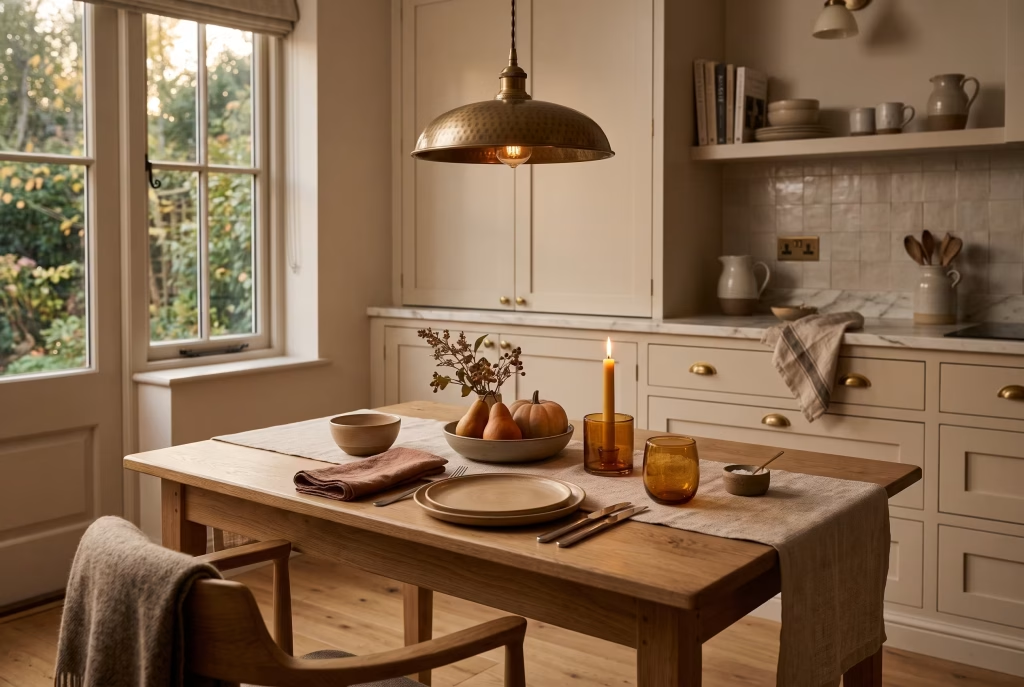
20. Set the table properly even when it’s just for you. A simple runner, a stack of warm-toned plates, and a small centrepiece turn an ordinary Tuesday dinner into something that feels considered, and it costs nothing at all if the pieces you need are already sitting in a cupboard. Cost & effort: free-$20.
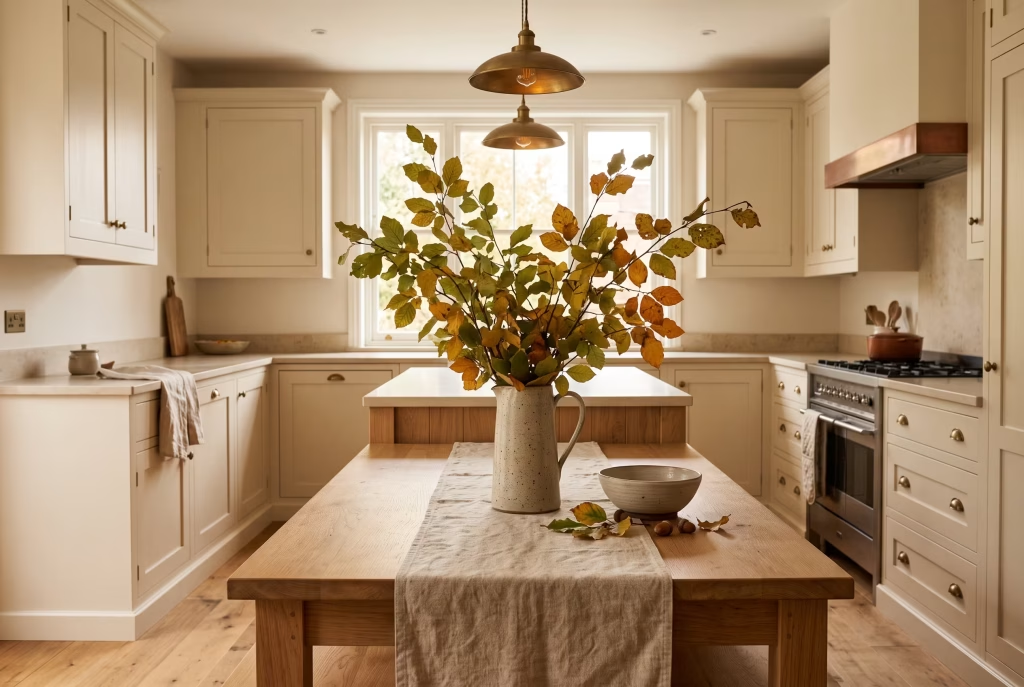
21. Use a pitcher of cut branches instead of a bought bouquet. Whatever’s shedding its leaves in your own garden, or a generous neighbour’s, cut a few stems and stand them in any tall jug you already own. This is, hand on heart, the single cheapest idea in the entire guide, and it often ends up looking the most genuinely autumnal, precisely because it is. Cost & effort: free.
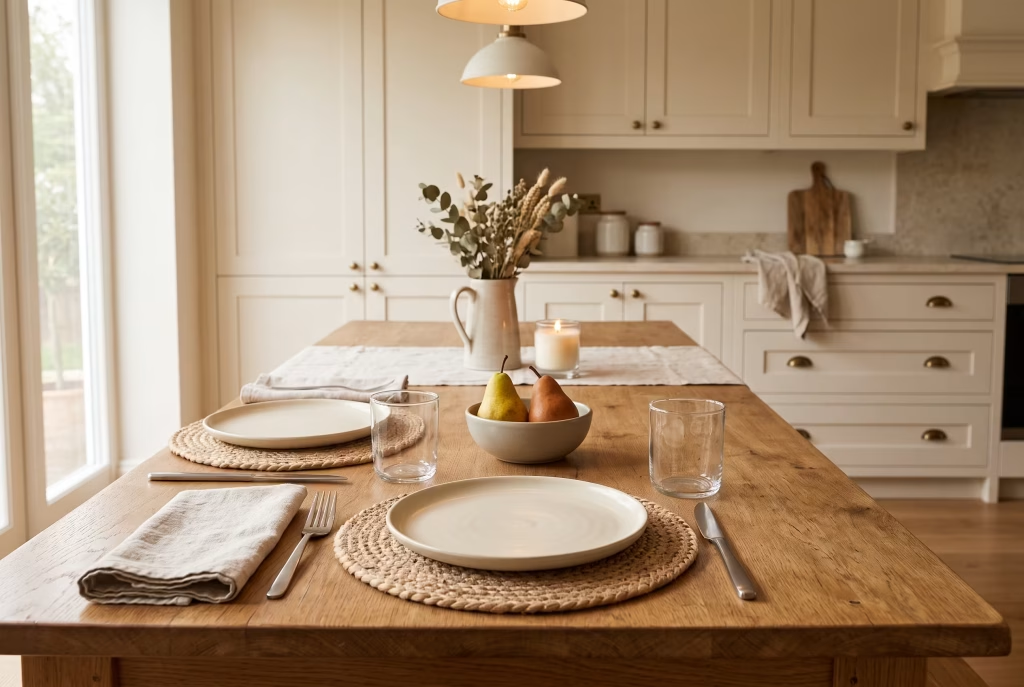
22. Layer a woven charger underneath an everyday plate. It adds real visual depth to a table setting for the price of a set of chargers, and it works perfectly with dishes you already own rather than demanding a whole new themed set. Cost & effort: $15-30 for a set of four.
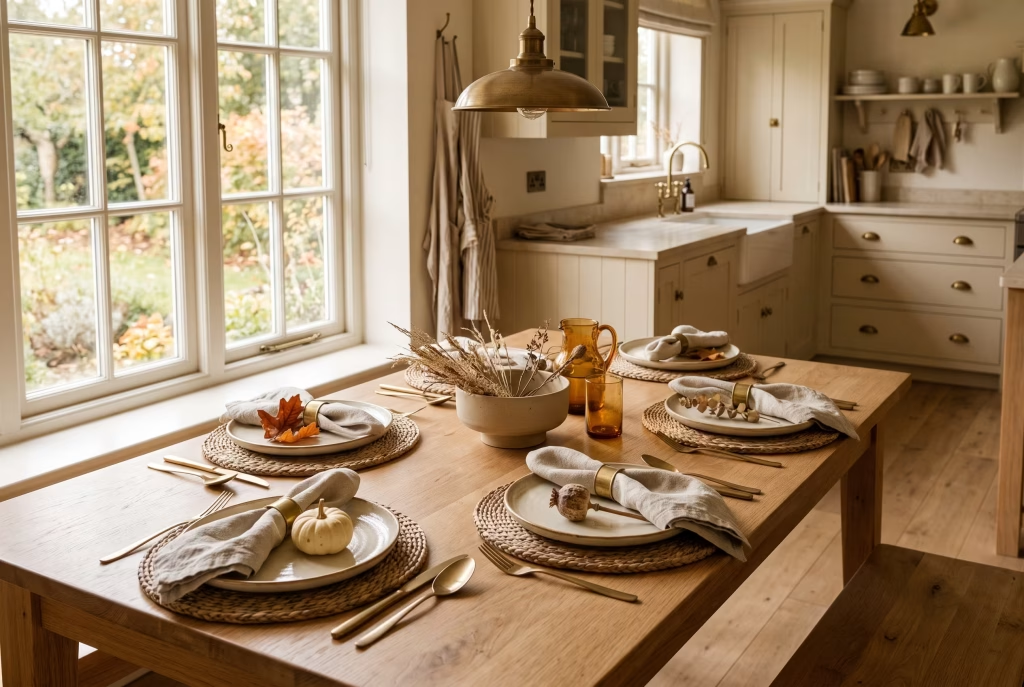
23. Add one small natural object at each place setting. A mini pumpkin, a dried seed pod, a single sprig at every spot signals real thought without requiring four courses’ worth of styling per plate. Cost & effort: $8-15 for enough to cover a full table.
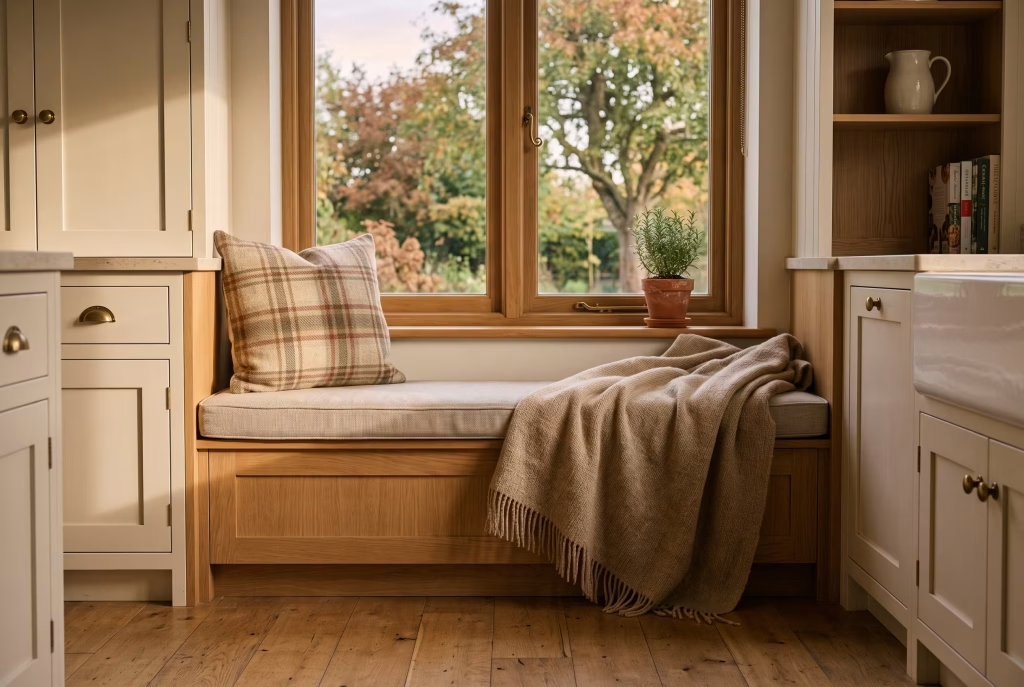
24. If there’s a window seat or nook, add one plaid or wool cushion and a throw. You don’t need to reupholster a single thing. One well-chosen cushion changes how the entire corner reads, especially once late-afternoon light starts catching it. Cost & effort: $20-40.
You May also Like: 25 Black Kitchen Cabinet Design Ideas That Transform Your Kitchen
Walls, Lighting, and Ambiance
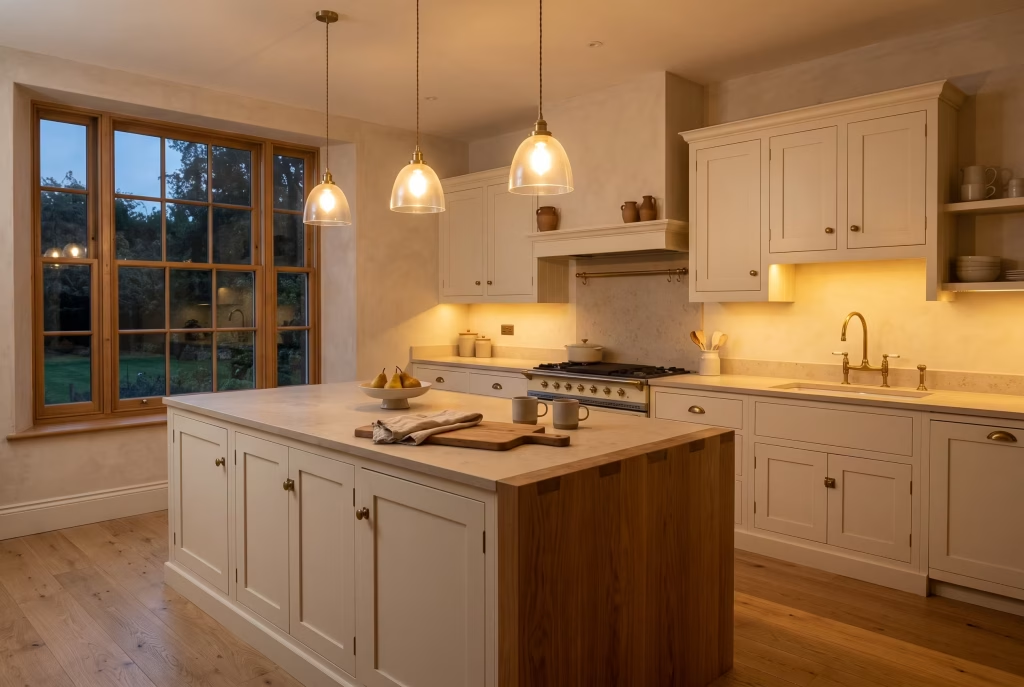
25. Change your bulbs before you change anything else in the room. As covered earlier, warm white bulbs (roughly 2700 Kelvin or lower) do more for a genuinely cozy feeling than almost any object you could buy, and swapping them is a fifteen-minute job with a screwdriver you probably don’t even need. Cost & effort: $10-20 for a pack of bulbs.
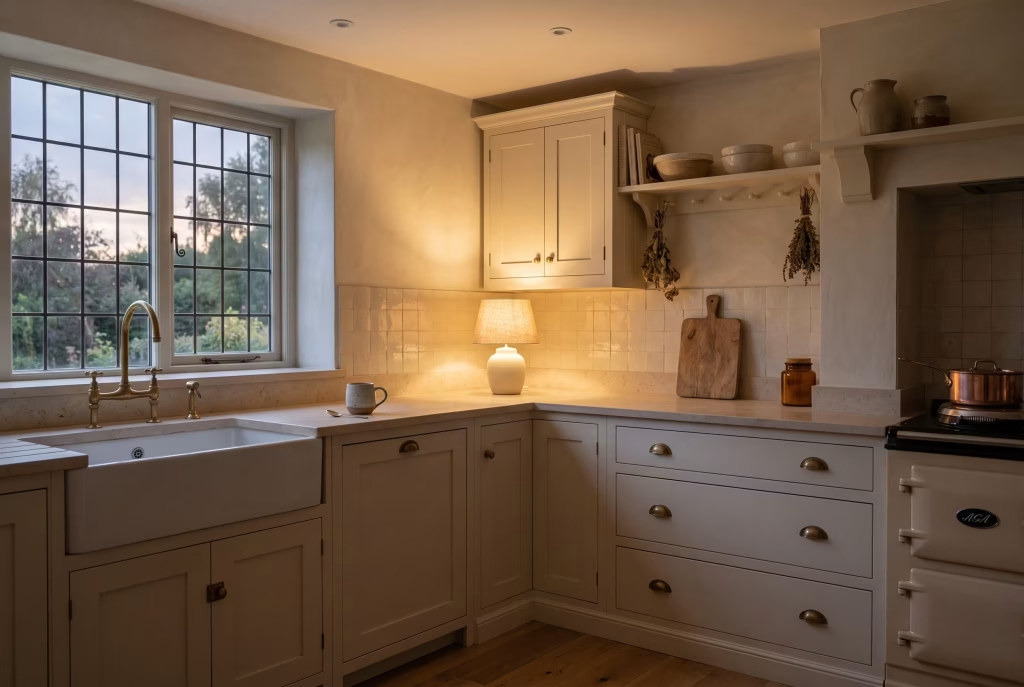
26. Add one small lamp to the counter or a shelf. A lamp achieves something overhead lighting structurally cannot: it creates a pool of warm, low light at eye level, and that pool of light is doing a huge share of the work behind what makes a room feel cozy rather than merely illuminated. Cost & effort: $20-45.
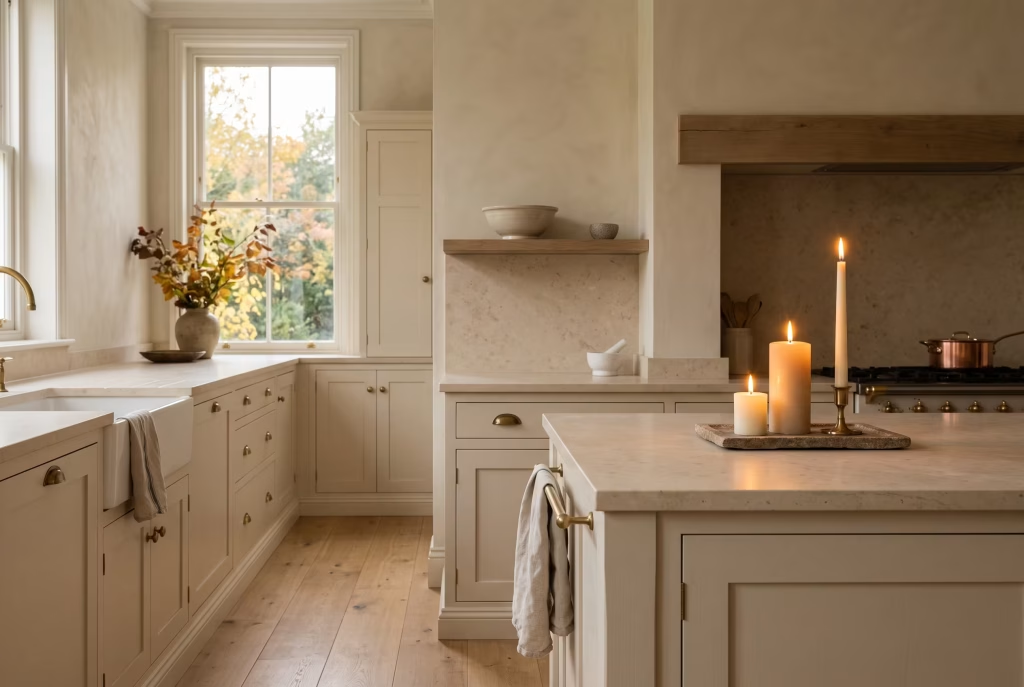
27. Light a candle, or several, at varying heights. Staggered candle heights on a tray pull the eye up and down the way a garland pulls it sideways, and the actual flicker does something no bulb, however warm, can ever quite replicate. See the safety note below before you set this one up. Cost & effort: $10-30.
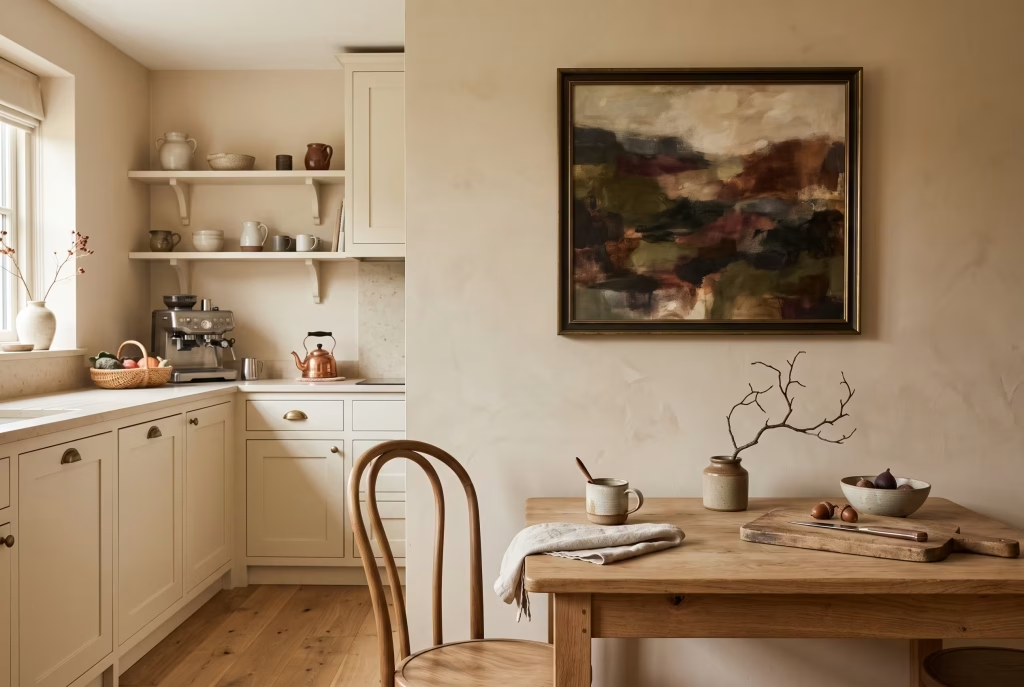
28. Swap one piece of wall art for something moodier or more autumnal. This doesn’t need to be a themed fall print bought specifically for October. A richer, more saturated piece of art you already own, simply borrowed from another room for the season, does exactly the same job as anything purpose-bought, and costs nothing at all. Cost & effort: free, if you’re repurposing existing art.
Small Kitchens and Rentals What Actually Works When You’re Not Working With an Island the Size of a Small Car
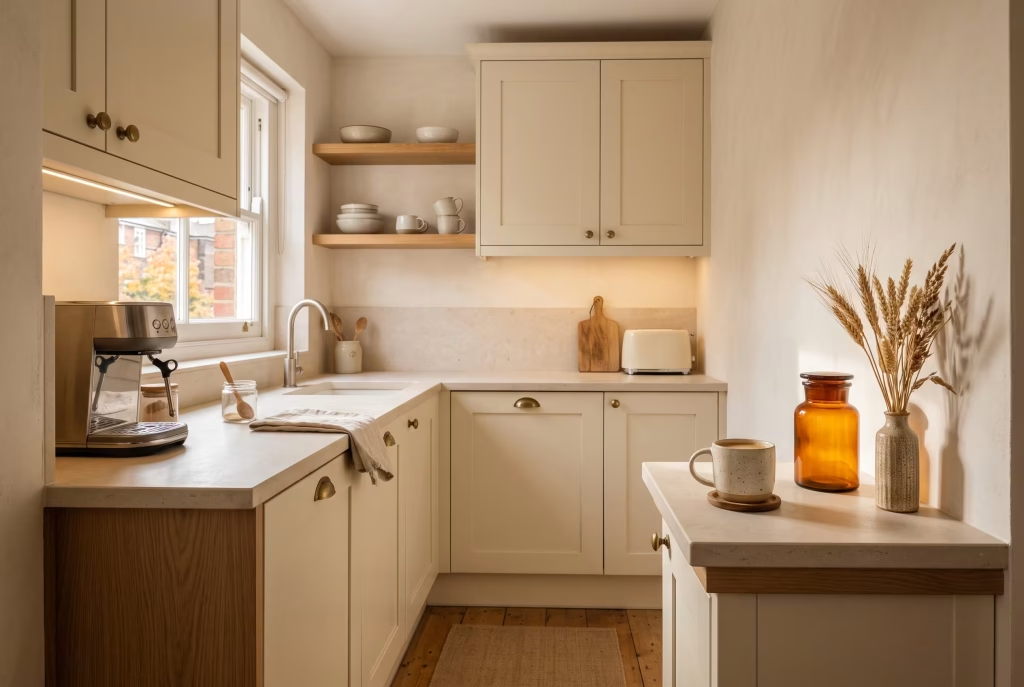
Almost every fall kitchen article online is photographed in a sprawling farmhouse kitchen with an island you could genuinely land a small aircraft on. If that’s nowhere near your kitchen, most of the guidance above still holds true. You simply apply less of it, in fewer spots, and lean harder on the moves that don’t need wall space or a landlord’s blessing.
- Pick one dead corner and let it carry the whole idea. A counter corner, a windowsill, the top of the fridge. One well-styled small vignette in a small kitchen reads exactly the way one well-styled island does in a large one. The trick doesn’t need square footage to work, it just needs a single clear focal point.
- A mug tree solves two problems at once in a genuinely tiny kitchen. It displays seasonal mugs without eating into counter space, and it’s honest, useful storage, which matters proportionally more the smaller your kitchen gets.
- Removable, no-damage options cover nearly everything a rental agreement restricts. Command hooks hold a small wreath or garland with zero wall damage. Adhesive hooks pressed just above a window frame hold a garland with no nails involved at all. Tension rods or clip-on café curtain rings sidestep drilling entirely.
- If open flames aren’t allowed, battery-operated candles do most of the same visual job, particularly for that flickering-glow-in-a-dark-corner effect, without any of the flame or the landlord’s blood pressure rising.
- Textiles offer the best value per pound spent in a genuinely small space: a towel, a runner, and a single cushion cover cost very little, take up zero wall space, and change more of what you actually see day to day than almost anything else on this entire list.
- Resist the urge to decorate every surface. This matters more, not less, in a small kitchen. Five items in a small room reads as cluttered far faster than the same five items scattered through a larger one.
- Borrow the “one detail” idea more literally than a large kitchen ever needs to. In a bigger space you can comfortably style two or three separate zones. In a genuinely small one, pick a single detail and let it carry everything: one amber jar catching the window light, one wreath on the single cabinet door you actually see from the doorway, one warm bulb in the one fixture you sit under most evenings. Restraint reads as intentional in a way a scattering of small, cheap items simply never manages to.
- Don’t wait for a “proper” kitchen before you start. A studio kitchen with three feet of counter and a college-sized budget can still feel unmistakably like autumn has arrived. The scale changes. The underlying idea, one considered detail rather than many scattered ones, doesn’t change at all.
What This Actually Costs (Broken Down Honestly)
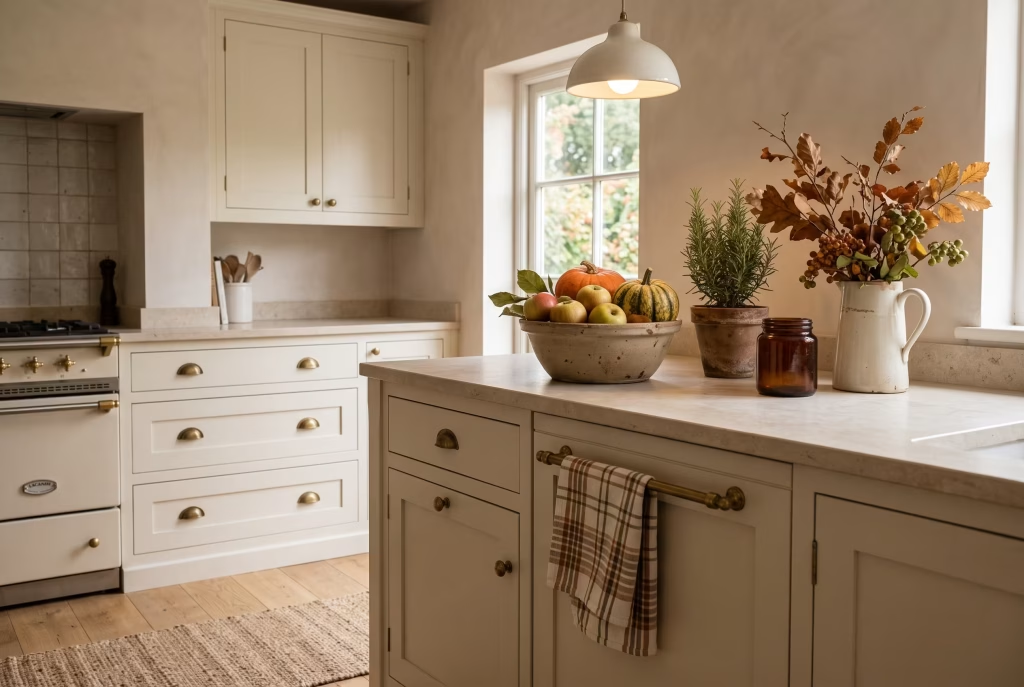
There’s no genuinely honest version of this topic that pretends everyone’s working from the same budget, so here’s a rough breakdown by tier, without any of the usual vagueness.
Shop-your-home, $0: Rearranging dishes you already own, swapping art between rooms, cutting branches from just outside your door, using a jug or bowl that’s been sitting in a cupboard for years, changing which mugs live on the counter versus in the cabinet.
Quick seasonal swap, $10-40: A tea towel, a runner, a candle, a small potted herb, a bag of mini pumpkins, a pack of warm-white bulbs.
A properly styled vignette, $40-100: A tiered tray plus its contents, a wreath for a cabinet door, a small lamp, a set of amber glassware, a genuinely curated cluster of dried botanicals and vessels.
Vintage and secondhand, variable but usually cheap: Copper, ironstone, and stoneware, the actual backbone of a lot of the more expensive-looking kitchens in this whole genre, routinely turns up at charity shops and flea markets for a fraction of retail, since most of what makes a piece look collected is age and patina, not the original price tag.
You genuinely don’t need to spend anything at all to make a kitchen feel like autumn has arrived. Every single tier above produces a real, visible result. They simply differ in how much time each one takes to assemble.
How Long Will This Actually Last? (The Part Nobody Tells You)
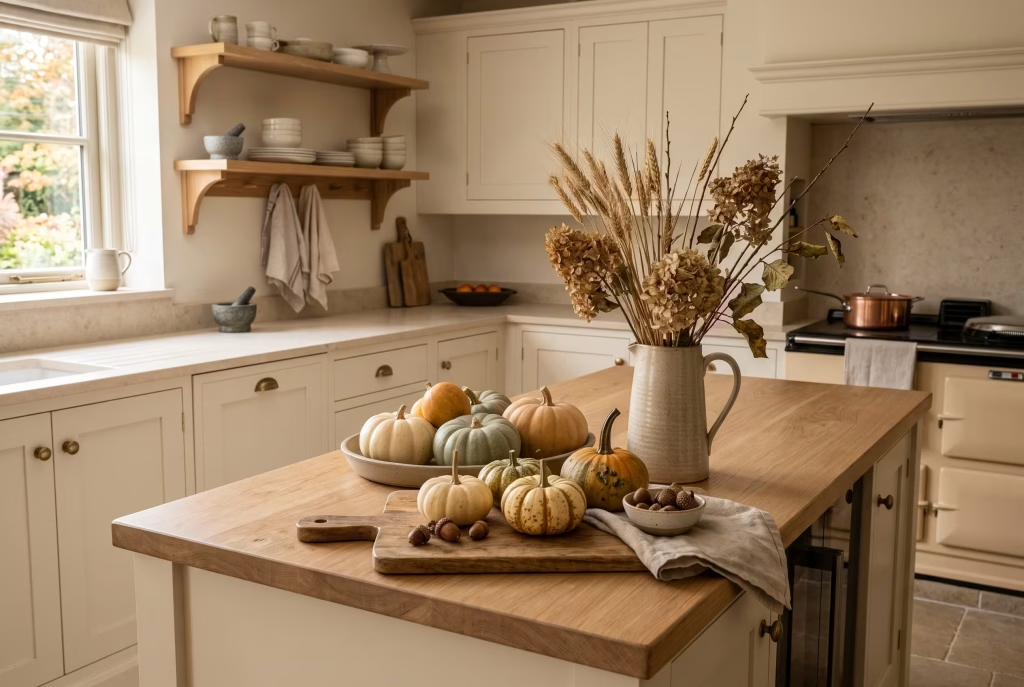
Nobody mentions this part upfront, and it’s exactly why so many people end up with a quietly rotting pumpkin sitting on the counter two weeks into October, wondering where it all went wrong.
- A whole, uncarved pumpkin lasts roughly a month at room temperature, stretching to two or three months somewhere cooler and out of direct sun. Once it’s cut or carved, that window collapses to just three to five days at room temperature, so keep any pumpkin you’re using purely as kitchen decor whole and untouched.
- Smaller pumpkins and hard-skinned gourds generally outlast their larger cousins, thanks to a thicker rind that resists moisture loss far more effectively. That makes them a genuinely smarter choice for a counter or shelf you don’t want to be restocking every single week.
- A quick wash extends this considerably, and it takes minutes. A gentle soak in water with a splash of white vinegar (or a very dilute bleach solution if you’d rather) for ten to fifteen minutes, followed by a thorough dry, removes the dirt and surface bacteria responsible for early rot. Plenty of people report a good six to eight weeks of display life this way.
- Always sit fresh pumpkins or gourds on something, a tray, a board, a cutting mat, rather than directly on a wood table or painted surface. If one softens without you catching it in time, at least the finish underneath survives to tell the tale.
- Dried florals need the occasional refresh, not full replacement. Hydrangeas and wheat both dry beautifully and can comfortably last the whole season, but a stem that’s gone brittle and started shedding onto the counter has passed its best, and it’s worth swapping for a freshly dried one rather than propping it up and hoping nobody notices.
A Word on Safety (Pets Included)
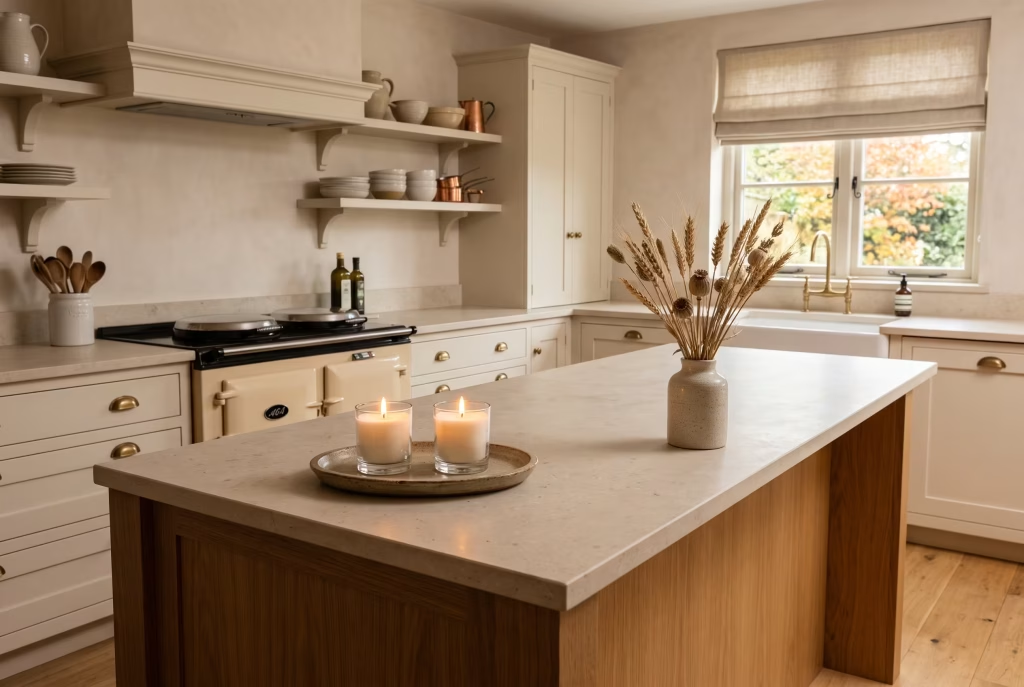
This is a working room, and it plays host to open flame fairly often through autumn, so a couple of things deserve saying plainly rather than glossed over.
- Keep a genuine gap, roughly six inches, between any lit candle and dried or faux botanical material. Dried wheat, corn husks, and faux garlands are all considerably more flammable than they look at a glance, and it takes surprisingly little time for a candle to catch a hanging leaf or a loose wheat stem.
- If you share your home with pets, be careful with any bleach or vinegar solution used to wash pumpkins. Both are perfectly safe once the pumpkin is rinsed and properly dried, but don’t leave a basin of bleach-water sitting unattended in a kitchen a curious dog or cat can reach.
- Battery-operated candles solve most of this instantly if you have pets, small children, or simply don’t want to spend the season thinking about open flames. Modern versions are convincing enough now that most people can’t tell the difference from across the room.
Frequently Asked Questions
Do I need to decorate my whole kitchen for it to feel like autumn?
No, and trying to usually backfires. A single well-chosen detail in one zone, a candle, a bundle of dried wheat, warmer bulbs, does more emotional work than decorating every surface you own. Most kitchens that feel effortlessly cozy for fall have one or two genuinely styled spots and a good deal of intentionally empty space surrounding them.
How do I decorate a fall kitchen without it looking cluttered?
Pick one or two zones rather than styling every surface in sight, group items in odd numbers, and leave visible empty space around each grouping. If a section starts to feel busy, removing one item almost always fixes it faster than adding a sixth one ever will.
Do fall kitchen colours have to be orange?
Not remotely. Rust, burgundy, olive, mustard, warm brown, sage, and cream all read as unmistakably autumnal, and several of them genuinely work better than orange in a small, cool-toned, or predominantly neutral kitchen.
How long do fresh pumpkins actually last as kitchen decor?
A whole, uncarved pumpkin lasts roughly a month at room temperature, longer still somewhere cooler. Once it’s cut or carved, that drops to three to five days. A quick vinegar-water or dilute bleach wash before display can stretch a whole pumpkin’s life out to six or even eight weeks.
Can I decorate a small kitchen or a rental for fall?
Absolutely. Pick one dead corner (a windowsill, a counter end, the top of the fridge) and style just that spot, lean on textiles and removable hooks instead of anything requiring drilling or paint, and reach for a mug tree or a single small vignette rather than trying to cover more surface than you actually have.
What’s the cheapest way to make a kitchen feel like fall?
Rearranging what you already own, moving warm-toned dishes onto open shelving, borrowing art from another room, cutting branches from outside and standing them in a jug, costs nothing at all, and it often looks more genuine than anything bought specifically for the season.
Is it safe to put candles near dried wreaths or garlands?
Keep roughly six inches of clearance between any open flame and dried or faux botanical material. Dried wheat and faux garlands both catch far more easily than people tend to expect. A battery-operated candle removes the risk entirely if you’d rather not think about it at all.
When should I start decorating my kitchen for fall?
Whenever it feels right for your particular climate, there’s genuinely no fixed calendar date attached to this. A common rhythm is to add light, easy touches (a runner, warmer bulbs, a bowl of apples) in early September, then layer in pumpkins and heavier textiles as October properly arrives.
How do I keep fall decor out of the way while I’m actually cooking?
Think in zones: keep your prep and cooking areas (chopping space, the stovetop, the run beside the sink) essentially clear, and concentrate decor on the spots you don’t actively work in, an island end, open shelving, a windowsill, a coffee corner.
Are bleach-washed pumpkins safe around pets?
Once rinsed and fully dried, yes, without question. The actual risk sits in the washing step itself, so don’t leave a basin of bleach-water or vinegar-water sitting out where a dog or cat could get into it while you’re prepping pumpkins.
Is fall kitchen decor a fleeting trend, or does it genuinely hold up year after year?
The specific objects go in and out of fashion (certain plastic pumpkin shapes date embarrassingly fast), but the underlying moves, warm lighting, natural materials, dried botanicals, seasonal textiles, don’t really date at all, which is precisely why they show up in kitchens styled a full decade apart. Investing in a handful of good pieces you’ll genuinely want to see again next October tends to be a far better use of a decorating budget than chasing trend-specific items you’ll be replacing by next year anyway.
Why does a warm-lit kitchen feel more emotionally comforting than a brightly lit one, even when both are equally clean and tidy?
It comes down to how your nervous system reads light temperature. Cooler, bluer light signals alertness, the kind you’d want while chopping vegetables with a sharp knife. Warmer light below roughly 2700 Kelvin triggers the same relaxation response your body associates with candlelight and dusk, which is why simply swapping your bulbs can shift a kitchen’s entire emotional register without changing a single object in it.