17 Last-Minute Halloween Entryway Decorating Ideas for a Spooky Welcome
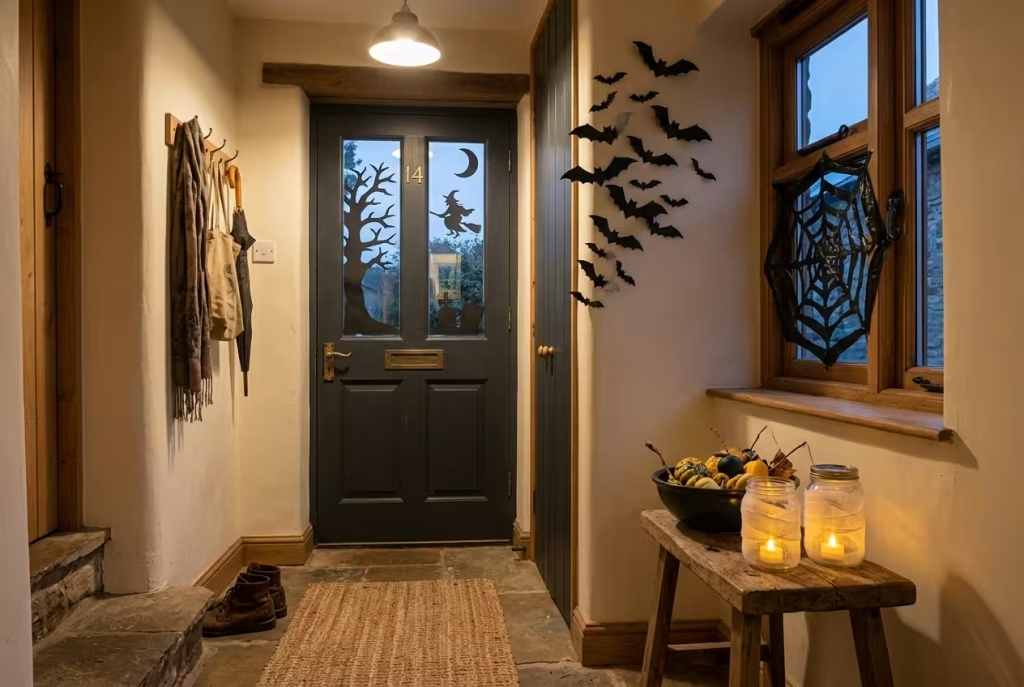
Halloween falls on a Saturday this year, and the clocks go back the Sunday before, on 25 October. That quirk of the calendar matters more than it sounds. Dusk arrives an hour earlier by the clock, the street is properly dark by the time the first pint-sized witch heads up your path, and your front door does all the talking before anyone has lifted the knocker. If the hall still looks like an ordinary Tuesday, you have roughly a fortnight to put things right, and you need neither a fat wallet nor a free weekend to do it.
Think back to the houses you remember from childhood. Chances are it was never the priciest display that stuck in the memory. It was the doorstep that made your stomach flutter on the walk up the path: a flicker in the window, a shape that might have moved, a hat hanging in thin air where no hat had any business being. That flutter, delicious and slightly daft, is what this guide is for.
This guide is written for people cutting it fine. Every idea carries an honest time estimate, a ballpark cost and a note on whether it suits renters, because a fortnight is plenty once you know where the first ten minutes should go. It also leans on fire brigade guidance, wildlife charity advice and designer tips, so the finished welcome is memorable for the right reasons, with no singed costumes and no bats tangled in plastic webbing.
What you will find below:
- Seventeen ideas sorted by the time you actually have, from five minutes to a whole evening
- A table to match each idea to your budget and your front door
- Safety figures from the London Fire Brigade, the US National Fire Protection Association and UK wildlife charities
- A day-by-day countdown that ends on Saturday 31 October
- Fourteen straight answers to the questions people type into search engines the week before Halloween
The quick answer
How do you decorate an entryway for Halloween at the last minute? Work in four layers, in this order, and the whole job takes between 30 minutes and an evening for most households, usually for under £25.
- Light first. A dim hall reads as unwelcoming rather than eerie. Battery candles, a bright porch light and one or two glowing jars give the space a pulse before a single prop appears.
- One bold focal point. Floating witch hats, a swarm of paper bats or a mummified door. Pick one star rather than five understudies.
- Texture second. Gauze, uncarved pumpkins, twigs and paper add the layered, lived-in feel that separates a convincing scene from a shelf of props.
- Safety last, but never skipped. Two minutes to check the walking route, the flames and the fabrics, so nothing about the evening goes wrong for the wrong reasons.
The fastest wins at a glance:
- Paper bats fanned across a wall or mirror: about 10 minutes
- Cut-out silhouettes on the glass of the front door: about 10 minutes
- Three uncarved or painted pumpkins beside the door: about 5 minutes
- Gauze-wrapped jars glowing with battery tea lights: about 10 minutes
Choose your idea by time and budget
Costs below are rough high-street estimates, so treat them as a guide rather than a quote. Prices shift between shops, and most of the cheapest items are probably already lurking in your cupboards.
| # | Idea | Time | Rough cost | Renter-friendly | Best for |
| 1 | Paper bat swarm | 10 min | £0 to £3 | Yes | Narrow halls, mirrors |
| 2 | Door-glass silhouettes | 10 min | £2 to £5 | Yes | Glazed front doors |
| 3 | Three pumpkins | 5 min | £5 to £12 | Yes | Any doorstep |
| 4 | Gauze-jar glow cluster | 10 min | £0 to £6 | Yes | Consoles, windowsills |
| 5 | Doormat and sign | 5 min | £8 to £15 | Yes | Setting the tone fast |
| 6 | Floating witch hats | 30 min | £8 to £15 | Yes, with ceiling hooks | High ceilings, stairwells |
| 7 | Floating LED candles | 30 min | £8 to £15 | Yes | Porches, tall halls |
| 8 | Moody console vignette | 30 min | £0 to £10 | Yes | Halls with a table |
| 9 | Twig wreath on an inside hook | 30 min | £0 to £8 | Yes | Doors you cannot drill |
| 10 | Cheesecloth flowerpot ghosts | 30 min | £3 to £8 | Yes | Steps, shelves |
| 11 | Indoor cobweb | 30 min | £2 to £5 | Yes | Windows, wildlife-safe |
| 12 | Apothecary bottle display | 1 hr | £5 to £15 | Yes | Console tables |
| 13 | Coat-rack witch | 1 hr | £0 to £20 | Yes | Halls with hooks or a bench |
| 14 | Milk-jug ghost lanterns | 1 hr | £4 to £12 | Yes | Steps and paths |
| 15 | Mummy door | 90 min | £3 to £8 | Check your lease | Houses with private doors |
| 16 | Printed vintage art wall | 1 hr | £3 to £10 | Yes, with removable strips | Blank hall walls |
| 17 | Candy cauldron station | 45 min | £5 to £15 | Yes | Welcoming visitors |
Before you hang a single thing: the three-minute entryway check
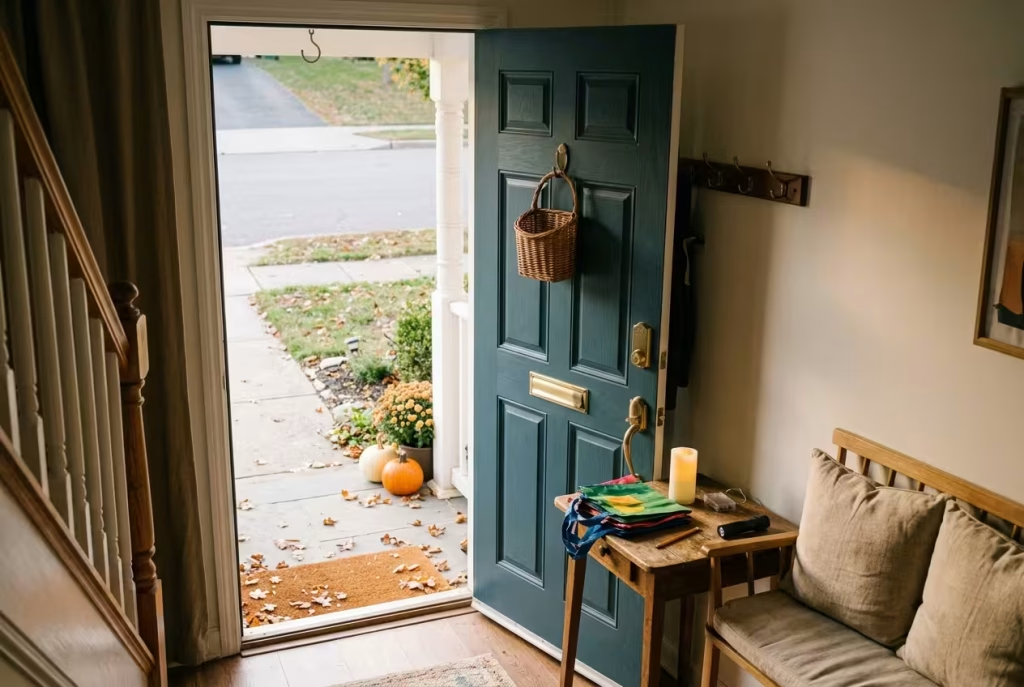
In this guide, the entryway means two zones that work as a pair: the inside hall or porch where guests stand while you hunt for the sweets, and the doorstep itself, where trick-or-treaters gather in a giggling huddle. Most competing lists blur the two, which is why so many of their ideas look glorious in a photograph and collapse the moment you try them in a real home with a real coat pile.
Give yourself three minutes with a pencil and a phone torch. It is the cheapest insurance policy in this whole guide, and it saves you from rehanging everything at six o’clock on the night.
- Walk the route with a shopping bag in each hand. If your elbow brushes anything, move it. Costumes are bulky, masks narrow the view, and children are looking at the sweets rather than at their feet.
- Spot your ceiling hook points above the door, the stairs or the porch roof. Hanging décor is the cheapest way to add drama without stealing floor space, and anything out of reach of small hands stays out of trouble.
- Note your power sources. Anything that needs a cable becomes a trip hazard waiting for a Saturday night, which is why this list leans on battery lights.
- Stand in the street and look back at your door. That is the view a trick-or-treater gets from the pavement. If nothing catches the eye from there, your best prop is probably hiding behind the door.
Part one: ten minutes or less
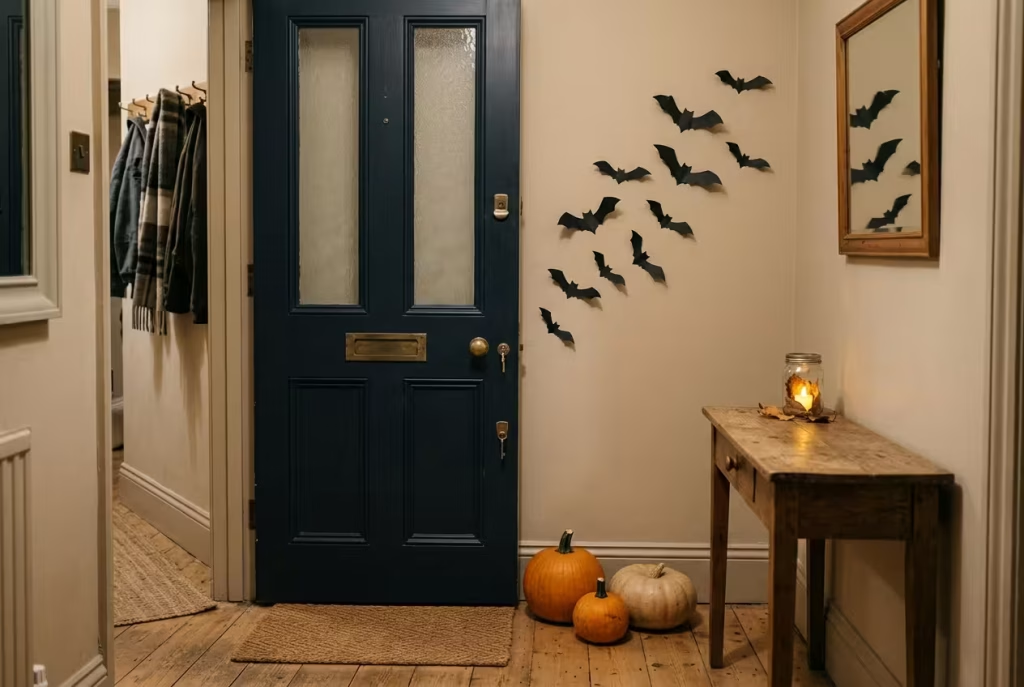
These five fixes suit the person with a spare quarter of an hour and a stubborn streak of optimism. None needs a shopping trip, and together they can transform the hall before the kettle has gone cold.
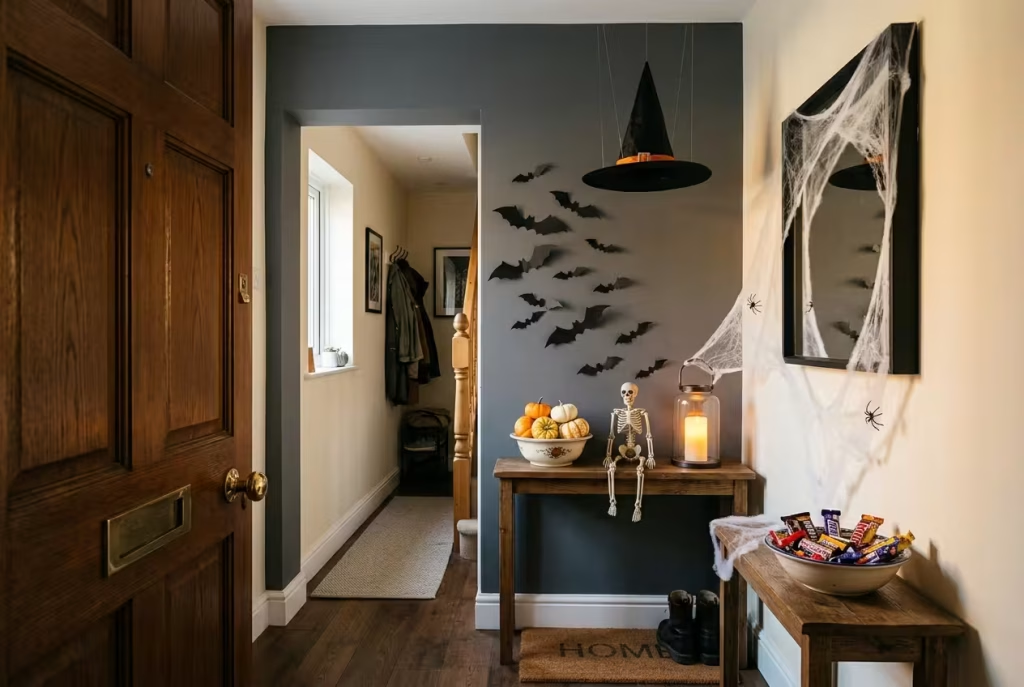
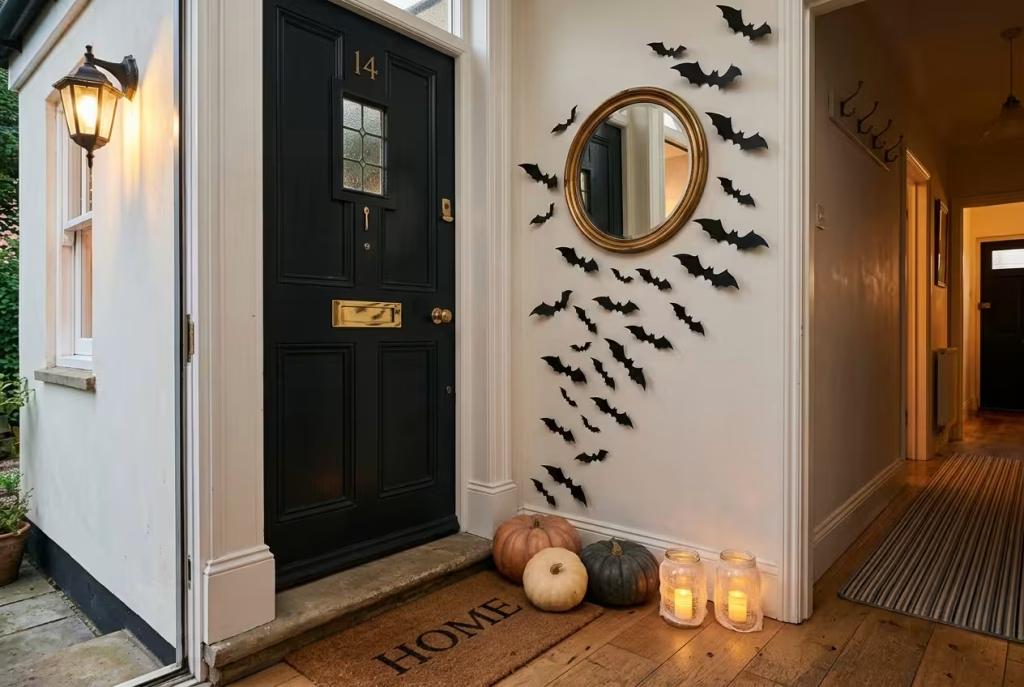
1. A swarm of paper bats across the wall or mirror
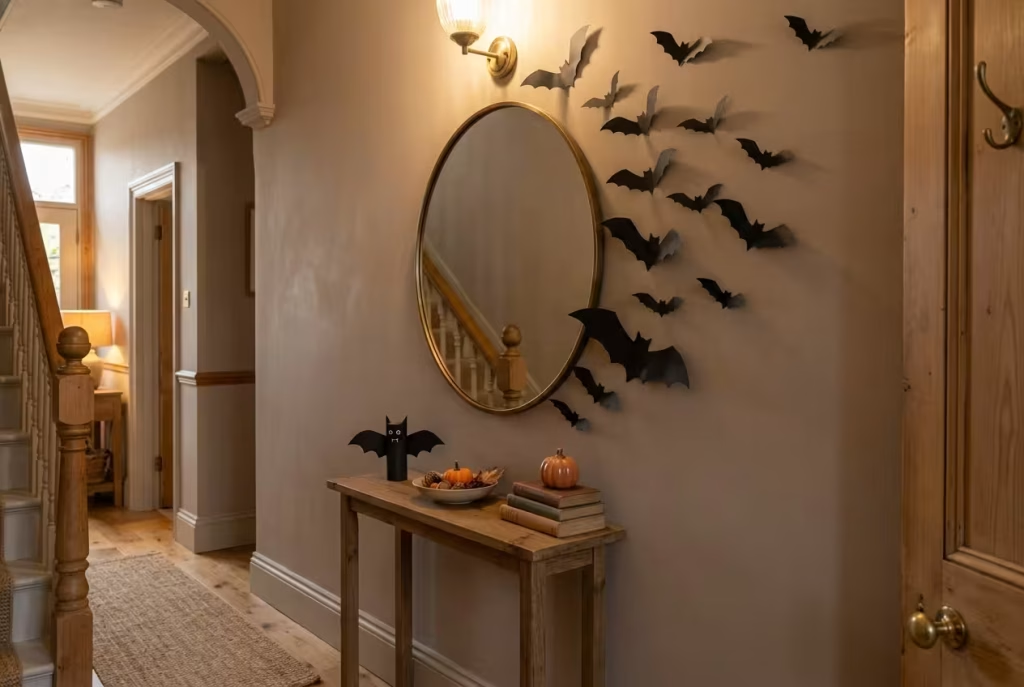
Time: 10 minutes | Cost: £0 to £3 | Renter-friendly: yes
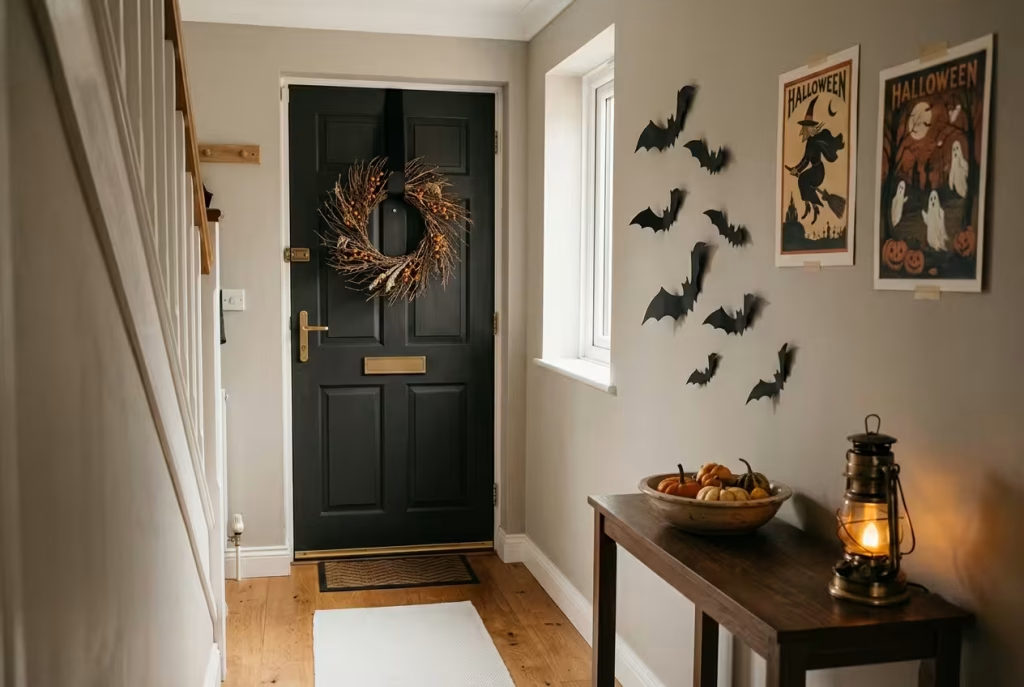
There is a reason the bat is Halloween’s hardest-working mascot. Cut from nothing more than black card, it is instantly recognisable, wonderfully forgiving of wonky scissors and, hung in numbers, it creates something no single prop can: motion. A flock suggests that something startled the whole hall a moment ago, and visitors feel that before they can say why.
What you need: a sheet of black card (A3 gives more bats per pound than A4), scissors, a pencil, and removable putty or low-tack tape.
- Fold a scrap of paper in half and draw one wing and half a body along the fold, so the bat comes out perfectly symmetrical when cut.
- Use that template to cut around a dozen bats from the card, then trim a few larger and a few smaller. Three sizes read as near and far, which is what gives a flat wall some depth.
- Press a small ball of putty behind each bat and fan them out from a focal point, such as a mirror frame, a light switch or the top of the stairs, spacing them wider as they rise.
- Stand at the front door and squint. Anywhere the flock looks like a queue, nudge a bat or two out of line.
Fanning bats from a round mirror is the cheapest trick in the book for making them seem to pour out of the glass. Short on time? A toilet-roll tube wrapped in black paper with two card wings makes a standing bat in about five minutes, ideal for a console or the end of a bench. Children tend to count them, so leave exactly thirteen if you fancy a story to tell.
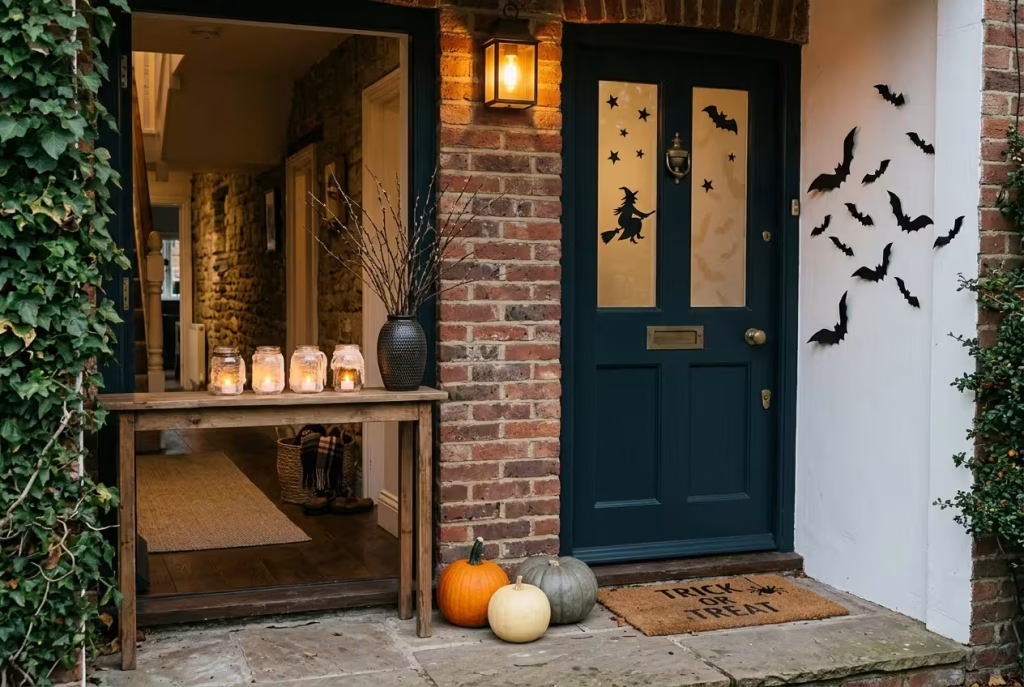
2. Silhouettes on the glass of the front door
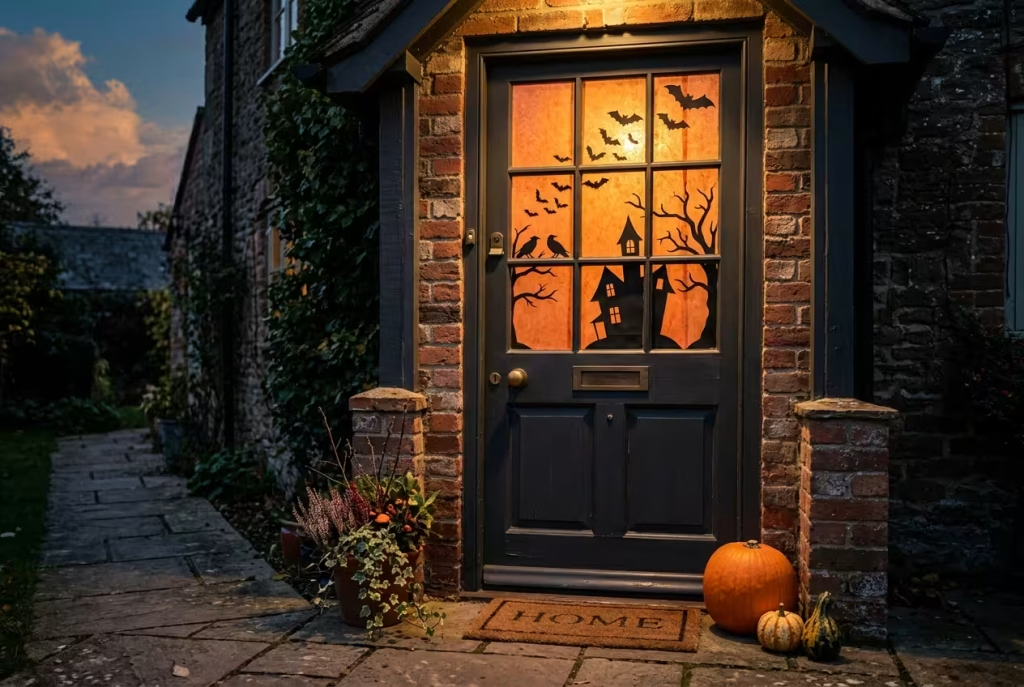
Time: 10 minutes | Cost: £2 to £5 | Renter-friendly: yes
Some of the best Halloween effects cost next to nothing because they rely on a trick of the eye. A silhouette is a shadow puppet pinned to glass: it gives the viewer just enough to fill in the rest with their own imagination, and imagination is always scarier than anything you could buy. Interior designer Nina Lichtenstein, quoted in Livingetc, recommends silhouette decals when you want maximum impact without crowding the entrance, and the logic holds up beautifully on a glazed door.
Shapes that read instantly from the pavement:
- An arched-back cat with a tail like a question mark
- A witch on a broomstick crossing the lower panel
- Bare, gnarled branches with a crow or two on the twigs
- A tilted haunted house with a single lit window left uncut
- A row of bats, graded from large to small, climbing the glass
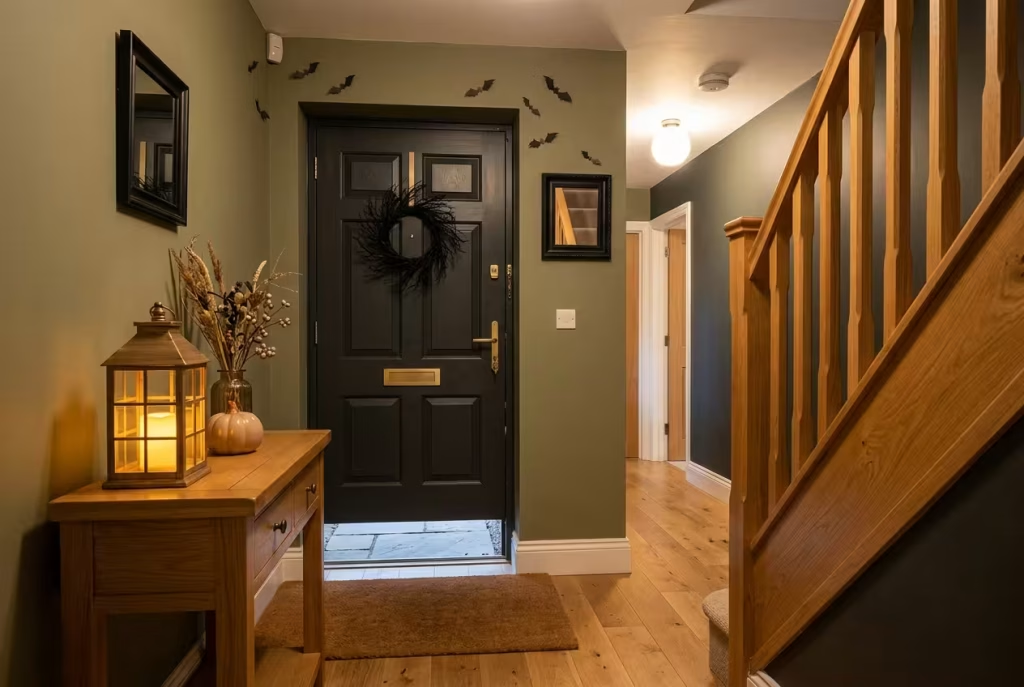
Cut each shape from black card, then stick it to the inside of the glass with removable tape. Once the hall light is on behind them at dusk, they glow like a puppet theatre. For a warmer effect, tape a sheet of orange or purple tissue paper over the panel first and put the black shapes on top, so the whole door seems to burn from within.
A pack of black construction card costs only a couple of pounds, and the cut-outs store flat in a book for next year. There is a quiet pleasure in unwrapping them in twelve months’ time and finding the cat with its slightly wonky ear exactly where you left it.
You May also Like: 24 Easy Halloween Kitchen Decor Ideas: DIY Spooky Touches and Budget-Friendly Cute Accents
3. Three pumpkins, uncarved or painted, and a fortnight’s grace
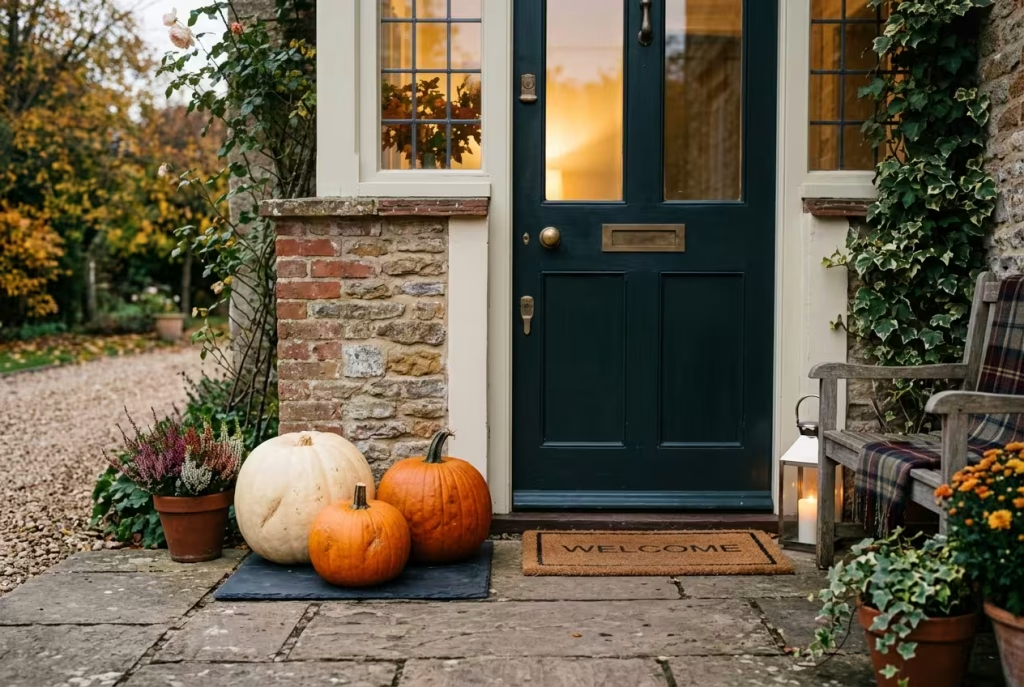
Time: 5 minutes | Cost: £5 to £12 | Renter-friendly: yes
A pumpkin on the step is the handshake of Halloween. In one plump orange gesture it says that this house is taking part. The trick is to give it company and a little choreography.
Odd numbers look deliberate, so group three of differing heights beside the door, ideally one pale and two deep orange, or one tall and two squat. Set the biggest at the back and the smallest at the front, as if they were posing for a school photograph. Stand each on a tray or a slate so any soft spot cannot stain the step, and keep the family clear of the stairs, where small feet might catch them.
Timing is the part most people get wrong, and it is worth knowing before you shop:
| Pumpkin state | Where it sits | Typical lifespan |
| Uncarved | Room temperature | About a month |
| Uncarved | Somewhere cool | Two to three months |
| Carved | Indoors, at room temperature | Three to five days |
| Carved | Chilly porch | One to two weeks |
| Painted, uncarved | Cool or covered | Outlasts any carved one |
One horticulturist suggests buying around 14 days before Halloween, which makes now exactly the right moment. If you do want a lit face, leave carving until the 29th or 30th. Advice on bleach soaks and sprays varies wildly from one source to the next, and one amateur experiment found an untreated pumpkin held up best of all, so cool storage and late carving remain the safest bets.
Painted pumpkins are the sensible last-minute route. A coat of matt black or chalk paint dries in the time it takes to make a cup of tea, and the result will happily outlast its carved cousins.
4. Gauze-wrapped jars that glow like swamp lanterns
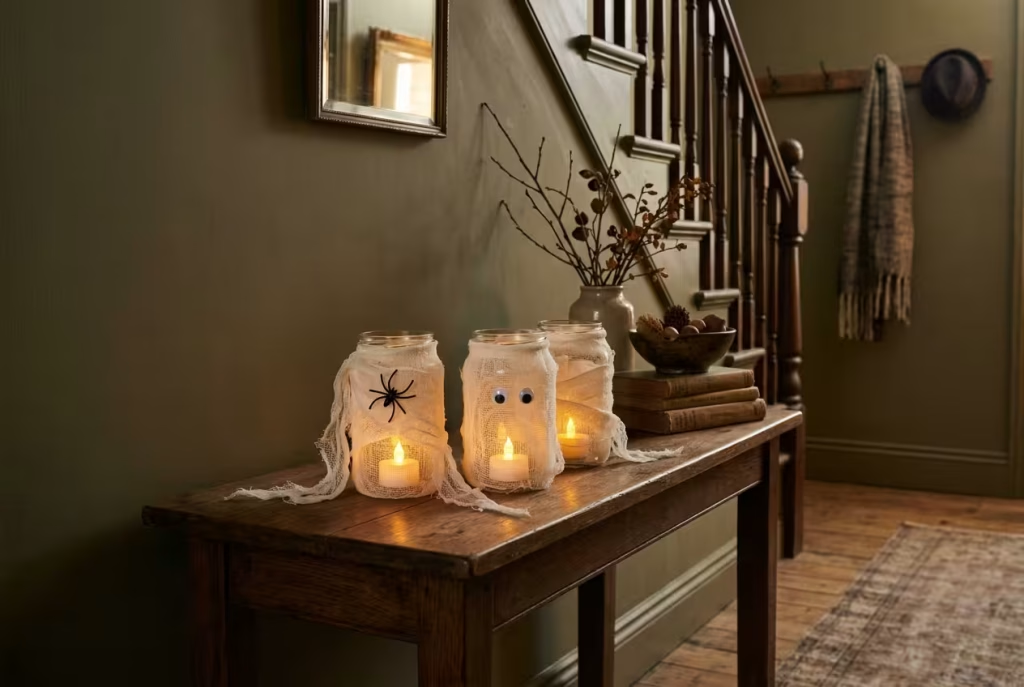
Time: 10 minutes | Cost: £0 to £6 | Renter-friendly: yes
Glass, gauze and a soft glow make a combination that has been haunting rooms for as long as there have been jam jars. The gauze diffuses the light into a milky halo, the jar holds it like a lantern, and the plastic spider on top supplies the punchline.
What you need: three jam jars (rinsed and label-free), a roll of gauze or a few old muslin cloths, battery tea lights, and a few plastic spiders or googly eyes.
Tear the gauze into strips, wrap each jar loosely, let a ragged edge trail over the rim, then drop in the light. Clustering the trio on a console, a windowsill or the bottom step makes the glow read as one object. On a windowsill the jars are visible from the street too, a gentle hint of what waits inside before anyone has set foot on the path.
Choose lights with a warm, flickering bulb rather than a flat white one. Warm flicker mimics a candle flame, which is exactly the point, and it keeps the effect looking handmade rather than clinical.
Stick to flameless lights here. Fire services across the UK, from London to North Yorkshire, recommend battery candles over real ones for exactly this kind of display, mostly because Halloween costumes and naked flames are a poor mix.
5. A doormat and sign that set the tone before the door opens
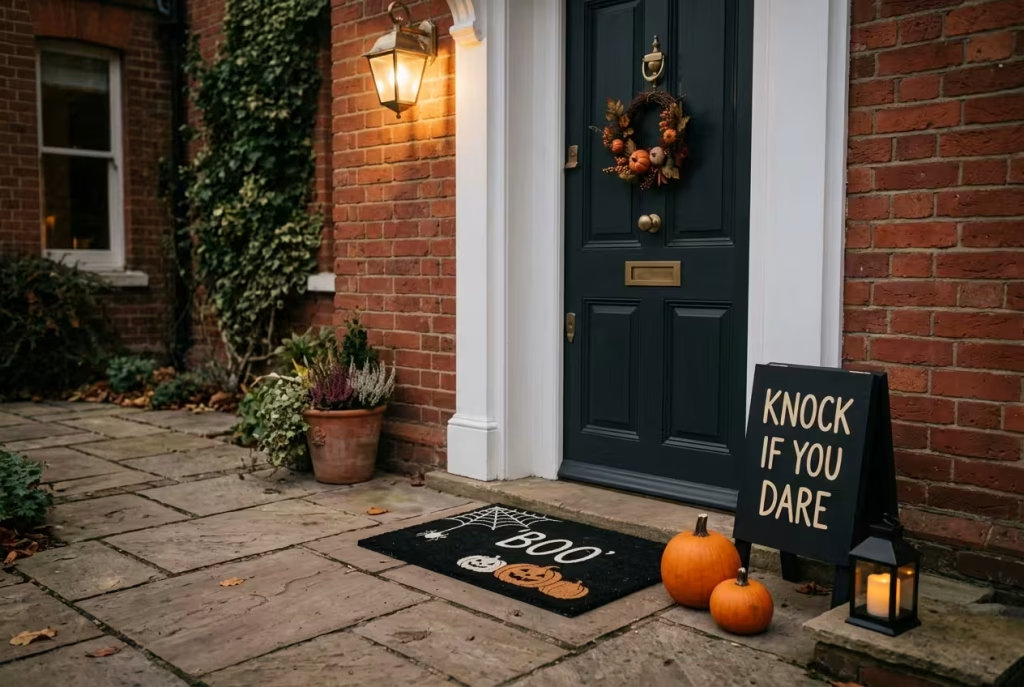
Time: 5 minutes | Cost: £8 to £15 | Renter-friendly: yes
Visitors read the ground first. A mat and a small sign announce the mood before a single prop is noticed, and for the price of a takeaway coffee they do more work than almost anything else on this list. The mat tells people where to stand, the sign tells them what sort of evening they have walked into, and between them they spare you the awkward silence after the doorbell rings.
A few lines to borrow freely: Knock if you dare. Treats inside, tricks outside. Broomsticks parked on the left. Keep the lettering large enough to read in the dark, pale on black, because a sign nobody can see is merely a rectangle. Keep the mat flat and non-slip too, since a curling edge is a trip hazard dressed up as décor.
There is one more job for a sign, and it is a kind one. North Yorkshire Fire and Rescue asks people to respect homes displaying a No Trick or Treat notice, since Halloween can be distressing for some households. Perhaps a baby has finally gone to sleep, a dog is nervous, or someone is unwell upstairs. If you would rather have a quiet night, a neat card by the bell saves you from answering the door in the dark and saves the children a disappointing knock.
Part two: about half an hour
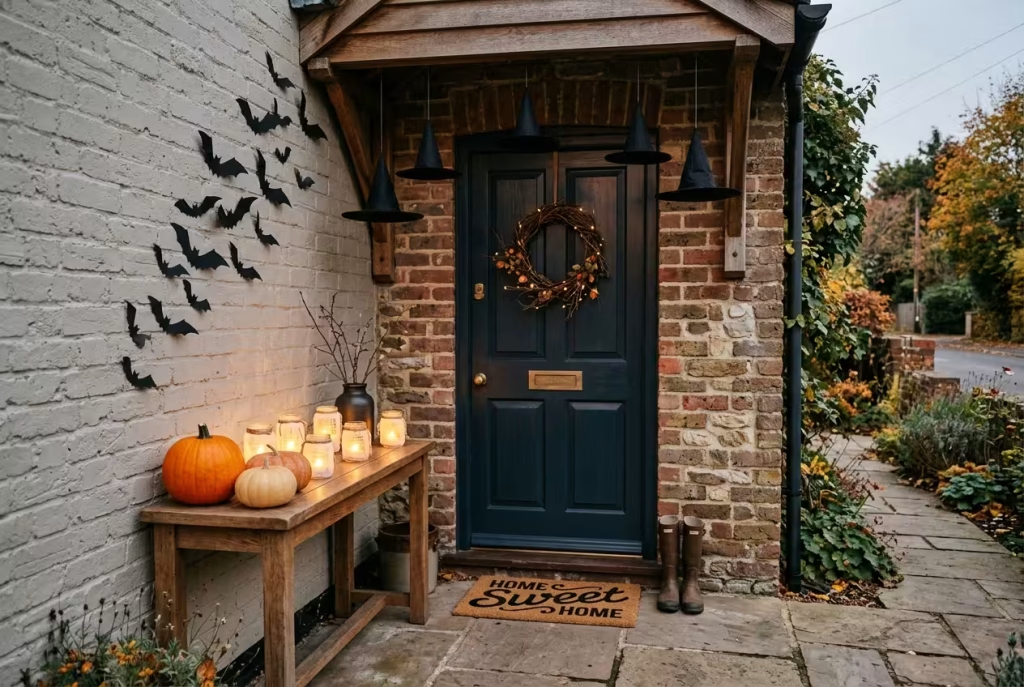
This is where the entryway starts to look as if you planned it back in September. Each project is simple, but together they build the layered, slightly theatrical feel that makes people pause on the path.
6. Floating witch hats that hover like a coven’s calling card
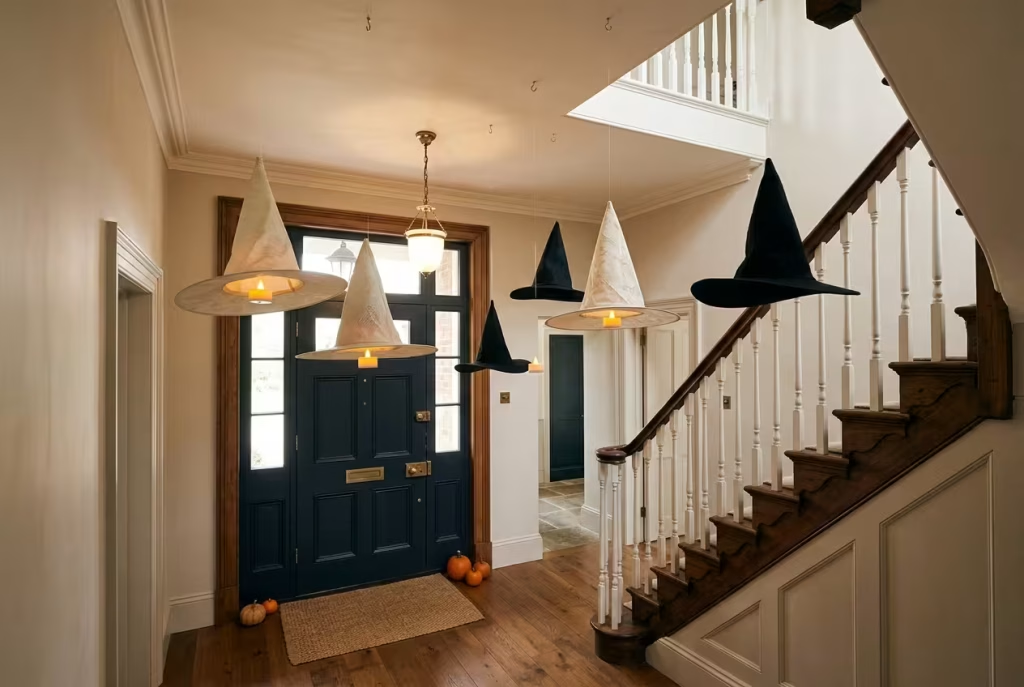
Time: 30 minutes | Cost: £8 to £15 | Renter-friendly: yes, with ceiling hooks
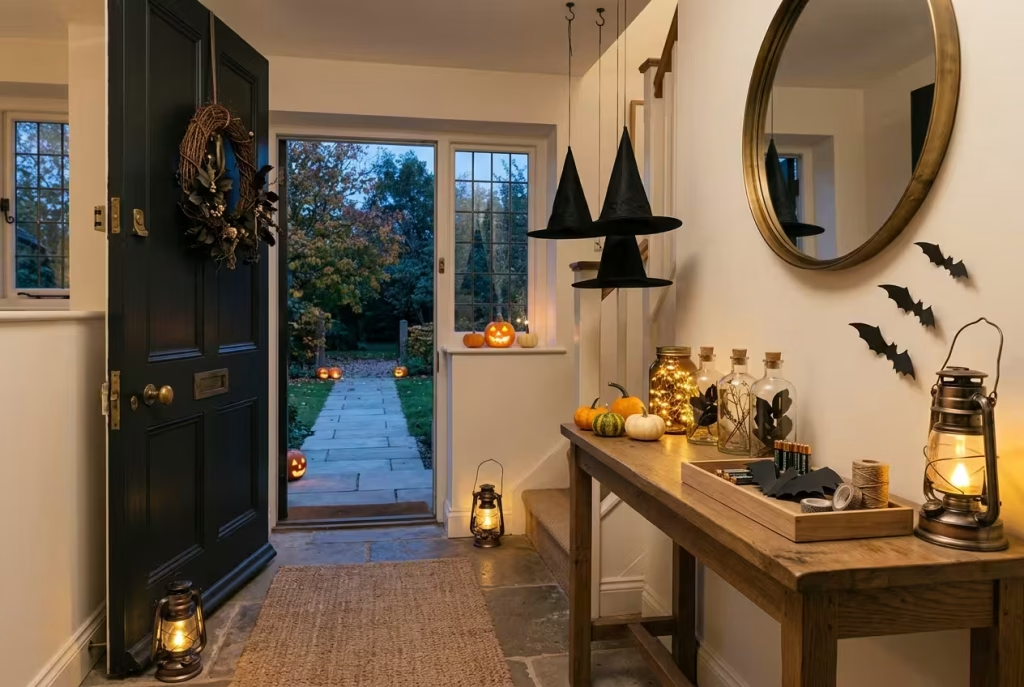
Few tricks deliver so much wonder for so little money. Hats hovering in mid-air make children stop mid-sentence and tilt their heads back, and that tilt is the whole effect: it turns an ordinary hall into a place where the rules of gravity have been politely suspended.
How to hang them:
- Fix one adhesive hook to the ceiling for every hat, spacing them unevenly.
- Thread two to three feet of clear fishing line onto a needle and pass it through the tip of each hat.
- Tie the end to a safety pin inside the hat, then clip a light stick or a battery tea light to the pin so the glow shines through the brim.
- Loop the other end over the hook and adjust until the hats sit at staggered heights.
Keep the lowest brim above head height, roughly two metres, so nobody walks into one, and keep the lines away from the doorway itself, where a clear thread is hardest to see. A tip from craft bloggers: lights show up brighter in a pale or purple hat than in black felt, so mix one or two lighter hats into the group. Three to five hats suit a stairwell or porch ceiling, while a single clump of three works in a compact hall.
If a draught from the front door sets them swaying, let it. A slow sway looks as though the hats are listening.
7. Floating LED candles for a haunted-chapel glow
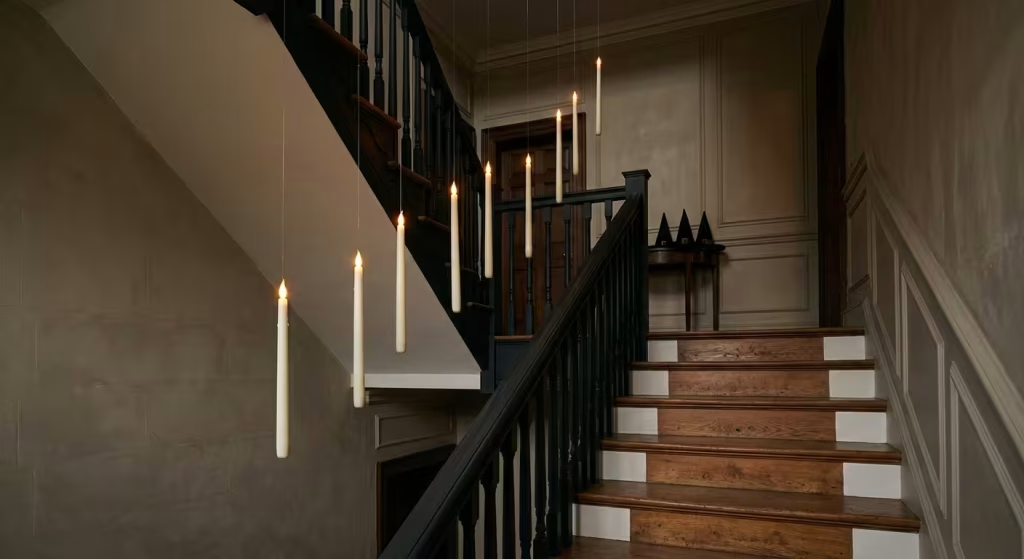
Time: 30 minutes | Cost: £8 to £15 | Renter-friendly: yes
Where hats say witchcraft, floating candles say old chapel at midnight. They are, if anything, easier to hang, and the flicker adds the one thing a hat cannot: a sense that someone has only just lit them.
Cut around 40 inches, just over a metre, of fishing line for a normal ceiling and more for a tall one. Tie it at the base of the plastic flame, knot the ends into a loop and hang it from an adhesive hook. Vary the lengths so the candles drift rather than march in formation.
Three ways to arrange them:
- A cascade down a stairwell, each candle slightly lower than the last
- A cluster of five to seven in a porch, bunched at differing heights
- A single line along a narrow hall, like a procession that has paused mid-step
Mix them with the witch hats as filler, or use them alone where space is tight. Because the flames are electronic, the arrangement stays firmly on the safe side of the fire brigade’s advice, and it will never drip wax on a guest’s shoulder. Put in fresh batteries on the morning of the 31st, because a dead candle is a very poor ghost.
You May also Like: 26 Creative Halloween Garden Decor Ideas for Front Yards and Backyards
8. A moody console with gauze, books and a grinning skull
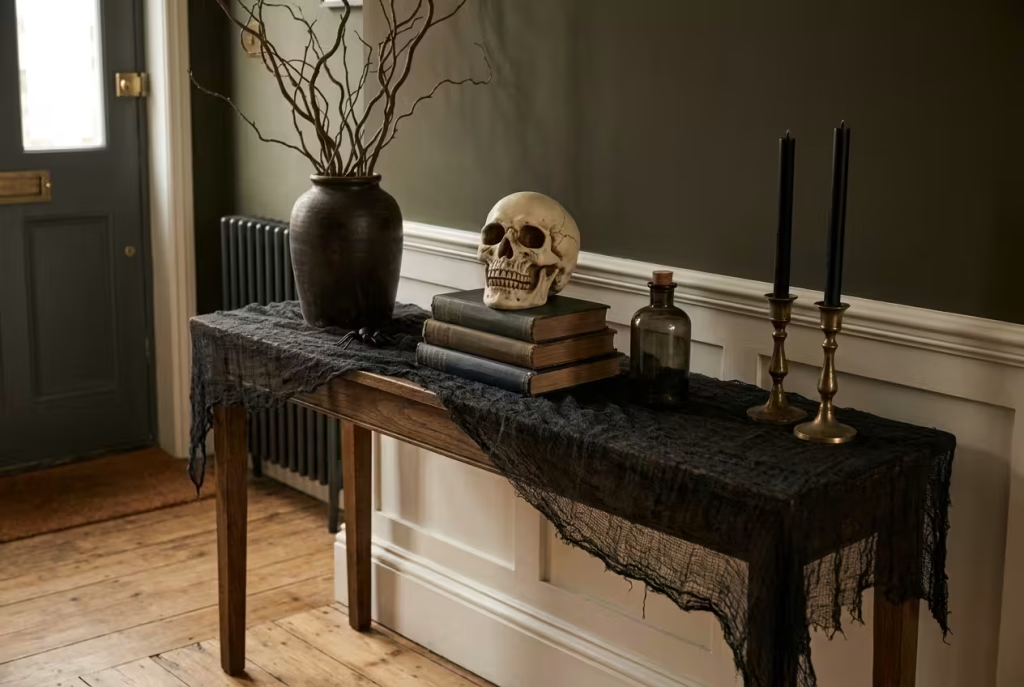
Time: 30 minutes | Cost: £0 to £10 | Renter-friendly: yes
A console table is the stage on which the whole entryway performs, and like any good stage it needs more than one level. The gap between a tidy shelf of props and a scene that feels dug out of an attic is layering, and layering needs a method rather than a mood.
A five-layer formula:
- Base. Drape a length of black or grey gauze so it pools at one end, with a ragged edge hanging over the front.
- Height. Stack three old hardbacks and top them with a skull, or stand a tall vase of dark twigs at one end.
- Light. Add a pair of black battery tapers, which give height and a glow without any flame.
- Texture. Tuck a plastic spider or two into the folds and add one metal or glass object, such as a tarnished candlestick, for sheen.
- Restraint. Remove one item. It sounds odd, but a vignette with one thing too few reads as styled, while one with one thing too many reads as clutter.
If the table is shallow, keep everything in the front two-thirds of its depth, so a coat swung off a shoulder cannot sweep the lot to the floor.
Place anything dry or papery well away from bulbs and lamps. The US National Fire Protection Association (NFPA) reports that decorations started an average of 832 home fires a year between 2019 and 2023, and that 47% happened because the item sat too close to a heat source. Dried foliage and crepe paper are named as especially easy to ignite. Those are American figures, but the physics crosses the Atlantic without a passport.
9. A twig wreath hung from the inside of the door
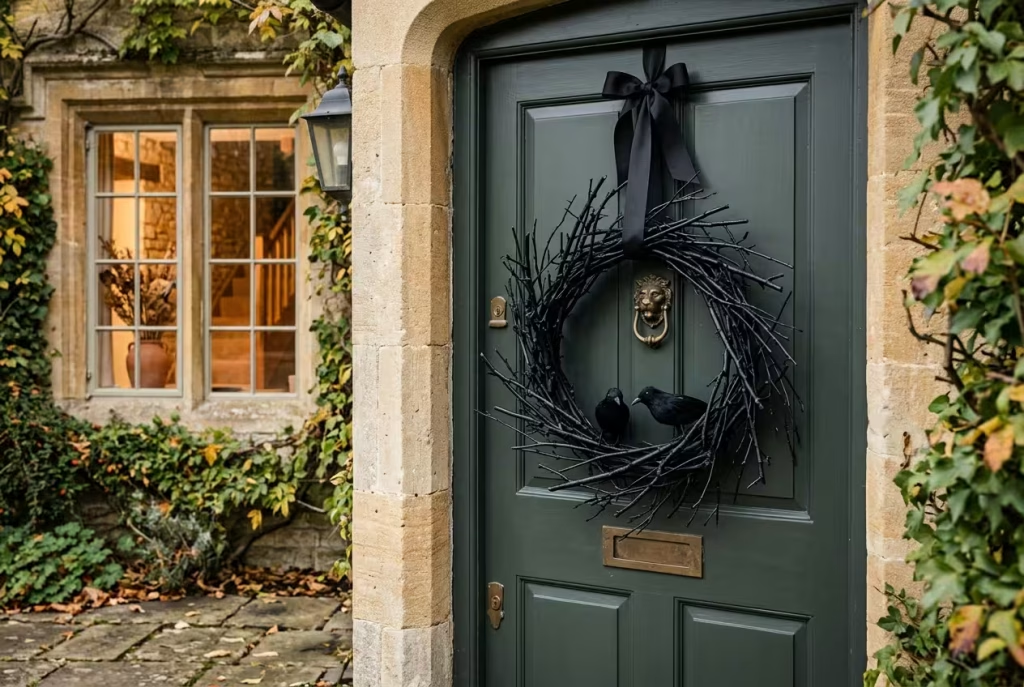
Time: 30 minutes | Cost: £0 to £8 | Renter-friendly: yes
There is something quietly menacing about a wreath made of nothing but sticks. It looks as though it grew on the door overnight. It also happens to be among the cheapest decorations you can make, because the raw material is lying on the ground in the park.
Gather fallen sticks of varying thickness and bind them into a loose, slightly untidy ring with a glue gun. Spray the lot black for a darker finish, or leave the bark bare for a woodland look. Add a few fake crows or black feathers if you have them, tucked deep so they seem to have nested there.
Then hang it the clever way:
- Stick an adhesive hook to the back of the door.
- Run a wide black ribbon over the top edge.
- Let the wreath drop on the outside, so the ribbon is the only thing visible and the door stays unmarked.
A celebrity florist quoted by Real Homes cautions that adhesive hooks are not ideal on a heavily lacquered door. In that case, an over-the-door hook needs no fixing at all. A large outdoor adhesive hook is typically rated for around 5 pounds (about 2.3 kg), far more than a twig wreath weighs.
Keep the wreath away from candles, bulbs and any heat source. NFPA singles out fully dried material, such as dried flowers and cornstalks, as especially easy to ignite, so fresh or faux twigs are the safer choice.
10. Cheesecloth ghosts rising from flowerpots
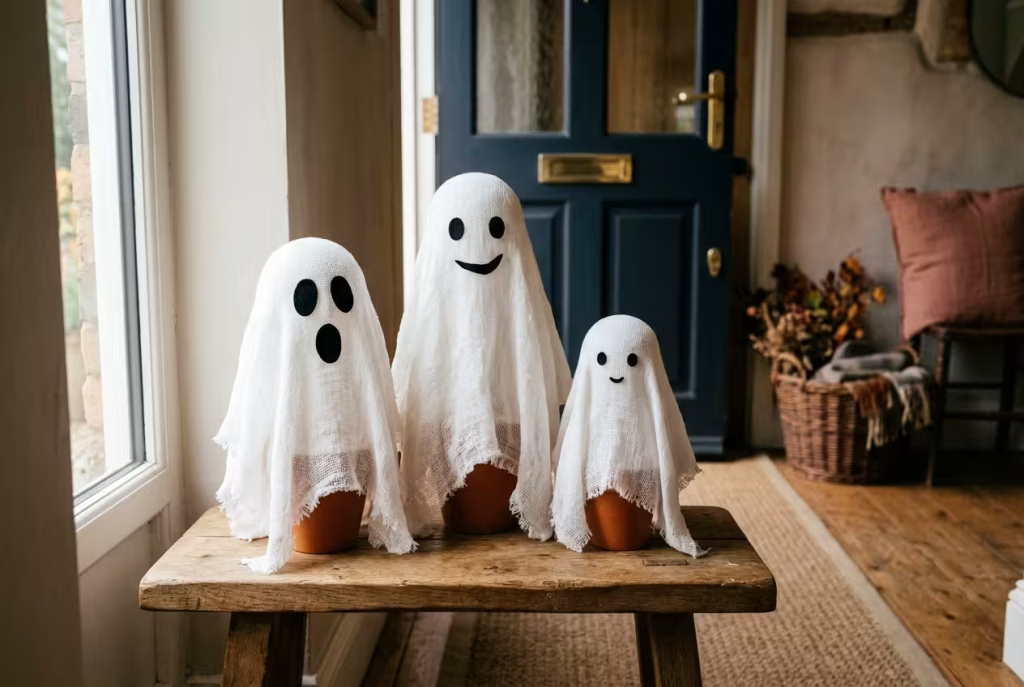
Time: 30 minutes for a small gang | Cost: £3 to £8 | Renter-friendly: yes
Making a ghost is one of those jobs children will happily take over, which is worth remembering if you are short of time and long on small helpers. A flowerpot, a square of cheesecloth and a marker pen can turn a wet afternoon into a keepsake.
- Drape cheesecloth over an upturned flowerpot or an empty bottle.
- For a ghost that stands up by itself, dip the cloth in liquid starch first, wring it out well and arrange it, letting it dry in shape.
- Add felt or marker eyes, with a small round mouth for a startled expression.
- Line a family of different sizes along a step, a bench or the bottom shelf of the console.
Five minutes each is about right, so a small gang takes half an hour. The great virtue is cost, a few pounds for a whole troupe. Keep them away from lit lamps, since cotton and heat are not friends, and bring them in if rain is forecast, because starched cloth sags in the wet and a slumped ghost looks more sad than scary.
Vary the faces. A ghost with surprised eyes beside one with a lopsided grin has more personality than a row of identical sheets, and personality is exactly what makes visitors lean in for a closer look.
11. A cobweb kept indoors, where only the spiders can complain
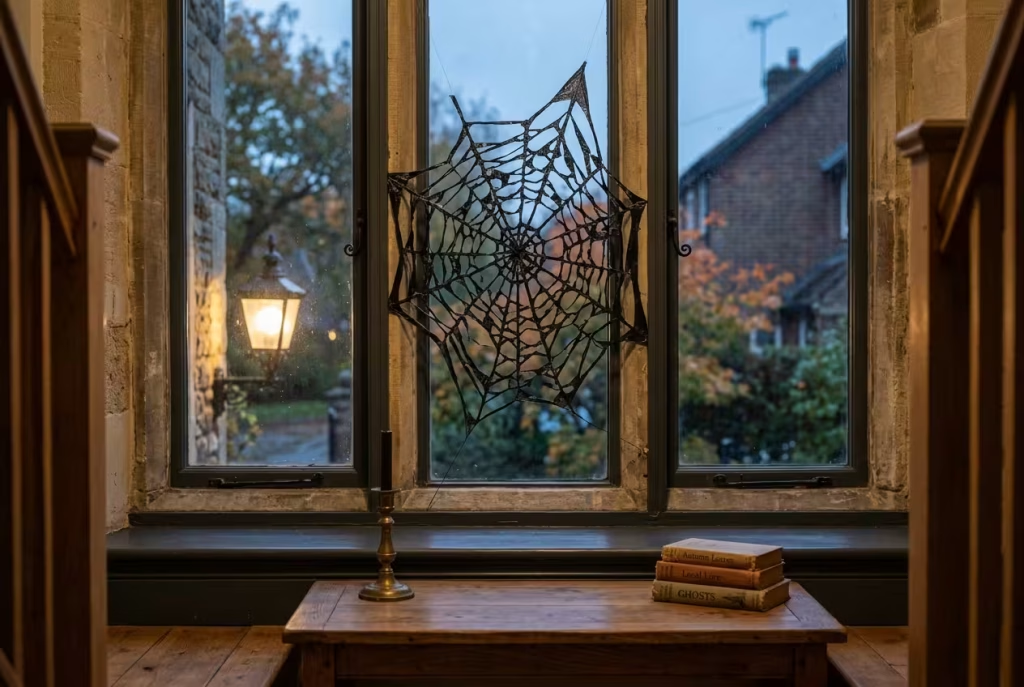
Time: 30 minutes | Cost: £2 to £5 | Renter-friendly: yes
Stretchy fake webbing is the one decoration wildlife groups would rather you left on the shelf, which is a shame, because a good cobweb is half of Halloween. The good news is that you can keep the look and lose the harm.
The Yorkshire Wildlife Trust warns that artificial webs can trap hedgehogs, birds, bats and insects, and the RSPB suggests hanging them inside windows if you must use them. In the United States, a bat rescue group reported tangled bats this very season. Few things sour a spooky evening faster than a small creature struggling in a net you hung for fun.
A stylish workaround:
- Fold a black bin bag in half, then in half again, then into a narrow triangle.
- Snip small triangles out of both folded edges, leaving thin strands between them.
- Unfold it and tape the edges to the inside of the window glass.
Against the porch light it silhouettes beautifully, and no wing or claw is at risk. Brown twine woven into a rough web between two hooks gives the same effect with a more rustic air. If you already own stretchy webbing, keep it indoors, tucked well inside, and check the hall after Halloween so no stray strands drift outside.
Part three: about an hour
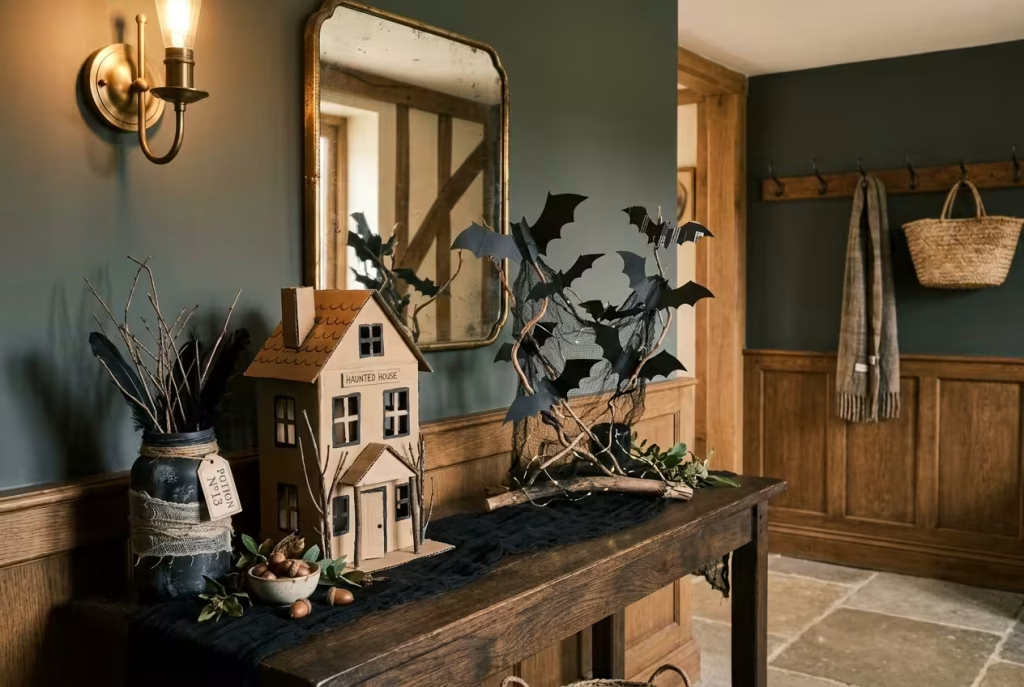
Let the kettle boil twice, and these three reward the extra effort. They are the ideas that make people ask where you bought it, and the answer, happily, is the recycling bin.
12. An apothecary shelf of potions and poisons

Time: 1 hour | Cost: £5 to £15 | Renter-friendly: yes
If a console is a stage, an apothecary shelf is a story. Every bottle hints at a character, and visitors read the labels the way they read menus, slowly and with growing amusement. It is also the finest use yet found for an old jar collection.
Gather and dress:
- Collect odd jars and bottles from the recycling, ideally a mix of clear, amber and green glass, and soak off the old labels in warm soapy water.
- Print small labels in an old-fashioned typeface and name them with a straight face: Raven Tears, Moonlit Mist, Black Cat Whisker Tonic, Hex Remover.
- For an aged look, dab the paper with cold tea, let it dry and tear the edges before sticking.
- Group the bottles on a tray in clusters of three and five, varying the heights.
- Coil a battery fairy-light string inside the clearest jar so it glows like a potion.
The tray keeps the display tidy and lets you whisk everything out of the way before the evening rush. Fill nothing with liquid, in case small hands, or curious dogs, reach for a bottle. Empty glass catches the light beautifully anyway, and an unfilled bottle with a mysterious label is somehow spookier than a coloured one.
Because everything is glass, it also makes the ideal hall-table companion for the paper bats from idea one: bats overhead, bottles below, and a very short story in between.
You May also Like: 25 Halloween Decor Ideas for Your Bedroom Balcony (Cute, Spooky & Easy)
13. A coat-rack witch and a skeleton on the bench
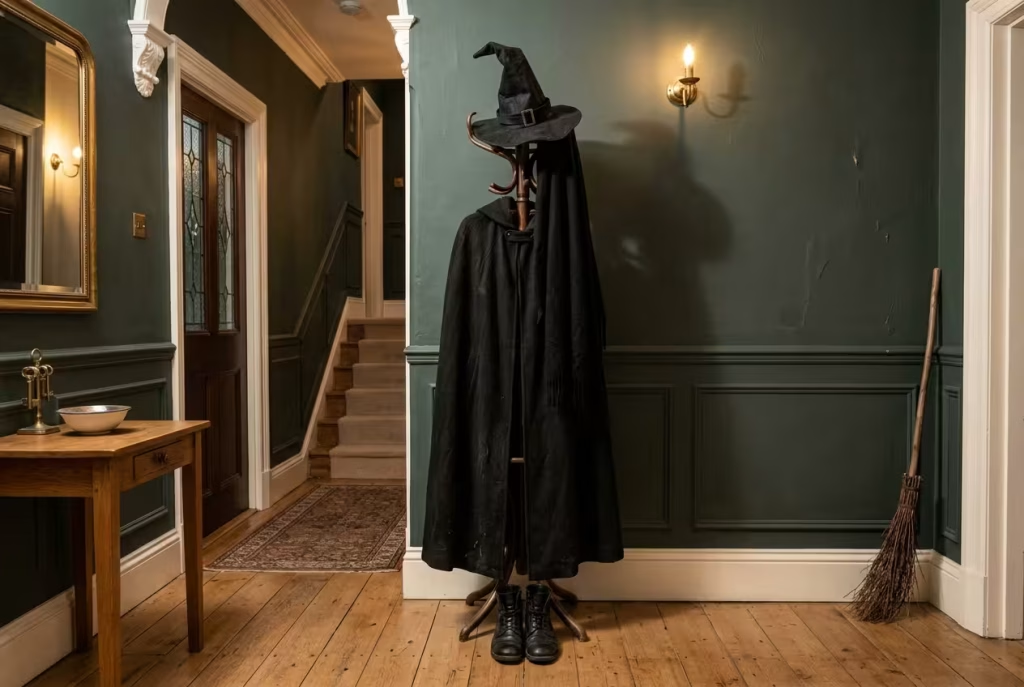
Time: 1 hour | Cost: £0 to £20 | Renter-friendly: yes
A coat rack is a gift to the last-minute decorator because it already has the shape of a person. Hang a long black cloak from the hooks, perch a pointed hat on the top peg and put a pair of boots on the floor beneath, and you have a figure waiting just out of sight. The effect is oddly personal, as if someone lives in your hall who is, unfortunately, away at the moment.
If you have a bench, prop a skeleton upright, perhaps in sunglasses and a scarf for a dash of humour. A broom leaned in the corner, never across the path, finishes the cast. The character does the talking, and you have bought almost nothing, because the cloak is an old black throw, the hat came out of the party box and the boots are your own.
Two cautions apply:
- Mind the hem. Keep fabric clear of the floor, since trailing cloth is a tripping risk and a magnet for muddy paws.
- Keep the exit clear. Fire services advise leaving every exit uncluttered, so make sure the door and the route to it stay completely open. Nothing in the figure should crowd the swing of the door.
There is a bonus. When children pose beside the witch for photographs, your hall becomes a backdrop, and that is a lovely thing for a hall to be.
14. Milk-jug ghost lanterns and a path that feels safe
Time: 1 hour | Cost: £4 to £12 | Renter-friendly: yes
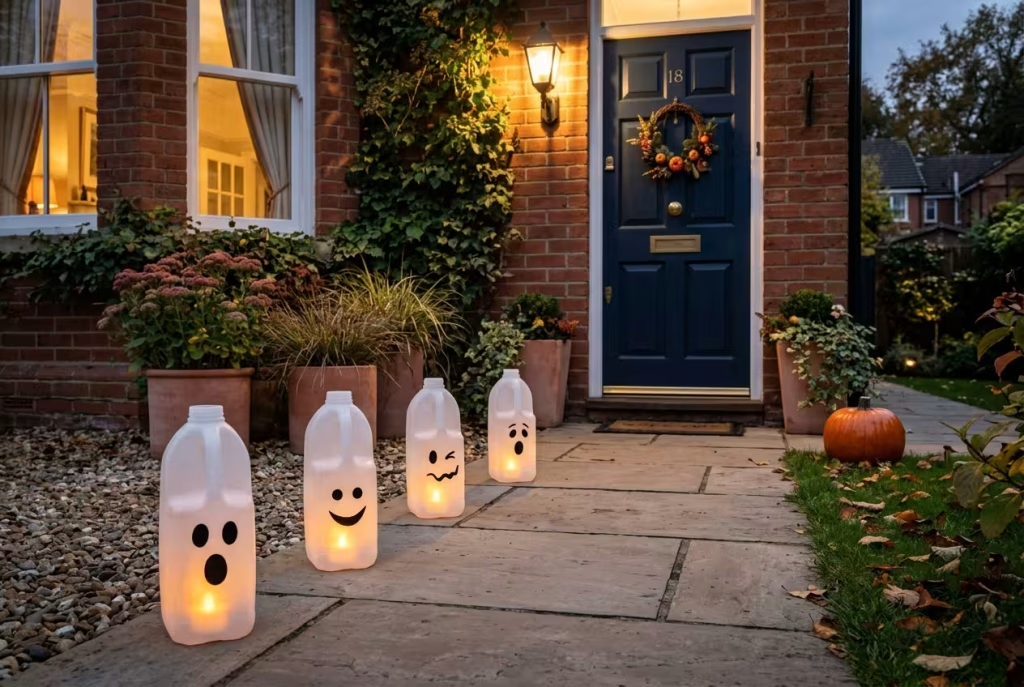
Rinse a clean plastic milk bottle, draw a ghostly face with a permanent marker, and drop a battery tea light inside. Line three or four along the steps or the path, and each bottle glows like a small, friendly spirit. The Yorkshire Wildlife Trust even lists milk-jug lanterns among its wildlife-friendly suggestions, so they are as kind to the hedgehogs as they are to the budget.
Now for the part that separates a great welcome from an accident waiting to happen. Designers consulted by Homes & Gardens warn against dimming the porch too far for atmosphere, since poor light causes slips and trips, and they advise tucking props off to the side of the path. The goal is a doorstep that looks dangerous and is not.
The path checklist:
- Keep the porch light on. Atmosphere comes from the lanterns, not from darkness.
- Fit grip tape on the steps. Cheap, quick, and invisible to anyone not looking for it.
- Tape down or tidy any cable. Even a battery-powered display often has a lead somewhere.
- Clear the route. Move pots, hoses and toys from the walkway.
- Space lanterns about a stride apart along the edge, so the eye is led towards the door.
A bright doorstep light and a handful of glowing lanterns make the ideal blend of warm and wicked. The real mark of a good welcome is that every child, and every grandparent holding a child’s hand, reaches the door without a stumble.
Part four: when you have the evening
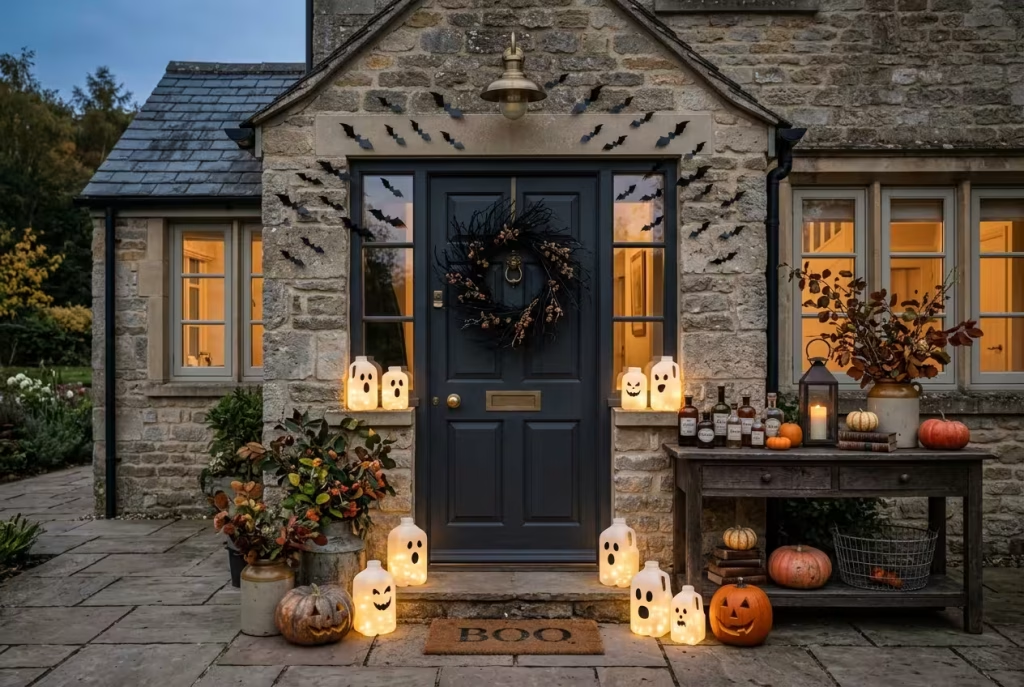
These three need patience, but each makes the doorstep unmistakably yours. They are the ideas people photograph, remember and ask about a year later.
15. A mummy door that wraps the whole entrance
Time: 90 minutes | Cost: £3 to £8 | Renter-friendly: check your lease
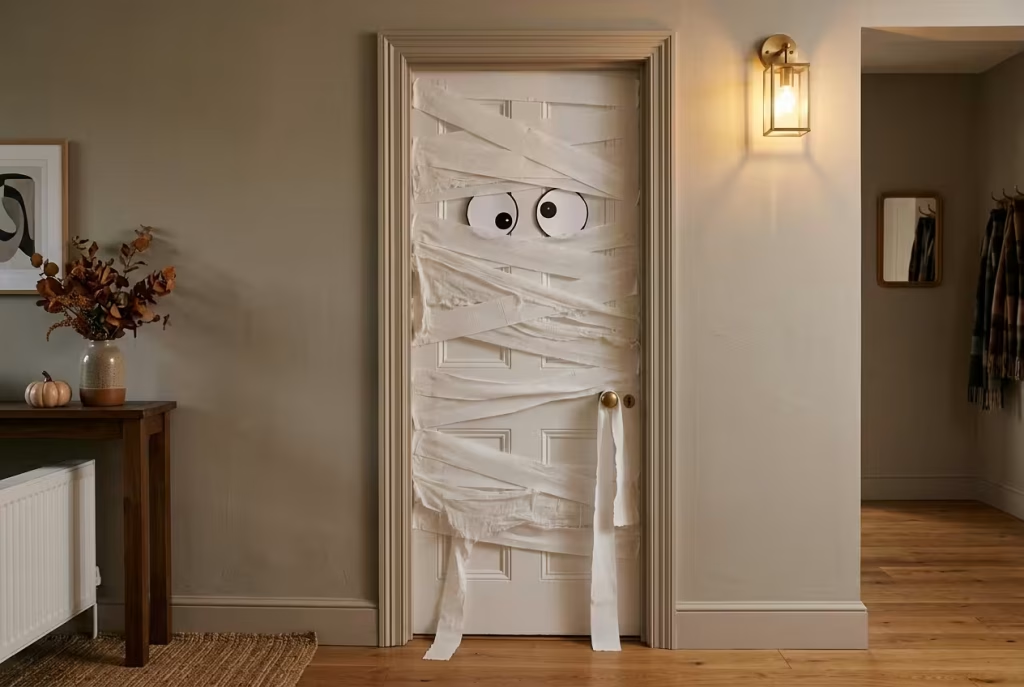
Some ideas succeed through cleverness, and others through sheer, glorious scale. A mummy door is firmly in the second camp. Wrap an entire door and it stops being a door at all; it becomes a creature, and children respond to creatures.
- Tear white streamers, strips of crepe paper or old white sheeting into long strips.
- Fix the strips at the top of the door with tape, then criss-cross them downwards, overlapping each by a third and leaving a horizontal gap near the top.
- Cut two large eyes from white card, add smaller black circles for pupils, and stick them behind the gap so they peer out.
- Fray a few loose ends at the bottom, as though the wrappings are unravelling.
The result is huge, funny and cheap. It also photographs brilliantly, which seems to matter to every child on your street.
Be honest about the materials, though. NFPA lists crepe paper among the decorations that ignite easily, so keep it clear of bulbs, heaters and candles, and do not use it in a shared hallway. Some fire codes go further than you might expect: Ontario’s code bans decorations on the outside of apartment doors in communal corridors. In a block of flats, wrap an internal door in your own hall instead, where the display faces your visitors rather than the corridor.
16. A gallery wall of printed vintage Halloween art
Time: 1 hour | Cost: £3 to £10 | Renter-friendly: yes, with removable strips
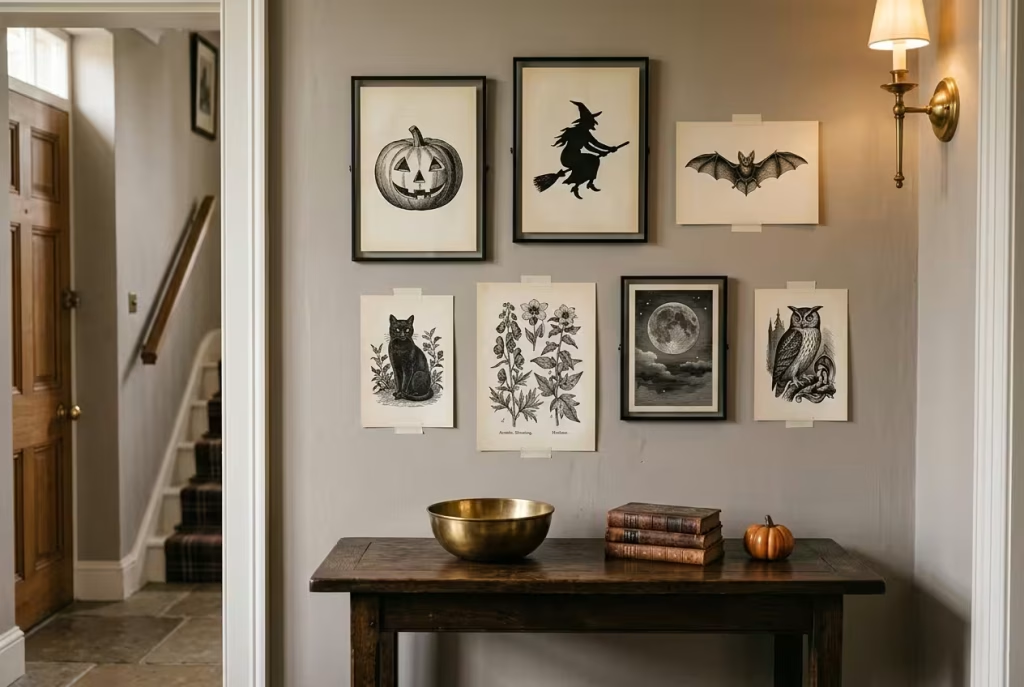
Not everyone wants a hall full of plastic skulls, and that is perfectly respectable. A printed gallery wall is Halloween for people who love a well-hung frame: witty, moody and strangely elegant, and it earns its keep as a conversation piece when guests are waiting for the others to arrive.
How to build one in an hour:
- Search public-domain image collections, which many museums and archives run, for vintage Halloween and gothic illustrations. Check each image’s licence, then choose six to nine with a similar tone.
- Print them on matt cardstock in a mix of A4 and A5, which holds up better than plain paper.
- Lay them out on the floor first, in a tight grid or a loose cluster, until the spacing feels right.
- Attach each print with removable adhesive strips, or tuck them into cheap frames if you have spares.
Keep the palette tight, black, cream and one accent such as burnt orange or deep green, so the collection looks curated rather than chaotic. Hang the centre of the group at roughly eye level so people read it without craning. This is the idea for those who want the hall to feel stylish rather than silly, and it takes almost no skill. It costs little more than the ink, and the prints can go in a drawer and return next October.
17. A candy cauldron station that says come in, and welcome
Time: 45 minutes | Cost: £5 to £15 | Renter-friendly: yes
The doorstep is where the evening is really won, and the secret is to make it a place people want to step towards. A candy cauldron does that without a word.
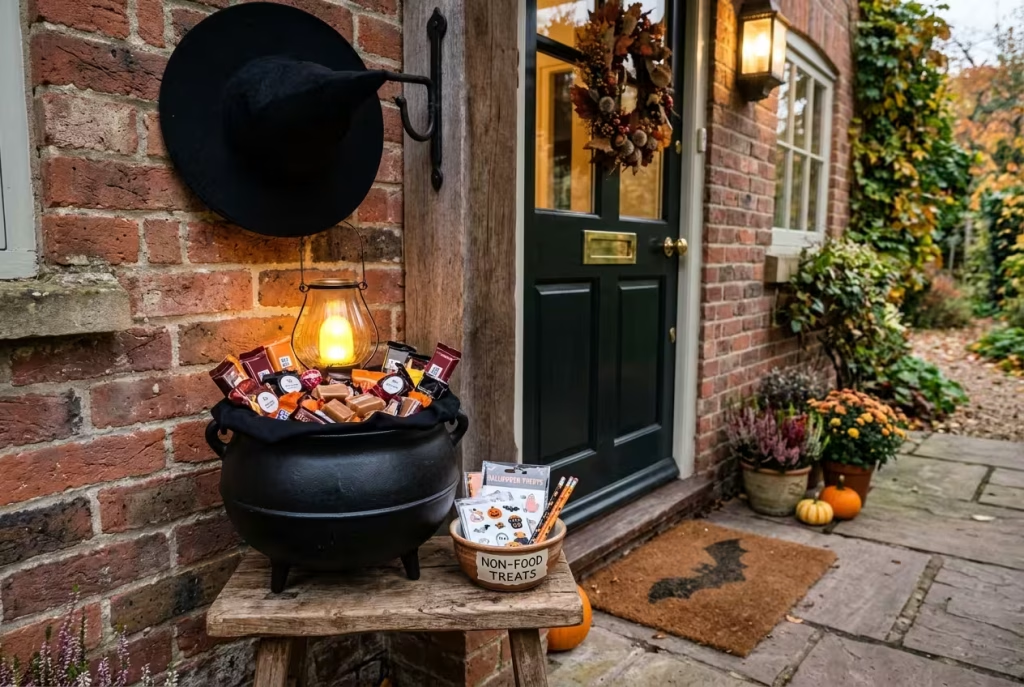
Place a black cauldron or a large pot on a stool just beside the door, line it with tissue or a black cloth, and pile in the sweets. Light it from behind with a battery lantern so it glows like a witch’s stove. Setting it to one side keeps the walkway open, which is exactly what the safety experts advise.
Where you can, hand treats over in person, because it lets you greet every child, admire every costume and spot anyone who needs a hand with the step. A hesitant five-year-old in a slightly-too-large cape is a small and precious thing, and a warm word from the person behind the door matters more than the chocolate.
Consider a few non-food items, such as stickers or pencils, for children with allergies, in keeping with the Teal Pumpkin Initiative. A wide-brimmed hat on your own head completes the picture, because in a street full of costumes you should not be the only one who has not dressed up.
The safety table: what to check before the first knock
None of this is meant to dampen the fun. A frightening doorstep and a safe one are not opposites, and the best displays are the ones where the only shiver comes from the décor. The table below pulls the evidence into one place so you can run through it in a minute on the afternoon of the 31st.
| Risk | What the evidence says | Simple fix |
| Naked flames and costumes | London Fire Brigade burned two polyester costumes with a candle to show how fast they ignite, and the Office for Product Safety and Standards found just over 20% of 128 online children’s costumes failed flammability tests in 2024 | Use battery candles, and keep real flames well away from the entryway |
| Flammable décor | NFPA data (US) shows 832 decoration fires a year on average, 47% too close to heat, around a third involving candles | Keep dried foliage and paper away from bulbs, lamps and heaters |
| Blocked exits | Fire services repeatedly say exits must stay clear | Keep the route to the door free of props and fabric |
| Trip hazards | Designers warn against dim porches and clutter on paths | Keep a bright light on, put grip tape on steps, tape down cables |
| Fake cobwebs | Wildlife groups report birds, bats and hedgehogs can be trapped | Hang webs indoors, or use string and paper |
| Costumes near lanterns | Trailing fabric ignites easily | Use LED lights in every lantern |
Two habits do most of the work. First, swap every flame for a battery light, because that removes the single biggest risk in a hallway full of billowing costumes. Second, treat the walking route as sacred: if it is bright, flat and clear, almost everything else on this page is a bonus. Give yourself one more minute for a final loop of the hall at child height, which is the quickest way to spot a dangling cord or a prop at the wrong angle.
Renters and shared hallways know the rules before you decorate
Landlords care about deposits, and managing agents care about fire escapes. Adhesive hooks, removable putty and low-tack strips solve the first worry, but the second is stricter. Rules differ from building to building, so check your lease and any communal-area policy before putting anything outside your own front door. A short message to the agent now beats a stern note on your door later.
As an example of how firm the rules can be, the Ontario Fire Code treats communal corridors as escape routes and prohibits decorations on the outside of apartment doors. Toronto Community Housing says the same about hallways. If you live in a block, keep every idea on this list inside your own front door and window, where the guidance cannot touch it.
Renter-safe ways to fix things:
- Adhesive hooks on the back of the door, with ribbon over the top, for wreaths
- Removable putty for bats, silhouettes and paper art
- Over-the-door hooks, which need no fixing at all
- Fishing line from ceiling hooks, so hats and candles hang without drilling
- Low-tack tape on glass for silhouettes and the cut-out web
Peel everything off slowly, at an angle, and within a few days of Halloween, since adhesives can grip harder the longer they sit.
Your countdown from now to Halloween night
A fortnight sounds roomy until you remember the working week. This plan spreads the effort so that nothing is left for the night itself.
| When | What to do |
| This week | Buy pumpkins (around 14 days out is ideal), gather jars, black card, fishing line, adhesive hooks and battery lights |
| Weekend of 24 and 25 October | Fix ceiling hooks, hang the hats and candles, put up the wreath and bats; clocks go back on Sunday, so check the lighting at the new dusk |
| Thursday 29 and Friday 30 October | Carve any pumpkins and keep them cool; finish the console and apothecary |
| Saturday 31 October, morning | Fresh batteries, tape down cables, sweep the path, lay down grip tape |
| Saturday afternoon | Switch the lights on before dusk, set the candy station, test every lantern |
| Sunday 1 November | Bring pumpkins in, take down any outdoor webbing, store the paper props flat |
What a rough budget really buys
| Budget | What you can do | Result |
| Under £10 | Bats, silhouettes, gauze jars, bin-bag web | A moody, crafted look from things you own |
| £10 to £25 | Add floating hats or candles, three pumpkins and a mat | A confident focal point with warm lighting |
| £25 to £50 | Add the apothecary display, lanterns and printed art | A full, layered welcome that looks planned for weeks |
If you only have a fiver, spend it on light. A pack of battery tea lights does more for the mood than any prop, because everything else in the hall looks better when something glows. After that, buy height with fishing line and hooks, and leave the rest to what the cupboards already hold.
Why a little effort at the threshold is worth it
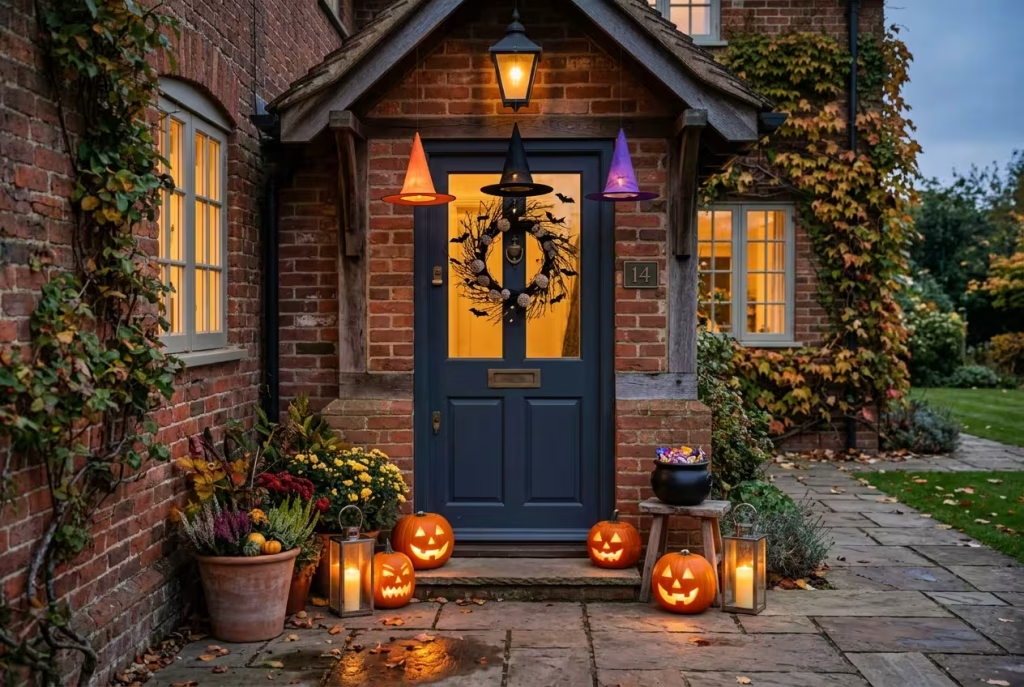
A doorstep is a promise. It tells visitors what sort of evening awaits before a word is spoken, and it tells the street you are in on the joke. That matters more than it seems, because Halloween is one of the few nights when strangers deliberately knock on each other’s doors and expect to be delighted.
Children remember the house with the glowing hats long after they have forgotten the sweets. Grown-ups remember the neighbour who made the effort. Somewhere between the two, a street starts to feel like a community, and the cost of a pack of black card and a reel of fishing line is trivial against that.
There is a private reward too. Standing in your own hall on the afternoon of the 31st, switching on the lights one by one, is a small, unhurried pleasure, a moment when the house stops being a place you rush through and becomes a place that is ready for company.
One last flicker before the doorbell rings
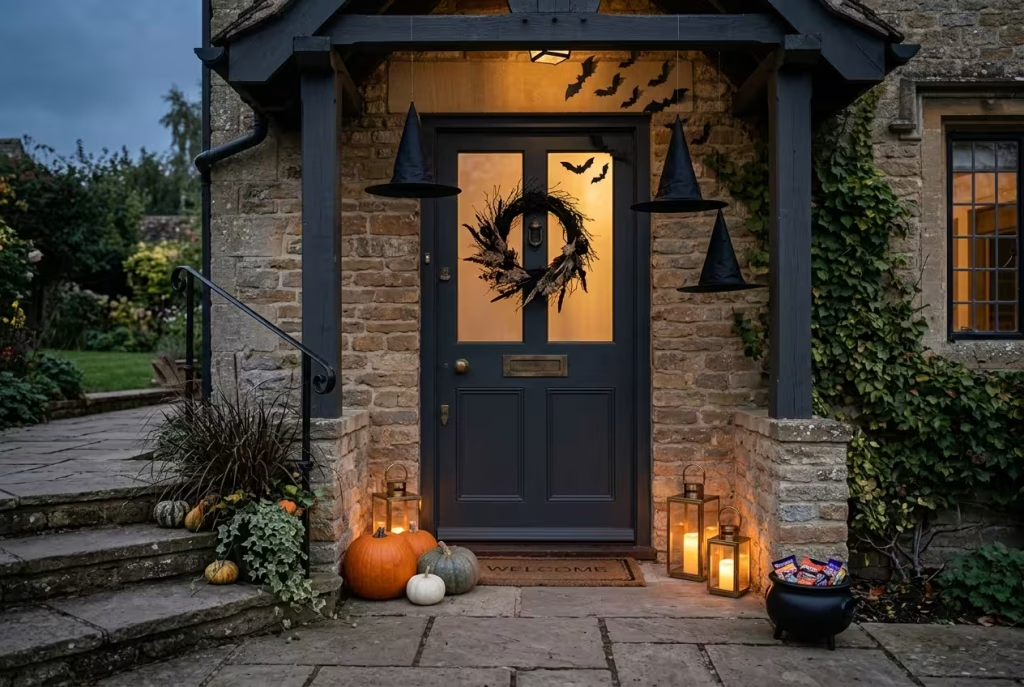
The best Halloween entryways are rarely the costliest. They are the ones where somebody thought about the first thing a visitor would see, the light on the step and the safe route to the door, then added a little mischief. Pick three ideas from this list, give yourself the weekend of 24 and 25 October, and you will have a welcome that feels as though it took weeks.
On the night itself, switch on the lanterns before dusk, wedge a hat on your head, and stand in the hall for a moment before the first knock. Hear that hush? That is the sound of a house about to be remembered.
Frequently asked questions
What can I use to decorate my entryway for Halloween at the last minute?
Black card, gauze or cheesecloth, jam jars, battery tea lights, clear fishing line, adhesive hooks and a few pumpkins are enough for a convincing welcome. Most of these items are already in kitchen drawers and recycling bins, and the rest cost a few pounds.
How long does it take to decorate an entryway for Halloween?
An individual idea takes between five minutes and an hour. A full layered welcome, with lighting, a focal point and a safety check, takes roughly 30 minutes to an evening.
How do I decorate a small or narrow hallway?
Use the walls and the ceiling rather than the floor. Floating hats or candles, a swarm of paper bats and silhouettes on the door glass add drama without taking up space, and they keep the walking route clear.
How do I hang Halloween decorations without drilling or damaging paint?
Use adhesive hooks, over-the-door hooks, removable putty or low-tack tape. A hook on the back of the door with ribbon over the top lets a wreath hang outside without any mark. Avoid adhesive hooks on heavily lacquered doors.
How do I hang floating witch hats?
Fix an adhesive hook to the ceiling for each hat. Thread two to three feet of fishing line through the tip of the hat, tie it to a safety pin inside, clip a battery light to the pin and loop the line over the hook. Adjust the drop for each hat.
Are fake cobwebs safe for wildlife?
Not outdoors. The Yorkshire Wildlife Trust and the RSPB warn that artificial webbing can trap birds, bats, hedgehogs and insects. Hang webs inside a window, or make string or paper webs instead.
Is it safe to use real candles in pumpkins or lanterns?
Fire services in London, North Yorkshire and across the UK advise battery candles instead, because costumes can ignite after brief contact with a flame. If you do use a real one, keep it away from any costume, curtain or décor, never leave it unattended and use a proper holder.
How long do pumpkins last, and when should I carve?
An uncarved pumpkin lasts about a month at room temperature and two to three months in a cool place. A carved one lasts roughly three to five days indoors or one to two weeks on a chilly porch. Carve on the 29th or 30th for a fresh face on the night.
How do I keep the path safe for trick-or-treaters?
Keep a bright light on, clear pots and toys from the route, put grip tape on steps, tape down any cable and place props to one side of the walkway rather than across it.
Can I decorate a shared hallway or the outside of a flat door?
Often not. Many buildings treat communal corridors as escape routes and ban decorations there, and some fire codes, such as Ontario’s, prohibit them outright. Check your lease, and keep your display inside your own front door.
How much should I spend on a last-minute Halloween entryway?
Most households can create a striking welcome for under £25. A budget of under £10 buys paper bats, silhouettes and glowing jars, while £25 to £50 adds lanterns, an apothecary display and printed art.
What lights should I use for a Halloween entryway?
Warm, flickering battery tea lights, flameless candles and a bright porch light. Warm-white flicker mimics a real flame and looks atmospheric, while the porch light keeps the steps visible. Avoid trailing mains leads across the walkway, and fit fresh batteries on the morning of the 31st.
What should I do if it rains on Halloween?
Move paper, cheesecloth and cardboard props indoors or under cover, since they sag and tear when wet. Painted pumpkins and plastic jug lanterns cope better, but check that each battery light is suitable for outdoor use or keep it under cover.
What should I do with the decorations after Halloween?
Take down any outdoor webbing first so nothing lingers for wildlife, peel adhesive hooks and tape off slowly, bring in the pumpkins, and store paper props flat in a book or folder. Cut-outs, printed art, hats and fishing line will all see you through next October.