



What an English Country Entrance Is Actually Trying to Do
You feel it before you notice it. Step into a English Country Entrance that’s been properly thought through and something in your shoulders drops half an inch the temperature’s right, there’s somewhere obvious to put your keys, and the house seems to be expecting you rather than merely tolerating your arrival.
Step into one that hasn’t been considered at all, and you feel that too: coats in a heap, a radiator doing its best against a draught that’s been sneaking in since 1974, a floor that can’t decide whether it’s for shoes on or shoes off. Neither of these is an accident. A hallway is one of the few rooms in a house that gets designed by default rather than by decision, and it shows.
This is worth saying plainly, because most articles on this subject skip straight to the pretty bit the runner, the mirror, the artfully placed umbrella stand without pausing on what the room is actually there to do. An English hallway earns its keep in three separate jobs before it’s allowed to look nice at all.
It’s a thermal buffer, holding the worst of the weather at arm’s length from the rooms you actually live in. It’s storage, whether it wants to be or not coats, boots, the school bag nobody’s collected in three days. And it’s the first impression, the handshake a house gives a guest before either party has said a word. Get those three jobs sorted and the decorating more or less follows on. Skip them, and no amount of styling will make the room feel settled.
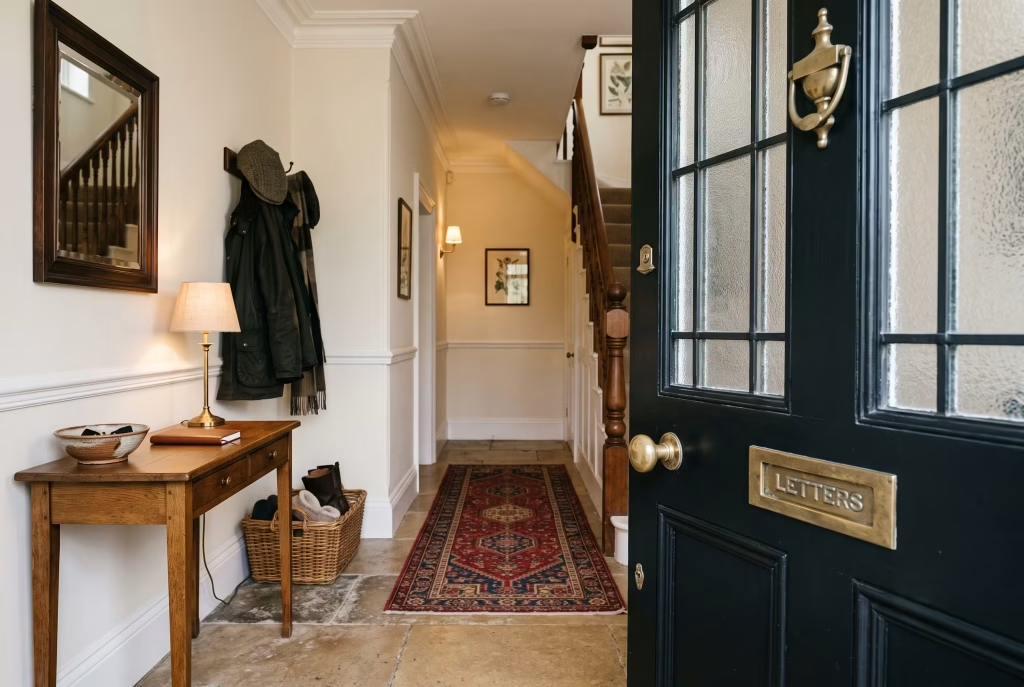
There’s a small matter of language worth clearing up early, because it changes how you think about the space. Most homeowners in England don’t call this room an entryway that’s an Americanism that’s crept in through Pinterest and property listings. Ask someone in Yorkshire or Somerset what this room is and they’ll say hall, or hallway, without a second thought.
It sounds like pedantry, but it isn’t quite: the word “entryway” frames the room as a threshold you pass through, whereas “hallway” treats it as a room in its own right, one that deserves furniture, lighting, and a personality just like the rest of the house. That shift in thinking, small as it looks on paper, is the difference between a hallway that’s an afterthought and one that’s a proper room.
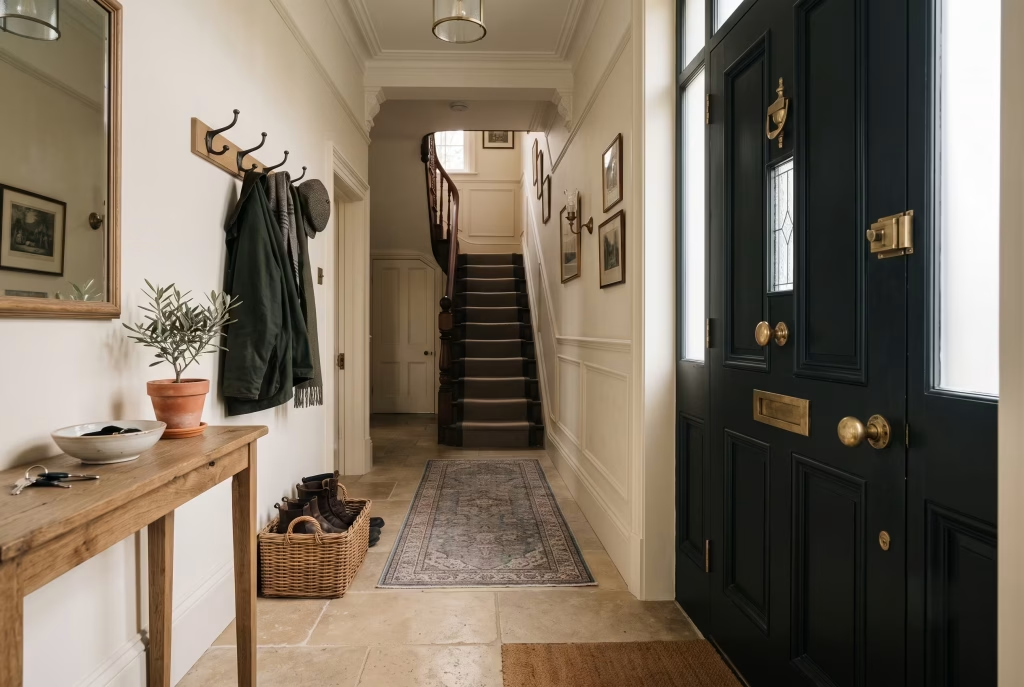
And roper front door is where that thinking starts, because the hallway announces itself before you’ve even crossed the threshold. Matte black steel-look, brass hardware door handle, letterbox, perhaps a simple brass knocker with a bit of weight to it is doing more work than people give it credit for. The matte black keeps the door looking crisp rather than showroom-glossy, and it reads as quietly confident against brick, render, or old stone in a way that gloss paint rarely manages.
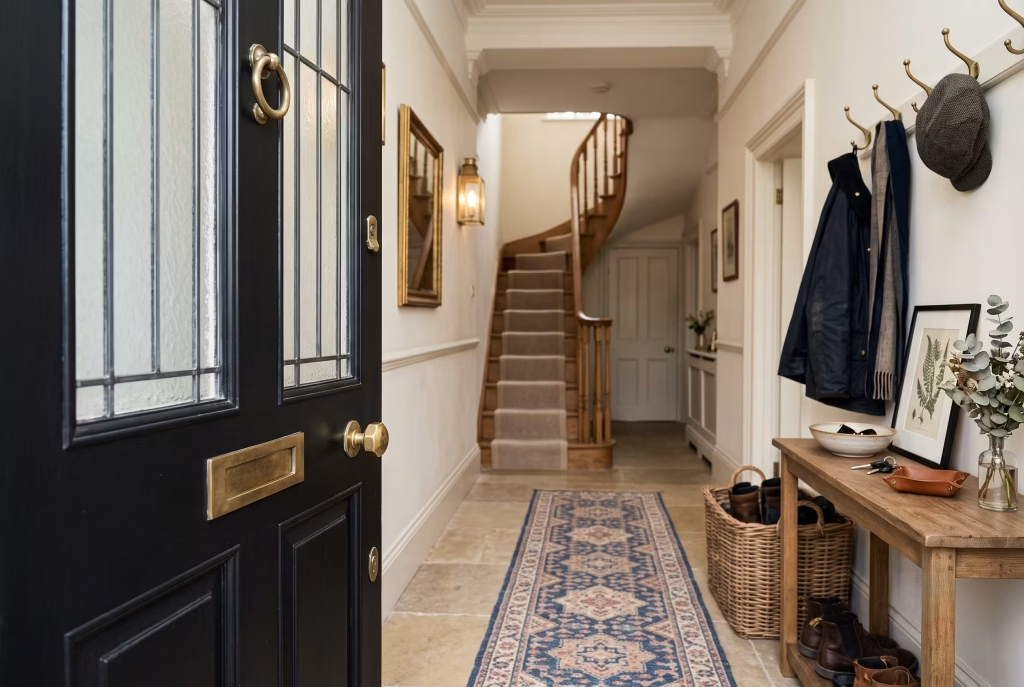
The brass against it isn’t decoration for its own sake; brass warms up black instantly, stops the door looking severe, and it’s the detail your hand actually touches every single day, so it had better feel as good as it looks. Get that combination right at the door and you’ve already set the tone for whatever’s waiting on the other side of it which is precisely the point. The hallway doesn’t start at the mat. It starts at the handle.
A Quick, Honest Word on Names
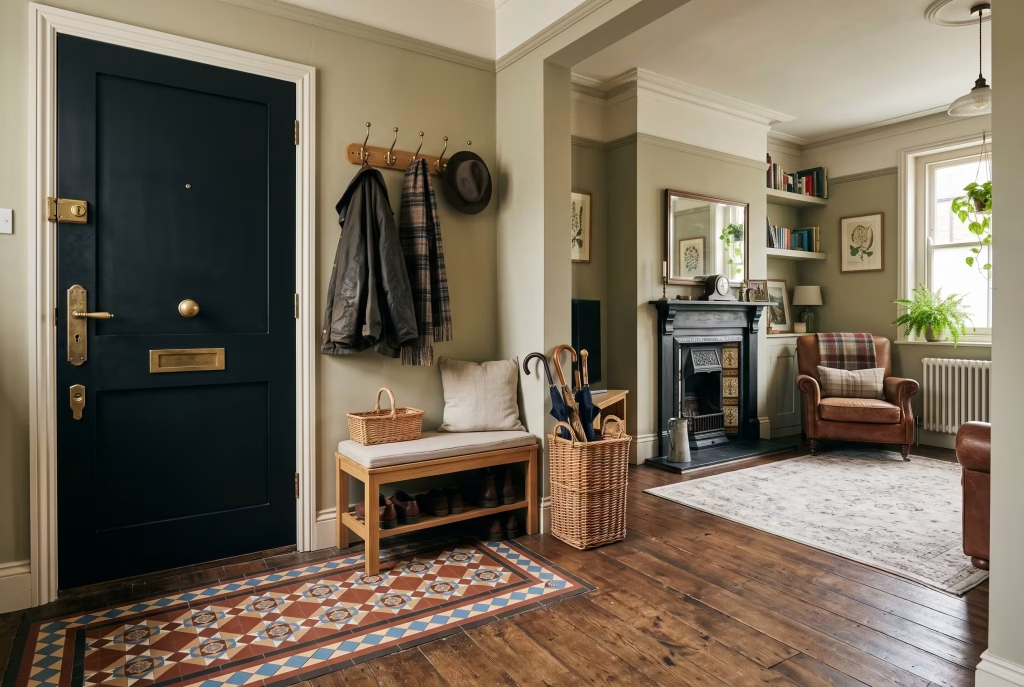
Let’s clear something up before we go any further, because it’ll save you a strange conversation with a British builder somewhere down the line. Nobody in England decorates an “entryway.” Ask a joiner in Devon to quote for one and you’ll get a blank look followed by a polite “you mean the hall, love?” The word that actually gets used, day in and day out, is hall or hallway, plain and simple, and it’s worth knowing why that distinction isn’t just semantics dressed up as a design opinion.
A few near neighbours are worth sorting out while we’re at it, since they get thrown around loosely and each means something slightly different. A vestibule is smaller and more formal, the little airlock between an outer door and an inner one, common in Victorian terraces built with two doors in a row for exactly that reason. A porch, in proper British usage, is a modest covered structure right at the door itself, sheltering you from the rain while you fumble for your keys, not the wraparound veranda an American ear might picture.
And a foyer is grander still, borrowed from theatre and hotel language, and frankly a bit much for most domestic front doors, however hard some estate agents try to make it stick. “Entryway” belongs to none of these traditions. It’s an American import, and a fairly recent one at that, which is precisely why it rings slightly false the moment a UK homeowner says it out loud. Language gives the game away long before the décor does.
Here’s the detail that catches a lot of people out, and it’s one worth sitting with if it applies to your own house. A good number of older British terraces, particularly the smaller two-up-two-down variety built for factory workers in the nineteenth century, were never given a hallway at all.
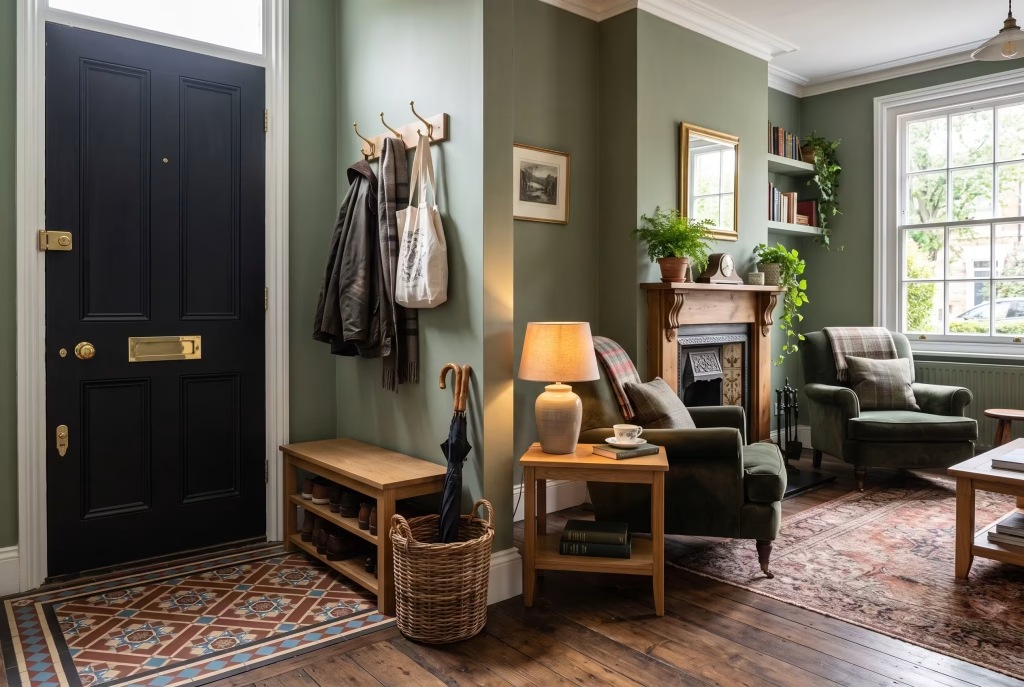
The front door opens straight into the front room, full stop, no buffer, no in-between space, nothing standing between the street and the sofa. If that’s your house, everything in this guide about halls and consoles and coat hooks needs a rethink rather than a straight copy-paste. You’re not missing a room; you simply never had one, and pretending otherwise by squeezing in furniture that wants a proper hallway’s worth of space will only make the front room feel like it’s apologising for something.
The better move, and the one we’d genuinely recommend on a project like this, is to treat the entrance zone as a defined pocket within the room itself: a run of wall by the door dedicated to hooks and a slim bench, perhaps a change of flooring material to mark out where “outside” psychologically ends and “inside” begins, even without a wall to do the job for you. It’s a workaround, not a compromise, and done properly it reads as intentional rather than improvised.
Whichever camp your house falls into, the door still does the talking first. Matte black steel-look, finished with brass hardware, a serious handle, a letterbox with some heft to it, works whether that door opens onto a proper hall or straight into the sitting room, because the job it’s doing is the same either way:
setting expectations before anyone’s stepped inside. Get the name of the room right in your own head, understand what kind of space you’re actually working with, and the rest of the decisions start falling into line rather than fighting each other.
You May also Like: 25 Modern Wooden Garden Fence Ideas for 2026: DIY Builds, Design Trends & Outdoor Decor Inspiration
What the Room Is Actually For, Before You Decorate It
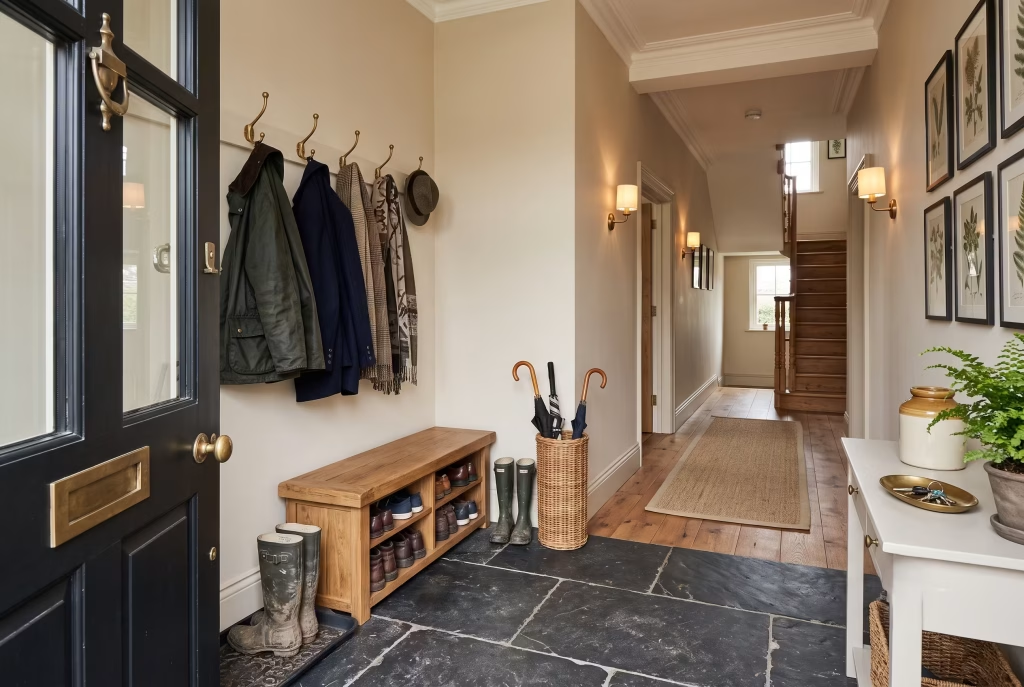
Before a single console table or convex mirror gets a look-in, the hallway has three jobs to do, and it does all of them at once, usually while nobody’s watching. This is the bit most decorating guides skip entirely, rushing you straight to the styling as though a hall were a blank canvas rather than a room under genuine pressure. It isn’t. It’s working harder than almost any other space in the house, and if you decorate it before you understand that, you’ll be fighting your own choices within a fortnight.
Start with temperature, since it’s the least glamorous job and the one people forget until winter proves them wrong. A hallway is the airlock between the weather outside and the life you’re trying to live indoors, and every time that front door opens, cold air comes barrelling in behind whoever’s just arrived. A well-planned hall slows that down, holds the draught at bay, and gives the rest of the house a fighting chance of staying warm. Skimp on this and you’ll find yourself heating the street.
Then there’s the mud, and let’s not tiptoe around it, because this is where good intentions come unstuck fastest. Wet dogs, muddy wellies, a bicycle dripping rain onto whatever’s underfoot, this room absorbs the worst the outdoors has to offer before it’s allowed anywhere near your good furniture.
We worked on a cottage renovation a few years back where the client had laid down a gorgeous run of reclaimed oak flooring straight through from the front door, no mat, no boot tray, nothing to catch the run-off. Six months in, the boards nearest the door had swollen and dulled, while the rest of the floor stayed handsome.
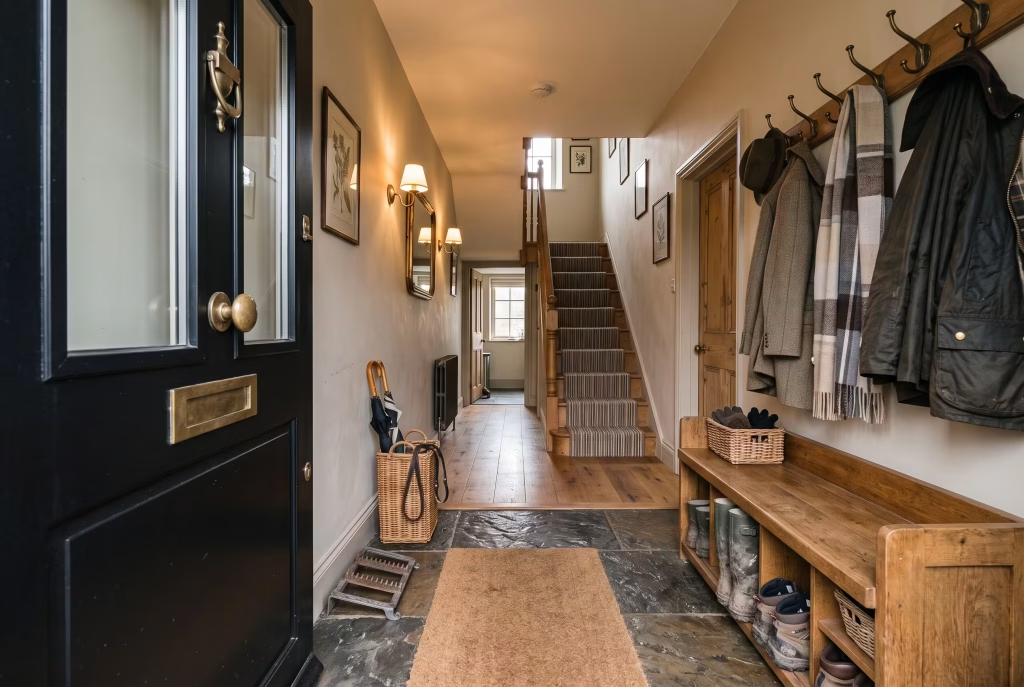
The fix wasn’t more oak. It was a section of flagstone or slate set into the entrance zone itself, tough enough to shrug off whatever the weather throws at it, with the good timber starting a step or two further in where it’s earned some protection.
Storage is the third job, and it’s the one that quietly determines whether the whole room feels calm or chaotic. Without a bench, a run of hooks, somewhere specific for shoes to live, the hallway becomes a holding pen: trainers multiplying by the door, coats slung over the banister because there’s nowhere else for them to go, school bags marking their territory like they pay rent.
We’ve seen this sink an otherwise beautiful hallway more times than we can count, a lovely runner rug buried under a scrum of footwear because nobody gave the shoes a home of their own. A simple bench with space beneath it and a decent run of brass coat hooks solves ninety percent of this before you’ve spent a penny on anything decorative.
And underneath all of that, doing its job quietly, sits character, the fourth thing this room is meant to carry. A hallway that’s handled its thermal, storage, and durability briefs properly still needs to say something about the house it belongs to, and that’s where the fittings start to matter in a different way.
A front door finished in matte black steel-look, paired with brass hardware that’s been chosen with a bit of care, isn’t there purely for kerb appeal. It’s the first material decision a visitor registers, and it sets an expectation for what’s waiting on the other side. Get the practical bones right first, and that character has something solid to sit on rather than something to distract from.
Underfoot — Flooring That’s Built to Be Walked On, Not Admired
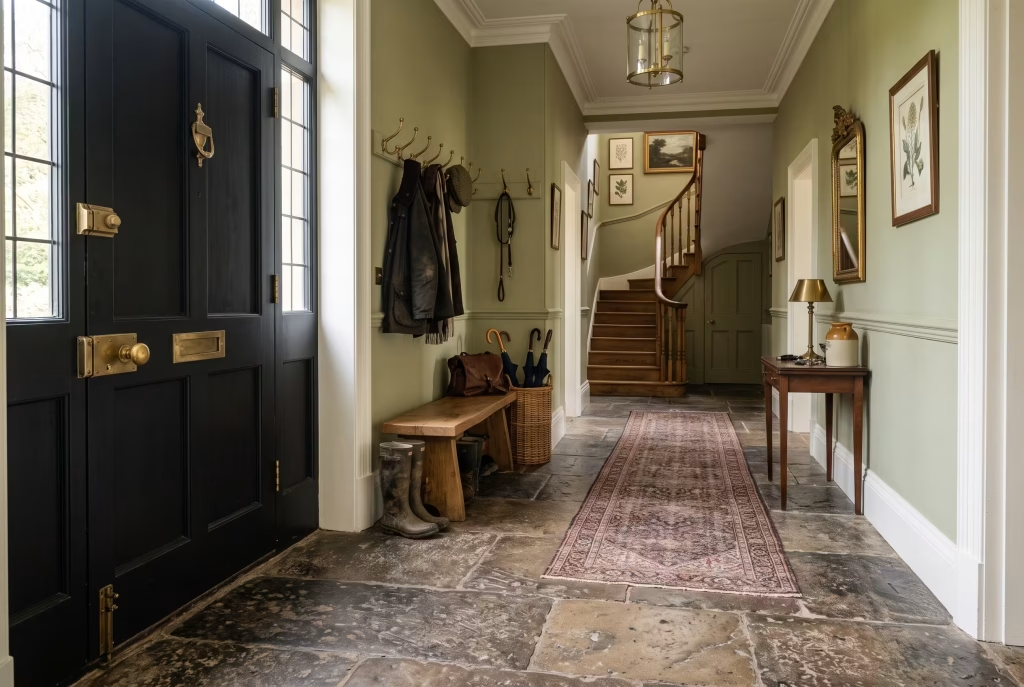
Flooring is where a hallway either proves itself or gives itself away, because this is the one surface in the entire house that takes a genuine daily hammering. It needs to look the part while quietly absorbing everything a family, a dog, and the great British weather can throw at it. Choose it purely on looks and you’ll be re-laying it within a decade. Choose it with your eyes open and it’ll only get better with age.
Flagstone is the workhorse of the English hallway, and there’s a reason it’s been the go-to choice for centuries rather than a passing trend. It shrugs off wet boots, resists staining, and settles into a house rather than sitting on top of it.
The trade-off is honesty rather than complaint: flagstone is cold underfoot, properly cold, the kind of cold that has you reaching for slippers the moment you’re back inside. That’s not a flaw to be designed around so much as a fact to be planned for, which is exactly why a good runner earns its place here more than almost anywhere else in the house.
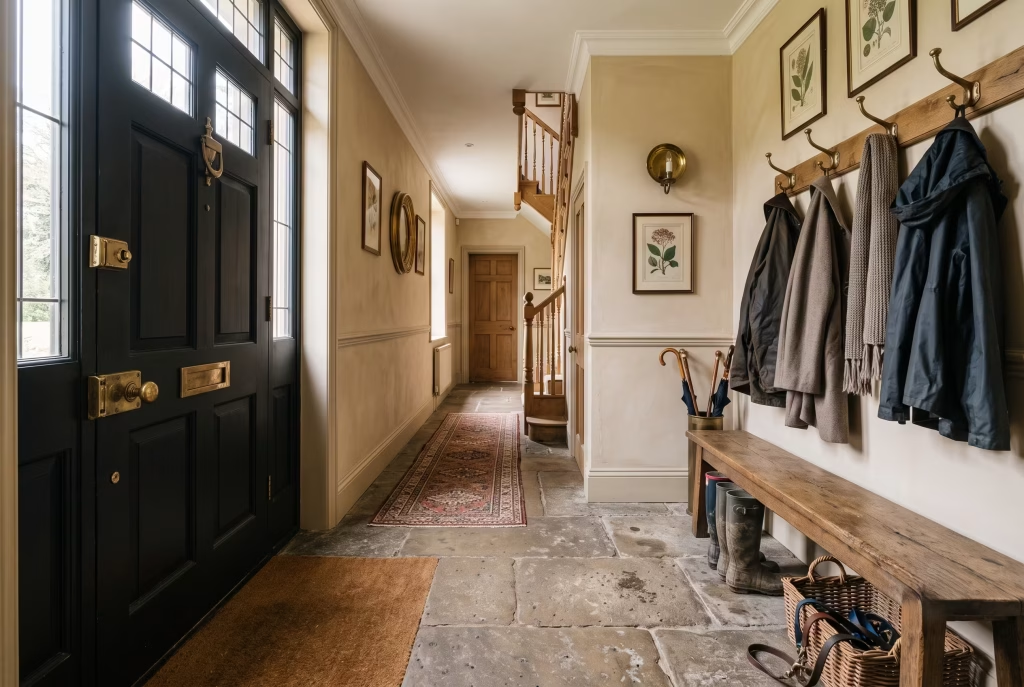
Reclaimed oak brings a warmth flagstone can’t match, both underfoot and to the eye, and it carries a sense of history that new timber simply can’t fake. But it asks for patience in return.
That deep, honeyed patina people fall for doesn’t arrive overnight; it’s the result of years of foot traffic, sunlight, and the odd scuff, and rushing it with a heavy-handed stain only ever looks like exactly that, a rush job. Reclaimed oak also wants proper protection at the entrance itself, because raw weather straight off the street is its one genuine enemy, and a floor that swells or dulls near the door undoes the character it took years to build everywhere else.
Encaustic tile splits the difference in an interesting way. Durable as anything flagstone can manage, but patterned, so it carries character from the day it’s laid rather than waiting years to earn it. The catch is cost, since genuine encaustic tile, cement-based and hand-poured, doesn’t come cheap, and a convincing imitation can look flat and lifeless if the pattern’s too crisp or the colours too uniform. Get the real thing, or get a very good copy, and there’s little to fault it on.
Whichever of the three you land on, a runner rug isn’t decoration, it’s doing real work. It softens a cold floor underfoot, catches grit before it travels further into the house, and gives a long, narrow hallway a sense of direction it might otherwise lack. In a room this hardworking, that’s not a small ask being met, it’s one of the more important jobs in the whole space being handled by a single, well-chosen piece.
And it’s worth remembering that flooring doesn’t work in isolation. A handsome stone floor loses half its impact if the door it leads to is doing nothing for itself. Matte black steel-look with proper brass hardware gives a hallway its bookend, the floor setting the tone at ground level, the door confirming it at eye level, so the whole space reads as considered from the moment you’re standing on the step rather than only once you’re through it.
You May also Like: 24 Christmas Pathway Lighting Ideas That’ll Make Your Home Glow Easy, Dazzling & Cozy
The Walls: Restraint as a Design Decision
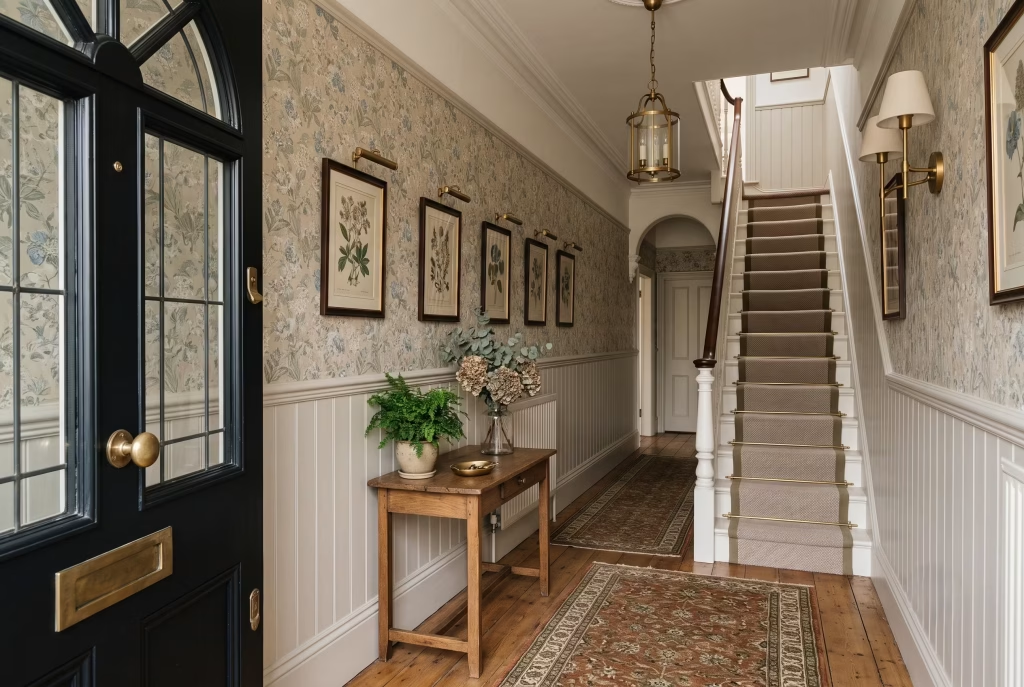
There’s a temptation, once the floor’s sorted and the door’s doing its job, to treat the walls as the fun part, the place where pattern and colour finally get to run wild. Resist it. The hallway is one of the few rooms in the house where less genuinely earns its keep, and understanding why turns a decent decorating instinct into a proper design decision.
Board-and-batten and beadboard panelling both do the same essential job, dividing the wall into a sturdy lower half and a calmer upper half, and there’s real logic behind why that split works so well in this particular room.
The lower section takes the daily knocks, the bag straps, the pushchair wheels, the dog’s over-enthusiastic greeting, while the painted or papered upper half stays untouched and looking sharp. It’s a practical solution dressed up as a period detail, and the best ones do both jobs without you noticing the compromise.
Muted florals belong here too, though the word “muted” is doing a great deal of heavy lifting in that sentence. A busy floral that would feel charming on a single feature wall in a spare room turns claustrophobic fast in a narrow, low-lit passage, closing in on you rather than welcoming you home. The florals that work in a hallway tend to be softer in contrast, more tonal than bold, reading as texture from across the room rather than shouting a pattern at you the second you’re through the door.
Deep historic colour is where the real nuance lives, and it’s worth slowing down on. A rich bottle green or a deep, inky navy can look extraordinary in a generous hallway with a decent ceiling height and a window letting in proper light, wrapping the space in a sense of drama that a paler colour simply can’t manage.
Put that exact same colour into a narrow terrace hall with no natural light of its own, and it stops being dramatic and starts feeling like you’ve walked into a wardrobe. This isn’t a matter of taste, it’s a matter of proportion and light, and it’s a lesson that only really lands once you’ve seen it go wrong on a real project. The colour didn’t fail. The room it was asked to do a job in simply couldn’t support it.
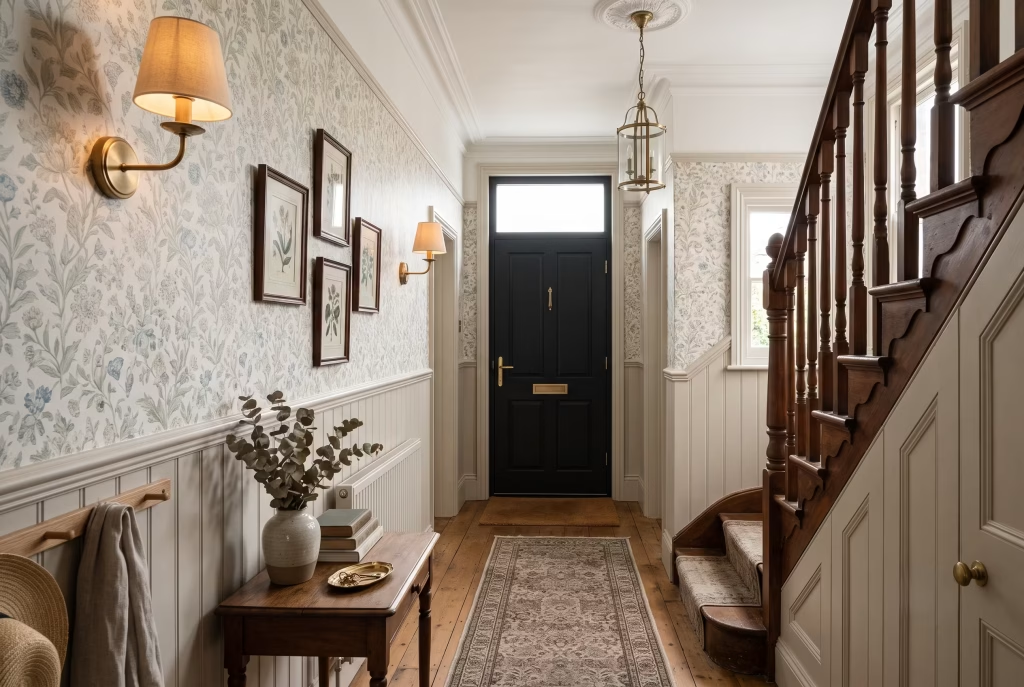
The rule bends, as rules tend to, once you understand why it exists in the first place. A dark, dramatic hallway can work beautifully in a smaller space too, provided the lighting’s been planned to compensate, layered properly rather than left to a single flat overhead bulb, and provided there’s a run of pale flooring or a lighter door beyond it to stop the whole space from swallowing itself.
Restraint, in other words, isn’t about avoiding colour and pattern altogether. It’s about reading the room you actually have, rather than the room you’d like to have, before you commit to anything permanent.
And whatever’s happening on the walls needs to feel like it’s in conversation with what’s happening at the door, not competing with it. A quieter wall treatment, a deep historic colour or a simple panelled half-wall, lets a front door finished in matte black steel-look with brass hardware do its job properly as the room’s real statement piece, rather than fighting it for attention the moment someone steps inside.
The Furniture That Earns Its Place
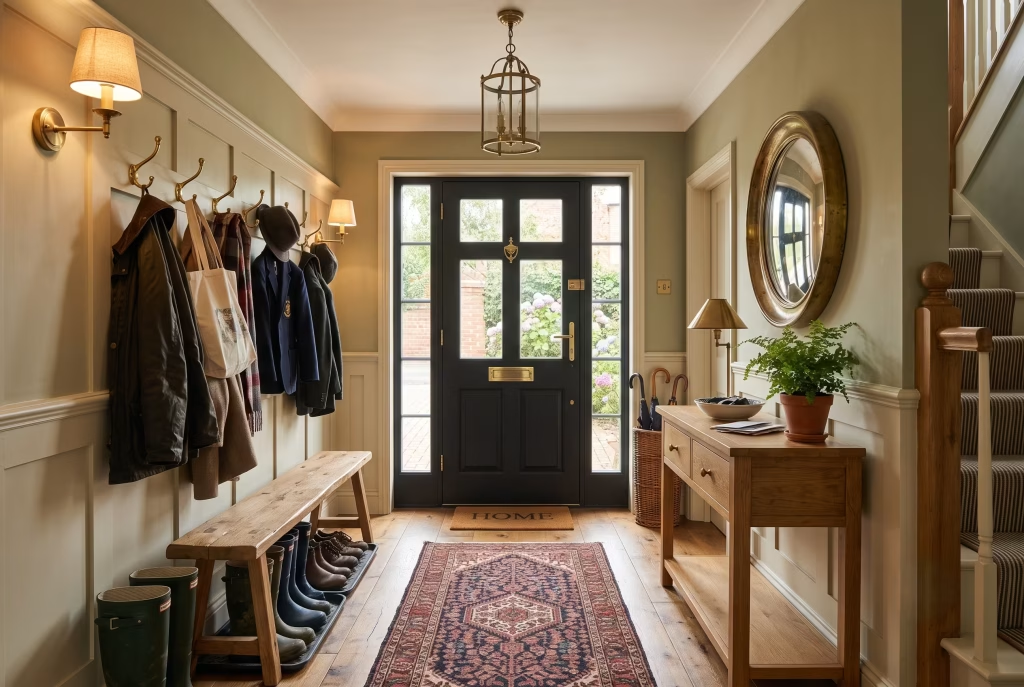
There’s a difference between a hallway that’s been furnished and one that’s been styled, and it comes down to a single question you can ask of every object in the room: what job is it actually doing? A hall isn’t a corridor with accessories bolted on. Every piece in it, done properly, is solving a specific problem that would otherwise land squarely on the family living there.
Start with the bench, because it’s the piece most people cut first and regret soonest. A hallway with nowhere to sit is a hallway where boots never come off properly, because nobody’s balancing on one foot to unlace a wellington when there’s a train to catch or a toddler tugging at their sleeve.
Give people somewhere to sit, even a slim, unassuming bench that barely announces itself, and the whole ritual of coming in from outside slows down and sorts itself out. It sounds like a small thing. In practice, it’s the difference between a floor that stays clean and one that collects a trail of muddy footprints halfway to the kitchen.
The console does a different job entirely, and it’s easy to underestimate. This is the surface that catches the day’s loose ends, post that hasn’t been dealt with, keys, a candle that’s rarely lit but always looks the part. Without one, all of that finds a home on the stairs instead, which never ends well for anyone in a hurry. A console doesn’t need to be grand. It needs to be there, and it needs a drawer, because loose ends have a way of multiplying if there’s nowhere to put them out of sight.
Coat hooks are where a lot of hallways quietly fall apart, usually because there simply aren’t enough of them. Brass hooks, fixed at a sensible height and spaced generously, aren’t a decorative flourish, they’re crowd control for a household’s outerwear. Run out of hooks and coats start living on doorknobs, on the newel post, over the back of the very bench you’ve just put in for people to sit on. A good rule from experience: whatever number of hooks feels sufficient, add two more, because nobody ever complains about a coat having somewhere proper to hang.
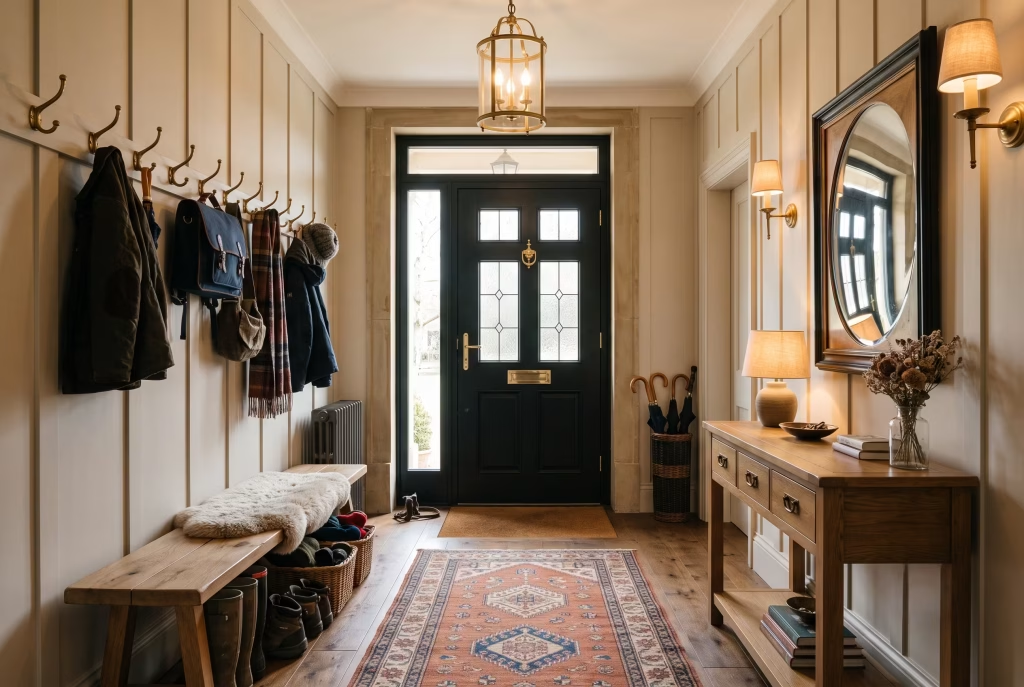
The umbrella stand and the woven basket do humbler work, but it’s real work all the same. One holds wet umbrellas upright instead of leaning against a wall and leaving a damp patch that never quite dries. The other swallows the practical clutter every household generates and refuses to admit to, spare gloves, dog leads, a torch for the bins on collection night. Neither is glamorous. Both stop that clutter migrating into rooms that deserve better of it.
And then there’s the convex mirror, the one genuinely decorative piece on this list that still manages to do a job. It bounces light back into a space that rarely gets much of its own, and it makes a narrow hall feel a touch more generous than it actually is, a trick of the eye rather than a trick of the tape measure. Hung near the door, it also gives you one last look before you head out, which is precisely the sort of quietly useful detail this room specialises in.
None of this furniture is fighting for attention, and that’s rather the point. It’s there to support the room’s real statement, which is still the door itself. A front door in matte black steel-look, finished with proper brass hardware, sets a tone that a well-chosen bench and a run of brass hooks are only ever there to echo, not compete with. Get the furniture right and the hallway starts running itself, coats hung, boots off, keys found without a five-minute search, which is, in the end, all any hallway is really being asked to do.
You May also Like: 25 Farmhouse Garden Ideas That Feel Timeless, Practical, and Full of Charm
Light, Layered Rather Than Flat
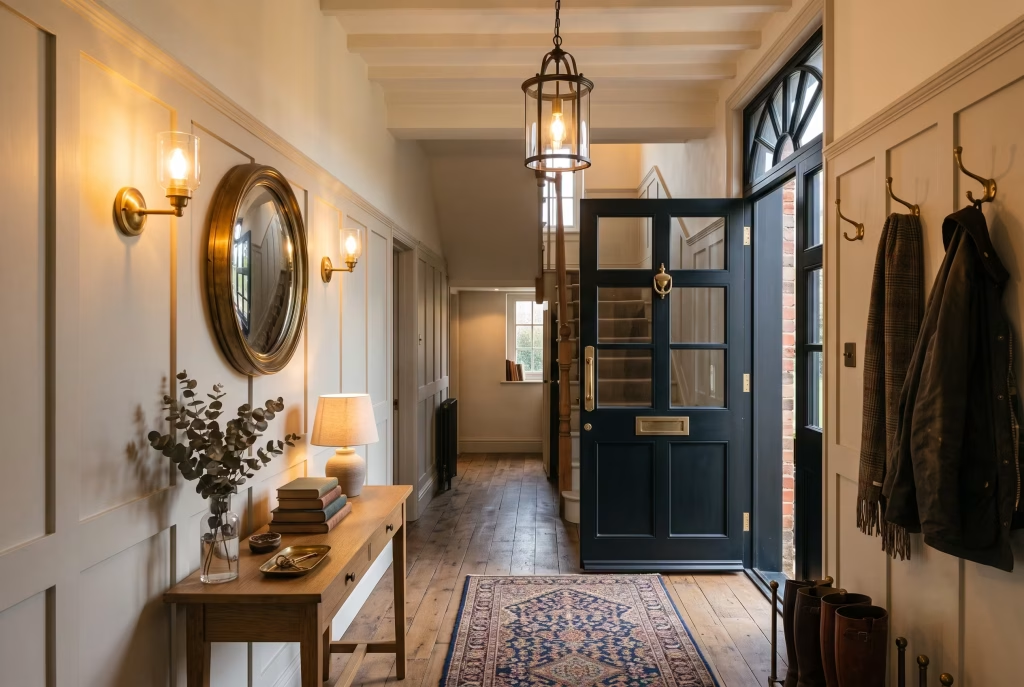
Nothing flattens a good hallway faster than a single bulb hanging in the middle of the ceiling, doing its best and managing only a flat, clinical wash that leaves every shadow in the wrong place and every warm material in the room looking curiously cold. Lighting is where a lot of otherwise well-planned halls come unstuck, not because anyone’s chosen the wrong fittings, but because they’ve only chosen one, and asked it to do a job that really wants three or four hands sharing the load.
Iron or brass wall sconces are the workhorse here, and they earn that title by doing something a central pendant simply can’t: throwing light sideways, along the walls, where it catches the texture of a board-and-batten panel or the grain of a reclaimed oak floor instead of flattening it from above. A pair of sconces flanking a mirror or bracketing a run of coat hooks gives the eye somewhere to land, and gives the room a sense of rhythm it wouldn’t otherwise have. Brass ones warm the whole space in a way iron can’t quite manage, though iron holds its own where the look wants a touch more weight and a little less shine.
A single well-chosen pendant still has its place, but it’s doing a different job to the sconces, not competing with them. Hung a little lower than you’d expect, at a height that feels almost domestic rather than commercial, a pendant gives the hallway a focal point, a sense that someone’s actually thought about this ceiling rather than left it to a builder’s-standard fitting. The trick is restraint in scale. Too large and it swallows a narrow hall whole; too fussy and it fights with everything else going on beneath it.
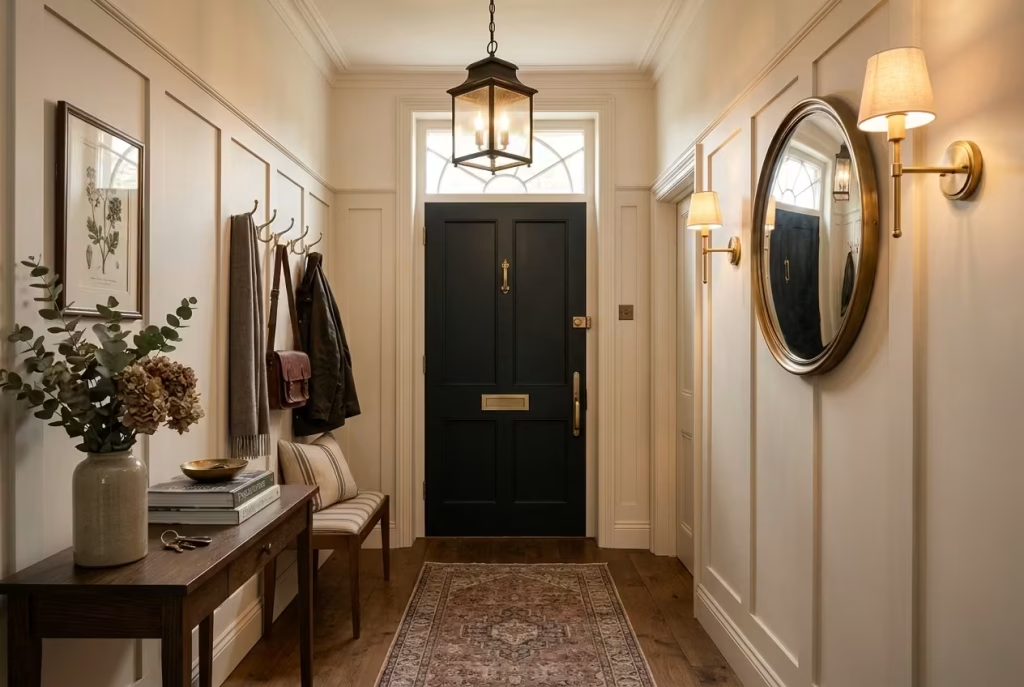
Natural light deserves a mention too, because it’s the layer people forget entirely until it’s missing. A fanlight over the door or a sidelight running alongside it brings daylight into a space that would otherwise depend entirely on electric light from morning to night, and it does something no lamp ever quite manages, changing gently through the day rather than staying fixed at one temperature and one intensity. If you’re lucky enough to have either, don’t block it with heavy curtains or an oversized pendant hung directly in its path. Let it do its work.
Put these layers together, sconces for texture, a pendant for character, daylight for life, and you get a hallway that shifts and breathes depending on the hour, rather than one that’s switched on and off like a stockroom. A single overhead bulb can’t offer any of that. It can only offer light, which, in a room built to set a mood before you’ve even taken your coat off, is never quite enough.
And it’s worth remembering that light does more than illuminate a room, it reveals what’s already there. A front door finished in matte black steel-look, with brass hardware chosen to catch exactly this kind of layered glow, looks entirely different lit well than it does under a single flat bulb.
The hardware picks up warmth from the sconces, the black recedes rather than dominates, and the whole entrance reads as considered rather than merely functional, proof that good lighting isn’t decoration on top of good design. It’s what lets good design be seen at all.
You May also Like: Nancy Meyers Style: The Ultimate Guide to Getting the Look in Every Room
Small Halls, Same Ambition
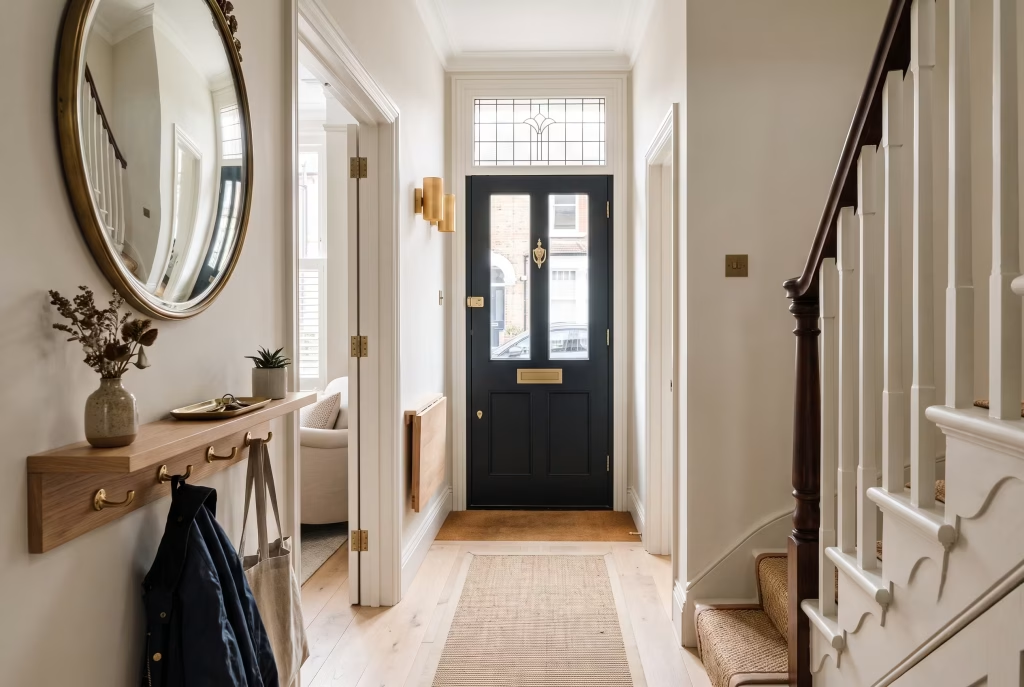
A narrow hallway has a way of making people apologise for it, as though square footage were a moral failing rather than an accident of when the house was built. It isn’t. Terraces and cottages were laid out for a different way of living, and a tight hall was never meant to carry a bench, a console, a rug, and a gallery wall all at once. The ambition doesn’t shrink because the room has. What shrinks is the guest list of objects allowed in.
Start with what to drop, because that’s the harder conversation and the one most people avoid. A full-sized console is usually the first casualty, and it should be. In a narrow hall it doesn’t read as furniture so much as an obstacle, something you sidle past rather than admire, and it eats width the room simply hasn’t got spare. A deep bench goes the same way. Anything that asks you to turn sideways to get past it is a piece that’s outstayed its welcome, however handsome it looked in the shop.
What never gets dropped, though, is the coat hooks and somewhere, however slim, to put a shoe down. These aren’t luxuries scaled to a large hall, they’re the non-negotiables that make the room function at all, and a narrow hallway can carry them perfectly well if they’re chosen with the space in mind rather than borrowed from a bigger house’s shopping list.
A slim wall-mounted shelf with hooks beneath does the job a full console would have done, at a fraction of the depth, and a folding wall-mounted seat does what a bench does without ever standing in anyone’s way.
The real skill in a small hall, though, is faking generosity of space rather than fighting for it, and a mirror is your hardest-working tool for that particular sleight of hand. Hung on the wall facing the door rather than to one side, it doubles the sense of depth the moment you step in, bouncing back whatever daylight the fanlight or sidelight lets through and making the hall feel like it’s borrowing space from the room beyond rather than running out of its own. A convex mirror does this especially well, curving the reflection just enough to suggest more room than there actually is, without ever tipping into gimmick.
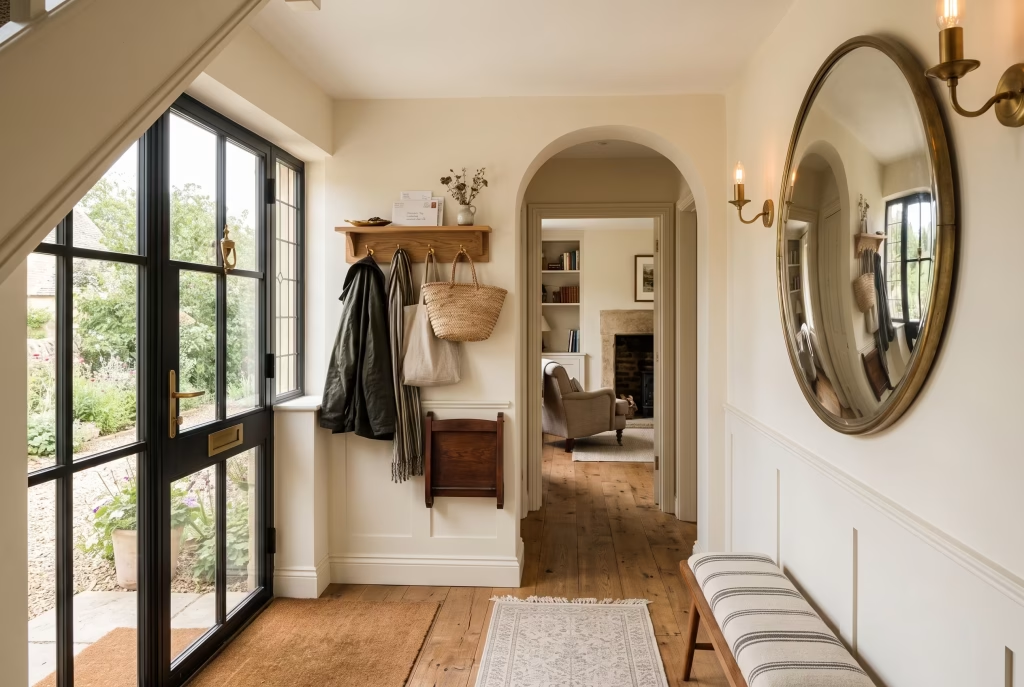
Colour does similar work, quietly, if you let it run past the hallway’s own walls rather than stopping dead at the first doorway. Carry the same tone, or a close cousin of it, into the room the hallway leads onto, and the eye stops registering a boundary at all.
You May also Like: 39 Stunning Victorian Hallway Design Ideas for a Timeless, Elegant Home
A hall that changes colour abruptly the second you’re through the door reads as small because it announces its own edges. One that flows into the next room, tonally at least, borrows that room’s volume for free, and the hallway feels considerably more generous than the tape measure would ever admit.
None of this is about making a small hall pretend to be something it isn’t. It’s about giving it the same ambition as its larger cousins, just executed with a lighter hand. A front door in matte black steel-look, with brass hardware chosen at a scale that suits a narrower frame rather than a grand one, sets exactly the same tone in a terrace as it would in a country house with rooms to spare. Ambition was never about the square footage. It was always about the thinking that went into it.
Common Mistakes to Avoid while designing English Country Entrance
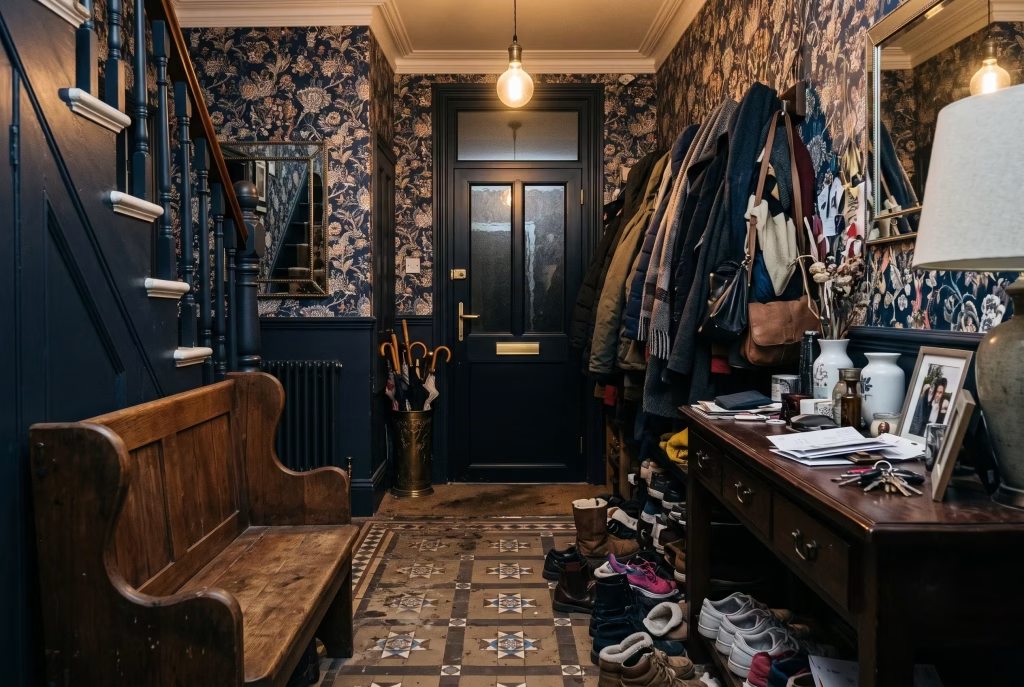
Most hallways don’t go wrong through neglect. They go wrong through a handful of well-meaning decisions made without seeing the room as a whole, and it’s worth walking through the usual suspects before you commit to anything permanent.
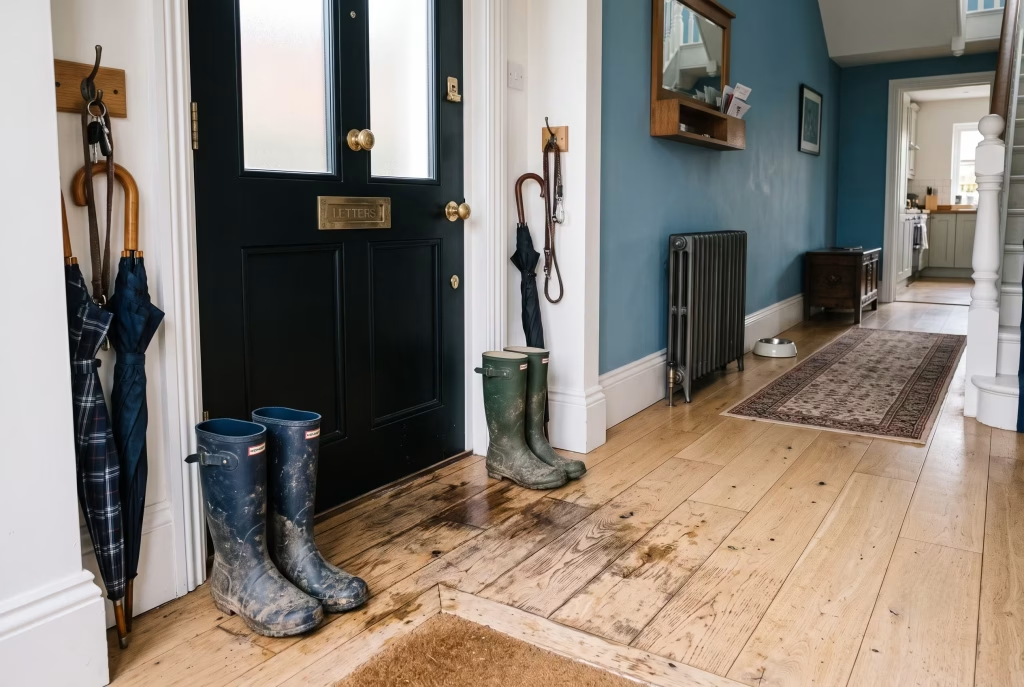
Treating the floor as purely decorative. A gorgeous run of pale timber straight through from the front door looks wonderful in a photograph and rather less wonderful six months later, once wet boots and dripping umbrellas have had their say. The floor nearest the door needs to survive the weather before it’s allowed to look beautiful. Skip that thinking and you’ll be re-laying it sooner than you’d like.
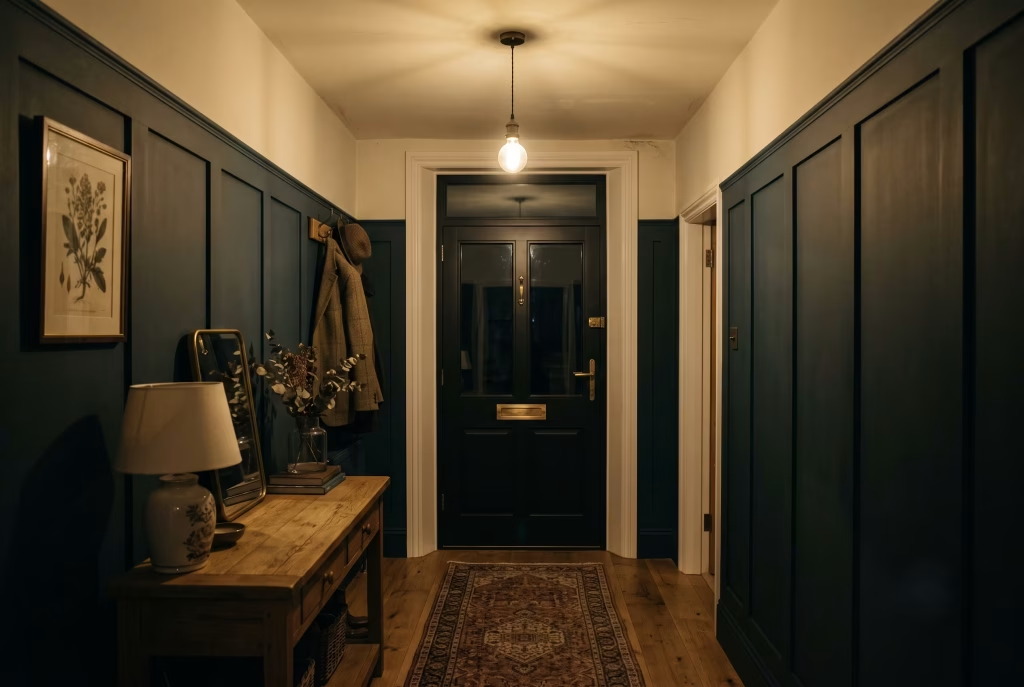
Choosing a single overhead bulb and calling it done. This is the fastest way to flatten a hallway that’s otherwise been thought through properly. One bulb, hung centrally, throws light straight down and leaves texture, colour, and character all looking curiously two-dimensional. Sconces along the walls and a well-placed pendant do the job a single fitting never can, layering the light rather than dumping it.
You May also Like: 25 Outdoor Lighting Ideas That Transform Gardens After Dark
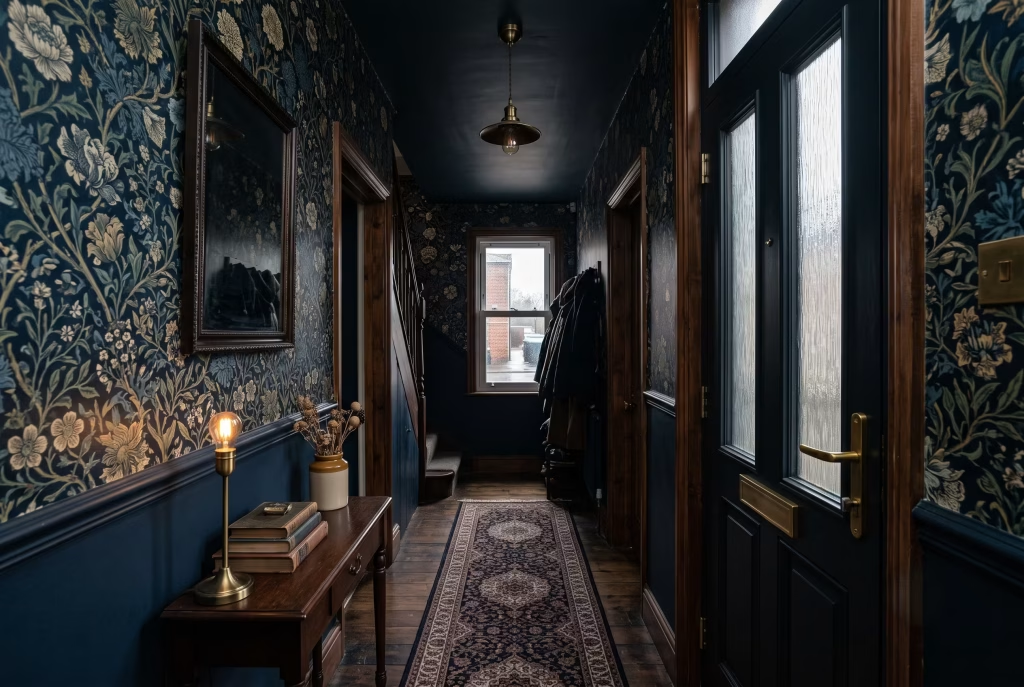
Going bold with colour or pattern without reading the room first. A deep, dramatic colour or a busy floral can look extraordinary in a generous hallway with decent natural light and feel like a wardrobe in a narrow, dim one. This isn’t a matter of taste going wrong, it’s proportion and light being ignored. Match the ambition of the colour to the room you actually have, not the one in the photograph you’re working from.
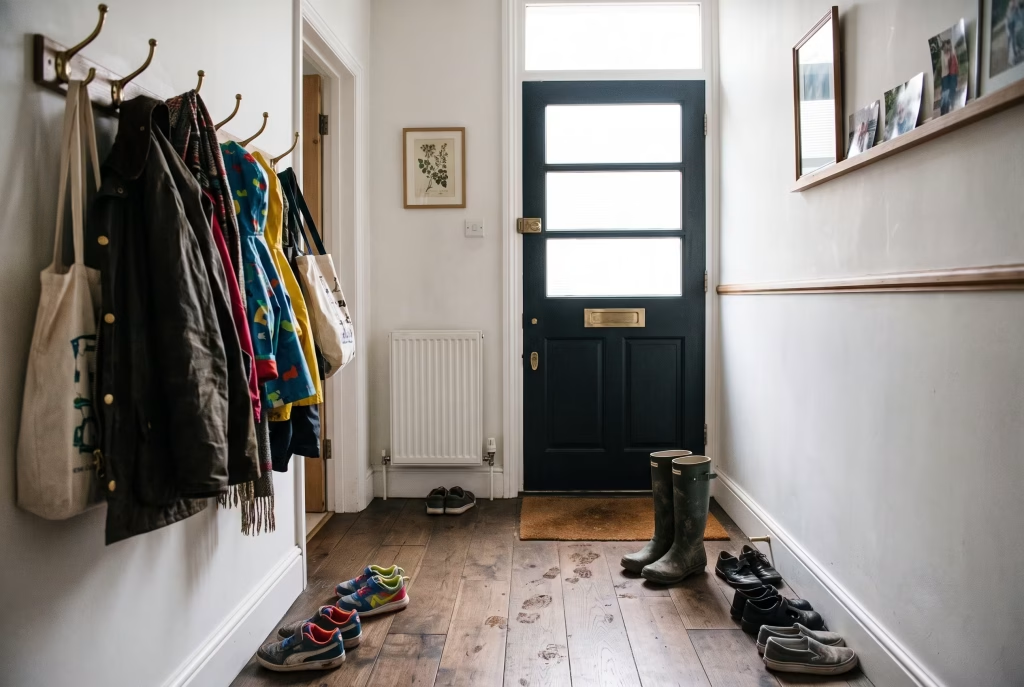
Leaving out the bench. It seems like the easiest thing to cut when space is tight, and it’s the mistake people regret fastest. Without somewhere to sit, boots don’t come off properly, and a floor that should stay clean starts collecting a trail of footprints instead. Even a slim, fold-away seat solves this far better than no seat at all.
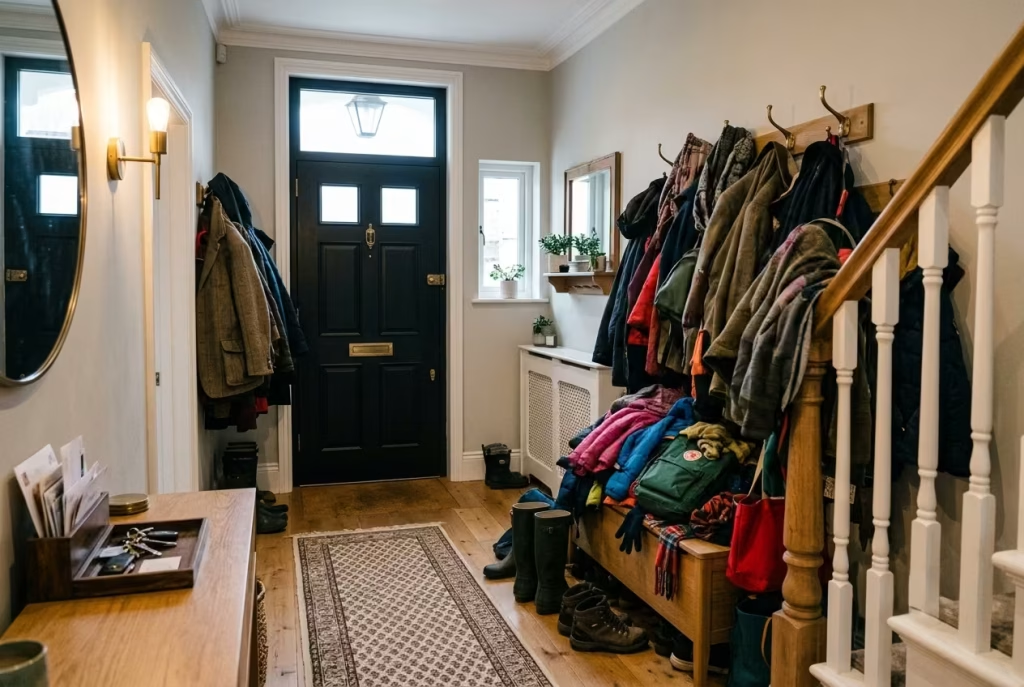
Skimping on coat hooks. Whatever number feels sufficient, it usually isn’t. Run out of hooks and coats migrate onto doorknobs, banisters, the back of the bench itself, and the whole room starts to feel cluttered through no fault of its furniture, simply a shortage of somewhere proper to hang things.
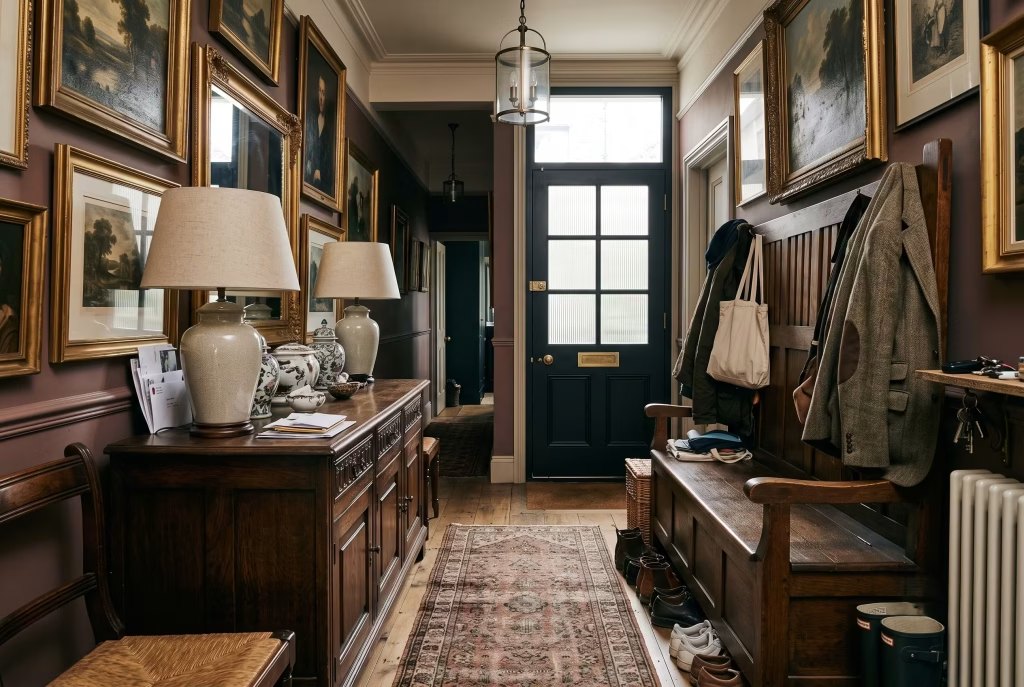
Copying a large hallway’s furniture plan into a small one. A full console and a deep bench read as generous in a spacious hall and as an obstacle course in a narrow one. Scale the furniture to the room rather than to the magazine spread it came from, and lean on tricks like a mirror facing the door or colour that carries into the next room, rather than cramming in pieces that were never meant for the space.
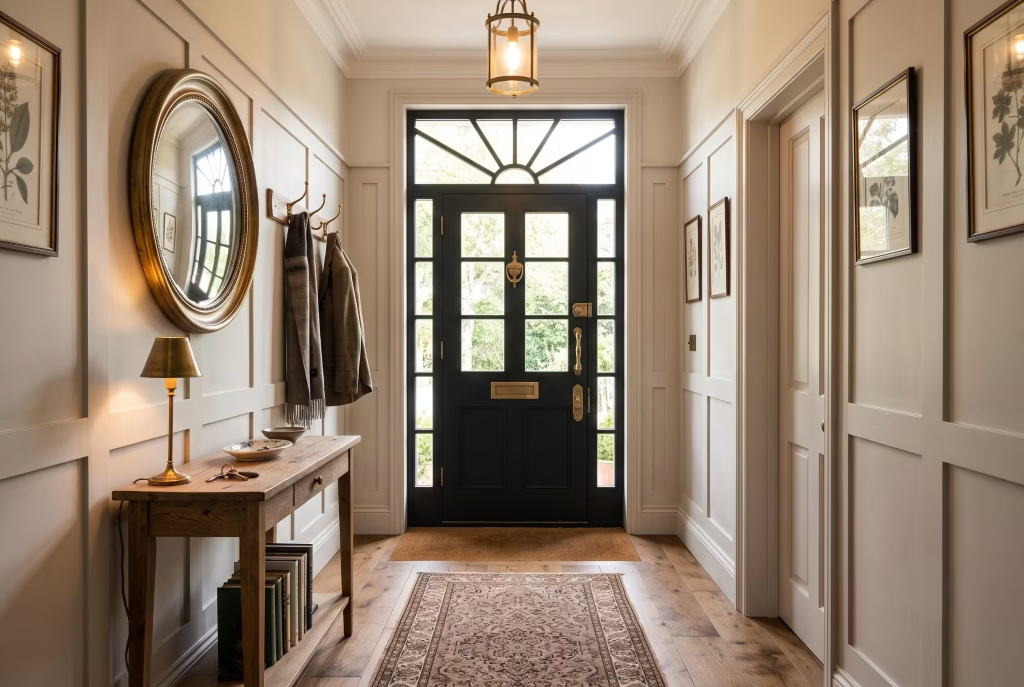
Ignoring the front door itself. People will happily spend a small fortune on the console and the runner and forget entirely that the door is doing the real talking before any of it’s even seen. A finish like matte black steel-look, with brass hardware that’s been chosen with some genuine care, sets the tone for everything that follows it. Neglect the door and the best-styled hallway in the world is still making its first impression with the wrong handshake.
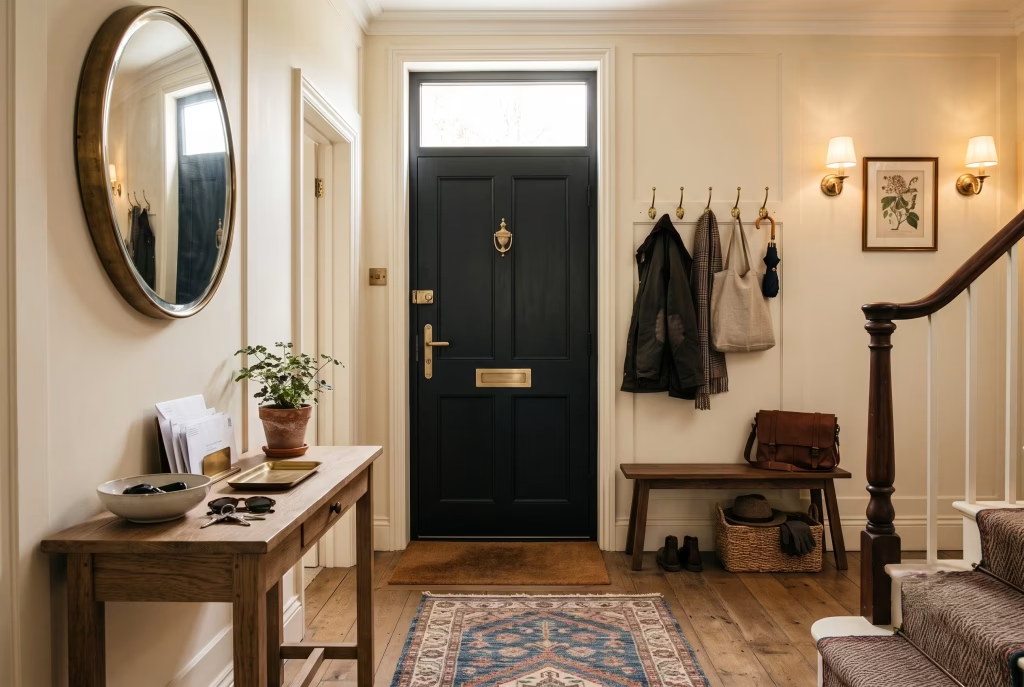
Forgetting that this room has two jobs, not one. It’s easy to style a hallway purely for the guest walking in and forget it’s also the room the homeowner meets every single morning on the way out. Design it for both moments, arrival and departure, and it earns its keep twice over rather than once.
You May also Like: 25 Indoor–Outdoor Living Room Ideas That Redefine Modern Living
Final thought: The First and Last Room
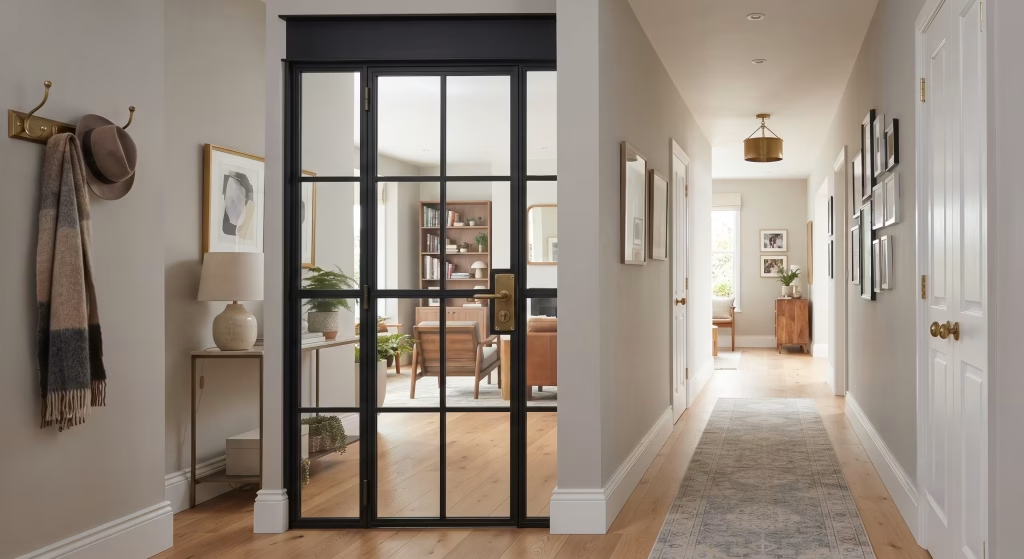
Here’s the thing nobody quite says out loud about a hallway: it’s the only room in the house that gets seen twice, at both ends of every single day, and it’s the one room most people spend the least time thinking about. Your guest meets it first, before they’ve met you, and it does the talking on your behalf for those first four or five seconds while you’re still fetching the kettle on. And it’s the room you meet last on your way out the door, coat half on, keys finally located, the house’s parting word before the street takes over.
That’s a lot of responsibility for a space most homeowners treat as an afterthought, a corridor to get through rather than a room to arrive in. But a hallway that’s been properly considered, floor that can take a soaking, walls that know when to hold back, furniture that’s earning its keep rather than just filling a corner, light that flatters instead of flattens, doesn’t just look better. It changes how the whole house feels to come home to, every single day, in a way that’s easy to underestimate until you’ve lived with one that gets it right.
None of this needed to cost the earth or take over a weekend. It needed someone to treat the hallway as a proper room rather than a leftover space, and to make a handful of decisions with some thought behind them rather than none at all. Get the door right, matte black steel-look, brass hardware with a bit of weight to it, and you’ve already told the house what kind of place it’s going to be before anyone’s stepped past the mat. Everything else in this piece is simply following that lead.
So don’t let the hallway be the room you decorate last, if you decorate it at all. It’s arguably the room doing the most work and getting the least credit, quietly holding the weather at bay, quietly keeping the chaos contained, quietly setting the tone for a house that hasn’t even properly started yet. Give it the attention it’s due, and it’ll return the favour every time you walk through that door, coming or going, for as long as you live there.
Frequently Asked Questions
Is it correct to call this room an “entryway”?
Not really, no, not if you’re aiming for accuracy over convenience. In everyday British usage this room is a hall or hallway, and “entryway” gives itself away as an American import the moment it’s said out loud to anyone who’s actually lived in one of these houses their whole life. It’s a minor point, but language tends to reveal how a room’s being thought about, and “hallway” treats the space as a proper room in its own right rather than a corridor you’re merely passing through.
What’s the difference between a hallway, a vestibule, a porch, and a foyer?
More than people assume. A vestibule is the small, formal in-between space you find in older terraces, often between two doors set one behind the other. A porch, properly speaking, is a modest covered shelter right at the front door itself, not the wraparound structure it might suggest elsewhere. A foyer is grander again, borrowed from hotel and theatre language and rarely a natural fit for a domestic front door, however often it turns up in estate agent copy. A hallway sits above all of these as the everyday, working term most homeowners actually reach for.
My house has no hallway at all, the front door opens straight into the living room. What do I do?
You’re not missing a room, you simply never had one. This is genuinely common in smaller Victorian terraces built without the space to spare for a proper hall. Rather than trying to squeeze in furniture that wants a full hallway’s worth of room, treat a stretch of wall by the door as its own defined zone, hooks, a slim shelf, perhaps a change of flooring to mark where the outside world psychologically ends. It’s a workaround rather than a compromise, and done with intention it reads as a deliberate choice rather than an improvised one.
Why is stone or tile flooring recommended over carpet for a hallway?
Because this room takes the hardest daily hammering in the house, wet boots, muddy paws, the odd dropped umbrella, and carpet simply isn’t built to shrug that off. Flagstone, reclaimed oak, and encaustic tile all handle moisture and wear far better, provided you accept the trade-offs that come with each, cold underfoot without a runner, years to build a proper patina, or a higher price tag for the real thing.
Do I need a runner rug if I’ve already got a good stone or wood floor?
Yes, and it’s doing more work than most people credit it for. A runner takes the edge off a cold floor, catches grit before it travels further into the house, and gives a long hallway a visual sense of direction. It’s one of the few purely decorative-looking additions in this room that’s actually pulling its weight functionally as well.
Why do old English cottages sometimes have such low doorways?
It’s a genuine historical detail rather than a myth, and it comes down to a mix of shorter average height in earlier centuries, a wish to retain heat in a room with no central heating to rely on, and structural lintels that simply weren’t built any taller than they needed to be. It’s not a design flaw to correct in an older property, it’s part of the house’s own honest history.
Is a dark, dramatic hallway colour a mistake in a small house? Not automatically, but it depends entirely on the room you’re actually working with rather than the one in the magazine photo. A deep bottle green or inky navy can look extraordinary in a hallway with generous proportions and decent natural light. Put that same colour into a narrow, dimly lit terrace hall and it can feel like a wardrobe rather than a statement. The colour isn’t the problem. Matching it to the right room is.
What’s the one piece of furniture people regret leaving out of a hallway?
A bench, more often than any other single item. Without somewhere to sit, boots don’t come off properly, and a floor that should stay clean starts collecting a trail of muddy footprints instead. Even a slim, unassuming bench solves this almost immediately.
How do I make a narrow or awkward hallway feel bigger without knocking down walls?
Two moves do most of the heavy lifting. A mirror hung to face the door bounces back natural light and suggests more depth than the room actually has, particularly a convex one. And carrying the same colour, or a close cousin of it, from the hallway into the room beyond stops the eye registering a hard boundary, so the space borrows a sense of generosity from whatever it leads into.
Does the front door itself really matter as much as the styling inside?
Genuinely, yes. The door sets the tone before anyone’s even crossed the threshold. A finish like matte black steel-look, paired with brass hardware chosen with some weight and care, tells a visitor what kind of house they’re stepping into, and that first impression colours how everything beyond it gets read. Get the door right and the hallway inside it has something solid to build on rather than something to make up for.