


60 Italian Bedroom Design Ideas: Stunning Styles, Colours & Decor Inspiration
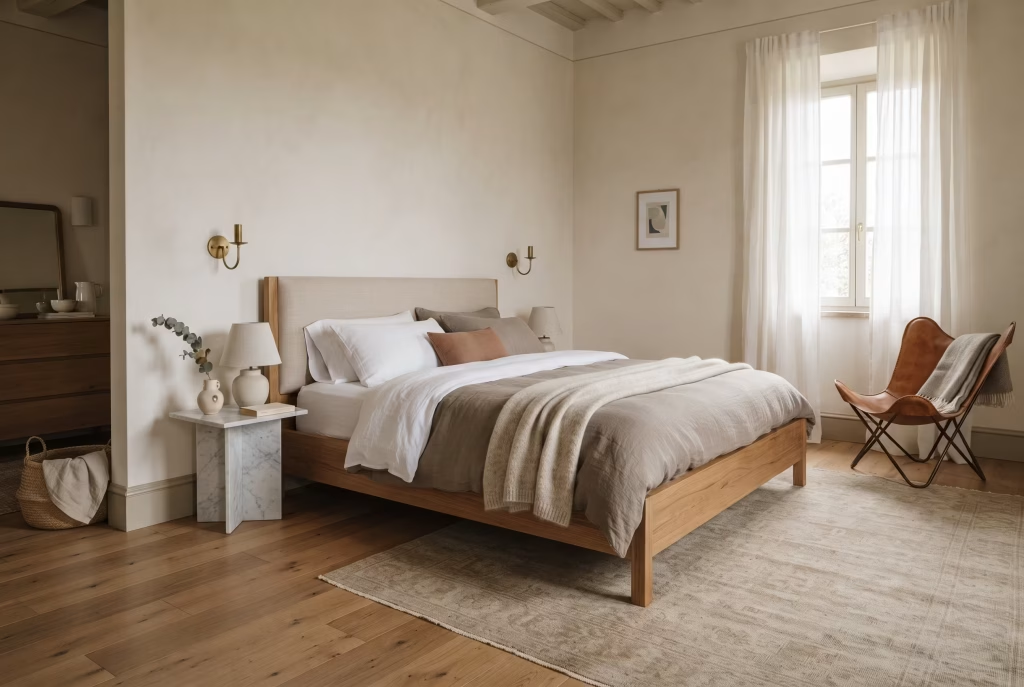
Quick answer: An Italian bedroom rests on warm neutrals, natural materials (solid wood, marble, linen, leather) and a small handful of well-chosen statement pieces rather than a room stuffed to the rafters. You can build the look at almost any price point, from a £6 tester pot of terracotta paint right through to a bespoke Poliform wardrobe, and it suits a one-bed rental just as happily as a rambling farmhouse. The secret isn’t spending more. It’s spending on the right things, and knowing when to stop.
Why This Style Refuses to Go Away
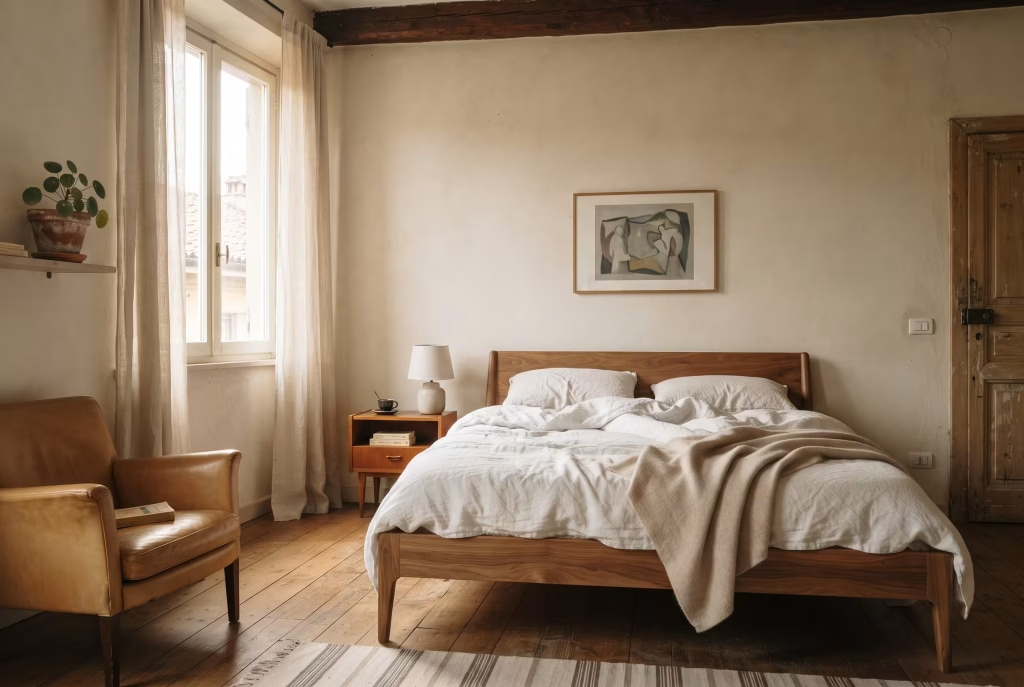
There’s a reason Italian interiors keep sneaking back into fashion, no matter how many times a design blog declares them finished. Step into a bedroom done properly in this style and the furniture isn’t the first thing you notice. It’s the feeling: unhurried, softened at the edges, faintly perfumed with espresso and old wood, the sort of room that makes you want to sit down before you’ve even taken your coat off. That’s the whole trick of it. Italian design has never been about piling on ornament until a room groans under its own good taste. It’s restraint wearing a very good disguise.
We pulled apart seven of the biggest “Italian bedroom” guides currently ranking (including one that promises 60 ideas and delivers roughly forty vague paragraphs, which tells you most of what you need to know about the competition) and found a consistent pattern: plenty of pretty photographs, precious little you could actually use on a Tuesday afternoon. No real costs. No honest advice on small rooms. No answer to the question everyone’s actually typing into Google, which is some version of “is this dated, and will it work in my flat?”
So here are 60 genuinely distinct ideas, not the same four photographs described sixty different ways with a fresh coat of adjectives. Every single one comes with a steer on cost, upkeep, and how it actually feels to live with day in and day out, because a bedroom you only admire from the doorway isn’t earning its keep.
Italian, Tuscan or Mediterranean? Untangle This First
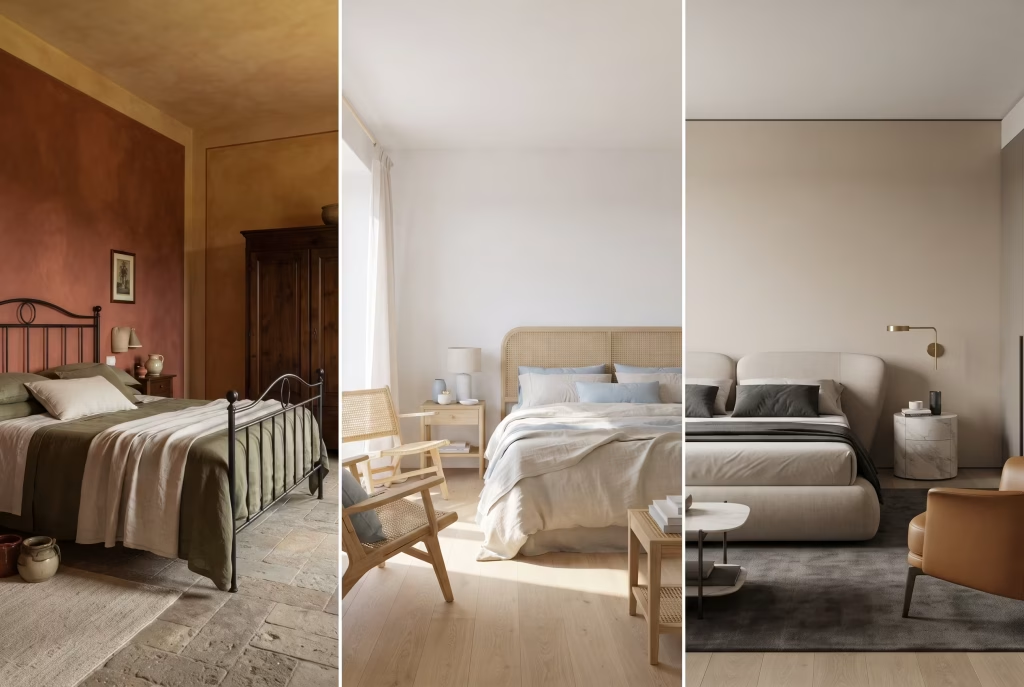
Half the confusion swirling around “Italian bedroom style” comes down to three related-but-distinct looks getting lumped together under one banner. Sort the terminology out before you buy a single thing, or you’ll end up with a room that’s quietly arguing with itself.
| Style | Geographic root | Colour mood | Signature materials | Overall feel |
| Tuscan | Italian countryside only (hills, vineyards, olive groves) | Warm ochre, terracotta, olive, sienna | Wrought iron, dark wood, stone, hand-thrown ceramics | Rustic, grounded, a touch theatrical |
| Mediterranean | Spain, Greece, Morocco and Italy combined (coastal) | White, sky blue, sand, turquoise | Whitewashed plaster, rattan, light oak, linen | Breezy, sun-bleached, informal |
| Modern Italian | Milan and the northern cities | Cream, taupe, charcoal, muted jewel tones | Marble, brass, leather, lacquer | Sleek, tailored, quietly expensive |
If your imagination runs straight to rolling Tuscan hillsides, lean into darker wood and terracotta. If it runs to the Amalfi coastline instead, go lighter, brighter and considerably breezier. Here’s a genuinely useful budget note most guides skip entirely: Mediterranean styling is usually the cheaper of the two to pull off, since it leans on simple plaster, linen and pale wood, whereas Tuscan style asks for the heavier (and pricier) stuff: real stone, dark timber, hand-forged iron.
Is Italian Bedroom Style Dated in 2026, or Genuinely Back?
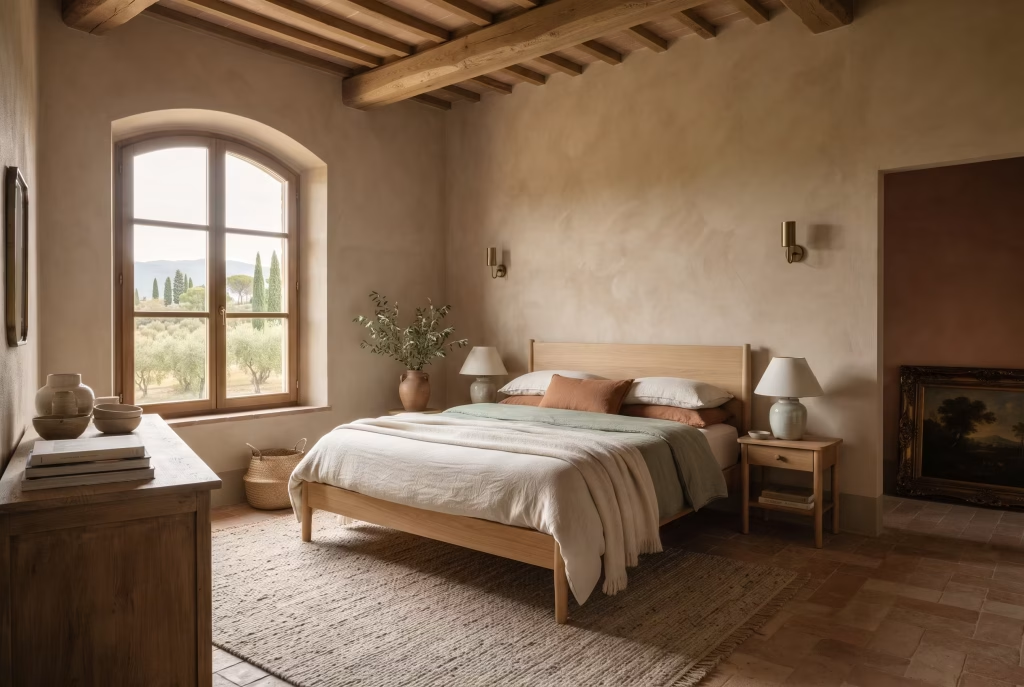
Honest answer: both, depending entirely on how it’s done. The heavy, early-2000s American take on “Tuscan” (glazed cabinets, dark cherry wood, gold-sponged walls, faux-finish everything within arm’s reach) fell out of favour for good reason. It was fussy. It was theatrical. It made small rooms feel like they’d been shrunk in the wash.
But 2026 has brought a genuine, well-documented revival, and it’s worth taking seriously rather than filing under “another TikTok trend that’ll be dead by spring.” Designers describe it as the same warmth and craftsmanship, stripped back and rebuilt with a considerably lighter hand: fewer flourishes, cleaner lines, materials left to do the talking instead of ornate carving and gold leaf shouting over the top of them. Think authentic Italian countryside living rather than a themed restaurant chain trying its best. That distinction, heavy old Tuscan versus light new Tuscan, is arguably the single most useful thing to grasp before you pick up a paintbrush.
The tell-tale signs of “dated” Tuscan you’ll want to avoid:
- Glazed, orange-toned kitchen cabinets bleeding into bedroom furniture finishes
- Dark cherry wood used everywhere, with no lighter material to balance it
- Gold sponge-painted or rag-rolled walls (a genuinely divisive 2000s technique)
- Faux stone or faux stucco panelling that reads as obviously fake up close
- Oversized, bulky furniture that swallows a room whole
What the lighter 2026 version keeps instead:
- Real materials wherever the budget allows: solid wood over veneer, real plaster over printed wallpaper
- A restrained palette: two or three colours maximum, not six competing for attention
- Cleaner furniture silhouettes, even within an otherwise traditional piece
- Texture doing the work that ornamentation used to do
The Psychology of an Italian Bedroom (Why It Works on You Quietly)
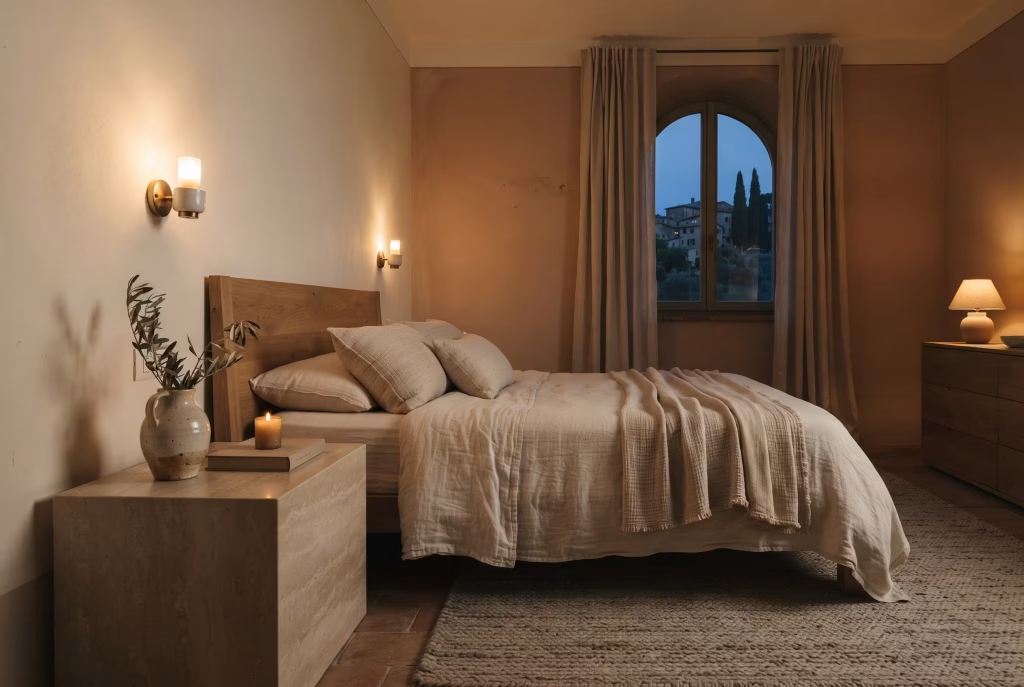
There’s more going on here than good taste. A handful of genuine, evidence-backed things about this style change how a room feels to actually sleep in, not just look at:
- Warm colour temperature calms the nervous system. Ochres, terracottas and warm creams sit closer to candlelight on the colour spectrum than stark white does, which goes some way to explaining why these rooms feel instantly relaxing rather than clinical, even before you’ve registered a single piece of furniture.
- Natural materials trigger a subconscious “this is real” response. Solid wood, marble and linen read as authentic and considered in a way that veneer and polyester never quite manage, even to people who couldn’t articulate why one feels better under the hand than the other.
- Fewer, better objects reduce visual noise. Clutter has been linked to raised cortisol and poorer sleep quality. An Italian bedroom’s instinct toward one or two statement pieces rather than twenty small ones isn’t just an aesthetic preference, it’s genuinely restful on a level you feel more than you see.
- Layered, warm lighting mimics evening light. Italian interiors rarely lean on a single harsh overhead bulb to do all the work. Table lamps, sconces and dimmers together signal to your body that it’s time to wind down, in much the same way dimming the lights in a restaurant tells you to relax and stay a while.
- Scent and touch finish the job that colour starts. Linen, aged wood and a well-placed candle all add a sensory layer that photographs can never capture but that your body clocks the moment you walk through the door.
Keep this thread running as you work through the ideas below. The best ones aren’t merely photogenic. They’re doing quiet psychological work every single time you cross the threshold, whether you clock it consciously or not.
60 Ideas at a Glance
| # | Idea | Zone | Cost tier |
| 1 | Terracotta feature wall | Old World | Budget–Mid |
| 2 | Wrought-iron bed frame | Old World | Mid |
| 3 | Exposed wooden ceiling beams | Old World | High (structural) |
| 4 | Hand-painted fresco ceiling | Old World | High |
| 5 | Venetian plaster walls | Old World | Mid–High |
| 6 | Carved wooden headboard | Old World | Mid |
| 7 | Low-profile platform bed | Modern | Mid |
| 8 | Handleless lacquer wardrobe | Modern | High |
| 9 | Monochrome taupe palette | Modern | Budget–Mid |
| 10 | Sculptural pendant lighting | Modern | Mid |
| 11 | Streamlined brass sconces | Modern | Budget–Mid |
| 12 | Minimalist floating nightstands | Modern | Budget |
| 13 | Quilted velvet headboard | Luxury | Mid–High |
| 14 | Crystal chandelier centrepiece | Luxury | High |
| 15 | Marble-topped dresser | Luxury | High |
| 16 | Silk and cashmere throws | Luxury | Mid |
| 17 | Gold-framed Venetian mirror | Luxury | Mid–High |
| 18 | Leather-upholstered bench | Luxury | Mid–High |
| 19 | Whitewashed wood furniture | Coastal | Budget–Mid |
| 20 | Sheer linen curtains | Coastal | Budget |
| 21 | Hand-painted ceramic accents | Coastal | Budget–Mid |
| 22 | Azure and ivory palette | Coastal | Budget |
| 23 | Rattan accent chair | Coastal | Budget–Mid |
| 24 | Arched window framing | Coastal | High (structural) |
| 25 | Reclaimed wood headboard | Farmhouse | Budget–Mid |
| 26 | Stone or brick accent wall | Farmhouse | Mid–High |
| 27 | Woven jute or wool rug | Farmhouse | Budget |
| 28 | Wrought-iron wall sconces | Farmhouse | Budget–Mid |
| 29 | Vintage wooden trunk | Farmhouse | Budget |
| 30 | Potted olive tree | Farmhouse | Budget |
| 31 | Wall-mounted folding desk | Small-space | Budget–Mid |
| 32 | Floor-to-ceiling mirror | Small-space | Budget–Mid |
| 33 | Storage ottoman bed | Small-space | Mid |
| 34 | Freestanding upholstered headboard panel | Small-space/Rental | Budget |
| 35 | Peel-and-stick terracotta wallpaper | Rental | Budget |
| 36 | Removable picture rail moulding | Rental | Budget |
| 37 | Terracotta and cream pairing | Colour | Budget |
| 38 | Sage green and warm white | Colour | Budget |
| 39 | Deep walnut and blush | Colour | Mid |
| 40 | Navy and gold accents | Colour | Mid |
| 41 | Olive and ivory | Colour | Budget |
| 42 | Rust and dusty blue | Colour | Budget–Mid |
| 43 | Solid walnut nightstands | Materials | Mid |
| 44 | Full-grain leather headboard | Materials | High |
| 45 | Hand-loomed linen bedding | Materials | Mid |
| 46 | Travertine bedside lamps | Materials | Mid |
| 47 | Boucle or velvet armchair | Materials | Mid |
| 48 | Cane and rattan wardrobe doors | Materials | Mid |
| 49 | Ferrari-red accent wall | Kids/Teen | Budget |
| 50 | Venetian-mask inspired art | Kids/Teen | Budget |
| 51 | Modular colourful storage | Kids/Teen | Budget–Mid |
| 52 | Mini Baroque-style bed frame | Kids/Teen | Mid |
| 53 | Café-nook study corner | Kids/Teen | Budget–Mid |
| 54 | Tuscan-landscape wall mural | Kids/Teen | Budget–Mid |
| 55 | Chalk-painted upcycled dresser | DIY/Budget | Budget |
| 56 | DIY limewash accent wall | DIY/Budget | Budget |
| 57 | Thrifted gilt mirror refresh | DIY/Budget | Budget |
| 58 | Layered bedding on a budget | DIY/Budget | Budget |
| 59 | Dried lavender and olive branches | DIY/Budget | Budget |
| 60 | Warm bulb swap (colour temperature reset) | DIY/Budget | Budget |
Old World vs Modern Italian: Which Suits You?
| Feature | Old World Italian | Modern Italian |
| Colours | Warm neutrals, gold, deep browns | Cool neutrals, taupe, charcoal |
| Furniture | Ornate, carved, richly detailed | Sleek, minimal, low-profile |
| Materials | Wood, wrought iron, aged plaster | Marble, glass, brushed metal |
| Best for | Period properties, larger rooms | New builds, apartments, compact rooms |
| Overall feel | Rich, traditional, romantic | Clean, tailored, restrained |
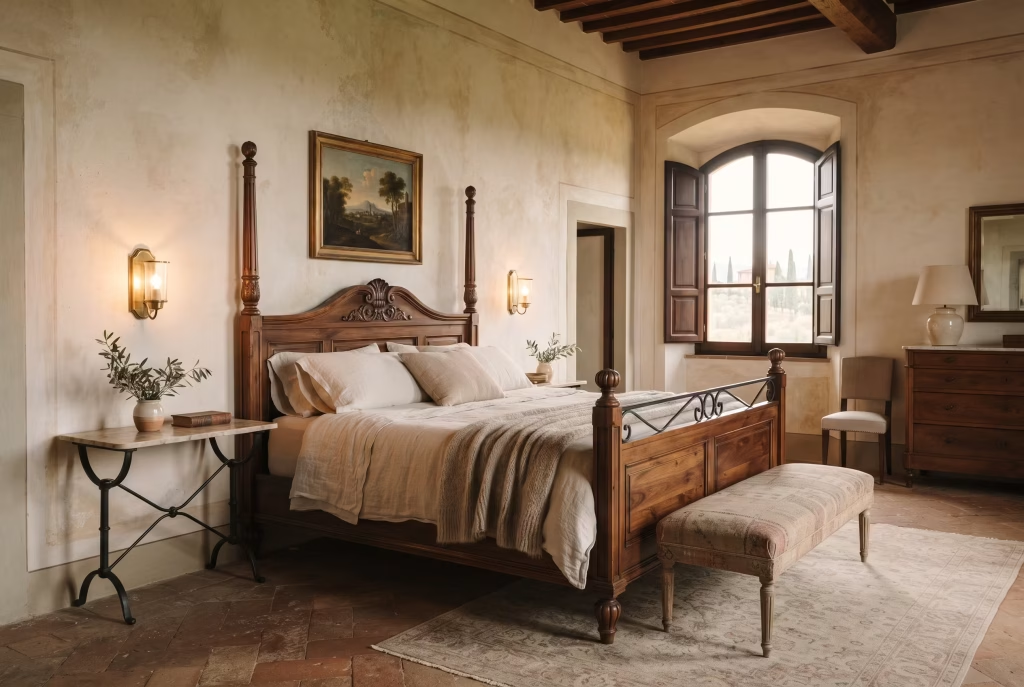
Neither version is more “authentically” Italian than the other, whatever a certain type of interiors purist might tell you at a dinner party. Milan’s design scene has been quietly, confidently minimalist for decades. It’s the countryside that gave the world the ornate, candlelit version most people picture first when you say the words “Italian bedroom.”
Colour Palettes That Actually Work
| Palette | Best paired accents | Mood created |
| Cream, beige, gold | Deep brown, bronze | Warm, elegant, classic |
| White, grey, navy | Black, brass | Clean, minimal, calm |
| Terracotta, olive, rust | Cream, dark wood | Cosy, grounded, earthy |
| Soft grey, ivory | Metallic accents | Sophisticated, hushed luxury |
| Azure, ivory, sand | Weathered wood | Breezy, coastal, relaxed |
A rule of thumb worth pinning above your paint chart: pick one dominant warm neutral, one earthy or coastal accent, and a single metallic. Stray beyond that and even the most carefully considered palette starts to resemble a mood board nobody ever got round to editing down.
Old World & Classic Tuscan (1–6)
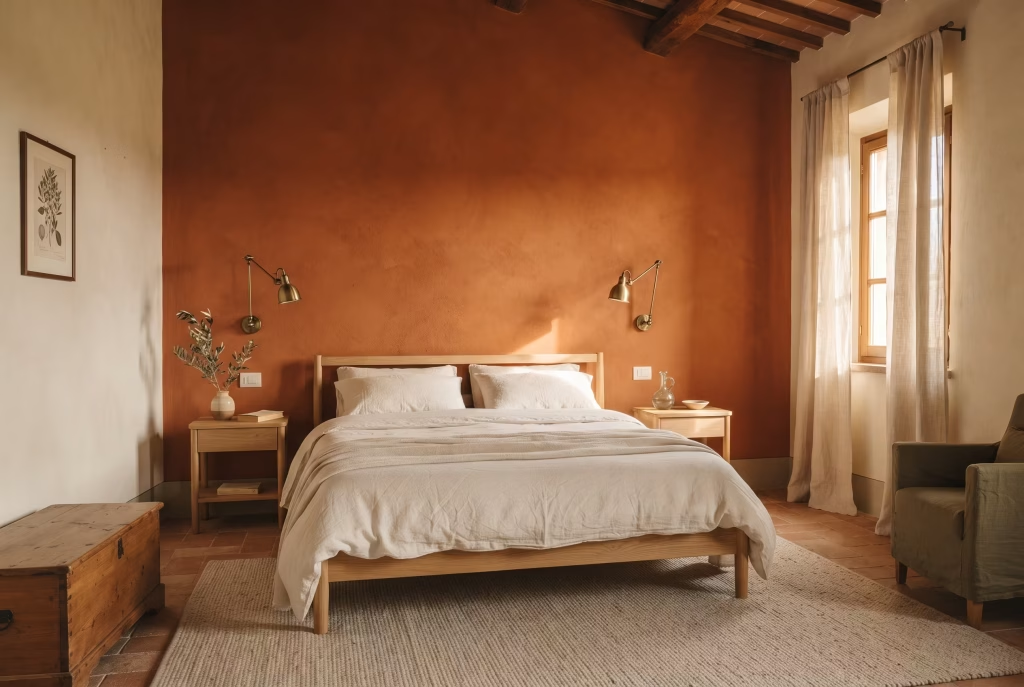
1. Terracotta feature wall Paint or plaster a single wall in a genuine burnt-orange terracotta, not the pale, apologetic peach that too often passes for it on paint charts. Keep the remaining three walls in a warm cream so the terracotta reads as a deliberate statement rather than a colour swatch gone rogue. This is the single fastest way to inject Tuscan warmth into a room without touching a single piece of furniture. Cost and upkeep: A tester pot costs next to nothing and a full wall is a weekend’s honest work for two people. Terracotta paint also happens to disguise scuffs far better than white, a small mercy if you’ve a headboard that keeps knocking against the plaster.
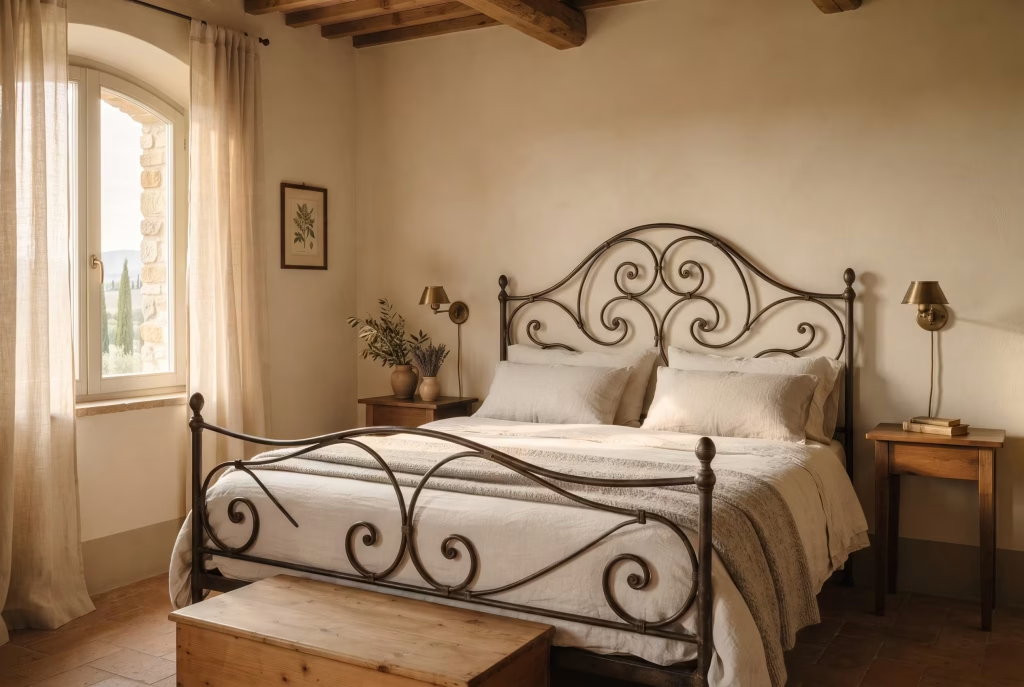
2. Wrought-iron bed frame The scrollwork headboard is arguably the single most recognisable piece of Italian bedroom furniture there is, instantly evocative of countryside villas and centuries-old craftsmanship. Hunt down hand-forged rather than mass-produced cast pieces where your budget allows: the join lines and slight irregularities are what give it away, and they’re exactly what make it feel like a genuine heirloom rather than a flat-pack impression of one. Worth knowing: Iron frames need only an occasional wipe to stop dust settling into the scrollwork, but structurally they’re near enough indestructible and will comfortably outlast every other piece of furniture in the room, your grandchildren included.
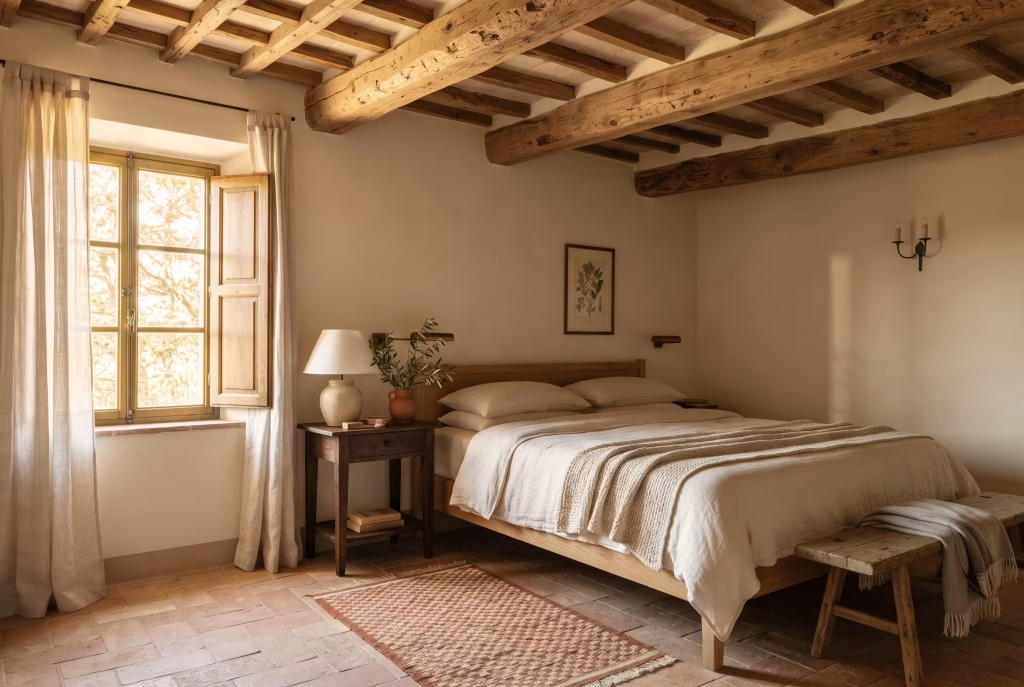
3. Exposed wooden ceiling beams If you’re fortunate enough to have original beams lurking under a layer of plaster or paint, resist any urge to disguise them further. If you’re not so lucky, faux beam cladding has come on leaps and bounds in recent years and can be fitted over a weekend without a single structural alteration to your actual ceiling. Real cost: Genuine structural beams aren’t something you bolt on after the fact, that’s a renovation-stage decision. Faux beam kits, by contrast, start from a few hundred pounds for a modest room, a fraction of what a full structural job would set you back.
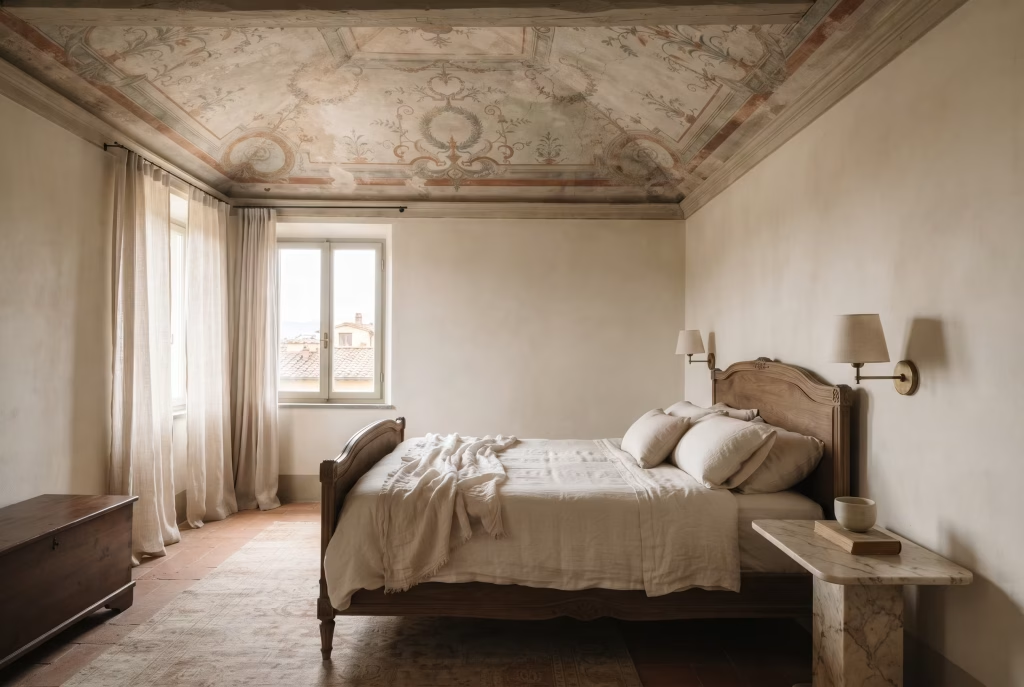
4. Hand-painted fresco ceiling This is the boldest move on the entire list, and not one to attempt on a whim. A muted, gently aged-looking painted ceiling, think faded cherubs, a soft floral composition, or a simple decorative border, turns an ordinary bedroom into something that wouldn’t look out of place in a Florentine palazzo. A word to the wise: Commission a muralist rather than trying your hand at this yourself unless you’re a genuinely accomplished painter. A botched fresco is considerably harder to disguise than a botched wall, and you’ll be looking at it every night before you fall asleep.
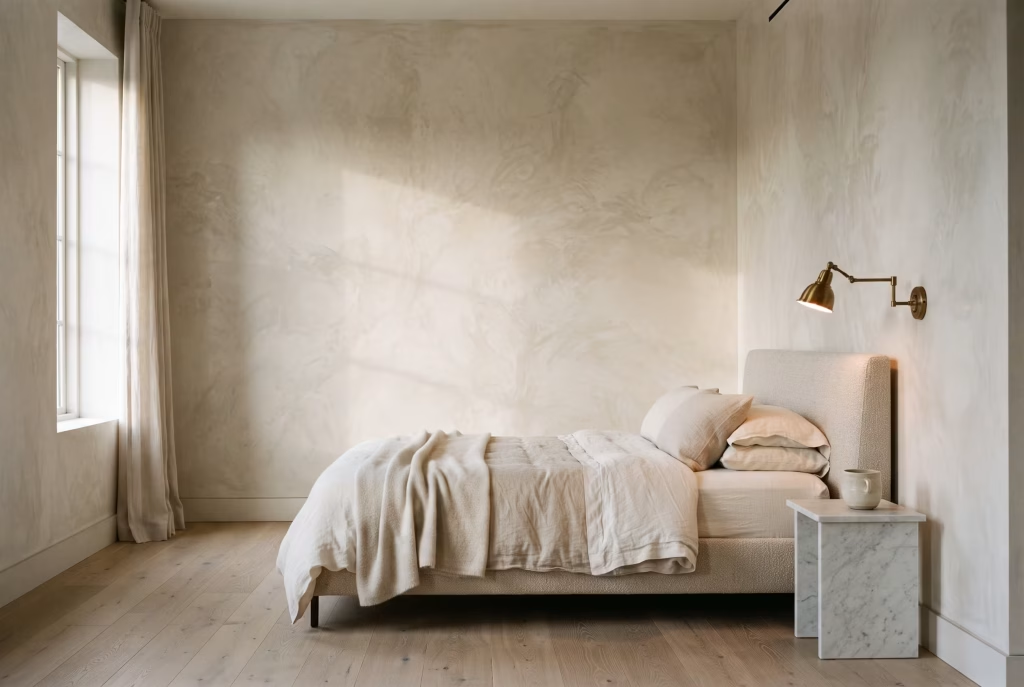
5. Venetian plaster walls Polished plaster with a soft, marbled sheen catches light in a way flat paint never manages, shifting subtly in tone across the day as the sun moves. It’s slow, skilled work to apply properly, which is precisely why it reads as expensive even when the material cost itself is fairly modest. How it feels to live with: The surface has genuine tactile depth under lamplight and forgives small dents and scuffs far better than paint does. Real prices in the UK currently sit around £90 to £150 per square metre supplied and applied, meaning a typical feature wall lands somewhere between £900 and £1,800 depending on complexity and colour.
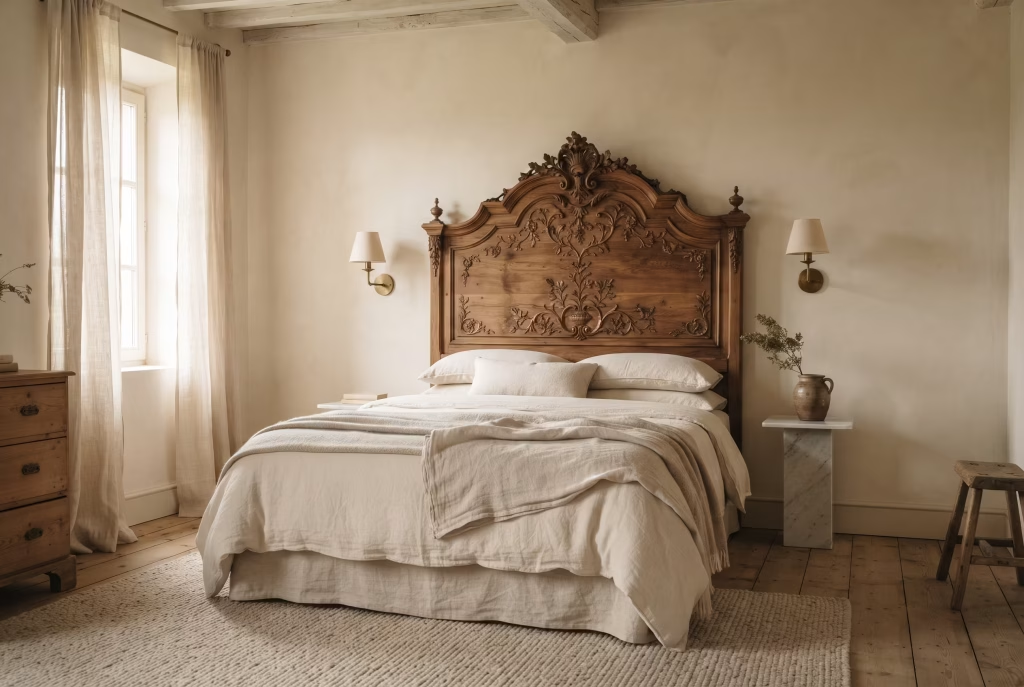
6. Carved wooden headboard A solid wood headboard with genuine hand-carved detailing, scrolling vines, simple geometric relief, or a classic arched top, anchors an entire room the moment you walk in. Walnut and mahogany both age beautifully, deepening in colour rather than looking merely older with every passing year. Cost and upkeep: Expect to pay a premium for true hand-carving over machine-routed equivalents, but a proper solid-wood piece is a once-a-decade purchase, not a five-year one, and it’s the sort of thing that gets handed down rather than replaced.
Modern & Minimalist Italian (7–12)
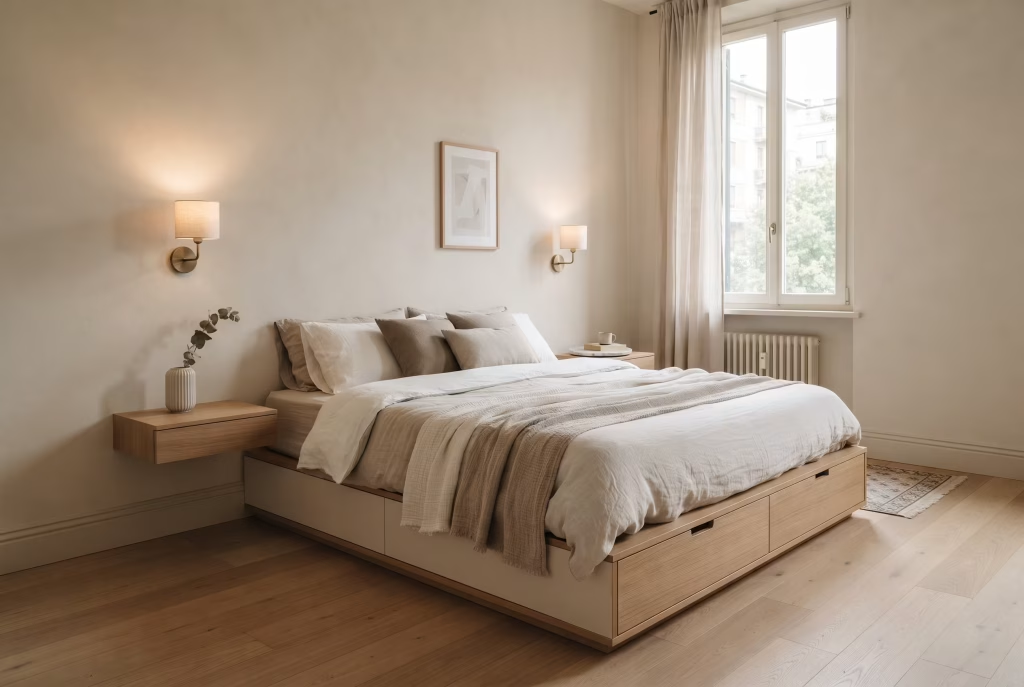
7. Low-profile platform bed Milanese apartments have long favoured beds that sit close to the floor, often with clever hidden storage drawers built beneath. The low line does double duty, making ceilings feel taller by comparison, a genuinely handy trick in older flats with modest headroom and awkward proportions. Worth knowing: Built-in storage adds meaningfully to the price tag, but in a smaller room it can quietly replace an entire chest of drawers, which more than pays for itself in reclaimed floor space.
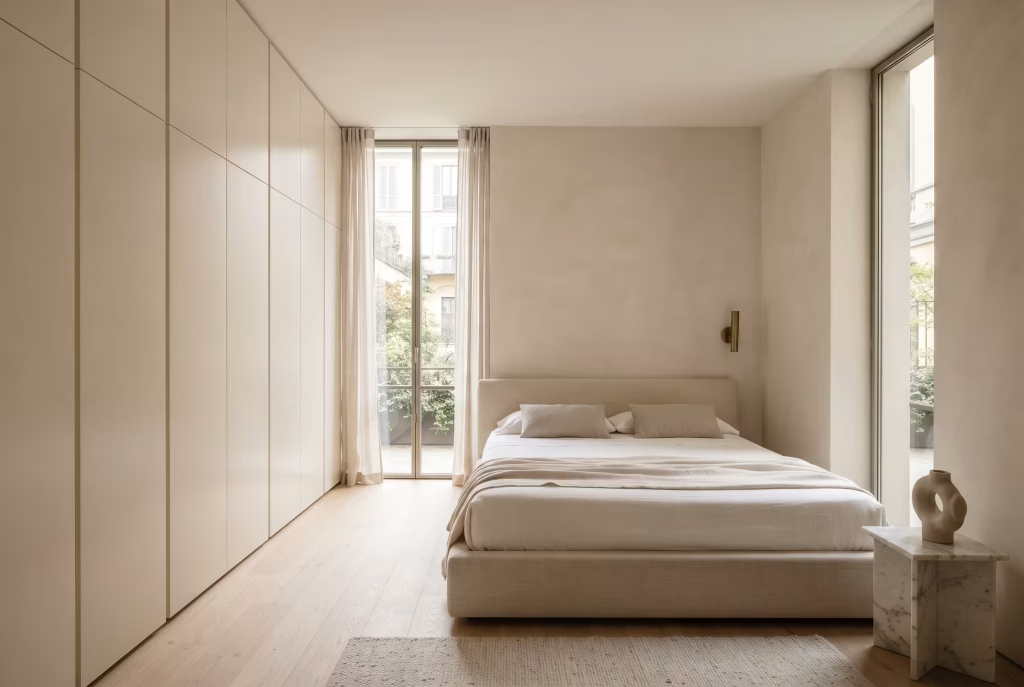
8. Handleless lacquer wardrobe Push-to-open mechanisms paired with a glossy lacquer finish give a wardrobe the look of a single sculptural block rather than a functional box for storing socks. It’s a favourite trick of high-end Italian brands for exactly that reason: no visible hardware means nothing to break the illusion. Real cost: This sits firmly at the pricier end of the wardrobe spectrum, no getting around that, but the visual payoff, a wall that reads as architecture rather than storage, is considerable and genuinely changes how the whole room feels.
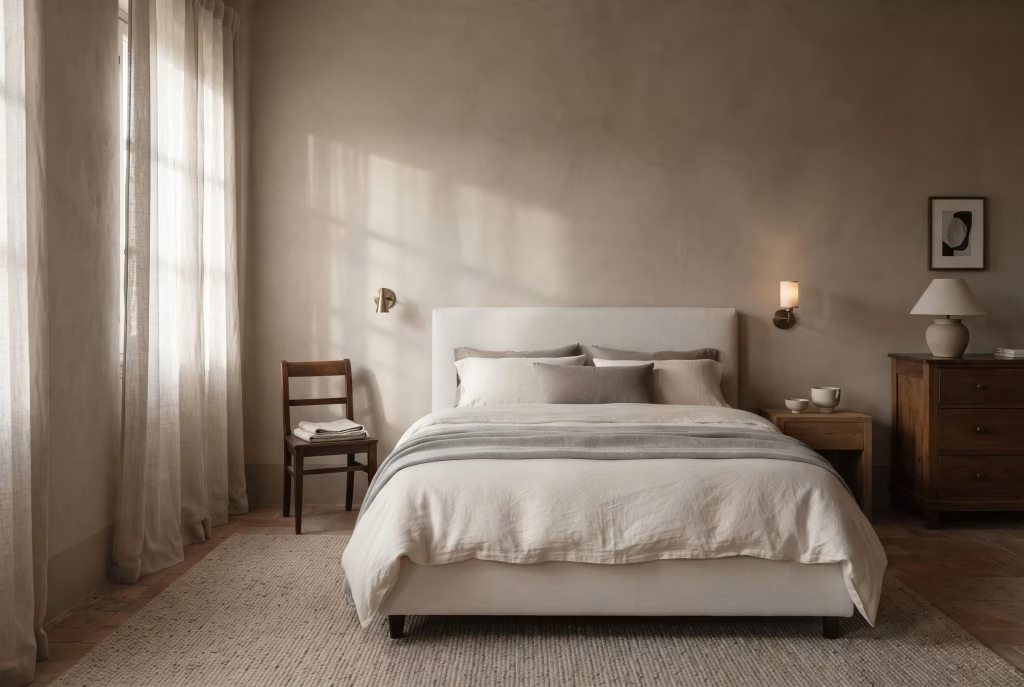
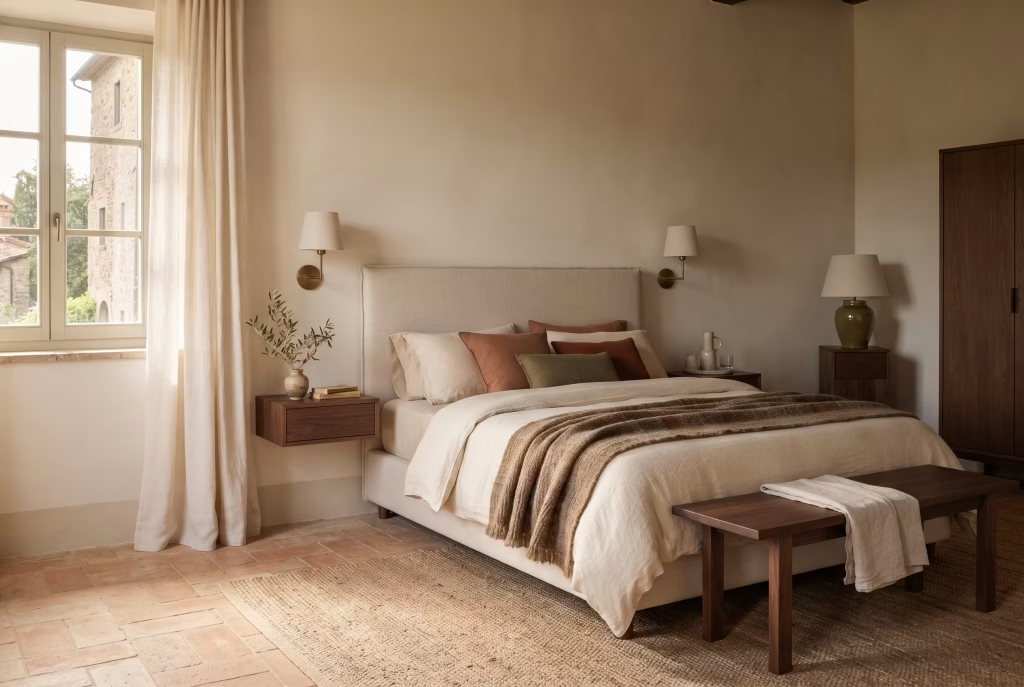
9. Monochrome taupe palette Taupe, warm grey and off-white together create a backdrop so calm it borders on meditative, the interiors equivalent of a deep, unhurried breath. It’s also forgiving of mismatched existing furniture, a smart choice if you’re updating a room gradually rather than replacing everything in one exhausting weekend. Cost and upkeep: This is one of the cheapest ideas on the entire list, achievable with paint alone and requiring not a single new piece of furniture, which makes it the obvious starting point for anyone working with a genuinely tight budget.
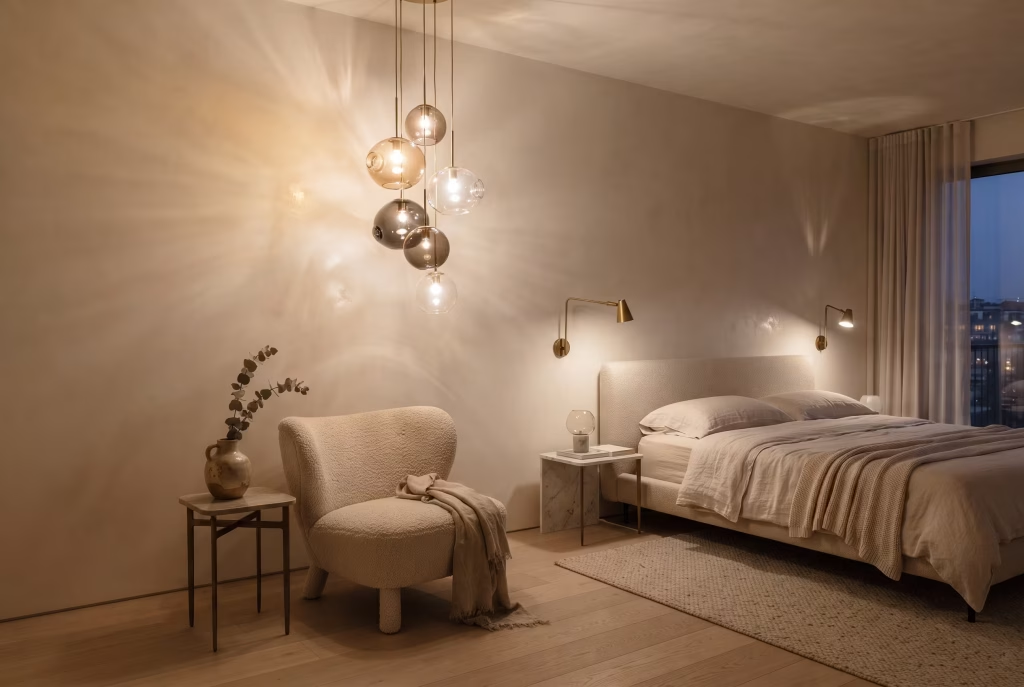
10. Sculptural pendant lighting Swap a single flat central ceiling light for a sculptural pendant with real presence, think blown glass spheres or an asymmetric metal form that catches the eye from any angle. It does double duty as lighting and as art, and frankly does the job better than most actual artwork. A word to the wise: Hang it slightly off-centre, perhaps over a reading chair or the far corner of the bed, rather than dead-centre in the room. That single decision reads as considerably more intentional than centring it out of habit.
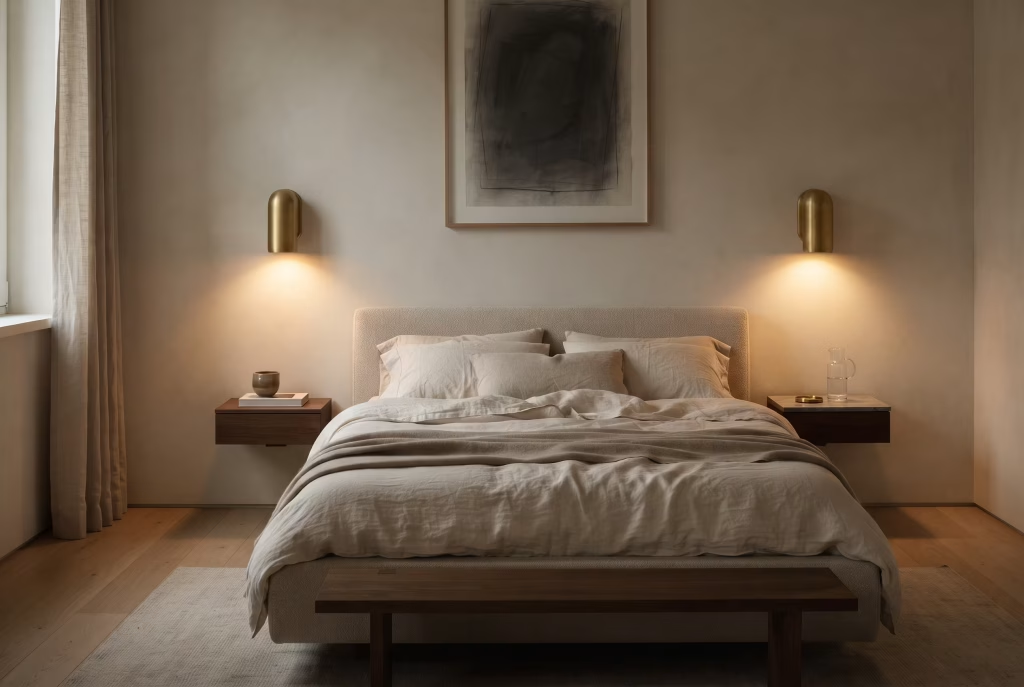
11. Streamlined brass sconces Wall-mounted brass sconces either side of the bed free up nightstand space entirely and cast a warmer, more flattering light than any table lamp manages from below. Choose a simple, unfussy shape to keep the modern-Italian restraint intact rather than tipping into ornate territory by accident. Cost and upkeep: Hardwired sconces need an electrician, which adds to the upfront cost, but plug-in versions with a deliberately visible cord are a genuinely good workaround if rewiring isn’t on the cards. Unlacquered brass will develop a natural patina over time rather than staying mirror-bright, which some people love and others find worth sealing against.
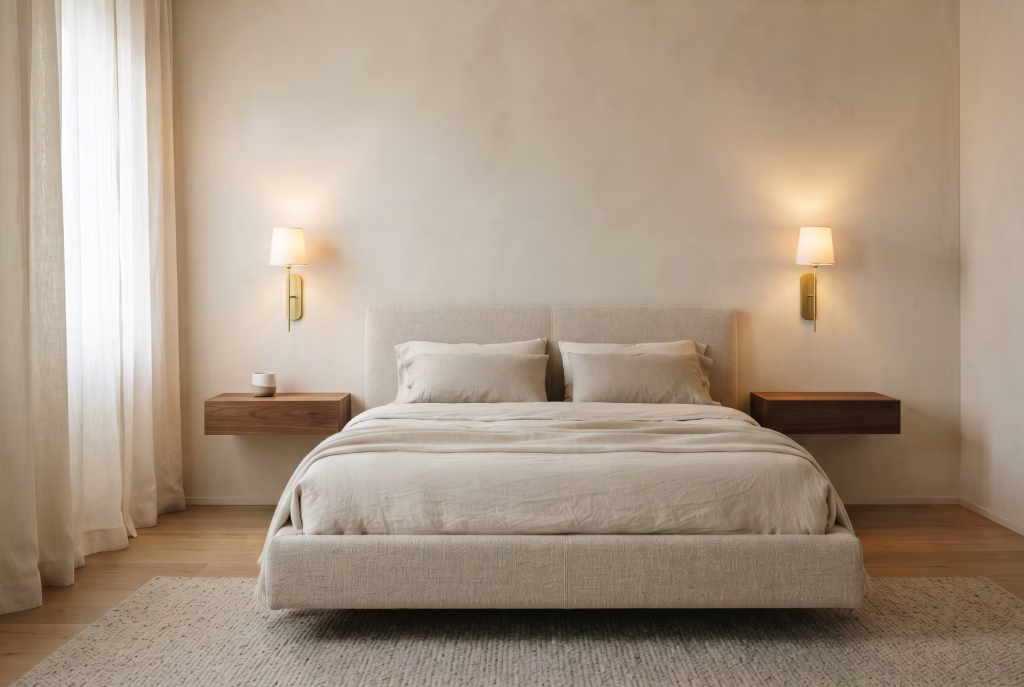
12. Minimalist floating nightstands A wall-mounted shelf in place of a full nightstand keeps floor space clear and gives smaller rooms genuine visual breathing room, the sort you only notice once it’s there. Pair it with a single lamp and resist the urge to add anything more. How it feels to live with: Less surface area means less temptation to pile it with clutter, which is precisely the point rather than a happy accident.
Luxury & Glam Italian (13–18)
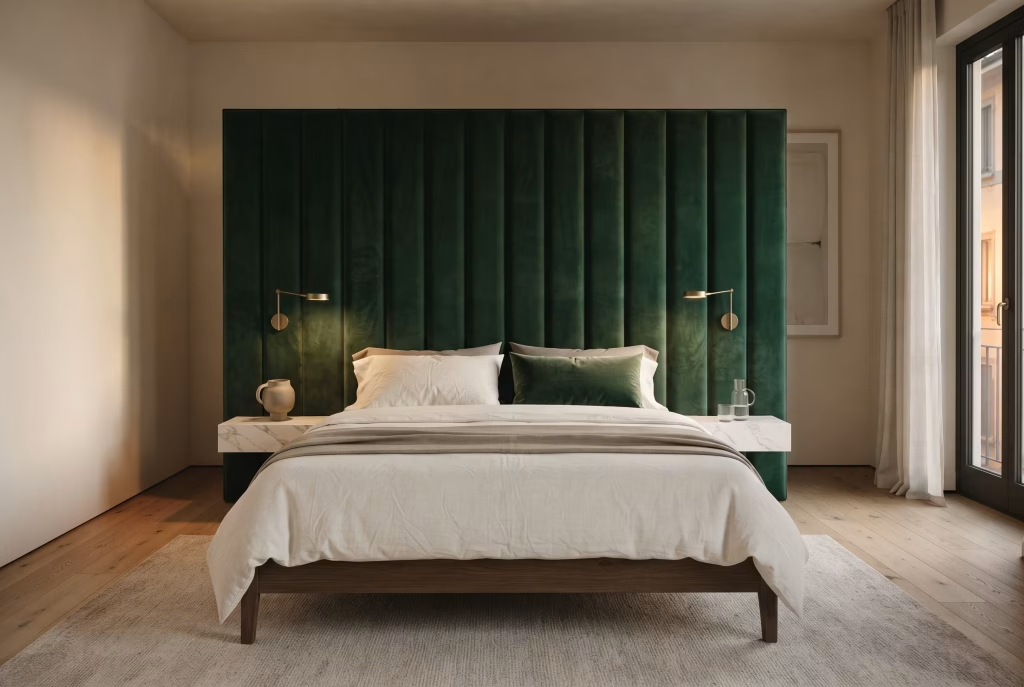
13. Quilted velvet headboard A tall, quilted velvet headboard in a deep jewel tone, emerald, burgundy or midnight blue, instantly reads as five-star hotel rather than high street bedroom set. Height matters more here than width: go noticeably taller than you think you need to, since a headboard that’s merely adequate rarely photographs or feels as luxurious as one that commands the wall. Real cost: Velvet upholstery isn’t cheap by any measure, but a freestanding headboard panel costs considerably less than a full custom bed frame while delivering most of the same visual impact.
You May also Like: 25 Soft & Serene Sage Green Bedrooms for the Ultimate Relaxing Vibe
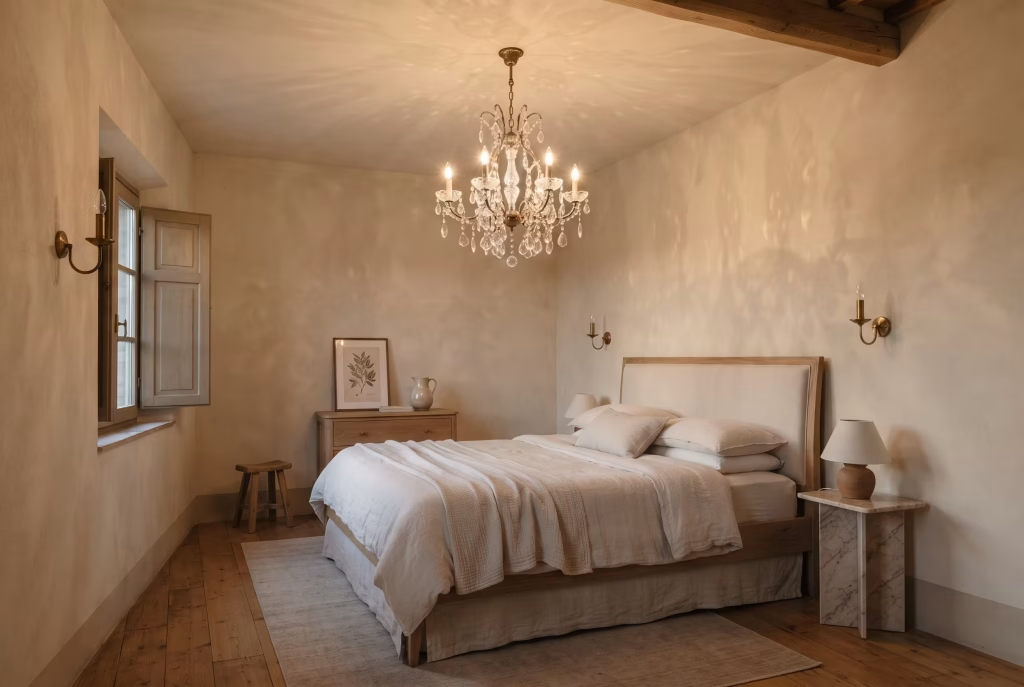
14. Crystal chandelier centrepiece Skip the flush-mount fitting entirely and hang a proper crystal chandelier, even a modest one, as the room’s undisputed focal point. It’s the single fastest route to making a bedroom feel genuinely considered rather than merely functional. Worth knowing: Smaller chandeliers designed specifically for bedroom scale exist at far more reasonable prices than the grand dining-room versions, and they cast a genuinely lovely dappled light across the ceiling that no flat fitting can replicate.
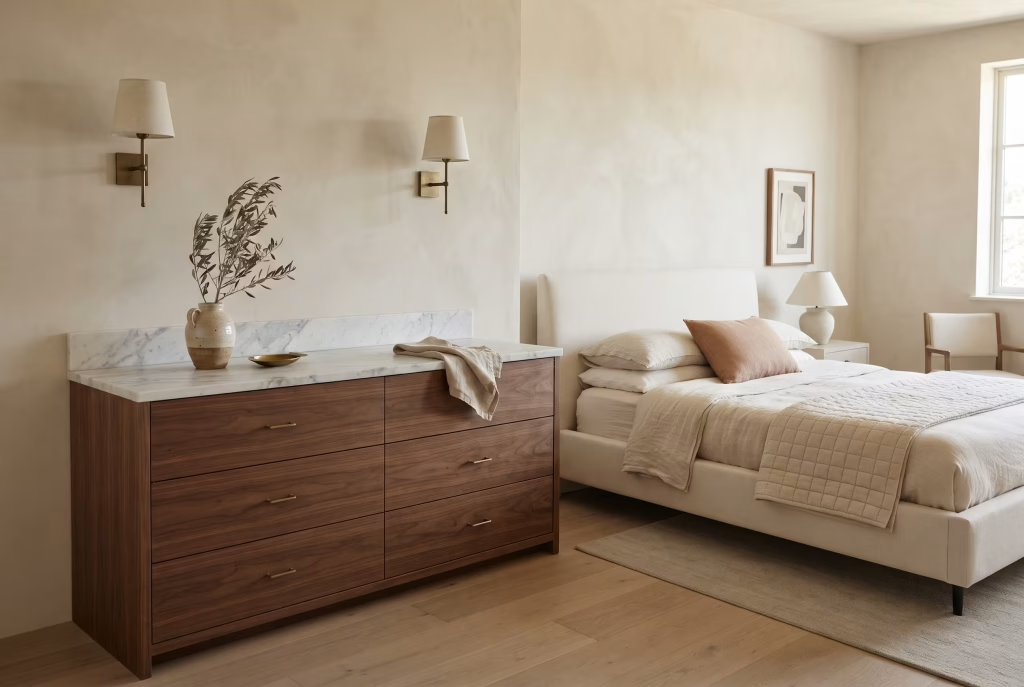
15. Marble-topped dresser A dresser with a genuine marble top, even a small one, brings a cool, tactile luxury that laminate simply cannot fake, no matter how convincing the print. Carrara’s classic white-and-grey veining is the safest choice if you’re nervous about committing to something bolder. Cost and upkeep: Marble needs sealing to resist staining and will mark if you’re careless with a wet glass left overnight (it’s considerably softer than granite, which is why acidic spills matter). A properly sealed top, however, wipes clean in seconds and genuinely looks better with age rather than worse.
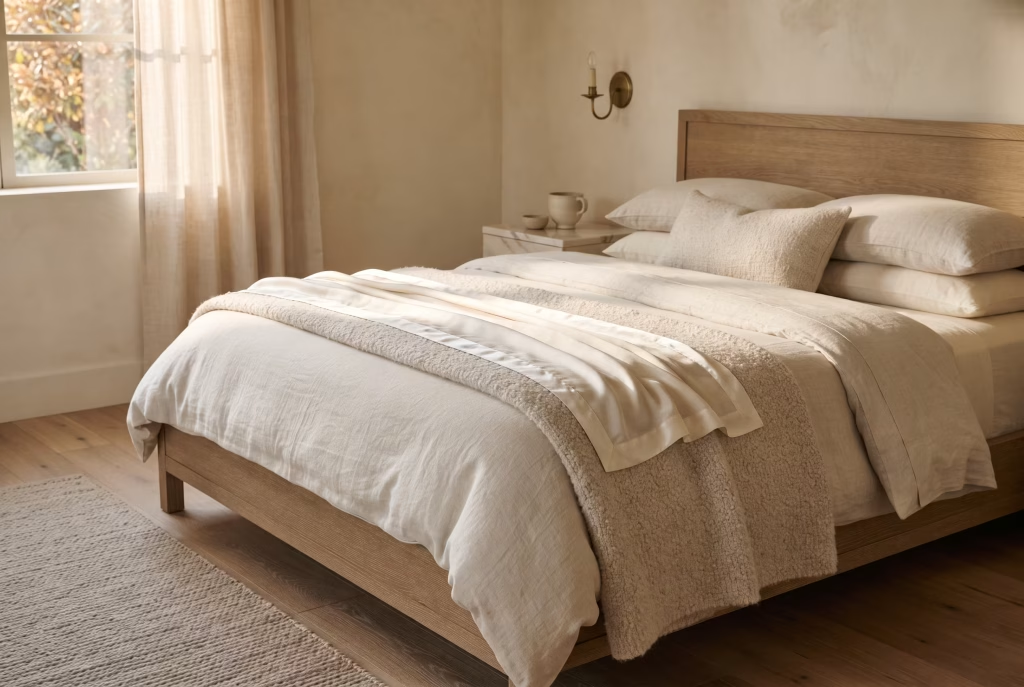
16. Silk and cashmere throws Layer a silk-trimmed throw with a chunky cashmere blanket at the foot of the bed. The contrast in texture, cool and slippery against warm and nubbly, does more for a room’s sense of luxury than most furniture purchases manage for considerably more money. Real cost: This is one of the most affordable “luxury” upgrades on the entire list, since a single well-chosen throw can transform an otherwise plain, unremarkable bed in a matter of seconds.
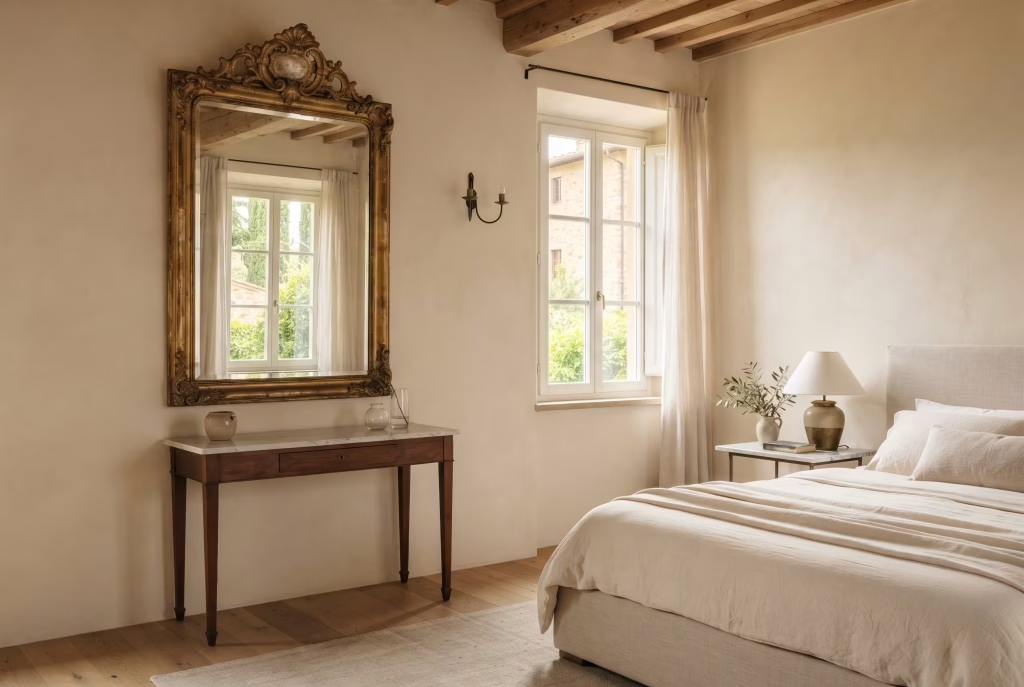
17. Gold-framed Venetian mirror An ornately framed mirror, ideally with some genuine age or patina to the gilding, bounces light around the room and reads as a real antique even when it’s a well-made reproduction. A word to the wise: Position it to reflect a window rather than a blank wall. That single placement decision is the difference between a mirror that genuinely brightens a room and one that simply hangs there looking decorative.
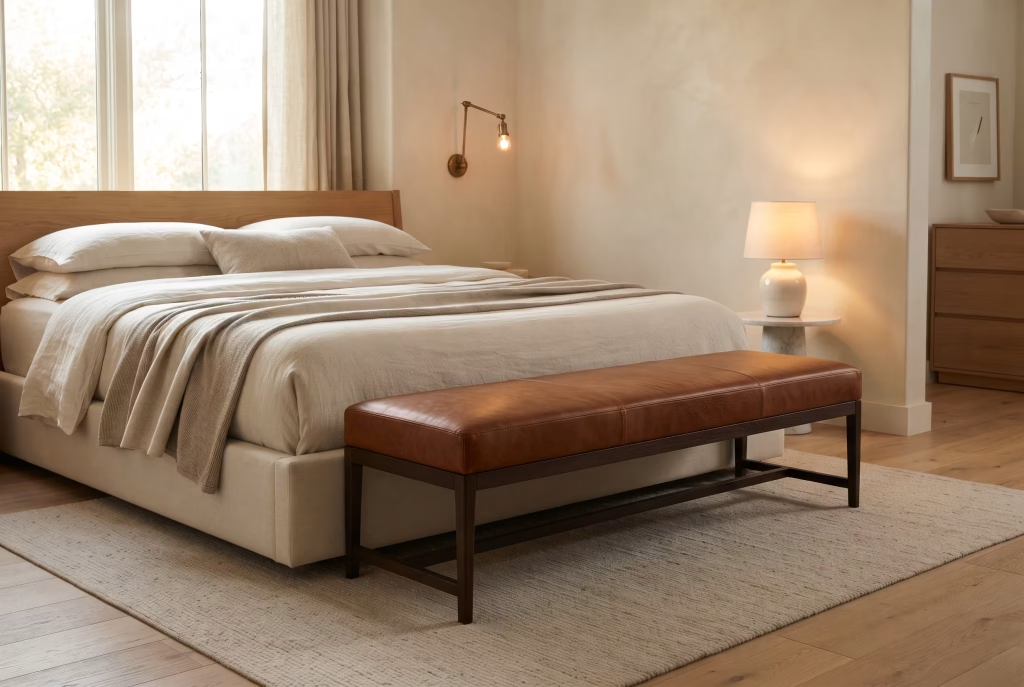
18. Leather-upholstered bench A leather bench at the foot of the bed is both practical, somewhere to sit while you wrestle with your shoes in the morning, and a genuine style statement in its own right. Full-grain leather develops a rich patina with use, unlike bonded leather, which tends to crack and peel within a few years of regular sitting. Cost and upkeep: Full-grain leather costs more upfront than bonded leather but wears considerably better over time, making it the smarter long-term buy for a piece that gets sat on daily rather than admired from a distance.
Coastal Amalfi Italian (19–24)
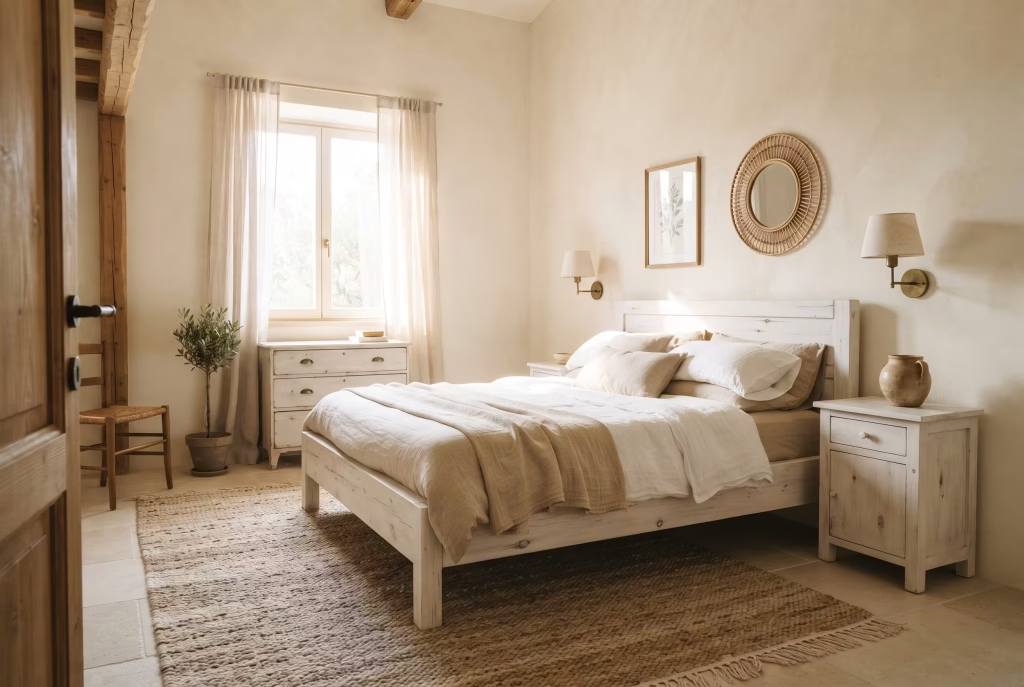
19. Whitewashed wood furniture Bleached or limewashed wood furniture captures that sun-faded, salt-air look of an Amalfi coast villa perfectly, considerably lighter both visually and literally than the dark wood favoured by Tuscan style. Cost and upkeep: Limewashing an existing piece of furniture yourself costs very little indeed and is a genuinely forgiving weekend project even for a complete first-timer with more enthusiasm than experience.
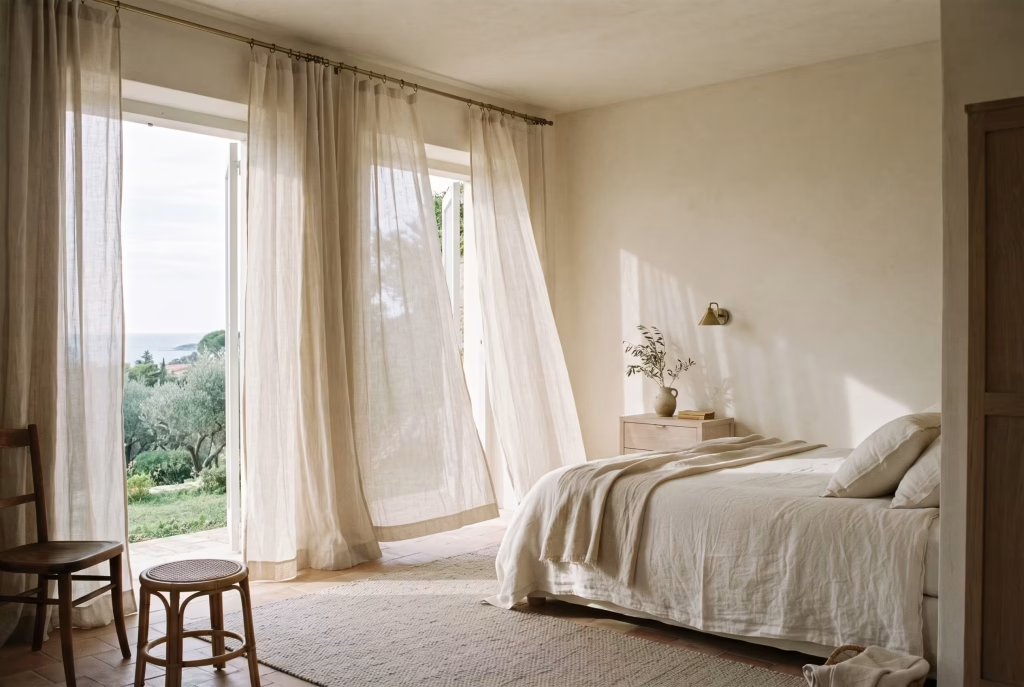
20. Sheer linen curtains Swap heavy drapes for sheer, billowing linen panels that let light flood in and move with the faintest breeze from an open window. This is the fastest single change on the entire list for making a room feel like a genuine holiday rather than a Tuesday morning. Worth knowing: Linen creases are part of the intended look, not a flaw to iron out of existence, so resist the urge to press them into rigid submission.
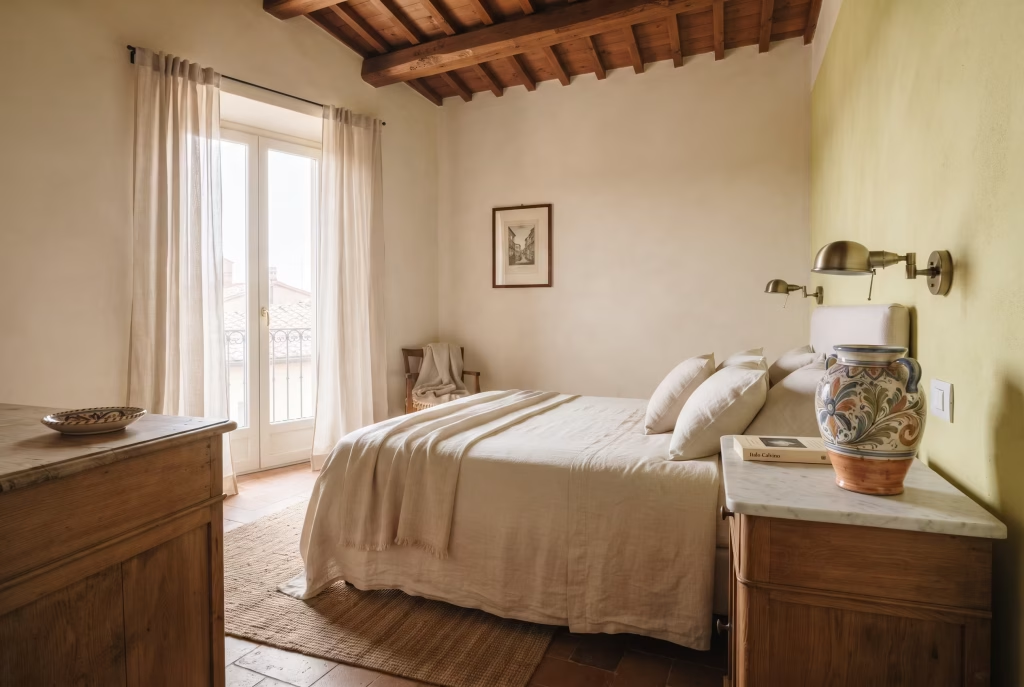
21. Hand-painted ceramic accents A few pieces of hand-painted Italian ceramic, a vase, a trinket dish, a lamp base, bring genuine colour and craft into a room without committing to a full redecoration project. Real cost: Genuine artisan pieces from regions like Deruta or Vietri carry a real premium, but a single well-chosen piece does the job considerably better than an entire shelf of mass-produced lookalikes ever could.
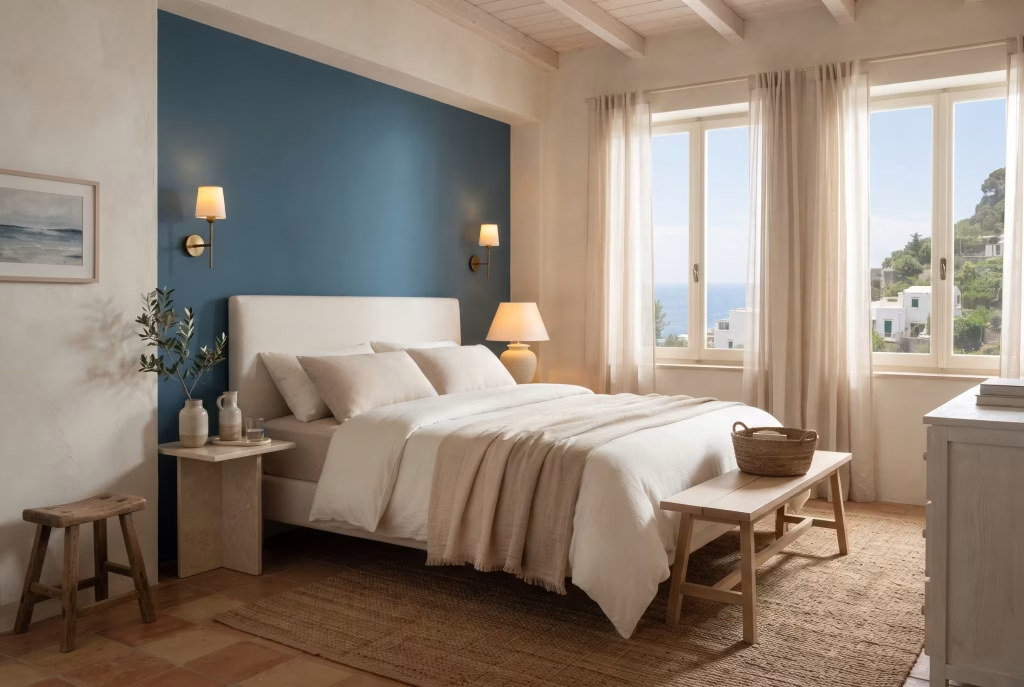
22. Azure and ivory palette Deep sea blue paired with crisp ivory bedding is the coastal counterpart to Tuscan terracotta and cream, reading as fresher and cooler and particularly well suited to south-facing rooms that already get plenty of warmth from the sun. How it feels to live with: This palette photographs beautifully but also genuinely calms a room down in real life, which isn’t always guaranteed with bolder colour choices that look better in photos than they feel at 11pm.
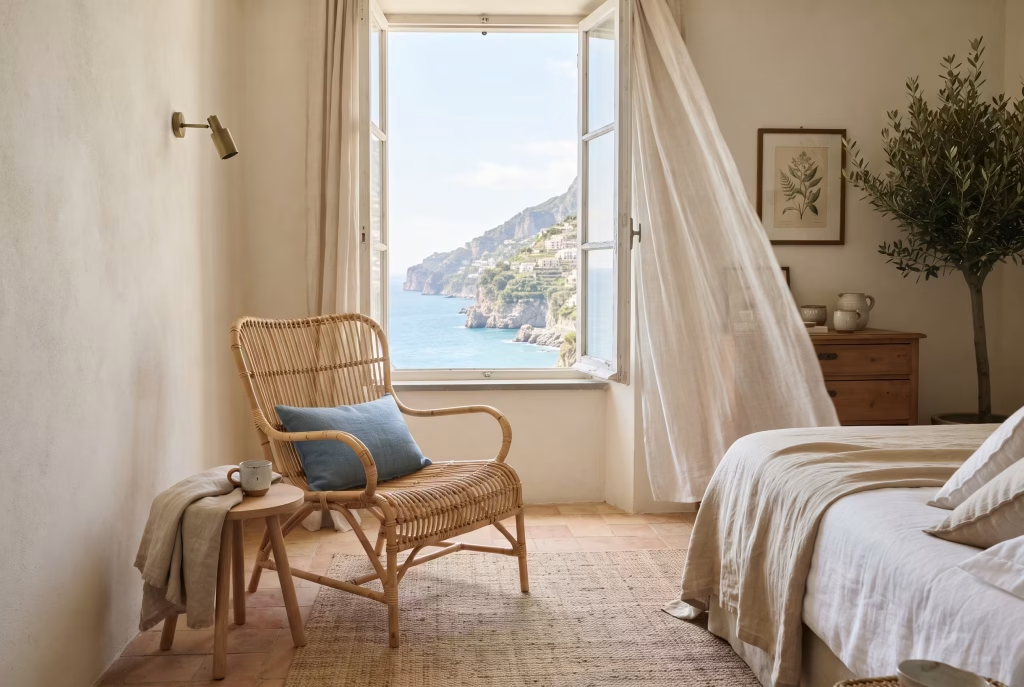
23. Rattan accent chair A rattan or woven cane chair in the corner introduces natural texture without the visual weight of upholstered furniture. It’s a favourite in coastal Italian interiors precisely because it feels breezy rather than heavy, the furniture equivalent of an open window. Cost and upkeep: Rattan is one of the more affordable natural materials on this entire list, though it needs to stay well away from direct radiator heat, which dries and cracks the woven fibres over time far faster than most people expect.
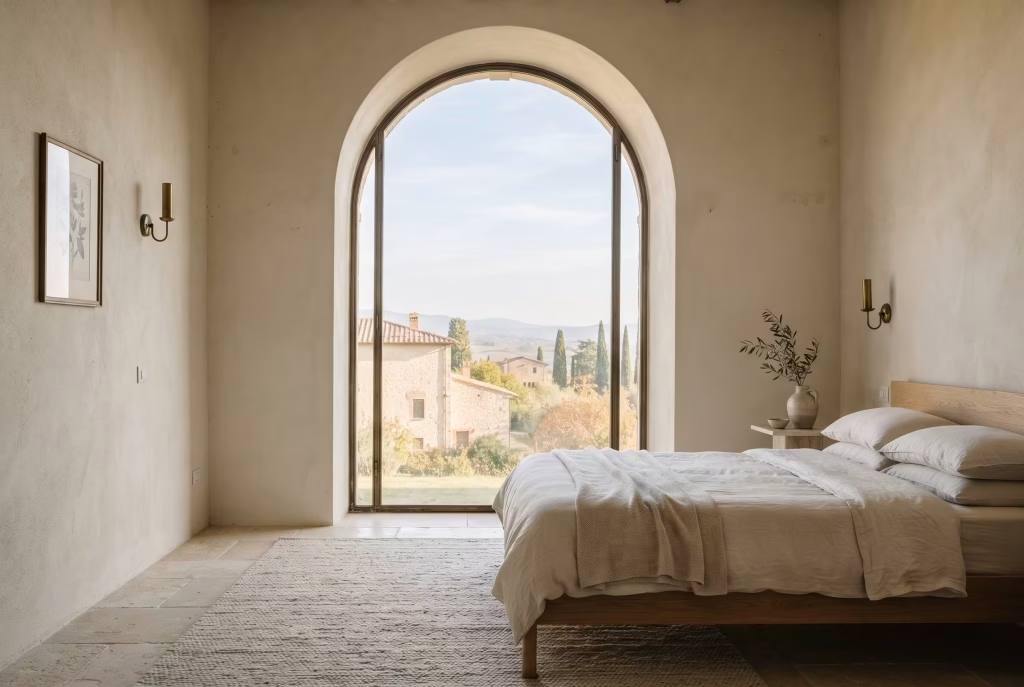
24. Arched window framing If you’re renovating, consider an arched window or door opening rather than a square one. Even a faux-arched frame built out from an existing square window can suggest the same softness without the structural upheaval of the real thing. A word to the wise: This is a genuinely structural change and belongs firmly on a renovation list rather than a weekend-project one, but it’s transformative if structural work is already underway regardless.
Rustic Farmhouse Italian (25–30)
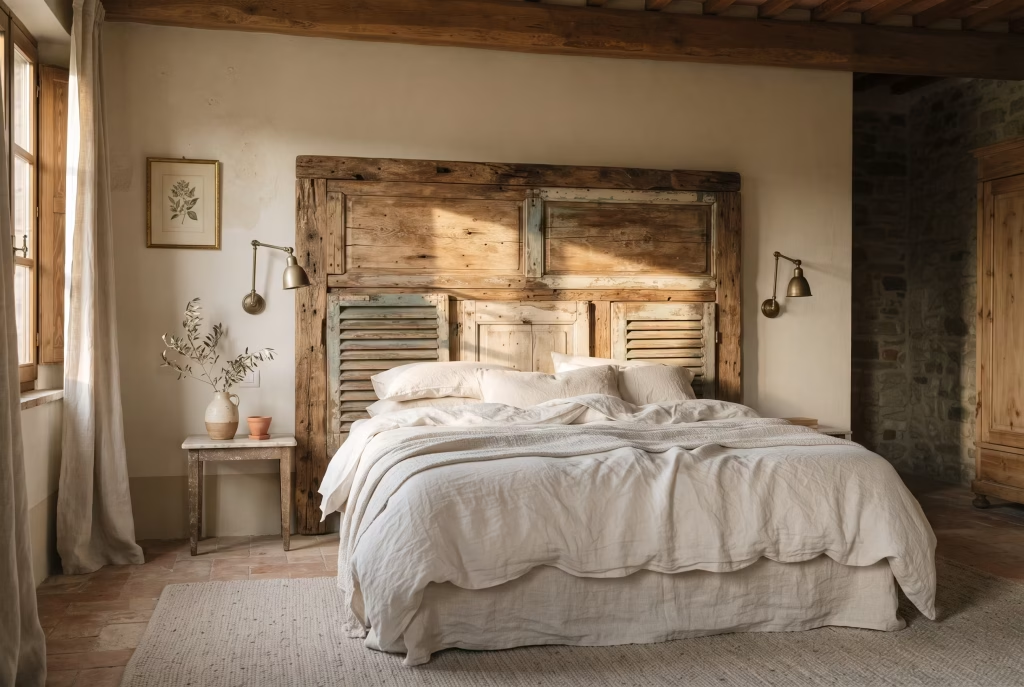
25. Reclaimed wood headboard A headboard built from reclaimed barn wood or salvaged old shutters brings genuine history and texture into a room, and every board carries a slightly different story to the one beside it. Cost and upkeep: Reclaimed timber can actually cost more than new wood once it’s been properly cleaned and treated, which surprises a great many people, but the character it brings is genuinely irreplaceable at any price.
You May also Like: 25 Dark Cottagecore Bedroom Concepts: How to Master the Moody Aesthetic
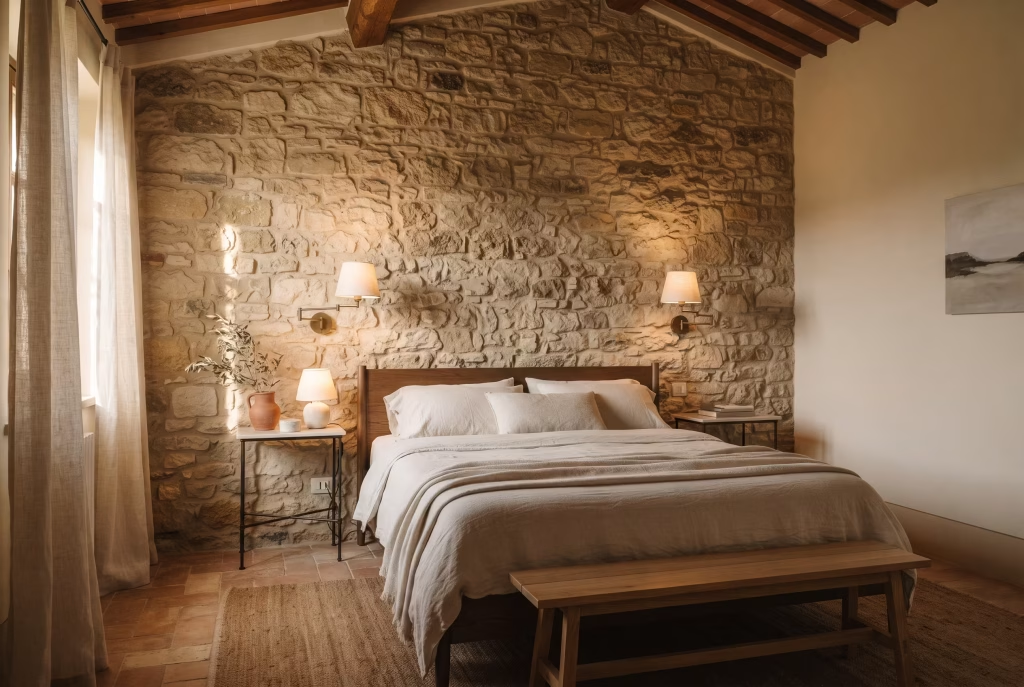
26. Stone or brick accent wall Exposed stone or brick, real or a convincing veneer, brings the outside in and grounds a room that might otherwise tip into feeling too soft. It pairs particularly well with warm iron and wood accents elsewhere in the space. Real cost: A full stone veneer wall represents a meaningful renovation cost, but panel-based options that install directly over an existing wall exist for considerably less outlay.
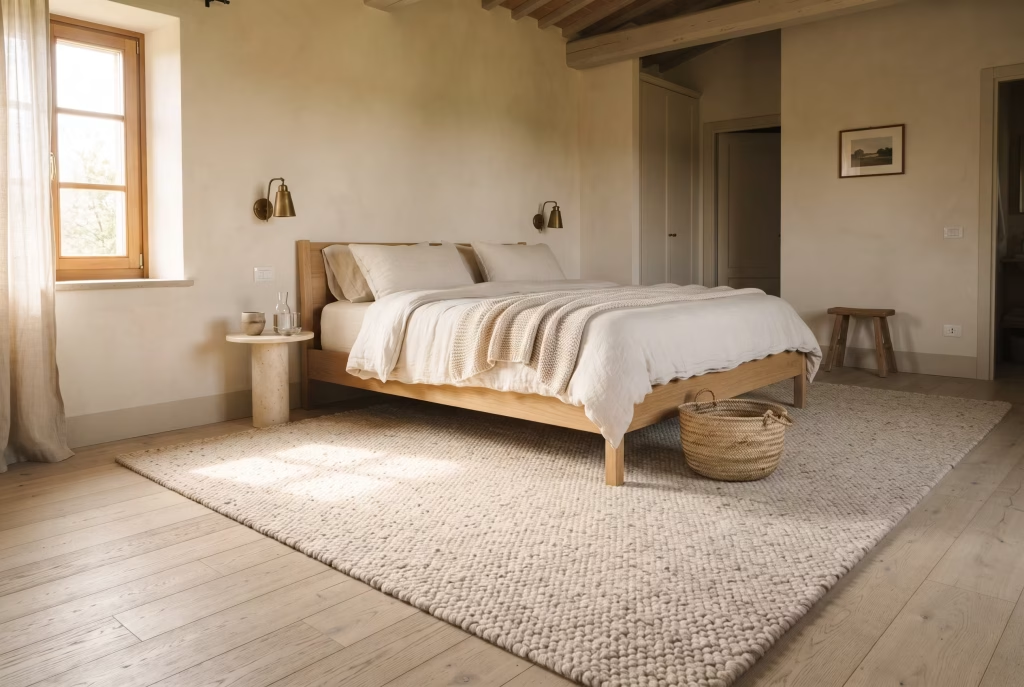
27. Woven jute or wool rug A thick, natural-fibre rug underfoot adds genuine warmth and muffles sound in a way hard flooring simply cannot manage alone. Jute has a rougher, more rustic texture underfoot; wool feels softer if you’re barefoot most mornings and want that first step to feel forgiving. How it feels to live with: Wool wears better over the long haul and resists staining more successfully than jute (its natural lanolin content genuinely helps here), worth bearing in mind if the rug sits somewhere with regular foot traffic rather than a quiet corner.
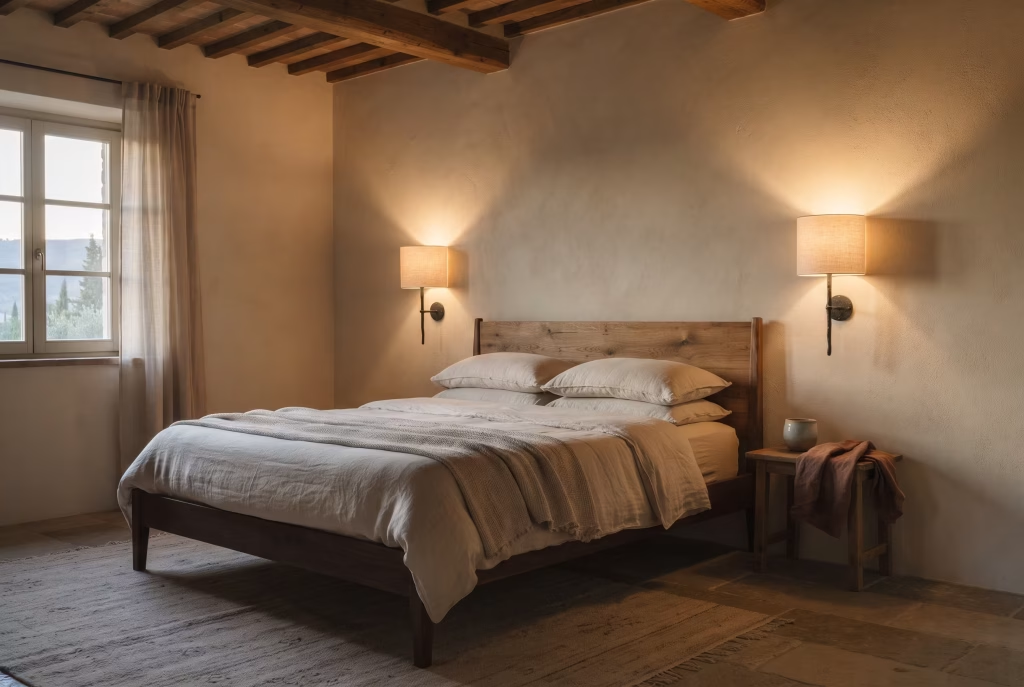
28. Wrought-iron wall sconces Rustic ironwork sconces, ideally with a slightly hand-hammered, imperfect finish rather than a machine-smooth one, suit a farmhouse bedroom far better than anything glossy or perfectly symmetrical. Cost and upkeep: These sit at a genuinely accessible price point and need only occasional dusting, since the material itself is essentially maintenance-free once it’s up on the wall.
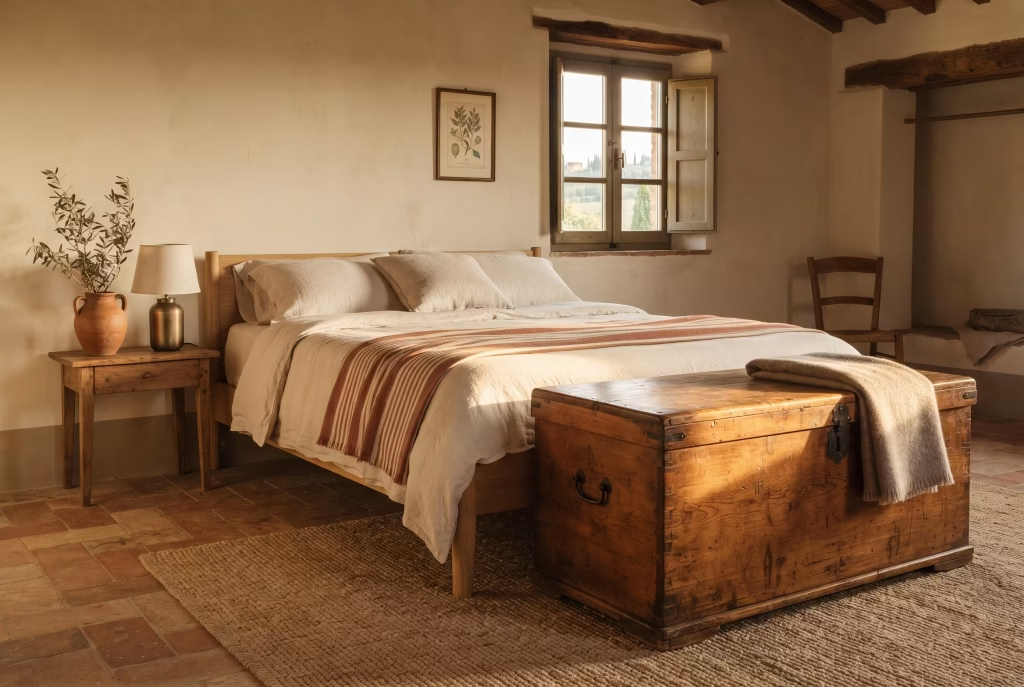
29. Vintage wooden trunk An old wooden trunk at the foot of the bed doubles as genuine storage and a striking piece of furniture in its own right. Look for one with visible age, dents and scratches fully included, rather than a suspiciously pristine reproduction. Real cost: Genuine antique trunks vary wildly in price depending on provenance and condition, but a charity shop or reclamation yard find can cost almost nothing and still deliver exactly the same visual effect.
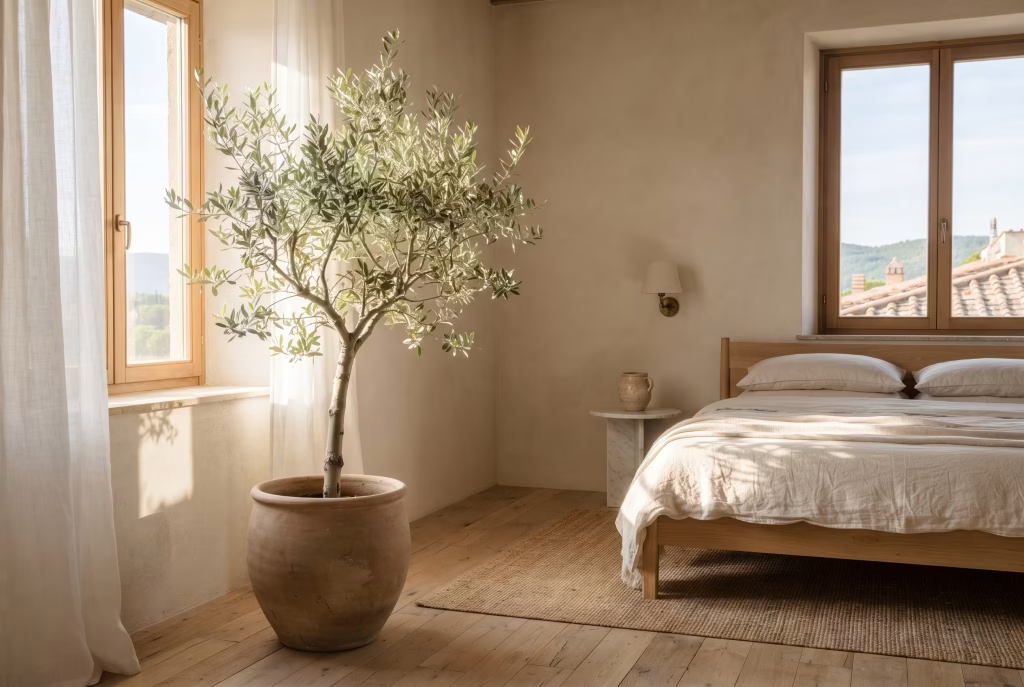
30. Potted olive tree A single potted olive tree in the corner of the room brings genuine Mediterranean character and a bit of living green into an otherwise still composition of wood and textiles. Worth knowing: Olive trees want a bright, ideally south-facing spot and surprisingly minimal watering, which makes them a forgiving houseplant choice for anyone who’s accidentally seen off a fern or two in their time.
Small-Space & Rental Italian (31–36)
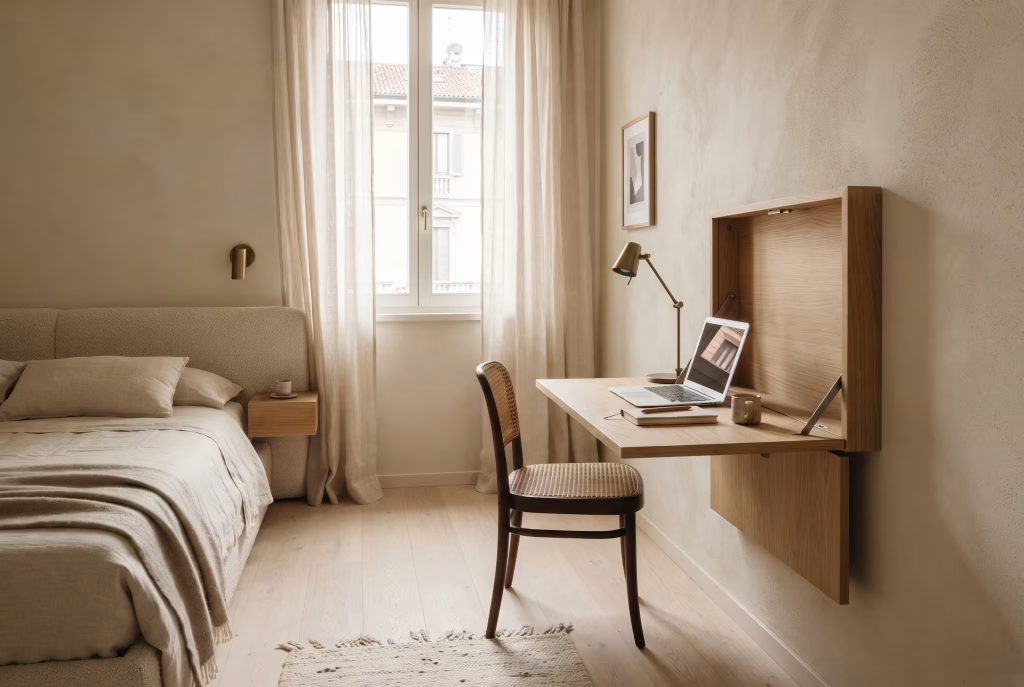
31. Wall-mounted folding desk A desk that folds flat against the wall when it’s not in use is a genuinely clever move in a compact bedroom, offering a workspace by day without permanently sacrificing precious floor space the rest of the time. Cost and upkeep: This is a modest investment relative to a full-sized desk and dramatically better use of a small footprint that can’t spare a permanent surface.
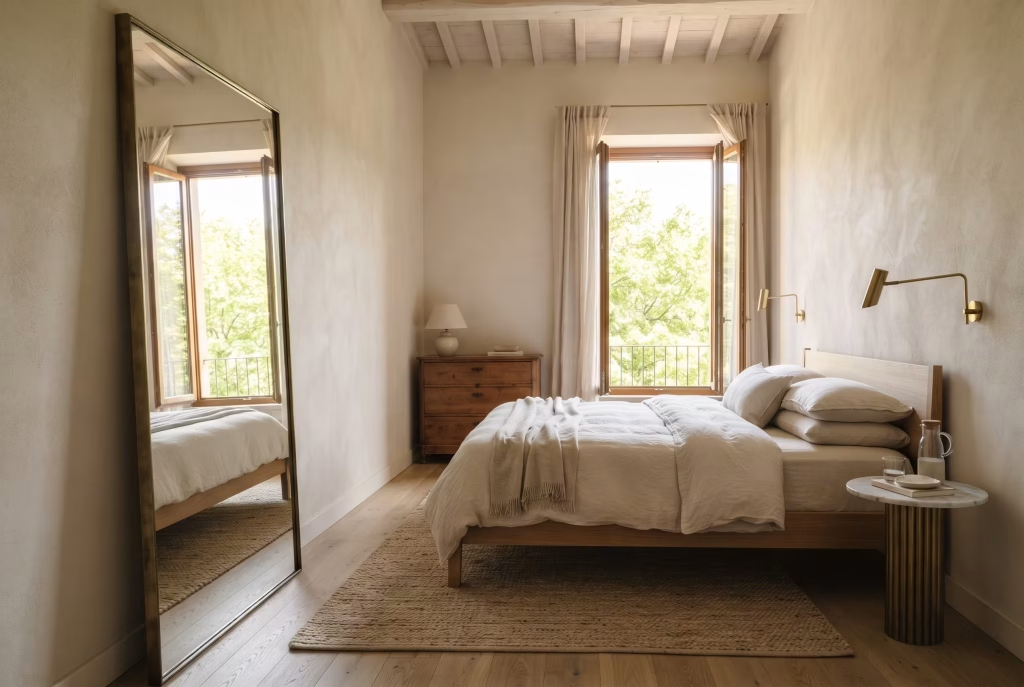
32. Floor-to-ceiling mirror A large mirror positioned opposite a window bounces natural light across the entire room and creates a genuine illusion of extra square footage, a favourite trick in compact Tuscan villas just as much as modern city flats squeezed for space. How it feels to live with: It’s one of the very few changes on this whole list that makes a room feel measurably bigger without moving a single wall or spending a fortune on the privilege.
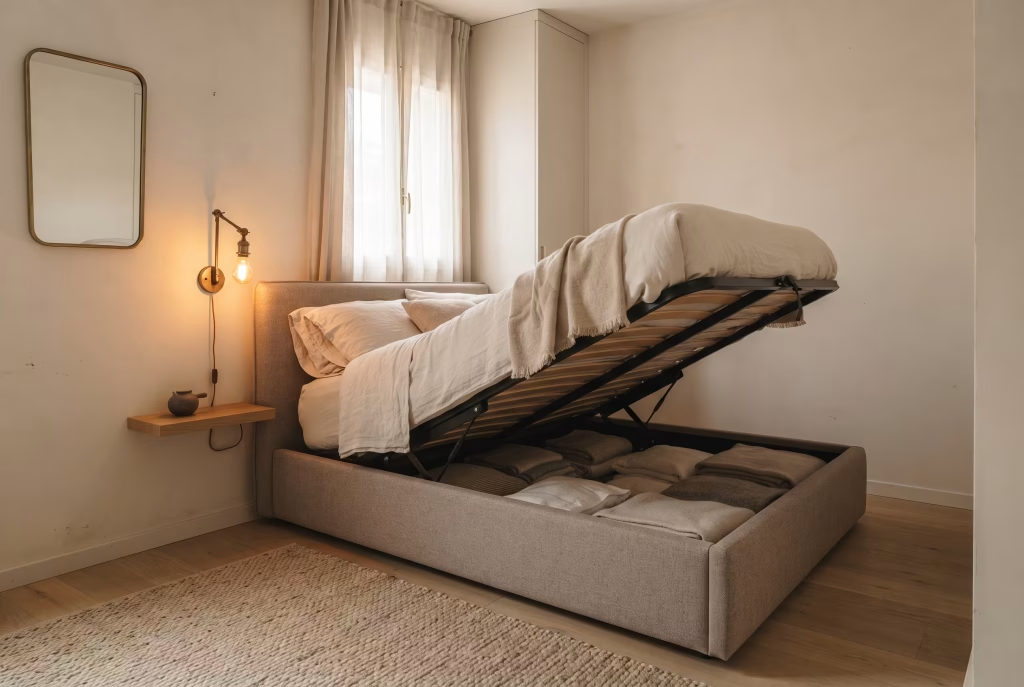
33. Storage ottoman bed A gas-lift ottoman base turns the entire bed frame into hidden storage, which matters enormously in a bedroom too small to accommodate both a wardrobe and a chest of drawers comfortably. Real cost: These cost more upfront than a standard divan base, but the storage they free up elsewhere in the room often means you can skip buying a second furniture piece altogether, which balances the books more than most people expect.
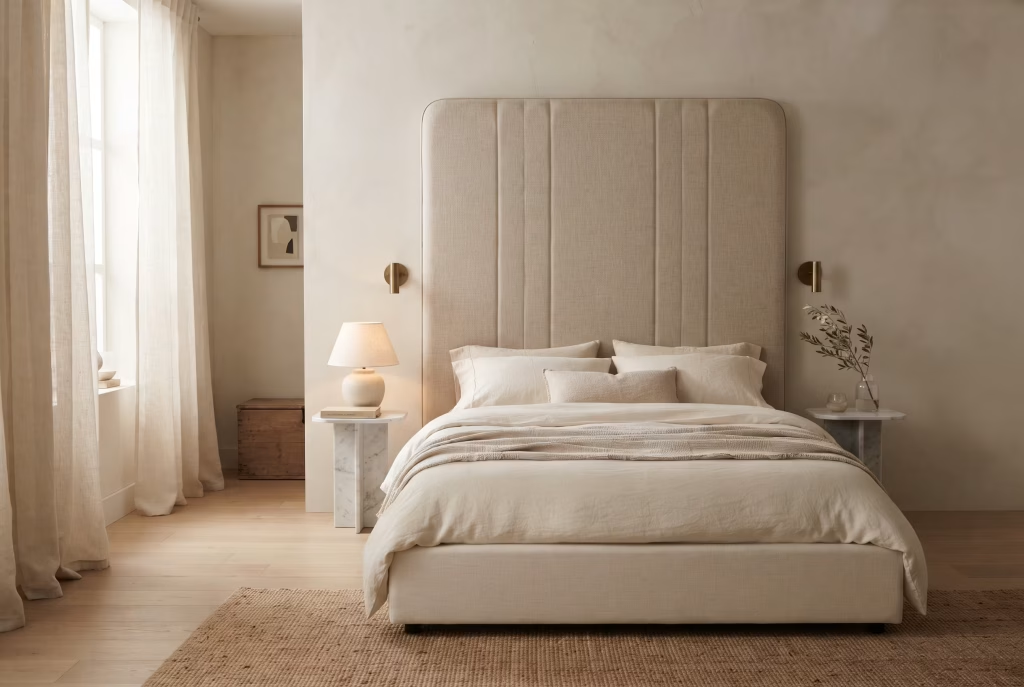
34. Freestanding upholstered headboard panel If a full new bed frame isn’t in the budget, or your lease has firm opinions about drilling into walls, a freestanding upholstered panel behind an existing bed delivers almost the same visual richness for a fraction of the outlay. Cost and upkeep: This is one of the cheapest routes to that plush, tailored Italian-hotel look available anywhere on this list, and crucially, it moves house with you if you’re renting rather than staying put.
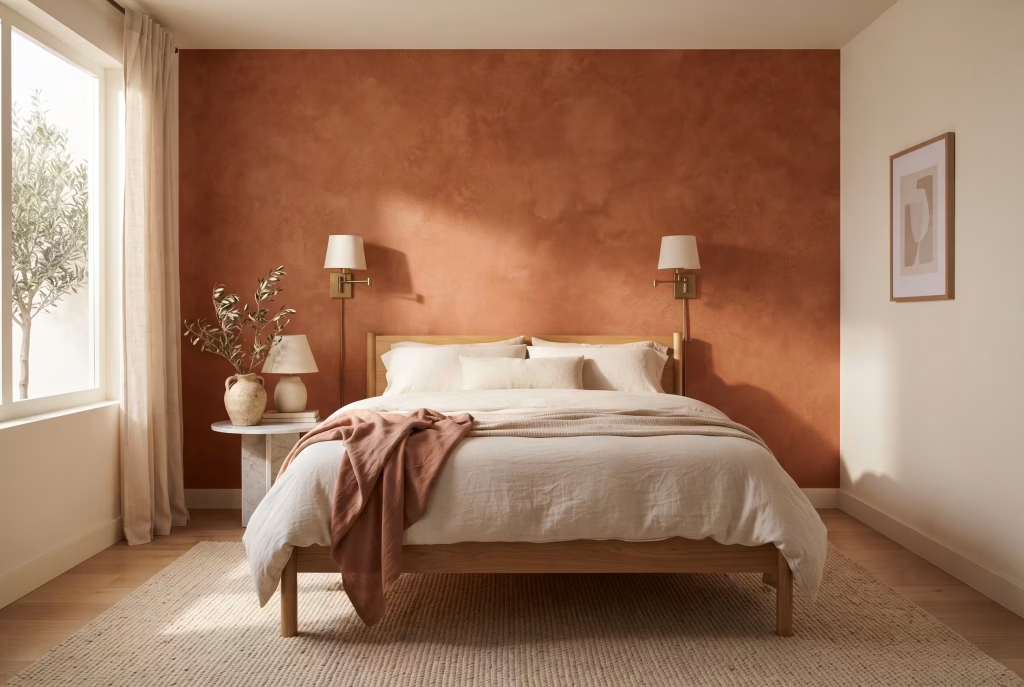
35. Peel-and-stick terracotta wallpaper Removable wallpaper in a convincing terracotta or Venetian-plaster print gives renters the full colour-drenched look without upsetting a landlord or, more importantly, a deposit. Worth knowing: Quality varies considerably between brands, so it’s genuinely worth paying slightly more for a paper that won’t leave residue behind on removal day.
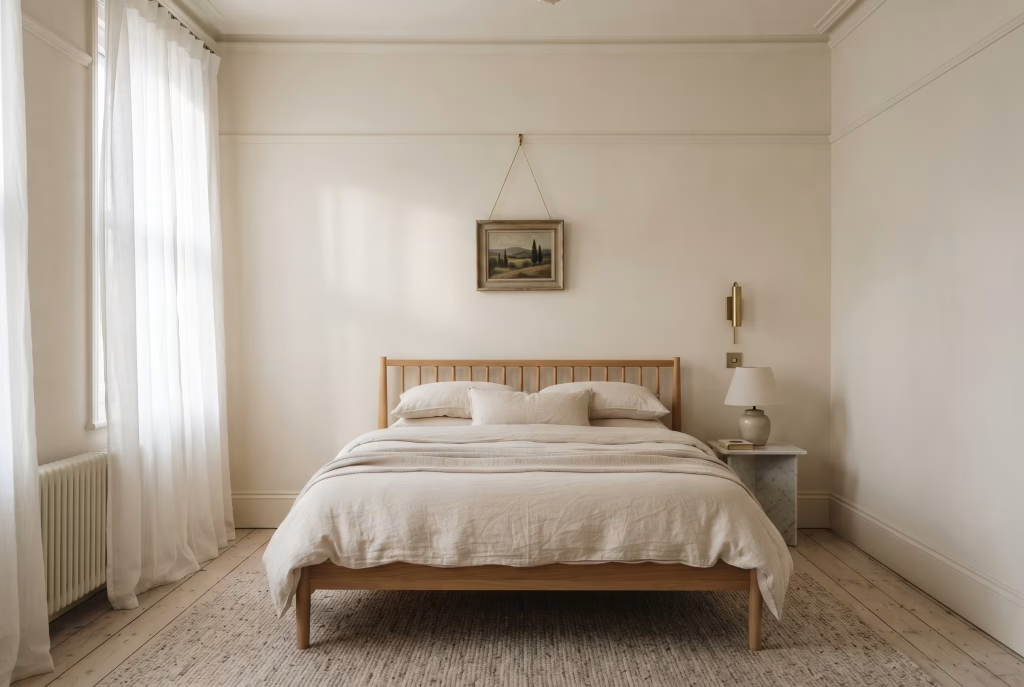
36. Removable picture rail moulding Lightweight, adhesive picture rail moulding adds a genuine architectural detail without a single screw ever touching the wall. Paint it to match for a subtle effect, or a contrasting colour if you want something bolder and more assertive. Real cost: This sits at the very affordable end of the scale and remains one of the few structural-looking upgrades that’s fully renter-friendly from start to finish.
Colour-Led Italian Bedrooms (37–42)
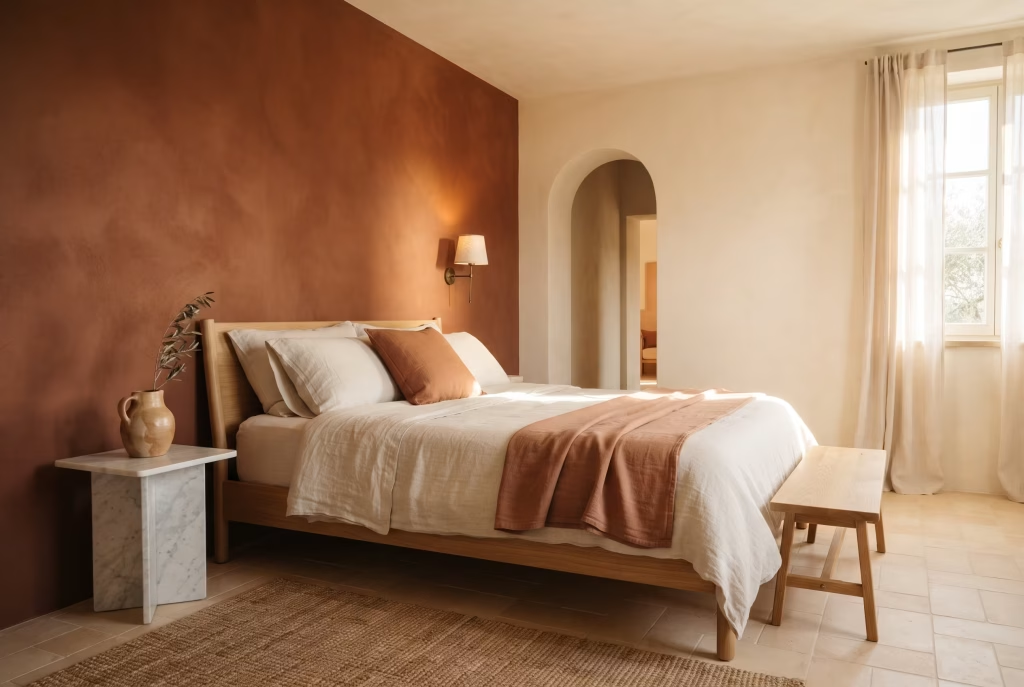
37. Terracotta and cream pairing The most classic Italian colour combination there is, and for very good reason: terracotta warms a room considerably while cream keeps the whole thing from tipping into heaviness or gloom. How it feels to live with: This pairing is genuinely difficult to get wrong, which makes it the safest possible starting point if colour commitment makes you nervous.
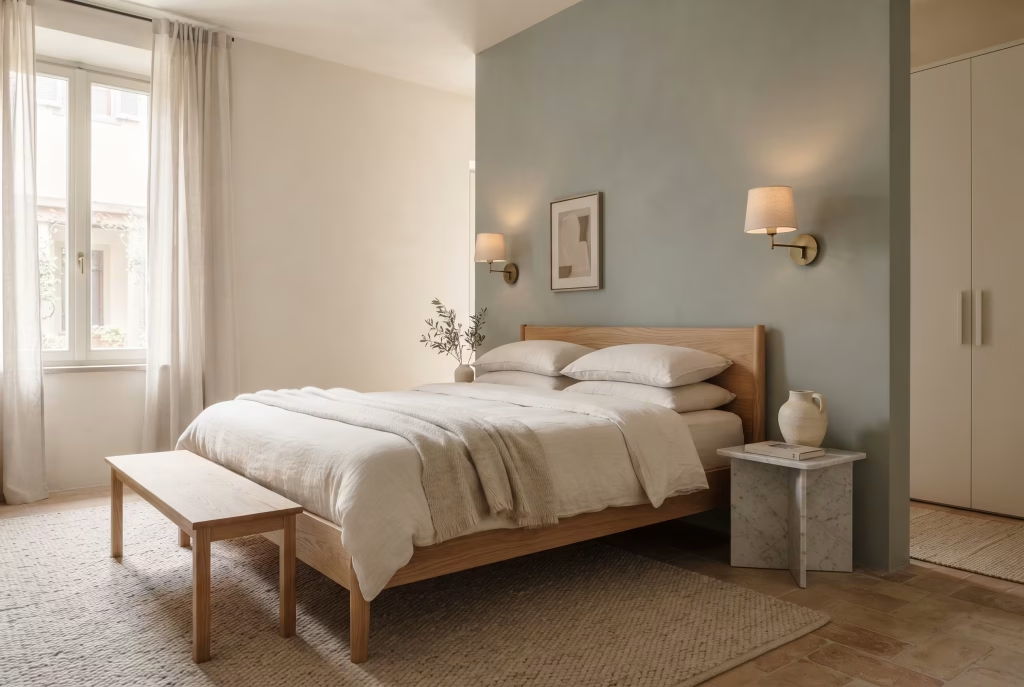
38. Sage green and warm white A softer, more contemporary take on the earthy Italian palette. Sage reads as calm rather than rustic and pairs beautifully with warm wood tones without competing for attention. Cost and upkeep: Achievable entirely through paint alone, making this one of the most budget-friendly palette choices anywhere on this list.
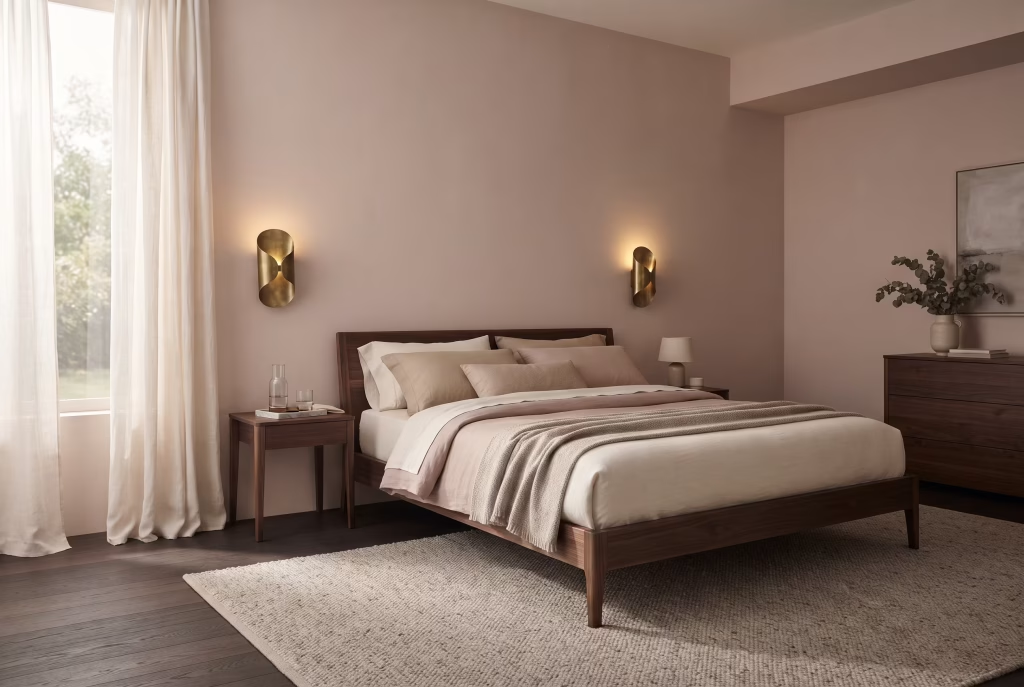
39. Deep walnut and blush A moody, faintly romantic combination that leans closer to modern Italian glamour than countryside rustic charm. Walnut furniture against soft blush walls or bedding reads as considered rather than sugary sweet. A word to the wise: Keep the blush genuinely muted rather than bright pink, or the whole room tips from sophisticated into nursery territory faster than you’d expect.
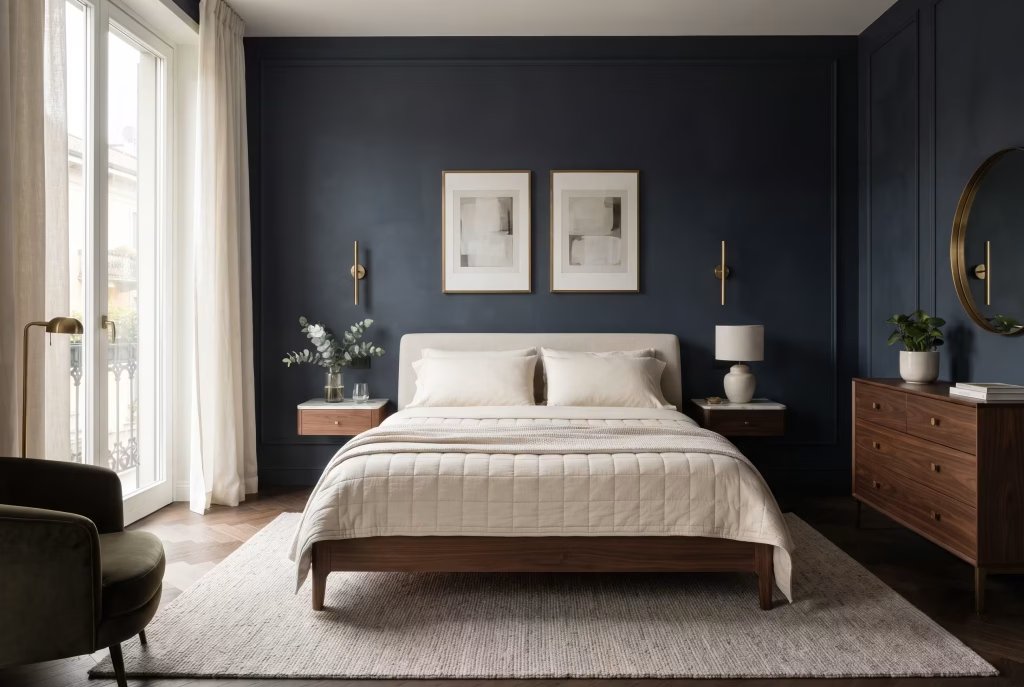
40. Navy and gold accents A bolder, more dramatic pairing that suits a room with good natural light to bounce off the darker walls. Navy paired with gold-framed art and brass fixtures feels closer to a Milanese hotel suite than a countryside farmhouse kitchen. Real cost: Navy paint itself is inexpensive, but the gold accents that genuinely make this palette sing, frames, hardware, lighting, add up quickly if you’re buying several pieces at once rather than gradually.
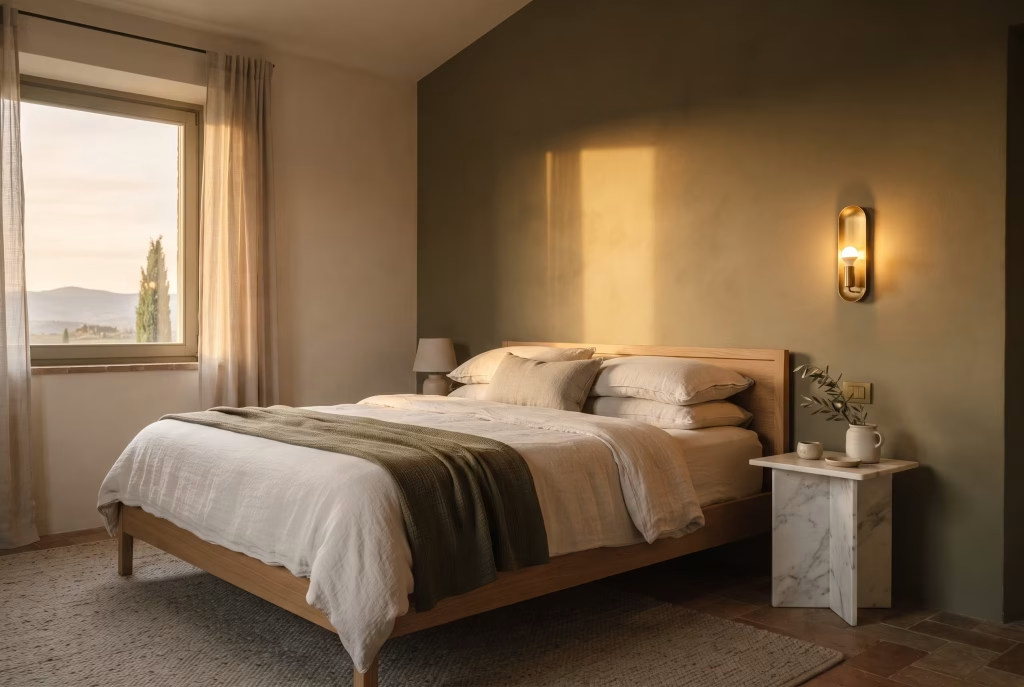
41. Olive and ivory A quieter, more understated earthy pairing than terracotta and cream, better suited to anyone wanting the warmth of Italian style without quite so much colour saturation across every surface. Worth knowing: This combination photographs slightly differently depending on light temperature, so it’s worth testing a swatch at different times of day before committing to an entire wall.
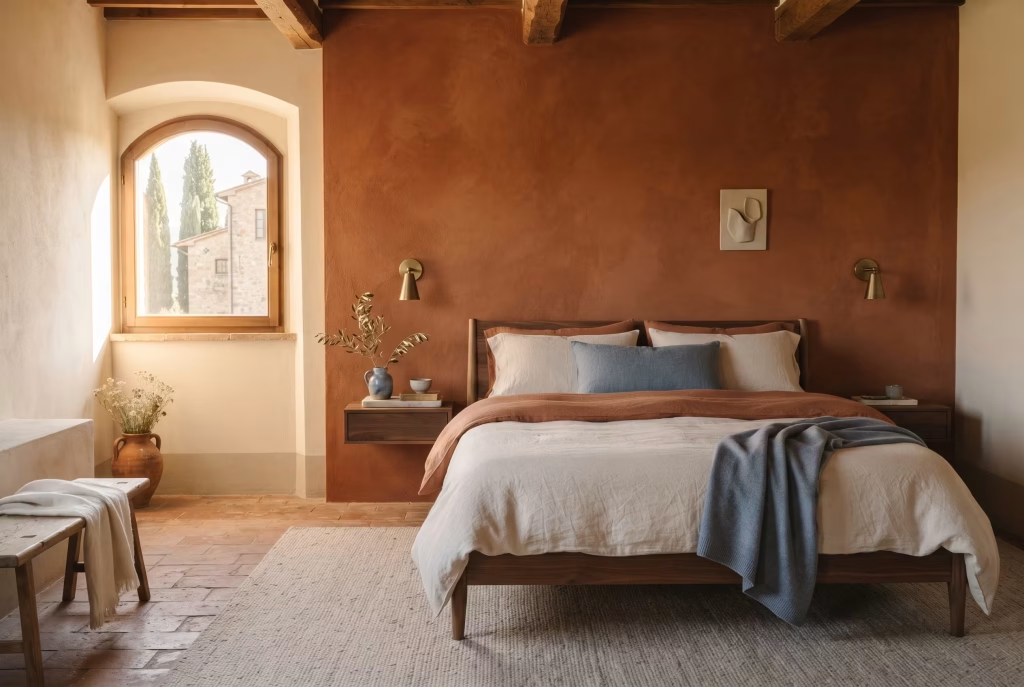
42. Rust and dusty blue An unexpected but genuinely striking pairing that bridges Tuscan warmth and coastal cool in one room. Use rust as the dominant tone and dusty blue purely as the accent, rather than splitting the two evenly and risking a muddier result. Cost and upkeep: Achievable with paint and textiles alone, with no new furniture required whatsoever.
Furniture & Materials Showcase (43–48)
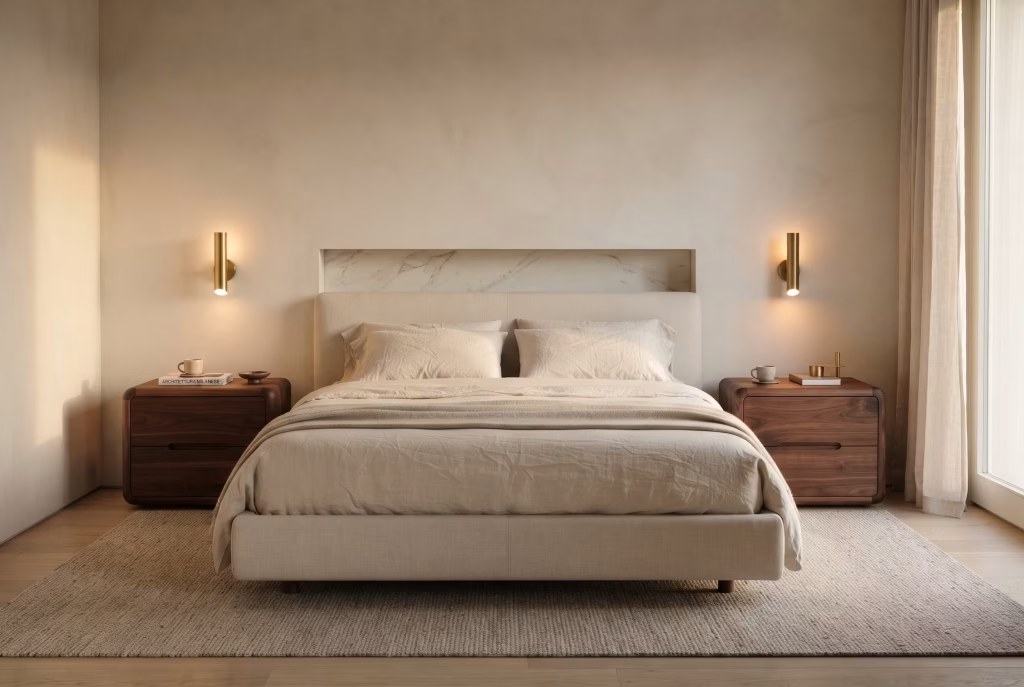
43. Solid walnut nightstands Walnut’s rich, deep grain is a hallmark of genuine Italian furniture design, prized for its strength and the way it darkens attractively with age rather than simply looking tired. Real cost: Solid walnut costs meaningfully more than veneer at the till, but it’s genuinely a once-in-a-lifetime purchase rather than something you’ll be quietly replacing within a decade.
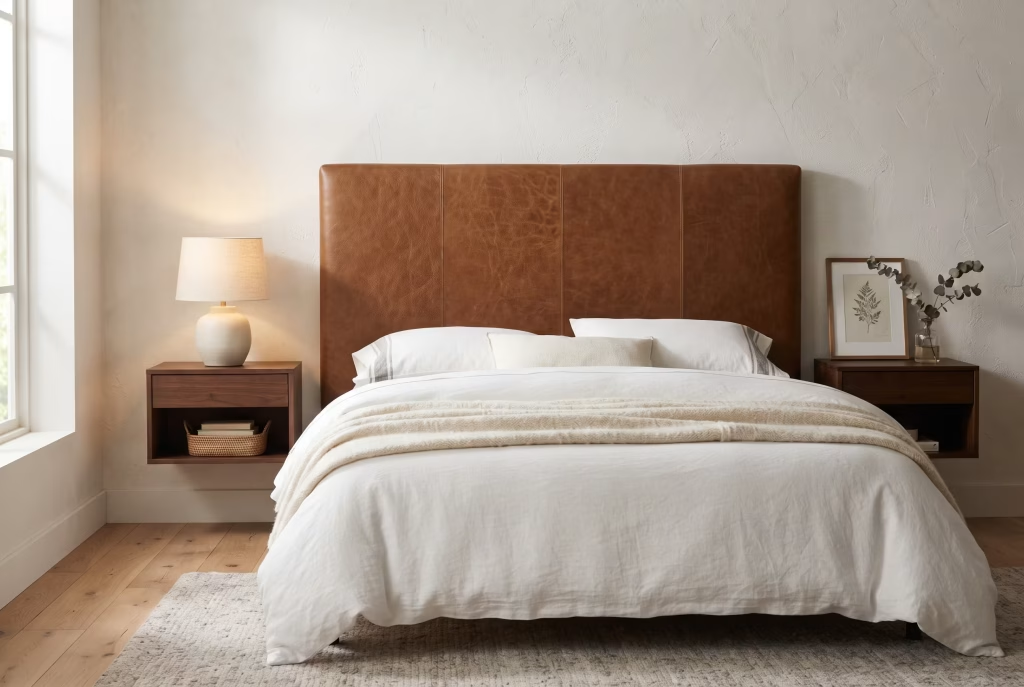
44. Full-grain leather headboard Full-grain leather, as distinct from bonded or top-grain, retains the natural markings and character of the original hide and is by some distance the most durable leather grade available on the market. Cost and upkeep: This sits at the higher end of the price scale, no denying it, but full-grain leather resists wear, staining and cracking far better than cheaper alternatives, which tend to peel within a few short years of daily contact.
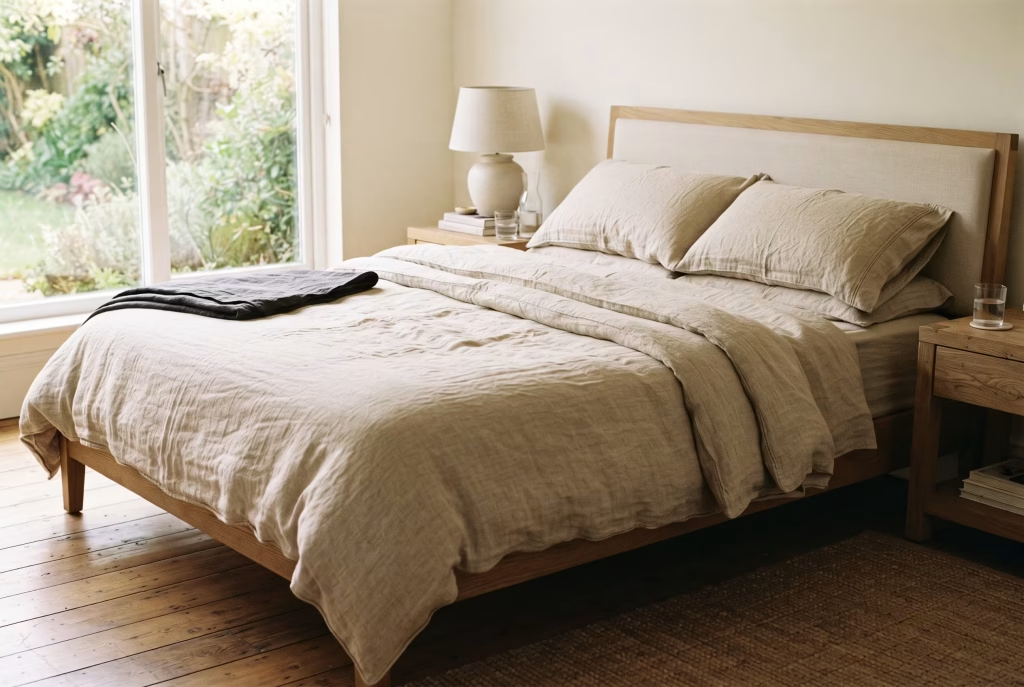
45. Hand-loomed linen bedding Linen’s slight texture and natural sheen is instantly recognisable, and it’s considerably more breathable than cotton, a fibre that can absorb up to 20% more moisture and dry noticeably faster, which matters more than most people realise for a genuinely good night’s sleep. Worth knowing: Linen softens with every single wash rather than wearing thin, so a slightly stiff first wash isn’t a flaw to worry about, it’s simply the beginning of a relationship that only improves with time.
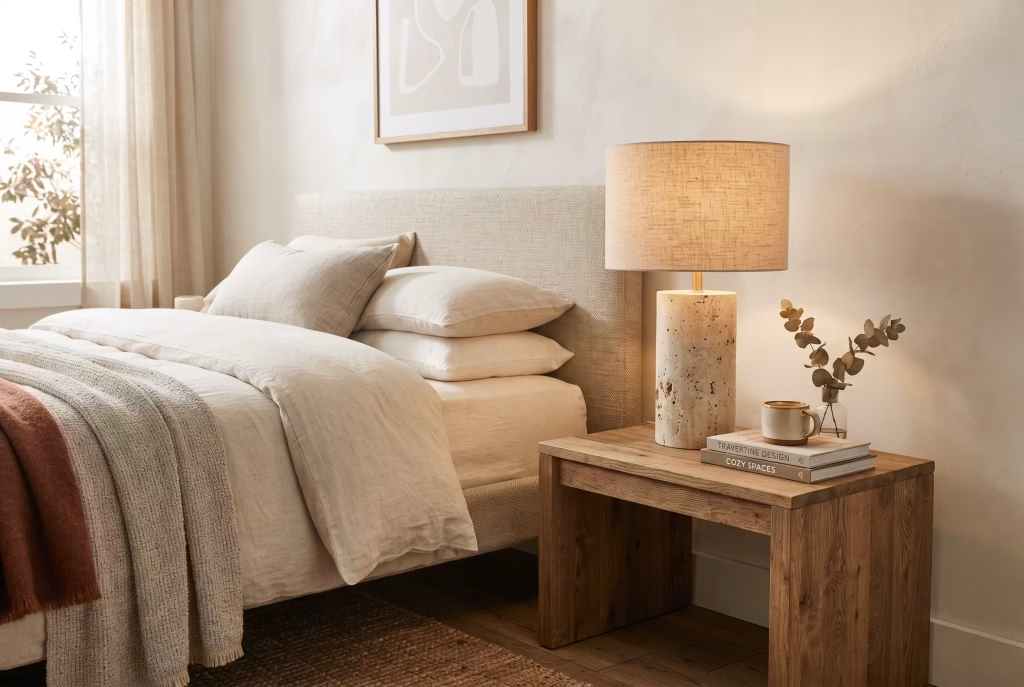
46. Travertine bedside lamps Travertine’s naturally pitted surface brings genuine textural interest to a lamp base in a way smooth ceramic or glass simply cannot replicate, however hard the manufacturer tries. Real cost: Travertine sits at a comfortable mid-range price point, more than basic ceramic but considerably less than a full marble equivalent.
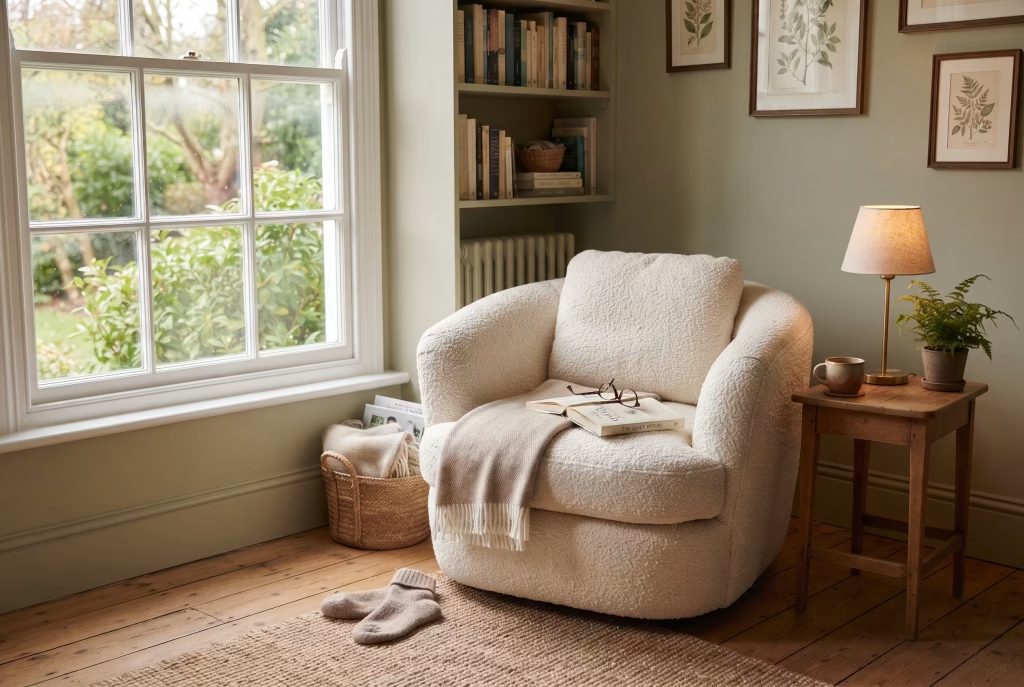
47. Boucle or velvet armchair A reading chair upholstered in boucle or velvet introduces genuine tactile softness into a corner of the room that might otherwise go entirely unused and forgotten. Cost and upkeep: Velvet shows watermarks more readily than boucle, worth bearing in mind if the chair sits anywhere near a window prone to condensation on colder mornings.
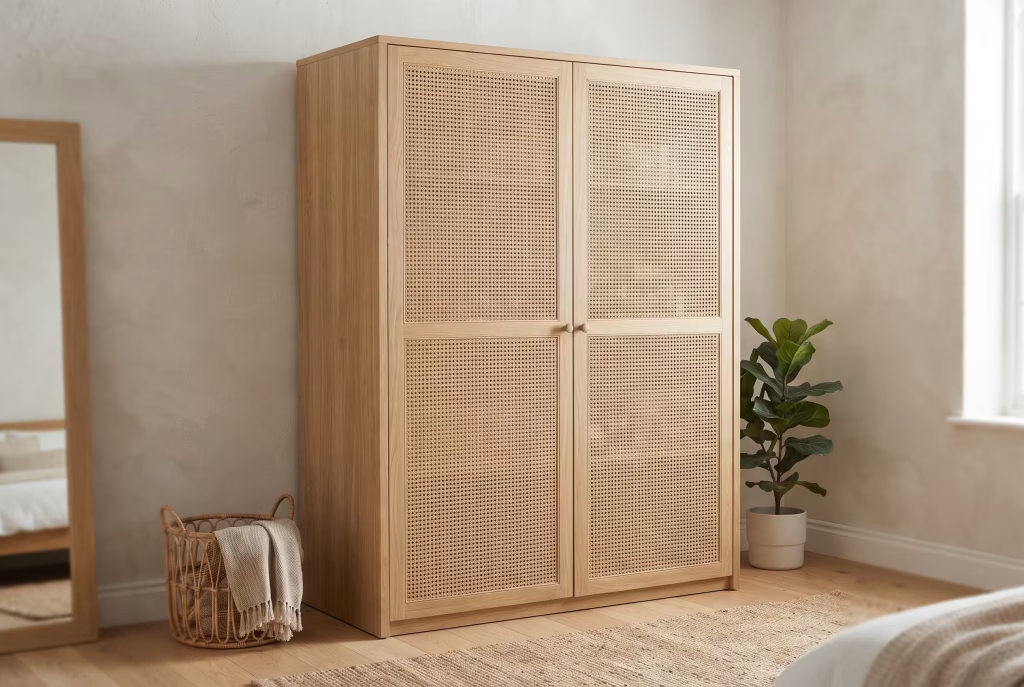
48. Cane and rattan wardrobe doors Woven cane wardrobe fronts lighten the visual weight of a large piece of furniture considerably, letting an otherwise imposing wardrobe blend gently into a room rather than dominate it from every angle. A word to the wise: Cane needs a slightly gentler touch than solid wood, since the weave can catch and tear if it’s snagged on a stray zip or belt buckle.
Kids’ & Teen Italian Bedrooms (49–54)
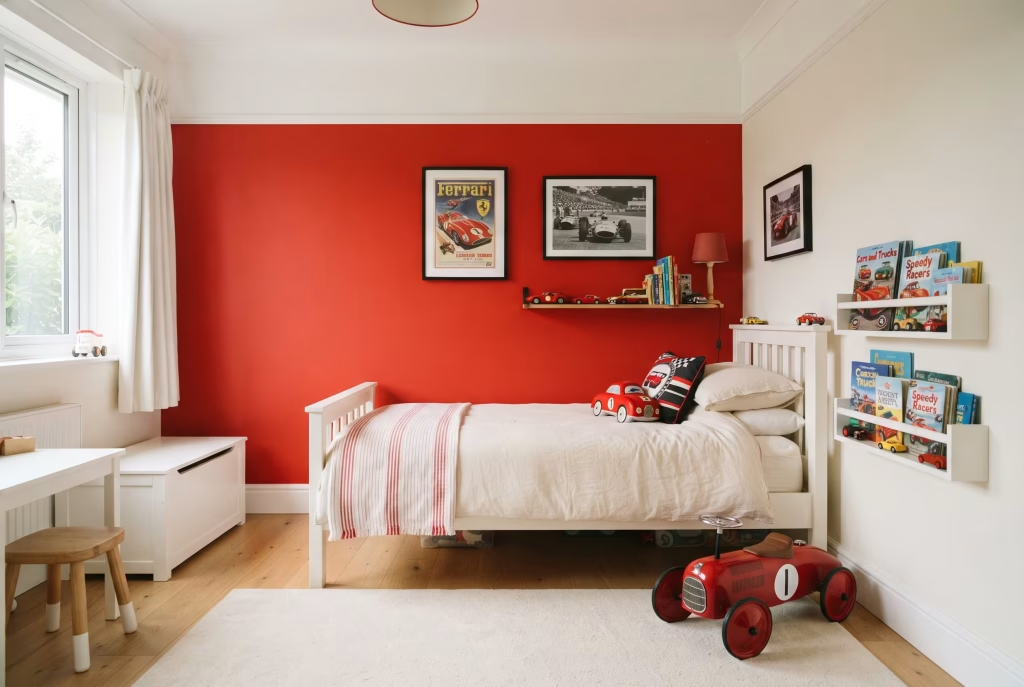
49. Ferrari-red accent wall A single bold red wall brings genuine Italian energy into a child’s room without overwhelming the entire space. Balance it generously with plenty of white or cream elsewhere so the red reads as a deliberate flourish rather than an assault on the senses. Cost and upkeep: Entirely achievable with paint alone, and just as easily painted over again the moment tastes inevitably change.
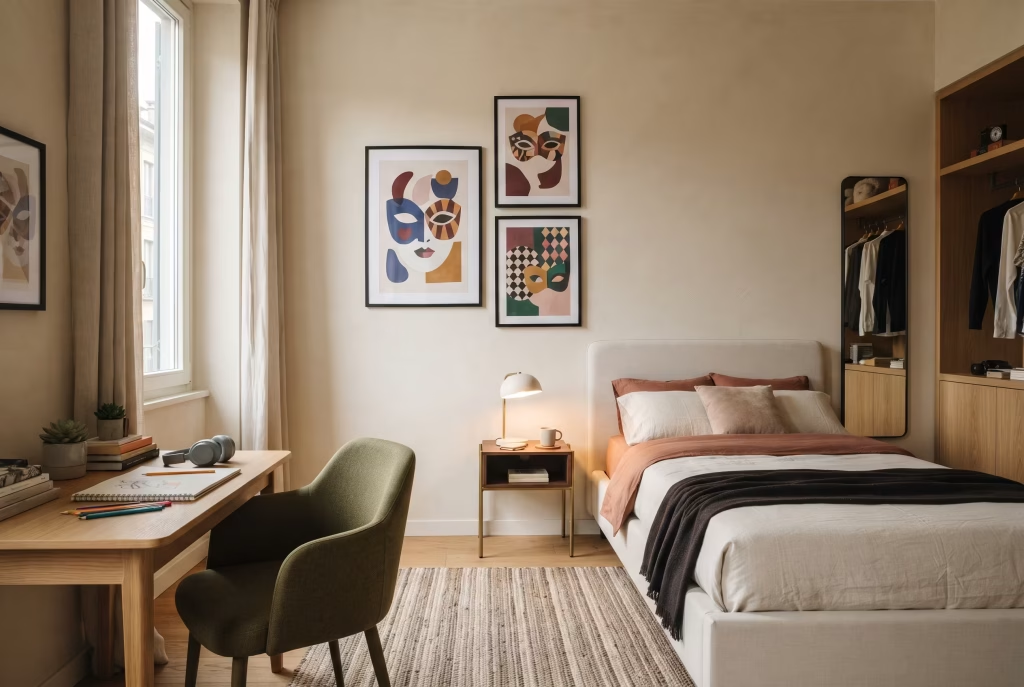
50. Venetian-mask inspired art Playful, colourful artwork referencing Venetian carnival masks brings genuine whimsy and a sense of place into a teen bedroom without feeling babyish or overdone. Worth knowing: Choose prints rather than originals here, since teenage taste shifts fast, and swapping artwork out should be a painless, low-cost exercise rather than a wrench.
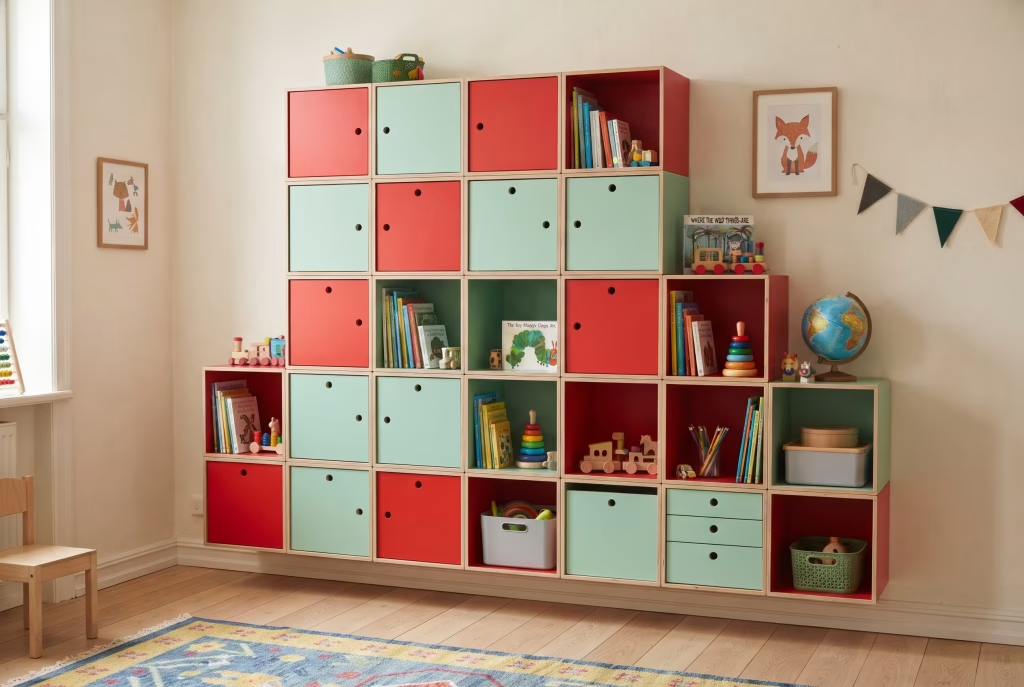
51. Modular colourful storage Bold, modular storage units in Ferrari red or Vespa mint can be rearranged as a child grows, which genuinely extends the useful life of the furniture rather than dating it within a couple of years. Real cost: Modular systems cost more upfront than a single fixed unit, but they pay for themselves over time by adapting alongside a child rather than needing full replacement.
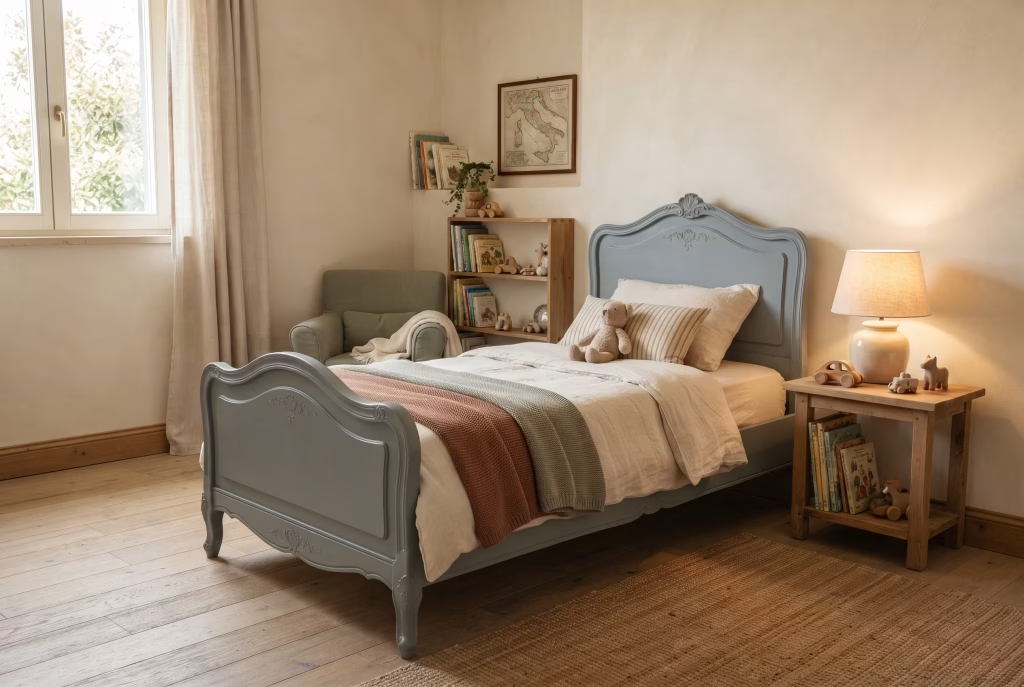
52. Mini Baroque-style bed frame A scaled-down version of an ornate carved bed frame gives a child’s room genuine Italian character without looking like a shrunken imitation of an adult’s room. Cost and upkeep: Painted rather than stained versions are considerably cheaper and can be refreshed with a new coat as favourite colours fall in and out of fashion, sometimes within a single school term.
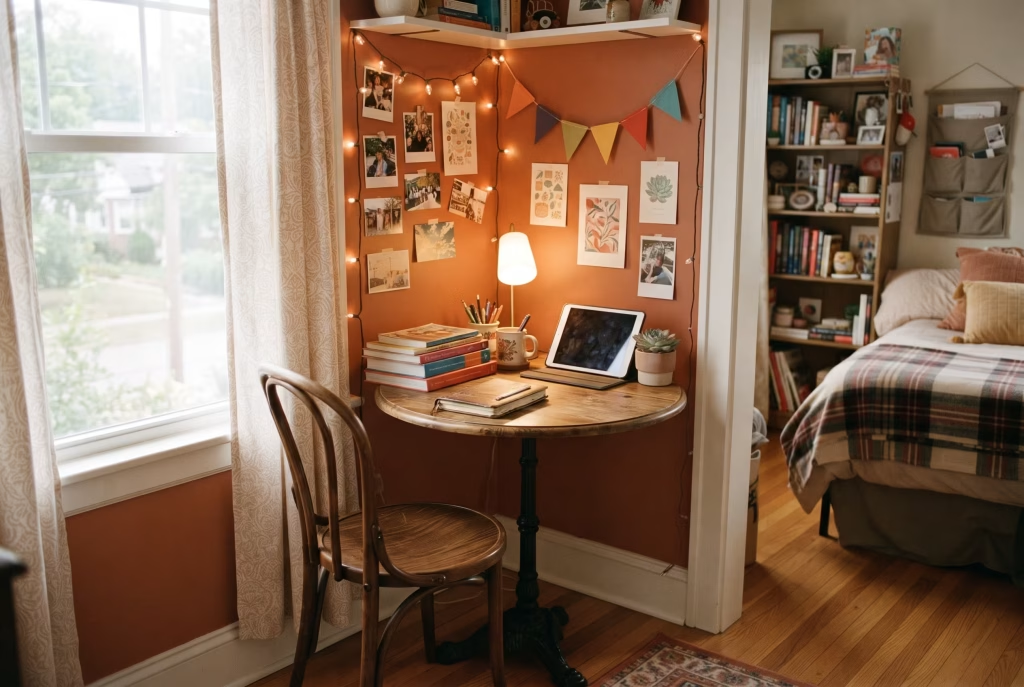
53. Café-nook study corner A small desk and chair styled to resemble a quaint Italian café table gives a teenager a distinct study spot that feels personal rather than purely functional and clinical. How it feels to live with: A genuinely distinct, visually separate study corner helps some teenagers mentally separate “work mode” from “rest mode” within one shared room, which matters more than it sounds.
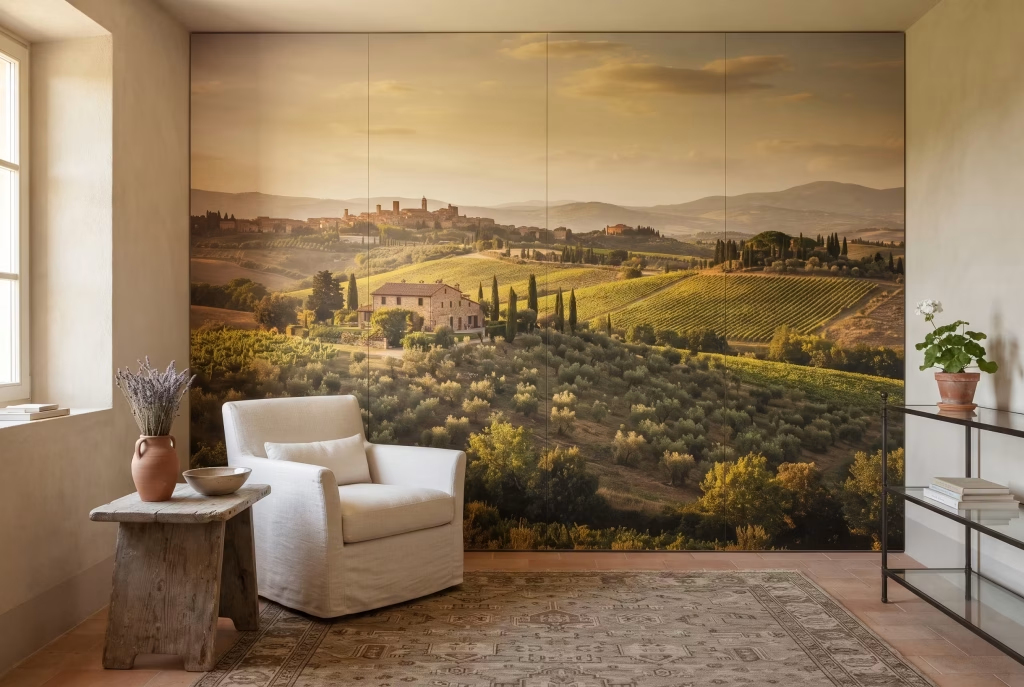
54. Tuscan-landscape wall mural A large-scale mural of rolling Tuscan hills brings the whole aesthetic into a room in one single, striking move that needs almost nothing else added to it. Real cost: A full hand-painted mural is a significant investment by any measure, but printed wall mural panels achieve much the same visual effect for considerably less outlay.
DIY & Budget Italian Touches (55–60)
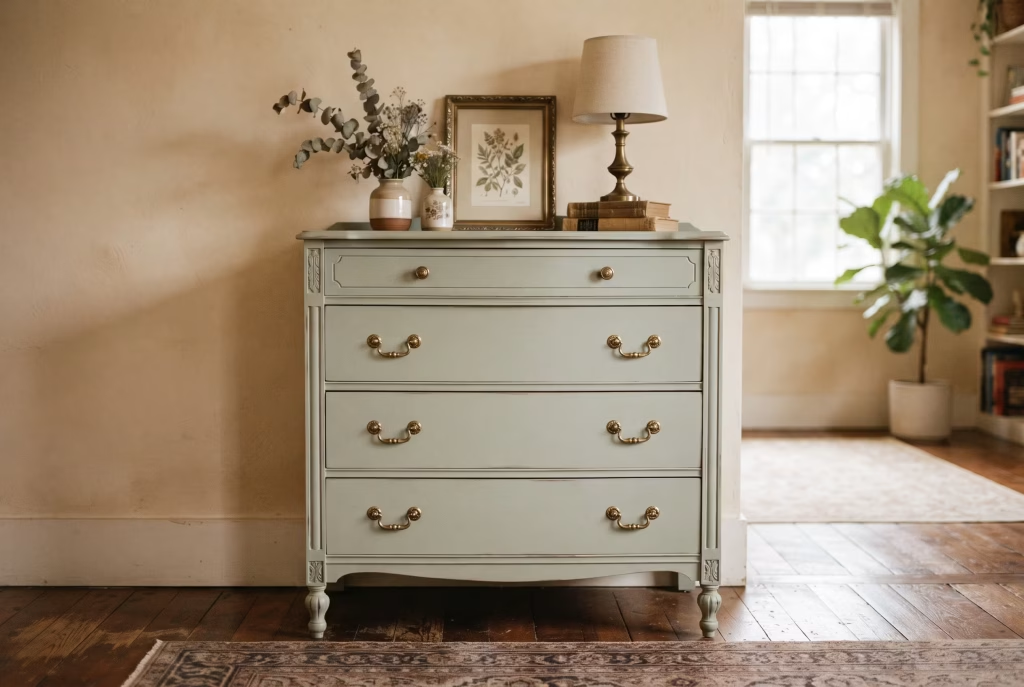
55. Chalk-painted upcycled dresser An old, unloved dresser transformed with chalk paint and new brass or ceramic handles can pass convincingly for a much pricier antique, fooling most people who don’t look too closely. Cost and upkeep: This is one of the cheapest transformations on the entire list, often achievable for little more than the price of a tin of paint and a set of hardware.
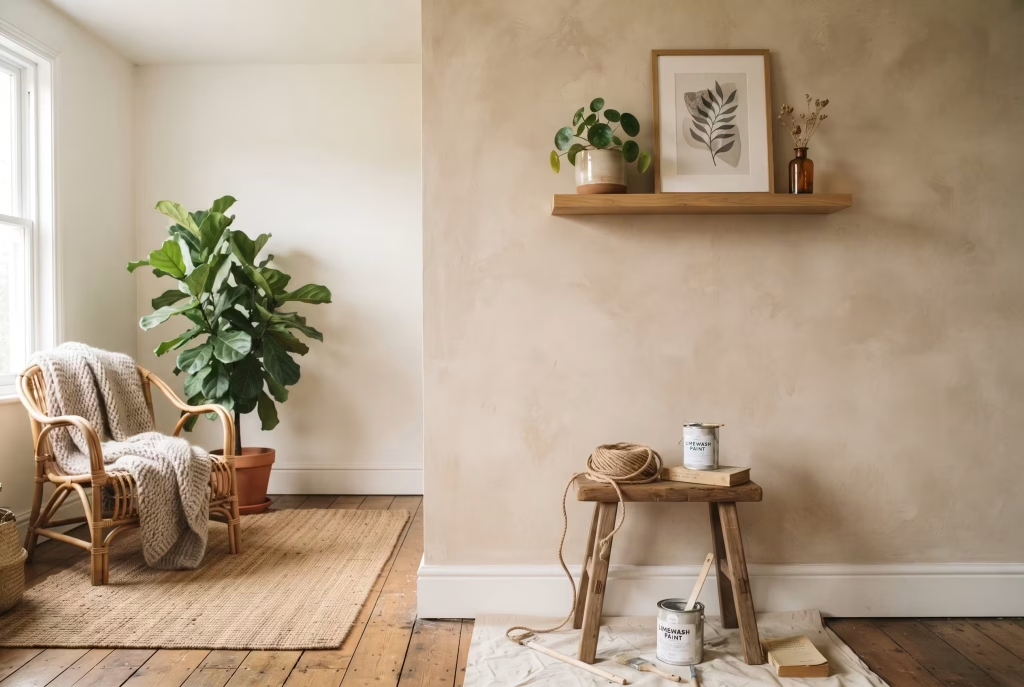
56. DIY limewash accent wall Limewash paint gives a soft, matte, slightly uneven finish that’s genuinely forgiving for a first-time DIYer, unlike a flawless flat colour that mercilessly shows every stray roller mark underneath it. A word to the wise: Apply in thin layers and let each one dry fully before starting the next. Rushing this single step is the most common mistake first-timers make, and it’s entirely avoidable.
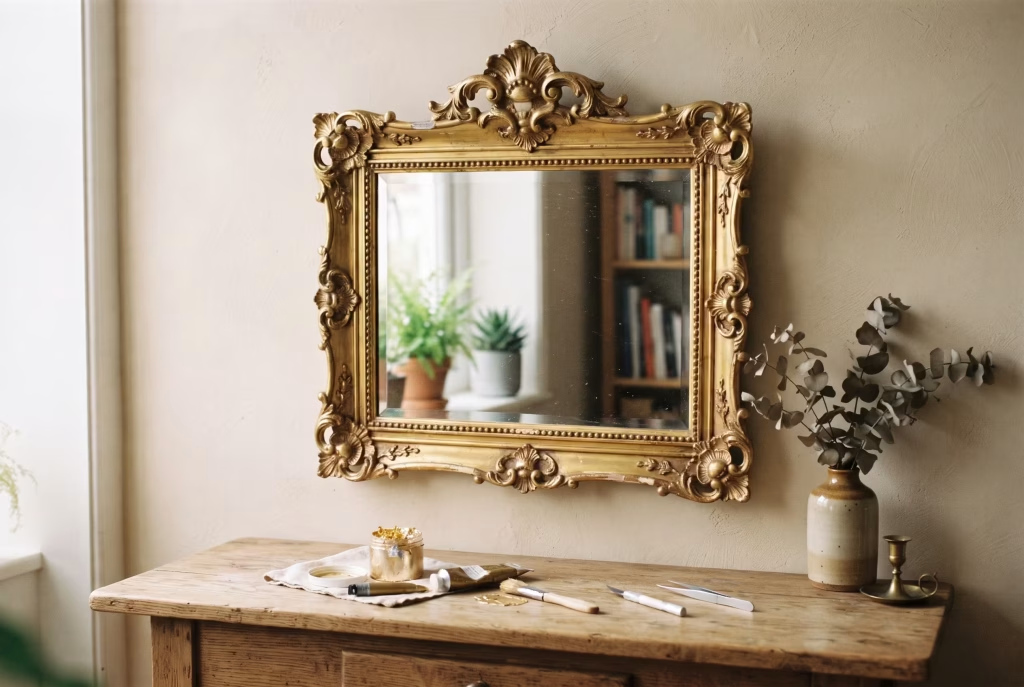
57. Thrifted gilt mirror refresh A tired secondhand mirror can be revived beautifully with a bit of gold leaf or metallic wax worked into any chipped or dulled patches of the original gilding. Cost and upkeep: Gold leaf kits cost very little indeed, and a single mirror can usually be brought back to life in a single afternoon with nothing more than patience.
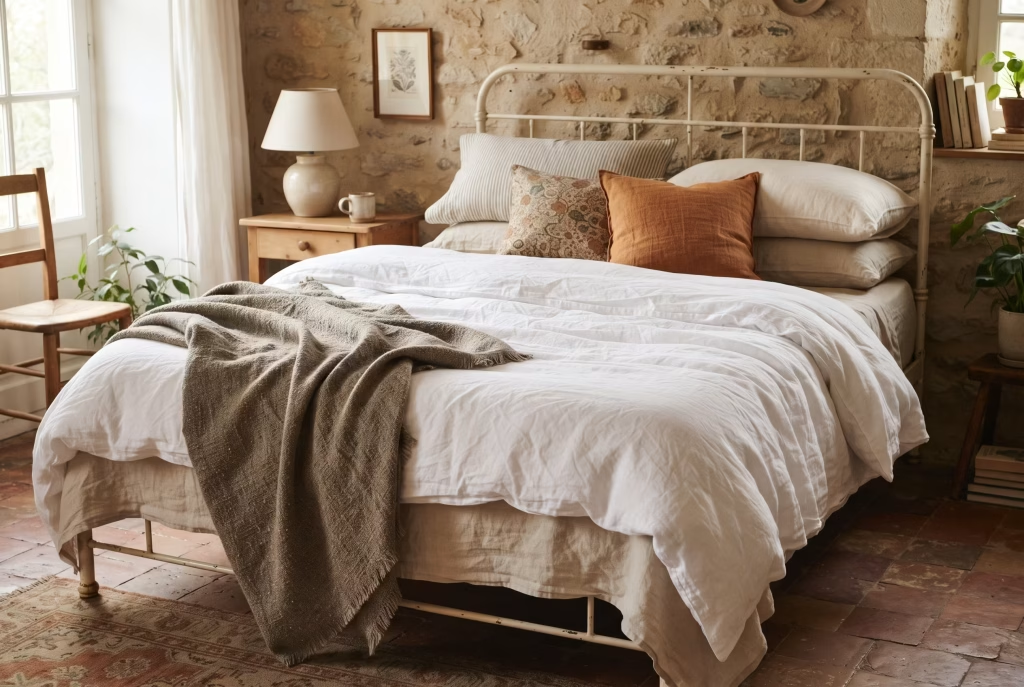
58. Layered bedding on a budget Simply layering a flat sheet, a duvet and a folded throw at the foot of the bed, then adding two or three mismatched cushions in slightly different fabrics, creates that “effortlessly styled” Italian look without spending a penny on new furniture. How it feels to live with: This costs nothing beyond linens you may well already own, and it’s the single easiest idea on this entire list to try out tonight, with no shopping trip required.
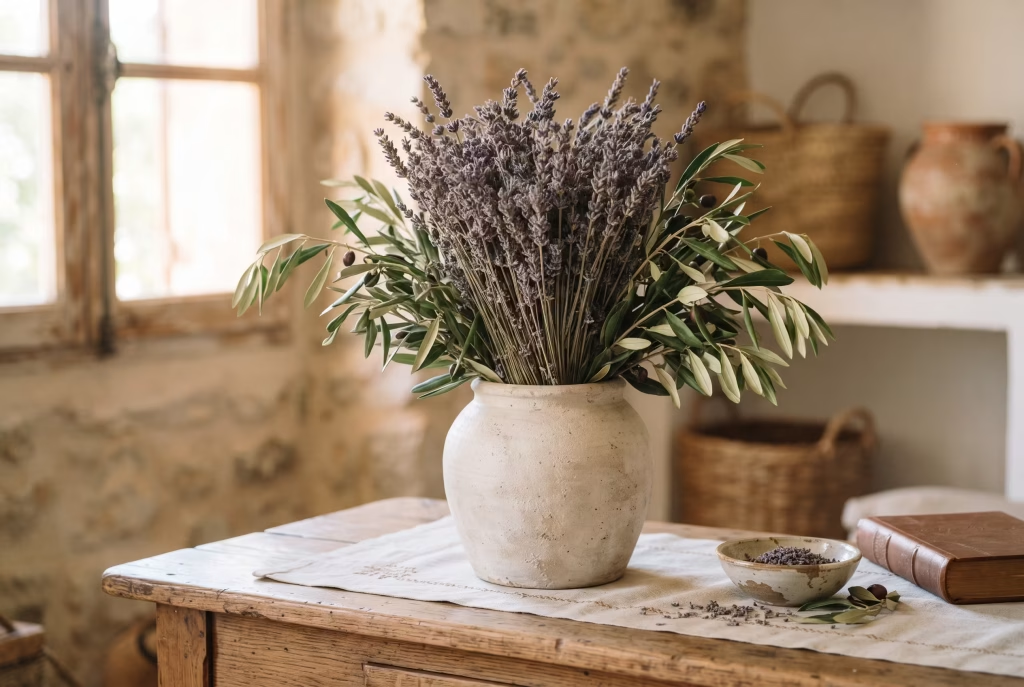
59. Dried lavender and olive branches A simple vase of dried lavender or olive branches brings genuine scent and Mediterranean character into a room for the price of a bunch from the supermarket flower stand. Worth knowing: Dried arrangements last for months rather than days, which makes them considerably better value than fresh flowers for this particular look, and there’s no wilting to worry about halfway through the week.
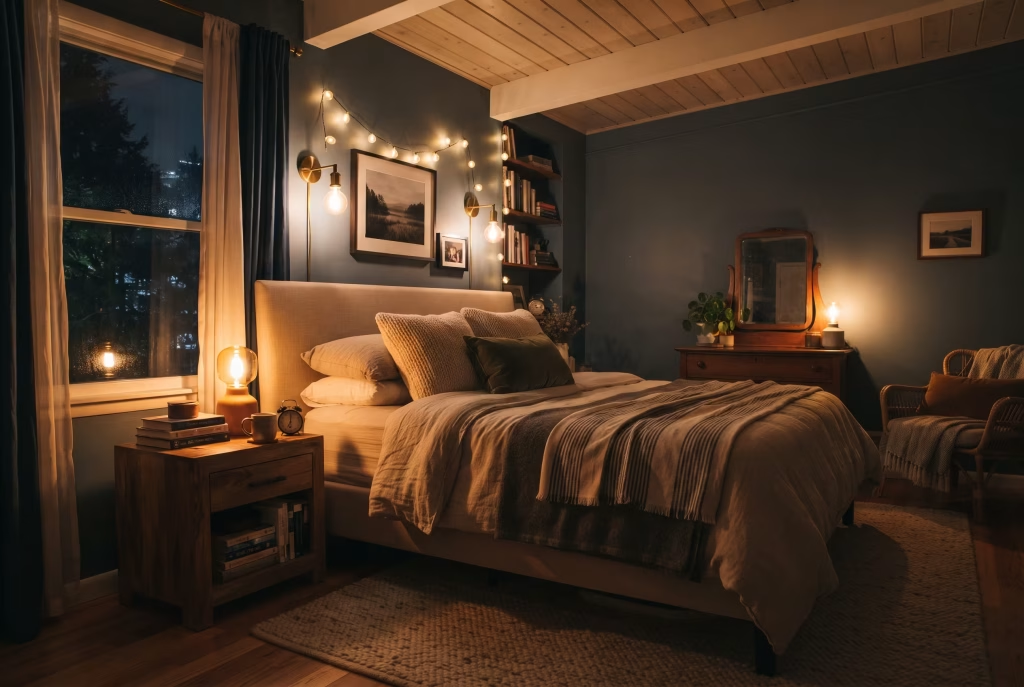
60. Warm bulb swap (colour temperature reset) Swapping cool white bulbs for warm 2700K bulbs is quite possibly the cheapest single change on this entire list, and it does more to make a room feel genuinely Italian than almost anything else here, furniture included. Cost and upkeep: A few pounds per bulb, five minutes of your time with a stepladder, and a genuinely noticeable difference the very same evening.
What It Actually Costs Budget, Mid-Range and Luxury
| Tier | Typical spend for one room | What you get |
| Budget | Under £500 | Paint, textiles, lighting swaps, thrifted and upcycled furniture, layered bedding |
| Mid-range | £500–£3,000 | A statement bed frame, quality linen, a few solid-wood or leather pieces, professional Venetian plaster |
| Luxury | £3,000+ | Full bespoke furniture from Italian brands, marble surfaces, custom joinery, hand-painted ceilings |
For reference, full bespoke luxury Italian bedroom design projects from specialist studios can run well into five figures once furniture, materials and fitting are all accounted for. That’s a genuinely different budget bracket to most of what’s covered on this list, and it’s worth knowing that distinction exists so you never feel you need to spend anything close to that to get a room that genuinely works.
Frequently Asked Questions
What’s the difference between Italian, Tuscan and Mediterranean style?
Tuscan refers specifically to Italy’s countryside aesthetic: rustic, earthy, drawing on hills and vineyards rather than the coast. Mediterranean pulls from multiple coastal countries including Spain, Greece and Morocco alongside Italy, and reads brighter and airier as a result. “Italian” is the broader umbrella that includes both, plus the sleeker, more urban Modern Italian look found in cities like Milan.
Is Italian bedroom style dated in 2026, or is it trending?
Both, depending entirely on how it’s executed. The heavy, over-ornamented early-2000s take on Tuscan style has genuinely fallen out of favour. A lighter, more authentic version, warm materials without the theatrical excess, is having a real, well-documented revival this year.
How do I get the look without spending a fortune?
Focus on paint, lighting temperature and textiles first. A terracotta feature wall, warm 2700K bulbs and layered linen bedding cost very little and do most of the visual heavy lifting between them. Save any splurging for one or two genuine statement pieces rather than spreading a modest budget thinly across everything at once.
Will Italian style work in a small bedroom or a flat?
Yes, provided you edit rather than pile on. A large mirror, a low-profile bed and a lighter modern-Italian palette make small rooms feel considerably bigger than a heavily ornamented Old World look ever would, which tends to swallow limited square footage whole.
How do I stop it feeling like a cold hotel room instead of a warm one?
Add genuinely personal objects, not just styled ones: real books you’ve actually read, a family photograph, something you picked up on holiday and can’t quite explain why you kept. Scent matters here too. A room that looks flawless but smells of absolutely nothing tends to feel staged rather than properly lived in.
What are the best paint colours for an Italian bedroom?
Warm creams, terracotta, olive green and soft taupe are the classic choices that rarely disappoint. For a more modern take, try charcoal, navy or a muted sage instead.
What’s the difference between Old World and Modern Italian?
Old World favours ornate, carved furniture and warm, traditional colours throughout. Modern Italian is sleeker and considerably cooler, with clean lines and materials like marble, glass and brushed metal doing most of the visual heavy lifting instead.
How do I add a modern twist to a traditional Italian bedroom?
Mix eras deliberately rather than by accident: pair an antique carved headboard with a sleek contemporary nightstand, or a modern platform bed with a single ornate mirror. The contrast reads as genuinely curated rather than simply clashing.
What materials define authentic Italian design?
Solid wood (walnut, oak), marble, full-grain leather, linen and wrought iron are the recurring materials across every era of Italian interior design, from rustic farmhouse right through to sleek Milanese modern.
How do Italian interiors handle lighting?
Layering is the guiding principle: a central fitting, table lamps and wall sconces all working together rather than a single harsh overhead bulb doing all the heavy lifting alone. Warm colour temperature bulbs, around 2700K, matter more than most people expect walking in.
Can I mix Italian style with furniture I already own?
Absolutely, and in fact it’s the smarter route for most people. Start with colour and lighting, both of which cost relatively little and change the mood instantly, then introduce one or two new statement pieces gradually rather than replacing everything at once.
Is Italian style too formal or masculine, or can it feel soft and romantic?
It can genuinely go either way, and that’s part of its lasting appeal. Wrought iron and dark wood lean masculine and dramatic; whitewashed wood, linen and soft florals lean romantic and considerably softer. The core materials stay largely the same throughout, it’s the colour and texture choices layered on top that shift the mood entirely.