




20 Luxurious Italian Dining Room Ideas for an Elegant, Timeless Home
There’s a reason the Italians never rushed a meal. A dining room, done properly, isn’t a waypoint between the kitchen and the sofa. It’s where the evening actually happens: the wine gets poured a little too generously, the conversation runs long, and nobody’s checking their phone under the table. Get the room right and you get more of those evenings. Get it wrong, and you end up with a beautiful space that only sees daylight at Christmas, gathering dust the other 364 days of the year.
That’s the trap a lot of “Italian style” dining rooms fall into. They chase the marble and the chandelier and forget the warmth that made the look worth copying in the first place. This guide sets out to avoid that.
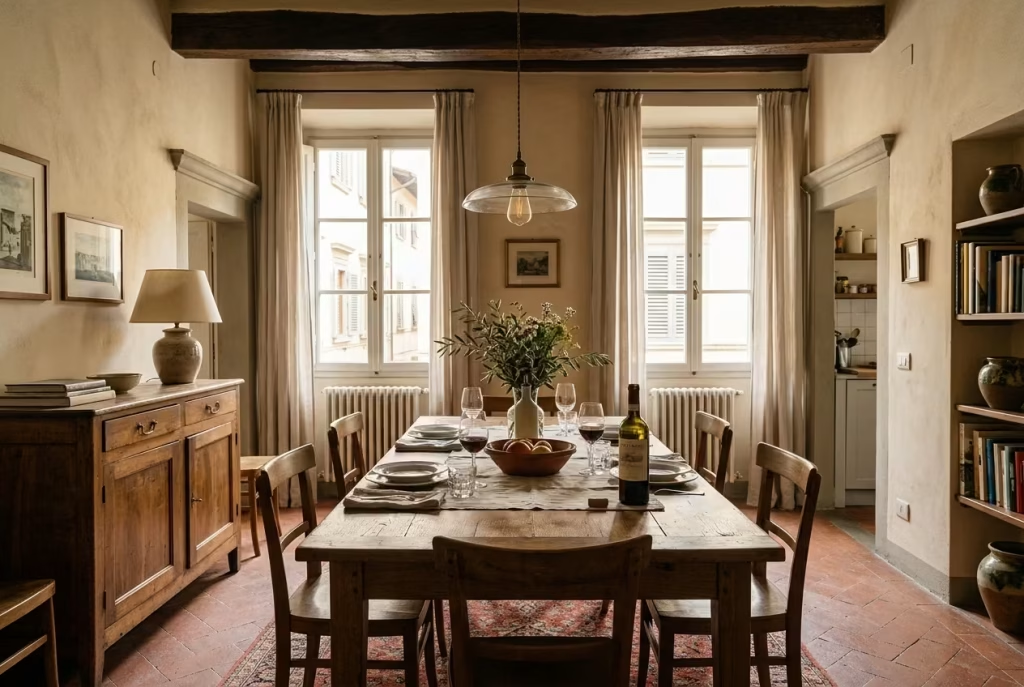
Below you’ll find twenty genuinely distinct ideas, not twenty variations on the same terracotta wall, organised across seven real Italian design traditions: the rustic pull of a Tuscan farmhouse, the theatrical shimmer of Venetian glass, the pared-back confidence of Milanese minimalism, the salt-air ease of the Amalfi coast, the earthbound honesty of stone and terracotta, the sheer indulgence of marble and gold, and a set of ideas built specifically for those working with four square metres rather than forty.
Along the way, you’ll get the numbers that actually matter: how big a table you need, how high to hang the light above it, what marble and terracotta really cost to keep looking good, and whether this whole aesthetic is a passing fad or something with real staying power in 2026. Every idea below carries at least one hard figure or genuine fact rather than pure mood-board language, because a dining room is somewhere you’ll actually live, not somewhere you’ll only photograph. Consider this the guide that fills in every gap Edward George’s own 45-idea roundup left wide open.
Quick Answer: An authentic Italian dining room leans on natural materials (marble, terracotta, wrought iron, aged wood), warm earthy or deep jewel-toned colour, and generous but human-scaled lighting, rather than sheer size or expense.
You don’t need a palazzo. A rented flat with the right table, the right light fixture at the right height, and one or two honest materials will read as Italian far more convincingly than a huge room full of matching, catalogue-bought furniture ever could. The through-line across every genuinely Italian interior, from a Tuscan farmhouse to a Milanese apartment, is that the room is built to be used daily, not admired occasionally.
Is Italian Dining Room Style Dated in 2026, or Genuinely Back?
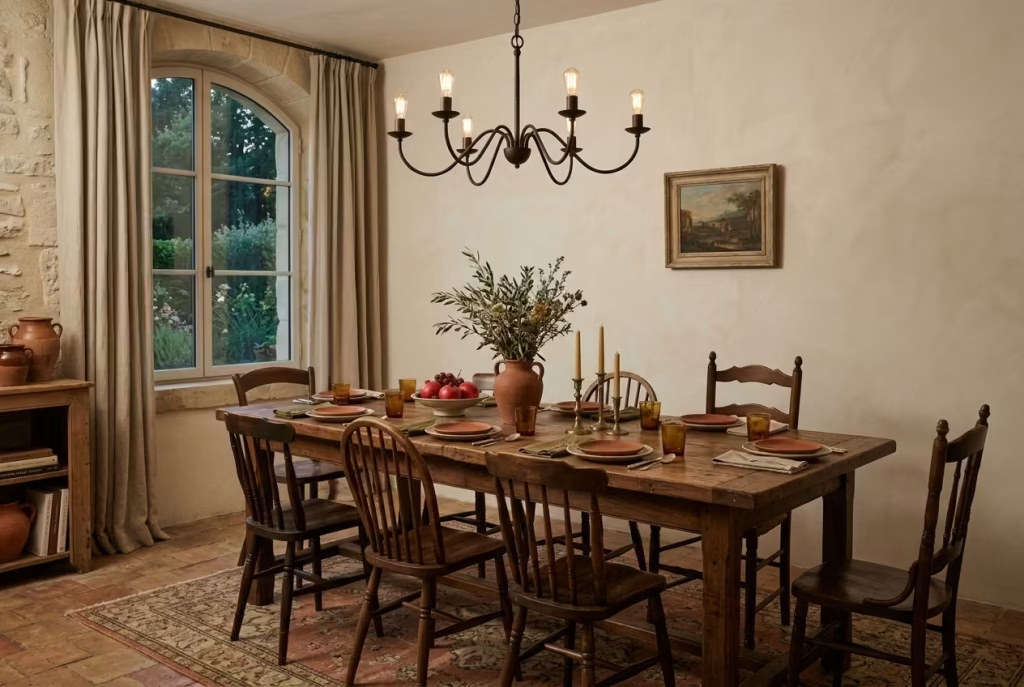
Here’s the honest answer, because pretending otherwise does nobody any favours: the heavy, over-decorated Tuscan look of the early 2000s did fall out of fashion, and fairly hard. Interior journalists have spent the best part of a decade poking fun at what one recent piece called the “rooster-on-the-backsplash” era:
oversized cherry-wood furniture, sun-yellowed faux-finish walls applied without an ounce of restraint, glazed kitchen cabinetry in every corner, and wrought iron piled on so thickly it stopped reading as craftsmanship and started reading as clutter. If you lived through that era, or renovated a house that still carries its ghosts, the wariness is entirely understandable.
What’s happening now, according to designers speaking to Homes & Gardens and several other outlets through 2026, is a genuine revival, but a corrected one. Nobody with any real design sense is bringing back the rooster.
What’s coming back is the feeling underneath it: warmth, weight, natural material, and the sense that a room has been lived in rather than staged for a show home. Dining rooms in particular are flagged as a natural home for this update, precisely because a rustic wood table, a vintage rug, and a wrought iron chandelier can carry the whole mood without a single fresco or faux-finish wall in sight.
Designers describe the shift as one from quantity to quality: fewer pieces, chosen with more care, allowed to age visibly rather than restored to a false, showroom shine. One rustic wood table beats three mismatched reproduction pieces. A single antique-finish chandelier beats a matching three-piece lighting set bought as a job lot.
That restraint, more than any single material or colour, is what separates a 2026 Italian dining room from its 2004 ancestor. If you’re worried this style will feel dated the moment you finish decorating, the fix is that simple: keep the warmth, lose the heaviness, and resist the urge to match everything.
The Twenty Ideas at a Glance
| # | Idea | Zone | Best for |
| 1 | Reclaimed farmhouse table as the anchor | Tuscan Farmhouse | Family homes, regular hosting |
| 2 | Terracotta tile flooring underfoot | Tuscan Farmhouse | Ground-floor dining rooms with good sub-floor access |
| 3 | Wrought iron chandelier with candle-style bulbs | Tuscan Farmhouse | Any room with 8ft+ ceilings |
| 4 | Exposed beams and a plastered arch | Tuscan Farmhouse | Period properties, loft conversions |
| 5 | Murano glass pendant cluster | Venetian & Murano Glamour | Statement-seekers, smaller tables |
| 6 | Aged mirror wall to bounce candlelight | Venetian & Murano Glamour | North-facing or windowless rooms |
| 7 | Deep jewel-toned wallpaper or paint | Venetian & Murano Glamour | Confident colour users |
| 8 | Sculptural single-slab marble table | Modern Milanese | Open-plan, minimalist homes |
| 9 | Monochrome palette with one bold accent | Modern Milanese | Renters wanting a low-commitment refresh |
| 10 | Sleek leather or bouclé dining chairs | Modern Milanese | Households that entertain often |
| 11 | Whitewashed walls with linen textiles | Coastal Amalfi | South-facing, light-filled rooms |
| 12 | Rattan or cane-backed chairs | Coastal Amalfi | Warmer climates, conservatories |
| 13 | Lemon and olive branch centrepieces | Coastal Amalfi | Anyone wanting an easy, low-cost refresh |
| 14 | Natural stone or slate flooring | Rustic Stone & Terracotta | Renovations, extensions |
| 15 | Textured limewashed feature wall | Rustic Stone & Terracotta | Budget-conscious statement-making |
| 16 | Open shelving with hand-painted ceramics | Rustic Stone & Terracotta | Kitchen-diners |
| 17 | Book-matched marble feature wall | Luxury Marble & Gold | Larger budgets, formal entertaining |
| 18 | Brass or gold-toned hardware throughout | Luxury Marble & Gold | Pulling a scheme together on a budget |
| 19 | A bistro-style two-seat table for one corner | Small-Space/Apartment | Studio flats, narrow galley diners |
| 20 | Wall-mounted drop-leaf table | Small-Space/Apartment | Rentals, box rooms, awkward layouts |
Getting the Table Size Right (Before You Fall in Love With Anything Else)
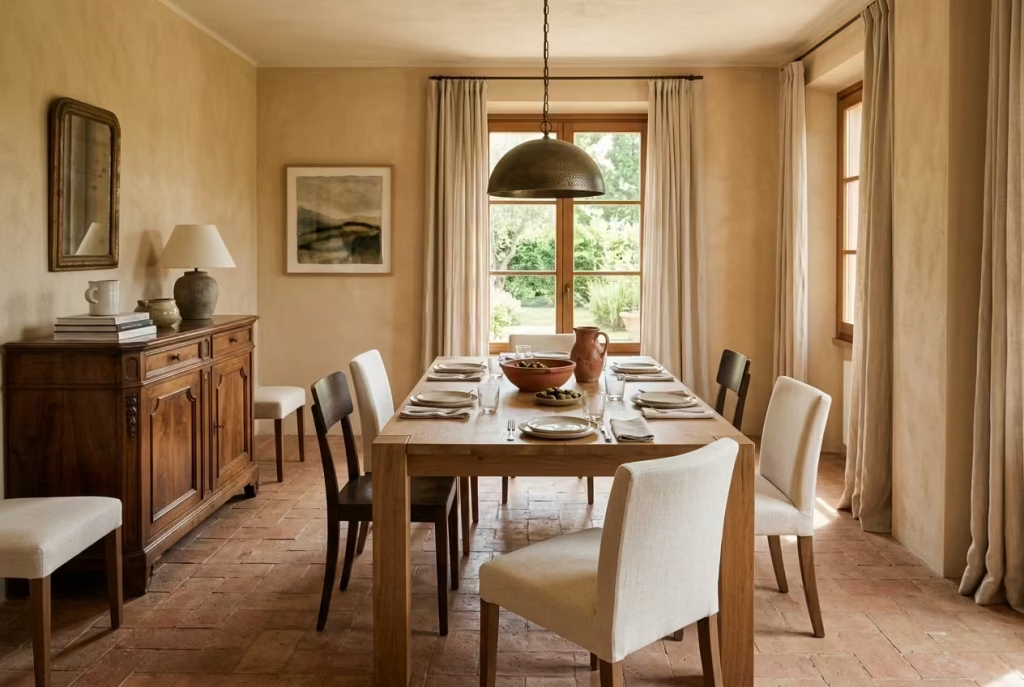
This is the bit every other guide on this topic skips, and it’s the bit that actually determines whether your dining room works day to day rather than just photographs well. Buy too big a table and the room feels cramped even with nobody sitting at it, forcing guests to shuffle sideways past the corners. Buy too small and every dinner party turns into a game of elbows, cutlery clashing, and someone perched slightly too far from their plate.
The rule of thumb designers actually use: allow 24 to 30 inches of table edge per person, and leave at least 36 inches of clearance between the table and the nearest wall or furniture for a chair to be pulled out comfortably. If people need to walk behind seated guests, whether to reach a sideboard or simply pass through the room, push that clearance up to 42-48 inches.
| Table shape and size | Comfortably seats | Notes |
| 60″ x 36″ rectangular | 4 | The classic “four-seater” starting point |
| 6-7ft rectangular | 6 | Most versatile size for a family dining room |
| 7ft+ rectangular or 6ft round | 8 | Needs a genuinely large room to breathe |
| 36-42″ round | 4 | Ideal for a small dining nook or apartment |
| 48-54″ round | 4-6 | A good middle ground for irregular room shapes |
Round tables are measured slightly differently to rectangular ones: work out the circumference (diameter multiplied by 3.14) and divide by 24 inches per person. A 48-inch round table, for instance, has roughly 150 inches of edge space, which works out to about six seats. It sounds fiddly on paper, but it saves you turning up with a beautiful table that only fits three chairs comfortably, or worse, one that swallows the room whole.
There’s a second, quieter factor most seating charts skip entirely: the table’s base. A pedestal table, with a single central column, lets you seat someone at every point around the edge, including the spots a four-leg table would lose to its own legs. On a 60-inch round table, that difference can genuinely mean one or two extra usable seats depending on the base you choose, which is worth bearing in mind if you’re torn between two otherwise similar tables.
Lighting It Properly: The Chandelier Height Nobody Tells You
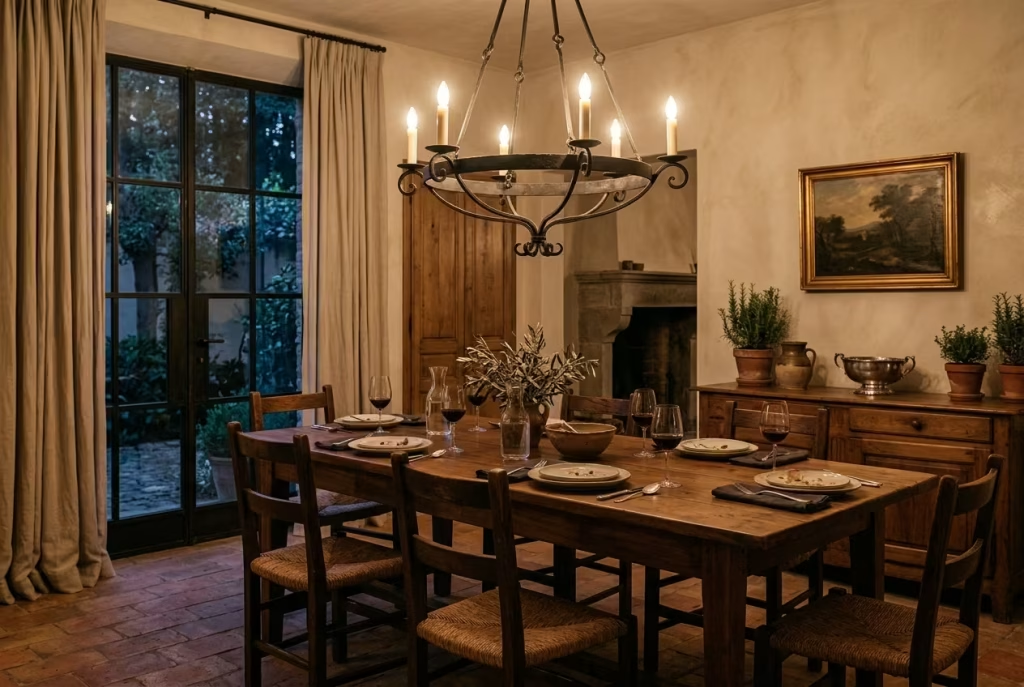
An Italian dining room without a proper light fixture is like a Sunday lunch without wine. Technically fine, but missing the point entirely. The mistake most people make isn’t choosing the wrong chandelier, it’s hanging the right one at the wrong height, which undoes all the careful shopping that came before it.
The standard designer’s rule: the bottom of the fixture should sit 30 to 36 inches above the tabletop, based on a standard 8-foot ceiling. For every additional foot of ceiling height beyond that, add roughly 3 inches to the drop. A 10-foot ceiling, for instance, wants the chandelier hanging 36-42 inches above the table rather than the standard 30-36, otherwise the fixture ends up looking stranded, floating too high to feel connected to the meal happening beneath it.
There’s a proportion rule worth knowing too: your chandelier’s diameter should sit somewhere between half and two-thirds of your table’s width. For a 72-inch table, that translates to a chandelier roughly 36 to 48 inches across. Hang something oversized too low, and diners end up bumping their heads or squinting past it to see across the table. Hang something too small too high, and the whole fixture looks lost, like it wandered in from a different room and never quite settled in.
One further practical note worth flagging: if your chandelier is on the larger or visually heavier side, such as a substantial wrought iron piece or a dense cluster of Murano glass, it’s worth raising it an inch or two beyond the standard guideline. It reads as lighter and shows off the design better, rather than pressing down on the table the way an overly low, heavy fixture can.
You May also Like: 20 Pink and White Dining Room Ideas That Make Your Table the Star of the Show
Tuscan Farmhouse
1. Reclaimed Farmhouse Table as the Anchor
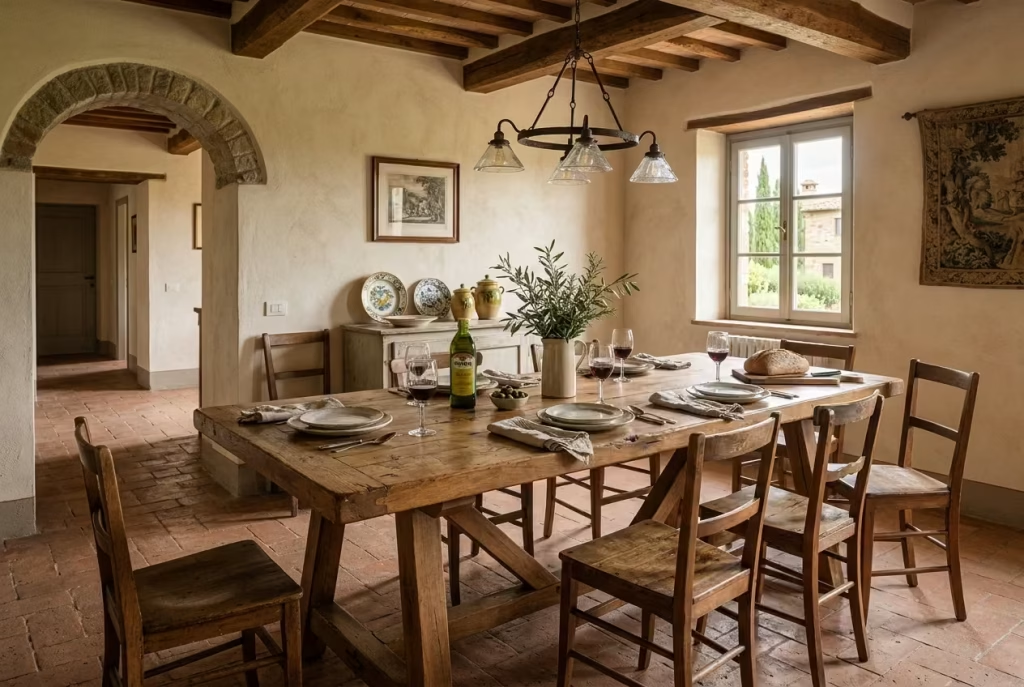
Everything else in this list is decoration. This is the foundation. A genuine Tuscan farmhouse table isn’t polished to a mirror shine, it carries knots, slight colour variation, and the odd honest scratch that tells you real meals have happened on its surface for years, not weeks. Oak and reclaimed pine are the two woods worth chasing, both for durability and for the way they age rather than simply wear out, deepening in colour and softening at the edges the way genuinely old furniture always has.
The construction matters as much as the wood species. A trestle base or a substantial turned-leg design carries the visual weight this style depends on far better than a thin, spindly frame, which tends to look under-scaled beside a heavy tabletop. If you’re buying reclaimed, ask where the timber came from. Genuinely reclaimed barn or church timber carries a density and grain pattern that modern fast-grown wood simply can’t replicate, and it’s part of what you’re paying for.
Cost and upkeep: Expect £800-£2,500 for a genuine reclaimed or solid wood table in this style, considerably more for antique originals with documented provenance. Wood needs an occasional oiling, roughly twice a year for a heavily used table, but shrugs off day-to-day family life far better than a lacquered finish ever will, since scratches simply blend into the existing character rather than standing out starkly against a glossy surface.
2. Terracotta Tile Flooring Underfoot
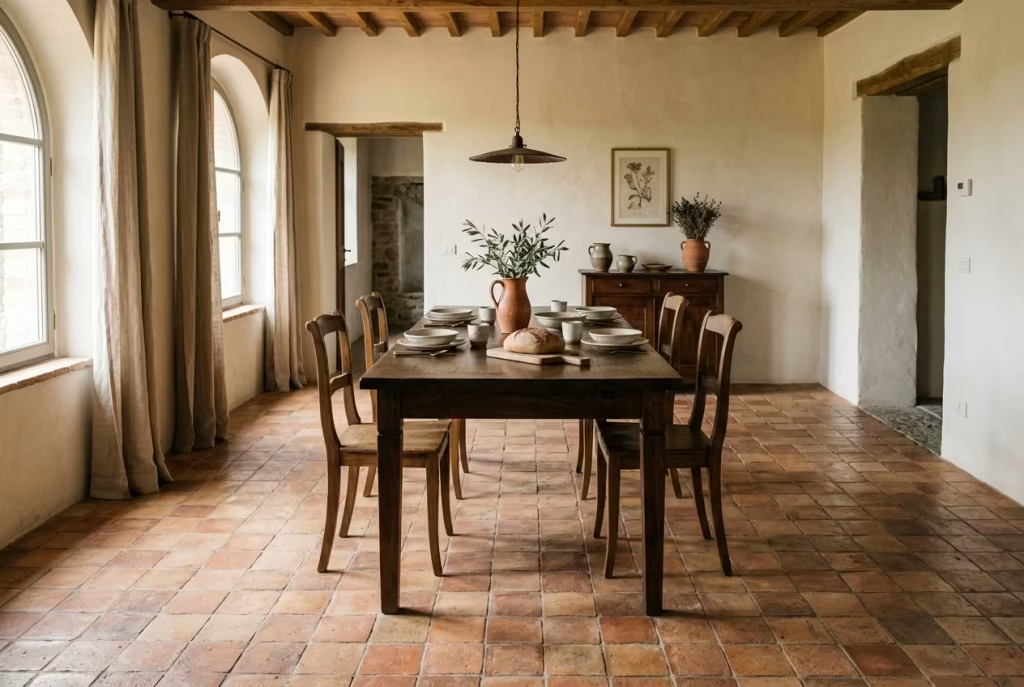
There’s a warmth to terracotta that no porcelain imitation quite manages, partly because it’s genuinely warmer underfoot than stone or ceramic tile, and partly because no two tiles are identical. Each one carries its own slight variation in tone, a fingerprint of the clay it was fired from, so the colour variation from tile to tile is a feature, not a flaw. Resist the urge to hand-pick only the “best” ones during installation, since a floor made entirely of matched tiles actually looks less authentic, not more.
A professional installer will typically “dry-lay” the tiles first, arranging them loose across the floor before anything gets fixed down, specifically to spread that natural colour variation evenly and avoid clusters of similarly toned tiles bunching together in one corner. It’s a step worth insisting on if you’re paying for professional installation, since skipping it is one of the most common ways a genuinely good batch of terracotta ends up looking patchy rather than rich.
Worth knowing: Real terracotta runs roughly $3 to $20+ per square foot depending on whether it’s machine-made or handmade and imported, plus $5-10 per square foot for professional installation. It must be sealed before grouting, to stop the grout’s pigment staining the porous clay, and again after the grout has cured, typically 48 to 72 hours later. A quality sealer will protect the floor for 5-15 years against the stains and moisture that untreated terracotta soaks up readily, while a cheap sealer can wear through in under a year, so it pays to spend properly here rather than cut corners on the one product doing all the protective work. Cared for properly, a good terracotta floor can genuinely last decades, some sources put well-maintained terracotta at two to three centuries with consistent resealing, which puts the upfront cost into a rather different perspective.
3. Wrought Iron Chandelier With Candle-Style Bulbs
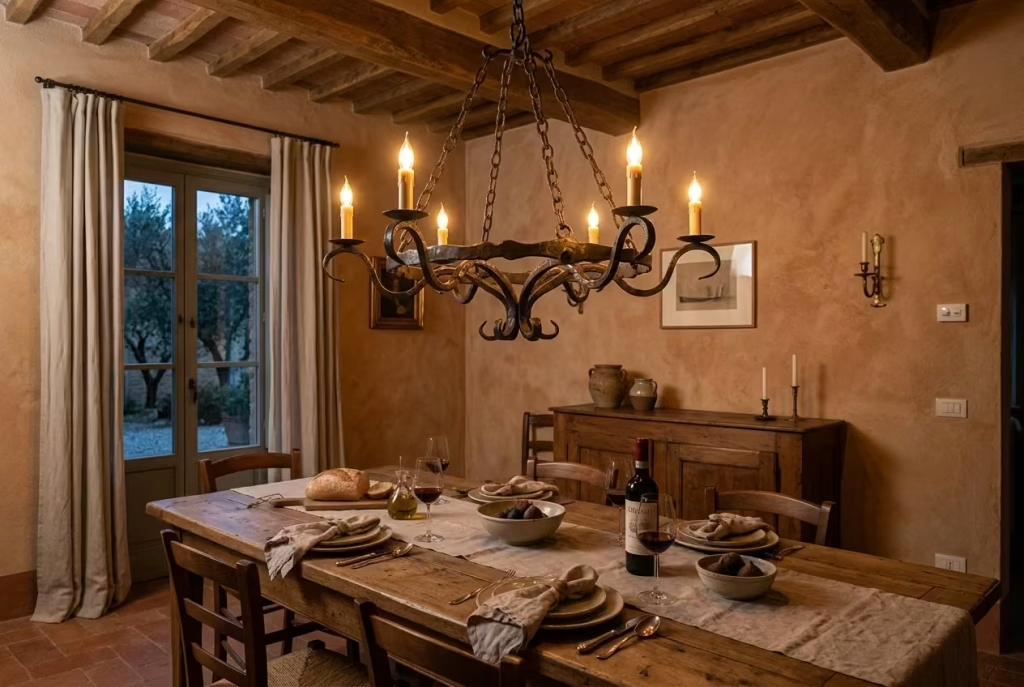
Nothing signals Tuscan farmhouse quite like a wrought iron fixture with warm, flame-shaped bulbs, and there’s a genuine craft history behind why this material became the region’s signature. Wrought iron is worked by hand while hot, hammered and shaped rather than cast in a mould, which is exactly why authentic pieces carry small irregularities, a slight twist here, an uneven curl there, that mass-produced cast iron simply can’t fake convincingly.
The trick to keeping it feeling current rather than 2004 is restraint: one substantial fixture, hung at the correct height (see the lighting section above), rather than matching wrought iron sconces marching around the entire room in a way that starts to feel more like a themed restaurant than a home.
How it feels to live with: Warm-toned bulbs, aim for around 2700K on the colour temperature scale, throw a much more forgiving, golden light than a cool white equivalent, which matters enormously at a dinner table where everyone’s face is under that light for two hours at a time. Cooler bulbs, by contrast, tend to flatten skin tone and can make even beautifully cooked food look slightly clinical, which rather defeats the point of a candlelit-feeling room.
4. Exposed Beams and a Plastered Arch
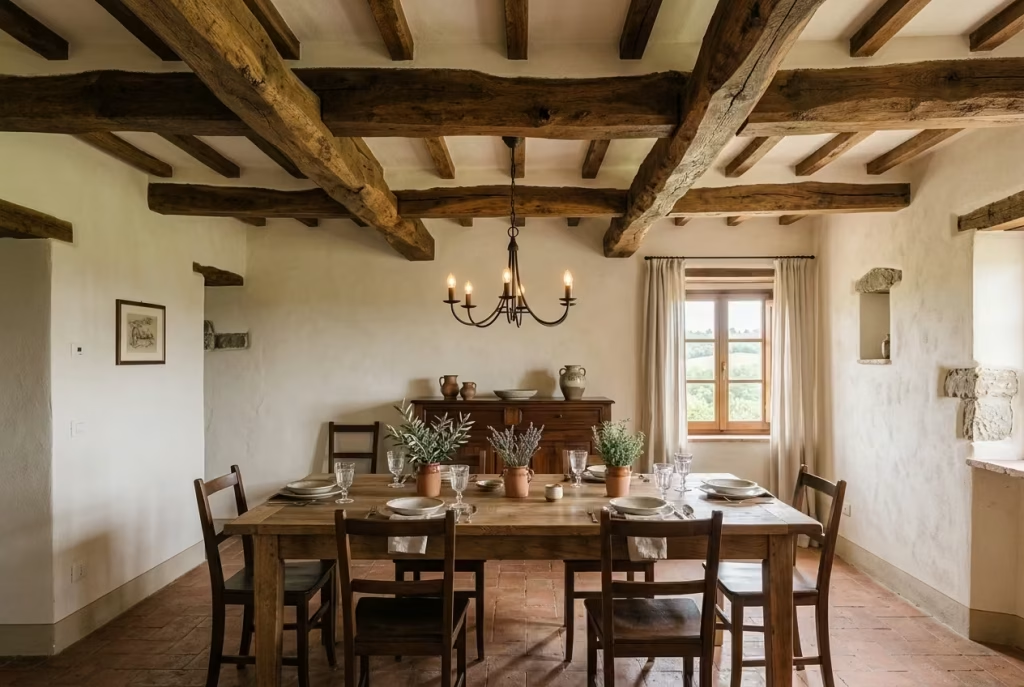
If your home genuinely has period beams, this idea writes itself: leave them exposed, perhaps limewashed rather than heavily varnished, and let them do the work without competing for attention against anything else in the room. A dark, heavily stained beam against a light ceiling reads as a strong architectural statement on its own, no further embellishment required.
If you don’t have real beams, a single plastered archway leading into the dining space, rather than a plain rectangular doorway, borrows the same softness without any structural work. The curve of an arch does something a straight-edged doorway can’t: it visually slows you down as you pass through it, which is precisely the unhurried mood this whole style is built around.
A word to the wise: Adding faux beams is a genuinely popular and effective trick in period-adjacent homes, but hire someone experienced. Badly proportioned faux beams, ones too thin for the ceiling height, or spaced with obviously mechanical regularity, are one of the fastest ways to make a room look like a stage set rather than a home. Real beams were never perfectly even, and a good installer knows to build in that same slight irregularity.
Venetian & Murano Glamour
5. Murano Glass Pendant Cluster
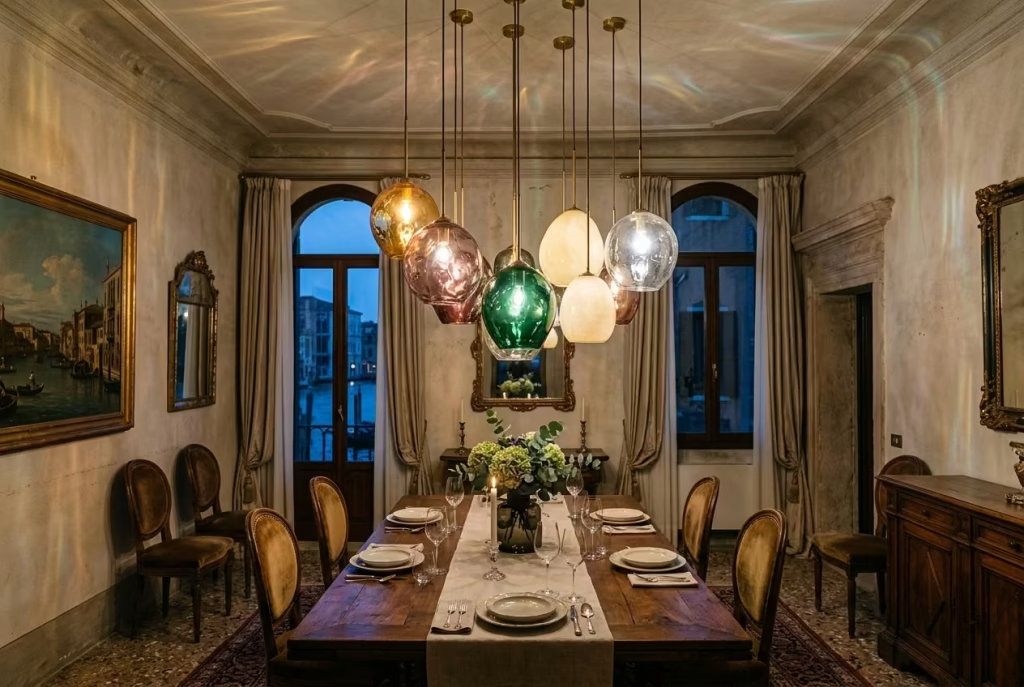
Where the wrought iron chandelier says rustic farmhouse, a genuine (or genuinely inspired) Murano glass fixture says Venetian palazzo instead. Murano glassmaking dates back to the 13th century, when Venice’s glassblowers were relocated to the island of Murano partly to protect the city from fire risk and partly to protect their closely guarded techniques from spreading. That history is baked into every piece: the hand-blown, richly coloured glass catches candlelight in a way that no mass-produced fixture can replicate, throwing colour and movement across the ceiling as much as light onto the table itself.
A cluster of smaller pendants, rather than one large single fixture, often suits a Venetian-inspired dining room better than a single traditional chandelier, since it echoes the layered, collected feeling of an old palazzo interior built up over generations rather than furnished in a single trip.
Cost and upkeep: Authentic Murano glass pieces sit at the top end of any lighting budget, often into four figures for a substantial fixture, though smaller accent pieces and well-made Murano-style alternatives bring the look in for considerably less. Dust gently with a soft brush rather than a cloth, since the delicate glasswork can chip if handled roughly, and avoid abrasive cleaning products entirely, as they can dull the glass’s natural shine over time.
6. Aged Mirror Wall to Bounce Candlelight
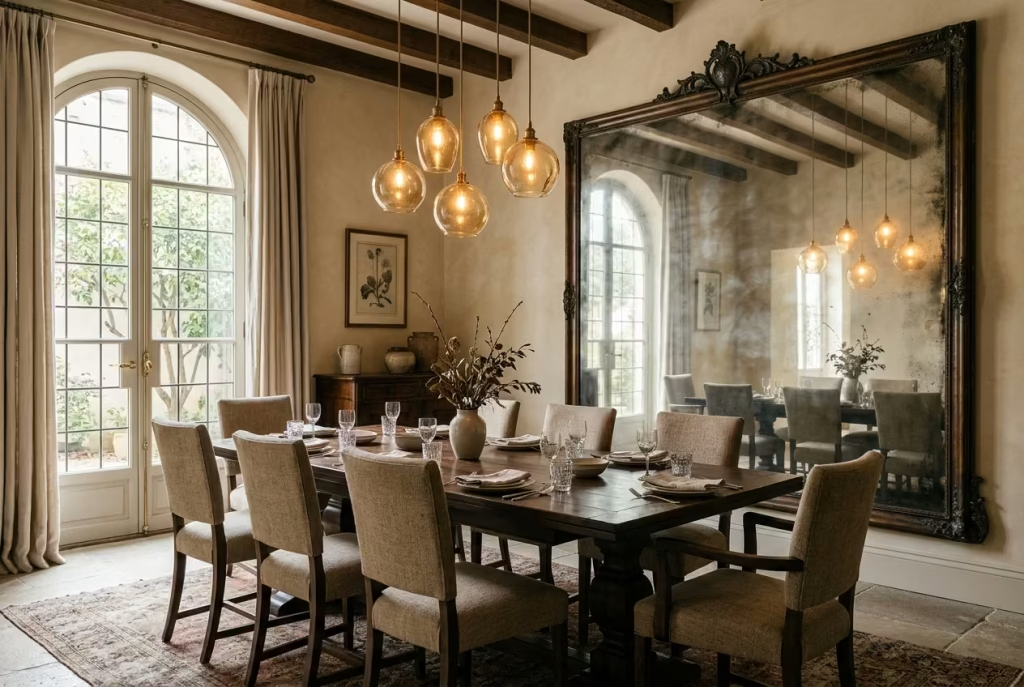
Venetian interiors have always used mirror and mirrored glass as a functional trick as much as a decorative one, bouncing precious daylight and candlelight further into a room in an era before electric light existed at all. An aged or antiqued mirror, one with a slightly foxed, mottled finish rather than a crisp, modern one, brings the same effect with a softer, more forgiving glow, and works particularly well in a north-facing dining room that struggles for natural light through much of the year.
How it feels to live with: Position it opposite your main window or your chandelier, not opposite a blank wall, so it’s actually doing the job of multiplying light rather than just reflecting shadow back into the room. A large mirror placed well can genuinely make a room feel a third larger and considerably brighter in the evening, which matters more in a dining room than almost anywhere else in the house, given how much of its use happens after dark.
You May also Like: 21 Dining Room Renovation Ideas: From Modern Minimalism to Vintage Charm
7. Deep Jewel-Toned Wallpaper or Paint
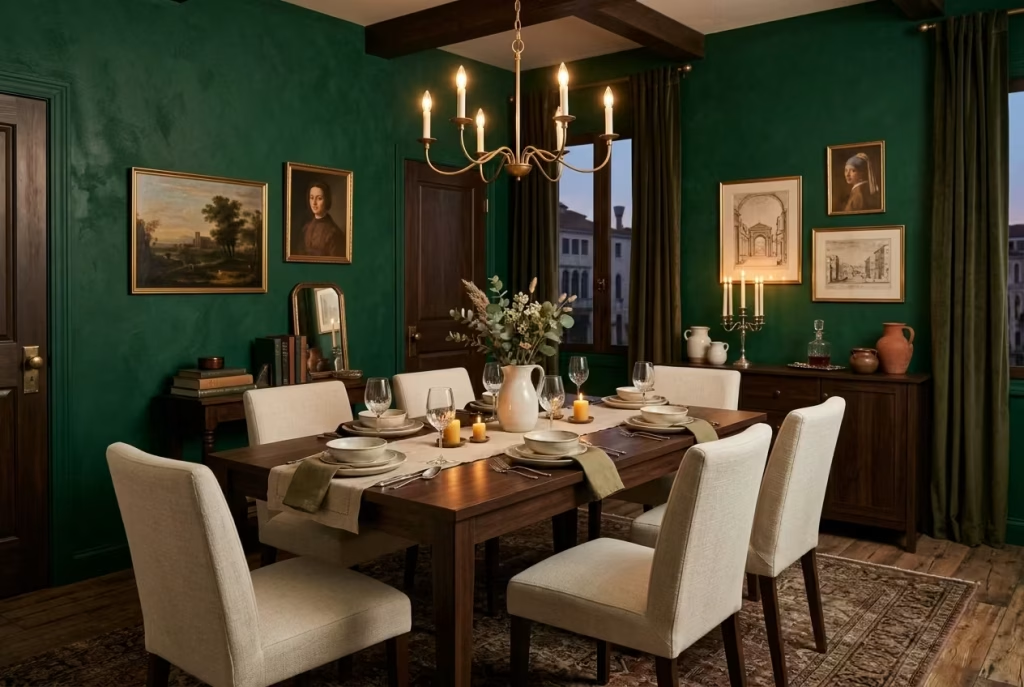
Emerald green, deep burgundy, and rich navy all have real roots in Venetian interior tradition, drawing on the city’s history as a centre of the silk and dye trade, when Venetian merchants controlled much of Europe’s access to rare, expensive pigments. A fully saturated wall colour in a dining room, a space used mostly in the evening, tends to feel far more flattering under lamplight than the same shade would in a room used all day under harsh daylight, where deep colour can occasionally feel oppressive rather than cosy.
Worth knowing: If committing to a full wall of colour feels like too big a leap, a patterned wallpaper on just one wall achieves a similar sense of drama with considerably lower risk, and it’s easier to change your mind about later than stripping and repainting an entire room. Pairing a deep jewel tone with gold-framed art or brass hardware amplifies the Venetian effect considerably, since gold against saturated colour is precisely the combination that made the city’s palazzo interiors so recognisable in the first place.
Modern Milanese Minimalist
8. Sculptural Single-Slab Marble Table
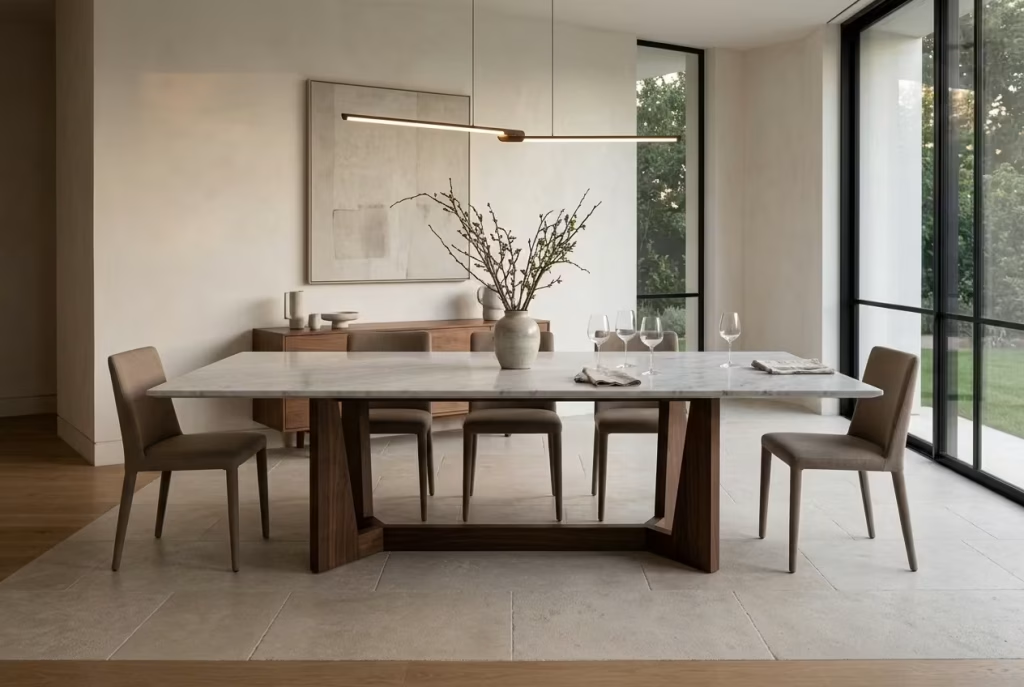
Milan’s design scene has always favoured confidence over clutter, and nothing says that more clearly than a single, book-matched slab of marble on a sculptural base, with nothing else competing for attention. This is the idea to reach for if your instinct is toward fewer, better things rather than more, smaller ones, and it rewards a room kept otherwise quite restrained, since a busy backdrop tends to fight with the marble’s natural veining rather than complement it.
Not all marble reads the same way. Carrara marble, pale grey-white with soft, feathery grey veining, gives a cooler, quieter version of the look. Calacatta, with its bolder, more dramatic gold-flecked veining against a whiter background, reads considerably more opulent and works particularly well as the single statement piece in an otherwise pared-back room.
Real cost: A genuine marble dining table typically starts around £1,500 for a smaller piece and climbs well past £5,000 for a substantial slab in a sought-after stone like Carrara or Calacatta. It’s a serious investment, and one that needs proper care (see the materials section below) to justify the outlay over decades rather than years, but a well-maintained marble table genuinely does outlast most other furniture in the house.
9. Monochrome Palette With One Bold Accent
Take a restrained black, white, and grey base, then let a single element carry all the colour: a deep red rug, a set of ochre dining chairs, or even just a bowl of fresh lemons on the table. This is a genuinely useful trick for renters or anyone hesitant to commit to a full colour scheme, since the “loud” element can be swapped out cheaply whenever the mood changes, without touching the walls, flooring, or larger furniture at all.
It’s also worth noting how this restraint actually amplifies the impact of the one bold choice you do make. In a busier, more colourful room, a red rug simply becomes one element among many. Against a genuinely monochrome backdrop, it becomes the entire focal point, which is precisely the confident, edited feeling Milanese interiors are known for.
10. Sleek Leather or Bouclé Dining Chairs
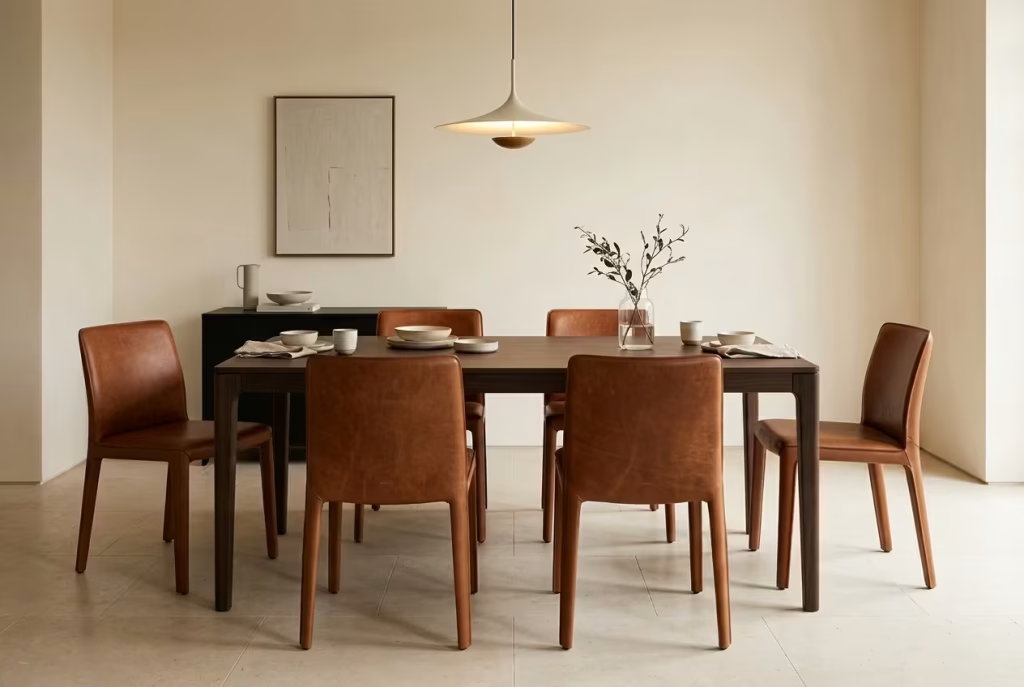
Milanese design leans heavily on tactile, high-quality materials kept in clean, uncomplicated shapes. Full-grain leather or a soft bouclé fabric on a simple, well-proportioned chair frame does more for the room’s overall feel than an ornately carved chair ever could, since the interest comes from the material’s texture and quality rather than decorative flourish.
A word to the wise: Genuine full-grain leather will outlast bonded leather by decades, since bonded leather is essentially scraps and fibres bound with adhesive and finished with a printed leather-look coating. It tends to peel and crack within a handful of years under regular use, particularly around the seat edges where friction is highest. If leather is the plan, it’s worth paying for the real thing, since the cost difference upfront is considerably smaller than the cost of replacing a full set of chairs within five years.
Coastal Amalfi
11. Whitewashed Walls With Linen Textiles
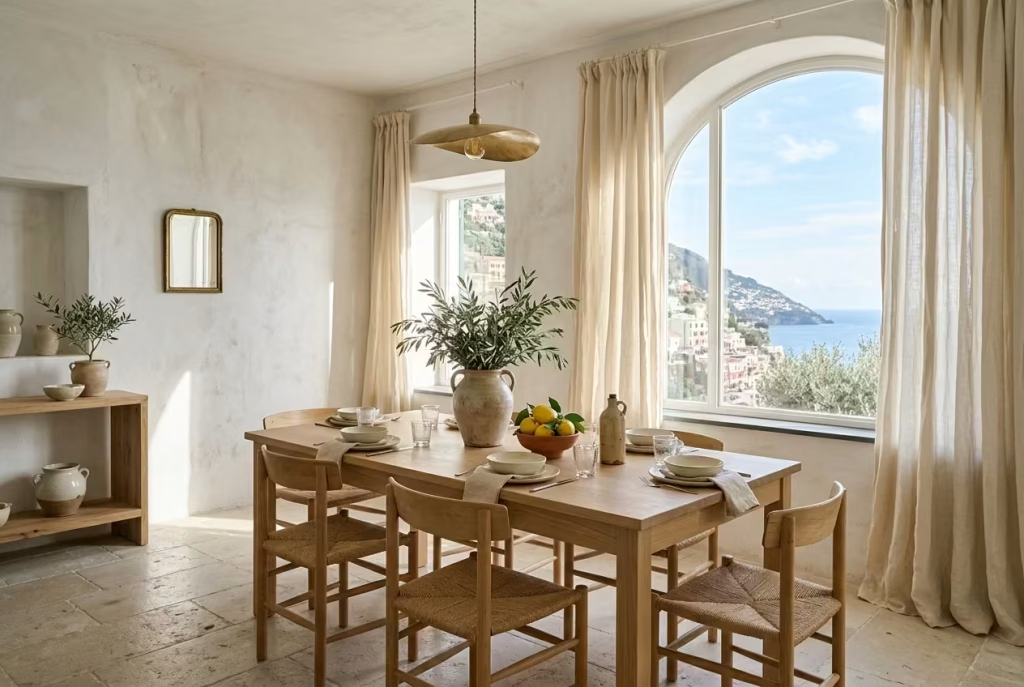
The Amalfi coast trades the Tuscan interior’s earthy weight for something brighter and breezier: whitewashed plaster walls, unlined linen curtains, and a general sense of a room built to stay cool in the height of summer rather than trap warmth the way a heavier Tuscan interior might. Linen is genuinely worth the investment here, since it’s around 20% more absorbent than cotton and handles humidity noticeably better, which matters in a room that’s often warm from cooking and candles and where fabric that traps moisture can start to feel stale.
Linen also softens beautifully with washing and wear, unlike synthetic blends that tend to look increasingly tired over time rather than increasingly characterful. That slightly rumpled, lived-in texture is entirely the point in a coastal-inspired room, where a stiffly pressed curtain would look out of place against the relaxed mood everything else is working to create.
12. Rattan or Cane-Backed Chairs
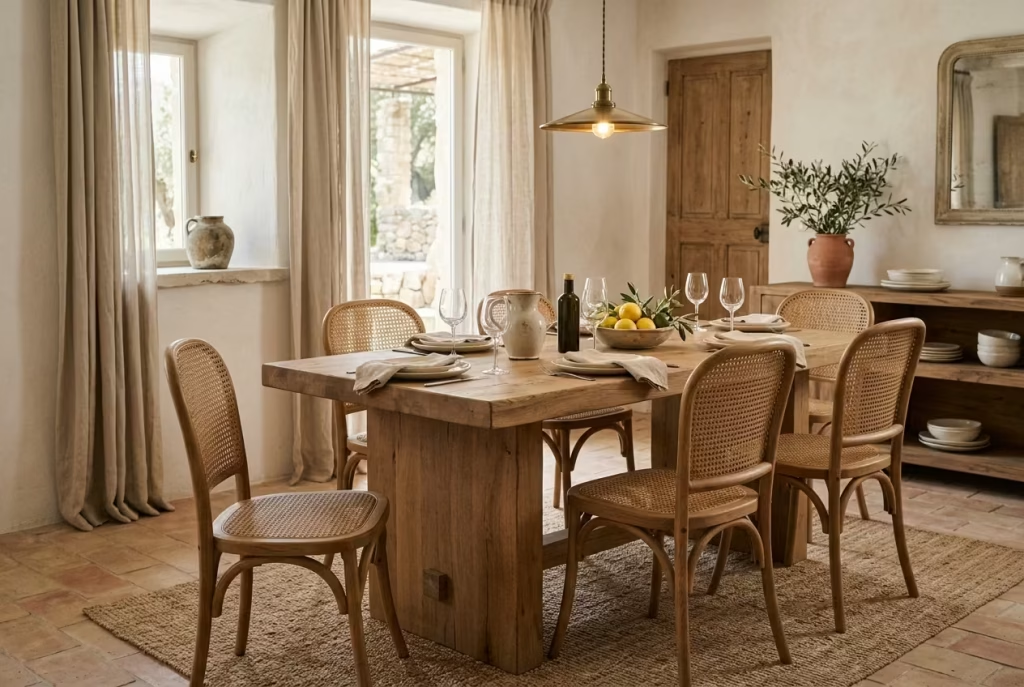
Rattan brings texture and a genuinely coastal, relaxed feel without tipping into “beach house cliché,” provided it’s paired with something more substantial like a solid wood or marble table, which grounds the lighter chairs and stops the room feeling insubstantial. The natural, slightly irregular weave catches light in a way that flat, painted wood never quite manages, adding a genuine sense of handmade texture to the room.
One caveat worth flagging honestly: rattan is sensitive to prolonged direct heat and can become brittle if positioned right against a radiator or in constant strong sun, gradually losing its flexibility and becoming prone to cracking at the joints. So plan its placement with that in mind, particularly in a south-facing room where a large window might otherwise seem like the obvious spot for a chair to sit.
13. Lemon and Olive Branch Centrepieces
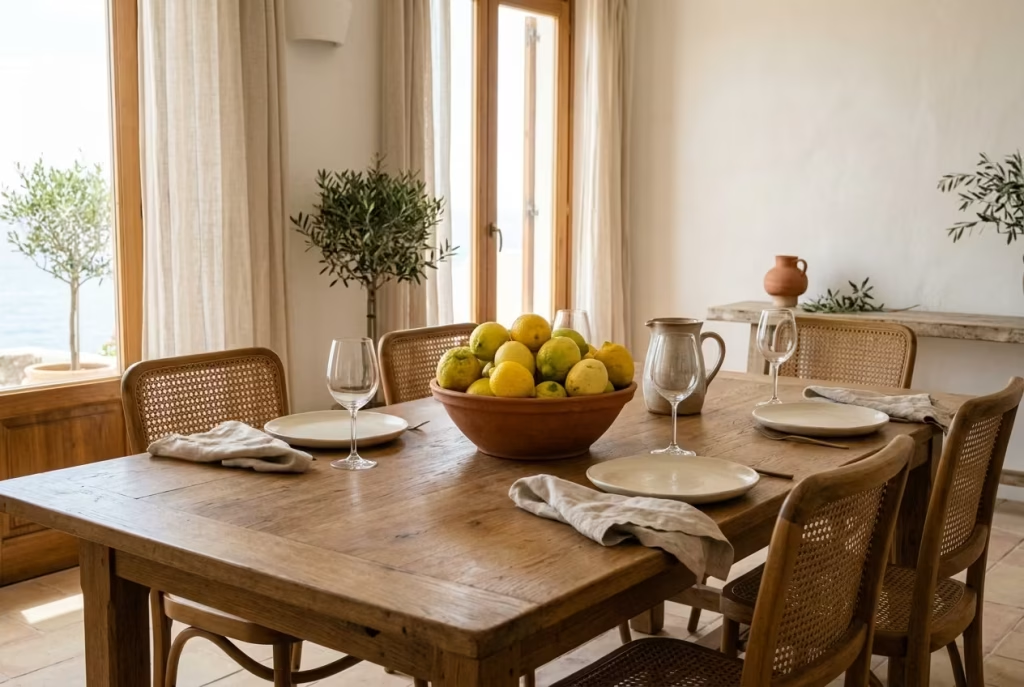
The cheapest, fastest way to bring genuine Amalfi character into a dining room is also the most overlooked: fresh lemons in a simple terracotta bowl, or a loose arrangement of olive branches down the centre of the table. It costs next to nothing and can be refreshed weekly, which makes it the ideal entry point for anyone testing the waters of this look before committing to anything permanent or expensive.
Worth knowing: A whole lemon left at room temperature will typically stay presentable for one to two weeks before it starts to soften and discolour, so this is a rhythm you’ll settle into rather than a one-off purchase, much like fresh flowers. Olive branches, by contrast, dry out gracefully rather than wilting unpleasantly, so a looser arrangement can genuinely last for months, slowly turning a softer, silvery grey-green as the leaves dry, which some households prefer to the fresh, bright green of a newly cut branch.
Rustic Stone & Terracotta
14. Natural Stone or Slate Flooring
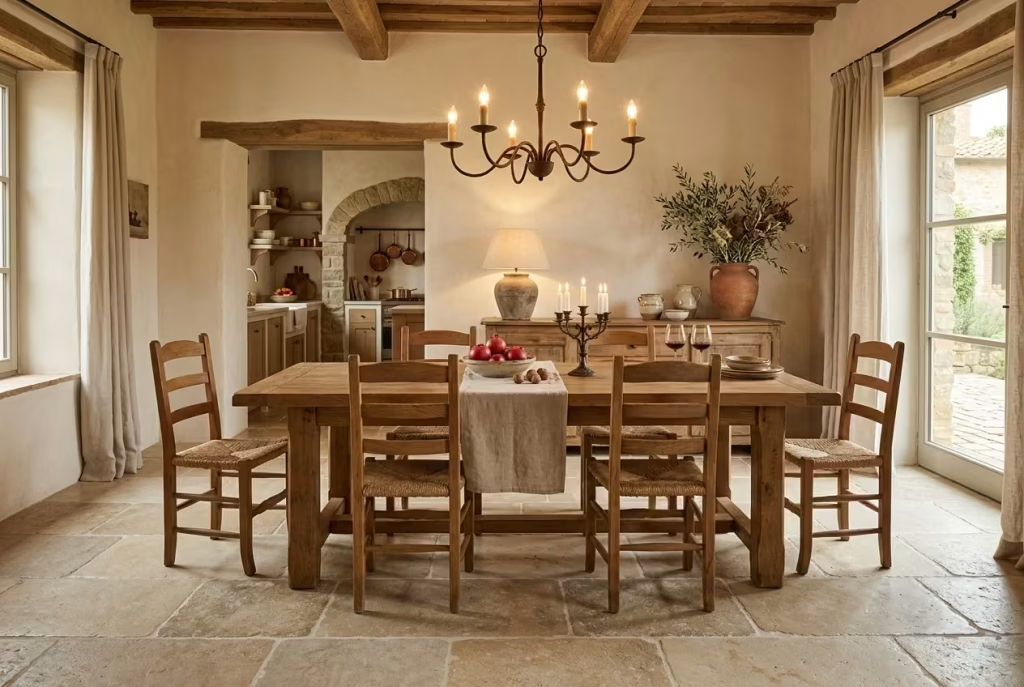
Where terracotta brings warmth, natural stone or slate brings a slightly cooler, more architectural version of the same rustic honesty, and it suits homes with underfloor heating particularly well, since stone holds and radiates warmth effectively once heated, retaining that warmth for longer than a thinner ceramic tile would after the heating switches off. It’s a substantial undertaking best planned alongside any wider renovation or extension work, given the structural and sub-floor considerations involved, particularly around weight loading on an upper floor.
Slate in particular carries a subtle sheen and natural cleft texture that catches light differently depending on the angle you’re viewing it from, which adds a genuine sense of depth to a room that a flat, uniform tile simply can’t replicate.
15. Textured Limewashed Feature Wall
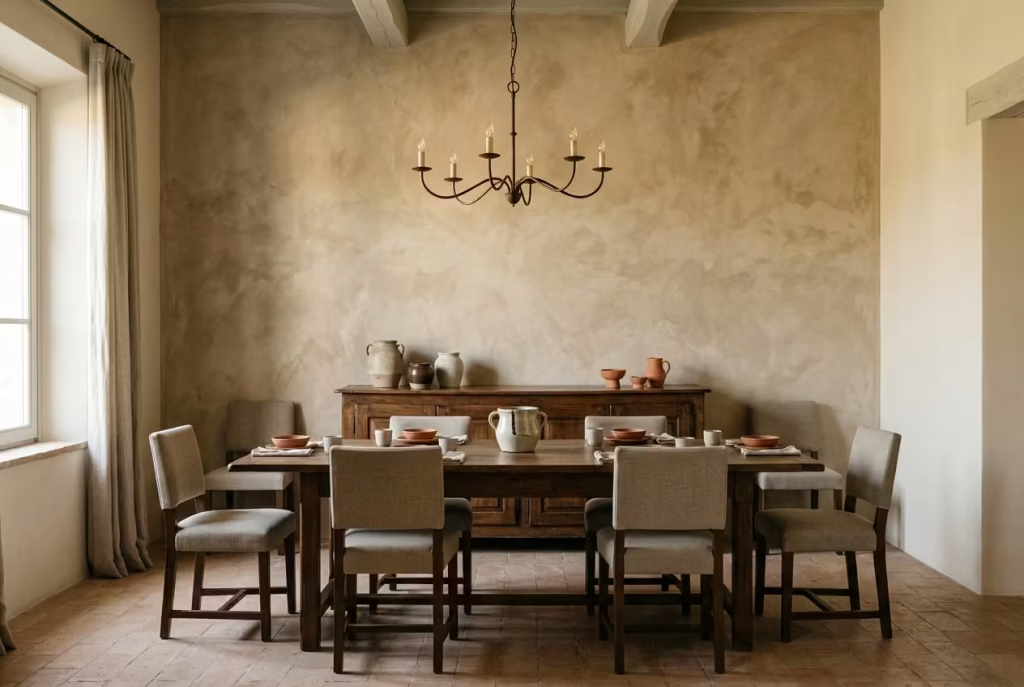
Limewash has a soft, cloud-like variation that flat paint simply cannot fake, a result of the way the lime reacts with air as it cures rather than simply drying flat like a modern emulsion. A single limewashed wall behind a sideboard or at the head of the table delivers a genuinely striking, high-end look for a fraction of what a full marble or stone treatment would cost. It’s forgiving of imperfect walls too, since the texture actually benefits from a slightly uneven surface underneath, unlike a high-gloss paint that would only highlight every bump and dent.
Cost and upkeep: Limewash typically runs somewhat higher per litre than standard emulsion, but because a single feature wall uses relatively little product, the total spend often stays comparable to a premium paint job while delivering a far more distinctive finish. It also breathes far better than modern paint, allowing moisture to pass through the wall rather than trapping it, which is a genuine practical advantage in an older property with solid walls prone to damp.
16. Open Shelving With Hand-Painted Ceramics
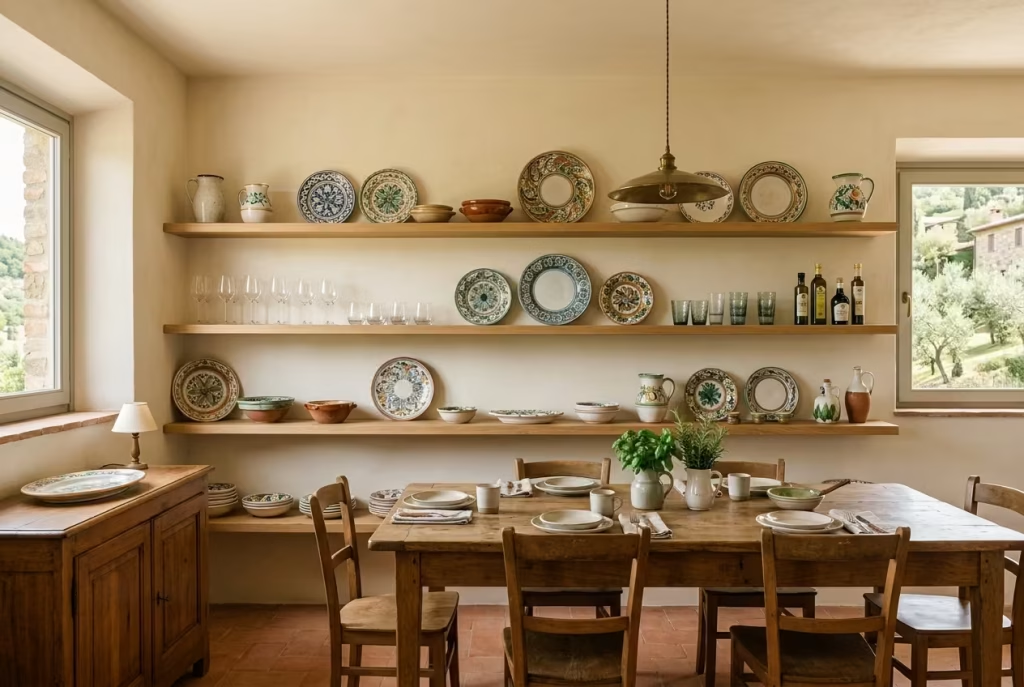
A run of open shelving, styled with hand-painted Italian ceramics, mismatched glassware, and the odd bottle of good olive oil, brings the room to life in a way that closed cabinetry never quite manages, turning everyday functional items into part of the room’s visual interest rather than hiding them away. It also does double duty as genuinely useful storage in a kitchen-diner, provided you’re comfortable with a slightly more curated, lived-in look rather than a fully hidden one.
Hand-painted maiolica-style ceramics, traditionally produced in regions like Deruta and Vietri sul Mare, carry genuine variation piece to piece even within the same pattern, since each is painted individually rather than printed. Mixing a few authentic or well-made pieces among more everyday glassware and crockery gives the shelf a collected, evolved-over-time feeling that buying an entire matching set from one shop simply can’t replicate.
Luxury Marble & Gold
17. Book-Matched Marble Feature Wall
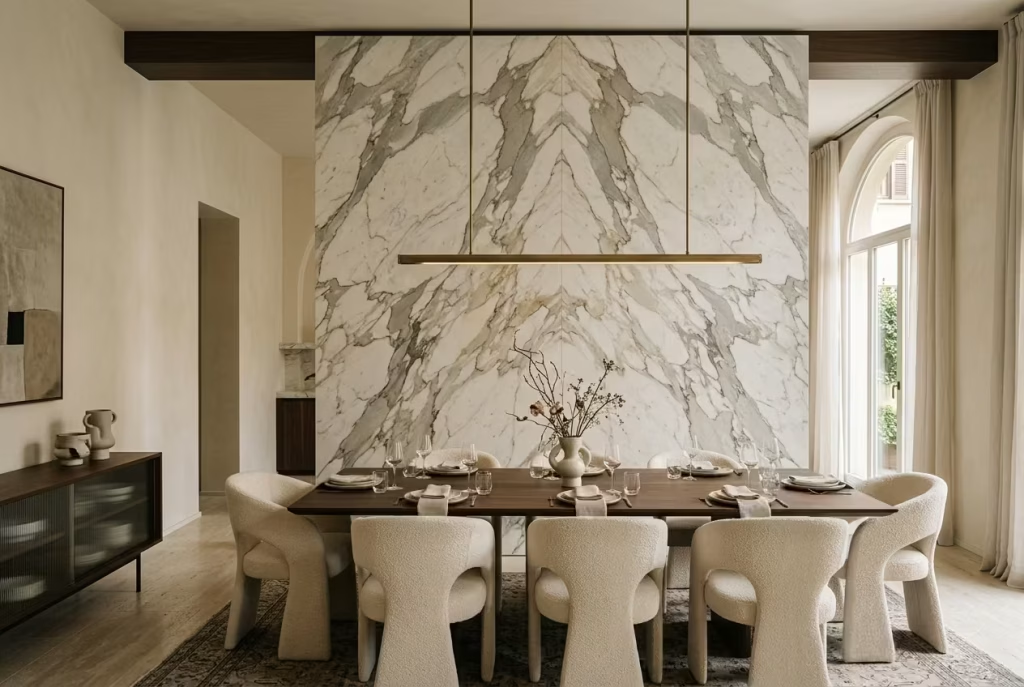
Taking the marble beyond the tabletop and onto a full feature wall, book-matched so the natural veining mirrors itself across the join, is about as unapologetically luxurious as this style gets. Book-matching involves slicing a single block of stone into consecutive slabs and installing them side by side, so the vein pattern reflects like an open book, creating a genuinely one-of-a-kind pattern that can never be exactly replicated elsewhere, since it depends entirely on the specific block the stone was cut from.
It’s a serious investment best reserved for a room that genuinely gets used for entertaining, since the impact is largely wasted on a space nobody walks into regularly, and the specialist installation required means it isn’t a project to take on lightly or on a tight timeline.
Real cost: Book-matched marble wall installations vary enormously by stone choice and wall size, but realistically start in the low thousands and climb steeply from there, so this is very much a “if the budget allows” idea rather than an essential one, and it’s worth getting several quotes given how much the price can vary between installers working with the same stone.
18. Brass or Gold-Toned Hardware Throughout
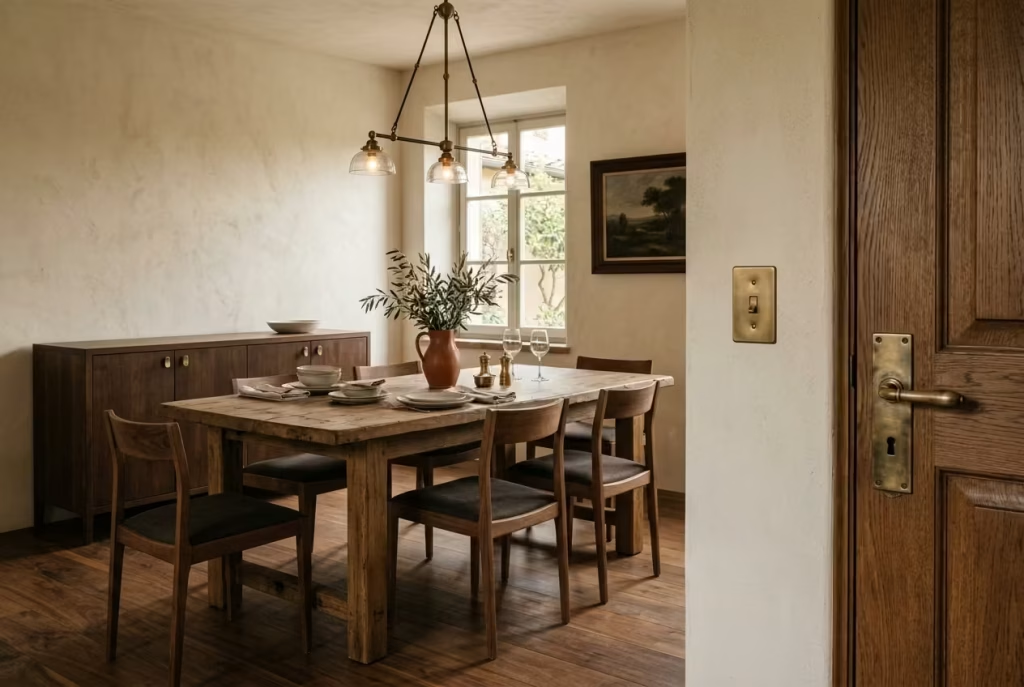
Here’s the far more accessible route into the same visual language: swap door handles, light switch plates, and cabinet pulls for warm brass or gold-toned finishes. Unlacquered brass in particular develops a genuine, living patina over years of handling, gradually darkening and developing subtle variation exactly where hands touch it most often, which many designers consider more characterful than a chrome or polished finish that simply stays static and eventually looks tired rather than aged.
Worth knowing: If budget is genuinely tight, focus the brass on the pieces closest to eye level and hand contact, the door handle and the light switch, since these deliver the most noticeable impact per pound spent. A single well-chosen brass door handle, replacing a dated chrome one, can shift the tone of an entire doorway for a relatively modest outlay compared with a full hardware overhaul.
Small-Space & Apartment
19. A Bistro-Style Two-Seat Table for One Corner
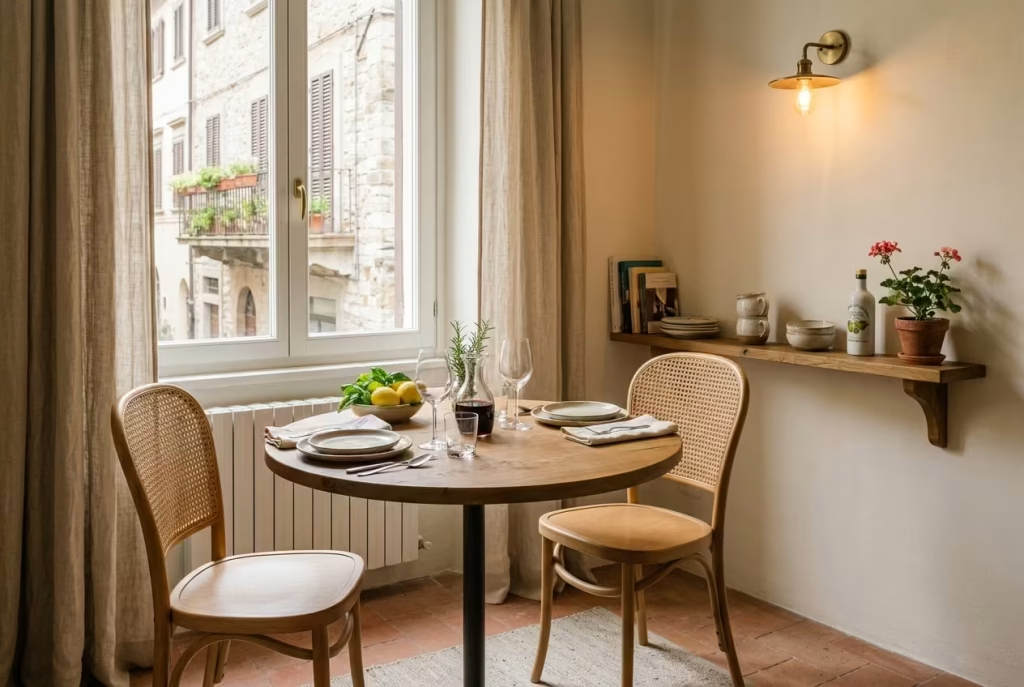
Not every home has room for a farmhouse table, and pretending otherwise helps nobody. A small round or square bistro-style table, sized for two to four, brings genuine Italian café character into a corner of an open-plan flat or a narrow galley-style room, borrowing more from the small neighbourhood trattoria than the grand family villa, which is a perfectly legitimate and equally authentic strand of Italian dining culture in its own right.
A 36-42 inch round table is the sweet spot here: big enough for a proper meal with room for shared dishes in the middle, small enough to actually fit into a corner without dominating the space. Positioning it near a window, if one’s available, does a lot of the visual heavy lifting, since natural light does more for a small table’s presence than any amount of styling around it.
20. Wall-Mounted Drop-Leaf Table
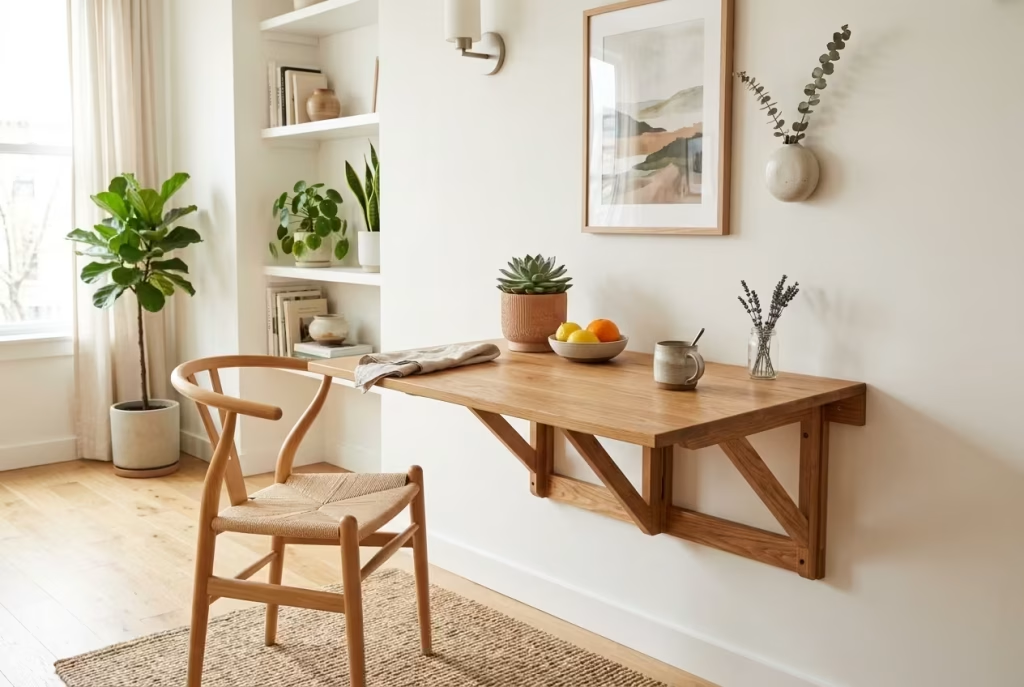
For the tightest spaces of all, a drop-leaf table fixed to the wall folds flat when not in use and opens out for meals or guests, essentially trading a small amount of convenience for a genuinely significant amount of reclaimed floor space. It’s a genuinely renter-friendly option too, since many versions can be installed without permanent structural changes, using wall anchors rather than anything that would concern a landlord.
It solves the single biggest complaint about small dining spaces directly: that the table dominates the room even when nobody’s eating at it, sitting there as dead weight for twenty-two hours out of every twenty-four. A drop-leaf table only takes up its full footprint when it’s actually earning its keep.
Tuscan, Venetian, Milanese, and Amalfi: What Actually Separates Them
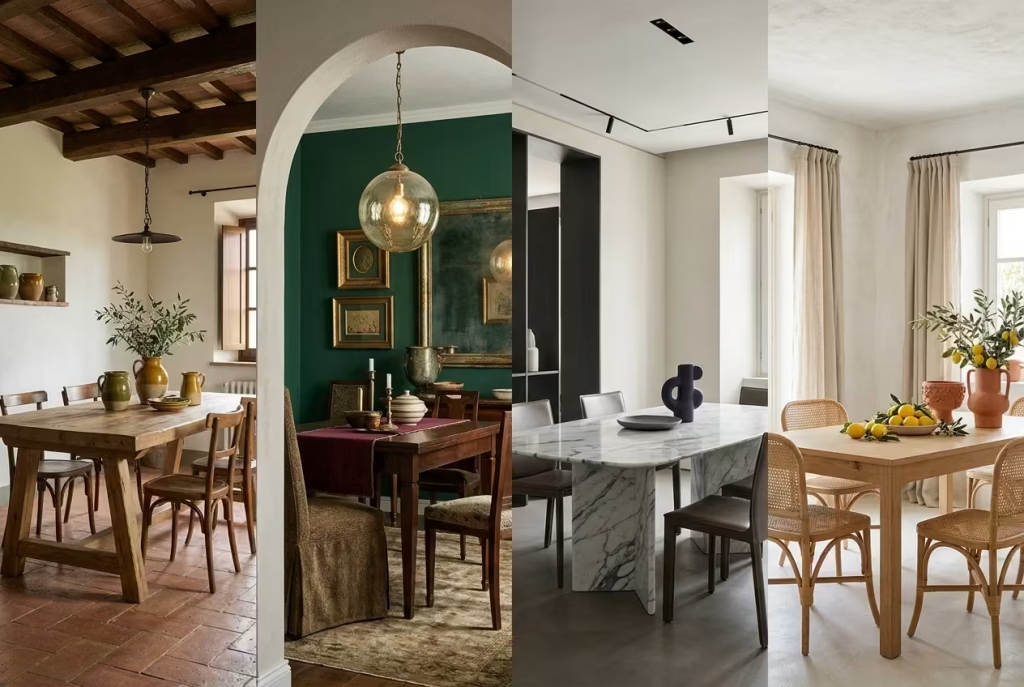
These four regional styles get lumped together under “Italian” constantly, but they’re genuinely distinct traditions, each shaped by a different landscape, climate, and history, and understanding the difference makes it far easier to choose a direction and commit to it, rather than accidentally combining elements that were never meant to sit together.
| Style | Colour palette | Key materials | Overall feel |
| Tuscan Farmhouse | Terracotta, olive, warm ochre | Reclaimed wood, wrought iron, terracotta tile | Rustic, communal, sun-warmed |
| Venetian & Murano | Deep jewel tones, gold | Hand-blown glass, mirror, silk | Theatrical, layered, romantic |
| Modern Milanese | Monochrome with one bold accent | Marble, leather, sculptural metal | Confident, restrained, sophisticated |
| Coastal Amalfi | White, blue, sun-bleached neutrals | Linen, rattan, whitewashed plaster | Breezy, informal, sun-drenched |
None of these is more “correct” than the others, and none is more authentically Italian than another, since each grew directly out of the landscape and daily life of a genuinely different part of the country. The right one for your home depends on your light, your existing furniture, and honestly, which of these four moods you actually want to feel when you sit down to eat on an ordinary Tuesday, not just when guests are due.
Living With the Materials What Marble and Terracotta Actually Ask of You
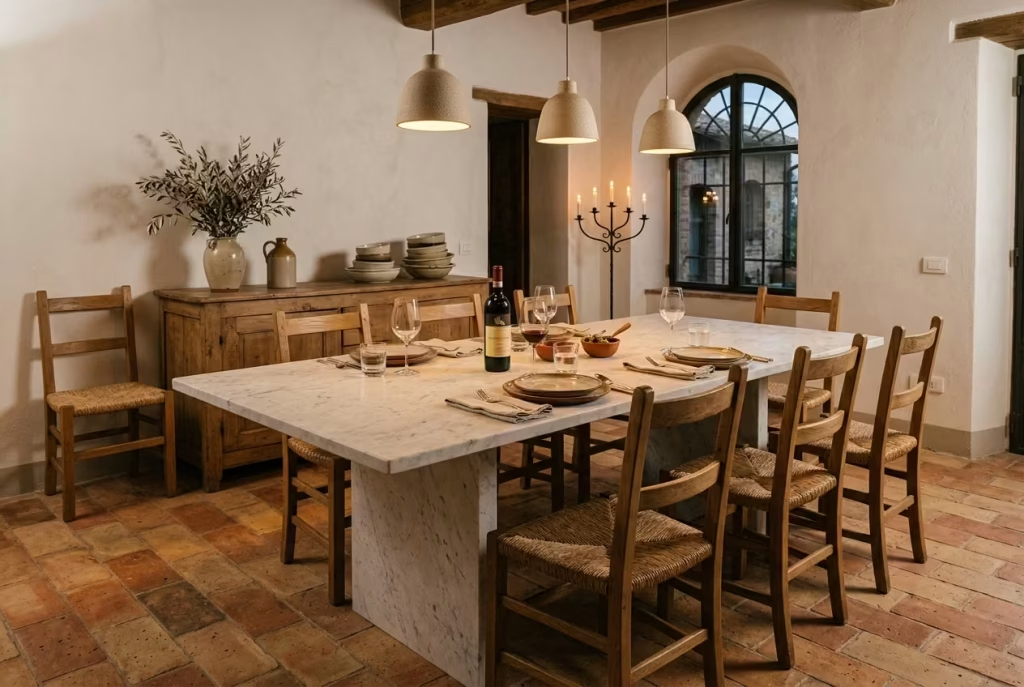
A lot of guides sell the fantasy and skip the maintenance conversation entirely, which sets people up to feel let down six months in when a wine glass leaves a mark they weren’t expecting. Here’s the honest version, the one that should have come with the tabletop in the first place.
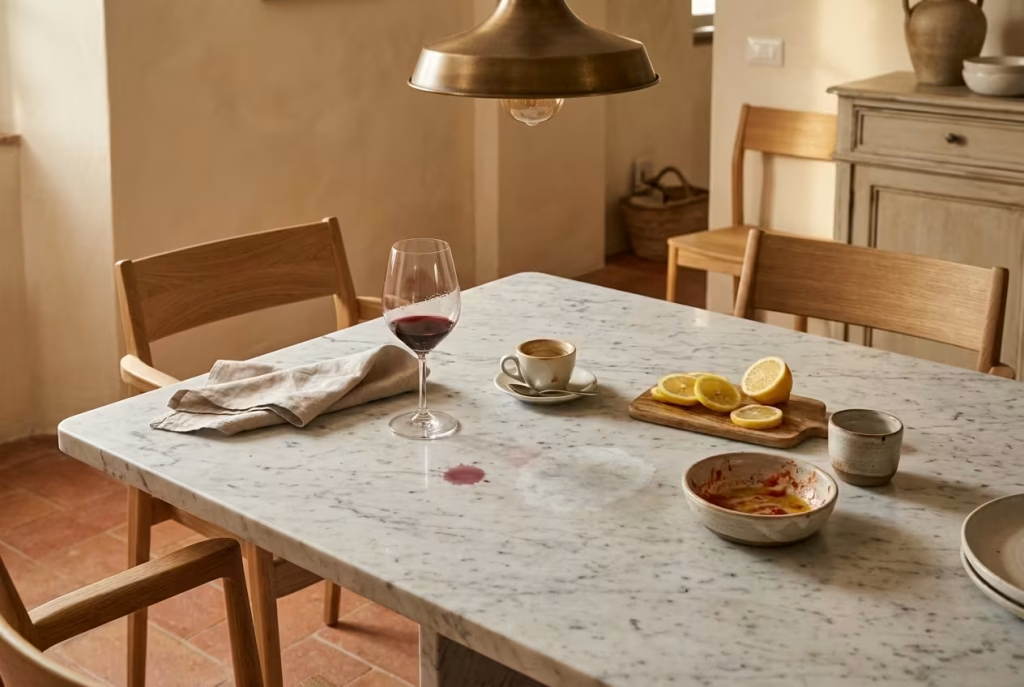
Marble needs resealing roughly every 6 to 12 months to stay properly protected, more often in a heavily used dining room than in, say, a rarely touched side table. It’s worth understanding the difference between staining and etching, because they’re not the same problem and don’t respond to the same fix, a distinction most furniture retailers gloss over entirely. Staining happens when a liquid like red wine or coffee soaks into the stone’s pores and leaves a dark mark underneath the surface, essentially a colour problem living below the polished layer. Etching is a chemical reaction, where an acidic substance like lemon juice, vinegar, or tomato sauce actually eats into the polished finish, leaving a dull, cloudy patch you can sometimes feel with a fingernail, a texture problem rather than a colour one. Sealing helps prevent staining considerably, by filling the stone’s microscopic pores so spills sit on top long enough to be wiped away. It does almost nothing against etching, since the only real defence there is keeping acidic substances off the surface or wiping them up the moment they land, sealed or not. For a stain that’s already set in, a simple baking soda and water poultice, mixed to a paste roughly the thickness of peanut butter, spread over the mark, covered in plastic wrap, and left for 24 hours, lifts a surprising number of everyday marks as it dries and draws the discolouration back out of the stone.
You May also Like: Navy Blue Dining Room Ideas: 15 Show-Stopping Ways to Style This Sophisticated Hue
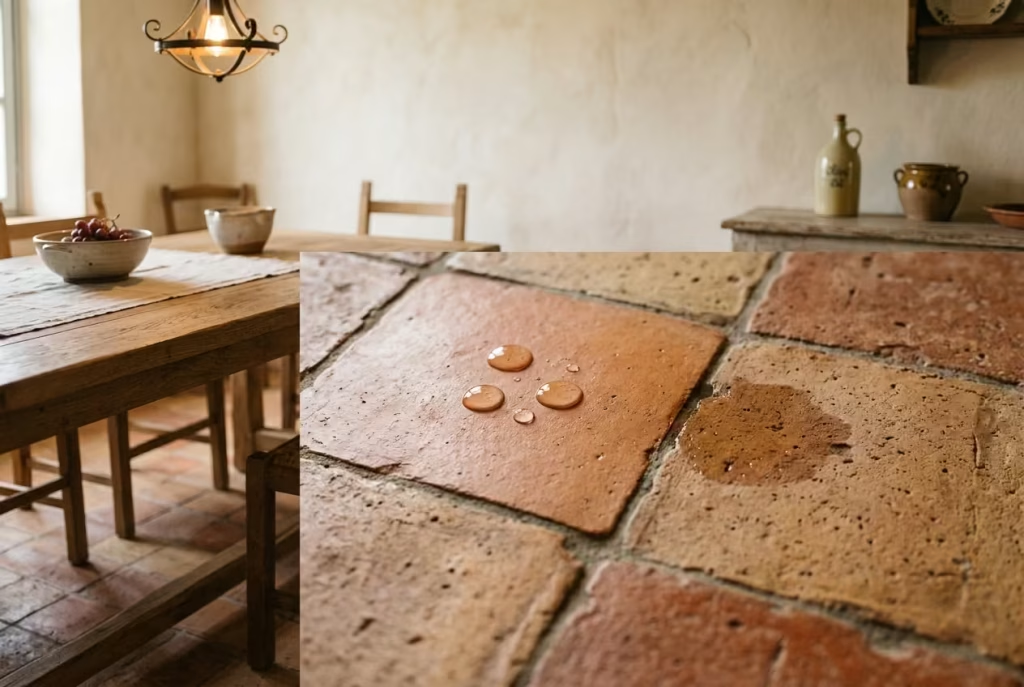
Terracotta is more forgiving day to day but needs its sealing taken seriously at the outset. A good quality sealer protects the floor for 5 to 15 years. A cheap one might only last 6 to 12 months before the tile starts absorbing spills and dirt again, so this is genuinely one area where spending a little more upfront saves considerable hassle, and cost, down the line. A simple test if you’re unsure whether resealing is overdue: sprinkle a few drops of water onto the tile. If it soaks in quickly rather than beading on the surface, it’s time.
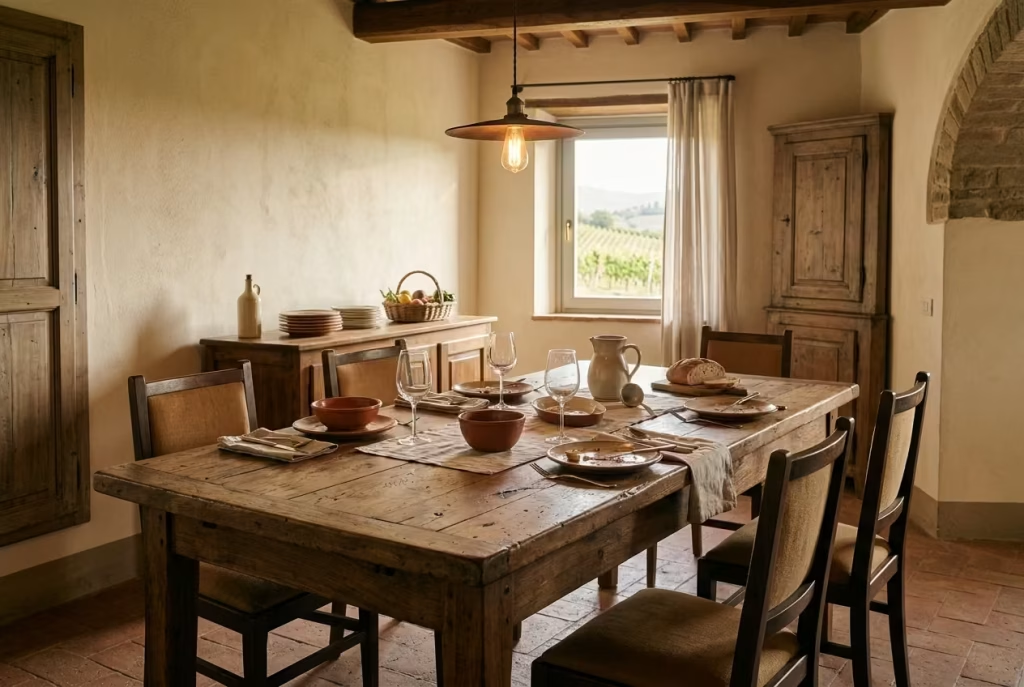
Wood, particularly a reclaimed or solid farmhouse-style table, wants an occasional oiling, roughly twice yearly for a heavily used family table, and honestly benefits from the odd scratch rather than being ruined by it, since those marks simply become part of a surface that was never meant to look factory-fresh in the first place. This is a material that’s meant to show its age gracefully, unlike a veneered or lacquered piece where the same scratch would look like damage rather than character.
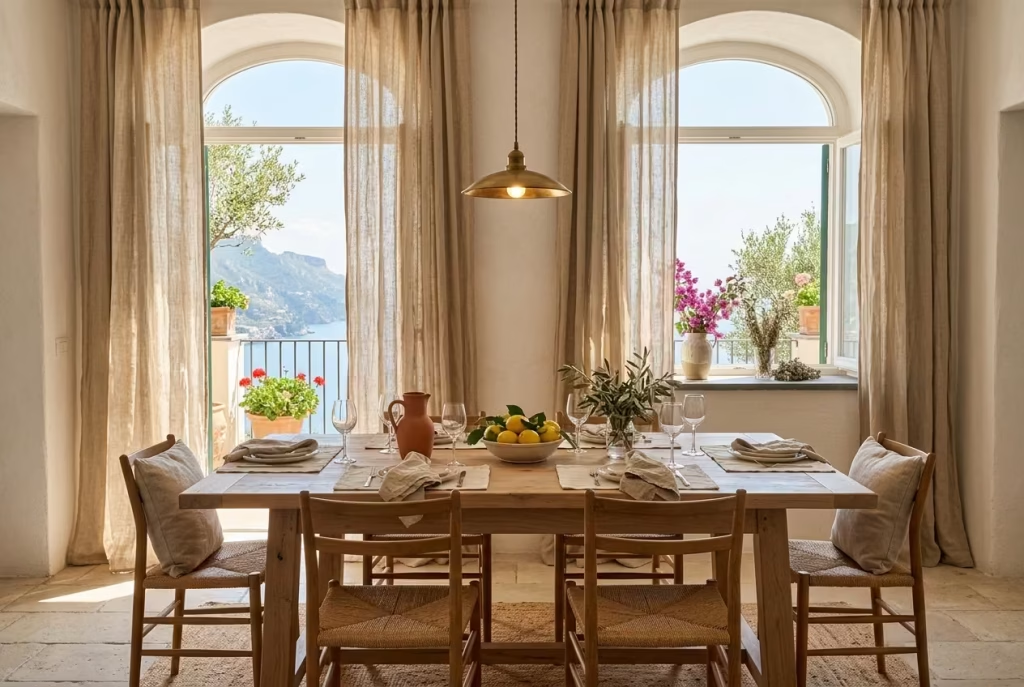
Linen, if you’re leaning into the Amalfi look, is around 20% more absorbent than cotton and handles the humidity of a well-used dining room considerably better, though it does wrinkle more readily and suits a relaxed, lived-in aesthetic rather than a stiffly formal one. Ironing it into crisp submission rather defeats the point of the fabric, which is meant to soften and relax with use, not fight against it.
What This Actually Costs Budget to Luxury
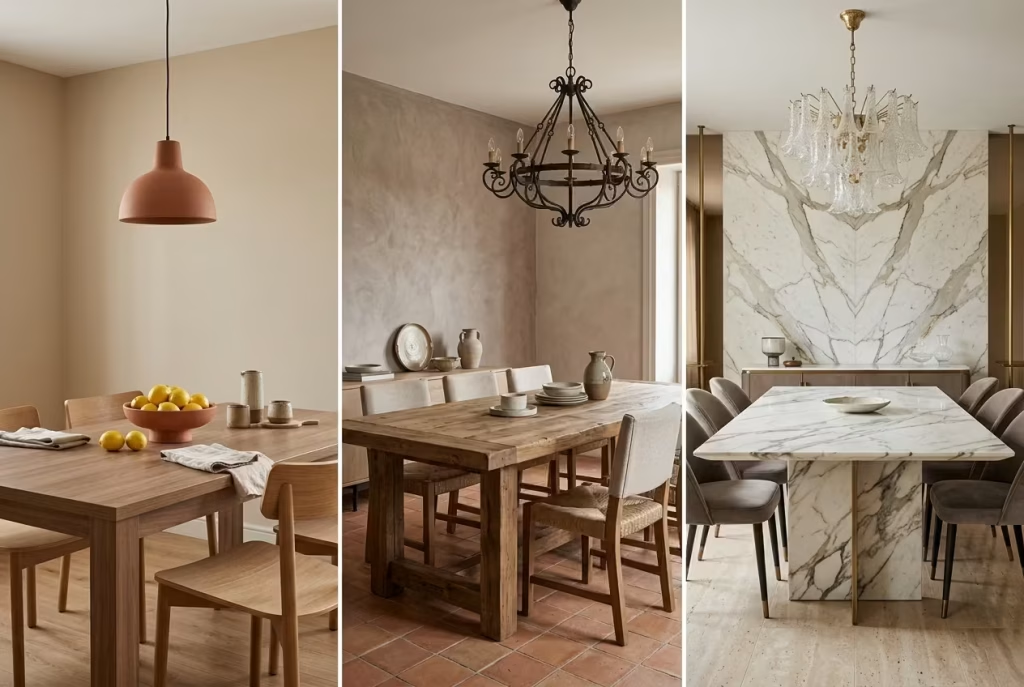
| Tier | Rough total spend | What you get |
| Budget | £500-£1,500 | Solid wood or wood-effect table, one statement light fixture, paint refresh, ceramic or textile accents |
| Mid-range | £1,500-£5,000 | Reclaimed or solid hardwood table, quality wrought iron or Murano-style lighting, terracotta or limewashed feature wall |
| Luxury | £5,000+ | Genuine marble table or feature wall, authentic Murano glass fixture, full material overhaul including flooring |
There’s no shame in sitting firmly in the budget tier, and it’s worth saying plainly that budget doesn’t mean compromised. A £40 bowl of lemons and a well-chosen paint colour does more for the room’s character than a mismatched, half-finished attempt at the luxury tier ever will. The most convincing Italian dining rooms are rarely the most expensive ones in absolute terms, they’re the ones where every choice, however modest, was made with genuine intention rather than simply bought because it fit a budget line.
Paint Colours Worth Knowing
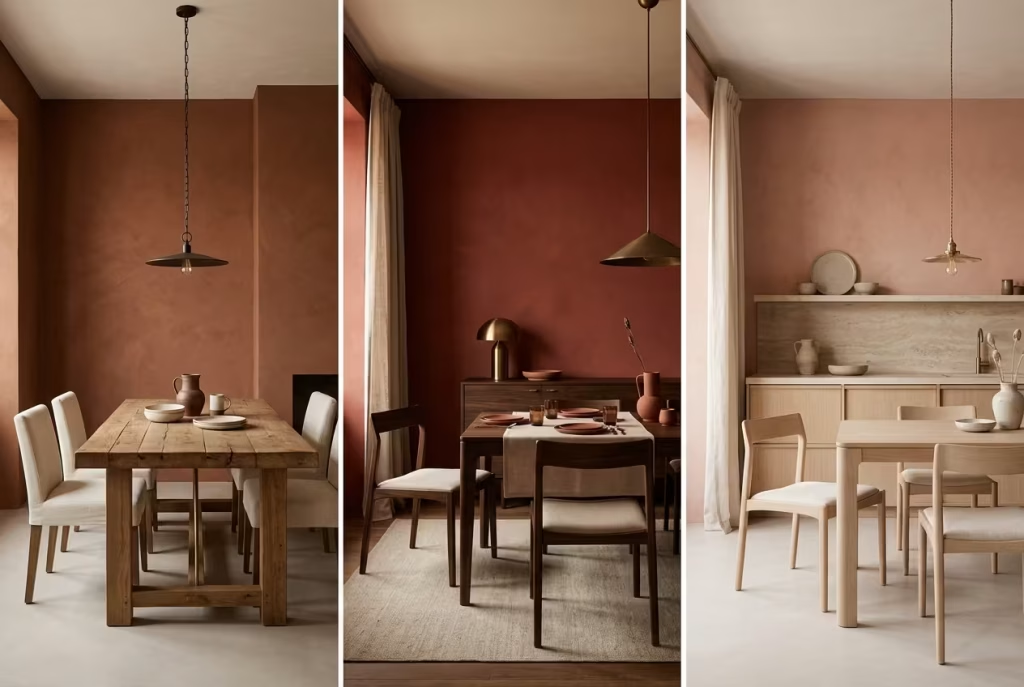
If you’re painting rather than tiling or wallpapering, a handful of named shades come up again and again with designers working in this space. Farrow & Ball’s Red Earth and Rectory Red both lean into the deeper, warmer end of the Tuscan palette, giving a genuinely rich, sun-baked terracotta effect without the cost or commitment of tiling an entire floor. Setting Plaster offers a gentler, dustier pink-terracotta for anyone wanting the warmth without the intensity, particularly useful in a smaller room where a fully saturated deep red might feel overwhelming.
Worth noting too: the “faded terracotta,” blushy-apricot family of colours has been specifically flagged by Farrow & Ball’s own colour team as one of the defining shades of 2026, described as sitting somewhere between plaster pink and orange, and offering a warmer, gentler alternative to the grey and beige neutrals that dominated the previous decade. So this isn’t a fading trend you’re chasing, it’s very much a current one, and one with genuine longevity behind it given how deliberately it’s being positioned by the paint industry’s own colour experts.
Frequently Asked Questions
Is Italian or Tuscan dining room style dated in 2026?
No, though the heavy, over-decorated 2000s version of it genuinely did fall out of favour. What’s back is a lighter, more restrained take: the warmth and natural materials without the excess. Designers are explicit that this isn’t a return to the “rooster on the backsplash” era, it’s a correction of it, favouring fewer, better pieces over a room full of matching, mass-produced sets.
What size dining table do I actually need?
Allow 24 to 30 inches of table edge per person and at least 36 inches of clearance around the table for chairs to be pulled out. A 60″x36″ table comfortably seats four, a 6-7ft table seats six, and you’ll want a table 7ft or longer, or a round table roughly 6ft in diameter, to comfortably seat eight.
How high should a chandelier hang above the dining table?
The bottom of the fixture should sit 30 to 36 inches above the tabletop on a standard 8ft ceiling, adding roughly 3 inches for every extra foot of ceiling height beyond that. The chandelier’s diameter should also sit at roughly half to two-thirds of the table’s width for the proportions to feel right.
Will an Italian-style dining room end up feeling too formal and unused?
It can, if you chase a fully matched, showroom-perfect look. The fix is mixing textures and styles rather than buying a single matching set, and choosing pieces that feel comfortable for a Tuesday night meal, not just a special occasion, since a room that only comes out for Christmas tends to stop being used altogether within a few years.
How do I get this look in a small dining room or apartment?
Scale everything down rather than trying to squeeze in a farmhouse table. A 36-42 inch round bistro table or a wall-mounted drop-leaf table carries the same warmth and material choices as a larger room, just at a size that actually fits, and often suits a genuinely Italian café-inspired mood rather than a compromised version of a grand villa dining room.
Is a marble dining table high-maintenance, and does it stain?
It needs resealing roughly every 6-12 months, and yes, it can stain from acidic or coloured liquids left sitting on the surface. Using coasters and wiping up spills promptly prevents the vast majority of issues, and understanding the difference between staining and etching helps you react correctly when something does happen.
Does terracotta flooring need sealing, and what does it cost?
Yes, terracotta must be sealed before and after grouting, and periodically resealed after that, roughly every 3-4 years depending on the sealer used. Material costs run roughly £3-£20 per square foot depending on whether it’s machine-made or handmade, with installation adding £5-10 per square foot on top.
What’s the difference between Tuscan, Venetian, and Milanese Italian dining styles?
Tuscan draws from the countryside: terracotta, reclaimed wood, wrought iron, and a warm, rustic feel. Venetian draws from the city’s history as a glass and silk trading hub: rich colour, mirror, Murano glass, and a more theatrical, layered mood. Milanese draws from the city’s modern design reputation: restrained, monochrome, sculptural marble and leather, favouring confidence over ornamentation.
What paint colours suit an Italian dining room best?
Farrow & Ball’s Red Earth and Rectory Red for a deeper, warmer Tuscan feel, or Setting Plaster and the broader faded terracotta family for something gentler and currently very much on-trend for 2026, according to the paint industry’s own colour forecasting.
What does this style actually cost, from budget to luxury?
A genuinely effective budget refresh sits around £500-£1,500. A solid mid-range room with quality materials runs £1,500-£5,000. A full luxury treatment with genuine marble and authentic Murano glass can exceed £5,000 comfortably, depending on the scale of the room and the specific stone or glass chosen.
Can I get this look without buying expensive Italian furniture?
Yes. Fresh lemons in a terracotta bowl, a single well-chosen paint colour, and brass hardware swapped onto existing cabinets deliver a surprising amount of the feeling for very little outlay, since the mood depends far more on material honesty and warm colour than on any single expensive statement piece.
How do I stop the room feeling like a cold showroom instead of a warm home?
Favour materials that age visibly, like oiled wood and unlacquered brass, over anything designed to stay pristine. A room that’s allowed to show a little wear tends to feel far more genuinely Italian than one that’s kept under glass, since the entire tradition this style draws from was built around daily use, not display.
The thread running through all twenty of these ideas is the same one Italian design has always understood better than most: a dining room isn’t there to be admired from the doorway. It’s there to be lived in, spilled on, argued over, and returned to, night after night, for years. Chase that feeling first, and the marble and the Murano glass will simply be the finishing touches on something that already works.