

24 Easy Halloween Kitchen Decor Ideas: DIY Spooky Touches and Budget-Friendly Cute Accents
Quick answer: The easiest way to decorate a kitchen for Halloween is to start with removable, low-cost touches: paper bats on the cabinets, a cauldron bowl on the worktop, potion jars on a shelf, flameless lanterns and orange fairy lights. Most take under 30 minutes and under £15, keep your work surfaces usable, and sit at least a metre away from the hob.
Think about what your kitchen has witnessed this year. The burnt toast, the birthday cake that sank in the middle, the late-night cuppa shared with someone who could not sleep, the homework spread across the table while a casserole bubbled. It is the room where a household actually lives, and yet, come October, most of us dress the porch and the sitting room and leave this one bare.
This year the timing is unusually kind to decorators. Halloween falls on Saturday 31 October 2026, and the clocks go back the weekend before, on Sunday 25 October. From then on, dusk arrives around teatime, windows start glowing at five o’clock, and anything you have placed near the glass suddenly matters. A kitchen lit by a string of orange lights at 5pm, with a row of paper bats climbing the wall behind the kettle, is a small act of defiance against the dark. It also costs less than a takeaway.
Every idea below is easy in the honest sense of the word: no specialist tools, no weekend swallowed whole, no deposit put at risk. Each one carries a time, a cost and a style tag, plus the kind of kitchen-specific safety detail that most decorating lists skate past. Read it start to finish, or dip in where your eye lands. Either way, you will leave with a plan you can finish before the first doorbell rings.
Why the kitchen deserves a touch of the macabre
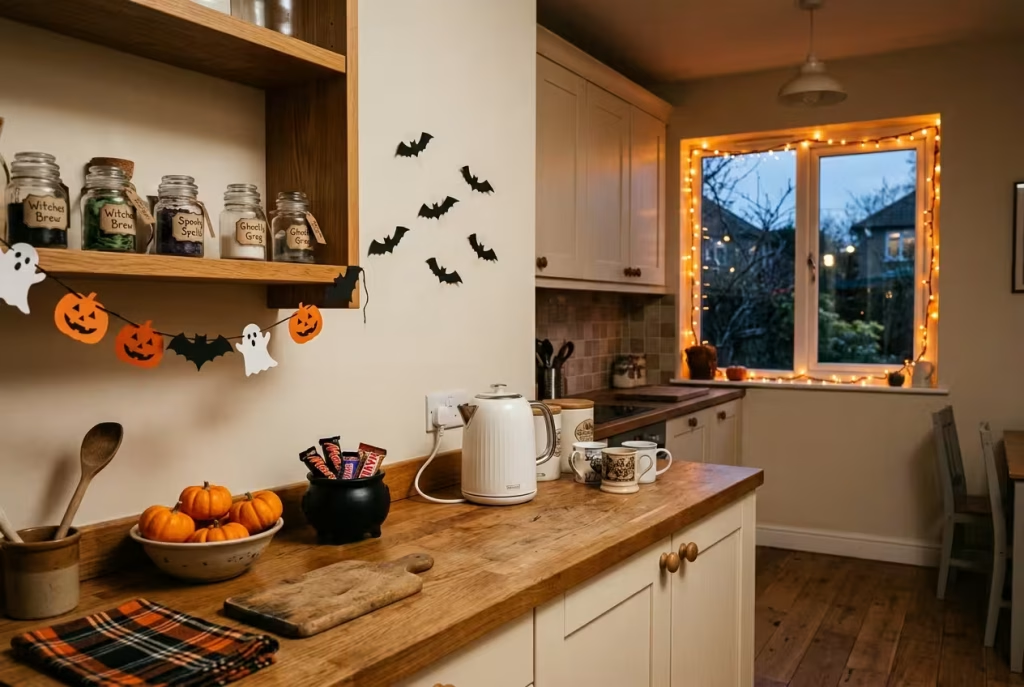
Halloween has become a serious seasonal ritual. America’s National Retail Federation forecasts spending of roughly $13.5 billion for 2026, with about $4.3 billion earmarked for decorations and 78% of shoppers planning to buy some. Look closer and the mood is thrifty rather than extravagant: 34% say they want items they can reuse or repurpose, 31% plan to compare prices, and 26% will actively hunt for sales or coupons. Those are US figures, but anyone who has stood in a supermarket seasonal aisle in late September will recognise the instinct. People want the magic without the mortgage.
There is also something quieter at work. Psychologists who study festive decorating (most of that research looks at Christmas, so treat it as a pointer rather than gospel) tend to link it to two feelings: nostalgia, the way a paper bat can pull you back to a draughty classroom window in 1994, and anticipation, the pleasure of counting down to something. Some studies also suggest decorations act as a friendly signal to neighbours, a visible way of saying “we are home and the door is open”. In a kitchen, where guests drift towards the warmest spot at any party, that signal lands twice as hard.
Practicality helps the case. A kitchen is small, so a handful of changes shifts the whole mood. It is also the room you pass through most often, which means you get the benefit of the effort ten or twelve times a day. A decoration in the spare room is seen by guests. A decoration by the kettle is seen by you, and that is the point.
How to get the best from this guide
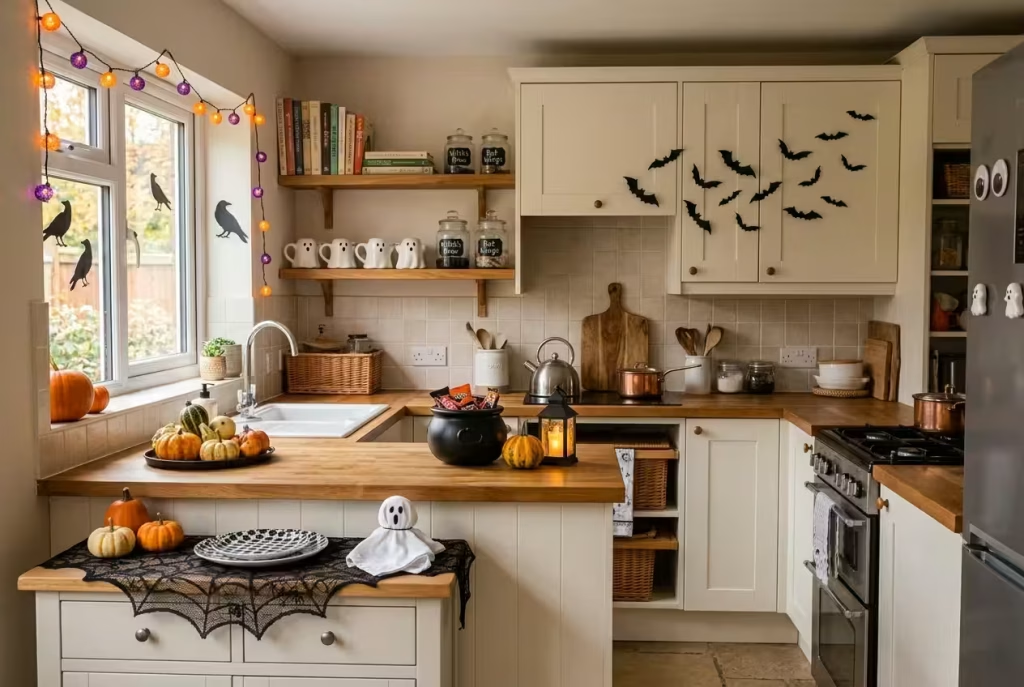
Each idea carries a quick at a glance line. Three style tags appear throughout:
- Cute suits young children, anxious guests and anyone who dislikes jump scares.
- Spooky leans theatrical, with shadows, webs and a little menace.
- Elegant is for the adult who wants atmosphere without a single plastic skull in sight.
Costs are typical UK planning estimates, and the first rule of budget decorating is to shop your own house before you shop anywhere else. Jam jars, old books, white sheets, black bin liners, mismatched mugs and the dusty tea towels at the back of the drawer are all raw material.
All 24 ideas at a glance
| # | Idea | Time | Cost | Style | Renter-safe |
| 1 | Paper bat swarm | 10 min | Under £5 | Spooky-cute | Yes |
| 2 | Raven silhouettes | 20 min | Under £5 | Elegant | Yes |
| 3 | Haunted cabinet windows | 30 min | £5 to £15 | Spooky | Yes |
| 4 | Ghost handle covers | 15 min | Under £5 | Cute | Yes |
| 5 | Cauldron candy bowl | 5 min | £5 to £15 | Cute | Yes |
| 6 | Mini pumpkin tray | 10 min | £5 to £15 | Elegant | Yes |
| 7 | Lace spiderweb runner | 15 min | Under £5 | Spooky | Yes |
| 8 | Tiered tray vignette | 20 min | £5 to £15 | Cute | Yes |
| 9 | Skeleton sous-chef | 15 min | £15 to £40 | Funny | Yes |
| 10 | Apothecary potion jars | 30 min | Under £5 | Spooky | Yes |
| 11 | Haunted pantry labels | 20 min | Under £5 | Cute | Yes |
| 12 | Googly-eyed fridge | 10 min | Under £5 | Cute | Yes |
| 13 | Vintage cookbook stack | 10 min | Free | Elegant | Yes |
| 14 | Syrup apothecary station | 20 min | £5 to £15 | Elegant | Yes |
| 15 | Ghost mug display | 10 min | £5 to £15 | Cute | Yes |
| 16 | Witch’s hot chocolate tray | 15 min | £5 to £15 | Cosy | Yes |
| 17 | Black and white plate mix | 10 min | Thrifted | Elegant | Yes |
| 18 | Bat-wing treat platter | 30 min | £5 to £15 | Spooky | Yes |
| 19 | Graveyard grazing board | 30 min | £15 to £40 | Spooky | Yes |
| 20 | Towel ghosts | 10 min | Free | Cute | Yes |
| 21 | Flameless jam-jar lanterns | 15 min | £5 to £15 | Cute | Yes |
| 22 | Orange and purple fairy lights | 10 min | £5 to £15 | Spooky | Yes |
| 23 | Window silhouettes | 20 min | Under £5 | Spooky | Yes |
| 24 | Simmer pot scent | 10 min | £5 to £15 | Cosy | Yes |
The kitchen decorator’s tool kit (and what to leave in the drawer)
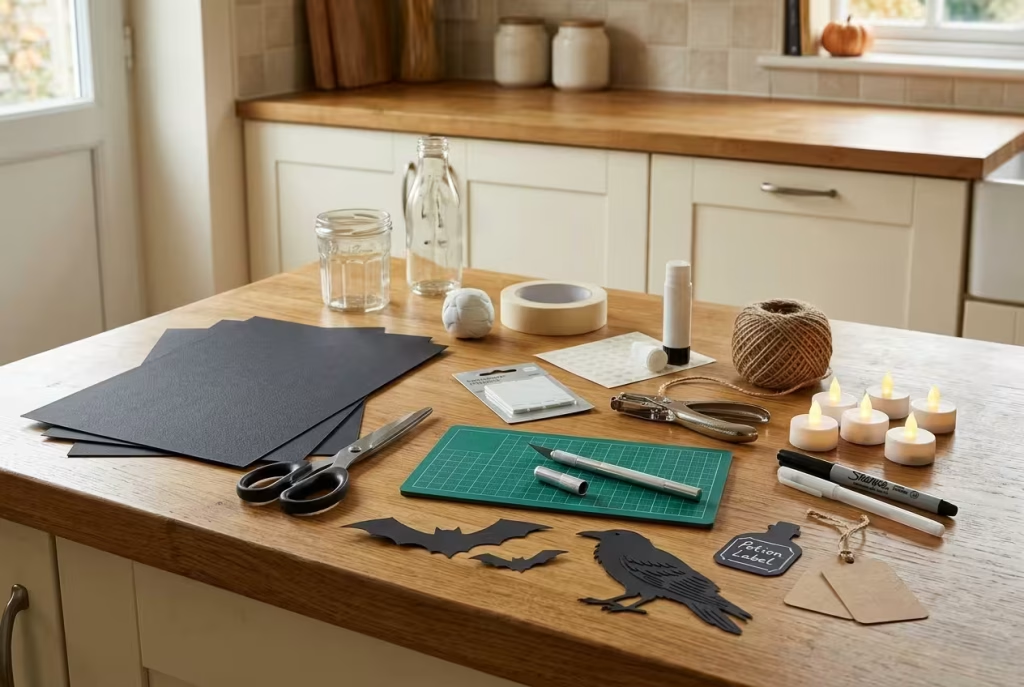
You can complete most of the 24 ideas with items you already own. A short shopping list, if you want to be properly prepared:
- Black card, matt, 200 to 250gsm. Stiff enough to hold its shape, thin enough to cut cleanly. Gloss card looks cheap under kitchen lighting.
- Sharp scissors and a craft knife with a cutting mat. Fine detail on ravens and silhouettes needs a proper blade.
- Removable adhesive strips, putty and masking tape. The holy trinity of rental-friendly decorating.
- Glue dots and a glue stick. For paper-to-paper joins, where liquid glue would wrinkle.
- A hole punch and a ball of natural twine. For tags, labels and hanging details.
- A pack of flameless LED tea lights. Check the pack for battery life and whether replacement cells are included.
- A black marker and a white gel pen. For lettering labels that look hand-inked.
What to leave in the drawer: hot glue guns near children, anything glittery near food (it migrates everywhere), and heavy props on adhesive strips, which have weight limits printed on the pack for good reason.
Cabinets, walls and extractor hood: dress the vertical space first
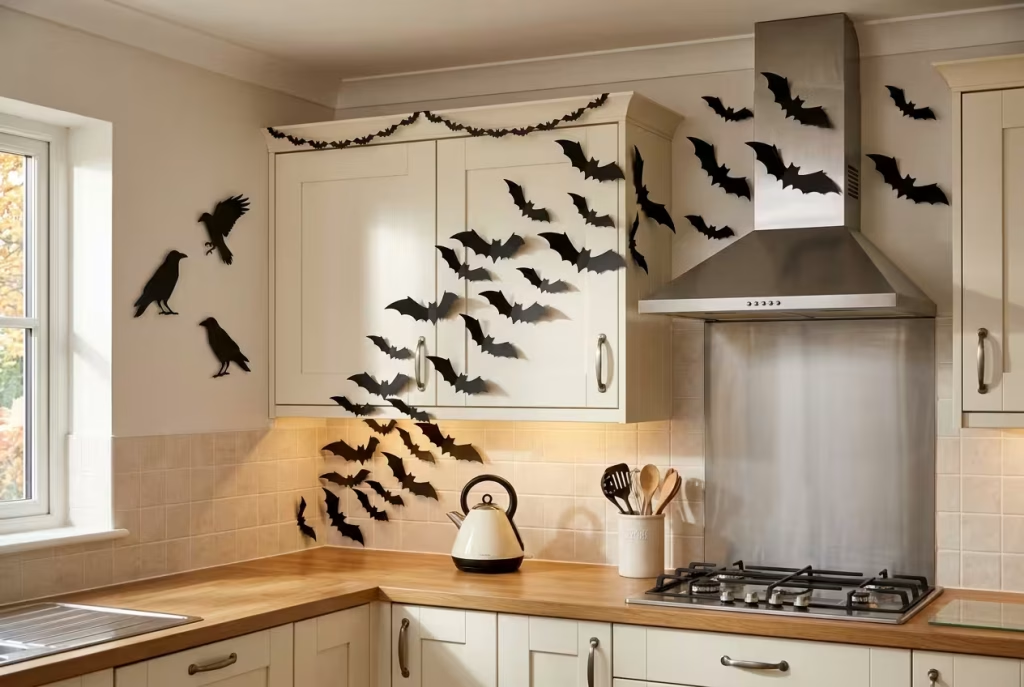
There is a reason professional stylists begin with walls. They are free real estate, they never get in the way of chopping an onion, and they change the feel of a room faster than anything you can place on a worktop. Think of this zone as the backdrop to the play, the bit that tells guests which story they have wandered into.
You May also Like: 27 Halloween Bedroom Decor Ideas to Create a Spooky, Cozy, and Stylish Space
1. Paper bat swarm
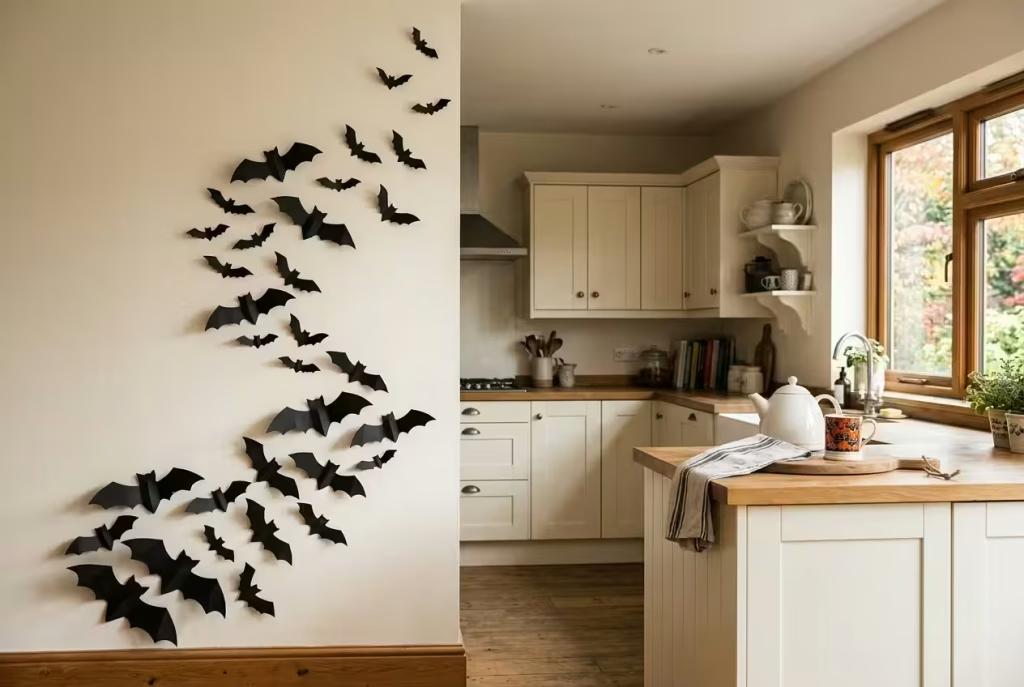
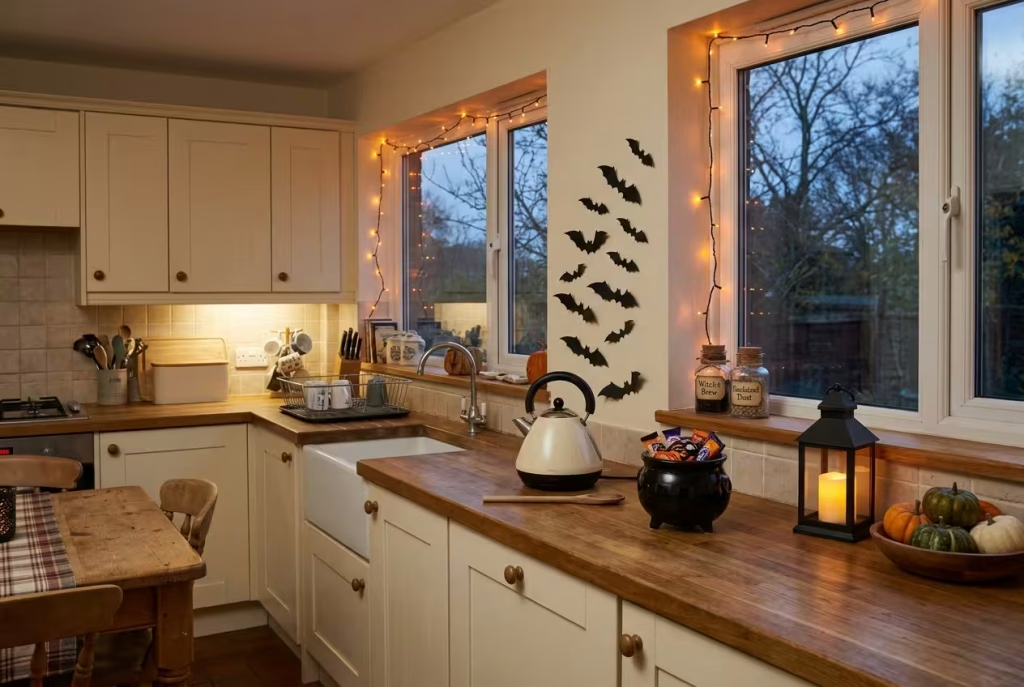
If one idea could stand for the entire season, it would be this: a flock of bats rising up a kitchen wall as if startled out of the rafters. It is also the quickest win in the guide. Cut a single template in three sizes, roughly 6cm, 10cm and 14cm across the wings, and trace about 25 to 35 bats on to matt black card. Score a short line down the middle of each body and fold the wings gently upwards, so they cast a tiny shadow instead of lying flat like stickers. That fold is the difference between a craft project and a convincing colony.
Arrange them in a loose spiral or an “S” rising from one corner, bunching the larger bats at the start and letting the small ones scatter as they travel. Fix each with a pea of removable putty or a short roll of low-tack tape. The movement, small to large, tricks the eye into reading speed. Where to put them? Above the window frame, down the side of the fridge-freezer, or climbing from the skirting to the ceiling beside the back door.
Making a swarm is also the ideal job for children, who will cut their own wobbly bats with great seriousness. Many of us can recall the exact paper pumpkin we taped to a classroom window as a child, and giving a young person the same small ownership of the room builds precisely the kind of memory they will carry into their own kitchens.
At a glance: 10 minutes, under £5, spooky-cute, renter-safe.
Mind the hob. Keep paper decorations well away from the cooker and extractor hood. Heat and grease make that corner the worst possible place for anything that burns, so let the bats flutter on the far side of the room.
2. Raven silhouettes
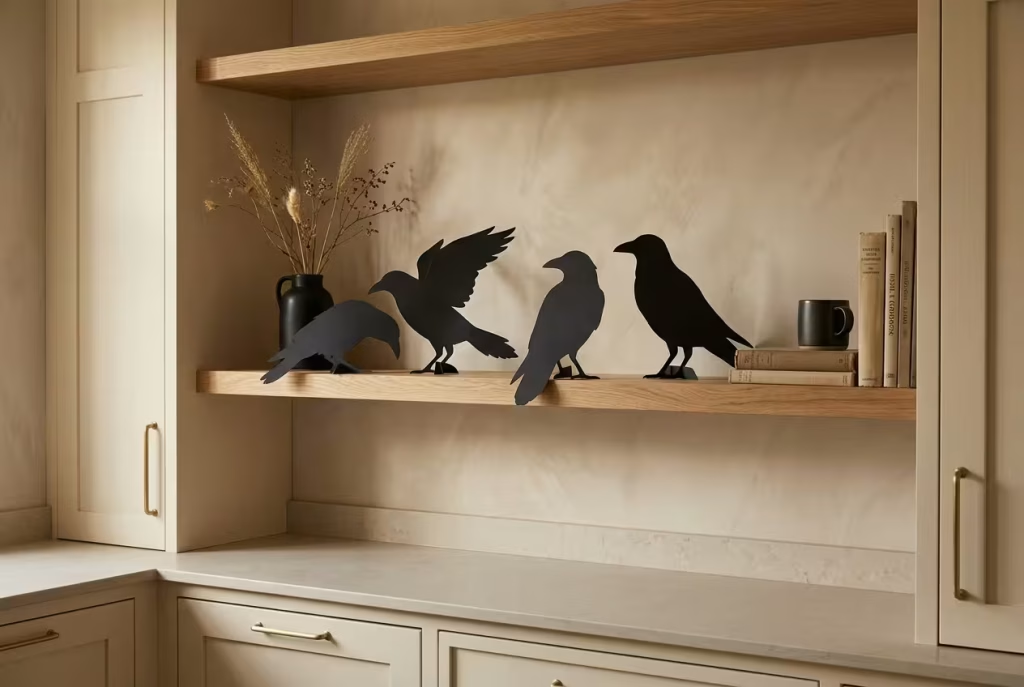
A single black bird on a branch feels poetic. A cluster feels like a warning. The old collective nouns say it all: a murder of crows, an unkindness of ravens, and the second is perfect for a kitchen with a sense of theatre. Print three to five raven outlines at 20 to 30cm tall, cut them from matt card with a craft knife, and fold a small tab at the base so each can perch on a shelf edge or the top of a cabinet. Ravens are larger than crows, with a wedge-shaped tail and a heavier beak, and getting the tail right is what makes the silhouette read as a raven rather than a generic bird.
Odd numbers are the stylist’s secret, so stick to three, five or seven, and vary their poses: one looking down, one with a raised wing, one turned away as if bored. Pair them with a bunch of dried grasses in a black vase and you have the grown-up version of Halloween, moody and unfussy, the kind of look that works just as well on a Wednesday as on the 31st.
There is a subtle emotional pull here too. Gothic fiction and old ballads have taught us to associate these birds with long evenings, candlelight and storytelling. A raven on the dresser quietly says that this is a house where stories get told.
At a glance: 20 minutes, under £5, elegant, renter-safe.
3. Haunted cabinet windows
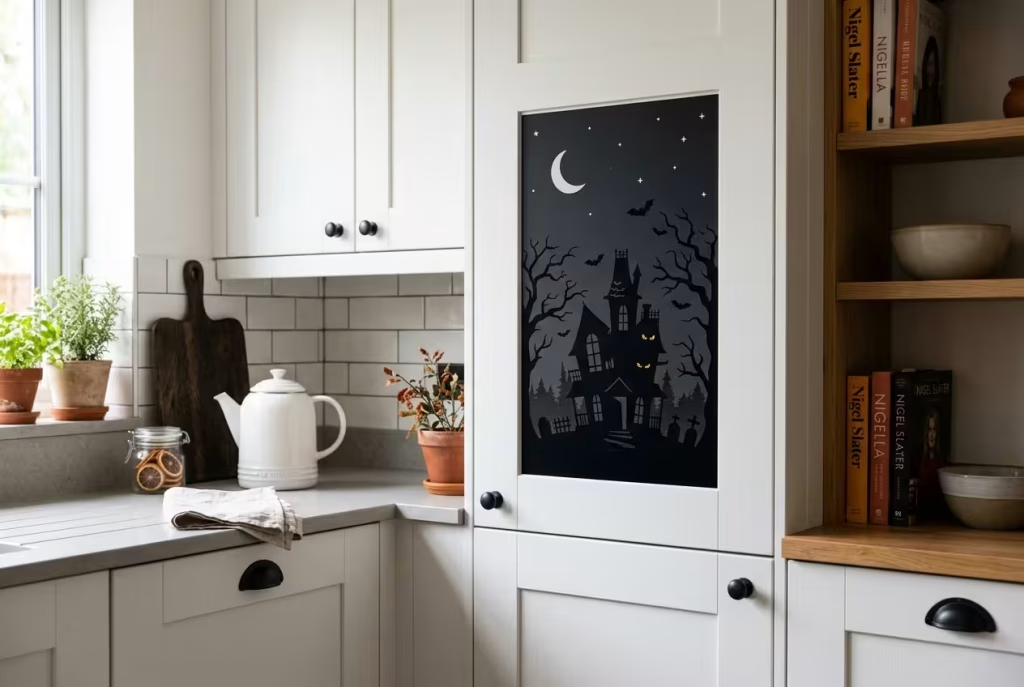
Picture a plain white cupboard door transformed into a window onto a haunted skyline: a full moon, a crooked house, a pair of yellow eyes glowing from the dark. Removable vinyl or static-cling film does the job beautifully and, crucially for tenants, comes away without a trace. Measure the door panel, cut the film about 5mm smaller all round, and use a few drops of washing-up liquid in water on the surface so you can slide the film into position before smoothing it out with a credit card. Squeegee from the centre outwards to chase out the bubbles.
Always test a small patch on an inside edge first, particularly on older, cheaper or recently refinished doors. If your cabinets were painted lately, give them time to cure before sticking anything on: adhesive manufacturers typically advise about seven days. When the season ends, warm the film with a hairdryer on a low setting for a few seconds and peel slowly at a shallow angle so no residue lingers.
The charm of this idea lies in the story it tells. A kitchen that seems to hide a secret behind every door invites guests to look closer, and curiosity is the quickest way to make a space memorable.
At a glance: 30 minutes, £5 to £15, spooky, renter-safe.
4. Ghost handle covers
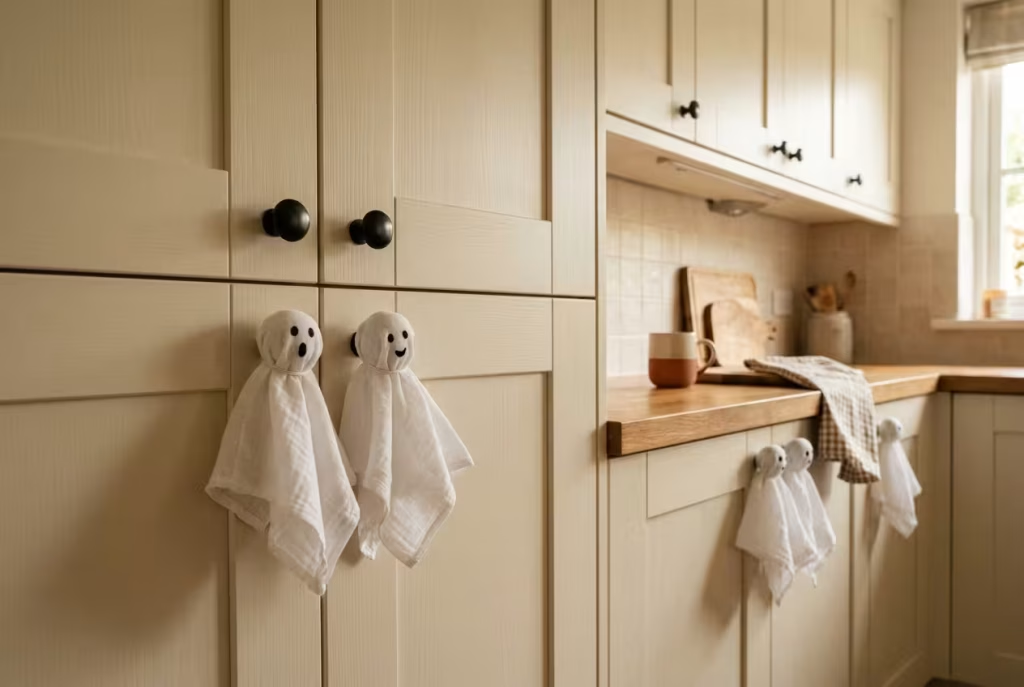
Some of the best decorations are the ones that make you smile without being asked. Cut a 20cm square of white muslin or cotton, drape it over a round cupboard knob, then tie a loose loop of thread beneath the knob to make a neck. Two dots of black felt or marker for eyes, and a row of little ghosts now guards your crockery. A single metre of muslin yields roughly 25 squares, so a whole kitchen of knobs costs a few pounds.
They are light, washable and endlessly adjustable: tilt one head, give another a slightly surprised mouth. Children adore them, and teenagers who claim to be above Halloween will quietly rearrange them when they think nobody is looking. Keep to small knobs and leave bulky handles alone, because loose fabric near the hob is an accident waiting to happen.
At a glance: 15 minutes, under £5, cute, renter-safe.
Worktops and island: where the eye lands first
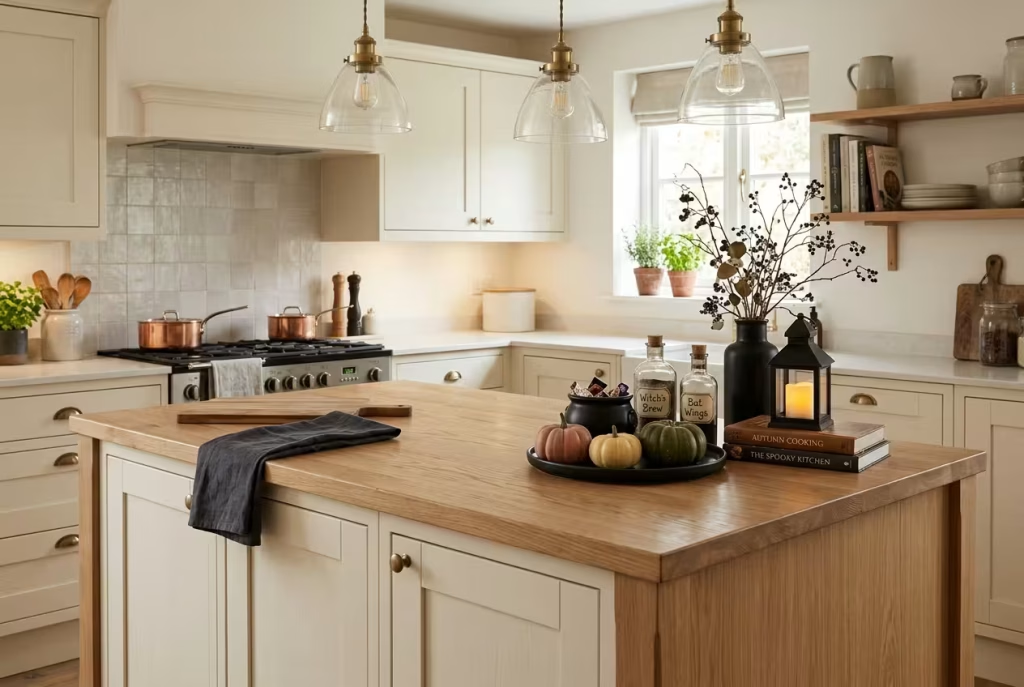
The island is the stage, and like any good stage it needs restraint. A worktop piled with props becomes a nuisance by Wednesday, and nobody finds a pumpkin charming when it is blocking the chopping board. Use these ideas to create focal points while keeping at least half of your surfaces clear for the business of cooking.
5. Cauldron candy bowl
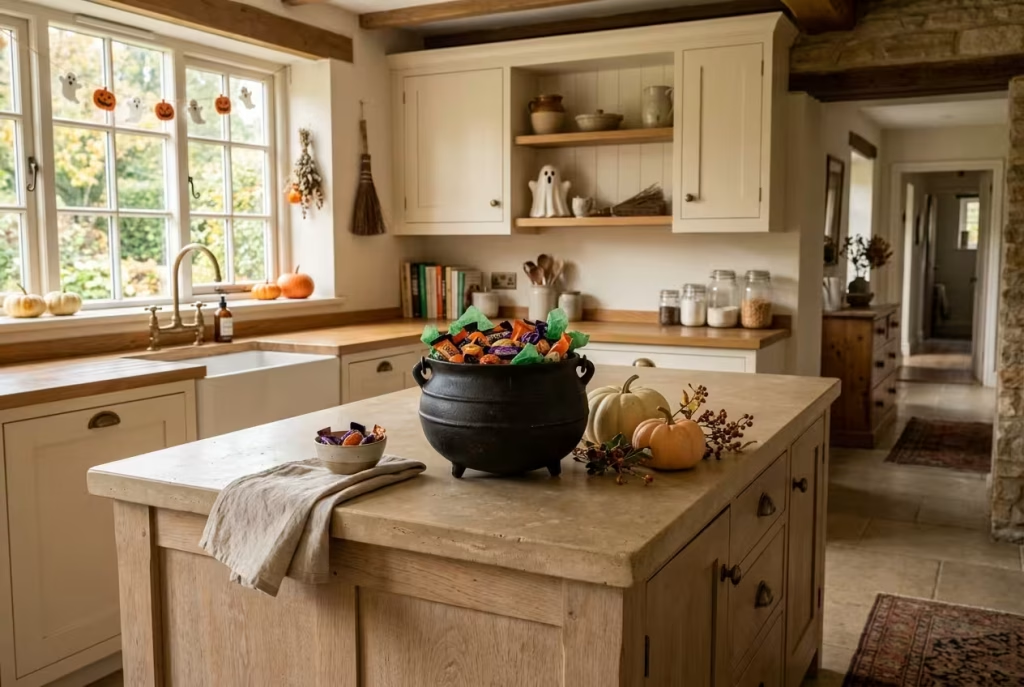
A battered black cauldron earns its keep twice over: it holds the sweets that bribe small visitors, and it anchors an entire display. Choose one about 20 to 25cm across, plastic or cast-effect, and tuck a clean bowl liner inside so loose sweets stay hygienic. Fill it with individually wrapped treats, then crown the pile with scrunched balls of green tissue paper for a bubbling-brew effect. No dry ice, no mess, no fuss.
Position it where hands naturally travel, near the kettle or at the corner of the island, and watch how quickly it becomes the unofficial centre of the room. When 1 November arrives it turns into a utensil pot or a fruit bowl, so the money has bought you something that outlives the season.
Think too about the emotional job a bowl of sweets does. It says welcome. It is hospitality made visible, and at a time of year when darkness arrives early, a lit kitchen with a cauldron of treats feels like a promise to anyone who knocks. Use only wrapped sweets, and keep a note of nut-free options for visiting children.
At a glance: 5 minutes, £5 to £15, cute, renter-safe.
6. Mini pumpkin tray
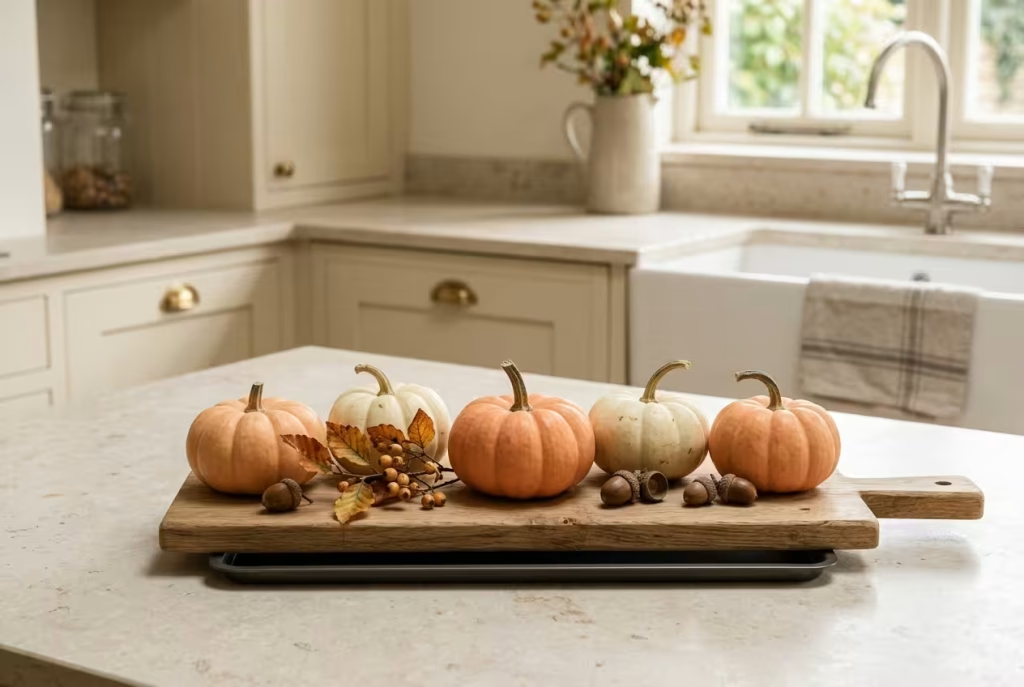
Group three, five or seven mini pumpkins on a wooden board about 30 to 40cm long, mixing a pair of white ones with the classic orange for contrast. Add a sprig of dried foliage, a few acorns or a single taper candle in a holder, and you have a centrepiece that looks as if an interior designer spent the afternoon on it. Mini pumpkins are usually around 7 to 10cm across, which is small enough to feel delicate and large enough to read from the doorway.
Real pumpkins are glorious but short-lived indoors. A fortnight is a sensible limit, and a tray underneath protects your worktop from any weeping as they soften. A quick wipe with diluted vinegar can slow mould, and if your kitchen runs warm and steamy, faux pumpkins will outlast the season without complaint.
Pumpkins also carry a particular emotional weight: the smell of cut squash, the slippery seeds, a lopsided face with its tongue sticking out. Let a child choose one for the tray, and in ten years that pumpkin will still be remembered, long after the expensive ones are forgotten.
At a glance: 10 minutes, £5 to £15, elegant, renter-safe.
7. Lace spiderweb runner
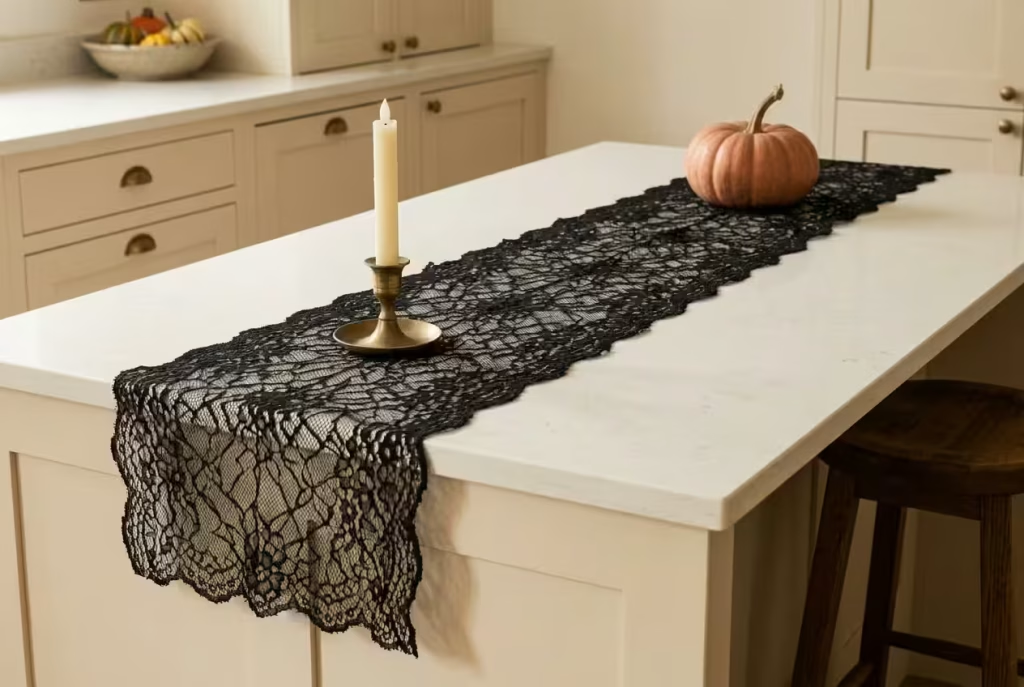
Lace has a faint Miss Havisham glamour, all faded elegance and things left slightly undisturbed, and it is the cheapest way to add Gothic texture to an island. Hunt in charity shops for black lace curtain panels, old doilies or a length of trimming for £1 to £5. Lay a strip about 30 to 40cm wide down the centre of the island, letting 10 to 20cm hang over each end, and anchor the corners with a small candle holder or a pumpkin.
Think about contrast. On a pale worktop, black lace stands out dramatically; on dark granite or slate, white or cream lace does the same job. The pattern needs only a few inches to create an impression of spun silk. It washes at 30 degrees, folds into a drawer, and returns in November as a table runner for the festive season.
There is a lovely emotional undertone here as well, because lace so often belongs to someone: a grandmother’s table, an aunt’s dresser. If you have a piece you treasure, protect it, and use a charity-shop find for the display instead. Keep any lace well clear of the hob, where fabric and flame make dangerous neighbours.
At a glance: 15 minutes, under £5, spooky, renter-safe.
8. Tiered tray vignette
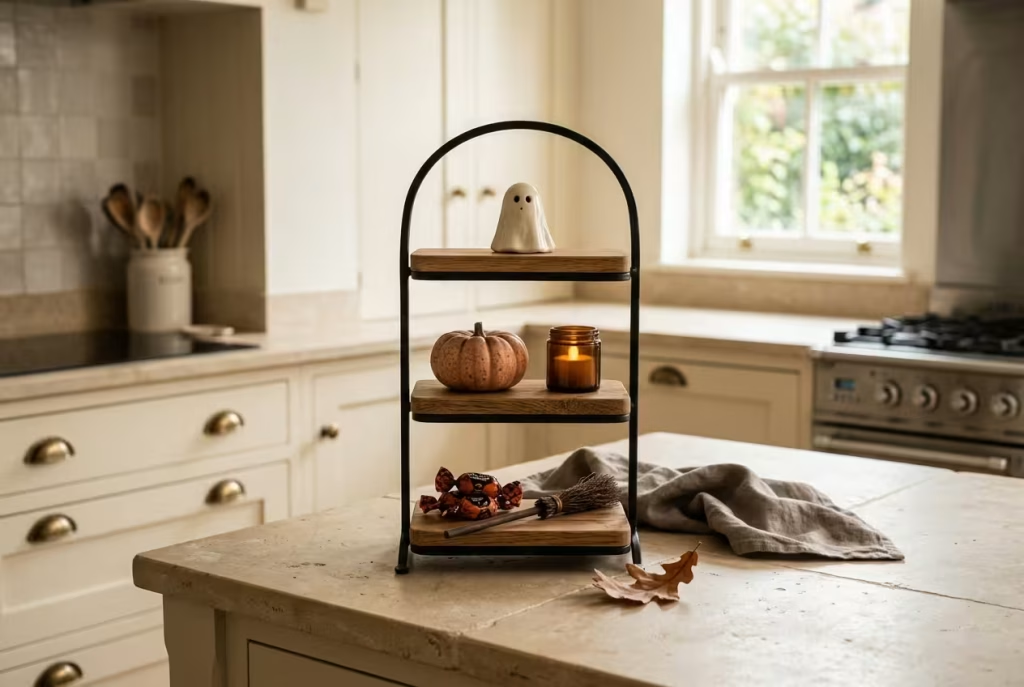
A tiered stand is the stylist’s cheat code: it organises clutter into composition. Pick one anchor piece, such as a small ghost or a chunky pumpkin, then add three to five smaller items across the tiers: a candle in a glass, a miniature broom, a handful of wrapped sweets, a single dried leaf. Hold to two or three colours and the stand stops resembling a jumble sale. Vary the heights, because the eye enjoys a gentle zigzag.
Its biggest virtue is that it builds upwards. In a galley kitchen where every centimetre of worktop is spoken for, a three-tier stand can carry an entire Halloween scene on a footprint smaller than a dinner plate. Think of it as a tiny stage in a tiny room.
It is also the most forgiving idea for beginners. Nothing here needs fixing to anything, so if you dislike the arrangement you simply shuffle it until you do.
At a glance: 20 minutes, £5 to £15, cute, renter-safe.
9. Skeleton sous-chef
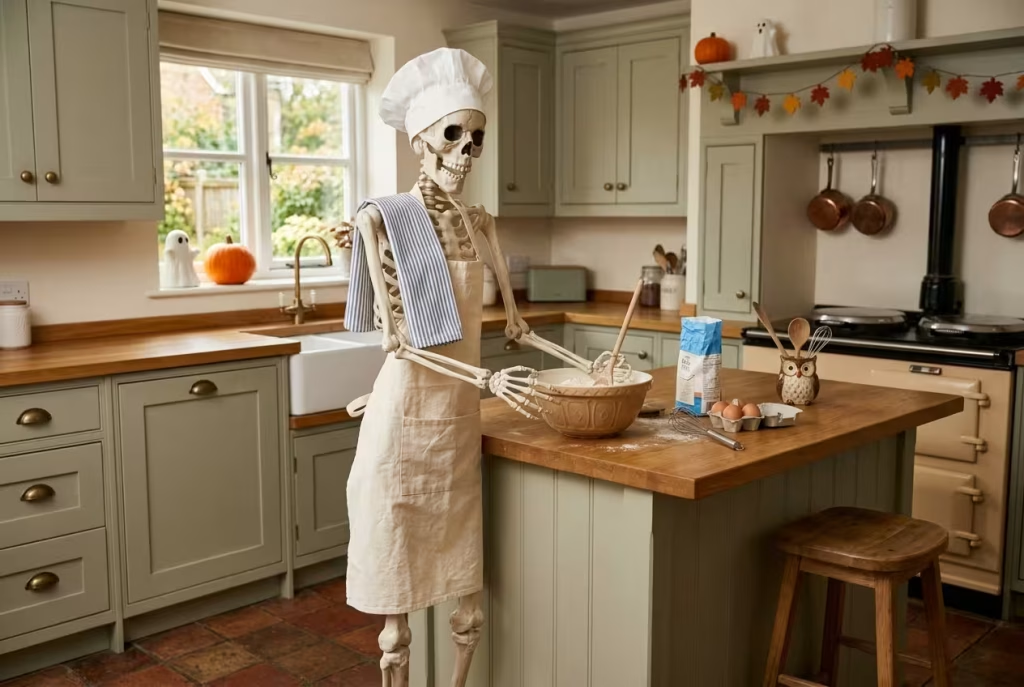
Walk into a kitchen to find a life-size skeleton in an apron, wooden spoon in bony hand, leaning over the island as if halfway through a stew, and you will laugh before you can stop yourself. That laugh is the whole point. Large plastic skeletons, usually around 150 to 180cm and posable at the joints, sell for roughly £15 to £40, and they transform from decoration into character the moment you add a chef’s hat.
Prop it against a stool or tie it loosely to a chair with a cable tie, give it a mixing bowl and a tea towel over one shoulder, and name it. Children respond to a named skeleton in a way they never will to an anonymous one. A photograph of the whole family standing beside “Colin” is exactly the sort of picture that ends up on the fridge for years.
Placement matters. Set the skeleton at least one metre from the hob, keep any costume well clear of heat, and make sure it does not block the route between fridge, sink and door. A joke is only funny when nobody trips over it.
At a glance: 15 minutes, £15 to £40, funny, renter-safe.
You May also Like: 26 Best Halloween Decor Ideas for Living Rooms: Stylish & Spooky
Shelves, pantry and fridge: the details guests lean in to read
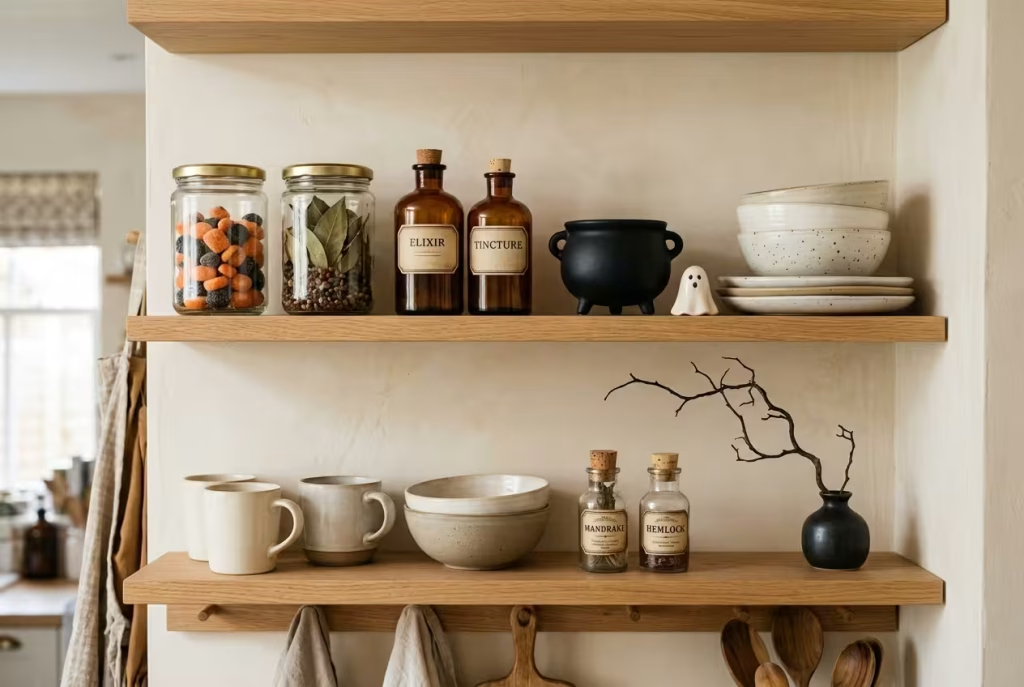
Some decorations announce themselves from across the room. These are the opposite: the ones people find when they pause to read a label or lift a lid. They reward attention, which is why they are often the bits guests remember best.
10. Apothecary potion jars
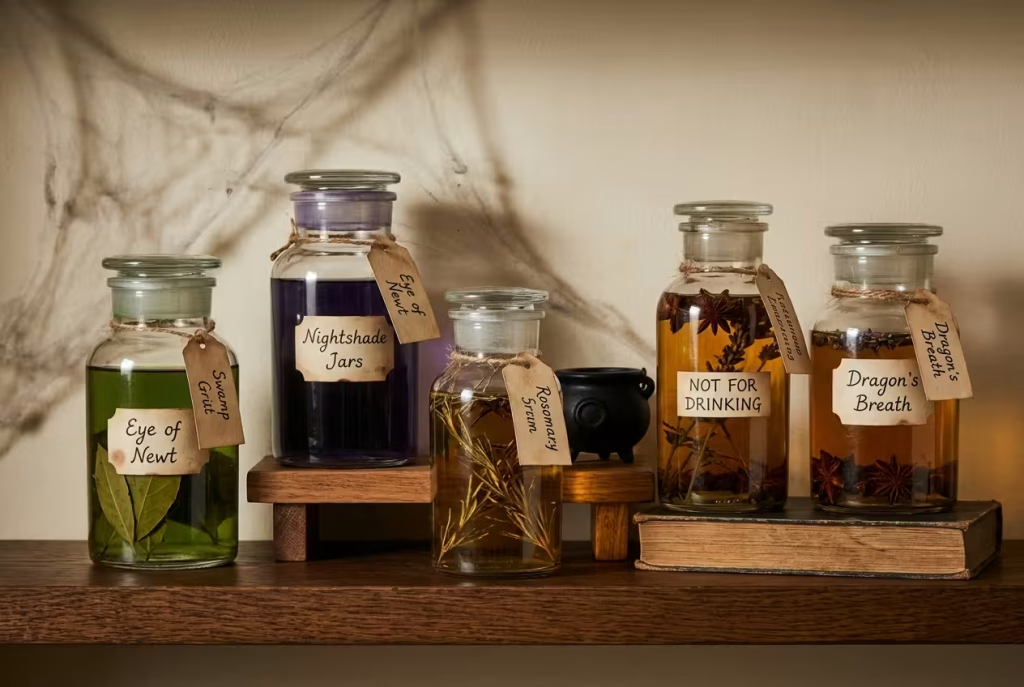
Raid the recycling for jam, pickle and passata jars between 250 and 500ml, soak off the labels in warm soapy water, and set them in a row. Fill each about three-quarters full with water tinted by three to five drops of food colouring: swamp green, nightshade purple, a murky amber that suggests something best left unidentified. Drop in “ingredients” that look the part: bay leaves, dried rosemary, star anise, a few lavender heads.
For an aged look, tea-stain your labels. Brew a couple of strong tea bags, brush the liquid over plain paper, let it dry, then write on it with a black marker or white gel pen: “Eye of Newt”, “Bat Wing”, “Dragon’s Breath”. Tie each tag on with twine, and stagger the jars at three different heights using a small riser or a stack of books.
Seal every lid tightly, and put “not for drinking” on at least one label so curious small visitors are in no doubt. Food colouring can stain fabric and grout if it spills, so keep the jars away from tea towels.
What makes this idea special is the storytelling. Old chemists, grandparents’ pantries and half-remembered apothecary shops all live in the imagination, and a shelf of mysterious bottles invites people to invent their own backstory. Ask a child what is inside the purple one and listen.
At a glance: 30 minutes, under £5, spooky, renter-safe.
11. Haunted pantry labels
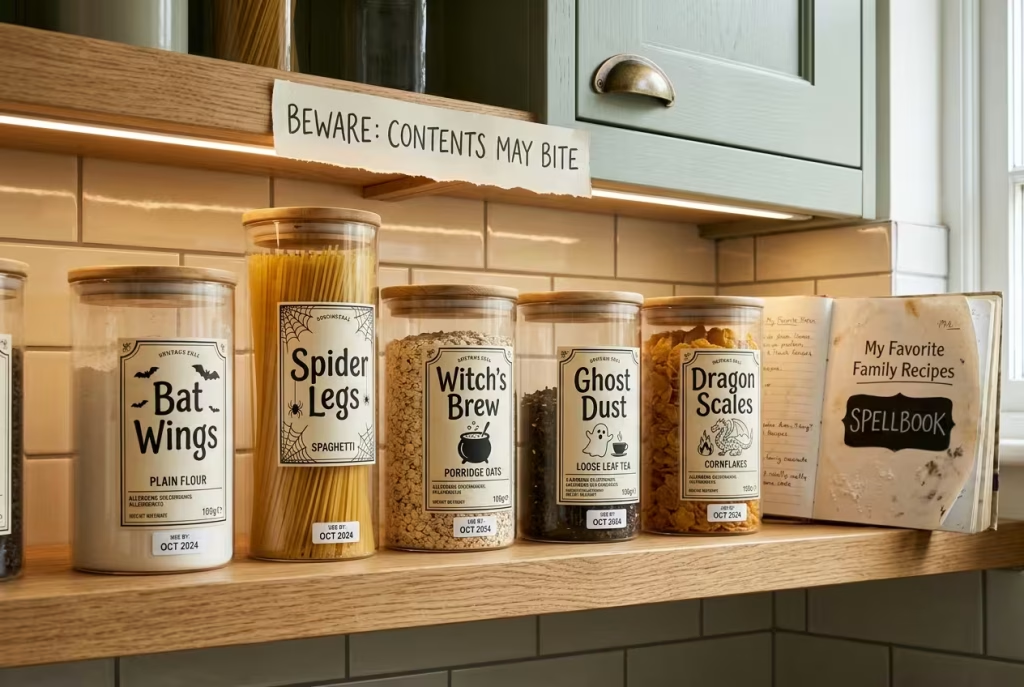
Here is the most underrated idea in the guide: rename your pantry. “Witch’s Brew” for the tea, “Spider Legs” for the spaghetti, “Bat Wings” for the flour, “Zombie Brains” for the porridge oats. Print the labels on sticky sheets or write them on strips of masking tape, and press them on to the front of each storage jar. A small touch like this turns a utilitarian cupboard into somewhere guests peek into on purpose.
Add a flourish with a hand-lettered sign over the door: “Beware: Contents May Bite”. And for the recipe book you reach for every Sunday, a label reading “Spellbook” does a surprising amount of work.
One practical caution matters more than the joke. Never cover use-by dates, allergen information or cooking instructions. Stick the playful label on the front of the jar and keep the real details visible, particularly if anyone in the house has allergies.
Why does it work emotionally? Because it is a private joke, shared between the people who live there. The first time a child reads “Dragon Scales” off a jar of cornflakes and laughs, you will understand that the pantry has become part of the family story.
At a glance: 20 minutes, under £5, cute, renter-safe.
12. Googly-eyed fridge
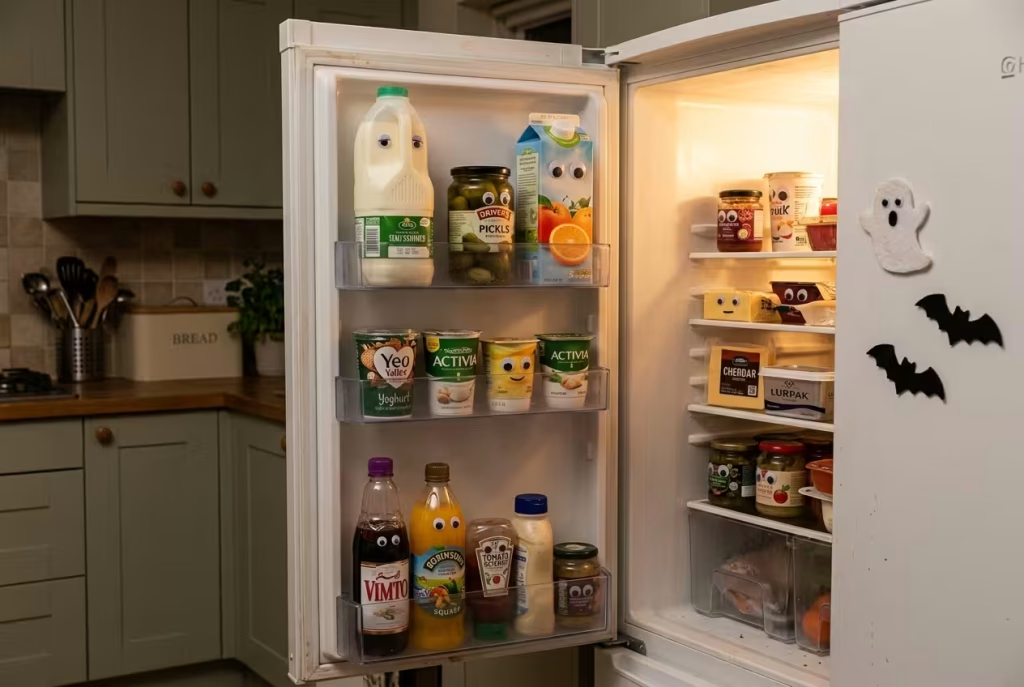
The largest blank surface in your kitchen is the one you open forty times a day. Stick googly eyes, 10 to 30mm across, on the outside of milk bottles, yoghurt pots, jars of pickle and bottles of squash, and the fridge shelf becomes a gallery of nervous monsters. A bag of 100 eyes typically costs £2 to £3, so the whole effect costs less than a coffee. Add a few black card bats and some Halloween magnets to the door itself and the transformation is complete.
Where it truly shines is the midnight snack. Imagine a child, half-asleep, opening the fridge door to find a dozen wide-eyed faces staring back. The squeal, followed by the giggling, is the sort of memory that becomes family folklore.
Stick the eyes on packaging only, never directly on food, and remove them when the packet is finished so they do not end up in the recycling stream. Sticker-backed eyes are easier and tidier than glued ones.
At a glance: 10 minutes, under £5, cute, renter-safe.
13. Vintage cookbook stack
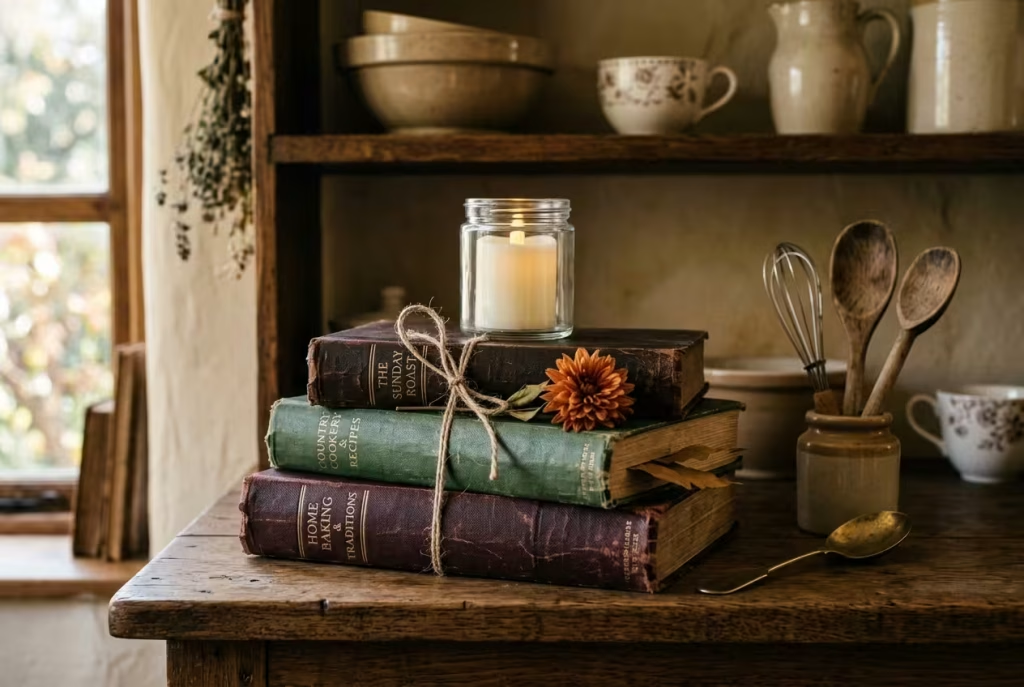
Dig out the oldest, most battered cookbooks you own, the ones with cracked spines, flour in the gutters and handwriting in the margins. If you do not own any, charity shops sell them for £1 to £3. Stack three on a shelf with the spines facing out, tie them with twine, set a flameless candle in a jar on top and tuck a dried flower between the pages.
The effect is moody, nostalgic and entirely free if the books are already on your shelves. Darker covers read best, and a couple of titles with faded gold lettering lift the whole thing from tidy to atmospheric.
Notice how much of this idea is emotional. A cookbook with a stained page tells you someone made that sponge cake again and again. Perhaps the margin note says “less sugar, Mum” or “perfect for Tom’s birthday”. The pleasure of the display lies in those small human traces. And because cookbooks, copper and aged glass sit happily in a kitchen all year, this is one of the best-value ideas on the list.
At a glance: 10 minutes, free, elegant, renter-safe.
The coffee bar: small corner, big personality
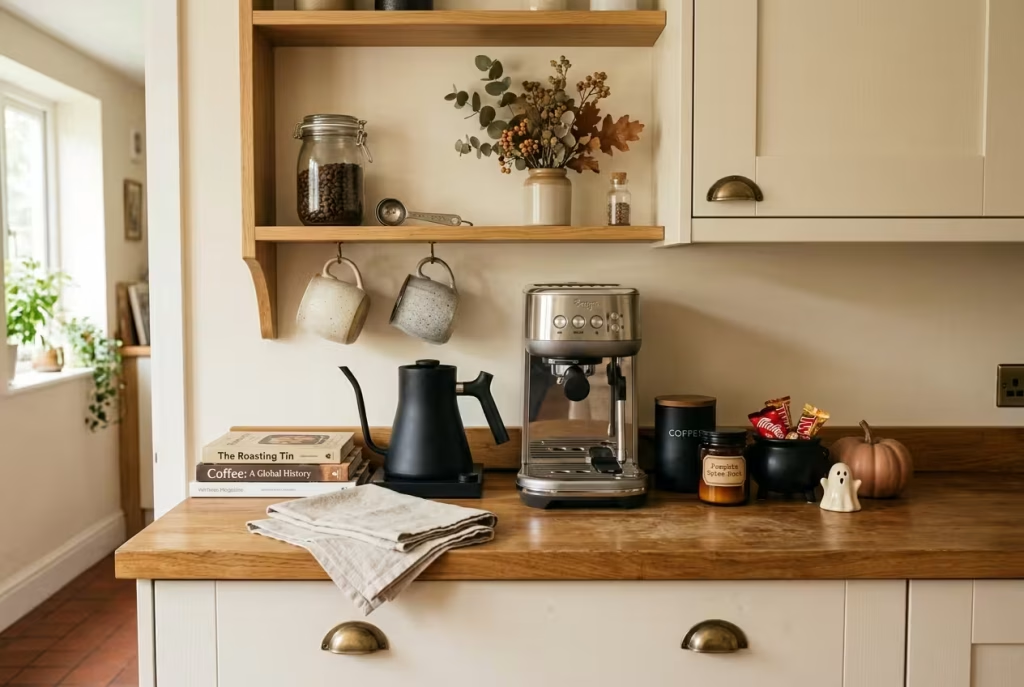
For many of us, the first quiet moment of the day happens at the kettle. That makes this corner worth decorating with some care, because you will stand in front of it when you are at your most receptive, with a warm mug in hand and the world still half asleep.
14. Syrup apothecary station
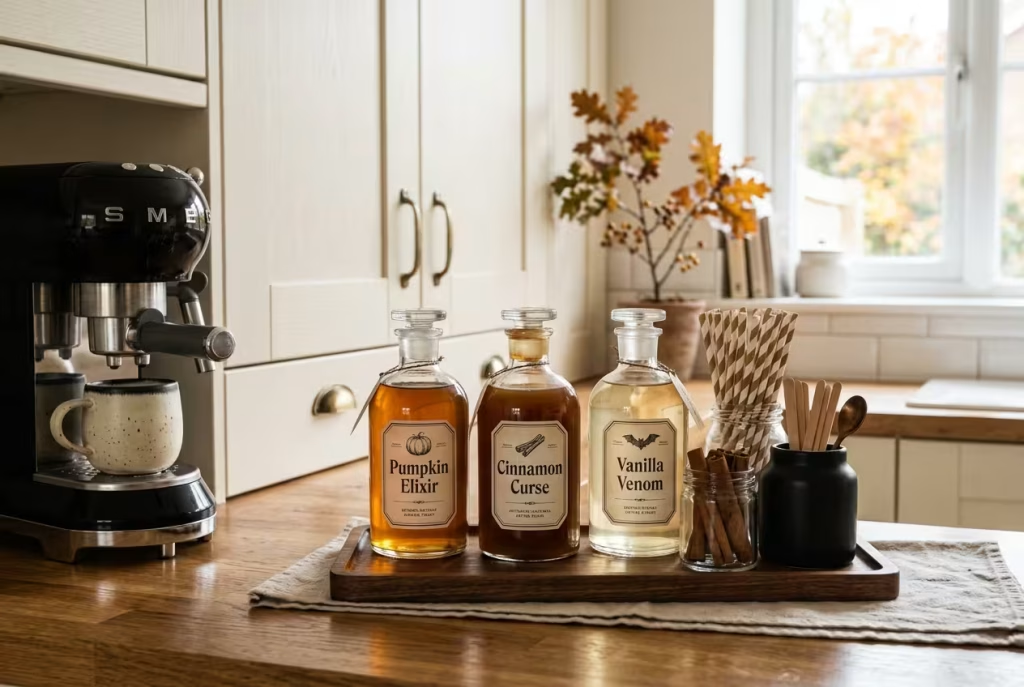
If you own a coffee machine, a cafetiere or even just a favourite tea caddy, borrow the potion look. Wash and dry three to five glass bottles, funnel in your flavoured syrups, and label them “Pumpkin Elixir”, “Cinnamon Curse” and “Vanilla Venom”. Arrange them on a tray about 30 by 20cm, with a jar of cinnamon sticks, a stack of paper straws and a few stir sticks in a black pot.
Keep the arrangement tight, tidy and edited. The difference between a styled station and a clutter of bottles is restraint, so stop at five items and resist adding a sixth. Hygiene counts too: wash bottles thoroughly, respect the use-by date on the original syrups, and store them out of direct sunlight.
Mornings grow darker from late October onwards, which makes this small ritual more precious. A spiced latte made beside a cheerfully ominous bottle is a surprisingly effective way to meet a grey Tuesday.
At a glance: 20 minutes, £5 to £15, elegant, renter-safe.
15. Ghost mug display
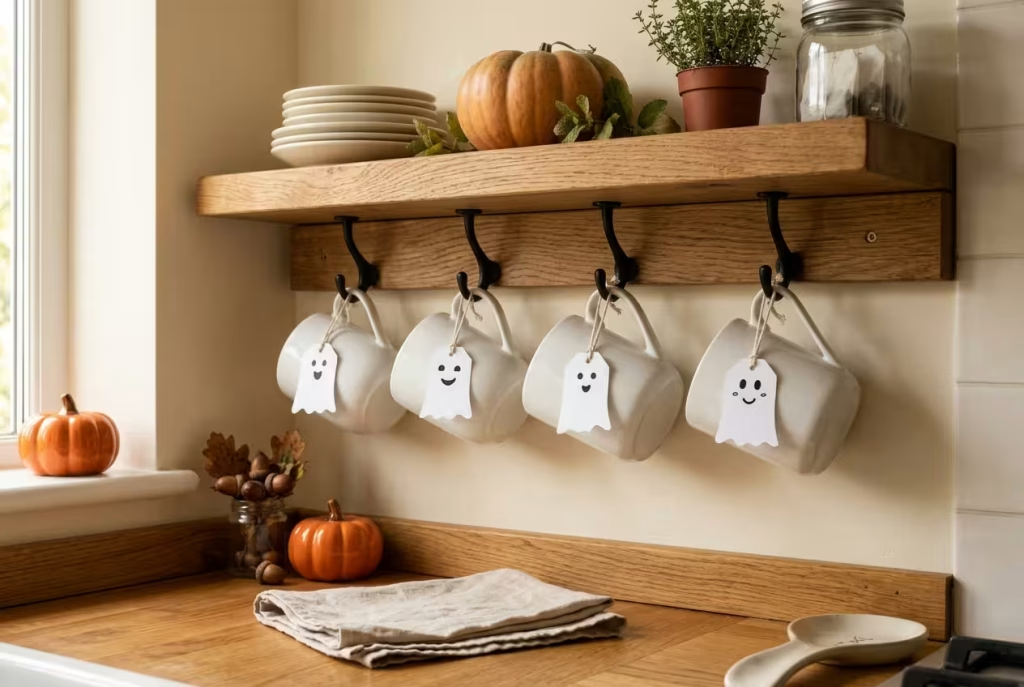
Hang three to five white mugs from a row of hooks or a mug tree (a basic one costs £5 to £10), then tie a small paper ghost tag to each handle with string. Cut the tags about 5cm tall from white paper and draw faces with a black pen. Never decorate the rim or any surface that touches your lips: the mugs stay fully usable, and the ghosts hang on the handles like friendly spirits.
No white mugs? A charity-shop haul of mismatched ones looks charming as a set, and a mix of shapes reads as collected rather than bought. Group them by height, with the tallest at the back, and the display feels deliberate.
The loveliest thing about this idea is the daily choice it creates. Which ghost will you drink from today? It is a tiny moment of play inside an otherwise automatic routine, and small moments are where good moods begin.
At a glance: 10 minutes, £5 to £15, cute, renter-safe.
16. Witch’s hot chocolate tray
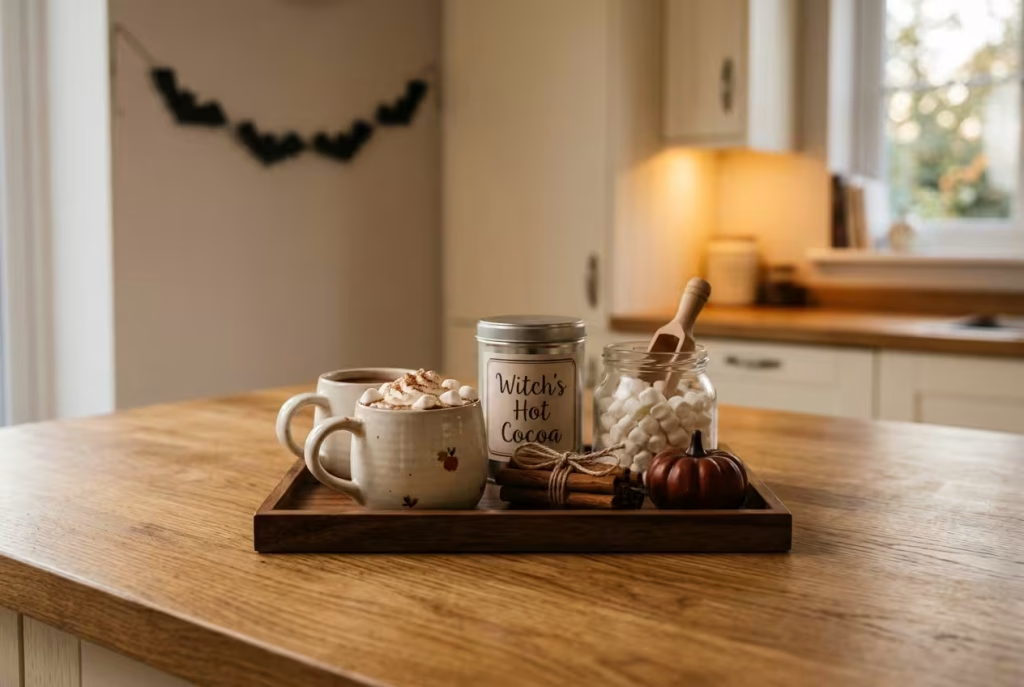
Load a tray with a tin of cocoa, a jar of mini marshmallows, a handful of cinnamon sticks and two chunky mugs. Label it “Witch’s Hot Cocoa” in your best lettering, tuck a tiny pumpkin in one corner, and you have both a decoration and the beginning of the cosiest evening ritual of the season. A bundle of cinnamon sticks tied with twine adds scent and texture for pennies.
Consider what the clocks going back actually means for a household. From 25 October, evenings arrive early and long, and a dependable treat makes them gentler. Making hot chocolate on a Friday night, with the kitchen lit orange and the bats on the wall, gives families something to look forward to when the daylight has gone.
It is also a gift in waiting. Wrap the tray contents in a bow and it becomes a neighbour’s present, a teacher’s thank-you or a “hello” for the new family down the road.
At a glance: 15 minutes, £5 to £15, cosy, renter-safe.
The table and the treats edible decor that does double duty
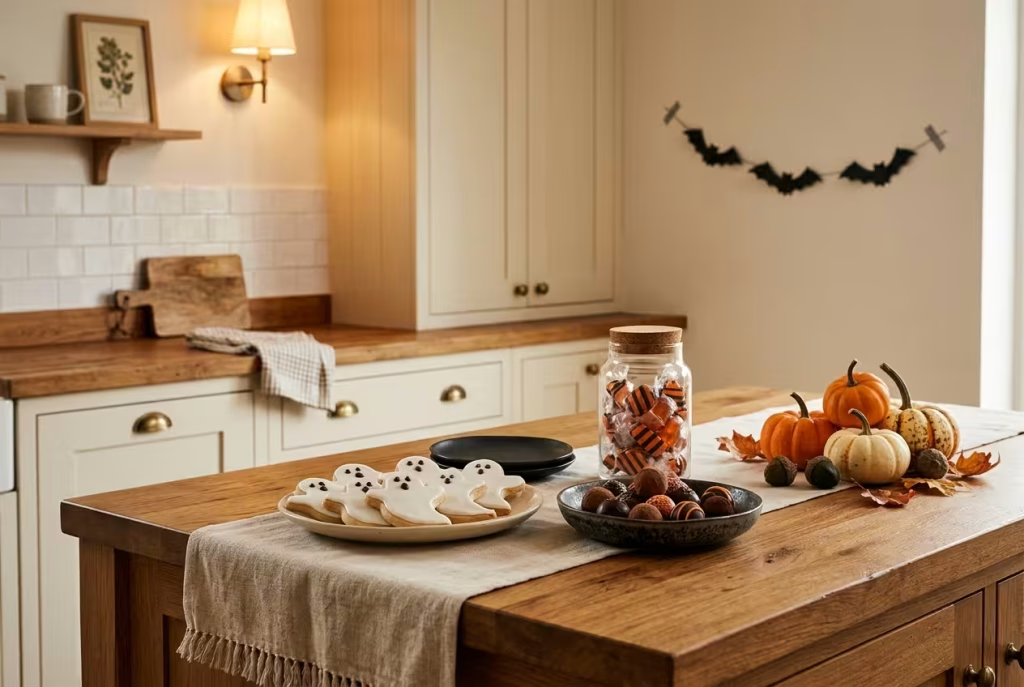
The best Halloween decorations vanish by the end of the evening, because people ate them. This zone is where the kitchen shows its natural advantage over every other room in the house: its decor can be delicious.
17. Black and white plate mix
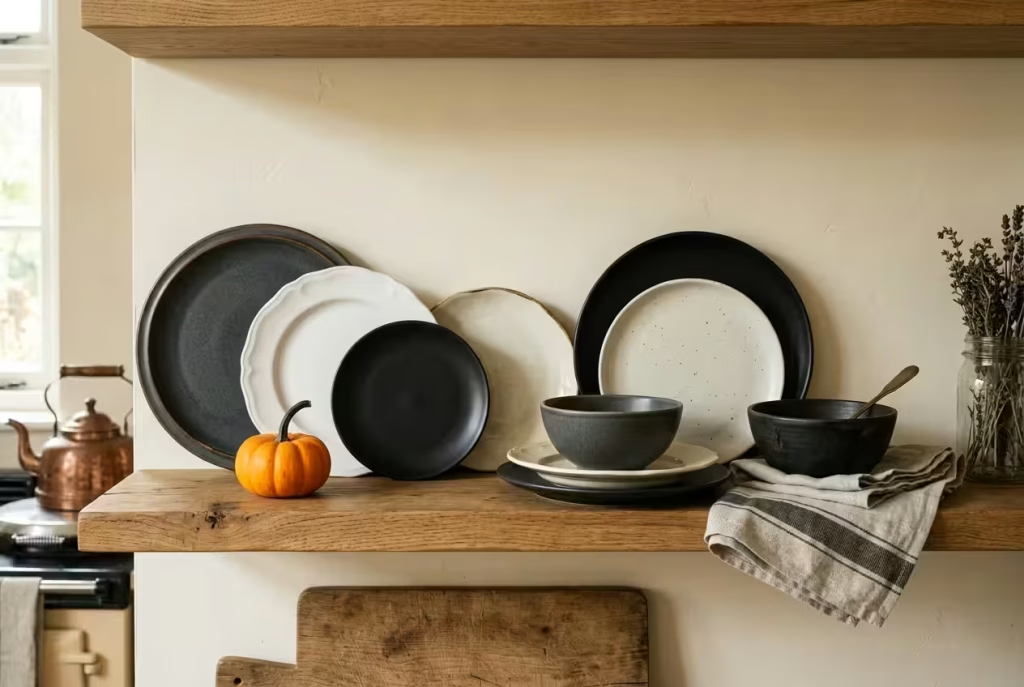
Rummage through charity shops, car boot sales and the back of your own cupboards for plain black, white and charcoal plates; most cost £1 to £3 each. Gather six to eight in different sizes, stack them in uneven piles on an open shelf, or lean a few against the wall on a plate rack. Your everyday crockery now looks deliberately gothic.
Resist the urge to match. A mixture of rim shapes and shades, a dinner plate with a scalloped edge beside a plain side plate, reads as collected rather than bought, and that is the whole charm. And, unlike most decorations, these plates keep working. Pumpkin soup in a black bowl looks spectacular, and nothing needs storing afterwards.
There is a lovely thread of memory in odd crockery, too. Mismatched plates evoke Sunday lunches at a grandparent’s table, where nothing matched and everything tasted better. Bringing that feeling into October is as comforting as it is stylish.
At a glance: 10 minutes, thrifted, elegant, renter-safe.
18. Bat-wing treat platter
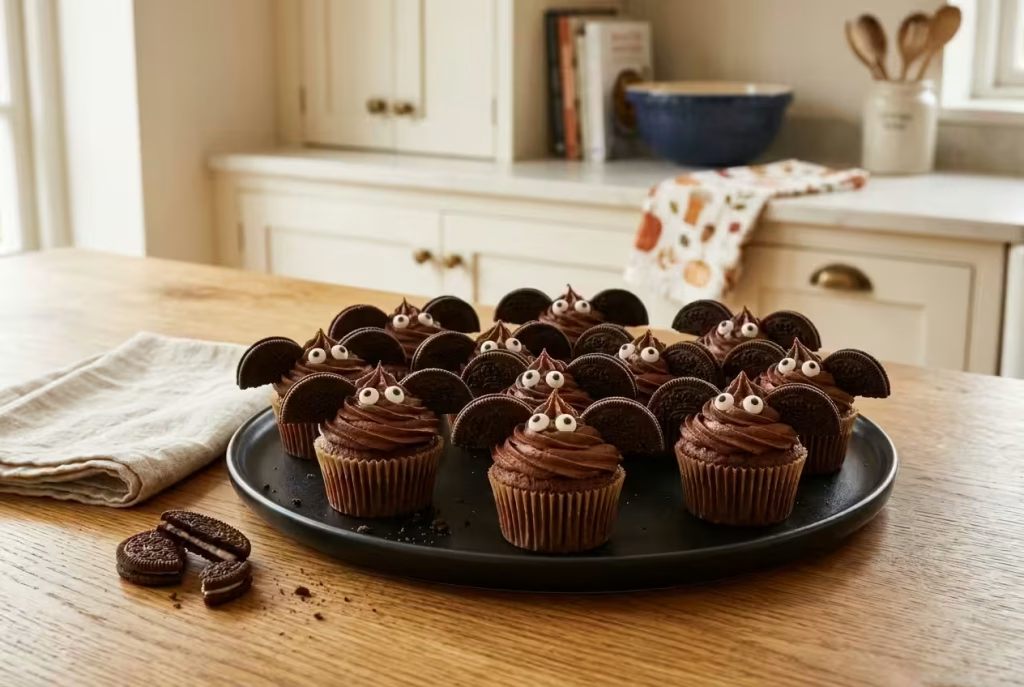
Bake or buy a dozen plain chocolate cupcakes. For the wings, cut chocolate sandwich biscuits in half with a serrated knife, press two halves into each cake so they fan out like wings, then add a pair of candy eyes with a dab of icing as glue. Arrange them on a 30cm black platter and watch them vanish within minutes. No time to bake? Shop-bought brownies with card wings on cocktail sticks look nearly as good.
Baking with children takes about 30 minutes plus cooling, and sticky fingers are part of the fun. Let them place the eyes and you will have a slightly crooked, completely adored platter. Perfection is overrated, and a wonky bat that a seven-year-old is proud of will outshine any shop-bought one.
Always check for allergies before a party, label anything containing nuts or gluten, and keep cooled cakes away from the hob and any steam.
At a glance: 30 minutes, £5 to £15, spooky, renter-safe.
19. Graveyard grazing board
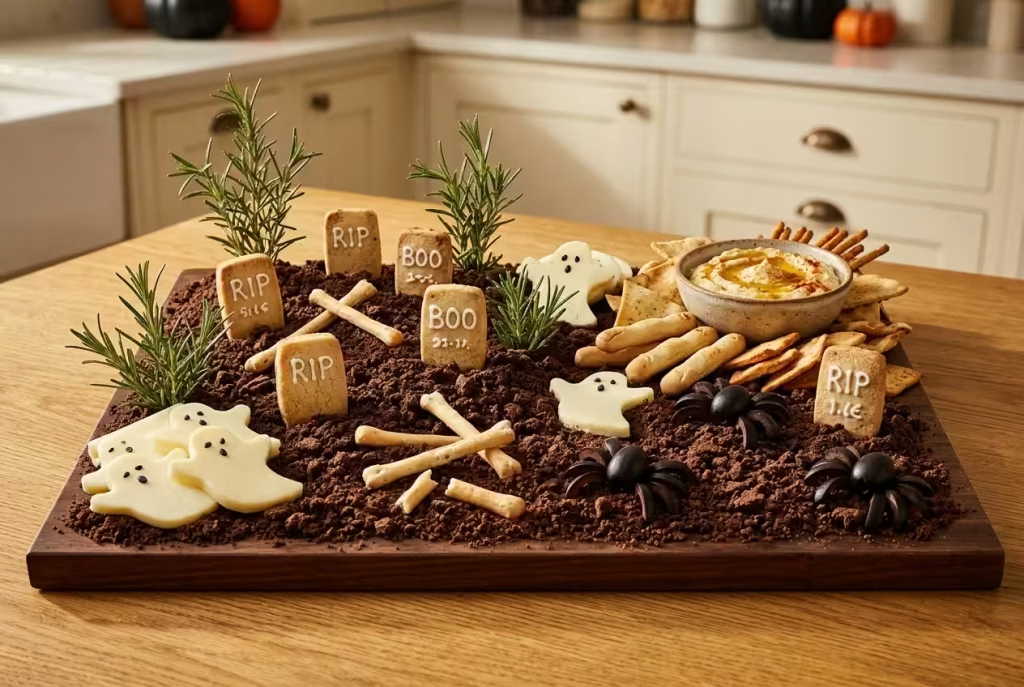
This is the centrepiece for anyone hosting. Use a board about 40 by 30cm. Crushed chocolate biscuits make convincing soil; rosemary sprigs become dead trees; breadsticks pass for bones; and cheese cut with a small ghost cutter drifts across the surface. Olive “spiders” are an old favourite: half an olive for the body, thin slices for the legs. Rectangular shortbread with a little icing epitaph stands in for tombstones, and a bowl of hummus with a hand reaching out (a gloved hand shape in breadsticks) does the rest.
Think about assembly in layers. Build the savoury side first, keep chilled items in the fridge until about 20 minutes before serving, then add the crunchy details last so they do not go soft. Dairy and meat should remain cold until the moment the board hits the table.
A grazing board does something a plated meal cannot: it pulls everyone into the same circle. People drift in, pick at the tombstones, laugh at the epitaphs and stay for another drink. That, more than any cobweb, is what a Halloween kitchen is for.
At a glance: 30 minutes, £15 to £40, spooky, renter-safe.
20. Towel ghosts
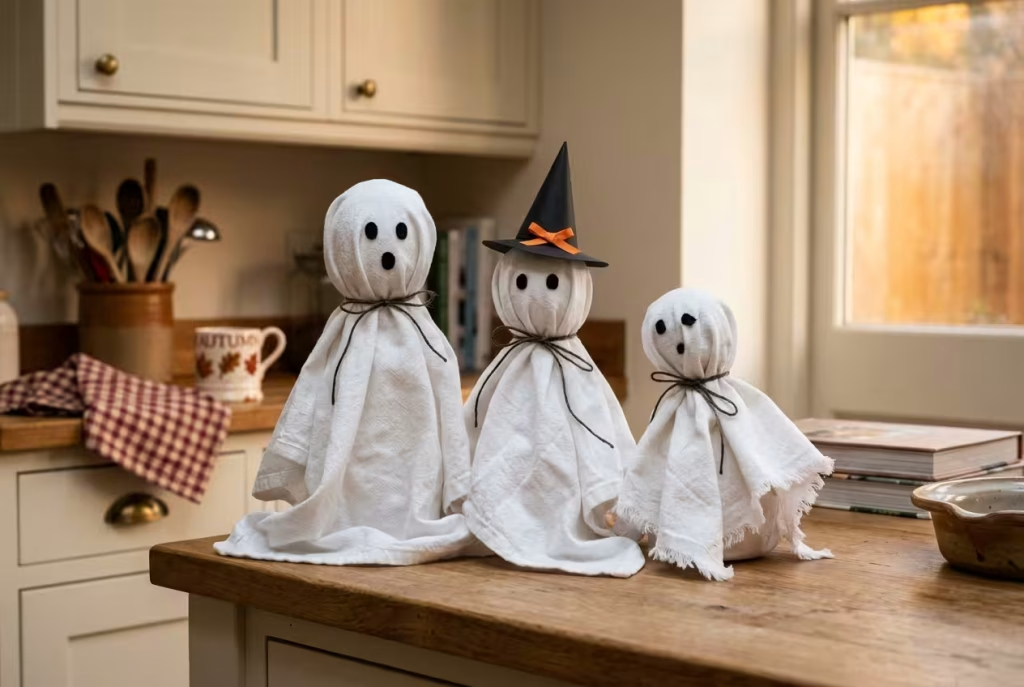
Scrunch a tea towel, about 50 by 70cm, around a small ball or an upturned cup roughly 8cm across, secure the neck with a rubber band, and add two felt dots for eyes. Make three, in a row of slightly different heights, perhaps one wearing a paper witch’s hat. The finished ghosts stand around 25cm tall.
There is no sewing, no spending and no storage problem, because the towels unfold back into ordinary tea towels in seconds. Wash them afterwards and they go straight back to work.
Almost everyone remembers the cheap bedsheet ghost of childhood, with eyes cut crookedly and a cry of “boo”. These towel versions carry exactly that charm in miniature, and children will put them to work in games within minutes. Keep them away from the hob, as with all fabric.
At a glance: 10 minutes, free, cute, renter-safe.
Light, window and scent: the finishing flourish
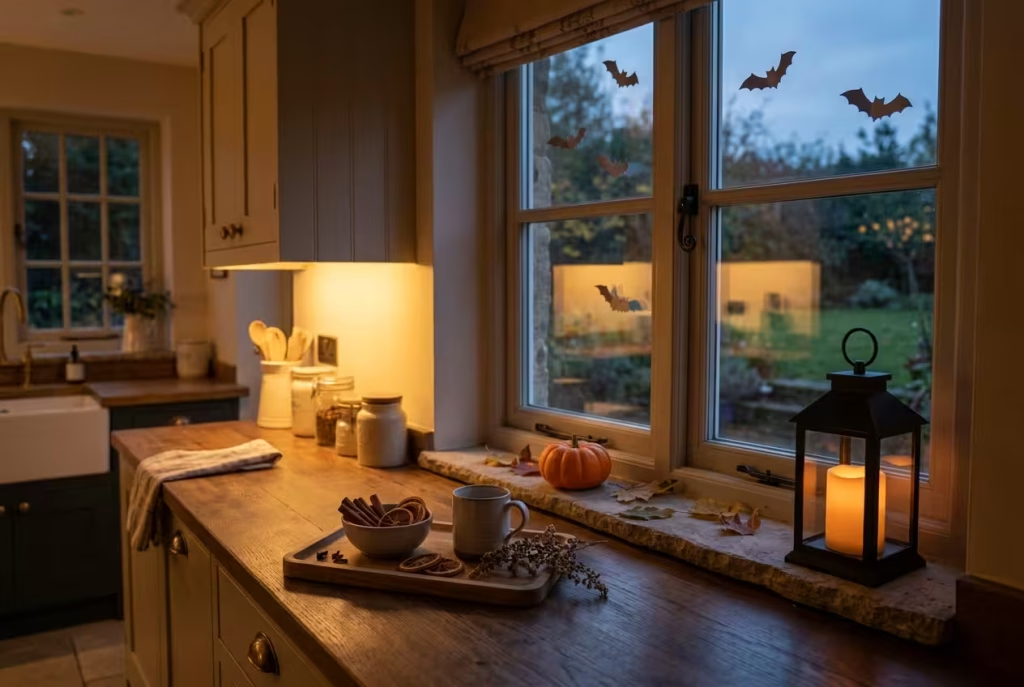
The most overlooked tools in a decorator’s kit are the ones you cannot touch. Light shapes mood, glass frames the story you tell the street, and scent reaches memory faster than anything you can hang on a wall.
You May also Like: 26 Creative Halloween Garden Decor Ideas for Front Yards and Backyards
21. Flameless jam-jar lanterns
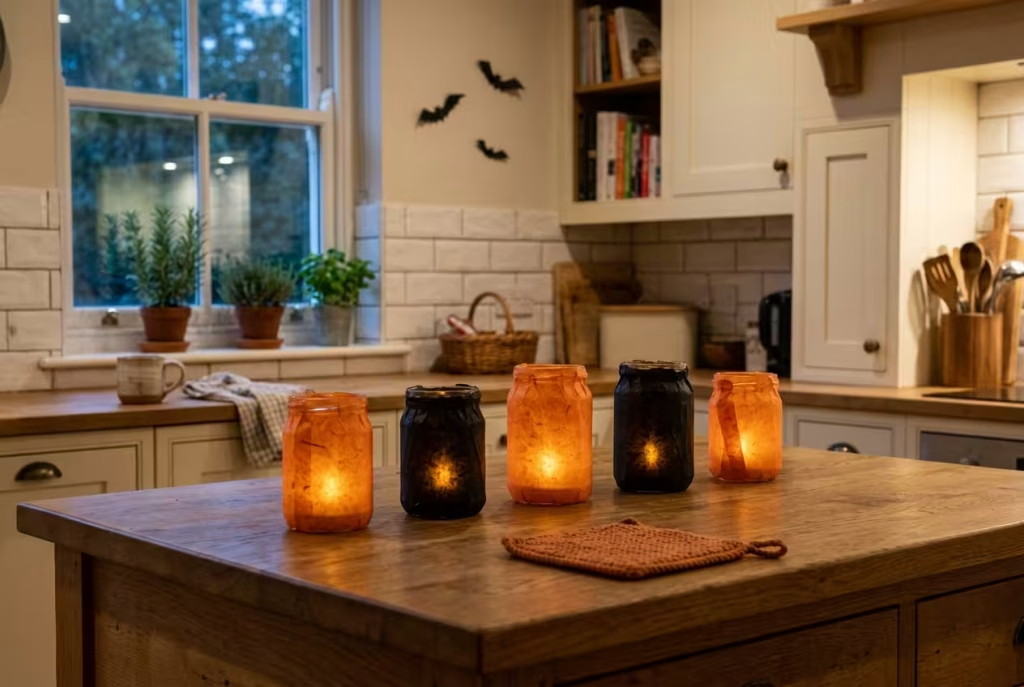
Wrap an empty jam jar in two layers of orange or black tissue paper, glue it in place with a thinned PVA glue, trim the top edge, and drop in a flameless tea light. Group three or five along a windowsill or down the centre of the island and the whole room takes on a flickering warmth, with none of the hazards of a real flame. Many LED tea lights imitate a flicker, and the better ones last for dozens of hours, so check the pack.
America’s National Fire Protection Association is blunt on the subject: use battery-operated candles for Halloween displays. The advice applies just as sensibly in a British kitchen, where tea towels, paper bats and a tangle of fairy lights are rarely more than arm’s length from any flame. If you do light a real candle anywhere in the house, keep it at least 30cm from anything flammable, use a proper holder, and never leave it unattended.
Lanterns have always meant welcome. Putting one in the window at dusk says that somebody is home, and as trick-or-treaters wander the dark street it becomes a small, steady kindness.
At a glance: 15 minutes, £5 to £15, cute, renter-safe.
22. Orange and purple fairy lights
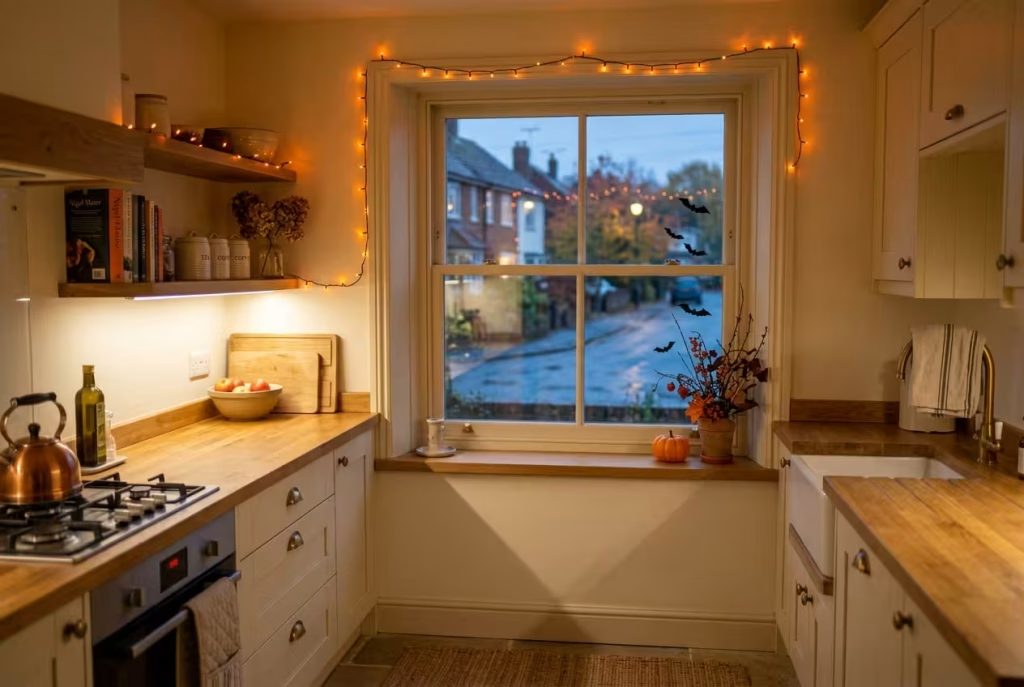
Swap white bulbs for orange or purple and the whole kitchen tilts towards October. A battery string of 30 to 50 LEDs, 3 to 5 metres long, typically costs £5 to £12, and a built-in timer saves you remembering to switch it off. Drape it along the top of the cabinets, around the window frame or across a shelf. Orange feels warm and festive; purple adds a hint of mystery. Pick one colour per area rather than mixing them, and the effect feels designed instead of accidental.
Do not let atmosphere overrule function. A dim kitchen is a place where knives and fingers meet, so layer the coloured glow on top of proper working light. Keep your bright, warm task lighting over the hob, sink and chopping area, and let the fairy lights handle the edges. Choose battery strings in preference to mains where you can, and keep cables well away from the sink and from worktops where kettles and pans live.
Imagine arriving home at 5.15pm in late October, in the dusk, and seeing orange lights glowing from your own kitchen window. That moment is worth far more than the pennies it costs.
At a glance: 10 minutes, £5 to £15, spooky, renter-safe.
23. Window silhouettes
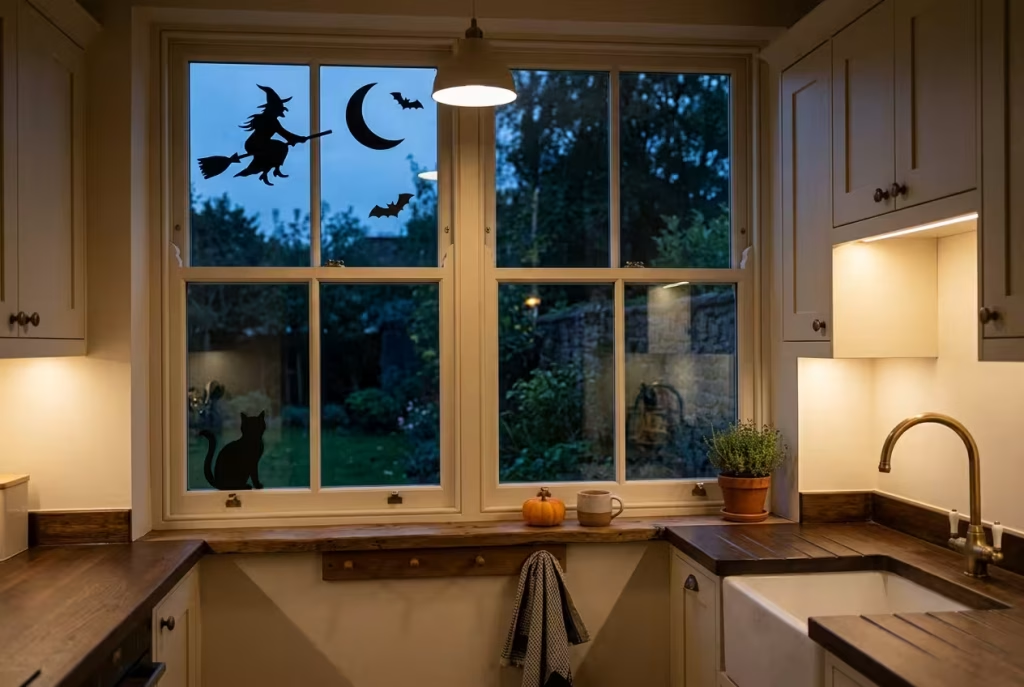
Cut cat, witch, bat and moon shapes from A3 black card, or buy removable window clings, and place three to five on the glass at different heights. From outside, they cast a theatrical shadow against the interior glow, and trick-or-treaters walking past get a free show. From inside, they frame the dark evening beyond like an illustrated storybook.
Position them on the inside of the glass, facing out, so the card is backlit at dusk. A small cat on the sill, a witch on a broom near the top corner and a scattering of bats between them reads as a scene rather than a sticker sheet. Steam from cooking can loosen tape, so press the edges down firmly or choose a repositionable adhesive.
Few ideas on this list deliver so much for so little. Twenty minutes, a pair of scissors and a sheet of card, and every passer-by gets a tiny glimpse of the story inside your home.
At a glance: 20 minutes, under £5, spooky, renter-safe.
24. Simmer pot scent
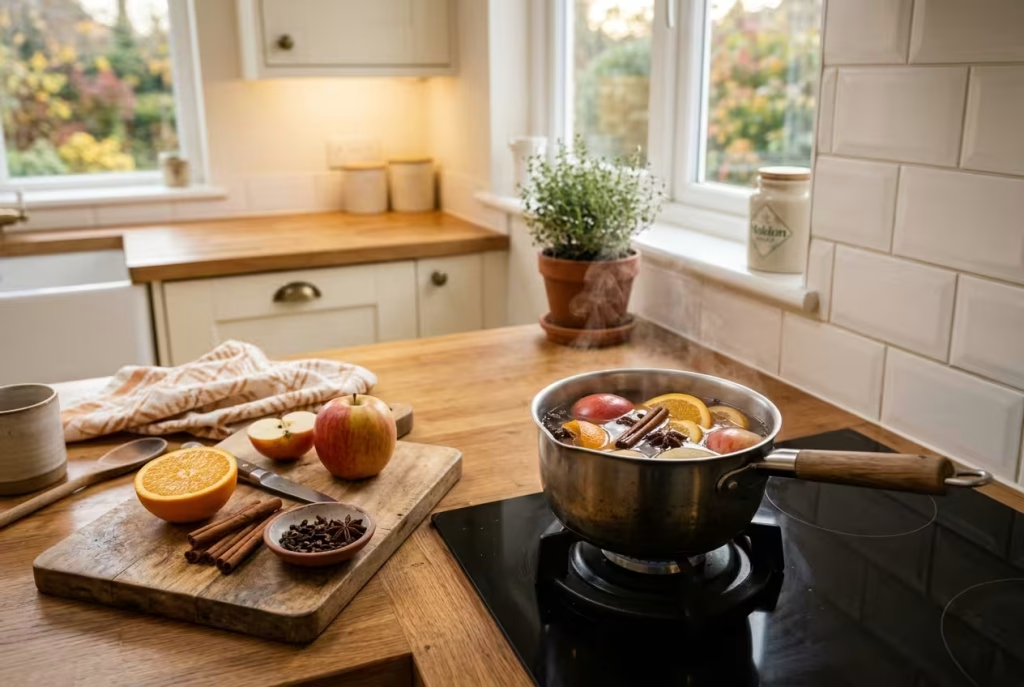
Scent is closely tied to memory, which is why the smell of a particular spice can transport you to a grandmother’s kitchen in an instant. A simmer pot is the easiest way to scent a room without a synthetic candle. A workable mix is two quartered apples, one sliced orange, two cinnamon sticks and a teaspoon of cloves in about a litre of water. Keep it on the lowest heat, lid off, and top up with hot water as it reduces, checking every 20 to 30 minutes.
Take safety seriously here. Unattended cooking is the leading cause of home cooking fires, and a pot simmering dry is exactly that. Set a timer, never leave the house or go to bed with it on, and consider a slow cooker on low with the lid ajar as a safer alternative. When you finish, strain and bin the fruit, and give the pot a good wash, because spices stain.
The reward is subtle and powerful. Guests walk in, close their eyes and say, “It smells like autumn.” Often that is the detail they remember longest.
At a glance: 10 minutes, £5 to £15, cosy, renter-safe.
Colour palettes that keep it looking designed
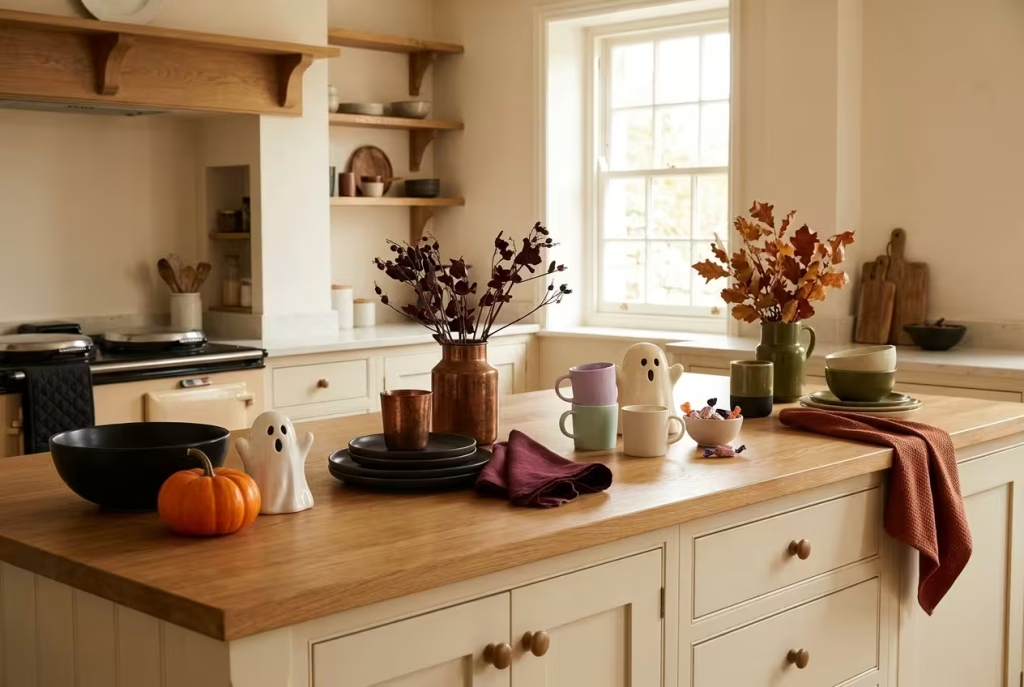
Colour is what stops a collection of props looking like a car boot sale. Choose one of these and stick to it.
| Palette | Colours | Mood | Best with |
| Classic | Black, orange, white | Playful and traditional | Ideas 1, 5, 6, 12, 20 |
| Gothic elegant | Black, charcoal, copper, deep burgundy | Moody and grown-up | Ideas 2, 7, 13, 14, 17 |
| Soft and cute | Lilac, mint, cream, with black accents | Gentle and child-friendly | Ideas 4, 8, 15, 16, 21 |
| Autumn blend | Rust, olive, cream, black | Cosy, bridges into Thanksgiving | Ideas 6, 13, 16, 24 |
Kitchen safety: where spooky meets sensible
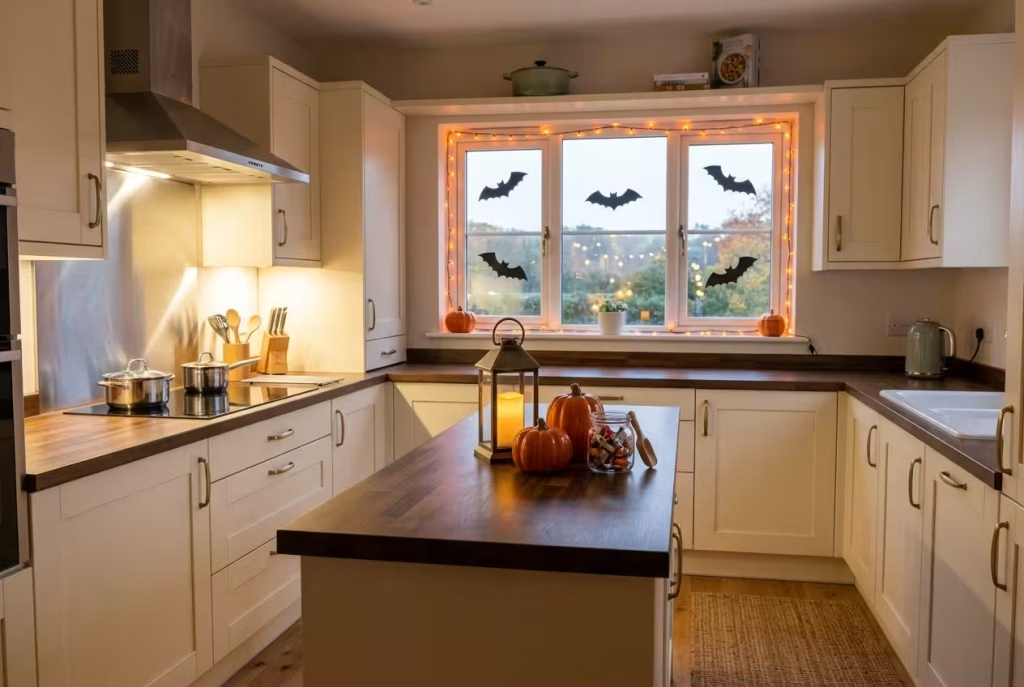
A kitchen is not a living room with a sink. Heat, grease, water and electricity share the space, so the usual Halloween precautions need tightening.
According to the US National Fire Protection Association, an annual average of 832 home fires began with Halloween decorations between 2019 and 2023. About 47% involved decorations placed too close to a heat source, and around 33% started with candles. Cooking equipment, meanwhile, features in roughly half of reported US home fires, and unattended cooking is the leading cause. The long-standing advice to keep anything that can burn about one metre (3 ft) from the hob is the single most useful number in this article. The same guidance recommends a child-free zone of around a metre around the stove, wherever hot food and drink are being carried.
| Hazard | The risk | The smart fix |
| Hob and extractor hood | Paper, fabric and plastic can ignite or melt | Keep every decoration at least 1 metre away |
| Real candles | Candles start around a third of decoration fires | Use flameless LEDs; if you must light one, keep it 30cm from flammables and never leave it |
| Fake cobwebs | Acrylic webbing can trap birds and be swallowed by pets | Keep it indoors and away from the hob; bin it afterwards; or cut webs from old white cotton |
| Painted jars or utensils | “Non-toxic” does not mean “food-safe” | Never paint anything that touches food or drink; decorate outside surfaces only |
| Fairy lights and cables | Trailing wires near water and worktops | Use battery strings and keep cables clear of the sink |
| Children and pets | Small parts, sticky decorations, dangling cords | Choose chunky pieces, mount high, avoid anything chewable |
| Real pumpkins | They weep and soften as they age | Stand them on a tray and bin after a fortnight |
| Walkways and exits | Trip and escape hazards | Keep floors and doorways clear of props |
A word on cobwebs, since they are the cheapest and most ubiquitous prop in the aisle. Wildlife carers describe the stretchy acrylic strands as a trap for creatures from hummingbirds to owls, and a Cornell wildlife vet has compared them to the mist nets used to catch birds and bats. Indoors, the risk shifts to curious pets, which may swallow the fibres and need veterinary help. If you love the look, drape fine webbing where only humans venture, and cut fabric webs from old white cotton for something kinder.
Renting? Decorate without losing your deposit
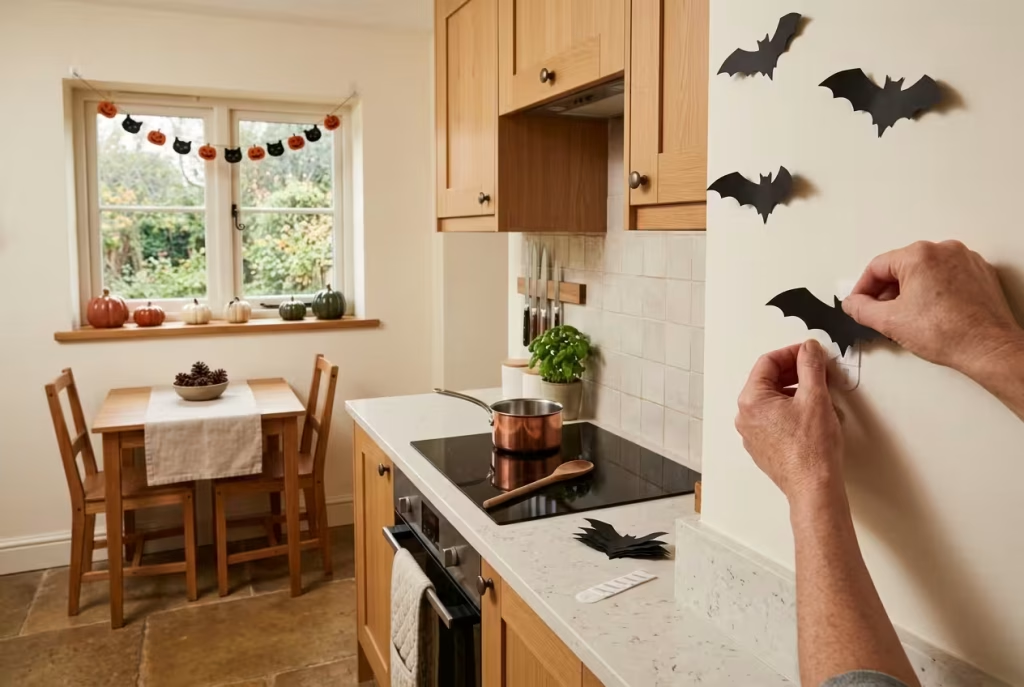
Almost every idea here is removable by design, but a few habits keep it that way.
- Choose damage-free fixings. Adhesive strips and hooks suit smooth, painted surfaces, tile, glass and metal.
- Wait after painting. Manufacturers advise about seven days before applying strips to freshly painted walls.
- Prepare the surface. Wipe with rubbing alcohol so dust and grease do not weaken the grip.
- Press firmly. Hold each strip for about 30 seconds so it bonds, and respect the temperature range printed on the pack.
- Remove with care. Pull the tab slowly straight down towards the floor, not outwards. Pulling out or up is the usual cause of peeled paint.
- Respect the weight limit. Heavier props need heavier-rated strips, so check the pack.
Even so, no adhesive is foolproof on every finish, and some shoppers report paint lifting on poor-quality surfaces. Test a hidden spot first and you will sleep better.
Budget starter kits: three ways to spend as little as you like
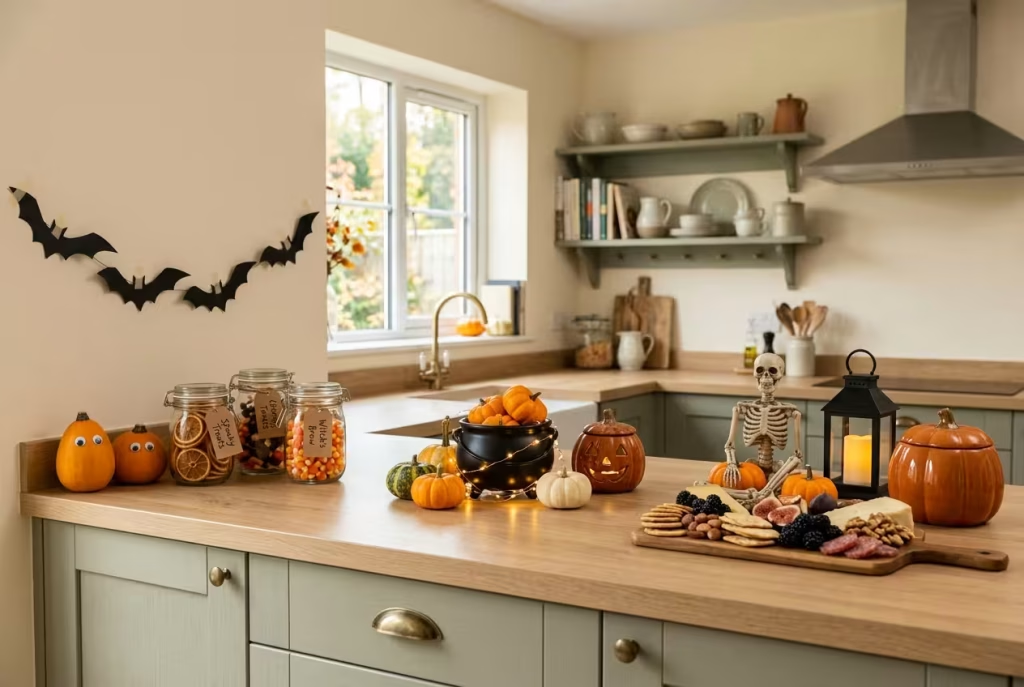
These are planning estimates based on typical UK prices.
| Kit | What it covers | Approx. cost |
| The £10 kitchen | Black card, googly eyes, removable strips, jam jars (free), food colouring and a pen for labels. Covers ideas 1, 2, 10, 11, 12, 23 | About £10 |
| The £25 kitchen | Everything above, plus a cauldron bowl, orange fairy lights and a bag of mini pumpkins. Adds ideas 5, 6, 22 | About £25 |
| The £50 kitchen | Everything above, plus a large skeleton, flameless lanterns and ingredients for the grazing board. Adds ideas 9, 19, 21 | About £50 |
The cheapest decoration is the one you already own. Before spending a penny, walk round the house with a bin bag and gather black items, glass jars, old books, white sheets and mismatched mugs. Half of these designs begin there.
Cute, spooky or elegant? Choose by household
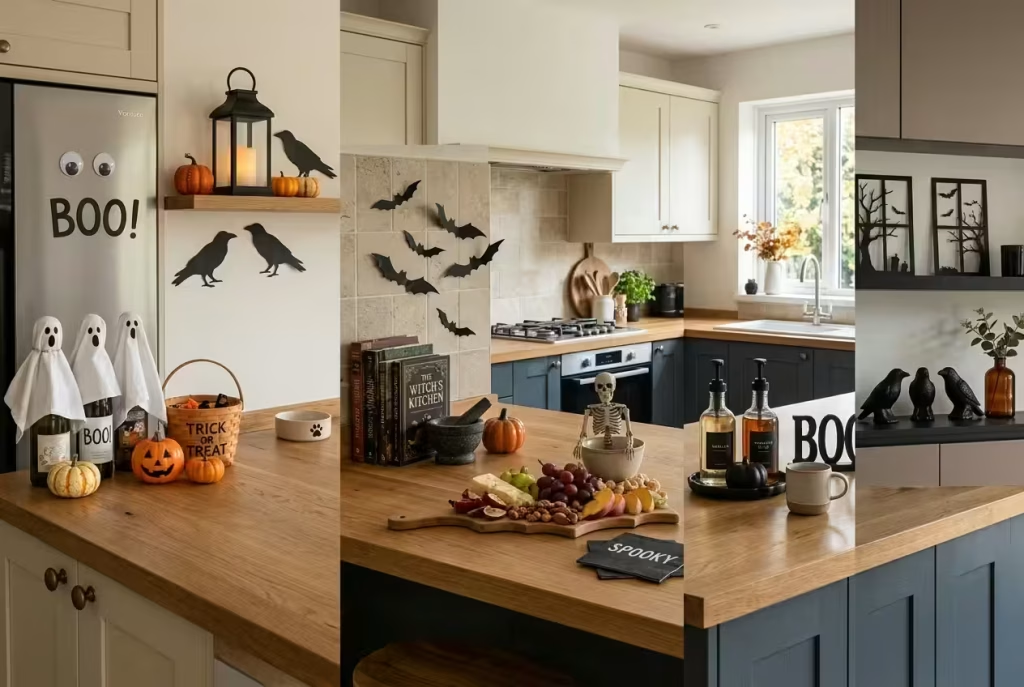
| Your situation | Best picks |
| Young children | Ghost handle covers, googly-eyed fridge, towel ghosts, hot chocolate tray |
| Pets | Skip fake webs and dangling items; choose lanterns, paper silhouettes and the cookbook stack |
| Small rental | Bat swarm, window silhouettes, tiered tray, vintage cookbooks |
| Hosting a party | Graveyard board, bat-wing platter, skeleton sous-chef, fairy lights |
| Grown-up minimalist | Raven silhouettes, black and white plates, syrup station, pumpkin tray |
| Modern handleless kitchen | Window silhouettes, lanterns, one tiered tray, a single raven trio |
Five mistakes that spoil a good Halloween kitchen
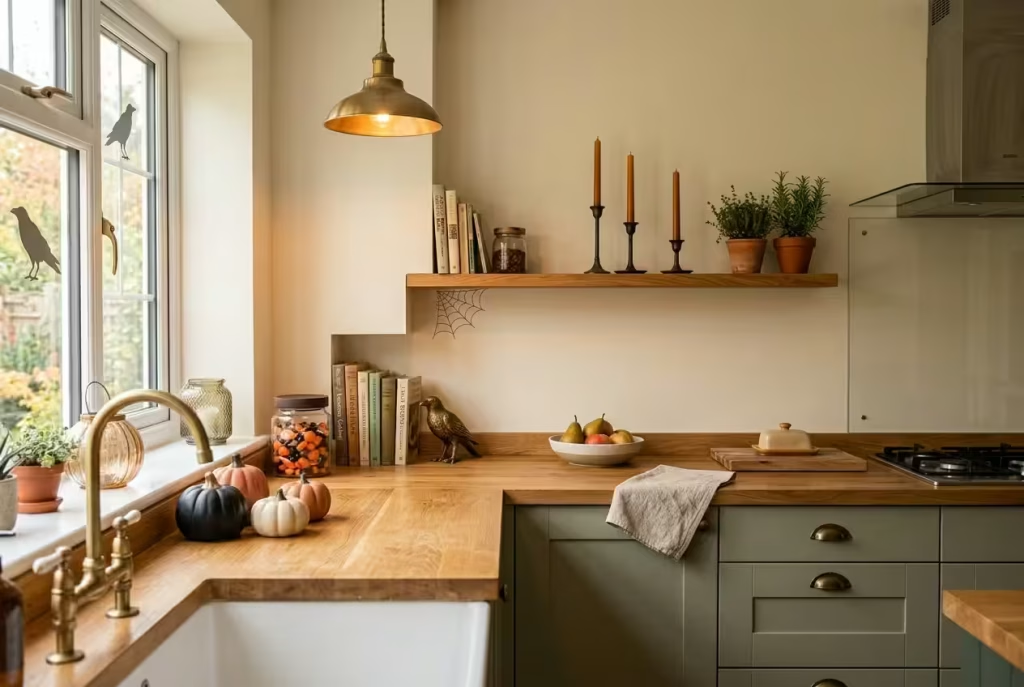
- Too many themes at once. Pirates, pumpkins and zombies in one room read as chaos. Choose a palette and hold the line.
- Forgetting the hob. The prettiest paper garland is the worst thing to hang within a metre of a flame.
- Burying the worktops. If you cannot chop an onion, you will resent the display by Wednesday.
- Dimming everything. Atmosphere belongs on the edges, with bright task lighting kept where you cook.
- Buying everything new. Reusable and repurposed pieces look more personal and cost far less.
If you only have a fortnight
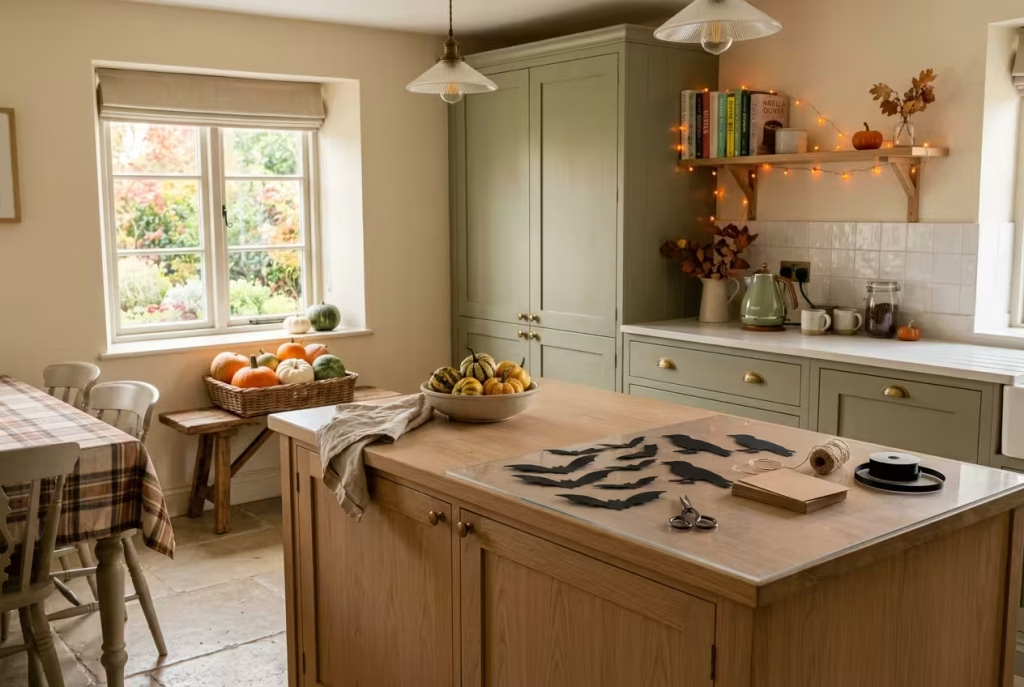
With Halloween just over two weeks away, a staged plan beats a panic.
- This weekend: Gather what you own, cut the paper pieces (bats, ravens, silhouettes) and set up the lights.
- Midweek evenings: Add the shelf and coffee-bar details, one small project a night.
- The weekend before: Buy the real pumpkins, bake the treats, and finish the table.
- The day itself: Light the lanterns, switch on the simmer pot under supervision, and enjoy it.
Packing it away, and the Thanksgiving flip
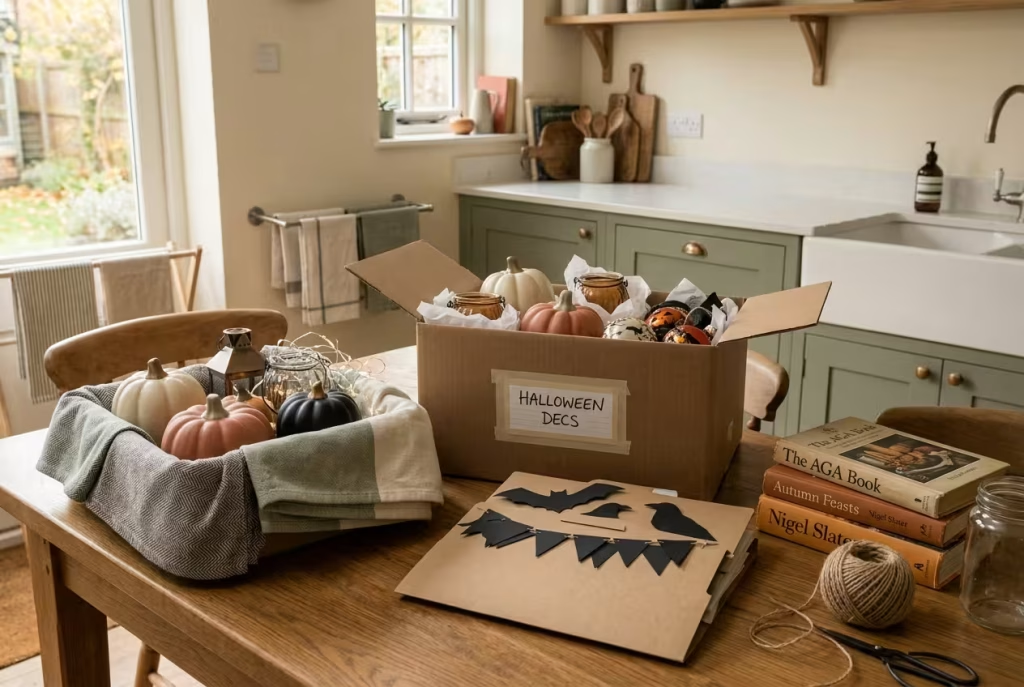
Store paper pieces flat in a folder, wrap fragile props in the tea towels you used as ghosts, and bin any fake webbing rather than leaving it to drift. Keep what is reusable in one labelled box, so next year begins with a head start.
Not everything has to disappear on 1 November. Copper, vintage jars, books and the mini pumpkin tray all slide happily into an autumn display. Swap the bats for leaves, the orange lights for warm white, and the kitchen carries on looking considered until winter.
A final thought
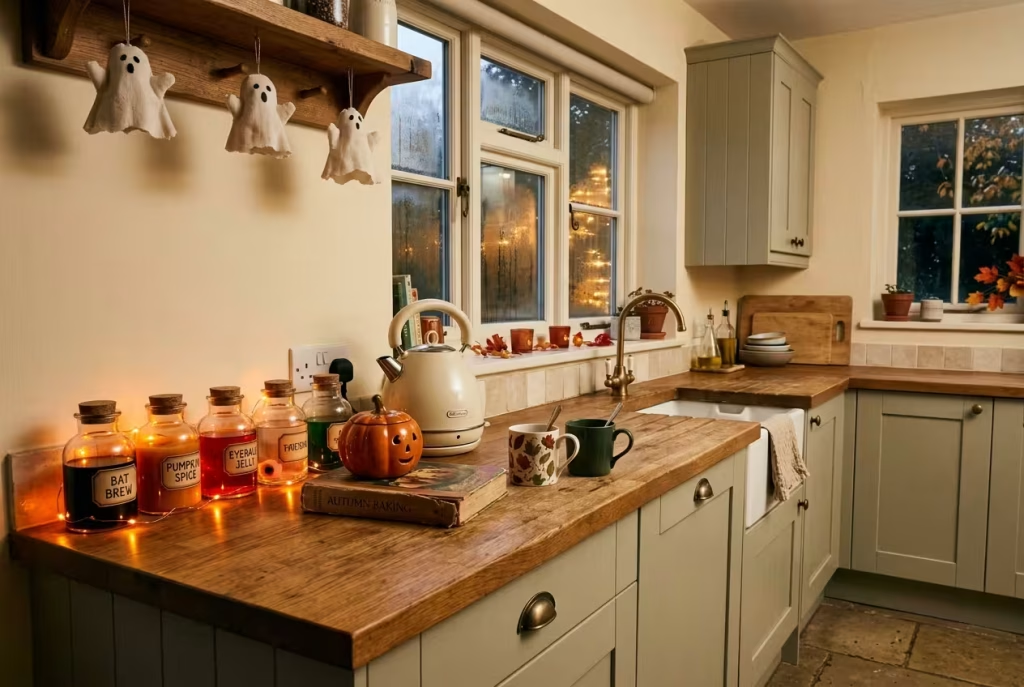
Kitchens run on routine, and routine can dull a room until you stop seeing it. A handful of ghosts, a shelf of potion jars and a glow of orange light is enough to make you notice the place again, to see the worn worktop and the steamed-up window as the stage for a family’s small, ordinary magic. Start small, keep it safe, and let the room tell its own tale. A few clever touches now, and yours will be the kitchen the whole street remembers.
Frequently asked questions
How do I decorate my kitchen for Halloween on a budget?
Start with what you own: jam jars, old books, white sheets and black card. Add a few low-cost extras such as googly eyes, fairy lights and a cauldron bowl. A complete look is possible for around £10 to £25, and the three starter kits above show exactly what to buy.
How can I decorate a small kitchen without clutter?
Go vertical. Use walls, cabinet doors and windows, and keep worktops mostly clear. A single tiered tray or one shelf display delivers more than a scattering of props, and the bat swarm and window silhouettes use no surface space at all.
Are Halloween decorations safe near the hob?
Not if they are paper, fabric or plastic. Keep every decoration at least one metre (3 ft) from the hob, extractor hood and any heat source, and never leave simmering pots unattended.
Will decorations damage my cabinets or rental deposit?
They need not. Use removable adhesive strips on smooth, clean, fully cured surfaces, press firmly for 30 seconds and remove by pulling straight down. Test a hidden patch first.
Are real candles safe in a kitchen?
Flameless LED candles are the safer choice. If you do use a real one, keep it about 30cm from anything flammable, in a proper holder, and never leave it alone.
When should I start decorating?
Many people begin about two weeks before Halloween, which gives you time to enjoy it without tiring of the theme. For 2026, that means around mid-October for Saturday 31 October, with the clocks going back on 25 October.
Which colours work besides black and orange?
Purple, deep green, white, copper and burnished gold all work. Black and white with a hint of copper gives a polished, grown-up look, and soft lilac with mint suits a gentler, child-friendly kitchen.
Is it safe to paint jars or utensils?
Only on the outside of decorative jars. “Non-toxic” paint is not the same as food-safe paint, so never decorate anything that touches food or drink, and avoid glow-in-the-dark paint on utensils altogether.
Are fake cobwebs safe for pets and wildlife?
Not entirely. The acrylic strands can trap birds and small animals outdoors and may need veterinary attention if swallowed. Keep webbing indoors, away from curious pets, or make fabric webs from old white cotton.
How do I make it cute rather than scary for children?
Choose ghosts, googly eyes, pumpkins and soft colours, and avoid realistic gore. The handle covers, towel ghosts and hot chocolate tray are reliably gentle, and letting children make some of the pieces gives them ownership.
What lighting is best for a spooky but practical kitchen?
Layer it. Keep bright, warm task lighting over your preparation areas and add coloured fairy lights or flameless lanterns for atmosphere around the edges.
Can I keep any of it up for Thanksgiving or beyond?
Yes. Copper, vintage jars, books and a pumpkin display all carry into autumn. Replace the bats and ghosts with leaves and warm lights.
How do I make a modern, minimal kitchen Halloween-ready without it looking cheesy?
Choose one palette, black with copper or white, and limit yourself to three statement pieces: a raven trio, a pumpkin tray and one band of warm lights. Restraint is what keeps it sophisticated.