


15 Modern Outdoor Sofa Ideas to Transform Your Patio Into an Outdoor Oasis
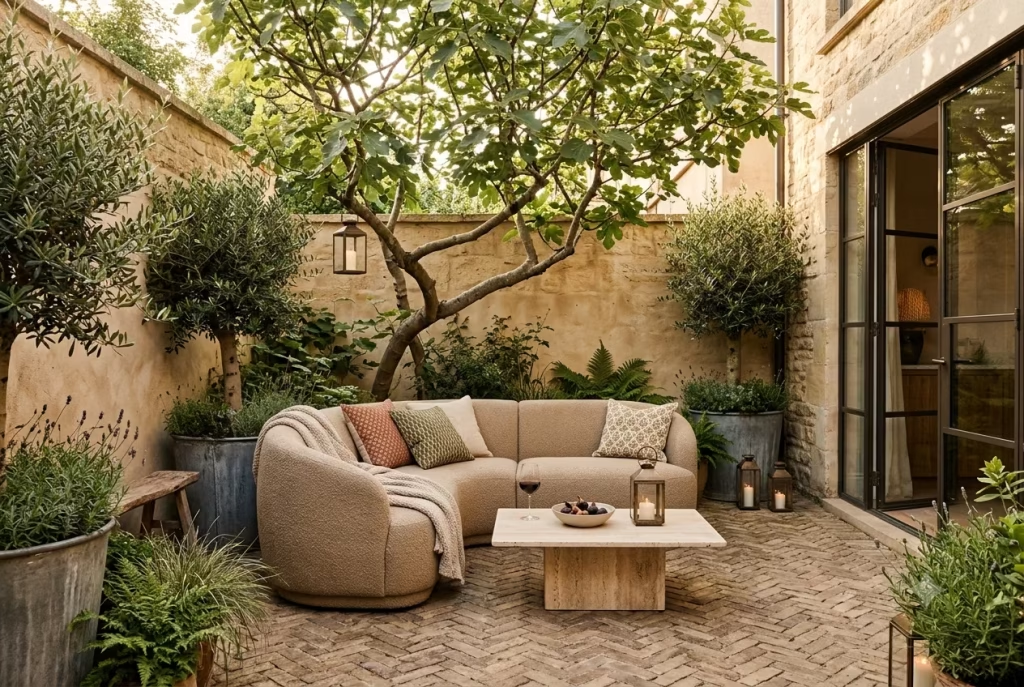
There’s a courtyard in a north-facing terrace house I worked on a few years back that nobody, and I mean nobody, wanted to sit in. Beautiful bones. Herringbone brick underfoot, a fig tree throwing dappled shade in exactly the right spot, walls the colour of wet sand.
On paper it should have been the best seat in the house. In practice, guests would walk straight past it on their way to the kitchen island, drink in hand, because the space simply didn’t ask to be sat in. It had no anchor, no gravity, nothing pulling a body toward it.
The fix wasn’t the rug. It wasn’t the string lights we’d budgeted for, or the pair of olive trees in zinc planters we’d sourced from three different nurseries before settling. It was the sofa. A deep, low, bouclé-cushioned curve in a warm oat tone, the kind that looks like it’s mid-yawn even when nobody’s on it. The moment it landed, the courtyard stopped being a corridor and started being a room.
That’s the shift worth sitting with before you scroll any further. For years, the sofa was the last thing chosen on a patio, an afterthought bought once the paving was down and the pergola was up. That order has flipped entirely. Now it’s the first decision, the one everything else gets built around, the rug, the planting, even where you hang a lantern.
So what follows isn’t fifteen photos in a trench coat pretending to be ideas. It’s fifteen genuinely different directions, grouped by how a space actually feels to live in, not by fabric swatch or frame finish. Some solve an awkward corner. Some are built for a Tuesday-night glass of wine alone. A few are simply there to make a statement, the way a good piece of art does.
Before you scroll
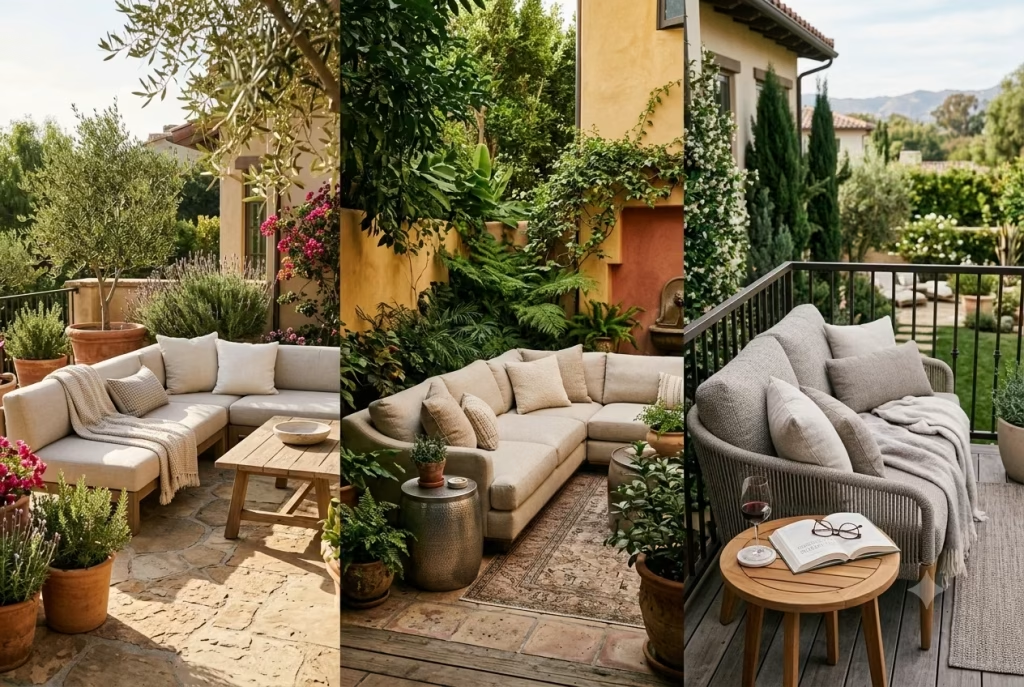
Nothing here is arranged alphabetically, and it isn’t meant to be worked through like a checklist either. Each idea is grouped by mood and by the reality of the site it belongs to, a sun-baked terrace behaves nothing like a shaded courtyard, and a family patio built for muddy shoes has entirely different needs than a Juliet balcony meant for one glass of wine and a good book.
Think of it less as a gallery and more as a conversation about what your own outdoor room is actually asking for. If you land on a shape or material here and want the full story on how it holds up, cleans up, or ages over a decade of seasons, that ground gets covered properly in our full guide to choosing an outdoor sofa. This piece is the mood board. That one’s the manual.
The curved bouclé sofa as a courtyard’s single sculptural gesture
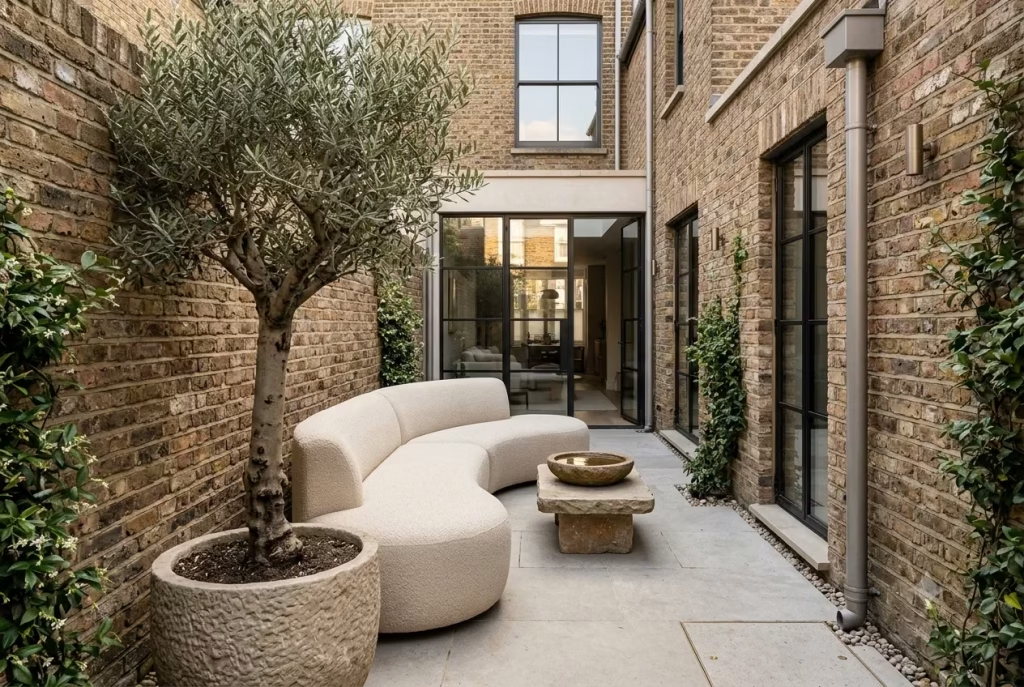
Some sofas are meant to blend in. This one is meant to be the whole point of the room. A curved bouclé outdoor sofa, the kind that wraps around a corner like a comma instead of cutting a hard right angle, works best when it’s the only loud voice in the space. Give it a plain paved backdrop, a single olive tree, maybe a stone bowl of water catching the light, and let it do the talking.
I used one of these in a courtyard barely 3 metres wide, tucked behind a terrace house where the client wanted something that felt more gallery than garden centre. The curve did something a straight-backed sofa never could have, it softened the hard lines of the brick walls around it and made a boxy little courtyard feel like it had been designed around the seating rather than the other way round. That’s the trick with curves outdoors: they read as intentional in a way that a standard three-seater rarely does, even when the budget and the footprint are identical.
The material itself has come a long way from its indoor-only reputation. Modern outdoor bouclé is woven from solution-dyed acrylic or a polypropylene blend, which means the nubbly, textured look you’d expect on a living room armchair now shrugs off rain instead of soaking it up like a sponge. It won’t fade the way cheaper polyester blends do under a full southern exposure, and it dries fast enough that a summer downpour won’t leave you towelling off cushions before guests arrive.
Where it falls down a little is upkeep in genuinely gritty environments. Sand, pollen, and barbecue smoke tend to work their way into the looped texture more than they would on a flat-weave fabric, so this isn’t the pick for a beachfront terrace or a spot right beside the grill. It’s built for the quiet corners, the reading nook courtyards, the spaces that want texture and softness over sheer battle-hardened durability.
Worth knowing before you buy: look for a curved sofa with a quick-dry foam core and a removable, zip-off cover, since bouclé’s texture makes it one of the few outdoor fabrics genuinely worth machine-washing rather than just wiping down.
You May also Like: 25 Front Yard Landscaping Ideas That Elevate Curb Appeal with Architectural Intention
Monochrome slat-back teak, architecture doing double duty as furniture
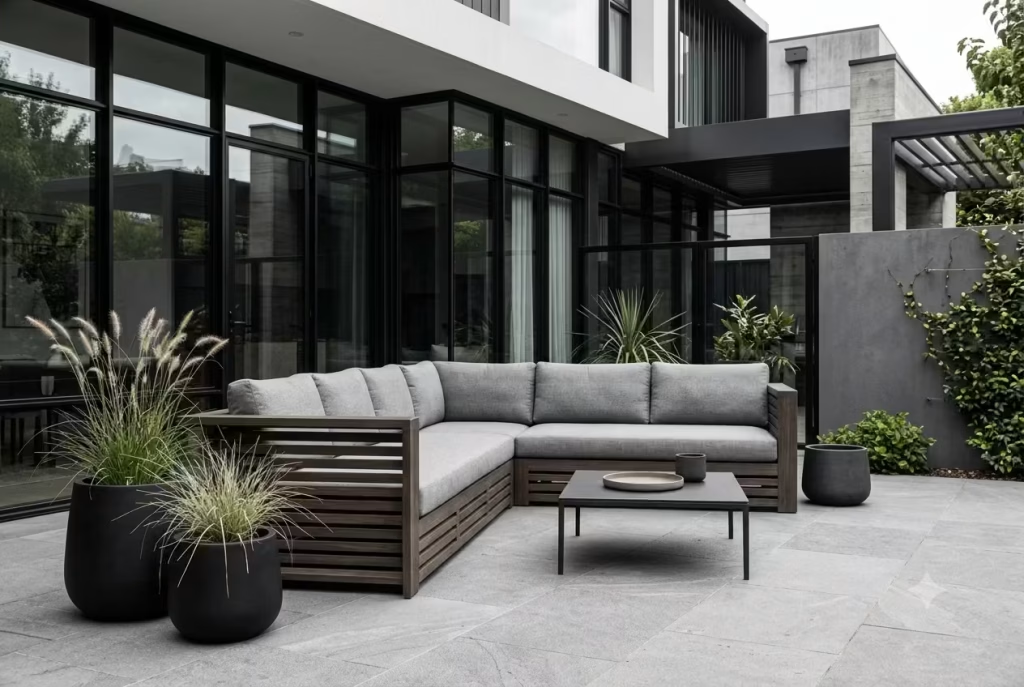
There’s a particular kind of confidence that comes from a piece of furniture refusing to compete with its surroundings, and a black or charcoal-stained slat-back teak sofa has that in spades. It doesn’t ask to be noticed the way a curved bouclé piece does. Instead, it behaves more like a built structure than an object you bought off a shelf, all clean vertical lines, tight joinery, and a silhouette that could pass for a piece of garden architecture if you squinted.
I first specced one for a client with a genuinely unforgiving brief: a monochrome palette, black steel window frames, grey limestone paving, and absolutely nothing that read as “garden centre.” Teak, left in its natural honey tone, would have fought that palette tooth and nail. Stained down to a deep charcoal or ebony, though, it stopped being furniture and started being infrastructure, something the space seemed to have grown around rather than had dropped into it.
The material logic here matters as much as the look. Teak carries its own natural oils, which is exactly why it’s been the benchmark for outdoor timber for the better part of a century. Even when stained dark, it shrugs off rot, resists warping through wet winters, and barely needs more than an annual oiling to keep its finish honest. Compare that to acacia, a cheaper stand-in you’ll see marketed the same way, and the gap becomes obvious within two or three seasons. Acacia looks the part on day one but needs re-oiling roughly twice as often and is far more prone to surface checking once it’s weathered.
Where slat-back teak earns its stripes is longevity measured in decades, not years. A well-maintained piece can genuinely outlast two or three cushion refreshes and still look like it belongs. Where it asks for a little patience is the initial cost, since quality solid teak sits at the premium end of the market, and there’s simply no shortcut around that without sacrificing the very durability you’re paying for.
Worth knowing before you buy: ask specifically whether the teak is FSC-certified plantation-grown rather than reclaimed from unregulated forestry, since the sustainability story matters just as much as the finish when you’re investing in a piece meant to outlast a decade of summers.
A rope-wrapped frame that reads more coastal Riviera than garden centre
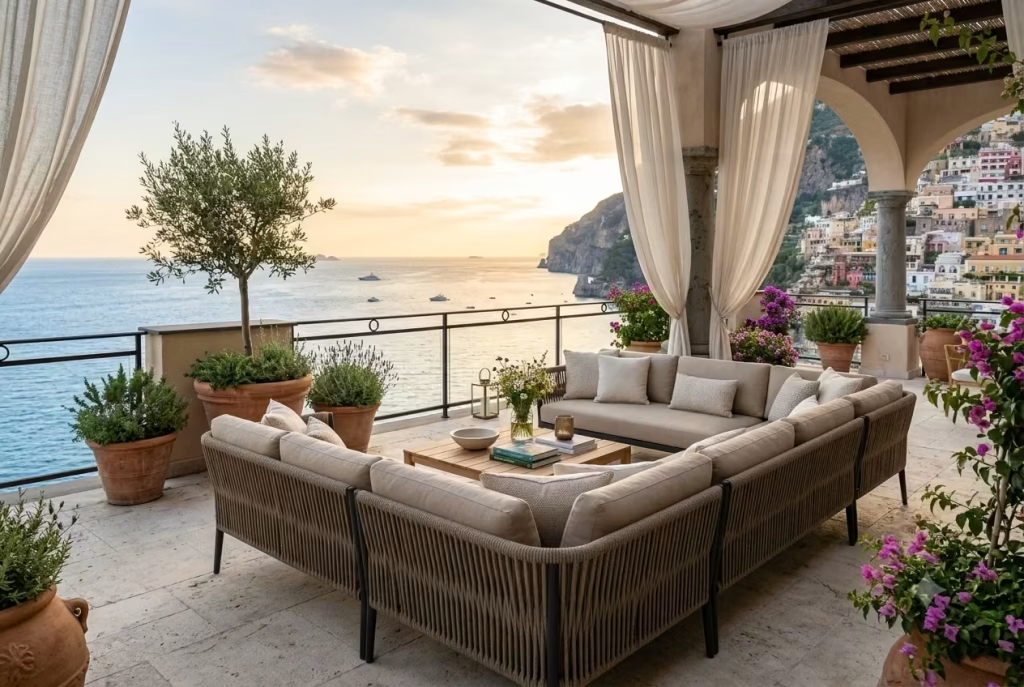
Rope has a funny history in outdoor furniture. For decades it was the material you settled for, the budget cousin of proper woven rattan, prone to sagging and fraying after a season or two in the sun. That version of rope is not what’s showing up on the best patios in 2026. What’s changed is the rope itself, thick, marine-grade polyester braided cord, hand-wound around a powder-coated aluminium frame in a way that owes far more to a Positano hotel terrace than anything you’d find gathering dust in a garden centre aisle.
I specced a rope-wrapped sectional for a coastal renovation a couple of summers back, a spot that took the full brunt of salt air, and it was genuinely the material that surprised me most on that job. Where wicker had cracked and rattan had gone brittle on the previous furniture, the rope simply shrugged the whole thing off. Salt spray doesn’t corrode it the way it does bare metal, and the natural give in the weave means it doesn’t stiffen and split the way rigid materials tend to after a year or two of coastal punishment.
What makes it feel expensive rather than nautical-kitsch is the restraint in the styling around it. Pair a rope-wrapped frame with plain, undyed linen-look cushions in sand or bone, skip the anchor motifs and the navy-and-white stripes entirely, and you land somewhere closer to a design hotel than a beach shack. The rope itself should be doing the textural work. Everything else needs to get out of its way.
There’s a comfort dimension worth mentioning too, one that often gets buried under the style conversation. Rope has a natural flex to it that rigid rattan and hard-edged aluminium simply don’t offer, so the seat and back give slightly under weight rather than feeling like you’re perched on a shell. For anyone planning long lounging sessions rather than quick perch-and-chat seating, that small amount of built-in movement makes a real difference over a two-hour lunch.
Worth knowing before you buy: run your hand along the weave before purchasing, cheaper synthetic rope frays at the cut ends within a season, while marine-grade cord is heat-sealed and stays clean-edged for years, and that single detail tells you more about longevity than any spec sheet will.
Modular corner setups for awkward L-shaped patios
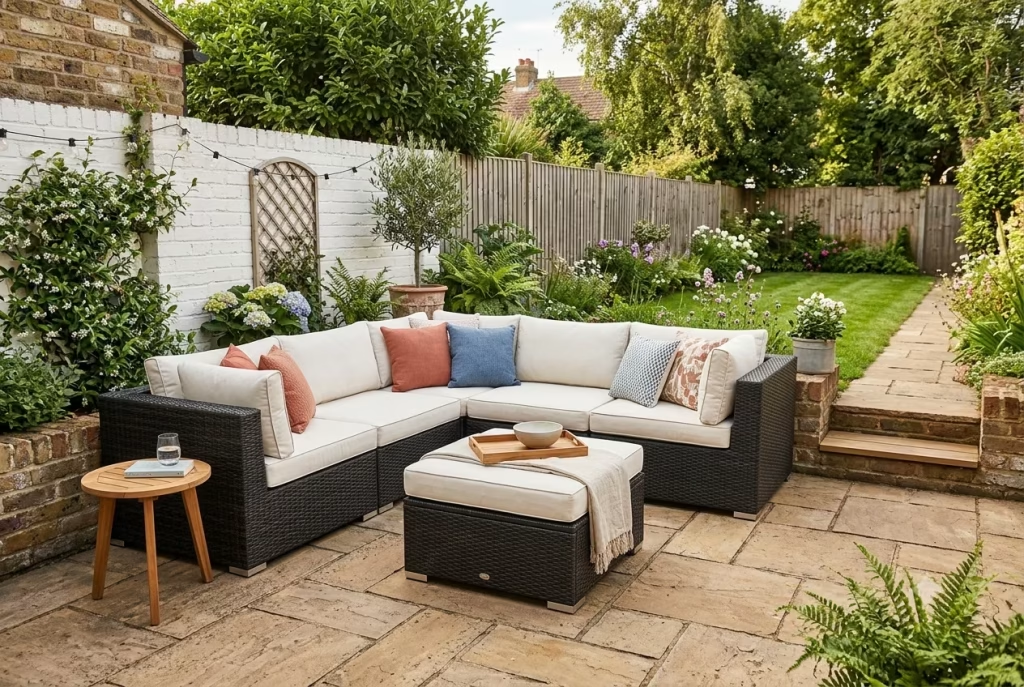
Every third project I take on seems to have one, an L-shaped patio corner that the previous owner never quite knew what to do with, so it became the dumping ground for a barbecue nobody used and a stack of plastic chairs nobody liked.
That awkward geometry is exactly where modular seating earns its keep, because unlike a fixed three-seater with a rigid footprint, modular pieces can be arranged and rearranged until the space stops feeling like an afterthought and starts feeling designed.
Take a corner measuring roughly 3.2 metres by 2.4 metres, a size that comes up constantly in terrace houses and townhouse gardens where the patio wraps around a side return. On a footprint like that, a five-piece modular set, two corner units, two armless middles, and an ottoman, sits comfortably with around 40 to 45 centimetres of clearance behind the frame for walking room, which matters more than people expect once you’ve actually got guests circulating with drinks in hand. Push the sofa too tight against the boundary wall and the whole seating area starts to feel like it’s bracing itself against the fence rather than opening up to the garden.
The real value of modular seating isn’t just fitting an odd shape, though, it’s the way it can shift with how you actually live. I’ve had clients run the same five pieces as a full U-shape for a weekend dinner party, then split it into two smaller L-configurations a week later for a quieter Tuesday evening with just the two of them. That kind of flexibility is something a fixed sectional simply can’t offer, no matter how well it was measured for the space on day one.
Where modular setups ask for a bit more discipline is in the buying stage. Not every brand’s “modular” range is genuinely interchangeable, some use proprietary connectors that only work within that exact collection, which locks you into buying every future piece from the same source. Always check whether individual modules can be bought separately down the line, because a corner sofa you can’t expand in five years’ time isn’t really modular at all, it’s just a sectional with a marketing upgrade.
Worth knowing before you buy: measure your corner at its tightest pinch point, not its widest, since an L-shaped patio often narrows near a downpipe or a step, and that single measurement will tell you more about which modular configuration actually fits than the total square footage ever will.
The low-slung daybed-sofa hybrid for a pool-adjacent lounge zone
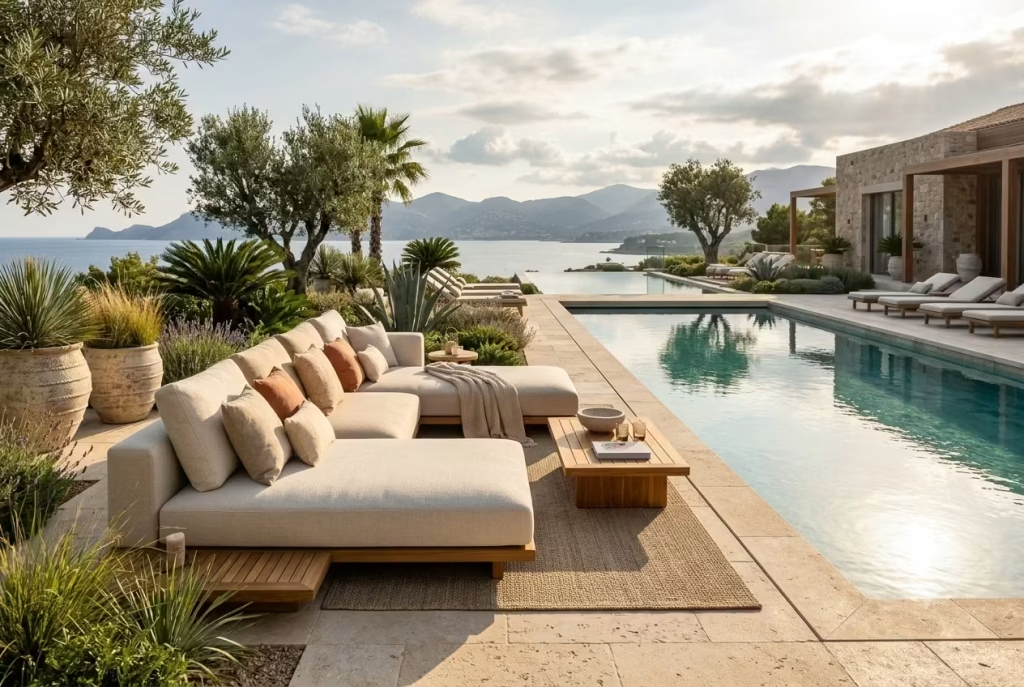
Poolside seating has a habit of getting this wrong in one of two directions. Either it’s too formal, upright cushions and defined arms that make you feel like you should be sitting up straight with a cocktail menu, or it’s too casual, a scattering of loungers that turn the space into an airport departure lounge. The daybed-sofa hybrid splits the difference, and it does so by borrowing the low, horizontal proportions of a daybed while keeping the social, face-to-face arrangement that makes a sofa actually work for conversation.
The defining feature is height, or rather the lack of it. A standard outdoor sofa sits somewhere around 40 to 45 centimetres at the seat, roughly what you’d expect indoors. Drop that to 30 to 32 centimetres, deepen the seat to 90 centimetres or so instead of the usual 60, and suddenly you’ve got something you can genuinely stretch out on rather than just perch upon.
I worked on a pool terrace a few years ago where this exact swap changed how the whole space got used. Before, guests would sit at the sofa for ten minutes, then drift to the loungers to actually relax. After, nobody moved. The sofa was doing both jobs at once.
There’s a practical reason this hybrid works so well specifically near water too. Low-slung frames sit closer to the horizon line of the pool itself, which keeps sightlines open and stops the seating from blocking the view the way a tall-backed sofa inevitably would. It also means less surface area exposed to splash and chlorine spray, since the whole piece sits lower and tighter to the deck.
Chlorine is the detail most people forget to ask about, and it’s the one that ages furniture faster than sun or rain ever will. Standard outdoor fabric can bleach and weaken with repeated chlorine exposure, so anything going within a few metres of a pool edge genuinely needs a chlorine-resistant, solution-dyed acrylic rather than a generic polyester blend. It’s a small spec detail that saves you from replacing cushions every second summer instead of every fifth.
Worth knowing before you buy: ask specifically for chlorine and UV-stabilised foam inside the cushion, not just a resistant outer fabric, since splash-back seeps through zips and seams far more often than people expect, and a standard foam core will break down from the inside long before the cover ever shows visible wear.
Back-to-back dual-facing benches for a shared courtyard between two seating zones
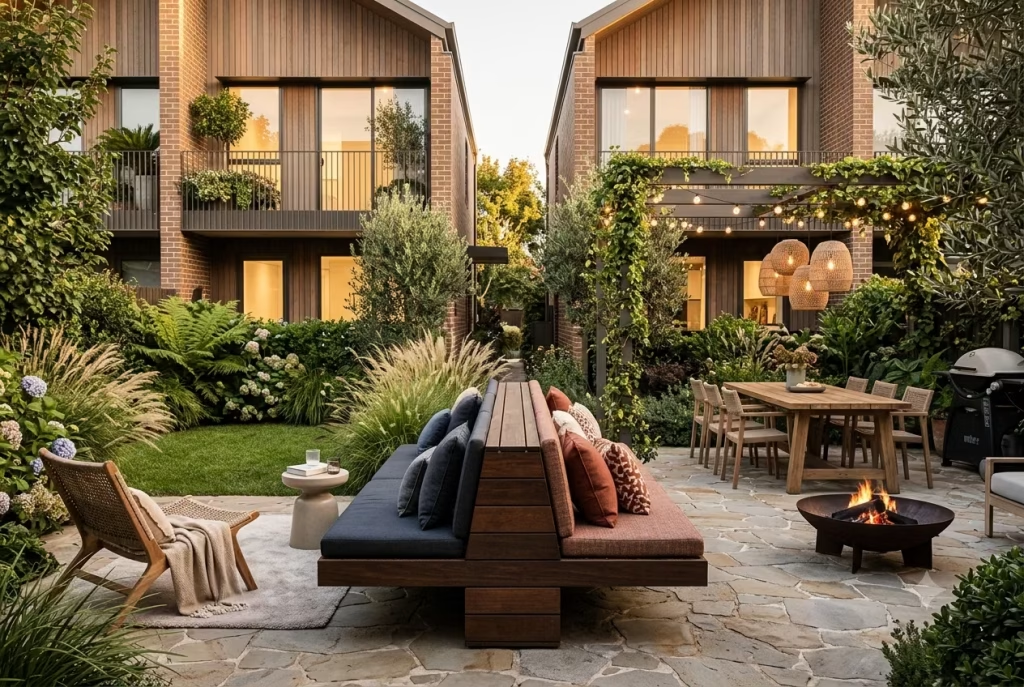
Some courtyards don’t need to choose a single purpose, they need to serve two at once, and that’s precisely the problem a back-to-back bench solves better than almost any other configuration. Picture a shared communal space between two townhouses, or a garden split between a quiet reading corner and a livelier dining zone. Rather than forcing one seating arrangement to awkwardly serve both moods, a dual-facing bench lets the same footprint do double duty, one side opening onto the calm patch of lawn, the other angled toward the fire pit or dining table.
I used this exact configuration on a shared courtyard project where two households split a communal garden down the middle, each wanting their own sense of ownership without a fence carving the space in two. A single back-to-back bench, roughly 2.4 metres long with a shared spine down the centre, did what no amount of clever planting could. It gave each side a natural boundary that read as furniture rather than division, and neither party felt like they’d lost territory to the other.
The engineering matters more here than in a standard sofa. Because the frame is bearing weight and pressure from two opposing directions at once, the central spine needs genuine structural reinforcement, not just a decorative divider bolted between two independent benches. Look for a solid timber or aluminium core running the full length underneath the cushions rather than a design that merely butts two separate units together, since the cheaper versions will develop a wobble within a season of regular use.
There’s a social psychology to this shape too, one worth sitting with for a moment. Facing away from someone while still sharing a physical piece of furniture creates a strange, comfortable sense of togetherness without demanding conversation, the kind of arrangement that suits a shared courtyard where not everyone wants to chat over the fence every single evening. It’s proximity without pressure, closeness without the obligation of eye contact.
Worth knowing before you buy: ask whether the two sides can be upholstered in different fabrics or tones, since a shared bench doesn’t need matching cushions on both sides to feel cohesive, and letting each half reflect its own zone often reads as more considered than forcing a single uniform look across the whole piece.
You May also Like: 25 Small Front Porch Ideas That Make Compact Entryways Feel Welcoming and Well Designed
A built-in banquette that swallows an awkward brick step
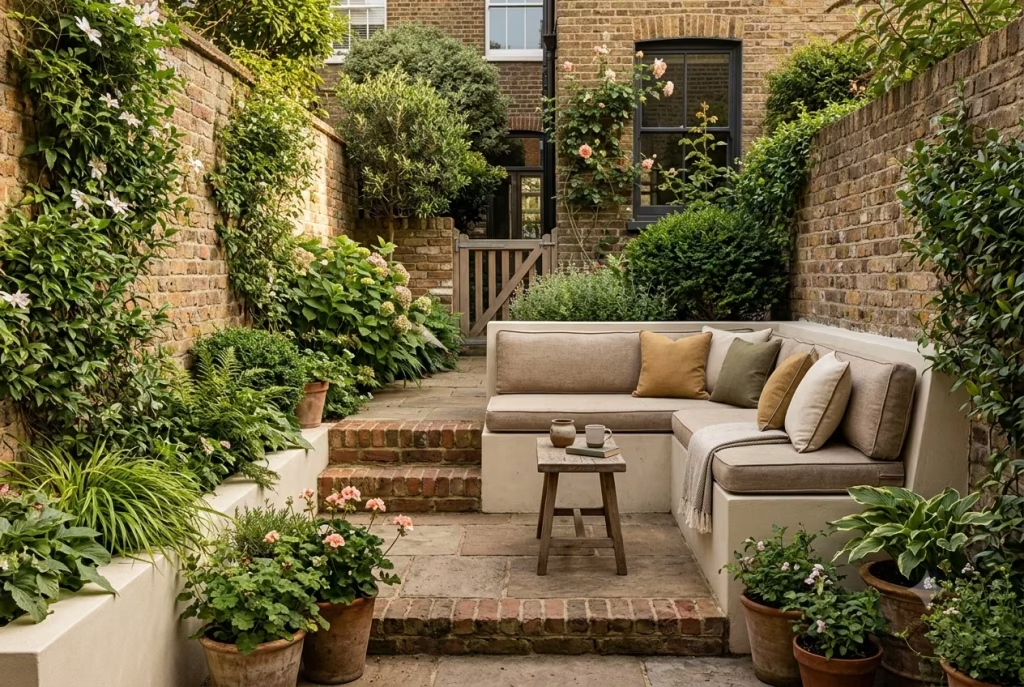
Every garden seems to have one, a level change nobody accounted for at the design stage, a brick step that splits a patio into an upper and lower half for no reason anyone can quite remember. Most people either ignore it or fight it with a retaining wall and a run of planters. A built-in banquette does neither. It works with the step, wrapping around it and turning the very thing that broke the space into the reason the seating area now feels grounded and deliberate.
I inherited exactly this problem on a narrow London garden a couple of years back, a single brick step running the width of the plot, dropping the lower half by around 18 centimetres. Rather than levelling it out at real expense, we built a banquette bench directly into that change in height, using the upper level as the seat base and the lower level as a natural footrest for anyone sitting opposite. The step stopped being a hazard people tripped over after two glasses of wine and became the entire structural logic of the seating.
What makes a banquette different from a standalone sofa is permanence, and that’s both its greatest strength and the thing that demands the most forethought. Because it’s built in, typically from rendered blockwork or pressure-treated timber framing, then finished with a weatherproof cushion on top, there’s no shifting it later if your layout changes.
That means getting the depth right matters enormously before a single brick goes down. A seat depth of around 55 to 60 centimetres suits most people for upright dining-adjacent seating, while anything pushing past 75 centimetres starts to feel more like a daybed, which is worth deciding on purpose rather than by accident.
Drainage is the detail that separates a banquette that lasts fifteen years from one that rots out in five. Because the base is often solid rather than raised on legs like a standard sofa frame, water has nowhere to go unless you’ve built in a slight fall and a gap at the base for airflow. Skip that step and you’re building a very handsome, very expensive place for damp to sit undisturbed all winter.
Worth knowing before you buy, or rather before you build: always spec a cushion with a fully removable, washable cover and a foam core rated for direct ground-level moisture exposure, since a built-in banquette can’t be picked up and dried out the way a freestanding sofa can if a storm catches it unsheeted.
Powder-coated aluminium in unexpected colour, sage, terracotta, and ink instead of the default grey and black

Aluminium had an image problem for years, and honestly, it earned it. Grey or matte black frames became the safe default across so many gardens that the material itself started to feel like a placeholder rather than a genuine design choice, something you bought because it wouldn’t rust, not because you actually loved looking at it.
That’s changing fast, and the shift comes down to a fairly simple realisation among manufacturers, powder coating can hold colour just as durably in sage or terracotta as it can in charcoal, so there’s no longer a real excuse for defaulting to the same two shades every single time.
I specced a sage green frame for a client’s rooftop terrace last year, a space surrounded by planting that leaned heavily toward olive and grey-green foliage, and the difference it made was almost comedic in how obvious it seems in hindsight. Grey aluminium would have simply disappeared into the backdrop, technically fine but forgettable.
Sage did the opposite. It picked up the tones already living in the space and turned the sofa into part of the planting scheme rather than a hard object sitting apart from it. Terracotta works the same trick against warm stone or brick, while a deep ink blue reads as almost jewel-like against pale limestone or travertine paving.
The technical case for powder-coated aluminium hasn’t changed just because the colour palette has expanded. It remains one of the most weather-stable frame materials available, resistant to rust in a way bare steel simply cannot match, and light enough to rearrange without needing a second pair of hands every time you want to shift the layout for a party.
The coating itself is baked on rather than sprayed, which means it resists chipping and fading far longer than a standard painted finish, holding its colour through years of direct sun rather than chalking out within a single summer.
Where it asks for a little more care is scratch resistance. Powder coating is tough, but it isn’t invincible, and a deep scratch through to bare metal can eventually invite corrosion if it’s left unaddressed. The fix is simple enough, small touch-up pots of matched powder-coat paint are widely available from most reputable manufacturers, and a quick dab the moment you notice a scratch stops the problem before it starts.
Worth knowing before you buy: ask the supplier whether the colour is a genuine powder coat or a cheaper liquid paint finish, since the two look nearly identical on a showroom floor but behave completely differently after two years outdoors, and only one of them is worth the premium you’re paying for a colour beyond the standard grey or black.
Reclaimed or FSC teak with visible tool marks, the anti-perfect finish
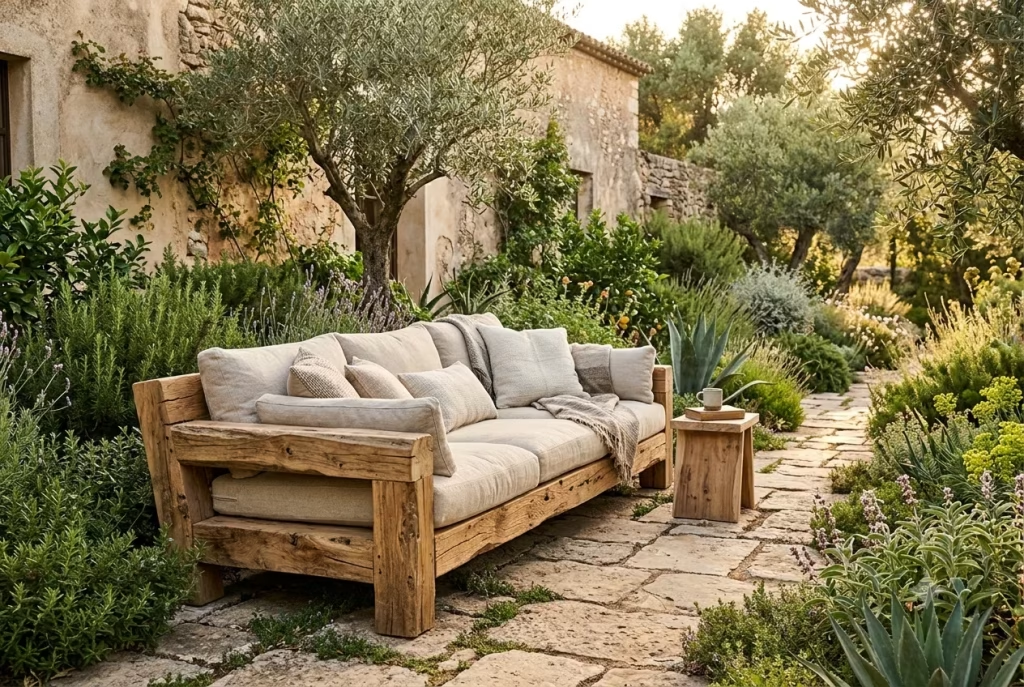
Perfection has a shelf life, and nowhere does that show more clearly than in furniture that’s been sanded, buffed, and lacquered until every trace of the hand that made it has been erased. Reclaimed or rough-sawn FSC teak takes the opposite approach entirely.
Saw marks left visible along the underside, a slightly uneven grain running through the arm, the faint ghost of a joint where an old ship’s deck or dismantled barn beam once lived a different life, none of it gets sanded away. That imperfection is the entire point, and it’s exactly why this direction has become such a favourite among designers tired of furniture that looks factory-cloned across a thousand showrooms.
I sourced reclaimed teak for a coastal renovation where the brief was refreshingly blunt, the client wanted furniture that looked like it had already lived a life before arriving in her garden. We tracked down teak salvaged from decommissioned Indonesian fishing boats, timber that had spent decades soaking in salt water long before it ever became a sofa frame.
The result carried a patina no amount of artificial ageing or distressing technique could genuinely replicate, deep grey-silver streaks running through honey-toned wood, the kind of character that comes only from time and weather, never from a factory finish applied last Tuesday.
There’s a sustainability story here too, one worth knowing rather than just feeling good about. Reclaimed teak sidesteps the deforestation concerns tied to poorly regulated logging, since the wood already existed and simply gets given a second purpose instead of a first cut.
FSC-certified teak solves the same problem from a different angle, guaranteeing the timber came from a managed, replanted forestry operation rather than an unregulated one. Either route matters more than people realise when teak remains one of the most heavily over-harvested hardwoods on the planet, so asking your supplier which of the two you’re actually getting is a fair question, not an awkward one.
Where this finish demands honesty is comfort and consistency. Reclaimed timber varies piece to piece by definition, so if you’re someone who needs a perfectly matched, showroom-uniform set, this isn’t your lane.
The grain will differ slightly from one module to the next, the tone will shift depending on which part of the original structure it came from, and that variation is either the entire charm or a dealbreaker, depending on how tightly controlled you like your outdoor room to look.
Worth knowing before you buy: ask for the timber’s provenance in writing, not just a verbal assurance, since genuine reclaimed teak comes with a paper trail showing its original source, and a supplier who can’t produce one is very likely selling you a distressed finish on new wood rather than the real, weathered thing.
Fully upholstered “bring-the-living-room-out” sofas in performance fabric
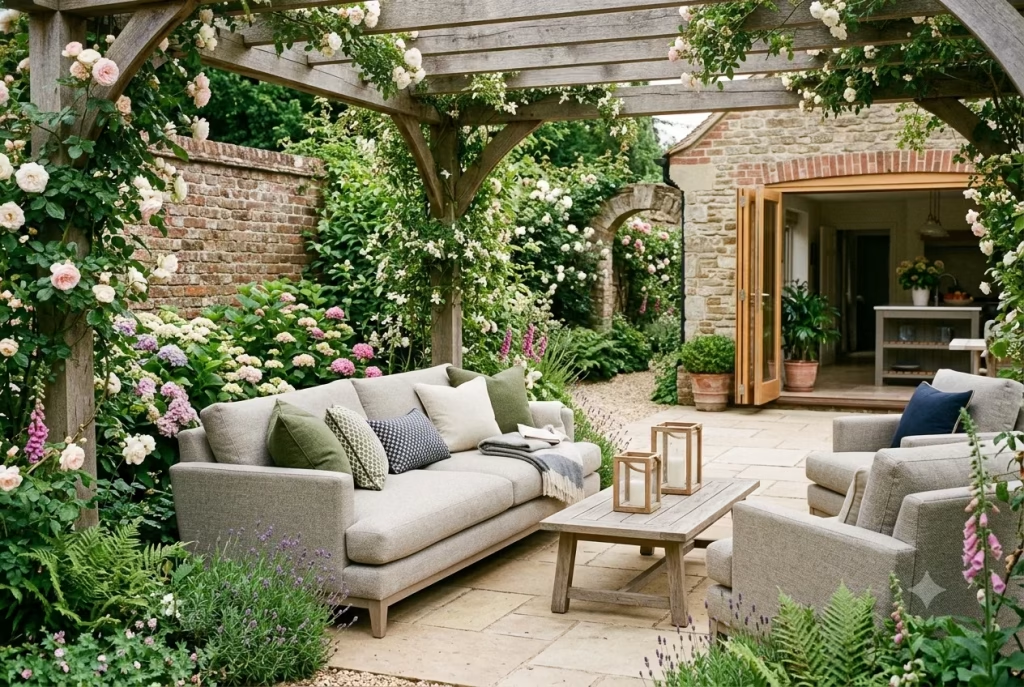
There’s a particular kind of double take this style still manages to pull off, even now. You run a hand across the cushion expecting the slightly stiff, slightly plasticky feel of outdoor fabric, and instead you get something soft enough to nap on, deep enough to sink into, the kind of upholstery you’d expect indoors rather than three metres from a rose bed. That contradiction is exactly the appeal. A fully upholstered outdoor sofa isn’t pretending to be weatherproof furniture dressed up as living room seating. It’s the real thing, built to actually survive outside.
The engineering behind this look has quietly become one of the more impressive stories in outdoor furniture over the last few years. Performance fabrics like solution-dyed acrylic and certain olefin blends are woven with the colour baked into the fibre itself rather than printed onto the surface, which means fading from UV exposure happens far slower than with a standard cotton or linen weave. Underneath, the cushion cores are built from quick-dry, open-cell foam that lets water pass straight through rather than pooling and holding moisture the way traditional upholstery foam would, so a sudden downpour becomes a minor inconvenience rather than a ruined afternoon.
I brought one of these into a walled garden project where the client’s brief was refreshingly specific, she wanted her indoor sofa’s exact silhouette, low arms, deep seat, generous scatter cushions, just built to survive outside instead of confined to the living room. The finished piece sat against pale limestone paving and did something I genuinely hadn’t anticipated. It blurred the line between the kitchen extension’s bifold doors and the garden so completely that guests would wander out mid-conversation without ever registering they’d left the interior behind. That’s the entire promise of this style delivered in full, indoor comfort with zero compromise once the weather turns.
Where it asks for a touch more discipline than a rope or teak piece is exposure. Fully upholstered outdoor sofas handle rain and UV admirably, but they’re not built for the kind of relentless coastal salt spray a rope-wrapped frame shrugs off without a second thought. A covered terrace, a pergola overhead, or simply a spot that isn’t taking the full brunt of driving weather will get the best out of this style for the longest stretch of years.
Worth knowing before you buy: check the fabric’s specific water-repellency rating rather than trusting the word “outdoor” alone, since that single word covers everything from genuinely engineered performance textiles to indoor-grade fabric with a light spray coating, and the two will age at wildly different speeds once real weather gets involved.
You May also Like: 25 Outdoor Tiles for Floor Stylish Patio, Garden and Terrace Flooring Ideas
Woven HDPE wicker done in oversized, architectural weave rather than fine rattan
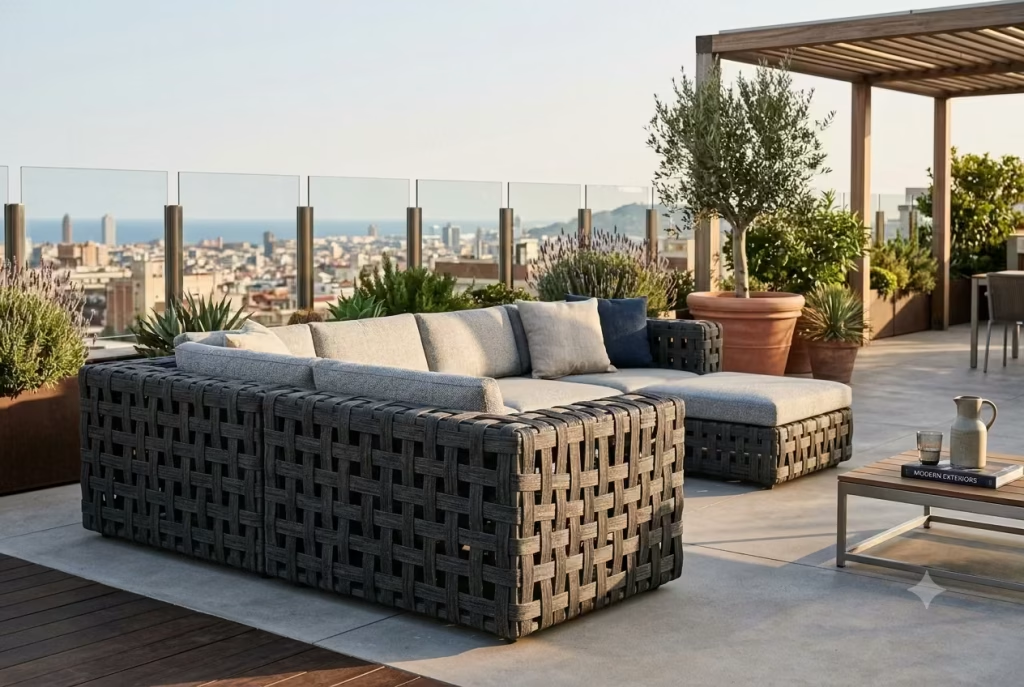
Wicker carries baggage, and most of it is fair. For decades the default version was a tight, fussy weave in a shade of honey brown that turned up outside every suburban conservatory, the kind of furniture that read as safe rather than considered.
The oversized, architectural weave changing things now is a genuinely different animal. Instead of narrow strands woven tight and small, the fibre is thick, flat, almost ribbon-like, wound in a chunky open pattern that reads more like a piece of sculpture than a picnic basket that grew legs.
The material underneath the look matters just as much as the pattern itself. High-density polyethylene, the HDPE doing the heavy lifting here, is a synthetic fibre engineered specifically to survive conditions that would destroy natural rattan within a couple of seasons.
It won’t crack under UV exposure the way cheaper synthetic wicker does once the plasticisers inside it break down, and it holds its colour through years of direct sun rather than yellowing or chalking out. I specced an oversized woven sectional for a rooftop terrace a while back, a spot with genuinely brutal all-day sun exposure and almost no shade cover, and three summers later it still looks exactly as it did on installation day. Natural rattan on that same rooftop would have been brittle and flaking well before the second year was out.
What the larger weave actually does for a space is worth dwelling on for a moment, because it isn’t just an aesthetic preference. A tight, fine weave tends to disappear into a busy garden, another textured object competing with planting and paving for attention. An oversized weave does the opposite.
It reads as architecture, almost like a piece of furniture that borrowed its logic from a woven timber screen or a lattice pergola, which means it can anchor a minimal, hard-landscaped space that would otherwise feel a little cold and unfinished.
Where it asks for a slightly different kind of care than teak or aluminium is cleaning. Because the weave is open and chunky rather than tight, dust, pollen, and the odd stray leaf tend to settle into the gaps rather than sitting on a flat surface you can simply wipe down. A garden hose and a soft brush handle it easily enough, but it does need doing more regularly than a smooth aluminium frame would ever demand.
Worth knowing before you buy: press a thumbnail firmly into the weave before purchasing, since genuine HDPE holds its shape and springs back immediately, while a cheaper PVC-blend imitation will leave a visible dent, and that one small test tells you more about how the piece will age than any product description ever will.
Fire-pit-adjacent seating built for late-into-the-evening entertaining
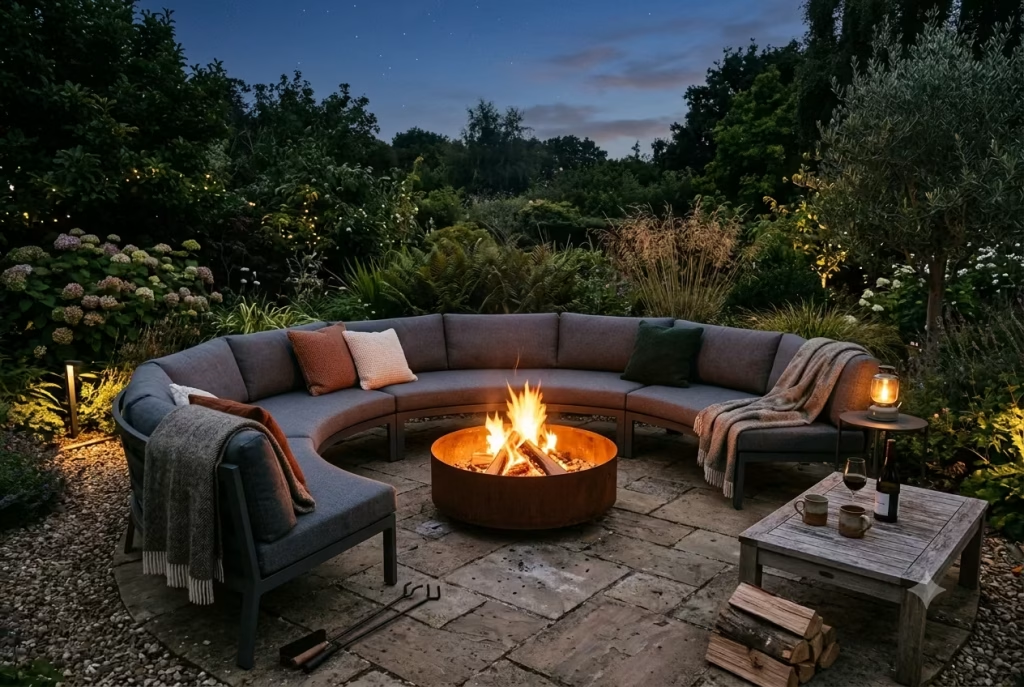
There’s a moment on almost every good outdoor evening when the sun properly goes down, the temperature drops a degree or two, and suddenly a garden that felt effortless at seven o’clock starts nudging everyone toward the door.
Fire-pit-adjacent seating is designed entirely around delaying that moment, sometimes for hours, and it does it by solving a problem most patio layouts get quietly wrong, proximity without singeing anyone’s ankles.
The clearance distance matters more than most people assume before they’ve actually lived with a fire pit. A general rule worth following puts the front edge of any sofa or sectional between 1 and 1.2 metres from the fire pit’s rim, close enough that the warmth genuinely reaches seated guests, far enough that nobody’s cushion ends up smelling faintly of smoke by the end of the night.
I learned this the slightly awkward way on an early project, where a client’s beautiful new sectional sat just 60 centimetres from the flames and came away after one dinner party smelling like it had been through a bonfire, which, functionally, it had.
Material choice shifts here too, and it shifts for a reason worth understanding rather than just accepting. Fabrics that sit directly beside sustained heat and the occasional stray ember need to be genuinely flame-resistant, not merely water-resistant, since those are two entirely different specifications that get confused constantly in showrooms.
Solution-dyed acrylics with a flame-retardant treatment handle this well, as does powder-coated aluminium framing, which simply doesn’t care how close it sits to the heat. Timber, however lovely it looks, needs a slightly wider berth than fabric or metal, since prolonged proximity to radiant heat can dry and crack a wood frame over several seasons even without a single spark ever touching it.
The layout itself is where the real magic happens, and it’s worth thinking about before a single piece of furniture arrives. A U-shaped or semicircular arrangement around the fire pit keeps every seat facing inward toward both the flame and the conversation, rather than the awkward side-on view you get from two straight sofas facing each other across a gap.
I’ve found that modular sectional pieces genuinely earn their premium in this exact scenario, since they let you curve the seating to follow the fire pit’s circular form rather than forcing a rigid rectangle around a round object, which never quite sits right no matter how carefully it’s measured.
Worth knowing before you buy: ask specifically about the fabric’s flammability rating rather than assuming “outdoor” automatically means “fire-adjacent safe,” since a genuinely flame-resistant textile will carry a specific certification, and a supplier who can’t point to one is guessing just as much as you are.
A compact two-seater for balconies and small urban terraces
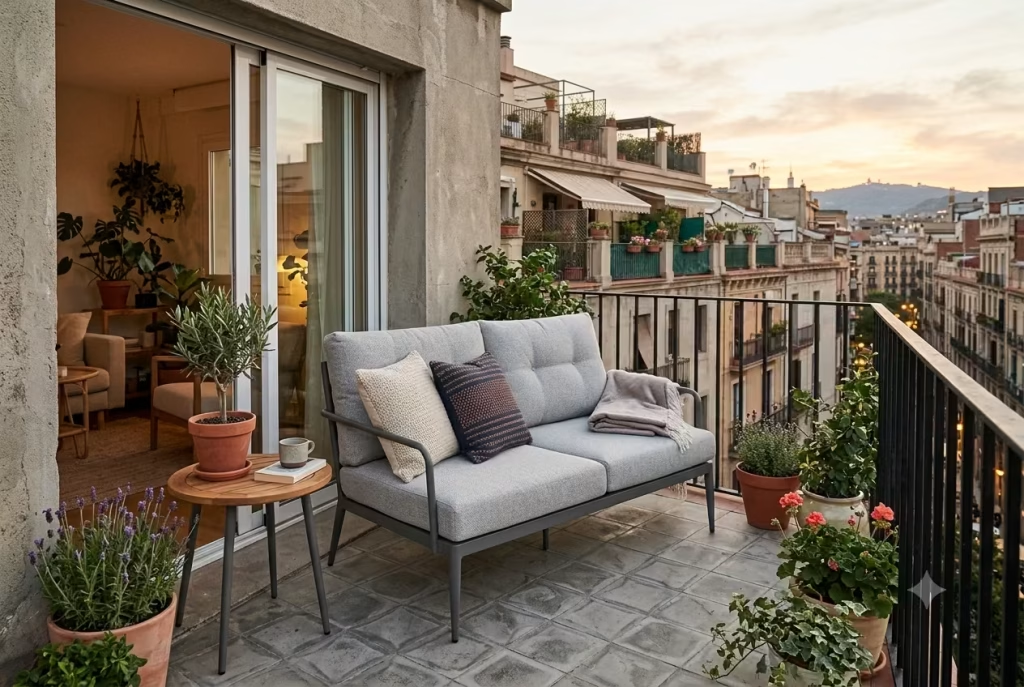
There’s a particular kind of denial that happens when someone stands on a 1.8 metre wide balcony and insists they want the same three-seater sectional they saw in a magazine spread of a sprawling Californian backyard. It never works, and pretending otherwise only leads to a sofa nobody can actually walk past. The compact two-seater exists precisely for this reality, and done properly, it proves that small doesn’t have to mean compromised.
The numbers here matter more than almost any other entry on this list, because a few centimetres decide whether the piece functions or simply blocks the door. A genuinely balcony-ready two-seater sits under 1.6 metres in width, typically somewhere between 1.3 and 1.5 metres, with a depth kept to around 65 to 70 centimetres rather than the generous 90 centimetre depth you’d choose for a sprawling garden sectional.
I furnished a balcony for a client last year that measured just 2.1 by 1.4 metres in total, barely enough to swing a cat, let alone entertain in. A slim-armed two-seater at 1.4 metres wide, paired with a single 40 centimetre round side table, left just enough clearance to open the sliding door fully without anyone needing to shuffle sideways like a crab to get past.
Proportion does a lot of quiet, unglamorous work in spaces this tight. Slim, tapered arms rather than bulky rolled ones save precious centimetres without the sofa looking stripped back or cheap, and a lower back height, somewhere around 65 centimetres rather than a towering 85, keeps sightlines open across a small terrace rather than boxing the whole area in.
Legs matter too, and this is the detail most people overlook entirely. A sofa raised on slender metal or teak legs rather than sitting flush to the ground reads as noticeably lighter and less cramped than one with a solid, grounded base, even when the actual footprint is identical.
Storage and weight become genuinely practical concerns at this scale in a way they simply don’t on a full-sized patio. Many apartment balconies have weight restrictions written into the building’s structural guidelines, so aluminium framing, considerably lighter than teak or steel, is worth checking against your specific building’s load limits before falling in love with a heavier timber piece that looks perfect in a photo.
Worth knowing before you buy: measure your door swing and window clearance before the sofa’s width, not after, since a balcony sofa that fits the floor space perfectly but blocks a window from opening fully is a mistake that only reveals itself on the first warm evening you actually want fresh air moving through the room behind it.
You May also Like: 15 Red Brick House Facades That Look Bold, Modern, and Timeless
Family-sized sectional built to actually survive kids, dogs, and spilled rosé
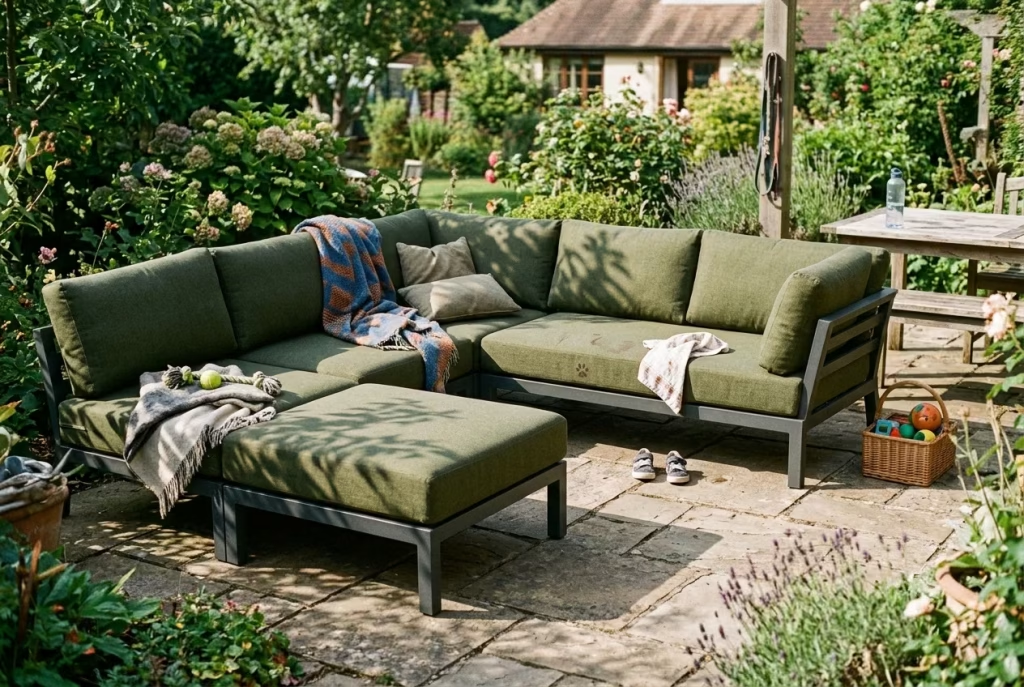
Some outdoor sofas are chosen for how they photograph. This one gets chosen for how it survives a Saturday. A genuinely family-ready sectional isn’t the piece with the palest linen cushions or the most delicate weave, it’s the one that shrugs off a muddy paw print, a dropped ice lolly, and a knocked-over glass of rosé without anyone needing to leap up mid-conversation to blot at a stain.
The fabric choice here separates the pieces that survive family life from the ones that quietly get replaced within eighteen months. Solution-dyed acrylic sits at the top of the list for good reason, since the colour runs all the way through the fibre rather than sitting on the surface, which means bleach-based stain removers, the kind you’ll genuinely need after a red wine incident, don’t strip or discolour the fabric the way they would on a printed or piece-dyed alternative.
I specced a deep, forgiving olive tone in exactly this fabric for a young family’s garden a couple of summers back, chosen specifically because it wouldn’t show every grass stain and dog hair the way a pale oatmeal or ivory would. Two dogs and three children in, it still looks presentable, which is more than can be said for the cream-coloured rug they insisted on for the space beside it.
Frame material earns its keep here in a slightly different way than on a design-led piece meant to be admired rather than climbed on. Powder-coated aluminium handles the abuse of small feet standing on arms and dogs using the frame as a launchpad far better than teak’s softer, more precious surface ever could, and it won’t splinter the way timber occasionally does when a scooter clips the leg at speed.
Cushion depth matters too, and this is where family furniture genuinely diverges from anything design-forward. A deeper seat, somewhere around 65 to 70 centimetres, gives kids room to sprawl sideways rather than perching upright, which in practice means fewer complaints about being bored and fewer requests to go back inside to the television.
Where the real value shows up is in modularity, and it’s worth thinking about before the pieces arrive rather than after. A sectional that can be reconfigured as children grow, split apart for a smaller footprint one summer, expanded into a full U-shape the next when cousins visit for a fortnight, earns its cost back many times over compared with a fixed three-seater that either fits your family’s changing needs or doesn’t, with no room to adjust either way.
Worth knowing before you buy: ask specifically whether replacement cushion covers are sold separately from the frame, since family furniture takes genuine punishment over the years, and a sofa where you can simply reorder a fresh cover in year four outlasts one where a single ruined cushion means replacing the whole piece.
A quiet, single-person reading nook sofa tucked into a planted corner
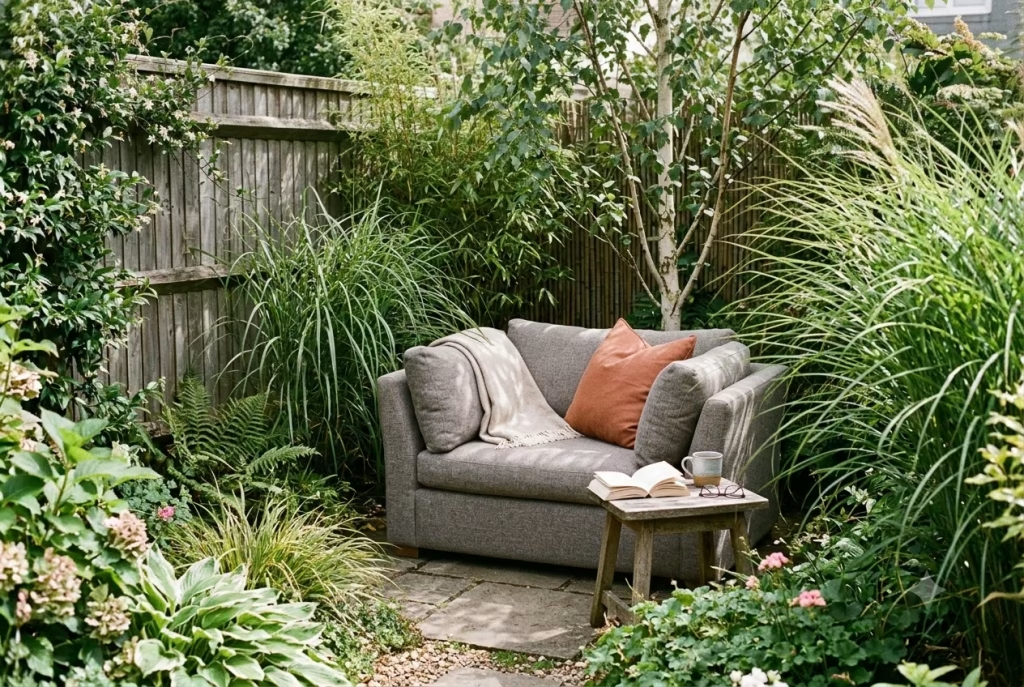
Not every seat in a garden needs to hold a conversation. Some of the best ones are built to hold exactly one person, a book, and maybe a cup of tea going lukewarm because nobody’s checked the time in an hour. A single-person nook sofa, deep enough to curl a leg beneath you, tucked into a planted corner where the foliage does most of the enclosing, solves for a kind of solitude that larger seating arrangements simply weren’t designed to offer.
The scale here is deliberately modest, and that restraint is the entire point rather than a limitation. A generous armchair-sofa hybrid, somewhere around 90 to 100 centimetres wide with a deep 80 centimetre seat, gives enough room to genuinely curl up rather than sit formally with both feet on the ground.
I built one of these into a narrow side return a couple of years back, a strip of garden barely a metre and a half wide that most people would have written off as dead space or, worse, filled with bins.
Instead, we tucked a single upholstered nook chair against the boundary wall, framed it with tall ornamental grasses and a single multi-stemmed birch, and turned what was genuinely unusable square footage into the client’s favourite spot in the entire house. She told me later she’d never once sat in the main garden seating area that summer. She didn’t need to.
Planting does more structural work here than in almost any other configuration on this list, and it’s worth planning the greenery before the furniture rather than the other way around. Tall grasses, bamboo screening, or a loosely trained climbing jasmine along a nearby trellis all create a sense of enclosure without the cost or permanence of a built structure, giving the nook a feeling of privacy even in a garden that’s otherwise fully overlooked by neighbouring windows.
The trick is choosing planting that moves gently in the breeze rather than standing rigid, since that soft, ambient movement is what makes a small corner feel alive rather than simply boxed in.
Comfort at this scale asks for a slightly different cushion strategy than a full sectional would. Because there’s only one person’s weight to support rather than several, a deeper, softer foam fill works beautifully here in a way it wouldn’t on family-sized seating that needs to hold its shape under constant, heavier use. A single oversized scatter cushion or a folded throw within arm’s reach finishes the spot without cluttering it, since a reading nook, above almost anything else on this list, should never feel like it’s trying too hard.
Worth knowing before you buy: orient the piece toward afternoon or evening shade rather than full southern exposure, since a reading nook gets used precisely because it’s comfortable to sit in for an hour or more at a stretch, and nowhere loses that appeal faster than a corner that turns into a suntrap the moment you actually want to relax in it.
Where the room finishes the sentence the sofa started
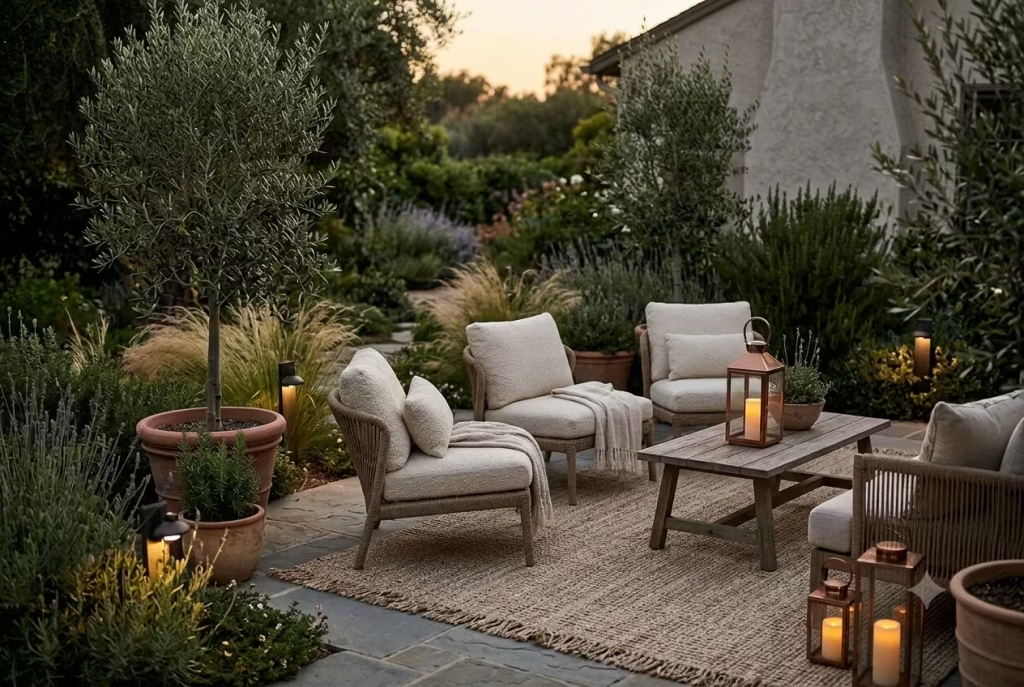
No sofa, however well chosen, does its job entirely alone. It sets the tone, but the space around it decides whether that tone actually lands or fades out somewhere around the second visit. This is where a lot of otherwise good furniture decisions quietly come undone, dropped onto bare paving with nothing underfoot to ground them, lit by a single overhead spotlight that flattens every texture we just spent this whole piece talking about.
Rugs matter more outdoors than most people expect walking in. A flat-weave outdoor rug, sized so the front legs of the sofa sit on it and the back legs stay off, does something almost sleight of hand, it convinces the eye that the seating area is a room rather than a collection of objects scattered across a patio. Skip it and even a beautifully chosen sofa can read as unfinished, like a sentence missing its full stop.
Lighting deserves the same intention as the sofa itself, not an afterthought bolted on once the furniture’s already arrived. Low, warm-toned lighting, wall-mounted fixtures at knee height, a scattering of lanterns rather than one dominant overhead source, flatters texture in a way harsh, single-point lighting never will. Bouclé and rope both come alive under this kind of glow, their weave catching shadow rather than washing out flat.
Planting is the quiet finishing move, the one that separates a considered outdoor room from a sofa parked in a garden. Greenery placed close enough to brush against as you sit, an olive tree at one shoulder, ornamental grass softening a hard edge, tells the eye this space was composed rather than furnished in a hurry. Get those three elements speaking the same language, and whichever of the fifteen ideas you land on, it’ll look like it always belonged there.
Where judgment beats the checklist
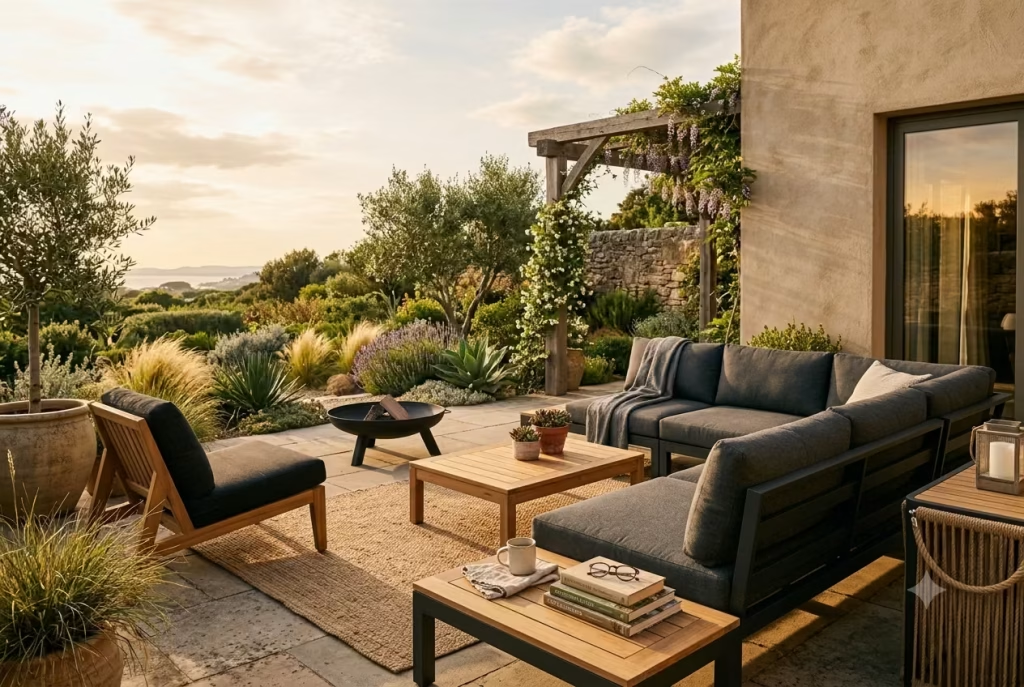
There’s no universal winner among these fifteen, and honestly, anyone promising you one is selling something rather than designing for you specifically. The right choice comes down to reading your own site the way a designer would walking through it for the first time, orientation first, everything else after.
Start with light. A north-facing courtyard that barely sees direct sun asks for warmth, oat-toned bouclé, honeyed teak, colours that bring their own glow rather than reflecting one that isn’t there. A south or west-facing terrace baking under afternoon sun needs the opposite instinct entirely, darker tones that won’t bleach within two summers, and fabric genuinely rated for sustained UV rather than a light water-resistant coating dressed up as the real thing.
Household use narrows things further, often more decisively than style preference ever will. A home with young children and a dog underfoot has no business chasing pale bouclé or delicate rope weave, however striking it looked earlier in this piece.
Solution-dyed acrylic and powder-coated aluminium exist precisely for that reality, built to survive life rather than simply photograph well. A couple entertaining most weekends should weight the decision toward modular, fire-pit-adjacent configurations that flex between an intimate Tuesday and a twelve-person Saturday without missing a step.
Climate closes the loop. Coastal salt air rewards rope and aluminium over anything with exposed steel fixings. Genuinely wet winters make drainage and quick-dry foam non-negotiable rather than a nice-to-have. And budget, always the quiet variable nobody wants to lead with, tends to sort itself once orientation, household, and climate have already done the heavy lifting, because the right material for your specific site is rarely the most expensive one on the shelf, just the one actually suited to where it’s going to live.
For the deeper walkthrough on materials, maintenance, and long-term care, that ground gets covered properly in our full outdoor sofa buying guide.
Full circle, back to the courtyard
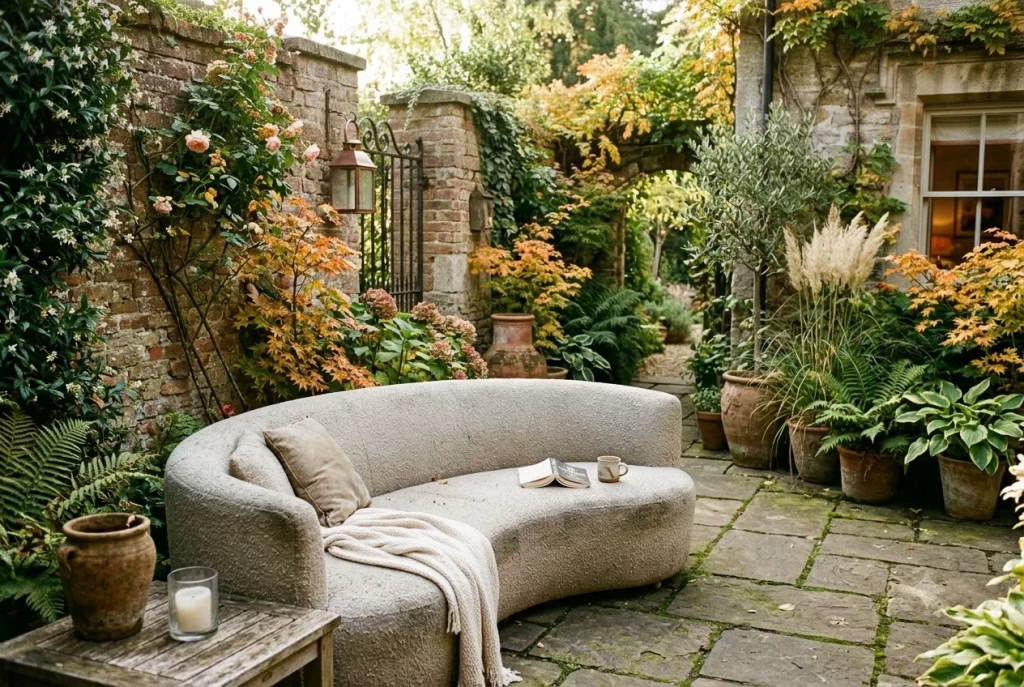
That north-facing courtyard still gets used, more now than it ever did in the years the space sat empty and unloved. The client texted me a photo last autumn, the same bouclé curve now weathered in just the way good outdoor furniture should weather, cushions slightly sun-warmed, a book left face-down on the seat where someone had clearly meant to come back to it.
That’s really what this whole list has been circling. Not fifteen products to compare, but fifteen ways a piece of furniture can change how a space gets lived in, if you let the sofa lead rather than arrive last. Choose the one that answers your own courtyard’s particular silence, and the rug, the lighting, the planting will follow it home without much convincing at all.
FAQ (FRequently asked questions)
What’s the most durable outdoor sofa material for 2026?
Powder-coated aluminium and quality teak both sit at the top for genuine longevity, though they earn it in different ways. Aluminium wins on low maintenance and resistance to rust, needing little more than an occasional wipe-down over its lifetime. Teak wins on character and sheer lifespan, often outlasting several cushion refreshes when it’s oiled once a year, though it demands slightly more upkeep along the way. For anywhere facing salt air or coastal exposure, marine-grade rope on an aluminium frame tends to outperform both.
Can a modular outdoor sofa work in a small patio?
Yes, often better than a fixed sectional would. The advantage of modular seating on a tight footprint is flexibility rather than size, since two or three armless pieces can be reconfigured around an awkward corner or a narrow L-shape in a way a rigid three-seater never could. The measurement that matters most is the tightest pinch point in the space, not the total square footage, so always measure there first before choosing a configuration.
What outdoor sofa styles are trending for 2026?
Curved, sculptural silhouettes in bouclé and rope are leading the pack, moving away from the boxy, straight-lined sectionals that dominated the last decade. Alongside that, powder-coated aluminium is showing up in unexpected colours, sage, terracotta, and deep ink, rather than the usual grey or black, and reclaimed or rough-finished teak is gaining ground for its imperfect, lived-in character.
Do outdoor sofas need to match your indoor furniture?
Not literally, and trying too hard to match them often backfires. What matters more is a shared material language or tonal palette, echoing an indoor sofa’s warmth or restraint rather than duplicating its exact fabric or frame. A fully upholstered outdoor piece can borrow an indoor silhouette directly, but for most other styles, a loose visual conversation between inside and out reads as far more considered than an exact copy.
How much does a good outdoor sofa cost?
Budget entry-level pieces in aluminium or synthetic wicker typically start from a few hundred pounds for a compact two-seater, while a genuinely built-to-last modular sectional in quality teak or performance fabric can run into several thousand. The honest way to think about cost is price per year of use rather than upfront spend, since a well-made piece bought once often ends up cheaper than replacing a budget version every second or third summer.