



15 Spanish Revival Mudrooms That Perfectly Blend Beauty and Practicality
Mudrooms rarely receive the same attention as kitchens, living rooms, or primary suites, yet they are among the hardest-working spaces in any home. They absorb the daily rhythm of family life, welcoming muddy boots, shopping bags, sports equipment, wet umbrellas, and everything in between. In many homes, this practical zone becomes little more than a storage catchall. However, when thoughtfully designed, a mudroom can do far more than manage clutter. It can set the tone for the entire house.
This is where Spanish Revival design feels particularly at home. Rooted in craftsmanship, architectural character, and a deep appreciation for natural materials, the style transforms even the most utilitarian spaces into something memorable. Textured plaster walls, handcrafted tile, aged wood, wrought iron details, and warm earthy colours work together to create rooms that feel both welcoming and enduring. Rather than separating beauty from practicality, Spanish Revival interiors allow the two to exist side by side.
Over the years, I have found that some of the most successful homes are not necessarily defined by grand living spaces. Instead, they excel in the transitional areas people use every day. A well-designed mudroom, thoughtfully planned and rich in character, can make daily routines feel smoother while reinforcing the architectural identity of the home.
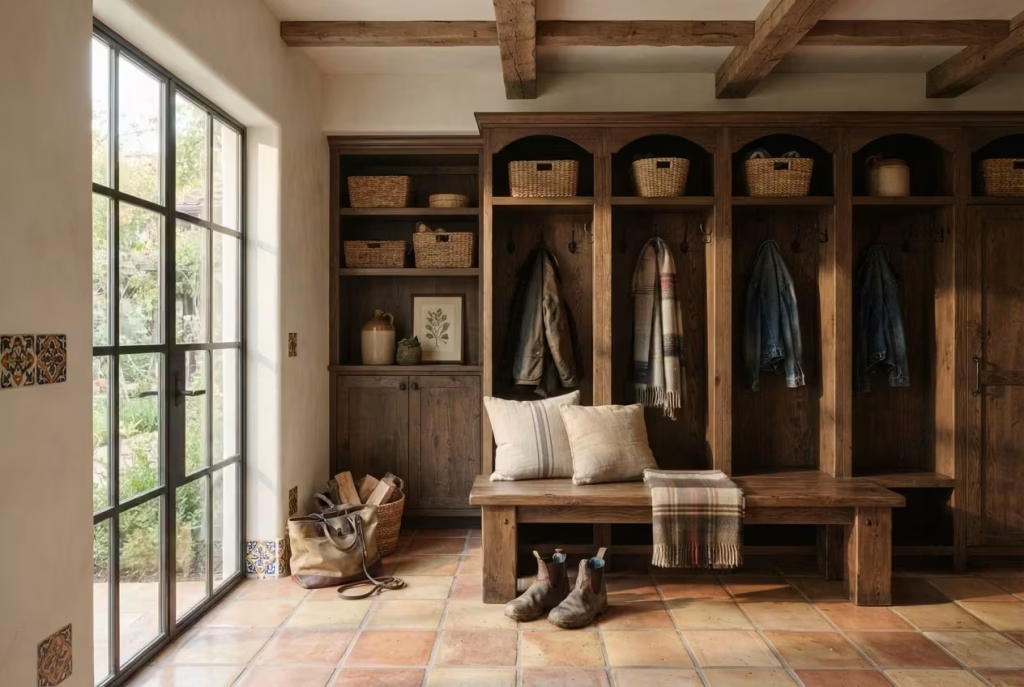
The Spanish Revival mudrooms featured in this collection demonstrate exactly how that balance can be achieved. From handcrafted storage solutions to timeless material palettes and architectural details that age gracefully, each idea offers inspiration for creating a space that works beautifully while feeling unmistakably authentic.
Create a Welcoming Entrance with Handcrafted Saltillo Tile Flooring
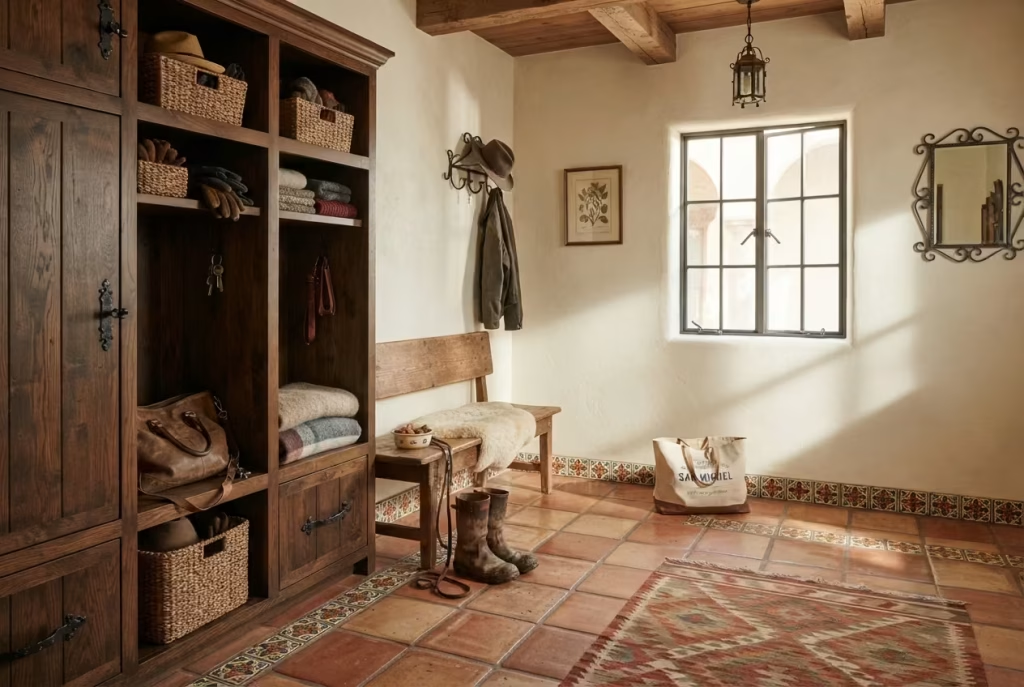
Few materials capture the spirit of Spanish Revival design quite like Saltillo tile. Handmade from natural clay and traditionally sun-dried, these tiles bring an authenticity that machine-made alternatives often struggle to replicate. Their warm terracotta tones immediately create a sense of welcome, setting the stage for the rest of the home before a guest has even stepped beyond the mudroom.
What makes Saltillo tile particularly appealing in a mudroom is its ability to balance charm with practicality. This is a space where muddy boots, pet paws, shopping bags, and school backpacks regularly come and go. In many households, the mudroom takes a beating day after day. Saltillo’s naturally varied surface and colour movement help disguise the small marks and scuffs that inevitably appear over time. Rather than looking worn out, the flooring develops character, much like a well-loved leather chair that only gets better with age.
Why Saltillo Tile Remains a Spanish Revival Classic
Spanish Revival interiors celebrate craftsmanship, and Saltillo tile embodies that philosophy beautifully. Each tile carries subtle imperfections, tonal shifts, and texture variations that create visual depth across the floor.
Unlike perfectly uniform porcelain, Saltillo feels alive. Sunlight moving across its textured surface throughout the day creates a richness that cannot be manufactured. Some of the qualities homeowners appreciate most include:
- Authentic handcrafted appearance
- Warm earth-toned colour palette
- Excellent longevity when properly sealed
- Strong connection to traditional Spanish and Mediterranean architecture
- Ability to complement both rustic and refined interiors
In homes where authenticity matters, Saltillo often becomes the foundation upon which the entire design story is built.
How Texture Helps Hide Everyday Wear
Mudrooms are the unsung heroes of the home. They quietly absorb daily chaos while protecting the more formal spaces beyond. One lesson I have learned repeatedly from family renovation projects is that highly polished flooring often reveals every scratch, footprint, and speck of dirt. Saltillo works differently.
Its naturally textured surface helps:
- Camouflage dust between cleanings
- Conceal minor scratches
- Reduce the visibility of dried water spots
- Maintain a lived-in yet attractive appearance
For busy households with children or pets, this can be worth its weight in gold.
Choosing the Right Tile Size and Layout
Scale plays a significant role in how a mudroom feels. In smaller mudrooms, I often specify:
| Mudroom Size | Recommended Tile Size |
| Up to 8 ft × 8 ft (2.4 m × 2.4 m) | 8 in × 8 in (20 cm × 20 cm) |
| Medium mudrooms | 12 in × 12 in (30 cm × 30 cm) |
| Large mudrooms | 16 in × 16 in (40 cm × 40 cm) or larger |
Layout choices can dramatically influence the room’s character. Popular installation patterns include:
- Traditional straight lay for timeless simplicity
- Diagonal layouts that visually widen narrow spaces
- Mixed-size patterns inspired by historic Spanish villas
- Border designs incorporating decorative Talavera accents
The goal is not simply filling floor space. It is creating rhythm and movement that guides people naturally through the room.
Pairing Saltillo Flooring with Natural Wood Storage
One of my favourite combinations in Spanish Revival homes pairs terracotta flooring with warm timber cabinetry. The contrast feels effortless because both materials share natural origins and complementary tones.
Excellent wood options include:
- Alder for a traditional Spanish appearance
- White oak for a lighter contemporary interpretation
- Reclaimed timber for added character
- Walnut accents for depth and richness
Consider incorporating:
- Built-in storage benches
- Open cubbies
- Vertical lockers
- Floating shelves
- Custom cabinetry with wrought iron hardware
Together, these materials create a mudroom that feels collected rather than decorated.
Real-Life Application: A Family Mudroom That Improved Daily Life
During a renovation of a Spanish-inspired family home, the original mudroom suffered from two common problems. The flooring constantly showed dirt, and the space felt disconnected from the home’s architecture.
We replaced the existing flooring with sealed Saltillo tile measuring 12 in × 12 in (30 cm × 30 cm) and introduced custom alder storage units along one wall. The transformation was immediate.
Not only did the mudroom become visually warmer, but maintenance complaints practically disappeared. The textured clay surface concealed the everyday signs of family life far better than the previous smooth flooring. More importantly, the room finally felt like a natural extension of the house rather than an afterthought.
Months later, the homeowners shared something that resonated with me. They found themselves entering through the mudroom even when the front entrance was available because the space simply felt more welcoming. That is often the hallmark of successful design. When a practical room quietly becomes a favourite part of daily life, you know something has gone right.
Design Insight
When designing Spanish Revival mudrooms, I frequently use warm terracotta flooring to soften high-traffic zones that might otherwise feel purely functional. The richness of Saltillo tile brings warmth underfoot while standing up remarkably well to daily use. It is a classic example of having your cake and eating it too. The flooring works hard behind the scenes while contributing enormously to the atmosphere of the space.
The result is an entrance that feels grounded, welcoming, and timeless. Long after passing trends have faded, handcrafted terracotta flooring continues to prove why it has remained a cornerstone of Spanish Revival architecture for generations.
Incorporate Built-In Wooden Lockers Inspired by Historic Spanish Estates
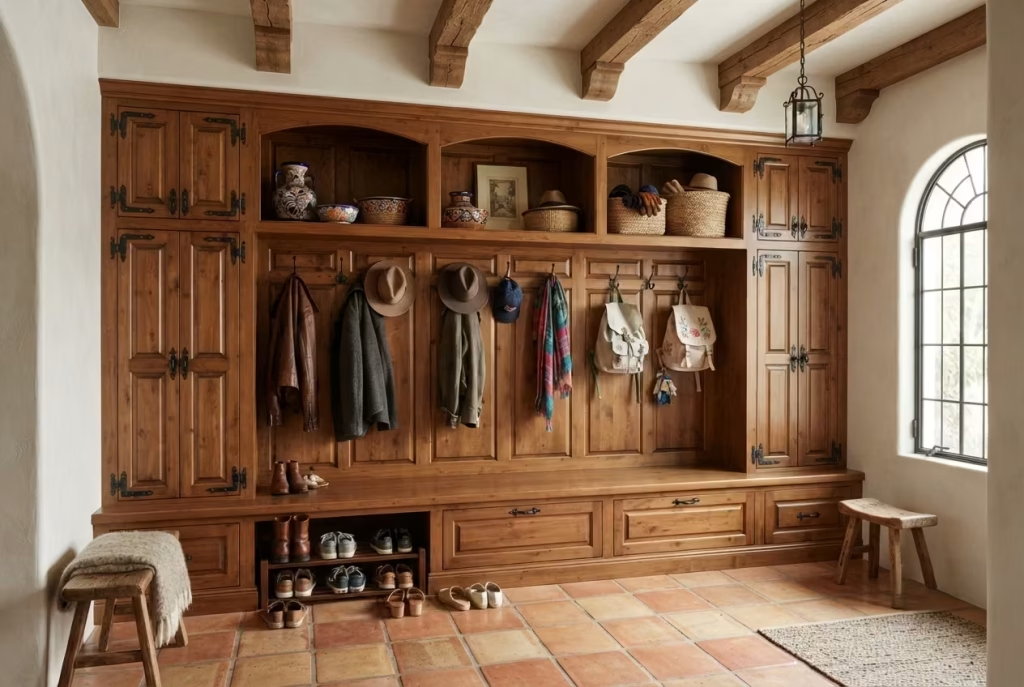
The most memorable Spanish Revival mudrooms rarely rely on decorative details alone. Their beauty often comes from something far more practical: storage that feels deeply integrated into the architecture itself. Built-in wooden lockers, inspired by the craftsmanship found in historic haciendas and country estates, bring a sense of permanence that freestanding furniture simply cannot replicate.
A thoughtfully designed locker wall does far more than organise coats and shoes. It creates order from the daily hustle and bustle, giving every family member a dedicated place to land at the end of a busy day. In homes where routines move at full speed, this seemingly simple feature can become the glue that holds the entire entry sequence together.
What I particularly appreciate about built-in storage is its ability to make a room feel intentional rather than improvised. Instead of baskets multiplying across the floor or seasonal items migrating from corner to corner, everything has a clear destination.
Drawing Inspiration from Traditional Spanish Haciendas
Historic Spanish estates were designed with longevity in mind. Storage was not treated as an afterthought. Cabinetry, benches, niches, and wardrobes were often built directly into thick masonry walls, creating interiors that felt cohesive and enduring. Today’s mudrooms can borrow many of those same principles. Authentic Spanish-inspired millwork often features:
| Design Element | Contribution to the Space |
| Recessed panel doors | Adds architectural depth |
| Arched upper openings | Reinforces Spanish character |
| Hand-forged iron hardware | Introduces texture and craftsmanship |
| Natural wood grain finishes | Creates warmth and authenticity |
| Integrated seating | Improves comfort and functionality |
| Open display niches | Softens the appearance of large cabinetry |
The goal is not to recreate a museum piece. Instead, it is to capture the spirit of traditional craftsmanship while supporting modern family life.
Open Storage Versus Enclosed Storage: Finding the Right Balance
One of the most common questions homeowners face is whether lockers should remain open or concealed behind doors. The answer often depends on how the household functions day to day.
Benefits of Open Lockers
Open storage creates immediate accessibility. Advantages include:
- Faster daily routines
- Easier access for children
- Better visibility of frequently used items
- Reduced need to constantly open and close doors
- More casual and relaxed appearance
However, open storage requires discipline. Without regular organisation, clutter can creep in almost overnight.
Benefits of Enclosed Lockers
Enclosed cabinetry offers a cleaner visual experience. Benefits include:
- Conceals everyday mess
- Creates a more refined appearance
- Protects seasonal items from dust
- Works well in mudrooms connected to living areas
The drawback is that fully enclosed systems can sometimes feel heavy, particularly in smaller spaces.
My Preferred Approach
In most Spanish Revival homes, I find the sweet spot lies somewhere in the middle. A successful locker wall often includes:
- Open hooks for daily-use coats
- Closed cabinetry for overflow storage
- Bench seating with hidden compartments
- Upper cabinets for seasonal items
- Decorative niches for pottery or woven baskets
This layered approach allows the room to work hard without feeling overly utilitarian.
Selecting the Right Wood Species for Authentic Character
The wood selection can dramatically influence how authentic a Spanish Revival mudroom feels. Many homeowners instinctively gravitate toward trendy finishes, but traditional Spanish interiors typically favour woods that possess warmth, depth, and visible grain. The following options consistently perform well:
| Wood Species | Characteristics | Best For |
| Alder | Soft grain, warm tones | Traditional Spanish Revival homes |
| White Oak | Durable, subtle texture | Transitional Spanish interiors |
| Walnut | Rich and sophisticated | Luxury mudrooms |
| Reclaimed Timber | Weathered character | Rustic Spanish-inspired spaces |
| Knotty Pine | Informal charm | Casual family homes |
Personally, I often specify alder because it strikes a wonderful balance between elegance and authenticity. Its warmth feels perfectly at home alongside terracotta flooring, plaster walls, and wrought iron accents.
Balancing Visual Weight with Everyday Function
Large storage systems can quickly overwhelm a room if proportions are not carefully considered. I have walked into mudrooms where cabinetry dominates every wall, making the space feel more like a utility closet than a welcoming entrance. To prevent this, several design strategies prove particularly effective.
Break Up Large Cabinet Runs
Instead of one continuous wall of millwork, consider:
- Alternating lockers and open niches
- Introducing arched recesses
- Incorporating decorative shelving
- Varying cabinet depths
These adjustments create breathing room and visual rhythm.
Include Natural Light Reflection
Dark wood can become visually heavy when paired with limited daylight. Balancing elements might include:
- Limewashed walls
- Light plaster finishes
- Decorative tile accents
- Woven baskets
- Natural linen textiles
The result feels layered rather than overwhelming.
Practical Considerations for Real Family Life
A beautiful mudroom that fails to support daily routines quickly loses its appeal. As the saying goes, the proof of the pudding is in the eating. Before finalising locker dimensions, I always encourage homeowners to evaluate their actual storage needs. Consider the following categories:
Daily Essentials
- Jackets
- Handbags
- School bags
- Keys
- Hats
- Sunglasses
Seasonal Storage
- Winter coats
- Rain gear
- Scarves
- Sports equipment
- Holiday accessories
Pet-Related Storage
- Leads
- Harnesses
- Food containers
- Grooming supplies
- Towels for muddy paws
Household Overflow
- Reusable shopping bags
- Cleaning supplies
- Outdoor footwear
- Umbrellas
Many families underestimate how much space these categories collectively require.
Recommended Locker Dimensions
The following measurements generally provide comfortable functionality:
| Storage Component | Recommended Size |
| Individual locker width | 18 to 24 inches (45 to 60 cm) |
| Bench height | 18 inches (46 cm) |
| Bench depth | 16 to 20 inches (40 to 50 cm) |
| Full locker height | 72 to 84 inches (183 to 213 cm) |
| Upper cabinet depth | 12 to 15 inches (30 to 38 cm) |
These proportions typically accommodate both adults and children while maintaining comfortable circulation.
Real-World Design Perspective
One Spanish Revival renovation I worked on involved a family of five with two dogs and an active outdoor lifestyle. Their previous mudroom looked tidy in photographs but struggled to support everyday life. Shoes overflowed onto the floor. Sports equipment migrated into adjacent rooms. Dog leads seemed to disappear into thin air.
We designed a full-height alder locker system featuring dedicated family zones, hidden storage beneath a built-in bench, upper seasonal cabinets, and a pet station integrated into one end of the millwork.
Several months after completion, the homeowners remarked that mornings felt noticeably calmer. Nothing revolutionary had changed. Yet because every item finally had a dedicated home, daily routines became smoother and less stressful. That is often the hidden power of thoughtful design. It quietly removes friction from everyday life.
Why Built-In Lockers Continue to Stand the Test of Time
Unlike trend-driven storage solutions that come and go, built-in wooden lockers rooted in Spanish architectural traditions possess remarkable staying power.
They combine craftsmanship, practicality, and visual warmth in a way that feels both timeless and deeply personal. More importantly, they support the rhythms of real life while contributing to the character of the home itself.
When designed thoughtfully, they do far more than store belongings. They create a sense of order, making everyday arrivals and departures feel a little less chaotic and a great deal more welcoming.
Frame the Mudroom with a Soft Plaster Archway
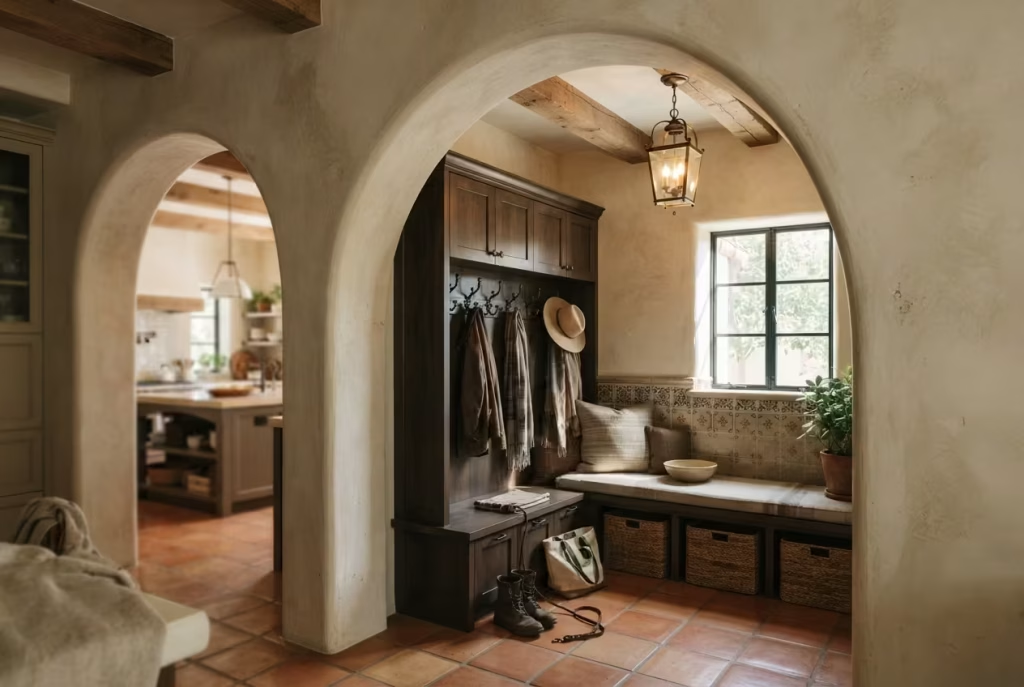
Some design features announce themselves loudly. Others work quietly in the background, shaping how a space feels without demanding attention. The plaster archway belongs firmly in the second category. In Spanish Revival homes, few architectural details carry as much visual influence while appearing so effortless.
A well-proportioned arch has the remarkable ability to transform an ordinary doorway into a memorable transition. It softens hard lines, introduces movement, and creates a sense of arrival that rectangular openings often struggle to achieve. Even in a modest mudroom, an archway can shift the atmosphere from purely functional to distinctly architectural.
What makes this feature particularly powerful is that it does not rely on expensive materials or elaborate decoration. Instead, its impact comes from shape, proportion, and craftsmanship. It is a classic example of how thoughtful design can punch above its weight.
Why Arches Instantly Reinforce Spanish Character
Spanish Revival architecture is rooted in centuries-old Mediterranean influences where arches served both structural and decorative purposes. From historic courtyards to grand hacienda entrances, curved openings became one of the style’s defining signatures.
When introduced into a mudroom, an arch immediately communicates architectural authenticity. Key reasons arches feel so natural in Spanish Revival interiors include:
- They echo traditional Spanish and Mediterranean architecture.
- They introduce softness among hard-working surfaces.
- They create visual flow between connected spaces.
- They enhance a home’s sense of craftsmanship.
- They feel timeless rather than trend-driven.
Unlike decorative accessories that can be swapped out every few years, an arch becomes part of the home’s architectural DNA.
The Emotional Impact of Curved Forms
There is a reason curved shapes continue to appear throughout history’s most beloved buildings. Straight lines tend to feel formal and direct. Curves feel welcoming.
When entering a mudroom through an archway, the experience becomes subtly different. The transition feels gentler, almost as though the room is inviting you inside rather than simply allowing passage. This emotional quality matters more than many homeowners realise.
After all, the mudroom is often the first space family members encounter when returning home after a long day. Small architectural gestures can have a surprisingly large impact on how that experience feels.
Creating Better Visual Transitions Between Rooms
One challenge many mudrooms face is feeling disconnected from adjacent spaces. Sometimes they resemble utility rooms attached to an otherwise beautiful home. Other times they feel visually abrupt, creating a jarring shift from one area to another.
A plaster archway helps bridge that gap. Rather than drawing a hard boundary, it establishes a gradual transition that allows the eye to move naturally through the house. Common locations where arches work particularly well include:
| Transition Area | Design Benefit |
| Mudroom to kitchen | Creates visual continuity |
| Mudroom to hallway | Softens circulation routes |
| Mudroom to laundry room | Elevates functional areas |
| Mudroom to courtyard | Strengthens indoor-outdoor connection |
| Mudroom to family room | Enhances architectural flow |
In larger homes, a sequence of arches can create a rhythm that quietly guides movement from one space to the next.
Understanding Scale and Proportion
Even the most beautiful arch can feel awkward if the proportions are wrong. This is where many renovations miss the mark. An arch that is too narrow can feel cramped. One that is excessively tall may appear disconnected from the surrounding architecture.
As the saying goes, measure twice, cut once. Successful Spanish Revival interiors rely heavily on balanced proportions.
Recommended Arch Dimensions
The following guidelines provide a useful starting point:
| Opening Width | Suggested Arch Height |
| 36 inches (91 cm) | 84 to 90 inches (213 to 229 cm) |
| 48 inches (122 cm) | 90 to 96 inches (229 to 244 cm) |
| 60 inches (152 cm) | 96 to 108 inches (244 to 274 cm) |
| 72 inches (183 cm) | 108 inches+ (274 cm+) |
The curve itself should feel relaxed rather than exaggerated. In Spanish Revival homes, soft arches often appear more authentic than dramatic pointed versions.
Choosing the Right Arch Shape
Not all arches create the same visual effect. Popular options include:
Rounded Arch
- Traditional Spanish appearance
- Soft and welcoming
- Works in both small and large spaces
Segmental Arch
- Slightly flatter profile
- More understated
- Suitable for transitional interpretations
Moorish-Inspired Arch
- Decorative and dramatic
- Best reserved for larger homes
- Creates a strong focal point
For most mudrooms, the classic rounded arch remains the most versatile choice.
Authentic Materials That Enhance the Effect
The shape of the arch matters, but the finish is equally important. Nothing undermines Spanish Revival character faster than surfaces that feel overly polished or artificial. Historically, these homes celebrated materials with depth, texture, and subtle imperfections. Some of the most authentic options include:
Lime Plaster
Favoured for centuries throughout Mediterranean architecture. Benefits include:
- Soft organic texture
- Natural tonal variation
- Excellent breathability
- Beautiful aging characteristics
Hand-Trowelled Plaster
Creates gentle movement across the surface. Particularly effective when natural light grazes the wall throughout the day.
Textured Stucco Finishes
Useful for achieving old-world character. Works especially well in homes with rustic influences.
Comparing Popular Wall Finishes
| Finish Type | Appearance | Authenticity Level |
| Lime Plaster | Soft, layered texture | Excellent |
| Venetian Plaster | Refined and polished | Moderate |
| Textured Stucco | Rustic and relaxed | Excellent |
| Smooth Drywall | Clean but flat | Low |
| High-Gloss Paint | Modern appearance | Poor |
When aiming for Spanish Revival authenticity, texture is often worth its weight in gold.
Layering Architectural Details Around the Arch
An arch becomes even more compelling when supported by complementary materials. Consider pairing it with:
- Saltillo tile flooring
- Wrought iron lighting
- Natural oak or alder cabinetry
- Handmade Talavera tile accents
- Rustic ceiling beams
- Aged bronze hardware
These elements work together to create a cohesive story rather than a collection of unrelated features.
A Real-World Project Lesson
Several years ago, I worked on a Spanish-inspired renovation where the mudroom connected directly to the kitchen through a standard rectangular opening. Functionally, nothing was wrong.
Visually, however, the transition felt abrupt and uninspiring. Rather than undertaking a major renovation, we introduced a plaster archway finished in hand-trowelled lime plaster. The footprint remained exactly the same. The flooring stayed unchanged. Even the cabinetry was retained.
Yet the atmosphere shifted dramatically. The mudroom suddenly felt connected to the architectural language of the rest of the house. Visitors often assumed the arch had been part of the original structure because it felt so natural within the space.
That experience reinforced an important lesson. Sometimes the smallest architectural intervention creates the greatest transformation.
Why a Soft Plaster Archway Is More Than a Decorative Feature
A successful mudroom should do more than organise daily clutter. It should contribute to the overall experience of the home. A soft plaster archway accomplishes this beautifully.
It introduces warmth where functionality often dominates. It creates flow between rooms, strengthens architectural identity, and adds a sense of craftsmanship that never feels forced. Most importantly, it reminds us that practical spaces deserve thoughtful design too.
Like a thread woven carefully through a tapestry, the arch quietly connects one room to the next, helping the entire home feel more cohesive, welcoming, and deeply rooted in the timeless traditions of Spanish Revival design.
Add a Statement Wooden Bench with Old-World Character
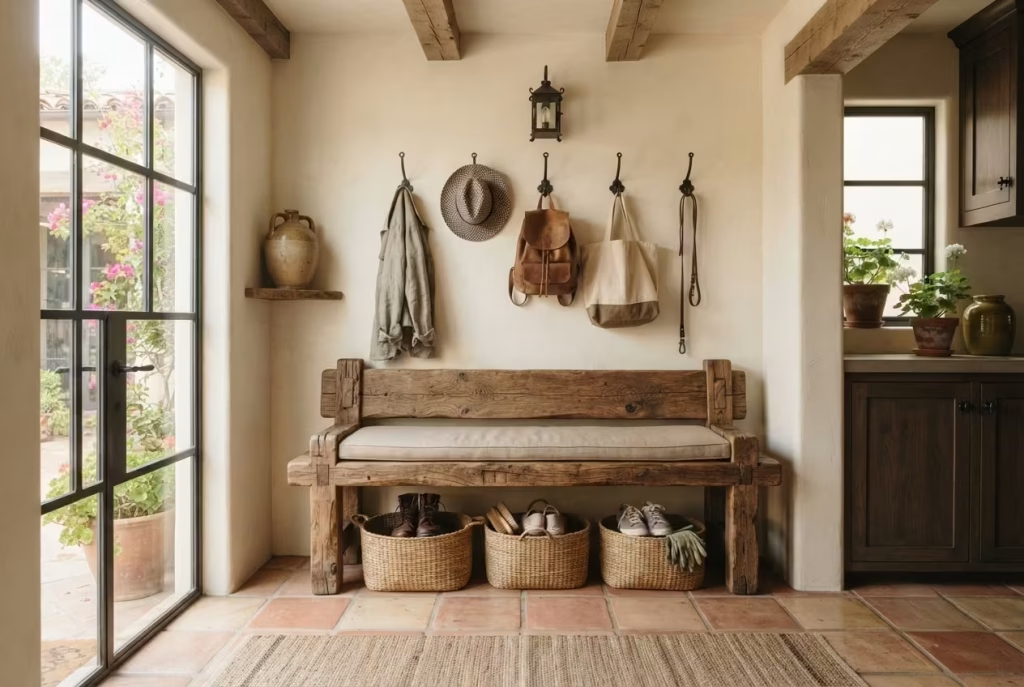
A bench may seem like a modest addition, but in a Spanish Revival mudroom, it can be the linchpin that holds the whole space together. It is the place where shoes come off, bags are set down, and the pace of the day finally starts to slow. In other words, it earns its keep.
When a wooden bench is designed with old-world character, it does more than provide a seat. It adds weight, warmth, and a sense of permanence. A well-chosen piece can feel as though it has always belonged there, quietly anchoring the room while softening the harder edges of tile, plaster, and ironwork.
Why a Wooden Bench Matters in a Mudroom
The best mudroom seating does not shout for attention. It works hard in the background, like a trusted old friend, always there when needed. A statement bench can:
- Make changing shoes easier and more comfortable
- Create a natural pause point in a busy entry sequence
- Add visual balance beneath hooks or lockers
- Introduce another layer of craftsmanship into the room
- Help the mudroom feel considered rather than pieced together
When the scale is right, a bench can be the difference between a room that merely functions and one that genuinely feels welcoming.
Reclaimed Wood Options That Bring Depth and Character
Reclaimed wood has a richness that brand-new timber often cannot match. Its weathered grain, softened edges, and subtle imperfections tell a story before a single coat of finish is added. That kind of lived-in character sits beautifully within Spanish Revival interiors, where materials are often celebrated for their age and authenticity. Strong reclaimed wood choices include:
- Oak, for durability and a strong grain pattern
- Elm, for a more expressive, irregular texture
- Pine, for a rustic and relaxed appearance
- Chestnut, where available, for warmth and historic charm
- Salvaged beams, which can be repurposed into substantial bench tops
The beauty of reclaimed timber lies in its honesty. It does not try too hard, and that is part of its charm.
Bench Sizing Recommendations That Feel Comfortable
A bench that looks beautiful but is awkward to use quickly becomes dead weight. Proper proportions matter. Here is a practical guide for sizing:
| Bench Feature | Recommended Measurement |
| Seat height | 18 to 19 in (46 to 48 cm) |
| Seat depth | 16 to 20 in (40 to 50 cm) |
| Bench length for 1 person | 24 to 30 in (60 to 76 cm) |
| Bench length for 2 people | 48 to 60 in (122 to 152 cm) |
| Bench length for family use | 72 in+ (183 cm+) |
A deeper seat can feel luxurious, but if the bench is too deep, it becomes cumbersome for everyday use. The sweet spot is usually just deep enough to sit comfortably while leaving room for baskets or storage below.
You May also Like: 15 Victorian Mudroom Design Secrets for a Timeless, Elegant Entryway
Built-In Versus Freestanding Seating
Both options have their place, and each brings a different personality to the room.
Built-In Bench
A built-in bench feels integrated and architecturally grounded. It works especially well in Spanish Revival interiors because it can be detailed to match surrounding millwork. Advantages include:
- A custom, high-end appearance
- Better use of awkward or narrow walls
- Extra storage beneath the seat
- Easier coordination with lockers and cabinetry
- A more permanent, tailored feel
Potential drawback:
- Less flexible if the room layout changes later
Freestanding Bench
A freestanding bench offers more visual lightness and flexibility. It can be moved, replaced, or restyled with relative ease. Advantages include:
- Easier to relocate
- Good for smaller budgets
- Softer visual impact in compact rooms
- Works well if you like to refresh furnishings over time
Potential drawback:
- Can look disconnected if not paired carefully with the surrounding architecture
In many Spanish Revival mudrooms, a built-in bench has the upper hand because it feels rooted in the home, almost as though it was there from the beginning.
Choosing the Right Finish
The finish makes a tremendous difference. A bench should feel tactile, not precious. It ought to age gracefully, like a good leather jacket that only gets better with wear. Finishes that work especially well include:
- Matte oil finishes, for a natural and breathable look
- Light waxed finishes, for softness and depth
- Distressed stain finishes, for a timeworn effect
- Darker walnut tones, where a richer, more formal mood is desired
Avoid finishes that are overly glossy or plastic-looking. In a Spanish Revival setting, those tend to stick out like a sore thumb.
Layering Comfort Through Textiles
A wooden bench becomes much more inviting when softened with the right textiles. Without them, even the most handsome timber can feel a little severe. Useful additions include:
- Linen seat cushions
- Woven throw pillows
- Neutral wool pads
- Textured blankets in colder climates
- Washable covers for households with children or pets
For a Spanish Revival palette, think terracotta, sand, ivory, olive, rust, and faded indigo. These colours feel grounded and natural, and they sit comfortably alongside clay tile and plaster walls.
Practical Placement Tips
A bench works best when it supports the flow of daily movement rather than blocking it. Keep these points in mind:
- Leave at least 36 in (91 cm) of circulation space in front of the bench
- Position it near hooks or lockers so the user has everything within reach
- Avoid placing it in a way that interrupts a main traffic path
- Use wall-mounted lighting above or nearby if the area is dim
The bench should feel like a helpful landing spot, not an obstacle course.
Real-Life Application: How a Well-Positioned Bench Changes Daily Routines
In one Spanish Revival-inspired renovation, the mudroom had plenty of storage but no proper seating. At first glance, the room looked organised enough. In practice, it was a nuisance. Shoes were being swapped out standing up, school bags were dropped on the floor, and the whole space felt slightly off-kilter.
We introduced a 60 in by 18 in bench, built from reclaimed oak and positioned directly beneath a run of hooks. The result was immediate. The room felt calmer, more balanced, and far easier to use.
What changed most was not just the look, but the rhythm of the household. Children could sit to put on shoes. Adults had a place to set down bags. The dog leash no longer lived on the floor. The bench became a natural pause point, and from there, the rest of the room finally made sense.
That is the quiet power of good design. It removes friction from daily life without making a fuss about it.
Pros and Cons at a Glance
| Option | Pros | Cons |
| Built-in bench | Tailored, architectural, storage-friendly | Less flexible |
| Freestanding bench | Easy to move, budget-friendly, adaptable | Can look less cohesive |
| Reclaimed wood bench | Rich character, authentic, durable | May require careful sourcing |
| New timber bench | More consistent finish, easier to customise | Less historic charm |
Why This Detail Matters So Much
A bench may not be the most dramatic feature in a mudroom, but it often becomes one of the most used. That is the beauty of it. It quietly supports the everyday, day in and day out, while adding warmth, texture, and old-world soul to the room.
In a Spanish Revival mudroom, a wooden bench does not merely fill space. It gives the room purpose, presence, and a grounded sense of welcome that makes coming home feel just a little more special.
Use Decorative Talavera Tile Accents for Colour and Personality
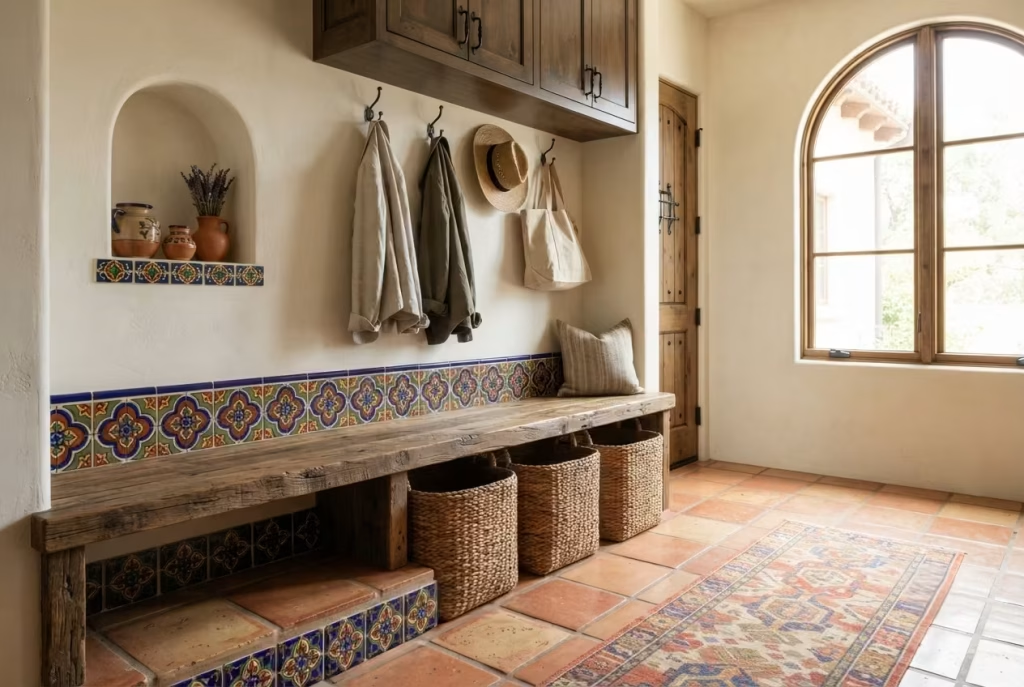
Spanish Revival interiors are often celebrated for their warmth, craftsmanship, and architectural character, but every now and then a space benefits from a touch of visual excitement. This is where Talavera tile shines. Rich in history and bursting with artistry, these handcrafted tiles bring colour, pattern, and personality into a mudroom without sacrificing authenticity.
What makes Talavera tile particularly special is that no two pieces are exactly alike. Slight variations in colour, brushwork, and glazing create a depth that mass-produced materials rarely achieve. In a room largely defined by practical demands, these decorative accents can become the feature that catches the eye and lingers in memory long after visitors have left. The key, however, is restraint. Like a pinch of spice in a favourite recipe, a little often goes a long way.
Understanding the Heritage Behind Talavera Tile
Talavera tile traces its roots to Spanish ceramic traditions that later evolved in Mexico through centuries of craftsmanship. Today, it remains one of the most recognisable decorative elements associated with Spanish-inspired interiors. What distinguishes authentic Talavera tile includes:
- Hand-painted motifs
- Richly layered glazes
- Slight variations that reveal artisan craftsmanship
- Vibrant colours inspired by nature
- Traditional geometric and floral patterns
These qualities create surfaces that feel collected rather than manufactured. When thoughtfully incorporated into a mudroom, Talavera tile can reinforce the home’s architectural identity while introducing moments of visual delight.
Strategic Placement Creates Greater Impact
One of the biggest mistakes homeowners make is treating decorative tile as though more automatically means better. In reality, excessive pattern can quickly become overwhelming, particularly in smaller mudrooms where visual breathing room is limited.
I often remind clients that the magic is in the details. Rather than covering large expanses, consider using Talavera tile in targeted locations where it can act as a focal point.
Effective Placement Ideas
| Location | Design Benefit |
| Bench risers | Adds colour without dominating the room |
| Stair risers near the mudroom | Creates visual continuity |
| Cabinet backsplash areas | Protects walls while adding character |
| Wall niches | Highlights architectural details |
| Entry thresholds | Establishes a memorable arrival moment |
| Decorative borders | Frames flooring elegantly |
These smaller applications allow the craftsmanship to shine without creating visual clutter.
Why Accent Areas Often Outperform Full Walls
Covering an entire wall with decorative tile can initially feel impressive, but over time it may become visually exhausting. Accent applications offer several advantages:
- Easier to update surrounding décor
- More budget-friendly
- Allows craftsmanship to remain the focal point
- Creates stronger contrast
- Prevents visual overload
In design, knowing when to stop is often just as important as knowing where to begin.
Traditional Patterns That Never Lose Their Appeal
Talavera tiles come in countless designs, but certain motifs have endured for generations because they feel timeless rather than trendy. Popular traditional patterns include:
Floral Motifs
Inspired by regional flowers and garden landscapes.
Ideal for:
- Softening rustic interiors
- Introducing organic movement
- Creating a welcoming atmosphere
Geometric Designs
Structured yet decorative. Perfect for:
- More architectural mudrooms
- Homes with cleaner lines
- Creating visual rhythm
Star and Compass Patterns
Historically influenced by Spanish and Moorish traditions. Excellent for:
- Entry points
- Feature walls
- Decorative floor inserts
Mediterranean Scrollwork
Richly detailed and highly expressive. Works best when used sparingly to maintain balance.
Colour Palettes That Feel Authentic
Colour is often what draws homeowners to Talavera tile in the first place. Traditional palettes tend to reflect the landscapes and cultural influences surrounding Spanish architecture. Some of the most enduring combinations include:
| Colour | Design Effect |
| Cobalt Blue | Freshness and contrast |
| Terracotta | Warmth and earthiness |
| Golden Yellow | Energy and sunlight |
| Olive Green | Connection to nature |
| Cream and Ivory | Softness and balance |
| Deep Rust | Rich historical character |
These colours work particularly well when paired with natural materials already common in Spanish Revival interiors.
Balancing Ornamentation with Simplicity
One reason successful Spanish Revival homes feel timeless is that they understand balance. Decorative elements are rarely competing for attention. If Talavera tile becomes the star of the show, surrounding materials should provide a calmer backdrop. Elements that pair beautifully with decorative tile include:
- Lime plaster walls
- Whitewashed surfaces
- Natural wood cabinetry
- Terracotta flooring
- Wrought iron hardware
- Linen textiles
Together, these materials create a layered environment where every element contributes without fighting for attention.
A Useful Rule of Thumb
When incorporating decorative tile, I often follow a simple principle: If the tile is visually expressive, allow the surrounding materials to remain quiet. This prevents the room from feeling busy while giving handcrafted details the spotlight they deserve.
Combining Handcrafted Tile with Neutral Surfaces
Some of the most successful mudrooms rely on contrast rather than excess. The handcrafted nature of Talavera tile becomes even more noticeable when placed alongside understated materials.
Consider these pairings:
| Decorative Element | Neutral Companion |
| Colourful Talavera tile | Warm plaster wall |
| Patterned tile border | Solid terracotta flooring |
| Decorative niche surround | Natural oak cabinetry |
| Hand-painted backsplash | Simple stone countertop |
| Feature tile panel | White limewashed wall |
This approach creates visual hierarchy, helping the eye know where to focus.
Texture Matters as Much as Colour
While colour often receives most of the attention, texture plays an equally important role. Talavera tile naturally introduces:
- Glossy reflective surfaces
- Handcrafted irregularities
- Depth through glazing
- Tactile variation
When combined with rough plaster, aged timber, woven baskets, and forged iron, the room develops layers of interest that reveal themselves gradually. The result feels richer and more engaging over time.
Real-World Design Experience
I once worked on a Spanish Revival renovation where the homeowners initially planned to install decorative tile across nearly every visible surface of the mudroom. While each tile was beautiful on its own, the combined effect felt overwhelming. The eye had nowhere to rest.
Instead, we concentrated the Talavera tile in three carefully selected locations:
- The riser beneath a custom bench
- A small backsplash behind storage cabinetry
- A decorative border framing a wall niche
The transformation was remarkable. The room suddenly felt more refined, and each handcrafted detail became more noticeable. Rather than competing with one another, the elements worked together harmoniously.
It reinforced a lesson I have seen repeatedly throughout my career. Sometimes less truly is more.
Pros and Cons of Talavera Tile Accents
| Pros | Cons |
| Adds authentic Spanish character | Can overwhelm if overused |
| Introduces colour and artistry | Quality handmade tile can be costly |
| Every installation feels unique | Requires thoughtful coordination |
| Ages beautifully | Busy patterns may date if poorly chosen |
| Complements natural materials | Installation requires precision |
Why Talavera Tile Continues to Captivate
Few decorative materials bring together history, craftsmanship, and personality quite like Talavera tile. Its ability to inject life into a practical room while remaining deeply rooted in tradition is what makes it so enduring.
Used thoughtfully, these handcrafted accents become the jewel in the crown of a Spanish Revival mudroom. They provide moments of colour, celebrate artisan skill, and add layers of character that cannot be replicated by mass-produced alternatives.
Most importantly, they remind us that even the most functional rooms deserve beauty. After all, the spaces we pass through every day should not simply serve a purpose. They should tell a story, one handcrafted detail at a time.
Introduce Wrought Iron Details That Age Beautifully
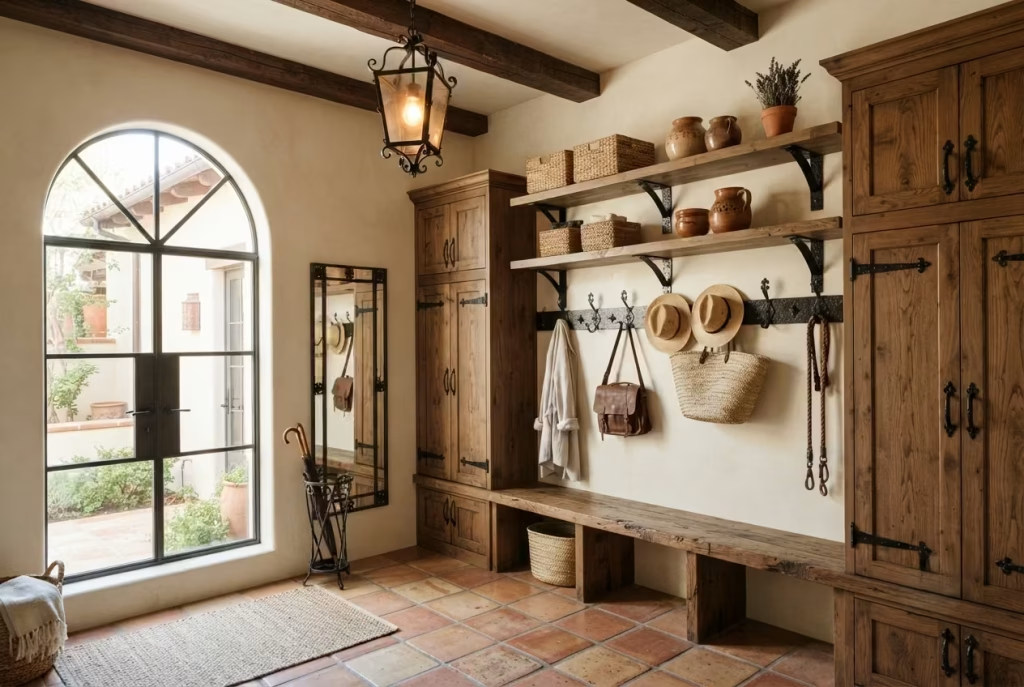
Some design elements command attention the moment you enter a room. Others work quietly behind the scenes, adding depth, authenticity, and character in ways that are not immediately obvious. Wrought iron belongs firmly in the latter category. While it may seem like a small detail compared to flooring, cabinetry, or architectural features, it often becomes one of the defining ingredients in a successful Spanish Revival mudroom.
The beauty of wrought iron lies not only in its appearance but also in how it matures over time. Unlike many modern finishes that look their best on installation day and gradually decline, quality iron develops a richer presence with age. Small signs of wear, subtle patina, and softened edges often enhance its appeal rather than diminish it.
In Spanish Revival interiors, wrought iron acts as a visual thread, weaving together various materials and helping the entire space feel cohesive. It is the kind of detail that may not steal the spotlight, yet without it, the room can feel as though something is missing.
Why Wrought Iron Has Been a Spanish Revival Staple for Generations
Historically, ironwork played a significant role in Spanish architecture. Skilled artisans shaped gates, lanterns, railings, and hardware by hand, creating pieces that balanced utility with craftsmanship.
That legacy continues today.
Wrought iron introduces qualities that perfectly suit a mudroom:
- Durability for high-traffic environments
- Rich visual texture
- Strong connection to Spanish architectural traditions
- Ability to complement both rustic and refined interiors
- Long-term aging potential
While trends come and go, authentic ironwork remains remarkably resilient, proving time and again that good materials rarely fall out of favour.
You May also Like: 15 Stunning Minimalist Mudroom Ideas to Turn Your Entryway from Chaos to Chic
Hooks That Bring Function and Character Together
Mudroom hooks are among the most frequently used components in the entire space. Yet many homeowners treat them as an afterthought.
A thoughtfully selected iron hook can elevate an ordinary wall while providing practical storage.
Popular options include:
- Hand-forged single hooks
- Double-prong utility hooks
- Decorative scroll hooks
- Oversized coat hooks for family use
Recommended Hook Placement
| User Type | Suggested Height |
| Young children | 36 to 42 in (91 to 107 cm) |
| Older children | 48 to 54 in (122 to 137 cm) |
| Adults | 60 to 66 in (152 to 168 cm) |
| Mixed family use | Multiple height levels |
Installing hooks at varying heights creates a mudroom that works for everyone, from small children carrying school bags to adults managing coats and accessories.
A well-planned hook arrangement often punches above its weight when it comes to improving daily routines.
Shelf Brackets That Feel Architectural Rather Than Decorative
Open shelving remains one of the most useful features in a mudroom, but the supporting brackets deserve careful attention.
In Spanish Revival interiors, shelf brackets are not merely structural necessities. They become part of the design language.
Popular wrought iron bracket styles include:
- Curved Mediterranean-inspired brackets
- Scrollwork designs
- Hammered iron supports
- Simple forged strap brackets
Each introduces a different level of ornamentation.
For homes leaning toward a rustic interpretation of Spanish Revival, more decorative brackets can add charm. In cleaner, contemporary adaptations, simpler forged forms often feel more appropriate.
Pairing Shelves and Brackets Successfully
| Shelf Material | Recommended Iron Style |
| Reclaimed oak | Hammered iron |
| Alder wood | Curved forged brackets |
| Walnut | Minimalist iron supports |
| Thick timber slabs | Heavy-duty decorative brackets |
| White oak | Simple blackened iron |
The goal is visual harmony rather than competition between materials.
Lighting Fixtures That Enhance Atmosphere
Lighting has a profound influence on how a mudroom feels, especially during early mornings or darker evenings. Wrought iron fixtures introduce warmth and authenticity while reinforcing the architectural identity of the space. Some of the most effective options include:
Lantern Pendants
These remain one of the most iconic choices for Spanish Revival homes.
Benefits include:
- Strong architectural presence
- Warm, inviting illumination
- Historic character
- Excellent compatibility with plaster and wood finishes
Wall Sconces
Ideal for:
- Narrow mudrooms
- Accent lighting
- Highlighting architectural details
Semi-Flush Mount Fixtures
Particularly useful where ceiling height is limited.
They provide:
- Visual interest
- Practical illumination
- Better proportion in compact spaces
Lighting Scale Recommendations
| Mudroom Size | Fixture Recommendation |
| Small mudroom | Single sconce or compact pendant |
| Medium mudroom | Medium lantern fixture |
| Large mudroom | Statement lantern or multiple fixtures |
| Vaulted ceiling mudroom | Oversized hanging lantern |
As the saying goes, it is often better to light the room, not just the fixture.
A layered lighting approach generally creates the most comfortable atmosphere.
Door Hardware That Completes the Story
Door hardware is one of those details people interact with every single day, yet it often receives little consideration. In Spanish Revival design, however, hardware carries significant weight. A beautifully crafted iron handle can immediately communicate quality and authenticity. Popular options include:
- Hand-forged pull handles
- Thumb latch sets
- Decorative backplates
- Hammered iron knobs
- Strap hinges for exterior doors
These details create tactile experiences that feel far more satisfying than generic alternatives.
After all, good design is not only about what we see. It is also about what we touch and experience daily.
Choosing the Right Finish
Not all iron finishes create the same effect. The most authentic options often include:
| Finish | Character |
| Blackened iron | Traditional and timeless |
| Oil-rubbed bronze | Warm and aged appearance |
| Hand-hammered iron | Rustic craftsmanship |
| Dark patina iron | Historic elegance |
| Matte forged finish | Understated sophistication |
Avoid overly shiny finishes that can feel disconnected from the aged, handcrafted spirit of Spanish Revival interiors.
The Value of Material Consistency Throughout the Home
One lesson I have learned repeatedly through renovation projects is that successful homes rarely rely on isolated design moments.
Instead, they create continuity. A mudroom should feel connected to the rest of the house rather than operating as a completely separate design experiment.
This is where material consistency becomes invaluable. When wrought iron appears in multiple locations, it creates subtle visual connections.
Examples include:
- Mudroom hooks matching kitchen hardware
- Lantern fixtures echoing exterior lighting
- Shelf brackets coordinating with stair railings
- Door hardware reflecting courtyard gate details
These repeated elements help the home feel cohesive and thoughtfully considered.
Real-World Design Experience
I once worked on a Spanish Revival renovation where the homeowners had invested heavily in beautiful flooring, custom cabinetry, and handcrafted tile. Yet something still felt unfinished.
The issue was not obvious at first. After walking through the home, I noticed a lack of material continuity. Every room featured different metal finishes. Brushed nickel appeared in one space, polished chrome in another, and black hardware elsewhere.
We gradually introduced blackened wrought iron throughout the mudroom and adjacent living spaces.
The changes included:
- Custom coat hooks
- Lantern lighting
- Cabinet pulls
- Decorative shelf supports
The transformation was subtle but powerful.
Suddenly, the spaces felt connected. The architecture felt more authentic. The home developed a stronger sense of identity.
It was a reminder that sometimes the smallest details carry the greatest influence.
Pros and Cons of Wrought Iron Features
| Pros | Cons |
| Extremely durable | Higher-quality pieces cost more |
| Ages beautifully | Can feel heavy if overused |
| Reinforces Spanish character | Some handcrafted items require longer lead times |
| Complements natural materials | Cheap imitations often lack authenticity |
| Creates visual cohesion | Requires thoughtful coordination |
Why Wrought Iron Never Feels Out of Place
Many design trends burn brightly before fading away. Wrought iron follows a different path. It remains relevant because it is rooted in craftsmanship, functionality, and history.
In a Spanish Revival mudroom, iron details help bridge the gap between beauty and practicality. They provide texture, support everyday use, and strengthen the architectural narrative of the home. Whether incorporated through hooks, brackets, lighting, or hardware, these carefully chosen accents contribute layers of character that become more appealing with time.
Like a fine wine that improves with age, well-crafted ironwork develops a richness that cannot be rushed. It quietly earns its place, year after year, helping the mudroom feel not only functional but deeply connected to the enduring traditions of Spanish Revival design.
Introduce Wrought Iron Details That Age Beautifully
Wrought iron is one of those materials that never tries to steal the spotlight, yet somehow ends up giving the whole room its backbone. In a Spanish Revival mudroom, it brings just the right amount of weight, contrast, and old-world character. It feels steady under the eye, honest in the hand, and wonderfully at home among plaster, timber, and terracotta.
What makes wrought iron so compelling is the way it ages. While glossy finishes can start looking tired after a few years, iron develops a quieter, more grounded beauty over time. It does not chase perfection. Instead, it settles into the room like it has always belonged there, which is exactly why it works so well in a space that sees constant use.
Why Wrought Iron Suits Spanish Revival Design So Naturally
Spanish Revival interiors have always celebrated materials with a sense of craft and permanence. Wrought iron fits that language beautifully because it feels handmade, substantial, and rooted in tradition.
It works especially well in mudrooms because it can be used in small doses without losing impact. Key reasons it remains such a strong choice include:
- It creates contrast against warm plaster and wood.
- It adds historic depth without making the space feel heavy-handed.
- It complements both rustic and refined interiors.
- It withstands everyday use remarkably well.
- It helps tie the mudroom to the wider architectural story of the home.
A little iron goes a long way. That is often the trick of the trade.
Hooks That Work Hard Without Looking Harsh
Hooks may seem like a small detail, but in a busy mudroom they carry more than their fair share of the load. Coats, bags, hats, scarves, dog leads, and school backpacks all need a proper landing place, and wrought iron hooks provide that service with style.
Unlike flimsy hardware that bends or looks out of place after a few months, forged hooks bring a sense of permanence. Useful hook styles include:
- Curved single hooks for coats and bags
- Double hooks for family members who need extra storage
- Decorative hand-forged hooks for visible walls
- Compact utility hooks for hats, keys, or leads
Recommended Hook Placement
| Item Type | Suggested Height |
| Adult coats and bags | 60 to 66 in (152 to 168 cm) |
| Children’s coats | 42 to 48 in (107 to 122 cm) |
| Keys or smaller items | 54 to 60 in (137 to 152 cm) |
| Dog leads | 48 to 54 in (122 to 137 cm) |
A layered hook arrangement is often the most practical option because it allows the whole family to use the space comfortably.
Shelf Brackets That Add Strength and Character
Shelf brackets rarely receive the attention they deserve, yet they can quietly shape the look of a room. In a Spanish Revival mudroom, wrought iron shelf brackets offer more than support. They add architectural presence, especially when paired with reclaimed wood shelving. That combination creates a pleasing tension between strength and warmth, which is exactly the kind of contrast that gives a room depth.
Good uses for iron brackets include:
- Supporting open shelving above lockers
- Holding a floating storage ledge
- Framing a decorative display shelf
- Reinforcing a bench-side storage shelf
Shelf Depth and Proportion
| Shelf Use | Recommended Depth |
| Decorative display shelf | 6 to 8 in (15 to 20 cm) |
| Everyday storage shelf | 10 to 12 in (25 to 30 cm) |
| Over-locker shelf | 12 to 15 in (30 to 38 cm) |
The brackets should feel substantial enough to suit the scale of the room. Too delicate, and they disappear. Too ornate, and they start to feel busy. The sweet spot is a bracket that looks forged, not fussy.
Lighting Fixtures That Bring Warmth After Dark
Lighting is where wrought iron often shows its softer side. A well-chosen iron light fixture can change the mood of a mudroom almost instantly. It adds texture overhead, draws the eye upward, and reinforces the room’s architectural identity in a subtle but memorable way.
Fixtures that work beautifully in Spanish Revival mudrooms include:
- Lantern pendants
- Wall sconces with seeded glass
- Small iron ceiling lights
- Aged bronze fixtures with iron detailing
Lighting Considerations
| Fixture Type | Best Use |
| Pendant light | Central ceiling focal point |
| Wall sconce | Narrow mudrooms or side walls |
| Flush mount | Lower ceilings |
| Lantern style fixture | Traditional Spanish Revival character |
Warm bulbs in the 2700K to 3000K range usually suit this style best, because they soften the iron and keep the room from feeling stark.
Door Hardware That Quietly Unifies the Space
Door hardware may be small, but in design terms it is never insignificant. Handles, hinges, latches, and pulls all contribute to how a room feels when used every day. Wrought iron or iron-look hardware makes a strong case for itself in a Spanish Revival mudroom because it ties together the larger architectural elements without demanding attention.
Consider:
- Matte black iron handles
- Forged latch sets
- Traditional strap hinges
- Simple iron pulls for cabinetry
- Pull handles with a hand-finished appearance
Best Places to Use Iron Hardware
| Location | Design Benefit |
| Mudroom entry door | Strong first impression |
| Locker doors | Visual continuity with other iron elements |
| Cabinet pulls | Functional and cohesive |
| Storage chests | Adds an old-world feel |
| Coat closet door | Reinforces style across transitions |
When the hardware is consistent, the room feels considered rather than assembled piece by piece.
Real-World Design Experience
In one Spanish Revival project, the mudroom originally had a mix of shiny chrome hooks, brushed nickel pulls, and a modern pendant light. Individually, none of these items were especially problematic, but together they created a room that felt disconnected from the rest of the house.
We replaced them with forged iron hooks, matching cabinet pulls, a lantern-style light, and simple iron shelf brackets above the storage wall. The change was not dramatic in the loud, before-and-after sense. It was better than that. It felt seamless. The room finally belonged to the home.
That is the value of material consistency. It does not just make a room prettier. It makes the whole house feel more coherent, more settled, and far less cobbled together.
Why Material Consistency Matters So Much
One of the biggest mistakes in interior design is treating each room as though it exists in isolation. In reality, the best homes feel connected by repeating materials, finishes, and textures in thoughtful ways. Wrought iron helps create that thread.
By echoing the same metal in:
- Lighting
- Hooks
- Hardware
- Brackets
- Decorative accents
the mudroom starts to feel like part of a larger story rather than a standalone service space.
Pros and Cons of Wrought Iron Details
| Pros | Cons |
| Strong Spanish Revival character | Can feel heavy if overused |
| Ages beautifully over time | May need occasional maintenance |
| Works across multiple hardware types | Quality forged pieces can cost more |
| Adds visual consistency | Dark finishes need good lighting |
| Durable and practical | Can look harsh if paired poorly |
A Simple Rule to Keep in Mind
If the room already has strong texture in the tile, plaster, or timber, iron should act as a supporting player, not the star of the show. Used with restraint, it gives the space structure and rhythm. Used too liberally, it can tip the balance the wrong way.
The Lasting Appeal of Wrought Iron
Wrought iron has staying power because it does not rely on trend cycles. It feels classic in a way that outlasts passing fashions, and that is worth its weight in gold when designing a mudroom that must stand up to years of daily use.
In a Spanish Revival setting, it is the quiet thread that ties the room together, lending depth, discipline, and a touch of old-world soul. Whether it appears in a hook, a bracket, a light, or a door handle, it has a knack for making the entire space feel more grounded and complete.
Design Around a Courtyard Connection
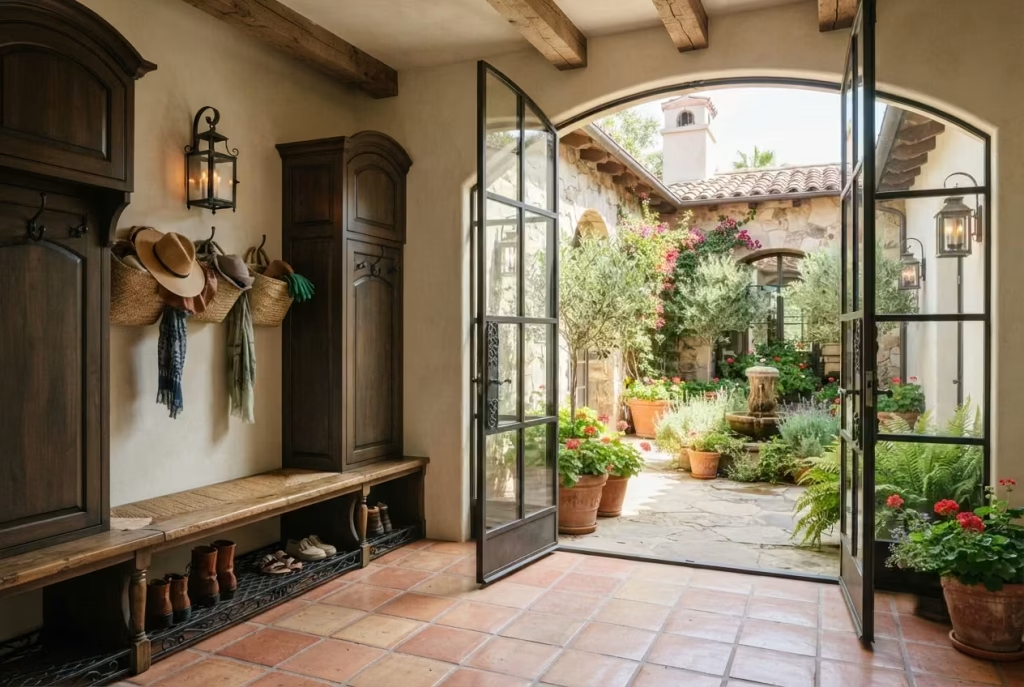
One of the most captivating qualities of Spanish Revival architecture is its ability to blur the boundary between indoors and outdoors. Unlike many modern homes that separate living spaces from the landscape, traditional Spanish-inspired homes often embrace courtyards, patios, and gardens as natural extensions of daily life. When a mudroom is designed around a courtyard connection, it becomes far more than a practical entry point. It evolves into a transitional space that bridges architecture, nature, and everyday living.
There is something undeniably appealing about stepping into a home through a sunlit courtyard, passing beneath climbing vines, textured plaster walls, and weathered terracotta surfaces before arriving in a thoughtfully designed mudroom. The experience feels layered and intentional, creating a sense of arrival that cannot be replicated by a standard side entrance.
In many ways, the courtyard acts as the home’s breathing space, while the mudroom serves as the gentle transition between outdoor activity and indoor comfort.
Why Courtyard Connections Are a Hallmark of Spanish Revival Design
Historically, courtyards were not merely decorative features. They served practical purposes ranging from cooling interiors to creating private outdoor gathering spaces. Today, they continue to offer many of the same benefits.
A courtyard-connected mudroom can:
- Create a stronger relationship between home and landscape
- Improve natural light throughout adjacent spaces
- Enhance everyday circulation patterns
- Encourage outdoor living
- Increase architectural character
- Provide a more memorable arrival experience
Unlike purely decorative design features, a courtyard connection contributes to both function and atmosphere.
Indoor-Outdoor Transitions That Feel Effortless
The most successful transitions rarely announce themselves. Instead, they unfold naturally, allowing one space to flow seamlessly into the next.
When designing a mudroom that opens onto a courtyard, material continuity becomes particularly important.
Repeating finishes across both areas helps strengthen the visual connection.
Consider extending:
| Interior Material | Exterior Companion |
| Saltillo tile flooring | Courtyard terracotta pavers |
| Lime plaster walls | Exterior stucco finishes |
| Reclaimed timber benches | Outdoor wood seating |
| Wrought iron hardware | Garden gates and lanterns |
| Talavera tile accents | Courtyard fountains or planters |
These subtle repetitions help create a unified design story rather than two disconnected environments.
Creating a Sense of Journey
One lesson I have learned through numerous residential projects is that people remember experiences more than individual design features. A courtyard connection naturally creates a sequence of moments:
- Approaching the courtyard.
- Moving through the landscape.
- Entering the mudroom.
- Transitioning into the main home.
Each step contributes to a richer sense of arrival. Rather than simply walking through a door, residents experience a gradual transition from the outside world into the comfort of home.
Designing Mudrooms That Open Directly to Patios
For many homeowners, patios serve as everyday entrances, particularly when outdoor entertaining, gardening, or family gatherings are part of daily life. Connecting a mudroom directly to a patio can significantly improve functionality.
Benefits include:
- Easier movement between indoor and outdoor spaces
- Better management of dirt and debris
- Convenient access for gardeners
- Improved traffic flow during gatherings
- Simplified pet access
This arrangement works especially well in climates where outdoor living remains an important part of the lifestyle for much of the year.
Features Worth Including
A patio-connected mudroom often benefits from:
- Durable flooring
- Built-in storage
- Outdoor equipment storage
- Seating for removing footwear
- Easy-clean wall finishes
- Weather-resistant entry doors
These practical additions help the room accommodate real life while maintaining its visual appeal.
Weather Considerations That Should Not Be Overlooked
Beautiful design always performs best when it responds thoughtfully to climate. The courtyard connection may look picturesque in photographs, but long-term success depends upon planning for weather conditions.
Key considerations include:
Rain Management
In regions with seasonal rainfall, thoughtful drainage becomes essential. Helpful strategies include:
- Sloped courtyard surfaces
- Channel drains near entrances
- Covered walkways
- Moisture-resistant flooring materials
Heat Control
In warmer climates, excessive solar exposure can make transitional spaces uncomfortable. Solutions may include:
- Pergolas
- Shade trees
- Deep roof overhangs
- Exterior shutters
- Climbing vines
Wind Protection
Open courtyards can sometimes funnel strong winds toward entrances. Design approaches that help include:
- Partial screening walls
- Strategic landscaping
- Sheltered entry alcoves
As the saying goes, an ounce of prevention is worth a pound of cure.
Recommended Materials for High-Performance Courtyard Mudrooms
| Area | Recommended Material |
| Flooring | Saltillo tile, terracotta, natural stone |
| Walls | Lime plaster, textured stucco |
| Entry doors | Solid wood or steel-framed glass |
| Hardware | Forged iron or oil-rubbed bronze |
| Outdoor paving | Clay pavers or natural stone |
These materials not only reinforce Spanish Revival character but also perform exceptionally well in transitional environments.
The Overlooked Benefit of Natural Ventilation
One of the most practical advantages of a courtyard-connected mudroom is improved airflow. Traditional Spanish architecture often relied on passive cooling long before mechanical air conditioning became common.
When thoughtfully designed, courtyards encourage natural air movement through adjacent rooms. Benefits can include:
- Fresher indoor air
- Reduced humidity buildup
- Faster drying of wet footwear
- Improved comfort during warmer months
- Less reliance on mechanical cooling
For mudrooms in particular, ventilation is often worth its weight in gold. After all, this is the space where damp coats, muddy shoes, sports equipment, and outdoor gear frequently gather.
Design Strategies for Better Airflow
Several architectural features can improve ventilation:
- Operable windows
- Dutch doors
- Transom openings
- Courtyard-facing glass doors
- Louvered cabinetry
These elements encourage air circulation while preserving privacy and security.
A Real-World Design Experience
I once worked on a Spanish Revival renovation where the homeowners had a beautiful courtyard but rarely used it. The outdoor space felt disconnected from the daily flow of the house, functioning more as scenery than as a living environment.
During the renovation, we repositioned the mudroom entrance so it opened directly onto the courtyard. We also extended the interior Saltillo flooring onto the adjacent patio and added a covered pergola linking the two areas. The impact was immediate.
The courtyard quickly became part of the family’s everyday routine. Children entered through the garden after playing outside. Guests naturally gravitated toward the patio during gatherings. The homeowners began enjoying morning coffee outdoors because access felt effortless.
Nothing about the courtyard itself had fundamentally changed. What changed was the relationship between spaces. That project reinforced a lesson I often share with clients: great design is not simply about adding features. It is about creating meaningful connections.
You May also Like: 25 Revitalizing Scandinavian Mudroom Ideas for a Cozy, Minimalist Entryway
Pros and Cons of a Courtyard-Connected Mudroom
| Pros | Cons |
| Stronger indoor-outdoor connection | Requires weather planning |
| Increased natural light | Higher exposure to dirt and debris |
| Better ventilation | Additional maintenance for exterior surfaces |
| Enhanced architectural character | Can increase construction complexity |
| Improved daily functionality | Requires thoughtful drainage solutions |
Why This Design Approach Feels So Timeless
Spanish Revival homes have endured for generations because they embrace a way of living that feels deeply human. They encourage interaction with natural light, fresh air, gardens, and outdoor spaces rather than separating people from them. A courtyard-connected mudroom embodies that philosophy beautifully.
It transforms an ordinary transition point into a meaningful experience. It supports practical routines, improves airflow, strengthens the home’s architectural identity, and encourages a closer relationship with the outdoors.
Most importantly, it reminds us that some of the most memorable spaces are not always the grandest rooms in the house. Sometimes they are the quiet passages that guide us from one part of life to another, thoughtfully designed and rich with purpose.
Layer Warm Earth-Tone Colours Inspired by the Mediterranean Landscape
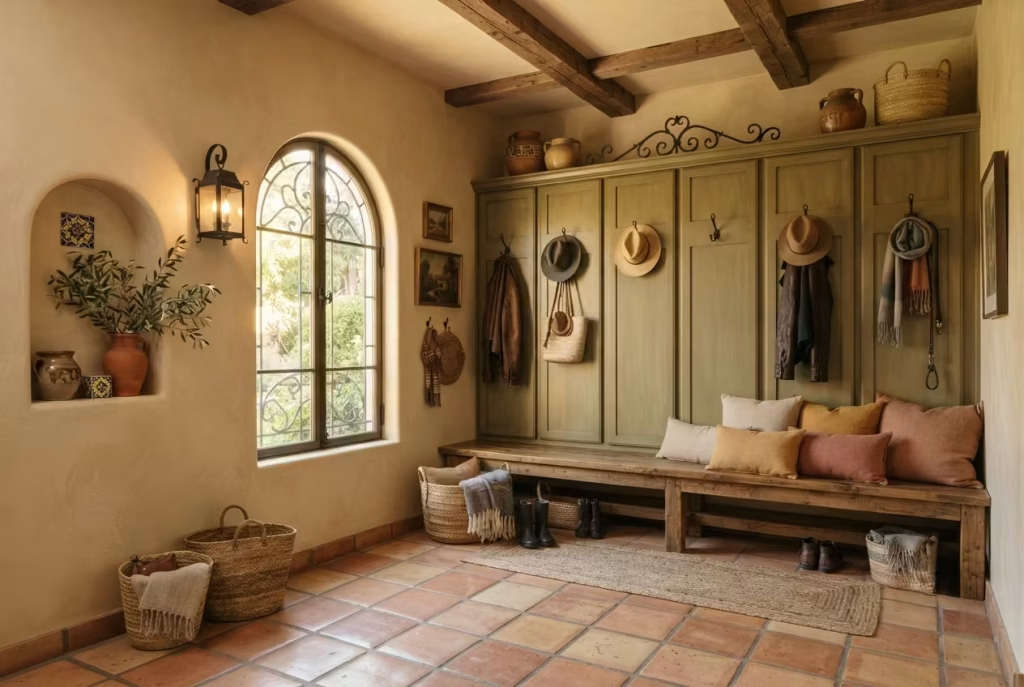
One of the reasons Spanish Revival mudrooms feel so inviting is their connection to nature. Rather than relying on bold, trend-driven palettes, they draw inspiration from the Mediterranean landscape itself. The colours of sunbaked earth, weathered stone, olive groves, and clay rooftops create a setting that feels timeless, comforting, and effortlessly elegant.
A thoughtfully layered colour palette can transform a hard-working mudroom from a purely functional space into one that feels welcoming from the moment you step inside.
Clay: The Foundation of Warmth
Clay tones introduce depth and authenticity while reflecting the handcrafted spirit of Spanish Revival design. Best uses include:
- Plaster walls
- Decorative pottery
- Accent textiles
- Built-in cabinetry
Clay shades work particularly well because they add warmth without overwhelming the room.
Sand: A Soft and Versatile Backdrop
Sand tones help balance stronger colours while making the space feel brighter and more open. Consider using sand-inspired hues on:
- Main wall surfaces
- Ceiling finishes
- Upholstered bench cushions
- Area rugs
This neutral foundation allows architectural details and decorative accents to stand out naturally.
Olive: Bringing Nature Indoors
Inspired by Mediterranean olive groves, this muted green introduces a subtle connection to the outdoors. Popular applications include:
- Cabinetry accents
- Decorative baskets
- Interior doors
- Patterned textiles
Olive pairs beautifully with terracotta, wood, and wrought iron finishes.
Ochre: Capturing the Glow of Sunligh
Ochre adds a cheerful warmth reminiscent of sunlit Spanish villas. Used carefully, it can:
- Brighten darker mudrooms
- Highlight architectural details
- Add visual interest to decorative tile
- Create a welcoming atmosphere
A little ochre often goes a long way.
Terracotta: The Signature Spanish Revival Colour
Few colours feel more authentic to Spanish Revival interiors than terracotta. It works beautifully in:
- Saltillo tile flooring
- Planters
- Accent walls
- Decorative accessories
Terracotta grounds the room and creates a sense of continuity with traditional Spanish architecture.
Earth-Tone Colour Pairing Guide
| Colour | Best Paired With |
| Clay | Sand, terracotta |
| Sand | Olive, ochre |
| Olive | Clay, wood tones |
| Ochre | Sand, terracotta |
| Terracotta | Olive, plaster whites |
Why Colour Matters in a Mudroom
Mudrooms are often associated with storage and practicality, but colour has the power to influence how the space feels every day. Warm earth tones can:
- Create a welcoming first impression
- Make the room feel more relaxing
- Enhance natural materials
- Reduce the starkness of highly functional spaces
- Strengthen the Spanish Revival aesthetic
As the saying goes, home is where the heart is. A carefully layered earth-tone palette helps create that feeling, turning a simple mudroom into a space that feels warm, grounded, and connected to the timeless beauty of the Mediterranean landscape.
Install Rustic Ceiling Beams to Reinforce Architectural Authenticity
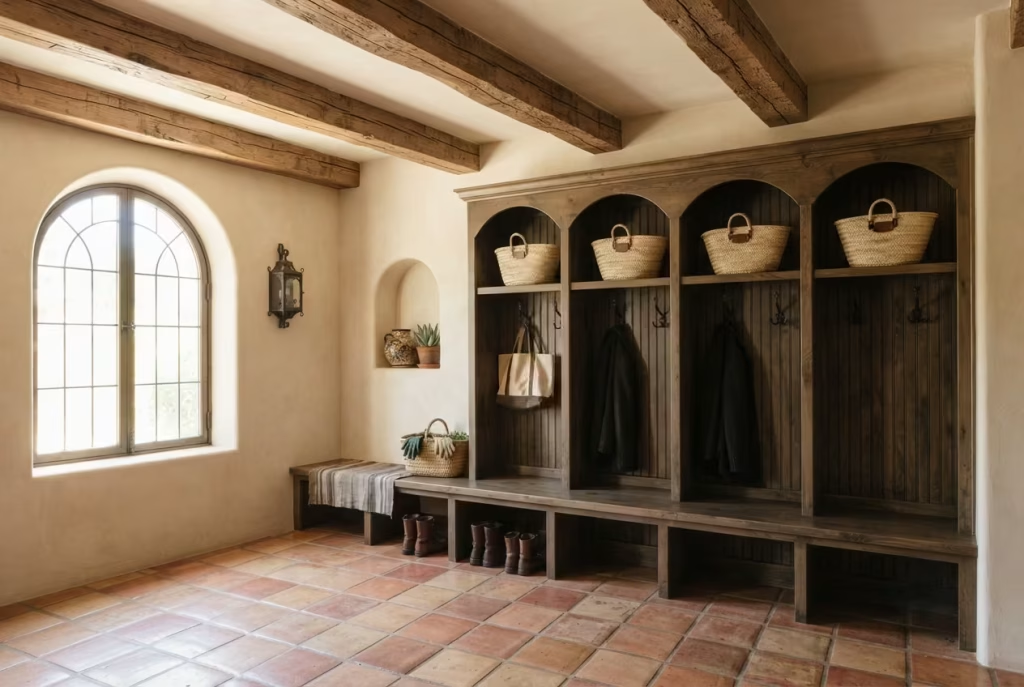
Few architectural details capture the spirit of Spanish Revival design as effectively as exposed ceiling beams. While flooring, plaster walls, and decorative tile often receive much of the attention, ceiling beams add a layer of character that helps a mudroom feel rooted in tradition rather than simply decorated in a Spanish style.
In many historic Spanish homes and haciendas, timber beams were a visible part of the structure. Today, whether structural or decorative, they continue to bring warmth, texture, and architectural depth to transitional spaces.
Get the Beam Proportions Right
The success of ceiling beams often comes down to scale. Oversized beams can make a mudroom feel heavy, while undersized ones may appear insignificant. A general guide is:
| Ceiling Height | Recommended Beam Size |
| 8 ft (2.4 m) | 4 x 6 in (10 x 15 cm) |
| 9 ft (2.7 m) | 4 x 8 in (10 x 20 cm) |
| 10 ft+ (3 m+) | 6 x 8 in (15 x 20 cm) or larger |
The goal is to create visual balance rather than dominate the room.
Faux vs Structural Beams
Both options can work beautifully in a Spanish Revival mudroom.
Faux Beams
Advantages:
- Easier to install
- More budget-friendly
- Lightweight construction
- Available in various finishes
Best suited for homes where the beams are primarily decorative.
Structural Beams
Advantages:
- Authentic architectural presence
- Greater long-term value
- Natural aging and character
- Strong connection to traditional construction
Often found in custom homes or major renovations.
Consider Ceiling Height Before Installation
Ceiling beams naturally draw attention upward, but they also visually lower a room. Before adding beams, consider the available ceiling height.
- Lower ceilings benefit from slimmer beam profiles.
- Taller ceilings can accommodate larger, more dramatic beams.
- Narrow mudrooms often look best with simple beam layouts.
- Larger spaces can support multiple beam runs.
Proper proportions ensure the room feels inviting rather than confined.
Choose Finishes That Feel Authentic
The finish of the wood can dramatically influence the overall atmosphere. Popular options include:
- Reclaimed oak for aged character
- Alder for traditional Spanish warmth
- Walnut-stained timber for a richer appearance
- Hand-scraped finishes for old-world texture
- Lightly distressed wood for a timeworn look
Avoid overly glossy finishes, which can feel out of place in a Spanish Revival setting.
Wood Finish Comparison
| Finish Style | Design Effect |
| Reclaimed wood | Historic and rustic |
| Medium walnut stain | Rich and sophisticated |
| Hand-scraped finish | Authentic and handcrafted |
| Natural oil finish | Warm and understated |
| High-gloss stain | Less traditional |
Why Ceiling Beams Matter
A mudroom often contains practical necessities such as storage, hooks, and durable flooring. Ceiling beams help balance those functional elements by introducing architectural character overhead.
They can:
- Add visual warmth
- Reinforce Spanish Revival authenticity
- Create a stronger connection to traditional craftsmanship
- Make a simple room feel more custom and intentional
- Complement natural materials like terracotta, plaster, and wrought iron
When thoughtfully proportioned and finished, rustic ceiling beams become more than a decorative feature. They help tell the architectural story of the home, transforming an everyday mudroom into a space that feels timeless, welcoming, and deeply connected to Spanish Revival heritage.
Combine Closed Storage with Open Display Niches
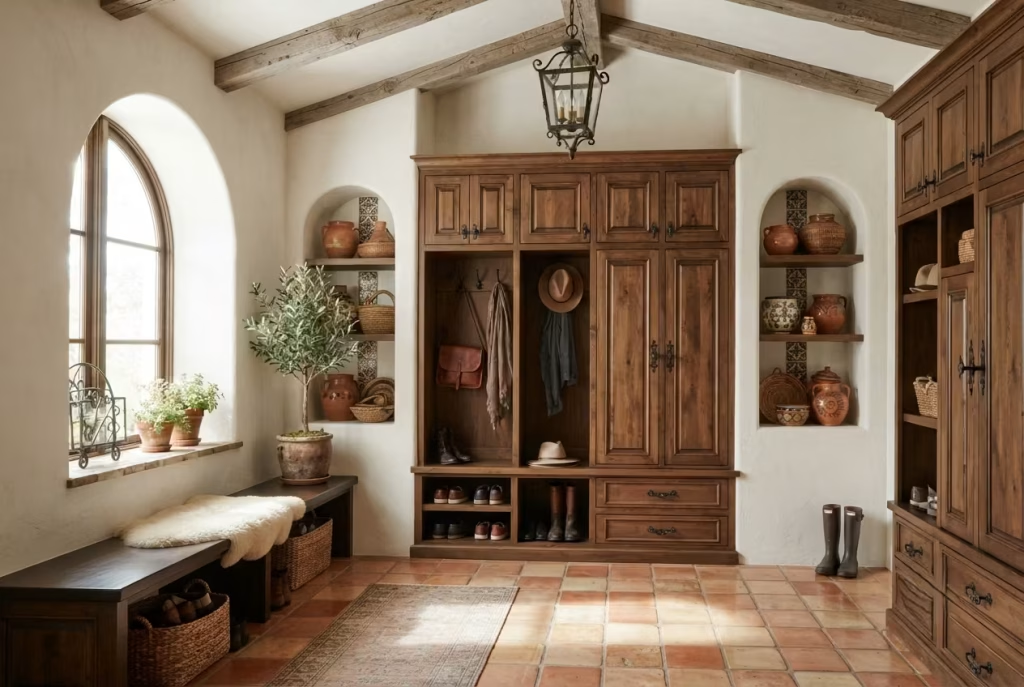
One of the biggest challenges in mudroom design is finding the balance between function and personality. Too much exposed storage can make the space feel chaotic, while walls of cabinetry can leave it feeling heavy and lifeless. The most successful Spanish Revival mudrooms sit comfortably between these two extremes, blending concealed storage with carefully designed display niches that add warmth, character, and architectural depth.
This approach allows a mudroom to handle the realities of everyday life while still feeling connected to the home’s overall design story. After all, a mudroom may be practical by nature, but that does not mean it should be devoid of beauty.
Why Closed Storage Remains Essential
Mudrooms are often magnets for clutter. Shoes multiply seemingly overnight, seasonal jackets appear and disappear with the weather, and bags tend to accumulate faster than expected. Closed storage provides a simple solution by keeping everyday disorder out of sight.
Benefits include:
- Creates a cleaner visual appearance
- Reduces feelings of clutter and stress
- Protects items from dust
- Makes small mudrooms feel more organised
- Supports easier daily routines
Ideal items for concealed storage include:
| Best Stored Behind Doors | Why |
| Seasonal coats | Reduces visual bulk |
| Sports equipment | Keeps the room tidy |
| Pet supplies | Improves organisation |
| Cleaning products | Creates a safer environment |
| Reusable shopping bags | Prevents overcrowding |
When everything has a designated place, daily life tends to run more smoothly.
The Beauty of Open Display Niches
While closed cabinetry provides order, open niches bring personality. Historically, Spanish homes often incorporated recessed wall niches for displaying handcrafted objects, religious pieces, pottery, or treasured possessions. Today, these architectural features continue to add visual interest while helping mudrooms feel less utilitarian.
A well-designed niche can:
- Break up large expanses of cabinetry
- Highlight beautiful materials
- Create focal points
- Add architectural authenticity
- Introduce warmth and individuality
The secret is to curate rather than overcrowd.
What to Display in a Spanish Revival Niche
Not every decorative object deserves shelf space. The most effective displays feel intentional rather than random. Consider incorporating:
- Handmade terracotta pottery
- Woven baskets
- Vintage Spanish ceramics
- Small olive trees
- Talavera tile accents
- Decorative lanterns
- Collected travel pieces
These items reinforce the Spanish Revival aesthetic while adding personal meaning to the space.
Creating Architectural Interest Through Contrast
Large storage walls can sometimes feel visually monotonous. Open niches help solve this problem by creating rhythm and variation. For example:
| Storage Element | Visual Effect |
| Full-height cabinetry | Structure and order |
| Open niche | Relief and openness |
| Closed drawers | Practical storage |
| Display shelf | Decorative opportunity |
| Bench alcove | Human scale and comfort |
This combination creates layers of interest that keep the eye moving throughout the room.
Styling Opportunities Without Creating Clutter
One of the biggest misconceptions about display niches is that they need to be filled completely. In reality, empty space is often just as important as the objects themselves. A simple styling formula works particularly well:
- One larger statement object
- One smaller supporting piece
- A touch of natural texture
- Plenty of breathing room
This prevents displays from feeling busy while allowing individual pieces to stand out. As the old saying goes, sometimes less is more.
Avoiding Visual Clutter
A mudroom already performs a demanding role within the home. Adding excessive decoration can quickly make the space feel overwhelming. To maintain balance:
- Limit decorative objects to a few meaningful pieces
- Use consistent colour palettes
- Avoid overcrowding shelves
- Incorporate natural materials
- Leave some niches intentionally sparse
The goal is to create moments of interest, not visual noise.
Recommended Niche Dimensions
| Niche Type | Suggested Size |
| Small decorative niche | 12 x 12 in (30 x 30 cm) |
| Pottery display niche | 18 x 18 in (46 x 46 cm) |
| Vertical accent niche | 12 x 36 in (30 x 91 cm) |
| Bench-side niche | 18 x 24 in (46 x 61 cm) |
Proper sizing helps displays feel intentional rather than awkwardly squeezed into the wall.
A Real-World Design Lesson
During one Spanish Revival renovation, a family requested maximum storage for their busy household. The initial plans included a continuous wall of cabinetry stretching nearly 14 ft (4.3 m) across the mudroom.
While functional, the design felt flat and overly institutional. Instead, we introduced three plaster-lined niches between cabinet sections. One displayed handmade pottery, another housed woven baskets, and the third featured a small lantern collection.
The storage capacity remained virtually unchanged, yet the atmosphere transformed completely. The room no longer felt like a utility zone. It felt connected to the character of the house. That project reinforced an important principle I often return to: practical spaces work best when they also feel personal.
Why This Combination Works So Well
Closed storage and open niches each solve different design challenges. One provides order, while the other introduces soul. Together they create a mudroom that feels:
- Organised but not sterile
- Functional but not purely utilitarian
- Beautiful without becoming impractical
- Rich in character while remaining easy to maintain
In Spanish Revival design, this balance is often the hallmark of success. The room serves everyday needs while still celebrating craftsmanship, architecture, and the small details that make a house feel like home.
Bring Natural Light into the Mudroom Through Steel-Framed Windows
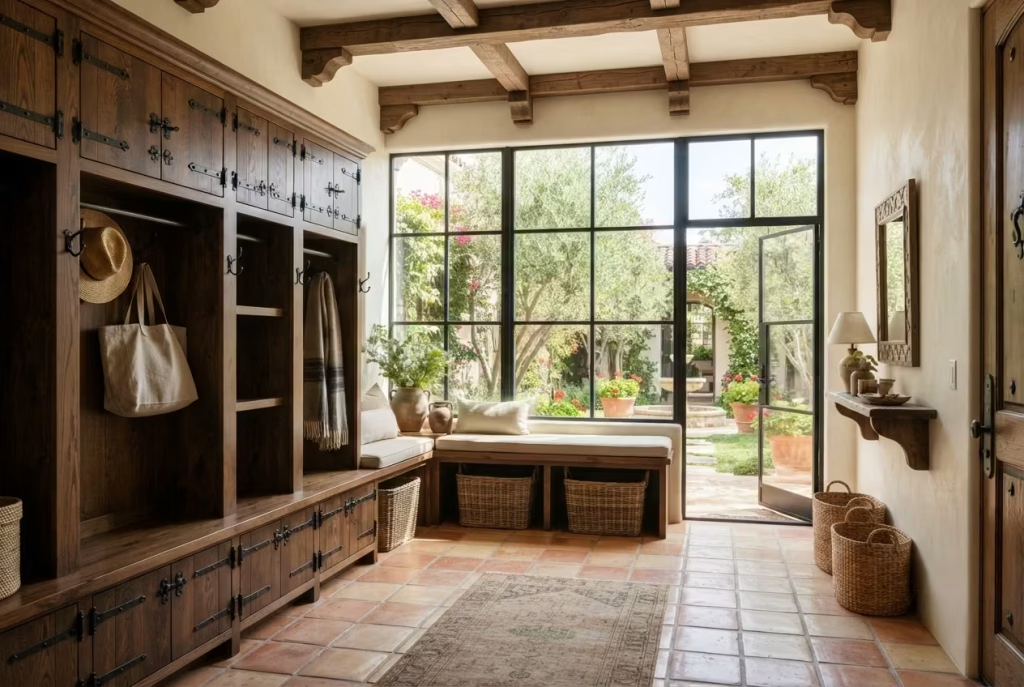
A mudroom may be one of the most practical spaces in a home, but that does not mean it should feel dark or forgotten. In fact, natural light can dramatically change how this hardworking room looks, feels, and functions. One of the most elegant ways to introduce daylight into a Spanish Revival mudroom is through steel-framed windows.
Combining slender profiles with timeless character, steel windows bring architectural authenticity while allowing sunlight to become part of the design itself. Even a relatively small window can make a mudroom feel larger, warmer, and more inviting throughout the day.
The Historic Connection Between Steel Windows and Spanish Revival Design
While thick plaster walls, terracotta roofs, and arched openings often define Spanish Revival architecture, steel-framed windows became an important feature in many high-end Spanish Revival homes built during the early twentieth century. Architects frequently used steel windows because they offered:
- Slim sightlines
- Greater glass area
- Excellent durability
- Elegant architectural detailing
- Strong indoor-outdoor connections
Unlike bulky modern frames, steel windows allow the focus to remain on the light and the view beyond. Their refined appearance complements the handcrafted materials commonly found throughout Spanish-inspired homes.
Why Natural Light Changes Everything
Natural light does far more than illuminate a room. It influences mood, enhances colours, highlights textures, and helps a space feel alive. In a mudroom filled with materials such as plaster, terracotta, timber, and wrought iron, daylight reveals details that artificial lighting often misses.
Benefits of increased daylight include:
- Makes the room feel larger
- Creates a more welcoming atmosphere
- Improves visibility during daily routines
- Highlights architectural features
- Reduces reliance on artificial lighting
As sunlight shifts throughout the day, the room gains a constantly changing sense of depth and character.
How Light Enhances Spanish Revival Materials
| Material | Effect of Natural Light |
| Saltillo tile | Enhances colour variation and texture |
| Lime plaster | Reveals subtle movement and depth |
| Reclaimed wood | Highlights grain and natural imperfections |
| Wrought iron | Creates beautiful shadow patterns |
| Talavera tile | Intensifies colour and craftsmanship |
This interaction between light and material is often what makes Spanish Revival interiors feel rich and layered rather than flat.
Creating the Right Mood
Mudrooms serve as transition spaces. They are where people enter after work, return from school, or prepare to leave for the day. A room filled with daylight naturally feels more uplifting and welcoming. Particularly during winter months or rainy seasons, natural light can:
- Improve the overall atmosphere
- Make morning routines feel easier
- Reduce feelings of confinement
- Create stronger visual connections to outdoor spaces
Even on overcast days, diffused daylight often feels softer and more pleasant than artificial illumination alone.
Privacy Considerations
While natural light is valuable, privacy should never be overlooked. Fortunately, several design solutions allow homeowners to enjoy daylight without sacrificing comfort. Popular approaches include:
- Higher window placement
- Frosted or textured glass
- Courtyard-facing windows
- Clerestory windows
- Landscaping for natural screening
The right solution depends on the location of the mudroom and the surrounding property.
Comparing Privacy Solutions
| Privacy Option | Light Level | Privacy Level |
| Clear glass | Excellent | Low |
| Frosted glass | Good | High |
| Reeded glass | Good | High |
| Clerestory windows | Excellent | Excellent |
| Courtyard-facing windows | Excellent | Excellent |
In many Spanish Revival homes, courtyard-facing windows provide the best balance between openness and privacy.
Strategic Placement Makes a Difference
Window placement is often more important than window size. A poorly positioned large window may provide less useful daylight than a thoughtfully placed smaller one. Effective locations include:
Above Built-In Storage
This allows daylight to enter without sacrificing valuable wall space.
Adjacent to Entry Doors
Creates a brighter arrival experience and improves visibility.
Facing a Courtyard
Provides attractive views while maintaining privacy.
Near Seating Areas
Makes benches and storage zones feel more inviting.
Placement Guide
| Location | Primary Benefit |
| Above lockers | Preserves storage capacity |
| Beside entry door | Brightens circulation areas |
| Courtyard-facing wall | Enhances views and privacy |
| Above bench seating | Creates a welcoming atmosphere |
| Clerestory position | Maximises daylight |
Thoughtful placement helps the room work harder without increasing its footprint.
Steel Frame Finishes That Complement Spanish Revival Interiors
Steel-framed windows work particularly well when paired with traditional Spanish Revival materials. Popular finishes include:
- Matte black
- Dark bronze
- Charcoal grey
- Weathered steel appearance
These darker finishes create contrast against lighter plaster walls while complementing wrought iron hardware and lighting fixtures.
Real-World Design Experience
During the renovation of a Spanish Revival-inspired family home, the mudroom originally relied almost entirely on artificial lighting. Despite quality finishes and generous storage, the space felt enclosed and somewhat disconnected from the rest of the house.
Rather than expanding the room, we introduced a series of steel-framed windows overlooking a small courtyard. The transformation was remarkable.
Natural light began moving across the Saltillo tile throughout the day, highlighting the texture of the plaster walls and bringing warmth to the timber cabinetry. The room instantly felt more spacious and welcoming, despite no increase in square footage.
The homeowners later shared that it became one of their favourite spaces in the home, largely because of the connection to daylight and the garden beyond.
Why Steel-Framed Windows Remain a Timeless Choice
Trends come and go, but natural light never falls out of favour. Steel-framed windows continue to appeal because they combine beauty, durability, and architectural authenticity in a way few design features can match.
They bring daylight deep into the room, celebrate the textures that define Spanish Revival interiors, and create a stronger connection between the home and its surroundings.
For a mudroom that feels both practical and uplifting, few additions offer such a lasting return. Sometimes the simplest luxury is not a decorative finish or expensive fixture. It is the gentle presence of natural light, filtering through a beautifully framed window and transforming an everyday space into something far more memorable.
Create a Pet-Friendly Spanish Revival Mudroom
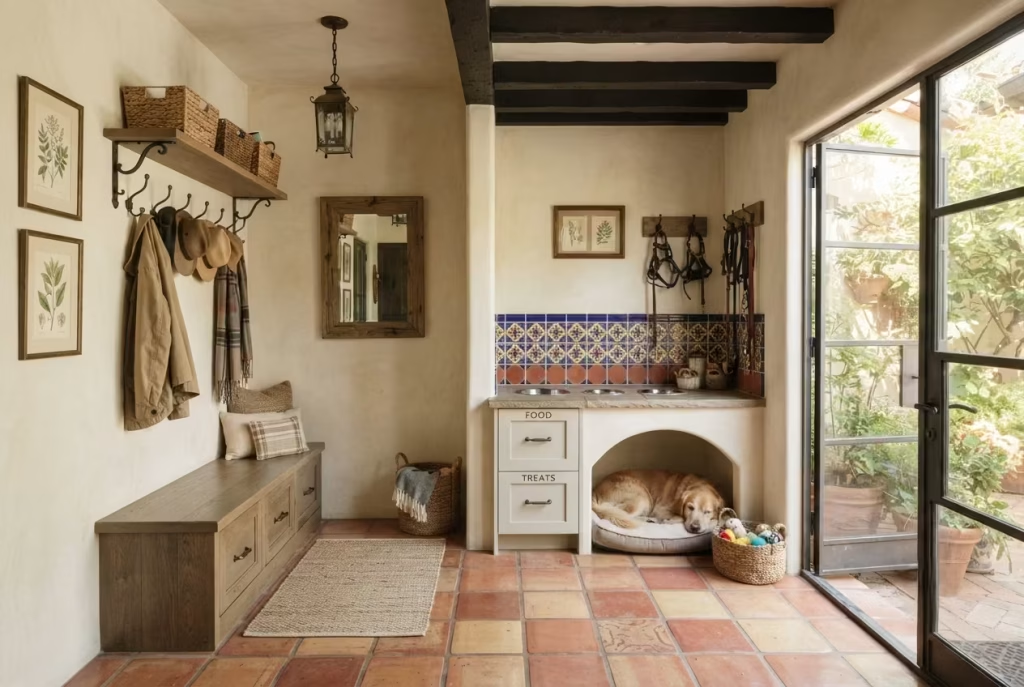
For many families, pets are not simply animals that live in the home. They are part of the household’s daily rhythm. Dogs race in from the garden with muddy paws, cats claim sunny corners as their own, and pet accessories seem to multiply overnight. This reality makes the mudroom one of the most important spaces to consider when designing a home that accommodates both people and animals.
A thoughtfully planned Spanish Revival mudroom can help manage the mess that comes with pet ownership while maintaining the warmth, craftsmanship, and architectural character that define the style. The secret lies in choosing materials and features that work hard behind the scenes while still feeling beautiful. After all, good design should adapt to real life, not the other way around.
Start with Flooring That Can Handle Daily Wear
Pet owners quickly learn that flooring takes the brunt of everyday activity. Wet paws, scratched claws, food spills, and the occasional accident all become part of life. This is why durability should be at the top of the priority list. Some flooring materials perform far better than others in a pet-friendly mudroom.
| Flooring Material | Durability | Pet Friendliness |
| Saltillo tile | Excellent | Excellent |
| Terracotta tile | Very good | Very good |
| Natural stone | Excellent | Excellent |
| Hardwood | Moderate | Moderate |
| Carpet | Poor | Low |
Saltillo and terracotta tiles remain particularly attractive because their natural texture helps disguise minor scratches and everyday dirt.
Flooring Features Worth Considering
Look for materials that offer:
- Slip resistance
- Easy cleaning
- Moisture resistance
- Long-term durability
- Compatibility with Spanish Revival interiors
A floor that can withstand years of use without losing its charm is often worth its weight in gold.
Choose Washable Surfaces Wherever Possible
Mudrooms are naturally exposed to more dirt and moisture than many other rooms in the home. Add pets into the equation and cleaning becomes even more important. Fortunately, Spanish Revival design already embraces materials that are practical and easy to maintain. Excellent wall and surface choices include:
- Lime plaster with protective sealers
- Textured stucco finishes
- Washable paint formulations
- Stone countertops
- Sealed wood cabinetry
These materials allow homeowners to clean surfaces quickly without compromising aesthetics.
Easy-Clean Features That Make Life Simpler
Consider incorporating:
- Rounded wall corners that collect less dirt
- Durable paint finishes
- Moisture-resistant trim details
- Washable bench cushions
- Sealed tile grout
Small decisions like these often save countless hours of maintenance over the years.
Incorporate a Built-In Pet Station
One of the most valuable additions to a pet-friendly mudroom is a dedicated pet station. Rather than storing supplies throughout the house, a designated area helps keep everything organised and easily accessible. A built-in pet station may include:
- Feeding area
- Water bowl zone
- Grooming supplies
- Leash storage
- Pet towel storage
- Sleeping nook
By giving pets their own dedicated space, the room functions more efficiently for everyone.
Popular Pet Station Features
| Feature | Benefit |
| Raised feeding drawer | Improves organisation |
| Built-in water station | Reduces spills |
| Pull-out storage bins | Hides supplies |
| Pet washing area | Simplifies clean-up |
| Sleeping alcove | Creates comfort |
These additions help transform the mudroom into a genuinely multi-functional space.
Create Smart Storage for Pet Essentials
One challenge many pet owners face is the sheer volume of accessories that accumulate over time. Items commonly requiring storage include:
- Leashes
- Harnesses
- Toys
- Food containers
- Waste bags
- Grooming tools
- Outdoor towels
- Travel carriers
Without proper organisation, these items can quickly create clutter.
Storage Solutions That Work Well
Consider:
- Dedicated pet lockers
- Lower cabinetry compartments
- Woven baskets
- Pull-out drawers
- Labeled storage bins
- Built-in cubbies
As the saying goes, a place for everything and everything in its place.
Designing for Active Households
Families with children and pets often place extraordinary demands on a mudroom. This is where thoughtful planning becomes especially important. A successful layout should allow:
- Easy movement through the room
- Quick access to storage
- Space for pets to enter comfortably
- Areas for drying wet paws
- Convenient access to outdoor spaces
The room should support activity without feeling crowded.
Recommended Space Planning Dimensions
| Element | Recommended Size |
| Pet feeding station width | 24 to 36 in (61 to 91 cm) |
| Bench seating depth | 16 to 20 in (40 to 50 cm) |
| Walkway clearance | Minimum 36 in (91 cm) |
| Pet washing station width | 30 to 36 in (76 to 91 cm) |
| Storage cabinet depth | 15 to 24 in (38 to 61 cm) |
These measurements help ensure the room remains comfortable for both pets and people.
Real-Life Application: Lessons from Active Family Homes
Over the years, I have designed mudrooms for families with everything from energetic Labradors to multiple rescue dogs and outdoor-loving children. One pattern appears again and again.
The homeowners who are happiest with their mudrooms are not necessarily those with the largest spaces. They are the ones who plan around their daily routines.
In one Spanish Revival renovation, the family had two large dogs that regularly tracked dirt through the house after playing outdoors. The existing mudroom lacked proper storage and offered no dedicated space for pet care.
We introduced:
- Saltillo flooring throughout
- A built-in feeding station
- Pull-out food storage drawers
- Dedicated leash hooks
- A bench with towel storage underneath
- Easy-clean plaster finishes
The result was transformative. Cleaning became easier, clutter was dramatically reduced, and the family finally had a practical place to manage pet-related tasks before entering the rest of the house.
The dogs benefited too. They quickly adopted the feeding station and resting area as part of their daily routine.
Pros and Cons of a Pet-Friendly Mudroom
| Pros | Cons |
| Easier household organisation | Requires additional planning |
| Cleaner interior spaces | Custom features may increase costs |
| Improved storage efficiency | More storage needed long term |
| Better support for daily routines | Some materials require sealing |
| Enhanced comfort for pets | Larger households need additional space |
Why Pet-Friendly Design Adds Long-Term Value
A pet-friendly mudroom is not about creating a room exclusively for animals. It is about designing a space that supports the realities of everyday living. By combining durable materials, practical storage, washable finishes, and dedicated pet zones, homeowners can create a mudroom that feels both functional and welcoming.
In Spanish Revival homes, this approach works particularly well because the style naturally celebrates materials that improve with age and embrace the imperfections of real life. Muddy paws, outdoor adventures, and busy family routines become part of the story rather than problems to hide.
When thoughtfully designed, a pet-friendly mudroom helps the entire household run more smoothly, proving that practicality and beauty can happily share the same roof.
You May also Like: 25 Moody Dark Green Mudroom Ideas for a Stylish, Cozy Entryway
Use Antique-Inspired Lighting to Add Atmosphere
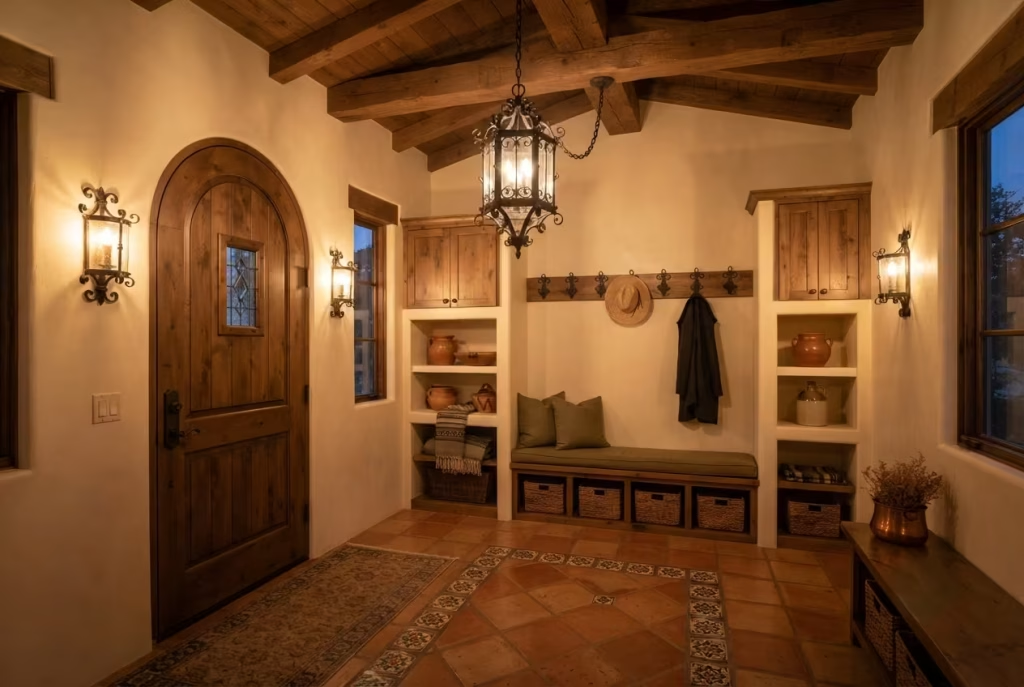
Lighting is often the final layer added to a mudroom, yet it can have one of the greatest impacts on how the space feels. A beautifully designed Spanish Revival mudroom may feature handcrafted tile, rich wood tones, and carefully detailed millwork, but without thoughtful lighting, many of those details can fade into the background.
Antique-inspired lighting helps bring the room to life. It introduces character after sunset, highlights architectural features, and creates a welcoming atmosphere that turns a practical space into one that feels genuinely inviting. In many ways, lighting is the finishing touch that ties everything together.
As any experienced designer will tell you, good lighting is not just about seeing clearly. It is about creating a mood.
Why Antique-Inspired Fixtures Feel Right at Home
Spanish Revival architecture celebrates craftsmanship and history. Antique-inspired lighting complements that heritage beautifully because it feels collected rather than manufactured.
Unlike ultra-modern fixtures that can sometimes feel disconnected from traditional architecture, lanterns and wrought iron lighting often appear as though they have belonged to the home for generations.
Characteristics that work particularly well include:
- Hand-forged metal finishes
- Seeded or textured glass
- Aged bronze detailing
- Traditional lantern forms
- Warm, inviting light output
These elements reinforce the timeless quality that makes Spanish Revival interiors so enduring.
Lantern Pendants Create an Elegant Focal Point
Few fixtures embody Spanish Revival charm as effectively as a lantern pendant. Suspended above a central walkway or seating area, a lantern naturally draws the eye upward while introducing architectural presence.
Popular lantern styles include:
- Classic Spanish lanterns
- Rectangular iron lanterns
- Hexagonal hanging fixtures
- Glass-enclosed candle-style pendants
- Rustic bronze lanterns
The best designs feel substantial without overwhelming the room.
Recommended Lantern Sizes
| Mudroom Size | Suggested Lantern Width |
| Small mudroom | 12 to 16 in (30 to 40 cm) |
| Medium mudroom | 16 to 20 in (40 to 50 cm) |
| Large mudroom | 20 to 30 in (50 to 76 cm) |
A fixture that is too small can disappear visually, while an oversized one may dominate the room.
Wrought Iron Sconces Add Warmth and Depth
Wall sconces are often overlooked in mudroom design, yet they can dramatically improve both functionality and atmosphere. Placed beside cabinetry, seating, or entry doors, they create soft pools of light that make the room feel more layered and welcoming.
Benefits of wrought iron sconces include:
- Reinforce Spanish Revival character
- Highlight architectural details
- Provide softer evening illumination
- Reduce harsh shadows
- Complement other iron accents throughout the room
Particularly in mudrooms with plaster walls, sconces can create beautiful light patterns that add depth and texture.
Ideal Sconce Placement
| Location | Recommended Height |
| Beside entry door | 60 to 66 in (152 to 168 cm) |
| Above bench seating | 60 to 72 in (152 to 183 cm) |
| Flanking cabinetry | 60 to 72 in (152 to 183 cm) |
| Adjacent to mirrors | 64 to 70 in (163 to 178 cm) |
Proper placement ensures the lighting feels intentional rather than merely decorative.
Layered Lighting Creates a More Comfortable Space
One common mistake in mudroom design is relying on a single ceiling fixture. While one light may provide adequate illumination, it rarely creates an inviting atmosphere. The most successful mudrooms use a layered lighting approach. A balanced lighting plan typically includes:
Ambient Lighting
Provides overall illumination.
Examples:
- Lantern pendants
- Ceiling-mounted fixtures
- Flush-mount lights
Task Lighting
Supports specific activities.
Examples:
- Cabinet lighting
- Bench-area lighting
- Storage zone illumination
Accent Lighting
Highlights architectural features and decorative elements.
Examples:
- Wall sconces
- Niche lighting
- Display shelf lighting
Together, these layers create a room that feels both functional and visually engaging.
Example Lighting Plan
| Lighting Layer | Purpose |
| Lantern pendant | General illumination |
| Wall sconces | Atmosphere and depth |
| Cabinet lighting | Storage visibility |
| Niche lighting | Decorative emphasis |
| Entry lighting | Improved functionality |
This approach allows the room to adapt throughout the day and evening.
Balancing Ambiance with Practicality
Mudrooms must support everyday tasks. Shoes need to be tied, bags located, and coats retrieved quickly, especially during busy mornings. However, bright lighting alone can make a room feel cold and clinical. The goal is to strike a balance between usability and comfort.
Helpful strategies include:
- Choose warm white bulbs between 2700K and 3000K
- Install dimmers where possible
- Combine direct and indirect light sources
- Avoid overly bright blue-toned lighting
- Use multiple fixtures rather than one high-output fixture
A room that functions well should also feel pleasant to spend time in.
Selecting the Right Bulb Temperature
| Colour Temperature | Effect |
| 2700K | Warm and inviting |
| 3000K | Balanced warmth |
| 4000K | Neutral appearance |
| 5000K+ | Cooler, commercial feel |
For Spanish Revival interiors, warmer temperatures typically complement the natural materials far better.
Real-World Design Experience
I once worked on a Spanish Revival home where the mudroom featured beautiful Saltillo tile flooring, custom alder cabinetry, and handcrafted iron hardware. Despite these impressive elements, the room felt surprisingly flat.
The reason became obvious almost immediately. A single recessed ceiling light was doing all the work. We replaced it with a forged iron lantern pendant, added two wrought iron sconces beside the entry door, and introduced discreet cabinet lighting beneath an open shelf.
The difference was remarkable. The plaster walls gained texture. The terracotta flooring appeared richer. The cabinetry felt more substantial. Most importantly, the room became noticeably more welcoming during the evening hours.
The project served as another reminder that lighting is often the unsung hero of great interior design.
Pros and Cons of Antique-Inspired Lighting
| Pros | Cons |
| Reinforces Spanish Revival character | Quality fixtures can be expensive |
| Adds warmth and atmosphere | Requires careful sizing |
| Highlights architectural details | Multiple fixtures may increase installation costs |
| Complements traditional materials | Some designs require regular cleaning |
| Improves evening ambiance | Poor placement can create shadows |
Why Lighting Deserves More Attention
A mudroom may be designed for practicality, but atmosphere matters just as much. The first room encountered after returning home should feel welcoming, not merely functional.
Antique-inspired lighting achieves this by combining craftsmanship, warmth, and visual depth. Lantern pendants provide presence overhead, wrought iron sconces introduce intimacy, and layered lighting ensures the space remains comfortable throughout the day.
When thoughtfully planned, lighting becomes far more than a necessity. It becomes part of the experience of coming home, quietly transforming an everyday mudroom into a space rich with character and unmistakable Spanish Revival charm.
Incorporate Custom Cabinetry with Historic Detailing
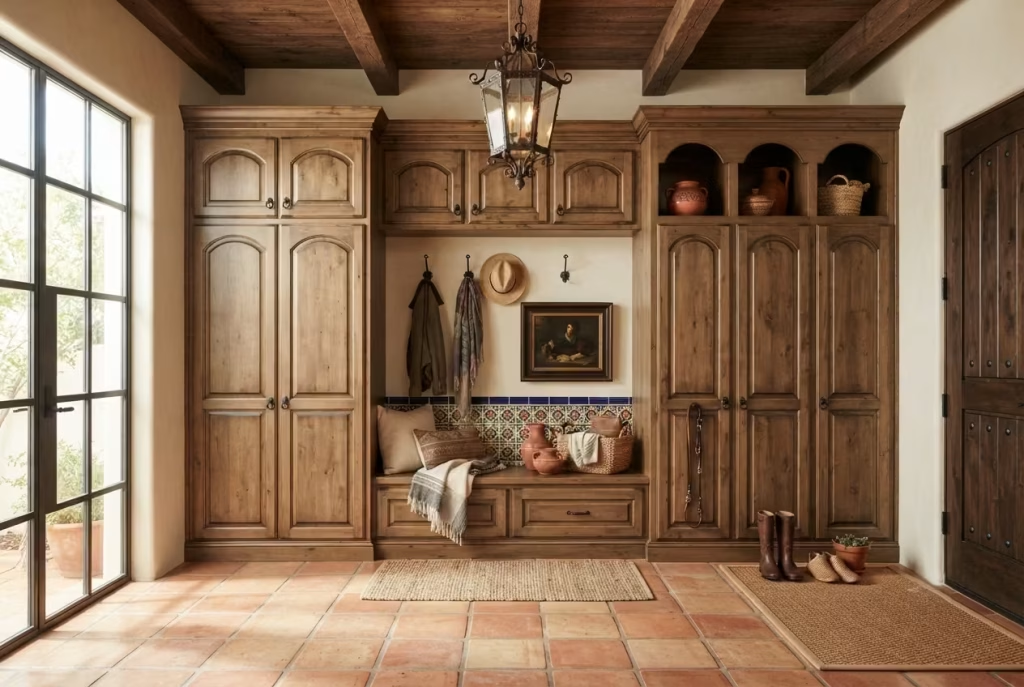
When people think about luxury interiors, they often imagine larger rooms, soaring ceilings, or expensive materials. Yet in my experience, true luxury is rarely measured in square footage. More often, it is revealed through craftsmanship, thoughtful detailing, and solutions tailored to the way a home is actually lived in. Nowhere is this more apparent than in a Spanish Revival mudroom.
Custom cabinetry with historic detailing can transform an ordinary storage wall into an architectural feature that feels deeply connected to the home’s heritage. Instead of looking like something ordered from a catalogue, it feels intentional, permanent, and uniquely suited to its surroundings.
The difference is often subtle at first glance, but as the saying goes, the devil is in the details.
Why Custom Cabinetry Works So Well in Spanish Revival Homes
Spanish Revival architecture celebrates handcrafted elements. Thick plaster walls, arched openings, decorative ironwork, and natural materials all contribute to a sense of authenticity. Custom cabinetry extends that architectural language into the mudroom.
Benefits include:
- Maximises available space
- Creates a seamless built-in appearance
- Supports better organisation
- Enhances architectural character
- Increases long-term functionality
Rather than appearing as furniture placed against a wall, custom cabinetry becomes part of the room itself.
Raised Panel Doors Add Depth and Character
One of the most recognisable features of traditional Spanish-inspired millwork is the raised panel door. Unlike flat slab fronts, raised panels introduce shadow lines, texture, and visual depth that feel appropriate within historic-inspired interiors.
Popular raised panel styles include:
- Traditional square panel designs
- Arched panel profiles
- Beaded panel detailing
- Recessed and raised combinations
Each creates a different level of formality while maintaining architectural authenticity.
Comparing Cabinet Door Styles
| Door Style | Visual Effect | Spanish Revival Suitability |
| Raised panel | Traditional and detailed | Excellent |
| Arched panel | Historic and elegant | Excellent |
| Recessed panel | Understated character | Very good |
| Shaker style | Simple and versatile | Moderate |
| Flat slab | Contemporary appearance | Limited |
For homeowners seeking a genuinely Spanish Revival aesthetic, raised and arched panels often provide the strongest connection to the style.
Hand-Forged Hardware Completes the Story
Even the finest cabinetry can feel unfinished if the hardware lacks character. Hand-forged hardware introduces texture and craftsmanship while reinforcing the old-world spirit that defines Spanish Revival design.
Popular options include:
- Iron cabinet pulls
- Forged ring pulls
- Decorative latches
- Hammered knobs
- Oil-rubbed bronze handles
These details may seem small, but they often have an outsized impact on the final result.
Hardware Selection Guide
| Hardware Type | Best Use |
| Ring pulls | Traditional cabinetry |
| Hammered knobs | Smaller cabinet doors |
| Iron pulls | Tall storage units |
| Decorative latches | Accent cabinetry |
| Bronze handles | Transitional Spanish interiors |
Consistency across hardware helps create a cohesive appearance throughout the mudroom.
Authentic Finishes That Improve with Age
One reason historic Spanish interiors remain appealing for generations is their use of materials and finishes that develop character over time. Cabinetry should feel similar.
Rather than chasing perfection, many Spanish Revival homes embrace finishes that reveal depth and subtle variation.
Consider:
- Hand-rubbed stains
- Light distressing
- Matte protective coatings
- Natural oil finishes
- Waxed timber surfaces
These finishes allow the grain and texture of the wood to remain visible.
Popular Cabinet Finish Options
| Finish Type | Appearance |
| Natural oil | Warm and organic |
| Matte stain | Timeless and understated |
| Distressed finish | Aged character |
| Limewashed wood | Soft Mediterranean feel |
| High-gloss lacquer | Less authentic |
The goal is to create cabinetry that feels lived-in rather than overly polished.
Storage Optimisation Makes Daily Life Easier
Beautiful cabinetry should work as hard as it looks. One of the greatest advantages of custom millwork is the ability to tailor storage to specific household needs. A well-planned mudroom can accommodate:
- Seasonal outerwear
- Shoes and boots
- Sports equipment
- Pet supplies
- School bags
- Cleaning essentials
- Outdoor accessories
Thoughtful storage planning often prevents clutter before it begins.
Features Worth Including
- Pull-out shoe drawers
- Adjustable shelving
- Hidden charging stations
- Deep storage cabinets
- Integrated bench seating
- Upper seasonal storage compartments
- Dedicated pet storage zones
These practical additions help the room function smoothly day after day.
Recommended Cabinet Dimensions
| Component | Recommended Size |
| Locker width | 18 to 24 in (46 to 61 cm) |
| Bench height | 18 in (46 cm) |
| Cabinet depth | 15 to 24 in (38 to 61 cm) |
| Upper cabinet depth | 12 to 15 in (30 to 38 cm) |
| Full-height storage | 84 to 96 in (213 to 244 cm) |
Proper proportions help maximise storage without overwhelming the room.
Creating a Balance Between Beauty and Function
One common mistake is prioritising appearance while neglecting usability. Another is focusing entirely on storage and forgetting about aesthetics. The strongest mudrooms strike a balance between both. Successful cabinetry often includes:
| Functional Feature | Decorative Feature |
| Shoe drawers | Raised panel doors |
| Coat storage | Arched detailing |
| Hidden compartments | Hand-forged hardware |
| Adjustable shelving | Custom mouldings |
| Bench storage | Decorative wood grain |
This combination ensures the room remains practical while retaining its visual appeal.
Design Insight: Why Custom Details Often Define Luxury More Than Size
Throughout my career, some of the most memorable homes I have worked on were not necessarily the largest. What set them apart was the attention paid to detail.
A perfectly proportioned cabinet door. A hand-forged pull shaped by an artisan. A storage solution designed specifically around a family’s routines. These are the elements people interact with every single day.
I once worked on a relatively compact Spanish Revival home where the mudroom measured less than 80 sq ft (7.4 sq m). Despite its modest size, visitors consistently commented on the space.
The reason was not square footage. It was craftsmanship. Custom alder cabinetry featured arched raised panels, forged iron hardware, integrated seating, and hidden storage designed around the family’s lifestyle. Every detail felt considered.
The room proved something I often tell clients: luxury is rarely about having more. It is about having something designed exceptionally well.
Pros and Cons of Custom Cabinetry
| Pros | Cons |
| Tailored to the space | Higher initial investment |
| Strong architectural character | Longer lead times |
| Maximises storage efficiency | Requires skilled craftsmanship |
| Enhances property value | Less flexible after installation |
| Creates a bespoke appearance | Higher design involvement |
Why Historic Detailing Never Goes Out of Style
Trends come and go, but craftsmanship has a remarkable ability to endure. Raised panel doors, forged hardware, and authentic finishes continue to resonate because they connect a home to a deeper architectural tradition.
In a Spanish Revival mudroom, custom cabinetry does far more than store belongings. It introduces texture, history, and personality while supporting the practical needs of everyday life. When executed thoughtfully, it becomes one of those features that quietly elevates the entire home, proving that true luxury often lives in the details people touch and use every day.
Blend Indoor Comfort with Outdoor Durability
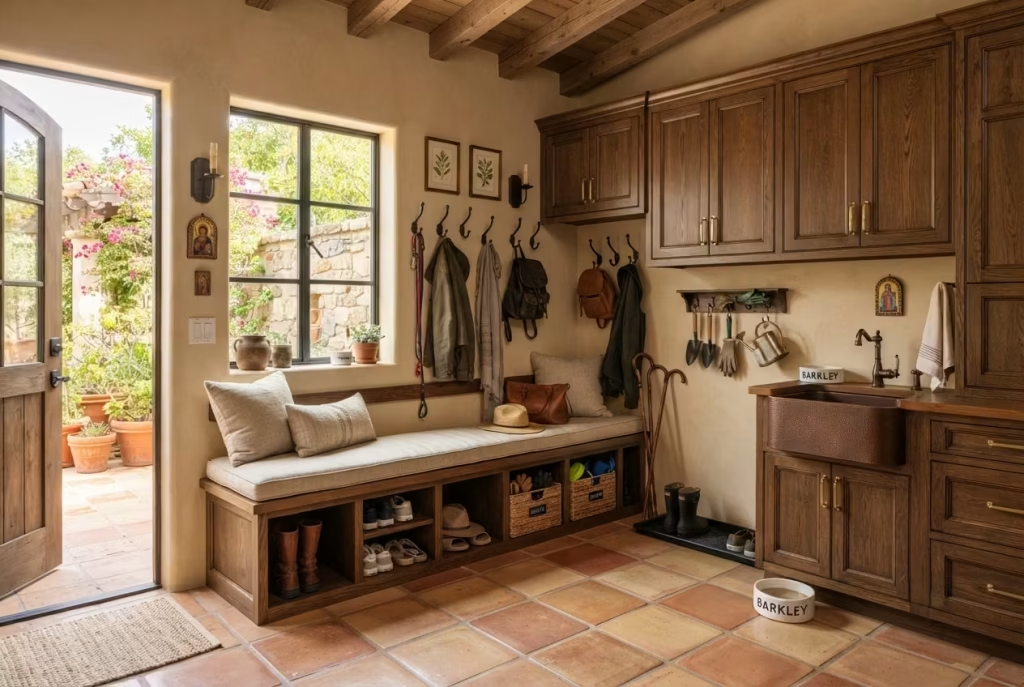
A Spanish Revival mudroom works best when it feels as refined as the rest of the house while still being tough enough to handle the daily grind. That balance is where the real magic happens. This is not a room that should behave like a showroom, nor should it feel like a stripped-back utility cupboard. It needs to carry the comfort of an interior space and the resilience of an exterior one, all at once, without dropping the ball.
That balance is easier to achieve than many homeowners think, provided the materials are chosen with care and the room is planned with real life in mind. Mud, moisture, pets, wet coats, sandy shoes, sports gear, and heavy foot traffic all make their regular appearance here. If the finishes are too delicate, the room quickly starts to show its age in the wrong way. If they are too hard or clinical, the space loses the warmth that makes Spanish Revival interiors so compelling.
The sweet spot lies in durable materials with a soft, tactile presence. Think of it as having your cake and eating it too. The room feels inviting, but it does not wilt under pressure.
Why This Balance Matters So Much
Mudrooms are transition spaces, but they often take on more than one role at a time. They may function as a family entrance, a pet station, a storage hub, and a landing zone for everything that comes in from the garden or garage. That means every surface needs to pull its weight.
The most successful Spanish Revival mudrooms tend to share a few qualities:
- They feel comfortable enough for everyday family use.
- They can handle wet, dirty, or high-impact conditions.
- They age gracefully rather than looking tired after a few seasons.
- They connect visually to the rest of the home.
- They reduce maintenance headaches over time.
When these needs are addressed properly, the room becomes one of the hardest-working spaces in the house while still looking polished.
Performance Materials That Hold Their Own
The phrase performance material might sound technical, but in practice it simply means a surface that can take a beating without falling apart at the seams. In a mudroom, that is worth its weight in gold.
Some of the most effective choices include:
| Material | Why It Works | Best Use |
| Saltillo tile | Durable, warm, and character-rich | Flooring |
| Terracotta tile | Strong, earthy, and timeless | Flooring or accents |
| Natural stone | Exceptionally hardwearing | Flooring or thresholds |
| Sealed oak | Stable with natural beauty | Cabinetry and benches |
| Quartz or stone composite | Easy to clean and moisture-resistant | Counters and utility surfaces |
| Lime plaster with sealer | Breathable and softly textured | Walls |
These materials do not just look appropriate. They perform day after day without demanding constant attention.
Moisture-Resistant Finishes That Keep Their Cool
Moisture is one of the biggest enemies of an entry space. It creeps in quietly from wet shoes, dripping umbrellas, damp coats, and muddy paws, then lingers if the room is not designed properly.
That is why finishes matter just as much as the base materials.
Helpful moisture-resistant choices include:
- Matte sealers for tile and stone
- Water-resistant cabinet coatings
- Washable plaster finishes
- Powder-coated or iron hardware
- Upholstery made from removable or wipeable fabrics
A finish should never feel fragile in a mudroom. It ought to behave like a seasoned professional, not a diva.
Family-Friendly Planning Makes All the Difference
A beautiful mudroom that does not work for the household will not stay beautiful for long. Families need spaces that are intuitive, forgiving, and easy to maintain when everyone is rushing in and out.
Good family-friendly planning often includes:
- A bench that allows shoes to be removed without awkward balancing
- Hooks positioned at different heights for adults and children
- Dedicated storage for school bags, sports gear, and outerwear
- A landing spot for keys, phones, and loose items
- A pet-friendly zone if animals are part of the household
When the layout is sensible, the room starts to reduce stress instead of adding to it.
Design Features That Support Daily Life
The most useful mudrooms usually share a similar logic: everything has a place, and that place is easy to reach.
Practical features may include:
- Built-in cubbies for every family member
- Lower drawers for shoes or outdoor gear
- Hidden storage for cleaning supplies
- Pull-out trays for wet items
- Easy-wipe bench cushions
- Open shelving for fast-access essentials
That kind of planning can turn a chaotic morning into a far smoother one. A little forethought goes a long way.
Recommended Measurements for a Comfortable Mudroom
| Feature | Suggested Size |
| Bench height | 18 in (46 cm) |
| Bench depth | 16 to 20 in (40 to 50 cm) |
| Locker width | 18 to 24 in (46 to 61 cm) |
| Circulation space in front of storage | 36 in minimum (91 cm) |
| Upper shelf depth | 10 to 12 in (25 to 30 cm) |
| Cabinet depth | 15 to 24 in (38 to 61 cm) |
These dimensions help create a room that feels generous without wasting space.
The Long-Term Maintenance Advantage
A mudroom is only as good as its ability to remain useful over time. That is where durable finishes and smart planning really earn their keep. A room that is easy to clean will almost always stay more attractive than one that requires constant babying.
Long-term maintenance benefits often include:
- Less visible wear on floors and walls
- Fewer repairs to storage surfaces
- Easier clean-up after wet weather
- Better resistance to stains and scratches
- A more consistent appearance year after year
This is especially valuable in family homes, where the room may see heavy traffic from dawn to dusk.
A Real-World Design Perspective
I once worked on a Spanish Revival renovation for a busy family with young children, a dog, and a garden they used year-round. Their mudroom looked lovely on paper, but in practice it was constantly being knocked about by wet shoes, school bags, and outdoor mess.
We redesigned the space using Saltillo tile with a strong sealer, a plaster finish that could be wiped down, sealed oak cabinetry, and removable bench cushions in a durable linen blend. We also added a shallow utility sink and a dedicated storage zone for outdoor accessories.
The effect was immediate. The room felt warmer and more polished, but it also became much easier to live with. Instead of fighting the family’s routines, the design supported them. That is the kind of quiet success that tends to make a home feel truly settled.
Why This Approach Works So Well in Spanish Revival Homes
Spanish Revival design has always been rooted in real materials, real craftsmanship, and real life. It does not rely on fragile beauty. It embraces surfaces that can age, soften, and gather a little character along the way.
That is why blending indoor comfort with outdoor durability feels so natural in this style. The room remains welcoming underfoot and in the eye, but it also stands its ground when life gets messy.
Pros and Cons of This Design Approach
| Pros | Cons |
| Highly practical for busy households | May require higher-quality materials upfront |
| Supports long-term durability | Needs thoughtful planning from the start |
| Feels warm rather than utilitarian | Some finishes need sealing or upkeep |
| Works beautifully with Spanish Revival style | Custom solutions can increase cost |
| Reduces maintenance stress | Poor material choices can age quickly |
The Bigger Payoff
When a mudroom combines indoor comfort with outdoor durability, it stops feeling like a passing zone and starts feeling like a dependable part of the home. It welcomes people in, absorbs the mess, and keeps everything running more smoothly behind the scenes.
That is the real beauty of this approach. It is not loud or showy, but it has staying power. And in a Spanish Revival home, where warmth, craftsmanship, and longevity matter so deeply, that kind of quiet confidence is exactly what the space needs.
What Defines a Spanish Revival Mudroom?
A Spanish Revival mudroom is more than a transitional space with a hint of old-world charm. It is a room that feels rooted in architecture, not simply decorated with a theme in mind. The difference is subtle at first glance, but once you walk through it, the atmosphere speaks for itself. There is warmth in the walls, texture underfoot, and a sense of permanence that makes the space feel as though it has been part of the home for generations.
At its best, this style brings together craftsmanship, durability, and everyday usefulness without losing its sense of soul. That is exactly why it suits a mudroom so well. This is a space that must handle muddy boots, damp coats, pet paws, and the odd burst of household chaos, yet it still needs to feel calm and inviting. Spanish Revival design manages that balancing act with remarkable ease.
Architectural Characteristics Worth Preserving
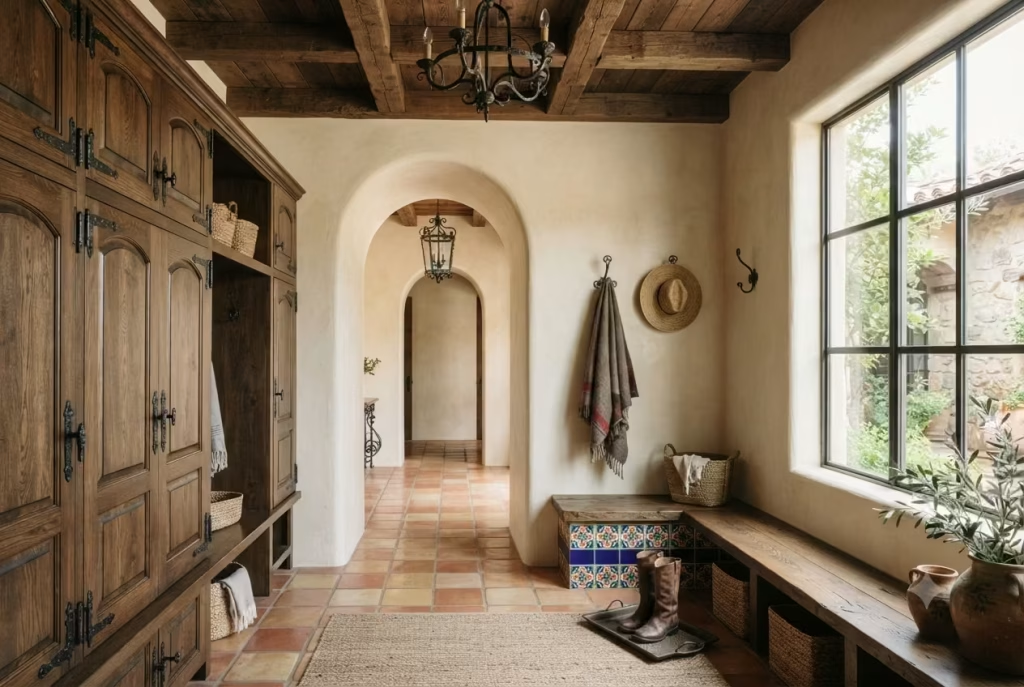
Spanish Revival interiors are often defined by their architectural bones. In a mudroom, those details are what give the space its sense of authenticity. Without them, the room can start to look like a simple storage area with a rustic finish. With them, it feels intentional, layered, and quietly luxurious.
The most recognisable features include:
- Arched openings, which soften the transition between rooms and immediately signal Spanish character
- Thick plaster walls, which add texture, depth, and a handmade quality that flat paint can never quite match
- Exposed wood beams, which bring warmth overhead and help anchor the room visually
- Handcrafted detailing, such as custom millwork, wrought iron hardware, or decorative tile, which adds the finishing touch
These elements work together like a well-rehearsed ensemble. None of them needs to shout. Instead, they support one another, creating a room that feels calm but never dull.
Materials That Shape the Style
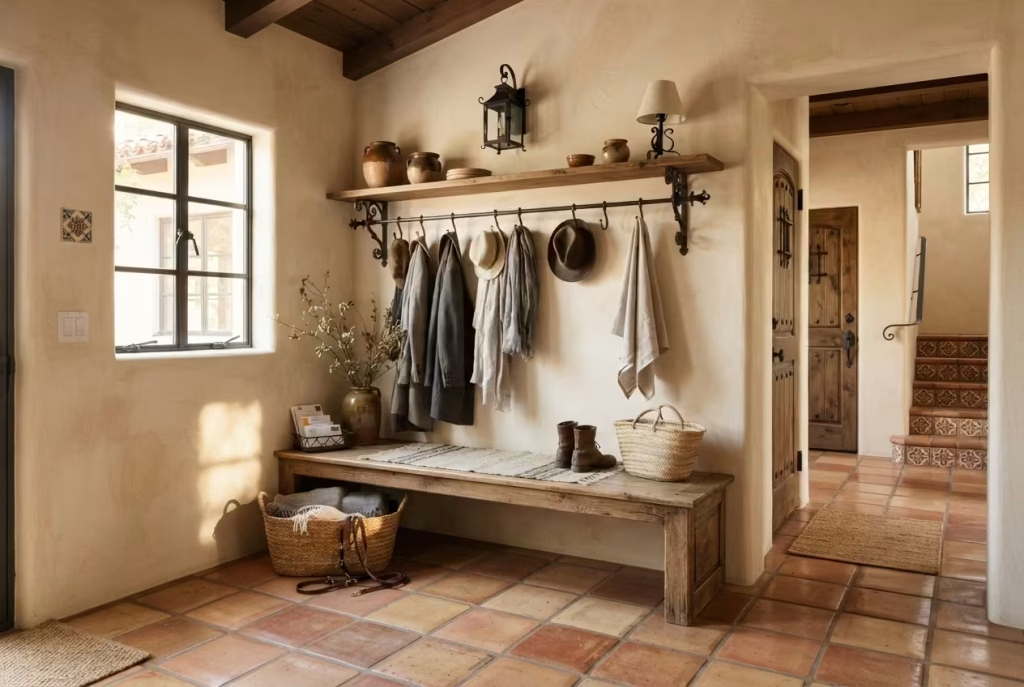
The material palette is where Spanish Revival mudrooms truly come into their own. The best spaces rely on natural finishes that have a bit of grit and grace, materials that look better with age rather than falling apart at the first sign of use.
| Material | Design Role | Everyday Benefit |
| Terracotta | Adds warmth and earthy colour | Durable and forgiving underfoot |
| Saltillo tile | Brings texture and handcrafted variation | Hides everyday wear beautifully |
| Lime plaster | Softens the walls with natural movement | Breathable and richly atmospheric |
| Wrought iron | Introduces contrast and structure | Strong, practical, and timeless |
| Natural wood | Adds depth and warmth | Ages gracefully and feels welcoming |
Each of these materials carries a sense of honesty. They do not try to mimic something they are not. That authenticity is part of the charm. In a mudroom, where life tends to arrive at full tilt, that kind of straightforward beauty is worth its weight in gold.
Why These Materials Work So Well Together
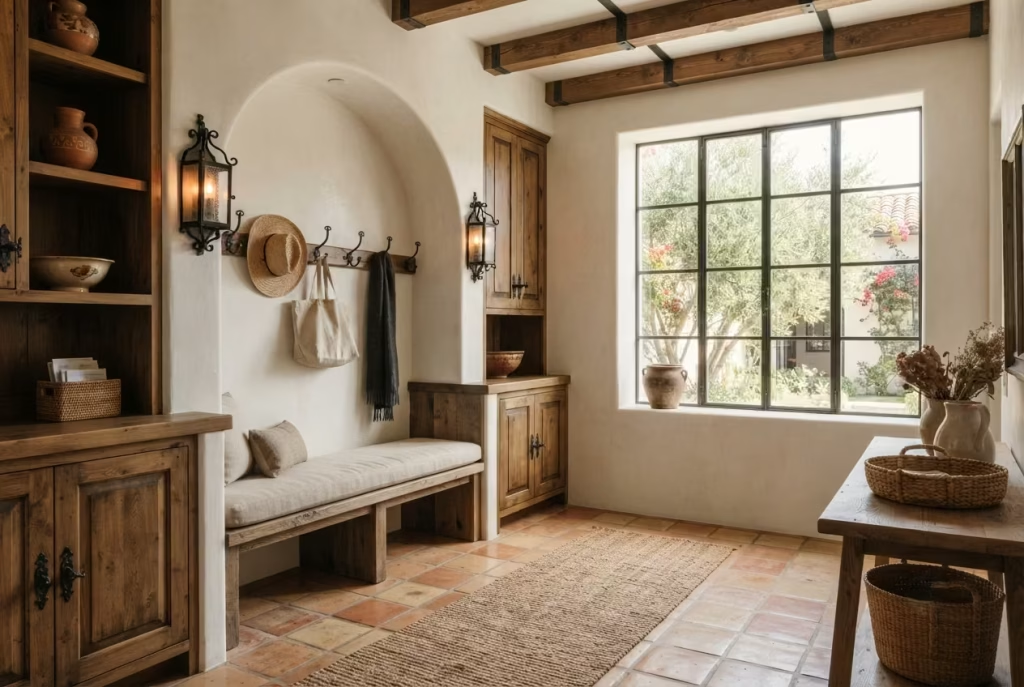
Spanish Revival mudrooms often feel cohesive because the materials share a common language. The terracotta flooring speaks to the plaster walls. The iron hardware echoes the lighting. The wood cabinetry warms the whole composition, while textured surfaces keep the room from feeling too polished or precious.
When the material mix is right, the room achieves a quiet rhythm.
Some of the strongest pairings include:
- Saltillo flooring with alder or oak cabinetry
- Limewashed walls with blackened iron hooks
- Terracotta tile accents with natural linen cushions
- Reclaimed wood benches with forged hardware
- Plaster arches with simple, handcrafted lighting
The result is not flashy, but it is deeply satisfying. It has that “less is more” confidence that never looks out of place.
Why the Style Works So Well in Functional Spaces
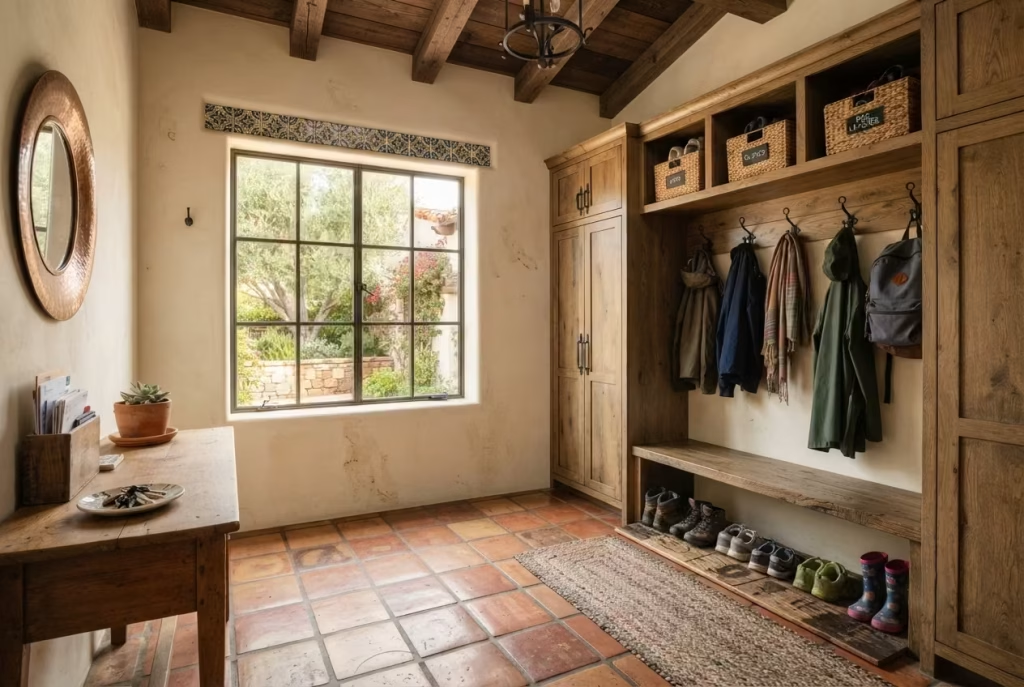
Some styles are lovely in formal rooms but fall flat when life gets messy. Spanish Revival is different. It was built on materials and forms that can handle real life while still looking graceful, which makes it a natural fit for mudrooms.
Durability
A mudroom needs to take a beating without showing every little mark. Spanish Revival materials tend to be robust, tactile, and resilient. Terracotta, stone, sealed wood, and iron all stand up well to daily traffic when properly specified.
Aging Gracefully
This is where the style really shines. Rather than looking tired after a few years, the materials usually gain character. A slight variation in tile, a softened wood finish, or a worn iron pull can make the room feel even more authentic over time. Like a favourite leather jacket, it just gets better with age.
Low-Maintenance Materials
While the look feels rich and layered, the right finishes can be surprisingly practical. Sealed tile, washable plaster, and sturdy cabinetry help reduce the upkeep burden, which is no small thing in a busy household.
Timeless Visual Warmth
A mudroom should welcome people in, not merely process them through the house. Spanish Revival design does this beautifully because it favours warm, grounded tones and handcrafted detail. The room feels lived in, loved, and quietly assured.
In Practice, What Makes a Mudroom Truly Spanish Revival?
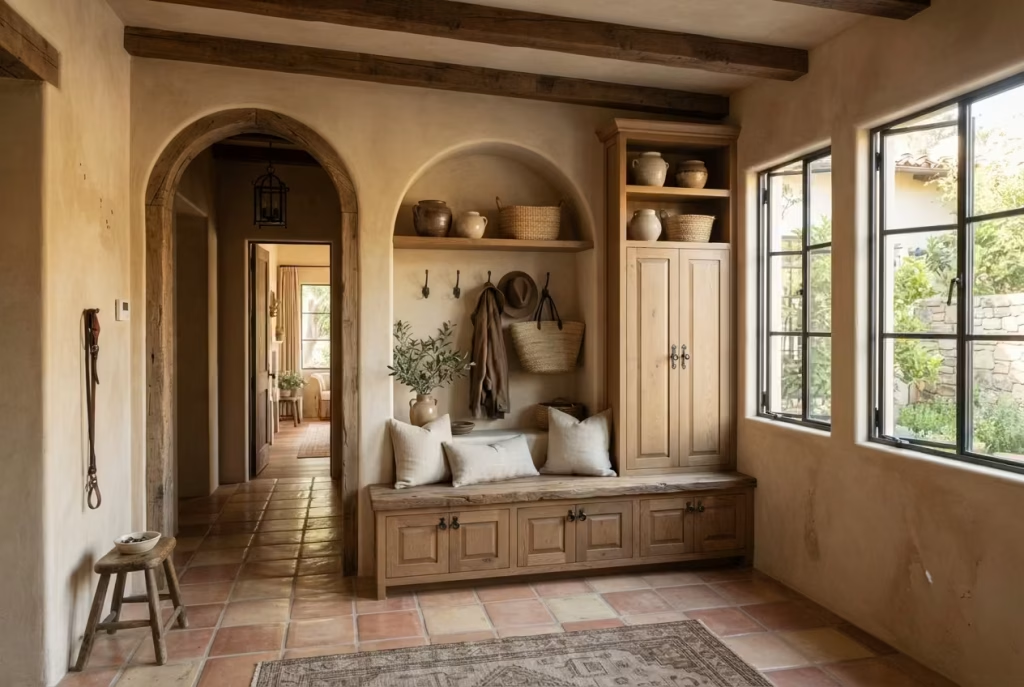
If you are trying to determine whether a mudroom genuinely belongs to the Spanish Revival tradition, ask whether it has:
- Architectural shape, not just decorative styling
- Natural materials with visible texture
- Warm, earthy colour tones
- Handcrafted details that feel considered
- A sense of age, permanence, and comfort
When all of those pieces are in place, the room stops feeling like a utility space dressed up for the occasion. Instead, it becomes part of the home’s architectural story, which is where it should be.
Spanish Revival mudrooms work because they are grounded, practical, and full of character. They understand that beauty is not the opposite of function. More often than not, the two go hand in hand, and this style proves it in spades.
Design Lessons Spanish Revival Mudrooms Teach Us About Everyday Living
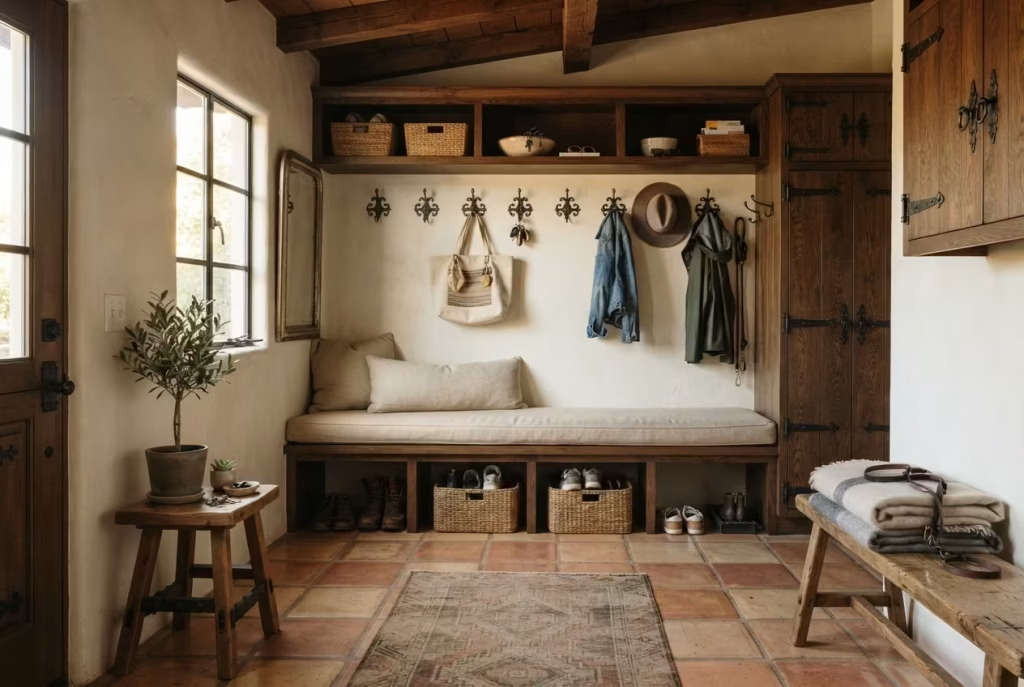
Spanish Revival mudrooms offer more than visual charm. At their best, they quietly reveal how good design can make daily life run more smoothly, more comfortably, and with far less friction. These are not spaces that shout for attention. They work in the background, day in and day out, shaping routines in ways people often only notice once the room is missing.
What makes this style so compelling is its refusal to separate beauty from usefulness. A Spanish Revival mudroom does not treat practicality as a compromise. Instead, it makes function feel considered, calm, and deeply human. That is where the real lesson lies.
Beauty Works Hardest When It Serves a Purpose
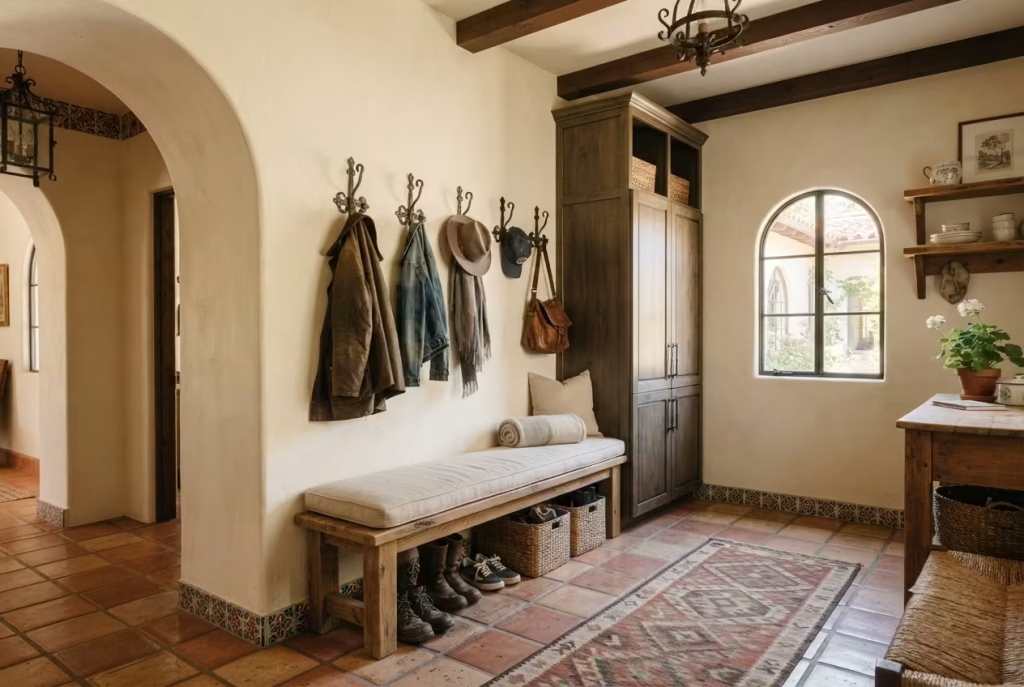
One of the clearest lessons Spanish Revival mudrooms teach us is that beauty becomes more meaningful when it actually supports daily life. A plaster arch is not only decorative. It softens the transition between rooms. A terracotta floor is not simply picturesque. It handles heavy traffic with grace. A wooden bench is not just there to look handsome. It gives people a place to pause, sit, and reset before moving on.
That is the secret sauce. When every detail earns its place, the room feels complete rather than dressed up for show. Practical beauty in a mudroom often looks like this:
- Hooks positioned where coats naturally land
- Flooring that can take mud, moisture, and movement
- Seating that supports fast shoe changes
- Storage that prevents clutter from taking over
- Materials that age well instead of aging badly
The best homes rarely rely on ornament alone. They allow design to pull its weight.
Natural Materials Improve with Age
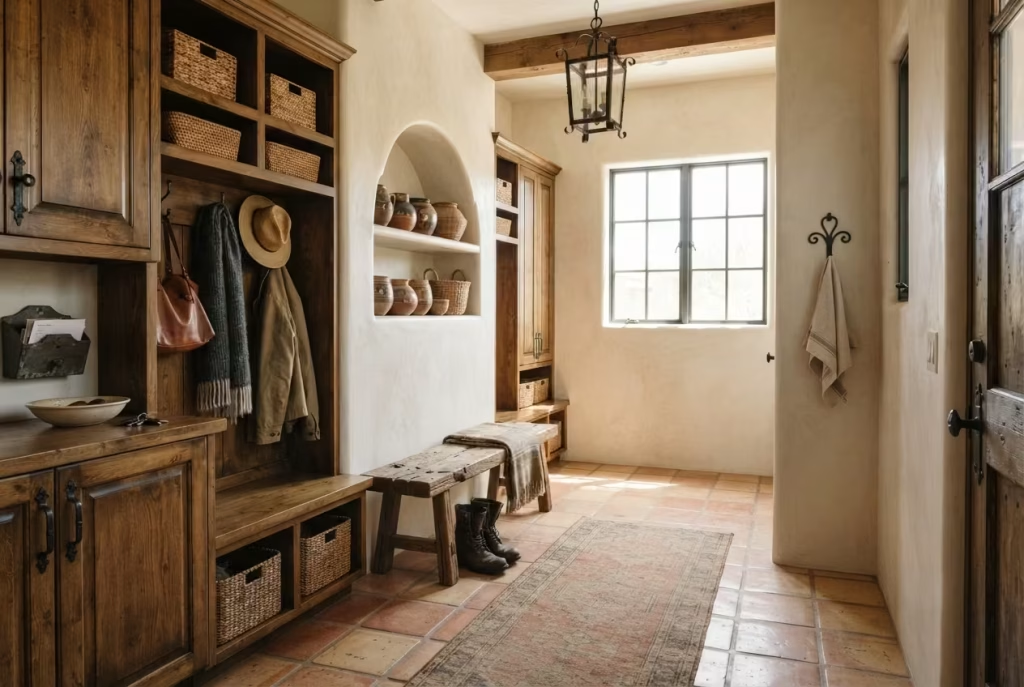
Unlike many modern finishes that start out polished and stay that way until they look worn in the wrong sense, natural materials tend to mature with dignity. That is one of the great gifts Spanish Revival design gives a home. It welcomes materials that gather patina, soften at the edges, and tell the story of daily use without losing their appeal.
Terracotta, lime plaster, wrought iron, and natural wood all share this quality. They do not need to be perfect to feel beautiful.
| Material | How It Ages | Everyday Value |
| Terracotta tile | Gains patina and subtle colour variation | Hides wear and feels timeless |
| Lime plaster | Softens naturally over time | Creates warmth and depth |
| Natural wood | Darkens and develops richer grain | Adds character and tactility |
| Wrought iron | Ages into a quieter, noble finish | Stays strong and dependable |
| Saltillo tile | Develops a lived-in richness | Excellent for busy family homes |
This is why Spanish Revival mudrooms often feel more beautiful a few years after installation than they do on the day they are finished. They are made for real life, not just for the photograph.
Storage Should Feel Integrated, Not Added
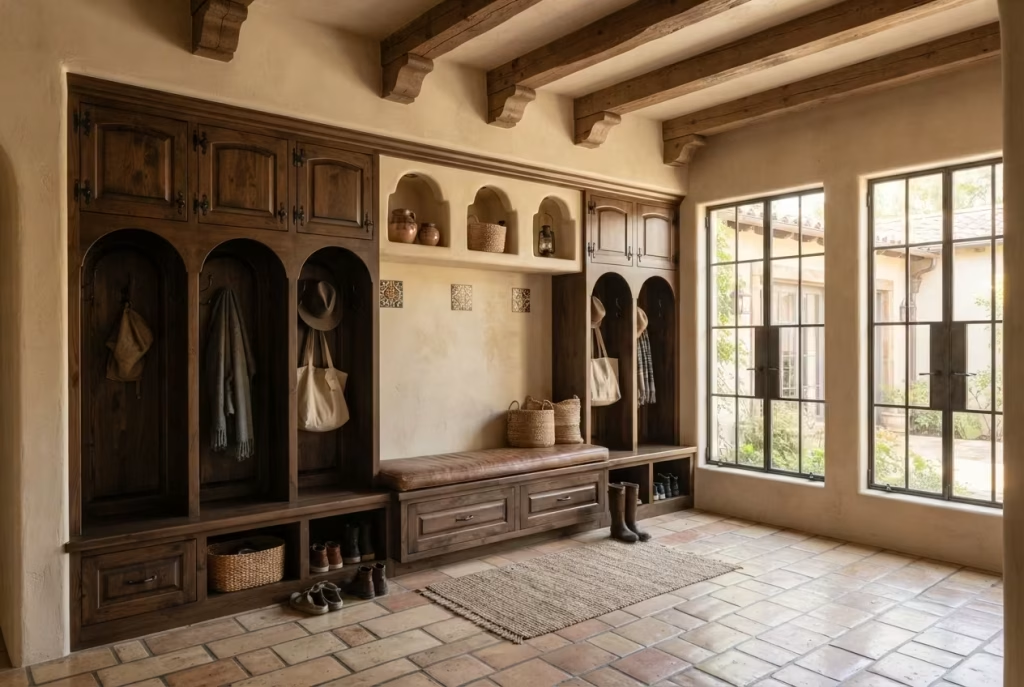
Another lesson worth paying attention to is the importance of built-in storage. In a well-designed Spanish Revival mudroom, storage does not look bolted on at the last minute. It feels woven into the room’s architecture, almost as though the house itself grew it there.
That distinction matters more than many homeowners realise. Storage that feels disconnected can make a space feel cluttered or awkward. Integrated storage, on the other hand, creates a sense of calm order. Everything has a place, and the room seems to exhale a little. A good mudroom storage system usually includes:
- Tall lockers for coats and bags
- Closed cupboards for seasonal overflow
- Open cubbies for daily essentials
- Bench seating with hidden storage beneath
- Small niches for keys, baskets, or decorative objects
When storage is designed this way, it becomes part of the room’s rhythm rather than an interruption.
Why Built-In Storage Changes the Feel of a Home
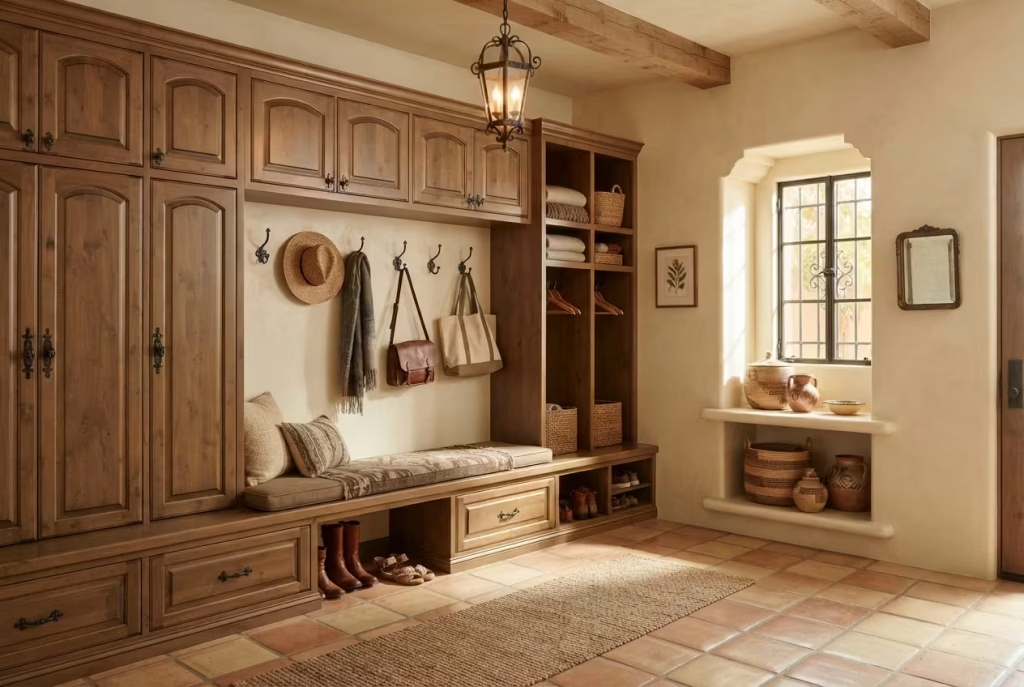
There is a world of difference between a room that merely holds things and a room that helps life flow more smoothly. Integrated storage cuts down on the visual noise that so often creeps into family homes. It keeps the floor clear, the walls orderly, and the atmosphere far more relaxed.
As the saying goes, a place for everything and everything in its place. That old idea still holds true because it speaks to a very modern need: less daily friction.
Architectural Character Creates Lasting Value
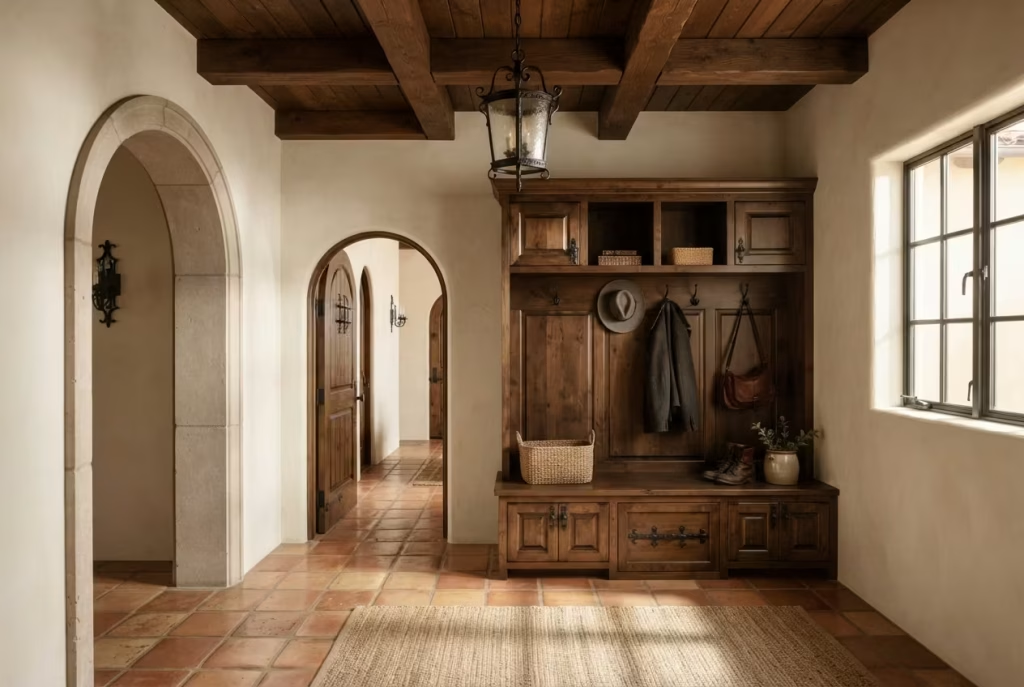
Spanish Revival mudrooms also remind us that architectural character is not a luxury extra. It is often what gives a home its staying power. Features like arches, beams, plaster walls, and handcrafted finishes do more than make a room pretty. They create identity. And identity matters.
In a world full of short-lived trends, homes with architectural character tend to feel steadier, more memorable, and more valuable over time. They do not chase attention. They earn it.
| Character Feature | Long-Term Benefit |
| Arched openings | Softens transitions and adds distinction |
| Exposed beams | Introduces warmth and depth overhead |
| Plaster walls | Creates tactile richness and authenticity |
| Handcrafted detailing | Gives the room a custom, lasting feel |
| Natural materials | Supports a timeless visual language |
These details often become the things people remember most. Not because they are loud, but because they feel right.
Why Transitional Spaces Shape Daily Experience More Than We Realise
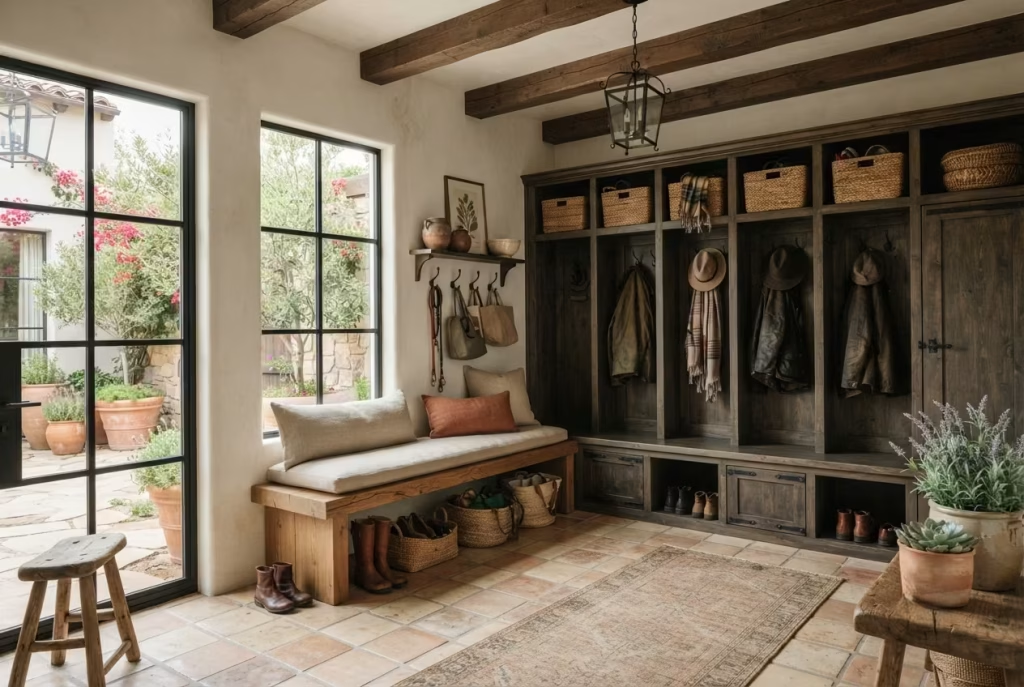
Mudrooms are not usually the rooms people rave about first, but they may be among the most influential. They set the tone for entering and leaving the house. They absorb the mess before it spreads. They act as a buffer between the outside world and the calm within. That makes them crucial.
A well-planned transitional space can change the feel of an entire home. Mornings become less frantic. Coming home feels more orderly. Clean-up is easier. The house feels more grounded, more together, and less like it is being pulled in a hundred directions at once. Consider the difference:
| Poorly Designed Mudroom | Well-Designed Spanish Revival Mudroom |
| Clutter builds quickly | Storage keeps life in check |
| Hard surfaces feel cold | Natural materials feel welcoming |
| No seating means awkward routines | Bench seating supports daily use |
| Decor feels disconnected | Architecture feels intentional |
| Maintenance becomes a chore | Upkeep feels manageable |
That contrast is no small thing. It is the difference between a room that merely exists and a room that quietly improves the way a home functions.
Real-Life Insight
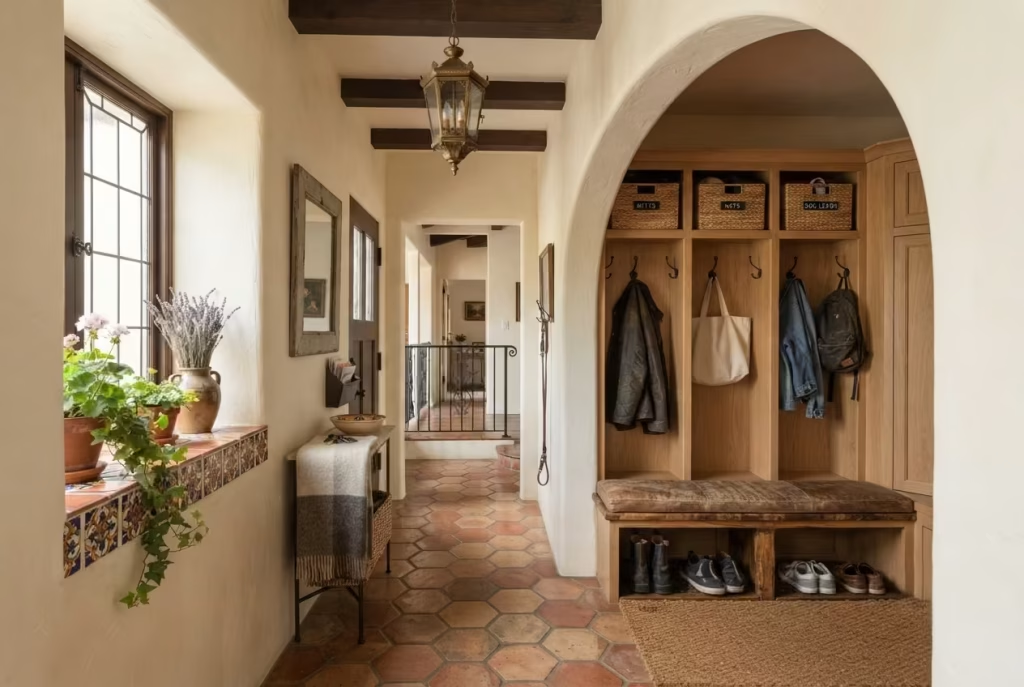
In one Spanish Revival project, the mudroom began as a narrow side entrance with little more than a coat rack and a hard floor. It technically worked, but it never felt settled. Shoes drifted into the hallway, bags landed wherever there was space, and the room never quite found its footing.
Once we reworked it with built-in storage, terracotta flooring, a plaster arch, and a simple bench, the entire energy changed. The family began using it naturally. The space stopped feeling like a leftover corner and started behaving like part of the home’s backbone.
That is what good design does. It removes the small daily irritations that quietly wear people down.
The Bigger Lesson
Spanish Revival mudrooms teach us that everyday living deserves as much design care as the rooms people usually show off. They show that comfort can be beautiful, that storage can be elegant, and that even the most practical spaces can carry real architectural soul.
When done well, a mudroom becomes more than a pass-through. It becomes a steadying presence, a welcoming threshold, and a subtle reminder that great design is not just about how a home looks. It is about how smoothly, and how gracefully, it supports the life lived inside it.
Common Mistakes That Undermine Spanish Revival Mudroom Design
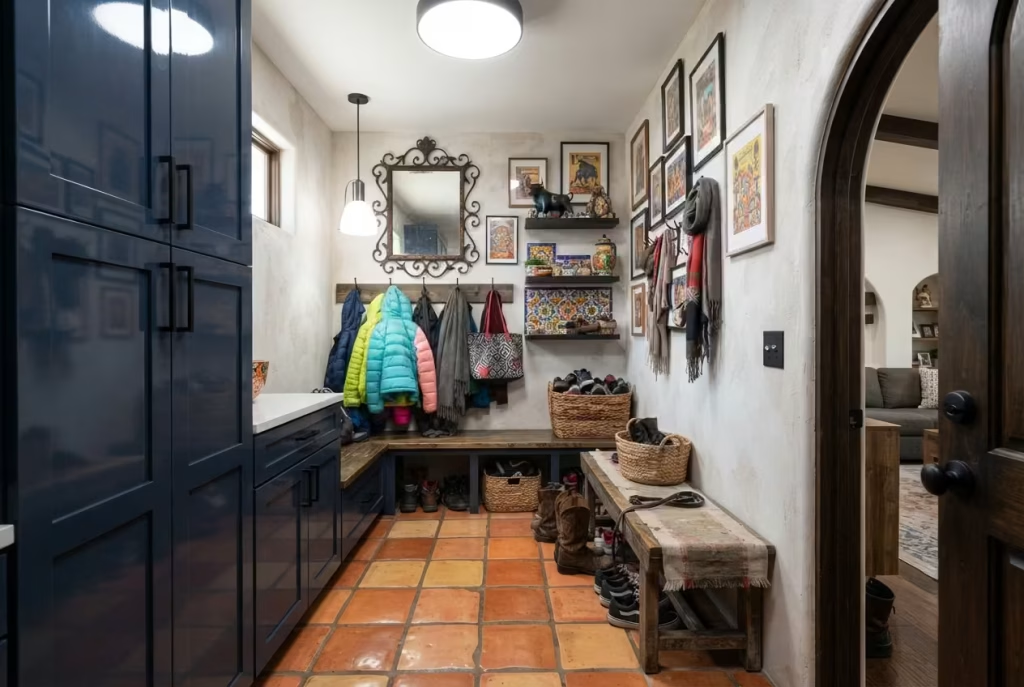
A Spanish Revival mudroom may appear effortless when done well, but achieving that balance requires careful decision-making. The style is deeply rooted in architecture, craftsmanship, and material honesty. When key design principles are overlooked, the result can feel forced, overly decorative, or disconnected from the rest of the home.
What makes many successful Spanish Revival mudrooms so appealing is not the number of features they contain. It is the restraint behind them. Every material, proportion, and detail serves a purpose.
The following mistakes are among the most common issues I encounter during renovations and design consultations, and they often prevent a mudroom from reaching its full potential.
Overusing Decorative Tile
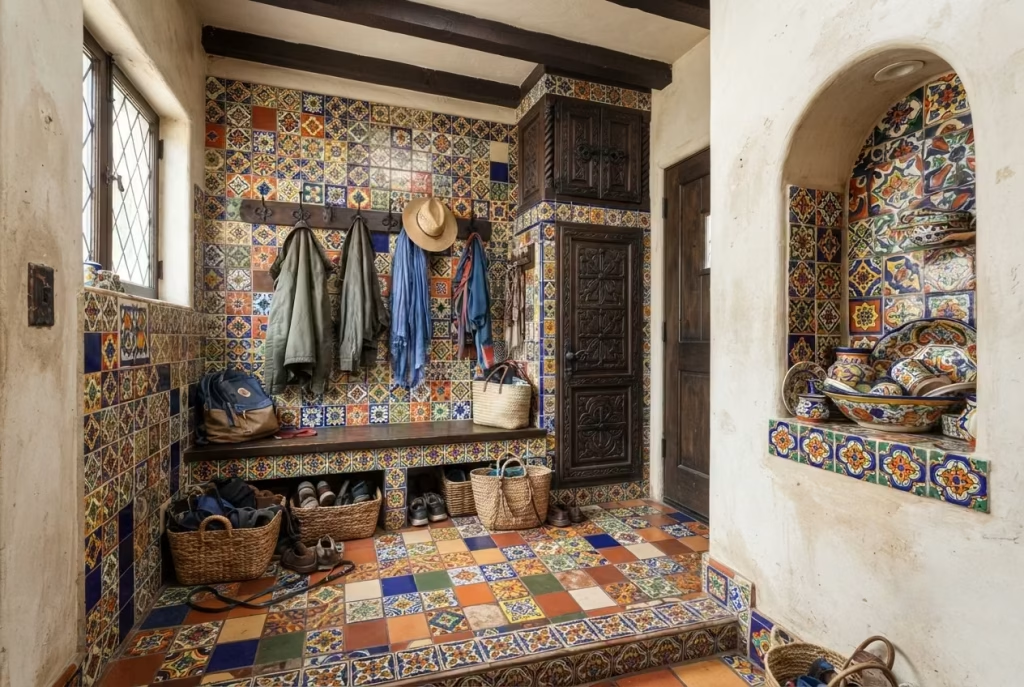
Decorative tile is one of the most recognisable elements of Spanish-inspired interiors. Talavera patterns, hand-painted motifs, and colourful ceramic accents can bring tremendous personality to a mudroom. However, there is a fine line between character and visual overload.
When decorative tile appears on the floor, walls, bench surrounds, backsplashes, niches, and stair risers simultaneously, the room can quickly feel busy and overwhelming. A better approach is to use decorative tile strategically. Ideal locations include:
- Bench risers
- Small backsplashes
- Wall niches
- Entry thresholds
- Accent borders
Decorative Tile: Less Often Achieves More
| Approach | Result |
| Tile on every surface | Visually overwhelming |
| Focused accent applications | Balanced and elegant |
| Multiple competing patterns | Chaotic appearance |
| One or two coordinated motifs | Timeless character |
As the saying goes, too much of a good thing can quickly become a bad thing.
Choosing Overly Modern Finishes
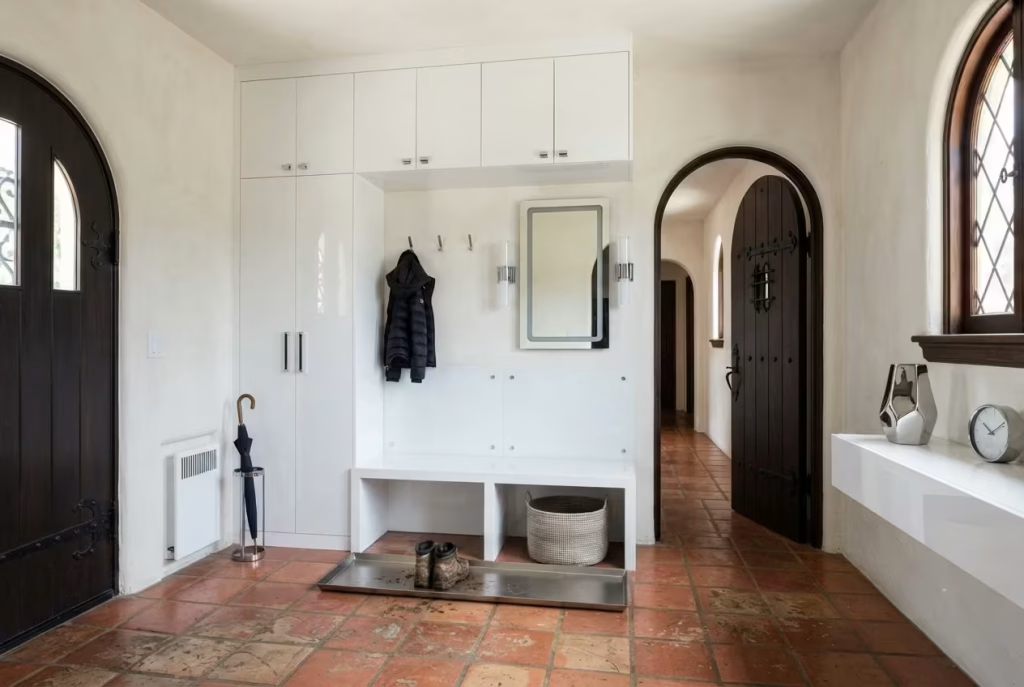
Spanish Revival design celebrates texture, craftsmanship, and materials that feel grounded in history. Introducing finishes that are excessively sleek or ultra-contemporary can disrupt that atmosphere.
Common examples include:
- High-gloss cabinetry
- Mirror-finish hardware
- Bright chrome fixtures
- Polished acrylic surfaces
- Minimalist slab-front cabinetry
These elements often create visual tension because they speak a different design language.
Instead, consider:
- Matte finishes
- Hand-forged hardware
- Natural wood grain
- Textured plaster
- Aged metal accents
The goal is not to make the room feel old. It is to make it feel authentic.
Ignoring Architectural Proportions
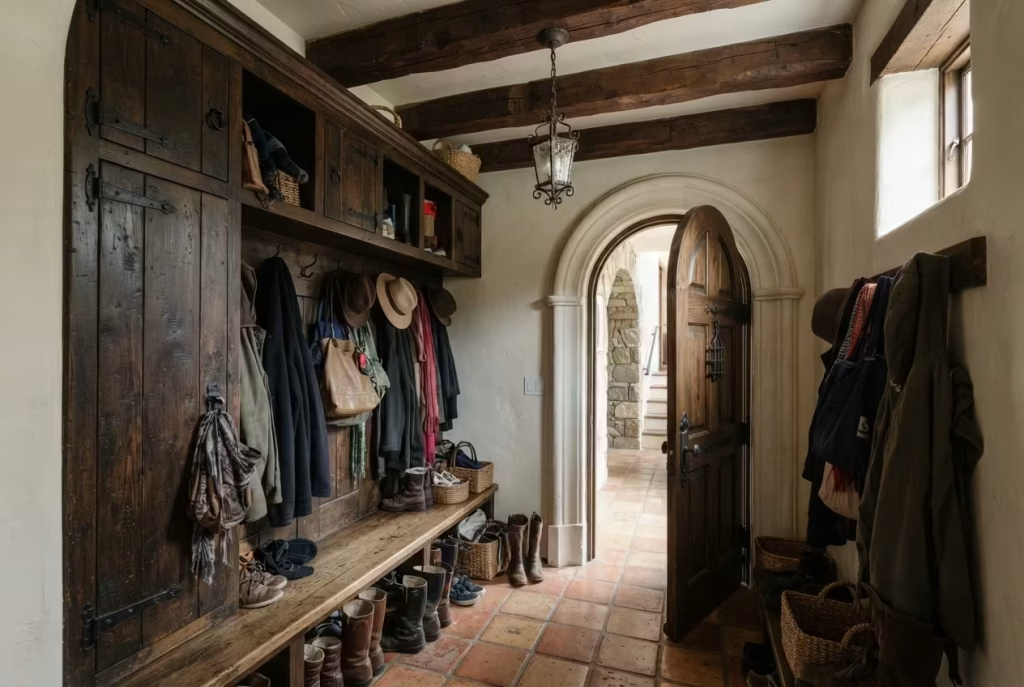
One of the biggest design mistakes has nothing to do with materials and everything to do with scale. Spanish Revival architecture relies heavily on proportion. Arches, beams, cabinetry, lighting, and storage all need to feel appropriately sized for the room. Common proportion issues include:
- Oversized beams in low ceilings
- Tiny light fixtures in large spaces
- Narrow benches that feel uncomfortable
- Oversized cabinetry overwhelming small rooms
- Arches that feel too shallow or too tall
Why Proportion Matters
| Design Element | Common Mistake |
| Ceiling beams | Too large for room height |
| Lantern pendants | Too small for the space |
| Arches | Incorrect width-to-height ratio |
| Storage walls | Excessive visual bulk |
| Benches | Insufficient seating depth |
When proportions are correct, the room feels harmonious even if people cannot immediately identify why.
Poor Storage Planning
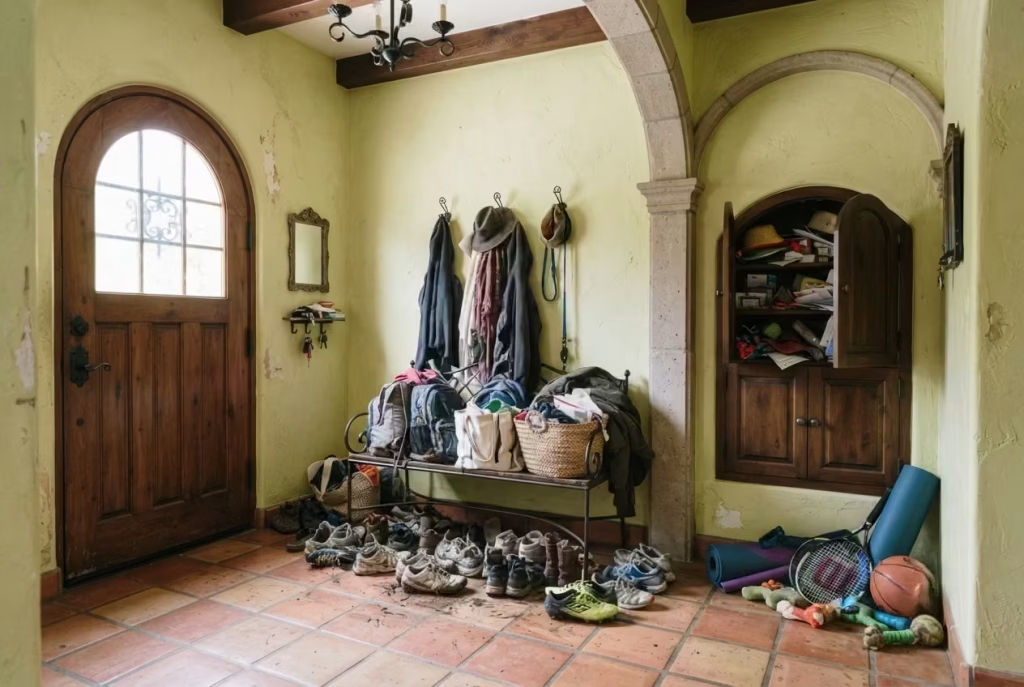
A beautiful mudroom that lacks adequate storage rarely remains beautiful for long. Storage is often treated as an afterthought, particularly when homeowners focus heavily on decorative details. The result is predictable:
- Shoes pile up near the door
- Coats migrate to dining chairs
- Bags accumulate on benches
- Sports equipment takes over walkways
A mudroom should support daily routines rather than fight against them.
Storage Features Worth Prioritising
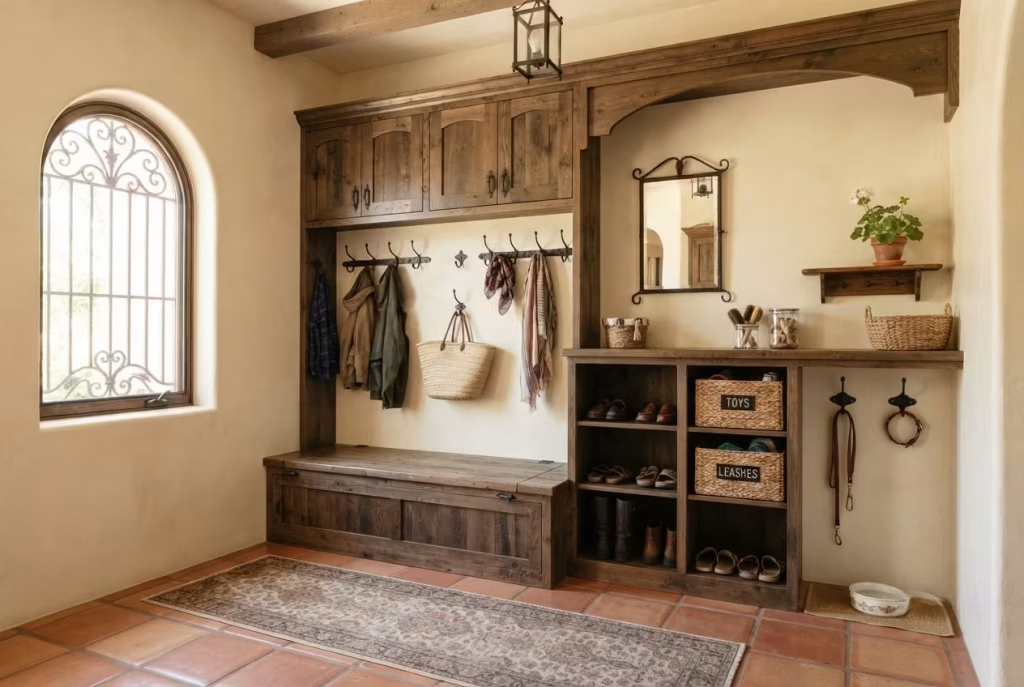
- Closed cabinetry for visual order
- Hooks at multiple heights
- Shoe storage compartments
- Seasonal overflow storage
- Bench seating with concealed storage
- Dedicated pet storage zones
Good storage may not be glamorous, but it often determines whether a mudroom succeeds or fails.
Using Materials That Lack Authenticity
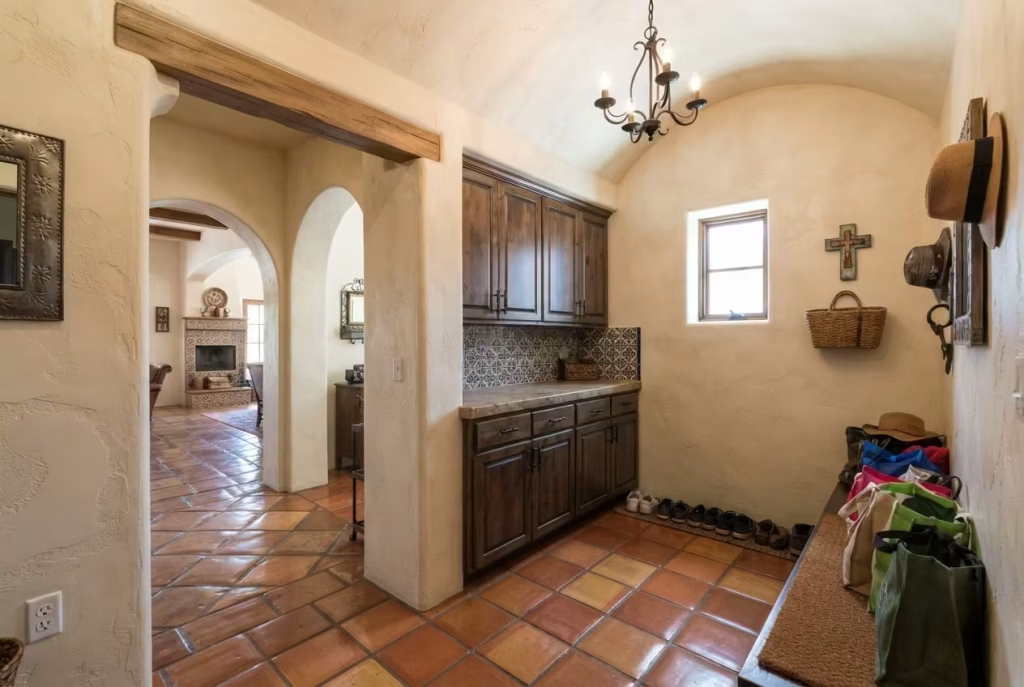
Spanish Revival interiors derive much of their charm from natural materials. Substituting artificial alternatives can weaken the overall effect. Materials that often feel less convincing include:
- Plastic wood-look surfaces
- Artificial stone laminates
- Mass-produced faux iron
- Glossy imitation terracotta
- Printed tile replicas
While some alternatives may reduce costs initially, they rarely deliver the same depth, texture, or longevity.
Authentic Materials vs Imitations
| Authentic Material | Common Substitute |
| Saltillo tile | Printed porcelain replica |
| Natural wood | Vinyl wood-look panels |
| Wrought iron | Lightweight painted metal |
| Lime plaster | Flat painted drywall |
| Terracotta | Plastic-look composites |
Authentic materials tend to improve with age, while imitations often reveal their limitations over time.
Treating the Mudroom as Purely Utilitarian
Perhaps the most overlooked mistake is viewing the mudroom as nothing more than a storage zone. Because it performs a practical role, many homeowners focus exclusively on utility while ignoring atmosphere, architecture, and comfort.
This often results in spaces that feel:
- Cold
- Generic
- Uninviting
- Detached from the rest of the home
- Lacking personality
A Spanish Revival mudroom should support function, but it should also create a sense of arrival.
Small Design Moves That Add Character
Consider incorporating:
- A plaster archway
- Decorative lighting
- Handcrafted tile accents
- Natural wood seating
- Woven baskets
- Courtyard views
- Warm earth-tone colours
These additions help the room feel connected to the broader design narrative of the home.
Real-World Design Observation
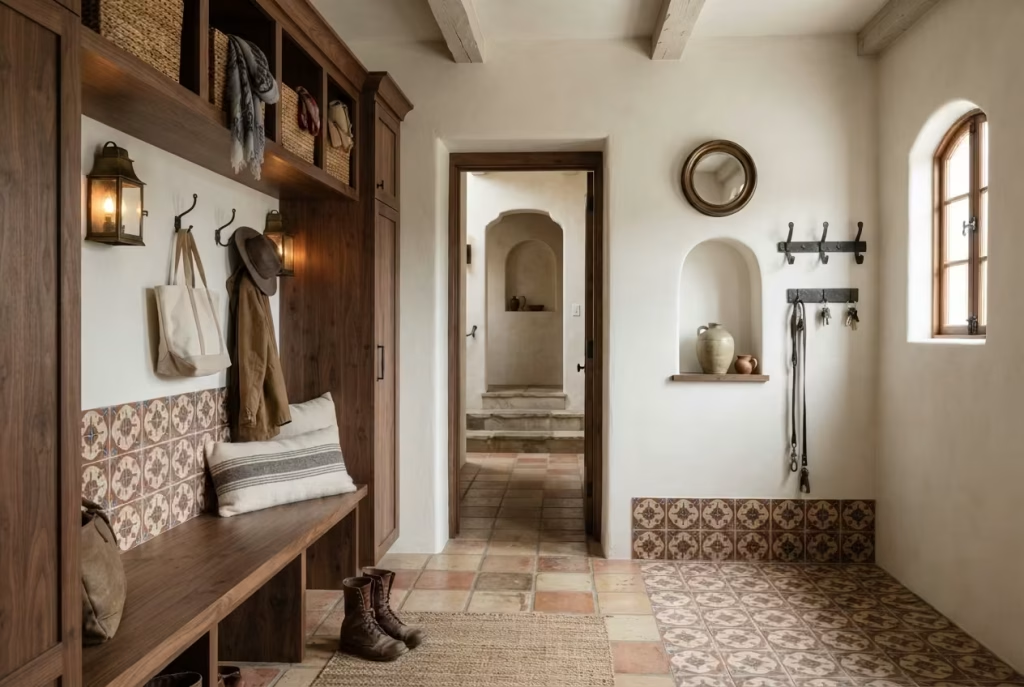
I once worked on a renovation where the homeowners invested heavily in custom cabinetry and premium flooring but overlooked the overall composition of the room. Decorative tile covered multiple surfaces, chrome hardware clashed with rustic finishes, and storage capacity fell well short of the family’s needs. On paper, the individual elements seemed impressive. In reality, the room felt disjointed.
During the redesign, we simplified the tile palette, replaced the hardware with forged iron pieces, improved storage functionality, and introduced more authentic materials throughout the space.
The transformation was not driven by spending more money. It came from making better decisions. That experience reinforced an important lesson: successful Spanish Revival design is often about editing rather than adding.
A Quick Checklist to Avoid Common Mistakes
| Do | Avoid |
| Use authentic materials | Rely on artificial imitations |
| Prioritise practical storage | Ignore daily household needs |
| Maintain proper proportions | Oversize or undersize features |
| Introduce decorative accents selectively | Overload the room with patterns |
| Balance beauty with function | Focus on appearance alone |
| Respect architectural character | Introduce conflicting styles |
The Key Takeaway
Spanish Revival mudrooms succeed because they combine craftsmanship, practicality, and timeless warmth. The style thrives on balance. Too much decoration, poor proportions, inauthentic materials, or inadequate storage can quickly undermine the overall design.
The most memorable mudrooms are not necessarily the most elaborate. They are the ones where architecture, materials, and daily function work hand in hand. When every element feels purposeful and connected, the space gains something far more valuable than trend appeal: lasting character that continues to serve the household year after year.
Material Guide for an Authentic Spanish Revival Mudroom
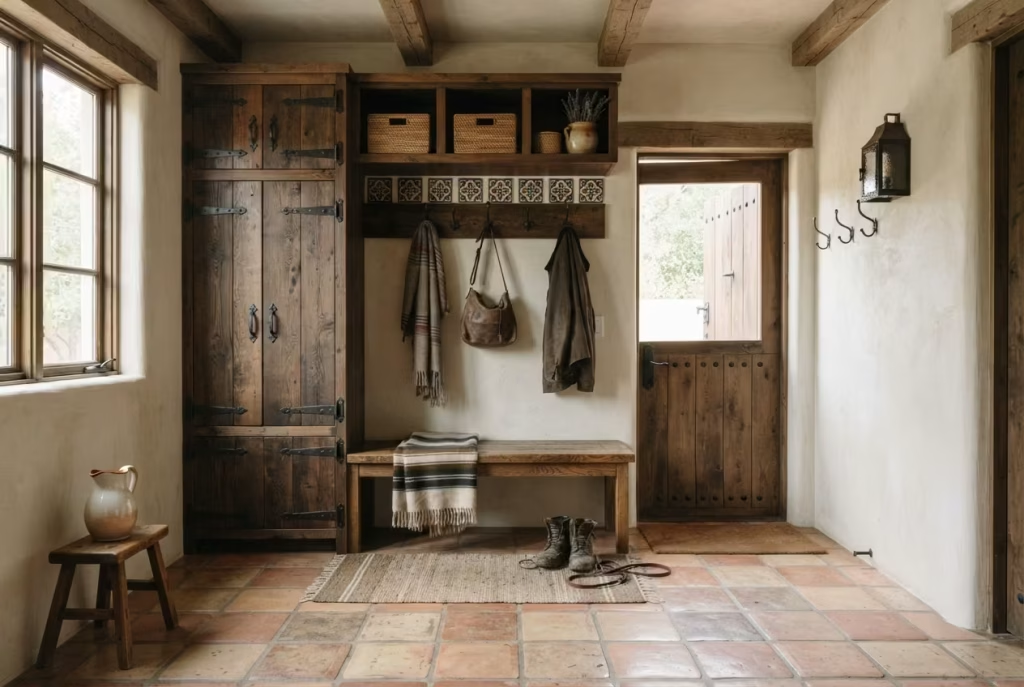
The materials used in a Spanish Revival mudroom do far more than set the tone. They determine how the room feels underfoot, how it wears over time, and how convincingly it connects to the architectural language of the rest of the home. In this style, authenticity is rarely about spectacle. It is about using finishes that feel grounded, tactile, and naturally at ease with daily life.
A well-chosen material palette can make a mudroom feel warm, settled, and quietly refined. It can also save a homeowner from the familiar trap of choosing something beautiful in theory but impractical in practice. In a room that takes mud, moisture, foot traffic, pets, and school chaos in stride, the right materials are worth their weight in gold.
Flooring Options
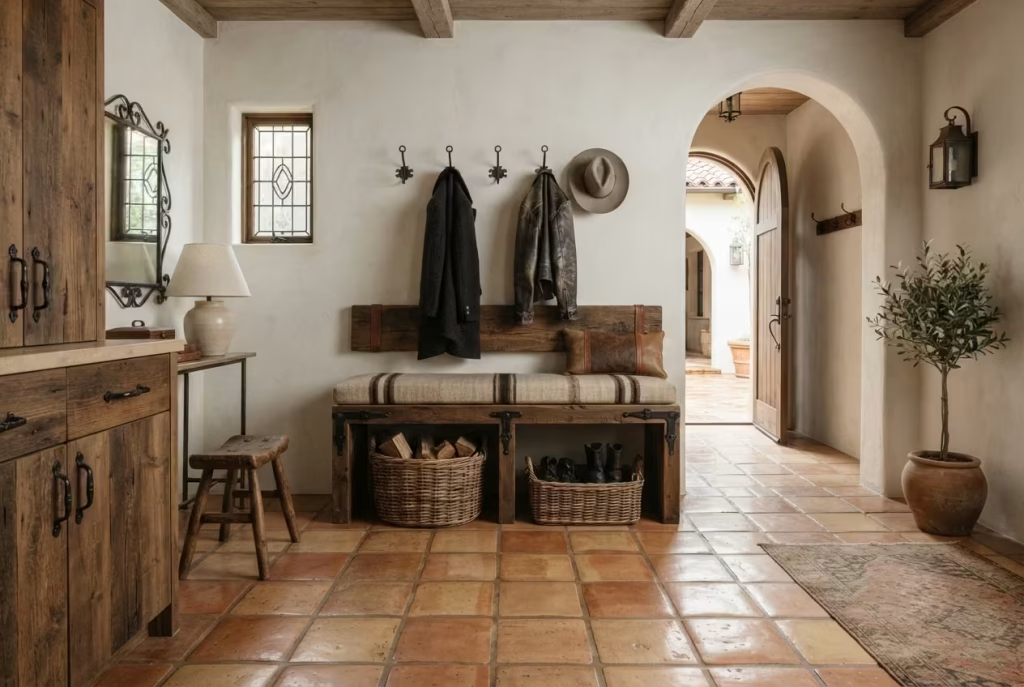
Flooring is the anchor of the entire space. In a Spanish Revival mudroom, it should feel durable, earthy, and visually rich without becoming precious.
Saltillo Tile
Saltillo tile is one of the most iconic flooring choices for Spanish Revival interiors. Handmade from natural clay, it carries subtle variations in colour, texture, and shape that give the floor a lived-in, handcrafted quality.
Why it works:
- Adds warmth and immediate Spanish character
- Hides minor wear beautifully
- Ages with a soft patina rather than looking tired
- Pairs naturally with wood, plaster, and iron
Best for:
Mudrooms that want a traditional, authentic look with plenty of personality.
Terracotta Tile
Terracotta tile offers a slightly more refined and often more consistent alternative to Saltillo while preserving the same earthy warmth.
Why it works:
- Brings rich, sunbaked colour
- Feels timeless rather than trendy
- Performs well in high-traffic areas
- Balances decorative detail with restraint
Best for:
Homeowners who want a grounded, elegant floor without too much visual irregularity.
Natural Stone
Natural stone, such as limestone, travertine, or honed slate, can also suit a Spanish Revival mudroom when selected carefully.
Why it works:
- Feels architectural and enduring
- Adds quiet luxury
- Works beautifully with plaster walls and timber details
- Can be extremely durable when properly sealed
Best for:
More elevated mudrooms where a softer, more understated interpretation of Spanish Revival is desired.
Flooring Comparison
| Flooring Material | Appearance | Durability | Maintenance | Overall Character |
| Saltillo tile | Warm, handcrafted, irregular | High | Moderate | Highly authentic |
| Terracotta tile | Earthy, rich, more uniform | High | Moderate | Classic and timeless |
| Natural stone | Refined, natural, textural | Very high | Moderate to high | Elegant and durable |
Wall Finishes
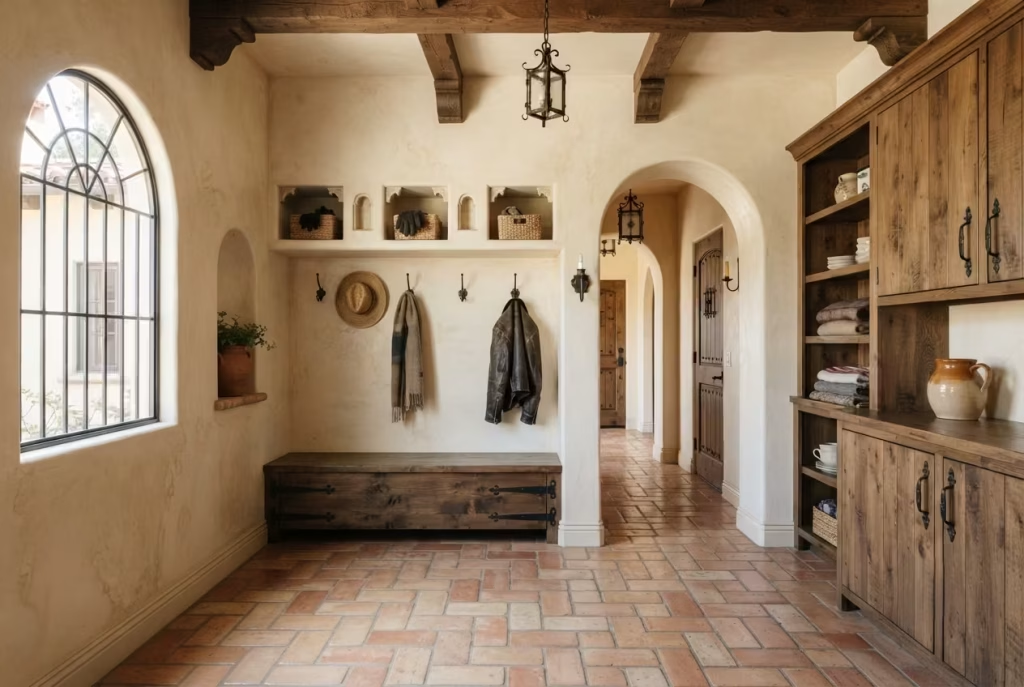
Walls in a Spanish Revival mudroom should feel textured and breathable, not flat or overly crisp. The finish on the walls often does as much work as the furniture.
Lime Plaster
Lime plaster is one of the most beautiful choices for this style. It brings subtle movement and softness to the walls, creating a surface that feels handcrafted rather than manufactured.
Why it works:
- Softens architectural lines
- Creates depth through texture
- Ages gracefully
- Complements natural light beautifully
Best for:
Homeowners who want an authentic, old-world finish with a relaxed elegance.
Venetian Plaster
Venetian plaster offers a more polished interpretation. It has a richer, smoother appearance, which can work well if the goal is a slightly more refined Spanish Revival look.
Why it works:
- Adds depth and visual richness
- Creates a subtle sheen
- Works well in more formal mudrooms
- Feels luxurious without being flashy
Best for:
Spaces where elegance matters as much as rustic charm.
Textured Stucco
Textured stucco brings a more rustic and traditional quality to the room. It can help a mudroom feel tied to the exterior architecture of the home, especially if the property already has Spanish-style walls.
Why it works:
- Strong architectural character
- Durable and practical
- Enhances old-world authenticity
- Works well with terracotta and iron accents
Best for:
Homes that lean toward a more rustic or traditional Spanish Revival expression.
Wall Finish Comparison
| Wall Finish | Texture | Visual Effect | Best Use |
| Lime plaster | Soft, organic | Warm and layered | Authentic interiors |
| Venetian plaster | Smooth with depth | Refined and elegant | Upscale spaces |
| Textured stucco | Rugged and expressive | Rustic and grounded | Traditional homes |
Wood Selections
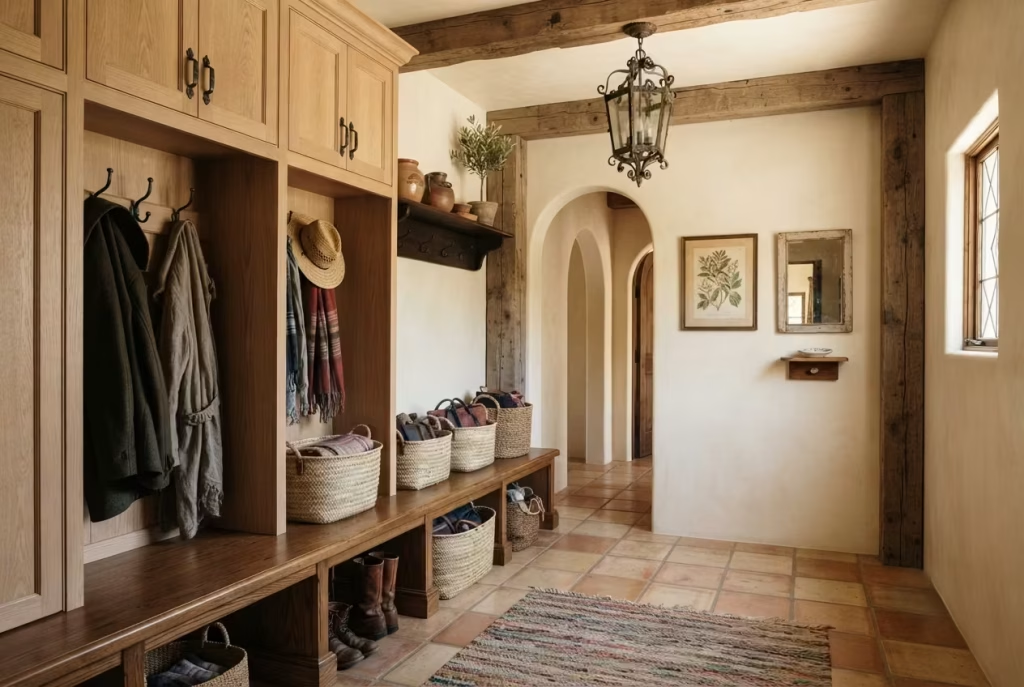
Wood is one of the most important ways to bring warmth into a mudroom. In Spanish Revival design, it should feel substantial, natural, and quietly handsome.
White Oak
White oak is a strong, versatile option that balances durability with a more refined grain pattern.
Why it works:
- Highly durable
- Works in both rustic and transitional spaces
- Takes stain beautifully
- Offers a clean but warm appearance
Best for:
Custom cabinetry, benches, shelving, and locker walls.
Alder
Alder is often one of the most natural choices for Spanish Revival interiors because its grain is soft, warm, and easy to finish in a way that feels traditional.
Why it works:
- Warm, approachable tone
- Works especially well with darker stains
- Feels authentic in historic-inspired spaces
- Easier to shape for detailed millwork
Best for:
Raised panel cabinetry, built-in lockers, and decorative trims.
Reclaimed Timber
Reclaimed timber brings immediate character and history. It works especially well when the goal is to make the room feel as though it has grown into the house over time.
Why it works:
- Rich texture and patina
- Unique grain and imperfections
- Strong visual authenticity
- Deepens the old-world atmosphere
Best for:
Benches, open shelving, accent beams, and statement cabinetry.
Wood Comparison
| Wood Selection | Grain Character | Durability | Best Quality |
| White oak | Clear and structured | Very high | Strong and versatile |
| Alder | Soft and warm | High | Traditional and easy to finish |
| Reclaimed timber | Varied and aged | High | Rich character and history |
Metal Finishes
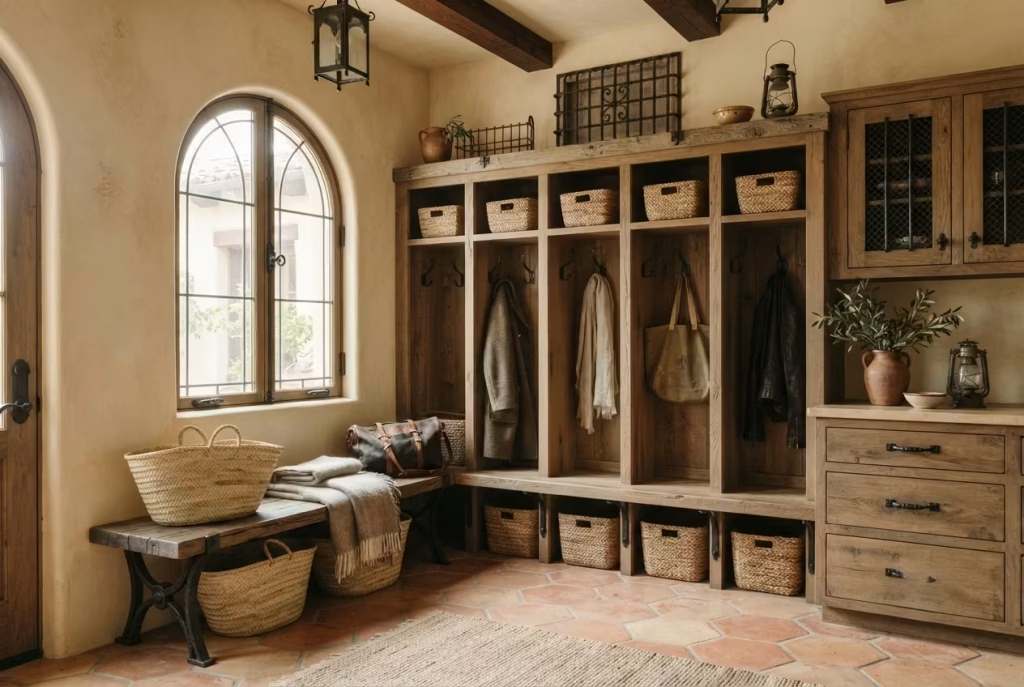
Metal details may be small, but they carry a disproportionate amount of visual weight. In a Spanish Revival mudroom, they should feel substantial and handcrafted rather than sleek or sterile.
Blackened Iron
Blackened iron is one of the most reliable finishes for this style. It creates contrast, depth, and a sense of permanence.
Why it works:
- Strong visual connection to Spanish architecture
- Works well with plaster and timber
- Feels grounded and timeless
- Excellent for hooks, brackets, and lighting
Best for:
Hardware, lighting, shelf supports, and decorative details.
Oil-Rubbed Bronz
Oil-rubbed bronze has a softer, richer tone than blackened iron. It can be a great choice if the space needs a slightly warmer metal finish.
Why it works:
- Warmer than black iron
- Pairs well with terracotta and wood
- Feels classic and approachable
- Ages with character
Best for:
Cabinet pulls, door hardware, and lighting accents.
Hand-Forged Hardware
Hand-forged hardware is not just a finish choice. It is a statement of craftsmanship. Its slight irregularities make it feel human, which is exactly what Spanish Revival interiors are meant to celebrate.
Why it works:
- Adds artisan character
- Creates visual authenticity
- Feels substantial in the hand
- Elevates even the simplest cabinetry
Best for:
Pulls, hinges, latches, hooks, and decorative ironwork.
Metal Finish Comparison
| Metal Finish | Tone | Character | Best Application |
| Blackened iron | Dark, crisp | Strong and architectural | Hooks, lights, brackets |
| Oil-rubbed bronze | Warm, deep | Classic and soft | Door and cabinet hardware |
| Hand-forged hardware | Varied and textured | Artisan and authentic | Statement details |
Putting the Materials Together
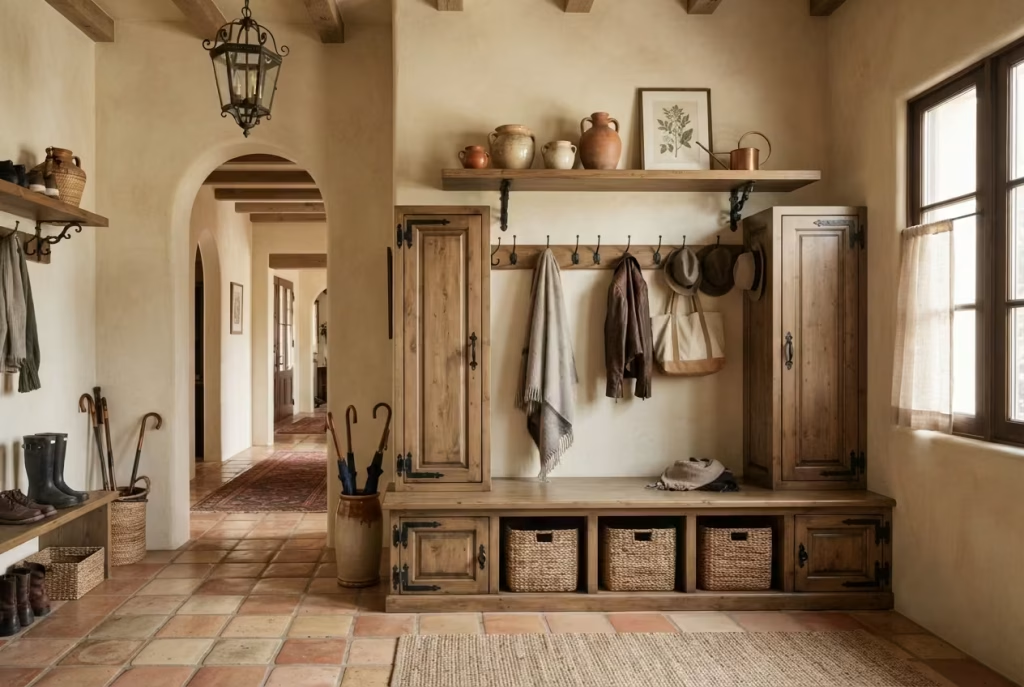
The most successful Spanish Revival mudrooms do not rely on one standout material. They rely on a conversation between materials. The floor should speak to the cabinetry. The wall finish should support the metalwork. The wood should warm the whole composition without crowding it.
A strong combination often looks like this:
- Saltillo or terracotta tile underfoot
- Lime plaster or textured stucco on the walls
- Alder or reclaimed timber for cabinetry
- Blackened iron or oil-rubbed bronze for hardware
That balance creates a room that feels layered and complete rather than overdesigned.
Practical Selection Tips
When choosing materials, keep these points in mind:
- Prioritise natural surfaces over synthetic imitation where possible
- Choose finishes that improve with age, not ones that only look good on day one
- Keep the palette warm and restrained
- Repeat materials thoughtfully so the room feels cohesive
- Match the level of texture to the size of the room
A small mudroom often benefits from fewer, more focused materials. A larger one can carry a slightly richer mix without feeling busy.
Quick Reference Table
| Category | Best Authentic Choice | Secondary Option |
| Flooring | Saltillo tile | Terracotta tile |
| Wall finish | Lime plaster | Textured stucco |
| Wood | Alder | Reclaimed timber |
| Metal | Blackened iron | Oil-rubbed bronze |
Final Takeaway
An authentic Spanish Revival mudroom is built on materials that feel honest, enduring, and quietly beautiful. Saltillo tile underfoot, plaster on the walls, warm timber in the cabinetry, and forged metal in the details all work together to create a space that feels rooted in tradition but still perfectly suited to modern family life.
When these materials are chosen with care, the mudroom becomes more than a pass-through. It becomes a room with presence, purpose, and lasting character.
Conclusion Where Craftsmanship Meets Everyday Practicality
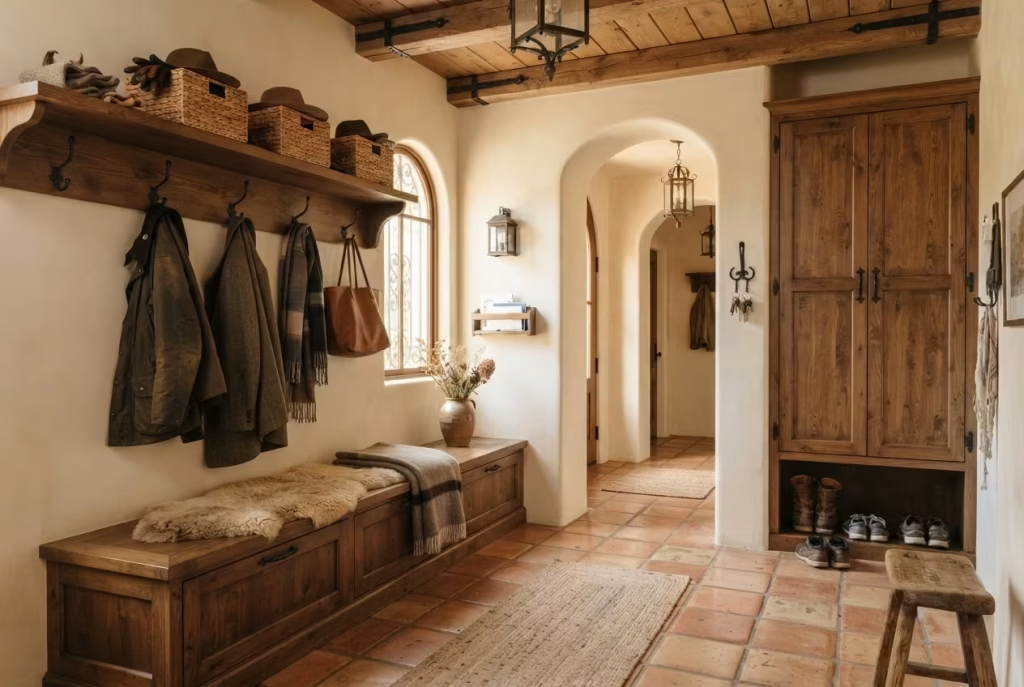
The most successful Spanish Revival mudrooms are never defined by a single design feature. They are not memorable simply because they showcase handcrafted tile, beautifully aged timber, or striking wrought iron details. Their lasting appeal comes from something deeper. They are designed to support the realities of everyday life while surrounding those routines with warmth, character, and craftsmanship.
Throughout this guide, one theme has remained consistent: beauty and practicality do not have to exist at opposite ends of the spectrum. In fact, the finest Spanish Revival mudrooms prove that the two are often strongest when working hand in hand. A well-placed bench simplifies busy mornings. Built-in storage keeps clutter from gaining a foothold. Durable flooring withstands years of foot traffic while developing a richer patina. Every element serves a purpose, yet each contributes to the room’s overall atmosphere.
That balance is what gives these spaces their enduring quality. Unlike trend-driven interiors that can feel dated almost as quickly as they arrive, Spanish Revival design is rooted in materials and architectural principles that age gracefully. Saltillo tile becomes more characterful with time. Lime plaster develops depth and softness. Natural wood gathers subtle marks and variations that tell the story of a home well lived in. Rather than fighting the effects of daily use, these materials embrace them.
As the years pass, the room often becomes more appealing, not less. This is one of the greatest lessons Spanish Revival design teaches us. A home should not be designed solely for special occasions or photographs. It should support everyday living with equal care and attention. The spaces we move through repeatedly often have the greatest influence on our daily experience, even if they rarely receive the spotlight.
Mudrooms are a perfect example. They welcome us home after long days, catch the muddy boots after a rainy walk, provide a place to pause before heading out the door, and quietly keep household routines running smoothly behind the scenes. They may not be the largest rooms in the house, but they are often among the hardest working.
When thoughtful planning is paired with authentic materials, architectural character, and practical functionality, a mudroom becomes far more than a transitional space. It becomes a meaningful part of the home’s story.
Perhaps that is why Spanish Revival mudrooms continue to resonate so strongly today. They remind us that great design is not always found in grand gestures or statement rooms. More often, it reveals itself in the spaces we use every day, the places that support our routines, simplify our lives, and grow more beautiful with every passing year.
Few design styles embody that philosophy more naturally than Spanish Revival. Rooted in craftsmanship, shaped by history, and built for real life, it transforms even the most practical room into a space filled with warmth, purpose, and lasting character.
Frequently Asked Questions about Spanish Revival Mudrooms
What makes a mudroom Spanish Revival in style?
A Spanish Revival mudroom combines practical storage with architectural details and natural materials commonly found in traditional Spanish-inspired homes. Key features often include arched openings, textured plaster walls, Saltillo or terracotta flooring, exposed wood beams, wrought iron accents, and handcrafted cabinetry. The goal is to create a space that feels warm, authentic, and connected to the home’s architectural heritage rather than simply functioning as a storage area.
Is Saltillo tile a good choice for a mudroom?
Yes, Saltillo tile is one of the best flooring options for an authentic Spanish Revival mudroom. Its natural clay composition makes it highly durable, while its textured surface helps disguise everyday dirt, dust, and minor wear. When properly sealed, Saltillo tile can handle heavy foot traffic, making it particularly well-suited for busy family homes, pet owners, and frequently used entrances.
What colours work best in a Spanish Revival mudroom?
Spanish Revival mudrooms typically draw inspiration from Mediterranean and desert landscapes. Popular colours include:
- Terracotta
- Clay brown
- Warm sand
- Soft cream
- Olive green
- Ochre yellow
- Burnt sienna
- Muted rust tones
These colours create a welcoming atmosphere while complementing natural materials such as wood, plaster, and iron.
How can I make a small mudroom feel more Spanish Revival?
Even compact mudrooms can capture Spanish Revival character through thoughtful material choices and architectural details.
Consider incorporating:
- A plaster archway or arched niche
- Saltillo or terracotta flooring
- Wrought iron hooks and hardware
- Warm wood cabinetry
- Antique-inspired lighting
- Textured plaster wall finishes
Small spaces often benefit from focusing on a few authentic elements rather than trying to include every traditional feature.
What type of wood is best for Spanish Revival cabinetry?
Several wood species work beautifully in Spanish Revival interiors, but the most common choices include:
| Wood Type | Why It Works |
| Alder | Warm grain and traditional appearance |
| White oak | Durable and versatile |
| Reclaimed timber | Rich character and aged patina |
| Walnut | Elegant and timeless |
| Douglas fir | Historically appropriate in many homes |
Alder remains one of the most authentic options due to its warm tone and compatibility with traditional stains and finishes.
Are Spanish Revival mudrooms suitable for modern family homes?
Absolutely. One reason Spanish Revival design remains popular is its ability to balance beauty with practicality. Durable flooring, built-in storage, washable finishes, and handcrafted materials make the style particularly well-suited to active households.
Many modern families appreciate that the style offers:
- Long-lasting materials
- Functional storage solutions
- Pet-friendly surfaces
- Timeless visual appeal
- Low-maintenance finishes
The result is a room that works hard while still feeling inviting.
How do I keep a Spanish Revival mudroom from feeling too dark?
Because Spanish Revival interiors often feature rich materials and earthy colours, proper lighting is important.
Helpful strategies include:
- Incorporating steel-framed windows
- Using warm white bulbs (2700K to 3000K)
- Adding wall sconces and lantern pendants
- Choosing lighter plaster wall finishes
- Including reflective surfaces such as glazed tile accents
Natural light combined with layered lighting helps maintain warmth without making the room feel heavy.
What hardware works best in a Spanish Revival mudroom?
Traditional Spanish Revival hardware typically emphasises craftsmanship and texture.
Popular options include:
- Hand-forged iron pulls
- Ring pulls
- Hammered cabinet knobs
- Oil-rubbed bronze handles
- Decorative iron latches
These finishes complement natural wood cabinetry while reinforcing the home’s architectural character.
Can Spanish Revival design work in newer homes?
Yes. While the style originates from historic architecture, many of its principles translate beautifully into contemporary homes. The key is focusing on authentic materials, thoughtful proportions, and timeless craftsmanship rather than creating a themed or overly decorative space.
Even newer homes can successfully incorporate:
- Arched openings
- Plaster finishes
- Natural wood cabinetry
- Terracotta flooring
- Wrought iron accents
When integrated thoughtfully, these features feel natural rather than forced.
What is the biggest mistake to avoid when designing a Spanish Revival mudroom?
One of the most common mistakes is prioritising decorative elements while neglecting functionality. A mudroom must first support daily routines before it can succeed aesthetically.
Avoid:
- Insufficient storage
- Overusing decorative tile
- Choosing synthetic-looking materials
- Ignoring architectural proportions
- Mixing incompatible design styles
The most successful Spanish Revival mudrooms achieve a balance between visual character and practical performance.
Do Spanish Revival mudrooms increase home value?
While no single room guarantees a specific increase in value, well-designed mudrooms are highly desirable because they improve everyday functionality. When combined with authentic materials, custom storage, and strong architectural detailing, a Spanish Revival mudroom can enhance a home’s overall appeal and help create a memorable impression for future buyers.
Why does Spanish Revival design remain popular after so many years?
Spanish Revival design has endured because it prioritises qualities that rarely go out of style:
- Natural materials
- Craftsmanship
- Architectural character
- Warmth and comfort
- Long-term durability
Rather than following short-lived trends, the style focuses on timeless principles that continue to resonate across generations. Its ability to blend practicality with beauty is precisely what makes it feel just as relevant today as it did decades ago.